

Mohsin-Kazmi
73 Publicações

Mohsin-Kazmi
Denunciar
Bloquear Utilizador
26 A seguir
6 Seguidores
7 Gostaram
Publicações
Tudo
Cotações
·
--
#baby $BABY
Com os Cofres Bitcoin sem necessidade de confiança (TBV) da Babylon, @BabylonLabs_io está redefinindo a forma como o BTC impulsiona as finanças descentralizadas. Quem possui BTC já não precisa depender de tokens encapsulados arriscados ou de custodiantes terceirizados para obter rendimentos. Utilizando primitivas criptográficas como transações pré-assinadas e BitVM, os TBV mantêm seu BTC nativamente na blockchain do Bitcoin, sob sua total autocustódia, permitindo sua participação ativa em DeFi.
Proteja redes PoS, obtenha rendimentos e impulsione o futuro do BTCFi com $BABY! 🔒⚡️
#baby
#baby $BABY
Com os Cofres Bitcoin sem necessidade de confiança (TBV) da Babylon, @BabylonLabs_io está redefinindo a forma como o BTC impulsiona as finanças descentralizadas. Quem possui BTC já não precisa depender de tokens encapsulados arriscados ou de custodiantes terceirizados para obter rendimentos. Utilizando primitivas criptográficas como transações pré-assinadas e BitVM, os TBV mantêm seu BTC nativamente na blockchain do Bitcoin, sob sua total autocustódia, permitindo sua participação ativa em DeFi.
Proteja redes PoS, obtenha rendimentos e impulsione o futuro do BTCFi com $BABY ! 🔒⚡️
#baby
Com os Cofres Bitcoin sem necessidade de confiança (TBV) da Babylon, @BabylonLabs_io está redefinindo a forma como o BTC impulsiona as finanças descentralizadas. Quem possui BTC já não precisa depender de tokens encapsulados arriscados ou de custodiantes terceirizados para obter rendimentos. Utilizando primitivas criptográficas como transações pré-assinadas e BitVM, os TBV mantêm seu BTC nativamente na blockchain do Bitcoin, sob sua total autocustódia, permitindo sua participação ativa em DeFi.
Proteja redes PoS, obtenha rendimentos e impulsione o futuro do BTCFi com $BABY ! 🔒⚡️
#baby
57
·
--
Ver tradução
#baby $BABY
The evolution of Bitcoin DeFi is finally here, unlocking native BTC utility without compromises. Through @BabylonLabs_io Trustless Bitcoin Vaults (TBV), holders can use their native Bitcoin as collateral in decentralized finance applications like Aave v4 without wrapping, bridging, or ever giving up self-custody. By moving trust from risky intermediaries to cryptography and transparent smart contracts, TBV bridges the gap between Bitcoin's massive liquidity and cross-chain opportunities. This is a massive leap forward for the ecosystem powered by $BABY. #baby
#baby $BABY
The evolution of Bitcoin DeFi is finally here, unlocking native BTC utility without compromises. Through @BabylonLabs_io Trustless Bitcoin Vaults (TBV), holders can use their native Bitcoin as collateral in decentralized finance applications like Aave v4 without wrapping, bridging, or ever giving up self-custody. By moving trust from risky intermediaries to cryptography and transparent smart contracts, TBV bridges the gap between Bitcoin's massive liquidity and cross-chain opportunities. This is a massive leap forward for the ecosystem powered by $BABY . #baby
The evolution of Bitcoin DeFi is finally here, unlocking native BTC utility without compromises. Through @BabylonLabs_io Trustless Bitcoin Vaults (TBV), holders can use their native Bitcoin as collateral in decentralized finance applications like Aave v4 without wrapping, bridging, or ever giving up self-custody. By moving trust from risky intermediaries to cryptography and transparent smart contracts, TBV bridges the gap between Bitcoin's massive liquidity and cross-chain opportunities. This is a massive leap forward for the ecosystem powered by $BABY . #baby
72
·
--
Ver tradução
#baby $BABY
Thanks to Trustless Bitcoin Vaults (TBV) by @BabylonLabs_io, you can now use your Bitcoin directly as collateral in cross-chain DeFi ecosystems like Aave v4—without any wrapped tokens, bridging risks, or centralized custodians.
Your BTC stays securely locked on the Bitcoin L1 network via Taproot scripts, giving you total sovereign control while opening up capital efficiency and lending yields across Web3. This is a game-changer for $BABY ecosystem growth and BTCFi 2.0! 🔒⚡️
#baby
#baby $BABY
Thanks to Trustless Bitcoin Vaults (TBV) by @BabylonLabs_io, you can now use your Bitcoin directly as collateral in cross-chain DeFi ecosystems like Aave v4—without any wrapped tokens, bridging risks, or centralized custodians.
Your BTC stays securely locked on the Bitcoin L1 network via Taproot scripts, giving you total sovereign control while opening up capital efficiency and lending yields across Web3. This is a game-changer for $BABY ecosystem growth and BTCFi 2.0! 🔒⚡️
#baby
Thanks to Trustless Bitcoin Vaults (TBV) by @BabylonLabs_io, you can now use your Bitcoin directly as collateral in cross-chain DeFi ecosystems like Aave v4—without any wrapped tokens, bridging risks, or centralized custodians.
Your BTC stays securely locked on the Bitcoin L1 network via Taproot scripts, giving you total sovereign control while opening up capital efficiency and lending yields across Web3. This is a game-changer for $BABY ecosystem growth and BTCFi 2.0! 🔒⚡️
#baby
59
·
--
Ver tradução
#baby $BABY
The Future of BTCFi: Native Bitcoin Meets DeFi Without Compromise
For years, unlocked liquidity in Bitcoin sat idle because bringing $BTC into DeFi meant accepting massive security trade-offs—wrapping tokens, cross-chain bridges, or centralized custodians.
@BabylonLabs_io is completely rewriting this narrative with Trustless Bitcoin Vaults (TBV)! 🔐💡
Why Trustless Bitcoin Vaults (TBV) are a Game-Changer:
Pure Self-Custody: Your native BTC stays directly on the Bitcoin blockchain. No wrapped tokens (like wBTC), no bridges, and zero centralized custodians.
Cryptographic Enforcement: Powered by advanced cryptographic proofs (SNARKs & BitVM primitives), cross-chain state transitions and smart contract rules are verified trustlessly.
Segregated & Rehypothecation-Free: Each vault is a individual, depositor-owned UTXO. Your assets are never pooled or rehypothecated without your permission.
Unlocking Real BTC Yield: Bitcoin holders can now seamlessly use native $BTC as collateral for lending, borrowing, and stablecoin minting across EVM and other external chains.
The paradigm has shifted: Trust cryptography, not third parties. $BABY is driving the evolution of a truly trustless, Bitcoin-charged DeFi ecosystem!
What are your thoughts on native BTC collateral? Are you ready for the expansion of BTCFi? ⚡
#baby $BABY
The Future of BTCFi: Native Bitcoin Meets DeFi Without Compromise
For years, unlocked liquidity in Bitcoin sat idle because bringing $BTC into DeFi meant accepting massive security trade-offs—wrapping tokens, cross-chain bridges, or centralized custodians.
@BabylonLabs_io is completely rewriting this narrative with Trustless Bitcoin Vaults (TBV)! 🔐💡
Why Trustless Bitcoin Vaults (TBV) are a Game-Changer:
Pure Self-Custody: Your native BTC stays directly on the Bitcoin blockchain. No wrapped tokens (like wBTC), no bridges, and zero centralized custodians.
Cryptographic Enforcement: Powered by advanced cryptographic proofs (SNARKs & BitVM primitives), cross-chain state transitions and smart contract rules are verified trustlessly.
Segregated & Rehypothecation-Free: Each vault is a individual, depositor-owned UTXO. Your assets are never pooled or rehypothecated without your permission.
Unlocking Real BTC Yield: Bitcoin holders can now seamlessly use native $BTC as collateral for lending, borrowing, and stablecoin minting across EVM and other external chains.
The paradigm has shifted: Trust cryptography, not third parties. $BABY is driving the evolution of a truly trustless, Bitcoin-charged DeFi ecosystem!
What are your thoughts on native BTC collateral? Are you ready for the expansion of BTCFi? ⚡
The Future of BTCFi: Native Bitcoin Meets DeFi Without Compromise
For years, unlocked liquidity in Bitcoin sat idle because bringing $BTC into DeFi meant accepting massive security trade-offs—wrapping tokens, cross-chain bridges, or centralized custodians.
@BabylonLabs_io is completely rewriting this narrative with Trustless Bitcoin Vaults (TBV)! 🔐💡
Why Trustless Bitcoin Vaults (TBV) are a Game-Changer:
Pure Self-Custody: Your native BTC stays directly on the Bitcoin blockchain. No wrapped tokens (like wBTC), no bridges, and zero centralized custodians.
Cryptographic Enforcement: Powered by advanced cryptographic proofs (SNARKs & BitVM primitives), cross-chain state transitions and smart contract rules are verified trustlessly.
Segregated & Rehypothecation-Free: Each vault is a individual, depositor-owned UTXO. Your assets are never pooled or rehypothecated without your permission.
Unlocking Real BTC Yield: Bitcoin holders can now seamlessly use native $BTC as collateral for lending, borrowing, and stablecoin minting across EVM and other external chains.
The paradigm has shifted: Trust cryptography, not third parties. $BABY is driving the evolution of a truly trustless, Bitcoin-charged DeFi ecosystem!
What are your thoughts on native BTC collateral? Are you ready for the expansion of BTCFi? ⚡
80
·
--
#baby $BABY
Desbloquear o verdadeiro potencial do Bitcoin sem sacrificar a autocustódia finalmente é possível! 🚀
Com os Trustless Bitcoin Vaults (TBV) da @BabylonLabs_io, quem detém BTC pode agora usar Bitcoin nativo como garantia em vários ecossistemas DeFi — sem tokens envelopados nem custodiantes terceiros. O BTC nativo permanece bloqueado diretamente na blockchain do Bitcoin por meio de scripts Taproot, enquanto gera liquidez sem necessidade de confiança. Isto é uma revolução para a eficiência de capital em $BABY e no espaço mais amplo de BTCFi! 💎
#baby
#baby $BABY
Desbloquear o verdadeiro potencial do Bitcoin sem sacrificar a autocustódia finalmente é possível! 🚀
Com os Trustless Bitcoin Vaults (TBV) da @BabylonLabs_io, quem detém BTC pode agora usar Bitcoin nativo como garantia em vários ecossistemas DeFi — sem tokens envelopados nem custodiantes terceiros. O BTC nativo permanece bloqueado diretamente na blockchain do Bitcoin por meio de scripts Taproot, enquanto gera liquidez sem necessidade de confiança. Isto é uma revolução para a eficiência de capital em $BABY e no espaço mais amplo de BTCFi! 💎
#baby
Desbloquear o verdadeiro potencial do Bitcoin sem sacrificar a autocustódia finalmente é possível! 🚀
Com os Trustless Bitcoin Vaults (TBV) da @BabylonLabs_io, quem detém BTC pode agora usar Bitcoin nativo como garantia em vários ecossistemas DeFi — sem tokens envelopados nem custodiantes terceiros. O BTC nativo permanece bloqueado diretamente na blockchain do Bitcoin por meio de scripts Taproot, enquanto gera liquidez sem necessidade de confiança. Isto é uma revolução para a eficiência de capital em $BABY e no espaço mais amplo de BTCFi! 💎
#baby
74
·
--
#baby $BABY
A introdução dos cofres de Bitcoin sem necessidade de confiança (TBV) da Babylon representa um importante ponto de virada para as finanças descentralizadas, pois permite que Bitcoin nativo sirva como garantia em outras redes sem depender de pontes arriscadas, mecanismos de encapsulamento ou custodiantes terceirizados. Ao utilizar scripts de Bitcoin segregados e pertencentes aos depositantes, bem como a verificação criptográfica de provas, em vez de pools de capital compartilhados, os TBV garantem que a propriedade dos ativos permaneça com segurança nas mãos do usuário. Esse recurso inovador libera a verdadeira utilidade dos BTC ociosos, conectando diretamente a segurança do Bitcoin a ecossistemas DeFi mais amplos.
$BABY #baby
#baby $BABY
A introdução dos cofres de Bitcoin sem necessidade de confiança (TBV) da Babylon representa um importante ponto de virada para as finanças descentralizadas, pois permite que Bitcoin nativo sirva como garantia em outras redes sem depender de pontes arriscadas, mecanismos de encapsulamento ou custodiantes terceirizados. Ao utilizar scripts de Bitcoin segregados e pertencentes aos depositantes, bem como a verificação criptográfica de provas, em vez de pools de capital compartilhados, os TBV garantem que a propriedade dos ativos permaneça com segurança nas mãos do usuário. Esse recurso inovador libera a verdadeira utilidade dos BTC ociosos, conectando diretamente a segurança do Bitcoin a ecossistemas DeFi mais amplos.
$BABY #baby
A introdução dos cofres de Bitcoin sem necessidade de confiança (TBV) da Babylon representa um importante ponto de virada para as finanças descentralizadas, pois permite que Bitcoin nativo sirva como garantia em outras redes sem depender de pontes arriscadas, mecanismos de encapsulamento ou custodiantes terceirizados. Ao utilizar scripts de Bitcoin segregados e pertencentes aos depositantes, bem como a verificação criptográfica de provas, em vez de pools de capital compartilhados, os TBV garantem que a propriedade dos ativos permaneça com segurança nas mãos do usuário. Esse recurso inovador libera a verdadeira utilidade dos BTC ociosos, conectando diretamente a segurança do Bitcoin a ecossistemas DeFi mais amplos.
$BABY #baby
60
·
--
Ver tradução
newton coinThe launch of the Newton Mainnet Beta represents a structural shift in how we approach on-chain finance. For years, the DeFi ecosystem has operated on a "settle-first, ask-questions-later" model, leaving institutional participants hesitant due to the risks inherent in transparent, permissionless environments. By introducing a dedicated authorization layer that inspects transactions before settlement, @NewtonProtocol is effectively bridging the gap between traditional financial rigor and decentralized innovation.
Why the Mainnet Beta Matters
The "authorization-first" mechanism is the core innovation here. Rather than relying on post-event monitoring, Newton evaluates every transaction against predefined policies—covering everything from OFAC sanctions and identity verification to complex risk controls like leverage limits and oracle health.
Key pillars of this infrastructure include:
Programmable Compliance: Institutions can now embed specific risk thresholds directly into the transaction flow. If a trade violates a policy (e.g., a vault exceeding its risk parameters), the transaction is blocked before it ever settles on-chain.
Verifiable Privacy: By leveraging Trusted Execution Environments (TEEs) and zero-knowledge proofs, Newton ensures that sensitive compliance checks—such as KYC or AML—are enforced without exposing underlying private data.
Automated Guardrails: The protocol acts as an on-chain "Visa-authorized network," providing real-time enforcement that traditional DeFi lacked. With data partners like RedStone and Credora providing manipulation-resistant price feeds and risk ratings, the protocol ensures that its enforcement logic is as robust as the data backing it.
The Role of $NEWT
The $NEWT token is the engine powering this ecosystem. Beyond its role in governance, it is essential for:
Staking for Security: As the network decentralizes, NEWT stakers help secure the Keystore rollup.
Network Fees: Every automated intent and permission update is powered by NEWT.
Operator Collateral: To ensure reliability, agents must stake NEWT, creating an economic bond that penalizes malicious or faulty behavior through slashing.
Looking Ahead
The move toward "self-operating" financial applications is no longer a theoretical goal; it is becoming a reality with the Newton Mainnet Beta. By moving decision-making upstream, Newton is setting the stage for institutional-grade DeFi that maintains the transparency of a public blockchain. As the ecosystem expands into RWA, stablecoins, and AI proxy fields, the infrastructure provided by @NewtonProtocol will likely become a foundational layer for the next generation of verifiable, agent-based finance.
Whether you are a developer looking to integrate fine-grained risk controls or an investor observing the shift toward institutional-ready DeFi, the progress of $NEWT is a story to watch closely. #Newt
newton coin
The launch of the Newton Mainnet Beta represents a structural shift in how we approach on-chain finance. For years, the DeFi ecosystem has operated on a "settle-first, ask-questions-later" model, leaving institutional participants hesitant due to the risks inherent in transparent, permissionless environments. By introducing a dedicated authorization layer that inspects transactions before settlement, @NewtonProtocol is effectively bridging the gap between traditional financial rigor and decentralized innovation.
Why the Mainnet Beta Matters
The "authorization-first" mechanism is the core innovation here. Rather than relying on post-event monitoring, Newton evaluates every transaction against predefined policies—covering everything from OFAC sanctions and identity verification to complex risk controls like leverage limits and oracle health.
Key pillars of this infrastructure include:
Programmable Compliance: Institutions can now embed specific risk thresholds directly into the transaction flow. If a trade violates a policy (e.g., a vault exceeding its risk parameters), the transaction is blocked before it ever settles on-chain.
Verifiable Privacy: By leveraging Trusted Execution Environments (TEEs) and zero-knowledge proofs, Newton ensures that sensitive compliance checks—such as KYC or AML—are enforced without exposing underlying private data.
Automated Guardrails: The protocol acts as an on-chain "Visa-authorized network," providing real-time enforcement that traditional DeFi lacked. With data partners like RedStone and Credora providing manipulation-resistant price feeds and risk ratings, the protocol ensures that its enforcement logic is as robust as the data backing it.
The Role of $NEWT
The $NEWT token is the engine powering this ecosystem. Beyond its role in governance, it is essential for:
Staking for Security: As the network decentralizes, NEWT stakers help secure the Keystore rollup.
Network Fees: Every automated intent and permission update is powered by NEWT.
Operator Collateral: To ensure reliability, agents must stake NEWT, creating an economic bond that penalizes malicious or faulty behavior through slashing.
Looking Ahead
The move toward "self-operating" financial applications is no longer a theoretical goal; it is becoming a reality with the Newton Mainnet Beta. By moving decision-making upstream, Newton is setting the stage for institutional-grade DeFi that maintains the transparency of a public blockchain. As the ecosystem expands into RWA, stablecoins, and AI proxy fields, the infrastructure provided by @NewtonProtocol will likely become a foundational layer for the next generation of verifiable, agent-based finance.
Whether you are a developer looking to integrate fine-grained risk controls or an investor observing the shift toward institutional-ready DeFi, the progress of $NEWT is a story to watch closely. #Newt
Why the Mainnet Beta Matters
The "authorization-first" mechanism is the core innovation here. Rather than relying on post-event monitoring, Newton evaluates every transaction against predefined policies—covering everything from OFAC sanctions and identity verification to complex risk controls like leverage limits and oracle health.
Key pillars of this infrastructure include:
Programmable Compliance: Institutions can now embed specific risk thresholds directly into the transaction flow. If a trade violates a policy (e.g., a vault exceeding its risk parameters), the transaction is blocked before it ever settles on-chain.
Verifiable Privacy: By leveraging Trusted Execution Environments (TEEs) and zero-knowledge proofs, Newton ensures that sensitive compliance checks—such as KYC or AML—are enforced without exposing underlying private data.
Automated Guardrails: The protocol acts as an on-chain "Visa-authorized network," providing real-time enforcement that traditional DeFi lacked. With data partners like RedStone and Credora providing manipulation-resistant price feeds and risk ratings, the protocol ensures that its enforcement logic is as robust as the data backing it.
The Role of $NEWT
The $NEWT token is the engine powering this ecosystem. Beyond its role in governance, it is essential for:
Staking for Security: As the network decentralizes, NEWT stakers help secure the Keystore rollup.
Network Fees: Every automated intent and permission update is powered by NEWT.
Operator Collateral: To ensure reliability, agents must stake NEWT, creating an economic bond that penalizes malicious or faulty behavior through slashing.
Looking Ahead
The move toward "self-operating" financial applications is no longer a theoretical goal; it is becoming a reality with the Newton Mainnet Beta. By moving decision-making upstream, Newton is setting the stage for institutional-grade DeFi that maintains the transparency of a public blockchain. As the ecosystem expands into RWA, stablecoins, and AI proxy fields, the infrastructure provided by @NewtonProtocol will likely become a foundational layer for the next generation of verifiable, agent-based finance.
Whether you are a developer looking to integrate fine-grained risk controls or an investor observing the shift toward institutional-ready DeFi, the progress of $NEWT is a story to watch closely. #Newt
37
·
--
Ver tradução
#newt $NEWT
The launch of the Newton Mainnet Beta marks a significant evolution in decentralized infrastructure, moving beyond simple execution layers to a sophisticated, policy-driven authorization framework. By introducing a dedicated layer that evaluates transactions and automates actions based on predefined policies—all before settlement occurs—@NewtonProtocol is effectively solving the "trust gap" in on-chain finance.
What makes this milestone particularly compelling is the use of Trusted Execution Environments (TEEs) and zero-knowledge proofs to ensure that complex automated tasks, such as AI-driven trading strategies or cross-chain asset management, remain both verifiable and private. Instead of relying on centralized intermediaries, developers can now embed fine-grained risk controls, compliance checks, and spending limits directly into the protocol's logic. This infrastructure-level approach is crucial for scaling DeFi, as it allows for secure, "self-operating" financial applications that don't sacrifice transparency or user agency. As we watch the ecosystem grow, it is clear that $NEWT is positioning itself as a foundational layer for the next generation of verifiable, agent-based finance. #Newt
#newt $NEWT
The launch of the Newton Mainnet Beta marks a significant evolution in decentralized infrastructure, moving beyond simple execution layers to a sophisticated, policy-driven authorization framework. By introducing a dedicated layer that evaluates transactions and automates actions based on predefined policies—all before settlement occurs—@NewtonProtocol is effectively solving the "trust gap" in on-chain finance.
What makes this milestone particularly compelling is the use of Trusted Execution Environments (TEEs) and zero-knowledge proofs to ensure that complex automated tasks, such as AI-driven trading strategies or cross-chain asset management, remain both verifiable and private. Instead of relying on centralized intermediaries, developers can now embed fine-grained risk controls, compliance checks, and spending limits directly into the protocol's logic. This infrastructure-level approach is crucial for scaling DeFi, as it allows for secure, "self-operating" financial applications that don't sacrifice transparency or user agency. As we watch the ecosystem grow, it is clear that $NEWT is positioning itself as a foundational layer for the next generation of verifiable, agent-based finance. #Newt
The launch of the Newton Mainnet Beta marks a significant evolution in decentralized infrastructure, moving beyond simple execution layers to a sophisticated, policy-driven authorization framework. By introducing a dedicated layer that evaluates transactions and automates actions based on predefined policies—all before settlement occurs—@NewtonProtocol is effectively solving the "trust gap" in on-chain finance.
What makes this milestone particularly compelling is the use of Trusted Execution Environments (TEEs) and zero-knowledge proofs to ensure that complex automated tasks, such as AI-driven trading strategies or cross-chain asset management, remain both verifiable and private. Instead of relying on centralized intermediaries, developers can now embed fine-grained risk controls, compliance checks, and spending limits directly into the protocol's logic. This infrastructure-level approach is crucial for scaling DeFi, as it allows for secure, "self-operating" financial applications that don't sacrifice transparency or user agency. As we watch the ecosystem grow, it is clear that $NEWT is positioning itself as a foundational layer for the next generation of verifiable, agent-based finance. #Newt
62
·
--
Ver tradução
newton ProtocolThe evolution of decentralized finance (DeFi) is currently defined by a fundamental challenge: moving from "settle-first, ask-questions-later" models to a more proactive, secure, and compliant architecture. With the recent launch of the Newton Mainnet Beta on June 23, 2026, @NewtonProtocol is positioning itself as the critical infrastructure layer designed to solve this by introducing an authorization framework that evaluates transaction intent before settlement.
Why Newton Mainnet Beta Matters
Traditional blockchain systems treat the network as a passive execution layer. This creates risks in environments where automated actions—such as those performed by AI agents or complex DeFi vaults—need to operate under strict compliance or security guardrails. Newton Protocol bridges this gap by sitting between user intent and on-chain execution. By utilizing a decentralized Actively Validated Service (AVS) network secured by EigenLayer, the protocol ensures that transactions are only finalized if they comply with predefined, programmable policies.
Key Innovations Driving the Ecosystem
Programmable Policy Enforcement: Developers can define rules—such as spend limits, sanctions screening, or jurisdictional restrictions—using declarative languages like Rego. These policies are enforced before the transaction ever hits the ledger.
Verifiable On-Chain Automation: By leveraging Zero-Knowledge (ZK) proofs and Trusted Execution Environments (TEEs), Newton provides cryptographic attestations that prove a transaction met all required conditions without exposing sensitive data.
Institutional-Grade Compliance: Through partnerships with data providers like RedStone and Credora, the protocol can ingest real-time risk ratings and price feeds. This allows DeFi vaults to automatically trigger risk-mitigation measures the moment a threshold is breached, providing the level of operational control that institutional capital requires.
Chain-Agnostic Modularity: Unlike solutions that require full chain migration, Newton acts as an authorization layer that plugs into existing EVM networks, making it a highly adoptable solution for projects looking to enhance security without rebuilding their entire stack.
The Role of $NEWT
The $NEWT token is central to this infrastructure, serving as the utility asset that powers the decentralized coordination of the authorization network. It is used for service fees, staking by operators to ensure honest execution, and as a governance mechanism for protocol upgrades. As more dApps, stablecoin issuers, and autonomous agents integrate Newton’s policy engine, the demand for this verifiable security primitive is expected to scale significantly.
The launch of the Mainnet Beta is more than just a technical milestone; it is the beginning of a shift toward "intent-based" automation. By establishing a public, verifiable layer for compliance and risk, @NewtonProtocol is building the foundation for safer, more efficient on-chain commerce. For those following the intersection of AI, institutional DeFi, and security infrastructure, $NEWT represents one of the most compelling narratives in the current market landscape.
#Newt
newton Protocol
The evolution of decentralized finance (DeFi) is currently defined by a fundamental challenge: moving from "settle-first, ask-questions-later" models to a more proactive, secure, and compliant architecture. With the recent launch of the Newton Mainnet Beta on June 23, 2026, @NewtonProtocol is positioning itself as the critical infrastructure layer designed to solve this by introducing an authorization framework that evaluates transaction intent before settlement.
Why Newton Mainnet Beta Matters
Traditional blockchain systems treat the network as a passive execution layer. This creates risks in environments where automated actions—such as those performed by AI agents or complex DeFi vaults—need to operate under strict compliance or security guardrails. Newton Protocol bridges this gap by sitting between user intent and on-chain execution. By utilizing a decentralized Actively Validated Service (AVS) network secured by EigenLayer, the protocol ensures that transactions are only finalized if they comply with predefined, programmable policies.
Key Innovations Driving the Ecosystem
Programmable Policy Enforcement: Developers can define rules—such as spend limits, sanctions screening, or jurisdictional restrictions—using declarative languages like Rego. These policies are enforced before the transaction ever hits the ledger.
Verifiable On-Chain Automation: By leveraging Zero-Knowledge (ZK) proofs and Trusted Execution Environments (TEEs), Newton provides cryptographic attestations that prove a transaction met all required conditions without exposing sensitive data.
Institutional-Grade Compliance: Through partnerships with data providers like RedStone and Credora, the protocol can ingest real-time risk ratings and price feeds. This allows DeFi vaults to automatically trigger risk-mitigation measures the moment a threshold is breached, providing the level of operational control that institutional capital requires.
Chain-Agnostic Modularity: Unlike solutions that require full chain migration, Newton acts as an authorization layer that plugs into existing EVM networks, making it a highly adoptable solution for projects looking to enhance security without rebuilding their entire stack.
The Role of $NEWT
The $NEWT token is central to this infrastructure, serving as the utility asset that powers the decentralized coordination of the authorization network. It is used for service fees, staking by operators to ensure honest execution, and as a governance mechanism for protocol upgrades. As more dApps, stablecoin issuers, and autonomous agents integrate Newton’s policy engine, the demand for this verifiable security primitive is expected to scale significantly.
The launch of the Mainnet Beta is more than just a technical milestone; it is the beginning of a shift toward "intent-based" automation. By establishing a public, verifiable layer for compliance and risk, @NewtonProtocol is building the foundation for safer, more efficient on-chain commerce. For those following the intersection of AI, institutional DeFi, and security infrastructure, $NEWT represents one of the most compelling narratives in the current market landscape.
#Newt
Why Newton Mainnet Beta Matters
Traditional blockchain systems treat the network as a passive execution layer. This creates risks in environments where automated actions—such as those performed by AI agents or complex DeFi vaults—need to operate under strict compliance or security guardrails. Newton Protocol bridges this gap by sitting between user intent and on-chain execution. By utilizing a decentralized Actively Validated Service (AVS) network secured by EigenLayer, the protocol ensures that transactions are only finalized if they comply with predefined, programmable policies.
Key Innovations Driving the Ecosystem
Programmable Policy Enforcement: Developers can define rules—such as spend limits, sanctions screening, or jurisdictional restrictions—using declarative languages like Rego. These policies are enforced before the transaction ever hits the ledger.
Verifiable On-Chain Automation: By leveraging Zero-Knowledge (ZK) proofs and Trusted Execution Environments (TEEs), Newton provides cryptographic attestations that prove a transaction met all required conditions without exposing sensitive data.
Institutional-Grade Compliance: Through partnerships with data providers like RedStone and Credora, the protocol can ingest real-time risk ratings and price feeds. This allows DeFi vaults to automatically trigger risk-mitigation measures the moment a threshold is breached, providing the level of operational control that institutional capital requires.
Chain-Agnostic Modularity: Unlike solutions that require full chain migration, Newton acts as an authorization layer that plugs into existing EVM networks, making it a highly adoptable solution for projects looking to enhance security without rebuilding their entire stack.
The Role of $NEWT
The $NEWT token is central to this infrastructure, serving as the utility asset that powers the decentralized coordination of the authorization network. It is used for service fees, staking by operators to ensure honest execution, and as a governance mechanism for protocol upgrades. As more dApps, stablecoin issuers, and autonomous agents integrate Newton’s policy engine, the demand for this verifiable security primitive is expected to scale significantly.
The launch of the Mainnet Beta is more than just a technical milestone; it is the beginning of a shift toward "intent-based" automation. By establishing a public, verifiable layer for compliance and risk, @NewtonProtocol is building the foundation for safer, more efficient on-chain commerce. For those following the intersection of AI, institutional DeFi, and security infrastructure, $NEWT represents one of the most compelling narratives in the current market landscape.
#Newt
59
·
--
Ver tradução
#newt
The Newton Mainnet Beta represents a significant evolution in decentralized infrastructure, specifically by introducing a robust authorization layer that evaluates intent before transaction settlement. By decoupling policy decisions from smart contract execution, @NewtonProtocol is effectively setting a new standard for secure, auditable, and automated on-chain interactions.
This shift from reactive monitoring to proactive, policy-driven enforcement is a game-changer for complex sectors like institutional DeFi, RWA (Real World Assets), and AI-driven agents. It allows for a more controlled yet transparent environment where security checks are baked into the network architecture itself. For developers and users, this means smarter transactions and the ability to define clear execution policies, reducing the risks typically associated with opaque or highly permissive systems.
As we look toward the future of verifiable AI and compliant finance, the progress of the $NEWT ecosystem and the ongoing development of its Mainnet Beta are developments worth keeping a close eye on. It’s exciting to see how this infrastructure will continue to empower developers to build more secure, production-ready Web3 applications. #Newt
#newt
The Newton Mainnet Beta represents a significant evolution in decentralized infrastructure, specifically by introducing a robust authorization layer that evaluates intent before transaction settlement. By decoupling policy decisions from smart contract execution, @NewtonProtocol is effectively setting a new standard for secure, auditable, and automated on-chain interactions.
This shift from reactive monitoring to proactive, policy-driven enforcement is a game-changer for complex sectors like institutional DeFi, RWA (Real World Assets), and AI-driven agents. It allows for a more controlled yet transparent environment where security checks are baked into the network architecture itself. For developers and users, this means smarter transactions and the ability to define clear execution policies, reducing the risks typically associated with opaque or highly permissive systems.
As we look toward the future of verifiable AI and compliant finance, the progress of the $NEWT ecosystem and the ongoing development of its Mainnet Beta are developments worth keeping a close eye on. It’s exciting to see how this infrastructure will continue to empower developers to build more secure, production-ready Web3 applications. #Newt
The Newton Mainnet Beta represents a significant evolution in decentralized infrastructure, specifically by introducing a robust authorization layer that evaluates intent before transaction settlement. By decoupling policy decisions from smart contract execution, @NewtonProtocol is effectively setting a new standard for secure, auditable, and automated on-chain interactions.
This shift from reactive monitoring to proactive, policy-driven enforcement is a game-changer for complex sectors like institutional DeFi, RWA (Real World Assets), and AI-driven agents. It allows for a more controlled yet transparent environment where security checks are baked into the network architecture itself. For developers and users, this means smarter transactions and the ability to define clear execution policies, reducing the risks typically associated with opaque or highly permissive systems.
As we look toward the future of verifiable AI and compliant finance, the progress of the $NEWT ecosystem and the ongoing development of its Mainnet Beta are developments worth keeping a close eye on. It’s exciting to see how this infrastructure will continue to empower developers to build more secure, production-ready Web3 applications. #Newt
69
·
--
#newt $NEWT
O Newton Mainnet Beta marca uma mudança significativa na infraestrutura de blockchain ao mover a aplicação de políticas para upstream. Em vez de tratar o blockchain como uma camada passiva de execução, o @NewtonProtocol introduz uma camada de autorização que avalia a intenção antes do settlement.
Isso é uma virada de jogo para a adoção institucional. Ao permitir que regras complexas — como conformidade, gestão de riscos e verificação de identidade — sejam incorporadas diretamente na execução no nível do protocolo, a rede habilita "execução orientada por políticas". Isso significa que desenvolvedores de DeFi finalmente podem preencher a lacuna entre estratégias confidenciais e requisitos regulatórios transparentes. Fiquei especialmente impressionado com como o projeto equilibra privacidade e conformidade, provando que elas não precisam entrar em conflito quando a infraestrutura certa está em vigor. À medida que o ecossistema $NEWT continua a crescer, vou observar como esses sistemas verificáveis e baseados em blockchain redefinem a segurança e a escalabilidade das finanças descentralizadas. #Newt
#newt $NEWT
O Newton Mainnet Beta marca uma mudança significativa na infraestrutura de blockchain ao mover a aplicação de políticas para upstream. Em vez de tratar o blockchain como uma camada passiva de execução, o @NewtonProtocol introduz uma camada de autorização que avalia a intenção antes do settlement.
Isso é uma virada de jogo para a adoção institucional. Ao permitir que regras complexas — como conformidade, gestão de riscos e verificação de identidade — sejam incorporadas diretamente na execução no nível do protocolo, a rede habilita "execução orientada por políticas". Isso significa que desenvolvedores de DeFi finalmente podem preencher a lacuna entre estratégias confidenciais e requisitos regulatórios transparentes. Fiquei especialmente impressionado com como o projeto equilibra privacidade e conformidade, provando que elas não precisam entrar em conflito quando a infraestrutura certa está em vigor. À medida que o ecossistema $NEWT continua a crescer, vou observar como esses sistemas verificáveis e baseados em blockchain redefinem a segurança e a escalabilidade das finanças descentralizadas. #Newt
O Newton Mainnet Beta marca uma mudança significativa na infraestrutura de blockchain ao mover a aplicação de políticas para upstream. Em vez de tratar o blockchain como uma camada passiva de execução, o @NewtonProtocol introduz uma camada de autorização que avalia a intenção antes do settlement.
Isso é uma virada de jogo para a adoção institucional. Ao permitir que regras complexas — como conformidade, gestão de riscos e verificação de identidade — sejam incorporadas diretamente na execução no nível do protocolo, a rede habilita "execução orientada por políticas". Isso significa que desenvolvedores de DeFi finalmente podem preencher a lacuna entre estratégias confidenciais e requisitos regulatórios transparentes. Fiquei especialmente impressionado com como o projeto equilibra privacidade e conformidade, provando que elas não precisam entrar em conflito quando a infraestrutura certa está em vigor. À medida que o ecossistema $NEWT continua a crescer, vou observar como esses sistemas verificáveis e baseados em blockchain redefinem a segurança e a escalabilidade das finanças descentralizadas. #Newt
68
·
--
#newt $NEWT
O lançamento da Beta da Mainnet Newton representa uma mudança significativa na forma como abordamos as finanças on-chain. Ao introduzir uma robusta camada de autorização, @NewtonProtocol está resolvendo o problema da «confiança» na automação descentralizada, passando da execução passiva para a aplicação proativa de políticas.
O que torna $NEWT uma inovação revolucionária é a capacidade de integrar lógica de conformidade, identidade, segurança e risco diretamente nas transações antes de serem liquidadas — criando, essencialmente, um mecanismo de controlo «pré-liquidação» que antes não existia na DeFi. Com o poder do VaultKit e da IA verificável, curadores e desenvolvedores podem agora aplicar mandatos on-chain, quer estejam a gerir cofres, RWAs ou agentes de IA.
Isto não é apenas mais uma atualização de protocolo; é a base para um futuro mais transparente e seguro, no qual as ações automatizadas são totalmente auditáveis e controladas pelos utilizadores. Se está a desenvolver na DeFi ou tem interesse na próxima geração de automação verificável, acompanhe de perto o crescimento do ecossistema por aqui. #Newt
#newt $NEWT
O lançamento da Beta da Mainnet Newton representa uma mudança significativa na forma como abordamos as finanças on-chain. Ao introduzir uma robusta camada de autorização, @NewtonProtocol está resolvendo o problema da «confiança» na automação descentralizada, passando da execução passiva para a aplicação proativa de políticas.
O que torna $NEWT uma inovação revolucionária é a capacidade de integrar lógica de conformidade, identidade, segurança e risco diretamente nas transações antes de serem liquidadas — criando, essencialmente, um mecanismo de controlo «pré-liquidação» que antes não existia na DeFi. Com o poder do VaultKit e da IA verificável, curadores e desenvolvedores podem agora aplicar mandatos on-chain, quer estejam a gerir cofres, RWAs ou agentes de IA.
Isto não é apenas mais uma atualização de protocolo; é a base para um futuro mais transparente e seguro, no qual as ações automatizadas são totalmente auditáveis e controladas pelos utilizadores. Se está a desenvolver na DeFi ou tem interesse na próxima geração de automação verificável, acompanhe de perto o crescimento do ecossistema por aqui. #Newt
O lançamento da Beta da Mainnet Newton representa uma mudança significativa na forma como abordamos as finanças on-chain. Ao introduzir uma robusta camada de autorização, @NewtonProtocol está resolvendo o problema da «confiança» na automação descentralizada, passando da execução passiva para a aplicação proativa de políticas.
O que torna $NEWT uma inovação revolucionária é a capacidade de integrar lógica de conformidade, identidade, segurança e risco diretamente nas transações antes de serem liquidadas — criando, essencialmente, um mecanismo de controlo «pré-liquidação» que antes não existia na DeFi. Com o poder do VaultKit e da IA verificável, curadores e desenvolvedores podem agora aplicar mandatos on-chain, quer estejam a gerir cofres, RWAs ou agentes de IA.
Isto não é apenas mais uma atualização de protocolo; é a base para um futuro mais transparente e seguro, no qual as ações automatizadas são totalmente auditáveis e controladas pelos utilizadores. Se está a desenvolver na DeFi ou tem interesse na próxima geração de automação verificável, acompanhe de perto o crescimento do ecossistema por aqui. #Newt
69
·
--
Ver tradução
Newton ProtocolThe Future of On-Chain Governance: Why Newton Protocol’s Mainnet Beta Is a Game-Changer
As the decentralized finance (DeFi) ecosystem matures, we are witnessing a transition from simple, manual asset management to a future defined by autonomous agents and institutional-grade strategies. Yet, one fundamental problem has persisted: how do we bridge the gap between "permissionless" blockchain execution and the necessary guardrails required for high-stakes capital?
The launch of the Newton Mainnet Beta marks a pivotal shift in how we approach this challenge. By positioning itself as a programmable authorization layer, @NewtonProtocol is introducing a level of security and control that was previously missing from the on-chain stack.
Proactive Enforcement vs. Reactive Monitoring
In current DeFi architectures, security is often reactive. Users and protocols rely on monitoring tools to flag malicious activity after a transaction has occurred. @NewtonProtocol flips this model on its head by functioning as a decentralized authorization layer that operates before settlement.
Through its unique architecture, the protocol evaluates transactions against programmable policies—verifying compliance, risk parameters, and identity requirements—before they are ever executed on-chain. If an action does not meet the predefined criteria, it is simply blocked. This creates a "decision layer" for blockchain, mirroring the pre-settlement checks used in traditional finance, but with the added benefits of decentralization and cryptographic transparency.
Enabling the Next Wave of AI and Institutional Adoption
The implications for verifiable AI are particularly profound. As we move toward a world where AI agents manage portfolios, execute trades, and interact with complex protocols, we cannot rely on manual oversight for every action. These agents need clearly defined, enforceable boundaries. Newton provides the infrastructure for "compliance-as-code," where these boundaries are baked into the protocol, ensuring that agents operate within strict, user-defined limits.
Key benefits of this approach include:
Verifiable Execution: Every authorized action is accompanied by a cryptographic attestation, providing an auditable receipt of the decision process.
Composability: Developers can integrate these policy checks through the SDK without needing to rebuild their entire application infrastructure.
Institutional Trust: By providing proactive guardrails, the protocol makes it significantly safer for institutional capital and sophisticated vault strategies to operate on-chain with confidence.
Why $NEWT Matters for the Ecosystem
The Newton Mainnet Beta is more than just a technical release; it is a testbed for the future of on-chain coordination. By building an authorization layer that supports both human and AI-driven agents, the project is establishing itself as a foundational piece of infrastructure.
As we look at the evolution of $NEWT, the focus on solving infrastructure-level problems—rather than chasing short-term trends—is what makes this project a standout. With its modular architecture and focus on verifiable automation, Newton Protocol is not just building for the DeFi of today, but for the autonomous, high-integrity financial systems of tomorrow.
I am closely following how the developer community utilizes these new tools to shape the next generation of decentralized apps. If you are a builder or a DeFi enthusiast, the transition to verifiable, policy-based execution is a trend you cannot afford to ignore.
#Newt
Newton Protocol
The Future of On-Chain Governance: Why Newton Protocol’s Mainnet Beta Is a Game-Changer
As the decentralized finance (DeFi) ecosystem matures, we are witnessing a transition from simple, manual asset management to a future defined by autonomous agents and institutional-grade strategies. Yet, one fundamental problem has persisted: how do we bridge the gap between "permissionless" blockchain execution and the necessary guardrails required for high-stakes capital?
The launch of the Newton Mainnet Beta marks a pivotal shift in how we approach this challenge. By positioning itself as a programmable authorization layer, @NewtonProtocol is introducing a level of security and control that was previously missing from the on-chain stack.
Proactive Enforcement vs. Reactive Monitoring
In current DeFi architectures, security is often reactive. Users and protocols rely on monitoring tools to flag malicious activity after a transaction has occurred. @NewtonProtocol flips this model on its head by functioning as a decentralized authorization layer that operates before settlement.
Through its unique architecture, the protocol evaluates transactions against programmable policies—verifying compliance, risk parameters, and identity requirements—before they are ever executed on-chain. If an action does not meet the predefined criteria, it is simply blocked. This creates a "decision layer" for blockchain, mirroring the pre-settlement checks used in traditional finance, but with the added benefits of decentralization and cryptographic transparency.
Enabling the Next Wave of AI and Institutional Adoption
The implications for verifiable AI are particularly profound. As we move toward a world where AI agents manage portfolios, execute trades, and interact with complex protocols, we cannot rely on manual oversight for every action. These agents need clearly defined, enforceable boundaries. Newton provides the infrastructure for "compliance-as-code," where these boundaries are baked into the protocol, ensuring that agents operate within strict, user-defined limits.
Key benefits of this approach include:
Verifiable Execution: Every authorized action is accompanied by a cryptographic attestation, providing an auditable receipt of the decision process.
Composability: Developers can integrate these policy checks through the SDK without needing to rebuild their entire application infrastructure.
Institutional Trust: By providing proactive guardrails, the protocol makes it significantly safer for institutional capital and sophisticated vault strategies to operate on-chain with confidence.
Why $NEWT Matters for the Ecosystem
The Newton Mainnet Beta is more than just a technical release; it is a testbed for the future of on-chain coordination. By building an authorization layer that supports both human and AI-driven agents, the project is establishing itself as a foundational piece of infrastructure.
As we look at the evolution of $NEWT, the focus on solving infrastructure-level problems—rather than chasing short-term trends—is what makes this project a standout. With its modular architecture and focus on verifiable automation, Newton Protocol is not just building for the DeFi of today, but for the autonomous, high-integrity financial systems of tomorrow.
I am closely following how the developer community utilizes these new tools to shape the next generation of decentralized apps. If you are a builder or a DeFi enthusiast, the transition to verifiable, policy-based execution is a trend you cannot afford to ignore.
#Newt
As the decentralized finance (DeFi) ecosystem matures, we are witnessing a transition from simple, manual asset management to a future defined by autonomous agents and institutional-grade strategies. Yet, one fundamental problem has persisted: how do we bridge the gap between "permissionless" blockchain execution and the necessary guardrails required for high-stakes capital?
The launch of the Newton Mainnet Beta marks a pivotal shift in how we approach this challenge. By positioning itself as a programmable authorization layer, @NewtonProtocol is introducing a level of security and control that was previously missing from the on-chain stack.
Proactive Enforcement vs. Reactive Monitoring
In current DeFi architectures, security is often reactive. Users and protocols rely on monitoring tools to flag malicious activity after a transaction has occurred. @NewtonProtocol flips this model on its head by functioning as a decentralized authorization layer that operates before settlement.
Through its unique architecture, the protocol evaluates transactions against programmable policies—verifying compliance, risk parameters, and identity requirements—before they are ever executed on-chain. If an action does not meet the predefined criteria, it is simply blocked. This creates a "decision layer" for blockchain, mirroring the pre-settlement checks used in traditional finance, but with the added benefits of decentralization and cryptographic transparency.
Enabling the Next Wave of AI and Institutional Adoption
The implications for verifiable AI are particularly profound. As we move toward a world where AI agents manage portfolios, execute trades, and interact with complex protocols, we cannot rely on manual oversight for every action. These agents need clearly defined, enforceable boundaries. Newton provides the infrastructure for "compliance-as-code," where these boundaries are baked into the protocol, ensuring that agents operate within strict, user-defined limits.
Key benefits of this approach include:
Verifiable Execution: Every authorized action is accompanied by a cryptographic attestation, providing an auditable receipt of the decision process.
Composability: Developers can integrate these policy checks through the SDK without needing to rebuild their entire application infrastructure.
Institutional Trust: By providing proactive guardrails, the protocol makes it significantly safer for institutional capital and sophisticated vault strategies to operate on-chain with confidence.
Why $NEWT Matters for the Ecosystem
The Newton Mainnet Beta is more than just a technical release; it is a testbed for the future of on-chain coordination. By building an authorization layer that supports both human and AI-driven agents, the project is establishing itself as a foundational piece of infrastructure.
As we look at the evolution of $NEWT, the focus on solving infrastructure-level problems—rather than chasing short-term trends—is what makes this project a standout. With its modular architecture and focus on verifiable automation, Newton Protocol is not just building for the DeFi of today, but for the autonomous, high-integrity financial systems of tomorrow.
I am closely following how the developer community utilizes these new tools to shape the next generation of decentralized apps. If you are a builder or a DeFi enthusiast, the transition to verifiable, policy-based execution is a trend you cannot afford to ignore.
#Newt
55
·
--
Ver tradução
#newt $NEWT
The launch of the Newton Mainnet Beta is a significant milestone for the future of decentralized infrastructure. By introducing a programmable authorization layer, @NewtonProtocol is solving one of the most critical challenges in Web3: how to enable secure, automated on-chain actions without relying on opaque, centralized intermediaries.
What makes this release particularly compelling is the focus on verifiable execution. Through a combination of Trusted Execution Environments (TEEs) and cryptographic proofs, the protocol allows developers to build "if-this-then-that" logic directly into the blockchain, ensuring that compliance and policy enforcement are automated, transparent, and auditable. This move toward "compliance-as-code" is essential for the next wave of institutional DeFi and AI-driven agents, providing the trust layer necessary for complex, self-operating financial systems.
As we see more builders integrate these tools to enhance security and user control, $NEWT is positioning itself as a foundational piece of the decentralized ecosystem. It is an exciting time to watch how the developer community leverages these new capabilities to shape the next generation of on-chain coordination.
#Newt
#newt $NEWT
The launch of the Newton Mainnet Beta is a significant milestone for the future of decentralized infrastructure. By introducing a programmable authorization layer, @NewtonProtocol is solving one of the most critical challenges in Web3: how to enable secure, automated on-chain actions without relying on opaque, centralized intermediaries.
What makes this release particularly compelling is the focus on verifiable execution. Through a combination of Trusted Execution Environments (TEEs) and cryptographic proofs, the protocol allows developers to build "if-this-then-that" logic directly into the blockchain, ensuring that compliance and policy enforcement are automated, transparent, and auditable. This move toward "compliance-as-code" is essential for the next wave of institutional DeFi and AI-driven agents, providing the trust layer necessary for complex, self-operating financial systems.
As we see more builders integrate these tools to enhance security and user control, $NEWT is positioning itself as a foundational piece of the decentralized ecosystem. It is an exciting time to watch how the developer community leverages these new capabilities to shape the next generation of on-chain coordination.
#Newt
The launch of the Newton Mainnet Beta is a significant milestone for the future of decentralized infrastructure. By introducing a programmable authorization layer, @NewtonProtocol is solving one of the most critical challenges in Web3: how to enable secure, automated on-chain actions without relying on opaque, centralized intermediaries.
What makes this release particularly compelling is the focus on verifiable execution. Through a combination of Trusted Execution Environments (TEEs) and cryptographic proofs, the protocol allows developers to build "if-this-then-that" logic directly into the blockchain, ensuring that compliance and policy enforcement are automated, transparent, and auditable. This move toward "compliance-as-code" is essential for the next wave of institutional DeFi and AI-driven agents, providing the trust layer necessary for complex, self-operating financial systems.
As we see more builders integrate these tools to enhance security and user control, $NEWT is positioning itself as a foundational piece of the decentralized ecosystem. It is an exciting time to watch how the developer community leverages these new capabilities to shape the next generation of on-chain coordination.
#Newt
57
·
--
Ver tradução
Newton ProtocolThe Future of Onchain Compliance: Why Newton Mainnet Beta Is a Game-Changer
The blockchain landscape is evolving, but one massive hurdle has remained: how to bridge the gap between institutional-grade security and decentralized flexibility. With the recent launch of the Newton Mainnet Beta, we are finally seeing a solution that moves beyond mere "compliance reporting" to actual, verifiable onchain enforcement.
What Makes Newton Protocol Unique?
At its core, @NewtonProtocol acts as an essential authorization layer for onchain finance. Unlike traditional setups that rely on off-chain, centralized gatekeepers, Newton integrates directly into the settlement logic. By leveraging the VaultKit SDK, developers can now embed complex compliance, security, and risk-logic directly into their transactions—ensuring rules are enforced before any funds move.
Key Innovations in the Mainnet Beta:
Pre-Transaction Enforcement: Policies are evaluated before execution, preventing unauthorized or non-compliant actions in real-time.
VaultKit SDK: A powerful toolkit for curators to define rules—such as jurisdictional constraints, spending limits, or identity requirements—that remain transparent and immutable.
Verifiable Attestations: Every decision is recorded onchain, providing a cryptographically signed receipt that regulators and allocators can trust without needing to peek behind the curtain.
EigenLayer Integration: By operating as an Actively Validated Service (AVS), Newton borrows Ethereum’s robust security, ensuring the policy engine itself is as secure as the assets it protects.
The Role of $NEWT
The $NEWT token is the lifeblood of this ecosystem. It powers the network, serves as the utility asset for service fees on policy evaluations, and is staked by operators to secure the system. As more DeFi protocols, RWA (Real-World Asset) platforms, and AI agents integrate Newton’s infrastructure, the demand for verifiable, trustless authorization will only grow, cementing $NEWT as a cornerstone of the automated economy.
The transition to a world where compliance is "code-native" is officially underway. By focusing on trustless, transparent policy enforcement, #Newt is setting the standard for how the next generation of onchain finance will operate.
Newton Protocol
The Future of Onchain Compliance: Why Newton Mainnet Beta Is a Game-Changer
The blockchain landscape is evolving, but one massive hurdle has remained: how to bridge the gap between institutional-grade security and decentralized flexibility. With the recent launch of the Newton Mainnet Beta, we are finally seeing a solution that moves beyond mere "compliance reporting" to actual, verifiable onchain enforcement.
What Makes Newton Protocol Unique?
At its core, @NewtonProtocol acts as an essential authorization layer for onchain finance. Unlike traditional setups that rely on off-chain, centralized gatekeepers, Newton integrates directly into the settlement logic. By leveraging the VaultKit SDK, developers can now embed complex compliance, security, and risk-logic directly into their transactions—ensuring rules are enforced before any funds move.
Key Innovations in the Mainnet Beta:
Pre-Transaction Enforcement: Policies are evaluated before execution, preventing unauthorized or non-compliant actions in real-time.
VaultKit SDK: A powerful toolkit for curators to define rules—such as jurisdictional constraints, spending limits, or identity requirements—that remain transparent and immutable.
Verifiable Attestations: Every decision is recorded onchain, providing a cryptographically signed receipt that regulators and allocators can trust without needing to peek behind the curtain.
EigenLayer Integration: By operating as an Actively Validated Service (AVS), Newton borrows Ethereum’s robust security, ensuring the policy engine itself is as secure as the assets it protects.
The Role of $NEWT
The $NEWT token is the lifeblood of this ecosystem. It powers the network, serves as the utility asset for service fees on policy evaluations, and is staked by operators to secure the system. As more DeFi protocols, RWA (Real-World Asset) platforms, and AI agents integrate Newton’s infrastructure, the demand for verifiable, trustless authorization will only grow, cementing $NEWT as a cornerstone of the automated economy.
The transition to a world where compliance is "code-native" is officially underway. By focusing on trustless, transparent policy enforcement, #Newt is setting the standard for how the next generation of onchain finance will operate.
The blockchain landscape is evolving, but one massive hurdle has remained: how to bridge the gap between institutional-grade security and decentralized flexibility. With the recent launch of the Newton Mainnet Beta, we are finally seeing a solution that moves beyond mere "compliance reporting" to actual, verifiable onchain enforcement.
What Makes Newton Protocol Unique?
At its core, @NewtonProtocol acts as an essential authorization layer for onchain finance. Unlike traditional setups that rely on off-chain, centralized gatekeepers, Newton integrates directly into the settlement logic. By leveraging the VaultKit SDK, developers can now embed complex compliance, security, and risk-logic directly into their transactions—ensuring rules are enforced before any funds move.
Key Innovations in the Mainnet Beta:
Pre-Transaction Enforcement: Policies are evaluated before execution, preventing unauthorized or non-compliant actions in real-time.
VaultKit SDK: A powerful toolkit for curators to define rules—such as jurisdictional constraints, spending limits, or identity requirements—that remain transparent and immutable.
Verifiable Attestations: Every decision is recorded onchain, providing a cryptographically signed receipt that regulators and allocators can trust without needing to peek behind the curtain.
EigenLayer Integration: By operating as an Actively Validated Service (AVS), Newton borrows Ethereum’s robust security, ensuring the policy engine itself is as secure as the assets it protects.
The Role of $NEWT
The $NEWT token is the lifeblood of this ecosystem. It powers the network, serves as the utility asset for service fees on policy evaluations, and is staked by operators to secure the system. As more DeFi protocols, RWA (Real-World Asset) platforms, and AI agents integrate Newton’s infrastructure, the demand for verifiable, trustless authorization will only grow, cementing $NEWT as a cornerstone of the automated economy.
The transition to a world where compliance is "code-native" is officially underway. By focusing on trustless, transparent policy enforcement, #Newt is setting the standard for how the next generation of onchain finance will operate.
54
·
--
#newt $NEWT
A chegada da Newton Protocol Mainnet Beta marca um marco significativo para as finanças descentralizadas e a automação orientada por IA. Ao introduzir um motor de políticas onchain e o inovador VaultKit, a @NewtonProtocol está efetivamente conectando a lacuna entre a intenção e a execução segura.
Em vez de forçar os desenvolvedores a migrarem de cadeias ou reescreverem pilhas inteiras, o protocolo atua como uma camada modular de autorização. Isso permite a aplicação programável de regras — como limites de gastos, verificações de jurisdição e proteções para agentes de IA — diretamente na rede antes que uma transação seja finalizada. Com cada ação verificada por meio de provas criptográficas, essa estrutura transforma agentes de IA de “caixas-pretas” em participantes responsáveis no ecossistema DeFi. Para desenvolvedores e traders, essa mudança rumo a uma infraestrutura verificável e com menor necessidade de confiança é fundamental para dimensionar estratégias financeiras autônomas e seguras.
Fique por dentro de como $NEWT está moldando o futuro da automação orientada por políticas. #Newt
#newt $NEWT
A chegada da Newton Protocol Mainnet Beta marca um marco significativo para as finanças descentralizadas e a automação orientada por IA. Ao introduzir um motor de políticas onchain e o inovador VaultKit, a @NewtonProtocol está efetivamente conectando a lacuna entre a intenção e a execução segura.
Em vez de forçar os desenvolvedores a migrarem de cadeias ou reescreverem pilhas inteiras, o protocolo atua como uma camada modular de autorização. Isso permite a aplicação programável de regras — como limites de gastos, verificações de jurisdição e proteções para agentes de IA — diretamente na rede antes que uma transação seja finalizada. Com cada ação verificada por meio de provas criptográficas, essa estrutura transforma agentes de IA de “caixas-pretas” em participantes responsáveis no ecossistema DeFi. Para desenvolvedores e traders, essa mudança rumo a uma infraestrutura verificável e com menor necessidade de confiança é fundamental para dimensionar estratégias financeiras autônomas e seguras.
Fique por dentro de como $NEWT está moldando o futuro da automação orientada por políticas. #Newt
A chegada da Newton Protocol Mainnet Beta marca um marco significativo para as finanças descentralizadas e a automação orientada por IA. Ao introduzir um motor de políticas onchain e o inovador VaultKit, a @NewtonProtocol está efetivamente conectando a lacuna entre a intenção e a execução segura.
Em vez de forçar os desenvolvedores a migrarem de cadeias ou reescreverem pilhas inteiras, o protocolo atua como uma camada modular de autorização. Isso permite a aplicação programável de regras — como limites de gastos, verificações de jurisdição e proteções para agentes de IA — diretamente na rede antes que uma transação seja finalizada. Com cada ação verificada por meio de provas criptográficas, essa estrutura transforma agentes de IA de “caixas-pretas” em participantes responsáveis no ecossistema DeFi. Para desenvolvedores e traders, essa mudança rumo a uma infraestrutura verificável e com menor necessidade de confiança é fundamental para dimensionar estratégias financeiras autônomas e seguras.
Fique por dentro de como $NEWT está moldando o futuro da automação orientada por políticas. #Newt
69
·
--
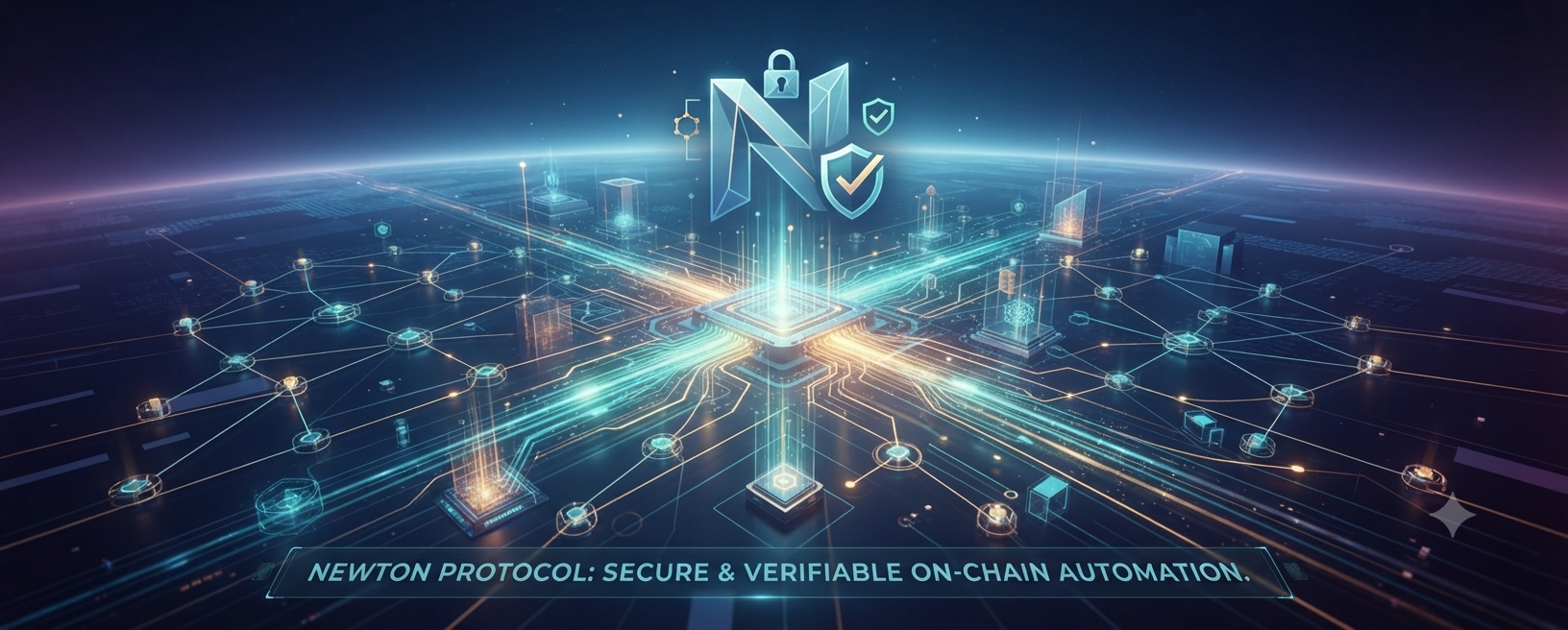
Artigo
Ver tradução
Deep Dive into Newton ProtocolThe Future of Verifiable On-chain Automation: A Deep Dive into Newton Protocol
The evolution of Decentralized Finance (DeFi) is shifting rapidly from manual, reactive operations to automated, proactive intelligence. As autonomous AI agents and complex vault strategies manage an increasing share of on-chain capital, traditional security models—which often rely on retroactive monitoring or simple identity checks—are proving insufficient. Enter the Newton Protocol and the recent launch of its Mainnet Beta, a pivotal advancement in infrastructure that promises to redefine how on-chain transactions are authorized, secured, and executed.
What is Newton Protocol?
At its core, @NewtonProtocol is an authorization layer designed specifically for on-chain transactions. Unlike standard protocols that react after a vulnerability or exploit has occurred, Newton functions as a pre-transaction policy engine. By utilizing Trusted Execution Environments (TEEs) and Zero-Knowledge Proofs (ZKPs), it creates a transparent, verifiably neutral layer where complex, programmable rules are evaluated before any capital moves.
This means that whether you are an individual user, a DAO, or an AI agent, your transaction must first pass through a series of "policy guardrails." These guardrails can include jurisdictional restrictions, daily spending limits, or custom compliance parameters, ensuring that only valid and safe transactions are finalized on the destination chain.
The Power of the Mainnet Beta
The transition to Mainnet Beta is more than just a technical milestone; it is the activation of a robust ecosystem. A critical feature of this release is the integration of VaultKit, which empowers developers to build vaults where risk management and compliance rules are enforced directly on-chain.
Furthermore, the protocol’s partnership with data powerhouses like RedStone Oracles and Credora provides the "fuel" for these policy engines. By sourcing manipulation-resistant price feeds and real-time risk ratings, Newton enables curators to automate complex decisions—such as liquidating positions or rebalancing assets—with unprecedented confidence.
Why $NEWT Matters
The $NEWT token sits at the heart of this infrastructure, serving as the essential utility token for the network. It plays several critical roles:
Security & Staking: Validators and operators stake $NEWT to secure the network and provide verifiable execution proofs.
Governance: Token holders participate in the protocol’s evolution, ensuring the ecosystem remains decentralized.
Marketplace Utility: As the Developer Marketplace grows, $NEWT will be the primary medium for registering agent models and accessing computational services.
The Road Ahead
With the Mainnet Beta live, the focus now turns to ecosystem growth. By positioning itself as a foundational authorization primitive, Newton is not trying to compete with existing DeFi apps; it is trying to provide the secure plumbing that all of them need. As we see more integration of AI agents into finance, the need for a protocol that can prove "this agent is acting within safe limits" will become mandatory.
Newton is effectively turning "If-This-Then-That" logic into a cryptographically verifiable public utility. For builders, developers, and institutions looking to mitigate risk while embracing the efficiency of automation, Newton Protocol represents one of the most promising frontiers in Web3 infrastructure.
#Newt $NEWT
Deep Dive into Newton Protocol
The Future of Verifiable On-chain Automation: A Deep Dive into Newton Protocol
The evolution of Decentralized Finance (DeFi) is shifting rapidly from manual, reactive operations to automated, proactive intelligence. As autonomous AI agents and complex vault strategies manage an increasing share of on-chain capital, traditional security models—which often rely on retroactive monitoring or simple identity checks—are proving insufficient. Enter the Newton Protocol and the recent launch of its Mainnet Beta, a pivotal advancement in infrastructure that promises to redefine how on-chain transactions are authorized, secured, and executed.
What is Newton Protocol?
At its core, @NewtonProtocol is an authorization layer designed specifically for on-chain transactions. Unlike standard protocols that react after a vulnerability or exploit has occurred, Newton functions as a pre-transaction policy engine. By utilizing Trusted Execution Environments (TEEs) and Zero-Knowledge Proofs (ZKPs), it creates a transparent, verifiably neutral layer where complex, programmable rules are evaluated before any capital moves.
This means that whether you are an individual user, a DAO, or an AI agent, your transaction must first pass through a series of "policy guardrails." These guardrails can include jurisdictional restrictions, daily spending limits, or custom compliance parameters, ensuring that only valid and safe transactions are finalized on the destination chain.
The Power of the Mainnet Beta
The transition to Mainnet Beta is more than just a technical milestone; it is the activation of a robust ecosystem. A critical feature of this release is the integration of VaultKit, which empowers developers to build vaults where risk management and compliance rules are enforced directly on-chain.
Furthermore, the protocol’s partnership with data powerhouses like RedStone Oracles and Credora provides the "fuel" for these policy engines. By sourcing manipulation-resistant price feeds and real-time risk ratings, Newton enables curators to automate complex decisions—such as liquidating positions or rebalancing assets—with unprecedented confidence.
Why $NEWT Matters
The $NEWT token sits at the heart of this infrastructure, serving as the essential utility token for the network. It plays several critical roles:
Security & Staking: Validators and operators stake $NEWT to secure the network and provide verifiable execution proofs.
Governance: Token holders participate in the protocol’s evolution, ensuring the ecosystem remains decentralized.
Marketplace Utility: As the Developer Marketplace grows, $NEWT will be the primary medium for registering agent models and accessing computational services.
The Road Ahead
With the Mainnet Beta live, the focus now turns to ecosystem growth. By positioning itself as a foundational authorization primitive, Newton is not trying to compete with existing DeFi apps; it is trying to provide the secure plumbing that all of them need. As we see more integration of AI agents into finance, the need for a protocol that can prove "this agent is acting within safe limits" will become mandatory.
Newton is effectively turning "If-This-Then-That" logic into a cryptographically verifiable public utility. For builders, developers, and institutions looking to mitigate risk while embracing the efficiency of automation, Newton Protocol represents one of the most promising frontiers in Web3 infrastructure.
#Newt $NEWT
The evolution of Decentralized Finance (DeFi) is shifting rapidly from manual, reactive operations to automated, proactive intelligence. As autonomous AI agents and complex vault strategies manage an increasing share of on-chain capital, traditional security models—which often rely on retroactive monitoring or simple identity checks—are proving insufficient. Enter the Newton Protocol and the recent launch of its Mainnet Beta, a pivotal advancement in infrastructure that promises to redefine how on-chain transactions are authorized, secured, and executed.
What is Newton Protocol?
At its core, @NewtonProtocol is an authorization layer designed specifically for on-chain transactions. Unlike standard protocols that react after a vulnerability or exploit has occurred, Newton functions as a pre-transaction policy engine. By utilizing Trusted Execution Environments (TEEs) and Zero-Knowledge Proofs (ZKPs), it creates a transparent, verifiably neutral layer where complex, programmable rules are evaluated before any capital moves.
This means that whether you are an individual user, a DAO, or an AI agent, your transaction must first pass through a series of "policy guardrails." These guardrails can include jurisdictional restrictions, daily spending limits, or custom compliance parameters, ensuring that only valid and safe transactions are finalized on the destination chain.
The Power of the Mainnet Beta
The transition to Mainnet Beta is more than just a technical milestone; it is the activation of a robust ecosystem. A critical feature of this release is the integration of VaultKit, which empowers developers to build vaults where risk management and compliance rules are enforced directly on-chain.
Furthermore, the protocol’s partnership with data powerhouses like RedStone Oracles and Credora provides the "fuel" for these policy engines. By sourcing manipulation-resistant price feeds and real-time risk ratings, Newton enables curators to automate complex decisions—such as liquidating positions or rebalancing assets—with unprecedented confidence.
Why $NEWT Matters
The $NEWT token sits at the heart of this infrastructure, serving as the essential utility token for the network. It plays several critical roles:
Security & Staking: Validators and operators stake $NEWT to secure the network and provide verifiable execution proofs.
Governance: Token holders participate in the protocol’s evolution, ensuring the ecosystem remains decentralized.
Marketplace Utility: As the Developer Marketplace grows, $NEWT will be the primary medium for registering agent models and accessing computational services.
The Road Ahead
With the Mainnet Beta live, the focus now turns to ecosystem growth. By positioning itself as a foundational authorization primitive, Newton is not trying to compete with existing DeFi apps; it is trying to provide the secure plumbing that all of them need. As we see more integration of AI agents into finance, the need for a protocol that can prove "this agent is acting within safe limits" will become mandatory.
Newton is effectively turning "If-This-Then-That" logic into a cryptographically verifiable public utility. For builders, developers, and institutions looking to mitigate risk while embracing the efficiency of automation, Newton Protocol represents one of the most promising frontiers in Web3 infrastructure.
#Newt $NEWT
67
·
--
Ver tradução
#newt $NEWT
The launch of the Newton Mainnet Beta by @NewtonProtocol is a major milestone for decentralized infrastructure. By combining Trusted Execution Environments (TEEs) and Zero-Knowledge Proofs (ZKPs), the protocol creates a secure, verifiable automation layer that allows for programmable on-chain permissions.
This infrastructure is a game-changer for Web3, as it enables users and institutions to delegate complex tasks—like portfolio rebalancing, risk management, and cross-chain execution—to autonomous agents without sacrificing security or sovereignty. With the $NEWT token powering network security, governance, and the agent marketplace, the ecosystem is well-positioned to drive the next wave of institutional-grade DeFi adoption. It is exciting to see how these advancements simplify the user experience while maintaining the transparency and trustless nature of the blockchain.
#Newt $NEWT
#newt $NEWT
The launch of the Newton Mainnet Beta by @NewtonProtocol is a major milestone for decentralized infrastructure. By combining Trusted Execution Environments (TEEs) and Zero-Knowledge Proofs (ZKPs), the protocol creates a secure, verifiable automation layer that allows for programmable on-chain permissions.
This infrastructure is a game-changer for Web3, as it enables users and institutions to delegate complex tasks—like portfolio rebalancing, risk management, and cross-chain execution—to autonomous agents without sacrificing security or sovereignty. With the $NEWT token powering network security, governance, and the agent marketplace, the ecosystem is well-positioned to drive the next wave of institutional-grade DeFi adoption. It is exciting to see how these advancements simplify the user experience while maintaining the transparency and trustless nature of the blockchain.
#Newt $NEWT
The launch of the Newton Mainnet Beta by @NewtonProtocol is a major milestone for decentralized infrastructure. By combining Trusted Execution Environments (TEEs) and Zero-Knowledge Proofs (ZKPs), the protocol creates a secure, verifiable automation layer that allows for programmable on-chain permissions.
This infrastructure is a game-changer for Web3, as it enables users and institutions to delegate complex tasks—like portfolio rebalancing, risk management, and cross-chain execution—to autonomous agents without sacrificing security or sovereignty. With the $NEWT token powering network security, governance, and the agent marketplace, the ecosystem is well-positioned to drive the next wave of institutional-grade DeFi adoption. It is exciting to see how these advancements simplify the user experience while maintaining the transparency and trustless nature of the blockchain.
#Newt $NEWT
83
·
--
Artigo
Ver tradução
Newton Mainnet Beta MattersThe launch of the Mainnet Beta by @NewtonProtocol represents a critical milestone for decentralized infrastructure. At its core, Newton bridges the gap between transparent smart contracts and real-world compliance needs. Traditional smart contracts often struggle to authorize transactions based on off-chain context, such as identity verification, jurisdictional restrictions, or sanctions screening.
Newton solves this by acting as a decentralized policy engine. Developers can now encode sophisticated rules—like spending limits or AML checks—directly into "policies" that automatically evaluate and approve or block transactions before they settle on-chain.
Key Technological Pillars
What makes Newton particularly compelling is its hybrid approach to security and privacy:
Decentralized Policy Enforcement: Unlike centralized allowlists, Newton utilizes a decentralized network of operators to enforce rules, ensuring censorship resistance.
Privacy-First Cryptography: By leveraging Trusted Execution Environments (TEEs) and Zero-Knowledge Proofs (ZKPs), the protocol ensures that compliance checks are performed privately. Sensitive data remains secure, yet the results remain publicly verifiable on the Newton Explorer.
Modular & Chain-Agnostic: The protocol is designed to be highly composable, allowing these policy layers to be reused across different dApps, wallets, and EVM-compatible chains.
The Role of $NEWT
The $NEWT token is central to the network’s functionality. It powers the ecosystem by facilitating:
Computation Fees: Paying for the verification and authorization services provided by the network.
Security & Staking: Validators and operators stake $NEWT to secure the network, creating an economic bond that discourages malicious activity.
Governance: Token holders play a role in the evolution of the protocol, ensuring that the project remains aligned with its community and the broader Web3 ecosystem.
As we move toward a future of self-operating finance and autonomous agents, infrastructure like Newton Protocol provides the necessary guardrails to make on-chain commerce safer and more accessible for institutions and retail users alike. It is exciting to see how this foundation will support the next generation of decentralized applications.
#Newt
Newton Mainnet Beta Matters
The launch of the Mainnet Beta by @NewtonProtocol represents a critical milestone for decentralized infrastructure. At its core, Newton bridges the gap between transparent smart contracts and real-world compliance needs. Traditional smart contracts often struggle to authorize transactions based on off-chain context, such as identity verification, jurisdictional restrictions, or sanctions screening.
Newton solves this by acting as a decentralized policy engine. Developers can now encode sophisticated rules—like spending limits or AML checks—directly into "policies" that automatically evaluate and approve or block transactions before they settle on-chain.
Key Technological Pillars
What makes Newton particularly compelling is its hybrid approach to security and privacy:
Decentralized Policy Enforcement: Unlike centralized allowlists, Newton utilizes a decentralized network of operators to enforce rules, ensuring censorship resistance.
Privacy-First Cryptography: By leveraging Trusted Execution Environments (TEEs) and Zero-Knowledge Proofs (ZKPs), the protocol ensures that compliance checks are performed privately. Sensitive data remains secure, yet the results remain publicly verifiable on the Newton Explorer.
Modular & Chain-Agnostic: The protocol is designed to be highly composable, allowing these policy layers to be reused across different dApps, wallets, and EVM-compatible chains.
The Role of $NEWT
The $NEWT token is central to the network’s functionality. It powers the ecosystem by facilitating:
Computation Fees: Paying for the verification and authorization services provided by the network.
Security & Staking: Validators and operators stake $NEWT to secure the network, creating an economic bond that discourages malicious activity.
Governance: Token holders play a role in the evolution of the protocol, ensuring that the project remains aligned with its community and the broader Web3 ecosystem.
As we move toward a future of self-operating finance and autonomous agents, infrastructure like Newton Protocol provides the necessary guardrails to make on-chain commerce safer and more accessible for institutions and retail users alike. It is exciting to see how this foundation will support the next generation of decentralized applications.
#Newt
Newton solves this by acting as a decentralized policy engine. Developers can now encode sophisticated rules—like spending limits or AML checks—directly into "policies" that automatically evaluate and approve or block transactions before they settle on-chain.
Key Technological Pillars
What makes Newton particularly compelling is its hybrid approach to security and privacy:
Decentralized Policy Enforcement: Unlike centralized allowlists, Newton utilizes a decentralized network of operators to enforce rules, ensuring censorship resistance.
Privacy-First Cryptography: By leveraging Trusted Execution Environments (TEEs) and Zero-Knowledge Proofs (ZKPs), the protocol ensures that compliance checks are performed privately. Sensitive data remains secure, yet the results remain publicly verifiable on the Newton Explorer.
Modular & Chain-Agnostic: The protocol is designed to be highly composable, allowing these policy layers to be reused across different dApps, wallets, and EVM-compatible chains.
The Role of $NEWT
The $NEWT token is central to the network’s functionality. It powers the ecosystem by facilitating:
Computation Fees: Paying for the verification and authorization services provided by the network.
Security & Staking: Validators and operators stake $NEWT to secure the network, creating an economic bond that discourages malicious activity.
Governance: Token holders play a role in the evolution of the protocol, ensuring that the project remains aligned with its community and the broader Web3 ecosystem.
As we move toward a future of self-operating finance and autonomous agents, infrastructure like Newton Protocol provides the necessary guardrails to make on-chain commerce safer and more accessible for institutions and retail users alike. It is exciting to see how this foundation will support the next generation of decentralized applications.
#Newt
32
·
--
Artigo
Ver tradução
Newton Mainnet BetaThe era of "blind" on-chain transactions is coming to an end. With the official launch of the Newton Mainnet Beta, we are finally seeing the arrival of a sophisticated authorization layer that brings genuine programmable compliance to the decentralized web.
@NewtonProtocol is pioneering a paradigm shift in how we handle risk, identity, and business logic at the point of transaction. Instead of relying on siloed, manual risk controls that vary from one application to another, Newton provides a unified, decentralized policy engine. This allows developers to embed complex rules—such as jurisdictional restrictions, spending limits, and KYC/AML checks—directly into the transaction execution flow.
Why this matters for the future of DeFi and Agentic Finance:
Programmable Guardrails: Through the newly introduced VaultKit, curators can now define granular conditions that must be met before a transaction settles. Whether it’s automatically liquidating a position based on real-time data from partners like RedStone or restricting asset movement based on Credora’s risk ratings, the enforcement is seamless, cryptographically verifiable, and happens entirely on-chain.
Trust-Minimized Compliance: By utilizing Trusted Execution Environments (TEEs) and Zero-Knowledge Proofs (ZKPs), Newton ensures that sensitive data remains private while compliance checks are proven correct. This is the "missing link" for institutional adoption, enabling stablecoin issuers and RWA platforms to operate with confidence in a regulatory-friendly environment without sacrificing the core ethos of decentralization.
The Utility of $NEWT: The $NEWT token is the heartbeat of this ecosystem. As the network scales, the demand for $NEWT will grow, driven by its utility in paying for compliance compute services, rewarding network operators, and participating in the governance that shapes the protocol's evolution. As we move toward a future of autonomous "agent swarms" managing assets, Newton’s role as the essential middleware becomes increasingly critical.
The launch of the Mainnet Beta is just the beginning. By solving the authorization puzzle, Newton is not just creating a tool; it is building the fundamental utility layer for the next generation of trustless financial agents. As the industry continues to mature, protocols that prioritize verifiable security and cross-chain composability will lead the way, and Newton is perfectly positioned at the forefront of this transformation.
#Newt
Newton Mainnet Beta
The era of "blind" on-chain transactions is coming to an end. With the official launch of the Newton Mainnet Beta, we are finally seeing the arrival of a sophisticated authorization layer that brings genuine programmable compliance to the decentralized web.
@NewtonProtocol is pioneering a paradigm shift in how we handle risk, identity, and business logic at the point of transaction. Instead of relying on siloed, manual risk controls that vary from one application to another, Newton provides a unified, decentralized policy engine. This allows developers to embed complex rules—such as jurisdictional restrictions, spending limits, and KYC/AML checks—directly into the transaction execution flow.
Why this matters for the future of DeFi and Agentic Finance:
Programmable Guardrails: Through the newly introduced VaultKit, curators can now define granular conditions that must be met before a transaction settles. Whether it’s automatically liquidating a position based on real-time data from partners like RedStone or restricting asset movement based on Credora’s risk ratings, the enforcement is seamless, cryptographically verifiable, and happens entirely on-chain.
Trust-Minimized Compliance: By utilizing Trusted Execution Environments (TEEs) and Zero-Knowledge Proofs (ZKPs), Newton ensures that sensitive data remains private while compliance checks are proven correct. This is the "missing link" for institutional adoption, enabling stablecoin issuers and RWA platforms to operate with confidence in a regulatory-friendly environment without sacrificing the core ethos of decentralization.
The Utility of $NEWT: The $NEWT token is the heartbeat of this ecosystem. As the network scales, the demand for $NEWT will grow, driven by its utility in paying for compliance compute services, rewarding network operators, and participating in the governance that shapes the protocol's evolution. As we move toward a future of autonomous "agent swarms" managing assets, Newton’s role as the essential middleware becomes increasingly critical.
The launch of the Mainnet Beta is just the beginning. By solving the authorization puzzle, Newton is not just creating a tool; it is building the fundamental utility layer for the next generation of trustless financial agents. As the industry continues to mature, protocols that prioritize verifiable security and cross-chain composability will lead the way, and Newton is perfectly positioned at the forefront of this transformation.
#Newt
@NewtonProtocol is pioneering a paradigm shift in how we handle risk, identity, and business logic at the point of transaction. Instead of relying on siloed, manual risk controls that vary from one application to another, Newton provides a unified, decentralized policy engine. This allows developers to embed complex rules—such as jurisdictional restrictions, spending limits, and KYC/AML checks—directly into the transaction execution flow.
Why this matters for the future of DeFi and Agentic Finance:
Programmable Guardrails: Through the newly introduced VaultKit, curators can now define granular conditions that must be met before a transaction settles. Whether it’s automatically liquidating a position based on real-time data from partners like RedStone or restricting asset movement based on Credora’s risk ratings, the enforcement is seamless, cryptographically verifiable, and happens entirely on-chain.
Trust-Minimized Compliance: By utilizing Trusted Execution Environments (TEEs) and Zero-Knowledge Proofs (ZKPs), Newton ensures that sensitive data remains private while compliance checks are proven correct. This is the "missing link" for institutional adoption, enabling stablecoin issuers and RWA platforms to operate with confidence in a regulatory-friendly environment without sacrificing the core ethos of decentralization.
The Utility of $NEWT: The $NEWT token is the heartbeat of this ecosystem. As the network scales, the demand for $NEWT will grow, driven by its utility in paying for compliance compute services, rewarding network operators, and participating in the governance that shapes the protocol's evolution. As we move toward a future of autonomous "agent swarms" managing assets, Newton’s role as the essential middleware becomes increasingly critical.
The launch of the Mainnet Beta is just the beginning. By solving the authorization puzzle, Newton is not just creating a tool; it is building the fundamental utility layer for the next generation of trustless financial agents. As the industry continues to mature, protocols that prioritize verifiable security and cross-chain composability will lead the way, and Newton is perfectly positioned at the forefront of this transformation.
#Newt
41
Inicia sessão para explorar mais conteúdos
Junta-te a utilizadores de criptomoedas de todo o mundo na Binance Square
⚡️ Obtém informações úteis e recentes sobre criptomoedas.
💬 Com a confiança da maior exchange de criptomoedas do mundo.
👍 Descobre perspetivas reais de criadores verificados.
E-mail/Número de telefone
Tópicos em Tendência
BinanceLaunchesBinanceIntelligence
609,228 visualizações
3,745 a discutir
#binancelaunchesbinanceintelligence
🚨 A BINANCE ACABOU DE LEVAR A IA AINDA MAIS FUNDO NO UNIVERSO CRIPTO.
A Binance lançou a Binance Intelligence — uma nova camada com tecnologia de IA, criada em torno de pesquisa de mercado, fluxos de trabalho de trading e dados cripto.
A parte interessante?
Não é apenas uma ferramenta.
🧠 Binance AI → resumos de mercado personalizados, alertas e análises da carteira
⚡ Binance AI Pro → transforma ideias em linguagem natural em fluxos de trabalho de trading
🤖 Agent OS → conecta agentes de IA a recursos de mercado, carteira e on-chain
Isso representa uma grande mudança.
As plataformas cripto não estão mais apenas oferecendo gráficos e dados aos traders.
Elas estão começando a oferecer sistemas de IA capazes de interpretar esses dados.
A verdadeira questão é:
A IA vai se tornar tão comum para os traders quanto os indicadores e gráficos são hoje? 👀
$BTC $ETH
#Binance #Aİ #crypto #BTC
Doomsday-Trader
·0 gostos
·397 visualizações
BTCFallsBelow$84K
708 visualizações
23 a discutir
WinklevossFilesSpotZcashETFApplication
3,248 visualizações
78 a discutir