
EDWARD FIRE
15.9k Publicações

EDWARD FIRE
Denunciar
Bloquear Utilizador
234 A seguir
973 Seguidores
5.7K+ Gostaram
Publicações
Tudo
Cotações
·
--
Ver tradução
$DOGE 永续沉没投资是指用现有资金购买稀缺资产。狗狗币(DOGE)则颠覆了这一模式,它通过无限增发新币来维持供应。你投入的每一美元都会被不断涌入市场的新币稀释,从而确保协议本身会持续压低单价。
$DOGE 永续沉没投资是指用现有资金购买稀缺资产。狗狗币(DOGE)则颠覆了这一模式,它通过无限增发新币来维持供应。你投入的每一美元都会被不断涌入市场的新币稀释,从而确保协议本身会持续压低单价。
9
·
--
Ver tradução
$DOGE 狗狗币无限增发♾️ 货币不可能无限增发。你的钱是有限的——数量就是这么多。狗狗币则恰恰相反:每天都有成千上万的新币被创造出来。
随着越来越多的狗狗币涌入市场,现有的狗狗币价值往往会略微下降。这就像往饮料里兑水一样——液体越多,味道越淡。
所以,如果你把有限的资金投入到一个不断增发的货币中,额外的狗狗币就会不断蚕食你现有货币的价值。通货膨胀(更多的狗狗币)最终获胜,随着狗狗币总数的增长,你的钱购买力也在下降。这就是数学的运作方式。
$DOGE 狗狗币无限增发♾️ 货币不可能无限增发。你的钱是有限的——数量就是这么多。狗狗币则恰恰相反:每天都有成千上万的新币被创造出来。
随着越来越多的狗狗币涌入市场,现有的狗狗币价值往往会略微下降。这就像往饮料里兑水一样——液体越多,味道越淡。
所以,如果你把有限的资金投入到一个不断增发的货币中,额外的狗狗币就会不断蚕食你现有货币的价值。通货膨胀(更多的狗狗币)最终获胜,随着狗狗币总数的增长,你的钱购买力也在下降。这就是数学的运作方式。
随着越来越多的狗狗币涌入市场,现有的狗狗币价值往往会略微下降。这就像往饮料里兑水一样——液体越多,味道越淡。
所以,如果你把有限的资金投入到一个不断增发的货币中,额外的狗狗币就会不断蚕食你现有货币的价值。通货膨胀(更多的狗狗币)最终获胜,随着狗狗币总数的增长,你的钱购买力也在下降。这就是数学的运作方式。
19
·
--
Ver tradução
$DOGE The Dilution Math Your capital works on scarcity; DOGE works on dilution. Every day, thousands of new DOGE enter circulation, steadily driving down the individual value of existing coins DOGE price gets pushed down by DOGE supplying new doge. If you put scarce capital into an endlessly expanding supply, inflation wins every time. Your money losses value as DOGE coin count increases that's how it is.
$DOGE The Dilution Math Your capital works on scarcity; DOGE works on dilution. Every day, thousands of new DOGE enter circulation, steadily driving down the individual value of existing coins DOGE price gets pushed down by DOGE supplying new doge. If you put scarce capital into an endlessly expanding supply, inflation wins every time. Your money losses value as DOGE coin count increases that's how it is.
11
·
--
Ver tradução
$DOGE The Scarcity Mismatch money is not infinite, hard-earned capital is finite. DOGE’s code, on the other hand, guarantees infinite ♾️coin issuance. Putting hard money into an asset that constantly dilutes its own unit value is a mathematical trap—you are trading scarcity for programmed inflation. Your money loses value while the amount of doge keeps rising. You want the equation to go the other way your money keeps rising
$DOGE The Scarcity Mismatch money is not infinite, hard-earned capital is finite. DOGE’s code, on the other hand, guarantees infinite ♾️coin issuance. Putting hard money into an asset that constantly dilutes its own unit value is a mathematical trap—you are trading scarcity for programmed inflation. Your money loses value while the amount of doge keeps rising. You want the equation to go the other way your money keeps rising
19
·
--
Ver tradução
$DOGE inflationary means losing value and doge is inflationary ask AI if you want.
$DOGE inflationary means losing value and doge is inflationary ask AI if you want.
13
·
--
Ver tradução
$DOGE DOGE’s design guarantees inflation. It’s built on a perpetual supply machine—constantly minting new coins forever. Even if every single holder refuses to sell, the relentless creation of new DOGE steadily dilutes the value of your spot holdings.
Buying in and expecting sustained upward momentum isn't just trading against other market participants—you are trading against the token’s fundamental code. Basic economics dictates that when supply increases endlessly, individual price value drops unless fresh capital constantly enters the system to absorb the excess. To return to past price peaks, the ecosystem demands exponentially more fiat every single time. You aren't just fighting the market; you're fighting an infinite supply function.
$DOGE DOGE’s design guarantees inflation. It’s built on a perpetual supply machine—constantly minting new coins forever. Even if every single holder refuses to sell, the relentless creation of new DOGE steadily dilutes the value of your spot holdings.
Buying in and expecting sustained upward momentum isn't just trading against other market participants—you are trading against the token’s fundamental code. Basic economics dictates that when supply increases endlessly, individual price value drops unless fresh capital constantly enters the system to absorb the excess. To return to past price peaks, the ecosystem demands exponentially more fiat every single time. You aren't just fighting the market; you're fighting an infinite supply function.
Buying in and expecting sustained upward momentum isn't just trading against other market participants—you are trading against the token’s fundamental code. Basic economics dictates that when supply increases endlessly, individual price value drops unless fresh capital constantly enters the system to absorb the excess. To return to past price peaks, the ecosystem demands exponentially more fiat every single time. You aren't just fighting the market; you're fighting an infinite supply function.
16
·
--
Ver tradução
$DOGE DOFE Explain the investment thesis. Infinite supply chasing finite money doesn't create scarcity. It creates dilution not valuation. DOGE pushes it's own price down through infinity ♾️ supply. So if you hold SOFE you are holding a coin that pushes its price down without any help it does it on its own
$DOGE DOFE Explain the investment thesis. Infinite supply chasing finite money doesn't create scarcity. It creates dilution not valuation. DOGE pushes it's own price down through infinity ♾️ supply. So if you hold SOFE you are holding a coin that pushes its price down without any help it does it on its own
19
·
--
Ver tradução
$DOGE doge makes doge for infinity ♾️ do you have infinity money? does anyone have infinity money? No. So since doge makes new doge for infinity there's no infinite Money doge's price. keeps falling due to its infinity supply pushing it's own price down.
$DOGE doge makes doge for infinity ♾️ do you have infinity money? does anyone have infinity money? No. So since doge makes new doge for infinity there's no infinite Money doge's price. keeps falling due to its infinity supply pushing it's own price down.
21
·
--
Ver tradução
$DOGE DOGE’s recurrent falling price, year after year, is not a mystery.
It is the law of supply and demand operating in plain sight.
DOGE keeps making more of itself. Infinitely. There is no hard cap. Every year billions of new coins are created and added to the circulating supply. Supply goes up and up. And when supply keeps rising without end, price must keep falling lower and lower. That is not opinion. That is the basic mechanics of markets.
Look at the chart. Switch it to the weekly view and the pattern becomes obvious. The long-term line does not recover and hold. It trends down. Peaks fade. Rallies fail. The price grinds lower over time because the supply never stops expanding. More coins tomorrow mean each existing coin is worth less than it was yesterday. The dilution is continuous, and the chart records it.
People still call the lower numbers a “discount.” They are wrong. A discount implies a temporary reduction in price for the same limited thing. This is different. This is permanent cheapening caused by permanent growth in quantity. Abundance is increasing. Scarcity is disappearing. Therefore value is eroding.
As long as new DOGE continues to be created without limit, the supply will keep rising. As long as the supply keeps rising, the price pressure will remain downward. The weekly chart already shows the result: lower highs, lower lows, a long slide driven by ever-growing abundance.
It is not a sale.
It is not a buying opportunity.
It is the visible, measurable consequence of infinite issuance.
Supply up.
Price down.
Year after year.
With no end in sight.
$DOGE DOGE’s recurrent falling price, year after year, is not a mystery.
It is the law of supply and demand operating in plain sight.
DOGE keeps making more of itself. Infinitely. There is no hard cap. Every year billions of new coins are created and added to the circulating supply. Supply goes up and up. And when supply keeps rising without end, price must keep falling lower and lower. That is not opinion. That is the basic mechanics of markets.
Look at the chart. Switch it to the weekly view and the pattern becomes obvious. The long-term line does not recover and hold. It trends down. Peaks fade. Rallies fail. The price grinds lower over time because the supply never stops expanding. More coins tomorrow mean each existing coin is worth less than it was yesterday. The dilution is continuous, and the chart records it.
People still call the lower numbers a “discount.” They are wrong. A discount implies a temporary reduction in price for the same limited thing. This is different. This is permanent cheapening caused by permanent growth in quantity. Abundance is increasing. Scarcity is disappearing. Therefore value is eroding.
As long as new DOGE continues to be created without limit, the supply will keep rising. As long as the supply keeps rising, the price pressure will remain downward. The weekly chart already shows the result: lower highs, lower lows, a long slide driven by ever-growing abundance.
It is not a sale.
It is not a buying opportunity.
It is the visible, measurable consequence of infinite issuance.
Supply up.
Price down.
Year after year.
With no end in sight.
It is the law of supply and demand operating in plain sight.
DOGE keeps making more of itself. Infinitely. There is no hard cap. Every year billions of new coins are created and added to the circulating supply. Supply goes up and up. And when supply keeps rising without end, price must keep falling lower and lower. That is not opinion. That is the basic mechanics of markets.
Look at the chart. Switch it to the weekly view and the pattern becomes obvious. The long-term line does not recover and hold. It trends down. Peaks fade. Rallies fail. The price grinds lower over time because the supply never stops expanding. More coins tomorrow mean each existing coin is worth less than it was yesterday. The dilution is continuous, and the chart records it.
People still call the lower numbers a “discount.” They are wrong. A discount implies a temporary reduction in price for the same limited thing. This is different. This is permanent cheapening caused by permanent growth in quantity. Abundance is increasing. Scarcity is disappearing. Therefore value is eroding.
As long as new DOGE continues to be created without limit, the supply will keep rising. As long as the supply keeps rising, the price pressure will remain downward. The weekly chart already shows the result: lower highs, lower lows, a long slide driven by ever-growing abundance.
It is not a sale.
It is not a buying opportunity.
It is the visible, measurable consequence of infinite issuance.
Supply up.
Price down.
Year after year.
With no end in sight.
35
·
--
Ver tradução
$DOGE DOGE is not on a discount.
It is simply becoming infinitely cheaper.
Every day the press runs. Billions more coins enter existence. There is no limit, no ceiling, no point at which the creation stops. Supply grows without end. Abundance expands forever.
And the law of supply and demand does not negotiate. When the quantity of something keeps rising without restraint, its value must fall. That is not temporary. That is not a sale. That is the direct, mechanical result of growing abundance. What is easy to create and certain to exist in greater numbers tomorrow cannot hold its price today.
So the chart drops.
Then it drops again.
Then it keeps dropping.
People look at the lower number and tell themselves they are getting a bargain. “It’s cheaper now,” they say. “This is the opportunity.” They do not see that the lower price is not a gift. It is the proof that the asset is being diluted in real time. Every new coin makes every previous coin worth less. Every additional wave of supply pushes the value further down.
There is no bottom waiting. There is only more supply tomorrow, and the day after, and the day after that. Because the supply is infinite, the cheapening is infinite. Holding it means watching purchasing power erode without end. The longer you stay in, the more the growing abundance has already taken from you—and the more it will continue to take.
It is not a discount.
It is permanent, compounding devaluation.
DOGE does not become more affordable as a favor.
It becomes cheaper because there is always more of it, and there will always be more of it, and abundance without limit destroys value without limit.
The price will keep going down and down and down—
not because of a temporary dip,
but because the supply never stops growing.
$DOGE DOGE is not on a discount.
It is simply becoming infinitely cheaper.
Every day the press runs. Billions more coins enter existence. There is no limit, no ceiling, no point at which the creation stops. Supply grows without end. Abundance expands forever.
And the law of supply and demand does not negotiate. When the quantity of something keeps rising without restraint, its value must fall. That is not temporary. That is not a sale. That is the direct, mechanical result of growing abundance. What is easy to create and certain to exist in greater numbers tomorrow cannot hold its price today.
So the chart drops.
Then it drops again.
Then it keeps dropping.
People look at the lower number and tell themselves they are getting a bargain. “It’s cheaper now,” they say. “This is the opportunity.” They do not see that the lower price is not a gift. It is the proof that the asset is being diluted in real time. Every new coin makes every previous coin worth less. Every additional wave of supply pushes the value further down.
There is no bottom waiting. There is only more supply tomorrow, and the day after, and the day after that. Because the supply is infinite, the cheapening is infinite. Holding it means watching purchasing power erode without end. The longer you stay in, the more the growing abundance has already taken from you—and the more it will continue to take.
It is not a discount.
It is permanent, compounding devaluation.
DOGE does not become more affordable as a favor.
It becomes cheaper because there is always more of it, and there will always be more of it, and abundance without limit destroys value without limit.
The price will keep going down and down and down—
not because of a temporary dip,
but because the supply never stops growing.
It is simply becoming infinitely cheaper.
Every day the press runs. Billions more coins enter existence. There is no limit, no ceiling, no point at which the creation stops. Supply grows without end. Abundance expands forever.
And the law of supply and demand does not negotiate. When the quantity of something keeps rising without restraint, its value must fall. That is not temporary. That is not a sale. That is the direct, mechanical result of growing abundance. What is easy to create and certain to exist in greater numbers tomorrow cannot hold its price today.
So the chart drops.
Then it drops again.
Then it keeps dropping.
People look at the lower number and tell themselves they are getting a bargain. “It’s cheaper now,” they say. “This is the opportunity.” They do not see that the lower price is not a gift. It is the proof that the asset is being diluted in real time. Every new coin makes every previous coin worth less. Every additional wave of supply pushes the value further down.
There is no bottom waiting. There is only more supply tomorrow, and the day after, and the day after that. Because the supply is infinite, the cheapening is infinite. Holding it means watching purchasing power erode without end. The longer you stay in, the more the growing abundance has already taken from you—and the more it will continue to take.
It is not a discount.
It is permanent, compounding devaluation.
DOGE does not become more affordable as a favor.
It becomes cheaper because there is always more of it, and there will always be more of it, and abundance without limit destroys value without limit.
The price will keep going down and down and down—
not because of a temporary dip,
but because the supply never stops growing.
46
·
--
Ver tradução
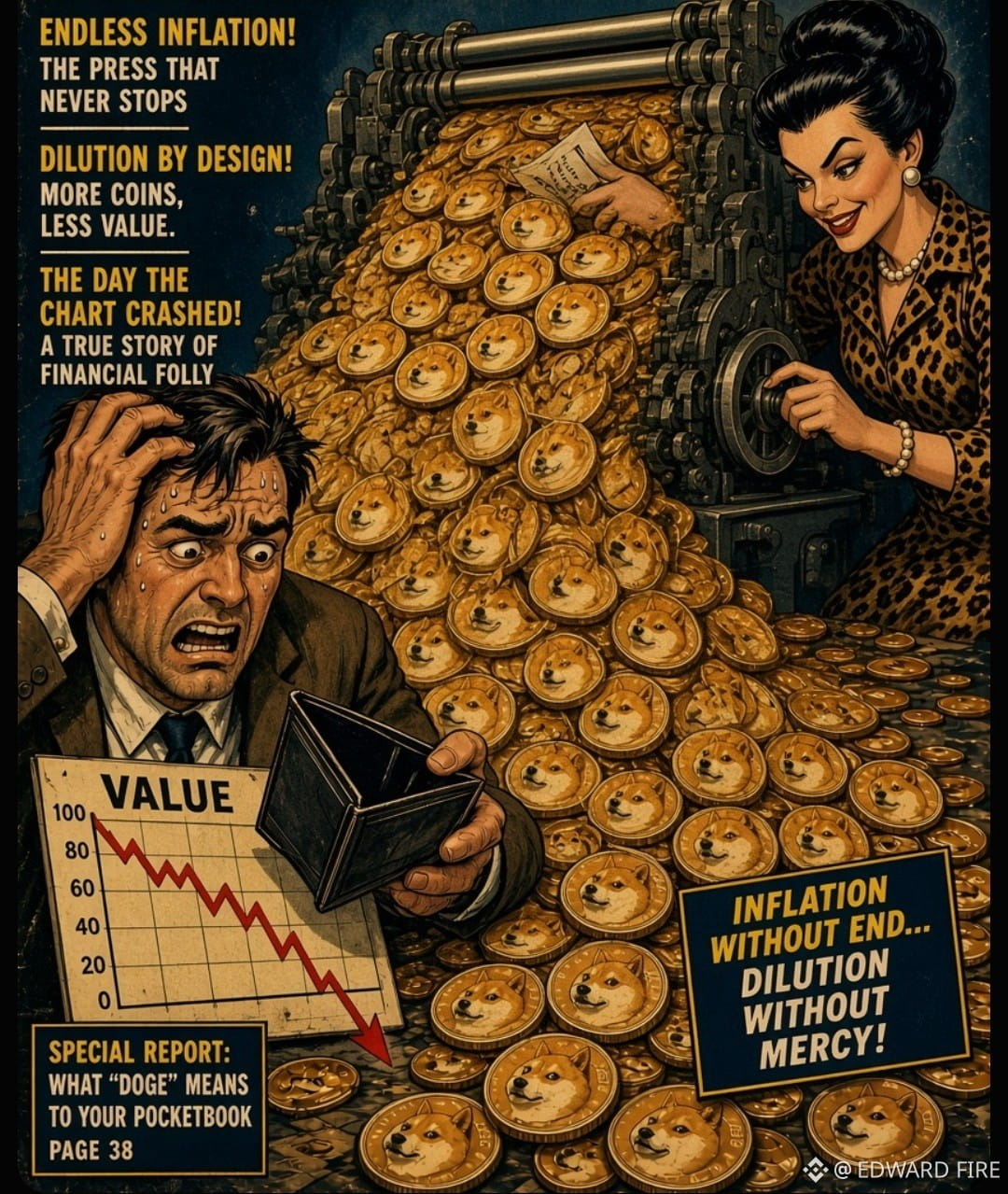
$DOGE DOGE is the ultimate gold digger.
She never stops asking for your money while insisting she’s “valuable,” “the people’s coin,” and “going to the moon.”
Then the price drops. She slides back up with a sweet smile and says:
“Look at me! I’m cheaper than yesterday! Don’t you want me now? I’m on sale!”
But it’s not a sale.
She just became worth less.
Because while you weren’t looking, she printed more of herself.
And more.
And more.
And more.
Tomorrow she’ll print even more. The day after that, still more. Forever. Infinity. No cap. No end. Just endless, relentless self-replication.
Every new DOGE that appears dilutes the ones that already exist. The pie stays the same size while she keeps cutting thinner and thinner slices and calling each new, smaller slice “a discount.”
“Come on,” she says, “I’m cheaper than ever! This is the best deal!”
No. You’re not getting a bargain.
You’re watching her make herself cheaper on purpose—by flooding the world with more of herself—then pretending the falling price is a favor she’s doing you.
She will keep printing.
She will keep getting cheaper.
She will keep calling it a sale.
And the more of her there is, the less each one is worth.
Forever.
$DOGE DOGE is the ultimate gold digger.
She never stops asking for your money while insisting she’s “valuable,” “the people’s coin,” and “going to the moon.”
Then the price drops. She slides back up with a sweet smile and says:
“Look at me! I’m cheaper than yesterday! Don’t you want me now? I’m on sale!”
But it’s not a sale.
She just became worth less.
Because while you weren’t looking, she printed more of herself.
And more.
And more.
And more.
Tomorrow she’ll print even more. The day after that, still more. Forever. Infinity. No cap. No end. Just endless, relentless self-replication.
Every new DOGE that appears dilutes the ones that already exist. The pie stays the same size while she keeps cutting thinner and thinner slices and calling each new, smaller slice “a discount.”
“Come on,” she says, “I’m cheaper than ever! This is the best deal!”
No. You’re not getting a bargain.
You’re watching her make herself cheaper on purpose—by flooding the world with more of herself—then pretending the falling price is a favor she’s doing you.
She will keep printing.
She will keep getting cheaper.
She will keep calling it a sale.
And the more of her there is, the less each one is worth.
Forever.
She never stops asking for your money while insisting she’s “valuable,” “the people’s coin,” and “going to the moon.”
Then the price drops. She slides back up with a sweet smile and says:
“Look at me! I’m cheaper than yesterday! Don’t you want me now? I’m on sale!”
But it’s not a sale.
She just became worth less.
Because while you weren’t looking, she printed more of herself.
And more.
And more.
And more.
Tomorrow she’ll print even more. The day after that, still more. Forever. Infinity. No cap. No end. Just endless, relentless self-replication.
Every new DOGE that appears dilutes the ones that already exist. The pie stays the same size while she keeps cutting thinner and thinner slices and calling each new, smaller slice “a discount.”
“Come on,” she says, “I’m cheaper than ever! This is the best deal!”
No. You’re not getting a bargain.
You’re watching her make herself cheaper on purpose—by flooding the world with more of herself—then pretending the falling price is a favor she’s doing you.
She will keep printing.
She will keep getting cheaper.
She will keep calling it a sale.
And the more of her there is, the less each one is worth.
Forever.
58
·
--
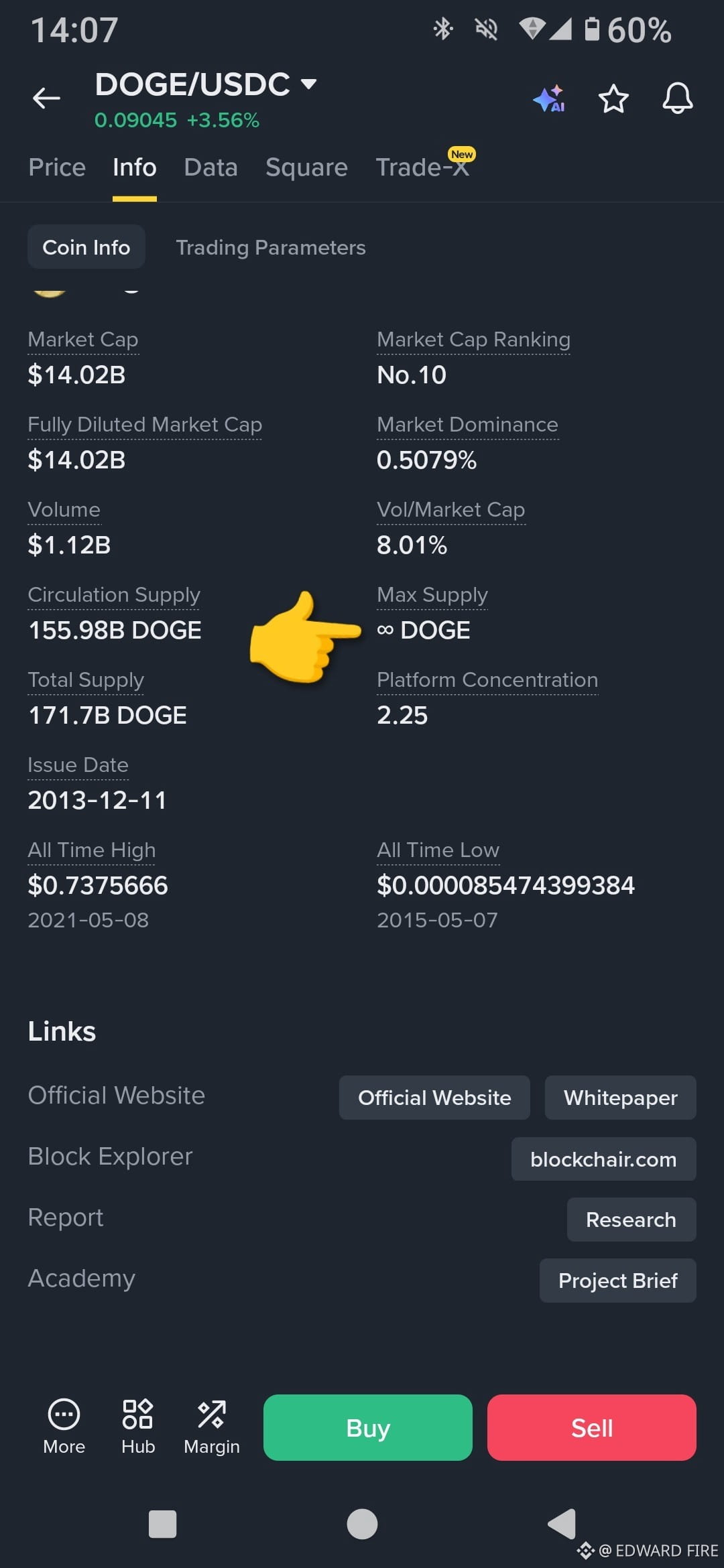
$DOGE Infinity ♾️ Essa é a receita para um ativo que continua perdendo valor. Se algo pode ser produzido sem fim, a abundância joga contra a escassez. E quando a oferta continua crescendo, você precisa de uma demanda cada vez maior só para impedir a queda do preço. DOGE é oferta infinita ♾️ significa que vai haver mais doge infinitamente; o preço vai continuar se diluindo, sendo pressionado para baixo conforme as ofertas aumentam infinitamente.
$DOGE Infinity ♾️ Essa é a receita para um ativo que continua perdendo valor. Se algo pode ser produzido sem fim, a abundância joga contra a escassez. E quando a oferta continua crescendo, você precisa de uma demanda cada vez maior só para impedir a queda do preço. DOGE é oferta infinita ♾️ significa que vai haver mais doge infinitamente; o preço vai continuar se diluindo, sendo pressionado para baixo conforme as ofertas aumentam infinitamente.
151
·
--
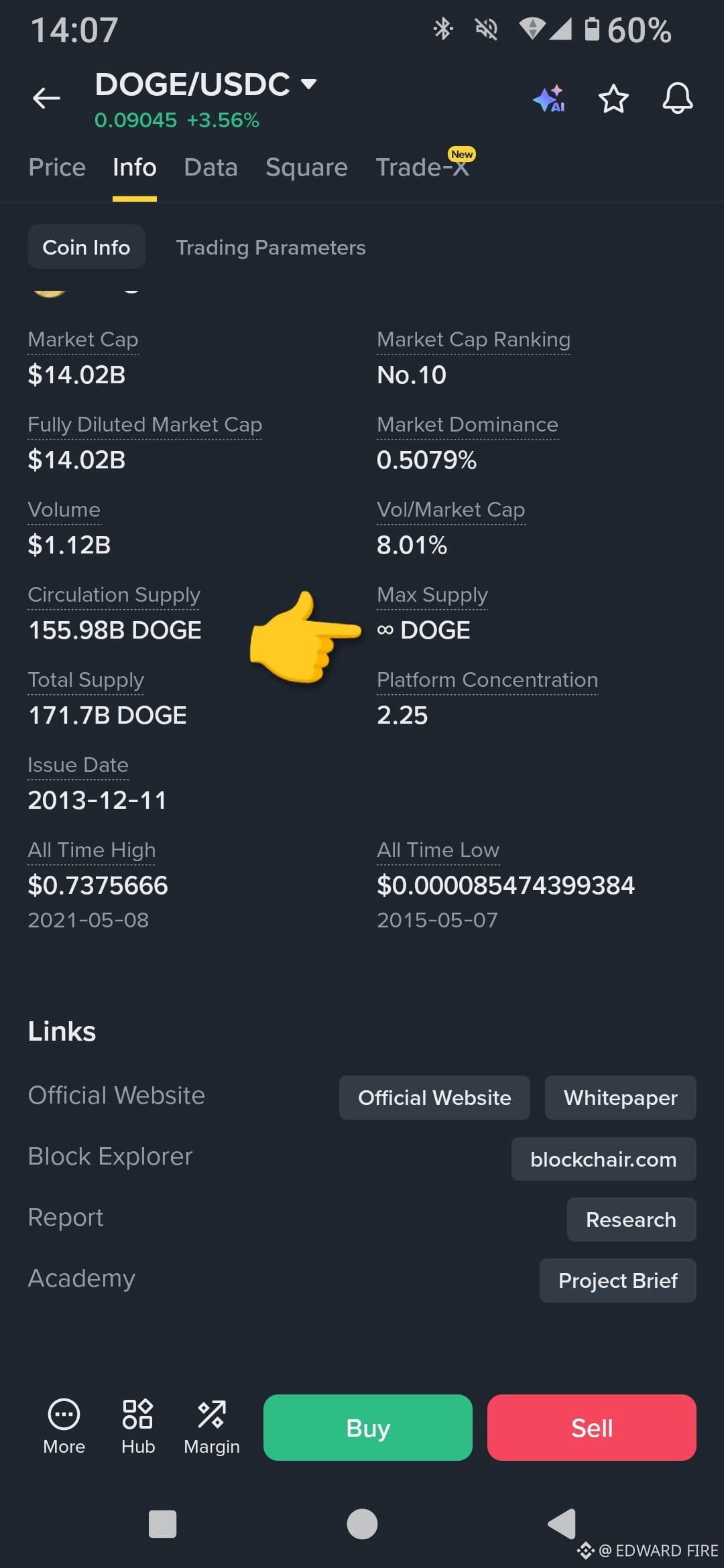
$DOGE Você quer saber por que o DOGE tem dificuldade em manter valor? Porque a oferta continua se expandindo. Sempre haverá mais DOGE entrando em circulação. Os compradores podem continuar chegando, mas a nova oferta também. O dinheiro é escasso; o DOGE não é. Sem a demanda crescer mais rápido do que a oferta, o preço cai, porque sempre há mais Doge e nenhum dinheiro pode preencher um buraco infinito.
$DOGE Você quer saber por que o DOGE tem dificuldade em manter valor? Porque a oferta continua se expandindo. Sempre haverá mais DOGE entrando em circulação. Os compradores podem continuar chegando, mas a nova oferta também. O dinheiro é escasso; o DOGE não é. Sem a demanda crescer mais rápido do que a oferta, o preço cai, porque sempre há mais Doge e nenhum dinheiro pode preencher um buraco infinito.
120
·
--
$ZEC Quando o preço do ZEC estava em 500, a relação risco-retorno era muito favorável para você. Uma oscilação absoluta de preço relativamente pequena já podia gerar um grande ganho percentual, e o potencial de alta era claramente maior do que o risco de queda. Comprar spot naquele nível de preço era uma decisão inteligente, porque essa assimetria jogava a seu favor.
Agora que o preço subiu para 1000, a situação se inverteu completamente. A mesma oscilação absoluta de preço que antes podia gerar um alto retorno percentual, agora só traz metade do retorno sobre o capital. O espaço de valorização fácil já foi amplamente explorado. O antigo potencial de alta se transformou, em grande parte, em risco de queda. A probabilidade de obter ganhos percentuais elevados diminuiu significativamente, enquanto o risco de queda continua existindo.
Essa é a manifestação da lei dos retornos decrescentes: à medida que a base de preço aumenta, o mesmo lucro absoluto corresponde a um retorno percentual menor, forçando você a investir mais capital para obter menos retorno. A relação risco-retorno que antes favorecia a compra já se inverteu.
Se você agora detém ZEC spot, precisa se perguntar honestamente: o espaço restante de alta ainda vale esse risco? Porque agora, a matemática, a probabilidade e a assimetria estão todas contra você.
$ZEC Quando o preço do ZEC estava em 500, a relação risco-retorno era muito favorável para você. Uma oscilação absoluta de preço relativamente pequena já podia gerar um grande ganho percentual, e o potencial de alta era claramente maior do que o risco de queda. Comprar spot naquele nível de preço era uma decisão inteligente, porque essa assimetria jogava a seu favor.
Agora que o preço subiu para 1000, a situação se inverteu completamente. A mesma oscilação absoluta de preço que antes podia gerar um alto retorno percentual, agora só traz metade do retorno sobre o capital. O espaço de valorização fácil já foi amplamente explorado. O antigo potencial de alta se transformou, em grande parte, em risco de queda. A probabilidade de obter ganhos percentuais elevados diminuiu significativamente, enquanto o risco de queda continua existindo.
Essa é a manifestação da lei dos retornos decrescentes: à medida que a base de preço aumenta, o mesmo lucro absoluto corresponde a um retorno percentual menor, forçando você a investir mais capital para obter menos retorno. A relação risco-retorno que antes favorecia a compra já se inverteu.
Se você agora detém ZEC spot, precisa se perguntar honestamente: o espaço restante de alta ainda vale esse risco? Porque agora, a matemática, a probabilidade e a assimetria estão todas contra você.
Agora que o preço subiu para 1000, a situação se inverteu completamente. A mesma oscilação absoluta de preço que antes podia gerar um alto retorno percentual, agora só traz metade do retorno sobre o capital. O espaço de valorização fácil já foi amplamente explorado. O antigo potencial de alta se transformou, em grande parte, em risco de queda. A probabilidade de obter ganhos percentuais elevados diminuiu significativamente, enquanto o risco de queda continua existindo.
Essa é a manifestação da lei dos retornos decrescentes: à medida que a base de preço aumenta, o mesmo lucro absoluto corresponde a um retorno percentual menor, forçando você a investir mais capital para obter menos retorno. A relação risco-retorno que antes favorecia a compra já se inverteu.
Se você agora detém ZEC spot, precisa se perguntar honestamente: o espaço restante de alta ainda vale esse risco? Porque agora, a matemática, a probabilidade e a assimetria estão todas contra você.
32
·
--
$ZEC Agora comprar ZEC à vista é uma decisão com uma relação risco-retorno estruturalmente muito ruim. A lei dos retornos decrescentes está extremamente contra você.
Quando o preço de um ativo ainda está relativamente baixo, até mesmo uma pequena variação absoluta de preço (por exemplo, uma alta de 10 dólares) pode gerar um retorno percentual elevado. Mas a mesma variação absoluta de preço, sobre uma base de preço mais alta, produz um retorno percentual muito menor. Você precisa investir mais capital para obter o mesmo lucro absoluto, e o seu retorno sobre o capital cai drasticamente. Essa é a pura manifestação da lei dos retornos decrescentes.
Além disso, a probabilidade de obter altos retornos percentuais também já caiu muito. A alta que antes parecia fácil agora não existe mais. À medida que o preço sobe, a oportunidade de lucro fácil passou, o espaço restante para valorização se torna muito mais difícil, enquanto o risco de queda não diminui em nada (e pode até aumentar). Você assume mais risco e recebe um retorno potencial menor.
Em resumo: mais capital necessário para obter o mesmo lucro absoluto + menor probabilidade de obter um retorno percentual expressivo + todo o risco de queda = a relação risco-retorno para quem compra ZEC à vista no preço atual é completamente desfavorável.
A assimetria que antes favorecia posições compradas já se inverteu. A lei dos retornos decrescentes e a deterioração da relação risco-retorno não estão mais ocultas — elas se tornaram as forças dominantes.
$ZEC Agora comprar ZEC à vista é uma decisão com uma relação risco-retorno estruturalmente muito ruim. A lei dos retornos decrescentes está extremamente contra você.
Quando o preço de um ativo ainda está relativamente baixo, até mesmo uma pequena variação absoluta de preço (por exemplo, uma alta de 10 dólares) pode gerar um retorno percentual elevado. Mas a mesma variação absoluta de preço, sobre uma base de preço mais alta, produz um retorno percentual muito menor. Você precisa investir mais capital para obter o mesmo lucro absoluto, e o seu retorno sobre o capital cai drasticamente. Essa é a pura manifestação da lei dos retornos decrescentes.
Além disso, a probabilidade de obter altos retornos percentuais também já caiu muito. A alta que antes parecia fácil agora não existe mais. À medida que o preço sobe, a oportunidade de lucro fácil passou, o espaço restante para valorização se torna muito mais difícil, enquanto o risco de queda não diminui em nada (e pode até aumentar). Você assume mais risco e recebe um retorno potencial menor.
Em resumo: mais capital necessário para obter o mesmo lucro absoluto + menor probabilidade de obter um retorno percentual expressivo + todo o risco de queda = a relação risco-retorno para quem compra ZEC à vista no preço atual é completamente desfavorável.
A assimetria que antes favorecia posições compradas já se inverteu. A lei dos retornos decrescentes e a deterioração da relação risco-retorno não estão mais ocultas — elas se tornaram as forças dominantes.
Quando o preço de um ativo ainda está relativamente baixo, até mesmo uma pequena variação absoluta de preço (por exemplo, uma alta de 10 dólares) pode gerar um retorno percentual elevado. Mas a mesma variação absoluta de preço, sobre uma base de preço mais alta, produz um retorno percentual muito menor. Você precisa investir mais capital para obter o mesmo lucro absoluto, e o seu retorno sobre o capital cai drasticamente. Essa é a pura manifestação da lei dos retornos decrescentes.
Além disso, a probabilidade de obter altos retornos percentuais também já caiu muito. A alta que antes parecia fácil agora não existe mais. À medida que o preço sobe, a oportunidade de lucro fácil passou, o espaço restante para valorização se torna muito mais difícil, enquanto o risco de queda não diminui em nada (e pode até aumentar). Você assume mais risco e recebe um retorno potencial menor.
Em resumo: mais capital necessário para obter o mesmo lucro absoluto + menor probabilidade de obter um retorno percentual expressivo + todo o risco de queda = a relação risco-retorno para quem compra ZEC à vista no preço atual é completamente desfavorável.
A assimetria que antes favorecia posições compradas já se inverteu. A lei dos retornos decrescentes e a deterioração da relação risco-retorno não estão mais ocultas — elas se tornaram as forças dominantes.
126
·
--
$ZEC ZEC Se você ganhar 10 em 500 projetos, a taxa de retorno é de 2%. Se você ganhar os mesmos 10 em 1000 projetos, a taxa de retorno é de apenas 1%. Você precisa de duas vezes mais capital para obter o mesmo lucro. E quanto maior o preço, maior o risco de outras pessoas realizarem lucros, o que pode causar um colapso e deixá-lo preso nisso. O retorno decrescente é evidente.
$ZEC ZEC Se você ganhar 10 em 500 projetos, a taxa de retorno é de 2%. Se você ganhar os mesmos 10 em 1000 projetos, a taxa de retorno é de apenas 1%. Você precisa de duas vezes mais capital para obter o mesmo lucro. E quanto maior o preço, maior o risco de outras pessoas realizarem lucros, o que pode causar um colapso e deixá-lo preso nisso. O retorno decrescente é evidente.
167
·
--
$SUI SUI simplesmente não se mantém ereto não consegue não vai
$SUI SUI simplesmente não se mantém ereto não consegue não vai
1
117
·
--
$SUI $456M TVL quem paga os custos? Os compradores de varejo, é claro—são eles que acabam assumindo esses 15% de custo. Você compra SUI e eles colocam uma conta em você.
Total Value Locked (TVL) não é um sinal de crença fundamental na moeda — é apenas um sistema de recompensas. Capital está sendo pago para comparecer. Caçadores de rendimento estão travando ativos apenas para extrair recompensas de 15%, e essas recompensas precisam ser pagas de algum lugar. Não é um custo abstrato do ecossistema; são os compradores de varejo que acabam absorvendo esse impacto de 15% quando caçadores de rendimento saem e despejam suas recompensas na liquidez de varejo.
Esse capital é temporário, mercenário e reversível. Quando essas recompensas secam ou quando os riscos mudam, esse dinheiro sai. E quando sai—mesmo que parcialmente—centenas de milhões de dólares em SUI vão atingir o mercado. Contra livros de ordens pouco profundos e desbloqueios mensais contínuos (20M+ SUI), o resultado é direto: uma forte queda que apaga o rali de 6,9% e ainda mais.
“Crescimento” do ecossistema impulsionado por incentivos artificiais não sustenta o preço. Ele prepara a próxima perna para baixo. As recompensas são pagas pelos detentores de varejo que você se torna ao sair da liquidez e da liquidez de recompensas.
$SUI $456M TVL quem paga os custos? Os compradores de varejo, é claro—são eles que acabam assumindo esses 15% de custo. Você compra SUI e eles colocam uma conta em você.
Total Value Locked (TVL) não é um sinal de crença fundamental na moeda — é apenas um sistema de recompensas. Capital está sendo pago para comparecer. Caçadores de rendimento estão travando ativos apenas para extrair recompensas de 15%, e essas recompensas precisam ser pagas de algum lugar. Não é um custo abstrato do ecossistema; são os compradores de varejo que acabam absorvendo esse impacto de 15% quando caçadores de rendimento saem e despejam suas recompensas na liquidez de varejo.
Esse capital é temporário, mercenário e reversível. Quando essas recompensas secam ou quando os riscos mudam, esse dinheiro sai. E quando sai—mesmo que parcialmente—centenas de milhões de dólares em SUI vão atingir o mercado. Contra livros de ordens pouco profundos e desbloqueios mensais contínuos (20M+ SUI), o resultado é direto: uma forte queda que apaga o rali de 6,9% e ainda mais.
“Crescimento” do ecossistema impulsionado por incentivos artificiais não sustenta o preço. Ele prepara a próxima perna para baixo. As recompensas são pagas pelos detentores de varejo que você se torna ao sair da liquidez e da liquidez de recompensas.
Total Value Locked (TVL) não é um sinal de crença fundamental na moeda — é apenas um sistema de recompensas. Capital está sendo pago para comparecer. Caçadores de rendimento estão travando ativos apenas para extrair recompensas de 15%, e essas recompensas precisam ser pagas de algum lugar. Não é um custo abstrato do ecossistema; são os compradores de varejo que acabam absorvendo esse impacto de 15% quando caçadores de rendimento saem e despejam suas recompensas na liquidez de varejo.
Esse capital é temporário, mercenário e reversível. Quando essas recompensas secam ou quando os riscos mudam, esse dinheiro sai. E quando sai—mesmo que parcialmente—centenas de milhões de dólares em SUI vão atingir o mercado. Contra livros de ordens pouco profundos e desbloqueios mensais contínuos (20M+ SUI), o resultado é direto: uma forte queda que apaga o rali de 6,9% e ainda mais.
“Crescimento” do ecossistema impulsionado por incentivos artificiais não sustenta o preço. Ele prepara a próxima perna para baixo. As recompensas são pagas pelos detentores de varejo que você se torna ao sair da liquidez e da liquidez de recompensas.
102
·
--
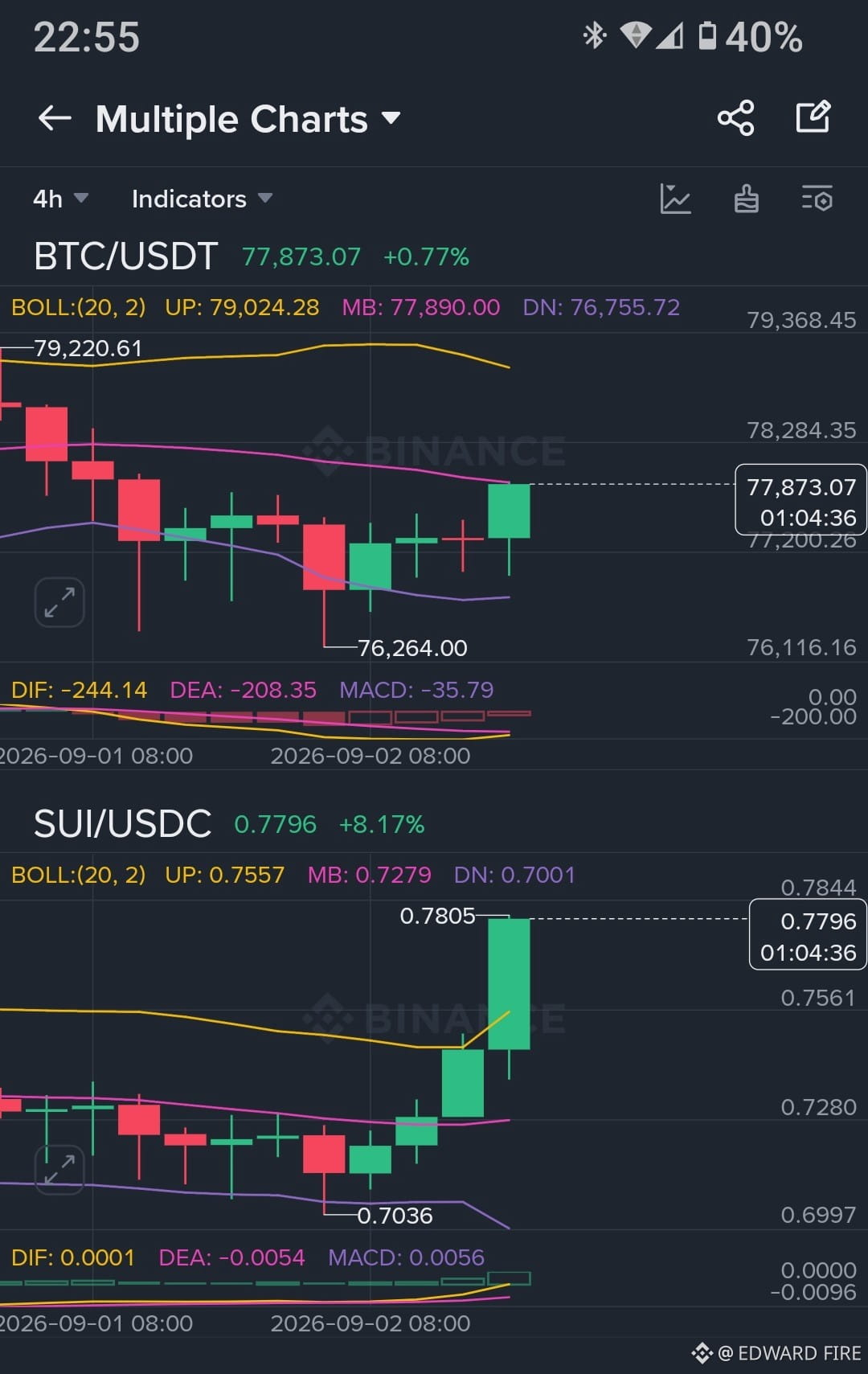
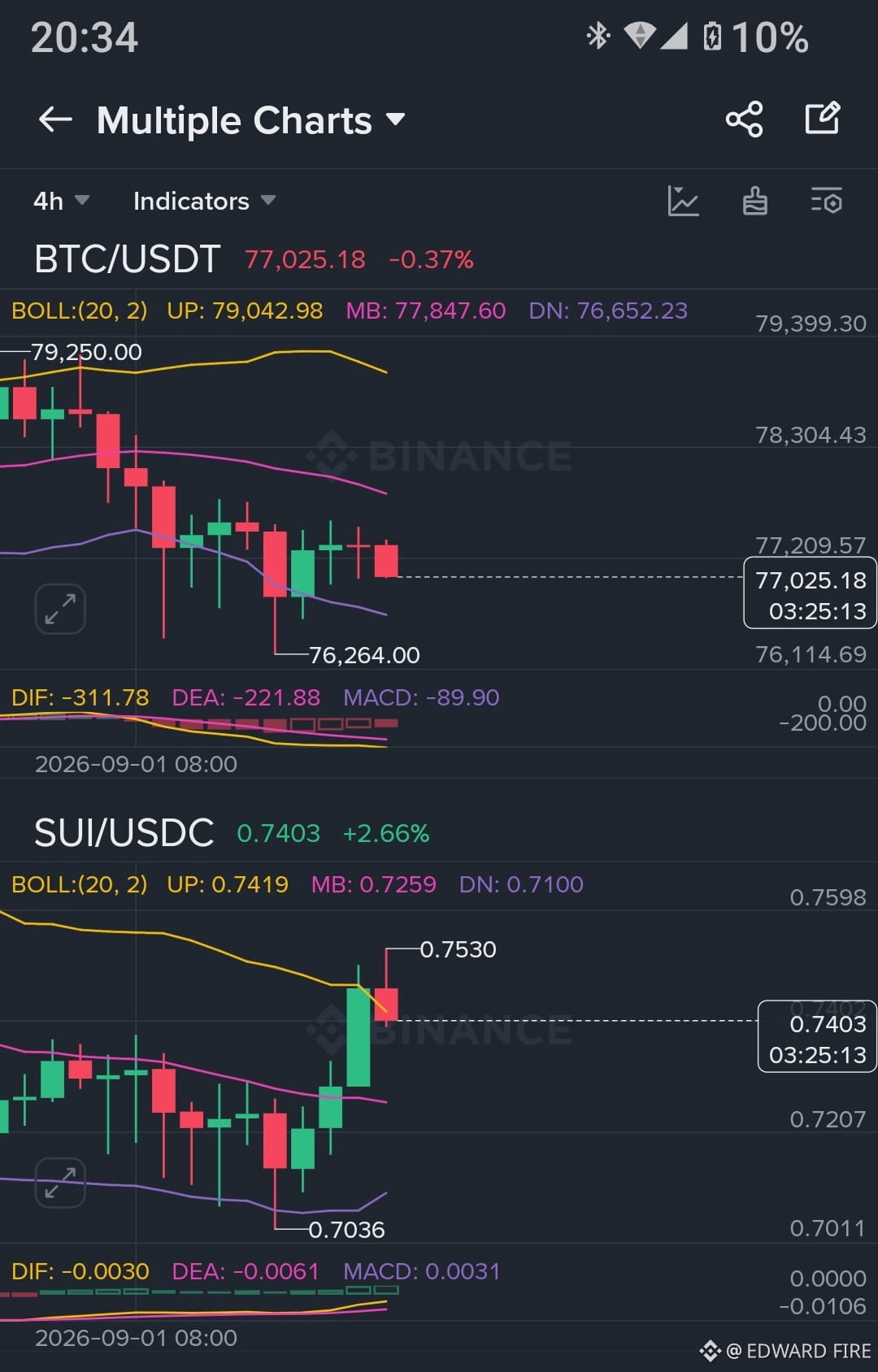
$SUI você vai ser o juiz: o BTC está abaixo das Bandas de Bollinger inferiores no gráfico de 4 horas. A SUI está rompendo o topo de modo vigoroso no mesmo gráfico. Você acha que não vai haver uma correção?
$SUI você vai ser o juiz: o BTC está abaixo das Bandas de Bollinger inferiores no gráfico de 4 horas. A SUI está rompendo o topo de modo vigoroso no mesmo gráfico. Você acha que não vai haver uma correção?
101
·
--
$SUI BTC está sentado na Banda de Bollinger inferior do gráfico de 4H.
SUI está no topo.
Isso não é um repique. Isso é a configuração para uma queda.
Manter SUI agora é como você fica preso.
Vai só descer.
VEJA 👀 veja por você mesmo 👇
$SUI BTC está sentado na Banda de Bollinger inferior do gráfico de 4H.
SUI está no topo.
Isso não é um repique. Isso é a configuração para uma queda.
Manter SUI agora é como você fica preso.
Vai só descer.
VEJA 👀 veja por você mesmo 👇
SUI está no topo.
Isso não é um repique. Isso é a configuração para uma queda.
Manter SUI agora é como você fica preso.
Vai só descer.
VEJA 👀 veja por você mesmo 👇
1
1
113
Inicia sessão para explorar mais conteúdos
Junta-te a utilizadores de criptomoedas de todo o mundo na Binance Square
⚡️ Obtém informações úteis e recentes sobre criptomoedas.
💬 Com a confiança da maior exchange de criptomoedas do mundo.
👍 Descobre perspetivas reais de criadores verificados.
E-mail/Número de telefone
Tópicos em Tendência
BOJRaisesRatesTo31YearHigh
31,928 visualizações
753 a discutir
Bitcoin Volta a Ganhar Destaque enquanto a Pressão Macroeconômica Não Consegue Quebrar a Demanda por Cripto
Fatima_Tariq
·10 gostos
·5.5k visualizações
BuffettStepsDownAsBerkshireChairman
10,815 visualizações
315 a discutir
XRPExchangeReservesHitSevenYearLow
14,957 visualizações
331 a discutir