

Kosi_SoG
9 Publicações

Kosi_SoG
Denunciar
Bloquear Utilizador
1 A seguir
2 Seguidores
5 Gostaram
Publicações
·
--
Uma grande movimentação no mundo cripto pode criar a sensação mais perigosa para os traders: confiança.
Depois de ver $BTC dar um forte impulso, muitos traders começam a pensar:
"Eu perdi. Preciso pegar a próxima."
Então eles entram sem um plano.
Sem um motivo claro.
Sem gestão de risco.
Apenas emoção.
O mercado não recompensa a impaciência.
Um trader inteligente entende que as oportunidades não desaparecem — mas o capital pode.
Antes de entrar em qualquer operação, pergunte:
• Qual é o meu motivo para esta entrada?
• Onde eu estou errado?
• Estou seguindo um plano ou perseguindo
O que afeta mais o seu trading: #FOMO ou o medo de perder dinheiro?
Uma grande movimentação no mundo cripto pode criar a sensação mais perigosa para os traders: confiança.
Depois de ver $BTC dar um forte impulso, muitos traders começam a pensar:
"Eu perdi. Preciso pegar a próxima."
Então eles entram sem um plano.
Sem um motivo claro.
Sem gestão de risco.
Apenas emoção.
O mercado não recompensa a impaciência.
Um trader inteligente entende que as oportunidades não desaparecem — mas o capital pode.
Antes de entrar em qualquer operação, pergunte:
• Qual é o meu motivo para esta entrada?
• Onde eu estou errado?
• Estou seguindo um plano ou perseguindo
O que afeta mais o seu trading: #FOMO ou o medo de perder dinheiro?
Depois de ver $BTC dar um forte impulso, muitos traders começam a pensar:
"Eu perdi. Preciso pegar a próxima."
Então eles entram sem um plano.
Sem um motivo claro.
Sem gestão de risco.
Apenas emoção.
O mercado não recompensa a impaciência.
Um trader inteligente entende que as oportunidades não desaparecem — mas o capital pode.
Antes de entrar em qualquer operação, pergunte:
• Qual é o meu motivo para esta entrada?
• Onde eu estou errado?
• Estou seguindo um plano ou perseguindo
O que afeta mais o seu trading: #FOMO ou o medo de perder dinheiro?

74
·
--
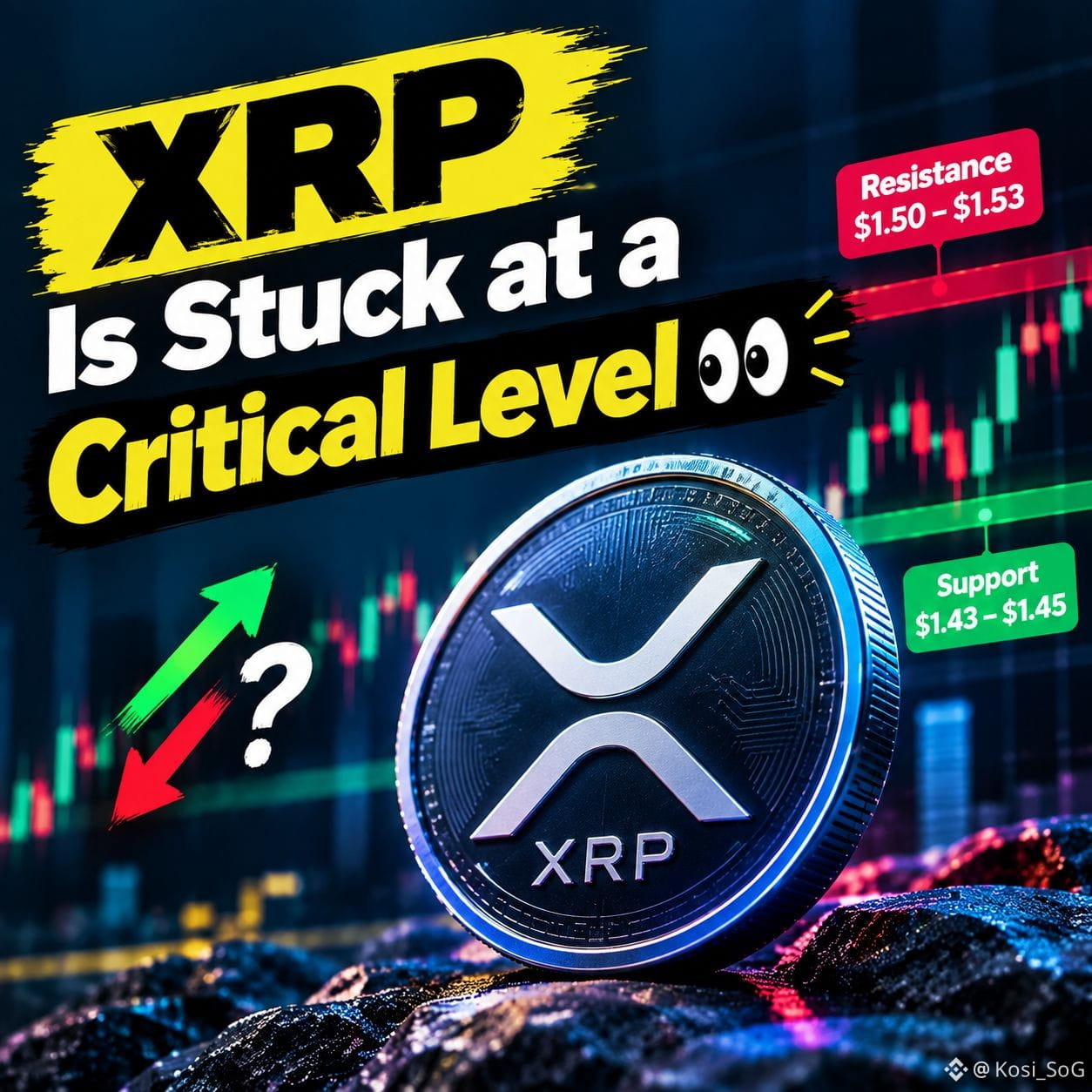
XRP Está Preso em um Nível Crítico 👀
$XRP está pairando perto de US$ 1,50, mas a questão real é:
Os compradores conseguem empurrá-lo de volta acima da resistência, ou os vendedores vão retomar o controle?
Estou observando duas áreas:
🔴 US$ 1,50–1,53 — resistência
🟢 US$ 1,43–1,45 — suporte próximo
Uma ruptura clara acima da resistência pode mudar o panorama de curto prazo.
Mas perder o suporte pode contar uma história bem diferente.
XRP Está Preso em um Nível Crítico 👀
$XRP está pairando perto de US$ 1,50, mas a questão real é:
Os compradores conseguem empurrá-lo de volta acima da resistência, ou os vendedores vão retomar o controle?
Estou observando duas áreas:
🔴 US$ 1,50–1,53 — resistência
🟢 US$ 1,43–1,45 — suporte próximo
Uma ruptura clara acima da resistência pode mudar o panorama de curto prazo.
Mas perder o suporte pode contar uma história bem diferente.
$XRP está pairando perto de US$ 1,50, mas a questão real é:
Os compradores conseguem empurrá-lo de volta acima da resistência, ou os vendedores vão retomar o controle?
Estou observando duas áreas:
🔴 US$ 1,50–1,53 — resistência
🟢 US$ 1,43–1,45 — suporte próximo
Uma ruptura clara acima da resistência pode mudar o panorama de curto prazo.
Mas perder o suporte pode contar uma história bem diferente.
2
212
·
--
Ver tradução
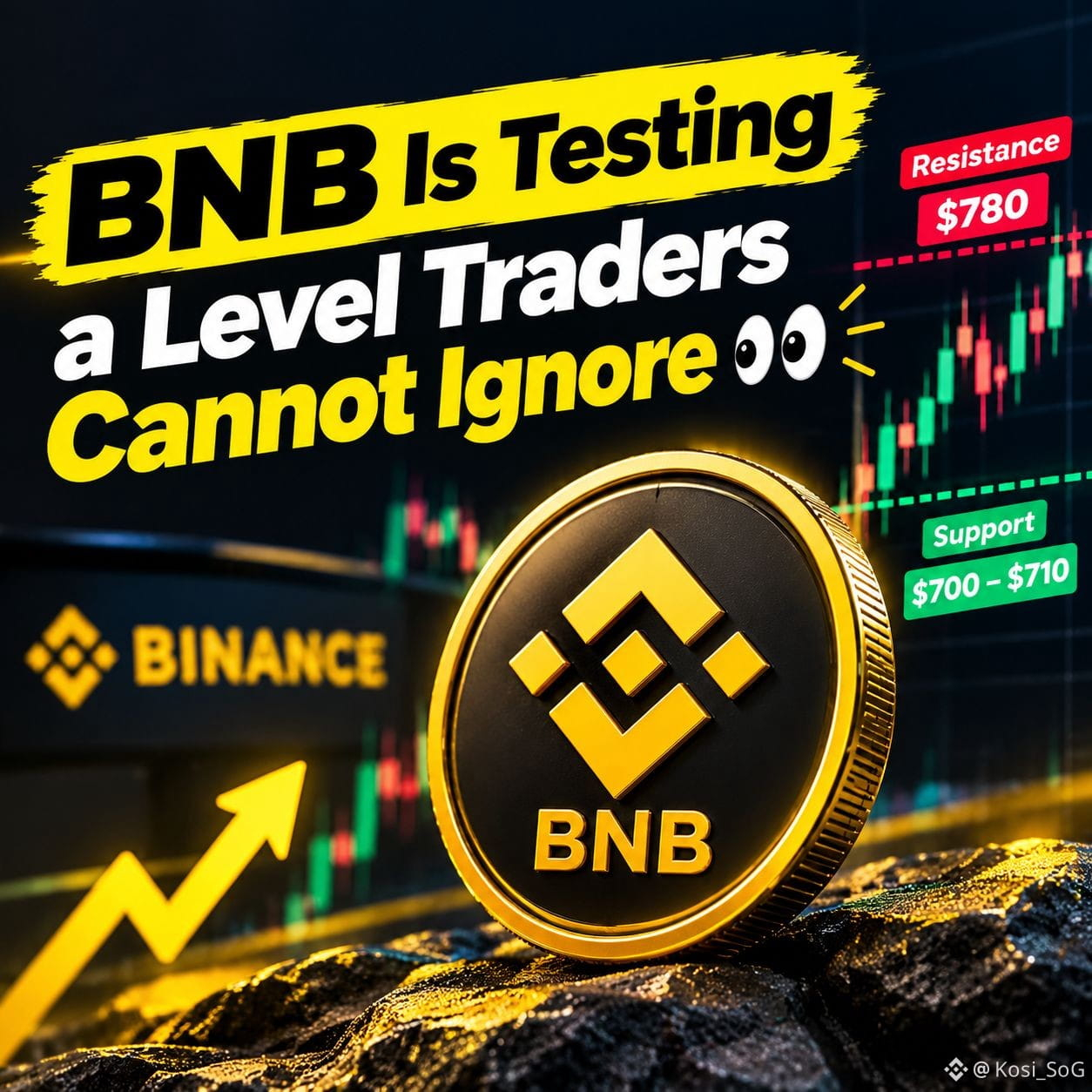
$BNB Is Testing a Level Traders Cannot Ignore 👀
BNB is at a level where the next move could be interesting.
Right now, traders are watching one important question:
Can $BNB break above resistance, or will sellers defend this area?
The key things I’m watching:
• Does price hold above important support?
• Do buyers have enough strength for a breakout?
• Is the volume confirming the move?
A breakout without confirmation can fail.
A pullback to support can also create a new opportunity.
The chart is telling a story — but patience decides who understands it.
Are you watching $BNB at this level, or waiting for a clearer signal?
$BNB Is Testing a Level Traders Cannot Ignore 👀
BNB is at a level where the next move could be interesting.
Right now, traders are watching one important question:
Can $BNB break above resistance, or will sellers defend this area?
The key things I’m watching:
• Does price hold above important support?
• Do buyers have enough strength for a breakout?
• Is the volume confirming the move?
A breakout without confirmation can fail.
A pullback to support can also create a new opportunity.
The chart is telling a story — but patience decides who understands it.
Are you watching $BNB at this level, or waiting for a clearer signal?
BNB is at a level where the next move could be interesting.
Right now, traders are watching one important question:
Can $BNB break above resistance, or will sellers defend this area?
The key things I’m watching:
• Does price hold above important support?
• Do buyers have enough strength for a breakout?
• Is the volume confirming the move?
A breakout without confirmation can fail.
A pullback to support can also create a new opportunity.
The chart is telling a story — but patience decides who understands it.
Are you watching $BNB at this level, or waiting for a clearer signal?
83
·
--
Por que os traders estão olhando $SOL de novo 👀
Algo interessante está acontecendo com $SOL
Depois de um período de incerteza, os traders voltaram a prestar atenção.
Mas a maior pergunta não é:
“Até onde o Solana pode ir?”
A questão real é:
Isso é uma recuperação real ou apenas mais um movimento temporário?
O que eu estou observando:
• Volume de negociação
• Força do momentum
• Como o preço reage após grandes movimentos
O mercado recompensa a preparação, não a empolgação.
Antes de seguir a multidão, entenda o que está impulsionando o movimento.
Você está acompanhando $SOL agora, ou outra moeda está no seu radar?
Por que os traders estão olhando $SOL de novo 👀
Algo interessante está acontecendo com $SOL
Depois de um período de incerteza, os traders voltaram a prestar atenção.
Mas a maior pergunta não é:
“Até onde o Solana pode ir?”
A questão real é:
Isso é uma recuperação real ou apenas mais um movimento temporário?
O que eu estou observando:
• Volume de negociação
• Força do momentum
• Como o preço reage após grandes movimentos
O mercado recompensa a preparação, não a empolgação.
Antes de seguir a multidão, entenda o que está impulsionando o movimento.
Você está acompanhando $SOL agora, ou outra moeda está no seu radar?
Algo interessante está acontecendo com $SOL
Depois de um período de incerteza, os traders voltaram a prestar atenção.
Mas a maior pergunta não é:
“Até onde o Solana pode ir?”
A questão real é:
Isso é uma recuperação real ou apenas mais um movimento temporário?
O que eu estou observando:
• Volume de negociação
• Força do momentum
• Como o preço reage após grandes movimentos
O mercado recompensa a preparação, não a empolgação.
Antes de seguir a multidão, entenda o que está impulsionando o movimento.
Você está acompanhando $SOL agora, ou outra moeda está no seu radar?

89
·
--
$BTC Está Mostrando um Sinal que Muitos Traders Ignoram
Antes de entrar em uma negociação de Bitcoin, traders inteligentes fazem uma pergunta primeiro 👀
Não:
"Até onde o $BTC pode ir?"
A primeira pergunta é:
"O que o Bitcoin está me mostrando agora?"
Muitos iniciantes focam apenas em encontrar uma entrada.
Mas traders experientes observam:
• Níveis-chave de suporte e resistência
• Se compradores ou vendedores têm controle
• Se o movimento atual tem confirmação
Uma vela forte pode chamar atenção, mas uma única vela não é um plano de negociação.
O objetivo não é acertar todos os movimentos.
O objetivo é entender o mercado antes de tomar uma decisão.
Agora, eu estou acompanhando como $BTC reage em torno de níveis importantes, porque essa reação pode revelar muito sobre a força do mercado.
Você verifica o gráfico antes de negociar Bitcoin ou segue a multidão?
$BTC Está Mostrando um Sinal que Muitos Traders Ignoram
Antes de entrar em uma negociação de Bitcoin, traders inteligentes fazem uma pergunta primeiro 👀
Não:
"Até onde o $BTC pode ir?"
A primeira pergunta é:
"O que o Bitcoin está me mostrando agora?"
Muitos iniciantes focam apenas em encontrar uma entrada.
Mas traders experientes observam:
• Níveis-chave de suporte e resistência
• Se compradores ou vendedores têm controle
• Se o movimento atual tem confirmação
Uma vela forte pode chamar atenção, mas uma única vela não é um plano de negociação.
O objetivo não é acertar todos os movimentos.
O objetivo é entender o mercado antes de tomar uma decisão.
Agora, eu estou acompanhando como $BTC reage em torno de níveis importantes, porque essa reação pode revelar muito sobre a força do mercado.
Você verifica o gráfico antes de negociar Bitcoin ou segue a multidão?
Antes de entrar em uma negociação de Bitcoin, traders inteligentes fazem uma pergunta primeiro 👀
Não:
"Até onde o $BTC pode ir?"
A primeira pergunta é:
"O que o Bitcoin está me mostrando agora?"
Muitos iniciantes focam apenas em encontrar uma entrada.
Mas traders experientes observam:
• Níveis-chave de suporte e resistência
• Se compradores ou vendedores têm controle
• Se o movimento atual tem confirmação
Uma vela forte pode chamar atenção, mas uma única vela não é um plano de negociação.
O objetivo não é acertar todos os movimentos.
O objetivo é entender o mercado antes de tomar uma decisão.
Agora, eu estou acompanhando como $BTC reage em torno de níveis importantes, porque essa reação pode revelar muito sobre a força do mercado.
Você verifica o gráfico antes de negociar Bitcoin ou segue a multidão?
85
·
--
$ETH está se aproximando de um momento que os traders devem observar 👀
Muitos iniciantes só olham o preço depois que um grande movimento acontece.
Mas traders experientes costumam observar algo antes da alta/queda:
Níveis-chave.
Para $ETH , a questão não é apenas:
"O preço vai subir ou descer?"
As melhores perguntas são:
• O Ethereum está respeitando níveis importantes de suporte?
• Os compradores estão mostrando força após uma correção/recuo?
• O momento (momentum) está melhorando ou enfraquecendo?
Um gráfico conta uma história.
Às vezes, as maiores oportunidades surgem quando o mercado está tranquilo — quando a maioria das pessoas ignora o que está acontecendo.
Mas a paciência importa.
Um nível não é importante porque desenhamos uma linha em um gráfico.
Ele se torna importante porque muitos traders estão observando a mesma área e reagindo a ela.
Antes de tomar qualquer decisão, eu quero ver confirmação, não apenas empolgação.
O que você está observando agora em $ETH — suporte, resistência ou momentum?
$ETH está se aproximando de um momento que os traders devem observar 👀
Muitos iniciantes só olham o preço depois que um grande movimento acontece.
Mas traders experientes costumam observar algo antes da alta/queda:
Níveis-chave.
Para $ETH , a questão não é apenas:
"O preço vai subir ou descer?"
As melhores perguntas são:
• O Ethereum está respeitando níveis importantes de suporte?
• Os compradores estão mostrando força após uma correção/recuo?
• O momento (momentum) está melhorando ou enfraquecendo?
Um gráfico conta uma história.
Às vezes, as maiores oportunidades surgem quando o mercado está tranquilo — quando a maioria das pessoas ignora o que está acontecendo.
Mas a paciência importa.
Um nível não é importante porque desenhamos uma linha em um gráfico.
Ele se torna importante porque muitos traders estão observando a mesma área e reagindo a ela.
Antes de tomar qualquer decisão, eu quero ver confirmação, não apenas empolgação.
O que você está observando agora em $ETH — suporte, resistência ou momentum?
Muitos iniciantes só olham o preço depois que um grande movimento acontece.
Mas traders experientes costumam observar algo antes da alta/queda:
Níveis-chave.
Para $ETH , a questão não é apenas:
"O preço vai subir ou descer?"
As melhores perguntas são:
• O Ethereum está respeitando níveis importantes de suporte?
• Os compradores estão mostrando força após uma correção/recuo?
• O momento (momentum) está melhorando ou enfraquecendo?
Um gráfico conta uma história.
Às vezes, as maiores oportunidades surgem quando o mercado está tranquilo — quando a maioria das pessoas ignora o que está acontecendo.
Mas a paciência importa.
Um nível não é importante porque desenhamos uma linha em um gráfico.
Ele se torna importante porque muitos traders estão observando a mesma área e reagindo a ela.
Antes de tomar qualquer decisão, eu quero ver confirmação, não apenas empolgação.
O que você está observando agora em $ETH — suporte, resistência ou momentum?
4
3
2.6k
·
--
Ver tradução
Your entry isn't always the problem. Your risk might be.A lot of beginners spend hours trying to find the perfect entry on $BTC
They study indicators.
They draw support and resistance.
They wait for the "perfect" setup.
But then they risk too much on one trade.
And suddenly, one losing trade can wipe out the progress from several winning trades.
That's why I'm learning to think about risk before reward.
Before entering a trade, I want to know:
Where is my setup invalidated?
Where will my stop-loss go?
How much of my account am I willing to lose if I'm wrong?
Because being wrong about a trade isn't unusual.
Not controlling how much you lose when you're wrong is the dangerous part.
You don't need to predict every $BTC move.
You need a plan for what you'll do if you're wrong.
What's one trading rule you wish you had learned earlier?
Your entry isn't always the problem. Your risk might be.
A lot of beginners spend hours trying to find the perfect entry on $BTC
They study indicators.
They draw support and resistance.
They wait for the "perfect" setup.
But then they risk too much on one trade.
And suddenly, one losing trade can wipe out the progress from several winning trades.
That's why I'm learning to think about risk before reward.
Before entering a trade, I want to know:
Where is my setup invalidated?
Where will my stop-loss go?
How much of my account am I willing to lose if I'm wrong?
Because being wrong about a trade isn't unusual.
Not controlling how much you lose when you're wrong is the dangerous part.
You don't need to predict every $BTC move.
You need a plan for what you'll do if you're wrong.
What's one trading rule you wish you had learned earlier?
They study indicators.
They draw support and resistance.
They wait for the "perfect" setup.
But then they risk too much on one trade.
And suddenly, one losing trade can wipe out the progress from several winning trades.
That's why I'm learning to think about risk before reward.
Before entering a trade, I want to know:
Where is my setup invalidated?
Where will my stop-loss go?
How much of my account am I willing to lose if I'm wrong?
Because being wrong about a trade isn't unusual.
Not controlling how much you lose when you're wrong is the dangerous part.
You don't need to predict every $BTC move.
You need a plan for what you'll do if you're wrong.
What's one trading rule you wish you had learned earlier?
85
·
--
Artigo
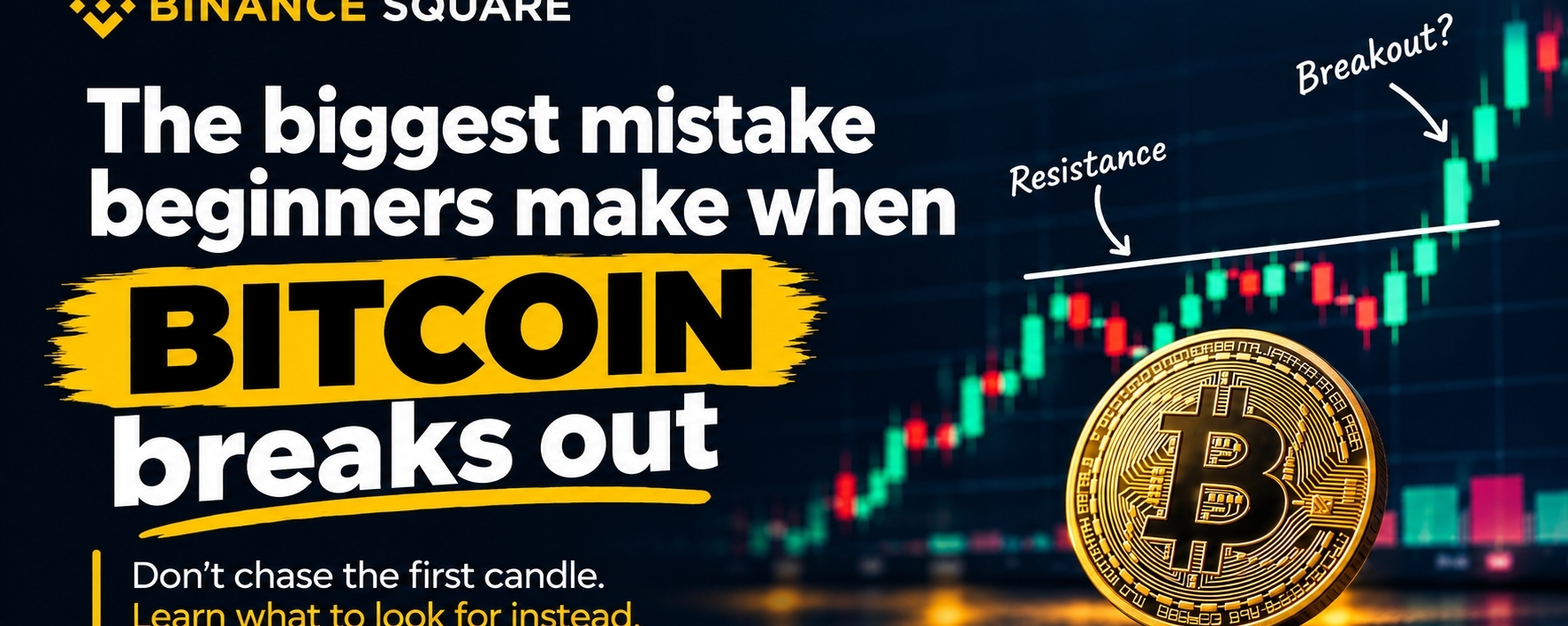
O Maior Erro que os Iniciantes Cometem Quando o Bitcoin RompeO maior erro que os iniciantes cometem quando o Bitcoin rompe uma resistência 👇
Você vê $BTC se movendo de repente para cima.
Surge uma grande vela verde.
Todo mundo começa a falar sobre o próximo alvo.
E então parece que você precisa entrar imediatamente — porque tem medo de o movimento acontecer sem você.
Essa sensação é FOMO.
Mas um rompimento não significa automaticamente que o preço vai continuar subindo.
Às vezes, o Bitcoin rompe acima da resistência, atrai compradores e depois volta para baixo do nível.
Em vez de correr atrás da primeira grande vela, estou aprendendo a perguntar:
O Maior Erro que os Iniciantes Cometem Quando o Bitcoin Rompe
O maior erro que os iniciantes cometem quando o Bitcoin rompe uma resistência 👇
Você vê $BTC se movendo de repente para cima.
Surge uma grande vela verde.
Todo mundo começa a falar sobre o próximo alvo.
E então parece que você precisa entrar imediatamente — porque tem medo de o movimento acontecer sem você.
Essa sensação é FOMO.
Mas um rompimento não significa automaticamente que o preço vai continuar subindo.
Às vezes, o Bitcoin rompe acima da resistência, atrai compradores e depois volta para baixo do nível.
Em vez de correr atrás da primeira grande vela, estou aprendendo a perguntar:
Você vê $BTC se movendo de repente para cima.
Surge uma grande vela verde.
Todo mundo começa a falar sobre o próximo alvo.
E então parece que você precisa entrar imediatamente — porque tem medo de o movimento acontecer sem você.
Essa sensação é FOMO.
Mas um rompimento não significa automaticamente que o preço vai continuar subindo.
Às vezes, o Bitcoin rompe acima da resistência, atrai compradores e depois volta para baixo do nível.
Em vez de correr atrás da primeira grande vela, estou aprendendo a perguntar:
109
Inicia sessão para explorar mais conteúdos
Junta-te a utilizadores de criptomoedas de todo o mundo na Binance Square
⚡️ Obtém informações úteis e recentes sobre criptomoedas.
💬 Com a confiança da maior exchange de criptomoedas do mundo.
👍 Descobre perspetivas reais de criadores verificados.
E-mail/Número de telefone
Tópicos em Tendência
CFTCSubmitsTwoEventContractRulesToWhiteHouse
213 visualizações
22 a discutir
#cftcsubmitstwoeventcontractrulestowhitehouse
🏛️ A CFTC acabou de enviar as regras de "Event Contract" para a Casa Branca! Mas espere, o que é um event contract, afinal? 🤔
Em termos simples, é um contrato financeiro que permite você apostar em resultados do mundo real — como quem vence a eleição ou o que o Fed vai fazer a seguir.
Então, sobre o que são essas duas regras?
- Regra 1: Proibir produtos de apostas no estilo cassino de serem classificados como swaps. (Desculpe, sem fichas de pôquer aqui! 🎰)
- Regra 2: Incluir oficialmente os contratos de eventos na definição de swap regulado.
Isso afeta seu cripto ou suas ações?
Diretamente? Não. Mas indiretamente, é um grande assunto para mercados de previsão descentralizados (como Polymarket), onde usuários apostam em eventos usando cripto. A CFTC quer regular essas apostas em eventos sob estruturas financeiras rígidas!
O que os traders devem fazer?
Fiquem de olho nas regulamentações, não se alavanquem demais em mercados de previsão e foquem suas carteiras à vista/futuros.
Não é aconselhamento financeiro.
Me apoie usando o código VINHTOCDO ou link: https://www.binance.com/register?ref=VINHTOCDO
👇 Clique em trade abaixo para me apoiar:
$BTC
$ETH
$BNB
#CFTC #EventContracts #CryptoRegulation #PredictionMarkets #CryptoNews #VINHTOCDO
Vinhtocdo
·1 gostos
·48 visualizações
BitcoinClears$85200
19,975 visualizações
257 a discutir
AltcoinSeasonIndexHoldsAbove60For5Days
102,919 visualizações
1,449 a discutir