

The Market Updates
7k Publicações

The Market Updates
Denunciar
Bloquear Utilizador
Crypto Trader Since 2007.
5 A seguir
12.4K+ Seguidores
19.7K+ Gostaram
Publicações
Tudo
Cotações
Vídeos
ISTO É ENORME
🇷🇺🇺🇦 Foi firmado um cessar-fogo entre Rússia e Ucrânia.
Agora queremos um acordo entre EUA e Irã, e os mercados vão disparar.
ISTO É ENORME
🇷🇺🇺🇦 Foi firmado um cessar-fogo entre Rússia e Ucrânia.
Agora queremos um acordo entre EUA e Irã, e os mercados vão disparar.
🇷🇺🇺🇦 Foi firmado um cessar-fogo entre Rússia e Ucrânia.
Agora queremos um acordo entre EUA e Irã, e os mercados vão disparar.
20
·
--
Em Alta
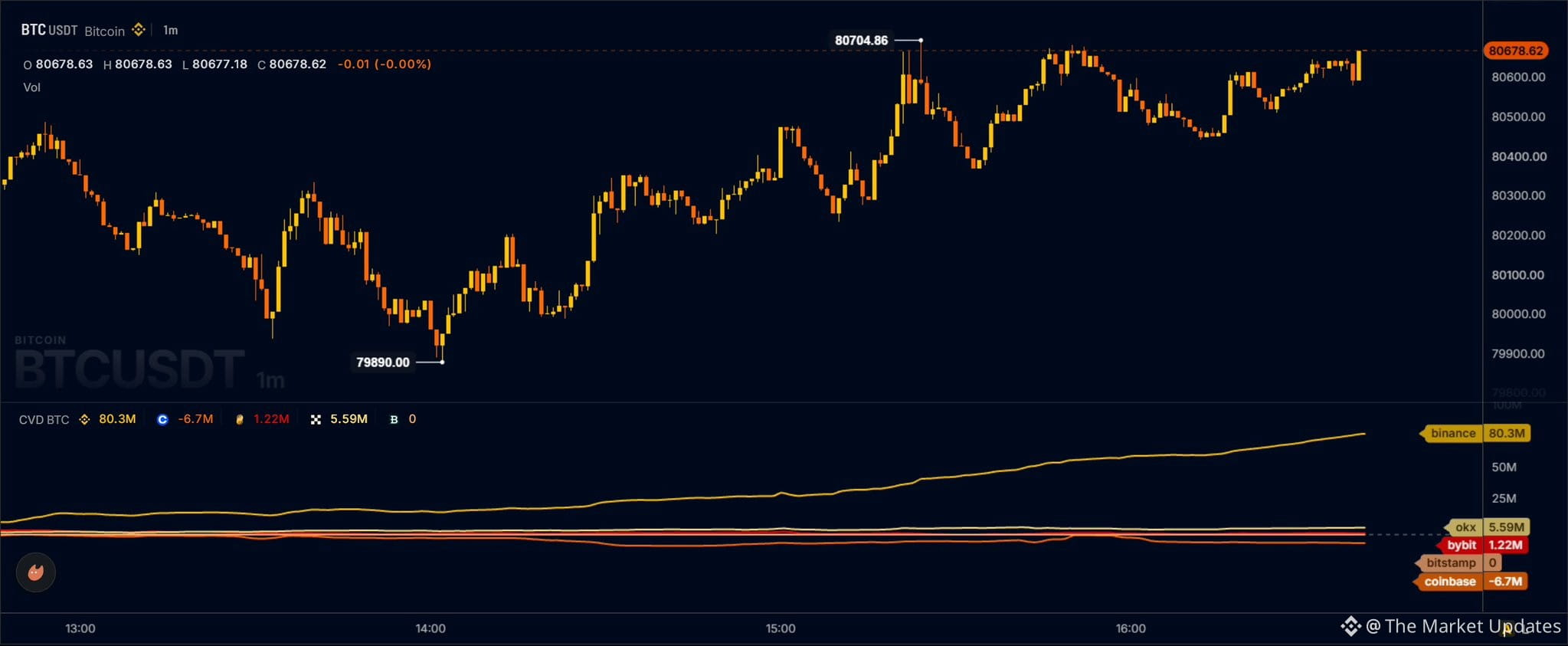
As baleias da Binance estão comprando $BTC como loucas agora.
MANDA VER 🚀
As baleias da Binance estão comprando $BTC como loucas agora.
MANDA VER 🚀
MANDA VER 🚀
26
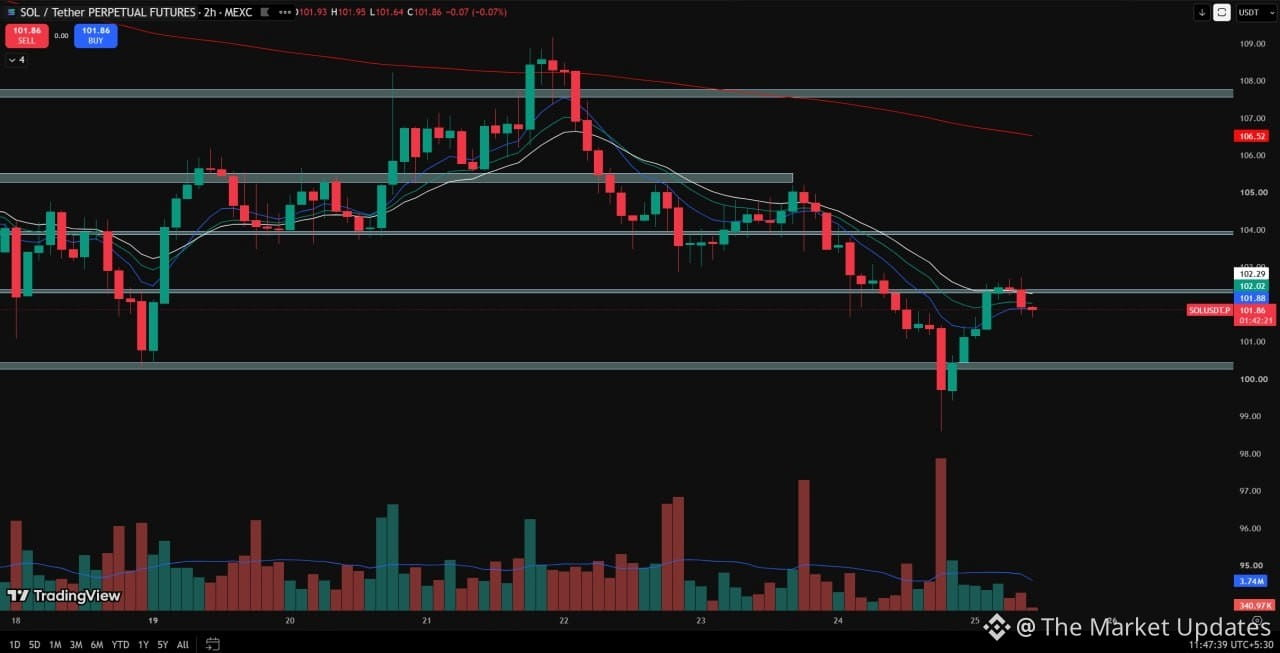
$SOL tentou recuperar a zona entre $102 e $102,30, mas os vendedores voltaram a empurrar o preço para baixo. 👀
O preço continua a ter dificuldades em torno das EMAs, por isso a estrutura permanece fraca por enquanto.
Se o SOL recuperar os $102,30, poderemos ver alguma recuperação. Mas, se voltar a ser rejeitado, estou de olho nos $100,30 como próximo suporte. Uma quebra abaixo desse nível poderá abrir caminho até aos $99.
Por enquanto, aguardo confirmação. 📉
$SOL tentou recuperar a zona entre $102 e $102,30, mas os vendedores voltaram a empurrar o preço para baixo. 👀
O preço continua a ter dificuldades em torno das EMAs, por isso a estrutura permanece fraca por enquanto.
Se o SOL recuperar os $102,30, poderemos ver alguma recuperação. Mas, se voltar a ser rejeitado, estou de olho nos $100,30 como próximo suporte. Uma quebra abaixo desse nível poderá abrir caminho até aos $99.
Por enquanto, aguardo confirmação. 📉
O preço continua a ter dificuldades em torno das EMAs, por isso a estrutura permanece fraca por enquanto.
Se o SOL recuperar os $102,30, poderemos ver alguma recuperação. Mas, se voltar a ser rejeitado, estou de olho nos $100,30 como próximo suporte. Uma quebra abaixo desse nível poderá abrir caminho até aos $99.
Por enquanto, aguardo confirmação. 📉
74
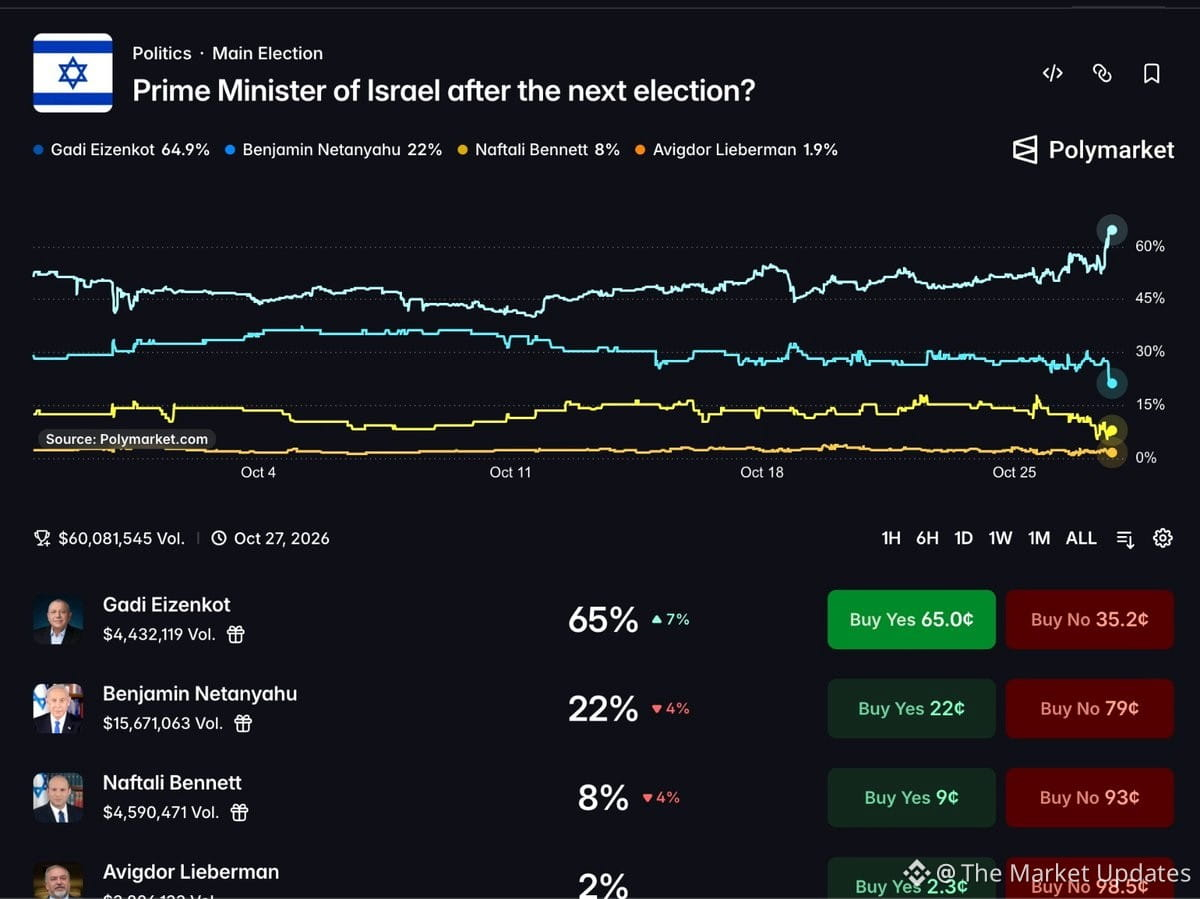
🚨🇮🇱 As hipóteses de Netanyahu «concluir o trabalho» como primeiro-ministro de Israel estão a cair a cada minuto...
Gadi Eizenkot, o favorito, está atualmente a disparar, enquanto Netanyahu e o antigo primeiro-ministro Naftali Bennett estão em queda.
Aproveita as férias, Bibi, nos poucos países onde te é permitido passar algum tempo... 🤣
Fonte: Polymarket
🚨🇮🇱 As hipóteses de Netanyahu «concluir o trabalho» como primeiro-ministro de Israel estão a cair a cada minuto...
Gadi Eizenkot, o favorito, está atualmente a disparar, enquanto Netanyahu e o antigo primeiro-ministro Naftali Bennett estão em queda.
Aproveita as férias, Bibi, nos poucos países onde te é permitido passar algum tempo... 🤣
Fonte: Polymarket
Gadi Eizenkot, o favorito, está atualmente a disparar, enquanto Netanyahu e o antigo primeiro-ministro Naftali Bennett estão em queda.
Aproveita as férias, Bibi, nos poucos países onde te é permitido passar algum tempo... 🤣
Fonte: Polymarket
64
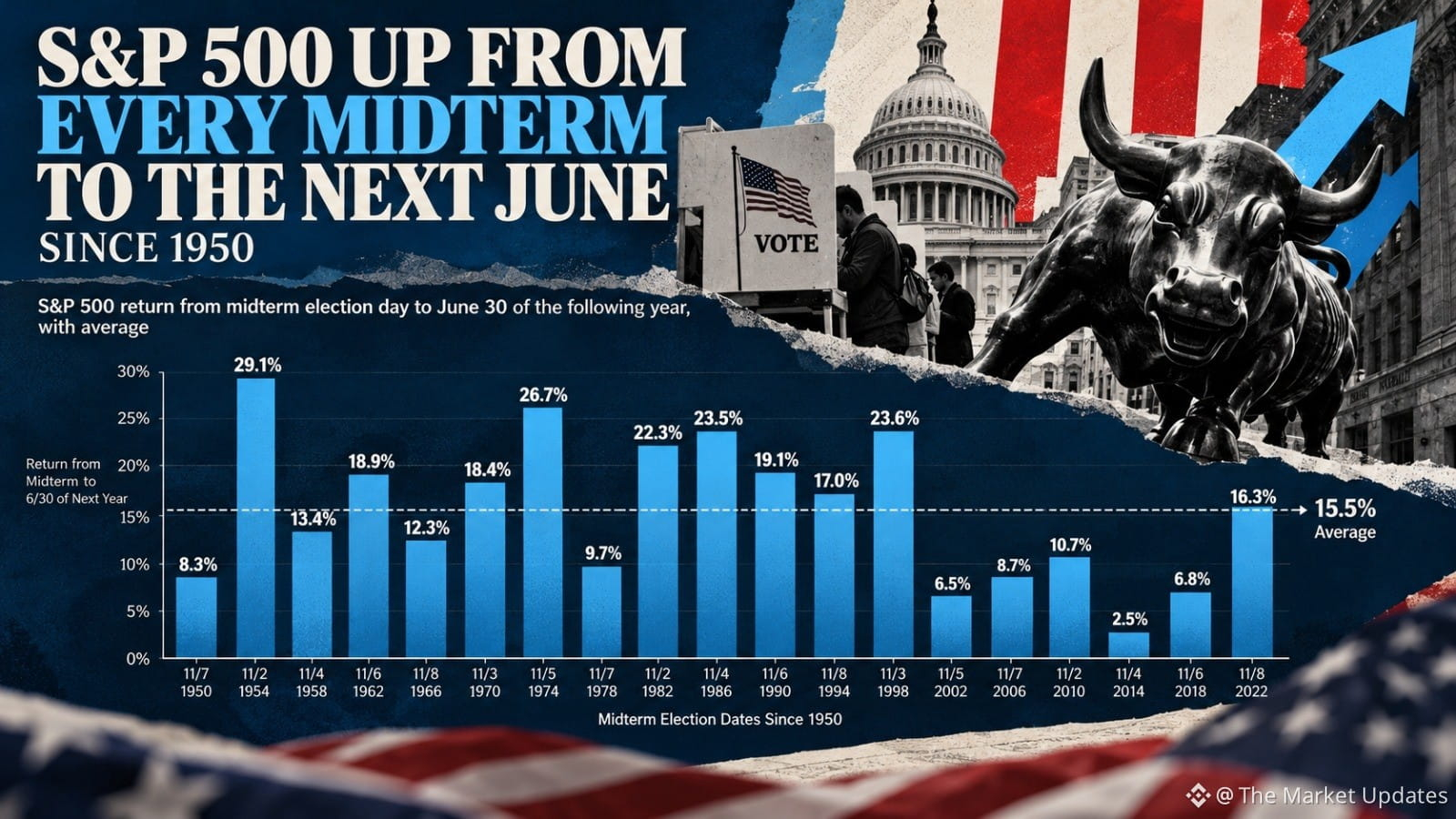
🇺🇸 O S&P 500 NUNCA caiu entre uma eleição de meio de mandato nos EUA e o mês de junho seguinte desde 1950.
O índice fechou em alta em todas as ocasiões, com um ganho médio de 15,5% entre o dia da eleição e 30 de junho do ano seguinte.
Algumas altas após as eleições de meio de mandato foram enormes: +29,1% após 1954, +26,7% após 1970 e +23,6% após 1994.
Até mesmo o período mais fraco apresentado ainda teve um retorno positivo.
Fonte: obermeyerwealth
🇺🇸 O S&P 500 NUNCA caiu entre uma eleição de meio de mandato nos EUA e o mês de junho seguinte desde 1950.
O índice fechou em alta em todas as ocasiões, com um ganho médio de 15,5% entre o dia da eleição e 30 de junho do ano seguinte.
Algumas altas após as eleições de meio de mandato foram enormes: +29,1% após 1954, +26,7% após 1970 e +23,6% após 1994.
Até mesmo o período mais fraco apresentado ainda teve um retorno positivo.
Fonte: obermeyerwealth
O índice fechou em alta em todas as ocasiões, com um ganho médio de 15,5% entre o dia da eleição e 30 de junho do ano seguinte.
Algumas altas após as eleições de meio de mandato foram enormes: +29,1% após 1954, +26,7% após 1970 e +23,6% após 1994.
Até mesmo o período mais fraco apresentado ainda teve um retorno positivo.
Fonte: obermeyerwealth
32
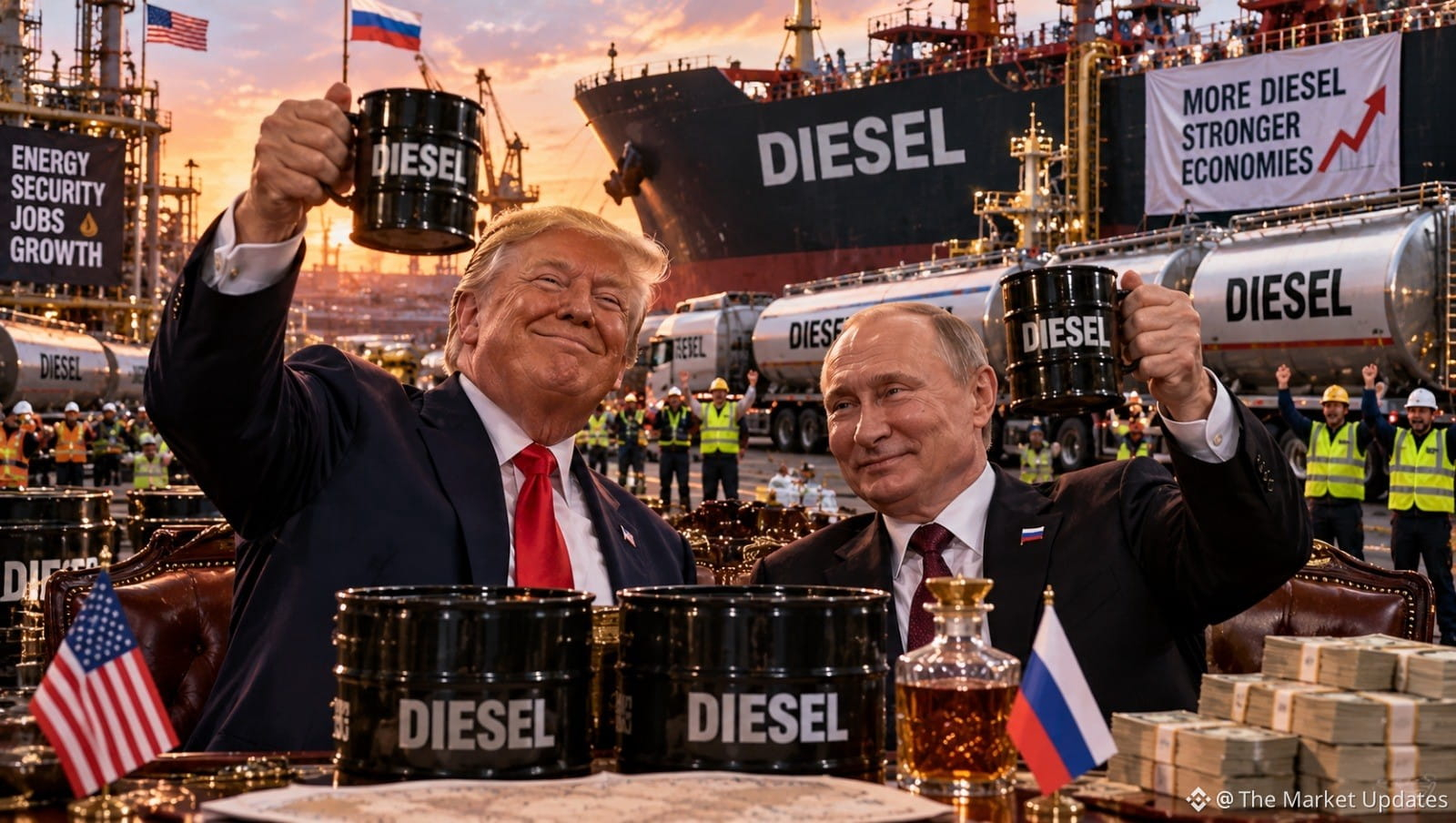
🇷🇺🇺🇸🇺🇦 Pela primeira vez, diesel russo está a caminho dos EUA diretamente, ao abrigo do novo acordo de Trump com Putin.
E um dos petroleiros foi alvo de SANÇÕES pelos aliados europeus dos Estados Unidos.
Três navios que transportam cerca de 140.000 toneladas de diesel russo deverão chegar a portos dos EUA na próxima semana, depois de Washington ter isentado temporariamente o combustível das sanções.
O primeiro petroleiro deverá chegar a Nova Iorque a 7 de novembro, seguido de mais dois, incluindo o Leruo, que está na lista negra da UE, do Reino Unido e do Canadá.
Os carregamentos chegam quando o preço médio do diesel nos EUA é de 6,34 dólares por galão, acima dos 3,66 dólares de há um ano, e a administração Trump procura formas de reduzir os custos da energia.
Um grupo bipartidário de senadores já está a alertar as empresas dos EUA de que a participação poderá criar sérios riscos jurídicos.
O diesel russo está a atravessar novamente o Atlântico, desta vez com a autorização de Washington...
Fonte: FT
🇷🇺🇺🇸🇺🇦 Pela primeira vez, diesel russo está a caminho dos EUA diretamente, ao abrigo do novo acordo de Trump com Putin.
E um dos petroleiros foi alvo de SANÇÕES pelos aliados europeus dos Estados Unidos.
Três navios que transportam cerca de 140.000 toneladas de diesel russo deverão chegar a portos dos EUA na próxima semana, depois de Washington ter isentado temporariamente o combustível das sanções.
O primeiro petroleiro deverá chegar a Nova Iorque a 7 de novembro, seguido de mais dois, incluindo o Leruo, que está na lista negra da UE, do Reino Unido e do Canadá.
Os carregamentos chegam quando o preço médio do diesel nos EUA é de 6,34 dólares por galão, acima dos 3,66 dólares de há um ano, e a administração Trump procura formas de reduzir os custos da energia.
Um grupo bipartidário de senadores já está a alertar as empresas dos EUA de que a participação poderá criar sérios riscos jurídicos.
O diesel russo está a atravessar novamente o Atlântico, desta vez com a autorização de Washington...
Fonte: FT
E um dos petroleiros foi alvo de SANÇÕES pelos aliados europeus dos Estados Unidos.
Três navios que transportam cerca de 140.000 toneladas de diesel russo deverão chegar a portos dos EUA na próxima semana, depois de Washington ter isentado temporariamente o combustível das sanções.
O primeiro petroleiro deverá chegar a Nova Iorque a 7 de novembro, seguido de mais dois, incluindo o Leruo, que está na lista negra da UE, do Reino Unido e do Canadá.
Os carregamentos chegam quando o preço médio do diesel nos EUA é de 6,34 dólares por galão, acima dos 3,66 dólares de há um ano, e a administração Trump procura formas de reduzir os custos da energia.
Um grupo bipartidário de senadores já está a alertar as empresas dos EUA de que a participação poderá criar sérios riscos jurídicos.
O diesel russo está a atravessar novamente o Atlântico, desta vez com a autorização de Washington...
Fonte: FT
22
·
--
Em Alta
ÚLTIMA HORA:
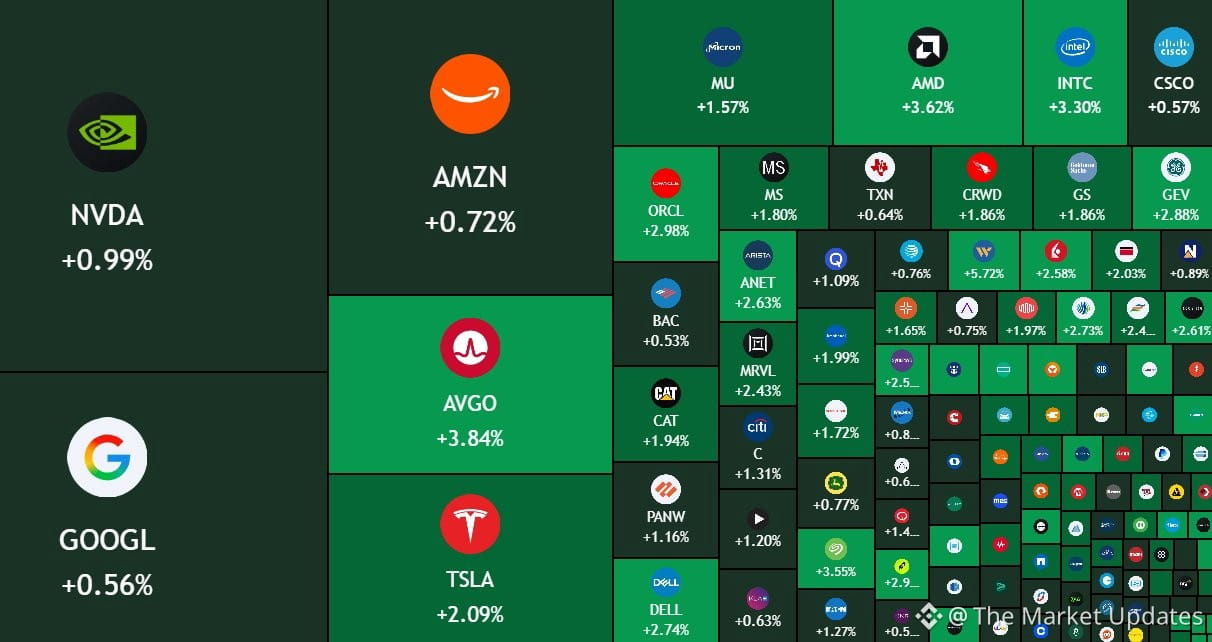
US$ 320 bilhões foram adicionados ao mercado de ações dos EUA na abertura.
ÚLTIMA HORA:
US$ 320 bilhões foram adicionados ao mercado de ações dos EUA na abertura.
US$ 320 bilhões foram adicionados ao mercado de ações dos EUA na abertura.
349
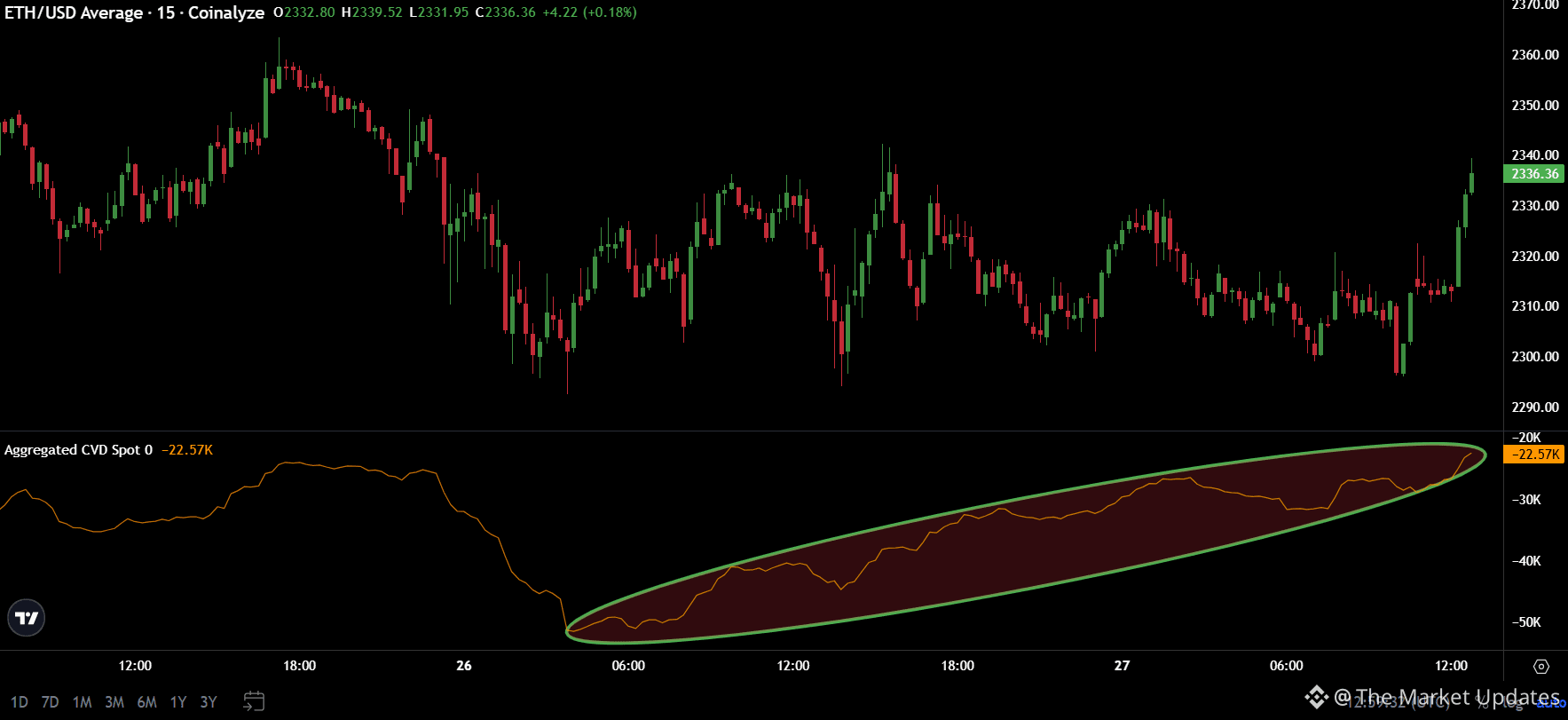
As quedas do $ETH estão sendo compradas.
A demanda à vista está aumentando enquanto o ETH consolida.
Estamos muito perto do fundo agora.
As quedas do $ETH estão sendo compradas.
A demanda à vista está aumentando enquanto o ETH consolida.
Estamos muito perto do fundo agora.
A demanda à vista está aumentando enquanto o ETH consolida.
Estamos muito perto do fundo agora.
27
·
--
Em Alta
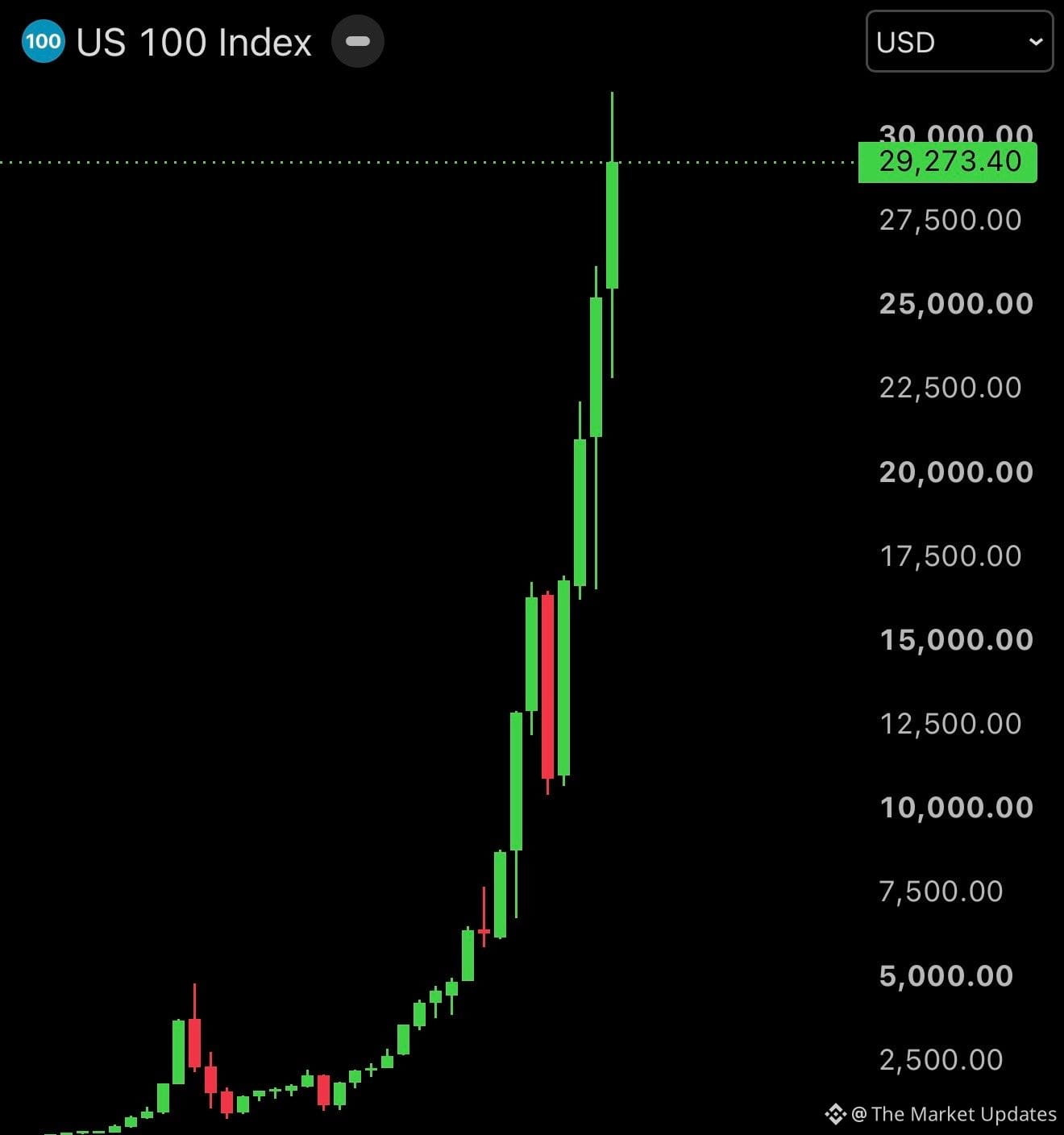
ÚLTIMA HORA: 🇺🇸 Janus Henderson lança o primeiro fundo tokenizado que acompanha o Nasdaq-100.
Um dos maiores índices de ações do mundo agora está na blockchain.
ÚLTIMA HORA: 🇺🇸 Janus Henderson lança o primeiro fundo tokenizado que acompanha o Nasdaq-100.
Um dos maiores índices de ações do mundo agora está na blockchain.
Um dos maiores índices de ações do mundo agora está na blockchain.

30
🇸🇦🇮🇷 Aliança de defesa liderada pela Arábia Saudita dá ao Irã a ÚLTIMA CHANCE para a diplomacia
Autoridades de segurança sauditas, paquistanesas e turcas reuniram-se com líderes iranianos em Teerã, enquanto os ataques ao Reino alimentam temores de uma guerra regional mais ampla.
O pacto de defesa de “ação coletiva” dos 3 países enfrentou seu primeiro grande teste, mas as conversas não resultaram em NENHUM acordo anunciado para deter os ataques houthis.
Com Trump ameaçando renovar os ataques ao Irã, segundo relatos a aliança está usando a diplomacia para pressionar Teerã antes de, possivelmente, lançar uma resposta militar conjunta.
O tempo está se esgotando para Teerã evitar um confronto regional em meio a uma crise global.
Fonte: Iran International
🇸🇦🇮🇷 Aliança de defesa liderada pela Arábia Saudita dá ao Irã a ÚLTIMA CHANCE para a diplomacia
Autoridades de segurança sauditas, paquistanesas e turcas reuniram-se com líderes iranianos em Teerã, enquanto os ataques ao Reino alimentam temores de uma guerra regional mais ampla.
O pacto de defesa de “ação coletiva” dos 3 países enfrentou seu primeiro grande teste, mas as conversas não resultaram em NENHUM acordo anunciado para deter os ataques houthis.
Com Trump ameaçando renovar os ataques ao Irã, segundo relatos a aliança está usando a diplomacia para pressionar Teerã antes de, possivelmente, lançar uma resposta militar conjunta.
O tempo está se esgotando para Teerã evitar um confronto regional em meio a uma crise global.
Fonte: Iran International
Autoridades de segurança sauditas, paquistanesas e turcas reuniram-se com líderes iranianos em Teerã, enquanto os ataques ao Reino alimentam temores de uma guerra regional mais ampla.
O pacto de defesa de “ação coletiva” dos 3 países enfrentou seu primeiro grande teste, mas as conversas não resultaram em NENHUM acordo anunciado para deter os ataques houthis.
Com Trump ameaçando renovar os ataques ao Irã, segundo relatos a aliança está usando a diplomacia para pressionar Teerã antes de, possivelmente, lançar uma resposta militar conjunta.
O tempo está se esgotando para Teerã evitar um confronto regional em meio a uma crise global.
Fonte: Iran International

1
1
97
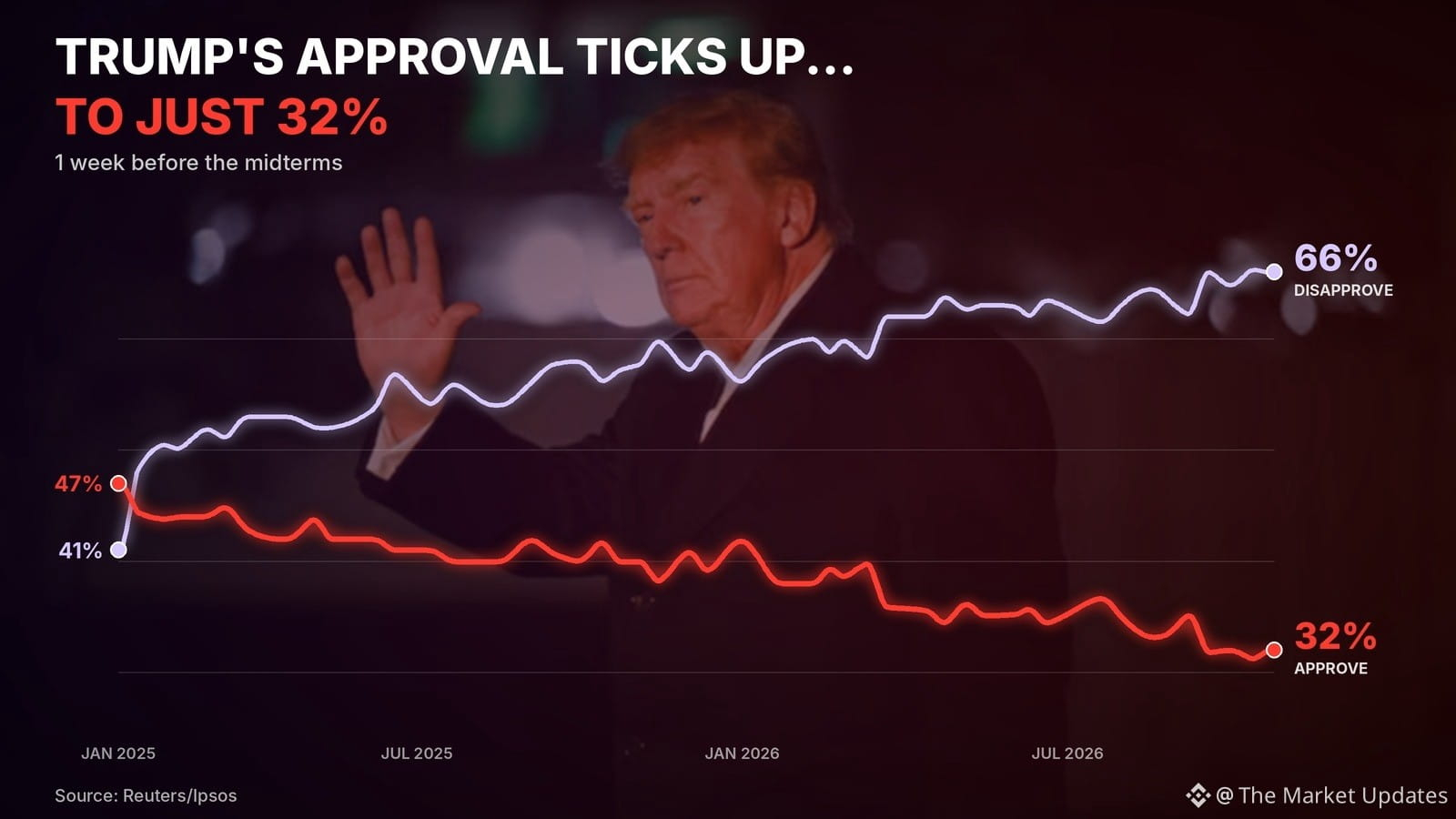
🇺🇸 Boas notícias para Trump: sua taxa de aprovação SUBIU esta semana.
Más notícias: subiu para 32%.
Isso é apenas 1 ponto acima do recorde mínimo da semana passada, com as eleições de meio de mandato a apenas uma semana de distância.
Os eleitores também preferem os democratas para o Congresso por 11 pontos, 47% a 36%, na mais recente pesquisa Reuters/Ipsos.
Os preços estão causando a maior parte dos danos. Antes de Trump ordenar ataques ao Irã em fevereiro, os eleitores confiavam mais nos republicanos em relação à economia.
Agora a gasolina subiu, 73% dizem que seu custo de vida está indo na direção errada, e os democratas lideram na economia por 37% a 33%.
7 dias para fechar uma diferença de 11 pontos. Sem pressão.
Fonte: Reuters
🇺🇸 Boas notícias para Trump: sua taxa de aprovação SUBIU esta semana.
Más notícias: subiu para 32%.
Isso é apenas 1 ponto acima do recorde mínimo da semana passada, com as eleições de meio de mandato a apenas uma semana de distância.
Os eleitores também preferem os democratas para o Congresso por 11 pontos, 47% a 36%, na mais recente pesquisa Reuters/Ipsos.
Os preços estão causando a maior parte dos danos. Antes de Trump ordenar ataques ao Irã em fevereiro, os eleitores confiavam mais nos republicanos em relação à economia.
Agora a gasolina subiu, 73% dizem que seu custo de vida está indo na direção errada, e os democratas lideram na economia por 37% a 33%.
7 dias para fechar uma diferença de 11 pontos. Sem pressão.
Fonte: Reuters
Más notícias: subiu para 32%.
Isso é apenas 1 ponto acima do recorde mínimo da semana passada, com as eleições de meio de mandato a apenas uma semana de distância.
Os eleitores também preferem os democratas para o Congresso por 11 pontos, 47% a 36%, na mais recente pesquisa Reuters/Ipsos.
Os preços estão causando a maior parte dos danos. Antes de Trump ordenar ataques ao Irã em fevereiro, os eleitores confiavam mais nos republicanos em relação à economia.
Agora a gasolina subiu, 73% dizem que seu custo de vida está indo na direção errada, e os democratas lideram na economia por 37% a 33%.
7 dias para fechar uma diferença de 11 pontos. Sem pressão.
Fonte: Reuters
450
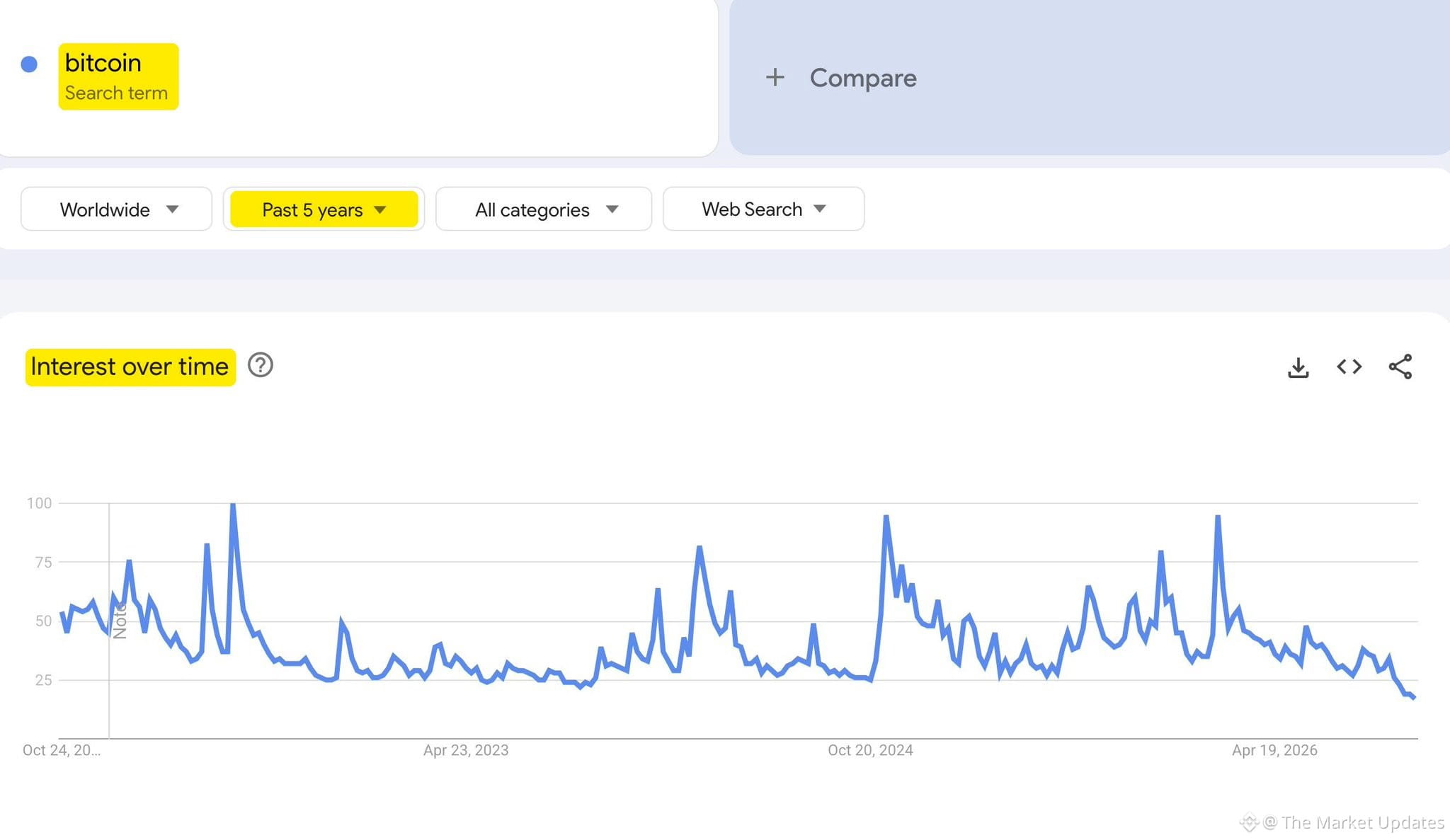
As buscas no Google por "Bitcoin" atingiram o nível mais baixo em 5 anos.
O varejo perdeu completamente o interesse.
E é exatamente isso que me deixa pra caramba otimista.
As buscas no Google por "Bitcoin" atingiram o nível mais baixo em 5 anos.
O varejo perdeu completamente o interesse.
E é exatamente isso que me deixa pra caramba otimista.
O varejo perdeu completamente o interesse.
E é exatamente isso que me deixa pra caramba otimista.
70
Verificado
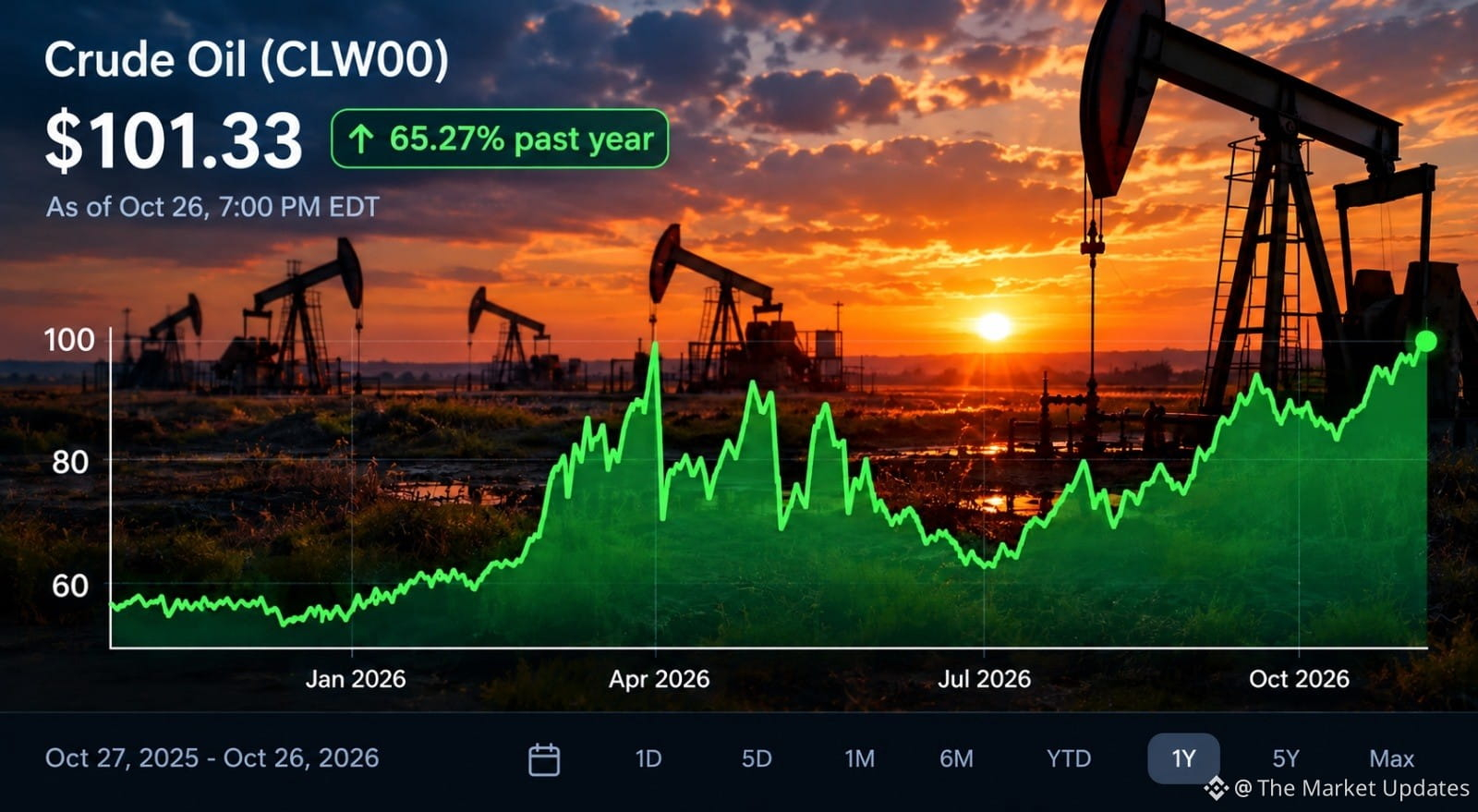
🇺🇲🇮🇷 A guerra no Irã AINDA está pesando no bolso dos americanos na hora de abastecer
Desde o início da guerra, no fim de fevereiro, os americanos pagaram cerca de US$ 471 a mais por pessoa em custos com combustível. Isso representa cerca de 8 vezes a média global, de US$ 60.
No mundo todo, a conta dos combustíveis disparou para US$ 468 bilhões.
Os EUA respondem por US$ 160 bilhões desse total, seguidos pela China, com US$ 54 bilhões.
A Casa Branca argumenta que os preços mais altos dos combustíveis são um pequeno preço a pagar para impedir que o Irã adquira armas nucleares.
Essa simplificação enganosa da troca pode render uma boa frase de efeito, mas não serve para nada sem um plano claro para encerrar o conflito.
Fonte: Reuters
🇺🇲🇮🇷 A guerra no Irã AINDA está pesando no bolso dos americanos na hora de abastecer
Desde o início da guerra, no fim de fevereiro, os americanos pagaram cerca de US$ 471 a mais por pessoa em custos com combustível. Isso representa cerca de 8 vezes a média global, de US$ 60.
No mundo todo, a conta dos combustíveis disparou para US$ 468 bilhões.
Os EUA respondem por US$ 160 bilhões desse total, seguidos pela China, com US$ 54 bilhões.
A Casa Branca argumenta que os preços mais altos dos combustíveis são um pequeno preço a pagar para impedir que o Irã adquira armas nucleares.
Essa simplificação enganosa da troca pode render uma boa frase de efeito, mas não serve para nada sem um plano claro para encerrar o conflito.
Fonte: Reuters
Desde o início da guerra, no fim de fevereiro, os americanos pagaram cerca de US$ 471 a mais por pessoa em custos com combustível. Isso representa cerca de 8 vezes a média global, de US$ 60.
No mundo todo, a conta dos combustíveis disparou para US$ 468 bilhões.
Os EUA respondem por US$ 160 bilhões desse total, seguidos pela China, com US$ 54 bilhões.
A Casa Branca argumenta que os preços mais altos dos combustíveis são um pequeno preço a pagar para impedir que o Irã adquira armas nucleares.
Essa simplificação enganosa da troca pode render uma boa frase de efeito, mas não serve para nada sem um plano claro para encerrar o conflito.
Fonte: Reuters
887
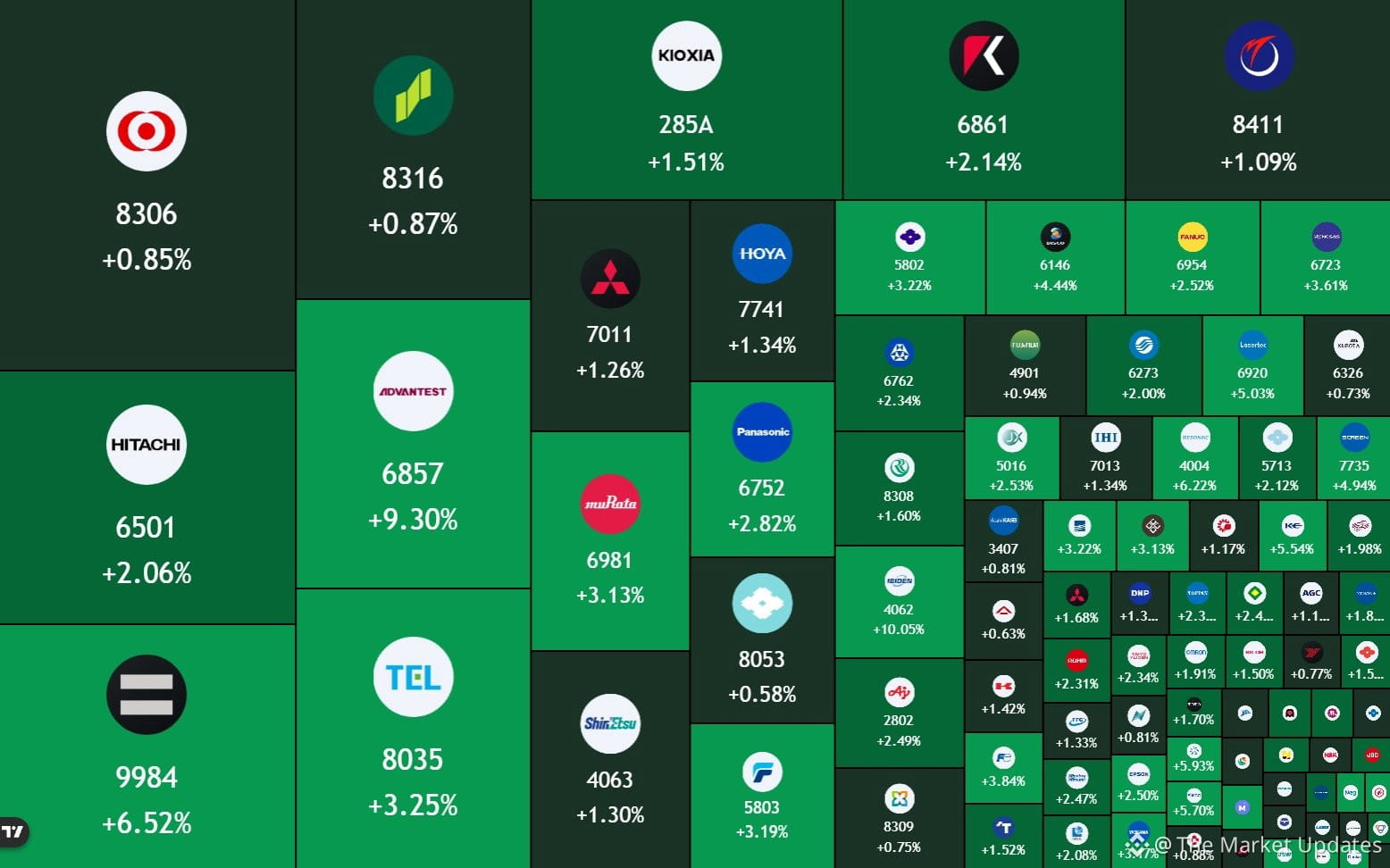
URGENTE: 🇯🇵 Mais de ¥27.075.000.000.000 (US$ 172 bilhões) adicionados às ações japonesas, enquanto o NIKKEI dispara +2,3%.
URGENTE: 🇯🇵 Mais de ¥27.075.000.000.000 (US$ 172 bilhões) adicionados às ações japonesas, enquanto o NIKKEI dispara +2,3%.
149
ÚLTIMA HORA: 🇺🇸 A Ripple recebe aprovação regulatória final dos EUA para estabelecer um banco fiduciário nacional.
Mais uma vitória para as criptomoedas.
ÚLTIMA HORA: 🇺🇸 A Ripple recebe aprovação regulatória final dos EUA para estabelecer um banco fiduciário nacional.
Mais uma vitória para as criptomoedas.
Mais uma vitória para as criptomoedas.

262
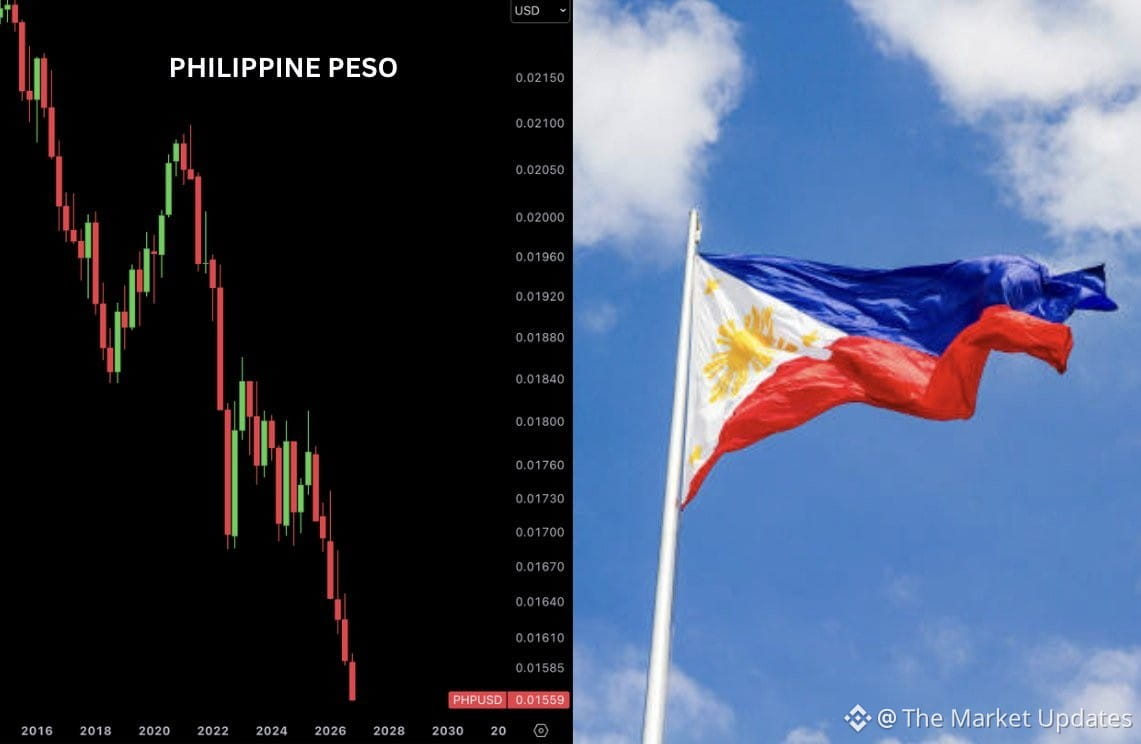
O peso filipino despencou para a mínima histórica
Estamos testemunhando um colapso econômico em tempo real!
O peso filipino despencou para a mínima histórica
Estamos testemunhando um colapso econômico em tempo real!
Estamos testemunhando um colapso econômico em tempo real!
52
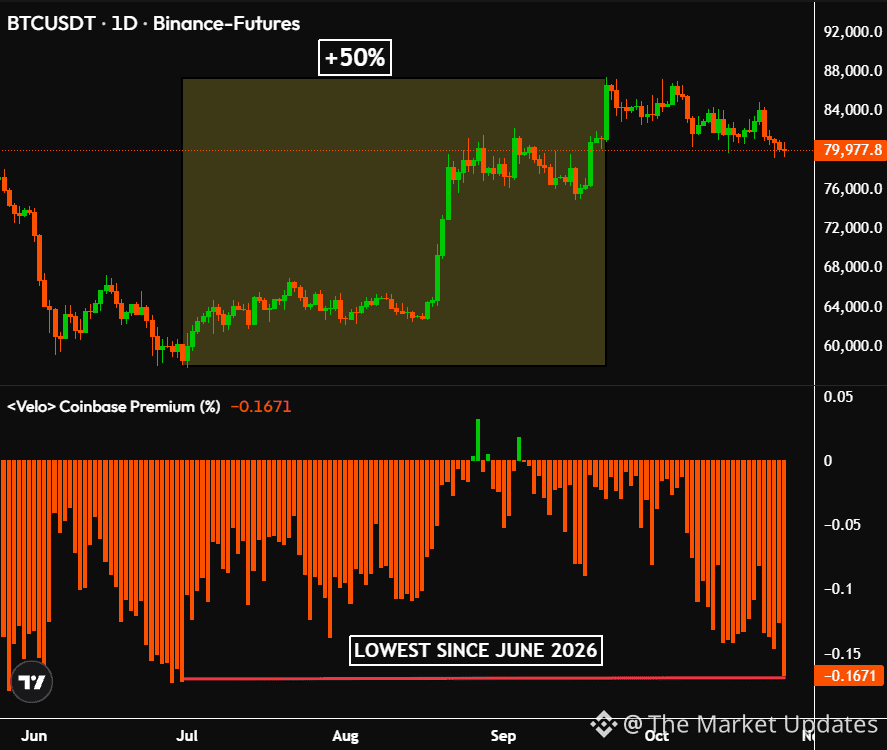
O prêmio do Bitcoin na Coinbase caiu agora para o nível mais baixo desde junho de 2026.
Da última vez que chegou a esse nível, o Bitcoin atingiu o fundo um dia depois e, em seguida, subiu 50%.
O prêmio do Bitcoin na Coinbase caiu agora para o nível mais baixo desde junho de 2026.
Da última vez que chegou a esse nível, o Bitcoin atingiu o fundo um dia depois e, em seguida, subiu 50%.
Da última vez que chegou a esse nível, o Bitcoin atingiu o fundo um dia depois e, em seguida, subiu 50%.
58
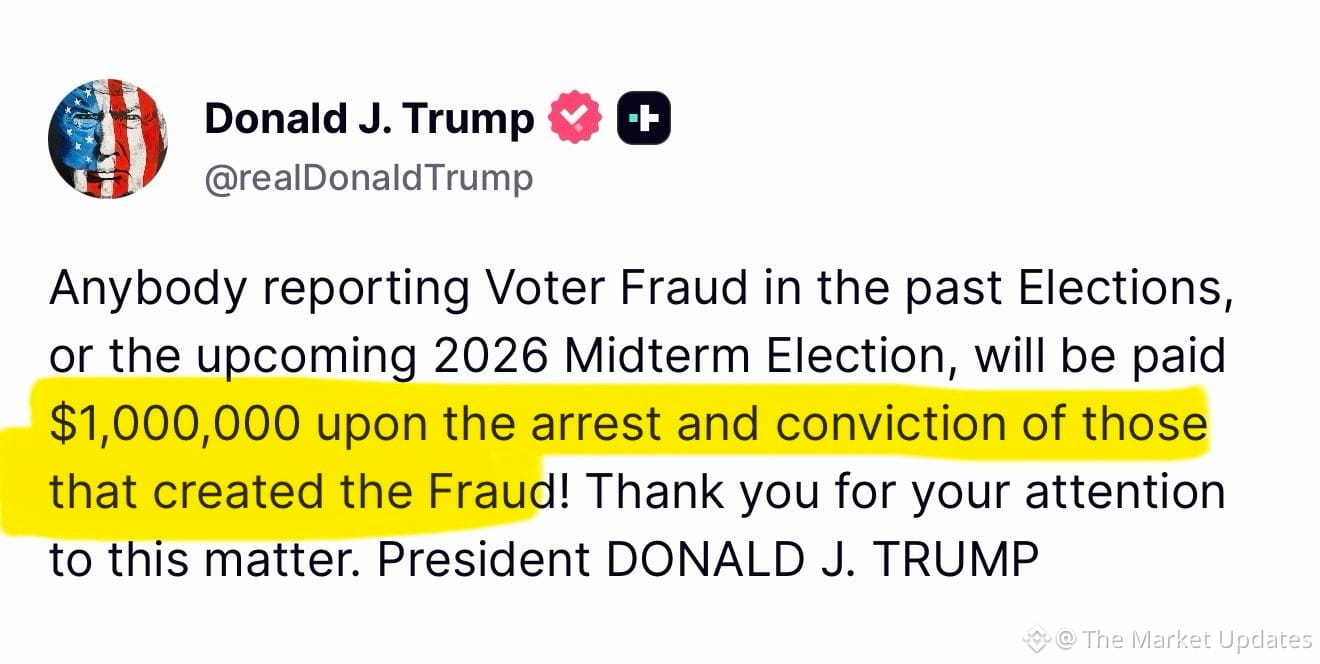
URGENTE: 🇺🇸 O presidente Trump está oferecendo US$ 1.000.000 a qualquer pessoa cujo relato de fraude eleitoral resulte em uma condenação.
As eleições de meio de mandato acontecem daqui a 8 dias.
URGENTE: 🇺🇸 O presidente Trump está oferecendo US$ 1.000.000 a qualquer pessoa cujo relato de fraude eleitoral resulte em uma condenação.
As eleições de meio de mandato acontecem daqui a 8 dias.
As eleições de meio de mandato acontecem daqui a 8 dias.
2
4.4k
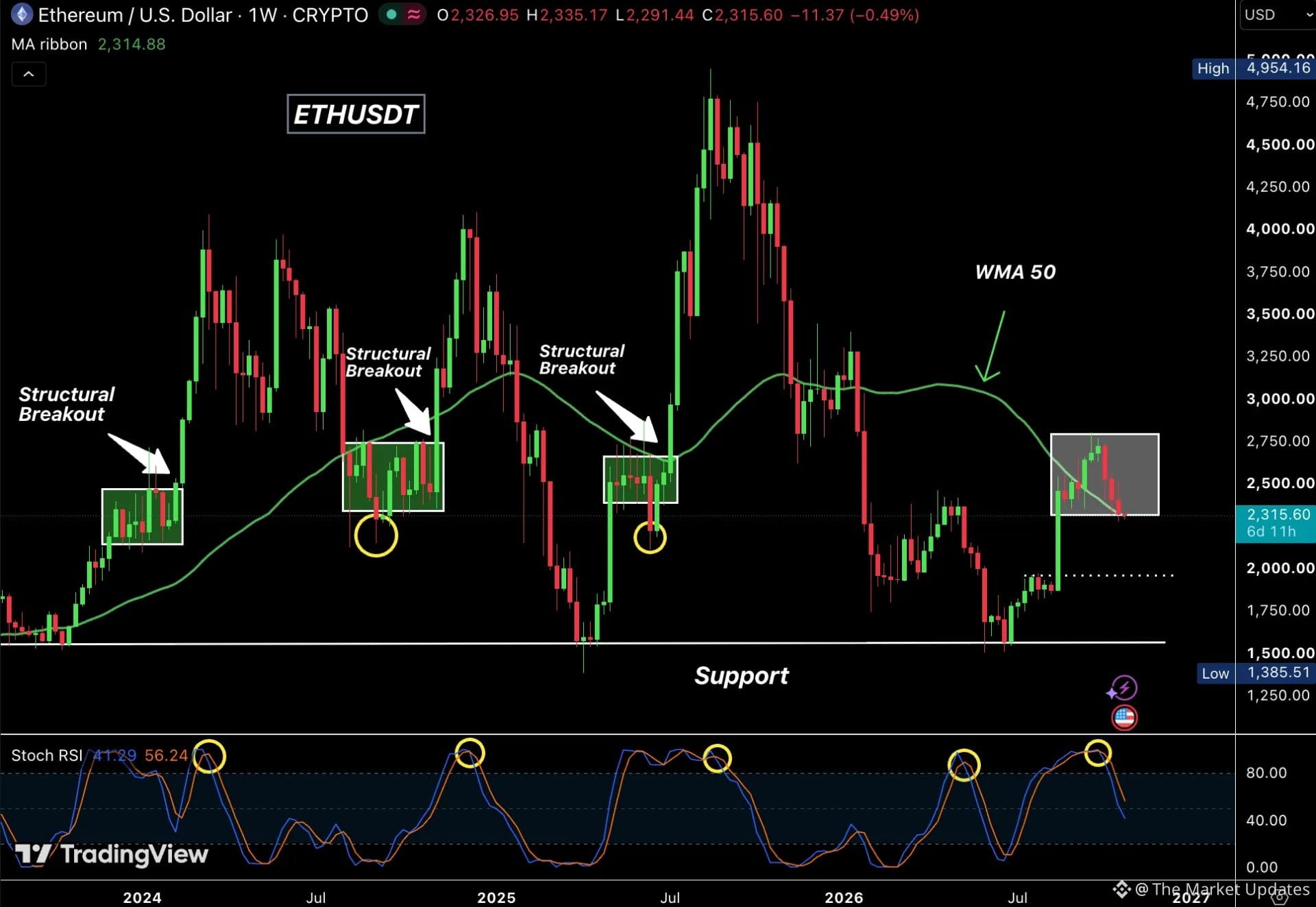
Análise semanal do ETH
O $ETH fechou acima da MA50 semanal pela 6ª vez, apesar de a dominância do BTC ter ultrapassado 60% e da incerteza nos mercados globais.
Ainda está preso entre US$ 2.300 e US$ 2.800, testando touros e ursos antes de seu próximo grande movimento.
O Stoch RSI semanal indica um momentum baixista, então outra sacudida é possível se o ETH perder US$ 2.300.
Níveis-chave:
- Suporte: US$ 2.300. Se perder esse nível, US$ 1.900 será o próximo.
- Resistência: US$ 2.550 e US$ 2.800.
Análise semanal do ETH
O $ETH fechou acima da MA50 semanal pela 6ª vez, apesar de a dominância do BTC ter ultrapassado 60% e da incerteza nos mercados globais.
Ainda está preso entre US$ 2.300 e US$ 2.800, testando touros e ursos antes de seu próximo grande movimento.
O Stoch RSI semanal indica um momentum baixista, então outra sacudida é possível se o ETH perder US$ 2.300.
Níveis-chave:
- Suporte: US$ 2.300. Se perder esse nível, US$ 1.900 será o próximo.
- Resistência: US$ 2.550 e US$ 2.800.
O $ETH fechou acima da MA50 semanal pela 6ª vez, apesar de a dominância do BTC ter ultrapassado 60% e da incerteza nos mercados globais.
Ainda está preso entre US$ 2.300 e US$ 2.800, testando touros e ursos antes de seu próximo grande movimento.
O Stoch RSI semanal indica um momentum baixista, então outra sacudida é possível se o ETH perder US$ 2.300.
Níveis-chave:
- Suporte: US$ 2.300. Se perder esse nível, US$ 1.900 será o próximo.
- Resistência: US$ 2.550 e US$ 2.800.
34
URGENTE: A Injective lança um índice que acompanha os preços de aluguel de GPUs NVIDIA e pode ser negociado on-chain com alavancagem de até 10x
Realmente criamos um mercado para poder computacional de IA antes de GTA 6.
URGENTE: A Injective lança um índice que acompanha os preços de aluguel de GPUs NVIDIA e pode ser negociado on-chain com alavancagem de até 10x
Realmente criamos um mercado para poder computacional de IA antes de GTA 6.
Realmente criamos um mercado para poder computacional de IA antes de GTA 6.

182
Inicia sessão para explorar mais conteúdos
Junta-te a utilizadores de criptomoedas de todo o mundo na Binance Square
⚡️ Obtém informações úteis e recentes sobre criptomoedas.
💬 Com a confiança da maior exchange de criptomoedas do mundo.
👍 Descobre perspetivas reais de criadores verificados.
E-mail/Número de telefone
Tópicos em Tendência
CanMicrosoftDeliverOnAI
29,960 visualizações
477 a discutir
Temporada de resultados — Sessão 3: a Google e a Microsoft vão superar as expectativas?
Binance Square Official
·42 gostos
·11.1k visualizações
CanGoogleDefindItsCore
15,490 visualizações
374 a discutir
FOMCWatch
9M visualizações
27,623 a discutir