

minamium
11.7k Publicações

minamium
Denunciar
Bloquear Utilizador
1 A seguir
99 Seguidores
375 Gostaram
Publicações
·
--
Ver tradução
Why is nobody talking about how the institutions that spent years warning against sovereign Bitcoin adoption are quietly shifting their stance?
Most retail investors get chopped up chasing short-term volatility in assets like $ETC or reacting to daily headlines, completely missing the macro structural shifts right in front of them. The pain comes from waiting for traditional financial validation before positioning, only to end up buying the top when the narrative is already priced in.
If you want to navigate this cycle intelligently, stop treating sovereign treasury moves as isolated political stunts. Treat institutional softening as a long-term liquidity roadmap. When international lenders begin reconciling with sovereign digital asset reserves, the risk profile of holding reserve assets like $USDT changes, and sovereign balance-sheet demand for $BTC establishes a hard valuation floor.
The actionable play here is simple: build core spot allocations during periods of low attention rather than trying to front-run breaking news. Watch how global capital flows re-align toward nation-state reserves, maintain your risk parameters, and let macro adoption do the heavy lifting.
Where do you think this goes from here?
#IMFApprovesElSalvador #FedOctoberRateHikeOddsFallTo17
Why is nobody talking about how the institutions that spent years warning against sovereign Bitcoin adoption are quietly shifting their stance?
Most retail investors get chopped up chasing short-term volatility in assets like $ETC or reacting to daily headlines, completely missing the macro structural shifts right in front of them. The pain comes from waiting for traditional financial validation before positioning, only to end up buying the top when the narrative is already priced in.
If you want to navigate this cycle intelligently, stop treating sovereign treasury moves as isolated political stunts. Treat institutional softening as a long-term liquidity roadmap. When international lenders begin reconciling with sovereign digital asset reserves, the risk profile of holding reserve assets like $USDT changes, and sovereign balance-sheet demand for $BTC establishes a hard valuation floor.
The actionable play here is simple: build core spot allocations during periods of low attention rather than trying to front-run breaking news. Watch how global capital flows re-align toward nation-state reserves, maintain your risk parameters, and let macro adoption do the heavy lifting.
Where do you think this goes from here?
#IMFApprovesElSalvador #FedOctoberRateHikeOddsFallTo17
Most retail investors get chopped up chasing short-term volatility in assets like $ETC or reacting to daily headlines, completely missing the macro structural shifts right in front of them. The pain comes from waiting for traditional financial validation before positioning, only to end up buying the top when the narrative is already priced in.
If you want to navigate this cycle intelligently, stop treating sovereign treasury moves as isolated political stunts. Treat institutional softening as a long-term liquidity roadmap. When international lenders begin reconciling with sovereign digital asset reserves, the risk profile of holding reserve assets like $USDT changes, and sovereign balance-sheet demand for $BTC establishes a hard valuation floor.
The actionable play here is simple: build core spot allocations during periods of low attention rather than trying to front-run breaking news. Watch how global capital flows re-align toward nation-state reserves, maintain your risk parameters, and let macro adoption do the heavy lifting.
Where do you think this goes from here?
#IMFApprovesElSalvador #FedOctoberRateHikeOddsFallTo17
·
--
Ver tradução
While the broader market sentiment is sitting comfortably in greed territory, the queue of validators waiting to exit Ethereum just surged by hundreds of percent almost overnight.
Most traders only watch spot price action and get blindsided when unstaked supply quietly hits the market days later. It is easy to buy the hype when charts look steady, only to realize larger players were already heading for the door.
When validators line up to withdraw their $ETH, it rarely means people are just doing routine maintenance. Unstaking at this scale usually signals that institutional operators or large yield farmers are either de-risking into $USDT, locking in gains, or reallocating capital where they see fewer lockup constraints. Because the exit queue creates a multi-day processing delay, the actual sell-side liquidity does not hit exchanges right away.
That lag tends to create a false sense of security for anyone trading purely on technicals. If you are holding leveraged positions without monitoring validator churn, you might mistake short-term consolidation for strength right before supply begins moving, especially as capital rotates into older plays like $ETC. Tracking what is happening under the hood on-chain usually saves you from getting caught on the wrong side of the exit liquidity.
Are you taking some risk off the table here, or do you think this unstaking wave will get absorbed easily?
#EthereumValidatorExitQueueJumps392 #BitcoinRejectedAt
While the broader market sentiment is sitting comfortably in greed territory, the queue of validators waiting to exit Ethereum just surged by hundreds of percent almost overnight.
Most traders only watch spot price action and get blindsided when unstaked supply quietly hits the market days later. It is easy to buy the hype when charts look steady, only to realize larger players were already heading for the door.
When validators line up to withdraw their $ETH , it rarely means people are just doing routine maintenance. Unstaking at this scale usually signals that institutional operators or large yield farmers are either de-risking into $USDT, locking in gains, or reallocating capital where they see fewer lockup constraints. Because the exit queue creates a multi-day processing delay, the actual sell-side liquidity does not hit exchanges right away.
That lag tends to create a false sense of security for anyone trading purely on technicals. If you are holding leveraged positions without monitoring validator churn, you might mistake short-term consolidation for strength right before supply begins moving, especially as capital rotates into older plays like $ETC . Tracking what is happening under the hood on-chain usually saves you from getting caught on the wrong side of the exit liquidity.
Are you taking some risk off the table here, or do you think this unstaking wave will get absorbed easily?
#EthereumValidatorExitQueueJumps392 #BitcoinRejectedAt
Most traders only watch spot price action and get blindsided when unstaked supply quietly hits the market days later. It is easy to buy the hype when charts look steady, only to realize larger players were already heading for the door.
When validators line up to withdraw their $ETH , it rarely means people are just doing routine maintenance. Unstaking at this scale usually signals that institutional operators or large yield farmers are either de-risking into $USDT, locking in gains, or reallocating capital where they see fewer lockup constraints. Because the exit queue creates a multi-day processing delay, the actual sell-side liquidity does not hit exchanges right away.
That lag tends to create a false sense of security for anyone trading purely on technicals. If you are holding leveraged positions without monitoring validator churn, you might mistake short-term consolidation for strength right before supply begins moving, especially as capital rotates into older plays like $ETC . Tracking what is happening under the hood on-chain usually saves you from getting caught on the wrong side of the exit liquidity.
Are you taking some risk off the table here, or do you think this unstaking wave will get absorbed easily?
#EthereumValidatorExitQueueJumps392 #BitcoinRejectedAt
·
--
Ver tradução
Picture this: you glance at the 15-minute chart, see early green candles breaking upward, and immediately market-buy before confirmation.
Most retail traders get caught in the exact same liquidity trap week after week. They confuse a low-timeframe setup for a macro trend shift, only to watch their margin evaporate on the subsequent rejection.
Looking closely at intraday price action, $BTC has already printed a higher low on lower timeframes and is now pressing close to forming a higher high. On paper, that structure looks constructive. But aggressively longing $ETH or chasing beta plays off a micro setup often blindsides traders when broader order book depth refuses to support the move.
Higher-timeframe resistance is still looming directly overhead, meaning this push could easily resolve as a routine sweep of range liquidity before a sharp pullback. When lower-timeframe momentum runs ahead of volume, fakeouts tend to become the rule rather than the exception.
Are you treating this as a confirmed breakout, or are you waiting for higher-timeframe validation?
#Bitcoin #CryptoTrading #TechnicalAnalysis
Picture this: you glance at the 15-minute chart, see early green candles breaking upward, and immediately market-buy before confirmation.
Most retail traders get caught in the exact same liquidity trap week after week. They confuse a low-timeframe setup for a macro trend shift, only to watch their margin evaporate on the subsequent rejection.
Looking closely at intraday price action, $BTC has already printed a higher low on lower timeframes and is now pressing close to forming a higher high. On paper, that structure looks constructive. But aggressively longing $ETH or chasing beta plays off a micro setup often blindsides traders when broader order book depth refuses to support the move.
Higher-timeframe resistance is still looming directly overhead, meaning this push could easily resolve as a routine sweep of range liquidity before a sharp pullback. When lower-timeframe momentum runs ahead of volume, fakeouts tend to become the rule rather than the exception.
Are you treating this as a confirmed breakout, or are you waiting for higher-timeframe validation?
#Bitcoin #CryptoTrading #TechnicalAnalysis
Most retail traders get caught in the exact same liquidity trap week after week. They confuse a low-timeframe setup for a macro trend shift, only to watch their margin evaporate on the subsequent rejection.
Looking closely at intraday price action, $BTC has already printed a higher low on lower timeframes and is now pressing close to forming a higher high. On paper, that structure looks constructive. But aggressively longing $ETH or chasing beta plays off a micro setup often blindsides traders when broader order book depth refuses to support the move.
Higher-timeframe resistance is still looming directly overhead, meaning this push could easily resolve as a routine sweep of range liquidity before a sharp pullback. When lower-timeframe momentum runs ahead of volume, fakeouts tend to become the rule rather than the exception.
Are you treating this as a confirmed breakout, or are you waiting for higher-timeframe validation?
#Bitcoin #CryptoTrading #TechnicalAnalysis
2
·
--
Ver tradução
If you're still selling into these range lows, stop now.
Crypto traders keep getting wrecked by panic selling every dip, only to miss the bounce and FOMO back in at worse prices. Not knowing when support is actually holding is costing people real money.
Price has now officially reclaimed the range lows on $BTC and is continuing to find acceptance above them. Bears argue this is just a dead cat bounce with weak volume that will fail soon.
I see it differently. This looks like genuine buyer interest stepping in to defend the level. We've seen similar setups in $ETH recently where reclaiming range support led to a solid move higher instead of a trap.
$SOL has followed the same pattern in past cycles too. The debate is real, but the structure is tilting bullish if this acceptance holds.
Where do you think this goes from here?
#Bitcoin #Crypto #Trading
If you're still selling into these range lows, stop now.
Crypto traders keep getting wrecked by panic selling every dip, only to miss the bounce and FOMO back in at worse prices. Not knowing when support is actually holding is costing people real money.
Price has now officially reclaimed the range lows on $BTC and is continuing to find acceptance above them. Bears argue this is just a dead cat bounce with weak volume that will fail soon.
I see it differently. This looks like genuine buyer interest stepping in to defend the level. We've seen similar setups in $ETH recently where reclaiming range support led to a solid move higher instead of a trap.
$SOL has followed the same pattern in past cycles too. The debate is real, but the structure is tilting bullish if this acceptance holds.
Where do you think this goes from here?
#Bitcoin #Crypto #Trading
Crypto traders keep getting wrecked by panic selling every dip, only to miss the bounce and FOMO back in at worse prices. Not knowing when support is actually holding is costing people real money.
Price has now officially reclaimed the range lows on $BTC and is continuing to find acceptance above them. Bears argue this is just a dead cat bounce with weak volume that will fail soon.
I see it differently. This looks like genuine buyer interest stepping in to defend the level. We've seen similar setups in $ETH recently where reclaiming range support led to a solid move higher instead of a trap.
$SOL has followed the same pattern in past cycles too. The debate is real, but the structure is tilting bullish if this acceptance holds.
Where do you think this goes from here?
#Bitcoin #Crypto #Trading

4
·
--
Ver tradução
everyone thinks we are heading straight back into the deep mud, but actually the local bottom might already be printed right under our noses.
most traders are still panic selling or sitting in cash waiting for cheaper fills, only to get trapped re-buying the local top when momentum flips. getting chopped up while trying to catch the absolute bottom usually just drains your stack before the real leg even starts.
look at the charts ser, $BTC has officially reclaimed the range lows and is holding strong acceptance above them instead of rolling over. on lower timeframes, we just printed a clean higher low and are knocking right on the door of a higher high.
ngl the setup looks primed for a squeeze directly into the $85k region where a mountain of short-term liquidity is sitting. if buyers can clear that pocket with conviction, majors like $ETH and $SOL will probably follow the momentum right back up the curve.
are you longing this reclaim or still waiting for another sweep of the lows?
#Bitcoin #CryptoTrading #Binance
everyone thinks we are heading straight back into the deep mud, but actually the local bottom might already be printed right under our noses.
most traders are still panic selling or sitting in cash waiting for cheaper fills, only to get trapped re-buying the local top when momentum flips. getting chopped up while trying to catch the absolute bottom usually just drains your stack before the real leg even starts.
look at the charts ser, $BTC has officially reclaimed the range lows and is holding strong acceptance above them instead of rolling over. on lower timeframes, we just printed a clean higher low and are knocking right on the door of a higher high.
ngl the setup looks primed for a squeeze directly into the $85k region where a mountain of short-term liquidity is sitting. if buyers can clear that pocket with conviction, majors like $ETH and $SOL will probably follow the momentum right back up the curve.
are you longing this reclaim or still waiting for another sweep of the lows?
#Bitcoin #CryptoTrading #Binance
most traders are still panic selling or sitting in cash waiting for cheaper fills, only to get trapped re-buying the local top when momentum flips. getting chopped up while trying to catch the absolute bottom usually just drains your stack before the real leg even starts.
look at the charts ser, $BTC has officially reclaimed the range lows and is holding strong acceptance above them instead of rolling over. on lower timeframes, we just printed a clean higher low and are knocking right on the door of a higher high.
ngl the setup looks primed for a squeeze directly into the $85k region where a mountain of short-term liquidity is sitting. if buyers can clear that pocket with conviction, majors like $ETH and $SOL will probably follow the momentum right back up the curve.
are you longing this reclaim or still waiting for another sweep of the lows?
#Bitcoin #CryptoTrading #Binance

·
--
Ver tradução
Why is nobody talking about $BTC putting in a local bottom right after reclaiming the range lows?
Most traders keep fading these moves expecting lower prices, only to get trapped as price holds and grinds up. That's how you miss the actual turn and end up chasing later.
Price is finding real acceptance above those lows now. On the lower timeframes $BTC has printed a higher low and sits right at the edge of a higher high. This looks like a textbook case of the bottom forming rather than more downside. Continuation into the $85k region makes sense because that's where most of the short-term liquidity currently sits. If momentum carries through that level we could see a broader recovery, with $ETH likely following the same structure.
Where do you think this goes from here?
#Bitcoin #Crypto #Trading
Why is nobody talking about $BTC putting in a local bottom right after reclaiming the range lows?
Most traders keep fading these moves expecting lower prices, only to get trapped as price holds and grinds up. That's how you miss the actual turn and end up chasing later.
Price is finding real acceptance above those lows now. On the lower timeframes $BTC has printed a higher low and sits right at the edge of a higher high. This looks like a textbook case of the bottom forming rather than more downside. Continuation into the $85k region makes sense because that's where most of the short-term liquidity currently sits. If momentum carries through that level we could see a broader recovery, with $ETH likely following the same structure.
Where do you think this goes from here?
#Bitcoin #Crypto #Trading
Most traders keep fading these moves expecting lower prices, only to get trapped as price holds and grinds up. That's how you miss the actual turn and end up chasing later.
Price is finding real acceptance above those lows now. On the lower timeframes $BTC has printed a higher low and sits right at the edge of a higher high. This looks like a textbook case of the bottom forming rather than more downside. Continuation into the $85k region makes sense because that's where most of the short-term liquidity currently sits. If momentum carries through that level we could see a broader recovery, with $ETH likely following the same structure.
Where do you think this goes from here?
#Bitcoin #Crypto #Trading

·
--
Ver tradução
Picture this: last week $BTC was probing those range lows and the timeline was already pricing in another 10k drop.
The pain is familiar. You either dump at the lows convinced more pain is coming, or you freeze waiting for a confirmation that always feels one candle away.
$BTC has now reclaimed the range lows and is holding above them with real acceptance. On the lower timeframes it already printed a higher low and is close to a higher high. This structure looks a lot like the bounce we saw after the October 2023 range test, when similar LTF shifts preceded a strong grind higher, unlike $ETH which often needed extra time to follow.
From here a continuation into the $85k region feels likely because that is where most of the short-term liquidity currently sits. If bulls push through that level with momentum we could see the next leg, much the way $SOL has overshot these liquidity pockets in past recoveries.
Where do you think this setup goes from here?
#Bitcoin #MarketStructure #CryptoTrading
Picture this: last week $BTC was probing those range lows and the timeline was already pricing in another 10k drop.
The pain is familiar. You either dump at the lows convinced more pain is coming, or you freeze waiting for a confirmation that always feels one candle away.
$BTC has now reclaimed the range lows and is holding above them with real acceptance. On the lower timeframes it already printed a higher low and is close to a higher high. This structure looks a lot like the bounce we saw after the October 2023 range test, when similar LTF shifts preceded a strong grind higher, unlike $ETH which often needed extra time to follow.
From here a continuation into the $85k region feels likely because that is where most of the short-term liquidity currently sits. If bulls push through that level with momentum we could see the next leg, much the way $SOL has overshot these liquidity pockets in past recoveries.
Where do you think this setup goes from here?
#Bitcoin #MarketStructure #CryptoTrading
The pain is familiar. You either dump at the lows convinced more pain is coming, or you freeze waiting for a confirmation that always feels one candle away.
$BTC has now reclaimed the range lows and is holding above them with real acceptance. On the lower timeframes it already printed a higher low and is close to a higher high. This structure looks a lot like the bounce we saw after the October 2023 range test, when similar LTF shifts preceded a strong grind higher, unlike $ETH which often needed extra time to follow.
From here a continuation into the $85k region feels likely because that is where most of the short-term liquidity currently sits. If bulls push through that level with momentum we could see the next leg, much the way $SOL has overshot these liquidity pockets in past recoveries.
Where do you think this setup goes from here?
#Bitcoin #MarketStructure #CryptoTrading

·
--
Ver tradução
Picture this: $ADA clawed back from $0.20 earlier this month only to keep slamming into $0.26 without a real break.
Every time it tests that level traders get caught FOMO buying the wick then watching it fail, or they exit too soon and miss the actual run if it finally happens. Not knowing whether to wait for $0.30 or protect against a drop back to $0.20 is the real headache here.
$ADA is sitting at $0.255 right now after that recovery. Buyers have tested $0.26 several times already and still no 4H close above it, which is the signal that could open the door toward $0.27. If that holds, $0.30 is the next bigger target.
This setup echoes previous Cardano grinds where it took multiple attempts plus a $BTC bounce to finally clear resistance, unlike $SOL which often broke similar levels with more conviction once the market turned.
A drop below $0.25 could send it right back toward $0.20 while Bitcoin and the broader market decide the direction.
Where do you think $ADA goes from here?
#Cardano #Altcoins #CryptoTrading
Picture this: $ADA clawed back from $0.20 earlier this month only to keep slamming into $0.26 without a real break.
Every time it tests that level traders get caught FOMO buying the wick then watching it fail, or they exit too soon and miss the actual run if it finally happens. Not knowing whether to wait for $0.30 or protect against a drop back to $0.20 is the real headache here.
$ADA is sitting at $0.255 right now after that recovery. Buyers have tested $0.26 several times already and still no 4H close above it, which is the signal that could open the door toward $0.27. If that holds, $0.30 is the next bigger target.
This setup echoes previous Cardano grinds where it took multiple attempts plus a $BTC bounce to finally clear resistance, unlike $SOL which often broke similar levels with more conviction once the market turned.
A drop below $0.25 could send it right back toward $0.20 while Bitcoin and the broader market decide the direction.
Where do you think $ADA goes from here?
#Cardano #Altcoins #CryptoTrading
Every time it tests that level traders get caught FOMO buying the wick then watching it fail, or they exit too soon and miss the actual run if it finally happens. Not knowing whether to wait for $0.30 or protect against a drop back to $0.20 is the real headache here.
$ADA is sitting at $0.255 right now after that recovery. Buyers have tested $0.26 several times already and still no 4H close above it, which is the signal that could open the door toward $0.27. If that holds, $0.30 is the next bigger target.
This setup echoes previous Cardano grinds where it took multiple attempts plus a $BTC bounce to finally clear resistance, unlike $SOL which often broke similar levels with more conviction once the market turned.
A drop below $0.25 could send it right back toward $0.20 while Bitcoin and the broader market decide the direction.
Where do you think $ADA goes from here?
#Cardano #Altcoins #CryptoTrading

1
·
--
Ver tradução
If you are still fading momentum solely because a chart looks overextended, stop now.
Most traders bleed their stack trying to short high-conviction runners or sitting on the sidelines watching green candles print without them. Missing clean entries hurts, but stubbornly fighting the trend hurts even more.
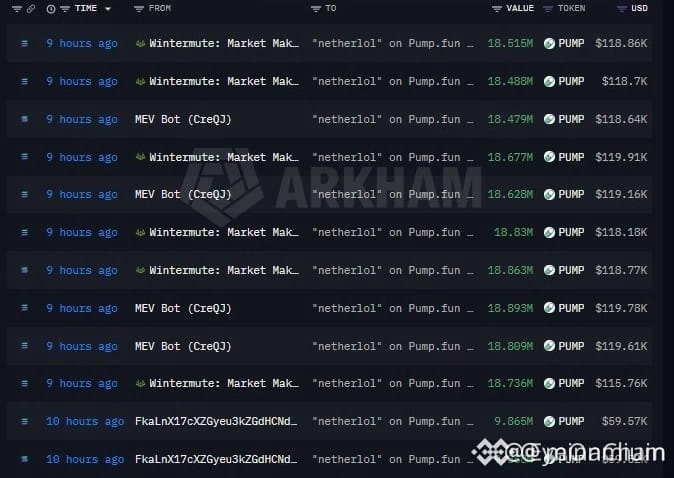
Looking at the 30-day leaderboard, top profitable traders are heavily leaning into $PUMP, and the tape shows why. A +7.79% push backed by actual smart money profitability is a very clear display of relative strength.
We saw a similar pattern play out with $SOL ecosystem plays during previous cycles, where volume quietly consolidated among top performers before the wider market caught on. When elite wallets hold strong instead of dumping into local spikes, the structure usually shifts from short-term hype to sustained accumulation.
Are we seeing smart money positioning for a bigger expansion here, or is this just another trap for late buyers?
#CryptoTrading #PUMP #Altcoins
If you are still fading momentum solely because a chart looks overextended, stop now.
Most traders bleed their stack trying to short high-conviction runners or sitting on the sidelines watching green candles print without them. Missing clean entries hurts, but stubbornly fighting the trend hurts even more.
Looking at the 30-day leaderboard, top profitable traders are heavily leaning into $PUMP , and the tape shows why. A +7.79% push backed by actual smart money profitability is a very clear display of relative strength.
We saw a similar pattern play out with $SOL ecosystem plays during previous cycles, where volume quietly consolidated among top performers before the wider market caught on. When elite wallets hold strong instead of dumping into local spikes, the structure usually shifts from short-term hype to sustained accumulation.
Are we seeing smart money positioning for a bigger expansion here, or is this just another trap for late buyers?
#CryptoTrading #PUMP #Altcoins
Most traders bleed their stack trying to short high-conviction runners or sitting on the sidelines watching green candles print without them. Missing clean entries hurts, but stubbornly fighting the trend hurts even more.
Looking at the 30-day leaderboard, top profitable traders are heavily leaning into $PUMP , and the tape shows why. A +7.79% push backed by actual smart money profitability is a very clear display of relative strength.
We saw a similar pattern play out with $SOL ecosystem plays during previous cycles, where volume quietly consolidated among top performers before the wider market caught on. When elite wallets hold strong instead of dumping into local spikes, the structure usually shifts from short-term hype to sustained accumulation.
Are we seeing smart money positioning for a bigger expansion here, or is this just another trap for late buyers?
#CryptoTrading #PUMP #Altcoins
2
·
--
Ver tradução
Everyone thinks Ethereum staking is just passive income with zero friction, but actually, the exit door is getting extremely crowded right now.
Most investors assume they can instantly liquidate their assets during market uncertainty, only to find themselves trapped waiting while price volatility plays out in real time.
Think of Ethereum validators like cars parked in a massive underground garage with only one narrow exit ramp. Right now, that exit queue just jumped by 392%, leaving roughly 850,000 $ETH waiting in line to unstake. The estimated wait time has stretched to around 14.8 days just to process these withdrawals.
When a sudden bottleneck happens, whether triggered by infrastructure shifts like recent MetaMask staking adjustments or institutional rebalancing, liquidity does not move as fast as $BTC or liquid $SOL spot holdings. Understanding this delay is essential before making rushed moves or relying on staked assets for immediate trading collateral.
How do you think this unstaking backlog will affect spot market liquidity over the next two weeks?
#Ethereum #CryptoStaking #ETH
Everyone thinks Ethereum staking is just passive income with zero friction, but actually, the exit door is getting extremely crowded right now.
Most investors assume they can instantly liquidate their assets during market uncertainty, only to find themselves trapped waiting while price volatility plays out in real time.
Think of Ethereum validators like cars parked in a massive underground garage with only one narrow exit ramp. Right now, that exit queue just jumped by 392%, leaving roughly 850,000 $ETH waiting in line to unstake. The estimated wait time has stretched to around 14.8 days just to process these withdrawals.
When a sudden bottleneck happens, whether triggered by infrastructure shifts like recent MetaMask staking adjustments or institutional rebalancing, liquidity does not move as fast as $BTC or liquid $SOL spot holdings. Understanding this delay is essential before making rushed moves or relying on staked assets for immediate trading collateral.
How do you think this unstaking backlog will affect spot market liquidity over the next two weeks?
#Ethereum #CryptoStaking #ETH
Most investors assume they can instantly liquidate their assets during market uncertainty, only to find themselves trapped waiting while price volatility plays out in real time.
Think of Ethereum validators like cars parked in a massive underground garage with only one narrow exit ramp. Right now, that exit queue just jumped by 392%, leaving roughly 850,000 $ETH waiting in line to unstake. The estimated wait time has stretched to around 14.8 days just to process these withdrawals.
When a sudden bottleneck happens, whether triggered by infrastructure shifts like recent MetaMask staking adjustments or institutional rebalancing, liquidity does not move as fast as $BTC or liquid $SOL spot holdings. Understanding this delay is essential before making rushed moves or relying on staked assets for immediate trading collateral.
How do you think this unstaking backlog will affect spot market liquidity over the next two weeks?
#Ethereum #CryptoStaking #ETH

1
1
·
--
Ver tradução
The most profitable traders in this market often make their biggest gains by buying into dips that terrify everyone else.
Most retail traders watch a token pull back, panic about further downside, and only end up chasing the green candles once the real move is already over. That fear of catching a falling knife usually costs far more money than the dip itself.
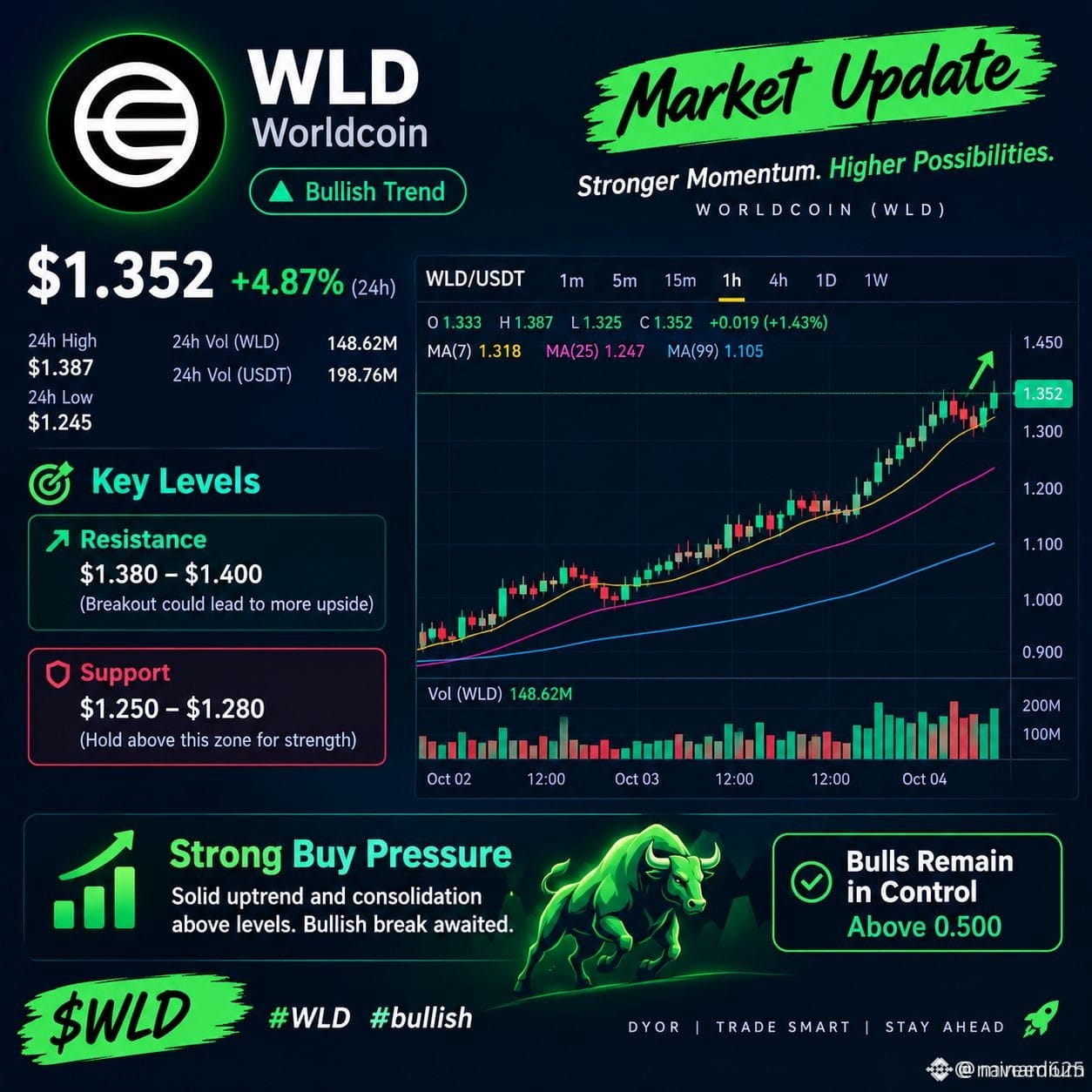
Looking at recent 30-day leaderboards, top-performing accounts are quietly stepping in while the crowd hesitates. A prime example is seeing smart money open fresh long positions on $WLD after a -4.12% drawdown, already sitting on over +14,614 USDT in unrealized PNL on the perpetual pair.
Having lived through multiple market cycles, this pattern never changes. While the majority sits on their hands waiting for absolute confirmation on assets like $BTC or high-beta plays like $FET, seasoned capital absorbs the red days and lets patience do the heavy lifting. Managing risk on entries during red days separates consistent traders from exit liquidity.
Are you looking for dip entries here or waiting for clearer confirmation?
#TradingStrategy #Worldcoin #CryptoInsights
The most profitable traders in this market often make their biggest gains by buying into dips that terrify everyone else.
Most retail traders watch a token pull back, panic about further downside, and only end up chasing the green candles once the real move is already over. That fear of catching a falling knife usually costs far more money than the dip itself.
Looking at recent 30-day leaderboards, top-performing accounts are quietly stepping in while the crowd hesitates. A prime example is seeing smart money open fresh long positions on $WLD after a -4.12% drawdown, already sitting on over +14,614 USDT in unrealized PNL on the perpetual pair.
Having lived through multiple market cycles, this pattern never changes. While the majority sits on their hands waiting for absolute confirmation on assets like $BTC or high-beta plays like $FET , seasoned capital absorbs the red days and lets patience do the heavy lifting. Managing risk on entries during red days separates consistent traders from exit liquidity.
Are you looking for dip entries here or waiting for clearer confirmation?
#TradingStrategy #Worldcoin #CryptoInsights
Most retail traders watch a token pull back, panic about further downside, and only end up chasing the green candles once the real move is already over. That fear of catching a falling knife usually costs far more money than the dip itself.
Looking at recent 30-day leaderboards, top-performing accounts are quietly stepping in while the crowd hesitates. A prime example is seeing smart money open fresh long positions on $WLD after a -4.12% drawdown, already sitting on over +14,614 USDT in unrealized PNL on the perpetual pair.
Having lived through multiple market cycles, this pattern never changes. While the majority sits on their hands waiting for absolute confirmation on assets like $BTC or high-beta plays like $FET , seasoned capital absorbs the red days and lets patience do the heavy lifting. Managing risk on entries during red days separates consistent traders from exit liquidity.
Are you looking for dip entries here or waiting for clearer confirmation?
#TradingStrategy #Worldcoin #CryptoInsights
7
·
--
Ver tradução
Picture this: every major cycle has that one defining moment where foundational infrastructure quietly pivots before the crowd even notices.
Most traders spend countless hours drowning in fragmented charts, on-chain noise, and lagging indicators, only to enter a position right before a sharp reversal. We saw the exact same friction during past DeFi cycles, where retail capital constantly lagged behind automated execution.
Now the landscape is shifting toward built-in market intelligence. The upcoming Binance Intelligence launch on Oct 5 at 12:00 UTC highlights how deep AI integration is becoming within primary financial ecosystems. While decentralized networks like $FET or compute layers like $NEAR have tackled modular AI from the edges, embedding direct intelligence into the $BNB environment brings high-level analytical tools straight to everyday trading workflows.
When centralized liquidity hubs adopt native data layers, the information gap between institutional desks and individual investors tends to narrow fast. Much like early algorithmic routing upgrades years ago, turning complex data into actionable insight is quickly becoming standard infrastructure rather than a luxury.
Do you think built-in exchange intelligence will reshape how we analyze market moves going forward?
#CryptoAI #Binance #BNBChain
Picture this: every major cycle has that one defining moment where foundational infrastructure quietly pivots before the crowd even notices.
Most traders spend countless hours drowning in fragmented charts, on-chain noise, and lagging indicators, only to enter a position right before a sharp reversal. We saw the exact same friction during past DeFi cycles, where retail capital constantly lagged behind automated execution.
Now the landscape is shifting toward built-in market intelligence. The upcoming Binance Intelligence launch on Oct 5 at 12:00 UTC highlights how deep AI integration is becoming within primary financial ecosystems. While decentralized networks like $FET or compute layers like $NEAR have tackled modular AI from the edges, embedding direct intelligence into the $BNB environment brings high-level analytical tools straight to everyday trading workflows.
When centralized liquidity hubs adopt native data layers, the information gap between institutional desks and individual investors tends to narrow fast. Much like early algorithmic routing upgrades years ago, turning complex data into actionable insight is quickly becoming standard infrastructure rather than a luxury.
Do you think built-in exchange intelligence will reshape how we analyze market moves going forward?
#CryptoAI #Binance #BNBChain
Most traders spend countless hours drowning in fragmented charts, on-chain noise, and lagging indicators, only to enter a position right before a sharp reversal. We saw the exact same friction during past DeFi cycles, where retail capital constantly lagged behind automated execution.
Now the landscape is shifting toward built-in market intelligence. The upcoming Binance Intelligence launch on Oct 5 at 12:00 UTC highlights how deep AI integration is becoming within primary financial ecosystems. While decentralized networks like $FET or compute layers like $NEAR have tackled modular AI from the edges, embedding direct intelligence into the $BNB environment brings high-level analytical tools straight to everyday trading workflows.
When centralized liquidity hubs adopt native data layers, the information gap between institutional desks and individual investors tends to narrow fast. Much like early algorithmic routing upgrades years ago, turning complex data into actionable insight is quickly becoming standard infrastructure rather than a luxury.
Do you think built-in exchange intelligence will reshape how we analyze market moves going forward?
#CryptoAI #Binance #BNBChain

4
·
--
Ver tradução
If you are still blindly buying every AI dip without checking the underlying compute reality, stop now.
Most traders get trapped buying hype cycles at the top because they assume anything labeled artificial intelligence goes up forever, only to watch their portfolio bleed when institutional hardware reality sets in.
We saw this exact pattern play out with traditional tech before crypto decentralized compute took off. When hardware giants stumble, the immediate ripple hits every speculative narrative attached to them. Traders dumped positions in a panic, forgetting that infrastructure demand does not disappear just because one valuation cools off.
While centralized silicon plays face brutal corrections, decentralized storage and compute networks like $AR and $FIL continue absorbing real-world data loads regardless of stock market sentiment. Even enterprise ecosystems like $AVAX are quietly positioning to bridge compute validation on-chain. The market loves punishing overleveraged expectations, but infrastructure that provides verifiable utility usually ends up winning the long game.
Do you see this compute selloff dragging down crypto AI plays further, or is decentralized compute finally ready to decouple?
#CerebrasSinksNearly20 #NvidiaHitsRecordHighUp2
If you are still blindly buying every AI dip without checking the underlying compute reality, stop now.
Most traders get trapped buying hype cycles at the top because they assume anything labeled artificial intelligence goes up forever, only to watch their portfolio bleed when institutional hardware reality sets in.
We saw this exact pattern play out with traditional tech before crypto decentralized compute took off. When hardware giants stumble, the immediate ripple hits every speculative narrative attached to them. Traders dumped positions in a panic, forgetting that infrastructure demand does not disappear just because one valuation cools off.
While centralized silicon plays face brutal corrections, decentralized storage and compute networks like $AR and $FIL continue absorbing real-world data loads regardless of stock market sentiment. Even enterprise ecosystems like $AVAX are quietly positioning to bridge compute validation on-chain. The market loves punishing overleveraged expectations, but infrastructure that provides verifiable utility usually ends up winning the long game.
Do you see this compute selloff dragging down crypto AI plays further, or is decentralized compute finally ready to decouple?
#CerebrasSinksNearly20 #NvidiaHitsRecordHighUp2
Most traders get trapped buying hype cycles at the top because they assume anything labeled artificial intelligence goes up forever, only to watch their portfolio bleed when institutional hardware reality sets in.
We saw this exact pattern play out with traditional tech before crypto decentralized compute took off. When hardware giants stumble, the immediate ripple hits every speculative narrative attached to them. Traders dumped positions in a panic, forgetting that infrastructure demand does not disappear just because one valuation cools off.
While centralized silicon plays face brutal corrections, decentralized storage and compute networks like $AR and $FIL continue absorbing real-world data loads regardless of stock market sentiment. Even enterprise ecosystems like $AVAX are quietly positioning to bridge compute validation on-chain. The market loves punishing overleveraged expectations, but infrastructure that provides verifiable utility usually ends up winning the long game.
Do you see this compute selloff dragging down crypto AI plays further, or is decentralized compute finally ready to decouple?
#CerebrasSinksNearly20 #NvidiaHitsRecordHighUp2

37
·
--
Ver tradução
Everyone thinks any dip is a discount buying opportunity, but actually rushing into a retest before confirmation is how most traders get trapped.
Nothing hurts more than watching your capital bleed out because you bought what looked like a bounce, only to realize the floor gave way right under your feet.
Think of key technical levels like the load-bearing beams of a house. For $QNT right now, that foundation sits right at the $230 mark. As long as buyers defend this zone, the structural setup remains intact and leaves the door wide open for an expansion run toward $400.
However, trading alongside broader assets like $BTC and $ETH teaches us that support is only valid until it breaks. If price slips beneath $230 with sustained volume, that anticipated rally gets postponed, leaving premature buyers holding a heavy bag while the market searches for a deeper floor.
Are you waiting for a clean daily close above this support before taking a position, or are you scaling in early?
#Quant #CryptoTrading #TechnicalAnalysis
Everyone thinks any dip is a discount buying opportunity, but actually rushing into a retest before confirmation is how most traders get trapped.
Nothing hurts more than watching your capital bleed out because you bought what looked like a bounce, only to realize the floor gave way right under your feet.
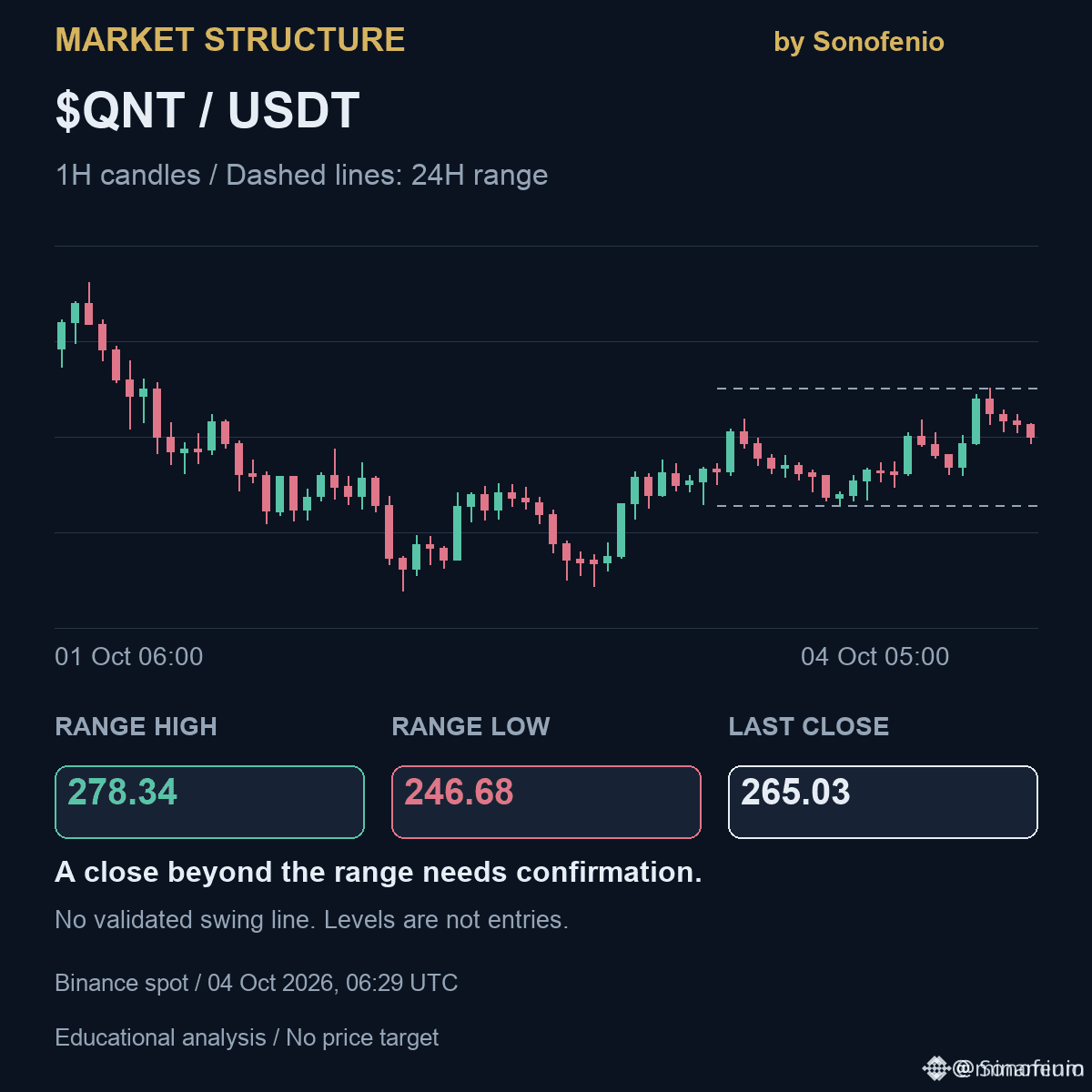
Think of key technical levels like the load-bearing beams of a house. For $QNT right now, that foundation sits right at the $230 mark. As long as buyers defend this zone, the structural setup remains intact and leaves the door wide open for an expansion run toward $400.
However, trading alongside broader assets like $BTC and $ETH teaches us that support is only valid until it breaks. If price slips beneath $230 with sustained volume, that anticipated rally gets postponed, leaving premature buyers holding a heavy bag while the market searches for a deeper floor.
Are you waiting for a clean daily close above this support before taking a position, or are you scaling in early?
#Quant #CryptoTrading #TechnicalAnalysis
Nothing hurts more than watching your capital bleed out because you bought what looked like a bounce, only to realize the floor gave way right under your feet.
Think of key technical levels like the load-bearing beams of a house. For $QNT right now, that foundation sits right at the $230 mark. As long as buyers defend this zone, the structural setup remains intact and leaves the door wide open for an expansion run toward $400.
However, trading alongside broader assets like $BTC and $ETH teaches us that support is only valid until it breaks. If price slips beneath $230 with sustained volume, that anticipated rally gets postponed, leaving premature buyers holding a heavy bag while the market searches for a deeper floor.
Are you waiting for a clean daily close above this support before taking a position, or are you scaling in early?
#Quant #CryptoTrading #TechnicalAnalysis

4
·
--
Ver tradução
Most traders lose money on breakout setups not because they pick the wrong target, but because they completely ignore the invalidation line.
We have all been there, buying the hype at the wrong moment only to watch capital melt during an unexpected fakeout. When you are eyeing a massive rally, it is painfully easy to mistake a retest for guaranteed momentum.
Looking closely at $QNT right now, the upside narrative toward $400 is getting everyone excited. But momentum without solid floor structure is just a trap waiting to happen. The real story here is not the $400 ceiling, it is the crucial $230 support level that actually decides the trend.
If $QNT fails to defend $230 with conviction, all that bullish continuation structure simply breaks down. When liquidity sweeps hit mid-caps while $BTC fluctuates, falling below key support turns promising breakout plays into rapid liquidation cascades before buyers can even react. Watching how volume behaves around baseline support will tell you far more than daydreaming about top-line targets.
Where do you think price action heads if $230 fails to hold this week?
#Quant #CryptoTrading #TechnicalAnalysis
Most traders lose money on breakout setups not because they pick the wrong target, but because they completely ignore the invalidation line.
We have all been there, buying the hype at the wrong moment only to watch capital melt during an unexpected fakeout. When you are eyeing a massive rally, it is painfully easy to mistake a retest for guaranteed momentum.
Looking closely at $QNT right now, the upside narrative toward $400 is getting everyone excited. But momentum without solid floor structure is just a trap waiting to happen. The real story here is not the $400 ceiling, it is the crucial $230 support level that actually decides the trend.
If $QNT fails to defend $230 with conviction, all that bullish continuation structure simply breaks down. When liquidity sweeps hit mid-caps while $BTC fluctuates, falling below key support turns promising breakout plays into rapid liquidation cascades before buyers can even react. Watching how volume behaves around baseline support will tell you far more than daydreaming about top-line targets.
Where do you think price action heads if $230 fails to hold this week?
#Quant #CryptoTrading #TechnicalAnalysis
We have all been there, buying the hype at the wrong moment only to watch capital melt during an unexpected fakeout. When you are eyeing a massive rally, it is painfully easy to mistake a retest for guaranteed momentum.
Looking closely at $QNT right now, the upside narrative toward $400 is getting everyone excited. But momentum without solid floor structure is just a trap waiting to happen. The real story here is not the $400 ceiling, it is the crucial $230 support level that actually decides the trend.
If $QNT fails to defend $230 with conviction, all that bullish continuation structure simply breaks down. When liquidity sweeps hit mid-caps while $BTC fluctuates, falling below key support turns promising breakout plays into rapid liquidation cascades before buyers can even react. Watching how volume behaves around baseline support will tell you far more than daydreaming about top-line targets.
Where do you think price action heads if $230 fails to hold this week?
#Quant #CryptoTrading #TechnicalAnalysis
·
--
Ver tradução
Have you noticed why nobody is talking about the $230 make-or-break for $QNT?
Most traders lose money chasing pumps after they have already happened. They also get shaken out at support and miss the real move that follows.
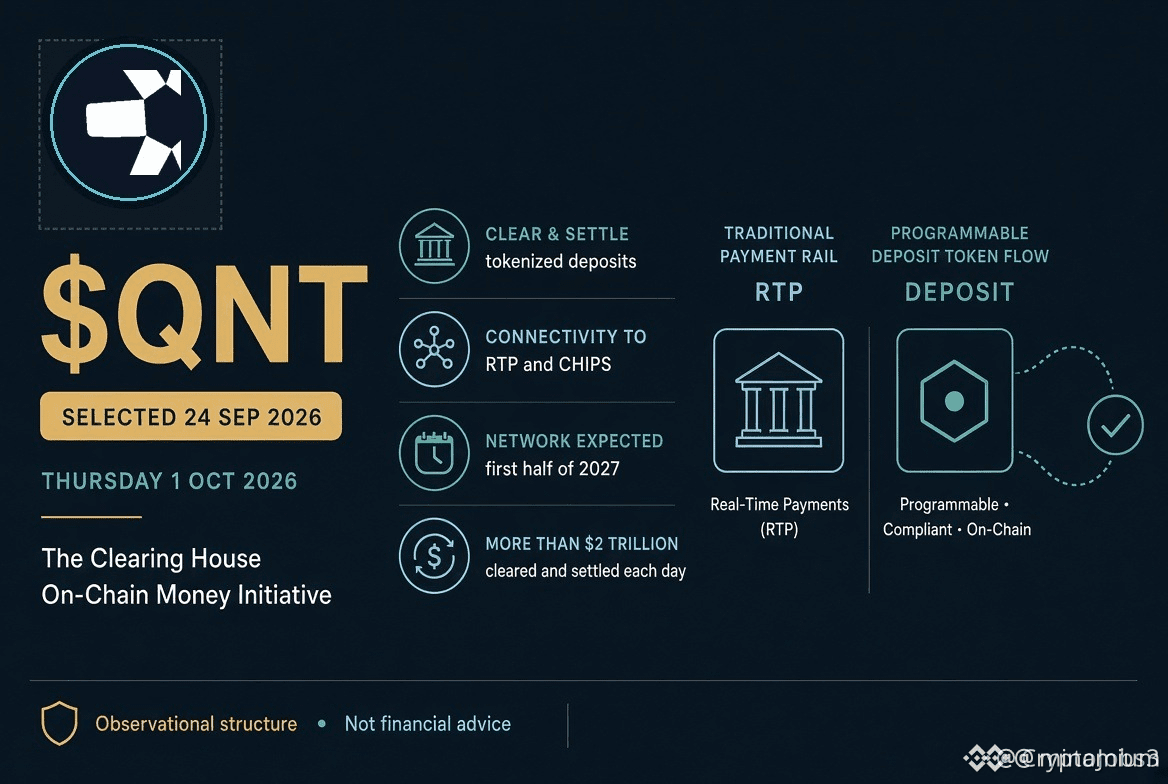
$QNT is a clear case study of how these levels actually work. The token needs to remain above $230 to maintain bullish momentum. If support holds, the next major move could push it toward $400. That is not a random target, it is the structure already in place.
While everyone focuses on $BTC and $ETH, this kind of setup in $QNT gets ignored until it is already moving. Respecting a proven level is what separates traders who catch the continuation from those who watch it happen.
Where do you think $QNT goes from here if $230 holds?
#QNT #Crypto #Altcoins
Have you noticed why nobody is talking about the $230 make-or-break for $QNT ?
Most traders lose money chasing pumps after they have already happened. They also get shaken out at support and miss the real move that follows.
$QNT is a clear case study of how these levels actually work. The token needs to remain above $230 to maintain bullish momentum. If support holds, the next major move could push it toward $400. That is not a random target, it is the structure already in place.
While everyone focuses on $BTC and $ETH , this kind of setup in $QNT gets ignored until it is already moving. Respecting a proven level is what separates traders who catch the continuation from those who watch it happen.
Where do you think $QNT goes from here if $230 holds?
#QNT #Crypto #Altcoins
Most traders lose money chasing pumps after they have already happened. They also get shaken out at support and miss the real move that follows.
$QNT is a clear case study of how these levels actually work. The token needs to remain above $230 to maintain bullish momentum. If support holds, the next major move could push it toward $400. That is not a random target, it is the structure already in place.
While everyone focuses on $BTC and $ETH , this kind of setup in $QNT gets ignored until it is already moving. Respecting a proven level is what separates traders who catch the continuation from those who watch it happen.
Where do you think $QNT goes from here if $230 holds?
#QNT #Crypto #Altcoins
2
·
--
Ver tradução
Picture this: a trader watches an altcoin flirt with key support, gets euphoric about a massive breakout target, and forgets how fast a failed retest can liquidate their account.
Most market participants suffer massive drawdowns not because they picked the wrong direction, but because they treated a tentative support test as a guaranteed launchpad. They front-run the confirmation, position too heavily, and find themselves trapped when momentum evaporates.
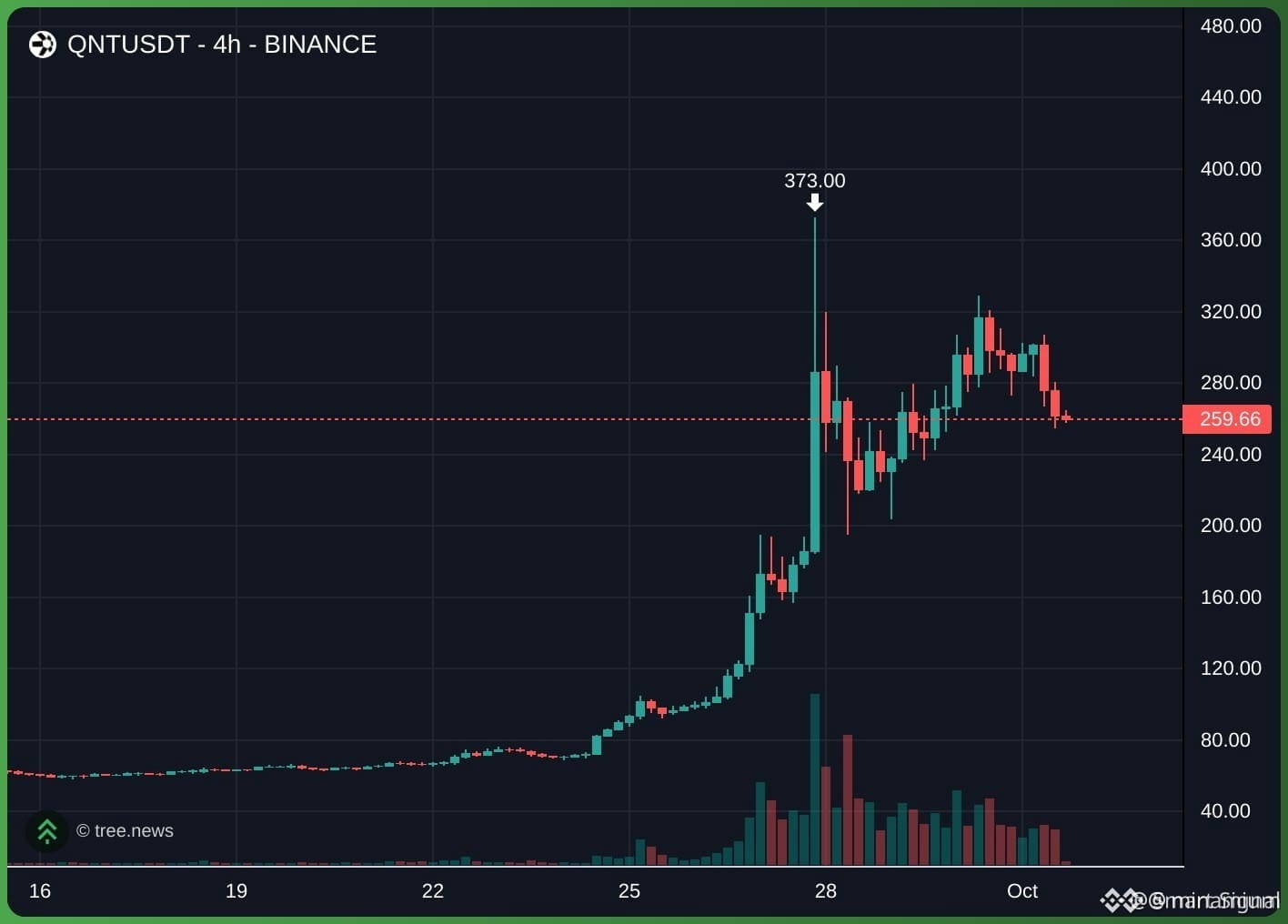
Taking a closer look at $QNT, the market setup is balanced on a razor-thin edge. While many are already eyeing the path toward $400, that entire upside trajectory hinges strictly on whether buyers defend the $230 level.
When a structure demands holding a single line like $230 to keep its bullish thesis intact, the downside risk on a clean break is just as violent as the upside. If sellers push price beneath that floor, chasing ambitious higher targets turns into an expensive trap before any real liquidity reset can occur alongside broader assets like $BTC or $LINK.
Where do you think this goes from here?
#CryptoAnalysis #RiskManagement #Altcoins
Picture this: a trader watches an altcoin flirt with key support, gets euphoric about a massive breakout target, and forgets how fast a failed retest can liquidate their account.
Most market participants suffer massive drawdowns not because they picked the wrong direction, but because they treated a tentative support test as a guaranteed launchpad. They front-run the confirmation, position too heavily, and find themselves trapped when momentum evaporates.
Taking a closer look at $QNT , the market setup is balanced on a razor-thin edge. While many are already eyeing the path toward $400, that entire upside trajectory hinges strictly on whether buyers defend the $230 level.
When a structure demands holding a single line like $230 to keep its bullish thesis intact, the downside risk on a clean break is just as violent as the upside. If sellers push price beneath that floor, chasing ambitious higher targets turns into an expensive trap before any real liquidity reset can occur alongside broader assets like $BTC or $LINK .
Where do you think this goes from here?
#CryptoAnalysis #RiskManagement #Altcoins
Most market participants suffer massive drawdowns not because they picked the wrong direction, but because they treated a tentative support test as a guaranteed launchpad. They front-run the confirmation, position too heavily, and find themselves trapped when momentum evaporates.
Taking a closer look at $QNT , the market setup is balanced on a razor-thin edge. While many are already eyeing the path toward $400, that entire upside trajectory hinges strictly on whether buyers defend the $230 level.
When a structure demands holding a single line like $230 to keep its bullish thesis intact, the downside risk on a clean break is just as violent as the upside. If sellers push price beneath that floor, chasing ambitious higher targets turns into an expensive trap before any real liquidity reset can occur alongside broader assets like $BTC or $LINK .
Where do you think this goes from here?
#CryptoAnalysis #RiskManagement #Altcoins
3
·
--
Ver tradução
If you are still blindly copy-trading leaderboards without a strict stop-loss, stop now.
Most traders spend weeks building up consistent gains only to let a single bad position wipe out everything in a matter of hours. Watching a high-conviction trade go against you hurts, but refusing to cut the loss until your balance is drained hurts even worse.
Just saw a 30-day top-ranked trader take a massive hit on a $LOBSTER perp position, closing out with a brutal loss of -$98,471 USDT despite the token pumping +6.80% shortly after. When smart money gets caught on the wrong side of the spread, retail chasing those signals usually gets wrecked twice as hard.
Some argue that averaging down on volatile momentum plays like $SOL or trending meme assets is the only way to catch massive reversals. But in reality, leverage without strict risk management is just slow liquidation disguised as patience. The market does not care how high your monthly ranking was yesterday.
Would you have held through a drawdown that deep, or cut the trade early?
#CryptoTrading #Futures #RiskManagement
If you are still blindly copy-trading leaderboards without a strict stop-loss, stop now.
Most traders spend weeks building up consistent gains only to let a single bad position wipe out everything in a matter of hours. Watching a high-conviction trade go against you hurts, but refusing to cut the loss until your balance is drained hurts even worse.
Just saw a 30-day top-ranked trader take a massive hit on a $LOBSTER perp position, closing out with a brutal loss of -$98,471 USDT despite the token pumping +6.80% shortly after. When smart money gets caught on the wrong side of the spread, retail chasing those signals usually gets wrecked twice as hard.
Some argue that averaging down on volatile momentum plays like $SOL or trending meme assets is the only way to catch massive reversals. But in reality, leverage without strict risk management is just slow liquidation disguised as patience. The market does not care how high your monthly ranking was yesterday.
Would you have held through a drawdown that deep, or cut the trade early?
#CryptoTrading #Futures #RiskManagement
Most traders spend weeks building up consistent gains only to let a single bad position wipe out everything in a matter of hours. Watching a high-conviction trade go against you hurts, but refusing to cut the loss until your balance is drained hurts even worse.
Just saw a 30-day top-ranked trader take a massive hit on a $LOBSTER perp position, closing out with a brutal loss of -$98,471 USDT despite the token pumping +6.80% shortly after. When smart money gets caught on the wrong side of the spread, retail chasing those signals usually gets wrecked twice as hard.
Some argue that averaging down on volatile momentum plays like $SOL or trending meme assets is the only way to catch massive reversals. But in reality, leverage without strict risk management is just slow liquidation disguised as patience. The market does not care how high your monthly ranking was yesterday.
Would you have held through a drawdown that deep, or cut the trade early?
#CryptoTrading #Futures #RiskManagement

1
·
--
Ver tradução
everyone thinks blindly copying top leaderboard volume is free money, but actually most degens get wiped out trying to mirror leverage setups without managing their downside.
we have all been there ser, aping into a green candle just to get wicked out on a tight stop loss before the real expansion even starts. losing capital on sloppy execution hurts way worse than missing the entry entirely.
looking at this case study from a top 30d volume trader longing $ENJ after a modest 1.52% push. the trade structure itself was clean with an entry looking toward 0.040 and an invalidation set at 0.030, giving a textbook risk to reward on paper.
the trap most retail falls into is market buying with heavy leverage instead of waiting for pullbacks. when momentum stalls across $BTC and gaming names like $SAND, tight stops at key levels like 0.030 get hunted instantly before any move toward the 0.040 target can materialize.
how are you guys managing risk on altcoin setups like this?
#CryptoTrading #Altcoins #Binance
everyone thinks blindly copying top leaderboard volume is free money, but actually most degens get wiped out trying to mirror leverage setups without managing their downside.
we have all been there ser, aping into a green candle just to get wicked out on a tight stop loss before the real expansion even starts. losing capital on sloppy execution hurts way worse than missing the entry entirely.
looking at this case study from a top 30d volume trader longing $ENJ after a modest 1.52% push. the trade structure itself was clean with an entry looking toward 0.040 and an invalidation set at 0.030, giving a textbook risk to reward on paper.
the trap most retail falls into is market buying with heavy leverage instead of waiting for pullbacks. when momentum stalls across $BTC and gaming names like $SAND , tight stops at key levels like 0.030 get hunted instantly before any move toward the 0.040 target can materialize.
how are you guys managing risk on altcoin setups like this?
#CryptoTrading #Altcoins #Binance
we have all been there ser, aping into a green candle just to get wicked out on a tight stop loss before the real expansion even starts. losing capital on sloppy execution hurts way worse than missing the entry entirely.
looking at this case study from a top 30d volume trader longing $ENJ after a modest 1.52% push. the trade structure itself was clean with an entry looking toward 0.040 and an invalidation set at 0.030, giving a textbook risk to reward on paper.
the trap most retail falls into is market buying with heavy leverage instead of waiting for pullbacks. when momentum stalls across $BTC and gaming names like $SAND , tight stops at key levels like 0.030 get hunted instantly before any move toward the 0.040 target can materialize.
how are you guys managing risk on altcoin setups like this?
#CryptoTrading #Altcoins #Binance

10
Inicia sessão para explorar mais conteúdos
Junta-te a utilizadores de criptomoedas de todo o mundo na Binance Square
⚡️ Obtém informações úteis e recentes sobre criptomoedas.
💬 Com a confiança da maior exchange de criptomoedas do mundo.
👍 Descobre perspetivas reais de criadores verificados.
E-mail/Número de telefone
Tópicos em Tendência
BNBSurpasses$790
8,156 visualizações
70 a discutir
$BNB plano estratégico de longo prazo -> FOQUE AGORA
O BNB criou 2 fortes mínimas após romper a liquidez interna
Estou esperando um movimento em direção à máxima da swing em US$ 815–US$ 830 e procuro uma compra (long) em uma retest da caixa verde
#BNBSurpasses$790 #bnb
Ghost Writer
·3 gostos
·3.4k visualizações
ZamaRises15.99%ToIntradayHigh$0.09
2,343 visualizações
63 a discutir
BitcoinSpotETFsDraw$6.34BInflowsInQ3
3,028 visualizações
52 a discutir