
KellyTID
248 Publicações

KellyTID
Denunciar
Bloquear Utilizador
Still Building / web3 enthusiast
Aberto ao trading
Trader Ocasional
3 ano(s)
93 A seguir
26 Seguidores
144 Gostaram
Publicações
Portfólio
Tudo
Cotações
PINNED
·
--
De volta quando descobri pela primeira vez $PIXEL , eu vi isso da mesma forma que cada outro token de jogo: jogue o jogo, ganhe o token, gaste-o, repita. Um ciclo direto. Parecia sólido o suficiente na época.
Mas à medida que continuei observando, a imagem começou a mudar. Parou de parecer uma atividade confinada a um único jogo. Em vez disso, todo o sistema começou a abranger múltiplas experiências, ligando-as juntas. Foi quando minha perspectiva mudou.
Se Pixels realmente evolui além de ser apenas um jogo e se torna a infraestrutura subjacente que distribui valor entre muitos, então $PIXEL se transforma. Ele se torna a camada intermediária que move atenção, recompensas e jogadores de um mundo para o outro.
Parece promissor para o crescimento… mas só funciona se as pessoas continuarem voltando e realmente reutilizando o token.
Eu costumava pensar que cada nova integração automaticamente aumentaria a demanda. Agora estou mais cético. Quando os jogadores farmam, sacam imediatamente ou apenas interagem com o token uma vez por sessão, o suprimento continua fluindo sem nunca ser bloqueado ou absorvido. A atividade em nível superficial parece forte, mas a verdadeira retenção e manutenção? Ainda é frágil.
É por isso que suspeito que ainda podemos estar no início.
A verdadeira infraestrutura se prova quando o uso se torna habitual — não quando precisa de novos incentivos a cada vez para atrair jogadores.
Hoje em dia estou menos empolgado com anúncios de novos jogos se juntando… e muito mais focado em saber se $PIXEL começa a ser reutilizado organicamente em todo o ecossistema sem cenouras constantes.
Será que PIXEL está a caminho de se tornar a cola que mantém o universo Pixels unido, ou ainda está operando como um token típico de jogar para ganhar?
Curioso para ouvir seus pensamentos.
@pixels
De volta quando descobri pela primeira vez $PIXEL , eu vi isso da mesma forma que cada outro token de jogo: jogue o jogo, ganhe o token, gaste-o, repita. Um ciclo direto. Parecia sólido o suficiente na época.
Mas à medida que continuei observando, a imagem começou a mudar. Parou de parecer uma atividade confinada a um único jogo. Em vez disso, todo o sistema começou a abranger múltiplas experiências, ligando-as juntas. Foi quando minha perspectiva mudou.
Se Pixels realmente evolui além de ser apenas um jogo e se torna a infraestrutura subjacente que distribui valor entre muitos, então $PIXEL se transforma. Ele se torna a camada intermediária que move atenção, recompensas e jogadores de um mundo para o outro.
Parece promissor para o crescimento… mas só funciona se as pessoas continuarem voltando e realmente reutilizando o token.
Eu costumava pensar que cada nova integração automaticamente aumentaria a demanda. Agora estou mais cético. Quando os jogadores farmam, sacam imediatamente ou apenas interagem com o token uma vez por sessão, o suprimento continua fluindo sem nunca ser bloqueado ou absorvido. A atividade em nível superficial parece forte, mas a verdadeira retenção e manutenção? Ainda é frágil.
É por isso que suspeito que ainda podemos estar no início.
A verdadeira infraestrutura se prova quando o uso se torna habitual — não quando precisa de novos incentivos a cada vez para atrair jogadores.
Hoje em dia estou menos empolgado com anúncios de novos jogos se juntando… e muito mais focado em saber se $PIXEL começa a ser reutilizado organicamente em todo o ecossistema sem cenouras constantes.
Será que PIXEL está a caminho de se tornar a cola que mantém o universo Pixels unido, ou ainda está operando como um token típico de jogar para ganhar?
Curioso para ouvir seus pensamentos.
@Pixels
Mas à medida que continuei observando, a imagem começou a mudar. Parou de parecer uma atividade confinada a um único jogo. Em vez disso, todo o sistema começou a abranger múltiplas experiências, ligando-as juntas. Foi quando minha perspectiva mudou.
Se Pixels realmente evolui além de ser apenas um jogo e se torna a infraestrutura subjacente que distribui valor entre muitos, então $PIXEL se transforma. Ele se torna a camada intermediária que move atenção, recompensas e jogadores de um mundo para o outro.
Parece promissor para o crescimento… mas só funciona se as pessoas continuarem voltando e realmente reutilizando o token.
Eu costumava pensar que cada nova integração automaticamente aumentaria a demanda. Agora estou mais cético. Quando os jogadores farmam, sacam imediatamente ou apenas interagem com o token uma vez por sessão, o suprimento continua fluindo sem nunca ser bloqueado ou absorvido. A atividade em nível superficial parece forte, mas a verdadeira retenção e manutenção? Ainda é frágil.
É por isso que suspeito que ainda podemos estar no início.
A verdadeira infraestrutura se prova quando o uso se torna habitual — não quando precisa de novos incentivos a cada vez para atrair jogadores.
Hoje em dia estou menos empolgado com anúncios de novos jogos se juntando… e muito mais focado em saber se $PIXEL começa a ser reutilizado organicamente em todo o ecossistema sem cenouras constantes.
Será que PIXEL está a caminho de se tornar a cola que mantém o universo Pixels unido, ou ainda está operando como um token típico de jogar para ganhar?
Curioso para ouvir seus pensamentos.
@Pixels
31
36
6.3k
·
--

Artigo
O mercado dormiu na alta. Acordou para o tom.Ontem, o Federal Reserve fez o que todo mundo esperava. Hoje, os mercados estão negociando o que não queriam ouvir.
A alta de 25 pontos-base para 3,75%–4,00% já estava precificada. A votação de 12 a 0 também estava precificada. O que não estava totalmente precificado foi o presidente Kevin Warsh dizendo que a inflação está “alta demais e por tempo demais”, e um gráfico de pontos em que 16 dos 18 dirigentes ainda querem pelo menos mais uma alta este ano. 
Essa é a história de 17 de setembro.
O que mudou durante a noite
Futuros recuaram. Os futuros do S&P 500 subiam cerca de 0,8% no início dos pregões em Nova York; os futuros do Nasdaq 100 avançavam cerca de 1,1%. O rendimento do Treasury de 10 anos caiu de volta abaixo de 5%. O petróleo voltou a perder força. Essa é uma clássica recuperação “compre o fato” após uma reunião mais dura — não uma declaração de que o ciclo acabou. 
O mercado dormiu na alta. Acordou para o tom.
Ontem, o Federal Reserve fez o que todo mundo esperava. Hoje, os mercados estão negociando o que não queriam ouvir.
A alta de 25 pontos-base para 3,75%–4,00% já estava precificada. A votação de 12 a 0 também estava precificada. O que não estava totalmente precificado foi o presidente Kevin Warsh dizendo que a inflação está “alta demais e por tempo demais”, e um gráfico de pontos em que 16 dos 18 dirigentes ainda querem pelo menos mais uma alta este ano. 
Essa é a história de 17 de setembro.
O que mudou durante a noite
Futuros recuaram. Os futuros do S&P 500 subiam cerca de 0,8% no início dos pregões em Nova York; os futuros do Nasdaq 100 avançavam cerca de 1,1%. O rendimento do Treasury de 10 anos caiu de volta abaixo de 5%. O petróleo voltou a perder força. Essa é uma clássica recuperação “compre o fato” após uma reunião mais dura — não uma declaração de que o ciclo acabou. 
A alta de 25 pontos-base para 3,75%–4,00% já estava precificada. A votação de 12 a 0 também estava precificada. O que não estava totalmente precificado foi o presidente Kevin Warsh dizendo que a inflação está “alta demais e por tempo demais”, e um gráfico de pontos em que 16 dos 18 dirigentes ainda querem pelo menos mais uma alta este ano. 
Essa é a história de 17 de setembro.
O que mudou durante a noite
Futuros recuaram. Os futuros do S&P 500 subiam cerca de 0,8% no início dos pregões em Nova York; os futuros do Nasdaq 100 avançavam cerca de 1,1%. O rendimento do Treasury de 10 anos caiu de volta abaixo de 5%. O petróleo voltou a perder força. Essa é uma clássica recuperação “compre o fato” após uma reunião mais dura — não uma declaração de que o ciclo acabou. 
84
·
--
Ver tradução
Hi guys go on x and see the trending update on $ANSEM airdrop on solana.
Hi guys go on x and see the trending update on $ANSEM airdrop on solana.
·
--
Ver tradução
What @pixels does brilliantly is hide its Web3 backbone.
You don’t get hit with wallets, gas, or token lectures upfront. You play first. Progress feels earned through action, not theory. Land NFTs, pets, and passive yields exist quietly in the background while the pixel world stays approachable and fun.
After phasing out the inflationary $BERRY era and refining tokenomics around $PIXEL as a premium currency, the economy finally feels sustainable. No more hype-driven crashes just steady utility from real daily engagement.
That’s why it’s sitting at over 1 million daily active users with strong retention in 2026. Not because it screams “crypto,” but because it feels like a living digital homestead.
#pixel $PIXEL
What @Pixels does brilliantly is hide its Web3 backbone.
You don’t get hit with wallets, gas, or token lectures upfront. You play first. Progress feels earned through action, not theory. Land NFTs, pets, and passive yields exist quietly in the background while the pixel world stays approachable and fun.
After phasing out the inflationary $BERRY era and refining tokenomics around $PIXEL as a premium currency, the economy finally feels sustainable. No more hype-driven crashes just steady utility from real daily engagement.
That’s why it’s sitting at over 1 million daily active users with strong retention in 2026. Not because it screams “crypto,” but because it feels like a living digital homestead.
#pixel $PIXEL
You don’t get hit with wallets, gas, or token lectures upfront. You play first. Progress feels earned through action, not theory. Land NFTs, pets, and passive yields exist quietly in the background while the pixel world stays approachable and fun.
After phasing out the inflationary $BERRY era and refining tokenomics around $PIXEL as a premium currency, the economy finally feels sustainable. No more hype-driven crashes just steady utility from real daily engagement.
That’s why it’s sitting at over 1 million daily active users with strong retention in 2026. Not because it screams “crypto,” but because it feels like a living digital homestead.
#pixel $PIXEL

5
8
18
·
--
Artigo
Ver tradução
Pixels as Behavioral Training: The Quiet Onboarding into a New Digital EconomyThe original take paints @pixels as a stealthy trap luring players with innocent farming only to burden them with escalating management, optimization pressure, and maintenance that quietly replaces fun. It’s a compelling narrative, especially for those who dive deep and feel the weight of ever-growing systems. But there’s another perspective worth exploring: what if that “shift” isn’t a loss of fun, but the natural maturation of a well-designed game that rewards different playstyles at different depths? What if the increasing complexity isn’t a hidden burden, but an invitation to deeper engagement that many players actively enjoy and what if the real genius of Pixels lies in letting players choose their own relationship with it?
The Myth of the Inevitable Grind
It’s true that Pixels grows more layered over time. Inventory fills up. Crafting trees branch out. Energy systems, skill progression, land management, and social features create more decisions. For some players, this can start to feel like digital chores: logging in because crops are ready rather than because they want to.
Yet many longtime players report the opposite experience. What begins as simple planting evolves into satisfying mastery. Leveling skills, optimizing layouts for efficiency, experimenting with animal husbandry, or participating in community events and guild activities brings a sense of accomplishment that pure casual loops often lack. The “cognitive workload” isn’t universally draining—it can be the rewarding puzzle-solving that keeps the game fresh months or years later.
Players who treat Pixels like a relaxed hobby often find ways to keep it light: focusing on a few favorite crops, ignoring advanced crafting, or simply socializing in the vibrant pixel world.
The game doesn’t punish casual play. Energy regenerates, basic farming remains viable, and new players continue to onboard smoothly without needing to master every system immediately. The maintenance feeling only emerges for those who choose to scale up and even then, many describe it as meditative rather than stressful, akin to tending a real garden or organizing a creative project.
Recent community sentiment and reviews echo this duality. Some voice frustration with repetitive tasks or inventory clutter, but others celebrate hitting new levels, saving for dream land plots, or rediscovering enjoyment after pushing through early plateaus. The game’s expansion into PvE, PvP elements (planned or added in later chapters), and additional experiences shows the team actively addressing depth while preserving accessibility.
Web3 Done Right Or Just a Good Game?
The understated blockchain integration remains one of Pixels’ strengths. It avoids overwhelming newcomers with wallets or token talk, letting enjoyment lead. But from this angle, the “quiet Web3” isn’t merely clever onboarding; it’s evidence that Pixels has transcended the label of “crypto game” to become a legitimate social farming MMO that happens to offer real ownership as a bonus.
Land NFTs, VIP passes, and the $PIXEL economy provide tangible progression and rewards without forcing participation. High daily active user numbers often in the hundreds of thousands suggest strong retention driven by fun and community, not just earning potential. Players stick around because they enjoy the world, the social hangouts, the creative building, and the gentle progression loop, with economic layers adding optional depth rather than mandatory complexity.
This challenges the idea that the game “stops needing to look like Web3.” In reality, the seamless blend might be why it succeeds where many others falter: it delivers a polished, enjoyable experience first, then layers on ownership for those who want it. The behavioral adaptation happens, but not as covert training for a new digital economy—it’s simply good game design teaching systems thinking through play, much like classic simulation games have done for decades.
Embracing the Spectrum of Play
Pixels shines precisely because it supports multiple mindsets without forcing one path:
• The Casual Farmer: Logs in for short, relaxing sessions, plants what looks fun, chats with neighbors, and logs off satisfied.
• The Optimizer: Treats systems as puzzles, min-maxes yields, plans long-term investments, and finds joy in efficiency.
• The Social Player: Focuses on community events, collaborative building, or simply existing in the lively pixel universe.
• The Earner: Leverages ownership and tasks for real value, but still needs the core loop to feel worthwhile.
The “hidden evolution” isn’t a one-way march from fun to maintenance. It’s a branching path where players can dial their involvement up or down. Many who feel the initial shift toward management later find renewed joy by setting personal goals, taking breaks, or embracing new updates that refresh the experience.
Critics of “job-like” daily tasks in games exist across all genres, not just Web3. The difference here is agency: Pixels gives tools to mitigate burnout (energy management, automation-like features through better tools/land, social sharing) while continuing to evolve. Its sustained popularity and plans for further content suggest the team understands this balance.
The Real Transformation
Ultimately, Pixels doesn’t trick players into cognitive labor. It offers a living, breathing digital homestead that grows with you if you want it to. The pixelated charm isn’t masking sophistication; it’s making sophistication approachable and charming.
For some, the systems will always feel like work, and that’s valid they may prefer pure cozy games without progression pressure. For others, the evolution from simple farming to interconnected mastery is exactly what elevates Pixels above disposable mobile farms or shallow play-to-earn experiments. It becomes a hobby, a creative outlet, a social space, and yes, sometimes a mindful practice in resourcefulness.
The quiet genius isn’t in turning play into maintenance without notice. It’s in creating a flexible world where both casual relaxation and engaged stewardship coexist, letting each player define what “fun” means on any given day.
In the end, Pixels isn’t forcing a behavioral shift toward digital economies. It’s simply a well-crafted game that rewards returning to it in whatever way feels right—whether that’s a quick harvest or a deep strategic session. The farm starts easy, the systems invite more, but the choice to engage deeply remains yours.
The pixels on screen stay charmingly simple. What you build with them—light play or thoughtful system reveals more about your own preferences than any hidden agenda. And in a gaming landscape full of prescriptive experiences, that freedom might be the most refreshing evolution of all.
Play @pixels at play.pixels.xyz and discover your own rhythm. The loop can stay effortless, or it can grow with you. Either way, the joy is in the tending however you choose to do it.
#PİXEL
Pixels as Behavioral Training: The Quiet Onboarding into a New Digital Economy
The original take paints @Pixels as a stealthy trap luring players with innocent farming only to burden them with escalating management, optimization pressure, and maintenance that quietly replaces fun. It’s a compelling narrative, especially for those who dive deep and feel the weight of ever-growing systems. But there’s another perspective worth exploring: what if that “shift” isn’t a loss of fun, but the natural maturation of a well-designed game that rewards different playstyles at different depths? What if the increasing complexity isn’t a hidden burden, but an invitation to deeper engagement that many players actively enjoy and what if the real genius of Pixels lies in letting players choose their own relationship with it?
The Myth of the Inevitable Grind
It’s true that Pixels grows more layered over time. Inventory fills up. Crafting trees branch out. Energy systems, skill progression, land management, and social features create more decisions. For some players, this can start to feel like digital chores: logging in because crops are ready rather than because they want to.
Yet many longtime players report the opposite experience. What begins as simple planting evolves into satisfying mastery. Leveling skills, optimizing layouts for efficiency, experimenting with animal husbandry, or participating in community events and guild activities brings a sense of accomplishment that pure casual loops often lack. The “cognitive workload” isn’t universally draining—it can be the rewarding puzzle-solving that keeps the game fresh months or years later.
Players who treat Pixels like a relaxed hobby often find ways to keep it light: focusing on a few favorite crops, ignoring advanced crafting, or simply socializing in the vibrant pixel world.
The game doesn’t punish casual play. Energy regenerates, basic farming remains viable, and new players continue to onboard smoothly without needing to master every system immediately. The maintenance feeling only emerges for those who choose to scale up and even then, many describe it as meditative rather than stressful, akin to tending a real garden or organizing a creative project.
Recent community sentiment and reviews echo this duality. Some voice frustration with repetitive tasks or inventory clutter, but others celebrate hitting new levels, saving for dream land plots, or rediscovering enjoyment after pushing through early plateaus. The game’s expansion into PvE, PvP elements (planned or added in later chapters), and additional experiences shows the team actively addressing depth while preserving accessibility.
Web3 Done Right Or Just a Good Game?
The understated blockchain integration remains one of Pixels’ strengths. It avoids overwhelming newcomers with wallets or token talk, letting enjoyment lead. But from this angle, the “quiet Web3” isn’t merely clever onboarding; it’s evidence that Pixels has transcended the label of “crypto game” to become a legitimate social farming MMO that happens to offer real ownership as a bonus.
Land NFTs, VIP passes, and the $PIXEL economy provide tangible progression and rewards without forcing participation. High daily active user numbers often in the hundreds of thousands suggest strong retention driven by fun and community, not just earning potential. Players stick around because they enjoy the world, the social hangouts, the creative building, and the gentle progression loop, with economic layers adding optional depth rather than mandatory complexity.
This challenges the idea that the game “stops needing to look like Web3.” In reality, the seamless blend might be why it succeeds where many others falter: it delivers a polished, enjoyable experience first, then layers on ownership for those who want it. The behavioral adaptation happens, but not as covert training for a new digital economy—it’s simply good game design teaching systems thinking through play, much like classic simulation games have done for decades.
Embracing the Spectrum of Play
Pixels shines precisely because it supports multiple mindsets without forcing one path:
• The Casual Farmer: Logs in for short, relaxing sessions, plants what looks fun, chats with neighbors, and logs off satisfied.
• The Optimizer: Treats systems as puzzles, min-maxes yields, plans long-term investments, and finds joy in efficiency.
• The Social Player: Focuses on community events, collaborative building, or simply existing in the lively pixel universe.
• The Earner: Leverages ownership and tasks for real value, but still needs the core loop to feel worthwhile.
The “hidden evolution” isn’t a one-way march from fun to maintenance. It’s a branching path where players can dial their involvement up or down. Many who feel the initial shift toward management later find renewed joy by setting personal goals, taking breaks, or embracing new updates that refresh the experience.
Critics of “job-like” daily tasks in games exist across all genres, not just Web3. The difference here is agency: Pixels gives tools to mitigate burnout (energy management, automation-like features through better tools/land, social sharing) while continuing to evolve. Its sustained popularity and plans for further content suggest the team understands this balance.
The Real Transformation
Ultimately, Pixels doesn’t trick players into cognitive labor. It offers a living, breathing digital homestead that grows with you if you want it to. The pixelated charm isn’t masking sophistication; it’s making sophistication approachable and charming.
For some, the systems will always feel like work, and that’s valid they may prefer pure cozy games without progression pressure. For others, the evolution from simple farming to interconnected mastery is exactly what elevates Pixels above disposable mobile farms or shallow play-to-earn experiments. It becomes a hobby, a creative outlet, a social space, and yes, sometimes a mindful practice in resourcefulness.
The quiet genius isn’t in turning play into maintenance without notice. It’s in creating a flexible world where both casual relaxation and engaged stewardship coexist, letting each player define what “fun” means on any given day.
In the end, Pixels isn’t forcing a behavioral shift toward digital economies. It’s simply a well-crafted game that rewards returning to it in whatever way feels right—whether that’s a quick harvest or a deep strategic session. The farm starts easy, the systems invite more, but the choice to engage deeply remains yours.
The pixels on screen stay charmingly simple. What you build with them—light play or thoughtful system reveals more about your own preferences than any hidden agenda. And in a gaming landscape full of prescriptive experiences, that freedom might be the most refreshing evolution of all.
Play @Pixels at play.pixels.xyz and discover your own rhythm. The loop can stay effortless, or it can grow with you. Either way, the joy is in the tending however you choose to do it.
#PİXEL
The Myth of the Inevitable Grind
It’s true that Pixels grows more layered over time. Inventory fills up. Crafting trees branch out. Energy systems, skill progression, land management, and social features create more decisions. For some players, this can start to feel like digital chores: logging in because crops are ready rather than because they want to.
Yet many longtime players report the opposite experience. What begins as simple planting evolves into satisfying mastery. Leveling skills, optimizing layouts for efficiency, experimenting with animal husbandry, or participating in community events and guild activities brings a sense of accomplishment that pure casual loops often lack. The “cognitive workload” isn’t universally draining—it can be the rewarding puzzle-solving that keeps the game fresh months or years later.
Players who treat Pixels like a relaxed hobby often find ways to keep it light: focusing on a few favorite crops, ignoring advanced crafting, or simply socializing in the vibrant pixel world.
The game doesn’t punish casual play. Energy regenerates, basic farming remains viable, and new players continue to onboard smoothly without needing to master every system immediately. The maintenance feeling only emerges for those who choose to scale up and even then, many describe it as meditative rather than stressful, akin to tending a real garden or organizing a creative project.
Recent community sentiment and reviews echo this duality. Some voice frustration with repetitive tasks or inventory clutter, but others celebrate hitting new levels, saving for dream land plots, or rediscovering enjoyment after pushing through early plateaus. The game’s expansion into PvE, PvP elements (planned or added in later chapters), and additional experiences shows the team actively addressing depth while preserving accessibility.
Web3 Done Right Or Just a Good Game?
The understated blockchain integration remains one of Pixels’ strengths. It avoids overwhelming newcomers with wallets or token talk, letting enjoyment lead. But from this angle, the “quiet Web3” isn’t merely clever onboarding; it’s evidence that Pixels has transcended the label of “crypto game” to become a legitimate social farming MMO that happens to offer real ownership as a bonus.
Land NFTs, VIP passes, and the $PIXEL economy provide tangible progression and rewards without forcing participation. High daily active user numbers often in the hundreds of thousands suggest strong retention driven by fun and community, not just earning potential. Players stick around because they enjoy the world, the social hangouts, the creative building, and the gentle progression loop, with economic layers adding optional depth rather than mandatory complexity.
This challenges the idea that the game “stops needing to look like Web3.” In reality, the seamless blend might be why it succeeds where many others falter: it delivers a polished, enjoyable experience first, then layers on ownership for those who want it. The behavioral adaptation happens, but not as covert training for a new digital economy—it’s simply good game design teaching systems thinking through play, much like classic simulation games have done for decades.
Embracing the Spectrum of Play
Pixels shines precisely because it supports multiple mindsets without forcing one path:
• The Casual Farmer: Logs in for short, relaxing sessions, plants what looks fun, chats with neighbors, and logs off satisfied.
• The Optimizer: Treats systems as puzzles, min-maxes yields, plans long-term investments, and finds joy in efficiency.
• The Social Player: Focuses on community events, collaborative building, or simply existing in the lively pixel universe.
• The Earner: Leverages ownership and tasks for real value, but still needs the core loop to feel worthwhile.
The “hidden evolution” isn’t a one-way march from fun to maintenance. It’s a branching path where players can dial their involvement up or down. Many who feel the initial shift toward management later find renewed joy by setting personal goals, taking breaks, or embracing new updates that refresh the experience.
Critics of “job-like” daily tasks in games exist across all genres, not just Web3. The difference here is agency: Pixels gives tools to mitigate burnout (energy management, automation-like features through better tools/land, social sharing) while continuing to evolve. Its sustained popularity and plans for further content suggest the team understands this balance.
The Real Transformation
Ultimately, Pixels doesn’t trick players into cognitive labor. It offers a living, breathing digital homestead that grows with you if you want it to. The pixelated charm isn’t masking sophistication; it’s making sophistication approachable and charming.
For some, the systems will always feel like work, and that’s valid they may prefer pure cozy games without progression pressure. For others, the evolution from simple farming to interconnected mastery is exactly what elevates Pixels above disposable mobile farms or shallow play-to-earn experiments. It becomes a hobby, a creative outlet, a social space, and yes, sometimes a mindful practice in resourcefulness.
The quiet genius isn’t in turning play into maintenance without notice. It’s in creating a flexible world where both casual relaxation and engaged stewardship coexist, letting each player define what “fun” means on any given day.
In the end, Pixels isn’t forcing a behavioral shift toward digital economies. It’s simply a well-crafted game that rewards returning to it in whatever way feels right—whether that’s a quick harvest or a deep strategic session. The farm starts easy, the systems invite more, but the choice to engage deeply remains yours.
The pixels on screen stay charmingly simple. What you build with them—light play or thoughtful system reveals more about your own preferences than any hidden agenda. And in a gaming landscape full of prescriptive experiences, that freedom might be the most refreshing evolution of all.
Play @Pixels at play.pixels.xyz and discover your own rhythm. The loop can stay effortless, or it can grow with you. Either way, the joy is in the tending however you choose to do it.
#PİXEL
6
6
88
·
--

Artigo
Privacidade por Design: Pode a Pixel Resolver a Armadilha da Transparência da Blockchain?No mundo cíclico das criptomoedas, novos projetos frequentemente surgem com afirmações ousadas, marketing chamativo e roteiros ambiciosos. No entanto, de tempos em tempos, um deles aparece com uma confiança mais discreta: uma crítica cuidadosamente fundamentada do status quo, acompanhada de uma tentativa tecnicamente sofisticada de corrigi-lo. @pixels parece se encaixar nesse molde mais raro à medida que se aproxima da Fase 1 de seu lançamento.
A tese central do projeto é direta, mas profunda: as blockchains de hoje expõem demais. Transparência radical onde cada endereço de carteira, transação, saldo e interação permanece permanentemente visível, rastreável e vinculável tem sido celebrada há muito tempo como um pilar da confiança e auditabilidade. Isso permite que qualquer um verifique o livro-razão sem depender de intermediários centralizados. Mas essa virtude tem um lado sombrio. Na prática, transforma históricos financeiros pessoais em registros públicos, mais semelhantes a vigilância do que a dinheiro soberano. Comportamentos econômicos ordinários prosperam em um grau de discrição; poucas pessoas querem que seus hábitos de consumo, bens ou contrapartes sejam permanentemente gravados em um banco de dados público imutável para que todos possam analisar, vincular e explorar.
Privacidade por Design: Pode a Pixel Resolver a Armadilha da Transparência da Blockchain?
No mundo cíclico das criptomoedas, novos projetos frequentemente surgem com afirmações ousadas, marketing chamativo e roteiros ambiciosos. No entanto, de tempos em tempos, um deles aparece com uma confiança mais discreta: uma crítica cuidadosamente fundamentada do status quo, acompanhada de uma tentativa tecnicamente sofisticada de corrigi-lo. @Pixels parece se encaixar nesse molde mais raro à medida que se aproxima da Fase 1 de seu lançamento.
A tese central do projeto é direta, mas profunda: as blockchains de hoje expõem demais. Transparência radical onde cada endereço de carteira, transação, saldo e interação permanece permanentemente visível, rastreável e vinculável tem sido celebrada há muito tempo como um pilar da confiança e auditabilidade. Isso permite que qualquer um verifique o livro-razão sem depender de intermediários centralizados. Mas essa virtude tem um lado sombrio. Na prática, transforma históricos financeiros pessoais em registros públicos, mais semelhantes a vigilância do que a dinheiro soberano. Comportamentos econômicos ordinários prosperam em um grau de discrição; poucas pessoas querem que seus hábitos de consumo, bens ou contrapartes sejam permanentemente gravados em um banco de dados público imutável para que todos possam analisar, vincular e explorar.
A tese central do projeto é direta, mas profunda: as blockchains de hoje expõem demais. Transparência radical onde cada endereço de carteira, transação, saldo e interação permanece permanentemente visível, rastreável e vinculável tem sido celebrada há muito tempo como um pilar da confiança e auditabilidade. Isso permite que qualquer um verifique o livro-razão sem depender de intermediários centralizados. Mas essa virtude tem um lado sombrio. Na prática, transforma históricos financeiros pessoais em registros públicos, mais semelhantes a vigilância do que a dinheiro soberano. Comportamentos econômicos ordinários prosperam em um grau de discrição; poucas pessoas querem que seus hábitos de consumo, bens ou contrapartes sejam permanentemente gravados em um banco de dados público imutável para que todos possam analisar, vincular e explorar.
27
24
494
·
--
Pixel, entrando na Fase 1, se encaixa nesse padrão.
As blockchains hoje expõem demais.
Cada carteira, transação e interação fica permanentemente visível, ótimo para auditoria, terrível para a vida econômica normal. A transparência radical começa a parecer menos como ausência de confiança e mais como vigilância embutida.
A abordagem do Pixel faz sentido: usando provas de conhecimento zero para verificar sem revelar. Privacidade e verificabilidade não precisam ser inimigas. É um meio-termo reflexivo e atrasado.
Mas neste espaço, boas ideias nunca são o recurso escasso. O verdadeiro teste é se a arquitetura sobrevive aos usuários reais. Sistemas ZK trazem complexidade, e a complexidade tem o hábito de restringir a adoção; os desenvolvedores hesitam, os usuários desistem, a demanda permanece teórica.
Então a pergunta permanece: A privacidade é uma necessidade profunda e duradoura que vale a fricção, ou apenas mais uma narrativa convincente que desaparece quando a realidade chega?
O Pixel pode ter uma resposta credível. A Fase 1 é onde a teoria encontra resistência.
O que você acha, a privacidade ZK finalmente vai romper?
@pixels
#pixel $PIXEL
Pixel, entrando na Fase 1, se encaixa nesse padrão.
As blockchains hoje expõem demais.
Cada carteira, transação e interação fica permanentemente visível, ótimo para auditoria, terrível para a vida econômica normal. A transparência radical começa a parecer menos como ausência de confiança e mais como vigilância embutida.
A abordagem do Pixel faz sentido: usando provas de conhecimento zero para verificar sem revelar. Privacidade e verificabilidade não precisam ser inimigas. É um meio-termo reflexivo e atrasado.
Mas neste espaço, boas ideias nunca são o recurso escasso. O verdadeiro teste é se a arquitetura sobrevive aos usuários reais. Sistemas ZK trazem complexidade, e a complexidade tem o hábito de restringir a adoção; os desenvolvedores hesitam, os usuários desistem, a demanda permanece teórica.
Então a pergunta permanece: A privacidade é uma necessidade profunda e duradoura que vale a fricção, ou apenas mais uma narrativa convincente que desaparece quando a realidade chega?
O Pixel pode ter uma resposta credível. A Fase 1 é onde a teoria encontra resistência.
O que você acha, a privacidade ZK finalmente vai romper?
@Pixels
#pixel $PIXEL
As blockchains hoje expõem demais.
Cada carteira, transação e interação fica permanentemente visível, ótimo para auditoria, terrível para a vida econômica normal. A transparência radical começa a parecer menos como ausência de confiança e mais como vigilância embutida.
A abordagem do Pixel faz sentido: usando provas de conhecimento zero para verificar sem revelar. Privacidade e verificabilidade não precisam ser inimigas. É um meio-termo reflexivo e atrasado.
Mas neste espaço, boas ideias nunca são o recurso escasso. O verdadeiro teste é se a arquitetura sobrevive aos usuários reais. Sistemas ZK trazem complexidade, e a complexidade tem o hábito de restringir a adoção; os desenvolvedores hesitam, os usuários desistem, a demanda permanece teórica.
Então a pergunta permanece: A privacidade é uma necessidade profunda e duradoura que vale a fricção, ou apenas mais uma narrativa convincente que desaparece quando a realidade chega?
O Pixel pode ter uma resposta credível. A Fase 1 é onde a teoria encontra resistência.
O que você acha, a privacidade ZK finalmente vai romper?
@Pixels
#pixel $PIXEL
12
12
116
·
--
#pixel $PIXEL
Pixels @pixels não é mais apenas agricultura.
Está se transformando em um campo de batalha onde os jogos lutam pelo seu tempo e $PIXEL apostas.
Você aposta naqueles em que acredita. Mais jogadores e apostas = maior participação nas recompensas. Atividade real vence.
Jogos chatos? Jogadores saem rápido. As recompensas secam. Morto.
Isso força os desenvolvedores a construir experiências que valem a pena jogar, não apenas agricultura.
Meta antiga: emissões infinitas.
Nova meta: recompensas seguem a atenção.
Você não está mais apenas moendo.
Você está se posicionando cedo nos jogos que podem realmente manter jogadores.
Acertar e você para de ser liquidez de saída.
#Pixels #PIXEL
#pixel $PIXEL
Pixels @Pixels não é mais apenas agricultura.
Está se transformando em um campo de batalha onde os jogos lutam pelo seu tempo e $PIXEL apostas.
Você aposta naqueles em que acredita. Mais jogadores e apostas = maior participação nas recompensas. Atividade real vence.
Jogos chatos? Jogadores saem rápido. As recompensas secam. Morto.
Isso força os desenvolvedores a construir experiências que valem a pena jogar, não apenas agricultura.
Meta antiga: emissões infinitas.
Nova meta: recompensas seguem a atenção.
Você não está mais apenas moendo.
Você está se posicionando cedo nos jogos que podem realmente manter jogadores.
Acertar e você para de ser liquidez de saída.
#Pixels #PIXEL
Pixels @Pixels não é mais apenas agricultura.
Está se transformando em um campo de batalha onde os jogos lutam pelo seu tempo e $PIXEL apostas.
Você aposta naqueles em que acredita. Mais jogadores e apostas = maior participação nas recompensas. Atividade real vence.
Jogos chatos? Jogadores saem rápido. As recompensas secam. Morto.
Isso força os desenvolvedores a construir experiências que valem a pena jogar, não apenas agricultura.
Meta antiga: emissões infinitas.
Nova meta: recompensas seguem a atenção.
Você não está mais apenas moendo.
Você está se posicionando cedo nos jogos que podem realmente manter jogadores.
Acertar e você para de ser liquidez de saída.
#Pixels #PIXEL

5
5
24
·
--
Ver tradução
Thanks for sharing! @pixels to the moon.
Thanks for sharing! @Pixels to the moon.


MAYA_
·
--
Em Alta#pixel $PIXEL
Estou honestamente... Eu me pergunto por que continuo pensando em uma coisa - quando um jogo gradualmente se transforma de um lugar para jogar em um sistema econômico inteiro, realmente entendemos onde isso deixa de ser um jogo?
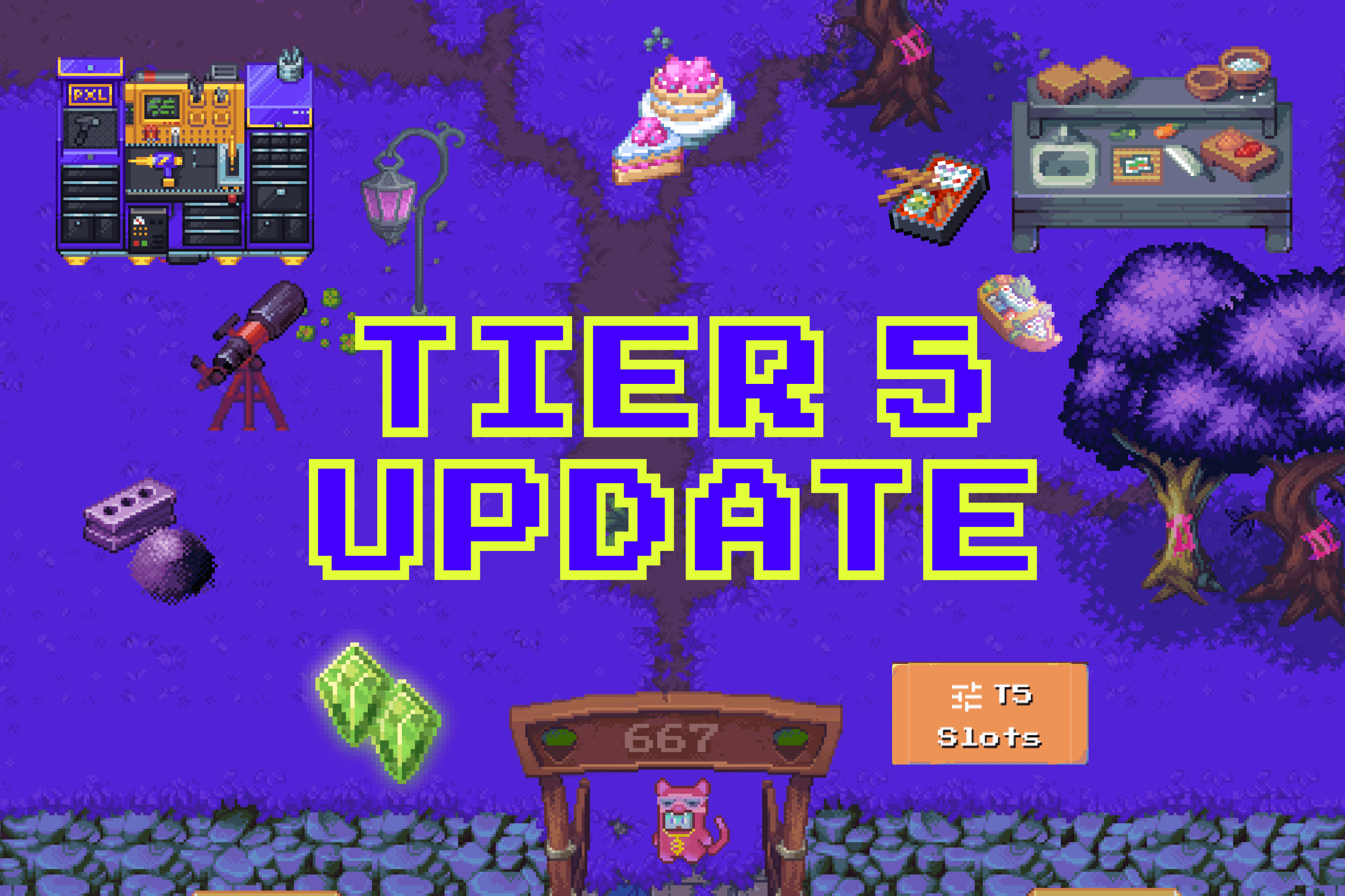
Se eu tivesse que dizer que realmente... @Pixels parece o mesmo. Por fora, ainda é um jogo de agricultura ou criação, mas se você olhar para as camadas internas, pode ver que há uma infraestrutura se formando aqui... que não se limita apenas a recompensas ou economias de tokens. Por exemplo, aumentando a importância das terras NFT, instalando escrituras de slot separadas para máquinas T5 - isso realmente cria um conjunto de regras baseado em ativos mais do que em jogabilidade, e quando você pensa sobre isso - eu sou tho purai obak... Do que eu entendo, o verdadeiro ponto de virada aqui é a propriedade. Antes, a propriedade em jogos era muito nominal - você jogava, atualizava, mas o sistema poderia te substituir muito facilmente. Agora, terras, escrituras de slot, sistema de renovação - tudo isso junto dá a impressão de que você não está apenas jogando, você está administrando uma pequena operação digital. E sustentar essa operação requer participação regular, gerenciamento de recursos e planejamento. Mas é aqui que uma pressão estranha também é criada. Porque o jogo não é mais apenas um lugar para relaxar. Ele se torna um pouco de "responsabilidade contínua". Renovações de 30 dias, acesso a slots baseado em HQ - tudo isso junto parece uma mini-economia que está sempre em movimento. Mas eu não vejo isso como algo totalmente negativo. Porque há um grande experimento acontecendo dentro dele, de forma muito ampla. Para ver onde as fronteiras entre jogos e comportamento econômico real se encontram. Talvez no futuro, tal sistema se torne a norma, onde os jogos não são apenas entretenimento, mas uma camada de produção digital em pequena escala.
No final, a questão retorna - isso ainda é um jogo ou estamos lentamente vendo uma estrutura que está lentamente criando um novo tipo de economia em nome dos jogos? Vamos ver o que acontece.....🤔👀
Estou honestamente... Eu me pergunto por que continuo pensando em uma coisa - quando um jogo gradualmente se transforma de um lugar para jogar em um sistema econômico inteiro, realmente entendemos onde isso deixa de ser um jogo?
Se eu tivesse que dizer que realmente... @Pixels parece o mesmo. Por fora, ainda é um jogo de agricultura ou criação, mas se você olhar para as camadas internas, pode ver que há uma infraestrutura se formando aqui... que não se limita apenas a recompensas ou economias de tokens. Por exemplo, aumentando a importância das terras NFT, instalando escrituras de slot separadas para máquinas T5 - isso realmente cria um conjunto de regras baseado em ativos mais do que em jogabilidade, e quando você pensa sobre isso - eu sou tho purai obak... Do que eu entendo, o verdadeiro ponto de virada aqui é a propriedade. Antes, a propriedade em jogos era muito nominal - você jogava, atualizava, mas o sistema poderia te substituir muito facilmente. Agora, terras, escrituras de slot, sistema de renovação - tudo isso junto dá a impressão de que você não está apenas jogando, você está administrando uma pequena operação digital. E sustentar essa operação requer participação regular, gerenciamento de recursos e planejamento. Mas é aqui que uma pressão estranha também é criada. Porque o jogo não é mais apenas um lugar para relaxar. Ele se torna um pouco de "responsabilidade contínua". Renovações de 30 dias, acesso a slots baseado em HQ - tudo isso junto parece uma mini-economia que está sempre em movimento. Mas eu não vejo isso como algo totalmente negativo. Porque há um grande experimento acontecendo dentro dele, de forma muito ampla. Para ver onde as fronteiras entre jogos e comportamento econômico real se encontram. Talvez no futuro, tal sistema se torne a norma, onde os jogos não são apenas entretenimento, mas uma camada de produção digital em pequena escala.
No final, a questão retorna - isso ainda é um jogo ou estamos lentamente vendo uma estrutura que está lentamente criando um novo tipo de economia em nome dos jogos? Vamos ver o que acontece.....🤔👀
·
--
Ver tradução
Lets go!!!
Lets go!!!

Crypto Expert BNB
·
--
Em AltaEu estive olhando para $ASTER na noite passada. Estou começando a sentir que é mais do que apenas outro token aleatório...
Mas o que chamou minha atenção...
Primeiro foi sua utilidade. Não está apenas parado lá para a empolgação. Na verdade, desempenha um papel dentro do ecossistema. Pelo que vejo, $ASTER é projetado para impulsionar transações, apoiar atividades DeFi e potencialmente agir como um ativo central dentro da Aster Chain. Essa é uma base sólida.
Mas o que realmente me deixa curioso é a visão de longo prazo...? 🤔
Parece que a equipe está tentando construir algo maior, uma rede escalável onde DeFi, IA e experiência do usuário se juntam. Se eles executarem isso corretamente, pode abrir portas para uma adoção real, não apenas especulação de curto prazo.
Não estou dizendo que é um sucesso garantido, criptomoeda nunca funciona assim. Mas projetos com utilidade clara + pensamento de longo prazo geralmente se destacam ao longo do tempo 📊
Depois de analisar tudo isso, eu diria que ASTER é um bom token para investimento de longo prazo.
Por agora, estou observando de perto… e talvez me posicionando cedo.
Qual é a sua opinião sobre $ASTER compartilhe comigo nos comentários...
#Aster #ASTER #AsterDEX #BinanceSquare
Mas o que chamou minha atenção...
Primeiro foi sua utilidade. Não está apenas parado lá para a empolgação. Na verdade, desempenha um papel dentro do ecossistema. Pelo que vejo, $ASTER é projetado para impulsionar transações, apoiar atividades DeFi e potencialmente agir como um ativo central dentro da Aster Chain. Essa é uma base sólida.
Mas o que realmente me deixa curioso é a visão de longo prazo...? 🤔
Parece que a equipe está tentando construir algo maior, uma rede escalável onde DeFi, IA e experiência do usuário se juntam. Se eles executarem isso corretamente, pode abrir portas para uma adoção real, não apenas especulação de curto prazo.
Não estou dizendo que é um sucesso garantido, criptomoeda nunca funciona assim. Mas projetos com utilidade clara + pensamento de longo prazo geralmente se destacam ao longo do tempo 📊
Depois de analisar tudo isso, eu diria que ASTER é um bom token para investimento de longo prazo.
Por agora, estou observando de perto… e talvez me posicionando cedo.
Qual é a sua opinião sobre $ASTER compartilhe comigo nos comentários...
#Aster #ASTER #AsterDEX #BinanceSquare
1
·
--
Foi uma experiência incrível e estou adorando a aventura em $PIXEL
Foi uma experiência incrível e estou adorando a aventura em $PIXEL
1
70
·
--
Existem raros espaços digitais que deixam de parecer jogos e começam a parecer lugares onde você pode realmente respirar, construir e pertencer.
Pixels está silenciosamente se tornando um deles.
Além da mecânica de agricultura e blockchain, está construindo algo mais profundo: um lar digital vivo onde seu tempo é respeitado, suas ações importam e sua presença deixa uma marca suave.
Em Pixels, cada pequena escolha de hoje molda o mundo que você retorna amanhã. Sua terra se torna um reflexo de como você joga, seja otimizando para o crescimento, projetando espaços aconchegantes ou simplesmente desfrutando do ritmo pacífico do jogo. O mundo não reinicia quando você sai. Ele continua. E quando você volta, parece que ele se lembra de você.
O progresso aqui recompensa a consistência, não a velocidade. A comunidade transforma ações individuais em um ambiente compartilhado e vivo. Até mesmo o $PIXEL token está ligado à participação real, em vez de especulação.
Em um mundo barulhento do Web3 cheio de hype, Pixels se destaca por se mover lentamente e de forma consciente, criando um espaço onde o esforço se transforma em presença, e a presença se transforma em pertencimento.
Um lembrete gentil de que as melhores experiências digitais nem sempre são as mais barulhentas. Às vezes, são aquelas que simplesmente parecem um lar.
@pixels
Existem raros espaços digitais que deixam de parecer jogos e começam a parecer lugares onde você pode realmente respirar, construir e pertencer.
Pixels está silenciosamente se tornando um deles.
Além da mecânica de agricultura e blockchain, está construindo algo mais profundo: um lar digital vivo onde seu tempo é respeitado, suas ações importam e sua presença deixa uma marca suave.
Em Pixels, cada pequena escolha de hoje molda o mundo que você retorna amanhã. Sua terra se torna um reflexo de como você joga, seja otimizando para o crescimento, projetando espaços aconchegantes ou simplesmente desfrutando do ritmo pacífico do jogo. O mundo não reinicia quando você sai. Ele continua. E quando você volta, parece que ele se lembra de você.
O progresso aqui recompensa a consistência, não a velocidade. A comunidade transforma ações individuais em um ambiente compartilhado e vivo. Até mesmo o $PIXEL token está ligado à participação real, em vez de especulação.
Em um mundo barulhento do Web3 cheio de hype, Pixels se destaca por se mover lentamente e de forma consciente, criando um espaço onde o esforço se transforma em presença, e a presença se transforma em pertencimento.
Um lembrete gentil de que as melhores experiências digitais nem sempre são as mais barulhentas. Às vezes, são aquelas que simplesmente parecem um lar.
@Pixels
Pixels está silenciosamente se tornando um deles.
Além da mecânica de agricultura e blockchain, está construindo algo mais profundo: um lar digital vivo onde seu tempo é respeitado, suas ações importam e sua presença deixa uma marca suave.
Em Pixels, cada pequena escolha de hoje molda o mundo que você retorna amanhã. Sua terra se torna um reflexo de como você joga, seja otimizando para o crescimento, projetando espaços aconchegantes ou simplesmente desfrutando do ritmo pacífico do jogo. O mundo não reinicia quando você sai. Ele continua. E quando você volta, parece que ele se lembra de você.
O progresso aqui recompensa a consistência, não a velocidade. A comunidade transforma ações individuais em um ambiente compartilhado e vivo. Até mesmo o $PIXEL token está ligado à participação real, em vez de especulação.
Em um mundo barulhento do Web3 cheio de hype, Pixels se destaca por se mover lentamente e de forma consciente, criando um espaço onde o esforço se transforma em presença, e a presença se transforma em pertencimento.
Um lembrete gentil de que as melhores experiências digitais nem sempre são as mais barulhentas. Às vezes, são aquelas que simplesmente parecem um lar.
@Pixels
12
10
20
·
--
Além da Agricultura: Como Pixels Está Construindo um Lar Digital VivoNo cenário lotado dos jogos Web3, onde o hype muitas vezes supera a substância, @pixels se destaca como algo mais silencioso e duradouro. Não é mais um esquema chamativo de jogar para ganhar que busca lucros rápidos. Em vez disso, evoluiu para um mundo digital vivo e respirável - um MMO de agricultura em pixel art acolhedor na blockchain Ronin que parece menos um jogo e mais um lugar onde as pessoas retornam porque respeita silenciosamente seu tempo e presença.
Lançado como uma experiência social de agricultura e exploração gratuita, Pixels se inspira em clássicos como Stardew Valley, mas adiciona a verdadeira propriedade por meio de terrenos NFT, animais de estimação e progressão em cadeia. O que começou como o simples cuidado de culturas se transformou em um ecossistema interconectado de agricultura, artesanato, missões, construção de comunidade e expressão pessoal. Em 2026, com relatos de mais de um milhão de usuários ativos diários, provou que as mecânicas de blockchain podem melhorar, em vez de distrair, do prazer genuíno.
Além da Agricultura: Como Pixels Está Construindo um Lar Digital Vivo
No cenário lotado dos jogos Web3, onde o hype muitas vezes supera a substância, @Pixels se destaca como algo mais silencioso e duradouro. Não é mais um esquema chamativo de jogar para ganhar que busca lucros rápidos. Em vez disso, evoluiu para um mundo digital vivo e respirável - um MMO de agricultura em pixel art acolhedor na blockchain Ronin que parece menos um jogo e mais um lugar onde as pessoas retornam porque respeita silenciosamente seu tempo e presença.
Lançado como uma experiência social de agricultura e exploração gratuita, Pixels se inspira em clássicos como Stardew Valley, mas adiciona a verdadeira propriedade por meio de terrenos NFT, animais de estimação e progressão em cadeia. O que começou como o simples cuidado de culturas se transformou em um ecossistema interconectado de agricultura, artesanato, missões, construção de comunidade e expressão pessoal. Em 2026, com relatos de mais de um milhão de usuários ativos diários, provou que as mecânicas de blockchain podem melhorar, em vez de distrair, do prazer genuíno.
Lançado como uma experiência social de agricultura e exploração gratuita, Pixels se inspira em clássicos como Stardew Valley, mas adiciona a verdadeira propriedade por meio de terrenos NFT, animais de estimação e progressão em cadeia. O que começou como o simples cuidado de culturas se transformou em um ecossistema interconectado de agricultura, artesanato, missões, construção de comunidade e expressão pessoal. Em 2026, com relatos de mais de um milhão de usuários ativos diários, provou que as mecânicas de blockchain podem melhorar, em vez de distrair, do prazer genuíno.
12
10
12
·
--
Artigo
Ver tradução
Pixels Is Learning the Hard Truth: Not All Growth Is Good GrowthWhen Pixels first exploded onto the scene as a browser-based farming game on the Ronin blockchain, the narrative was simple and intoxicating: flood the funnel with daily active users, spark token activity, and let momentum carry the project. More players meant more noise, more transactions, and a thriving tokenized economy. Or so the story went.
But raw scale has a way of revealing its limits in web3 gaming. @pixels proved it could deliver massive audiences it became the top web3 title by daily active users in 2024, reportedly generating around $20 million in revenue that year. Yet success on paper masked deeper issues: runaway token inflation, persistent sell pressure from rewards, and an economy that often subsidized short-term activity rather than building lasting value.
The game’s own evolution tells the real story. By late 2024 and into 2025, the team confronted the unsustainability of “growth at all costs.” Rewards were flowing out faster than revenue was flowing back in. The response? A deliberate pivot away from chasing the biggest possible audience toward cultivating a better one.
At the heart of this shift is a metric that sounds deceptively simple but carries profound implications: RORS, or Return on Reward Spend. It’s the ratio of revenue earned back versus rewards paid out. Pixels has indicated RORS hovering around 0.8 in recent periods. On the surface, that’s a familiar game industry benchmark. Dig deeper, and it’s subsidy accounting in disguise. It reveals an economy that still isn’t fully self-sustaining every new player isn’t automatically accretive. Some are net extractors.
This realization forces a financial filter on retention. In a tokenized system, you can’t afford to treat every newcomer as equally valuable. The focus moves from vanity metrics like peak DAUs to player quality: who stays, who spends, who reinvests tokens back into the ecosystem, and who generates usable behavioral data for smarter future loops.
Market conditions only amplify the need for precision. As of mid-April 2026, the $PIXEL token trades with a market cap in the $25–28 million range (with some data points varying based on recent volatility), high 24-hour volumes relative to its size, and roughly 3.38 billion of its 5 billion total supply already circulating. That high turnover suggests constant repricing and movement rather than quiet accumulation exactly the environment where loose reward distribution can accelerate leakage instead of loyalty.
In response, Pixels has introduced smarter targeting, expanded VIP tier structures (where spending $PIXEL earns points and escalating perks), added withdrawal friction in places, and designed more spend-oriented gameplay loops. These aren’t just retention tweaks; they’re attempts to reward players more likely to create durable value those who treat the game as a hobby with skin in the game rather than a quick farm.
The upside is clear: lower user acquisition costs, reduced waste on low-quality traffic, and a tighter feedback loop for improving the product. Better players generate better data, which in turn enables more precise incentives. It’s a virtuous cycle that many traditional games have long optimized for.
Yet the risks are real and worth watching. A system optimized for quality can start to feel gated or less welcoming to true casuals. If the “precision” filter hardens into exclusion, the playful, open-world charm that helped Pixels stand out could erode. The challenge is balancing sustainability with accessibility—keeping the farm fun without turning it into an exclusive club.
This strategic recalibration doesn’t happen in isolation. It mirrors broader dynamics in crypto. The total market cap sits near $2.5–2.6 trillion, with Bitcoin dominance holding steady around 57%. Liquidity is present but increasingly selective and defensive. Stablecoin supply hovers above $300 billion, while Bitcoin ETF flows remain volatile strong inflows one week (like the $871 million into IBIT in a recent period) can give way to outflows the next. In such an environment, “rented” attention from incentive-driven users evaporates quickly when rewards soften. Weak economies get exposed fast.
What Pixels appears to be building is quieter but more ambitious than the initial hype suggested. It’s evolving from a simple farming game with a token attached into a measured acquisition and retention engine—where the token’s primary utility is improving player quality and economic health over time.
The industry as a whole is making a similar transition. In an era shaped by data, AI-driven personalization, and maturing tokenomics, who stays predictably matters far more than who arrives noisily. Counting heads was phase one. Classifying behavior and lifetime value is phase two.
In the end, Pixels isn’t abandoning growth. It’s rejecting the kind of growth that leaves nothing behind—no habits, no spend, no ecosystem value. In a space littered with projects that chased explosive user numbers only to collapse under their own inflationary weight, this measured approach feels like a necessary maturation.
Whether it fully succeeds will depend on execution: Can the team keep the experience engaging while tightening the economics? Can they attract high-quality players without alienating the casual base that gave them their early scale? The answers will matter not just for Pixels, but for the next wave of web3 games trying to prove that tokenized economies can be sustainable—not just speculative.
$PIXEL isn’t just a farming token anymore. It’s becoming a loyalty signal. And in crypto gaming, that might be the scarcest resource of all.
Pixels Is Learning the Hard Truth: Not All Growth Is Good Growth
When Pixels first exploded onto the scene as a browser-based farming game on the Ronin blockchain, the narrative was simple and intoxicating: flood the funnel with daily active users, spark token activity, and let momentum carry the project. More players meant more noise, more transactions, and a thriving tokenized economy. Or so the story went.
But raw scale has a way of revealing its limits in web3 gaming. @Pixels proved it could deliver massive audiences it became the top web3 title by daily active users in 2024, reportedly generating around $20 million in revenue that year. Yet success on paper masked deeper issues: runaway token inflation, persistent sell pressure from rewards, and an economy that often subsidized short-term activity rather than building lasting value.
The game’s own evolution tells the real story. By late 2024 and into 2025, the team confronted the unsustainability of “growth at all costs.” Rewards were flowing out faster than revenue was flowing back in. The response? A deliberate pivot away from chasing the biggest possible audience toward cultivating a better one.
At the heart of this shift is a metric that sounds deceptively simple but carries profound implications: RORS, or Return on Reward Spend. It’s the ratio of revenue earned back versus rewards paid out. Pixels has indicated RORS hovering around 0.8 in recent periods. On the surface, that’s a familiar game industry benchmark. Dig deeper, and it’s subsidy accounting in disguise. It reveals an economy that still isn’t fully self-sustaining every new player isn’t automatically accretive. Some are net extractors.
This realization forces a financial filter on retention. In a tokenized system, you can’t afford to treat every newcomer as equally valuable. The focus moves from vanity metrics like peak DAUs to player quality: who stays, who spends, who reinvests tokens back into the ecosystem, and who generates usable behavioral data for smarter future loops.
Market conditions only amplify the need for precision. As of mid-April 2026, the $PIXEL token trades with a market cap in the $25–28 million range (with some data points varying based on recent volatility), high 24-hour volumes relative to its size, and roughly 3.38 billion of its 5 billion total supply already circulating. That high turnover suggests constant repricing and movement rather than quiet accumulation exactly the environment where loose reward distribution can accelerate leakage instead of loyalty.
In response, Pixels has introduced smarter targeting, expanded VIP tier structures (where spending $PIXEL earns points and escalating perks), added withdrawal friction in places, and designed more spend-oriented gameplay loops. These aren’t just retention tweaks; they’re attempts to reward players more likely to create durable value those who treat the game as a hobby with skin in the game rather than a quick farm.
The upside is clear: lower user acquisition costs, reduced waste on low-quality traffic, and a tighter feedback loop for improving the product. Better players generate better data, which in turn enables more precise incentives. It’s a virtuous cycle that many traditional games have long optimized for.
Yet the risks are real and worth watching. A system optimized for quality can start to feel gated or less welcoming to true casuals. If the “precision” filter hardens into exclusion, the playful, open-world charm that helped Pixels stand out could erode. The challenge is balancing sustainability with accessibility—keeping the farm fun without turning it into an exclusive club.
This strategic recalibration doesn’t happen in isolation. It mirrors broader dynamics in crypto. The total market cap sits near $2.5–2.6 trillion, with Bitcoin dominance holding steady around 57%. Liquidity is present but increasingly selective and defensive. Stablecoin supply hovers above $300 billion, while Bitcoin ETF flows remain volatile strong inflows one week (like the $871 million into IBIT in a recent period) can give way to outflows the next. In such an environment, “rented” attention from incentive-driven users evaporates quickly when rewards soften. Weak economies get exposed fast.
What Pixels appears to be building is quieter but more ambitious than the initial hype suggested. It’s evolving from a simple farming game with a token attached into a measured acquisition and retention engine—where the token’s primary utility is improving player quality and economic health over time.
The industry as a whole is making a similar transition. In an era shaped by data, AI-driven personalization, and maturing tokenomics, who stays predictably matters far more than who arrives noisily. Counting heads was phase one. Classifying behavior and lifetime value is phase two.
In the end, Pixels isn’t abandoning growth. It’s rejecting the kind of growth that leaves nothing behind—no habits, no spend, no ecosystem value. In a space littered with projects that chased explosive user numbers only to collapse under their own inflationary weight, this measured approach feels like a necessary maturation.
Whether it fully succeeds will depend on execution: Can the team keep the experience engaging while tightening the economics? Can they attract high-quality players without alienating the casual base that gave them their early scale? The answers will matter not just for Pixels, but for the next wave of web3 games trying to prove that tokenized economies can be sustainable—not just speculative.
$PIXEL isn’t just a farming token anymore. It’s becoming a loyalty signal. And in crypto gaming, that might be the scarcest resource of all.
But raw scale has a way of revealing its limits in web3 gaming. @Pixels proved it could deliver massive audiences it became the top web3 title by daily active users in 2024, reportedly generating around $20 million in revenue that year. Yet success on paper masked deeper issues: runaway token inflation, persistent sell pressure from rewards, and an economy that often subsidized short-term activity rather than building lasting value.
The game’s own evolution tells the real story. By late 2024 and into 2025, the team confronted the unsustainability of “growth at all costs.” Rewards were flowing out faster than revenue was flowing back in. The response? A deliberate pivot away from chasing the biggest possible audience toward cultivating a better one.
At the heart of this shift is a metric that sounds deceptively simple but carries profound implications: RORS, or Return on Reward Spend. It’s the ratio of revenue earned back versus rewards paid out. Pixels has indicated RORS hovering around 0.8 in recent periods. On the surface, that’s a familiar game industry benchmark. Dig deeper, and it’s subsidy accounting in disguise. It reveals an economy that still isn’t fully self-sustaining every new player isn’t automatically accretive. Some are net extractors.
This realization forces a financial filter on retention. In a tokenized system, you can’t afford to treat every newcomer as equally valuable. The focus moves from vanity metrics like peak DAUs to player quality: who stays, who spends, who reinvests tokens back into the ecosystem, and who generates usable behavioral data for smarter future loops.
Market conditions only amplify the need for precision. As of mid-April 2026, the $PIXEL token trades with a market cap in the $25–28 million range (with some data points varying based on recent volatility), high 24-hour volumes relative to its size, and roughly 3.38 billion of its 5 billion total supply already circulating. That high turnover suggests constant repricing and movement rather than quiet accumulation exactly the environment where loose reward distribution can accelerate leakage instead of loyalty.
In response, Pixels has introduced smarter targeting, expanded VIP tier structures (where spending $PIXEL earns points and escalating perks), added withdrawal friction in places, and designed more spend-oriented gameplay loops. These aren’t just retention tweaks; they’re attempts to reward players more likely to create durable value those who treat the game as a hobby with skin in the game rather than a quick farm.
The upside is clear: lower user acquisition costs, reduced waste on low-quality traffic, and a tighter feedback loop for improving the product. Better players generate better data, which in turn enables more precise incentives. It’s a virtuous cycle that many traditional games have long optimized for.
Yet the risks are real and worth watching. A system optimized for quality can start to feel gated or less welcoming to true casuals. If the “precision” filter hardens into exclusion, the playful, open-world charm that helped Pixels stand out could erode. The challenge is balancing sustainability with accessibility—keeping the farm fun without turning it into an exclusive club.
This strategic recalibration doesn’t happen in isolation. It mirrors broader dynamics in crypto. The total market cap sits near $2.5–2.6 trillion, with Bitcoin dominance holding steady around 57%. Liquidity is present but increasingly selective and defensive. Stablecoin supply hovers above $300 billion, while Bitcoin ETF flows remain volatile strong inflows one week (like the $871 million into IBIT in a recent period) can give way to outflows the next. In such an environment, “rented” attention from incentive-driven users evaporates quickly when rewards soften. Weak economies get exposed fast.
What Pixels appears to be building is quieter but more ambitious than the initial hype suggested. It’s evolving from a simple farming game with a token attached into a measured acquisition and retention engine—where the token’s primary utility is improving player quality and economic health over time.
The industry as a whole is making a similar transition. In an era shaped by data, AI-driven personalization, and maturing tokenomics, who stays predictably matters far more than who arrives noisily. Counting heads was phase one. Classifying behavior and lifetime value is phase two.
In the end, Pixels isn’t abandoning growth. It’s rejecting the kind of growth that leaves nothing behind—no habits, no spend, no ecosystem value. In a space littered with projects that chased explosive user numbers only to collapse under their own inflationary weight, this measured approach feels like a necessary maturation.
Whether it fully succeeds will depend on execution: Can the team keep the experience engaging while tightening the economics? Can they attract high-quality players without alienating the casual base that gave them their early scale? The answers will matter not just for Pixels, but for the next wave of web3 games trying to prove that tokenized economies can be sustainable—not just speculative.
$PIXEL isn’t just a farming token anymore. It’s becoming a loyalty signal. And in crypto gaming, that might be the scarcest resource of all.
1
21
·
--
Ver tradução
Pixel is moving beyond the typical “game token” vibe and into something deeper: a true living in-game economy.
What stands out isn’t just farming or progression it’s how resources, land, crafting, and social layers all interconnect.
Every decision creates ripple effects that build real depth and momentum.
With @pixels , value isn’t only about holding assets. It’s about compounding your position through smart gameplay tied to $PIXEL . The shift toward a persistent world feels right: players aren’t just chasing rewards they’re shaping their place in the ecosystem over time.
If this direction continues, Pixels could set the standard for dynamic, player-driven Web3 economies. Interconnected, strategic, and actually fun.
#Pixels @pixels #Web3Gaming
Pixel is moving beyond the typical “game token” vibe and into something deeper: a true living in-game economy.
What stands out isn’t just farming or progression it’s how resources, land, crafting, and social layers all interconnect.
Every decision creates ripple effects that build real depth and momentum.
With @Pixels , value isn’t only about holding assets. It’s about compounding your position through smart gameplay tied to $PIXEL . The shift toward a persistent world feels right: players aren’t just chasing rewards they’re shaping their place in the ecosystem over time.
If this direction continues, Pixels could set the standard for dynamic, player-driven Web3 economies. Interconnected, strategic, and actually fun.
#Pixels @Pixels #Web3Gaming
What stands out isn’t just farming or progression it’s how resources, land, crafting, and social layers all interconnect.
Every decision creates ripple effects that build real depth and momentum.
With @Pixels , value isn’t only about holding assets. It’s about compounding your position through smart gameplay tied to $PIXEL . The shift toward a persistent world feels right: players aren’t just chasing rewards they’re shaping their place in the ecosystem over time.
If this direction continues, Pixels could set the standard for dynamic, player-driven Web3 economies. Interconnected, strategic, and actually fun.
#Pixels @Pixels #Web3Gaming
54
·
--
Ver tradução
Love the insight.
Love the insight.

Immaculatep
·
--
Por que 99% dos Jogos Web3 Falham E Como Pixels Acabaram de Reescrever o Livro de Regras
🎯 As Cidades Fantasmas do Metaverso
Vamos ser realistas por um segundo. Todos nós já estivemos lá.
Nós vemos um novo jogo "revolucionário" Web3 ser lançado com um trailer chamativo e um roadmap "Para a Lua". Compramos os tokens, jogamos por horas e então silêncio. O preço mínimo cai, o discord se transforma em um mar de "wen moon" e "dev faça algo," e o jogo se torna outra cidade fantasma digital. Eu vi esse ciclo se repetir mais vezes do que gostaria de admitir.
A dura verdade é que 99% dos jogos Web3 falham. Eles falham porque são construídos sobre uma casa de cartas: um modelo "Play-to-Earn" (P2E) insustentável onde a única razão pela qual alguém está lá é para extrair valor e despejá-lo. É uma corrida para o fundo.
Vamos ser realistas por um segundo. Todos nós já estivemos lá.
Nós vemos um novo jogo "revolucionário" Web3 ser lançado com um trailer chamativo e um roadmap "Para a Lua". Compramos os tokens, jogamos por horas e então silêncio. O preço mínimo cai, o discord se transforma em um mar de "wen moon" e "dev faça algo," e o jogo se torna outra cidade fantasma digital. Eu vi esse ciclo se repetir mais vezes do que gostaria de admitir.
A dura verdade é que 99% dos jogos Web3 falham. Eles falham porque são construídos sobre uma casa de cartas: um modelo "Play-to-Earn" (P2E) insustentável onde a única razão pela qual alguém está lá é para extrair valor e despejá-lo. É uma corrida para o fundo.
·
--
Artigo
Ver tradução
Pixels: The Web3 Farming Game That Turned Time, Strategy, and Community Into Real ValueIn the crowded and often volatile landscape of Web3 gaming, where many titles chase quick hype cycles only to collapse under unsustainable token emissions and player fatigue, Pixels stands out as a thoughtful outlier. Built as a free-to-play social farming and exploration game on the Ronin blockchain, Pixels has steadily demonstrated that a player-driven economy can be both engaging and resilient prioritizing meaningful gameplay, strategic depth, and community over pure extraction.
From Pixel Art Charm to Blockchain Depth
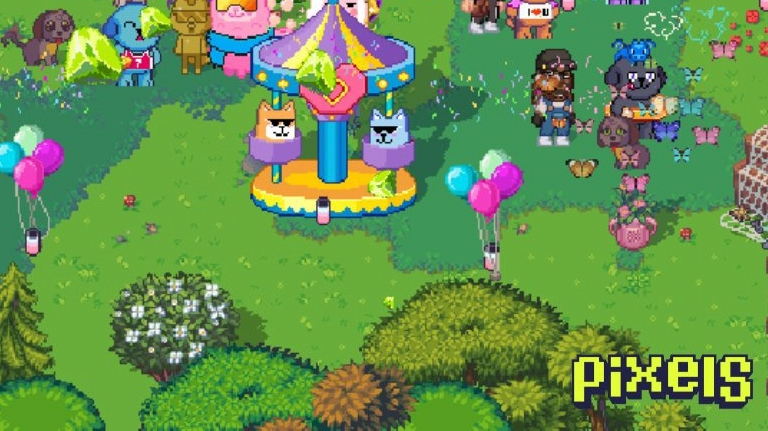
At its heart, Pixels draws inspiration from classics like Stardew Valley and Runescape, wrapping nostalgic 2D pixel-art visuals around an open-world experience of farming, resource gathering, crafting, and social interaction. Players manage virtual land, grow crops, raise animals, explore, complete quests, and build relationships in a shared universe. What elevates it beyond a simple life-sim is the seamless integration of true ownership: land plots, assets, and progress are backed by blockchain, giving players real agency over what they build.
Unlike many early play-to-earn experiments that reduced gameplay to mindless grinding for token dumps, Pixels designs its loops so that time, strategy, and consistency drive progress. Resource management, land optimization, and collaborative activities feel natural. Logging in becomes about nurturing a growing virtual homestead or trading with neighbors, not just chasing daily rewards. This casual-yet-deep approach has helped Pixels amass millions of players, with peaks of hundreds of thousands of daily active users, making it one of the most played decentralized applications in the space.
The Evolution of a Sustainable Economy
Pixels’ economic model has matured significantly. It once featured a dual-token system with $BERRY (an inflationary soft currency) alongside the premium $PIXEL token. Recognizing the pitfalls of unchecked inflation common in Web3 games the team transitioned to a more focused structure. $BERRY was phased out and largely converted, replaced in part by an off-chain “Coins” currency for everyday transactions, while $PIXEL became the central utility and governance asset.
Today, $PIXEL serves as the backbone of the ecosystem. Players use it for:
• Upgrading assets
• Minting NFTs (such as pets or premium items)
• Joining or creating guilds
• Accessing VIP features
• Purchasing Coins
• Participating in staking for rewards and ecosystem influence
This utility-driven design helps maintain relevance even as reward emissions are managed carefully. Staking $PIXEL unlocks boosts, exclusive perks, and the ability to shape future developments, turning holders into active stakeholders rather than passive farmers. Recent initiatives, including heavier withdrawal fees redistributed to stakers and experiments like the Stacked rewards app, further aim to create positive feedback loops where player spending and engagement generate sustainable revenue.
Land ownership exemplifies the strategic layer. Farmland NFTs aren’t cosmetic; they directly influence productivity, resource yields, and long-term earning potential. Players must think about layout, crop rotation, animal care, and market conditions rather than simply grinding repetitive tasks. This balance between effort, planning, and social elements reduces burnout and encourages deeper investment in the world.
Community, Iteration, and Social Stickiness
What truly differentiates Pixels is its emphasis on social gameplay. Trading goods, cooperating on quests, joining guilds, and sharing strategies create a vibrant network effect. Players aren’t isolated wallets farming in silence they’re part of a living community where collaboration adds layers of value beyond tokens.
The development team reinforces this trust through consistent, player-informed updates. Patches refine mechanics, improve user experience, introduce new features (such as exploration elements, task boards, and events), and address economic balance without disrupting the core fun. Recent roadmap items point toward Chapter 2 enhancements focused on guilds and economic overhauls, and even Chapter 3 explorations into combat systems, signaling a commitment to long-term evolution.
Additional experiments like mobile-native spin-offs and rewards hubs show ambition to expand the $PIXEL universe into a broader platform where user-generated content and multiple games can coexist, all natively supporting digital collectibles.
Challenges on the Horizon
No Web3 game is without hurdles. Balancing token supply to avoid saturation, sustaining organic player growth amid broader market volatility, and ensuring new features don’t alienate casual users remain ongoing priorities. External factors, such as crypto market cycles, also influence sentiment. Yet Pixels has navigated these by adopting a measured, long-term mindset focusing on revenue generation alongside rewards, lowering reliance on pure token incentives, and drawing lessons from both traditional gaming and successful Web3 precedents.
Why Pixels Matters for the Future of Web3 Gaming
In an industry still recovering from overhyped play-to-earn cycles that often left players disillusioned, Pixels offers a compelling blueprint. It demonstrates that earning can be a natural byproduct of enjoyable, meaningful gameplay rather than the sole driver. When players stay because they’re invested in their land, their community, and the evolving world not just the token price the economy gains genuine resilience.
With millions of players, a maturing single-token utility model, strong social features, and a roadmap that keeps the experience fresh, Pixel is positioning itself as more than just another blockchain game. It’s building a living digital economy where participants have real agency, strategy rewards patience, and fun remains front and center.
For Web3 enthusiasts, farmers at heart, or anyone curious about the next evolution of gaming on the blockchain, Pixels is worth exploring. In a space that has seen too many short-lived hype trains, this is one project steadily laying tracks for something more enduring.
Play for free at pixels.xyz and discover your own corner of the Pixels universe.
The soil is fertile what will you grow?
#PIXEL #Web3Gaming
Pixels: The Web3 Farming Game That Turned Time, Strategy, and Community Into Real Value
In the crowded and often volatile landscape of Web3 gaming, where many titles chase quick hype cycles only to collapse under unsustainable token emissions and player fatigue, Pixels stands out as a thoughtful outlier. Built as a free-to-play social farming and exploration game on the Ronin blockchain, Pixels has steadily demonstrated that a player-driven economy can be both engaging and resilient prioritizing meaningful gameplay, strategic depth, and community over pure extraction.
From Pixel Art Charm to Blockchain Depth
At its heart, Pixels draws inspiration from classics like Stardew Valley and Runescape, wrapping nostalgic 2D pixel-art visuals around an open-world experience of farming, resource gathering, crafting, and social interaction. Players manage virtual land, grow crops, raise animals, explore, complete quests, and build relationships in a shared universe. What elevates it beyond a simple life-sim is the seamless integration of true ownership: land plots, assets, and progress are backed by blockchain, giving players real agency over what they build.
Unlike many early play-to-earn experiments that reduced gameplay to mindless grinding for token dumps, Pixels designs its loops so that time, strategy, and consistency drive progress. Resource management, land optimization, and collaborative activities feel natural. Logging in becomes about nurturing a growing virtual homestead or trading with neighbors, not just chasing daily rewards. This casual-yet-deep approach has helped Pixels amass millions of players, with peaks of hundreds of thousands of daily active users, making it one of the most played decentralized applications in the space.
The Evolution of a Sustainable Economy
Pixels’ economic model has matured significantly. It once featured a dual-token system with $BERRY (an inflationary soft currency) alongside the premium $PIXEL token. Recognizing the pitfalls of unchecked inflation common in Web3 games the team transitioned to a more focused structure. $BERRY was phased out and largely converted, replaced in part by an off-chain “Coins” currency for everyday transactions, while $PIXEL became the central utility and governance asset.
Today, $PIXEL serves as the backbone of the ecosystem. Players use it for:
• Upgrading assets
• Minting NFTs (such as pets or premium items)
• Joining or creating guilds
• Accessing VIP features
• Purchasing Coins
• Participating in staking for rewards and ecosystem influence
This utility-driven design helps maintain relevance even as reward emissions are managed carefully. Staking $PIXEL unlocks boosts, exclusive perks, and the ability to shape future developments, turning holders into active stakeholders rather than passive farmers. Recent initiatives, including heavier withdrawal fees redistributed to stakers and experiments like the Stacked rewards app, further aim to create positive feedback loops where player spending and engagement generate sustainable revenue.
Land ownership exemplifies the strategic layer. Farmland NFTs aren’t cosmetic; they directly influence productivity, resource yields, and long-term earning potential. Players must think about layout, crop rotation, animal care, and market conditions rather than simply grinding repetitive tasks. This balance between effort, planning, and social elements reduces burnout and encourages deeper investment in the world.
Community, Iteration, and Social Stickiness
What truly differentiates Pixels is its emphasis on social gameplay. Trading goods, cooperating on quests, joining guilds, and sharing strategies create a vibrant network effect. Players aren’t isolated wallets farming in silence they’re part of a living community where collaboration adds layers of value beyond tokens.
The development team reinforces this trust through consistent, player-informed updates. Patches refine mechanics, improve user experience, introduce new features (such as exploration elements, task boards, and events), and address economic balance without disrupting the core fun. Recent roadmap items point toward Chapter 2 enhancements focused on guilds and economic overhauls, and even Chapter 3 explorations into combat systems, signaling a commitment to long-term evolution.
Additional experiments like mobile-native spin-offs and rewards hubs show ambition to expand the $PIXEL universe into a broader platform where user-generated content and multiple games can coexist, all natively supporting digital collectibles.
Challenges on the Horizon
No Web3 game is without hurdles. Balancing token supply to avoid saturation, sustaining organic player growth amid broader market volatility, and ensuring new features don’t alienate casual users remain ongoing priorities. External factors, such as crypto market cycles, also influence sentiment. Yet Pixels has navigated these by adopting a measured, long-term mindset focusing on revenue generation alongside rewards, lowering reliance on pure token incentives, and drawing lessons from both traditional gaming and successful Web3 precedents.
Why Pixels Matters for the Future of Web3 Gaming
In an industry still recovering from overhyped play-to-earn cycles that often left players disillusioned, Pixels offers a compelling blueprint. It demonstrates that earning can be a natural byproduct of enjoyable, meaningful gameplay rather than the sole driver. When players stay because they’re invested in their land, their community, and the evolving world not just the token price the economy gains genuine resilience.
With millions of players, a maturing single-token utility model, strong social features, and a roadmap that keeps the experience fresh, Pixel is positioning itself as more than just another blockchain game. It’s building a living digital economy where participants have real agency, strategy rewards patience, and fun remains front and center.
For Web3 enthusiasts, farmers at heart, or anyone curious about the next evolution of gaming on the blockchain, Pixels is worth exploring. In a space that has seen too many short-lived hype trains, this is one project steadily laying tracks for something more enduring.
Play for free at pixels.xyz and discover your own corner of the Pixels universe.
The soil is fertile what will you grow?
#PIXEL #Web3Gaming
From Pixel Art Charm to Blockchain Depth
At its heart, Pixels draws inspiration from classics like Stardew Valley and Runescape, wrapping nostalgic 2D pixel-art visuals around an open-world experience of farming, resource gathering, crafting, and social interaction. Players manage virtual land, grow crops, raise animals, explore, complete quests, and build relationships in a shared universe. What elevates it beyond a simple life-sim is the seamless integration of true ownership: land plots, assets, and progress are backed by blockchain, giving players real agency over what they build.
Unlike many early play-to-earn experiments that reduced gameplay to mindless grinding for token dumps, Pixels designs its loops so that time, strategy, and consistency drive progress. Resource management, land optimization, and collaborative activities feel natural. Logging in becomes about nurturing a growing virtual homestead or trading with neighbors, not just chasing daily rewards. This casual-yet-deep approach has helped Pixels amass millions of players, with peaks of hundreds of thousands of daily active users, making it one of the most played decentralized applications in the space.
The Evolution of a Sustainable Economy
Pixels’ economic model has matured significantly. It once featured a dual-token system with $BERRY (an inflationary soft currency) alongside the premium $PIXEL token. Recognizing the pitfalls of unchecked inflation common in Web3 games the team transitioned to a more focused structure. $BERRY was phased out and largely converted, replaced in part by an off-chain “Coins” currency for everyday transactions, while $PIXEL became the central utility and governance asset.
Today, $PIXEL serves as the backbone of the ecosystem. Players use it for:
• Upgrading assets
• Minting NFTs (such as pets or premium items)
• Joining or creating guilds
• Accessing VIP features
• Purchasing Coins
• Participating in staking for rewards and ecosystem influence
This utility-driven design helps maintain relevance even as reward emissions are managed carefully. Staking $PIXEL unlocks boosts, exclusive perks, and the ability to shape future developments, turning holders into active stakeholders rather than passive farmers. Recent initiatives, including heavier withdrawal fees redistributed to stakers and experiments like the Stacked rewards app, further aim to create positive feedback loops where player spending and engagement generate sustainable revenue.
Land ownership exemplifies the strategic layer. Farmland NFTs aren’t cosmetic; they directly influence productivity, resource yields, and long-term earning potential. Players must think about layout, crop rotation, animal care, and market conditions rather than simply grinding repetitive tasks. This balance between effort, planning, and social elements reduces burnout and encourages deeper investment in the world.
Community, Iteration, and Social Stickiness
What truly differentiates Pixels is its emphasis on social gameplay. Trading goods, cooperating on quests, joining guilds, and sharing strategies create a vibrant network effect. Players aren’t isolated wallets farming in silence they’re part of a living community where collaboration adds layers of value beyond tokens.
The development team reinforces this trust through consistent, player-informed updates. Patches refine mechanics, improve user experience, introduce new features (such as exploration elements, task boards, and events), and address economic balance without disrupting the core fun. Recent roadmap items point toward Chapter 2 enhancements focused on guilds and economic overhauls, and even Chapter 3 explorations into combat systems, signaling a commitment to long-term evolution.
Additional experiments like mobile-native spin-offs and rewards hubs show ambition to expand the $PIXEL universe into a broader platform where user-generated content and multiple games can coexist, all natively supporting digital collectibles.
Challenges on the Horizon
No Web3 game is without hurdles. Balancing token supply to avoid saturation, sustaining organic player growth amid broader market volatility, and ensuring new features don’t alienate casual users remain ongoing priorities. External factors, such as crypto market cycles, also influence sentiment. Yet Pixels has navigated these by adopting a measured, long-term mindset focusing on revenue generation alongside rewards, lowering reliance on pure token incentives, and drawing lessons from both traditional gaming and successful Web3 precedents.
Why Pixels Matters for the Future of Web3 Gaming
In an industry still recovering from overhyped play-to-earn cycles that often left players disillusioned, Pixels offers a compelling blueprint. It demonstrates that earning can be a natural byproduct of enjoyable, meaningful gameplay rather than the sole driver. When players stay because they’re invested in their land, their community, and the evolving world not just the token price the economy gains genuine resilience.
With millions of players, a maturing single-token utility model, strong social features, and a roadmap that keeps the experience fresh, Pixel is positioning itself as more than just another blockchain game. It’s building a living digital economy where participants have real agency, strategy rewards patience, and fun remains front and center.
For Web3 enthusiasts, farmers at heart, or anyone curious about the next evolution of gaming on the blockchain, Pixels is worth exploring. In a space that has seen too many short-lived hype trains, this is one project steadily laying tracks for something more enduring.
Play for free at pixels.xyz and discover your own corner of the Pixels universe.
The soil is fertile what will you grow?
#PIXEL #Web3Gaming
2
·
--
Pixel #Pixel está evoluindo de uma maneira significativa com suas novas mecânicas de empilhamento.
Não é apenas mais um recurso de “bloquear seus tokens”, é uma camada estratégica adequada que permite que você acumule progresso enquanto permanece totalmente ativo no mundo do jogo.
Você faz agricultura, negocia, constrói e explora... e suas posições empilhadas continuam ficando mais fortes ao mesmo tempo. Isso cria um belo ciclo de feedback onde o engajamento real realmente recompensa você mais ao longo do tempo.
Nada mais de pura agricultura de curto prazo. Isso empurra os jogadores em direção à consistência, decisões inteligentes e criação de valor a longo prazo.
Se os Pixels continuarem construindo nessa direção, eles estão mostrando a todo o espaço de jogos Web3 como fazer utilidade, progressão e economias sustentáveis corretamente, tudo alimentado por $PIXEL .
Realmente impressionado com a direção que isso está tomando.
O que você acha, você já está empilhando? $PIXEL
Pixel #Pixel está evoluindo de uma maneira significativa com suas novas mecânicas de empilhamento.
Não é apenas mais um recurso de “bloquear seus tokens”, é uma camada estratégica adequada que permite que você acumule progresso enquanto permanece totalmente ativo no mundo do jogo.
Você faz agricultura, negocia, constrói e explora... e suas posições empilhadas continuam ficando mais fortes ao mesmo tempo. Isso cria um belo ciclo de feedback onde o engajamento real realmente recompensa você mais ao longo do tempo.
Nada mais de pura agricultura de curto prazo. Isso empurra os jogadores em direção à consistência, decisões inteligentes e criação de valor a longo prazo.
Se os Pixels continuarem construindo nessa direção, eles estão mostrando a todo o espaço de jogos Web3 como fazer utilidade, progressão e economias sustentáveis corretamente, tudo alimentado por $PIXEL .
Realmente impressionado com a direção que isso está tomando.
O que você acha, você já está empilhando? $PIXEL
Não é apenas mais um recurso de “bloquear seus tokens”, é uma camada estratégica adequada que permite que você acumule progresso enquanto permanece totalmente ativo no mundo do jogo.
Você faz agricultura, negocia, constrói e explora... e suas posições empilhadas continuam ficando mais fortes ao mesmo tempo. Isso cria um belo ciclo de feedback onde o engajamento real realmente recompensa você mais ao longo do tempo.
Nada mais de pura agricultura de curto prazo. Isso empurra os jogadores em direção à consistência, decisões inteligentes e criação de valor a longo prazo.
Se os Pixels continuarem construindo nessa direção, eles estão mostrando a todo o espaço de jogos Web3 como fazer utilidade, progressão e economias sustentáveis corretamente, tudo alimentado por $PIXEL .
Realmente impressionado com a direção que isso está tomando.
O que você acha, você já está empilhando? $PIXEL
1
3
18
·
--
Ver tradução
Hi guys don’t stop making those baby steps… it will pay off eventually.
Hi guys don’t stop making those baby steps… it will pay off eventually.

3
Inicia sessão para explorar mais conteúdos
Junta-te a utilizadores de criptomoedas de todo o mundo na Binance Square
⚡️ Obtém informações úteis e recentes sobre criptomoedas.
💬 Com a confiança da maior exchange de criptomoedas do mundo.
👍 Descobre perspetivas reais de criadores verificados.
E-mail/Número de telefone
Tópicos em Tendência
SaylorHintsStrategyBitcoinBuy
2.2M visualizações
11,612 a discutir
SAYLOR PODE TER COMPRADO MAIS $BTC !
Michael Saylor republicou o gráfico que ele costuma compartilhar aos domingos. #SaylorHintsStrategyBitcoinBuy
Isso significa que quanto mais pontos laranja houver, mais compras estão acontecendo. Ele republicou isso hoje.
É bem provável que ele faça outra compra substancial. Já mencionamos antes o quão significativas são essas compras. Ele tem quase tanto #Bitcoin quanto Satoshi.
Acho que essas compras precisam parar em algum momento e ele até pode começar a vender. Você acha que essa dominância de uma única mão algum dia vai acabar?
Kripto Kurdu
·10 gostos
·3.4k visualizações
BOJRaisesRatesTo31YearHigh
190,181 visualizações
2,801 a discutir
BuffettStepsDownAsBerkshireChairman
92,428 visualizações
1,458 a discutir