
Mr_Ethan
33.1k Publicações

Mr_Ethan
Denunciar
Bloquear Utilizador
Crypto Lover || Crypto influencer || BNB || Content Creator || Crypto influencer
Aberto ao trading
Trader Frequente
11.8 mês(es)
1 A seguir
33.0K+ Seguidores
20.0K+ Gostaram
Publicações
Portfólio
Tudo
Cotações
Em direto
·
--
Em Alta
$ETH Estou observando o /BTC de perto depois que um cruzamento de MACD de baixa apareceu no gráfico de 30m. O preço está atualmente em torno de 0.03081 e, para mim, isso é um sinal para permanecer cauteloso em vez de correr atrás de uma operação.
Já vi esses cruzamentos de curto prazo gerarem movimentos fortes, mas também aprendi que o MACD sozinho não é suficiente. Quero ver volume, estrutura de preço e níveis de suporte importantes confirmarem a fraqueza.
O Ethereum ainda tem fundamentos sólidos, alta liquidez e grande adoção em DeFi, L2s e Web3. Mas, contra o BTC, o ETH pode sofrer quando o capital migra para o Bitcoin ou quando os traders ficam mais defensivos.
O principal risco aqui é um falso sinal de baixa. Uma recuperação rápida acima da resistência próxima poderia invalidar a configuração e desencadear um short squeeze.
Minha conclusão ao negociar esses pares é simples: sinais de momentum funcionam melhor quando se alinham com a estrutura maior do mercado. Estou observando 0.03081 de perto para confirmação antes de fazer um movimento mais forte.
Você acha que o ETH pode recuperar força contra o BTC, ou vem mais queda por aí?
{spot}(ETHUSDT)
$4
{future}(4USDT)
$BULLA
{future}(BULLAUSDT)
$ETH Estou observando o /BTC de perto depois que um cruzamento de MACD de baixa apareceu no gráfico de 30m. O preço está atualmente em torno de 0.03081 e, para mim, isso é um sinal para permanecer cauteloso em vez de correr atrás de uma operação.
Já vi esses cruzamentos de curto prazo gerarem movimentos fortes, mas também aprendi que o MACD sozinho não é suficiente. Quero ver volume, estrutura de preço e níveis de suporte importantes confirmarem a fraqueza.
O Ethereum ainda tem fundamentos sólidos, alta liquidez e grande adoção em DeFi, L2s e Web3. Mas, contra o BTC, o ETH pode sofrer quando o capital migra para o Bitcoin ou quando os traders ficam mais defensivos.
O principal risco aqui é um falso sinal de baixa. Uma recuperação rápida acima da resistência próxima poderia invalidar a configuração e desencadear um short squeeze.
Minha conclusão ao negociar esses pares é simples: sinais de momentum funcionam melhor quando se alinham com a estrutura maior do mercado. Estou observando 0.03081 de perto para confirmação antes de fazer um movimento mais forte.
Você acha que o ETH pode recuperar força contra o BTC, ou vem mais queda por aí?
$4
$BULLA
Já vi esses cruzamentos de curto prazo gerarem movimentos fortes, mas também aprendi que o MACD sozinho não é suficiente. Quero ver volume, estrutura de preço e níveis de suporte importantes confirmarem a fraqueza.
O Ethereum ainda tem fundamentos sólidos, alta liquidez e grande adoção em DeFi, L2s e Web3. Mas, contra o BTC, o ETH pode sofrer quando o capital migra para o Bitcoin ou quando os traders ficam mais defensivos.
O principal risco aqui é um falso sinal de baixa. Uma recuperação rápida acima da resistência próxima poderia invalidar a configuração e desencadear um short squeeze.
Minha conclusão ao negociar esses pares é simples: sinais de momentum funcionam melhor quando se alinham com a estrutura maior do mercado. Estou observando 0.03081 de perto para confirmação antes de fazer um movimento mais forte.
Você acha que o ETH pode recuperar força contra o BTC, ou vem mais queda por aí?
$4
$BULLA
319
·
--
Em Alta
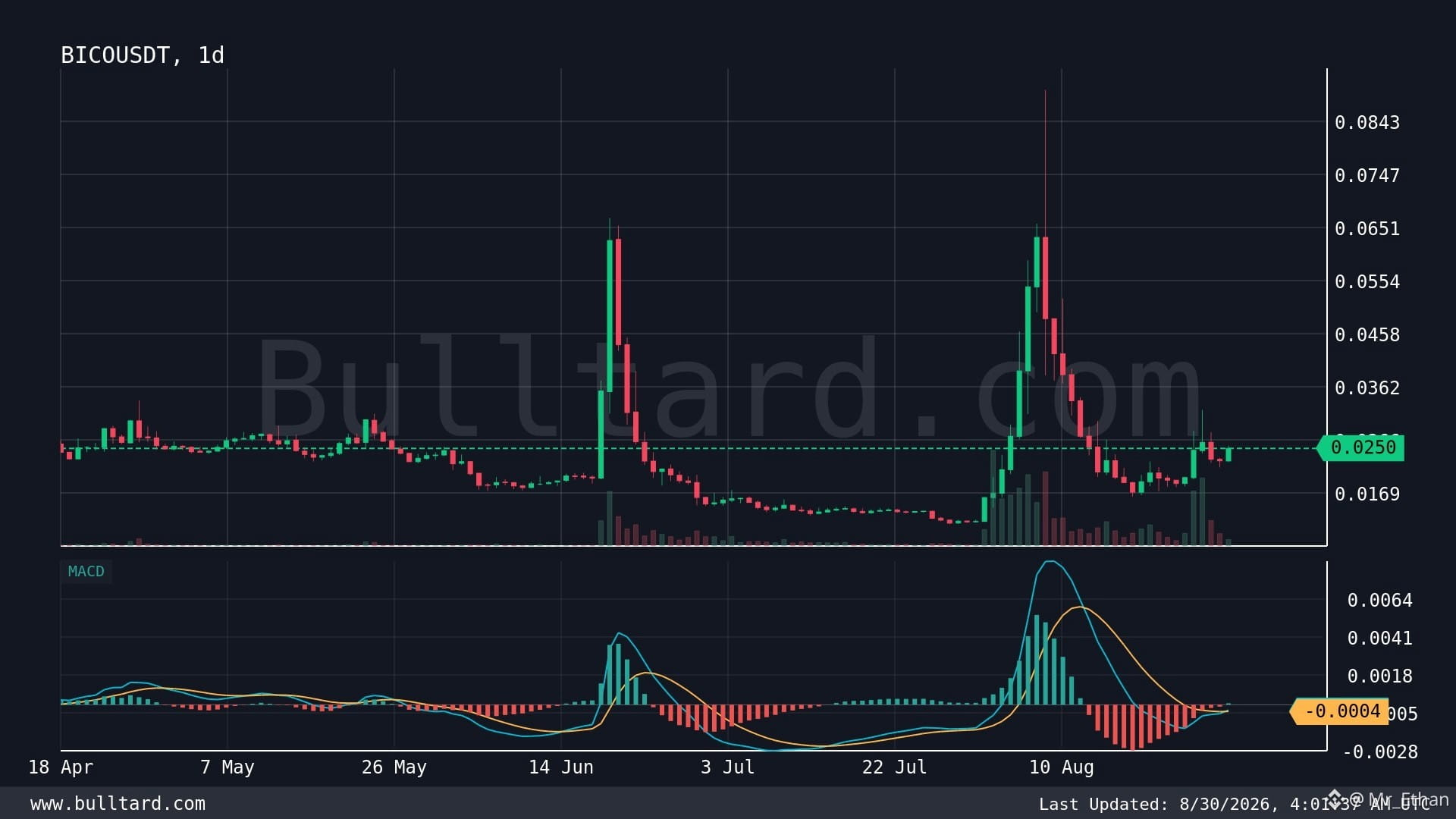
$BICO /USDT está me dando um sinal que estou prestando atenção 👀🔥
Aprendi que, quando um MACD diário faz um cruzamento de alta forte, eu não trato isso como um sinal instantâneo de compra. Eu trato como um indício de que o momentum pode estar começando a mudar. Agora, a BICO está por volta de US$ 0,025, então esse cenário definitivamente vale a pena observar.
A Biconomy se concentra em simplificar transações de blockchain e melhorar a experiência do usuário para apps de Web3. Isso importa porque uma infraestrutura melhor pode ajudar a remover parte da fricção que mantém usuários comuns longe do cripto.
O que eu gosto é do ângulo de infraestrutura e do potencial para uma adoção mais ampla do Web3. Mas também estou mantendo minhas expectativas realistas. A BICO ainda enfrenta concorrência, riscos de liquidez, volatilidade do mercado e o problema comum de saber se o uso real consegue se transformar em valor de longo prazo para o token.
Minha maior lição ao operar esses cenários é simples: o MACD pode mostrar o momentum, mas a ação do preço precisa confirmá-lo. Prefiro entrar tarde, com confirmação, do que correr atrás do primeiro candle verde.
Estou acompanhando a BICO de perto agora. Você acha que esse cruzamento diário pode virar uma tendência maior?
$BICO
{spot}(BICOUSDT)
$BMT
{spot}(BMTUSDT)
$BICO /USDT está me dando um sinal que estou prestando atenção 👀🔥
Aprendi que, quando um MACD diário faz um cruzamento de alta forte, eu não trato isso como um sinal instantâneo de compra. Eu trato como um indício de que o momentum pode estar começando a mudar. Agora, a BICO está por volta de US$ 0,025, então esse cenário definitivamente vale a pena observar.
A Biconomy se concentra em simplificar transações de blockchain e melhorar a experiência do usuário para apps de Web3. Isso importa porque uma infraestrutura melhor pode ajudar a remover parte da fricção que mantém usuários comuns longe do cripto.
O que eu gosto é do ângulo de infraestrutura e do potencial para uma adoção mais ampla do Web3. Mas também estou mantendo minhas expectativas realistas. A BICO ainda enfrenta concorrência, riscos de liquidez, volatilidade do mercado e o problema comum de saber se o uso real consegue se transformar em valor de longo prazo para o token.
Minha maior lição ao operar esses cenários é simples: o MACD pode mostrar o momentum, mas a ação do preço precisa confirmá-lo. Prefiro entrar tarde, com confirmação, do que correr atrás do primeiro candle verde.
Estou acompanhando a BICO de perto agora. Você acha que esse cruzamento diário pode virar uma tendência maior?
$BICO
$BMT
Aprendi que, quando um MACD diário faz um cruzamento de alta forte, eu não trato isso como um sinal instantâneo de compra. Eu trato como um indício de que o momentum pode estar começando a mudar. Agora, a BICO está por volta de US$ 0,025, então esse cenário definitivamente vale a pena observar.
A Biconomy se concentra em simplificar transações de blockchain e melhorar a experiência do usuário para apps de Web3. Isso importa porque uma infraestrutura melhor pode ajudar a remover parte da fricção que mantém usuários comuns longe do cripto.
O que eu gosto é do ângulo de infraestrutura e do potencial para uma adoção mais ampla do Web3. Mas também estou mantendo minhas expectativas realistas. A BICO ainda enfrenta concorrência, riscos de liquidez, volatilidade do mercado e o problema comum de saber se o uso real consegue se transformar em valor de longo prazo para o token.
Minha maior lição ao operar esses cenários é simples: o MACD pode mostrar o momentum, mas a ação do preço precisa confirmá-lo. Prefiro entrar tarde, com confirmação, do que correr atrás do primeiro candle verde.
Estou acompanhando a BICO de perto agora. Você acha que esse cruzamento diário pode virar uma tendência maior?
$BICO
$BMT
244
·
--
Em Alta
$GRAM /USDT. O MACD de 30m acabou de formar um cruzamento de alta, com o preço por volta de 1,358. Eu normalmente presto atenção nesses sinais porque eles podem indicar quando o momentum de curto prazo começa a mudar.
Aprendi que um cruzamento de MACD sozinho nunca é suficiente para eu entrar. Quero ver volume, estrutura de preços e continuidade. Se os compradores continuarem defendendo a região atual e o momentum seguir ganhando força, isso pode evoluir para um movimento de curto prazo mais forte.
O que eu gosto é o sinal inicial de momentum. A fraqueza é que os sinais de 30m podem inverter rapidamente, especialmente em um mercado volátil. Falsas rupturas e “varreduras” repentinas de liquidez são sempre possíveis, então estou mantendo a gestão de risco bem apertada.
Minha principal lição ao operar essas configurações: confirmação importa mais do que o próprio cruzamento. Prefiro entrar um pouco mais tarde, com uma confirmação mais forte, do que correr atrás do primeiro candle.
Estou acompanhando. $GRAM
{spot}(GRAMUSDT)
$WET
{future}(WETUSDT)
$GRAM /USDT. O MACD de 30m acabou de formar um cruzamento de alta, com o preço por volta de 1,358. Eu normalmente presto atenção nesses sinais porque eles podem indicar quando o momentum de curto prazo começa a mudar.
Aprendi que um cruzamento de MACD sozinho nunca é suficiente para eu entrar. Quero ver volume, estrutura de preços e continuidade. Se os compradores continuarem defendendo a região atual e o momentum seguir ganhando força, isso pode evoluir para um movimento de curto prazo mais forte.
O que eu gosto é o sinal inicial de momentum. A fraqueza é que os sinais de 30m podem inverter rapidamente, especialmente em um mercado volátil. Falsas rupturas e “varreduras” repentinas de liquidez são sempre possíveis, então estou mantendo a gestão de risco bem apertada.
Minha principal lição ao operar essas configurações: confirmação importa mais do que o próprio cruzamento. Prefiro entrar um pouco mais tarde, com uma confirmação mais forte, do que correr atrás do primeiro candle.
Estou acompanhando. $GRAM
$WET
Aprendi que um cruzamento de MACD sozinho nunca é suficiente para eu entrar. Quero ver volume, estrutura de preços e continuidade. Se os compradores continuarem defendendo a região atual e o momentum seguir ganhando força, isso pode evoluir para um movimento de curto prazo mais forte.
O que eu gosto é o sinal inicial de momentum. A fraqueza é que os sinais de 30m podem inverter rapidamente, especialmente em um mercado volátil. Falsas rupturas e “varreduras” repentinas de liquidez são sempre possíveis, então estou mantendo a gestão de risco bem apertada.
Minha principal lição ao operar essas configurações: confirmação importa mais do que o próprio cruzamento. Prefiro entrar um pouco mais tarde, com uma confirmação mais forte, do que correr atrás do primeiro candle.
Estou acompanhando. $GRAM
$WET
324
·
--
Em Alta
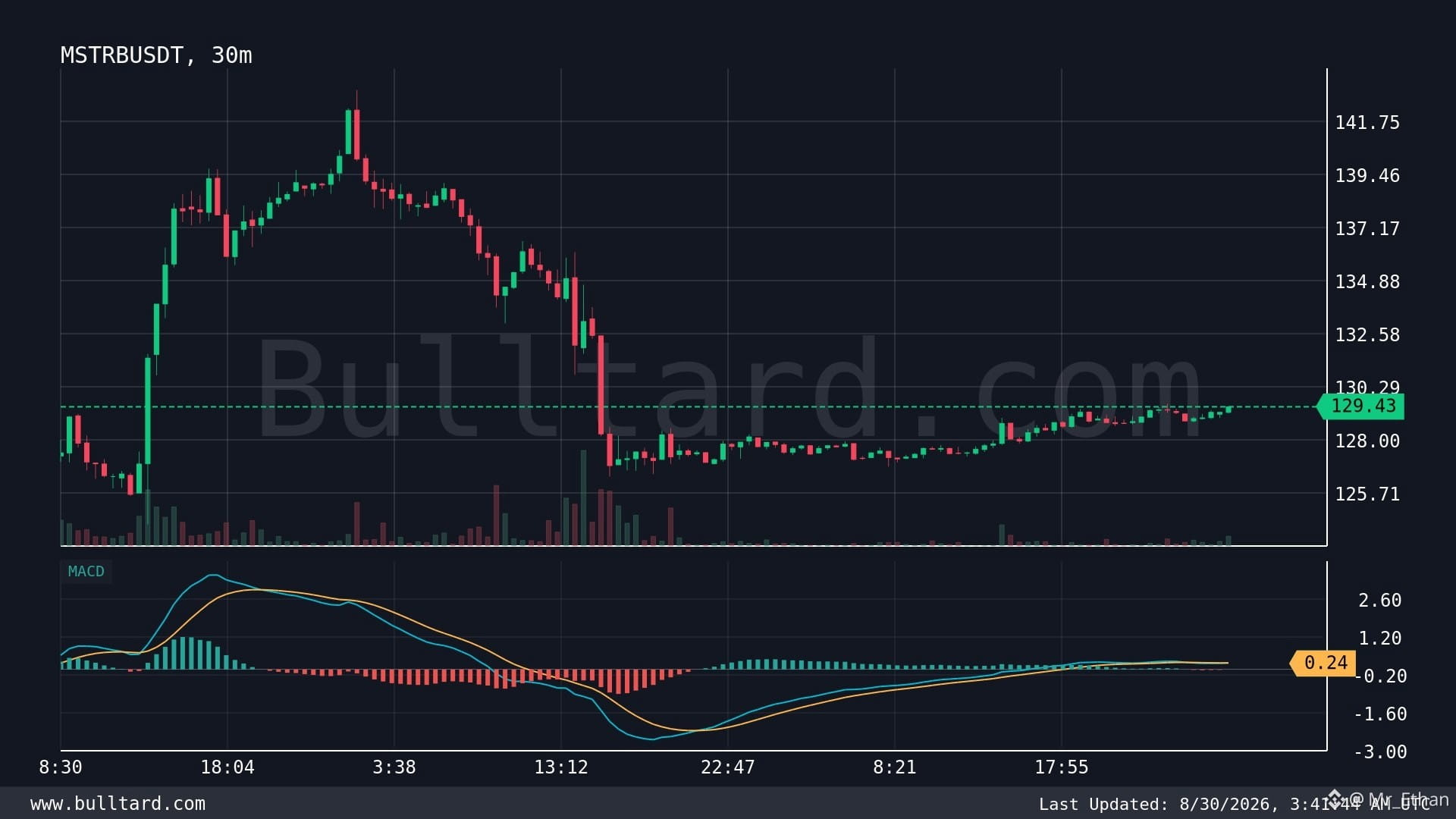
$MSTRB /USDT está mostrando um cruzamento bullish de MACD no gráfico de 30m, e estou observando isso de perto.
O preço está em torno de US$129,43, e para mim o principal sinal aqui é o momento começando a ficar positivo. Já vi muitos cruzamentos de MACD falharem, então eu nunca trato um cruzamento como uma movimentação garantida. Quero ver continuidade (follow-through), volume mais forte e o preço se mantendo acima de um suporte próximo.
O que eu gosto é que um cruzamento bullish às vezes consegue pegar a parte inicial de uma reversão de tendência de curto prazo. Mas o risco é simples: se os compradores perderem o impulso, este sinal pode rapidamente virar um falso rompimento.
Pela minha experiência com esses cenários, a paciência importa mais do que correr atrás do primeiro candle verde. Estou observando como o preço reage após o cruzamento, em vez de presumir que o movimento já está confirmado.
Por enquanto, estou cautelosamente otimista, mas vou manter a disciplina e controlar o risco se a configuração começar a falhar.
Você acha que dá para construir momentum suficiente para o próximo movimento de alta?
$MSTRB
{spot}(MSTRBUSDT)
$FGII.US
{stock_us}(FGII.US)
$MSTRB /USDT está mostrando um cruzamento bullish de MACD no gráfico de 30m, e estou observando isso de perto.
O preço está em torno de US$129,43, e para mim o principal sinal aqui é o momento começando a ficar positivo. Já vi muitos cruzamentos de MACD falharem, então eu nunca trato um cruzamento como uma movimentação garantida. Quero ver continuidade (follow-through), volume mais forte e o preço se mantendo acima de um suporte próximo.
O que eu gosto é que um cruzamento bullish às vezes consegue pegar a parte inicial de uma reversão de tendência de curto prazo. Mas o risco é simples: se os compradores perderem o impulso, este sinal pode rapidamente virar um falso rompimento.
Pela minha experiência com esses cenários, a paciência importa mais do que correr atrás do primeiro candle verde. Estou observando como o preço reage após o cruzamento, em vez de presumir que o movimento já está confirmado.
Por enquanto, estou cautelosamente otimista, mas vou manter a disciplina e controlar o risco se a configuração começar a falhar.
Você acha que dá para construir momentum suficiente para o próximo movimento de alta?
$MSTRB
$FGII.US
O preço está em torno de US$129,43, e para mim o principal sinal aqui é o momento começando a ficar positivo. Já vi muitos cruzamentos de MACD falharem, então eu nunca trato um cruzamento como uma movimentação garantida. Quero ver continuidade (follow-through), volume mais forte e o preço se mantendo acima de um suporte próximo.
O que eu gosto é que um cruzamento bullish às vezes consegue pegar a parte inicial de uma reversão de tendência de curto prazo. Mas o risco é simples: se os compradores perderem o impulso, este sinal pode rapidamente virar um falso rompimento.
Pela minha experiência com esses cenários, a paciência importa mais do que correr atrás do primeiro candle verde. Estou observando como o preço reage após o cruzamento, em vez de presumir que o movimento já está confirmado.
Por enquanto, estou cautelosamente otimista, mas vou manter a disciplina e controlar o risco se a configuração começar a falhar.
Você acha que dá para construir momentum suficiente para o próximo movimento de alta?
$MSTRB
$FGII.US
MSTRB-5,51%
FGIIUS+0,48%
101
·
--
Em Baixa
$RE está chamando minha atenção agora.
No gráfico de 30m, estou vendo um cruzamento de alta no MACD com o preço em torno de US$ 0,4892. Eu não considero um único cruzamento como uma garantia de grande alta, mas pela minha experiência, essas mudanças iniciais de impulso valem a pena observar com atenção, especialmente quando o volume começa a confirmar o movimento.
Para mim, a parte interessante é como o preço reage depois desse sinal. Se os compradores conseguirem manter a região atual e romper a resistência próxima, a configuração pode evoluir para uma tendência de curto prazo mais forte. Mas se o volume continuar fraco, eu teria cautela, porque sinais do MACD podem facilmente virar falsas confirmações em mercados instáveis.
Uma coisa que aprendi operando cripto é que entrar apenas porque um indicador ficou verde geralmente é um erro. Eu prefiro esperar a confirmação a partir do comportamento do preço, do volume e da estrutura do mercado.
A força aqui é o momentum melhorando. O risco é simples: o cruzamento pode falhar rapidamente se os vendedores voltarem a agir.
Estou observando de perto, em vez de perseguir.
Você confiaria nesse cruzamento de alta ou esperaria uma confirmação mais forte?
$RE
{spot}(REUSDT)
$RE está chamando minha atenção agora.
No gráfico de 30m, estou vendo um cruzamento de alta no MACD com o preço em torno de US$ 0,4892. Eu não considero um único cruzamento como uma garantia de grande alta, mas pela minha experiência, essas mudanças iniciais de impulso valem a pena observar com atenção, especialmente quando o volume começa a confirmar o movimento.
Para mim, a parte interessante é como o preço reage depois desse sinal. Se os compradores conseguirem manter a região atual e romper a resistência próxima, a configuração pode evoluir para uma tendência de curto prazo mais forte. Mas se o volume continuar fraco, eu teria cautela, porque sinais do MACD podem facilmente virar falsas confirmações em mercados instáveis.
Uma coisa que aprendi operando cripto é que entrar apenas porque um indicador ficou verde geralmente é um erro. Eu prefiro esperar a confirmação a partir do comportamento do preço, do volume e da estrutura do mercado.
A força aqui é o momentum melhorando. O risco é simples: o cruzamento pode falhar rapidamente se os vendedores voltarem a agir.
Estou observando de perto, em vez de perseguir.
Você confiaria nesse cruzamento de alta ou esperaria uma confirmação mais forte?
$RE
No gráfico de 30m, estou vendo um cruzamento de alta no MACD com o preço em torno de US$ 0,4892. Eu não considero um único cruzamento como uma garantia de grande alta, mas pela minha experiência, essas mudanças iniciais de impulso valem a pena observar com atenção, especialmente quando o volume começa a confirmar o movimento.
Para mim, a parte interessante é como o preço reage depois desse sinal. Se os compradores conseguirem manter a região atual e romper a resistência próxima, a configuração pode evoluir para uma tendência de curto prazo mais forte. Mas se o volume continuar fraco, eu teria cautela, porque sinais do MACD podem facilmente virar falsas confirmações em mercados instáveis.
Uma coisa que aprendi operando cripto é que entrar apenas porque um indicador ficou verde geralmente é um erro. Eu prefiro esperar a confirmação a partir do comportamento do preço, do volume e da estrutura do mercado.
A força aqui é o momentum melhorando. O risco é simples: o cruzamento pode falhar rapidamente se os vendedores voltarem a agir.
Estou observando de perto, em vez de perseguir.
Você confiaria nesse cruzamento de alta ou esperaria uma confirmação mais forte?
$RE
159
·
--
Em Alta
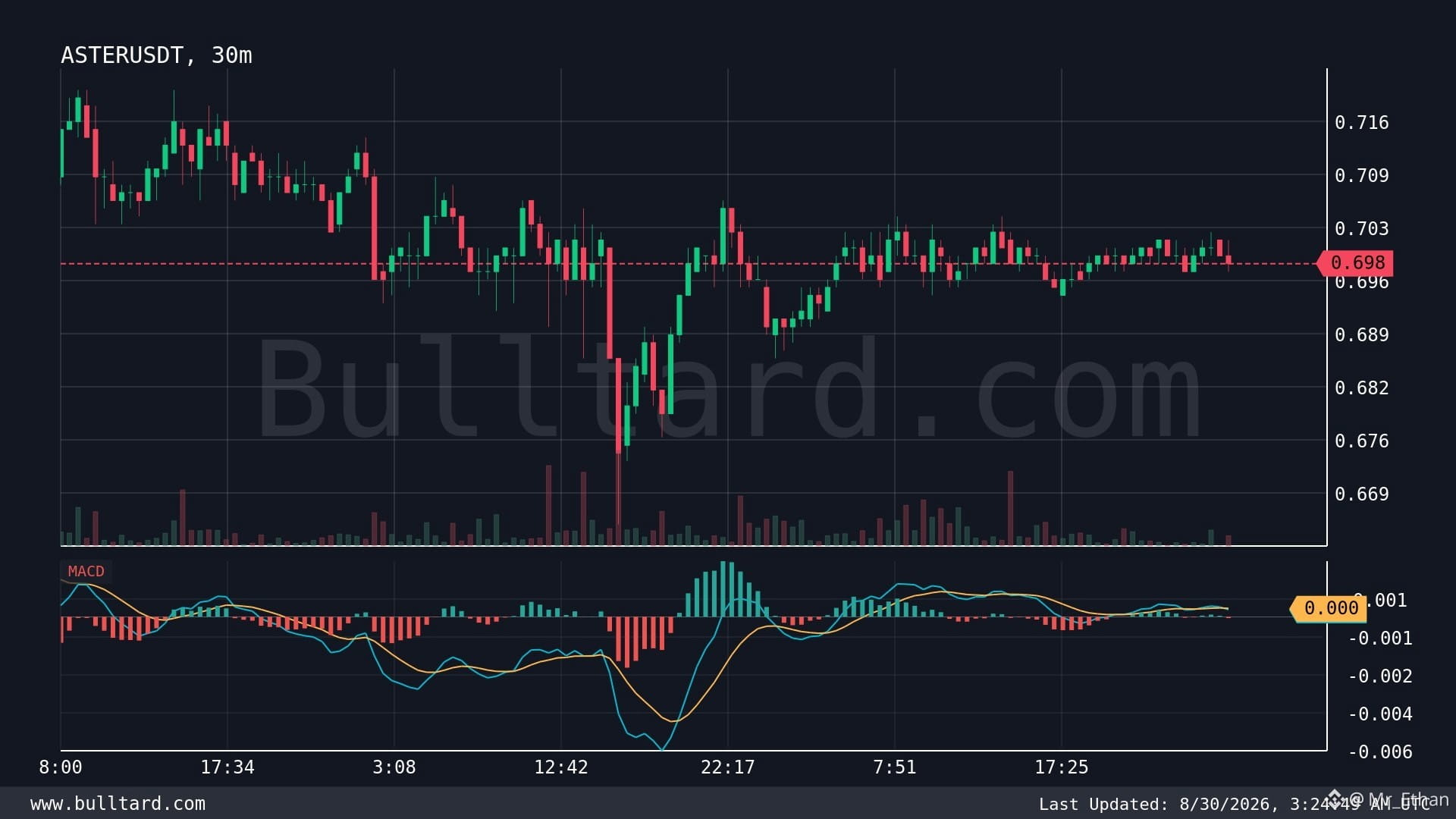
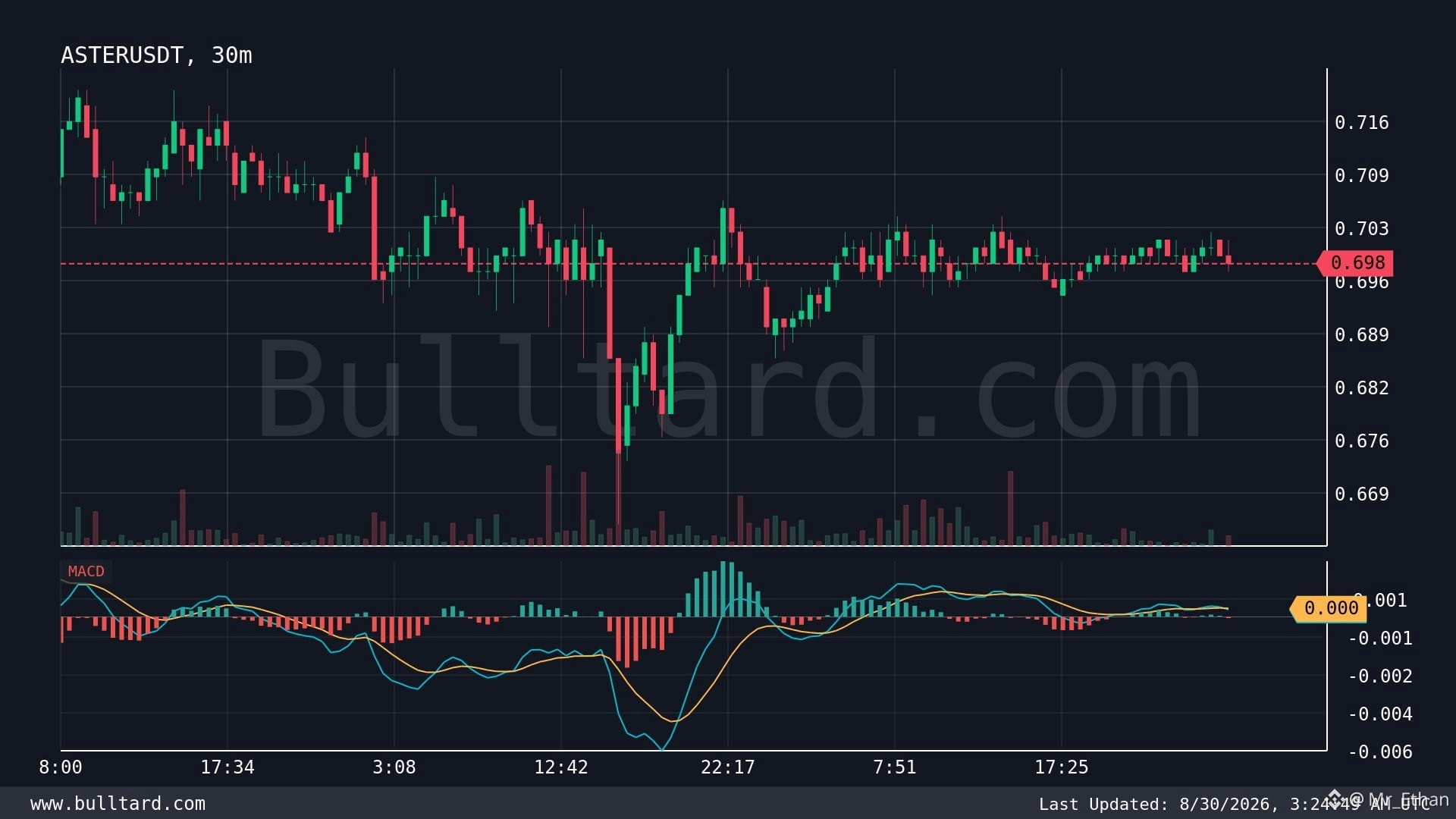
$ASTER /USDT está mostrando um cruzamento de MACD super bearish (baixista) no gráfico de 30m 💀
Estou observando este com atenção porque esses sinais de curto prazo podem mudar a estrutura do mercado rapidamente. Por volta de US$ 0,698, meu primeiro foco é como o preço reage depois que esse momentum baixista aparece.
Aprendi que não devo correr atrás de uma vela só porque o MACD virou bearish. Eu prefiro esperar por confirmação, especialmente perto de suportes. Se os vendedores continuarem no controle, a ASTER pode ver mais pressão de queda. Mas se os compradores recuperarem o momentum e o MACD começar a se recuperar, esse sinal pode perder força rapidamente.
A ASTER tem um lugar interessante no mercado cripto, mas como a maioria dos tokens mais novos, a volatilidade é um grande risco. Liquidez, sentimento e mudanças súbitas no volume podem mover o preço de forma agressiva.
Para mim, a lição principal é simples: MACD é um sinal, não uma garantia. Eu uso junto com a ação do preço, volume e suporte/resistência antes de tomar uma decisão.
Estou ficando cauteloso aqui e acompanhando de perto as próximas poucas velas de 30m.
Você esperaria por confirmação ou esperaria mais queda a partir de
$ASTER
{spot}(ASTERUSDT)
$BNB
{spot}(BNBUSDT)
$ASTER /USDT está mostrando um cruzamento de MACD super bearish (baixista) no gráfico de 30m 💀
Estou observando este com atenção porque esses sinais de curto prazo podem mudar a estrutura do mercado rapidamente. Por volta de US$ 0,698, meu primeiro foco é como o preço reage depois que esse momentum baixista aparece.
Aprendi que não devo correr atrás de uma vela só porque o MACD virou bearish. Eu prefiro esperar por confirmação, especialmente perto de suportes. Se os vendedores continuarem no controle, a ASTER pode ver mais pressão de queda. Mas se os compradores recuperarem o momentum e o MACD começar a se recuperar, esse sinal pode perder força rapidamente.
A ASTER tem um lugar interessante no mercado cripto, mas como a maioria dos tokens mais novos, a volatilidade é um grande risco. Liquidez, sentimento e mudanças súbitas no volume podem mover o preço de forma agressiva.
Para mim, a lição principal é simples: MACD é um sinal, não uma garantia. Eu uso junto com a ação do preço, volume e suporte/resistência antes de tomar uma decisão.
Estou ficando cauteloso aqui e acompanhando de perto as próximas poucas velas de 30m.
Você esperaria por confirmação ou esperaria mais queda a partir de
$ASTER
$BNB
Estou observando este com atenção porque esses sinais de curto prazo podem mudar a estrutura do mercado rapidamente. Por volta de US$ 0,698, meu primeiro foco é como o preço reage depois que esse momentum baixista aparece.
Aprendi que não devo correr atrás de uma vela só porque o MACD virou bearish. Eu prefiro esperar por confirmação, especialmente perto de suportes. Se os vendedores continuarem no controle, a ASTER pode ver mais pressão de queda. Mas se os compradores recuperarem o momentum e o MACD começar a se recuperar, esse sinal pode perder força rapidamente.
A ASTER tem um lugar interessante no mercado cripto, mas como a maioria dos tokens mais novos, a volatilidade é um grande risco. Liquidez, sentimento e mudanças súbitas no volume podem mover o preço de forma agressiva.
Para mim, a lição principal é simples: MACD é um sinal, não uma garantia. Eu uso junto com a ação do preço, volume e suporte/resistência antes de tomar uma decisão.
Estou ficando cauteloso aqui e acompanhando de perto as próximas poucas velas de 30m.
Você esperaria por confirmação ou esperaria mais queda a partir de
$ASTER
$BNB
219
·
--
Em Baixa
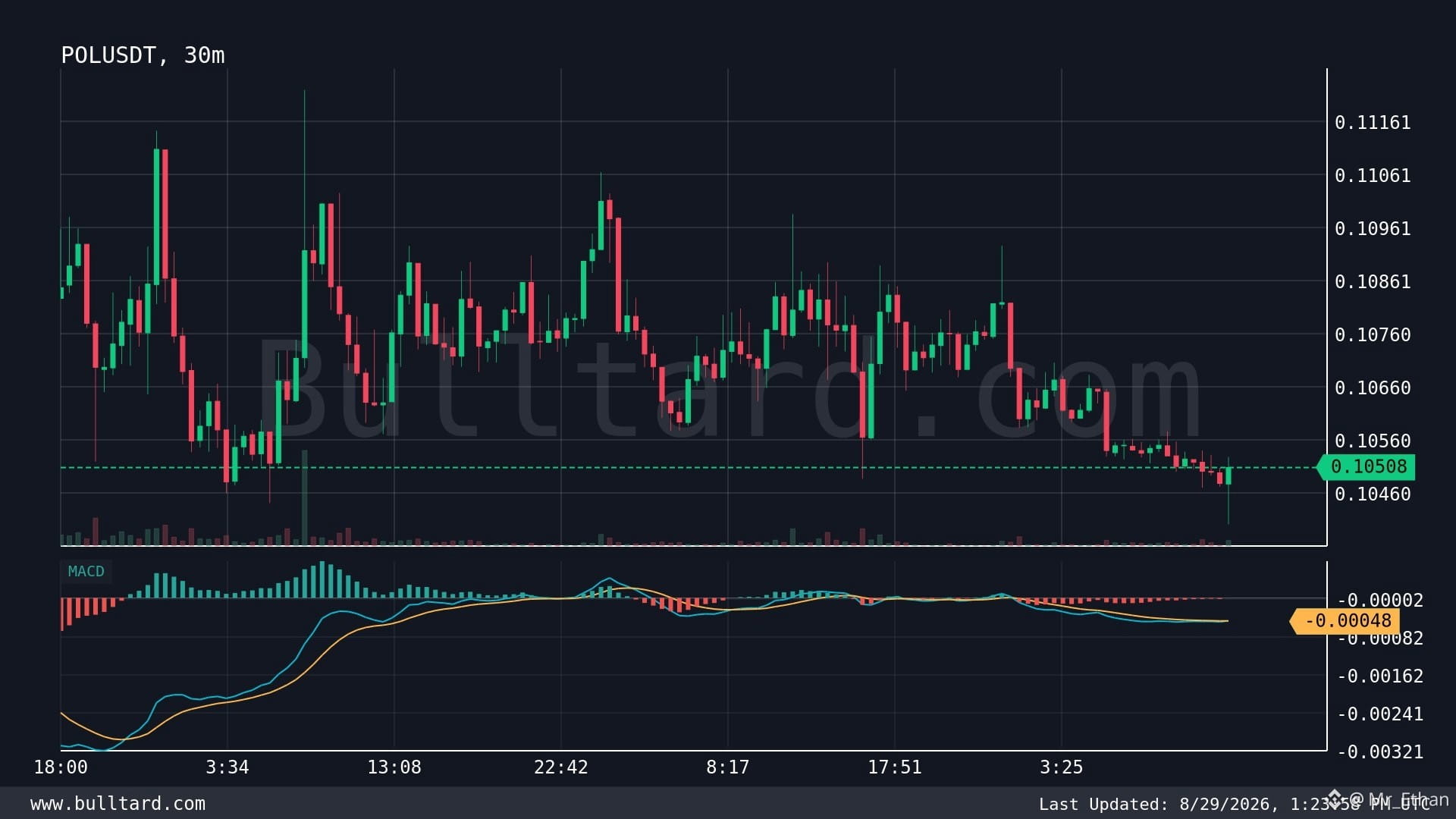
está mostrando um cruzamento bullish de MACD no gráfico de 30m, e estou acompanhando isso de perto.
Aprendi que esses sinais de curto prazo podem ser úteis para identificar mudanças de momento cedo, mas eu nunca trato um único cruzamento como uma operação garantida. Neste momento, a POL está em torno de US$ 0,10508, então estou procurando continuidade por parte dos compradores antes de ficar agressivo demais.
O que eu gosto no Polygon é o foco em escalar o Ethereum e tornar aplicações de blockchain mais baratas e fáceis de usar. A POL também tem um papel mais amplo no ecossistema em evolução da Polygon, o que dá ao token uma história de utilidade mais forte do que apenas especulação.
Ainda assim, estou mantendo os riscos em mente. O timeframe de 30m pode gerar muitos sinais falsos, especialmente quando a liquidez geral do mercado está fraca. A direção do Bitcoin também pode mudar rapidamente a configuração.
Uma lição que aprendi ao negociar esses cruzamentos: a confirmação importa mais do que a empolgação. Eu prefiro entrar um pouco atrasado, com um momentum mais forte, do que correr atrás do primeiro candle verde.
Vou observar volume e estrutura de preço a seguir.
Você consideraria esse cruzamento bullish como uma entrada antecipada, ou esperaria por confirmação?$POL
#USShortTermTreasuryYieldsJump
{spot}(POLUSDT)
está mostrando um cruzamento bullish de MACD no gráfico de 30m, e estou acompanhando isso de perto.
Aprendi que esses sinais de curto prazo podem ser úteis para identificar mudanças de momento cedo, mas eu nunca trato um único cruzamento como uma operação garantida. Neste momento, a POL está em torno de US$ 0,10508, então estou procurando continuidade por parte dos compradores antes de ficar agressivo demais.
O que eu gosto no Polygon é o foco em escalar o Ethereum e tornar aplicações de blockchain mais baratas e fáceis de usar. A POL também tem um papel mais amplo no ecossistema em evolução da Polygon, o que dá ao token uma história de utilidade mais forte do que apenas especulação.
Ainda assim, estou mantendo os riscos em mente. O timeframe de 30m pode gerar muitos sinais falsos, especialmente quando a liquidez geral do mercado está fraca. A direção do Bitcoin também pode mudar rapidamente a configuração.
Uma lição que aprendi ao negociar esses cruzamentos: a confirmação importa mais do que a empolgação. Eu prefiro entrar um pouco atrasado, com um momentum mais forte, do que correr atrás do primeiro candle verde.
Vou observar volume e estrutura de preço a seguir.
Você consideraria esse cruzamento bullish como uma entrada antecipada, ou esperaria por confirmação?$POL
#USShortTermTreasuryYieldsJump
Aprendi que esses sinais de curto prazo podem ser úteis para identificar mudanças de momento cedo, mas eu nunca trato um único cruzamento como uma operação garantida. Neste momento, a POL está em torno de US$ 0,10508, então estou procurando continuidade por parte dos compradores antes de ficar agressivo demais.
O que eu gosto no Polygon é o foco em escalar o Ethereum e tornar aplicações de blockchain mais baratas e fáceis de usar. A POL também tem um papel mais amplo no ecossistema em evolução da Polygon, o que dá ao token uma história de utilidade mais forte do que apenas especulação.
Ainda assim, estou mantendo os riscos em mente. O timeframe de 30m pode gerar muitos sinais falsos, especialmente quando a liquidez geral do mercado está fraca. A direção do Bitcoin também pode mudar rapidamente a configuração.
Uma lição que aprendi ao negociar esses cruzamentos: a confirmação importa mais do que a empolgação. Eu prefiro entrar um pouco atrasado, com um momentum mais forte, do que correr atrás do primeiro candle verde.
Vou observar volume e estrutura de preço a seguir.
Você consideraria esse cruzamento bullish como uma entrada antecipada, ou esperaria por confirmação?$POL
#USShortTermTreasuryYieldsJump
140
·
--
está voltando a chamar minha atenção novamente. 🔥
Estou acompanhando de perto o gráfico de 30m porque o MACD imprimiu um cruzamento extremamente bullish por volta de 0.03141. Pelo que tenho visto, esses sinais podem ser úteis para identificar uma mudança no momentum de curto prazo, especialmente depois de um longo período de fraqueza.
O que importa aqui não é apenas o cruzamento. O ETH/BTC mostra como o Ethereum está se saindo em relação ao Bitcoin. Quando esse par começa a subir, pode sinalizar que o capital está ficando mais confortável para girar em direção ao ETH e ao mercado mais amplo de altcoins.
Gosto da força do Ethereum em DeFi, stablecoins, L2s e da atividade de contratos inteligentes. Mas também tenho cautela. Sinais de MACD podem falhar rapidamente, e a força do BTC pode facilmente puxar essa relação de volta para baixo.
Uma lição que aprendi é nunca negociar um cruzamento cegamente. Eu quero confirmação pela estrutura do preço, volume e pela sustentação nos suportes.
Por enquanto, estou de olho em 0.03141.
Você acha que o ETH finalmente está pronto para voltar a superar o BTC?$ETH
{spot}(ETHUSDT)
$BTC
{spot}(BTCUSDT)
$SOL
{spot}(SOLUSDT)
está voltando a chamar minha atenção novamente. 🔥
Estou acompanhando de perto o gráfico de 30m porque o MACD imprimiu um cruzamento extremamente bullish por volta de 0.03141. Pelo que tenho visto, esses sinais podem ser úteis para identificar uma mudança no momentum de curto prazo, especialmente depois de um longo período de fraqueza.
O que importa aqui não é apenas o cruzamento. O ETH/BTC mostra como o Ethereum está se saindo em relação ao Bitcoin. Quando esse par começa a subir, pode sinalizar que o capital está ficando mais confortável para girar em direção ao ETH e ao mercado mais amplo de altcoins.
Gosto da força do Ethereum em DeFi, stablecoins, L2s e da atividade de contratos inteligentes. Mas também tenho cautela. Sinais de MACD podem falhar rapidamente, e a força do BTC pode facilmente puxar essa relação de volta para baixo.
Uma lição que aprendi é nunca negociar um cruzamento cegamente. Eu quero confirmação pela estrutura do preço, volume e pela sustentação nos suportes.
Por enquanto, estou de olho em 0.03141.
Você acha que o ETH finalmente está pronto para voltar a superar o BTC?$ETH
$BTC
$SOL
Estou acompanhando de perto o gráfico de 30m porque o MACD imprimiu um cruzamento extremamente bullish por volta de 0.03141. Pelo que tenho visto, esses sinais podem ser úteis para identificar uma mudança no momentum de curto prazo, especialmente depois de um longo período de fraqueza.
O que importa aqui não é apenas o cruzamento. O ETH/BTC mostra como o Ethereum está se saindo em relação ao Bitcoin. Quando esse par começa a subir, pode sinalizar que o capital está ficando mais confortável para girar em direção ao ETH e ao mercado mais amplo de altcoins.
Gosto da força do Ethereum em DeFi, stablecoins, L2s e da atividade de contratos inteligentes. Mas também tenho cautela. Sinais de MACD podem falhar rapidamente, e a força do BTC pode facilmente puxar essa relação de volta para baixo.
Uma lição que aprendi é nunca negociar um cruzamento cegamente. Eu quero confirmação pela estrutura do preço, volume e pela sustentação nos suportes.
Por enquanto, estou de olho em 0.03141.
Você acha que o ETH finalmente está pronto para voltar a superar o BTC?$ETH
$BTC
$SOL
119
·
--
: Assistindo à Virada do Momentum em 4H
Estou observando de perto depois que o MACD de 4H imprimiu um cruzamento de baixa para alta (bullish crossover). O preço está por volta de US$ 0,3219, e para mim isso é mais interessante do que um simples sinal verde.
Já vi muitos cruzamentos do MACD falharem quando o volume não acompanha, então não estou tratando isso como um rompimento garantido. Quero ver os compradores defenderem a área atual e construírem topos mais altos antes de ficar agressivo demais.
A KAITO se destaca porque está inserida na narrativa de IA + cripto, onde atenção, dados e atividade da comunidade estão se tornando recursos valiosos na cadeia (on-chain). Isso dá ao projeto uma narrativa forte, mas só narrativa não basta. Desbloqueios de tokens, pressão de venda, volume fraco e fraqueza mais ampla do mercado podem rapidamente arruinar uma configuração.
O meu maior aprendizado com essas sinalizações de trading é simples: o MACD me diz que o momentum pode estar mudando, não para onde o preço precisa obrigatoriamente ir. Eu o uso como confirmação junto com estrutura e volume.
Estou observando US$ 0,3219 de perto agora.
Você acha que a KAITO pode transformar esse momentum de 4H em um movimento sustentado?$KAITO
{spot}(KAITOUSDT)
$FF
{spot}(FFUSDT)
$AT
{spot}(ATUSDT)
: Assistindo à Virada do Momentum em 4H
Estou observando de perto depois que o MACD de 4H imprimiu um cruzamento de baixa para alta (bullish crossover). O preço está por volta de US$ 0,3219, e para mim isso é mais interessante do que um simples sinal verde.
Já vi muitos cruzamentos do MACD falharem quando o volume não acompanha, então não estou tratando isso como um rompimento garantido. Quero ver os compradores defenderem a área atual e construírem topos mais altos antes de ficar agressivo demais.
A KAITO se destaca porque está inserida na narrativa de IA + cripto, onde atenção, dados e atividade da comunidade estão se tornando recursos valiosos na cadeia (on-chain). Isso dá ao projeto uma narrativa forte, mas só narrativa não basta. Desbloqueios de tokens, pressão de venda, volume fraco e fraqueza mais ampla do mercado podem rapidamente arruinar uma configuração.
O meu maior aprendizado com essas sinalizações de trading é simples: o MACD me diz que o momentum pode estar mudando, não para onde o preço precisa obrigatoriamente ir. Eu o uso como confirmação junto com estrutura e volume.
Estou observando US$ 0,3219 de perto agora.
Você acha que a KAITO pode transformar esse momentum de 4H em um movimento sustentado?$KAITO
$FF
$AT
Estou observando de perto depois que o MACD de 4H imprimiu um cruzamento de baixa para alta (bullish crossover). O preço está por volta de US$ 0,3219, e para mim isso é mais interessante do que um simples sinal verde.
Já vi muitos cruzamentos do MACD falharem quando o volume não acompanha, então não estou tratando isso como um rompimento garantido. Quero ver os compradores defenderem a área atual e construírem topos mais altos antes de ficar agressivo demais.
A KAITO se destaca porque está inserida na narrativa de IA + cripto, onde atenção, dados e atividade da comunidade estão se tornando recursos valiosos na cadeia (on-chain). Isso dá ao projeto uma narrativa forte, mas só narrativa não basta. Desbloqueios de tokens, pressão de venda, volume fraco e fraqueza mais ampla do mercado podem rapidamente arruinar uma configuração.
O meu maior aprendizado com essas sinalizações de trading é simples: o MACD me diz que o momentum pode estar mudando, não para onde o preço precisa obrigatoriamente ir. Eu o uso como confirmação junto com estrutura e volume.
Estou observando US$ 0,3219 de perto agora.
Você acha que a KAITO pode transformar esse momentum de 4H em um movimento sustentado?$KAITO
$FF
$AT
1
710
·
--
está me dando um sinal de baixa no gráfico de 30m.
O MACD cruzou em baixa, com o preço por volta de US$ 164,77. Pelo que tenho de experiência, eu não trato um único cruzamento como um dump garantido. Eu uso isso como um aviso de que o momentum está perdendo força, especialmente depois de um movimento forte.
O que estou observando agora é como o preço reage perto da zona de suporte recente. Se os vendedores mantiverem o controle e o suporte romper, a pressão para baixo pode se intensificar rapidamente. Mas se os compradores recuperarem o momentum e o MACD voltar a subir, esse cenário de baixa pode falhar.
Uma força aqui é que o MACD pode me ajudar a identificar mudanças de momentum antes que o movimento fique óbvio. A fraqueza é que, em gráficos de 30m, sinais falsos acontecem com frequência em mercados mais “embolados”.
A minha maior lição ao operar esses setups é simples: eu prefiro esperar por confirmação do que correr atrás do primeiro candle depois de um cruzamento.
Estou monitorando volume, suporte e os próximos candles do MACD de perto.
Você negociaria o momentum de baixa ou esperaria por confirmação?$SKHYB
{spot}(SKHYBUSDT)
{future}(SKHYUSDT)
está me dando um sinal de baixa no gráfico de 30m.
O MACD cruzou em baixa, com o preço por volta de US$ 164,77. Pelo que tenho de experiência, eu não trato um único cruzamento como um dump garantido. Eu uso isso como um aviso de que o momentum está perdendo força, especialmente depois de um movimento forte.
O que estou observando agora é como o preço reage perto da zona de suporte recente. Se os vendedores mantiverem o controle e o suporte romper, a pressão para baixo pode se intensificar rapidamente. Mas se os compradores recuperarem o momentum e o MACD voltar a subir, esse cenário de baixa pode falhar.
Uma força aqui é que o MACD pode me ajudar a identificar mudanças de momentum antes que o movimento fique óbvio. A fraqueza é que, em gráficos de 30m, sinais falsos acontecem com frequência em mercados mais “embolados”.
A minha maior lição ao operar esses setups é simples: eu prefiro esperar por confirmação do que correr atrás do primeiro candle depois de um cruzamento.
Estou monitorando volume, suporte e os próximos candles do MACD de perto.
Você negociaria o momentum de baixa ou esperaria por confirmação?$SKHYB
O MACD cruzou em baixa, com o preço por volta de US$ 164,77. Pelo que tenho de experiência, eu não trato um único cruzamento como um dump garantido. Eu uso isso como um aviso de que o momentum está perdendo força, especialmente depois de um movimento forte.
O que estou observando agora é como o preço reage perto da zona de suporte recente. Se os vendedores mantiverem o controle e o suporte romper, a pressão para baixo pode se intensificar rapidamente. Mas se os compradores recuperarem o momentum e o MACD voltar a subir, esse cenário de baixa pode falhar.
Uma força aqui é que o MACD pode me ajudar a identificar mudanças de momentum antes que o movimento fique óbvio. A fraqueza é que, em gráficos de 30m, sinais falsos acontecem com frequência em mercados mais “embolados”.
A minha maior lição ao operar esses setups é simples: eu prefiro esperar por confirmação do que correr atrás do primeiro candle depois de um cruzamento.
Estou monitorando volume, suporte e os próximos candles do MACD de perto.
Você negociaria o momentum de baixa ou esperaria por confirmação?$SKHYB
1
122
·
--
Em Alta
Quando os Shorts Ficam Presos
Estou observando isso depois de ver uma liquidação de short de US$ 1.8329K por volta de US$ 0.05957. Para mim, isso tem menos a ver com o tamanho da liquidação e mais com a reação em torno desse preço.
Já vi esse padrão muitas vezes em ativos cripto menores. Quando os shorts acumulam de forma agressiva demais, até um pequeno movimento para cima pode forçar posições a serem fechadas, criando uma pressão extra de compra. Isso pode fazer o gráfico se mover mais rápido do que os traders esperam.
O que eu gosto é da atenção que isso pode atrair quando a volatilidade aumenta. Mas eu também fico atento aqui. Tokens menores podem ter liquidez mais fina, pavios longos e reversões rápidas. Um evento de liquidação sozinho não prova que a tendência mudou.
Minha experiência me ensinou uma coisa: eu nunca corro atrás de uma vela só porque aparecem liquidações. Eu espero por volume, estrutura e confirmação antes de entrar em uma posição.
Por enquanto, US$ 0.05957 é um nível que estou acompanhando de perto. Se os compradores sustentarem acima dele, o impulso pode continuar interessante. Se o preço perder isso rapidamente, a liquidação pode simplesmente virar um pico temporário.
Como você está lendo isso?$TUT
{spot}(TUTUSDT)
$TRB
{spot}(TRBUSDT)
$WLD
{spot}(WLDUSDT)
Quando os Shorts Ficam Presos
Estou observando isso depois de ver uma liquidação de short de US$ 1.8329K por volta de US$ 0.05957. Para mim, isso tem menos a ver com o tamanho da liquidação e mais com a reação em torno desse preço.
Já vi esse padrão muitas vezes em ativos cripto menores. Quando os shorts acumulam de forma agressiva demais, até um pequeno movimento para cima pode forçar posições a serem fechadas, criando uma pressão extra de compra. Isso pode fazer o gráfico se mover mais rápido do que os traders esperam.
O que eu gosto é da atenção que isso pode atrair quando a volatilidade aumenta. Mas eu também fico atento aqui. Tokens menores podem ter liquidez mais fina, pavios longos e reversões rápidas. Um evento de liquidação sozinho não prova que a tendência mudou.
Minha experiência me ensinou uma coisa: eu nunca corro atrás de uma vela só porque aparecem liquidações. Eu espero por volume, estrutura e confirmação antes de entrar em uma posição.
Por enquanto, US$ 0.05957 é um nível que estou acompanhando de perto. Se os compradores sustentarem acima dele, o impulso pode continuar interessante. Se o preço perder isso rapidamente, a liquidação pode simplesmente virar um pico temporário.
Como você está lendo isso?$TUT
$TRB
$WLD
Estou observando isso depois de ver uma liquidação de short de US$ 1.8329K por volta de US$ 0.05957. Para mim, isso tem menos a ver com o tamanho da liquidação e mais com a reação em torno desse preço.
Já vi esse padrão muitas vezes em ativos cripto menores. Quando os shorts acumulam de forma agressiva demais, até um pequeno movimento para cima pode forçar posições a serem fechadas, criando uma pressão extra de compra. Isso pode fazer o gráfico se mover mais rápido do que os traders esperam.
O que eu gosto é da atenção que isso pode atrair quando a volatilidade aumenta. Mas eu também fico atento aqui. Tokens menores podem ter liquidez mais fina, pavios longos e reversões rápidas. Um evento de liquidação sozinho não prova que a tendência mudou.
Minha experiência me ensinou uma coisa: eu nunca corro atrás de uma vela só porque aparecem liquidações. Eu espero por volume, estrutura e confirmação antes de entrar em uma posição.
Por enquanto, US$ 0.05957 é um nível que estou acompanhando de perto. Se os compradores sustentarem acima dele, o impulso pode continuar interessante. Se o preço perder isso rapidamente, a liquidação pode simplesmente virar um pico temporário.
Como você está lendo isso?$TUT
$TRB
$WLD
263
·
--
#dusk @Dusk_Foundation $DUSK #dusk @Dusk_Foundation
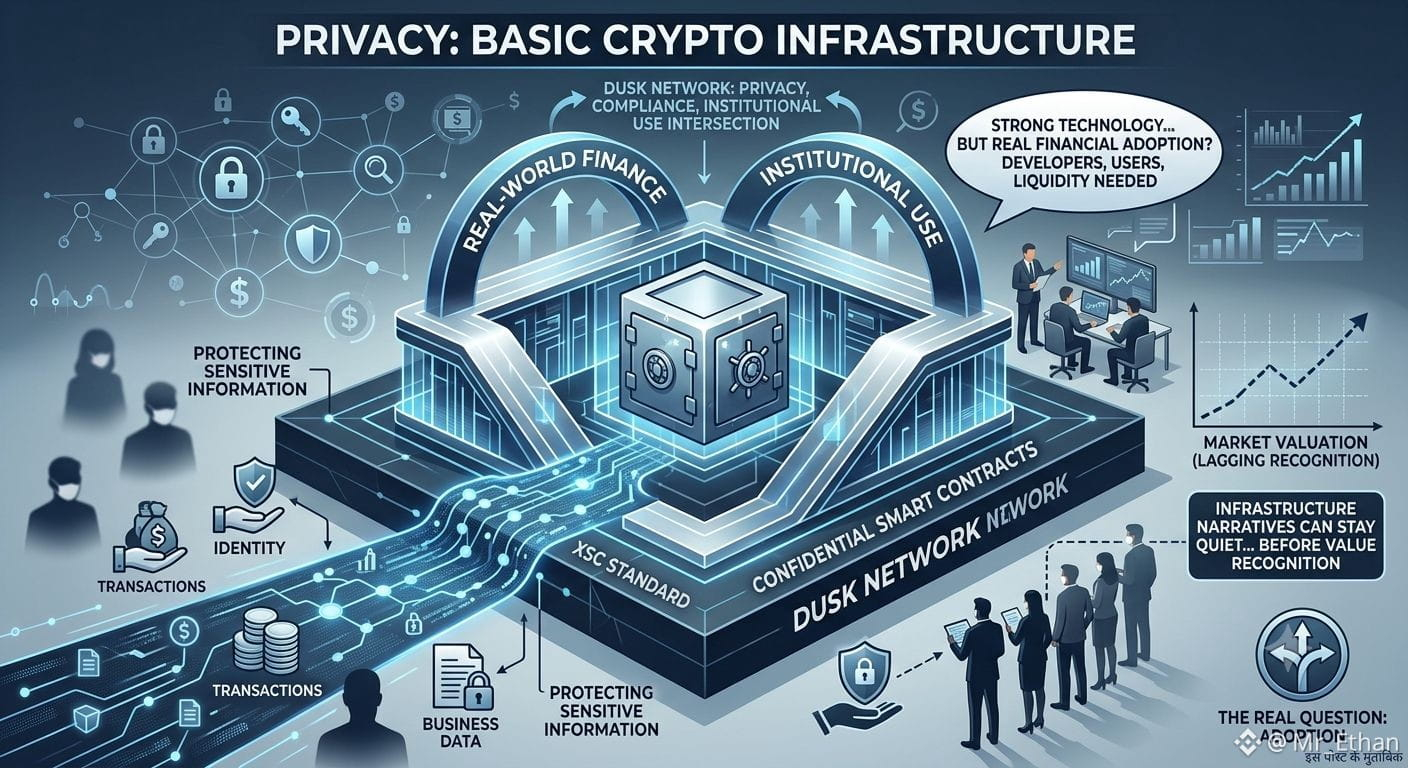
A privacidade em cripto está começando a parecer menos um luxo e mais uma infraestrutura básica.
Eu vi muitos projetos de privacidade ganharem atenção durante ciclos de hype, mas a Dusk Network se destaca para mim porque é focada em aplicações financeiras, não apenas em transações privadas.
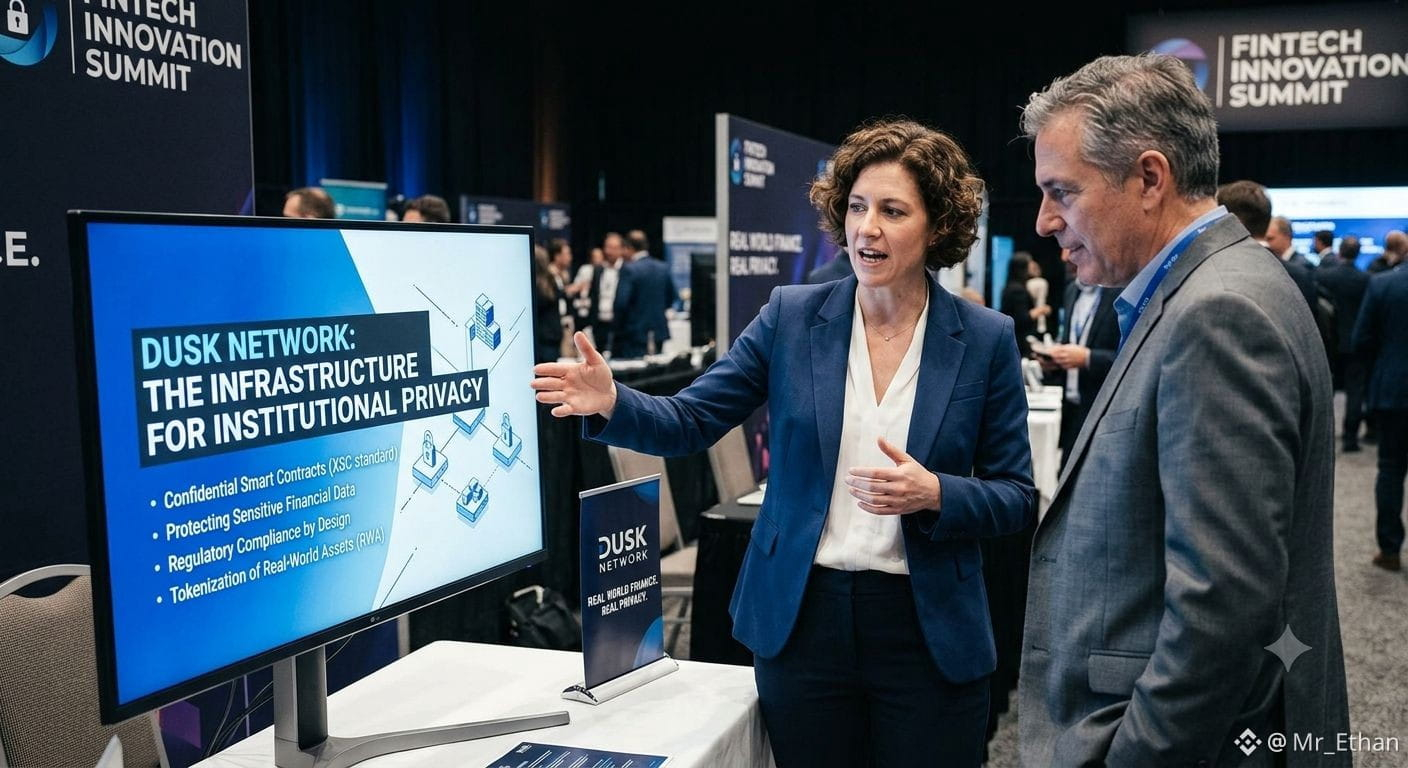
A Dusk é uma Layer-1 construída em torno de contratos inteligentes confidenciais e do padrão Confidential Security Contract (XSC). Em termos simples, ela busca permitir que instituições financeiras usem blockchain mantendo informações sensíveis protegidas.
Essa é uma ideia forte. As finanças do mundo real precisam de privacidade em torno de identidades, transações e dados de negócios. A Dusk tenta resolver isso sem abrir mão dos benefícios da infraestrutura de blockchain programável.
Mas eu não estou cegamente otimista. A maior questão é a adoção. Redes concorrentes focadas em privacidade e conformidade também estão evoluindo, e uma tecnologia forte significa pouco sem desenvolvedores, usuários, liquidez e atividade real no mercado.
Uma lição que aprendi com o cripto é que narrativas de infraestrutura podem ficar silenciosas por muito tempo antes de o mercado reconhecer seu valor.
Para mim, a Dusk é interessante porque está na interseção entre privacidade, conformidade e uso institucional de blockchain.
A pergunta real é: a Dusk consegue transformar uma tecnologia forte em adoção financeira de verdade?
{spot}(DUSKUSDT)
$BMT
{spot}(BMTUSDT)
$PORTAL
{spot}(PORTALUSDT)
#dusk @Dusk $DUSK #dusk @Dusk
A privacidade em cripto está começando a parecer menos um luxo e mais uma infraestrutura básica.
Eu vi muitos projetos de privacidade ganharem atenção durante ciclos de hype, mas a Dusk Network se destaca para mim porque é focada em aplicações financeiras, não apenas em transações privadas.
A Dusk é uma Layer-1 construída em torno de contratos inteligentes confidenciais e do padrão Confidential Security Contract (XSC). Em termos simples, ela busca permitir que instituições financeiras usem blockchain mantendo informações sensíveis protegidas.
Essa é uma ideia forte. As finanças do mundo real precisam de privacidade em torno de identidades, transações e dados de negócios. A Dusk tenta resolver isso sem abrir mão dos benefícios da infraestrutura de blockchain programável.
Mas eu não estou cegamente otimista. A maior questão é a adoção. Redes concorrentes focadas em privacidade e conformidade também estão evoluindo, e uma tecnologia forte significa pouco sem desenvolvedores, usuários, liquidez e atividade real no mercado.
Uma lição que aprendi com o cripto é que narrativas de infraestrutura podem ficar silenciosas por muito tempo antes de o mercado reconhecer seu valor.
Para mim, a Dusk é interessante porque está na interseção entre privacidade, conformidade e uso institucional de blockchain.
A pergunta real é: a Dusk consegue transformar uma tecnologia forte em adoção financeira de verdade?
$BMT
$PORTAL
A privacidade em cripto está começando a parecer menos um luxo e mais uma infraestrutura básica.
Eu vi muitos projetos de privacidade ganharem atenção durante ciclos de hype, mas a Dusk Network se destaca para mim porque é focada em aplicações financeiras, não apenas em transações privadas.
A Dusk é uma Layer-1 construída em torno de contratos inteligentes confidenciais e do padrão Confidential Security Contract (XSC). Em termos simples, ela busca permitir que instituições financeiras usem blockchain mantendo informações sensíveis protegidas.
Essa é uma ideia forte. As finanças do mundo real precisam de privacidade em torno de identidades, transações e dados de negócios. A Dusk tenta resolver isso sem abrir mão dos benefícios da infraestrutura de blockchain programável.
Mas eu não estou cegamente otimista. A maior questão é a adoção. Redes concorrentes focadas em privacidade e conformidade também estão evoluindo, e uma tecnologia forte significa pouco sem desenvolvedores, usuários, liquidez e atividade real no mercado.
Uma lição que aprendi com o cripto é que narrativas de infraestrutura podem ficar silenciosas por muito tempo antes de o mercado reconhecer seu valor.
Para mim, a Dusk é interessante porque está na interseção entre privacidade, conformidade e uso institucional de blockchain.
A pergunta real é: a Dusk consegue transformar uma tecnologia forte em adoção financeira de verdade?
$BMT
$PORTAL
4
3
123
·
--
chamou minha atenção porque os dados de liquidação muitas vezes me dizem mais do que um simples movimento de preço.
Eu aprendi que, quando os shorts são liquidados, isso pode gerar uma pressão de compra rápida, mas eu não trato isso como um sinal automático para correr atrás. Para mim, a questão principal é se a LAB consegue sustentar o movimento depois que as posições forçadas forem encerradas.
O que eu gosto é a oportunidade criada pela volatilidade. Um forte momentum pode atrair traders, liquidez e atenção nova muito rapidamente. Mas a fraqueza também é evidente: tokens menores podem se mover de forma brusca em ambas as direções, e a liquidez baixa pode transformar uma boa configuração em uma entrada ruim.
Estou acompanhando o suporte de perto e procurando confirmação por meio de volume e estrutura de preço. Se a LAB mantiver mínimas mais altas após esse movimento, eu levaria isso mais a sério do que um único pico repentino.
A minha maior lição com as criptos é simples: liquidação é informação, não confirmação. Eu prefiro perder parte de um movimento do que entrar às cegas depois de um squeeze.
Estou mantendo a LAB na minha lista de observação e esperando o mercado mostrar suas intenções.
Você negociaria o momentum aqui ou esperaria uma configuração mais limpa?
$LAB
{future}(LABUSDT)
$MMT
{spot}(MMTUSDT)
$RE
{spot}(REUSDT)
chamou minha atenção porque os dados de liquidação muitas vezes me dizem mais do que um simples movimento de preço.
Eu aprendi que, quando os shorts são liquidados, isso pode gerar uma pressão de compra rápida, mas eu não trato isso como um sinal automático para correr atrás. Para mim, a questão principal é se a LAB consegue sustentar o movimento depois que as posições forçadas forem encerradas.
O que eu gosto é a oportunidade criada pela volatilidade. Um forte momentum pode atrair traders, liquidez e atenção nova muito rapidamente. Mas a fraqueza também é evidente: tokens menores podem se mover de forma brusca em ambas as direções, e a liquidez baixa pode transformar uma boa configuração em uma entrada ruim.
Estou acompanhando o suporte de perto e procurando confirmação por meio de volume e estrutura de preço. Se a LAB mantiver mínimas mais altas após esse movimento, eu levaria isso mais a sério do que um único pico repentino.
A minha maior lição com as criptos é simples: liquidação é informação, não confirmação. Eu prefiro perder parte de um movimento do que entrar às cegas depois de um squeeze.
Estou mantendo a LAB na minha lista de observação e esperando o mercado mostrar suas intenções.
Você negociaria o momentum aqui ou esperaria uma configuração mais limpa?
$LAB
$MMT
$RE
Eu aprendi que, quando os shorts são liquidados, isso pode gerar uma pressão de compra rápida, mas eu não trato isso como um sinal automático para correr atrás. Para mim, a questão principal é se a LAB consegue sustentar o movimento depois que as posições forçadas forem encerradas.
O que eu gosto é a oportunidade criada pela volatilidade. Um forte momentum pode atrair traders, liquidez e atenção nova muito rapidamente. Mas a fraqueza também é evidente: tokens menores podem se mover de forma brusca em ambas as direções, e a liquidez baixa pode transformar uma boa configuração em uma entrada ruim.
Estou acompanhando o suporte de perto e procurando confirmação por meio de volume e estrutura de preço. Se a LAB mantiver mínimas mais altas após esse movimento, eu levaria isso mais a sério do que um único pico repentino.
A minha maior lição com as criptos é simples: liquidação é informação, não confirmação. Eu prefiro perder parte de um movimento do que entrar às cegas depois de um squeeze.
Estou mantendo a LAB na minha lista de observação e esperando o mercado mostrar suas intenções.
Você negociaria o momentum aqui ou esperaria uma configuração mais limpa?
$LAB
$MMT
$RE
1
473
·
--
Em Alta
está mostrando um pequeno deslocamento no impulso, e eu estou observando isso de perto.
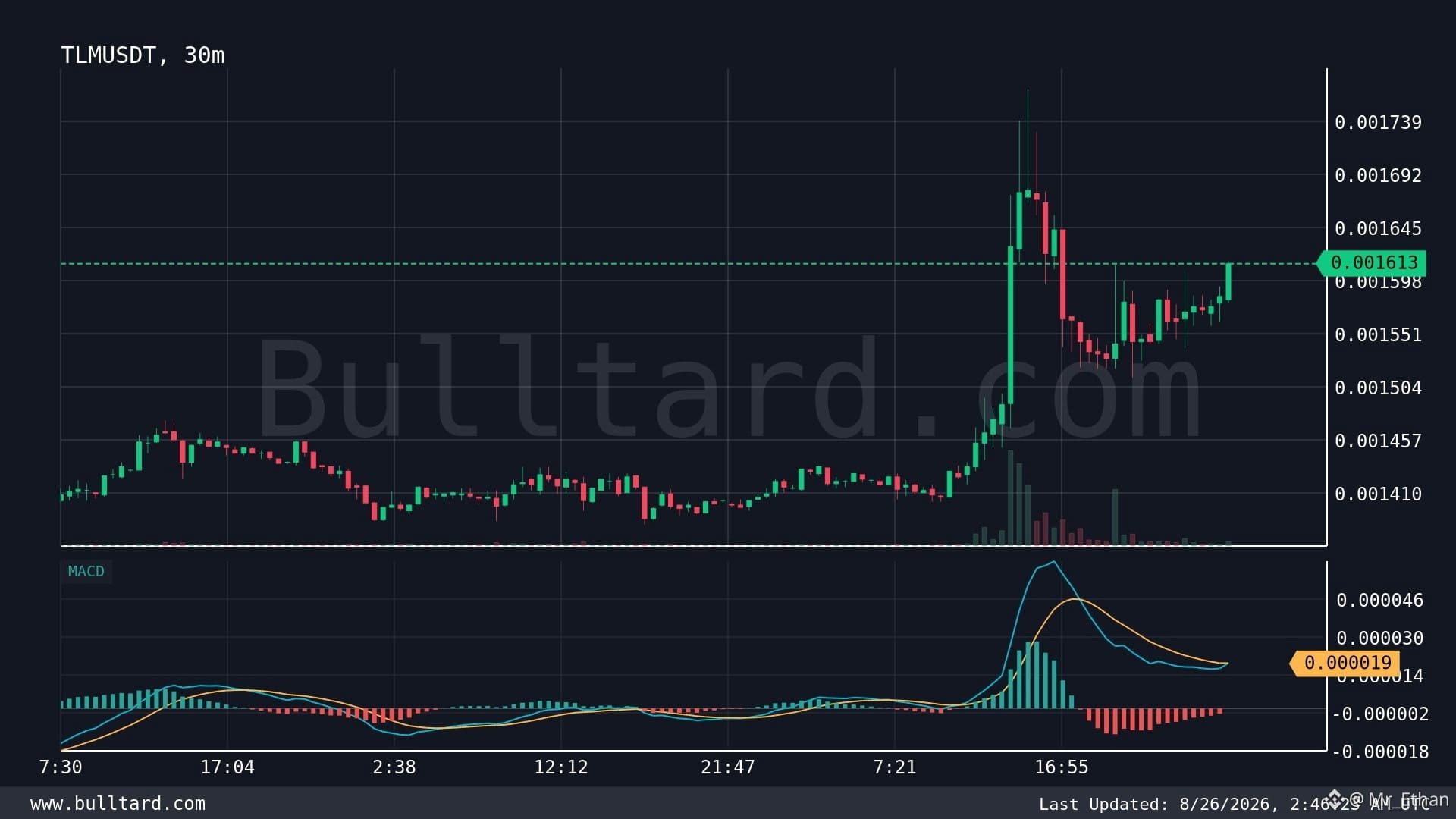
O MACD de 30m acabou de imprimir um cruzamento de alta por volta de US$ 0.001613. Pelo que eu tenho de experiência, eu não considero um cruzamento sozinho como um sinal de compra. Eu quero ver continuação do preço, melhora no volume e as próximas velas mantendo-se acima da área do rompimento.
A TLM sempre foi um token de jogos Web3 interessante porque Alien Worlds foca em economias virtuais, atividade dos jogadores e propriedade on-chain. Isso dá a ele mais utilidade do que um token movido apenas por especulação. Ainda assim, tokens de jogos podem ser altamente voláteis, e a liquidez pode desaparecer rapidamente quando o sentimento do mercado fica fraco.
Para mim, o principal ponto forte aqui é o impulso combinado com utilidade do ecossistema. A fraqueza é que os sinais do MACD podem facilmente virar falsas rupturas durante mercados laterais.
Eu aprendi que as melhores operações geralmente vêm de confirmação, não de antecipação. Se a TLM mantiver acima de US$ 0.00160 e os compradores entrarem em ação, eu ficaria mais interessado no potencial de alta.
Fico curioso: você vê esse cruzamento do MACD como o início de um movimento mais forte da TLM, ou apenas mais um repique de curto prazo?
$BMT
{spot}(BMTUSDT)
$BTR
{future}(BTRUSDT)
$TLM
{spot}(TLMUSDT)
está mostrando um pequeno deslocamento no impulso, e eu estou observando isso de perto.
O MACD de 30m acabou de imprimir um cruzamento de alta por volta de US$ 0.001613. Pelo que eu tenho de experiência, eu não considero um cruzamento sozinho como um sinal de compra. Eu quero ver continuação do preço, melhora no volume e as próximas velas mantendo-se acima da área do rompimento.
A TLM sempre foi um token de jogos Web3 interessante porque Alien Worlds foca em economias virtuais, atividade dos jogadores e propriedade on-chain. Isso dá a ele mais utilidade do que um token movido apenas por especulação. Ainda assim, tokens de jogos podem ser altamente voláteis, e a liquidez pode desaparecer rapidamente quando o sentimento do mercado fica fraco.
Para mim, o principal ponto forte aqui é o impulso combinado com utilidade do ecossistema. A fraqueza é que os sinais do MACD podem facilmente virar falsas rupturas durante mercados laterais.
Eu aprendi que as melhores operações geralmente vêm de confirmação, não de antecipação. Se a TLM mantiver acima de US$ 0.00160 e os compradores entrarem em ação, eu ficaria mais interessado no potencial de alta.
Fico curioso: você vê esse cruzamento do MACD como o início de um movimento mais forte da TLM, ou apenas mais um repique de curto prazo?
$BMT
$BTR
$TLM
O MACD de 30m acabou de imprimir um cruzamento de alta por volta de US$ 0.001613. Pelo que eu tenho de experiência, eu não considero um cruzamento sozinho como um sinal de compra. Eu quero ver continuação do preço, melhora no volume e as próximas velas mantendo-se acima da área do rompimento.
A TLM sempre foi um token de jogos Web3 interessante porque Alien Worlds foca em economias virtuais, atividade dos jogadores e propriedade on-chain. Isso dá a ele mais utilidade do que um token movido apenas por especulação. Ainda assim, tokens de jogos podem ser altamente voláteis, e a liquidez pode desaparecer rapidamente quando o sentimento do mercado fica fraco.
Para mim, o principal ponto forte aqui é o impulso combinado com utilidade do ecossistema. A fraqueza é que os sinais do MACD podem facilmente virar falsas rupturas durante mercados laterais.
Eu aprendi que as melhores operações geralmente vêm de confirmação, não de antecipação. Se a TLM mantiver acima de US$ 0.00160 e os compradores entrarem em ação, eu ficaria mais interessado no potencial de alta.
Fico curioso: você vê esse cruzamento do MACD como o início de um movimento mais forte da TLM, ou apenas mais um repique de curto prazo?
$BMT
$BTR
$TLM
299
·
--
Em Baixa
A Dusk é um daqueles projetos que eu continuo acompanhando porque a privacidade está lentamente se tornando uma parte maior do debate sobre blockchain.
Eu já vi muitas narrativas de privacidade surgirem e desaparecerem, mas a Dusk Network parece estar mais focada em um problema real: levar transações confidenciais e contratos inteligentes para os mercados financeiros. Sua Layer-1 foi construída em torno do padrão Confidential Security Contract (XSC), oferecendo às aplicações uma forma de trabalhar com dados sensíveis sem expor tudo publicamente.
O que eu mais gosto é o viés financeiro. As instituições precisam de privacidade, conformidade e acesso controlado aos dados. A Dusk está tentando combinar essas necessidades com infraestrutura de blockchain.
Mas eu não estou ignorando os riscos. A adoção ainda é a maior pergunta. Tecnologia forte significa pouco se desenvolvedores, instituições e usuários não realmente constroem sobre ela. A concorrência de outras cadeias focadas em privacidade é outro desafio.
A maior lição que eu tirei das criptos é simples: eu não invisto apenas porque uma narrativa parece boa. Eu acompanho uso, liquidez, desenvolvimento e comportamento de mercado.
Para mim, a DUSK é interessante porque a privacidade pode se tornar infraestrutura, e não apenas uma narrativa de negociação.
Você acha que a infraestrutura de blockchain confidencial vai se tornar essencial para a próxima onda de adoção financeira?
$TAC $PROM $DUSK
#dusk @Dusk_Foundation
{future}(TUTUSDT)
{future}(PROMUSDT)
{future}(TACUSDT)
A Dusk é um daqueles projetos que eu continuo acompanhando porque a privacidade está lentamente se tornando uma parte maior do debate sobre blockchain.
Eu já vi muitas narrativas de privacidade surgirem e desaparecerem, mas a Dusk Network parece estar mais focada em um problema real: levar transações confidenciais e contratos inteligentes para os mercados financeiros. Sua Layer-1 foi construída em torno do padrão Confidential Security Contract (XSC), oferecendo às aplicações uma forma de trabalhar com dados sensíveis sem expor tudo publicamente.
O que eu mais gosto é o viés financeiro. As instituições precisam de privacidade, conformidade e acesso controlado aos dados. A Dusk está tentando combinar essas necessidades com infraestrutura de blockchain.
Mas eu não estou ignorando os riscos. A adoção ainda é a maior pergunta. Tecnologia forte significa pouco se desenvolvedores, instituições e usuários não realmente constroem sobre ela. A concorrência de outras cadeias focadas em privacidade é outro desafio.
A maior lição que eu tirei das criptos é simples: eu não invisto apenas porque uma narrativa parece boa. Eu acompanho uso, liquidez, desenvolvimento e comportamento de mercado.
Para mim, a DUSK é interessante porque a privacidade pode se tornar infraestrutura, e não apenas uma narrativa de negociação.
Você acha que a infraestrutura de blockchain confidencial vai se tornar essencial para a próxima onda de adoção financeira?
$TAC $PROM $DUSK
#dusk @Dusk
Eu já vi muitas narrativas de privacidade surgirem e desaparecerem, mas a Dusk Network parece estar mais focada em um problema real: levar transações confidenciais e contratos inteligentes para os mercados financeiros. Sua Layer-1 foi construída em torno do padrão Confidential Security Contract (XSC), oferecendo às aplicações uma forma de trabalhar com dados sensíveis sem expor tudo publicamente.
O que eu mais gosto é o viés financeiro. As instituições precisam de privacidade, conformidade e acesso controlado aos dados. A Dusk está tentando combinar essas necessidades com infraestrutura de blockchain.
Mas eu não estou ignorando os riscos. A adoção ainda é a maior pergunta. Tecnologia forte significa pouco se desenvolvedores, instituições e usuários não realmente constroem sobre ela. A concorrência de outras cadeias focadas em privacidade é outro desafio.
A maior lição que eu tirei das criptos é simples: eu não invisto apenas porque uma narrativa parece boa. Eu acompanho uso, liquidez, desenvolvimento e comportamento de mercado.
Para mim, a DUSK é interessante porque a privacidade pode se tornar infraestrutura, e não apenas uma narrativa de negociação.
Você acha que a infraestrutura de blockchain confidencial vai se tornar essencial para a próxima onda de adoção financeira?
$TAC $PROM $DUSK
#dusk @Dusk
✅ $TAC
100%
👆 $PROM
0%
💚 $LAB
0%
2 Votos • Votação encerrada
131
·
--
Em Alta
está me mostrando por que projetos fortes ainda precisam de entradas cuidadosas.
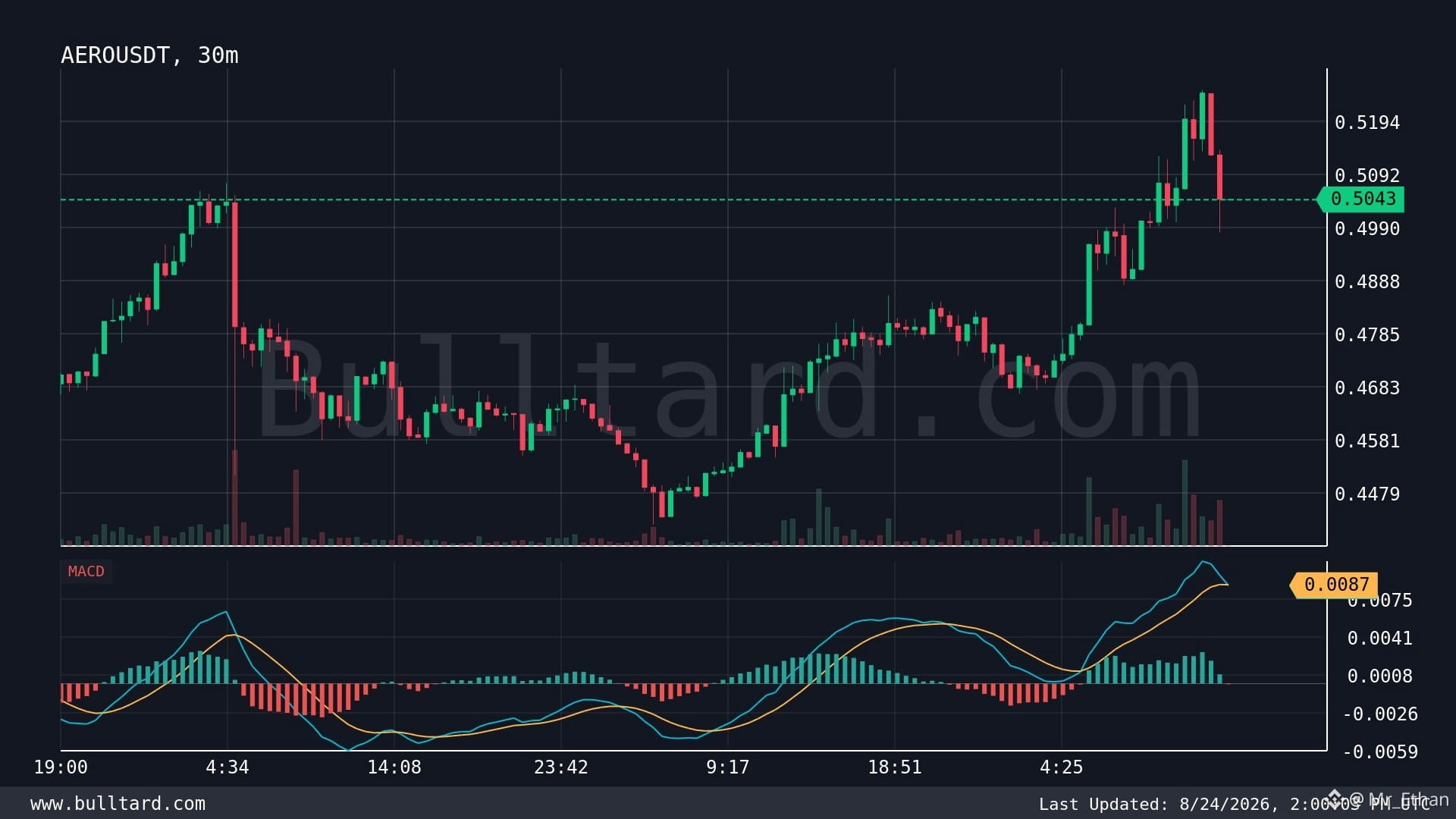
Tenho acompanhado a Aerodrome de perto, e gosto do que ela traz para o ecossistema da Base. Não é apenas mais um token. A Aerodrome é construída em torno de negociação e liquidez, ajudando os usuários a trocar ativos enquanto provedores de liquidez recebem incentivos.
O que mais gosto é sua ligação com a Base e a crescente demanda por liquidez on-chain. Em comparação com muitos tokens menores de DEX, tem um papel mais claro dentro de um ecossistema ativo. Isso dá, na minha visão, uma narrativa fundamental mais forte.
Mas não estou ignorando os riscos. A concorrência no DeFi é intensa, emissões de tokens podem gerar pressão de venda, e ainda pode se mover bastante com o sentimento do mercado mais amplo. Quando a liquidez seca, até bons setups podem falhar rapidamente.
Aprendi com esses ciclos de trading que fundamentos importam, mas o timing também. Um projeto forte comprado no momento errado ainda pode prejudicar o portfólio.
Estou acompanhando o momentum, a liquidez e a atividade dos usuários, em vez de perseguir cada candle verde.
Você manteria para o crescimento do ecossistema, ou esperaria uma entrada melhor?
$AERO #aero @aero
{spot}(AEROUSDT)
$TUT
{spot}(TUTUSDT)
$TURTLE
{spot}(TURTLEUSDT)
está me mostrando por que projetos fortes ainda precisam de entradas cuidadosas.
Tenho acompanhado a Aerodrome de perto, e gosto do que ela traz para o ecossistema da Base. Não é apenas mais um token. A Aerodrome é construída em torno de negociação e liquidez, ajudando os usuários a trocar ativos enquanto provedores de liquidez recebem incentivos.
O que mais gosto é sua ligação com a Base e a crescente demanda por liquidez on-chain. Em comparação com muitos tokens menores de DEX, tem um papel mais claro dentro de um ecossistema ativo. Isso dá, na minha visão, uma narrativa fundamental mais forte.
Mas não estou ignorando os riscos. A concorrência no DeFi é intensa, emissões de tokens podem gerar pressão de venda, e ainda pode se mover bastante com o sentimento do mercado mais amplo. Quando a liquidez seca, até bons setups podem falhar rapidamente.
Aprendi com esses ciclos de trading que fundamentos importam, mas o timing também. Um projeto forte comprado no momento errado ainda pode prejudicar o portfólio.
Estou acompanhando o momentum, a liquidez e a atividade dos usuários, em vez de perseguir cada candle verde.
Você manteria para o crescimento do ecossistema, ou esperaria uma entrada melhor?
$AERO #aero @Aero
$TUT
$TURTLE
Tenho acompanhado a Aerodrome de perto, e gosto do que ela traz para o ecossistema da Base. Não é apenas mais um token. A Aerodrome é construída em torno de negociação e liquidez, ajudando os usuários a trocar ativos enquanto provedores de liquidez recebem incentivos.
O que mais gosto é sua ligação com a Base e a crescente demanda por liquidez on-chain. Em comparação com muitos tokens menores de DEX, tem um papel mais claro dentro de um ecossistema ativo. Isso dá, na minha visão, uma narrativa fundamental mais forte.
Mas não estou ignorando os riscos. A concorrência no DeFi é intensa, emissões de tokens podem gerar pressão de venda, e ainda pode se mover bastante com o sentimento do mercado mais amplo. Quando a liquidez seca, até bons setups podem falhar rapidamente.
Aprendi com esses ciclos de trading que fundamentos importam, mas o timing também. Um projeto forte comprado no momento errado ainda pode prejudicar o portfólio.
Estou acompanhando o momentum, a liquidez e a atividade dos usuários, em vez de perseguir cada candle verde.
Você manteria para o crescimento do ecossistema, ou esperaria uma entrada melhor?
$AERO #aero @Aero
$TUT
$TURTLE
284
·
--
Em Baixa
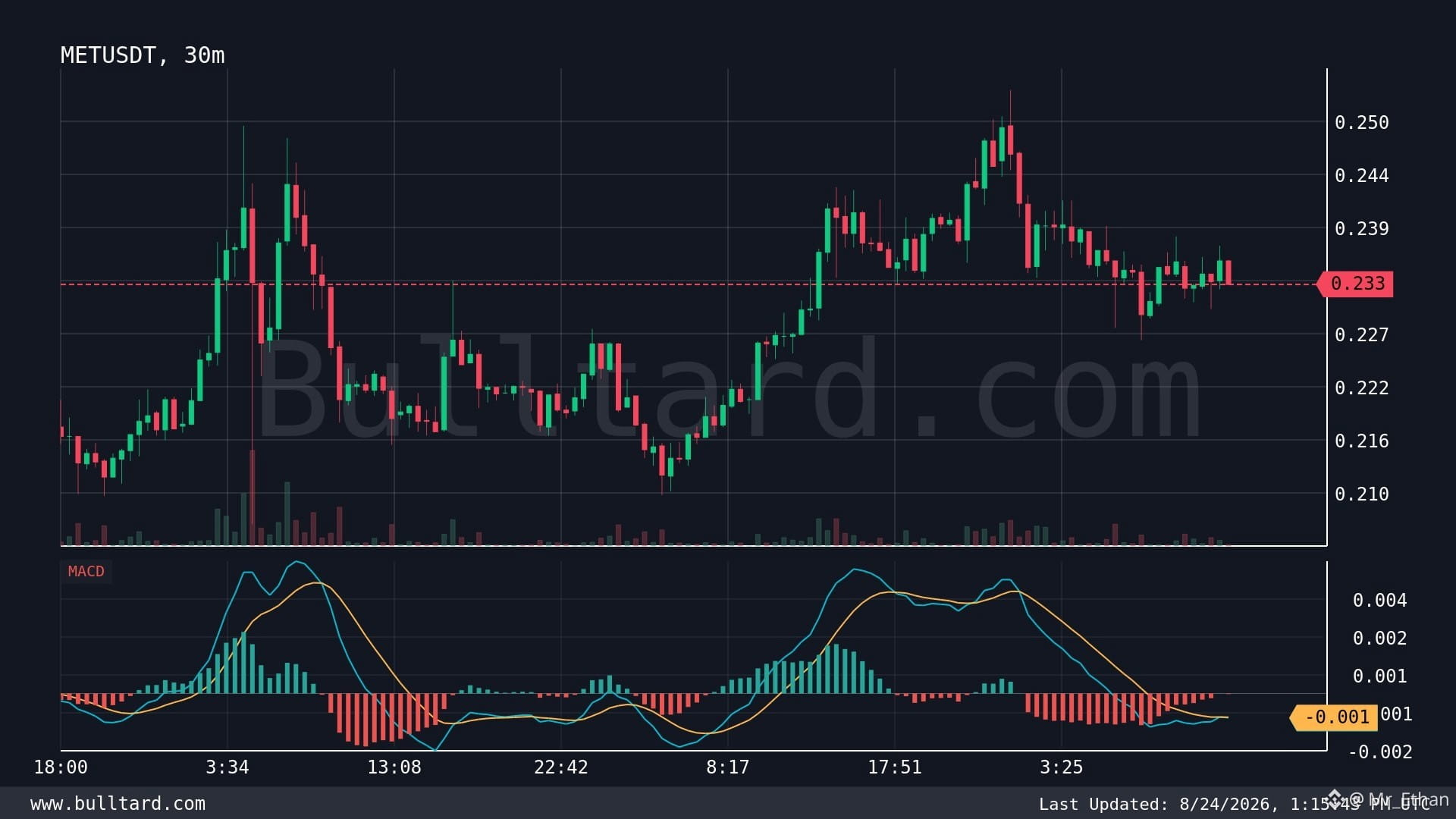
está mostrando um cruzamento de MACD bearish no gráfico de 30m, e estou prestando atenção nisso.
Aprendi que esses sinais são úteis, mas funcionam melhor quando também olho o quadro geral. Por volta de US$ 0,2325, a MET agora mostra fraqueza no curto prazo, o que pode significar que os vendedores estão ganhando controle.
O que eu gosto na MET é o seu papel no setor mais amplo de infraestrutura Web3 e o potencial de utilidade real se a adoção crescer. Mas essa força não elimina os riscos. A liquidez em cripto pode mudar rapidamente, e um cruzamento bearish pode falhar se os compradores recuarem com um volume forte.
Minha principal lição ao negociar esses setups é simples: eu nunca trato um único indicador como uma direção garantida. Observo a estrutura do preço, o volume, os níveis de suporte e como o BTC está se comportando antes de tomar uma decisão.
Por enquanto, estou cauteloso em vez de correr atrás do movimento. Se os compradores recuperarem o momentum, o sinal pode perder força rapidamente.
Você esperaria por confirmação no $MET, ou consideraria esse cruzamento bearish um aviso antecipado?
$SUPER
{spot}(SUPERUSDT)
$UAI
{future}(UAIUSDT)
$MET
{spot}(METUSDT)
está mostrando um cruzamento de MACD bearish no gráfico de 30m, e estou prestando atenção nisso.
Aprendi que esses sinais são úteis, mas funcionam melhor quando também olho o quadro geral. Por volta de US$ 0,2325, a MET agora mostra fraqueza no curto prazo, o que pode significar que os vendedores estão ganhando controle.
O que eu gosto na MET é o seu papel no setor mais amplo de infraestrutura Web3 e o potencial de utilidade real se a adoção crescer. Mas essa força não elimina os riscos. A liquidez em cripto pode mudar rapidamente, e um cruzamento bearish pode falhar se os compradores recuarem com um volume forte.
Minha principal lição ao negociar esses setups é simples: eu nunca trato um único indicador como uma direção garantida. Observo a estrutura do preço, o volume, os níveis de suporte e como o BTC está se comportando antes de tomar uma decisão.
Por enquanto, estou cauteloso em vez de correr atrás do movimento. Se os compradores recuperarem o momentum, o sinal pode perder força rapidamente.
Você esperaria por confirmação no $MET , ou consideraria esse cruzamento bearish um aviso antecipado?
$SUPER
$UAI
$MET
Aprendi que esses sinais são úteis, mas funcionam melhor quando também olho o quadro geral. Por volta de US$ 0,2325, a MET agora mostra fraqueza no curto prazo, o que pode significar que os vendedores estão ganhando controle.
O que eu gosto na MET é o seu papel no setor mais amplo de infraestrutura Web3 e o potencial de utilidade real se a adoção crescer. Mas essa força não elimina os riscos. A liquidez em cripto pode mudar rapidamente, e um cruzamento bearish pode falhar se os compradores recuarem com um volume forte.
Minha principal lição ao negociar esses setups é simples: eu nunca trato um único indicador como uma direção garantida. Observo a estrutura do preço, o volume, os níveis de suporte e como o BTC está se comportando antes de tomar uma decisão.
Por enquanto, estou cauteloso em vez de correr atrás do movimento. Se os compradores recuperarem o momentum, o sinal pode perder força rapidamente.
Você esperaria por confirmação no $MET , ou consideraria esse cruzamento bearish um aviso antecipado?
$SUPER
$UAI
$MET
1
2
263
·
--
Em Alta
Trading de $DUSK de 30 dias no valor de 82.7 USDT
$DUSK #dusk @Dusk_Foundation
DUSK é um daqueles projetos que eu acho que merece mais atenção quando o mercado começar a falar de forma séria sobre privacidade e casos de uso financeiros reais.
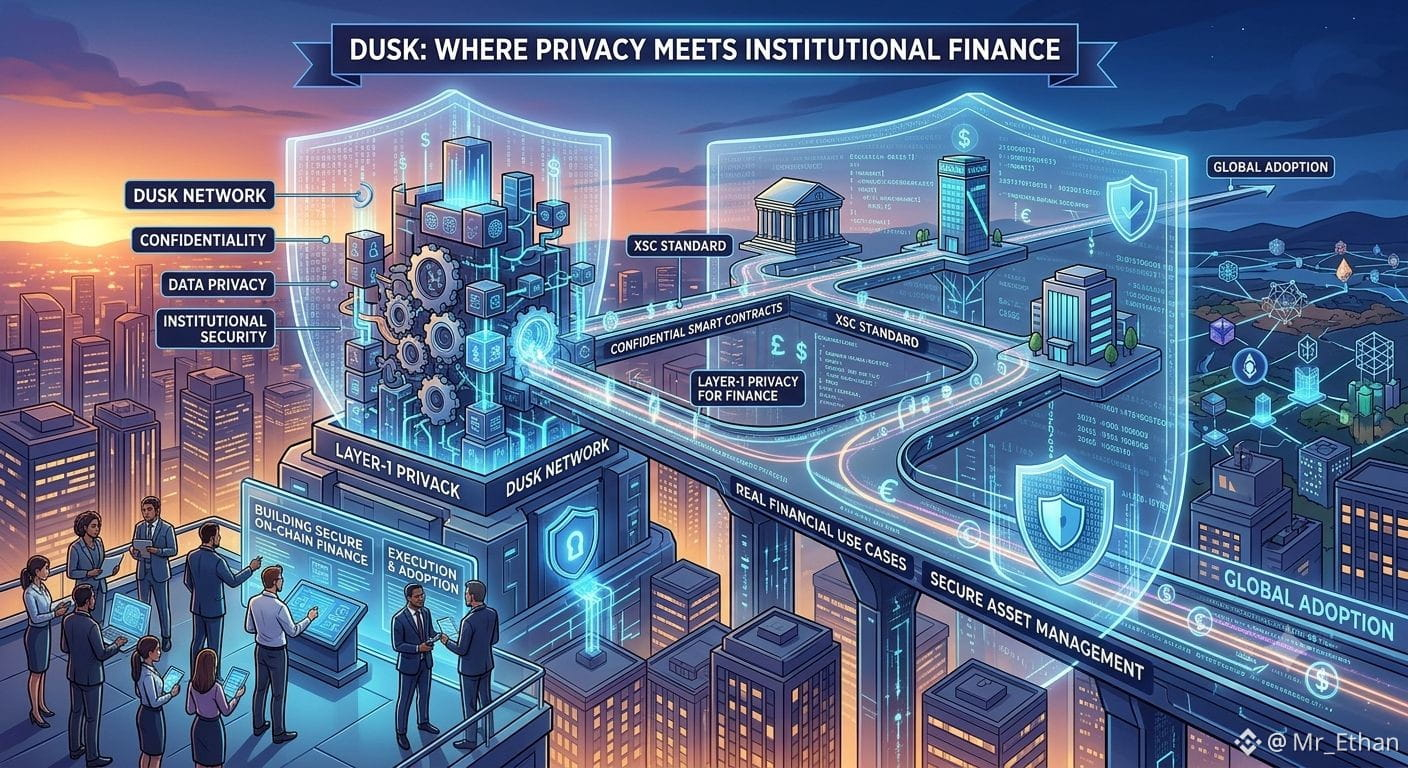
Eu vi narrativas do cripto saírem de pura especulação e caminharem para uma infraestrutura que consegue resolver problemas de verdade. É aí que a Dusk Network fica interessante. É uma Layer-1 construída em torno da privacidade para aplicações financeiras, com contratos inteligentes confidenciais e seu padrão de Confidential Security Contract (XSC).
O que eu gosto é o foco. A Dusk não está tentando ser tudo ao mesmo tempo. Ela mira um problema real: instituições financeiras precisam dos benefícios da blockchain sem expor dados sensíveis de transações e negócios.
A força é clara em utilidade, mas eu também sou realista sobre os riscos. A adoção é a maior pergunta. Tecnologia forte sozinha não garante usuários, liquidez ou atividade de desenvolvedores. A concorrência em privacidade e em infraestrutura de blockchain institucional também é séria.
Uma lição que aprendi com o cripto é que narrativas podem gerar atenção, mas a adoção cria valor duradouro. Estou acompanhando a DUSK mais pela execução do que pelo hype.
Se a privacidade se tornar um requisito importante para as finanças on-chain, a Dusk poderia se tornar uma das redes que se beneficiam?$PROM $TUT
{future}(TUTUSDT)
{future}(PROMUSDT)
$DUSK #dusk @Dusk
DUSK é um daqueles projetos que eu acho que merece mais atenção quando o mercado começar a falar de forma séria sobre privacidade e casos de uso financeiros reais.
Eu vi narrativas do cripto saírem de pura especulação e caminharem para uma infraestrutura que consegue resolver problemas de verdade. É aí que a Dusk Network fica interessante. É uma Layer-1 construída em torno da privacidade para aplicações financeiras, com contratos inteligentes confidenciais e seu padrão de Confidential Security Contract (XSC).
O que eu gosto é o foco. A Dusk não está tentando ser tudo ao mesmo tempo. Ela mira um problema real: instituições financeiras precisam dos benefícios da blockchain sem expor dados sensíveis de transações e negócios.
A força é clara em utilidade, mas eu também sou realista sobre os riscos. A adoção é a maior pergunta. Tecnologia forte sozinha não garante usuários, liquidez ou atividade de desenvolvedores. A concorrência em privacidade e em infraestrutura de blockchain institucional também é séria.
Uma lição que aprendi com o cripto é que narrativas podem gerar atenção, mas a adoção cria valor duradouro. Estou acompanhando a DUSK mais pela execução do que pelo hype.
Se a privacidade se tornar um requisito importante para as finanças on-chain, a Dusk poderia se tornar uma das redes que se beneficiam?$PROM $TUT
DUSK é um daqueles projetos que eu acho que merece mais atenção quando o mercado começar a falar de forma séria sobre privacidade e casos de uso financeiros reais.
Eu vi narrativas do cripto saírem de pura especulação e caminharem para uma infraestrutura que consegue resolver problemas de verdade. É aí que a Dusk Network fica interessante. É uma Layer-1 construída em torno da privacidade para aplicações financeiras, com contratos inteligentes confidenciais e seu padrão de Confidential Security Contract (XSC).
O que eu gosto é o foco. A Dusk não está tentando ser tudo ao mesmo tempo. Ela mira um problema real: instituições financeiras precisam dos benefícios da blockchain sem expor dados sensíveis de transações e negócios.
A força é clara em utilidade, mas eu também sou realista sobre os riscos. A adoção é a maior pergunta. Tecnologia forte sozinha não garante usuários, liquidez ou atividade de desenvolvedores. A concorrência em privacidade e em infraestrutura de blockchain institucional também é séria.
Uma lição que aprendi com o cripto é que narrativas podem gerar atenção, mas a adoção cria valor duradouro. Estou acompanhando a DUSK mais pela execução do que pelo hype.
Se a privacidade se tornar um requisito importante para as finanças on-chain, a Dusk poderia se tornar uma das redes que se beneficiam?$PROM $TUT
2
1
107
·
--
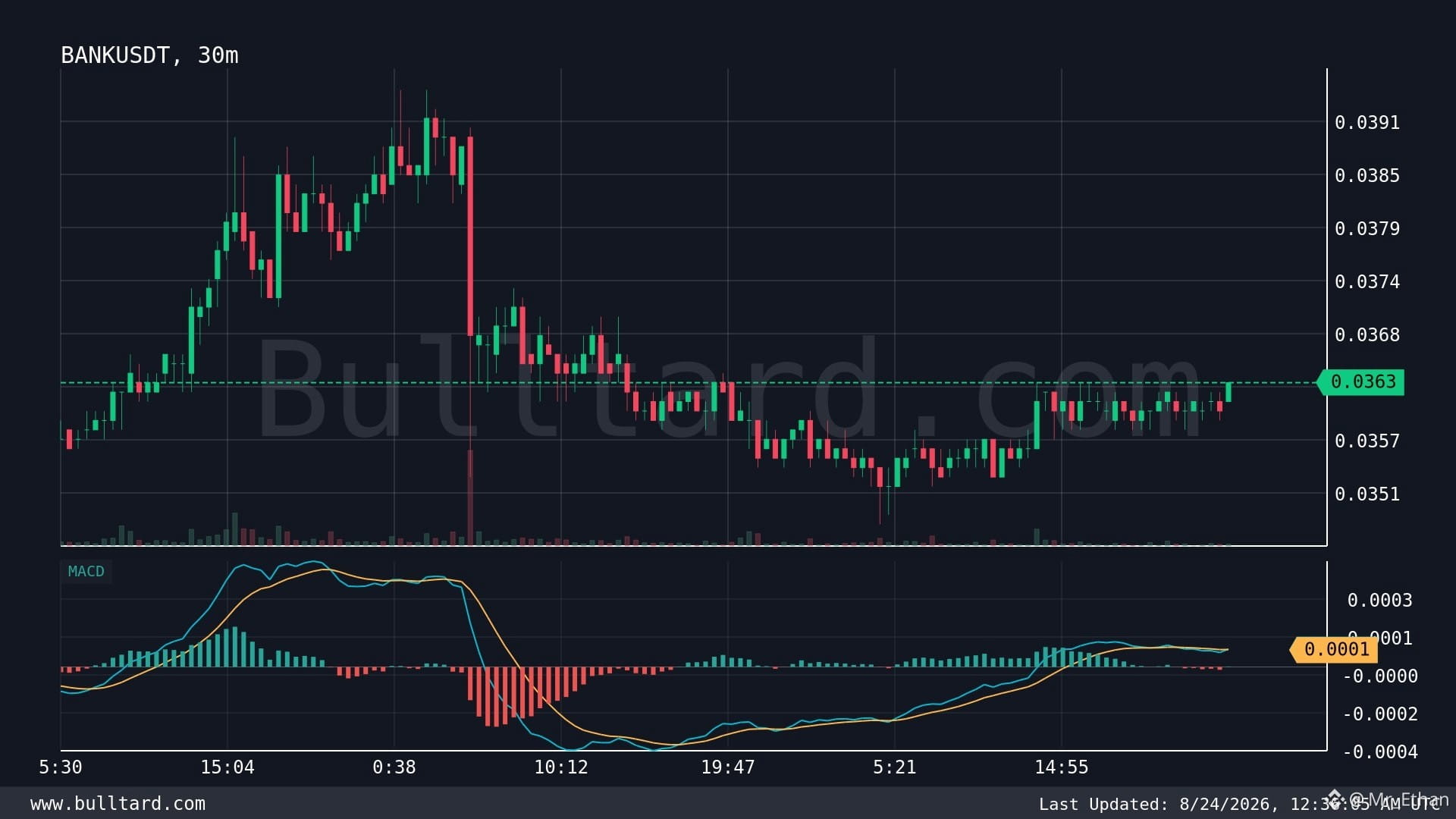
$BANK /USDT está mostrando uma cruzamento de alta do MACD no gráfico de 30m, e estou observando isso de perto.
O último preço está por volta de US$ 0.0363. Pela minha experiência, esses sinais de MACD no curto prazo podem ser úteis quando a dinâmica começa a mudar, mas eu nunca trato um único cruzamento como um movimento garantido. Quero ver volume e a ação do preço confirmarem.
O que me interessa em BANK é a tendência mais ampla em projetos de blockchain tentando construir uma utilidade real, em vez de depender apenas de especulação. Isso pode criar narrativas de longo prazo mais fortes, mas execução, adoção, liquidez e oferta de tokens ainda importam muito.
O cruzamento de alta é um sinal positivo no curto prazo, mas o risco é simples: o momentum pode desaparecer rapidamente em um gráfico de 30m. Já vi várias operações parecerem perfeitas no cruzamento e depois reverterem em algumas poucas candles.
Meu maior aprendizado é usar o MACD como confirmação, e não como a estratégia inteira. Estou observando se a BANK consegue segurar sua zona atual e construir máximas mais altas.
Você negociaria essa configuração de alta ou esperaria por uma confirmação mais forte?
{spot}(BANKUSDT)
$TUT
{spot}(TUTUSDT)
$LAB
{future}(LABUSDT)
#BitcoinStrongestWeekSinceMarch2023 #AnthropicIPOCouldTopSpaceXRecordReportsSay #NvidiaAIServerPricesRiseOver15%
$BANK /USDT está mostrando uma cruzamento de alta do MACD no gráfico de 30m, e estou observando isso de perto.
O último preço está por volta de US$ 0.0363. Pela minha experiência, esses sinais de MACD no curto prazo podem ser úteis quando a dinâmica começa a mudar, mas eu nunca trato um único cruzamento como um movimento garantido. Quero ver volume e a ação do preço confirmarem.
O que me interessa em BANK é a tendência mais ampla em projetos de blockchain tentando construir uma utilidade real, em vez de depender apenas de especulação. Isso pode criar narrativas de longo prazo mais fortes, mas execução, adoção, liquidez e oferta de tokens ainda importam muito.
O cruzamento de alta é um sinal positivo no curto prazo, mas o risco é simples: o momentum pode desaparecer rapidamente em um gráfico de 30m. Já vi várias operações parecerem perfeitas no cruzamento e depois reverterem em algumas poucas candles.
Meu maior aprendizado é usar o MACD como confirmação, e não como a estratégia inteira. Estou observando se a BANK consegue segurar sua zona atual e construir máximas mais altas.
Você negociaria essa configuração de alta ou esperaria por uma confirmação mais forte?
$TUT
$LAB
#BitcoinStrongestWeekSinceMarch2023 #AnthropicIPOCouldTopSpaceXRecordReportsSay #NvidiaAIServerPricesRiseOver15%
O último preço está por volta de US$ 0.0363. Pela minha experiência, esses sinais de MACD no curto prazo podem ser úteis quando a dinâmica começa a mudar, mas eu nunca trato um único cruzamento como um movimento garantido. Quero ver volume e a ação do preço confirmarem.
O que me interessa em BANK é a tendência mais ampla em projetos de blockchain tentando construir uma utilidade real, em vez de depender apenas de especulação. Isso pode criar narrativas de longo prazo mais fortes, mas execução, adoção, liquidez e oferta de tokens ainda importam muito.
O cruzamento de alta é um sinal positivo no curto prazo, mas o risco é simples: o momentum pode desaparecer rapidamente em um gráfico de 30m. Já vi várias operações parecerem perfeitas no cruzamento e depois reverterem em algumas poucas candles.
Meu maior aprendizado é usar o MACD como confirmação, e não como a estratégia inteira. Estou observando se a BANK consegue segurar sua zona atual e construir máximas mais altas.
Você negociaria essa configuração de alta ou esperaria por uma confirmação mais forte?
$TUT
$LAB
#BitcoinStrongestWeekSinceMarch2023 #AnthropicIPOCouldTopSpaceXRecordReportsSay #NvidiaAIServerPricesRiseOver15%
1
2
794
·
--
$POLY: A Parte I’m Watching Closely
Aprendi que os projetos de cripto mais interessantes nem sempre são os que fazem mais barulho. O POLY é um que eu estou de olho porque a história maior está ligada à utilidade real da blockchain e ✅como projetos transformam infraestrutura em ✅algo que as pessoas realmente usam.
⚖️Pelo que vi, os mercados muitas vezes precificam primeiro as narrativas e só depois os fundamentos. Isso pode gerar ralis fortes, mas também pode punir rapidamente uma adoção fraca. Para o POLY, eu gosto do potencial 👆do uso prático de blockchain, mas não estou ignorando os riscos.$PENGU
O ponto forte é o ângulo da utilidade e a possibilidade de se beneficiar se a adoção on-chain continuar se expandindo. A fraqueza é simples: tecnologia forte$DOOD sozinha não garante demanda. A concorrência também é intensa, e liquidez, tokenomics, atividade de desenvolvimento e usuários reais importam mais do que manchetes.$MASK
😭Uma lição que aprendi é parar de comprar um token só porque a história parece boa. Eu quero ver usuários, volume, desenvolvimento e interesse sustentado.
Estou mantendo o POLY no meu radar, mas prefiro acompanhar um crescimento real do que correr atrás de um pump repentino.
O que você acha que vai importar mais para : adoção, tecnologia ou momento do mercado?
#Polymarket #POLY
$POLY: A Parte I’m Watching Closely
Aprendi que os projetos de cripto mais interessantes nem sempre são os que fazem mais barulho. O POLY é um que eu estou de olho porque a história maior está ligada à utilidade real da blockchain e ✅como projetos transformam infraestrutura em ✅algo que as pessoas realmente usam.
⚖️Pelo que vi, os mercados muitas vezes precificam primeiro as narrativas e só depois os fundamentos. Isso pode gerar ralis fortes, mas também pode punir rapidamente uma adoção fraca. Para o POLY, eu gosto do potencial 👆do uso prático de blockchain, mas não estou ignorando os riscos.$PENGU
O ponto forte é o ângulo da utilidade e a possibilidade de se beneficiar se a adoção on-chain continuar se expandindo. A fraqueza é simples: tecnologia forte$DOOD sozinha não garante demanda. A concorrência também é intensa, e liquidez, tokenomics, atividade de desenvolvimento e usuários reais importam mais do que manchetes.$MASK
😭Uma lição que aprendi é parar de comprar um token só porque a história parece boa. Eu quero ver usuários, volume, desenvolvimento e interesse sustentado.
Estou mantendo o POLY no meu radar, mas prefiro acompanhar um crescimento real do que correr atrás de um pump repentino.
O que você acha que vai importar mais para : adoção, tecnologia ou momento do mercado?
#Polymarket #POLY
Aprendi que os projetos de cripto mais interessantes nem sempre são os que fazem mais barulho. O POLY é um que eu estou de olho porque a história maior está ligada à utilidade real da blockchain e ✅como projetos transformam infraestrutura em ✅algo que as pessoas realmente usam.
⚖️Pelo que vi, os mercados muitas vezes precificam primeiro as narrativas e só depois os fundamentos. Isso pode gerar ralis fortes, mas também pode punir rapidamente uma adoção fraca. Para o POLY, eu gosto do potencial 👆do uso prático de blockchain, mas não estou ignorando os riscos.$PENGU
O ponto forte é o ângulo da utilidade e a possibilidade de se beneficiar se a adoção on-chain continuar se expandindo. A fraqueza é simples: tecnologia forte$DOOD sozinha não garante demanda. A concorrência também é intensa, e liquidez, tokenomics, atividade de desenvolvimento e usuários reais importam mais do que manchetes.$MASK
😭Uma lição que aprendi é parar de comprar um token só porque a história parece boa. Eu quero ver usuários, volume, desenvolvimento e interesse sustentado.
Estou mantendo o POLY no meu radar, mas prefiro acompanhar um crescimento real do que correr atrás de um pump repentino.
O que você acha que vai importar mais para : adoção, tecnologia ou momento do mercado?
#Polymarket #POLY

2
281
Inicia sessão para explorar mais conteúdos
Junta-te a utilizadores de criptomoedas de todo o mundo na Binance Square
⚡️ Obtém informações úteis e recentes sobre criptomoedas.
💬 Com a confiança da maior exchange de criptomoedas do mundo.
👍 Descobre perspetivas reais de criadores verificados.
E-mail/Número de telefone
Tópicos em Tendência
FedRateWatch
523,154 visualizações
2,552 a discutir
Participe e ganhe recompensas de tráfego na nossa campanha de hashtag em alta
✨Tema: Setembro do FOMC — Qual será o próximo movimento do Fed?
👉Como participar:
Publique uma postagem ou artigo curto com a hashtag #FedRateWatch
Crie conteúdo com base nos ângulos abaixo:
- O núcleo do CPI de agosto subiu 0,3% mês a mês, e as chances de um aumento de 25 pb esta semana agora estão perto de 90%. Você antecipa um aumento de taxa esta semana? É algo pontual, ou o início de um ciclo de altas mais longo?
- Se o aumento acontecer, como isso se reflete em BTC, ações de tecnologia e ouro? Em alta ou em baixa?
- Como você planeja operar a seguir? Compartilhe sua operação/posições de BTC, ações ou ouro com nosso widget de compartilhamento de trades.
⏰Período da campanha:
- 2026-09-15 11:00 - 2026-09-17 3:00 UTC
🎁Recompensa:
- As postagens qualificadas que cumprirem as diretrizes acima e tiverem mais de 100 palavras serão revisadas e poderão receber um impulso aleatório de tráfego de 500 a 3.000 visualizações. Você receberá uma notificação do secretário da sua seção no feed caso sua postagem seja selecionada.
- Tenha a chance de ter seu artigo em destaque na Binance Square Official
Precisa de ideias para sua postagem? Acesse a página do tema #FedRateWatch ou a Square Guide on How to Post for Better Reach.
Binance Square Official
·369 gostos
·802.3k visualizações
BitcoinSlidesTo$76000
17,744 visualizações
108 a discutir
BitcoinReboundsTo$79K
60,542 visualizações
397 a discutir