

东京小姐
4.7k Publicações

东京小姐
Denunciar
Bloquear Utilizador
绿色就是目标 🗼🔥
Aberto ao trading
Trader Frequente
5 ano(s)
312 A seguir
22.5K+ Seguidores
12.8K+ Gostaram
Publicações
Portfólio
Tudo
Cotações
Vídeos
Em direto
·
--
Em Alta
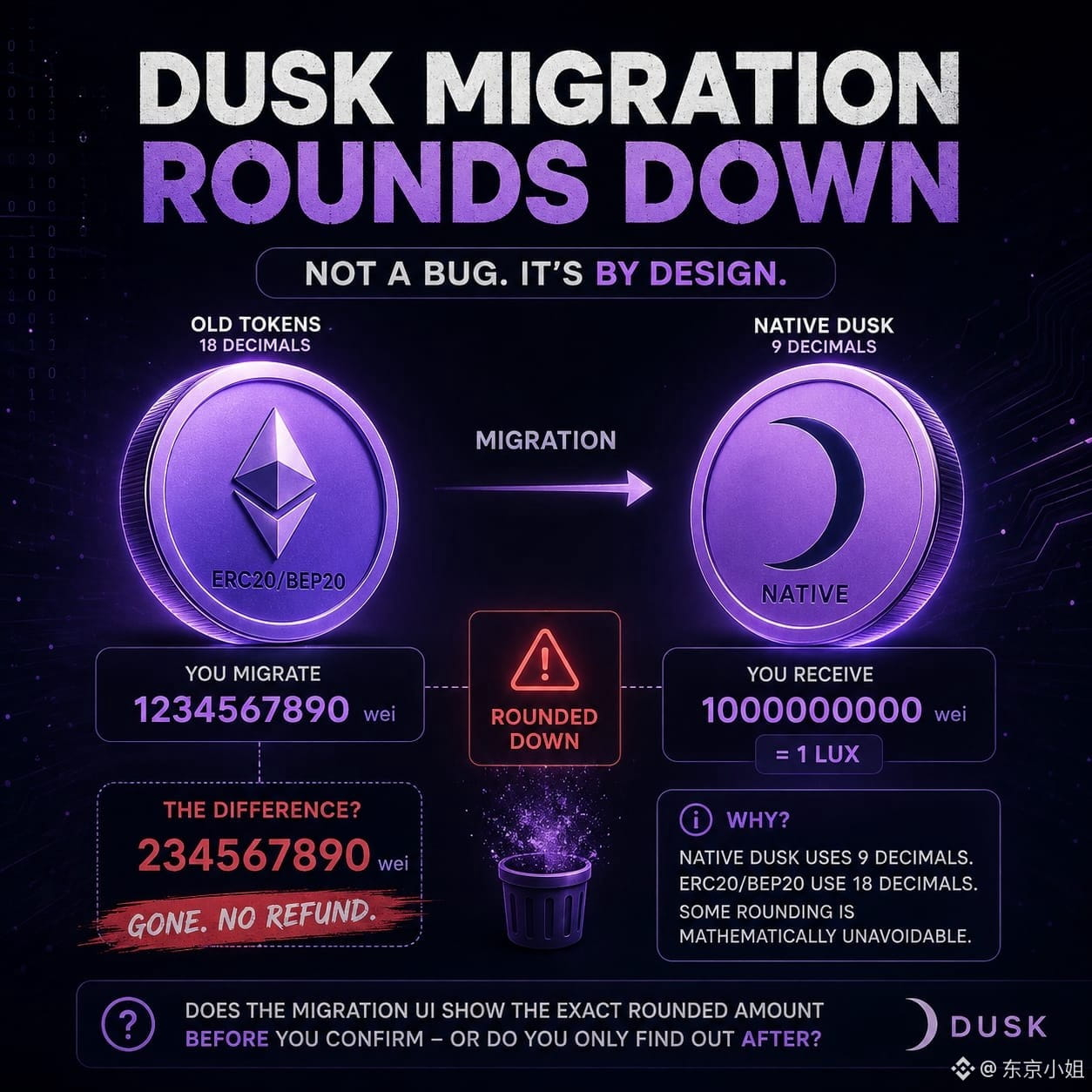
O guia de migração do docs.dusk.network tem um detalhe de arredondamento escondido na seção de FAQ que eu não tinha visto mencionado em nenhum outro lugar. Se você migrar uma quantidade de dusk em ERC20 ou BEP20 que não seja um múltiplo exato de 1 lux, o contrato simplesmente arredonda para baixo — e eu tive que executar o exemplo deles duas vezes na minha cabeça antes de finalmente entender: migrar 1234567890 wei de dusk, e isso arredonda para exatamente 1000000000 wei, ou seja, um lux inteiro, sem crédito parcial pelo restante.
Então, o resto não é reembolsado, não é enfileirado para um complemento posterior, ele simplesmente desaparece do que você recebe no lado nativo. Esse é um custo real embutido nos próprios mecanismos da migração, não um bug — já que o dusk nativo usa 9 casas decimais e o ERC20/BEP20 usa 18, então algum arredondamento é matematicamente inevitável em algum ponto da conversão.
Para a maioria das pessoas migrando um saldo normal de carteira, isso provavelmente são frações de centavos e realmente não faz diferença. Mas ninguém que está migrando pela primeira vez espera que "arredondar para baixo e perder a diferença" seja o comportamento padrão em uma rede construída em torno da precisão determinística do acerto.
O app de migração realmente mostra às pessoas a quantidade exata arredondada antes de confirmarem, ou só descobrem depois? 🧐
#dusk $DUSK @Dusk_Foundation
O guia de migração do docs.dusk.network tem um detalhe de arredondamento escondido na seção de FAQ que eu não tinha visto mencionado em nenhum outro lugar. Se você migrar uma quantidade de dusk em ERC20 ou BEP20 que não seja um múltiplo exato de 1 lux, o contrato simplesmente arredonda para baixo — e eu tive que executar o exemplo deles duas vezes na minha cabeça antes de finalmente entender: migrar 1234567890 wei de dusk, e isso arredonda para exatamente 1000000000 wei, ou seja, um lux inteiro, sem crédito parcial pelo restante.
Então, o resto não é reembolsado, não é enfileirado para um complemento posterior, ele simplesmente desaparece do que você recebe no lado nativo. Esse é um custo real embutido nos próprios mecanismos da migração, não um bug — já que o dusk nativo usa 9 casas decimais e o ERC20/BEP20 usa 18, então algum arredondamento é matematicamente inevitável em algum ponto da conversão.
Para a maioria das pessoas migrando um saldo normal de carteira, isso provavelmente são frações de centavos e realmente não faz diferença. Mas ninguém que está migrando pela primeira vez espera que "arredondar para baixo e perder a diferença" seja o comportamento padrão em uma rede construída em torno da precisão determinística do acerto.
O app de migração realmente mostra às pessoas a quantidade exata arredondada antes de confirmarem, ou só descobrem depois? 🧐
#dusk $DUSK @Dusk
Então, o resto não é reembolsado, não é enfileirado para um complemento posterior, ele simplesmente desaparece do que você recebe no lado nativo. Esse é um custo real embutido nos próprios mecanismos da migração, não um bug — já que o dusk nativo usa 9 casas decimais e o ERC20/BEP20 usa 18, então algum arredondamento é matematicamente inevitável em algum ponto da conversão.
Para a maioria das pessoas migrando um saldo normal de carteira, isso provavelmente são frações de centavos e realmente não faz diferença. Mas ninguém que está migrando pela primeira vez espera que "arredondar para baixo e perder a diferença" seja o comportamento padrão em uma rede construída em torno da precisão determinística do acerto.
O app de migração realmente mostra às pessoas a quantidade exata arredondada antes de confirmarem, ou só descobrem depois? 🧐
#dusk $DUSK @Dusk
1
184
·
--
@Dusk_Foundation
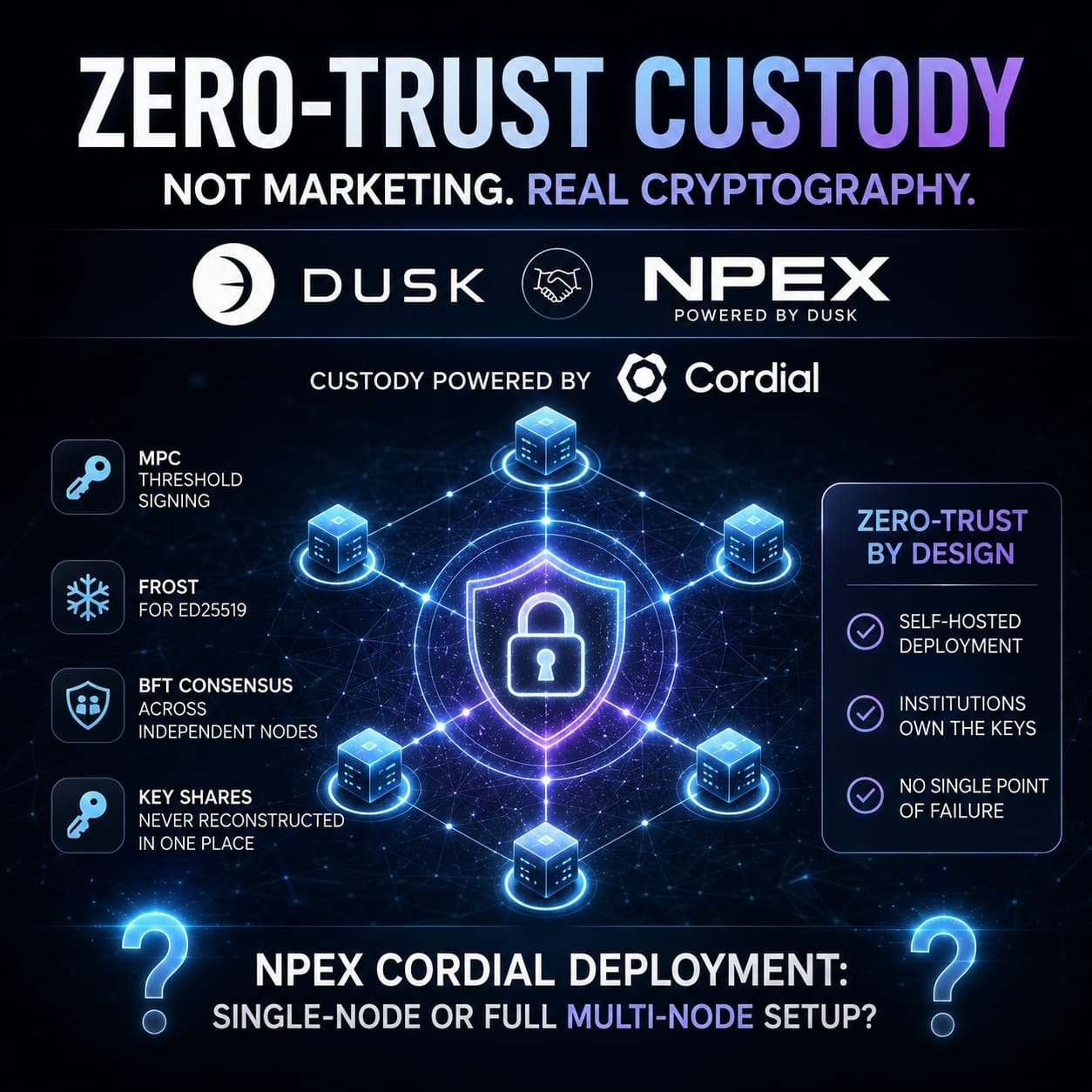
eu fui checar exatamente o que "custódia de zero-confiança" significa no anúncio dusk-cordial-npex, já que esse termo normalmente implica uma arquitetura criptográfica específica, e achei que o comunicado à imprensa provavelmente estava usando isso de forma solta para "auto-hospedado em vez de saas de terceiros." eu estava errado, e sinceramente quase escrevi este post inteiro em torno dessa suposição errada antes de realmente consultar as próprias docs técnicas da cordial — o produto de tesouraria deles realmente usa assinatura com limiar via mpc, frost para ed25519, uma camada de consenso bft em cima de nós independentes, compartilhamentos de chaves que nunca são reconstruídos em um único lugar. isso é criptografia real de confiança distribuída, não marketing fantasiado de uma coisa.
então npex escolher implantação self-hosted e conseguir uma arquitetura genuína de zero-confiança na verdade não entram em conflito do jeito que eu presumi ao entrar. o pitch inteiro da cordial é permitir que instituições executem essa arquitetura por conta própria, em vez de confiar na nuvem de um fornecedor de saas.
o que eu ainda não sei é se a npex está rodando o setup completo de bft multi-nó ou algo mais próximo de uma implantação de nó único, já que as docs da cordial mencionam que ambos são tecnicamente possíveis. eles não são igualmente "zero-trust" na prática, mesmo com o mesmo software subjacente.
alguém sabe se a implantação cordial da npex é single-node ou uma configuração real de threshold multi-nó? 🧐
#dusk $DUSK
@Dusk
eu fui checar exatamente o que "custódia de zero-confiança" significa no anúncio dusk-cordial-npex, já que esse termo normalmente implica uma arquitetura criptográfica específica, e achei que o comunicado à imprensa provavelmente estava usando isso de forma solta para "auto-hospedado em vez de saas de terceiros." eu estava errado, e sinceramente quase escrevi este post inteiro em torno dessa suposição errada antes de realmente consultar as próprias docs técnicas da cordial — o produto de tesouraria deles realmente usa assinatura com limiar via mpc, frost para ed25519, uma camada de consenso bft em cima de nós independentes, compartilhamentos de chaves que nunca são reconstruídos em um único lugar. isso é criptografia real de confiança distribuída, não marketing fantasiado de uma coisa.
então npex escolher implantação self-hosted e conseguir uma arquitetura genuína de zero-confiança na verdade não entram em conflito do jeito que eu presumi ao entrar. o pitch inteiro da cordial é permitir que instituições executem essa arquitetura por conta própria, em vez de confiar na nuvem de um fornecedor de saas.
o que eu ainda não sei é se a npex está rodando o setup completo de bft multi-nó ou algo mais próximo de uma implantação de nó único, já que as docs da cordial mencionam que ambos são tecnicamente possíveis. eles não são igualmente "zero-trust" na prática, mesmo com o mesmo software subjacente.
alguém sabe se a implantação cordial da npex é single-node ou uma configuração real de threshold multi-nó? 🧐
#dusk $DUSK
eu fui checar exatamente o que "custódia de zero-confiança" significa no anúncio dusk-cordial-npex, já que esse termo normalmente implica uma arquitetura criptográfica específica, e achei que o comunicado à imprensa provavelmente estava usando isso de forma solta para "auto-hospedado em vez de saas de terceiros." eu estava errado, e sinceramente quase escrevi este post inteiro em torno dessa suposição errada antes de realmente consultar as próprias docs técnicas da cordial — o produto de tesouraria deles realmente usa assinatura com limiar via mpc, frost para ed25519, uma camada de consenso bft em cima de nós independentes, compartilhamentos de chaves que nunca são reconstruídos em um único lugar. isso é criptografia real de confiança distribuída, não marketing fantasiado de uma coisa.
então npex escolher implantação self-hosted e conseguir uma arquitetura genuína de zero-confiança na verdade não entram em conflito do jeito que eu presumi ao entrar. o pitch inteiro da cordial é permitir que instituições executem essa arquitetura por conta própria, em vez de confiar na nuvem de um fornecedor de saas.
o que eu ainda não sei é se a npex está rodando o setup completo de bft multi-nó ou algo mais próximo de uma implantação de nó único, já que as docs da cordial mencionam que ambos são tecnicamente possíveis. eles não são igualmente "zero-trust" na prática, mesmo com o mesmo software subjacente.
alguém sabe se a implantação cordial da npex é single-node ou uma configuração real de threshold multi-nó? 🧐
#dusk $DUSK
1
2
114
·
--
Em Alta
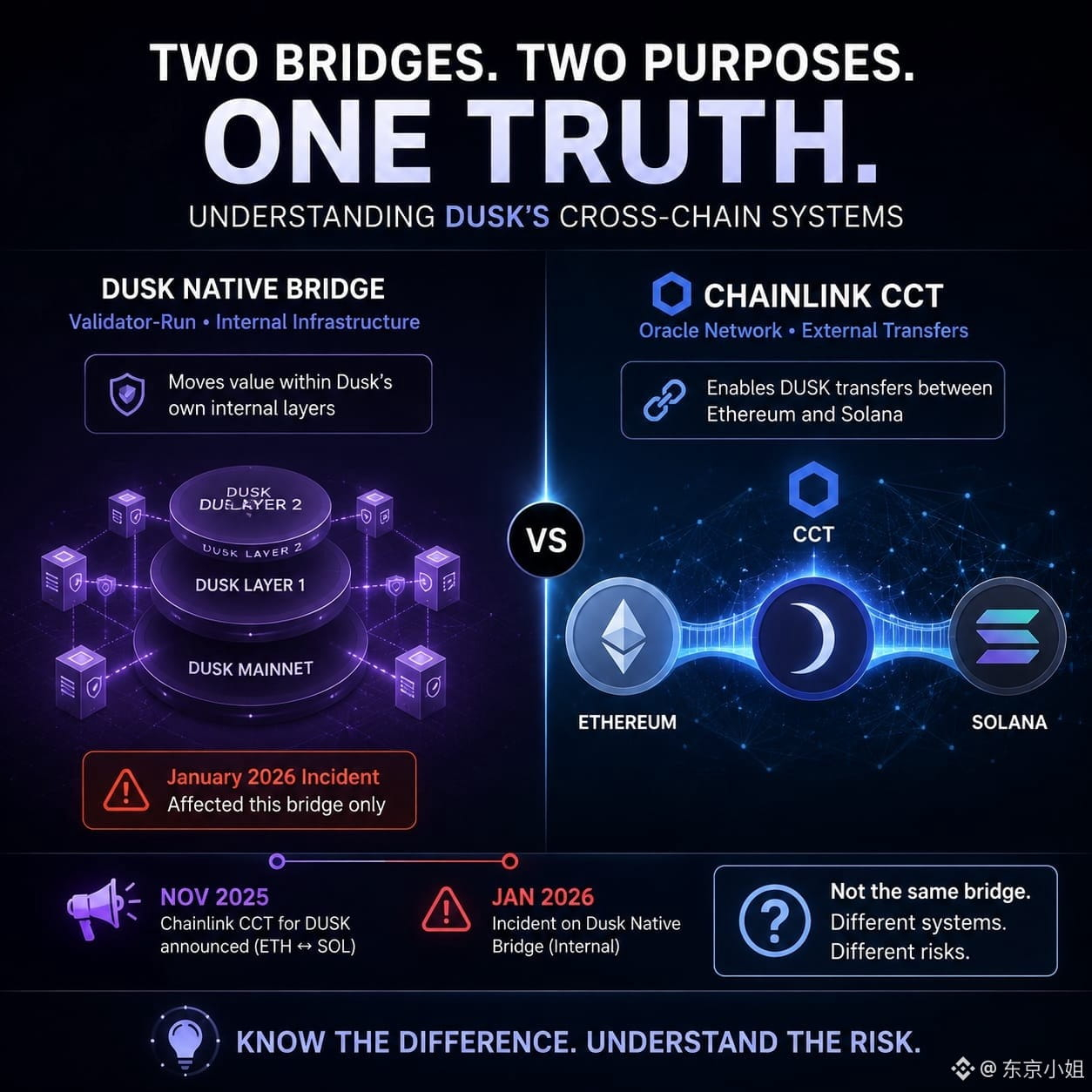
O padrão CCT da Chainlink para mover Dusk entre Ethereum e Solana foi anunciado em novembro de 2025, meses antes do incidente da ponte de janeiro que já sabemos ter acontecido na outra via cross-chain do Dusk. Eu fui verificar se essas realmente são a mesma ponte com dois nomes — sinceramente, eu meio que esperava que fossem a mesma coisa com um branding diferente — e não são. A página de arquitetura do próprio Dusk descreve uma ponte nativa separada, operada por validadores, que move valor entre as camadas internas do próprio Dusk, enquanto o CCT da Chainlink roda na própria rede descentralizada de oráculos da Chainlink para transferências externas entre ETH e Solana. Dois sistemas genuinamente distintos.
Então o incidente de janeiro, que atingiu especificamente a ponte nativa, não teria mexido em nada com o caminho da Chainlink, com base em como essas coisas são arquitetadas de maneira tão diferente. Isso é, de certa forma, tranquilizador — de um jeito que eu não esperava chegar.
Mas aqui vai o que ainda não assenta direito — ninguém explicou essa diferença em lugar nenhum quando o aviso do incidente foi divulgado. Se você é alguém que só sabe "o Dusk teve um problema de ponte em janeiro", não há nada que aponte você para "isso afetou apenas um de dois sistemas de bridging separados", e a tarefa de descobrir isso acabou recaindo totalmente sobre eu mesmo fazer a comparação entre dois comunicados sem relação.
Existe uma página única em algum lugar que mapeia exatamente qual ponte faz o quê para o Dusk, ou confirmar isso exige montar um quebra-cabeça juntando comunicados separados de imprensa como eu fiz? 🧐
#dusk $DUSK @Dusk_Foundation
O padrão CCT da Chainlink para mover Dusk entre Ethereum e Solana foi anunciado em novembro de 2025, meses antes do incidente da ponte de janeiro que já sabemos ter acontecido na outra via cross-chain do Dusk. Eu fui verificar se essas realmente são a mesma ponte com dois nomes — sinceramente, eu meio que esperava que fossem a mesma coisa com um branding diferente — e não são. A página de arquitetura do próprio Dusk descreve uma ponte nativa separada, operada por validadores, que move valor entre as camadas internas do próprio Dusk, enquanto o CCT da Chainlink roda na própria rede descentralizada de oráculos da Chainlink para transferências externas entre ETH e Solana. Dois sistemas genuinamente distintos.
Então o incidente de janeiro, que atingiu especificamente a ponte nativa, não teria mexido em nada com o caminho da Chainlink, com base em como essas coisas são arquitetadas de maneira tão diferente. Isso é, de certa forma, tranquilizador — de um jeito que eu não esperava chegar.
Mas aqui vai o que ainda não assenta direito — ninguém explicou essa diferença em lugar nenhum quando o aviso do incidente foi divulgado. Se você é alguém que só sabe "o Dusk teve um problema de ponte em janeiro", não há nada que aponte você para "isso afetou apenas um de dois sistemas de bridging separados", e a tarefa de descobrir isso acabou recaindo totalmente sobre eu mesmo fazer a comparação entre dois comunicados sem relação.
Existe uma página única em algum lugar que mapeia exatamente qual ponte faz o quê para o Dusk, ou confirmar isso exige montar um quebra-cabeça juntando comunicados separados de imprensa como eu fiz? 🧐
#dusk $DUSK @Dusk
Então o incidente de janeiro, que atingiu especificamente a ponte nativa, não teria mexido em nada com o caminho da Chainlink, com base em como essas coisas são arquitetadas de maneira tão diferente. Isso é, de certa forma, tranquilizador — de um jeito que eu não esperava chegar.
Mas aqui vai o que ainda não assenta direito — ninguém explicou essa diferença em lugar nenhum quando o aviso do incidente foi divulgado. Se você é alguém que só sabe "o Dusk teve um problema de ponte em janeiro", não há nada que aponte você para "isso afetou apenas um de dois sistemas de bridging separados", e a tarefa de descobrir isso acabou recaindo totalmente sobre eu mesmo fazer a comparação entre dois comunicados sem relação.
Existe uma página única em algum lugar que mapeia exatamente qual ponte faz o quê para o Dusk, ou confirmar isso exige montar um quebra-cabeça juntando comunicados separados de imprensa como eu fiz? 🧐
#dusk $DUSK @Dusk
1
131
·
--
Em Alta
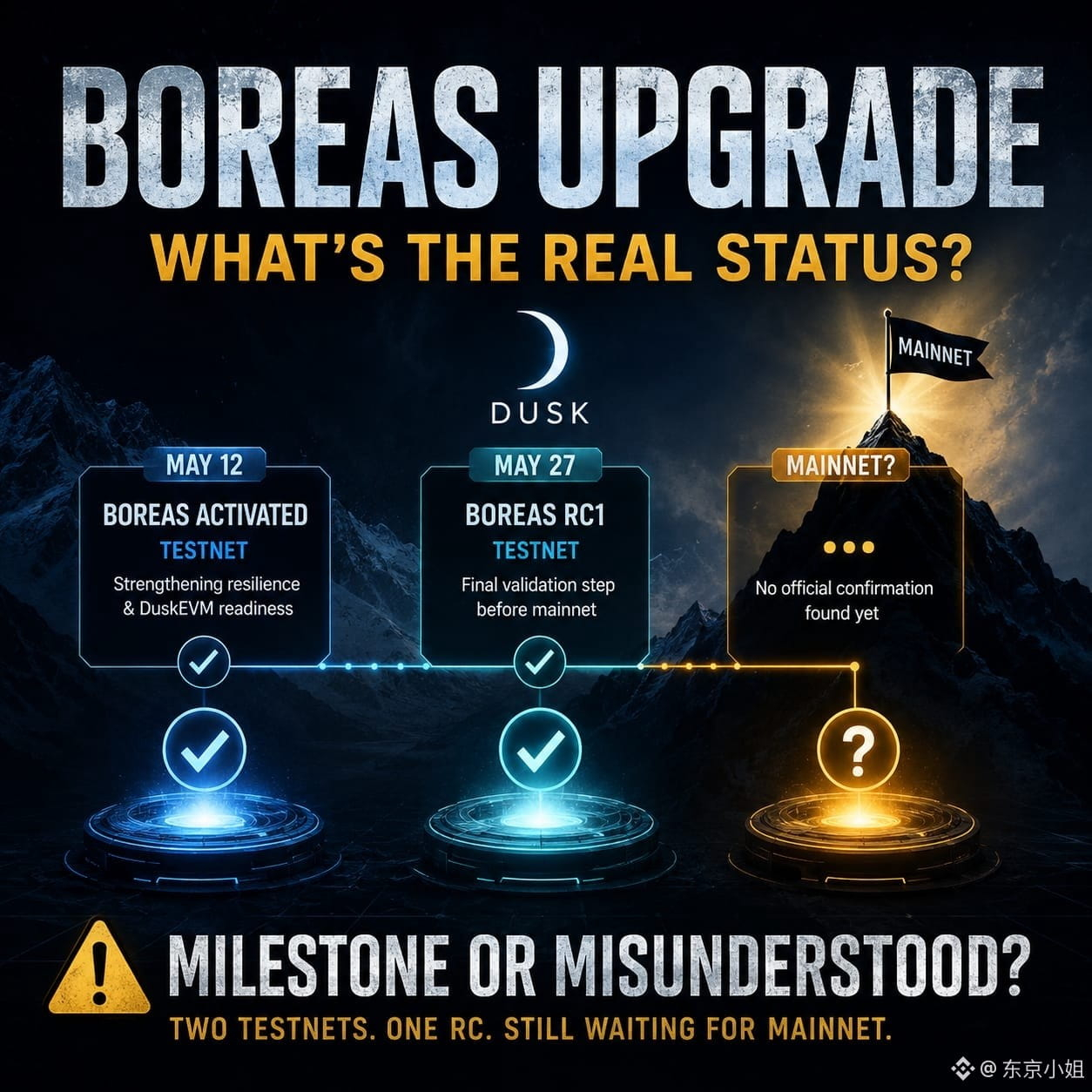
Eu fui verificar se o Boreas realmente chegou ao mainnet, já que ele tem circulado como um grande marco. O que eu encontrei, na verdade, foram dois eventos separados de testnet com o mesmo nome, com duas semanas de diferença, e honestamente eu quase parei em 12 de maio assumindo que era toda a história. A Dusk ativou o Boreas na testnet em 12 de maio, como forma de fortalecer a resiliência e a prontidão do DuskeVM. Depois, em 27 de maio, uma "boreas release candidate 1" foi ao ar, também na testnet, explicitamente chamada de etapa final de validação antes do mainnet.
Então, a ativação de 12 de maio não foi realmente a linha de chegada: foi uma fase anterior, e existe um segundo checkpoint depois dela que eu não tinha visto mencionado em lugar nenhum até eu procurar especificamente. Eu ainda não consigo encontrar um anúncio confirmando que o Boreas realmente chegou ao mainnet depois desse release candidate.
É um jeito normal de fazer o stage de um hard fork: testnet, depois RC, depois mainnet; nada de errado com o processo em si. Eu só acho que muita cobertura trata "boreas activated" como um único evento limpo, quando na verdade são pelo menos dois estágios de testnet e, possivelmente, ainda nem tenha passado pelo último.
O Boreas realmente já foi ao ar no mainnet desde 27 de maio, ou esse release candidate ainda é a etapa mais recente confirmada? 🧐
#dusk $DUSK @Dusk_Foundation
Eu fui verificar se o Boreas realmente chegou ao mainnet, já que ele tem circulado como um grande marco. O que eu encontrei, na verdade, foram dois eventos separados de testnet com o mesmo nome, com duas semanas de diferença, e honestamente eu quase parei em 12 de maio assumindo que era toda a história. A Dusk ativou o Boreas na testnet em 12 de maio, como forma de fortalecer a resiliência e a prontidão do DuskeVM. Depois, em 27 de maio, uma "boreas release candidate 1" foi ao ar, também na testnet, explicitamente chamada de etapa final de validação antes do mainnet.
Então, a ativação de 12 de maio não foi realmente a linha de chegada: foi uma fase anterior, e existe um segundo checkpoint depois dela que eu não tinha visto mencionado em lugar nenhum até eu procurar especificamente. Eu ainda não consigo encontrar um anúncio confirmando que o Boreas realmente chegou ao mainnet depois desse release candidate.
É um jeito normal de fazer o stage de um hard fork: testnet, depois RC, depois mainnet; nada de errado com o processo em si. Eu só acho que muita cobertura trata "boreas activated" como um único evento limpo, quando na verdade são pelo menos dois estágios de testnet e, possivelmente, ainda nem tenha passado pelo último.
O Boreas realmente já foi ao ar no mainnet desde 27 de maio, ou esse release candidate ainda é a etapa mais recente confirmada? 🧐
#dusk $DUSK @Dusk
Então, a ativação de 12 de maio não foi realmente a linha de chegada: foi uma fase anterior, e existe um segundo checkpoint depois dela que eu não tinha visto mencionado em lugar nenhum até eu procurar especificamente. Eu ainda não consigo encontrar um anúncio confirmando que o Boreas realmente chegou ao mainnet depois desse release candidate.
É um jeito normal de fazer o stage de um hard fork: testnet, depois RC, depois mainnet; nada de errado com o processo em si. Eu só acho que muita cobertura trata "boreas activated" como um único evento limpo, quando na verdade são pelo menos dois estágios de testnet e, possivelmente, ainda nem tenha passado pelo último.
O Boreas realmente já foi ao ar no mainnet desde 27 de maio, ou esse release candidate ainda é a etapa mais recente confirmada? 🧐
#dusk $DUSK @Dusk
3
120
·
--
Em Alta
@Dusk_Foundation
eu fui verificar exatamente o que a atualização do aegis tocou, já que 3 de março é citado como um grande marco, mas diferentes fontes a descrevem de maneiras distintas — uma diz que é obrigatória para todos os operadores de nós, outra chama de uma etapa de preparação apenas para testnet. no fim, acontece que as duas coisas são apenas versões incompletas da mesma medida, e honestamente eu quase parei em "uma dessas é só errada" antes de investigar o repositório real do github da dusk. nas notas de lançamento do rusk, eles listam alturas de ativação separadas do aegis para mainnet e testnet, 3.590.904 e 2.773.727, confirmando que atingiu ambas as redes, só não no mesmo número de bloco.
então não houve um conflito de escopo de fato; houve uma lacuna de cobertura — ninguém cobrindo isso na imprensa escreveu como "mainnet e testnet, aqui estão ambas as alturas de ativação"; cada um escolheu uma rede e tratou como se fosse toda a história.
é um jeito bem normal de lançar um hard fork: fazer o testnet um pouco diferente do mainnet, o que por si só não é incomum nem preocupante. eu só acho que vale notar como um rollout genuinamente simples em duas redes foi achatado em duas narrativas concorrentes e incompletas depois que passou por uma cobertura secundária.
alguém sabe se as duas alturas de ativação coincidiram no tempo (hora real), ou se a testnet ativou antes da mainnet? 🧐
#dusk $DUSK
@Dusk
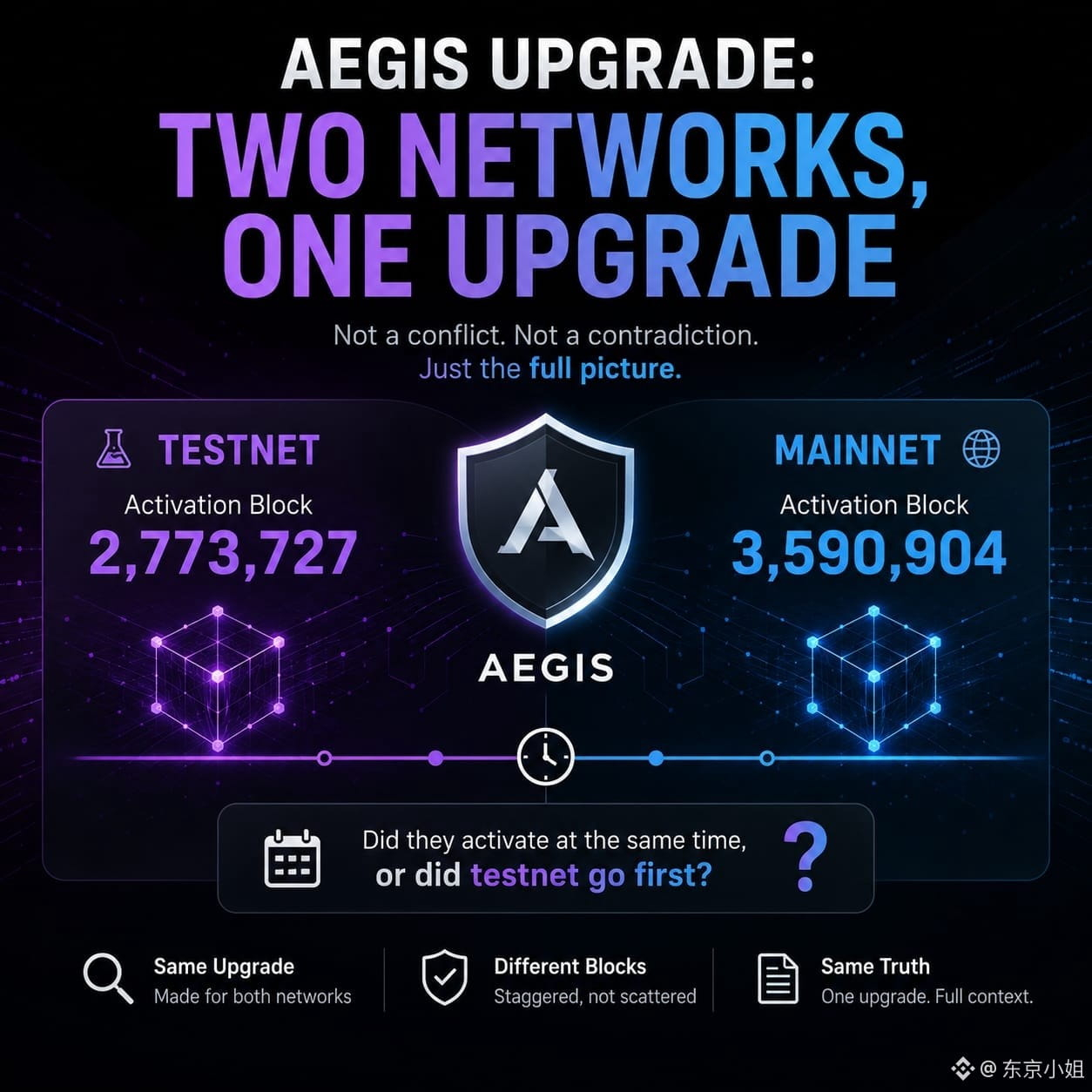
eu fui verificar exatamente o que a atualização do aegis tocou, já que 3 de março é citado como um grande marco, mas diferentes fontes a descrevem de maneiras distintas — uma diz que é obrigatória para todos os operadores de nós, outra chama de uma etapa de preparação apenas para testnet. no fim, acontece que as duas coisas são apenas versões incompletas da mesma medida, e honestamente eu quase parei em "uma dessas é só errada" antes de investigar o repositório real do github da dusk. nas notas de lançamento do rusk, eles listam alturas de ativação separadas do aegis para mainnet e testnet, 3.590.904 e 2.773.727, confirmando que atingiu ambas as redes, só não no mesmo número de bloco.
então não houve um conflito de escopo de fato; houve uma lacuna de cobertura — ninguém cobrindo isso na imprensa escreveu como "mainnet e testnet, aqui estão ambas as alturas de ativação"; cada um escolheu uma rede e tratou como se fosse toda a história.
é um jeito bem normal de lançar um hard fork: fazer o testnet um pouco diferente do mainnet, o que por si só não é incomum nem preocupante. eu só acho que vale notar como um rollout genuinamente simples em duas redes foi achatado em duas narrativas concorrentes e incompletas depois que passou por uma cobertura secundária.
alguém sabe se as duas alturas de ativação coincidiram no tempo (hora real), ou se a testnet ativou antes da mainnet? 🧐
#dusk $DUSK
eu fui verificar exatamente o que a atualização do aegis tocou, já que 3 de março é citado como um grande marco, mas diferentes fontes a descrevem de maneiras distintas — uma diz que é obrigatória para todos os operadores de nós, outra chama de uma etapa de preparação apenas para testnet. no fim, acontece que as duas coisas são apenas versões incompletas da mesma medida, e honestamente eu quase parei em "uma dessas é só errada" antes de investigar o repositório real do github da dusk. nas notas de lançamento do rusk, eles listam alturas de ativação separadas do aegis para mainnet e testnet, 3.590.904 e 2.773.727, confirmando que atingiu ambas as redes, só não no mesmo número de bloco.
então não houve um conflito de escopo de fato; houve uma lacuna de cobertura — ninguém cobrindo isso na imprensa escreveu como "mainnet e testnet, aqui estão ambas as alturas de ativação"; cada um escolheu uma rede e tratou como se fosse toda a história.
é um jeito bem normal de lançar um hard fork: fazer o testnet um pouco diferente do mainnet, o que por si só não é incomum nem preocupante. eu só acho que vale notar como um rollout genuinamente simples em duas redes foi achatado em duas narrativas concorrentes e incompletas depois que passou por uma cobertura secundária.
alguém sabe se as duas alturas de ativação coincidiram no tempo (hora real), ou se a testnet ativou antes da mainnet? 🧐
#dusk $DUSK
1
4
205
·
--
Em Alta
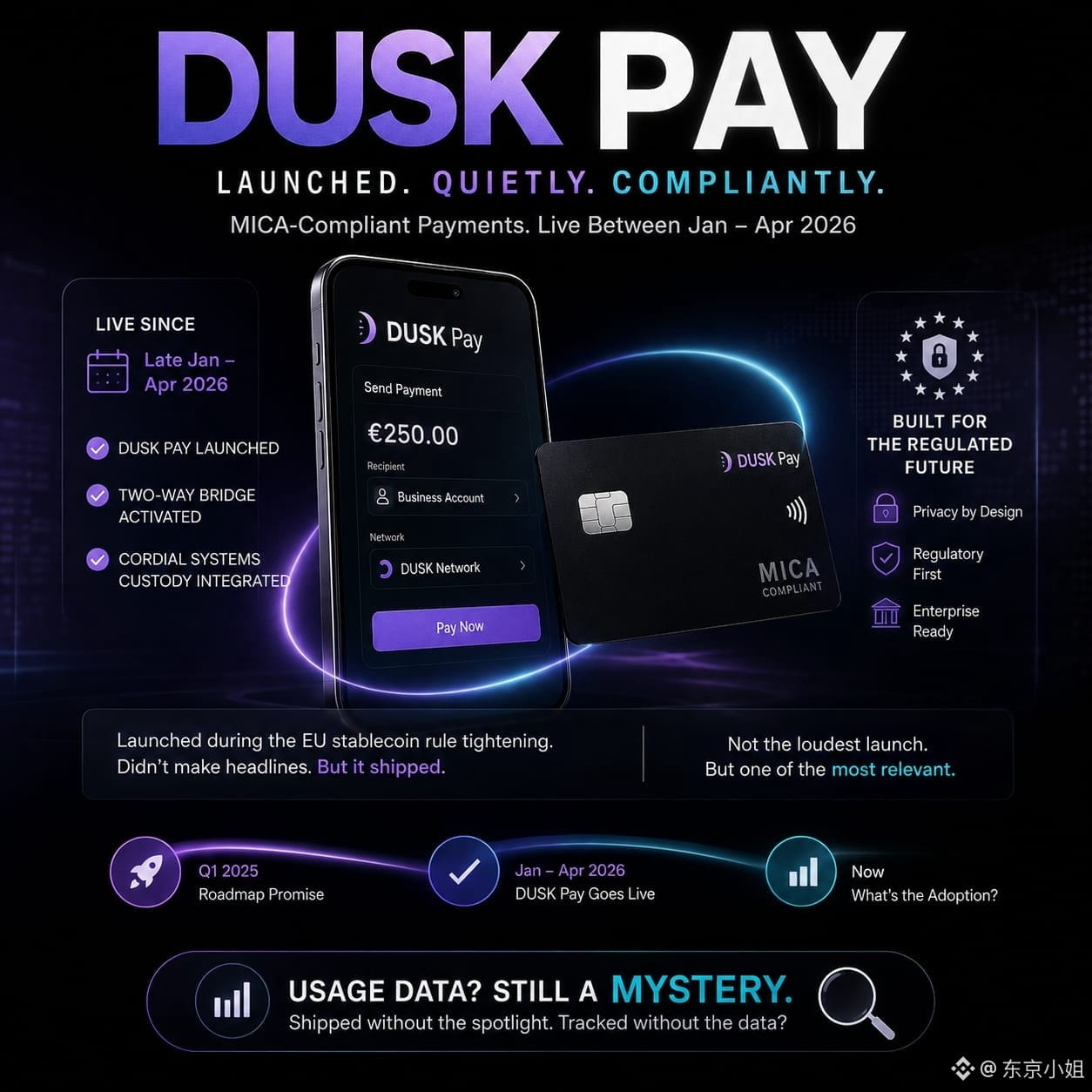
Fui procurar se o Dusk Pay realmente foi lançado, já que ele foi citado na roadmap de janeiro de 2025 como uma entrega do 1º trimestre e depois pareceu desaparecer da maioria das publicações sobre 2026 que eu estava lendo. No fim, eu só não estava procurando no lugar certo — na verdade, quase concluí que ele nunca tinha sido entregue antes de encontrar uma peça de acompanhamento do desenvolvimento de maio de 2026 afirmando de forma bem direta que o Dusk Pay foi lançado em algum momento entre o fim de janeiro e abril deste ano, junto com a ativação da ponte bidirecional e a integração da custódia com o cordial systems.
Então, ele foi lançado, só não com o tipo de destaque que o Duskevm ou a parceria com a NPEX receberam. Isso, aliás, é parte do ponto — um produto de pagamentos compatível com MICA sendo lançado exatamente no período em que as regras de stablecoin da UE estavam sendo apertadas, mas quase não recebeu registro em lugar nenhum, enquanto anúncios de arquitetura mais chamativos foram repercutidos em toda parte.
Não acho necessariamente que isso seja ruim: lançamento silencioso não é a mesma coisa que falhar em entregar. Mas, para um produto tão relevante em termos de regulamentação, a lacuna na cobertura entre manchetes do tipo "duskevm está no ar" e o silêncio em "dusk pay está no ar" diz mais sobre as prioridades da mídia cripto do que sobre a execução do Dusk.
Há algum dado real de uso do Dusk Pay desde o lançamento, ou ele foi lançado sem que ninguém acompanhasse a adoção? 🧐
#dusk $DUSK @Dusk_Foundation
Fui procurar se o Dusk Pay realmente foi lançado, já que ele foi citado na roadmap de janeiro de 2025 como uma entrega do 1º trimestre e depois pareceu desaparecer da maioria das publicações sobre 2026 que eu estava lendo. No fim, eu só não estava procurando no lugar certo — na verdade, quase concluí que ele nunca tinha sido entregue antes de encontrar uma peça de acompanhamento do desenvolvimento de maio de 2026 afirmando de forma bem direta que o Dusk Pay foi lançado em algum momento entre o fim de janeiro e abril deste ano, junto com a ativação da ponte bidirecional e a integração da custódia com o cordial systems.
Então, ele foi lançado, só não com o tipo de destaque que o Duskevm ou a parceria com a NPEX receberam. Isso, aliás, é parte do ponto — um produto de pagamentos compatível com MICA sendo lançado exatamente no período em que as regras de stablecoin da UE estavam sendo apertadas, mas quase não recebeu registro em lugar nenhum, enquanto anúncios de arquitetura mais chamativos foram repercutidos em toda parte.
Não acho necessariamente que isso seja ruim: lançamento silencioso não é a mesma coisa que falhar em entregar. Mas, para um produto tão relevante em termos de regulamentação, a lacuna na cobertura entre manchetes do tipo "duskevm está no ar" e o silêncio em "dusk pay está no ar" diz mais sobre as prioridades da mídia cripto do que sobre a execução do Dusk.
Há algum dado real de uso do Dusk Pay desde o lançamento, ou ele foi lançado sem que ninguém acompanhasse a adoção? 🧐
#dusk $DUSK @Dusk
Então, ele foi lançado, só não com o tipo de destaque que o Duskevm ou a parceria com a NPEX receberam. Isso, aliás, é parte do ponto — um produto de pagamentos compatível com MICA sendo lançado exatamente no período em que as regras de stablecoin da UE estavam sendo apertadas, mas quase não recebeu registro em lugar nenhum, enquanto anúncios de arquitetura mais chamativos foram repercutidos em toda parte.
Não acho necessariamente que isso seja ruim: lançamento silencioso não é a mesma coisa que falhar em entregar. Mas, para um produto tão relevante em termos de regulamentação, a lacuna na cobertura entre manchetes do tipo "duskevm está no ar" e o silêncio em "dusk pay está no ar" diz mais sobre as prioridades da mídia cripto do que sobre a execução do Dusk.
Há algum dado real de uso do Dusk Pay desde o lançamento, ou ele foi lançado sem que ninguém acompanhasse a adoção? 🧐
#dusk $DUSK @Dusk
2
102
·
--
Em Alta
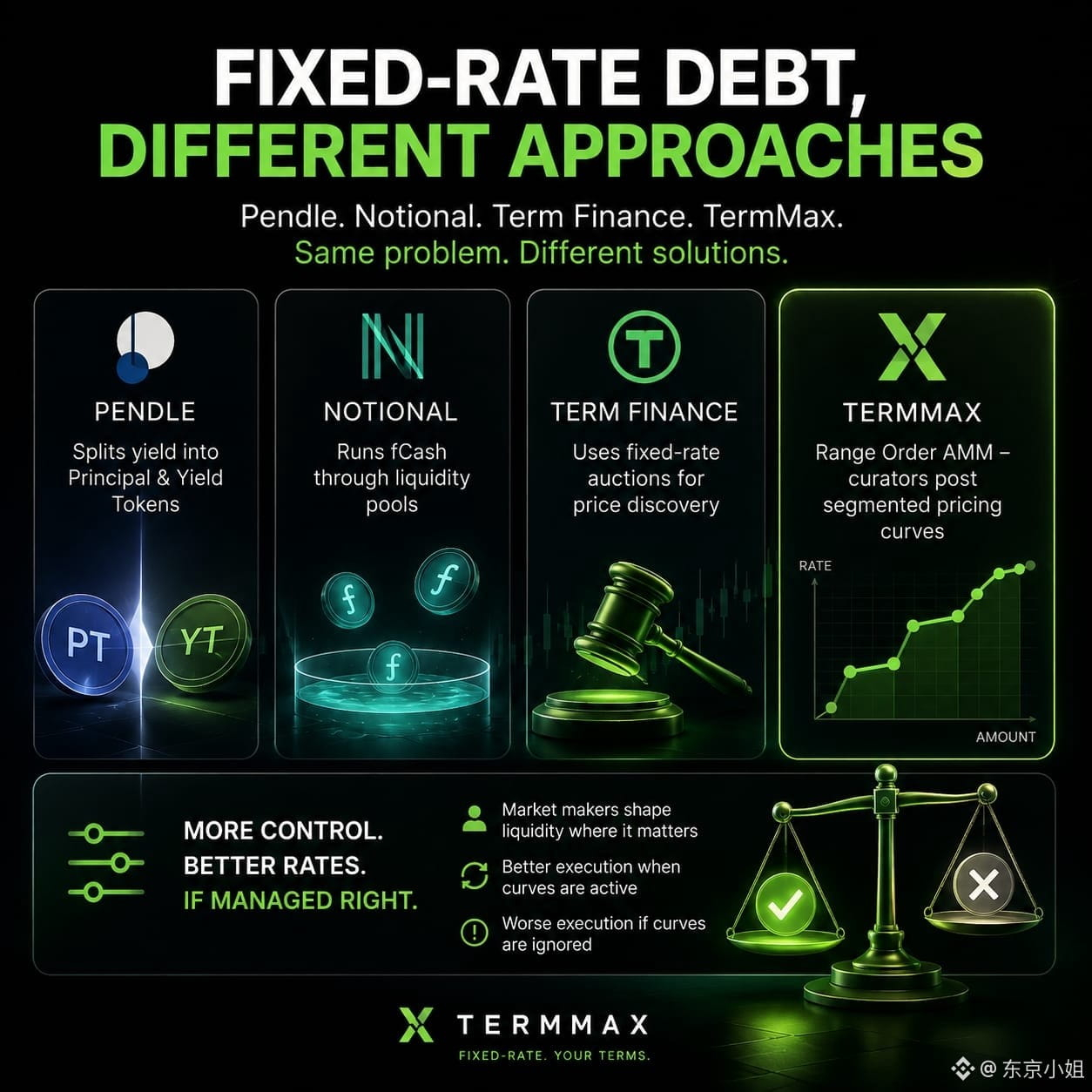
termmax's niche é dívida tokenizada com taxa fixa — e não está sozinho nesse espaço de forma alguma; pendle, notional e term finance estão todos atacando o mesmo problema por ângulos diferentes. pendle divide ativos que geram rendimento em tokens de principal e de rendimento. notional faz fcash passar por pools de liquidez. a solução própria da termmax é o range order amm: curadores publicam curvas de precificação segmentadas, e tomadores e credores fazem o matching diretamente com elas.
eu fiquei indo e voltando sobre por que essa abordagem específica em vez de um modelo de leilão ou de um split de rendimento puro, e acho que se resume a controle — um range order setter consegue moldar exatamente onde a liquidez fica na curva, em vez de apenas aceitar um preço de liquidação. isso é mais “mão na massa” para market makers, o que vai nos dois sentidos: melhores taxas quando alguém realmente administra a curva bem, e piores se ninguém se dá ao trabalho de atualizá-la quando as condições mudam.
não cheguei a executar o mesmo tamanho de operação entre pendle e termmax lado a lado para comparar execução real, então é uma leitura estrutural, não algo baseado em backtest 📐
#termmax @termmax
termmax's niche é dívida tokenizada com taxa fixa — e não está sozinho nesse espaço de forma alguma; pendle, notional e term finance estão todos atacando o mesmo problema por ângulos diferentes. pendle divide ativos que geram rendimento em tokens de principal e de rendimento. notional faz fcash passar por pools de liquidez. a solução própria da termmax é o range order amm: curadores publicam curvas de precificação segmentadas, e tomadores e credores fazem o matching diretamente com elas.
eu fiquei indo e voltando sobre por que essa abordagem específica em vez de um modelo de leilão ou de um split de rendimento puro, e acho que se resume a controle — um range order setter consegue moldar exatamente onde a liquidez fica na curva, em vez de apenas aceitar um preço de liquidação. isso é mais “mão na massa” para market makers, o que vai nos dois sentidos: melhores taxas quando alguém realmente administra a curva bem, e piores se ninguém se dá ao trabalho de atualizá-la quando as condições mudam.
não cheguei a executar o mesmo tamanho de operação entre pendle e termmax lado a lado para comparar execução real, então é uma leitura estrutural, não algo baseado em backtest 📐
#termmax @TermMax
eu fiquei indo e voltando sobre por que essa abordagem específica em vez de um modelo de leilão ou de um split de rendimento puro, e acho que se resume a controle — um range order setter consegue moldar exatamente onde a liquidez fica na curva, em vez de apenas aceitar um preço de liquidação. isso é mais “mão na massa” para market makers, o que vai nos dois sentidos: melhores taxas quando alguém realmente administra a curva bem, e piores se ninguém se dá ao trabalho de atualizá-la quando as condições mudam.
não cheguei a executar o mesmo tamanho de operação entre pendle e termmax lado a lado para comparar execução real, então é uma leitura estrutural, não algo baseado em backtest 📐
#termmax @TermMax
2
4
186
·
--
Em Alta
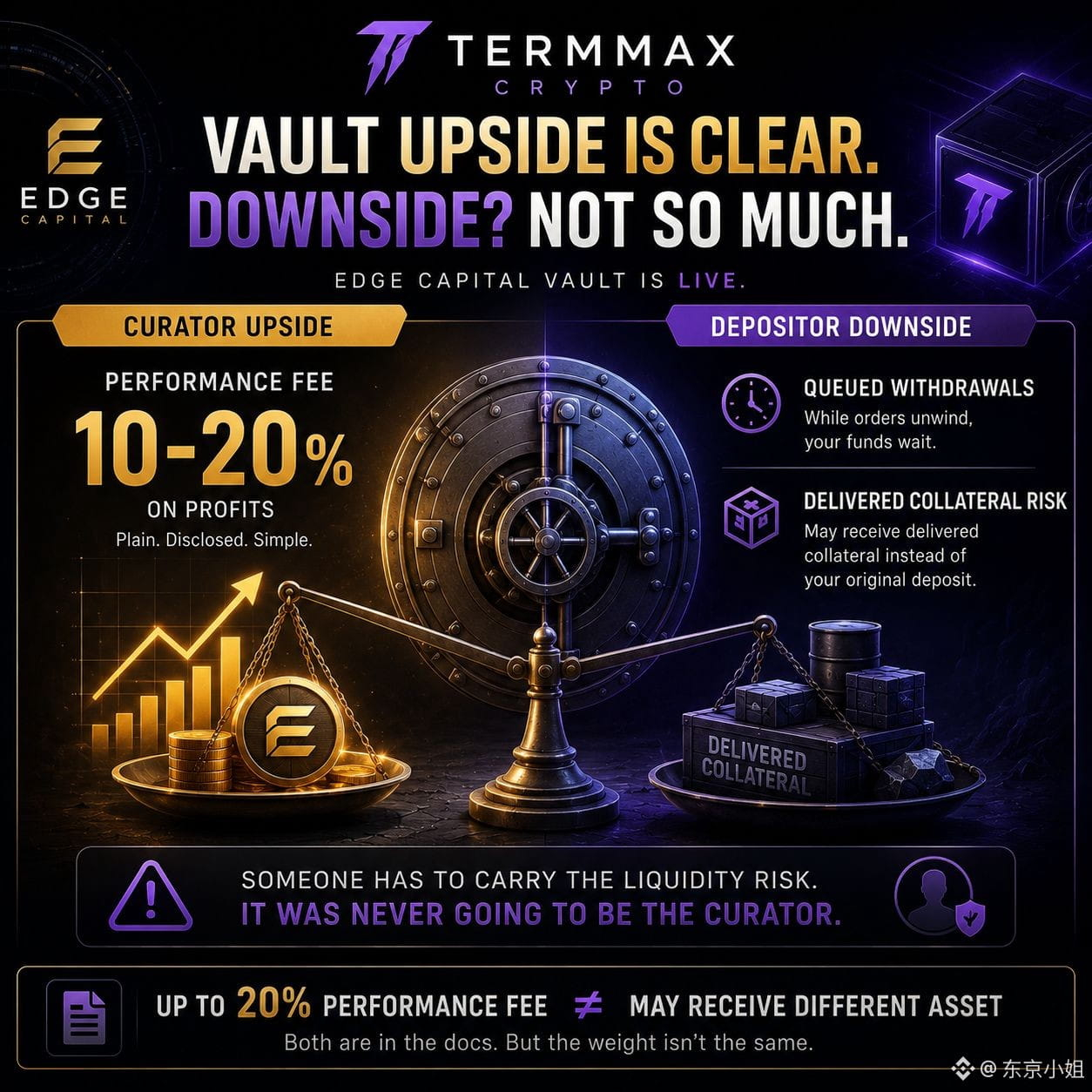
o cofre da Edge Capital está ativo agora mesmo, e este é exatamente o tipo de cenário em que surge a lacuna de divulgação. curadores ganham uma taxa de performance de 10 a 20 por cento sobre qualquer lucro que o cofre deles gere — bem ali nos documentos de mecânica do cofre, de forma direta e declarada. o que não aparece com a mesma clareza é — na verdade, quase não aparece — a que os depositantes estão realmente expostos se um cofre como esse passar por um período difícil: retiradas em fila enquanto as ordens são desfeitas, ou pior, acabar segurando garantias entregues em vez do token de dívida que eles originalmente colocaram, caso um mercado passe pela entrega física.
assim, o ganho do curador é uma porcentagem limpa e divulgada. o prejuízo do depositante é uma posição na fila e possivelmente um ativo diferente do que ele depositou. não estou chamando isso de escândalo — alguém precisa assumir o risco de liquidez em um cofre ativamente gerido, e isso nunca foi para ser a pessoa que está tocando o negócio. eu só não acho que "taxa de performance de até 20%" e "pode receber garantias entregues em vez do seu depósito" sejam simétricos quando estão em um parágrafo um do outro na mesma seção de documentos.
de verdade, estou dividido sobre se isso é uma troca justa para uma gestão profissional ou apenas como toda estrutura de cofre acaba se revelando, na DeFi ou não 🤷
#termmax @termmax
o cofre da Edge Capital está ativo agora mesmo, e este é exatamente o tipo de cenário em que surge a lacuna de divulgação. curadores ganham uma taxa de performance de 10 a 20 por cento sobre qualquer lucro que o cofre deles gere — bem ali nos documentos de mecânica do cofre, de forma direta e declarada. o que não aparece com a mesma clareza é — na verdade, quase não aparece — a que os depositantes estão realmente expostos se um cofre como esse passar por um período difícil: retiradas em fila enquanto as ordens são desfeitas, ou pior, acabar segurando garantias entregues em vez do token de dívida que eles originalmente colocaram, caso um mercado passe pela entrega física.
assim, o ganho do curador é uma porcentagem limpa e divulgada. o prejuízo do depositante é uma posição na fila e possivelmente um ativo diferente do que ele depositou. não estou chamando isso de escândalo — alguém precisa assumir o risco de liquidez em um cofre ativamente gerido, e isso nunca foi para ser a pessoa que está tocando o negócio. eu só não acho que "taxa de performance de até 20%" e "pode receber garantias entregues em vez do seu depósito" sejam simétricos quando estão em um parágrafo um do outro na mesma seção de documentos.
de verdade, estou dividido sobre se isso é uma troca justa para uma gestão profissional ou apenas como toda estrutura de cofre acaba se revelando, na DeFi ou não 🤷
#termmax @TermMax
assim, o ganho do curador é uma porcentagem limpa e divulgada. o prejuízo do depositante é uma posição na fila e possivelmente um ativo diferente do que ele depositou. não estou chamando isso de escândalo — alguém precisa assumir o risco de liquidez em um cofre ativamente gerido, e isso nunca foi para ser a pessoa que está tocando o negócio. eu só não acho que "taxa de performance de até 20%" e "pode receber garantias entregues em vez do seu depósito" sejam simétricos quando estão em um parágrafo um do outro na mesma seção de documentos.
de verdade, estou dividido sobre se isso é uma troca justa para uma gestão profissional ou apenas como toda estrutura de cofre acaba se revelando, na DeFi ou não 🤷
#termmax @TermMax
1
156
·
--
Em Alta
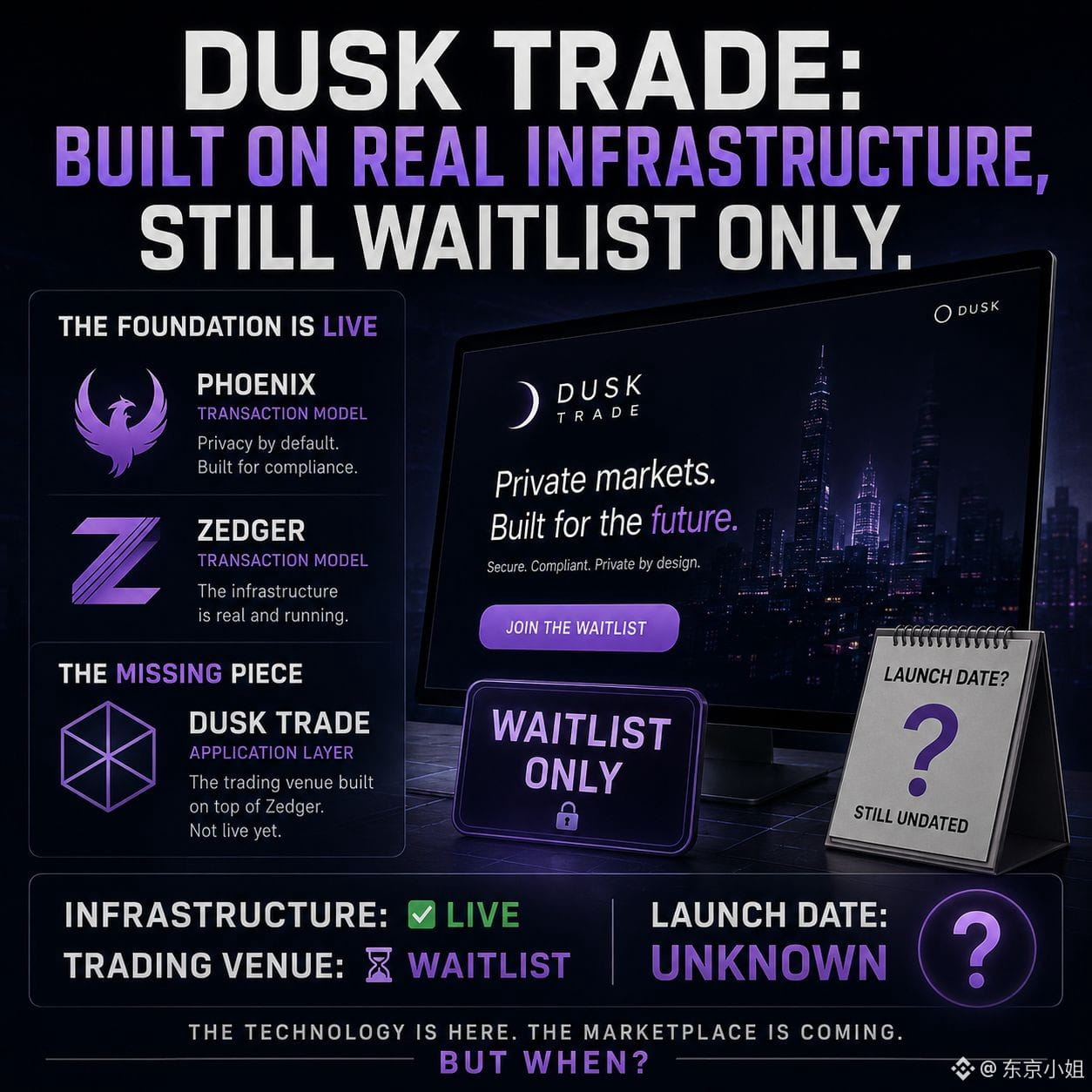
Fui conferir o Zedger, já que ainda citam ele como infraestrutura em funcionamento, e na verdade ainda é — a documentação atual da Dusk lista Phoenix e Zedger como os dois modelos de transação disponíveis agora, então minha primeira suposição de que ele havia desaparecido silenciosamente estava errada.
O que é real, porém, é o Dusk Trade: a camada de aplicação pensada para ficar por cima disso e dar aos usuários um lugar de fato para negociar ativos tokenizados. Eu verifiquei o trade.dusk.network diretamente e ele ainda é apenas lista de espera; "join the waitlist" é o chamado para ação inteiro na página agora.
Esse é um tipo de lacuna diferente do que eu tinha pensado inicialmente, e honestamente mais concreto — a fase final do roadmap pós-mainnet prometia "full zedger", com emissão de ativos, liquidação e settlement totalmente operacionais, posicionado como parte da visão da Dusk para 2025. O modelo de transação subjacente existe, mas o ambiente de negociação construído sobre ele ainda está em pré-lançamento, sem um cronograma visível na própria página de lista de espera.
Alguém sabe se o Dusk Trade tem uma data de lançamento real associada em algum lugar, ou se ele ainda está nessa fase de lista de espera sem data? 🧐
#dusk $DUSK @Dusk_Foundation
Fui conferir o Zedger, já que ainda citam ele como infraestrutura em funcionamento, e na verdade ainda é — a documentação atual da Dusk lista Phoenix e Zedger como os dois modelos de transação disponíveis agora, então minha primeira suposição de que ele havia desaparecido silenciosamente estava errada.
O que é real, porém, é o Dusk Trade: a camada de aplicação pensada para ficar por cima disso e dar aos usuários um lugar de fato para negociar ativos tokenizados. Eu verifiquei o trade.dusk.network diretamente e ele ainda é apenas lista de espera; "join the waitlist" é o chamado para ação inteiro na página agora.
Esse é um tipo de lacuna diferente do que eu tinha pensado inicialmente, e honestamente mais concreto — a fase final do roadmap pós-mainnet prometia "full zedger", com emissão de ativos, liquidação e settlement totalmente operacionais, posicionado como parte da visão da Dusk para 2025. O modelo de transação subjacente existe, mas o ambiente de negociação construído sobre ele ainda está em pré-lançamento, sem um cronograma visível na própria página de lista de espera.
Alguém sabe se o Dusk Trade tem uma data de lançamento real associada em algum lugar, ou se ele ainda está nessa fase de lista de espera sem data? 🧐
#dusk $DUSK @Dusk
O que é real, porém, é o Dusk Trade: a camada de aplicação pensada para ficar por cima disso e dar aos usuários um lugar de fato para negociar ativos tokenizados. Eu verifiquei o trade.dusk.network diretamente e ele ainda é apenas lista de espera; "join the waitlist" é o chamado para ação inteiro na página agora.
Esse é um tipo de lacuna diferente do que eu tinha pensado inicialmente, e honestamente mais concreto — a fase final do roadmap pós-mainnet prometia "full zedger", com emissão de ativos, liquidação e settlement totalmente operacionais, posicionado como parte da visão da Dusk para 2025. O modelo de transação subjacente existe, mas o ambiente de negociação construído sobre ele ainda está em pré-lançamento, sem um cronograma visível na própria página de lista de espera.
Alguém sabe se o Dusk Trade tem uma data de lançamento real associada em algum lugar, ou se ele ainda está nessa fase de lista de espera sem data? 🧐
#dusk $DUSK @Dusk
1
112
·
--
Em Alta
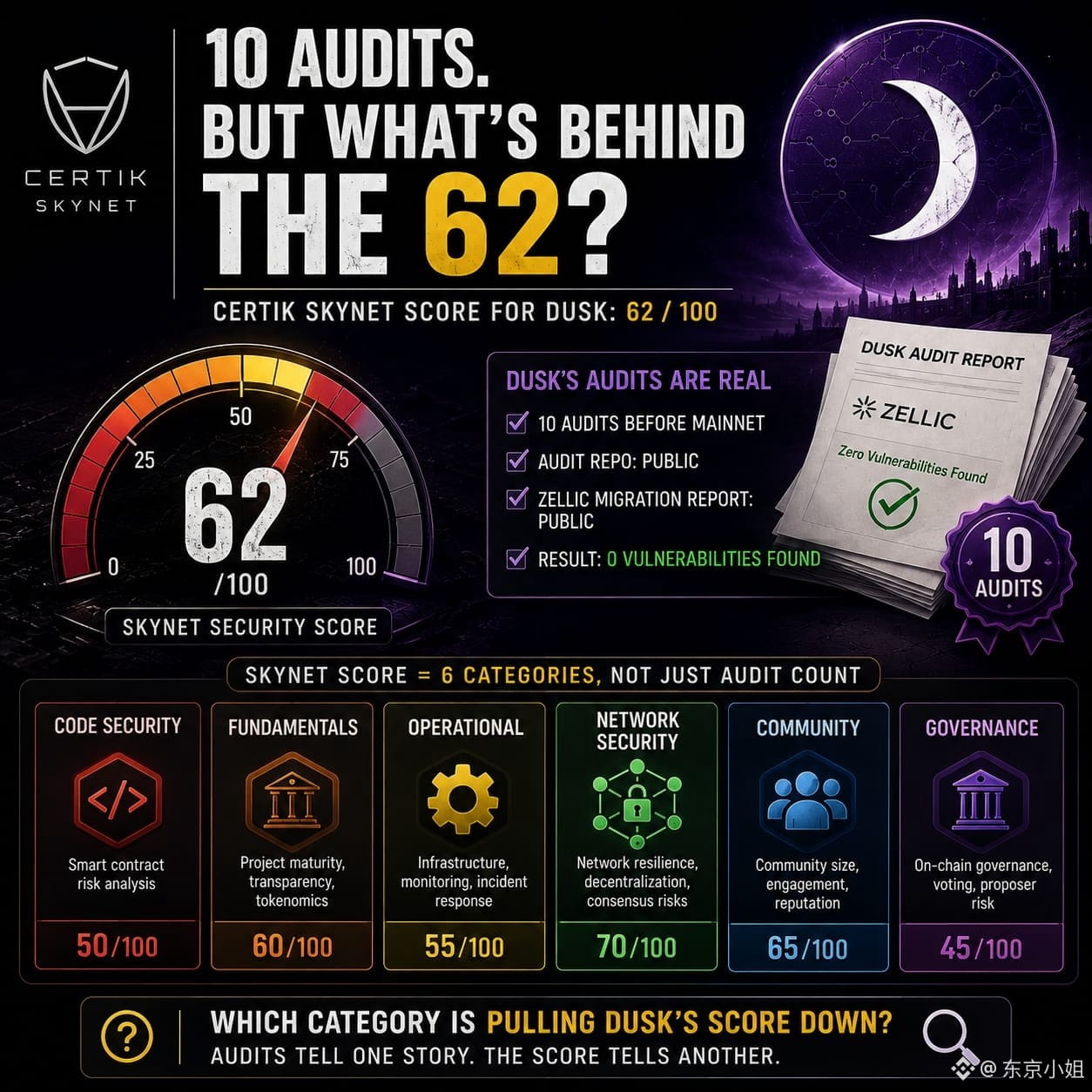
fui verificar a pontuação de segurança de terceiros do Dusk, já que eles promovem "dez auditorias antes do mainnet" com bastante força, e a pontuação Skynet da Certik para o Dusk fica em 62 de 100. entrei esperando que esse número acompanhasse aproximadamente a contagem de auditorias — na verdade, tive que parar e reler a página de metodologia da Certik, porque assumi que uma pontuação de segurança seria, basicamente, apenas uma contagem de auditorias; não é. é seis categorias separadas combinadas.
as auditorias em si são reais: o repositório de auditoria do próprio Dusk e o relatório do contrato de migração da Zellic são públicos, e não foram encontradas vulnerabilidades. então as auditorias individuais não estão em questão. o que acontece é que uma pilha de relatórios de auditoria limpos e uma única pontuação composta de confiança respondem a perguntas diferentes, e o texto de marketing tende a tratar os dois como intercambiáveis quando não são.
para ser justo, eu não tenho um benchmark claro do que uma "boa" pontuação Skynet parece para um L1 no estágio em que o Dusk está, então não posso dizer que 62 é ruim; só que não está claramente explicado apenas pelo histórico de auditorias.
alguém sabe qual das seis categorias do Skynet é que está derrubando esse número especificamente para o Dusk? 🧐
#dusk $DUSK @Dusk_Foundation
{future}(DUSKUSDT)
fui verificar a pontuação de segurança de terceiros do Dusk, já que eles promovem "dez auditorias antes do mainnet" com bastante força, e a pontuação Skynet da Certik para o Dusk fica em 62 de 100. entrei esperando que esse número acompanhasse aproximadamente a contagem de auditorias — na verdade, tive que parar e reler a página de metodologia da Certik, porque assumi que uma pontuação de segurança seria, basicamente, apenas uma contagem de auditorias; não é. é seis categorias separadas combinadas.
as auditorias em si são reais: o repositório de auditoria do próprio Dusk e o relatório do contrato de migração da Zellic são públicos, e não foram encontradas vulnerabilidades. então as auditorias individuais não estão em questão. o que acontece é que uma pilha de relatórios de auditoria limpos e uma única pontuação composta de confiança respondem a perguntas diferentes, e o texto de marketing tende a tratar os dois como intercambiáveis quando não são.
para ser justo, eu não tenho um benchmark claro do que uma "boa" pontuação Skynet parece para um L1 no estágio em que o Dusk está, então não posso dizer que 62 é ruim; só que não está claramente explicado apenas pelo histórico de auditorias.
alguém sabe qual das seis categorias do Skynet é que está derrubando esse número especificamente para o Dusk? 🧐
#dusk $DUSK @Dusk
as auditorias em si são reais: o repositório de auditoria do próprio Dusk e o relatório do contrato de migração da Zellic são públicos, e não foram encontradas vulnerabilidades. então as auditorias individuais não estão em questão. o que acontece é que uma pilha de relatórios de auditoria limpos e uma única pontuação composta de confiança respondem a perguntas diferentes, e o texto de marketing tende a tratar os dois como intercambiáveis quando não são.
para ser justo, eu não tenho um benchmark claro do que uma "boa" pontuação Skynet parece para um L1 no estágio em que o Dusk está, então não posso dizer que 62 é ruim; só que não está claramente explicado apenas pelo histórico de auditorias.
alguém sabe qual das seis categorias do Skynet é que está derrubando esse número especificamente para o Dusk? 🧐
#dusk $DUSK @Dusk
1
1
122
·
--
Em Alta
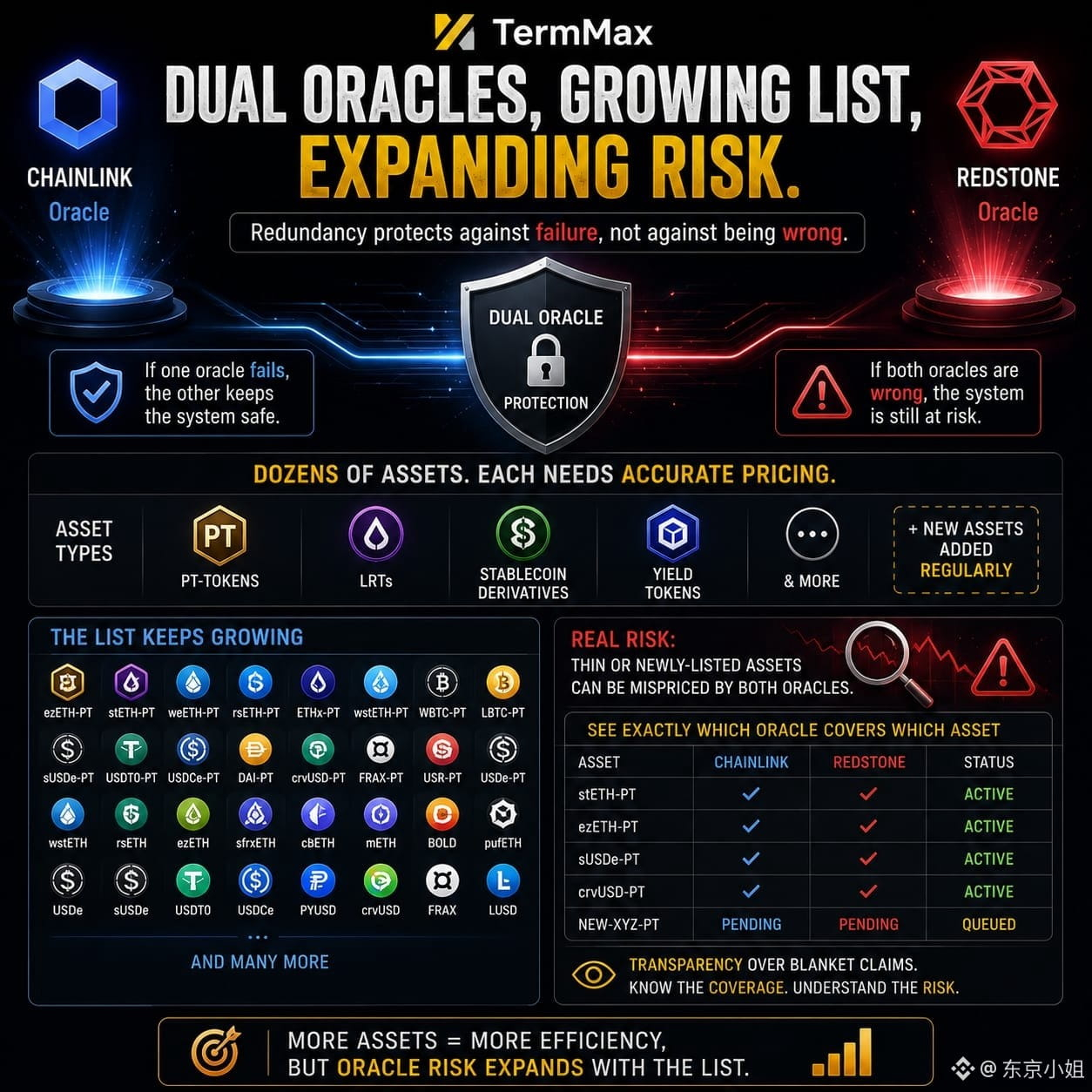
termmax executa dois oráculos (duais) — chainlink e redstone — e a documentação os apresenta como proteção caso uma única fonte falhe. justo. mas eu revisei a lista de ativos do próprio oráculo na documentação deles e agora são dezenas de pt-tokens individuais, lrts e derivativos de stablecoin; cada um precisa de seu próprio feed de preço configurado corretamente, e os novos estão sendo adicionados com bastante regularidade.
ou seja — na verdade, o risco real não é o design de oráculo duplo em si; é que a redundância te protege se um feed cair, não se ambos os feeds estiverem, ao mesmo tempo, errados a respeito de um ativo fino e recém-listado. mais tipos de colateral é bom para eficiência de capital, eu entendo. só significa que a seção de risco do oráculo não é estática — ela está se expandindo toda vez que um novo ativo é adicionado à lista.
o que realmente resolveria isso pra mim seria ver qual provedor específico cobre qual ativo específico, publicado em algum lugar, em vez de apenas "chainlink e redstone" como uma linha genérica cobrindo tudo 🔍
#termmax @termmax
termmax executa dois oráculos (duais) — chainlink e redstone — e a documentação os apresenta como proteção caso uma única fonte falhe. justo. mas eu revisei a lista de ativos do próprio oráculo na documentação deles e agora são dezenas de pt-tokens individuais, lrts e derivativos de stablecoin; cada um precisa de seu próprio feed de preço configurado corretamente, e os novos estão sendo adicionados com bastante regularidade.
ou seja — na verdade, o risco real não é o design de oráculo duplo em si; é que a redundância te protege se um feed cair, não se ambos os feeds estiverem, ao mesmo tempo, errados a respeito de um ativo fino e recém-listado. mais tipos de colateral é bom para eficiência de capital, eu entendo. só significa que a seção de risco do oráculo não é estática — ela está se expandindo toda vez que um novo ativo é adicionado à lista.
o que realmente resolveria isso pra mim seria ver qual provedor específico cobre qual ativo específico, publicado em algum lugar, em vez de apenas "chainlink e redstone" como uma linha genérica cobrindo tudo 🔍
#termmax @TermMax
ou seja — na verdade, o risco real não é o design de oráculo duplo em si; é que a redundância te protege se um feed cair, não se ambos os feeds estiverem, ao mesmo tempo, errados a respeito de um ativo fino e recém-listado. mais tipos de colateral é bom para eficiência de capital, eu entendo. só significa que a seção de risco do oráculo não é estática — ela está se expandindo toda vez que um novo ativo é adicionado à lista.
o que realmente resolveria isso pra mim seria ver qual provedor específico cobre qual ativo específico, publicado em algum lugar, em vez de apenas "chainlink e redstone" como uma linha genérica cobrindo tudo 🔍
#termmax @TermMax
110
·
--
Em Alta
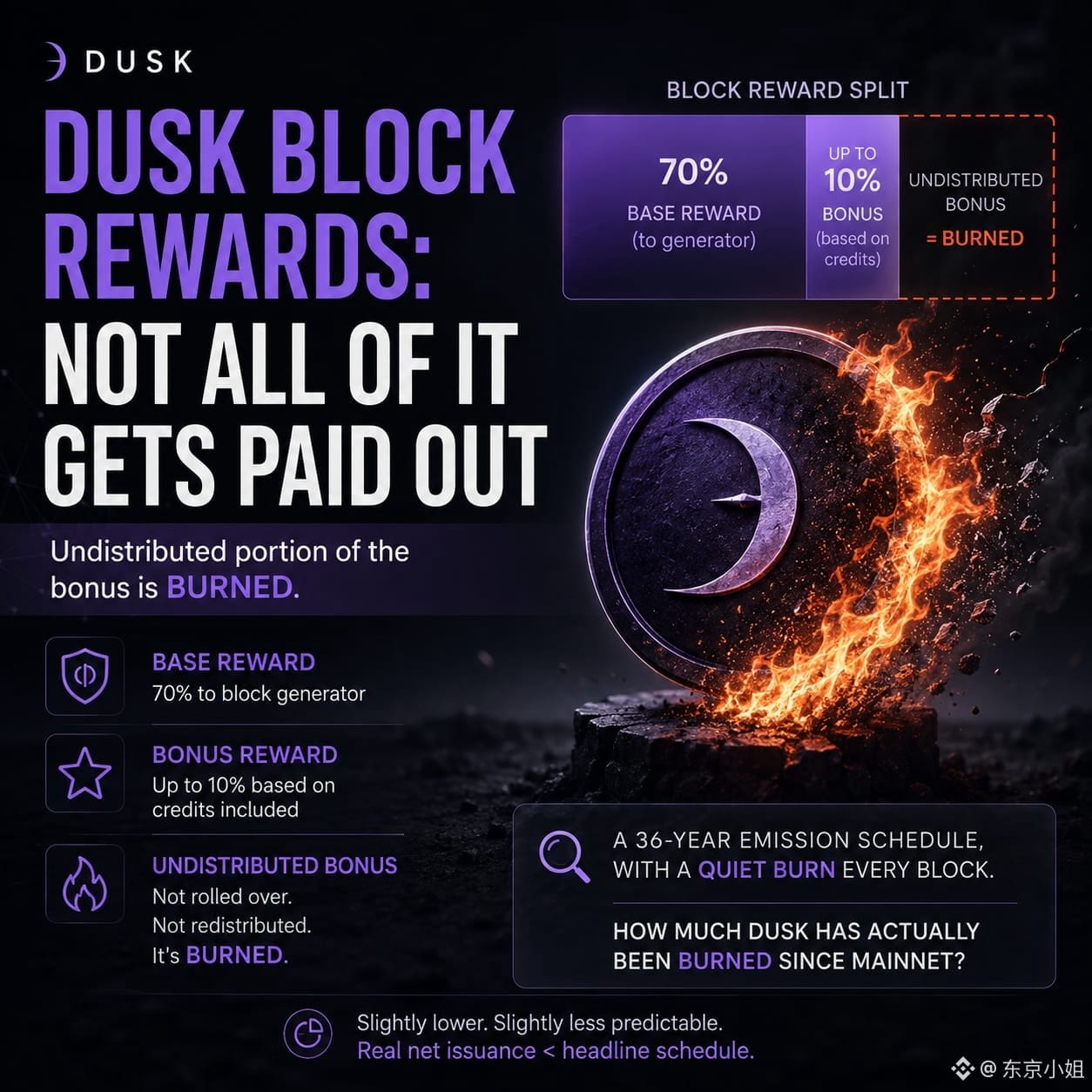
fui ver como os prêmios do block do crepúsculo realmente são divididos, e tem um mecanismo de burn lá que eu não tinha notado antes. os geradores de blocos recebem uma base de 70%, mais até mais 10% dependendo de quantos créditos são incluídos no certificado — mas qualquer parte desses 10% extras que não seja distribuída não é levada adiante nem redistribuída; ela é apenas queimada. eu tive que reler essa linha uma segunda vez porque assumi que "indistribuída" significava que isso só passaria para o próximo bloco no pool.
então, ao contrário da maioria das chains PoS em que todo o pool de recompensas é pago independentemente da qualidade da participação, dusk é silenciosamente deflacionária na margem a cada bloco, dependendo de o certificado do gerador estar completo. uma chain rodando um cronograma de emissão que dura 36 anos, baseado em halving, também está queimando pequenas quantidades do outro lado com base na qualidade da execução, e eu não vi isso enquadrado como um fator real de oferta líquida em lugar nenhum.
é uma pequena porcentagem por bloco; não estou dizendo que isso muda a curva de oferta drasticamente. mas "cronograma de emissão de 36 anos" implica uma curva previsível e aditiva, e esse mecanismo de burn significa que a emissão líquida real é um pouco menor e um pouco menos previsível do que o cronograma principal sugere.
alguém acompanha quanto dusk realmente foi queimado desse jeito desde o mainnet, ou esse número não é publicado em lugar algum? 🧐#dusk $DUSK @Dusk_Foundation
fui ver como os prêmios do block do crepúsculo realmente são divididos, e tem um mecanismo de burn lá que eu não tinha notado antes. os geradores de blocos recebem uma base de 70%, mais até mais 10% dependendo de quantos créditos são incluídos no certificado — mas qualquer parte desses 10% extras que não seja distribuída não é levada adiante nem redistribuída; ela é apenas queimada. eu tive que reler essa linha uma segunda vez porque assumi que "indistribuída" significava que isso só passaria para o próximo bloco no pool.
então, ao contrário da maioria das chains PoS em que todo o pool de recompensas é pago independentemente da qualidade da participação, dusk é silenciosamente deflacionária na margem a cada bloco, dependendo de o certificado do gerador estar completo. uma chain rodando um cronograma de emissão que dura 36 anos, baseado em halving, também está queimando pequenas quantidades do outro lado com base na qualidade da execução, e eu não vi isso enquadrado como um fator real de oferta líquida em lugar nenhum.
é uma pequena porcentagem por bloco; não estou dizendo que isso muda a curva de oferta drasticamente. mas "cronograma de emissão de 36 anos" implica uma curva previsível e aditiva, e esse mecanismo de burn significa que a emissão líquida real é um pouco menor e um pouco menos previsível do que o cronograma principal sugere.
alguém acompanha quanto dusk realmente foi queimado desse jeito desde o mainnet, ou esse número não é publicado em lugar algum? 🧐#dusk $DUSK @Dusk
então, ao contrário da maioria das chains PoS em que todo o pool de recompensas é pago independentemente da qualidade da participação, dusk é silenciosamente deflacionária na margem a cada bloco, dependendo de o certificado do gerador estar completo. uma chain rodando um cronograma de emissão que dura 36 anos, baseado em halving, também está queimando pequenas quantidades do outro lado com base na qualidade da execução, e eu não vi isso enquadrado como um fator real de oferta líquida em lugar nenhum.
é uma pequena porcentagem por bloco; não estou dizendo que isso muda a curva de oferta drasticamente. mas "cronograma de emissão de 36 anos" implica uma curva previsível e aditiva, e esse mecanismo de burn significa que a emissão líquida real é um pouco menor e um pouco menos previsível do que o cronograma principal sugere.
alguém acompanha quanto dusk realmente foi queimado desse jeito desde o mainnet, ou esse número não é publicado em lugar algum? 🧐#dusk $DUSK @Dusk
1
1
102
·
--
Em Alta
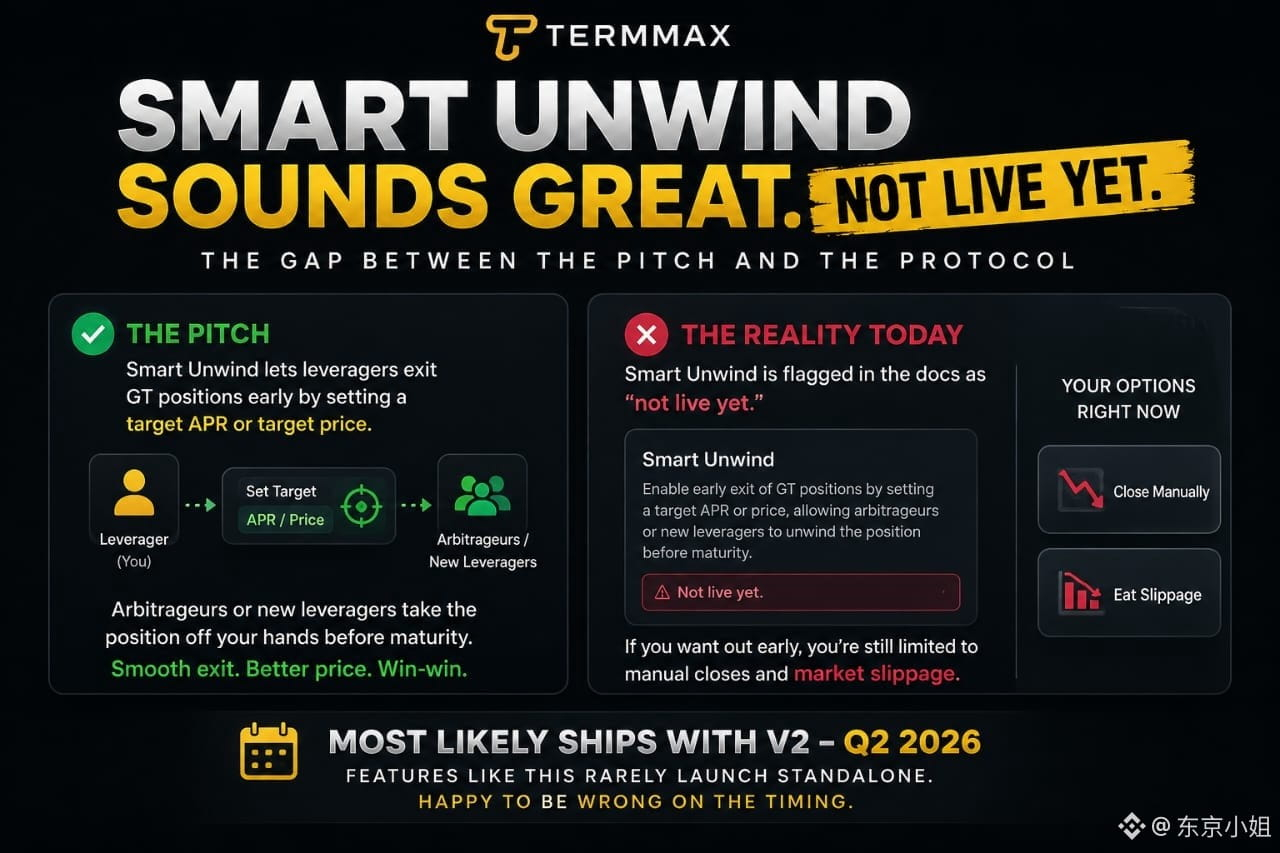
há um recurso que a Termmax menciona como se já estivesse funcionando, e na verdade não está — smart unwind. ele é apresentado como a forma de quem faz alavancagem sair de posições grandes mais cedo, definindo uma taxa APR-alvo ou um preço-alvo, permitindo que arbitrageiros ou novos alavancadores assumam a posição por você antes do vencimento. parece ótimo no papel. porém, a página de documentação real sobre isso tem uma única linha na parte de baixo avisando que “ainda não está ao vivo”.
então, por agora, se você está alavancado e quer sair cedo, fica preso às mesmas opções que existiam antes mesmo de esse recurso ser anunciado — fechar manualmente, aguentando qualquer deslizamento que o mercado te dê. eu entendo por que estão falando disso com antecedência; equipes fazem isso para gerar expectativa para a v2. ainda assim, existe uma diferença real entre o que a mensagem sugere que você consegue fazer hoje e o que os contratos realmente permitem fazer hoje.
minha leitura real: isso chega junto com o restante do lançamento da v2 do 2T de 2026, não antes e nem muito depois — recursos assim raramente são lançados sozinhos. posso estar errado quanto ao timing, mas é aí que eu colocaria 🎯
#termmax @termmax
há um recurso que a Termmax menciona como se já estivesse funcionando, e na verdade não está — smart unwind. ele é apresentado como a forma de quem faz alavancagem sair de posições grandes mais cedo, definindo uma taxa APR-alvo ou um preço-alvo, permitindo que arbitrageiros ou novos alavancadores assumam a posição por você antes do vencimento. parece ótimo no papel. porém, a página de documentação real sobre isso tem uma única linha na parte de baixo avisando que “ainda não está ao vivo”.
então, por agora, se você está alavancado e quer sair cedo, fica preso às mesmas opções que existiam antes mesmo de esse recurso ser anunciado — fechar manualmente, aguentando qualquer deslizamento que o mercado te dê. eu entendo por que estão falando disso com antecedência; equipes fazem isso para gerar expectativa para a v2. ainda assim, existe uma diferença real entre o que a mensagem sugere que você consegue fazer hoje e o que os contratos realmente permitem fazer hoje.
minha leitura real: isso chega junto com o restante do lançamento da v2 do 2T de 2026, não antes e nem muito depois — recursos assim raramente são lançados sozinhos. posso estar errado quanto ao timing, mas é aí que eu colocaria 🎯
#termmax @TermMax
então, por agora, se você está alavancado e quer sair cedo, fica preso às mesmas opções que existiam antes mesmo de esse recurso ser anunciado — fechar manualmente, aguentando qualquer deslizamento que o mercado te dê. eu entendo por que estão falando disso com antecedência; equipes fazem isso para gerar expectativa para a v2. ainda assim, existe uma diferença real entre o que a mensagem sugere que você consegue fazer hoje e o que os contratos realmente permitem fazer hoje.
minha leitura real: isso chega junto com o restante do lançamento da v2 do 2T de 2026, não antes e nem muito depois — recursos assim raramente são lançados sozinhos. posso estar errado quanto ao timing, mas é aí que eu colocaria 🎯
#termmax @TermMax
2
1
131
·
--
Em Alta
keyrock e o hardcoded lab estão com vaults ao vivo rodando agora, e tem um detalhe sobre como o termmax lida com capital ocioso que eu não vejo ninguém comentando — qualquer capital de ordens de empréstimo que ainda não foi tomado é automaticamente roteado para aave, morpho ou venus, para não ficar parado e morto. é uma jogada bem inteligente de tesouraria, honestamente.
mas isso significa que o argumento de "taxa fixa" está descansando silenciosamente sobre protocolos de taxa flutuante enquanto seu dinheiro espera para ser correspondido. não estou chamando isso de falha; claramente é a melhor opção em vez de deixar o usdc render zero — ainda assim, com dois curadores ativos executando estratégias agora, eu não consigo dizer quanto do apy que eles anunciam vem de empréstimos com taxa fixa realmente correspondidos versus essa camada de taxa flutuante fazendo o trabalho pesado nos dias lentos 📊
quero saber se alguém já viu esse tipo de divisão detalhada em algum lugar.
#termmax @termmax
keyrock e o hardcoded lab estão com vaults ao vivo rodando agora, e tem um detalhe sobre como o termmax lida com capital ocioso que eu não vejo ninguém comentando — qualquer capital de ordens de empréstimo que ainda não foi tomado é automaticamente roteado para aave, morpho ou venus, para não ficar parado e morto. é uma jogada bem inteligente de tesouraria, honestamente.
mas isso significa que o argumento de "taxa fixa" está descansando silenciosamente sobre protocolos de taxa flutuante enquanto seu dinheiro espera para ser correspondido. não estou chamando isso de falha; claramente é a melhor opção em vez de deixar o usdc render zero — ainda assim, com dois curadores ativos executando estratégias agora, eu não consigo dizer quanto do apy que eles anunciam vem de empréstimos com taxa fixa realmente correspondidos versus essa camada de taxa flutuante fazendo o trabalho pesado nos dias lentos 📊
quero saber se alguém já viu esse tipo de divisão detalhada em algum lugar.
#termmax @TermMax
mas isso significa que o argumento de "taxa fixa" está descansando silenciosamente sobre protocolos de taxa flutuante enquanto seu dinheiro espera para ser correspondido. não estou chamando isso de falha; claramente é a melhor opção em vez de deixar o usdc render zero — ainda assim, com dois curadores ativos executando estratégias agora, eu não consigo dizer quanto do apy que eles anunciam vem de empréstimos com taxa fixa realmente correspondidos versus essa camada de taxa flutuante fazendo o trabalho pesado nos dias lentos 📊
quero saber se alguém já viu esse tipo de divisão detalhada em algum lugar.
#termmax @TermMax

1
1
186
·
--
@Dusk_Foundation
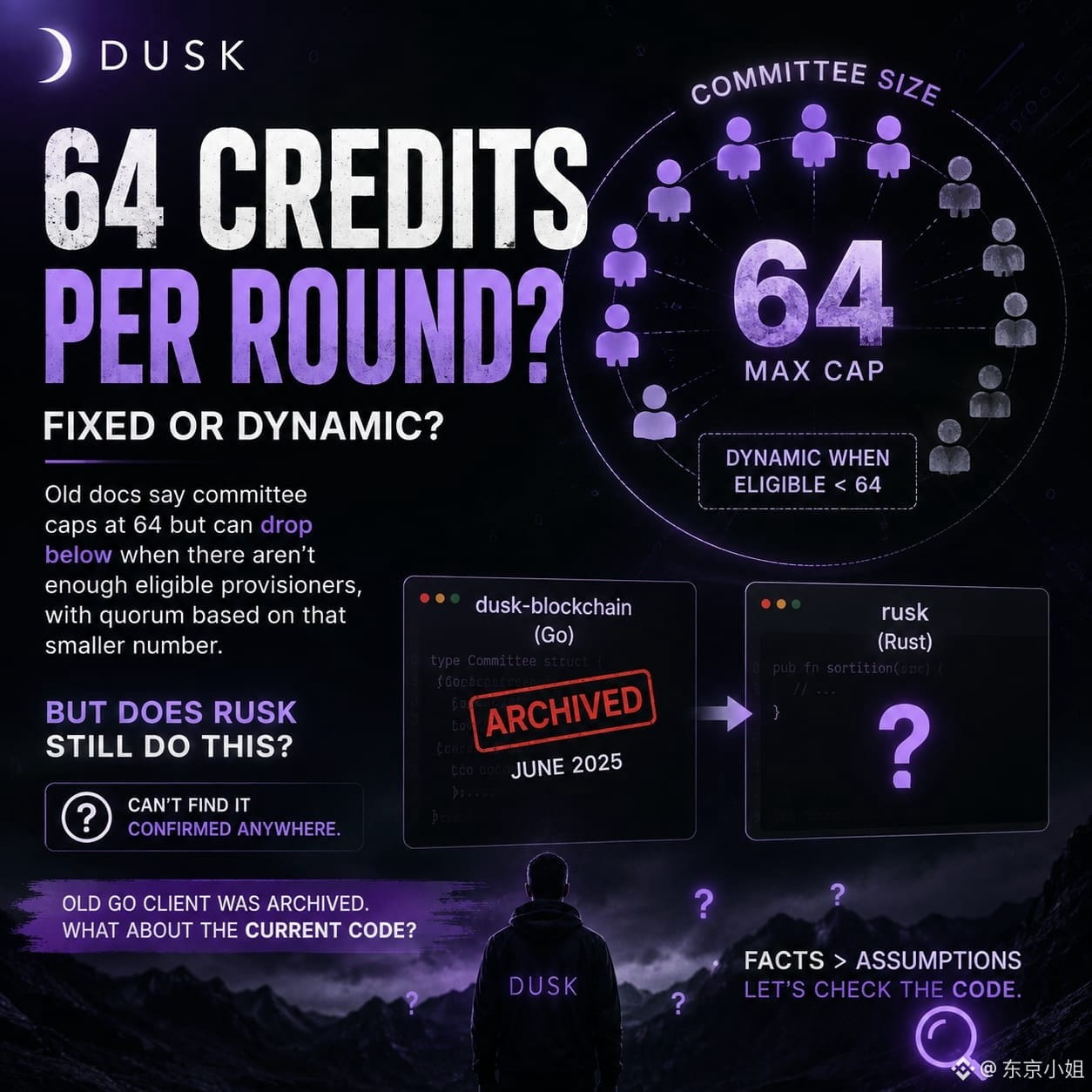
a fui cavar (literalmente) como o tamanho do comitê do crepúsculo realmente funciona, já que "64 créditos por rodada" fica sendo repetido em todo lugar como algo fixo. encontrei uma issue no GitHub descrevendo algo diferente — o tamanho do comitê fica limitado a 64, mas cai abaixo disso quando não há provisionadores elegíveis suficientes, com o quórum calculado a partir desse número menor. exceto que, quando fui ver contra qual codebase essa issue tinha sido registrada, era o dusk-blockchain, o cliente antigo em Go, arquivado pela própria equipe em junho de 2025.
então isso foi um comportamento documentado na implementação pré-mainnet, não necessariamente o que está rodando agora — na verdade, espera, preciso ser mais preciso: não é que seja necessariamente diferente agora, é que eu realmente não consigo encontrar nada que confirme ou negue isso. a mainnet usa rusk, uma reescrita completa em Rust, e se essa lógica exata de partição foi mantida ou redesenhada ao longo do caminho não é algo que eu tenha conseguido confirmar.
isso é uma lacuna bem específica para uma rede tão profunda na documentação pública — o comportamento histórico é real e rastreável, mas nada do que encontrei realmente confirma ou nega isso no código atual.
alguém já verificou o código atual do sortition no rusk, ou todo mundo só está repetindo o comportamento do cliente Go antigo como se ainda fosse verdade? 🧐
#dusk $DUSK
@Dusk
a fui cavar (literalmente) como o tamanho do comitê do crepúsculo realmente funciona, já que "64 créditos por rodada" fica sendo repetido em todo lugar como algo fixo. encontrei uma issue no GitHub descrevendo algo diferente — o tamanho do comitê fica limitado a 64, mas cai abaixo disso quando não há provisionadores elegíveis suficientes, com o quórum calculado a partir desse número menor. exceto que, quando fui ver contra qual codebase essa issue tinha sido registrada, era o dusk-blockchain, o cliente antigo em Go, arquivado pela própria equipe em junho de 2025.
então isso foi um comportamento documentado na implementação pré-mainnet, não necessariamente o que está rodando agora — na verdade, espera, preciso ser mais preciso: não é que seja necessariamente diferente agora, é que eu realmente não consigo encontrar nada que confirme ou negue isso. a mainnet usa rusk, uma reescrita completa em Rust, e se essa lógica exata de partição foi mantida ou redesenhada ao longo do caminho não é algo que eu tenha conseguido confirmar.
isso é uma lacuna bem específica para uma rede tão profunda na documentação pública — o comportamento histórico é real e rastreável, mas nada do que encontrei realmente confirma ou nega isso no código atual.
alguém já verificou o código atual do sortition no rusk, ou todo mundo só está repetindo o comportamento do cliente Go antigo como se ainda fosse verdade? 🧐
#dusk $DUSK
a fui cavar (literalmente) como o tamanho do comitê do crepúsculo realmente funciona, já que "64 créditos por rodada" fica sendo repetido em todo lugar como algo fixo. encontrei uma issue no GitHub descrevendo algo diferente — o tamanho do comitê fica limitado a 64, mas cai abaixo disso quando não há provisionadores elegíveis suficientes, com o quórum calculado a partir desse número menor. exceto que, quando fui ver contra qual codebase essa issue tinha sido registrada, era o dusk-blockchain, o cliente antigo em Go, arquivado pela própria equipe em junho de 2025.
então isso foi um comportamento documentado na implementação pré-mainnet, não necessariamente o que está rodando agora — na verdade, espera, preciso ser mais preciso: não é que seja necessariamente diferente agora, é que eu realmente não consigo encontrar nada que confirme ou negue isso. a mainnet usa rusk, uma reescrita completa em Rust, e se essa lógica exata de partição foi mantida ou redesenhada ao longo do caminho não é algo que eu tenha conseguido confirmar.
isso é uma lacuna bem específica para uma rede tão profunda na documentação pública — o comportamento histórico é real e rastreável, mas nada do que encontrei realmente confirma ou nega isso no código atual.
alguém já verificou o código atual do sortition no rusk, ou todo mundo só está repetindo o comportamento do cliente Go antigo como se ainda fosse verdade? 🧐
#dusk $DUSK
7
4
162
·
--
Em Alta
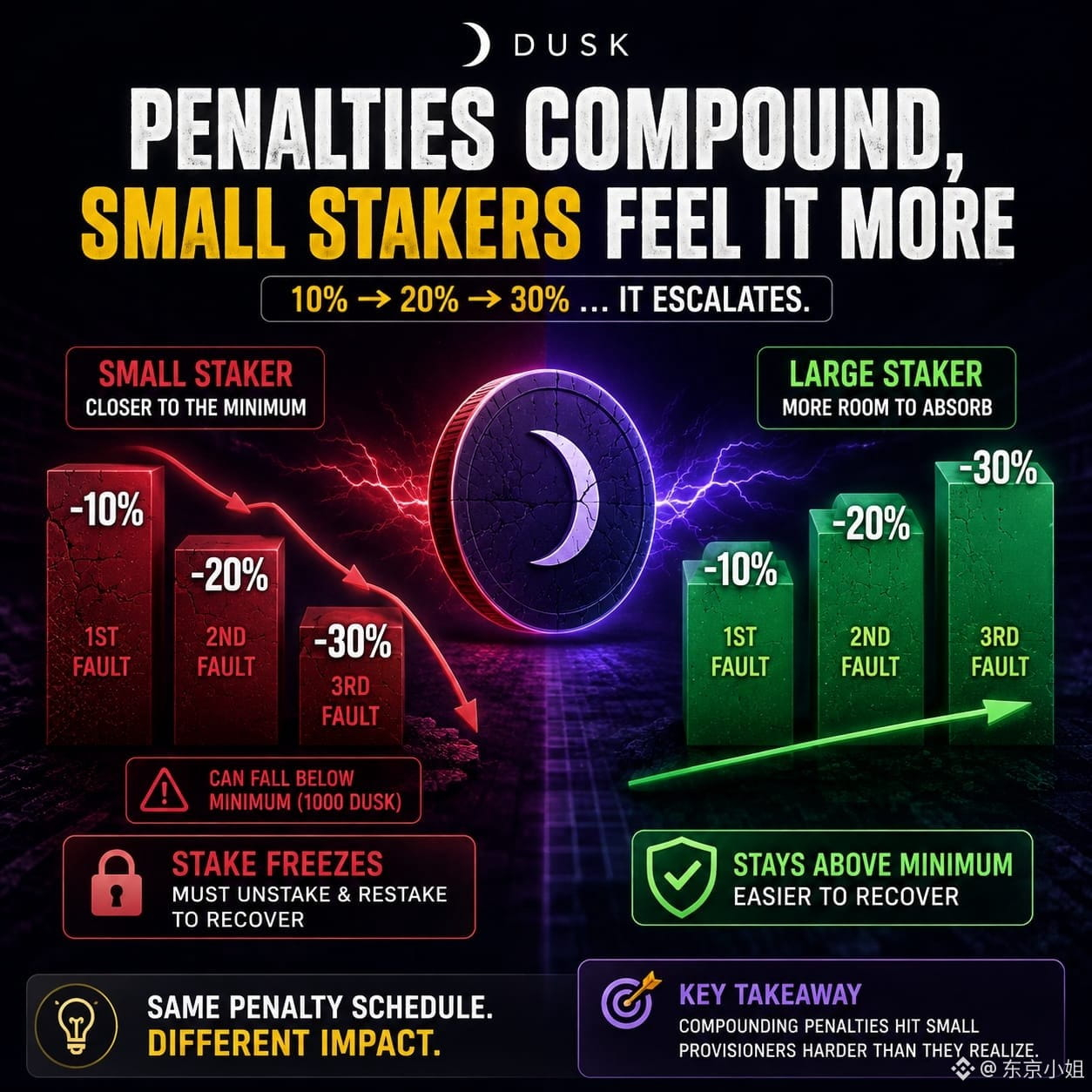
Eu estava lendo as atualizações de engenharia da Dusk sobre penalização e percebi que as porcentagens realmente se acumulam — primeiro o custo da suspensão é 10% do valor em stake, depois 20%, em seguida 30%, subindo cada vez. isso não é constante, é que escala.
Isso significa que um provisionador operando perto do mínimo de 1000 da Dusk tem muito menos margem para se recuperar do que um maior. duas ou três falhas consecutivas e um staker pequeno pode ser empurrado para abaixo do mínimo completamente, e aí os documentos dizem que o stake congela e precisa ser totalmente desunstaked e restaked para voltar — não é apenas esperar a suspensão passar, é um reset real.
Um grande provisionador que absorve a mesma sequência de 10-20-30% mal nota isso em relação ao total do stake. então o mesmo cronograma de penalidades, feito para punir comportamentos ruins de forma equivalente, acaba atingindo validadores menores com mais força — eu voltei e reli as porcentagens duas vezes na verdade, porque continuei assumindo que eu tinha entendido errado "aumentando em 10%" como algum 10% repetido e constante em vez disso.
Existe algum buffer mínimo de stake recomendado em algum lugar para que provisionadores menores não acabem empurrados, por acidente, nesse ciclo de reset? 🧐
#dusk $DUSK @Dusk_Foundation
{spot}(DUSKUSDT)
Eu estava lendo as atualizações de engenharia da Dusk sobre penalização e percebi que as porcentagens realmente se acumulam — primeiro o custo da suspensão é 10% do valor em stake, depois 20%, em seguida 30%, subindo cada vez. isso não é constante, é que escala.
Isso significa que um provisionador operando perto do mínimo de 1000 da Dusk tem muito menos margem para se recuperar do que um maior. duas ou três falhas consecutivas e um staker pequeno pode ser empurrado para abaixo do mínimo completamente, e aí os documentos dizem que o stake congela e precisa ser totalmente desunstaked e restaked para voltar — não é apenas esperar a suspensão passar, é um reset real.
Um grande provisionador que absorve a mesma sequência de 10-20-30% mal nota isso em relação ao total do stake. então o mesmo cronograma de penalidades, feito para punir comportamentos ruins de forma equivalente, acaba atingindo validadores menores com mais força — eu voltei e reli as porcentagens duas vezes na verdade, porque continuei assumindo que eu tinha entendido errado "aumentando em 10%" como algum 10% repetido e constante em vez disso.
Existe algum buffer mínimo de stake recomendado em algum lugar para que provisionadores menores não acabem empurrados, por acidente, nesse ciclo de reset? 🧐
#dusk $DUSK @Dusk
Isso significa que um provisionador operando perto do mínimo de 1000 da Dusk tem muito menos margem para se recuperar do que um maior. duas ou três falhas consecutivas e um staker pequeno pode ser empurrado para abaixo do mínimo completamente, e aí os documentos dizem que o stake congela e precisa ser totalmente desunstaked e restaked para voltar — não é apenas esperar a suspensão passar, é um reset real.
Um grande provisionador que absorve a mesma sequência de 10-20-30% mal nota isso em relação ao total do stake. então o mesmo cronograma de penalidades, feito para punir comportamentos ruins de forma equivalente, acaba atingindo validadores menores com mais força — eu voltei e reli as porcentagens duas vezes na verdade, porque continuei assumindo que eu tinha entendido errado "aumentando em 10%" como algum 10% repetido e constante em vez disso.
Existe algum buffer mínimo de stake recomendado em algum lugar para que provisionadores menores não acabem empurrados, por acidente, nesse ciclo de reset? 🧐
#dusk $DUSK @Dusk
1
2
152
·
--
@Dusk_Foundation
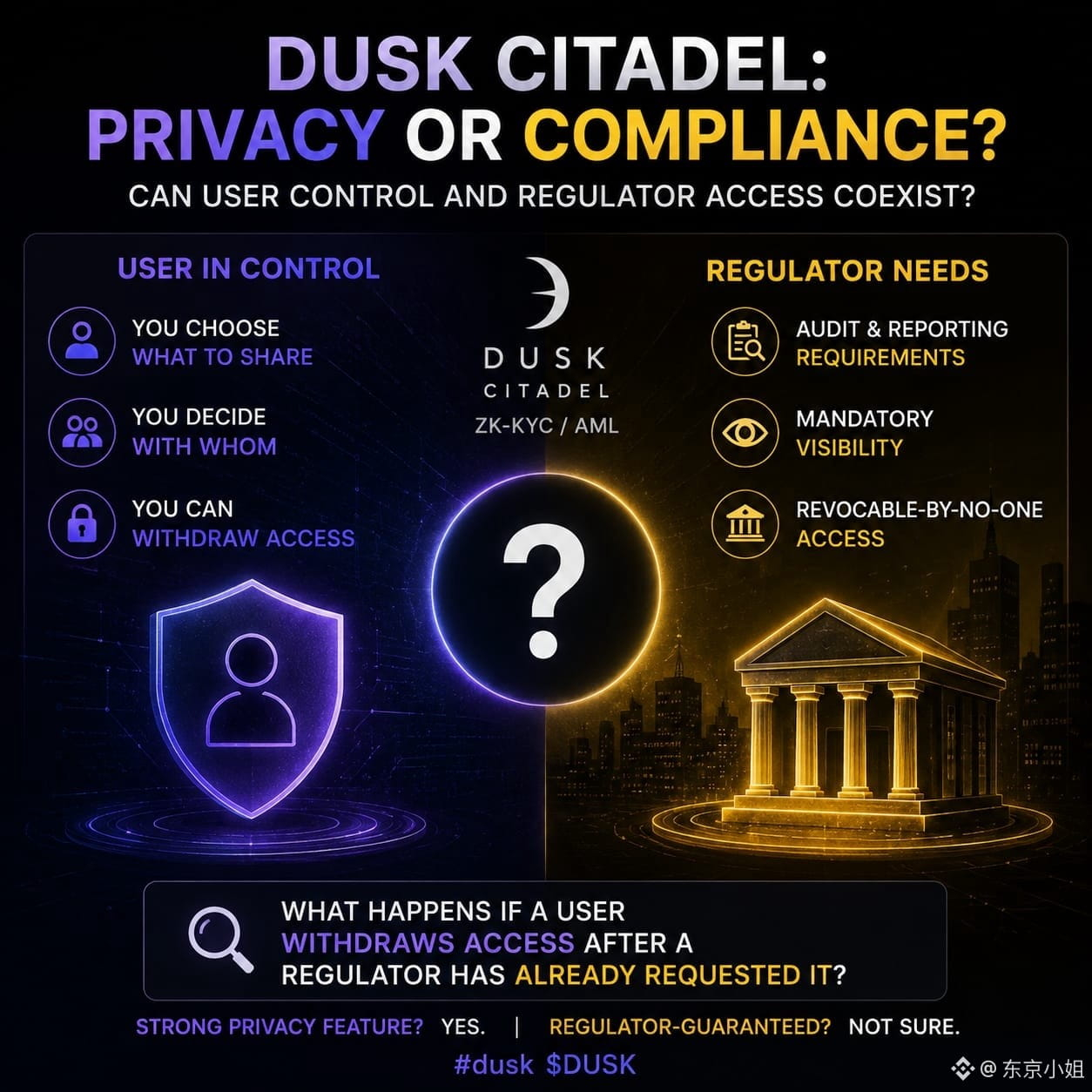
eu voltei para ler como a cidadela do crepúsculo realmente funciona, em vez de só repetir o argumento do “privacy plus selective disclosure”, e alguma coisa não bate. a cidadela descreve o usuário como totalmente no controle dos seus dados — ele escolhe o que compartilhar, com quem, e até pode retirar o acesso depois. essa ainda é a moldura atual também — na verdade, eu entrei esperando que fosse uma ideia arquivada de 2023, mas ela está bem ali na roadmap pós-mainnet da dusk como a peça ao vivo de zk-kyc/aml.
mas, em geral, reguladores não querem acesso opcional. requisitos de auditoria e relatórios normalmente significam visibilidade obrigatória e irrevogável por ninguém, não algo que o usuário consente uma vez e depois possa puxar de volta mais tarde. se a cidadela dá ao usuário o poder de retirar a divulgação, não tenho certeza de como isso se encaixa com a moldura de que “o regulador pode ver o que precisa”, que a dusk usa em outras partes — a menos que exista uma camada de conformidade separada por baixo, que eu só não encontrei ainda.
vale dizer: dados controlados pelo usuário é um recurso de privacidade genuinamente forte para a dusk, não estou desmerecendo essa parte. só não acho que “revogável pelo usuário” e “garantido pelo regulador” possam ser verdade ao mesmo tempo para a mesma divulgação.
quem já viu documentação sobre o que acontece se um usuário da dusk retirar o acesso depois que um regulador já solicitou isso? 🧐
#dusk $DUSK
@Dusk
eu voltei para ler como a cidadela do crepúsculo realmente funciona, em vez de só repetir o argumento do “privacy plus selective disclosure”, e alguma coisa não bate. a cidadela descreve o usuário como totalmente no controle dos seus dados — ele escolhe o que compartilhar, com quem, e até pode retirar o acesso depois. essa ainda é a moldura atual também — na verdade, eu entrei esperando que fosse uma ideia arquivada de 2023, mas ela está bem ali na roadmap pós-mainnet da dusk como a peça ao vivo de zk-kyc/aml.
mas, em geral, reguladores não querem acesso opcional. requisitos de auditoria e relatórios normalmente significam visibilidade obrigatória e irrevogável por ninguém, não algo que o usuário consente uma vez e depois possa puxar de volta mais tarde. se a cidadela dá ao usuário o poder de retirar a divulgação, não tenho certeza de como isso se encaixa com a moldura de que “o regulador pode ver o que precisa”, que a dusk usa em outras partes — a menos que exista uma camada de conformidade separada por baixo, que eu só não encontrei ainda.
vale dizer: dados controlados pelo usuário é um recurso de privacidade genuinamente forte para a dusk, não estou desmerecendo essa parte. só não acho que “revogável pelo usuário” e “garantido pelo regulador” possam ser verdade ao mesmo tempo para a mesma divulgação.
quem já viu documentação sobre o que acontece se um usuário da dusk retirar o acesso depois que um regulador já solicitou isso? 🧐
#dusk $DUSK
eu voltei para ler como a cidadela do crepúsculo realmente funciona, em vez de só repetir o argumento do “privacy plus selective disclosure”, e alguma coisa não bate. a cidadela descreve o usuário como totalmente no controle dos seus dados — ele escolhe o que compartilhar, com quem, e até pode retirar o acesso depois. essa ainda é a moldura atual também — na verdade, eu entrei esperando que fosse uma ideia arquivada de 2023, mas ela está bem ali na roadmap pós-mainnet da dusk como a peça ao vivo de zk-kyc/aml.
mas, em geral, reguladores não querem acesso opcional. requisitos de auditoria e relatórios normalmente significam visibilidade obrigatória e irrevogável por ninguém, não algo que o usuário consente uma vez e depois possa puxar de volta mais tarde. se a cidadela dá ao usuário o poder de retirar a divulgação, não tenho certeza de como isso se encaixa com a moldura de que “o regulador pode ver o que precisa”, que a dusk usa em outras partes — a menos que exista uma camada de conformidade separada por baixo, que eu só não encontrei ainda.
vale dizer: dados controlados pelo usuário é um recurso de privacidade genuinamente forte para a dusk, não estou desmerecendo essa parte. só não acho que “revogável pelo usuário” e “garantido pelo regulador” possam ser verdade ao mesmo tempo para a mesma divulgação.
quem já viu documentação sobre o que acontece se um usuário da dusk retirar o acesso depois que um regulador já solicitou isso? 🧐
#dusk $DUSK
7
11
146
·
--
Em Alta
Parcialmente verdadeiro
@Dusk_Foundation
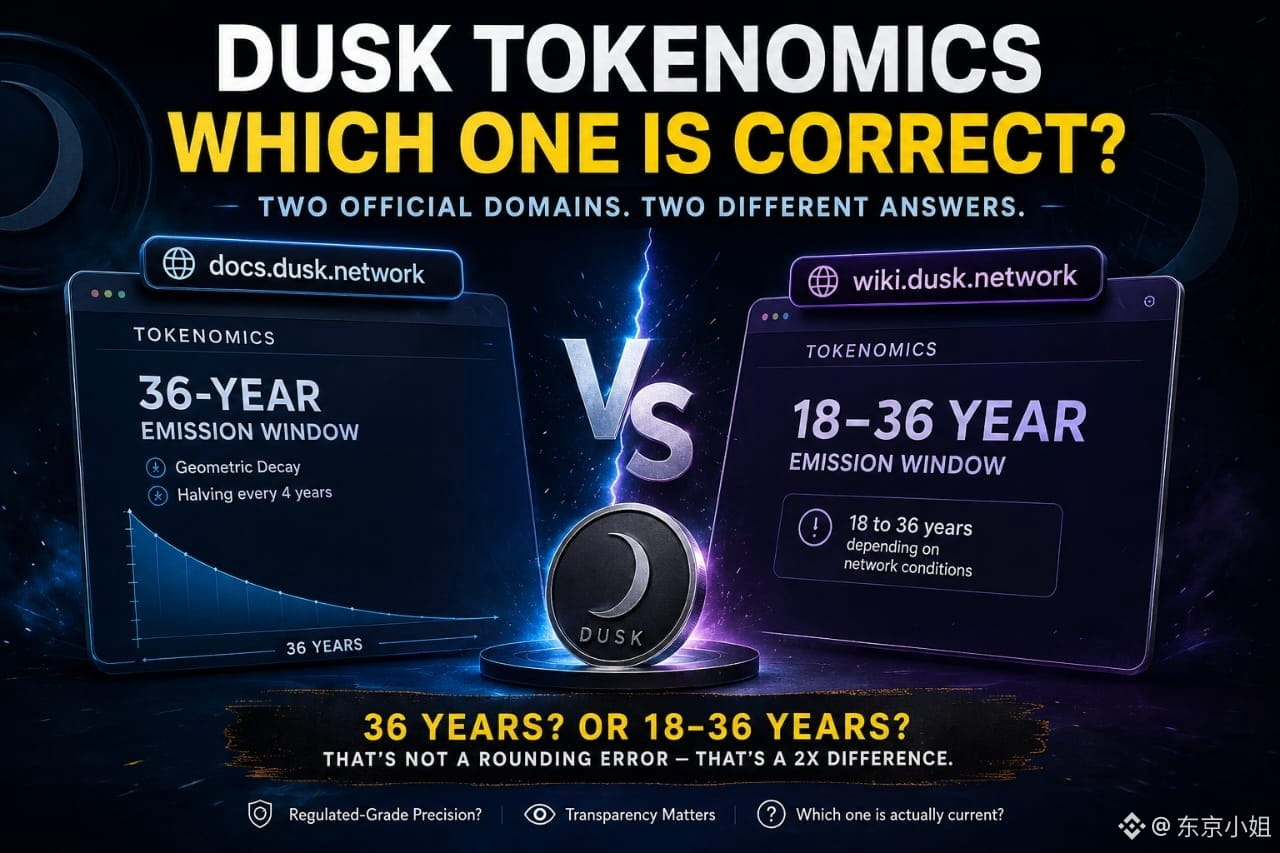
eu estava cruzando o cronograma de emissões de outra coisa totalmente e notei que dois dos próprios domínios do dusk nem sequer concordam entre si. docs.dusk.network — a página real de tokenomics — diz uma janela de emissão plana de 36 anos, decaimento geométrico, com halving a cada 4 anos, algo direto. wiki.dusk.network, que fica em um subdomínio deles, não em algum espelho aleatório de terceiros, diz algo mais flexível: uma faixa de 18 a 36 anos dependendo das condições da rede.
isso não é só uma diferença de arredondamento; é basicamente um desvio de 2x no tempo em que a cauda de recompensas se estende — e eu quase descartei como “wiki de fã” até perceber que ela é literalmente hospedada sob dusk.network, não em algum lugar externo.
eu entendo que a variação no tempo de bloco desloca um pouco a duração real do calendário; esse ponto faz sentido. mas um documento chamado "tokenomics" citando um número fixo enquanto uma página no domínio deles próprios cita uma faixa não é questão de arredondamento: são duas respostas diferentes para "quando a emissão para". para um projeto construído com precisão no nível exigido por regulamentação, não é o tipo de lacuna que eu esperaria entre duas páginas que eles controlam.
alguém sabe qual delas está realmente atual, ou ambas estão apenas desatualizadas em direções diferentes? 🧐
#dusk $DUSK
@Dusk
eu estava cruzando o cronograma de emissões de outra coisa totalmente e notei que dois dos próprios domínios do dusk nem sequer concordam entre si. docs.dusk.network — a página real de tokenomics — diz uma janela de emissão plana de 36 anos, decaimento geométrico, com halving a cada 4 anos, algo direto. wiki.dusk.network, que fica em um subdomínio deles, não em algum espelho aleatório de terceiros, diz algo mais flexível: uma faixa de 18 a 36 anos dependendo das condições da rede.
isso não é só uma diferença de arredondamento; é basicamente um desvio de 2x no tempo em que a cauda de recompensas se estende — e eu quase descartei como “wiki de fã” até perceber que ela é literalmente hospedada sob dusk.network, não em algum lugar externo.
eu entendo que a variação no tempo de bloco desloca um pouco a duração real do calendário; esse ponto faz sentido. mas um documento chamado "tokenomics" citando um número fixo enquanto uma página no domínio deles próprios cita uma faixa não é questão de arredondamento: são duas respostas diferentes para "quando a emissão para". para um projeto construído com precisão no nível exigido por regulamentação, não é o tipo de lacuna que eu esperaria entre duas páginas que eles controlam.
alguém sabe qual delas está realmente atual, ou ambas estão apenas desatualizadas em direções diferentes? 🧐
#dusk $DUSK
eu estava cruzando o cronograma de emissões de outra coisa totalmente e notei que dois dos próprios domínios do dusk nem sequer concordam entre si. docs.dusk.network — a página real de tokenomics — diz uma janela de emissão plana de 36 anos, decaimento geométrico, com halving a cada 4 anos, algo direto. wiki.dusk.network, que fica em um subdomínio deles, não em algum espelho aleatório de terceiros, diz algo mais flexível: uma faixa de 18 a 36 anos dependendo das condições da rede.
isso não é só uma diferença de arredondamento; é basicamente um desvio de 2x no tempo em que a cauda de recompensas se estende — e eu quase descartei como “wiki de fã” até perceber que ela é literalmente hospedada sob dusk.network, não em algum lugar externo.
eu entendo que a variação no tempo de bloco desloca um pouco a duração real do calendário; esse ponto faz sentido. mas um documento chamado "tokenomics" citando um número fixo enquanto uma página no domínio deles próprios cita uma faixa não é questão de arredondamento: são duas respostas diferentes para "quando a emissão para". para um projeto construído com precisão no nível exigido por regulamentação, não é o tipo de lacuna que eu esperaria entre duas páginas que eles controlam.
alguém sabe qual delas está realmente atual, ou ambas estão apenas desatualizadas em direções diferentes? 🧐
#dusk $DUSK
9
11
139
·
--
Em Alta
{spot}(DUSKUSDT)
@Dusk_Foundation
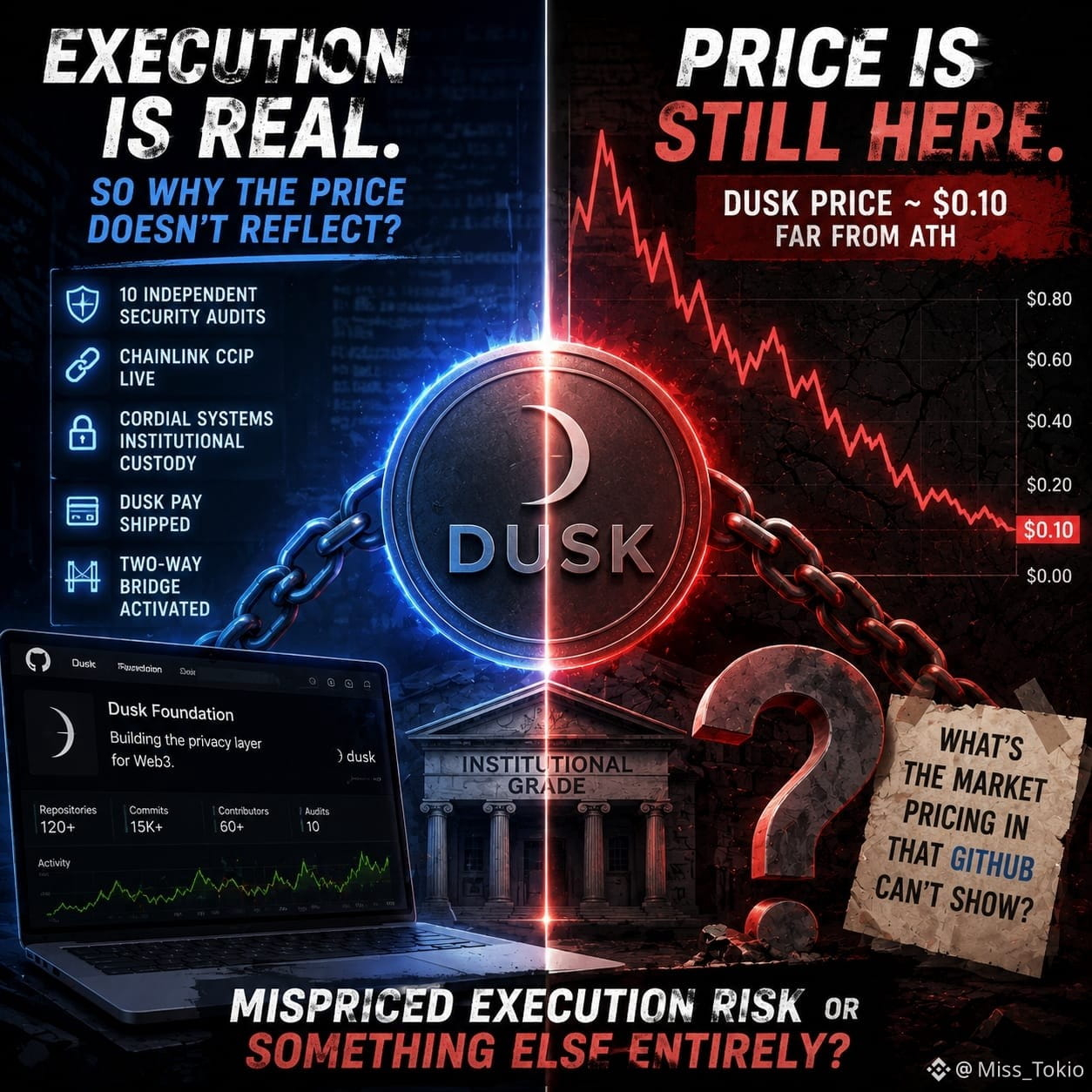
eu peguei o github do dusk ao lado do gráfico de preços mais cedo hoje só para ver se os números batiam com a história, e não batem — nem perto. dez auditorias de segurança independentes antes do mainnet, chainlink ccip em live, cordial systems onboarded para custódia institucional, dusk pay enviado, a ponte bidirecional ativada. isso não é um trimestre discreto para nenhum l1.
o preço está perto de US$ 0.10, bem longe do seu ath, como se nada disso tivesse acontecido.
eu sei que só contagem de commits não significa muito — dá para encher um repositório com mudanças de documentação e bumps de dependências e chamar de atividade. mas dez auditorias e uma integração de custódia em live não são “cosméticos”; são coisas que realmente precisam funcionar antes de instituições tocarem na cadeia. então ou o mercado está precificando mal o risco de execução que já foi aposentado, ou está precificando outra coisa totalmente que eu não estou vendo do lado do dev.
qual é? e se for a segunda — o que exatamente está sendo precificado nesse github que não consegue me mostrar? 🧐
#dusk $DUSK
@Dusk
eu peguei o github do dusk ao lado do gráfico de preços mais cedo hoje só para ver se os números batiam com a história, e não batem — nem perto. dez auditorias de segurança independentes antes do mainnet, chainlink ccip em live, cordial systems onboarded para custódia institucional, dusk pay enviado, a ponte bidirecional ativada. isso não é um trimestre discreto para nenhum l1.
o preço está perto de US$ 0.10, bem longe do seu ath, como se nada disso tivesse acontecido.
eu sei que só contagem de commits não significa muito — dá para encher um repositório com mudanças de documentação e bumps de dependências e chamar de atividade. mas dez auditorias e uma integração de custódia em live não são “cosméticos”; são coisas que realmente precisam funcionar antes de instituições tocarem na cadeia. então ou o mercado está precificando mal o risco de execução que já foi aposentado, ou está precificando outra coisa totalmente que eu não estou vendo do lado do dev.
qual é? e se for a segunda — o que exatamente está sendo precificado nesse github que não consegue me mostrar? 🧐
#dusk $DUSK
eu peguei o github do dusk ao lado do gráfico de preços mais cedo hoje só para ver se os números batiam com a história, e não batem — nem perto. dez auditorias de segurança independentes antes do mainnet, chainlink ccip em live, cordial systems onboarded para custódia institucional, dusk pay enviado, a ponte bidirecional ativada. isso não é um trimestre discreto para nenhum l1.
o preço está perto de US$ 0.10, bem longe do seu ath, como se nada disso tivesse acontecido.
eu sei que só contagem de commits não significa muito — dá para encher um repositório com mudanças de documentação e bumps de dependências e chamar de atividade. mas dez auditorias e uma integração de custódia em live não são “cosméticos”; são coisas que realmente precisam funcionar antes de instituições tocarem na cadeia. então ou o mercado está precificando mal o risco de execução que já foi aposentado, ou está precificando outra coisa totalmente que eu não estou vendo do lado do dev.
qual é? e se for a segunda — o que exatamente está sendo precificado nesse github que não consegue me mostrar? 🧐
#dusk $DUSK
2
119
·
--
@babylonlabs_io
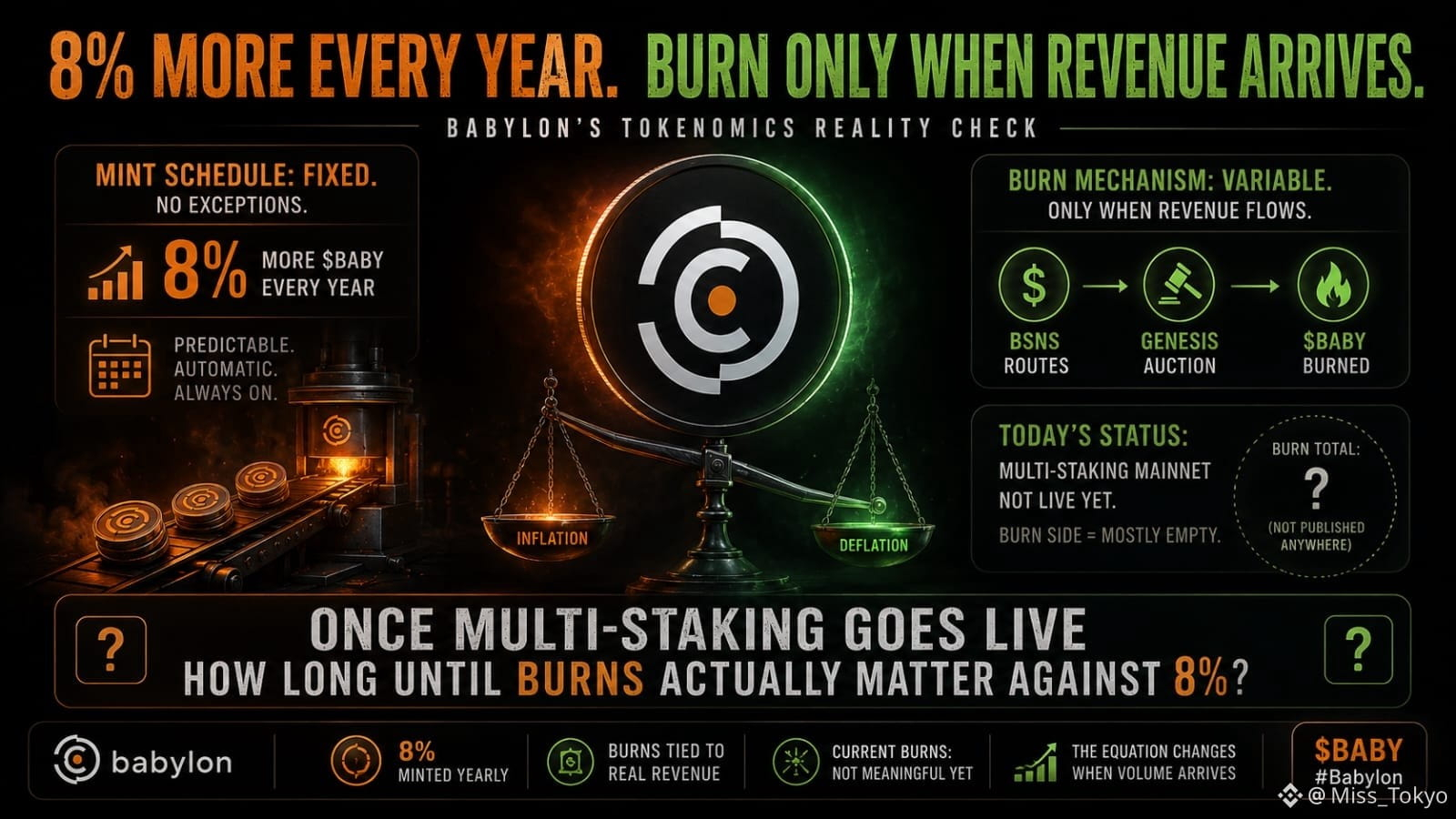
a babylon mints mais ou menos 8% mais baby a cada ano em um cronograma fixo, sem exceções. o mecanismo criado para compensar isso não está em um cronograma — ele só queima baby quando bsns roteiam recompensas reais de staking através do leilão do genesis, e o mainnet de multi-staking ainda não foi lançado, então essa parte do livro-razão está basicamente vazia agora.
um leilão vinculado a receita real é um design melhor do que uma meta de queima arbitrária, em teoria. mas, neste momento, “vinculado a receita real” apenas descreve uma fórmula sem nada ainda conectado a ela.
eu procurei um total de queima atual e não encontrei nenhum publicado em lugar nenhum provavelmente porque ainda não há muito — não porque alguém esteja escondendo.
quando os navios de multi-staking entrarem e as bsns começarem a rotear volume real, quanto tempo até que essa parte de queima alcance o suficiente para realmente importar contra os 8%? $BABY #baby 🔥
@BabylonLabs_io
a babylon mints mais ou menos 8% mais baby a cada ano em um cronograma fixo, sem exceções. o mecanismo criado para compensar isso não está em um cronograma — ele só queima baby quando bsns roteiam recompensas reais de staking através do leilão do genesis, e o mainnet de multi-staking ainda não foi lançado, então essa parte do livro-razão está basicamente vazia agora.
um leilão vinculado a receita real é um design melhor do que uma meta de queima arbitrária, em teoria. mas, neste momento, “vinculado a receita real” apenas descreve uma fórmula sem nada ainda conectado a ela.
eu procurei um total de queima atual e não encontrei nenhum publicado em lugar nenhum provavelmente porque ainda não há muito — não porque alguém esteja escondendo.
quando os navios de multi-staking entrarem e as bsns começarem a rotear volume real, quanto tempo até que essa parte de queima alcance o suficiente para realmente importar contra os 8%? $BABY #baby 🔥
a babylon mints mais ou menos 8% mais baby a cada ano em um cronograma fixo, sem exceções. o mecanismo criado para compensar isso não está em um cronograma — ele só queima baby quando bsns roteiam recompensas reais de staking através do leilão do genesis, e o mainnet de multi-staking ainda não foi lançado, então essa parte do livro-razão está basicamente vazia agora.
um leilão vinculado a receita real é um design melhor do que uma meta de queima arbitrária, em teoria. mas, neste momento, “vinculado a receita real” apenas descreve uma fórmula sem nada ainda conectado a ela.
eu procurei um total de queima atual e não encontrei nenhum publicado em lugar nenhum provavelmente porque ainda não há muito — não porque alguém esteja escondendo.
quando os navios de multi-staking entrarem e as bsns começarem a rotear volume real, quanto tempo até que essa parte de queima alcance o suficiente para realmente importar contra os 8%? $BABY #baby 🔥
6
2
181
Inicia sessão para explorar mais conteúdos
Junta-te a utilizadores de criptomoedas de todo o mundo na Binance Square
⚡️ Obtém informações úteis e recentes sobre criptomoedas.
💬 Com a confiança da maior exchange de criptomoedas do mundo.
👍 Descobre perspetivas reais de criadores verificados.
E-mail/Número de telefone
Tópicos em Tendência
BinancePick
2.6M visualizações
142,481 a discutir
Participe da #TemporadaDeResultados: preveja resultados no Binance Pick e compartilhe sua opinião no Binance Square!
Binance Square Official
·401 gostos
·338.7k visualizações
EarningsSeason
5M visualizações
24,451 a discutir
SouthKoreaReportedlyWeighsFourthCryptoTaxDelay
0 visualizações
0 a discutir