
D E E N A
4.3k Publicações

D E E N A
Denunciar
Bloquear Utilizador
Crypto Lover
Aberto ao trading
Trader Frequente
1.1 ano(s)
222 A seguir
17.1K+ Seguidores
4.2K+ Gostaram
Publicações
Portfólio
Tudo
Cotações
Em direto
·
--
🚨 COMPETIÇÃO DE PUMP!
$G USDT: +73.82% a US$ 0.007337
$ONE : +72.85% a US$ 0.0018028
🔥 Apenas 0.97% separa eles!
Quem assume a liderança a seguir?
{spot}(ONEUSDT)
{spot}(GUSDT)
#BOJHikesRatesTo31YearHigh
#InjectiveLaunchesINJOnSolana
#SECGrantsInnovationExemptionForTokenizedStocks
#XRPGains3%AsRippleAddsMPPSupport
#XRPGains3%AsRippleAddsMPPSupport
🚨 COMPETIÇÃO DE PUMP!
$G USDT: +73.82% a US$ 0.007337
$ONE : +72.85% a US$ 0.0018028
🔥 Apenas 0.97% separa eles!
Quem assume a liderança a seguir?
#BOJHikesRatesTo31YearHigh
#InjectiveLaunchesINJOnSolana
#SECGrantsInnovationExemptionForTokenizedStocks
#XRPGains3%AsRippleAddsMPPSupport
#XRPGains3%AsRippleAddsMPPSupport
$G USDT: +73.82% a US$ 0.007337
$ONE : +72.85% a US$ 0.0018028
🔥 Apenas 0.97% separa eles!
Quem assume a liderança a seguir?
#BOJHikesRatesTo31YearHigh
#InjectiveLaunchesINJOnSolana
#SECGrantsInnovationExemptionForTokenizedStocks
#XRPGains3%AsRippleAddsMPPSupport
#XRPGains3%AsRippleAddsMPPSupport
$GUSDT — +73.82%
$ONE — +72.85%
🟢 $GUSDT
🔵 $ONE
20 hora(s) restante(s)
1.8k
·
--
Babylon (BABY): A Aposta do Staking de BTC que Ninguém Está Completamente Precificando
Tenho acompanhado o Babylon desde que a narrativa de staking do BTC começou a ganhar força, e é uma das tensões mais interessantes que vi no cripto atualmente. O protocolo em si é genuinamente impressionante: você faz staking do Bitcoin nativo diretamente, sem wrapping, sem bridging, sem custodians, e ele já puxou mais de US$ 5B em BTC staked no auge — mais de um terço de toda a oferta de BTC wrapped, sem haver nenhum wrapping. Isso é demanda real por rendimento sem custódia.
Mas o token contou uma história completamente diferente. O BABY atingiu uma máxima histórica perto de US$ 0,17 em abril de 2025 e agora é negociado em torno de US$ 0,012–0,015, uma retração de aproximadamente 92%. A capitalização de mercado fica perto de US$ 50–55M contra bilhões de tokens ainda bloqueados. Os desbloqueios para investidores iniciais começaram em maio de 2026, liberando parcelas mensais até 2029, o que significa pressão contínua de diluição, independentemente de quão fortes sejam os fundamentos do protocolo.
Então estou observando duas coisas de perto: se o crescimento do TVL e as integrações como o Aave V4 continuam superando o cronograma de desbloqueio, e se o mercado alguma vez precifica a lacuna entre a força do protocolo e a oferta do token. Não é aconselhamento financeiro, apenas o que estou vendo nos dados.
#BrentCrudeFallsAbout6%
#OilDropsAbout6%
#USStorageStocksExtendLosses
#KRXHaltsKOSPIAfterChipSelloff
#SKHynixSlumps11%OnAIChipSelloff
$COTI
{spot}(COTIUSDT)
$SNXX
{future}(SNXXUSDT)
$DIA
{spot}(DIAUSDT)
Babylon (BABY): A Aposta do Staking de BTC que Ninguém Está Completamente Precificando
Tenho acompanhado o Babylon desde que a narrativa de staking do BTC começou a ganhar força, e é uma das tensões mais interessantes que vi no cripto atualmente. O protocolo em si é genuinamente impressionante: você faz staking do Bitcoin nativo diretamente, sem wrapping, sem bridging, sem custodians, e ele já puxou mais de US$ 5B em BTC staked no auge — mais de um terço de toda a oferta de BTC wrapped, sem haver nenhum wrapping. Isso é demanda real por rendimento sem custódia.
Mas o token contou uma história completamente diferente. O BABY atingiu uma máxima histórica perto de US$ 0,17 em abril de 2025 e agora é negociado em torno de US$ 0,012–0,015, uma retração de aproximadamente 92%. A capitalização de mercado fica perto de US$ 50–55M contra bilhões de tokens ainda bloqueados. Os desbloqueios para investidores iniciais começaram em maio de 2026, liberando parcelas mensais até 2029, o que significa pressão contínua de diluição, independentemente de quão fortes sejam os fundamentos do protocolo.
Então estou observando duas coisas de perto: se o crescimento do TVL e as integrações como o Aave V4 continuam superando o cronograma de desbloqueio, e se o mercado alguma vez precifica a lacuna entre a força do protocolo e a oferta do token. Não é aconselhamento financeiro, apenas o que estou vendo nos dados.
#BrentCrudeFallsAbout6%
#OilDropsAbout6%
#USStorageStocksExtendLosses
#KRXHaltsKOSPIAfterChipSelloff
#SKHynixSlumps11%OnAIChipSelloff
$COTI
$SNXX
$DIA
Tenho acompanhado o Babylon desde que a narrativa de staking do BTC começou a ganhar força, e é uma das tensões mais interessantes que vi no cripto atualmente. O protocolo em si é genuinamente impressionante: você faz staking do Bitcoin nativo diretamente, sem wrapping, sem bridging, sem custodians, e ele já puxou mais de US$ 5B em BTC staked no auge — mais de um terço de toda a oferta de BTC wrapped, sem haver nenhum wrapping. Isso é demanda real por rendimento sem custódia.
Mas o token contou uma história completamente diferente. O BABY atingiu uma máxima histórica perto de US$ 0,17 em abril de 2025 e agora é negociado em torno de US$ 0,012–0,015, uma retração de aproximadamente 92%. A capitalização de mercado fica perto de US$ 50–55M contra bilhões de tokens ainda bloqueados. Os desbloqueios para investidores iniciais começaram em maio de 2026, liberando parcelas mensais até 2029, o que significa pressão contínua de diluição, independentemente de quão fortes sejam os fundamentos do protocolo.
Então estou observando duas coisas de perto: se o crescimento do TVL e as integrações como o Aave V4 continuam superando o cronograma de desbloqueio, e se o mercado alguma vez precifica a lacuna entre a força do protocolo e a oferta do token. Não é aconselhamento financeiro, apenas o que estou vendo nos dados.
#BrentCrudeFallsAbout6%
#OilDropsAbout6%
#USStorageStocksExtendLosses
#KRXHaltsKOSPIAfterChipSelloff
#SKHynixSlumps11%OnAIChipSelloff
$COTI
$SNXX
$DIA
₿ Native BTC Staking
0%
📉 92% Token Drawdown
0%
🔓 Ongoing Unlock Pressure
0%
⚖️ Protocol vs Token Gap
0%
0 Votos • Votação encerrada
486
·
--
🚀 $ON está esquentando!
$ON /USDT Perp (Orochi Network) subiu +29,65% nas últimas 24h, negociando a US$ 0,19198
📊 Máxima das 24h: US$ 0,23712
📉 Mínima das 24h: US$ 0,14064
💰 Volume nas 24h: 1,26B ON (US$ 236,58M)
Grande alta acentuada de US$ 0,14064 até uma máxima de US$ 0,23712, seguida por uma correção — a volatilidade está forte neste ativo 🔥
Grandes oscilações significam grandes oportunidades — negocie com inteligência e gerencie seu risco.
Vamos lá — negocie agora $ON
{future}(ONUSDT)
🚀 $ON está esquentando!
$ON /USDT Perp (Orochi Network) subiu +29,65% nas últimas 24h, negociando a US$ 0,19198
📊 Máxima das 24h: US$ 0,23712
📉 Mínima das 24h: US$ 0,14064
💰 Volume nas 24h: 1,26B ON (US$ 236,58M)
Grande alta acentuada de US$ 0,14064 até uma máxima de US$ 0,23712, seguida por uma correção — a volatilidade está forte neste ativo 🔥
Grandes oscilações significam grandes oportunidades — negocie com inteligência e gerencie seu risco.
Vamos lá — negocie agora $ON
$ON /USDT Perp (Orochi Network) subiu +29,65% nas últimas 24h, negociando a US$ 0,19198
📊 Máxima das 24h: US$ 0,23712
📉 Mínima das 24h: US$ 0,14064
💰 Volume nas 24h: 1,26B ON (US$ 236,58M)
Grande alta acentuada de US$ 0,14064 até uma máxima de US$ 0,23712, seguida por uma correção — a volatilidade está forte neste ativo 🔥
Grandes oscilações significam grandes oportunidades — negocie com inteligência e gerencie seu risco.
Vamos lá — negocie agora $ON
BULLISH 💚
60%
BEARISH ♥️
40%
5 Votos • Votação encerrada
165
·
--
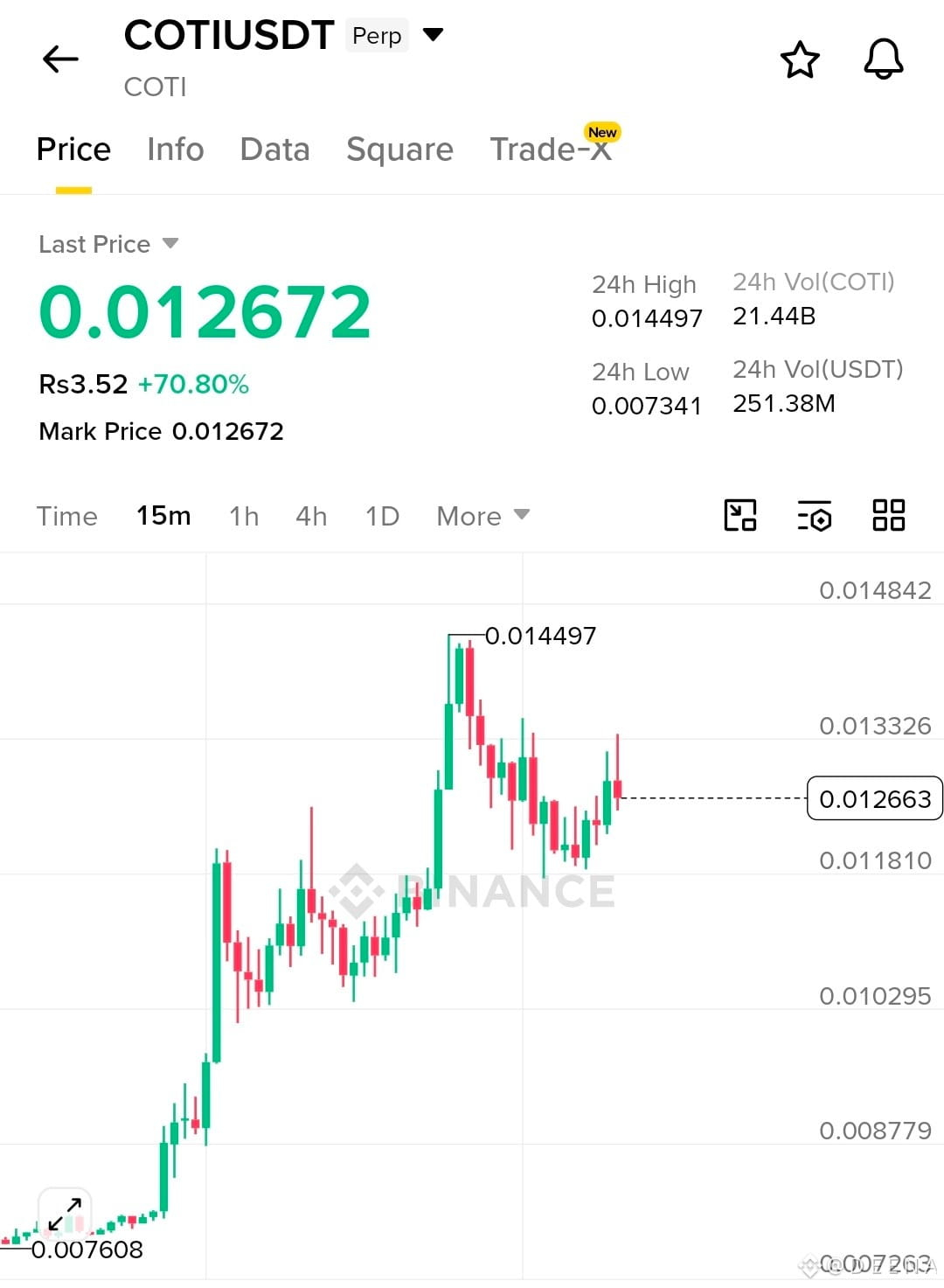
🚀 $COTI está EM CHAMAS agora!
$COTI /USDT Perp está subindo +70,80% em 24h, negociando a US$ 0,012672
📊 Máxima em 24h: US$ 0,014497
📉 Mínima em 24h: US$ 0,007341
💰 Volume em 24h: 21,44B COTI (US$251,38M)
De US$ 0,007608 a uma máxima de US$ 0,014497 — isso é quase um movimento de 2x em um único dia. O momentum está claramente com os touros agora 🔥
Essa volatilidade tão alta significa grande oportunidade — e grande risco. Sempre opere com uma gestão de risco adequada.
Vamos lá — negocie agora $COTI
{spot}(COTIUSDT)
🚀 $COTI está EM CHAMAS agora!
$COTI /USDT Perp está subindo +70,80% em 24h, negociando a US$ 0,012672
📊 Máxima em 24h: US$ 0,014497
📉 Mínima em 24h: US$ 0,007341
💰 Volume em 24h: 21,44B COTI (US$251,38M)
De US$ 0,007608 a uma máxima de US$ 0,014497 — isso é quase um movimento de 2x em um único dia. O momentum está claramente com os touros agora 🔥
Essa volatilidade tão alta significa grande oportunidade — e grande risco. Sempre opere com uma gestão de risco adequada.
Vamos lá — negocie agora $COTI
$COTI /USDT Perp está subindo +70,80% em 24h, negociando a US$ 0,012672
📊 Máxima em 24h: US$ 0,014497
📉 Mínima em 24h: US$ 0,007341
💰 Volume em 24h: 21,44B COTI (US$251,38M)
De US$ 0,007608 a uma máxima de US$ 0,014497 — isso é quase um movimento de 2x em um único dia. O momentum está claramente com os touros agora 🔥
Essa volatilidade tão alta significa grande oportunidade — e grande risco. Sempre opere com uma gestão de risco adequada.
Vamos lá — negocie agora $COTI
127
·
--
Em Alta
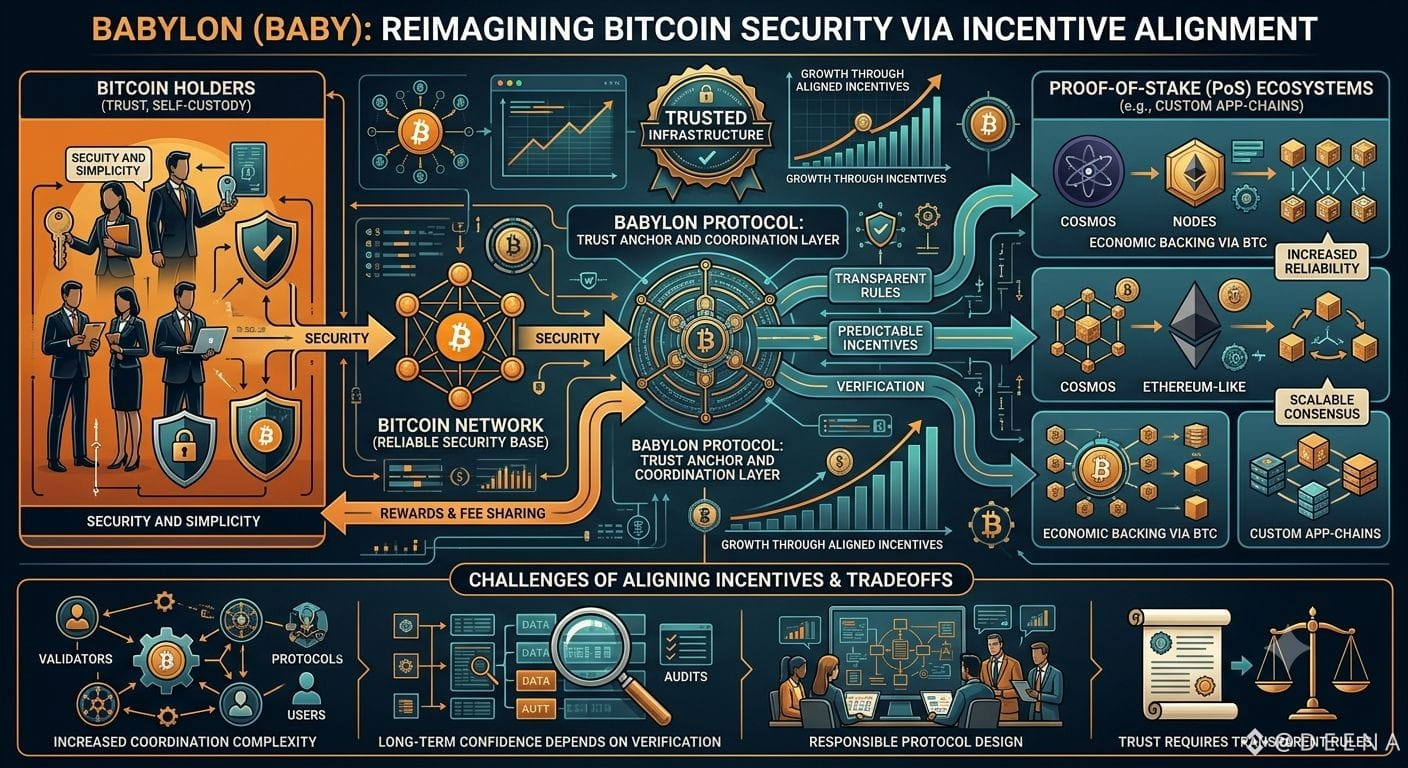
Uma coisa que se destaca para mim sobre Babylon ($BABY ) é que ela não está realmente tentando mudar o Bitcoin em si. Em vez disso, a Babylon está explorando como a segurança já existente do Bitcoin pode dar suporte a ecossistemas de Prova de Participação, permitindo que os detentores de BTC permaneçam no controle dos seus ativos. Isso parece uma conversa diferente do foco habitual em recompensas de staking ou eficiência de capital.
O que torna a Babylon interessante é o desafio de alinhar incentivos entre participantes muito diferentes. Os detentores de Bitcoin querem segurança e simplicidade, enquanto as redes de PoS precisam de um respaldo econômico confiável. Fazer essas prioridades convergirem exige mais do que tecnologia sólida. Depende de regras transparentes, incentivos previsíveis e de um sistema que as pessoas continuem a confiar muito tempo depois que a empolgação inicial desaparece.
Também acho que existe um trade-off importante que recebe pouca discussão. À medida que o Bitcoin passa a fazer parte da segurança de outras redes, a coordenação entre usuários, validadores e protocolos naturalmente se torna mais complexa. A autocustódia resolve um problema, mas a confiança de longo prazo ainda depende de verificação, incentivos claros e de um design de protocolo responsável.
É por isso que continuo acompanhando a Babylon como um projeto de infraestrutura, e não como um discurso de mercado. Se ela conseguir manter a confiança enquanto expande o papel do Bitcoin além da própria cadeia, poderá demonstrar que uma infraestrutura blockchain durável é construída por meio do alinhamento de incentivos, e não apenas de inovação técnica. A questão real é se esses incentivos continuarão fortes à medida que o ecossistema crescer.
#baby @babylonlabs_io $BABY
Uma coisa que se destaca para mim sobre Babylon ($BABY ) é que ela não está realmente tentando mudar o Bitcoin em si. Em vez disso, a Babylon está explorando como a segurança já existente do Bitcoin pode dar suporte a ecossistemas de Prova de Participação, permitindo que os detentores de BTC permaneçam no controle dos seus ativos. Isso parece uma conversa diferente do foco habitual em recompensas de staking ou eficiência de capital.
O que torna a Babylon interessante é o desafio de alinhar incentivos entre participantes muito diferentes. Os detentores de Bitcoin querem segurança e simplicidade, enquanto as redes de PoS precisam de um respaldo econômico confiável. Fazer essas prioridades convergirem exige mais do que tecnologia sólida. Depende de regras transparentes, incentivos previsíveis e de um sistema que as pessoas continuem a confiar muito tempo depois que a empolgação inicial desaparece.
Também acho que existe um trade-off importante que recebe pouca discussão. À medida que o Bitcoin passa a fazer parte da segurança de outras redes, a coordenação entre usuários, validadores e protocolos naturalmente se torna mais complexa. A autocustódia resolve um problema, mas a confiança de longo prazo ainda depende de verificação, incentivos claros e de um design de protocolo responsável.
É por isso que continuo acompanhando a Babylon como um projeto de infraestrutura, e não como um discurso de mercado. Se ela conseguir manter a confiança enquanto expande o papel do Bitcoin além da própria cadeia, poderá demonstrar que uma infraestrutura blockchain durável é construída por meio do alinhamento de incentivos, e não apenas de inovação técnica. A questão real é se esses incentivos continuarão fortes à medida que o ecossistema crescer.
#baby @BabylonLabs_io $BABY
O que torna a Babylon interessante é o desafio de alinhar incentivos entre participantes muito diferentes. Os detentores de Bitcoin querem segurança e simplicidade, enquanto as redes de PoS precisam de um respaldo econômico confiável. Fazer essas prioridades convergirem exige mais do que tecnologia sólida. Depende de regras transparentes, incentivos previsíveis e de um sistema que as pessoas continuem a confiar muito tempo depois que a empolgação inicial desaparece.
Também acho que existe um trade-off importante que recebe pouca discussão. À medida que o Bitcoin passa a fazer parte da segurança de outras redes, a coordenação entre usuários, validadores e protocolos naturalmente se torna mais complexa. A autocustódia resolve um problema, mas a confiança de longo prazo ainda depende de verificação, incentivos claros e de um design de protocolo responsável.
É por isso que continuo acompanhando a Babylon como um projeto de infraestrutura, e não como um discurso de mercado. Se ela conseguir manter a confiança enquanto expande o papel do Bitcoin além da própria cadeia, poderá demonstrar que uma infraestrutura blockchain durável é construída por meio do alinhamento de incentivos, e não apenas de inovação técnica. A questão real é se esses incentivos continuarão fortes à medida que o ecossistema crescer.
#baby @BabylonLabs_io $BABY
3
2
115
·
--
Em Alta
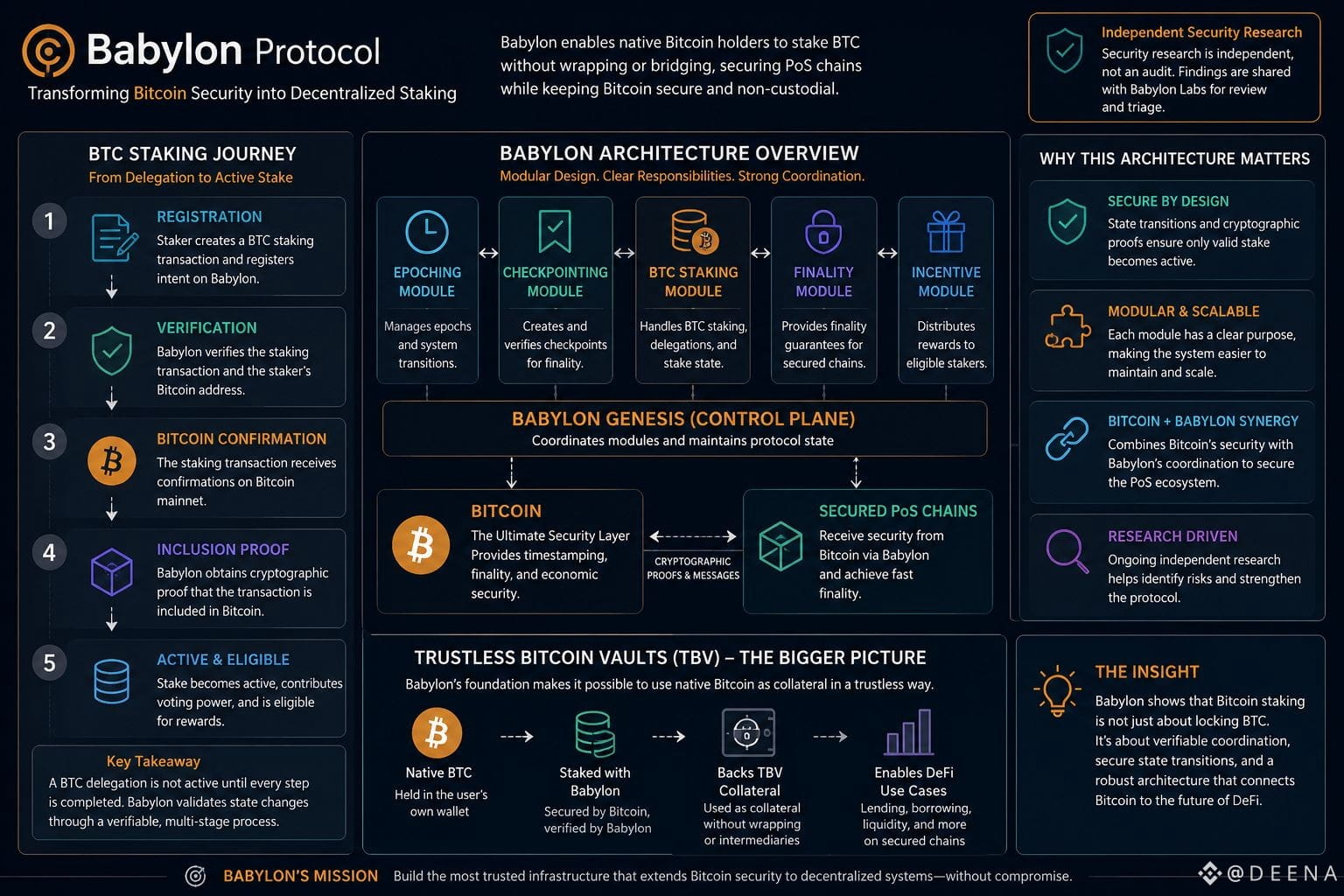
Enquanto eu cavava em Babilônia, percebi que eu vinha pensando sobre o staking de Bitcoin de uma forma muito mais simples do que o protocolo realmente funciona. O que se destacou para mim não foi uma métrica de manchete nem uma afirmação ousada — foi o fato de que Babilônia trata cada evento de staking como uma série de mudanças de estado verificadas, em vez de presumir que tudo está completo desde o momento em que uma transação é criada.
O que chamou minha atenção foi a jornada que uma delegação de BTC faz antes de se tornar ativa. Ela passa por registro, verificação, confirmações do Bitcoin e prova de inclusão antes de poder contribuir com poder de voto ou ganhar recompensas. Isso pode parecer um detalhe técnico, mas eu acho que é uma das partes mais importantes do design porque mostra o quanto Babilônia dá ênfase à verificação em vez de suposições.
A percepção que ficou comigo é que Babilônia não está apenas construindo uma forma de fazer staking de Bitcoin. Ela está construindo a camada de coordenação que torna o staking de Bitcoin confiável entre diferentes componentes do protocolo. Ao analisar a arquitetura, eu passei a entender por que módulos como Epoching, Checkpointing, BTC Staking e Finality são separados, em vez de serem agrupados.
Conversas sobre cripto frequentemente se concentram no potencial futuro, mas eu acho que a história mais interessante é o que um protocolo já está provando hoje. Conforme Babilônia continua a evoluir, a participação verificada vai se tornar a métrica mais importante — em vez de simplesmente a quantidade de BTC depositada?
#baby @babylonlabs_io $BABY
Enquanto eu cavava em Babilônia, percebi que eu vinha pensando sobre o staking de Bitcoin de uma forma muito mais simples do que o protocolo realmente funciona. O que se destacou para mim não foi uma métrica de manchete nem uma afirmação ousada — foi o fato de que Babilônia trata cada evento de staking como uma série de mudanças de estado verificadas, em vez de presumir que tudo está completo desde o momento em que uma transação é criada.
O que chamou minha atenção foi a jornada que uma delegação de BTC faz antes de se tornar ativa. Ela passa por registro, verificação, confirmações do Bitcoin e prova de inclusão antes de poder contribuir com poder de voto ou ganhar recompensas. Isso pode parecer um detalhe técnico, mas eu acho que é uma das partes mais importantes do design porque mostra o quanto Babilônia dá ênfase à verificação em vez de suposições.
A percepção que ficou comigo é que Babilônia não está apenas construindo uma forma de fazer staking de Bitcoin. Ela está construindo a camada de coordenação que torna o staking de Bitcoin confiável entre diferentes componentes do protocolo. Ao analisar a arquitetura, eu passei a entender por que módulos como Epoching, Checkpointing, BTC Staking e Finality são separados, em vez de serem agrupados.
Conversas sobre cripto frequentemente se concentram no potencial futuro, mas eu acho que a história mais interessante é o que um protocolo já está provando hoje. Conforme Babilônia continua a evoluir, a participação verificada vai se tornar a métrica mais importante — em vez de simplesmente a quantidade de BTC depositada?
#baby @BabylonLabs_io $BABY
O que chamou minha atenção foi a jornada que uma delegação de BTC faz antes de se tornar ativa. Ela passa por registro, verificação, confirmações do Bitcoin e prova de inclusão antes de poder contribuir com poder de voto ou ganhar recompensas. Isso pode parecer um detalhe técnico, mas eu acho que é uma das partes mais importantes do design porque mostra o quanto Babilônia dá ênfase à verificação em vez de suposições.
A percepção que ficou comigo é que Babilônia não está apenas construindo uma forma de fazer staking de Bitcoin. Ela está construindo a camada de coordenação que torna o staking de Bitcoin confiável entre diferentes componentes do protocolo. Ao analisar a arquitetura, eu passei a entender por que módulos como Epoching, Checkpointing, BTC Staking e Finality são separados, em vez de serem agrupados.
Conversas sobre cripto frequentemente se concentram no potencial futuro, mas eu acho que a história mais interessante é o que um protocolo já está provando hoje. Conforme Babilônia continua a evoluir, a participação verificada vai se tornar a métrica mais importante — em vez de simplesmente a quantidade de BTC depositada?
#baby @BabylonLabs_io $BABY
2
2
111
·
--
Em Baixa
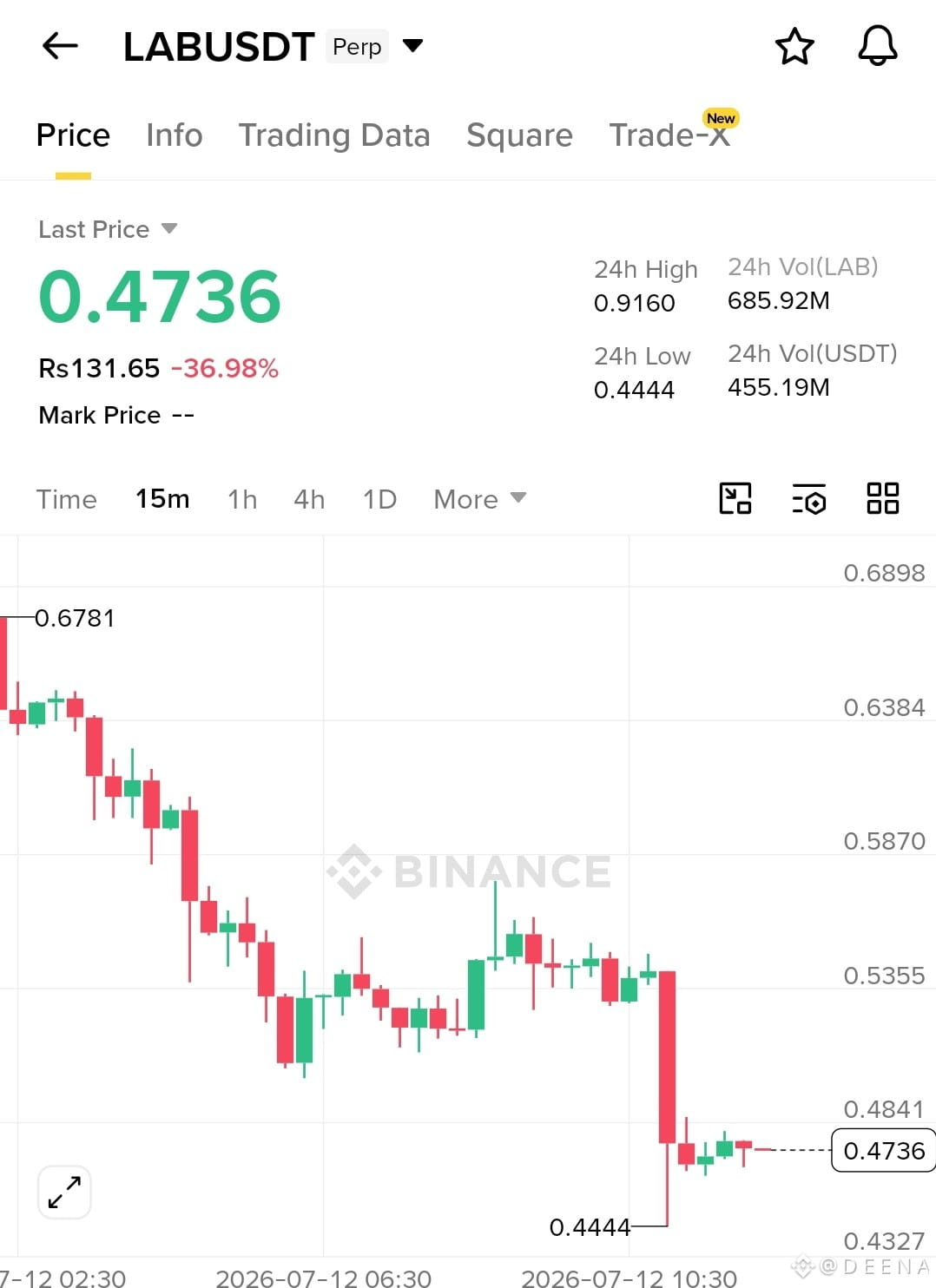
🚨 $LAB está sob pressão! Preço atual: US$ 0,4736 após uma queda de -36,98% nas últimas 24H.
📉 Máxima das 24H: US$ 0,9160 📍 Mínima das 24H: US$ 0,4444 💰 Volume massivo: 685,92M $LAB | 455,19M $USDT
A volatilidade chegou, e é aqui que as verdadeiras oportunidades são feitas. Mantenha a disciplina, controle seu risco e observe o suporte-chave em torno de US$ 0,4444.
Vamos! Faça trade agora $LAB 🚀📈
{future}(LABUSDT)
#BitcoinPlansECashHardFork
#SpaceXAnthropicOpenAIIPOsMayTopVCExitsSince2000
#MorganStanleyAdds1000BTC
#GOPSeeksSenateVoteOnCLARITYActWeekOfJuly20
#BPISeeksToInterveneInNoahDoeCase
🚨 $LAB está sob pressão! Preço atual: US$ 0,4736 após uma queda de -36,98% nas últimas 24H.
📉 Máxima das 24H: US$ 0,9160 📍 Mínima das 24H: US$ 0,4444 💰 Volume massivo: 685,92M $LAB | 455,19M $USDT
A volatilidade chegou, e é aqui que as verdadeiras oportunidades são feitas. Mantenha a disciplina, controle seu risco e observe o suporte-chave em torno de US$ 0,4444.
Vamos! Faça trade agora $LAB 🚀📈
#BitcoinPlansECashHardFork
#SpaceXAnthropicOpenAIIPOsMayTopVCExitsSince2000
#MorganStanleyAdds1000BTC
#GOPSeeksSenateVoteOnCLARITYActWeekOfJuly20
#BPISeeksToInterveneInNoahDoeCase
📉 Máxima das 24H: US$ 0,9160 📍 Mínima das 24H: US$ 0,4444 💰 Volume massivo: 685,92M $LAB | 455,19M $USDT
A volatilidade chegou, e é aqui que as verdadeiras oportunidades são feitas. Mantenha a disciplina, controle seu risco e observe o suporte-chave em torno de US$ 0,4444.
Vamos! Faça trade agora $LAB 🚀📈
#BitcoinPlansECashHardFork
#SpaceXAnthropicOpenAIIPOsMayTopVCExitsSince2000
#MorganStanleyAdds1000BTC
#GOPSeeksSenateVoteOnCLARITYActWeekOfJuly20
#BPISeeksToInterveneInNoahDoeCase
1
213
·
--
Legenda de Trading Empolgante:
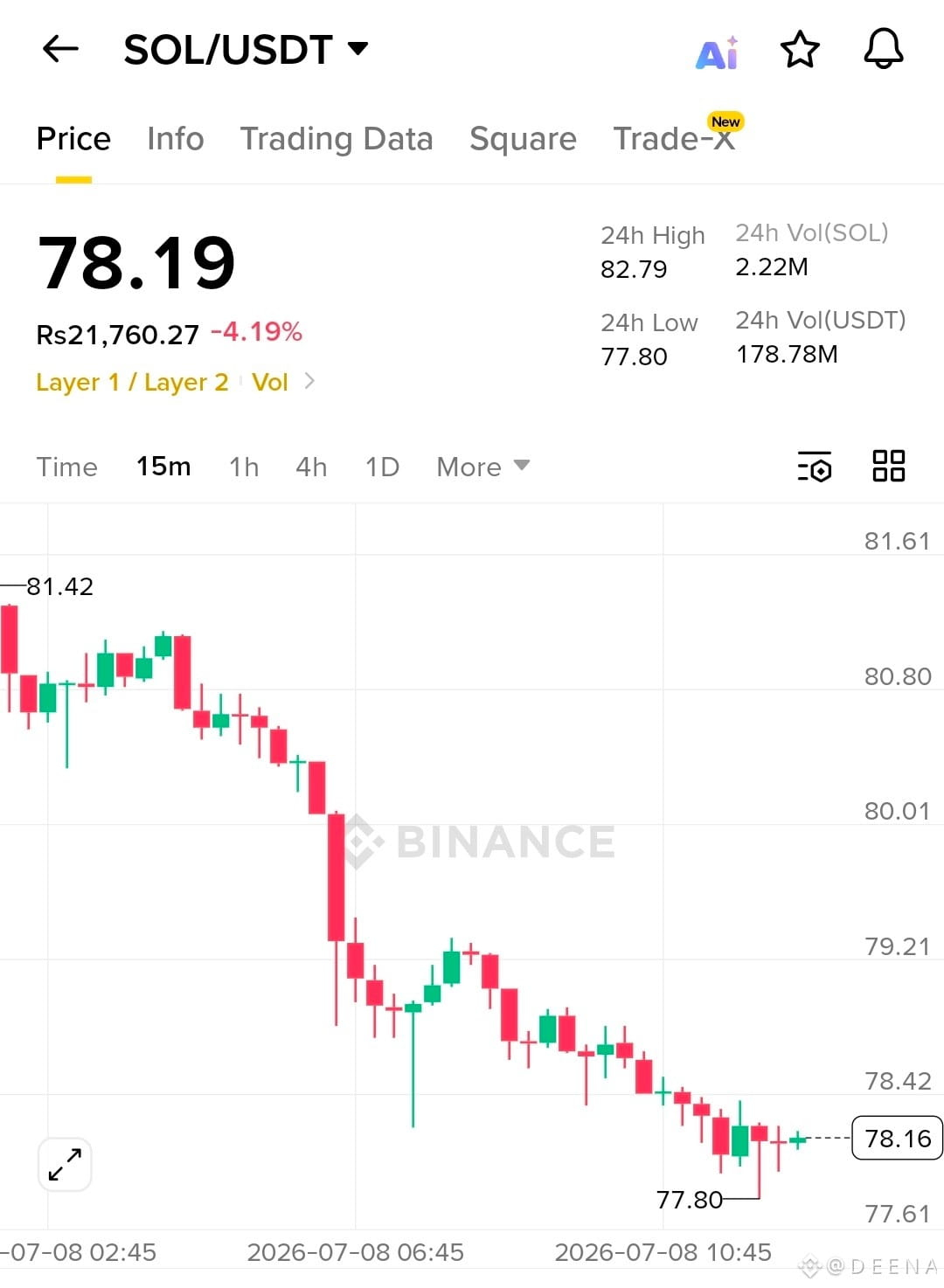
⚡ Atualização SOL/USDT ⚡
🔻 Os ursos ainda estão no controle.
📉 Preço: $78.19
🎯 Suporte-chave: $77.80
🚀 Um repique a partir do suporte pode desencadear uma recuperação de curto prazo.
❌ Se $77.80 romper, espere mais queda.
Faça trades com inteligência, gerencie seu risco e nunca entre em FOMO. 💯
#SOL #Solana #Cripto #Binance #Trading #PriceAction #CryptoTrading #AnáliseTécnica #TouroOuUrso
Legenda de Trading Empolgante:
⚡ Atualização SOL/USDT ⚡
🔻 Os ursos ainda estão no controle.
📉 Preço: $78.19
🎯 Suporte-chave: $77.80
🚀 Um repique a partir do suporte pode desencadear uma recuperação de curto prazo.
❌ Se $77.80 romper, espere mais queda.
Faça trades com inteligência, gerencie seu risco e nunca entre em FOMO. 💯
#SOL #Solana #Cripto #Binance #Trading #PriceAction #CryptoTrading #AnáliseTécnica #TouroOuUrso
⚡ Atualização SOL/USDT ⚡
🔻 Os ursos ainda estão no controle.
📉 Preço: $78.19
🎯 Suporte-chave: $77.80
🚀 Um repique a partir do suporte pode desencadear uma recuperação de curto prazo.
❌ Se $77.80 romper, espere mais queda.
Faça trades com inteligência, gerencie seu risco e nunca entre em FOMO. 💯
#SOL #Solana #Cripto #Binance #Trading #PriceAction #CryptoTrading #AnáliseTécnica #TouroOuUrso
1
110
·
--
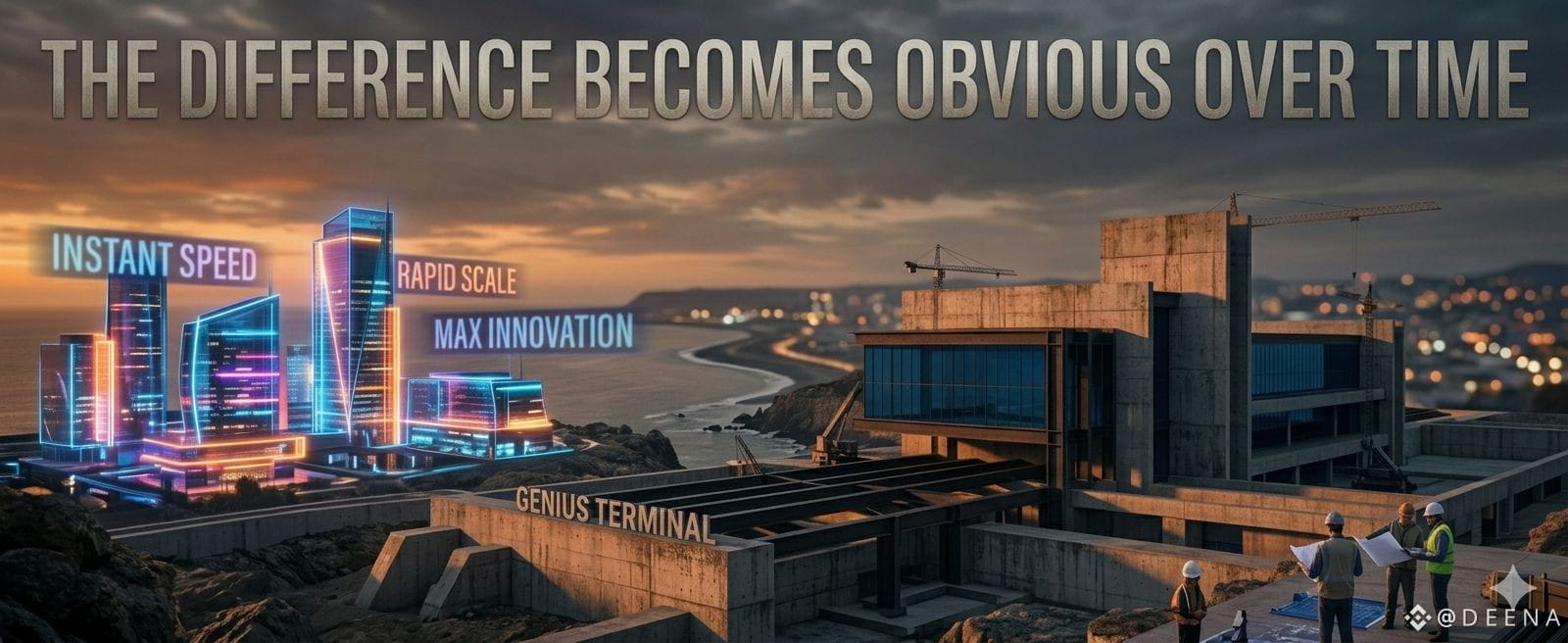
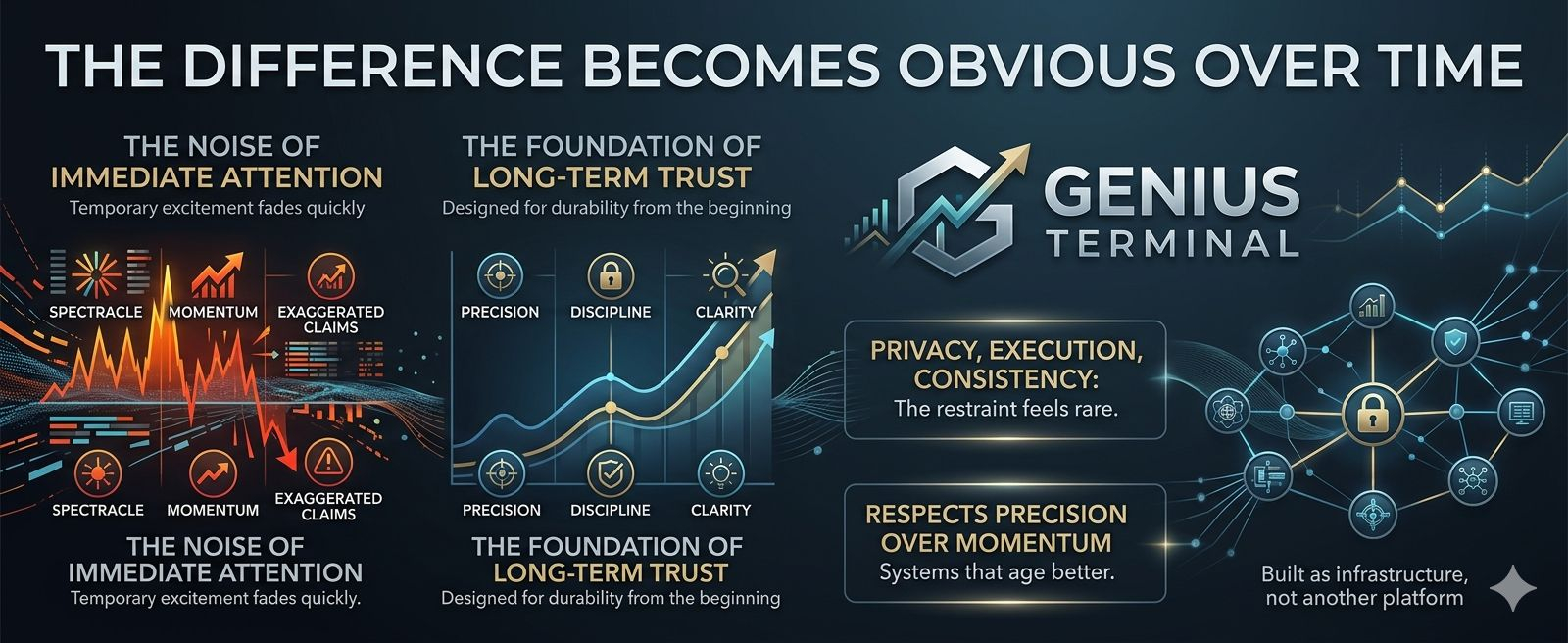
A Diferença Fica Óbvia Com o Tempo
Eu vi incontáveis produtos prometendo velocidade, escalabilidade e inovação, mas muito poucos deixam a impressão de que foram construídos com verdadeira permanência em mente.
O Genius Terminal imediatamente me pareceu diferente.
Não porque tenta dominar a atenção, mas pela maneira controlada e intencional que toda a experiência sente. Tudo parece estruturado com clareza. Sem complexidade desnecessária. Sem posicionamentos exagerados. Apenas uma forte compreensão de como a infraestrutura de longo prazo deve parecer quando a disciplina guia o processo.
O que mais se destaca é o equilíbrio entre privacidade, execução e consistência. Em um espaço abarrotado de ruído, esse tipo de contenção parece raro. O produto não depende de espetáculo constante para provar sua relevância. Sua direção já fala pela qualidade da fundação que está sendo construída.
Eu respeito projetos que entendem o valor da precisão sobre o impulso. Sistemas construídos dessa forma geralmente envelhecem melhor porque são projetados para durabilidade desde o início, e não para uma excitação temporária.
Quanto mais eu observo o Genius Terminal, mais parece menos uma plataforma e mais uma infraestrutura se posicionando silenciosamente para uma importância a longo prazo.
Alguns produtos exigem atenção imediatamente.
Os mais fortes conquistam confiança ao longo do tempo.
#genius @GeniusOfficial $GENIUS
{spot}(GENIUSUSDT)
$STRAX
$GUN
A Diferença Fica Óbvia Com o Tempo
Eu vi incontáveis produtos prometendo velocidade, escalabilidade e inovação, mas muito poucos deixam a impressão de que foram construídos com verdadeira permanência em mente.
O Genius Terminal imediatamente me pareceu diferente.
Não porque tenta dominar a atenção, mas pela maneira controlada e intencional que toda a experiência sente. Tudo parece estruturado com clareza. Sem complexidade desnecessária. Sem posicionamentos exagerados. Apenas uma forte compreensão de como a infraestrutura de longo prazo deve parecer quando a disciplina guia o processo.
O que mais se destaca é o equilíbrio entre privacidade, execução e consistência. Em um espaço abarrotado de ruído, esse tipo de contenção parece raro. O produto não depende de espetáculo constante para provar sua relevância. Sua direção já fala pela qualidade da fundação que está sendo construída.
Eu respeito projetos que entendem o valor da precisão sobre o impulso. Sistemas construídos dessa forma geralmente envelhecem melhor porque são projetados para durabilidade desde o início, e não para uma excitação temporária.
Quanto mais eu observo o Genius Terminal, mais parece menos uma plataforma e mais uma infraestrutura se posicionando silenciosamente para uma importância a longo prazo.
Alguns produtos exigem atenção imediatamente.
Os mais fortes conquistam confiança ao longo do tempo.
#genius @GeniusOfficial $GENIUS
$STRAX
$GUN
Eu vi incontáveis produtos prometendo velocidade, escalabilidade e inovação, mas muito poucos deixam a impressão de que foram construídos com verdadeira permanência em mente.
O Genius Terminal imediatamente me pareceu diferente.
Não porque tenta dominar a atenção, mas pela maneira controlada e intencional que toda a experiência sente. Tudo parece estruturado com clareza. Sem complexidade desnecessária. Sem posicionamentos exagerados. Apenas uma forte compreensão de como a infraestrutura de longo prazo deve parecer quando a disciplina guia o processo.
O que mais se destaca é o equilíbrio entre privacidade, execução e consistência. Em um espaço abarrotado de ruído, esse tipo de contenção parece raro. O produto não depende de espetáculo constante para provar sua relevância. Sua direção já fala pela qualidade da fundação que está sendo construída.
Eu respeito projetos que entendem o valor da precisão sobre o impulso. Sistemas construídos dessa forma geralmente envelhecem melhor porque são projetados para durabilidade desde o início, e não para uma excitação temporária.
Quanto mais eu observo o Genius Terminal, mais parece menos uma plataforma e mais uma infraestrutura se posicionando silenciosamente para uma importância a longo prazo.
Alguns produtos exigem atenção imediatamente.
Os mais fortes conquistam confiança ao longo do tempo.
#genius @GeniusOfficial $GENIUS
$STRAX
$GUN
1
2
109
·
--
Eu pensei que o Genius era apenas mais um terminal de negociação. Então eu olhei mais de perto.
Quando eu encontrei o Genius pela primeira vez, eu o coloquei na mesma categoria de inúmeros outros produtos de cripto.
Um terminal de negociação.
Um lugar para assistir velas, executar trades, gerenciar posições e seguir em frente.
Mas quanto mais tempo eu passei olhando para o que o Genius está realmente construindo, mais eu senti que essa descrição não capturava o ponto.
O que se destacou para mim não foi a experiência de negociação em si.
Foi tudo ao redor disso.
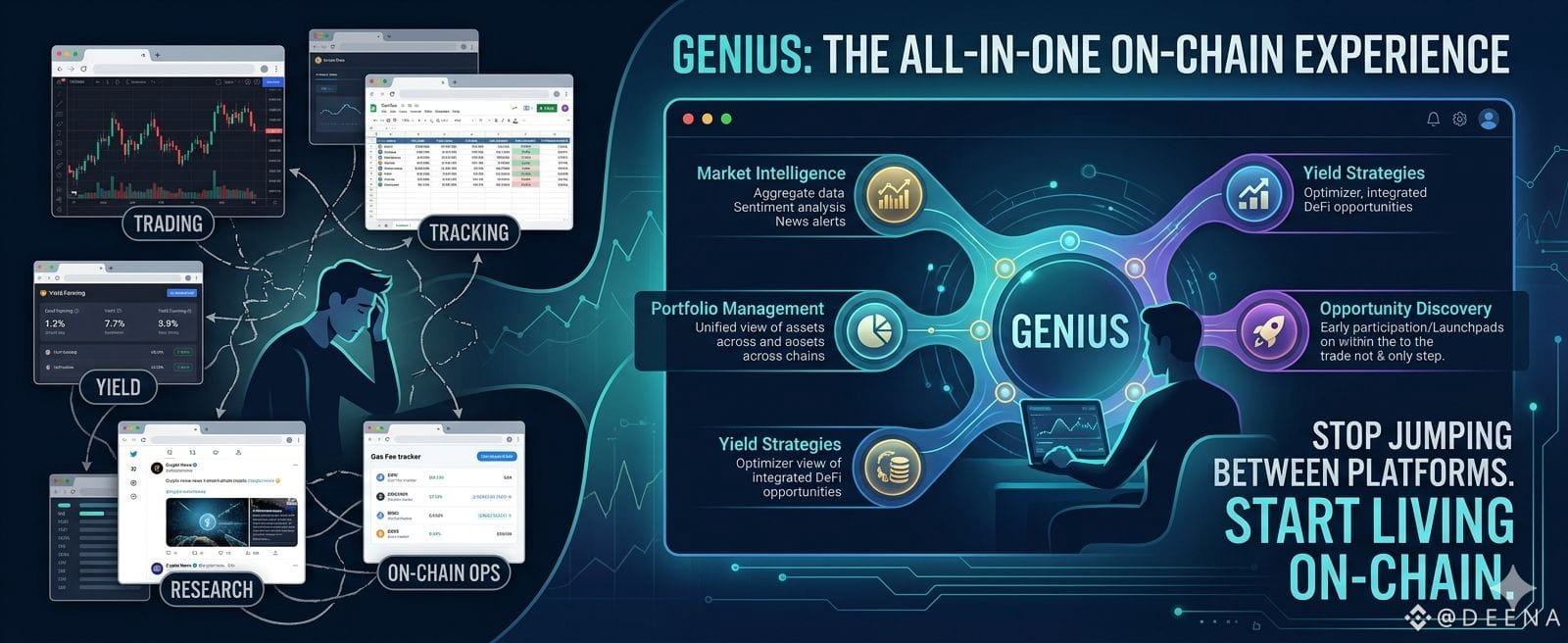
Eu percebi que a maior parte do meu tempo em cripto não é gasto pressionando o botão de compra ou venda. É gasto buscando oportunidades, rastreando portfólios, monitorando mercados, pesquisando novas narrativas, explorando estratégias de yield e tentando me manter à frente das mudanças constantes.
A trade é muitas vezes o passo final.
O verdadeiro desafio é gerenciar tudo que leva até ela.
É por isso que eu acho que o Genius está abordando um problema muito maior.
Em vez de tratar negociação, gerenciamento de portfólio, descoberta de mercado, oportunidades de yield e participação antecipada como experiências separadas, eu vejo uma plataforma tentando reunir tudo isso sob um mesmo teto.
Para mim, isso é muito mais interessante do que adicionar mais uma funcionalidade de negociação.
Cripto não sofre de falta de ferramentas.
Sofre de fragmentação.
Eu constantemente me vejo pulando entre plataformas apenas para manter o contexto.
O que eu vejo no Genius é uma tentativa de reduzir essa fricção.
E se isso tiver sucesso, as pessoas podem eventualmente parar de pensar nisso como um terminal de negociação completamente.
Elas podem começar a pensar nisso como o lugar onde toda a sua experiência em on-chain vive.
$STG
$PORTAL
#genius @GeniusOfficial $GENIUS
{spot}(GENIUSUSDT)
Eu pensei que o Genius era apenas mais um terminal de negociação. Então eu olhei mais de perto.
Quando eu encontrei o Genius pela primeira vez, eu o coloquei na mesma categoria de inúmeros outros produtos de cripto.
Um terminal de negociação.
Um lugar para assistir velas, executar trades, gerenciar posições e seguir em frente.
Mas quanto mais tempo eu passei olhando para o que o Genius está realmente construindo, mais eu senti que essa descrição não capturava o ponto.
O que se destacou para mim não foi a experiência de negociação em si.
Foi tudo ao redor disso.
Eu percebi que a maior parte do meu tempo em cripto não é gasto pressionando o botão de compra ou venda. É gasto buscando oportunidades, rastreando portfólios, monitorando mercados, pesquisando novas narrativas, explorando estratégias de yield e tentando me manter à frente das mudanças constantes.
A trade é muitas vezes o passo final.
O verdadeiro desafio é gerenciar tudo que leva até ela.
É por isso que eu acho que o Genius está abordando um problema muito maior.
Em vez de tratar negociação, gerenciamento de portfólio, descoberta de mercado, oportunidades de yield e participação antecipada como experiências separadas, eu vejo uma plataforma tentando reunir tudo isso sob um mesmo teto.
Para mim, isso é muito mais interessante do que adicionar mais uma funcionalidade de negociação.
Cripto não sofre de falta de ferramentas.
Sofre de fragmentação.
Eu constantemente me vejo pulando entre plataformas apenas para manter o contexto.
O que eu vejo no Genius é uma tentativa de reduzir essa fricção.
E se isso tiver sucesso, as pessoas podem eventualmente parar de pensar nisso como um terminal de negociação completamente.
Elas podem começar a pensar nisso como o lugar onde toda a sua experiência em on-chain vive.
$STG
$PORTAL
#genius @GeniusOfficial $GENIUS
Quando eu encontrei o Genius pela primeira vez, eu o coloquei na mesma categoria de inúmeros outros produtos de cripto.
Um terminal de negociação.
Um lugar para assistir velas, executar trades, gerenciar posições e seguir em frente.
Mas quanto mais tempo eu passei olhando para o que o Genius está realmente construindo, mais eu senti que essa descrição não capturava o ponto.
O que se destacou para mim não foi a experiência de negociação em si.
Foi tudo ao redor disso.
Eu percebi que a maior parte do meu tempo em cripto não é gasto pressionando o botão de compra ou venda. É gasto buscando oportunidades, rastreando portfólios, monitorando mercados, pesquisando novas narrativas, explorando estratégias de yield e tentando me manter à frente das mudanças constantes.
A trade é muitas vezes o passo final.
O verdadeiro desafio é gerenciar tudo que leva até ela.
É por isso que eu acho que o Genius está abordando um problema muito maior.
Em vez de tratar negociação, gerenciamento de portfólio, descoberta de mercado, oportunidades de yield e participação antecipada como experiências separadas, eu vejo uma plataforma tentando reunir tudo isso sob um mesmo teto.
Para mim, isso é muito mais interessante do que adicionar mais uma funcionalidade de negociação.
Cripto não sofre de falta de ferramentas.
Sofre de fragmentação.
Eu constantemente me vejo pulando entre plataformas apenas para manter o contexto.
O que eu vejo no Genius é uma tentativa de reduzir essa fricção.
E se isso tiver sucesso, as pessoas podem eventualmente parar de pensar nisso como um terminal de negociação completamente.
Elas podem começar a pensar nisso como o lugar onde toda a sua experiência em on-chain vive.
$STG
$PORTAL
#genius @GeniusOfficial $GENIUS
1
206
·
--
Acho que a OpenLedger está apostando na parte da IA que a maioria dos modelos quer esquecer
Eu costumava achar que a corrida da IA terminaria com a própria inteligência. Raciocínio melhor, saídas mais rápidas, sistemas multimodais mais limpos, benchmarks mais fortes. Mas ultimamente, tenho a sensação de que essa competição toda está perdendo algo mais profundo por baixo.
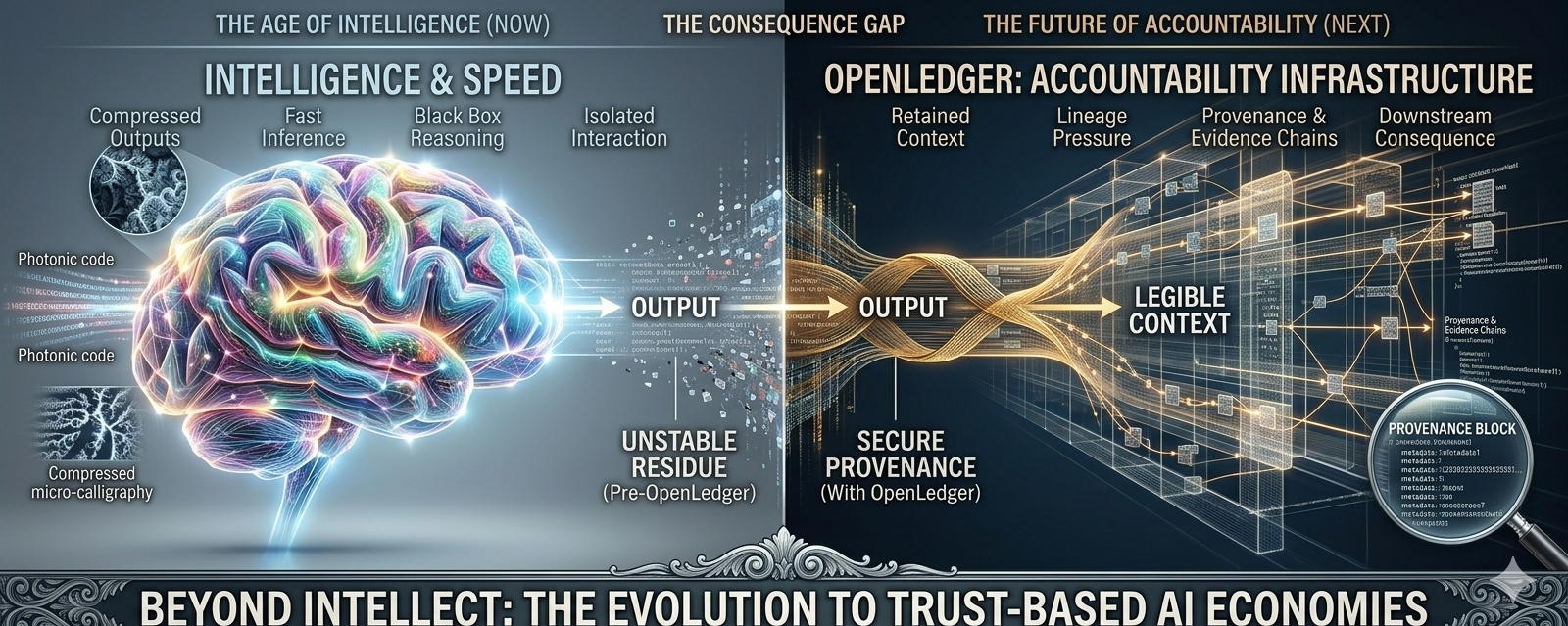
A maioria dos modelos de IA hoje é incrivelmente boa em produzir respostas, mas muito ruim em preservar a corrente invisível que produziu a resposta em primeiro lugar. A saída sobrevive. O contexto desaparece.
E eu acho que isso se torna um problema sério assim que as saídas da IA param de se comportar como conversas temporárias e começam a agir como objetos econômicos se movendo entre sistemas.
Os motores de busca as classificam. Os sistemas de recomendação as amplificam. As economias de criadores as absorvem. Outros modelos treinam nelas novamente. Os mercados reagem a elas. As instituições começam a confiar nelas lentamente.
Mas quase ninguém pergunta o que desapareceu antes da resposta se estabilizar.
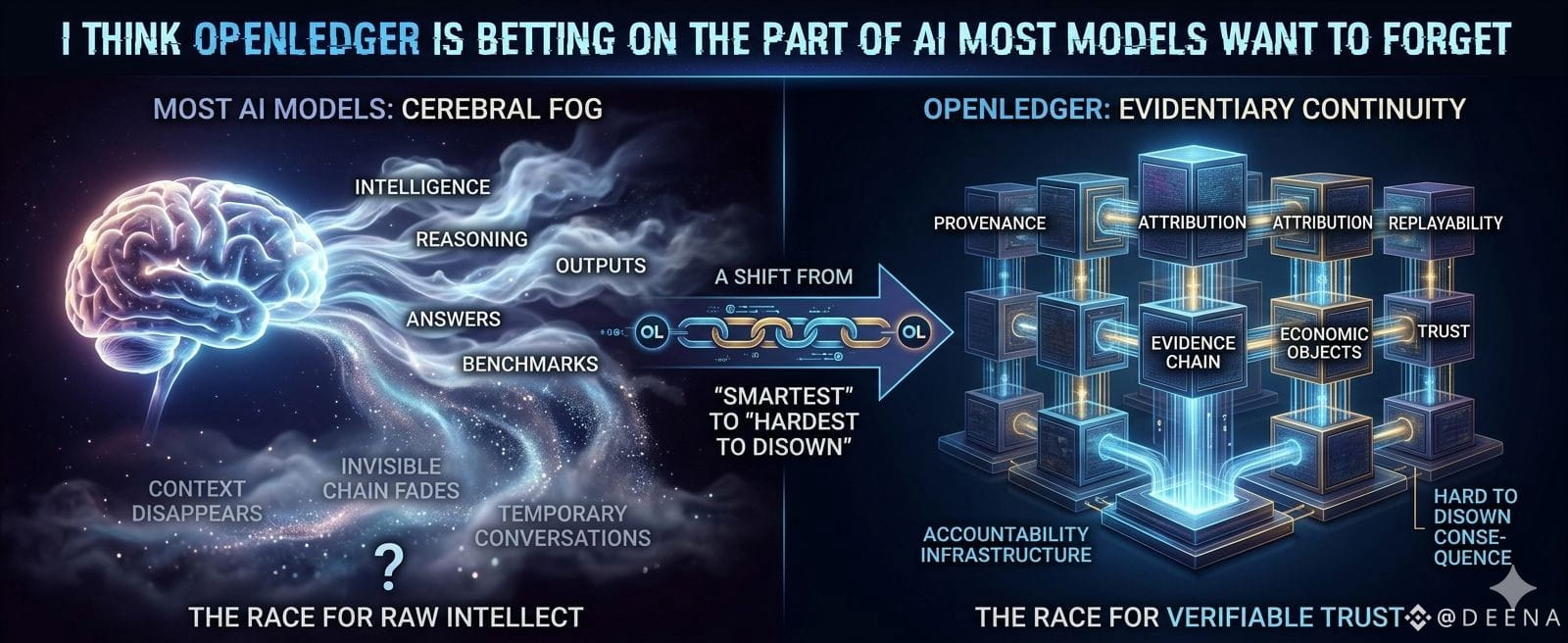
É por isso que a OpenLedger me parece interessante. Não porque está tentando tornar a IA “mais inteligente”, mas porque parece focada em preservar a responsabilidade após a geração acontecer. Proveniência. Atribuição. Repetibilidade. Continuidade de evidências.
Quanto mais penso sobre isso, mais sinto que a inteligência pode se tornar uma mercadoria mais rápido do que a infraestrutura de responsabilidade.
E talvez a competição futura de IA não será:
“Qual modelo parece mais inteligente?”
Talvez se torne:
“Qual modelo é mais difícil de desassociar uma vez que a consequência chega?”
#openledger @Openledger $OPEN
{spot}(OPENUSDT)
$HEI
$ID
Acho que a OpenLedger está apostando na parte da IA que a maioria dos modelos quer esquecer
Eu costumava achar que a corrida da IA terminaria com a própria inteligência. Raciocínio melhor, saídas mais rápidas, sistemas multimodais mais limpos, benchmarks mais fortes. Mas ultimamente, tenho a sensação de que essa competição toda está perdendo algo mais profundo por baixo.
A maioria dos modelos de IA hoje é incrivelmente boa em produzir respostas, mas muito ruim em preservar a corrente invisível que produziu a resposta em primeiro lugar. A saída sobrevive. O contexto desaparece.
E eu acho que isso se torna um problema sério assim que as saídas da IA param de se comportar como conversas temporárias e começam a agir como objetos econômicos se movendo entre sistemas.
Os motores de busca as classificam. Os sistemas de recomendação as amplificam. As economias de criadores as absorvem. Outros modelos treinam nelas novamente. Os mercados reagem a elas. As instituições começam a confiar nelas lentamente.
Mas quase ninguém pergunta o que desapareceu antes da resposta se estabilizar.
É por isso que a OpenLedger me parece interessante. Não porque está tentando tornar a IA “mais inteligente”, mas porque parece focada em preservar a responsabilidade após a geração acontecer. Proveniência. Atribuição. Repetibilidade. Continuidade de evidências.
Quanto mais penso sobre isso, mais sinto que a inteligência pode se tornar uma mercadoria mais rápido do que a infraestrutura de responsabilidade.
E talvez a competição futura de IA não será:
“Qual modelo parece mais inteligente?”
Talvez se torne:
“Qual modelo é mais difícil de desassociar uma vez que a consequência chega?”
#openledger @OpenLedger $OPEN
$HEI
$ID
Eu costumava achar que a corrida da IA terminaria com a própria inteligência. Raciocínio melhor, saídas mais rápidas, sistemas multimodais mais limpos, benchmarks mais fortes. Mas ultimamente, tenho a sensação de que essa competição toda está perdendo algo mais profundo por baixo.
A maioria dos modelos de IA hoje é incrivelmente boa em produzir respostas, mas muito ruim em preservar a corrente invisível que produziu a resposta em primeiro lugar. A saída sobrevive. O contexto desaparece.
E eu acho que isso se torna um problema sério assim que as saídas da IA param de se comportar como conversas temporárias e começam a agir como objetos econômicos se movendo entre sistemas.
Os motores de busca as classificam. Os sistemas de recomendação as amplificam. As economias de criadores as absorvem. Outros modelos treinam nelas novamente. Os mercados reagem a elas. As instituições começam a confiar nelas lentamente.
Mas quase ninguém pergunta o que desapareceu antes da resposta se estabilizar.
É por isso que a OpenLedger me parece interessante. Não porque está tentando tornar a IA “mais inteligente”, mas porque parece focada em preservar a responsabilidade após a geração acontecer. Proveniência. Atribuição. Repetibilidade. Continuidade de evidências.
Quanto mais penso sobre isso, mais sinto que a inteligência pode se tornar uma mercadoria mais rápido do que a infraestrutura de responsabilidade.
E talvez a competição futura de IA não será:
“Qual modelo parece mais inteligente?”
Talvez se torne:
“Qual modelo é mais difícil de desassociar uma vez que a consequência chega?”
#openledger @OpenLedger $OPEN
$HEI
$ID
1
180
·
--
Artigo
OpenLedger e o Futuro da Responsabilidade da IAPor muito tempo, eu realmente acreditei que a corrida da IA acabaria se resumindo a uma única coisa: inteligência. O modelo que raciocinasse melhor venceria. O modelo com saídas mais afiadas, conversas mais limpas, inferência mais rápida, comportamento multimodal mais forte e números de benchmark mais altos dominaria naturalmente o mercado. Essa suposição parecia óbvia porque quase todas as conversas sobre IA ainda giram em torno da capacidade em si. Quem é mais inteligente. Quem é mais rápido. Qual modelo soa mais humano. Qual sistema pode resolver tarefas mais difíceis com menos erros. Mas quanto mais olho para projetos como a OpenLedger, mais incompleta essa estrutura toda começa a parecer para mim. Não completamente errada. Apenas perdendo algo mais profundo por trás da superfície.
OpenLedger e o Futuro da Responsabilidade da IA
Por muito tempo, eu realmente acreditei que a corrida da IA acabaria se resumindo a uma única coisa: inteligência. O modelo que raciocinasse melhor venceria. O modelo com saídas mais afiadas, conversas mais limpas, inferência mais rápida, comportamento multimodal mais forte e números de benchmark mais altos dominaria naturalmente o mercado. Essa suposição parecia óbvia porque quase todas as conversas sobre IA ainda giram em torno da capacidade em si. Quem é mais inteligente. Quem é mais rápido. Qual modelo soa mais humano. Qual sistema pode resolver tarefas mais difíceis com menos erros. Mas quanto mais olho para projetos como a OpenLedger, mais incompleta essa estrutura toda começa a parecer para mim. Não completamente errada. Apenas perdendo algo mais profundo por trás da superfície.
284
·
--
A Diferença Fica Óbvia Com o Tempo
Eu já vi incontáveis produtos prometendo velocidade, escala e inovação, mas muito poucos deixam a impressão de que foram construídos com uma verdadeira permanência em mente.
O Genius Terminal imediatamente me pareceu diferente.
Não porque tenta dominar a atenção, mas pela forma controlada e intencional que toda a experiência transmite. Tudo parece estruturado com clareza. Sem complexidade desnecessária. Sem posicionamento exagerado. Apenas uma forte compreensão de como a infraestrutura de longo prazo deve parecer quando a disciplina guia o processo.
O que mais se destaca é o equilíbrio entre privacidade, execução e consistência. Em um espaço lotado de ruído, esse tipo de contenção parece raro. O produto não depende de espetáculo constante para provar sua relevância. Sua direção já fala através da qualidade da fundação que está sendo construída.
Eu respeito projetos que entendem o valor da precisão sobre o impulso. Sistemas construídos dessa forma geralmente envelhecem melhor porque são projetados para durabilidade desde o início, e não para empolgação temporária.
Quanto mais eu observo o Genius Terminal, mais parece menos uma plataforma e mais uma infraestrutura se posicionando silenciosamente para uma significância a longo prazo.
Alguns produtos exigem atenção imediatamente.
Os mais fortes conquistam confiança com o tempo.
#genius @GeniusOfficial $GENIUS
{spot}(GENIUSUSDT)
$HEI
$ID
A Diferença Fica Óbvia Com o Tempo
Eu já vi incontáveis produtos prometendo velocidade, escala e inovação, mas muito poucos deixam a impressão de que foram construídos com uma verdadeira permanência em mente.
O Genius Terminal imediatamente me pareceu diferente.
Não porque tenta dominar a atenção, mas pela forma controlada e intencional que toda a experiência transmite. Tudo parece estruturado com clareza. Sem complexidade desnecessária. Sem posicionamento exagerado. Apenas uma forte compreensão de como a infraestrutura de longo prazo deve parecer quando a disciplina guia o processo.
O que mais se destaca é o equilíbrio entre privacidade, execução e consistência. Em um espaço lotado de ruído, esse tipo de contenção parece raro. O produto não depende de espetáculo constante para provar sua relevância. Sua direção já fala através da qualidade da fundação que está sendo construída.
Eu respeito projetos que entendem o valor da precisão sobre o impulso. Sistemas construídos dessa forma geralmente envelhecem melhor porque são projetados para durabilidade desde o início, e não para empolgação temporária.
Quanto mais eu observo o Genius Terminal, mais parece menos uma plataforma e mais uma infraestrutura se posicionando silenciosamente para uma significância a longo prazo.
Alguns produtos exigem atenção imediatamente.
Os mais fortes conquistam confiança com o tempo.
#genius @GeniusOfficial $GENIUS
$HEI
$ID
Eu já vi incontáveis produtos prometendo velocidade, escala e inovação, mas muito poucos deixam a impressão de que foram construídos com uma verdadeira permanência em mente.
O Genius Terminal imediatamente me pareceu diferente.
Não porque tenta dominar a atenção, mas pela forma controlada e intencional que toda a experiência transmite. Tudo parece estruturado com clareza. Sem complexidade desnecessária. Sem posicionamento exagerado. Apenas uma forte compreensão de como a infraestrutura de longo prazo deve parecer quando a disciplina guia o processo.
O que mais se destaca é o equilíbrio entre privacidade, execução e consistência. Em um espaço lotado de ruído, esse tipo de contenção parece raro. O produto não depende de espetáculo constante para provar sua relevância. Sua direção já fala através da qualidade da fundação que está sendo construída.
Eu respeito projetos que entendem o valor da precisão sobre o impulso. Sistemas construídos dessa forma geralmente envelhecem melhor porque são projetados para durabilidade desde o início, e não para empolgação temporária.
Quanto mais eu observo o Genius Terminal, mais parece menos uma plataforma e mais uma infraestrutura se posicionando silenciosamente para uma significância a longo prazo.
Alguns produtos exigem atenção imediatamente.
Os mais fortes conquistam confiança com o tempo.
#genius @GeniusOfficial $GENIUS
$HEI
$ID
240
·
--
Infraestrutura Silenciosa
Passei tempo suficiente em produtos on-chain para reconhecer a diferença entre plataformas construídas para atenção e plataformas construídas para resistência.
O Genius Terminal imediatamente me deu a segunda impressão.
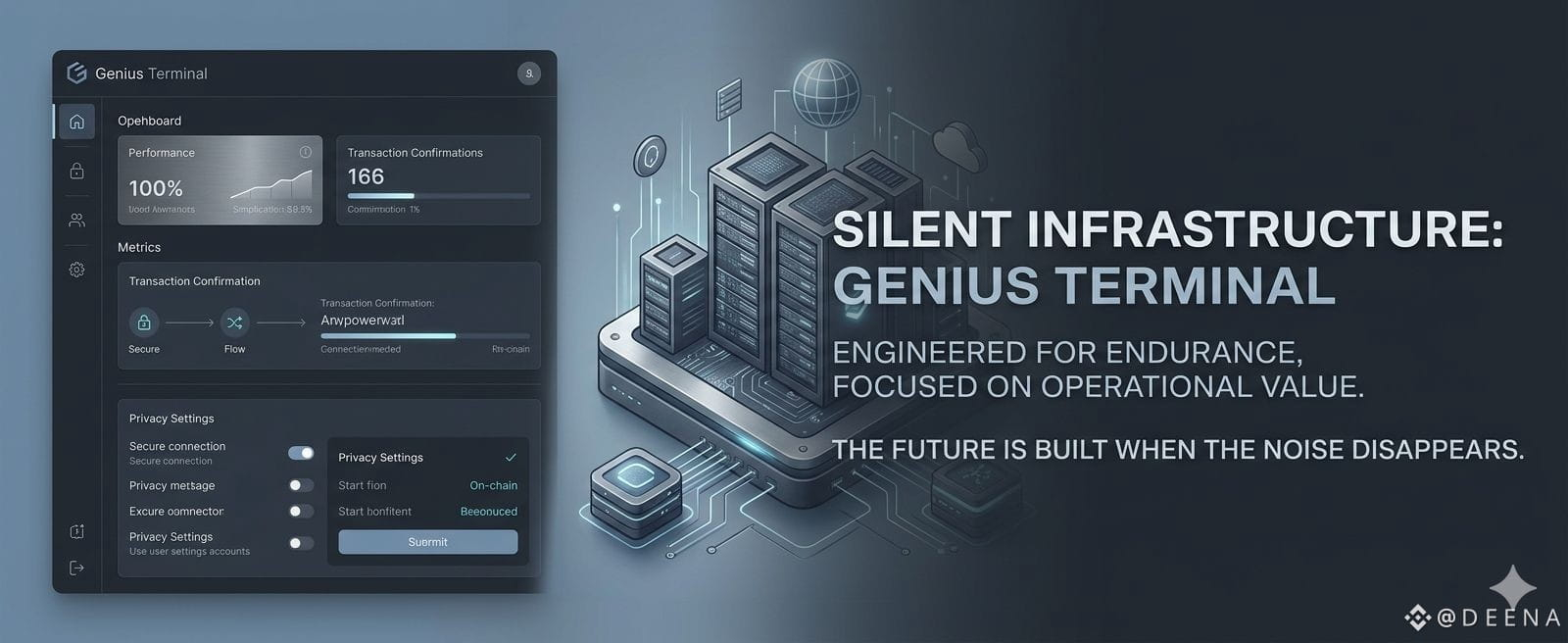
A primeira coisa que notei foi a contenção. Sem complexidade desnecessária. Sem barulho agressivo. Sem tentativas de forçar momento através de espetáculo. Tudo parece intencional, desde a estrutura até o fluxo de execução. Carrega a confiança que geralmente vem de equipes focadas mais na performance do que na visibilidade.
O que mais se destacou para mim foi a forma como a privacidade parece integrada na experiência, em vez de ser adicionada como uma camada narrativa depois. Isso muda completamente a atmosfera. O terminal parece controlado, focado e projetado para pessoas que valorizam precisão em vez de reação.
Eu também respeito como toda a direção parece limpa. Em um espaço onde muitos produtos competem por relevância a curto prazo, o Genius Terminal parece posicionado para um valor operacional a longo prazo. A arquitetura sugere disciplina. A interface sugere clareza. A presença geral sugere maturidade.
Acredito que a próxima geração de infraestrutura on-chain não será definida por quem fala mais alto.
Ela será definida por quem constrói sistemas capazes de permanecer essenciais quando o barulho desaparece.
O Genius Terminal já parece alinhado com esse futuro.
$ALLO
$NIGHT
#genius @GeniusOfficial $GENIUS
{spot}(GENIUSUSDT)
Infraestrutura Silenciosa
Passei tempo suficiente em produtos on-chain para reconhecer a diferença entre plataformas construídas para atenção e plataformas construídas para resistência.
O Genius Terminal imediatamente me deu a segunda impressão.
A primeira coisa que notei foi a contenção. Sem complexidade desnecessária. Sem barulho agressivo. Sem tentativas de forçar momento através de espetáculo. Tudo parece intencional, desde a estrutura até o fluxo de execução. Carrega a confiança que geralmente vem de equipes focadas mais na performance do que na visibilidade.
O que mais se destacou para mim foi a forma como a privacidade parece integrada na experiência, em vez de ser adicionada como uma camada narrativa depois. Isso muda completamente a atmosfera. O terminal parece controlado, focado e projetado para pessoas que valorizam precisão em vez de reação.
Eu também respeito como toda a direção parece limpa. Em um espaço onde muitos produtos competem por relevância a curto prazo, o Genius Terminal parece posicionado para um valor operacional a longo prazo. A arquitetura sugere disciplina. A interface sugere clareza. A presença geral sugere maturidade.
Acredito que a próxima geração de infraestrutura on-chain não será definida por quem fala mais alto.
Ela será definida por quem constrói sistemas capazes de permanecer essenciais quando o barulho desaparece.
O Genius Terminal já parece alinhado com esse futuro.
$ALLO
$NIGHT
#genius @GeniusOfficial $GENIUS
Passei tempo suficiente em produtos on-chain para reconhecer a diferença entre plataformas construídas para atenção e plataformas construídas para resistência.
O Genius Terminal imediatamente me deu a segunda impressão.
A primeira coisa que notei foi a contenção. Sem complexidade desnecessária. Sem barulho agressivo. Sem tentativas de forçar momento através de espetáculo. Tudo parece intencional, desde a estrutura até o fluxo de execução. Carrega a confiança que geralmente vem de equipes focadas mais na performance do que na visibilidade.
O que mais se destacou para mim foi a forma como a privacidade parece integrada na experiência, em vez de ser adicionada como uma camada narrativa depois. Isso muda completamente a atmosfera. O terminal parece controlado, focado e projetado para pessoas que valorizam precisão em vez de reação.
Eu também respeito como toda a direção parece limpa. Em um espaço onde muitos produtos competem por relevância a curto prazo, o Genius Terminal parece posicionado para um valor operacional a longo prazo. A arquitetura sugere disciplina. A interface sugere clareza. A presença geral sugere maturidade.
Acredito que a próxima geração de infraestrutura on-chain não será definida por quem fala mais alto.
Ela será definida por quem constrói sistemas capazes de permanecer essenciais quando o barulho desaparece.
O Genius Terminal já parece alinhado com esse futuro.
$ALLO
$NIGHT
#genius @GeniusOfficial $GENIUS
1
199
·
--
Eu costumava pensar que a maioria dos projetos de IA eram apenas hype reciclado com branding caro. As mesmas promessas. Os mesmos jargões. A mesma narrativa de “futuro da inteligência” repetida até que ninguém mais questione. Mas quanto mais eu investigava a OpenLedger, mais percebia que a verdadeira história não é a IA em si — é a posse.
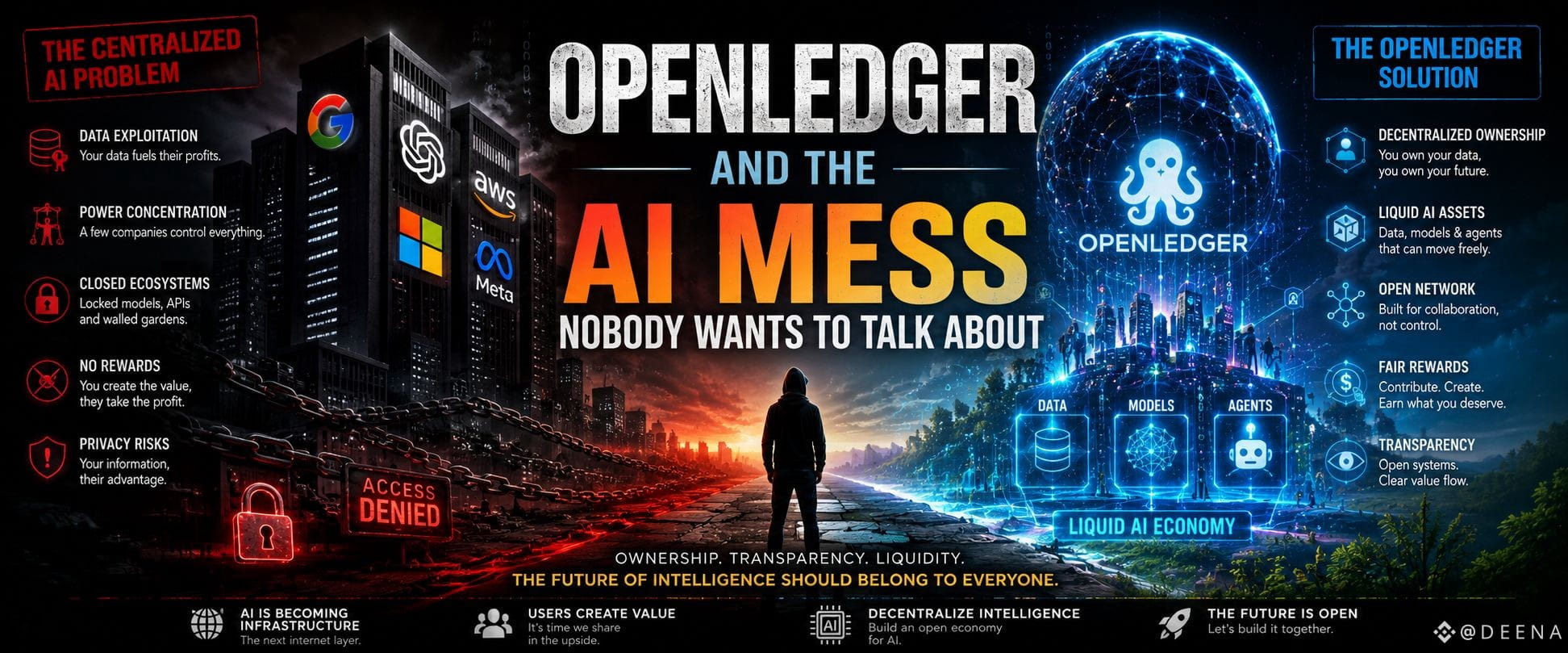
Agora mesmo, algumas gigantes controlam quase tudo. Modelos. Dados. Infraestrutura. Distribuição. Enquanto isso, usuários normais alimentam esses sistemas todos os dias de graça, sem perceber o quanto de valor estão criando. Essa é a parte que parece quebrada para mim.
O que chamou minha atenção na OpenLedger é que ela realmente aponta para o problema da infraestrutura em vez de cultivar engajamento com narrativas vazias de IA. A ideia de que dados, modelos e agentes de IA deveriam circular por uma economia aberta ao invés de ficarem presos dentro das paredes corporativas faz muito mais sentido do que as pessoas percebem.
E honestamente, eu acho que a maioria das pessoas ainda está subestimando o quão grande essa mudança está se tornando.
A IA não é mais apenas software.
Está se transformando em infraestrutura econômica.
A verdadeira batalha não será sobre quem constrói o chatbot mais inteligente.
Será sobre quem possui os trilhos por baixo da própria inteligência.
#openledger @Openledger $OPEN
{spot}(OPENUSDT)
$XLM
$ALLO
Eu costumava pensar que a maioria dos projetos de IA eram apenas hype reciclado com branding caro. As mesmas promessas. Os mesmos jargões. A mesma narrativa de “futuro da inteligência” repetida até que ninguém mais questione. Mas quanto mais eu investigava a OpenLedger, mais percebia que a verdadeira história não é a IA em si — é a posse.
Agora mesmo, algumas gigantes controlam quase tudo. Modelos. Dados. Infraestrutura. Distribuição. Enquanto isso, usuários normais alimentam esses sistemas todos os dias de graça, sem perceber o quanto de valor estão criando. Essa é a parte que parece quebrada para mim.
O que chamou minha atenção na OpenLedger é que ela realmente aponta para o problema da infraestrutura em vez de cultivar engajamento com narrativas vazias de IA. A ideia de que dados, modelos e agentes de IA deveriam circular por uma economia aberta ao invés de ficarem presos dentro das paredes corporativas faz muito mais sentido do que as pessoas percebem.
E honestamente, eu acho que a maioria das pessoas ainda está subestimando o quão grande essa mudança está se tornando.
A IA não é mais apenas software.
Está se transformando em infraestrutura econômica.
A verdadeira batalha não será sobre quem constrói o chatbot mais inteligente.
Será sobre quem possui os trilhos por baixo da própria inteligência.
#openledger @OpenLedger $OPEN
$XLM
$ALLO
Agora mesmo, algumas gigantes controlam quase tudo. Modelos. Dados. Infraestrutura. Distribuição. Enquanto isso, usuários normais alimentam esses sistemas todos os dias de graça, sem perceber o quanto de valor estão criando. Essa é a parte que parece quebrada para mim.
O que chamou minha atenção na OpenLedger é que ela realmente aponta para o problema da infraestrutura em vez de cultivar engajamento com narrativas vazias de IA. A ideia de que dados, modelos e agentes de IA deveriam circular por uma economia aberta ao invés de ficarem presos dentro das paredes corporativas faz muito mais sentido do que as pessoas percebem.
E honestamente, eu acho que a maioria das pessoas ainda está subestimando o quão grande essa mudança está se tornando.
A IA não é mais apenas software.
Está se transformando em infraestrutura econômica.
A verdadeira batalha não será sobre quem constrói o chatbot mais inteligente.
Será sobre quem possui os trilhos por baixo da própria inteligência.
#openledger @OpenLedger $OPEN
$XLM
$ALLO
1
2
160
·
--
Artigo
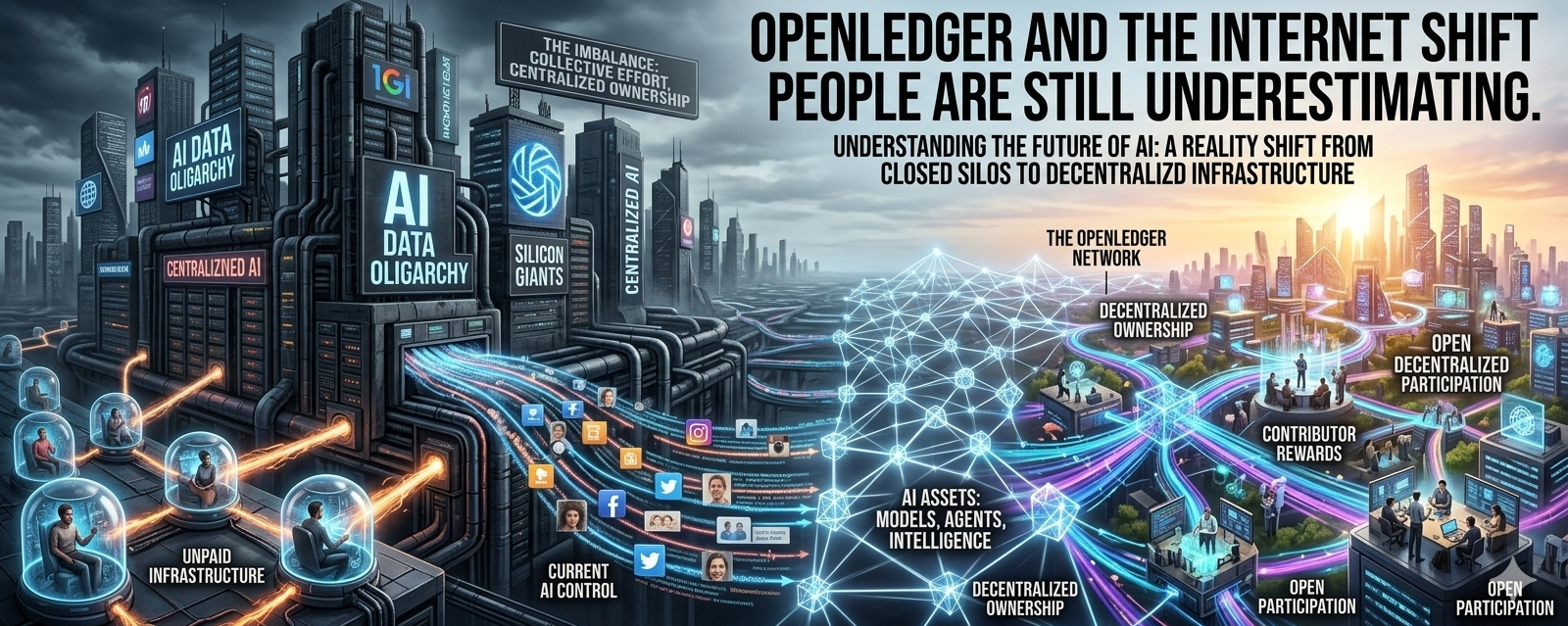
OPENLEDGER E A MUDANÇA NA INTERNET QUE AS PESSOAS AINDA ESTÃO SUBESTIMANDOA maioria dos projetos de IA agora parece vazia assim que você olha além do marketing. As mesmas promessas recicladas em todo lugar. Os mesmos threads dramáticos sobre “mudar o futuro.” Os mesmos sites polidos cheios de palavras que ninguém fala na vida real. Todo projeto de repente afirma estar construindo a próxima geração de inteligência, mas quando você realmente olha mais a fundo, a maioria deles está apenas reempacotando os mesmos sistemas centralizados com um rótulo de cripto por cima. É por isso que tantas pessoas pararam de se importar. A empolgação desapareceu porque o espaço ficou inundado de ruído. Muitos fundadores tentando fabricar hype. Muitos tokens fingindo ser tecnologia. Muitas pessoas correndo atrás de tendências sem entender o problema que deveriam resolver mais.
OPENLEDGER E A MUDANÇA NA INTERNET QUE AS PESSOAS AINDA ESTÃO SUBESTIMANDO
A maioria dos projetos de IA agora parece vazia assim que você olha além do marketing. As mesmas promessas recicladas em todo lugar. Os mesmos threads dramáticos sobre “mudar o futuro.” Os mesmos sites polidos cheios de palavras que ninguém fala na vida real. Todo projeto de repente afirma estar construindo a próxima geração de inteligência, mas quando você realmente olha mais a fundo, a maioria deles está apenas reempacotando os mesmos sistemas centralizados com um rótulo de cripto por cima. É por isso que tantas pessoas pararam de se importar. A empolgação desapareceu porque o espaço ficou inundado de ruído. Muitos fundadores tentando fabricar hype. Muitos tokens fingindo ser tecnologia. Muitas pessoas correndo atrás de tendências sem entender o problema que deveriam resolver mais.
1
2
134
·
--
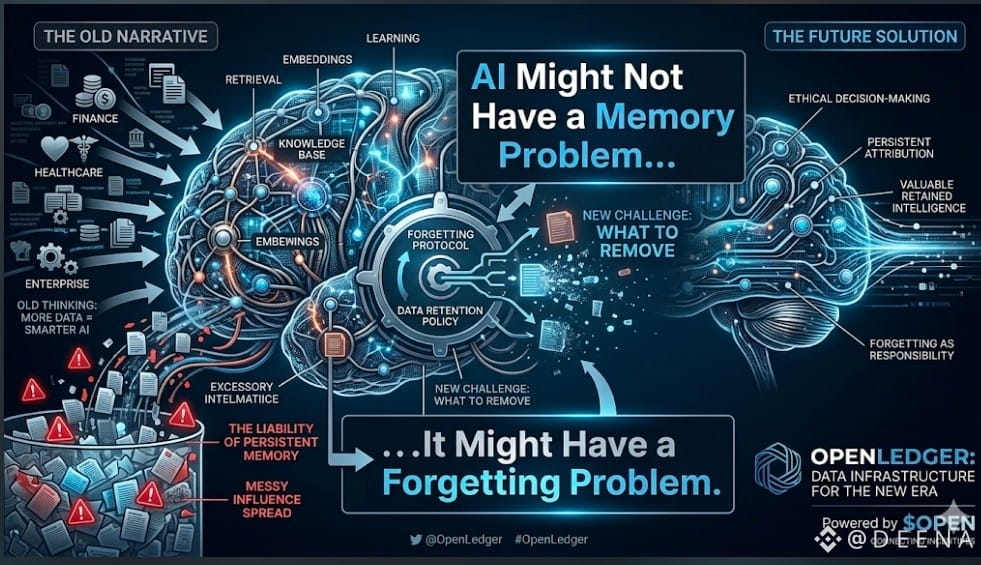
A IA Pode Não Ter um Problema de Memória… Pode Ter um Problema de Esquecimento
Ultimamente, tenho pensado na IA de uma forma muito diferente. Por anos, toda a indústria tratou a memória como uma vantagem ilimitada. Quanto mais dados um sistema conseguia coletar, armazenar e aprender, mais inteligente ele se tornava. Mas à medida que a IA se aprofunda nas finanças, saúde, operações empresariais e na tomada de decisões reais, sinto que o verdadeiro desafio está mudando silenciosamente.
Não acho que o futuro pertença aos sistemas que lembram de tudo para sempre.
Acredito que pode pertencer aos sistemas que entendem o que não deve mais ser lembrado.
É por isso que a OpenLedger chamou minha atenção.
A maioria das pessoas a descreve como uma infraestrutura de dados de IA onde os colaboradores fornecem informações, modelos melhoram e $OPEN conecta os incentivos. Mas eu acho que há uma camada mais profunda se formando sob essa narrativa. Uma vez que a informação entra nos sistemas de IA, remover sua influência se torna extremamente difícil. Os dados se espalham através de treinamento, embeddings, sistemas de recuperação e padrões comportamentais de maneiras muito mais complicadas do que as pessoas percebem.
E uma vez que a IA começa a tocar fluxos de trabalho sensíveis, a memória em si se torna uma responsabilidade.
Isso muda completamente a economia.
Se a atribuição se torna persistente e valiosa, então a inteligência retida deixa de ser uma infraestrutura gratuita. De repente, esquecer se torna tão importante quanto aprender.
E, honestamente, não acho que o mercado tenha precificado isso completamente ainda.
#OpenLedger @Openledger $OPEN
{spot}(OPENUSDT)
A IA Pode Não Ter um Problema de Memória… Pode Ter um Problema de Esquecimento
Ultimamente, tenho pensado na IA de uma forma muito diferente. Por anos, toda a indústria tratou a memória como uma vantagem ilimitada. Quanto mais dados um sistema conseguia coletar, armazenar e aprender, mais inteligente ele se tornava. Mas à medida que a IA se aprofunda nas finanças, saúde, operações empresariais e na tomada de decisões reais, sinto que o verdadeiro desafio está mudando silenciosamente.
Não acho que o futuro pertença aos sistemas que lembram de tudo para sempre.
Acredito que pode pertencer aos sistemas que entendem o que não deve mais ser lembrado.
É por isso que a OpenLedger chamou minha atenção.
A maioria das pessoas a descreve como uma infraestrutura de dados de IA onde os colaboradores fornecem informações, modelos melhoram e $OPEN conecta os incentivos. Mas eu acho que há uma camada mais profunda se formando sob essa narrativa. Uma vez que a informação entra nos sistemas de IA, remover sua influência se torna extremamente difícil. Os dados se espalham através de treinamento, embeddings, sistemas de recuperação e padrões comportamentais de maneiras muito mais complicadas do que as pessoas percebem.
E uma vez que a IA começa a tocar fluxos de trabalho sensíveis, a memória em si se torna uma responsabilidade.
Isso muda completamente a economia.
Se a atribuição se torna persistente e valiosa, então a inteligência retida deixa de ser uma infraestrutura gratuita. De repente, esquecer se torna tão importante quanto aprender.
E, honestamente, não acho que o mercado tenha precificado isso completamente ainda.
#OpenLedger @OpenLedger $OPEN
Ultimamente, tenho pensado na IA de uma forma muito diferente. Por anos, toda a indústria tratou a memória como uma vantagem ilimitada. Quanto mais dados um sistema conseguia coletar, armazenar e aprender, mais inteligente ele se tornava. Mas à medida que a IA se aprofunda nas finanças, saúde, operações empresariais e na tomada de decisões reais, sinto que o verdadeiro desafio está mudando silenciosamente.
Não acho que o futuro pertença aos sistemas que lembram de tudo para sempre.
Acredito que pode pertencer aos sistemas que entendem o que não deve mais ser lembrado.
É por isso que a OpenLedger chamou minha atenção.
A maioria das pessoas a descreve como uma infraestrutura de dados de IA onde os colaboradores fornecem informações, modelos melhoram e $OPEN conecta os incentivos. Mas eu acho que há uma camada mais profunda se formando sob essa narrativa. Uma vez que a informação entra nos sistemas de IA, remover sua influência se torna extremamente difícil. Os dados se espalham através de treinamento, embeddings, sistemas de recuperação e padrões comportamentais de maneiras muito mais complicadas do que as pessoas percebem.
E uma vez que a IA começa a tocar fluxos de trabalho sensíveis, a memória em si se torna uma responsabilidade.
Isso muda completamente a economia.
Se a atribuição se torna persistente e valiosa, então a inteligência retida deixa de ser uma infraestrutura gratuita. De repente, esquecer se torna tão importante quanto aprender.
E, honestamente, não acho que o mercado tenha precificado isso completamente ainda.
#OpenLedger @OpenLedger $OPEN
97
·
--
Artigo
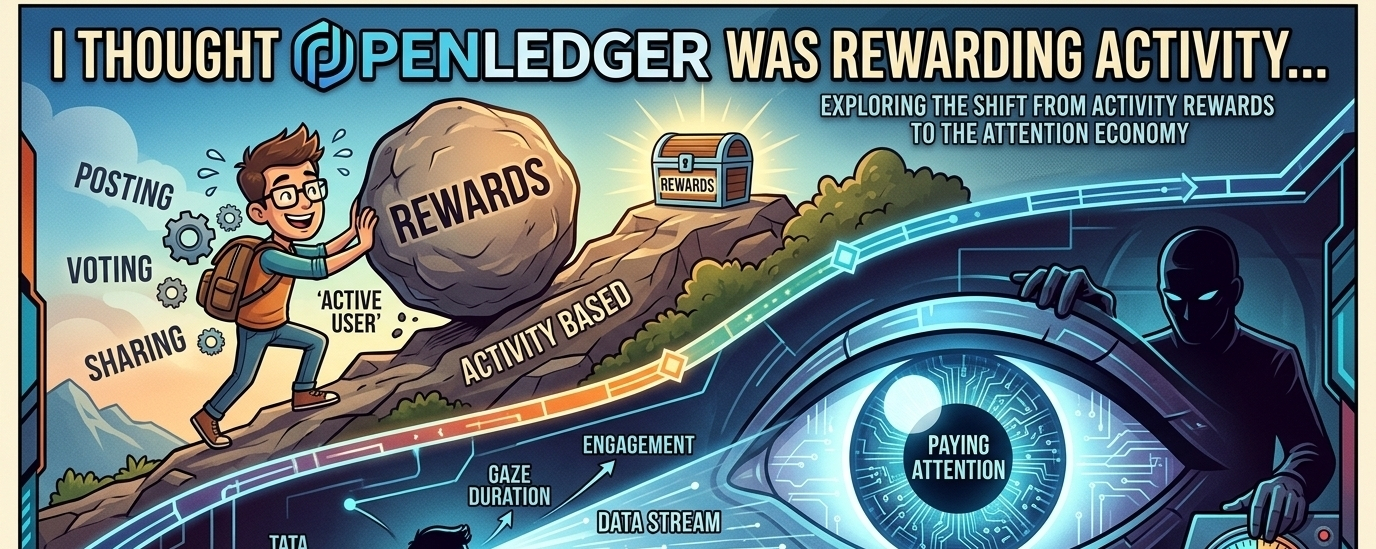
Eu Achei que o OpenLedger Recompensava Atividade… Até Eu Perceber que Estava Prestando Atenção em Outra Coisa
Quando comecei a usar o OpenLedger, pensei que tinha entendido o sistema bem rápido.
Parecia semelhante a muitos outros ecossistemas que já vi antes. Fique ativo, complete tarefas, engaje consistentemente, volte amanhã, repita. A estrutura parecia familiar o suficiente para que eu não pensasse muito sobre isso no começo. Honestamente, assumi que a ideia era simples: quanto mais visível você é, mais valor você cria dentro da rede.
E por um tempo, essa crença fazia sentido para mim.
Porque os sistemas online geralmente nos treinam a pensar que atividade é igual a importância. Se você posta mais, interage mais e está constantemente presente, eventualmente o sistema percebe você. É assim que a maioria das plataformas funciona agora, então naturalmente levei essa mesma mentalidade para o OpenLedger também.
Quando comecei a usar o OpenLedger, pensei que tinha entendido o sistema bem rápido.
Parecia semelhante a muitos outros ecossistemas que já vi antes. Fique ativo, complete tarefas, engaje consistentemente, volte amanhã, repita. A estrutura parecia familiar o suficiente para que eu não pensasse muito sobre isso no começo. Honestamente, assumi que a ideia era simples: quanto mais visível você é, mais valor você cria dentro da rede.
E por um tempo, essa crença fazia sentido para mim.
Porque os sistemas online geralmente nos treinam a pensar que atividade é igual a importância. Se você posta mais, interage mais e está constantemente presente, eventualmente o sistema percebe você. É assim que a maioria das plataformas funciona agora, então naturalmente levei essa mesma mentalidade para o OpenLedger também.
Eu Achei que o OpenLedger Recompensava Atividade… Até Eu Perceber que Estava Prestando Atenção em Outra Coisa
Quando comecei a usar o OpenLedger, pensei que tinha entendido o sistema bem rápido.
Parecia semelhante a muitos outros ecossistemas que já vi antes. Fique ativo, complete tarefas, engaje consistentemente, volte amanhã, repita. A estrutura parecia familiar o suficiente para que eu não pensasse muito sobre isso no começo. Honestamente, assumi que a ideia era simples: quanto mais visível você é, mais valor você cria dentro da rede.
E por um tempo, essa crença fazia sentido para mim.
Porque os sistemas online geralmente nos treinam a pensar que atividade é igual a importância. Se você posta mais, interage mais e está constantemente presente, eventualmente o sistema percebe você. É assim que a maioria das plataformas funciona agora, então naturalmente levei essa mesma mentalidade para o OpenLedger também.
100
·
--
Por Que Eu Acho Que o Genius Terminal Está Mudando Silenciosamente a Forma Como o Trading On-Chain Funciona
Eu costumava pensar que a maioria dos terminais on-chain era basicamente a mesma coisa, com interfaces diferentes, marcas diferentes e promessas de execução um pouco mais rápidas. Mas quanto mais tempo eu passava observando como os traders realmente se movimentam nos mercados, mais percebia que a verdadeira lacuna não é apenas a velocidade. É a privacidade, a simplicidade e a sensação de controle enquanto tudo ao seu redor se move em um caos. É aí que o Genius Terminal começou a se destacar para mim.
O que chamou minha atenção foi a ideia de ser o primeiro terminal on-chain privado e final. No crypto, as pessoas falam constantemente sobre transparência, mas muito poucos falam sobre o custo de expor cada movimento antes da execução. O mercado observa tudo. As wallets são rastreadas. As estratégias se tornam padrões públicos. Com o tempo, isso muda o comportamento dos traders. Acho que o Genius Terminal entende essa fricção oculta melhor do que a maioria das plataformas.
O que torna isso interessante não é hype ou marketing chamativo. É a direção. O terminal parece ser construído em torno do foco na execução, em vez de barulho. Fluxo mais limpo. Menos distração. Mais controle sobre como os usuários interagem com a liquidez on-chain e informações.
Acho que a próxima fase da infraestrutura crypto pertencerá a produtos que reduzem a fricção silenciosamente, enquanto os usuários mal notam que isso está acontecendo. O Genius Terminal parece ser um desses sistemas.
#genius @GeniusOfficial $GENIUS
{spot}(GENIUSUSDT)
Por Que Eu Acho Que o Genius Terminal Está Mudando Silenciosamente a Forma Como o Trading On-Chain Funciona
Eu costumava pensar que a maioria dos terminais on-chain era basicamente a mesma coisa, com interfaces diferentes, marcas diferentes e promessas de execução um pouco mais rápidas. Mas quanto mais tempo eu passava observando como os traders realmente se movimentam nos mercados, mais percebia que a verdadeira lacuna não é apenas a velocidade. É a privacidade, a simplicidade e a sensação de controle enquanto tudo ao seu redor se move em um caos. É aí que o Genius Terminal começou a se destacar para mim.
O que chamou minha atenção foi a ideia de ser o primeiro terminal on-chain privado e final. No crypto, as pessoas falam constantemente sobre transparência, mas muito poucos falam sobre o custo de expor cada movimento antes da execução. O mercado observa tudo. As wallets são rastreadas. As estratégias se tornam padrões públicos. Com o tempo, isso muda o comportamento dos traders. Acho que o Genius Terminal entende essa fricção oculta melhor do que a maioria das plataformas.
O que torna isso interessante não é hype ou marketing chamativo. É a direção. O terminal parece ser construído em torno do foco na execução, em vez de barulho. Fluxo mais limpo. Menos distração. Mais controle sobre como os usuários interagem com a liquidez on-chain e informações.
Acho que a próxima fase da infraestrutura crypto pertencerá a produtos que reduzem a fricção silenciosamente, enquanto os usuários mal notam que isso está acontecendo. O Genius Terminal parece ser um desses sistemas.
#genius @GeniusOfficial $GENIUS
Eu costumava pensar que a maioria dos terminais on-chain era basicamente a mesma coisa, com interfaces diferentes, marcas diferentes e promessas de execução um pouco mais rápidas. Mas quanto mais tempo eu passava observando como os traders realmente se movimentam nos mercados, mais percebia que a verdadeira lacuna não é apenas a velocidade. É a privacidade, a simplicidade e a sensação de controle enquanto tudo ao seu redor se move em um caos. É aí que o Genius Terminal começou a se destacar para mim.
O que chamou minha atenção foi a ideia de ser o primeiro terminal on-chain privado e final. No crypto, as pessoas falam constantemente sobre transparência, mas muito poucos falam sobre o custo de expor cada movimento antes da execução. O mercado observa tudo. As wallets são rastreadas. As estratégias se tornam padrões públicos. Com o tempo, isso muda o comportamento dos traders. Acho que o Genius Terminal entende essa fricção oculta melhor do que a maioria das plataformas.
O que torna isso interessante não é hype ou marketing chamativo. É a direção. O terminal parece ser construído em torno do foco na execução, em vez de barulho. Fluxo mais limpo. Menos distração. Mais controle sobre como os usuários interagem com a liquidez on-chain e informações.
Acho que a próxima fase da infraestrutura crypto pertencerá a produtos que reduzem a fricção silenciosamente, enquanto os usuários mal notam que isso está acontecendo. O Genius Terminal parece ser um desses sistemas.
#genius @GeniusOfficial $GENIUS
90
·
--
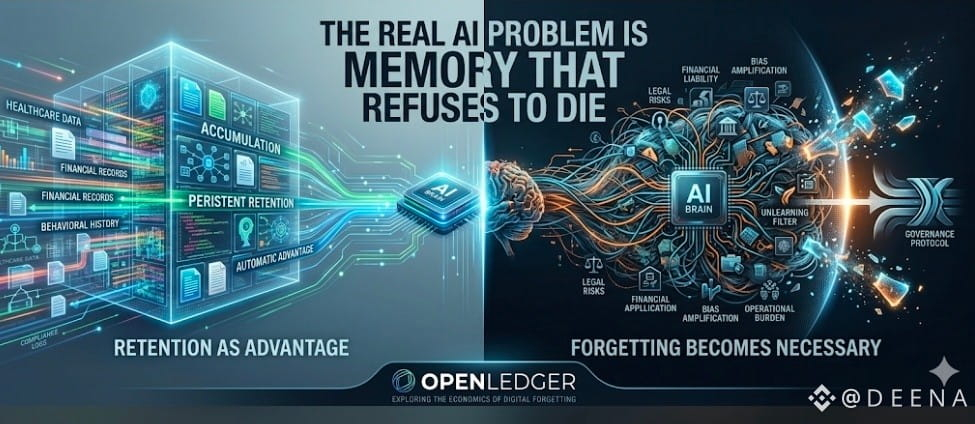
O verdadeiro problema da IA pode não ser a inteligência... Mas a memória que se recusa a morrer
Eu continuo voltando a um pensamento desconfortável sobre IA.
O verdadeiro problema pode não ser a inteligência em si. Pode ser a memória.
Por anos, a indústria tech tratou a retenção como uma vantagem automática. Armazenar mais dados. Rastrear mais comportamentos. Preservar mais histórico. A suposição era simples: mais memória cria sistemas melhores.
Mas à medida que a IA avança mais no setor de saúde, finanças, conformidade, operações de clientes e tomada de decisões, fica cada vez mais difícil ignorar o lado negativo dessa lógica.
Porque a IA realmente não “esquece.”
Uma vez que a informação entra em um pipeline de treinamento, camada de recuperação ou sistema comportamental, ela se espalha pelo modelo de formas que são difíceis de isolar mais tarde. Deletar um arquivo é fácil. Remover a influência de informações da própria inteligência é muito mais difícil.
Essa mudança é parte do motivo pelo qual a OpenLedger começou a parecer mais interessante para mim.
A princípio, eu a vi como mais uma narrativa de infraestrutura de IA focada em atribuição e coordenação de dados. Mas a camada mais profunda pode ser algo totalmente diferente.
Uma vez que a atribuição se torna persistente e economicamente significativa, a memória deixa de ser uma infraestrutura gratuita. Ela se torna uma responsabilidade, um ativo e, eventualmente, um problema de governança tudo ao mesmo tempo.
E no momento em que a memória carrega peso legal, financeiro e operacional, esquecer deixa de parecer ineficiente.
Começa a parecer necessário.
#openledger @Openledger $OPEN
{spot}(OPENUSDT)
O verdadeiro problema da IA pode não ser a inteligência... Mas a memória que se recusa a morrer
Eu continuo voltando a um pensamento desconfortável sobre IA.
O verdadeiro problema pode não ser a inteligência em si. Pode ser a memória.
Por anos, a indústria tech tratou a retenção como uma vantagem automática. Armazenar mais dados. Rastrear mais comportamentos. Preservar mais histórico. A suposição era simples: mais memória cria sistemas melhores.
Mas à medida que a IA avança mais no setor de saúde, finanças, conformidade, operações de clientes e tomada de decisões, fica cada vez mais difícil ignorar o lado negativo dessa lógica.
Porque a IA realmente não “esquece.”
Uma vez que a informação entra em um pipeline de treinamento, camada de recuperação ou sistema comportamental, ela se espalha pelo modelo de formas que são difíceis de isolar mais tarde. Deletar um arquivo é fácil. Remover a influência de informações da própria inteligência é muito mais difícil.
Essa mudança é parte do motivo pelo qual a OpenLedger começou a parecer mais interessante para mim.
A princípio, eu a vi como mais uma narrativa de infraestrutura de IA focada em atribuição e coordenação de dados. Mas a camada mais profunda pode ser algo totalmente diferente.
Uma vez que a atribuição se torna persistente e economicamente significativa, a memória deixa de ser uma infraestrutura gratuita. Ela se torna uma responsabilidade, um ativo e, eventualmente, um problema de governança tudo ao mesmo tempo.
E no momento em que a memória carrega peso legal, financeiro e operacional, esquecer deixa de parecer ineficiente.
Começa a parecer necessário.
#openledger @OpenLedger $OPEN
Eu continuo voltando a um pensamento desconfortável sobre IA.
O verdadeiro problema pode não ser a inteligência em si. Pode ser a memória.
Por anos, a indústria tech tratou a retenção como uma vantagem automática. Armazenar mais dados. Rastrear mais comportamentos. Preservar mais histórico. A suposição era simples: mais memória cria sistemas melhores.
Mas à medida que a IA avança mais no setor de saúde, finanças, conformidade, operações de clientes e tomada de decisões, fica cada vez mais difícil ignorar o lado negativo dessa lógica.
Porque a IA realmente não “esquece.”
Uma vez que a informação entra em um pipeline de treinamento, camada de recuperação ou sistema comportamental, ela se espalha pelo modelo de formas que são difíceis de isolar mais tarde. Deletar um arquivo é fácil. Remover a influência de informações da própria inteligência é muito mais difícil.
Essa mudança é parte do motivo pelo qual a OpenLedger começou a parecer mais interessante para mim.
A princípio, eu a vi como mais uma narrativa de infraestrutura de IA focada em atribuição e coordenação de dados. Mas a camada mais profunda pode ser algo totalmente diferente.
Uma vez que a atribuição se torna persistente e economicamente significativa, a memória deixa de ser uma infraestrutura gratuita. Ela se torna uma responsabilidade, um ativo e, eventualmente, um problema de governança tudo ao mesmo tempo.
E no momento em que a memória carrega peso legal, financeiro e operacional, esquecer deixa de parecer ineficiente.
Começa a parecer necessário.
#openledger @OpenLedger $OPEN
90
Inicia sessão para explorar mais conteúdos
Junta-te a utilizadores de criptomoedas de todo o mundo na Binance Square
⚡️ Obtém informações úteis e recentes sobre criptomoedas.
💬 Com a confiança da maior exchange de criptomoedas do mundo.
👍 Descobre perspetivas reais de criadores verificados.
E-mail/Número de telefone
Tópicos em Tendência
HYPEJumpsOver11%
5,358 visualizações
279 a discutir
🚨 O HYPE ACABOU DE VIRAR O JOGO NO MERCADO
$HYPE +11% em 7 Dias
Enquanto $XRP e $ETH estavam sangrando...
HYPE entrou no TOP 10 e expulsou Cardano.
Por quê?
-> $1,3B+ de Open Interest
-> Fluxos de ETF superando os ETFs de BTC & ETH
-> Grande queima de oferta em andamento
Isso não é só um pump. Isso é domínio.
Você está assistindo ou JÁ ESTÁ ENTRANDO? 👇
#HYPE #Hyperliquid #Crypto #BinanceSquare#hypejumpsover11%
True News
·3 gostos
·1.7k visualizações
ZcashDevelopersTargetNU7MainnetActivationNov5
0 visualizações
2 a discutir
BitcoinSpotETFsNetInflow$159M
1,707 visualizações
73 a discutir