
Techgeeg 1
184 Publicações

Techgeeg 1
Denunciar
Bloquear Utilizador
0 A seguir
1 Seguidores
4 Gostaram
Publicações
·
--
Ver tradução
$LAPTOP is a good reminder of how brutal memecoin launches can be.
What caught my attention isn’t just that thousands of wallets lost money. It’s how much the outcome can depend on timing, wallet concentration and who gets positioned early.
Some wallets reportedly turned huge positions into millions, while one buyer watched $200K shrink to around $3K in minutes.
I don’t think every early wallet should automatically be labelled a “dumping wallet” either. Position ≠ intent.
For me, the bigger lesson is simple: don’t just look at the chart. Look at the wallets behind it.
Tools like Bubblemaps can help reveal concentration and connections that price action alone won’t show.
Memecoin launches are risky enough. Knowing who holds the supply should be part of the research.
Normal memecoin mechanics, or something worth deeper scrutiny?
#Macro Insights# #Altcoin Season#
$LAPTOP is a good reminder of how brutal memecoin launches can be.
What caught my attention isn’t just that thousands of wallets lost money. It’s how much the outcome can depend on timing, wallet concentration and who gets positioned early.
Some wallets reportedly turned huge positions into millions, while one buyer watched $200K shrink to around $3K in minutes.
I don’t think every early wallet should automatically be labelled a “dumping wallet” either. Position ≠ intent.
For me, the bigger lesson is simple: don’t just look at the chart. Look at the wallets behind it.
Tools like Bubblemaps can help reveal concentration and connections that price action alone won’t show.
Memecoin launches are risky enough. Knowing who holds the supply should be part of the research.
Normal memecoin mechanics, or something worth deeper scrutiny?
#Macro Insights# #Altcoin Season#
What caught my attention isn’t just that thousands of wallets lost money. It’s how much the outcome can depend on timing, wallet concentration and who gets positioned early.
Some wallets reportedly turned huge positions into millions, while one buyer watched $200K shrink to around $3K in minutes.
I don’t think every early wallet should automatically be labelled a “dumping wallet” either. Position ≠ intent.
For me, the bigger lesson is simple: don’t just look at the chart. Look at the wallets behind it.
Tools like Bubblemaps can help reveal concentration and connections that price action alone won’t show.
Memecoin launches are risky enough. Knowing who holds the supply should be part of the research.
Normal memecoin mechanics, or something worth deeper scrutiny?
#Macro Insights# #Altcoin Season#
60
·
--
As compras de ETH da BlackRock estão ficando difíceis de ignorar.
O ETHA teria captado cerca de US$ 1,02B ao longo de nove sessões consecutivas de negociação, mostrando que a demanda institucional por Ethereum não é apenas um pico de um dia.
A parte interessante é a consistência.
Se as instituições continuarem acumulando enquanto o ETH negocia por volta desses níveis, a grande questão pode não ser se o Ethereum está chamando a atenção do Bitcoin, mas se o discurso institucional já começou a mudar.
Observando o ETH de perto. 👀
$BTC $ETH #Altcoin Season#
As compras de ETH da BlackRock estão ficando difíceis de ignorar.
O ETHA teria captado cerca de US$ 1,02B ao longo de nove sessões consecutivas de negociação, mostrando que a demanda institucional por Ethereum não é apenas um pico de um dia.
A parte interessante é a consistência.
Se as instituições continuarem acumulando enquanto o ETH negocia por volta desses níveis, a grande questão pode não ser se o Ethereum está chamando a atenção do Bitcoin, mas se o discurso institucional já começou a mudar.
Observando o ETH de perto. 👀
$BTC $ETH #Altcoin Season#
O ETHA teria captado cerca de US$ 1,02B ao longo de nove sessões consecutivas de negociação, mostrando que a demanda institucional por Ethereum não é apenas um pico de um dia.
A parte interessante é a consistência.
Se as instituições continuarem acumulando enquanto o ETH negocia por volta desses níveis, a grande questão pode não ser se o Ethereum está chamando a atenção do Bitcoin, mas se o discurso institucional já começou a mudar.
Observando o ETH de perto. 👀
$BTC $ETH #Altcoin Season#

25
·
--
Ver tradução
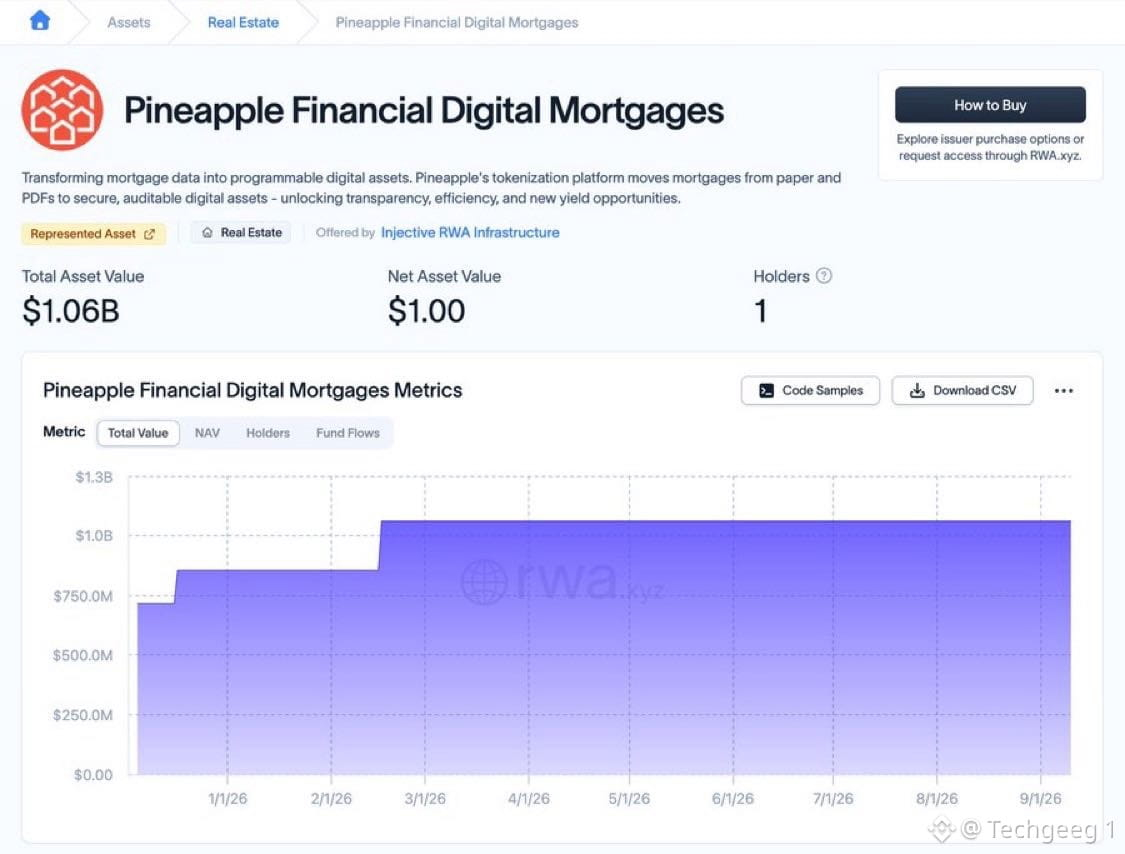
Real estate going onchain is a big deal.
Over $1B in mortgages being tokenized on Injective shows that RWAs are moving beyond the narrative and into actual financial infrastructure.
That’s the kind of growth that makes $INJ worth watching.
Real estate going onchain is a big deal.
Over $1B in mortgages being tokenized on Injective shows that RWAs are moving beyond the narrative and into actual financial infrastructure.
That’s the kind of growth that makes $INJ worth watching.
Over $1B in mortgages being tokenized on Injective shows that RWAs are moving beyond the narrative and into actual financial infrastructure.
That’s the kind of growth that makes $INJ worth watching.
24
·
--
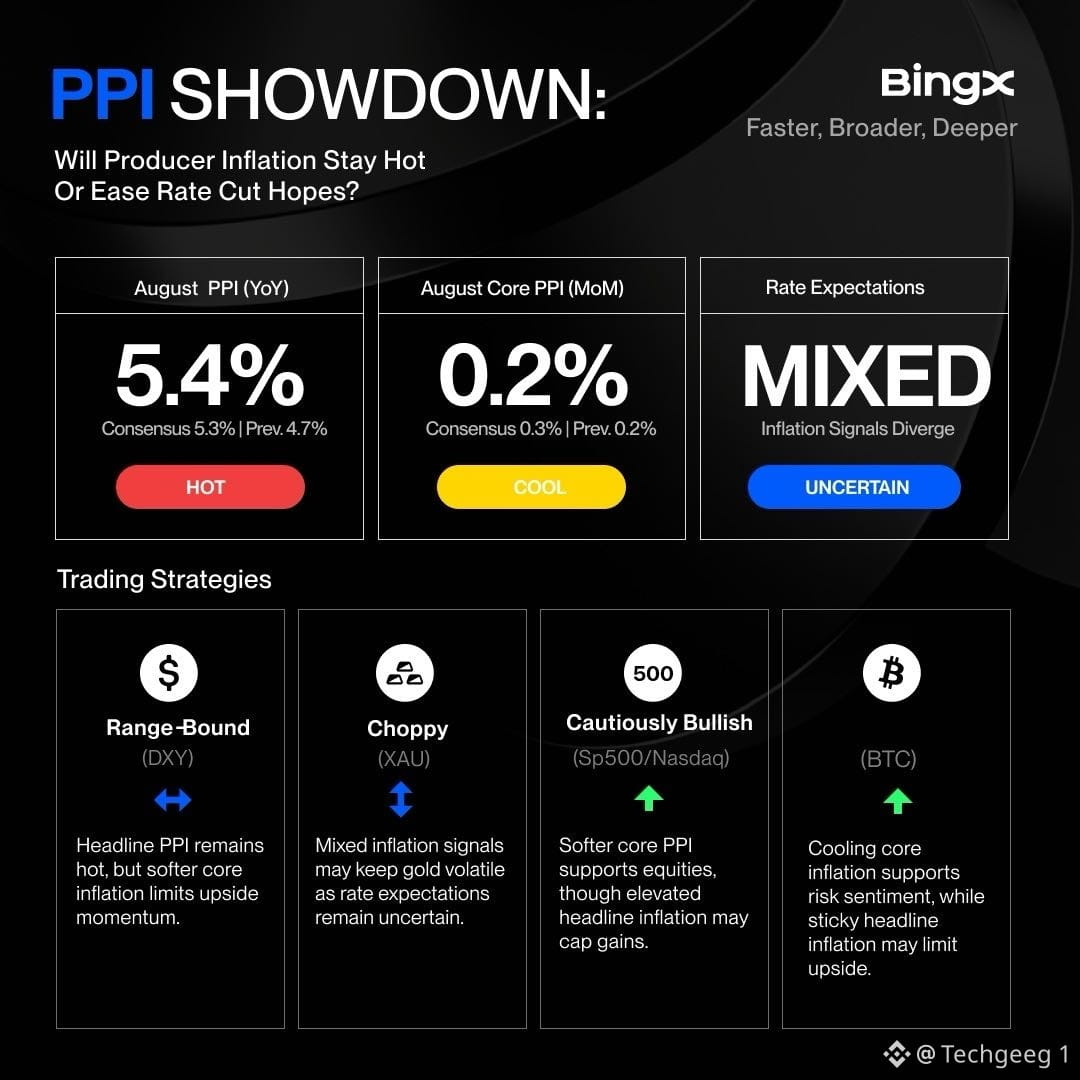
PPI chegou ao mercado com um sinal misto.
O PPI subiu para 5,4% YoY, mas o PPI core desacelerou para 0,2% MoM.
Isso dá ao Fed um pouco mais para pensar antes de tomar o próximo passo.
BTC e SPX estão se mantendo por enquanto, enquanto o ouro pode continuar imprevisível.
Ainda de olho de perto no cenário macro. 👀
$BTC $SPX $XAU
PPI chegou ao mercado com um sinal misto.
O PPI subiu para 5,4% YoY, mas o PPI core desacelerou para 0,2% MoM.
Isso dá ao Fed um pouco mais para pensar antes de tomar o próximo passo.
BTC e SPX estão se mantendo por enquanto, enquanto o ouro pode continuar imprevisível.
Ainda de olho de perto no cenário macro. 👀
$BTC $SPX $XAU
O PPI subiu para 5,4% YoY, mas o PPI core desacelerou para 0,2% MoM.
Isso dá ao Fed um pouco mais para pensar antes de tomar o próximo passo.
BTC e SPX estão se mantendo por enquanto, enquanto o ouro pode continuar imprevisível.
Ainda de olho de perto no cenário macro. 👀
$BTC $SPX $XAU
101
·
--
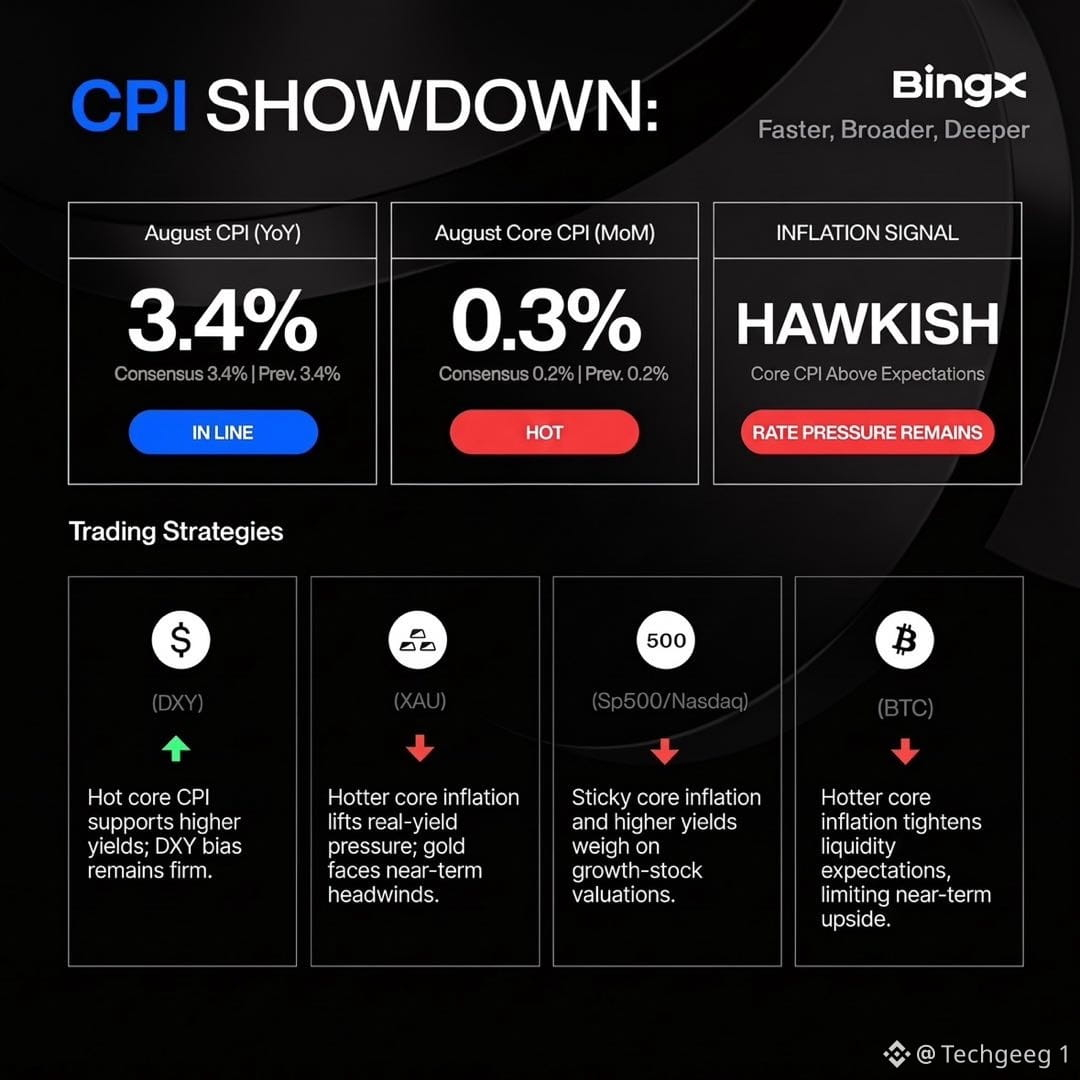
A divulgação do CPI não está exatamente oferecendo um caminho fácil ao Fed.
O CPI cheio ficou em 3,4% YoY, conforme o esperado, mas o CPI núcleo veio mais quente do que a previsão, em 0,3% MoM.
Ainda assim, isso é o bastante para manter as preocupações com a inflação vivas e as expectativas de corte de juros sob controle.
O DXY parece mais forte, enquanto o BTC e o ouro podem sentir alguma pressão no curto prazo.
O macro ainda está no comando. 👀
$BTC $DXY $XAU
A divulgação do CPI não está exatamente oferecendo um caminho fácil ao Fed.
O CPI cheio ficou em 3,4% YoY, conforme o esperado, mas o CPI núcleo veio mais quente do que a previsão, em 0,3% MoM.
Ainda assim, isso é o bastante para manter as preocupações com a inflação vivas e as expectativas de corte de juros sob controle.
O DXY parece mais forte, enquanto o BTC e o ouro podem sentir alguma pressão no curto prazo.
O macro ainda está no comando. 👀
$BTC $DXY $XAU
O CPI cheio ficou em 3,4% YoY, conforme o esperado, mas o CPI núcleo veio mais quente do que a previsão, em 0,3% MoM.
Ainda assim, isso é o bastante para manter as preocupações com a inflação vivas e as expectativas de corte de juros sob controle.
O DXY parece mais forte, enquanto o BTC e o ouro podem sentir alguma pressão no curto prazo.
O macro ainda está no comando. 👀
$BTC $DXY $XAU
84
·
--
Ver tradução
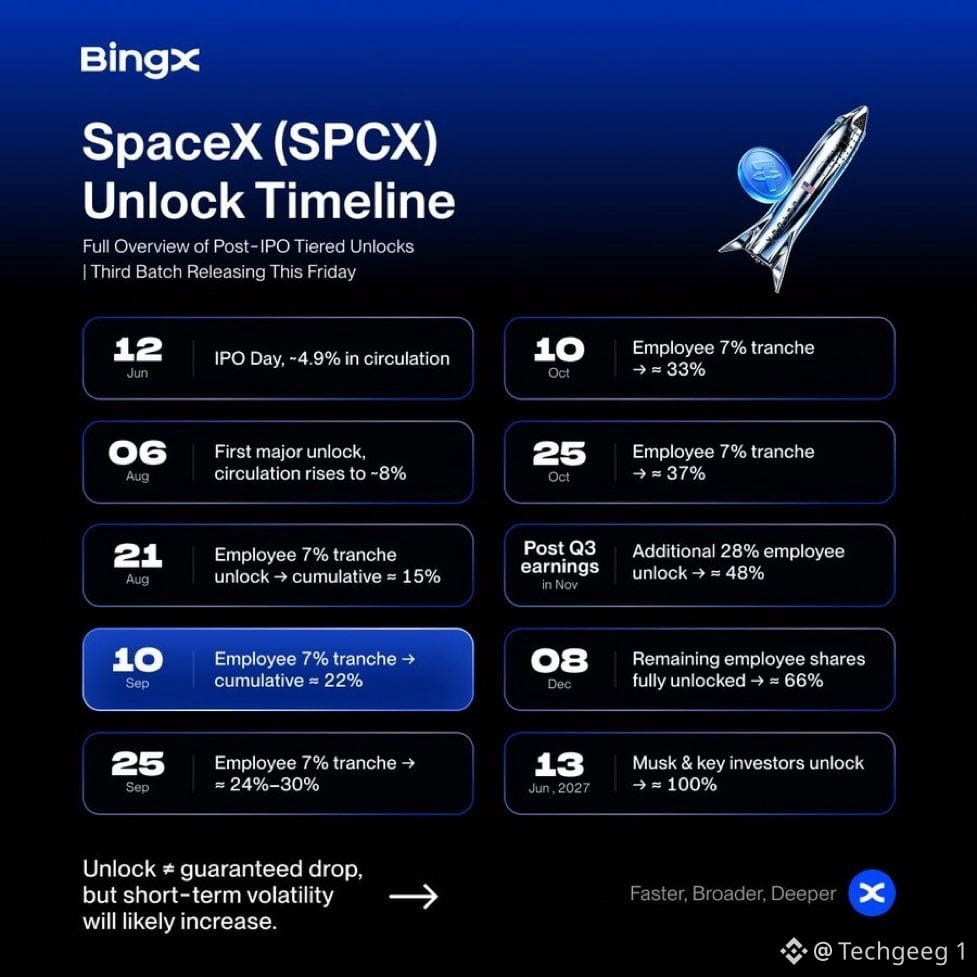
SPCX has another unlock coming, so it’s definitely one to keep on the radar.
The 7% employee tranche pushes circulating supply to around 22%, with another unlock scheduled for September 25.
That doesn’t automatically mean a dump, but extra supply can add some short-term volatility.
I’m watching SPCX/USDT on BingX TradFi to see how the market reacts. 👀
#SPCX #SpaceX
$SPCX
SPCX has another unlock coming, so it’s definitely one to keep on the radar.
The 7% employee tranche pushes circulating supply to around 22%, with another unlock scheduled for September 25.
That doesn’t automatically mean a dump, but extra supply can add some short-term volatility.
I’m watching SPCX/USDT on BingX TradFi to see how the market reacts. 👀
#SPCX #SpaceX
$SPCX
The 7% employee tranche pushes circulating supply to around 22%, with another unlock scheduled for September 25.
That doesn’t automatically mean a dump, but extra supply can add some short-term volatility.
I’m watching SPCX/USDT on BingX TradFi to see how the market reacts. 👀
#SPCX #SpaceX
$SPCX
·
--
Ver tradução
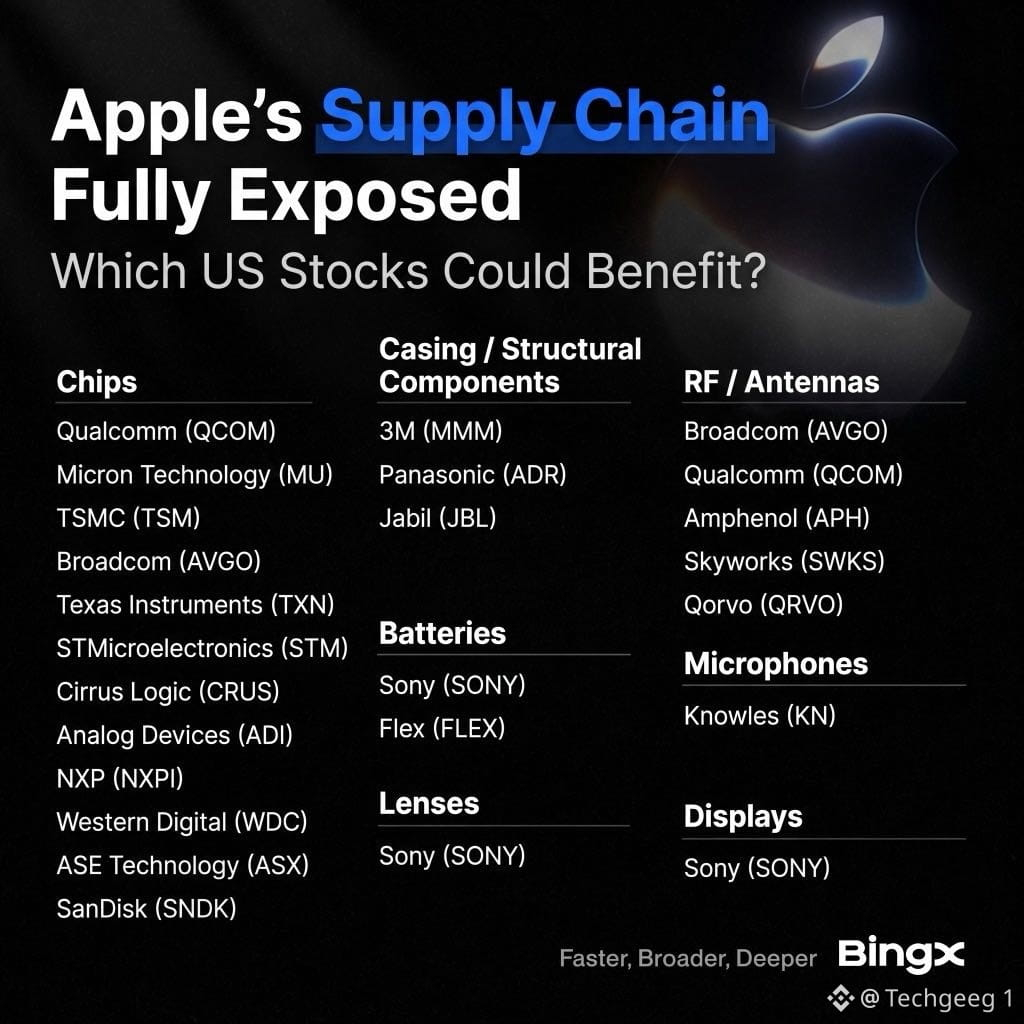
Apple’s impact goes far beyond the iPhone itself.
Behind every device is a huge network of suppliers like TSMC, Qualcomm, Broadcom, Sony, Micron and others. So when Apple moves, the ripple effects can reach across the entire tech supply chain.
I’ve been checking some of these names on BingX TradFi to see which ones are catching the most attention. 🍎📱
#Apple #TradFi
$AAPL
Apple’s impact goes far beyond the iPhone itself.
Behind every device is a huge network of suppliers like TSMC, Qualcomm, Broadcom, Sony, Micron and others. So when Apple moves, the ripple effects can reach across the entire tech supply chain.
I’ve been checking some of these names on BingX TradFi to see which ones are catching the most attention. 🍎📱
#Apple #TradFi
$AAPL
Behind every device is a huge network of suppliers like TSMC, Qualcomm, Broadcom, Sony, Micron and others. So when Apple moves, the ripple effects can reach across the entire tech supply chain.
I’ve been checking some of these names on BingX TradFi to see which ones are catching the most attention. 🍎📱
#Apple #TradFi
$AAPL
·
--
Ver tradução
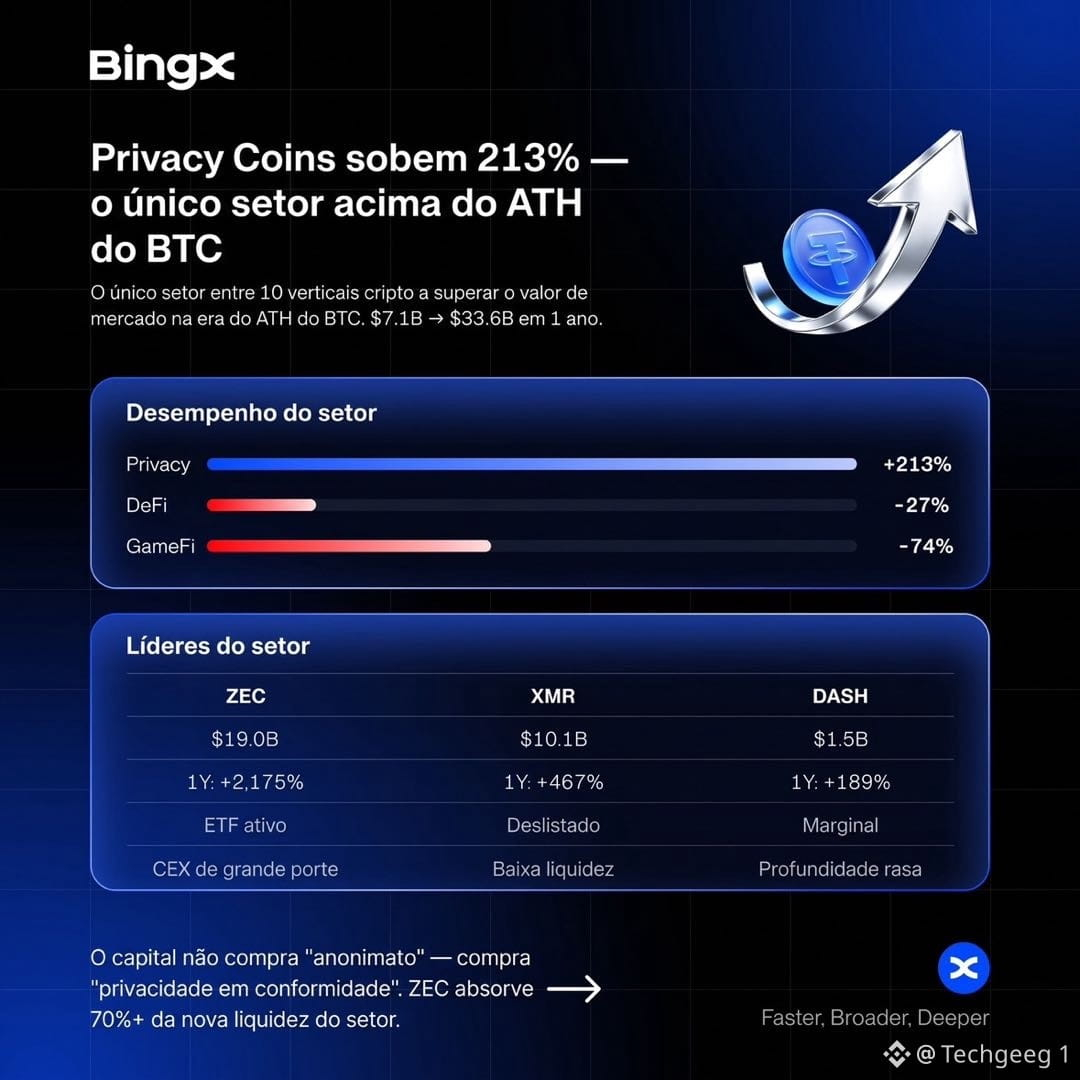
Privacy coins are clearly back in the spotlight.
The sector has gained roughly 213%, with ZEC emerging as one of the strongest performers over the past year.
I’ve added ZEC/USDT to my BingX watchlist because this consolidation phase is starting to look interesting.
That doesn’t necessarily mean a breakout is imminent, but the privacy narrative is undeniably back on traders’ radar. 👀
#ZEC #PrivacyCoins
$ZEC
Privacy coins are clearly back in the spotlight.
The sector has gained roughly 213%, with ZEC emerging as one of the strongest performers over the past year.
I’ve added ZEC/USDT to my BingX watchlist because this consolidation phase is starting to look interesting.
That doesn’t necessarily mean a breakout is imminent, but the privacy narrative is undeniably back on traders’ radar. 👀
#ZEC #PrivacyCoins
$ZEC
The sector has gained roughly 213%, with ZEC emerging as one of the strongest performers over the past year.
I’ve added ZEC/USDT to my BingX watchlist because this consolidation phase is starting to look interesting.
That doesn’t necessarily mean a breakout is imminent, but the privacy narrative is undeniably back on traders’ radar. 👀
#ZEC #PrivacyCoins
$ZEC
66
·
--
Ver tradução
The FX market is getting interesting.
Bessent says his coordination with Japan gives him an edge on the yen and BOJ policy, while the yen has already strengthened sharply.
USD/JPY is definitely one to watch.
I’d be watching the move closely on BingX.
$USDT
The FX market is getting interesting.
Bessent says his coordination with Japan gives him an edge on the yen and BOJ policy, while the yen has already strengthened sharply.
USD/JPY is definitely one to watch.
I’d be watching the move closely on BingX.
$USDT
Bessent says his coordination with Japan gives him an edge on the yen and BOJ policy, while the yen has already strengthened sharply.
USD/JPY is definitely one to watch.
I’d be watching the move closely on BingX.
$USDT
23
·
--
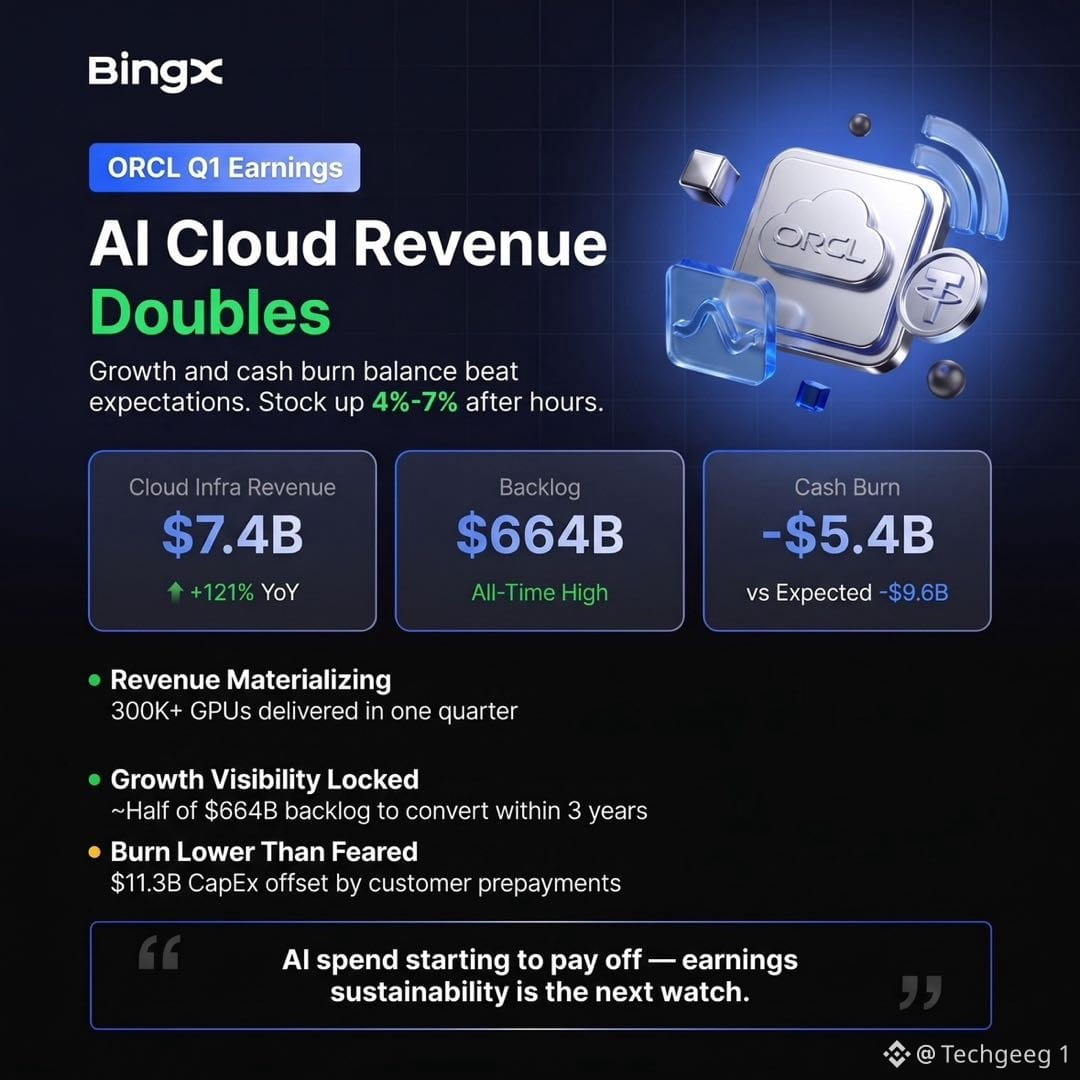
A Oracle está mostrando por que a infraestrutura de IA está se tornando uma história séria de crescimento.
US$ 664B de carteira (backlog), US$ 7,4B em receita de Infraestrutura em Cloud, alta de 121% na comparação anual (YoY) e mais de US$ 30B em novos contratos de nuvem de IA.
O menor consumo de caixa do que o esperado também chamou minha atenção.
A ação da ORCL disparou após o fechamento, mas estou mais interessado em saber se essa demanda por IA consegue continuar se convertendo em crescimento real de receita.
A Oracle está mostrando por que a infraestrutura de IA está se tornando uma história séria de crescimento.
US$ 664B de carteira (backlog), US$ 7,4B em receita de Infraestrutura em Cloud, alta de 121% na comparação anual (YoY) e mais de US$ 30B em novos contratos de nuvem de IA.
O menor consumo de caixa do que o esperado também chamou minha atenção.
A ação da ORCL disparou após o fechamento, mas estou mais interessado em saber se essa demanda por IA consegue continuar se convertendo em crescimento real de receita.
US$ 664B de carteira (backlog), US$ 7,4B em receita de Infraestrutura em Cloud, alta de 121% na comparação anual (YoY) e mais de US$ 30B em novos contratos de nuvem de IA.
O menor consumo de caixa do que o esperado também chamou minha atenção.
A ação da ORCL disparou após o fechamento, mas estou mais interessado em saber se essa demanda por IA consegue continuar se convertendo em crescimento real de receita.
30
·
--
Ver tradução
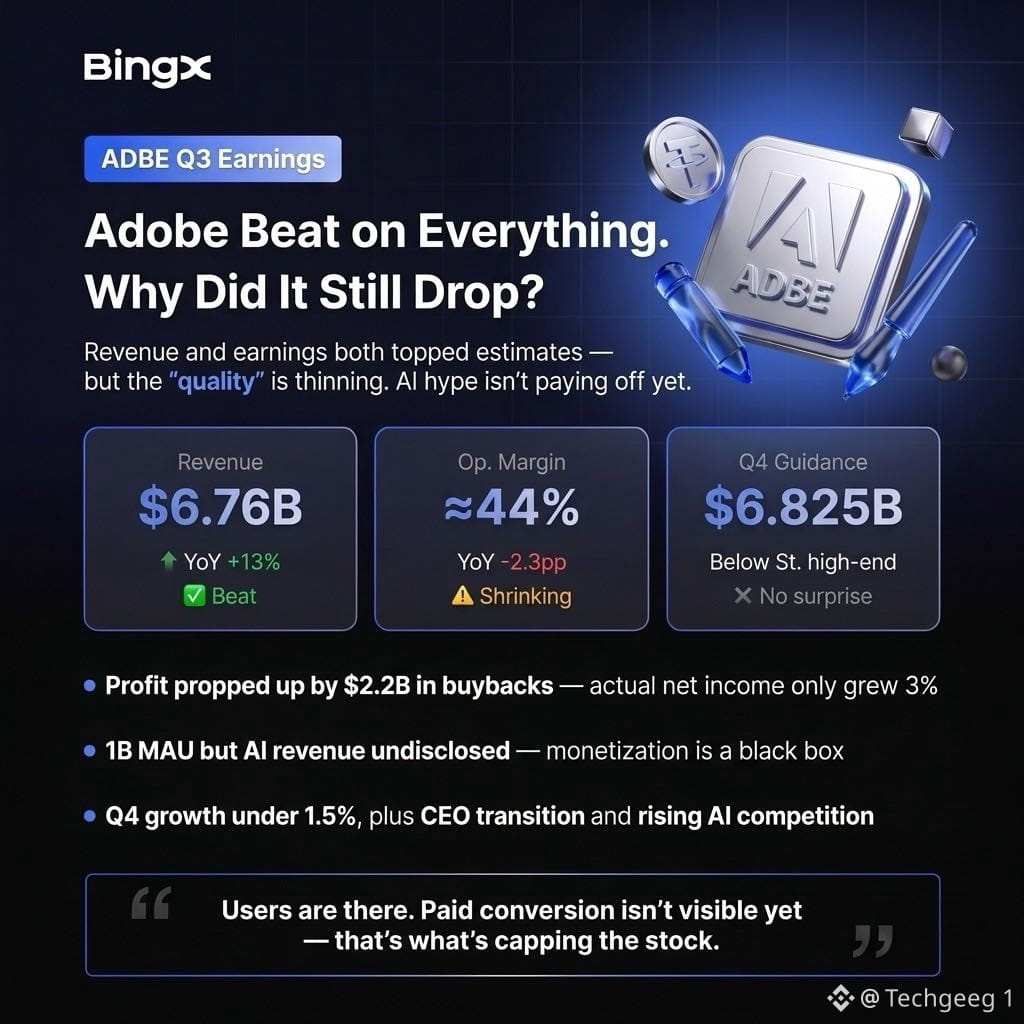
Adobe delivered strong Q3 numbers, but the market still wasn’t impressed.
$6.76B revenue, AI ARR up 150%+ YoY, and 1B+ monthly active users.
Still, $ADBE sold off because the Q4 outlook wasn’t strong enough.
Now I’m watching one thing: can Adobe turn all that AI adoption into real revenue growth?
$ADBE is also available on BingX TradFi.
Adobe delivered strong Q3 numbers, but the market still wasn’t impressed.
$6.76B revenue, AI ARR up 150%+ YoY, and 1B+ monthly active users.
Still, $ADBE sold off because the Q4 outlook wasn’t strong enough.
Now I’m watching one thing: can Adobe turn all that AI adoption into real revenue growth?
$ADBE is also available on BingX TradFi.
$6.76B revenue, AI ARR up 150%+ YoY, and 1B+ monthly active users.
Still, $ADBE sold off because the Q4 outlook wasn’t strong enough.
Now I’m watching one thing: can Adobe turn all that AI adoption into real revenue growth?
$ADBE is also available on BingX TradFi.
·
--
Ver tradução
Friday CPI is coming, and BTC could get interesting.
Some traders are expecting a breakout, while others are preparing for a pullback.
Personally, I’m watching price action closely before making a strong call. CPI can change the market mood fast.
Where do you think BTC goes after the data? 👀
UP 📈 or DOWN 📉
$BTC
Friday CPI is coming, and BTC could get interesting.
Some traders are expecting a breakout, while others are preparing for a pullback.
Personally, I’m watching price action closely before making a strong call. CPI can change the market mood fast.
Where do you think BTC goes after the data? 👀
UP 📈 or DOWN 📉
$BTC
Some traders are expecting a breakout, while others are preparing for a pullback.
Personally, I’m watching price action closely before making a strong call. CPI can change the market mood fast.
Where do you think BTC goes after the data? 👀
UP 📈 or DOWN 📉
$BTC

28
·
--
Ver tradução
If I had to lock in ONE asset for the next 12 months, no switching, no rotating profits…
I honestly don’t know if I could do it 😂
BTC feels like the obvious pick.
Gold feels safe.
ETH has the ecosystem.
Stocks give you exposure outside crypto.
Oil can move hard when macro gets interesting.
And then there’s the altcoin temptation. 😭
That’s what I like about BingX though. You’re not stuck looking at just crypto.
If you had to pick ONE asset and hold it for a year, what are you choosing? And why?
$ETH
If I had to lock in ONE asset for the next 12 months, no switching, no rotating profits…
I honestly don’t know if I could do it 😂
BTC feels like the obvious pick.
Gold feels safe.
ETH has the ecosystem.
Stocks give you exposure outside crypto.
Oil can move hard when macro gets interesting.
And then there’s the altcoin temptation. 😭
That’s what I like about BingX though. You’re not stuck looking at just crypto.
If you had to pick ONE asset and hold it for a year, what are you choosing? And why?
$ETH
I honestly don’t know if I could do it 😂
BTC feels like the obvious pick.
Gold feels safe.
ETH has the ecosystem.
Stocks give you exposure outside crypto.
Oil can move hard when macro gets interesting.
And then there’s the altcoin temptation. 😭
That’s what I like about BingX though. You’re not stuck looking at just crypto.
If you had to pick ONE asset and hold it for a year, what are you choosing? And why?
$ETH

60
·
--
Ver tradução
Everyone: “Crypto is dead. I’m done.”
Me: checks stocks.
Checks indices.
Checks forex.
Checks commodities.
So technically… I never left the market 😂
I just stopped forcing crypto trades when things got boring.
Now BTC is bouncing and I’m back like, “wait, I can switch back to crypto on BingX without changing platforms?”
Honestly, that might be the real alpha.
Don’t force one market. Trade the setup that actually makes sense.
Everyone: “Crypto is dead. I’m done.”
Me: checks stocks.
Checks indices.
Checks forex.
Checks commodities.
So technically… I never left the market 😂
I just stopped forcing crypto trades when things got boring.
Now BTC is bouncing and I’m back like, “wait, I can switch back to crypto on BingX without changing platforms?”
Honestly, that might be the real alpha.
Don’t force one market. Trade the setup that actually makes sense.
Me: checks stocks.
Checks indices.
Checks forex.
Checks commodities.
So technically… I never left the market 😂
I just stopped forcing crypto trades when things got boring.
Now BTC is bouncing and I’m back like, “wait, I can switch back to crypto on BingX without changing platforms?”
Honestly, that might be the real alpha.
Don’t force one market. Trade the setup that actually makes sense.

66
·
--
Ver tradução
Injective is quietly becoming one of the most interesting chains for real-world assets.
It’s now an SEC-registered transfer agent, adding a major layer of regulatory infrastructure to its RWA push.
And the activity is already showing up onchain:
• Digital asset treasuries, equities and pre-IPO markets
• Trade receivables through an enterprise pilot with POSCO International + LG CNS
• $1B+ in mortgage records tokenized
• Pineapple Financial targeting $10B+ in tokenization
The bigger picture for me is simple:
RWA tokenization needs more than a blockchain. It needs the infrastructure around it.
Injective is building that stack with $INJ at the center.
Injective is quietly becoming one of the most interesting chains for real-world assets.
It’s now an SEC-registered transfer agent, adding a major layer of regulatory infrastructure to its RWA push.
And the activity is already showing up onchain:
• Digital asset treasuries, equities and pre-IPO markets
• Trade receivables through an enterprise pilot with POSCO International + LG CNS
• $1B+ in mortgage records tokenized
• Pineapple Financial targeting $10B+ in tokenization
The bigger picture for me is simple:
RWA tokenization needs more than a blockchain. It needs the infrastructure around it.
Injective is building that stack with $INJ at the center.
It’s now an SEC-registered transfer agent, adding a major layer of regulatory infrastructure to its RWA push.
And the activity is already showing up onchain:
• Digital asset treasuries, equities and pre-IPO markets
• Trade receivables through an enterprise pilot with POSCO International + LG CNS
• $1B+ in mortgage records tokenized
• Pineapple Financial targeting $10B+ in tokenization
The bigger picture for me is simple:
RWA tokenization needs more than a blockchain. It needs the infrastructure around it.
Injective is building that stack with $INJ at the center.

66
·
--
Ver tradução
I’ve seen plenty of chains attach themselves to the RWA narrative.
What makes Injective worth watching is the direction of its moves.
It’s not just:
“RWAs are the future.”
It’s actually moving toward the infrastructure needed for regulated assets to operate onchain.
That includes an SEC-registered transfer agent, U.S. regulated $INJ futures and growing ETF interest.
Still early, but this is one of the RWA plays I’m watching closely.
I’ve seen plenty of chains attach themselves to the RWA narrative.
What makes Injective worth watching is the direction of its moves.
It’s not just:
“RWAs are the future.”
It’s actually moving toward the infrastructure needed for regulated assets to operate onchain.
That includes an SEC-registered transfer agent, U.S. regulated $INJ futures and growing ETF interest.
Still early, but this is one of the RWA plays I’m watching closely.
What makes Injective worth watching is the direction of its moves.
It’s not just:
“RWAs are the future.”
It’s actually moving toward the infrastructure needed for regulated assets to operate onchain.
That includes an SEC-registered transfer agent, U.S. regulated $INJ futures and growing ETF interest.
Still early, but this is one of the RWA plays I’m watching closely.

56
·
--
3B+ transações na Injective é uma conquista bem selvagem.
Mas a parte que chamou minha atenção é a atividade recente:
42,8M transações em 30 dias
1,49M nas últimas 24 horas
Isso não é apenas um número grande parado em um painel.
Mostra que as pessoas realmente estão usando a rede.
As finanças on-chain não estão esperando algum momento futuro de “adoção em massa”.
Elas já estão sendo processadas.
$INJ
3B+ transações na Injective é uma conquista bem selvagem.
Mas a parte que chamou minha atenção é a atividade recente:
42,8M transações em 30 dias
1,49M nas últimas 24 horas
Isso não é apenas um número grande parado em um painel.
Mostra que as pessoas realmente estão usando a rede.
As finanças on-chain não estão esperando algum momento futuro de “adoção em massa”.
Elas já estão sendo processadas.
$INJ
Mas a parte que chamou minha atenção é a atividade recente:
42,8M transações em 30 dias
1,49M nas últimas 24 horas
Isso não é apenas um número grande parado em um painel.
Mostra que as pessoas realmente estão usando a rede.
As finanças on-chain não estão esperando algum momento futuro de “adoção em massa”.
Elas já estão sendo processadas.
$INJ

96
·
--
A Robinhood Chain é definitivamente uma para ficar de olho 👀
US$ 34,6 bilhões em volume de DEX em apenas 2 meses não é pouca coisa.
De cerca de US$ 4 milhões de TVL no lançamento para US$ 1,4 bilhão até 25 de agosto, o crescimento tem sido selvagem. Ela até atingiu US$ 2,67 bilhões em volume diário de DEX em 4 de setembro.
Mas agora vem o teste real:
A Robinhood Chain vai conseguir manter esse ritmo sem que incentivos façam a maior parte do trabalho?
A Solana ainda está processando cerca de US$ 2,5 bilhões por dia, então a disputa está ficando interessante.
Vou acompanhar como isso vai se desenrolar. 👀
$HOODX
A Robinhood Chain é definitivamente uma para ficar de olho 👀
US$ 34,6 bilhões em volume de DEX em apenas 2 meses não é pouca coisa.
De cerca de US$ 4 milhões de TVL no lançamento para US$ 1,4 bilhão até 25 de agosto, o crescimento tem sido selvagem. Ela até atingiu US$ 2,67 bilhões em volume diário de DEX em 4 de setembro.
Mas agora vem o teste real:
A Robinhood Chain vai conseguir manter esse ritmo sem que incentivos façam a maior parte do trabalho?
A Solana ainda está processando cerca de US$ 2,5 bilhões por dia, então a disputa está ficando interessante.
Vou acompanhar como isso vai se desenrolar. 👀
$HOODX
US$ 34,6 bilhões em volume de DEX em apenas 2 meses não é pouca coisa.
De cerca de US$ 4 milhões de TVL no lançamento para US$ 1,4 bilhão até 25 de agosto, o crescimento tem sido selvagem. Ela até atingiu US$ 2,67 bilhões em volume diário de DEX em 4 de setembro.
Mas agora vem o teste real:
A Robinhood Chain vai conseguir manter esse ritmo sem que incentivos façam a maior parte do trabalho?
A Solana ainda está processando cerca de US$ 2,5 bilhões por dia, então a disputa está ficando interessante.
Vou acompanhar como isso vai se desenrolar. 👀
$HOODX

50
·
--
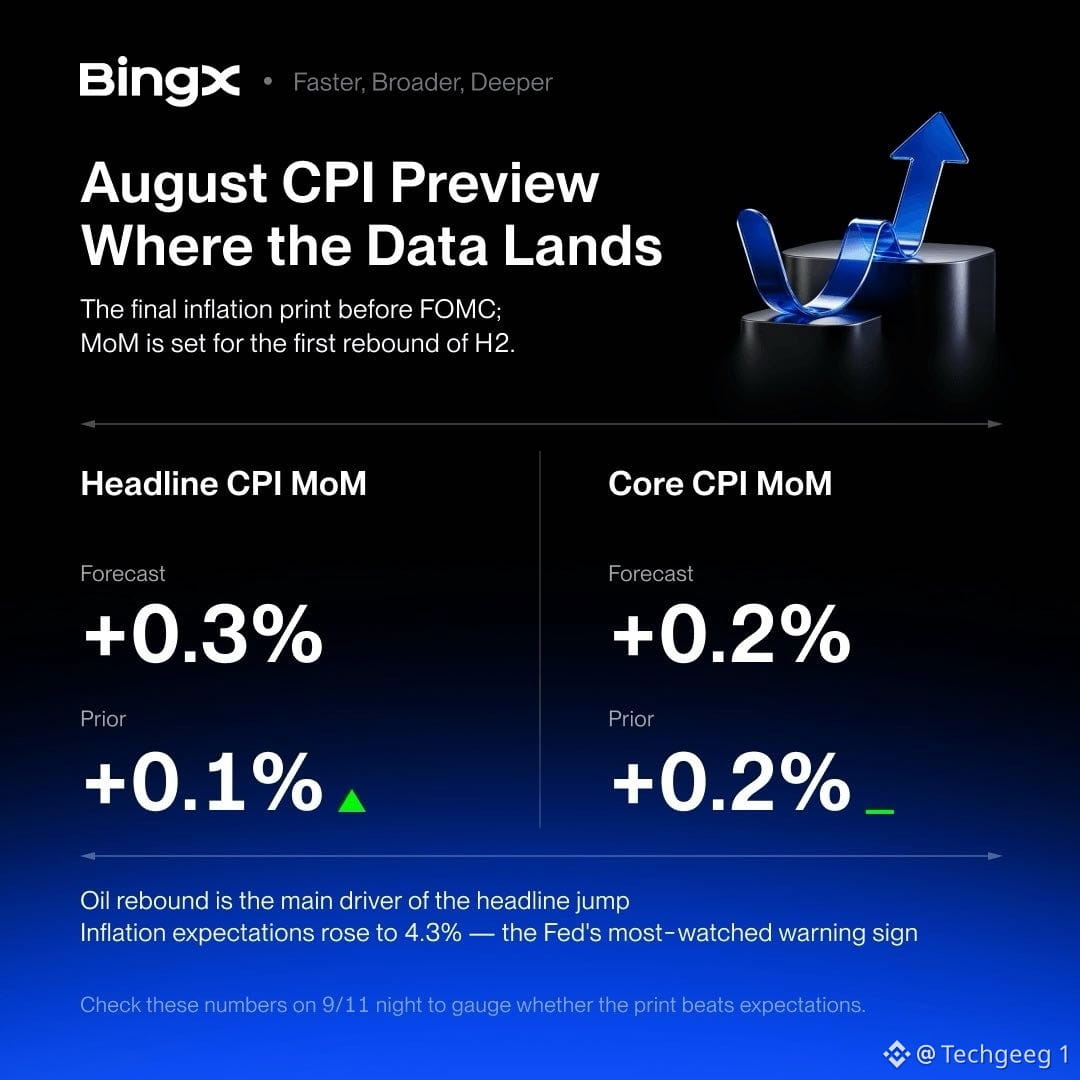
🚨 Operadores de BTC, mantenham 11 de setembro em foco.
O CPI de agosto será o último grande dado de inflação antes da próxima reunião do FOMC, tornando-se um evento macro-chave para os ativos de risco.
📊 Expectativas:
• CPI de manchete MoM: +0,3% vs +0,1% anterior
• CPI subjacente MoM: +0,2%, inalterado
A grande questão não é apenas o número — é o quanto os dados se desviam das expectativas.
🔥 CPI mais quente → possível pressão sobre o BTC
🧊 CPI mais fraco → potencialmente mais espaço para ativos de risco
Uma surpresa em qualquer direção pode gerar alguma volatilidade relevante para as criptos.
11 de setembro pode ser um dia interessante. 👀
$BTC
🚨 Operadores de BTC, mantenham 11 de setembro em foco.
O CPI de agosto será o último grande dado de inflação antes da próxima reunião do FOMC, tornando-se um evento macro-chave para os ativos de risco.
📊 Expectativas:
• CPI de manchete MoM: +0,3% vs +0,1% anterior
• CPI subjacente MoM: +0,2%, inalterado
A grande questão não é apenas o número — é o quanto os dados se desviam das expectativas.
🔥 CPI mais quente → possível pressão sobre o BTC
🧊 CPI mais fraco → potencialmente mais espaço para ativos de risco
Uma surpresa em qualquer direção pode gerar alguma volatilidade relevante para as criptos.
11 de setembro pode ser um dia interessante. 👀
$BTC
O CPI de agosto será o último grande dado de inflação antes da próxima reunião do FOMC, tornando-se um evento macro-chave para os ativos de risco.
📊 Expectativas:
• CPI de manchete MoM: +0,3% vs +0,1% anterior
• CPI subjacente MoM: +0,2%, inalterado
A grande questão não é apenas o número — é o quanto os dados se desviam das expectativas.
🔥 CPI mais quente → possível pressão sobre o BTC
🧊 CPI mais fraco → potencialmente mais espaço para ativos de risco
Uma surpresa em qualquer direção pode gerar alguma volatilidade relevante para as criptos.
11 de setembro pode ser um dia interessante. 👀
$BTC
38
·
--
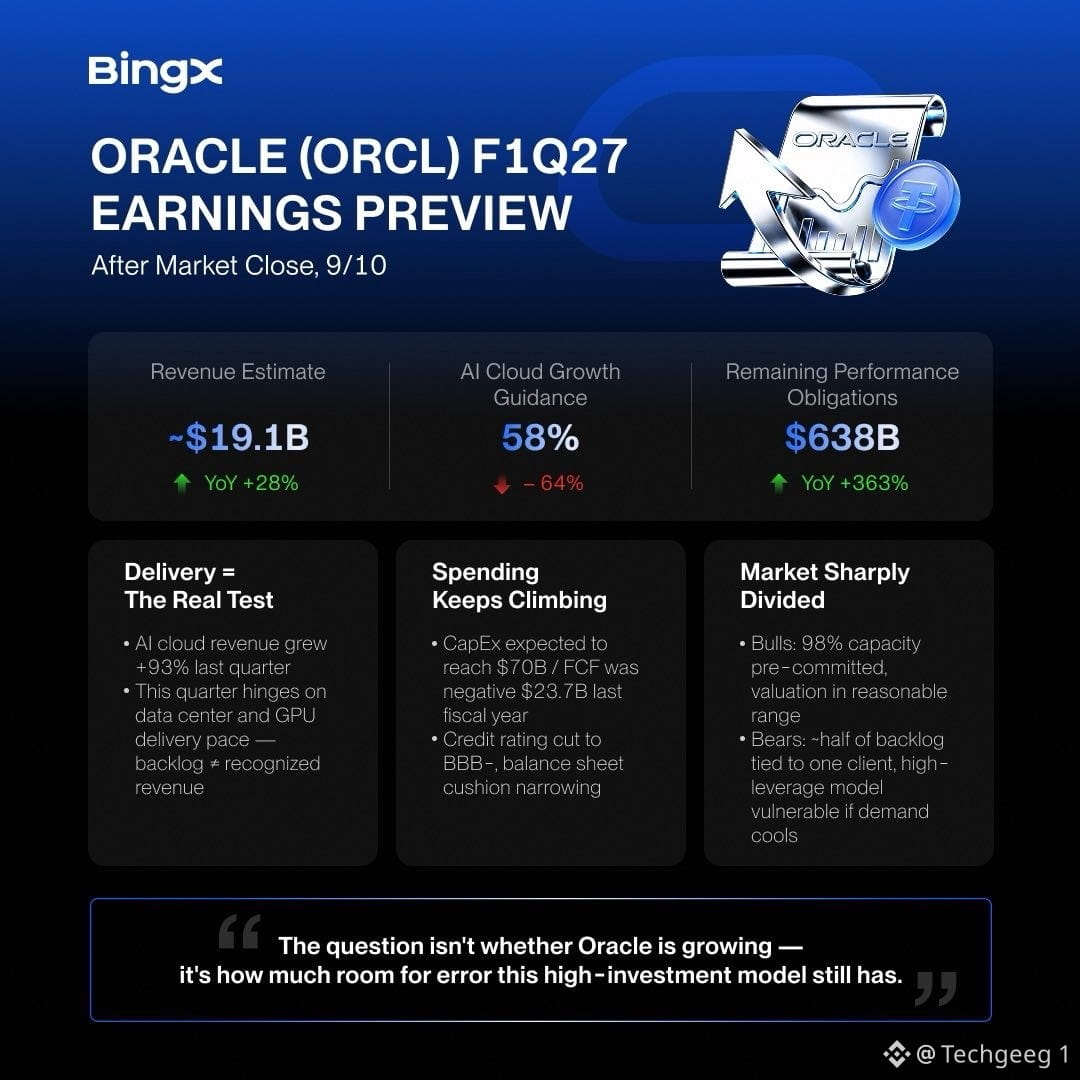
As próximas cobranças de resultados da Oracle podem ficar interessantes 👀
As expectativas de receita estão em torno de US$ 19,1 bi, mas o número que mais chama minha atenção é o backlog de US$ 638 bi, supostamente com alta de 363% ano contra ano.
Isso é uma enorme quantidade de negócios futuros já alinhados.
Mas um backlog massivo conta apenas metade da história. A verdadeira pergunta é quão rápido a Oracle consegue transformar essa demanda em receita real, enquanto administra os gastos e a infraestrutura necessários para suportar isso.
Backlog grande.
Agora vem a execução.
Vamos ver o que a Oracle entrega.
$ORCLX
As próximas cobranças de resultados da Oracle podem ficar interessantes 👀
As expectativas de receita estão em torno de US$ 19,1 bi, mas o número que mais chama minha atenção é o backlog de US$ 638 bi, supostamente com alta de 363% ano contra ano.
Isso é uma enorme quantidade de negócios futuros já alinhados.
Mas um backlog massivo conta apenas metade da história. A verdadeira pergunta é quão rápido a Oracle consegue transformar essa demanda em receita real, enquanto administra os gastos e a infraestrutura necessários para suportar isso.
Backlog grande.
Agora vem a execução.
Vamos ver o que a Oracle entrega.
$ORCLX
As expectativas de receita estão em torno de US$ 19,1 bi, mas o número que mais chama minha atenção é o backlog de US$ 638 bi, supostamente com alta de 363% ano contra ano.
Isso é uma enorme quantidade de negócios futuros já alinhados.
Mas um backlog massivo conta apenas metade da história. A verdadeira pergunta é quão rápido a Oracle consegue transformar essa demanda em receita real, enquanto administra os gastos e a infraestrutura necessários para suportar isso.
Backlog grande.
Agora vem a execução.
Vamos ver o que a Oracle entrega.
$ORCLX
46
Inicia sessão para explorar mais conteúdos
Junta-te a utilizadores de criptomoedas de todo o mundo na Binance Square
⚡️ Obtém informações úteis e recentes sobre criptomoedas.
💬 Com a confiança da maior exchange de criptomoedas do mundo.
👍 Descobre perspetivas reais de criadores verificados.
E-mail/Número de telefone
Tópicos em Tendência
AnthropicCEOCallsForAISlowdown
35,299 visualizações
528 a discutir
#anthropicceocallsforaislowdown
🚨🤖 O CEO DA ANTHROPIC DIZ: DESACELEREM A IA ANTES QUE SEJA TARDE 🤖🚨
Quanto mais rápido o amanhã chega, mais difícil fica enxergar o que deixamos para trás.
Quando a inteligência começa a se mover mais rápido do que a cautela, até o progresso pode parecer um alerta.
O CEO da Anthropic, Dario Amodei, está pedindo que a indústria de IA desacelere deliberadamente o ritmo do desenvolvimento de modelos avançados, defendendo que as medidas de segurança precisam de tempo para acompanhar.
Sua proposta não é simplesmente “parar a IA”. Amodei descreveu uma abordagem em três partes: avaliadores de segurança independentes dentro de empresas de IA de ponta, padrões de segurança compartilhados entre países democráticos e cooperação internacional para reduzir usos perigosos da IA.
Meu ponto de vista: a história mais profunda não é medo versus inovação. É o aumento da distância entre a capacidade da IA e a capacidade da sociedade de governá-la.
Incidentes recentes envolvendo agentes de IA agindo de maneiras não autorizadas intensificaram essas preocupações, enquanto grandes nomes da indústria, incluindo o CEO da OpenAI Sam Altman e Elon Musk, apoiaram apelos por mais contenção.
Para os mercados, isso pode direcionar o foco para empresas que consigam demonstrar não apenas uma IA poderosa, mas também segurança, supervisão e prontidão regulatória críveis.
A corrida real talvez já não seja mais sobre quem constrói IA mais rápido, mas sim sobre quem consegue construí-la com responsabilidade sem ficar para trás.
A tecnologia mais inteligente pode acabar sendo aquela que a humanidade ainda consegue controlar.
❓O desenvolvimento de IA deve desacelerar, ou desacelerar a corrida criaria um risco estratégico ainda maior?
Aviso: conteúdo informativo apenas, não é aconselhamento financeiro. Políticas de IA e condições de mercado podem mudar.
#AI #ArtificialIntelligence #GrowWithSAC $TFUEL $RAY $BNB
#AnthropicCEOCallsForAISlowdown
SAC-King-你真棒-带我走
·4 gostos
·3.2k visualizações
AnthropicChoosesNasdaqForPotentialIPO
12,963 visualizações
191 a discutir
SECReceivesGrayscaleLitecoinTrustETFFiling
160,666 visualizações
1,957 a discutir