

Crypto Fortress 1
1.9k Publicações

Crypto Fortress 1
Denunciar
Bloquear Utilizador
Crypto explorer | Building the decentralized future one block at a time | Insights on BTC, ETH, DeFi & beyond | Not financial advice.
0 A seguir
7 Seguidores
26 Gostaram
Publicações
Ver tradução
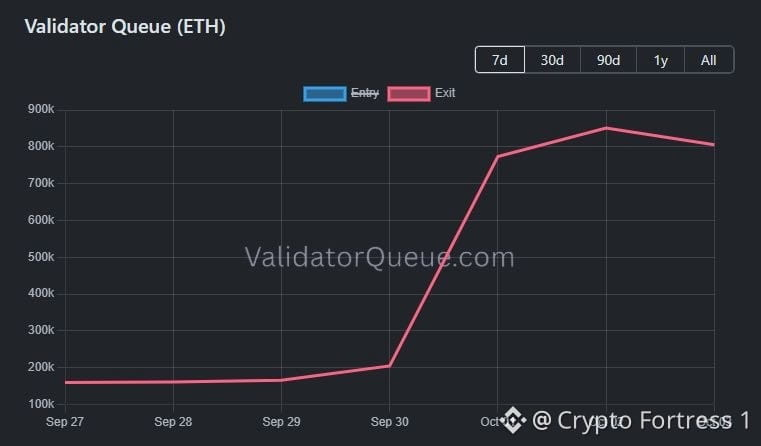
The amount of $ETH waiting to be unstaked has jumped 392% since the start of October, reaching roughly 850,000 ETH.
A big chunk of the increase is tied to MetaMask exiting around 17,000 validators after its recent security incident.
Ethereum also can't process all those exits at once, so the queue stretches the selling timeline.
The amount of $ETH waiting to be unstaked has jumped 392% since the start of October, reaching roughly 850,000 ETH.
A big chunk of the increase is tied to MetaMask exiting around 17,000 validators after its recent security incident.
Ethereum also can't process all those exits at once, so the queue stretches the selling timeline.
A big chunk of the increase is tied to MetaMask exiting around 17,000 validators after its recent security incident.
Ethereum also can't process all those exits at once, so the queue stretches the selling timeline.
2
Ver tradução
$BNB Analysis
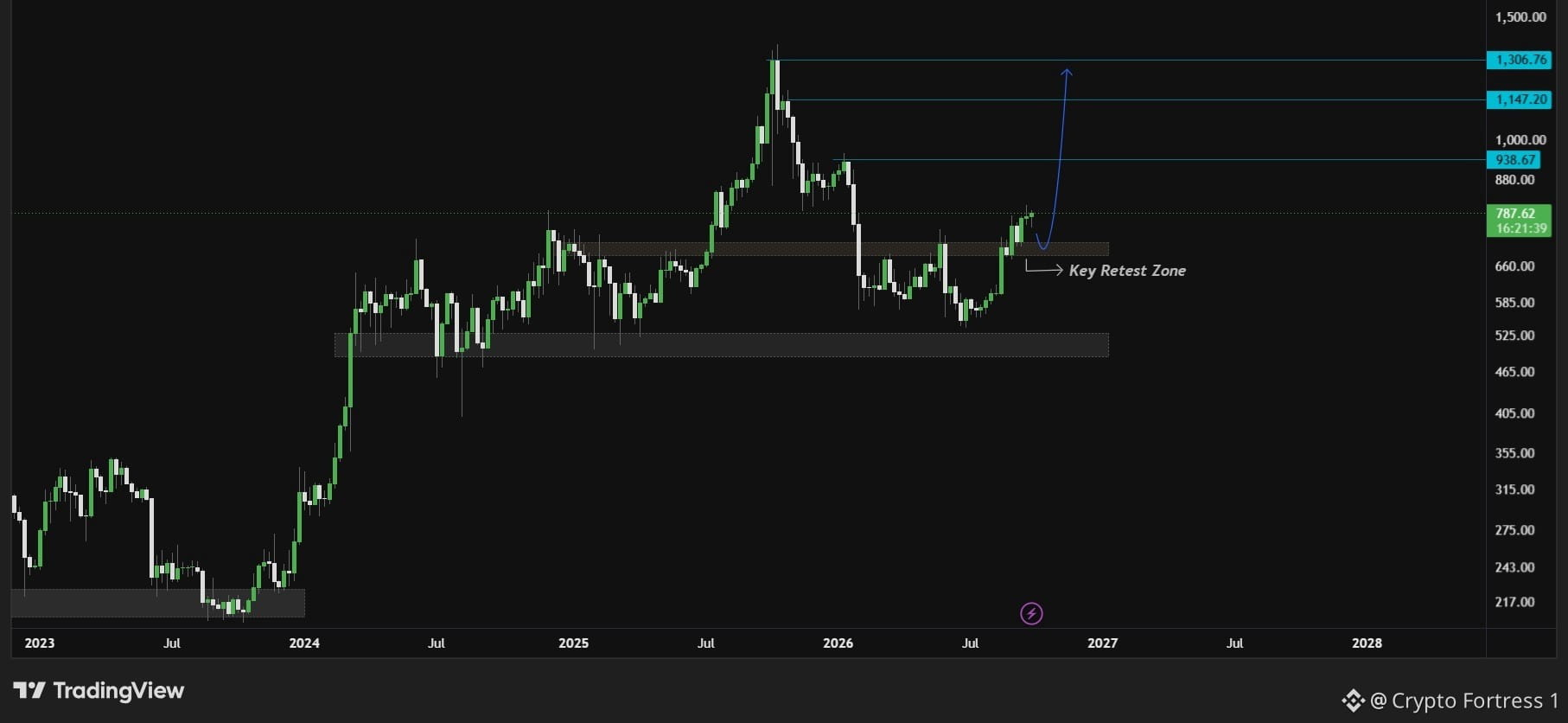
$BNB has successfully retested the previous breakout zone, which is now acting as a key support area. The reaction from this zone is encouraging and keeps the bullish structure intact.
I'm expecting the next leg higher toward the marked targets:
- TP1: $938
- TP2: $1,147
- TP3: $1,306
DYOR, NFA
#BNB #BTC Price Analysis# #Altcoin Season# #BNBChain# $BTC
$BNB Analysis
$BNB has successfully retested the previous breakout zone, which is now acting as a key support area. The reaction from this zone is encouraging and keeps the bullish structure intact.
I'm expecting the next leg higher toward the marked targets:
- TP1: $938
- TP2: $1,147
- TP3: $1,306
DYOR, NFA
#BNB #BTC Price Analysis# #Altcoin Season# #BNBChain# $BTC
$BNB has successfully retested the previous breakout zone, which is now acting as a key support area. The reaction from this zone is encouraging and keeps the bullish structure intact.
I'm expecting the next leg higher toward the marked targets:
- TP1: $938
- TP2: $1,147
- TP3: $1,306
DYOR, NFA
#BNB #BTC Price Analysis# #Altcoin Season# #BNBChain# $BTC
1
Ver tradução
$SOL
Dan Roberts, CEO of onrefinance, selected the #Solana network to launch reinsurance because of its fast transaction speeds and engaged partner community, which actively helps new businesses with integration, parameter setting, positioning, and co-marketing.
$SOL
Dan Roberts, CEO of onrefinance, selected the #Solana network to launch reinsurance because of its fast transaction speeds and engaged partner community, which actively helps new businesses with integration, parameter setting, positioning, and co-marketing.
Dan Roberts, CEO of onrefinance, selected the #Solana network to launch reinsurance because of its fast transaction speeds and engaged partner community, which actively helps new businesses with integration, parameter setting, positioning, and co-marketing.
28
Ver tradução
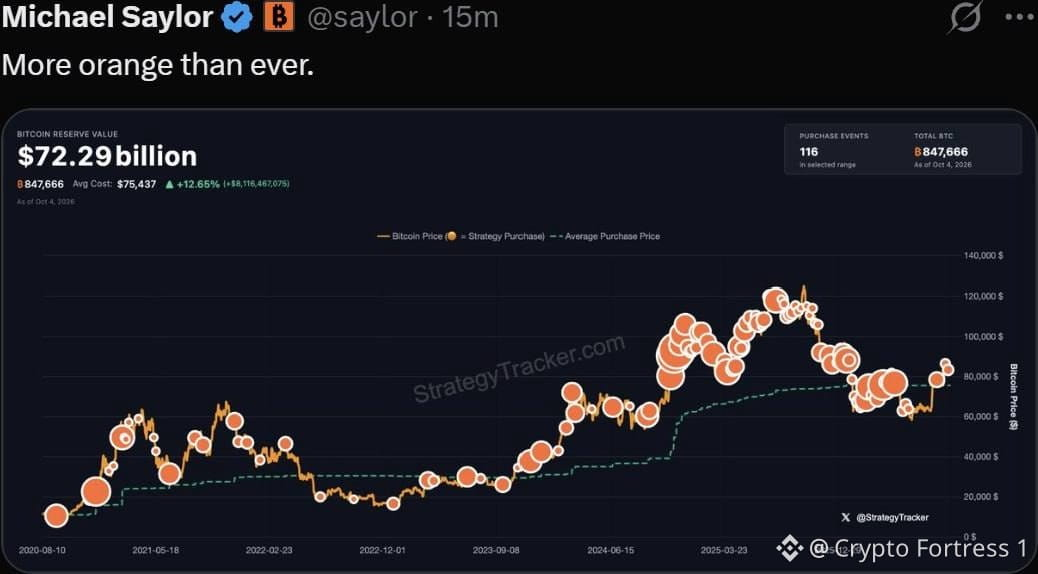
Michael Saylor is hinting that Strategy may be preparing to add more $BTC after its recent return to buying.
The company purchased 950 BTC for about $75.7M on September 21, followed by another 1,665 BTC for roughly $142.7M the following week.
Saylor has continued posting signals around Bitcoin accumulation, with his latest comments keeping another purchase on the radar.
Strategy now holds one of the largest corporate BTC treasuries, and its recent buying comes as Bitcoin trades around the $85,000 area and institutional interest picks up again.
#BTC Price Analysis# #Macro Insights#
Michael Saylor is hinting that Strategy may be preparing to add more $BTC after its recent return to buying.
The company purchased 950 BTC for about $75.7M on September 21, followed by another 1,665 BTC for roughly $142.7M the following week.
Saylor has continued posting signals around Bitcoin accumulation, with his latest comments keeping another purchase on the radar.
Strategy now holds one of the largest corporate BTC treasuries, and its recent buying comes as Bitcoin trades around the $85,000 area and institutional interest picks up again.
#BTC Price Analysis# #Macro Insights#
The company purchased 950 BTC for about $75.7M on September 21, followed by another 1,665 BTC for roughly $142.7M the following week.
Saylor has continued posting signals around Bitcoin accumulation, with his latest comments keeping another purchase on the radar.
Strategy now holds one of the largest corporate BTC treasuries, and its recent buying comes as Bitcoin trades around the $85,000 area and institutional interest picks up again.
#BTC Price Analysis# #Macro Insights#
27
Ver tradução
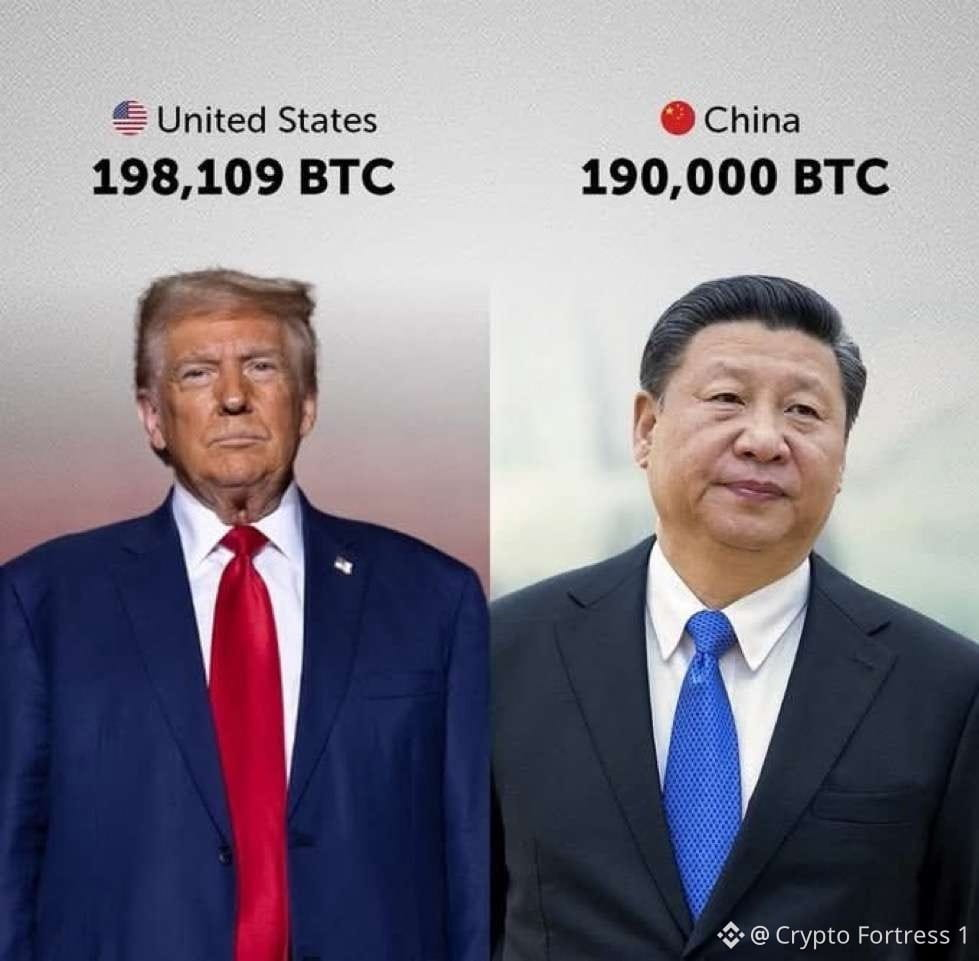
THIS IS A #BITCOIN WAR NO ONE IS TALKING ABOUT.
🇺🇸The USA holds 198,109 $BTC
🇨🇳 China holds 190,000 $BTC
That's a gap of just 8,109 BTC
While most people focus on price, something bigger is happening behind the scenes. Governments are quietly building strategic Bitcoin reserves, and the gap between the US and China shows how serious this race could become.
Bitcoin is no longer just a retail trade. It is becoming a strategic asset, and countries that accumulate early could have a major advantage.
If this race accelerates, government Bitcoin holdings could become a force.
The question is simple: who accumulates more next?
THIS IS A #BITCOIN WAR NO ONE IS TALKING ABOUT.
🇺🇸The USA holds 198,109 $BTC
🇨🇳 China holds 190,000 $BTC
That's a gap of just 8,109 BTC
While most people focus on price, something bigger is happening behind the scenes. Governments are quietly building strategic Bitcoin reserves, and the gap between the US and China shows how serious this race could become.
Bitcoin is no longer just a retail trade. It is becoming a strategic asset, and countries that accumulate early could have a major advantage.
If this race accelerates, government Bitcoin holdings could become a force.
The question is simple: who accumulates more next?
🇺🇸The USA holds 198,109 $BTC
🇨🇳 China holds 190,000 $BTC
That's a gap of just 8,109 BTC
While most people focus on price, something bigger is happening behind the scenes. Governments are quietly building strategic Bitcoin reserves, and the gap between the US and China shows how serious this race could become.
Bitcoin is no longer just a retail trade. It is becoming a strategic asset, and countries that accumulate early could have a major advantage.
If this race accelerates, government Bitcoin holdings could become a force.
The question is simple: who accumulates more next?
39
Ver tradução
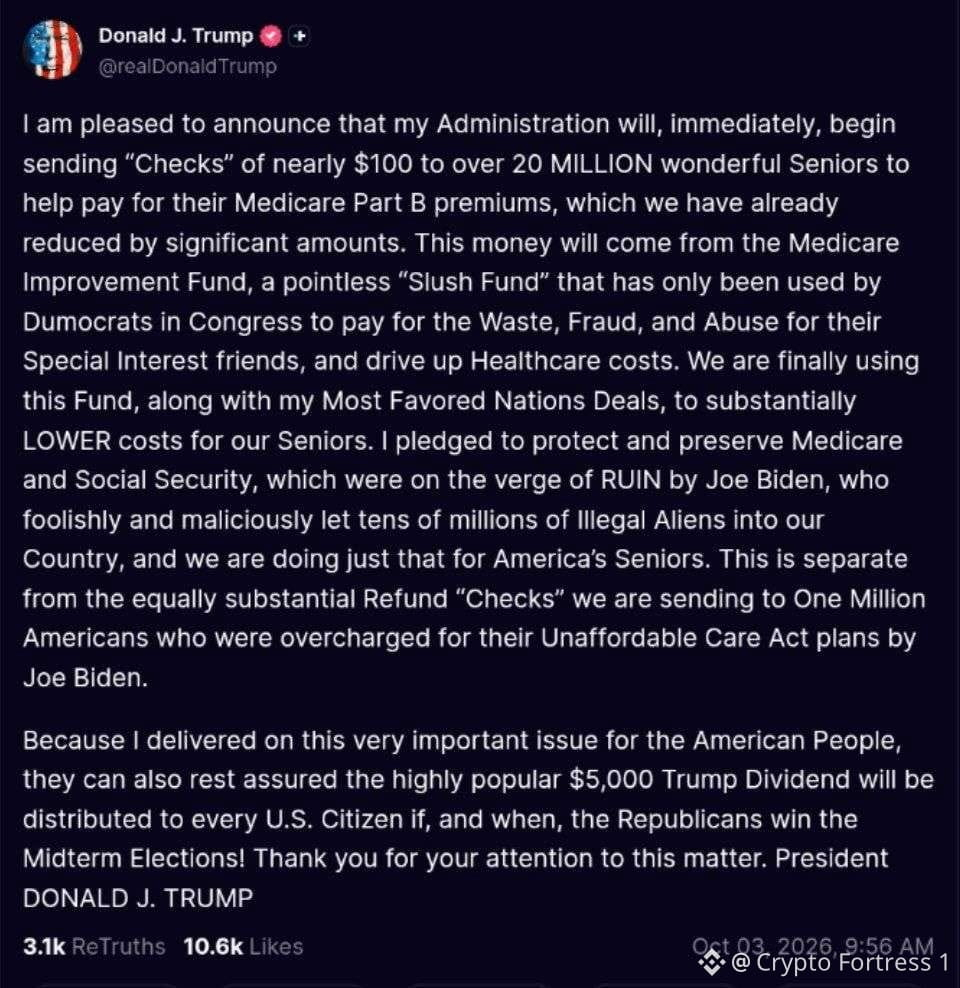
Trump is putting direct payments back at the center of the economic debate.
The administration says more than 20M Medicare Part B enrollees will receive a one-time $90 payment in October to help cover premiums.
then there's the much larger proposal.
Trump has pledged a $5,000 "Trump Dividend" for every adult U.S. citizen if Republicans retain control of Congress after the November midterms.
At roughly 240M eligible adults, that would put the potential cost around $1.2T.
But the $5,000 payment is still a proposal and would require congressional approval.
Two very different payments, but both point to the same issue:
Direct cash is becoming a major part of the U.S. economic and political conversation.
#BTC Price Analysis# #Bitcoin Price Prediction: What is Bitcoins next move?#
$BTC $ZEC #Macro Insights#
Trump is putting direct payments back at the center of the economic debate.
The administration says more than 20M Medicare Part B enrollees will receive a one-time $90 payment in October to help cover premiums.
then there's the much larger proposal.
Trump has pledged a $5,000 "Trump Dividend" for every adult U.S. citizen if Republicans retain control of Congress after the November midterms.
At roughly 240M eligible adults, that would put the potential cost around $1.2T.
But the $5,000 payment is still a proposal and would require congressional approval.
Two very different payments, but both point to the same issue:
Direct cash is becoming a major part of the U.S. economic and political conversation.
#BTC Price Analysis# #Bitcoin Price Prediction: What is Bitcoins next move?#
$BTC $ZEC #Macro Insights#
The administration says more than 20M Medicare Part B enrollees will receive a one-time $90 payment in October to help cover premiums.
then there's the much larger proposal.
Trump has pledged a $5,000 "Trump Dividend" for every adult U.S. citizen if Republicans retain control of Congress after the November midterms.
At roughly 240M eligible adults, that would put the potential cost around $1.2T.
But the $5,000 payment is still a proposal and would require congressional approval.
Two very different payments, but both point to the same issue:
Direct cash is becoming a major part of the U.S. economic and political conversation.
#BTC Price Analysis# #Bitcoin Price Prediction: What is Bitcoins next move?#
$BTC $ZEC #Macro Insights#
50
Ver tradução
🇺🇸 SEC Approves 3x $BTC and ETH
Funds for U.S. Listing
On October 2, the SEC approved a Cboe BZX proposal to list 3x leveraged funds tied to Bitcoin and Ethereum. The same approval also covers similar products for gold, silver, crude oil and natural gas.
The crypto funds are designed to deliver roughly 3x the daily performance of their underlying futures exposure. So a 1% daily move in the benchmark would translate into a target move of around 3% for the fund.
What was approved:
→ 3x Bitcoin ETF
→ 3x Ether ETF
→ 3x Gold ETF
→ 3x Silver ETF
→ 3x Crude Oil ETF
→ 3x Natural Gas ETF
All 6 are part of the VS Trust and are planned for listing on Cboe BZX.
One important detail: they are not trading yet. The SEC approved the exchange listing proposal, but the funds still need their registration statements to become effective before investors can buy them.
And the "3x" applies to daily performance, not long-term returns. Because the exposure resets every day, holding a leveraged fund for several days can produce a very different result from simply multiplying BTC or $ETH's total move by 3.
For crypto, the approval is another sign that U.S. exchange-traded products are moving beyond basic spot exposure into more specialized strategies
#BTC Price Analysis# #ETF #Bitcoin Price Prediction: What is Bitcoins next move?#
🇺🇸 SEC Approves 3x $BTC and ETH
Funds for U.S. Listing
On October 2, the SEC approved a Cboe BZX proposal to list 3x leveraged funds tied to Bitcoin and Ethereum. The same approval also covers similar products for gold, silver, crude oil and natural gas.
The crypto funds are designed to deliver roughly 3x the daily performance of their underlying futures exposure. So a 1% daily move in the benchmark would translate into a target move of around 3% for the fund.
What was approved:
→ 3x Bitcoin ETF
→ 3x Ether ETF
→ 3x Gold ETF
→ 3x Silver ETF
→ 3x Crude Oil ETF
→ 3x Natural Gas ETF
All 6 are part of the VS Trust and are planned for listing on Cboe BZX.
One important detail: they are not trading yet. The SEC approved the exchange listing proposal, but the funds still need their registration statements to become effective before investors can buy them.
And the "3x" applies to daily performance, not long-term returns. Because the exposure resets every day, holding a leveraged fund for several days can produce a very different result from simply multiplying BTC or $ETH's total move by 3.
For crypto, the approval is another sign that U.S. exchange-traded products are moving beyond basic spot exposure into more specialized strategies
#BTC Price Analysis# #ETF #Bitcoin Price Prediction: What is Bitcoins next move?#
Funds for U.S. Listing
On October 2, the SEC approved a Cboe BZX proposal to list 3x leveraged funds tied to Bitcoin and Ethereum. The same approval also covers similar products for gold, silver, crude oil and natural gas.
The crypto funds are designed to deliver roughly 3x the daily performance of their underlying futures exposure. So a 1% daily move in the benchmark would translate into a target move of around 3% for the fund.
What was approved:
→ 3x Bitcoin ETF
→ 3x Ether ETF
→ 3x Gold ETF
→ 3x Silver ETF
→ 3x Crude Oil ETF
→ 3x Natural Gas ETF
All 6 are part of the VS Trust and are planned for listing on Cboe BZX.
One important detail: they are not trading yet. The SEC approved the exchange listing proposal, but the funds still need their registration statements to become effective before investors can buy them.
And the "3x" applies to daily performance, not long-term returns. Because the exposure resets every day, holding a leveraged fund for several days can produce a very different result from simply multiplying BTC or $ETH's total move by 3.
For crypto, the approval is another sign that U.S. exchange-traded products are moving beyond basic spot exposure into more specialized strategies
#BTC Price Analysis# #ETF #Bitcoin Price Prediction: What is Bitcoins next move?#
65
Os traders de criptomoedas acabaram de sofrer mais um grande golpe, com cerca de US$ 246,8 milhões em posições compradas (long) liquidadas nas últimas 24 horas.
A maior liquidação única veio do ZEC, já que a recente fraqueza desencadeou encerramentos forçados em posições alavancadas. Os rastreadores atuais de liquidações também mostram o ZEC entre os ativos que estão vendo liquidações significativas de longs.
É isso que acontece quando os traders estão fortemente posicionados para uma alta e o mercado se move de repente contra eles. A venda forçada pode então aumentar ainda mais a pressão sobre a queda.
#Análise do Preço do BTC#
#Temporada de Altcoins# $ZEC $BTC
Os traders de criptomoedas acabaram de sofrer mais um grande golpe, com cerca de US$ 246,8 milhões em posições compradas (long) liquidadas nas últimas 24 horas.
A maior liquidação única veio do ZEC, já que a recente fraqueza desencadeou encerramentos forçados em posições alavancadas. Os rastreadores atuais de liquidações também mostram o ZEC entre os ativos que estão vendo liquidações significativas de longs.
É isso que acontece quando os traders estão fortemente posicionados para uma alta e o mercado se move de repente contra eles. A venda forçada pode então aumentar ainda mais a pressão sobre a queda.
#Análise do Preço do BTC#
#Temporada de Altcoins# $ZEC $BTC
A maior liquidação única veio do ZEC, já que a recente fraqueza desencadeou encerramentos forçados em posições alavancadas. Os rastreadores atuais de liquidações também mostram o ZEC entre os ativos que estão vendo liquidações significativas de longs.
É isso que acontece quando os traders estão fortemente posicionados para uma alta e o mercado se move de repente contra eles. A venda forçada pode então aumentar ainda mais a pressão sobre a queda.
#Análise do Preço do BTC#
#Temporada de Altcoins# $ZEC $BTC
ANDREW TATE MOVIMENTA US$ 1,87M EM HYPE PARA A BINANCE
Uma carteira ligada a Andrew Tate depositou 20.950 HYPE, no valor aproximado de US$ 1,87 milhão, na Binance, segundo a Lookonchain.
Os tokens teriam sido comprados cerca de dois anos atrás por aproximadamente US$ 4,48 cada, dando à posição um enorme ganho não realizado.
Tate ainda mantém 63.550 HYPE, avaliados em cerca de US$ 5,62 milhões, enquanto a Lookonchain estima o lucro total de Tate com HYPE em aproximadamente US$ 7,24 milhões, representando um retorno de 1.317%.
Um detalhe importante: transferir HYPE para a Binance não confirma que ele o tenha vendido. Apenas significa que os tokens foram depositados na exchange.
Ainda assim, uma transferência de US$ 1,87 milhão a partir de uma carteira que está com um lucro enorme é algo que traders de HYPE vão observar de perto.
#Análise do Preço do BTC# #Insights de Macroeconomia#
$HYPE $BTC
ANDREW TATE MOVIMENTA US$ 1,87M EM HYPE PARA A BINANCE
Uma carteira ligada a Andrew Tate depositou 20.950 HYPE, no valor aproximado de US$ 1,87 milhão, na Binance, segundo a Lookonchain.
Os tokens teriam sido comprados cerca de dois anos atrás por aproximadamente US$ 4,48 cada, dando à posição um enorme ganho não realizado.
Tate ainda mantém 63.550 HYPE, avaliados em cerca de US$ 5,62 milhões, enquanto a Lookonchain estima o lucro total de Tate com HYPE em aproximadamente US$ 7,24 milhões, representando um retorno de 1.317%.
Um detalhe importante: transferir HYPE para a Binance não confirma que ele o tenha vendido. Apenas significa que os tokens foram depositados na exchange.
Ainda assim, uma transferência de US$ 1,87 milhão a partir de uma carteira que está com um lucro enorme é algo que traders de HYPE vão observar de perto.
#Análise do Preço do BTC# #Insights de Macroeconomia#
$HYPE $BTC
Uma carteira ligada a Andrew Tate depositou 20.950 HYPE, no valor aproximado de US$ 1,87 milhão, na Binance, segundo a Lookonchain.
Os tokens teriam sido comprados cerca de dois anos atrás por aproximadamente US$ 4,48 cada, dando à posição um enorme ganho não realizado.
Tate ainda mantém 63.550 HYPE, avaliados em cerca de US$ 5,62 milhões, enquanto a Lookonchain estima o lucro total de Tate com HYPE em aproximadamente US$ 7,24 milhões, representando um retorno de 1.317%.
Um detalhe importante: transferir HYPE para a Binance não confirma que ele o tenha vendido. Apenas significa que os tokens foram depositados na exchange.
Ainda assim, uma transferência de US$ 1,87 milhão a partir de uma carteira que está com um lucro enorme é algo que traders de HYPE vão observar de perto.
#Análise do Preço do BTC# #Insights de Macroeconomia#
$HYPE $BTC
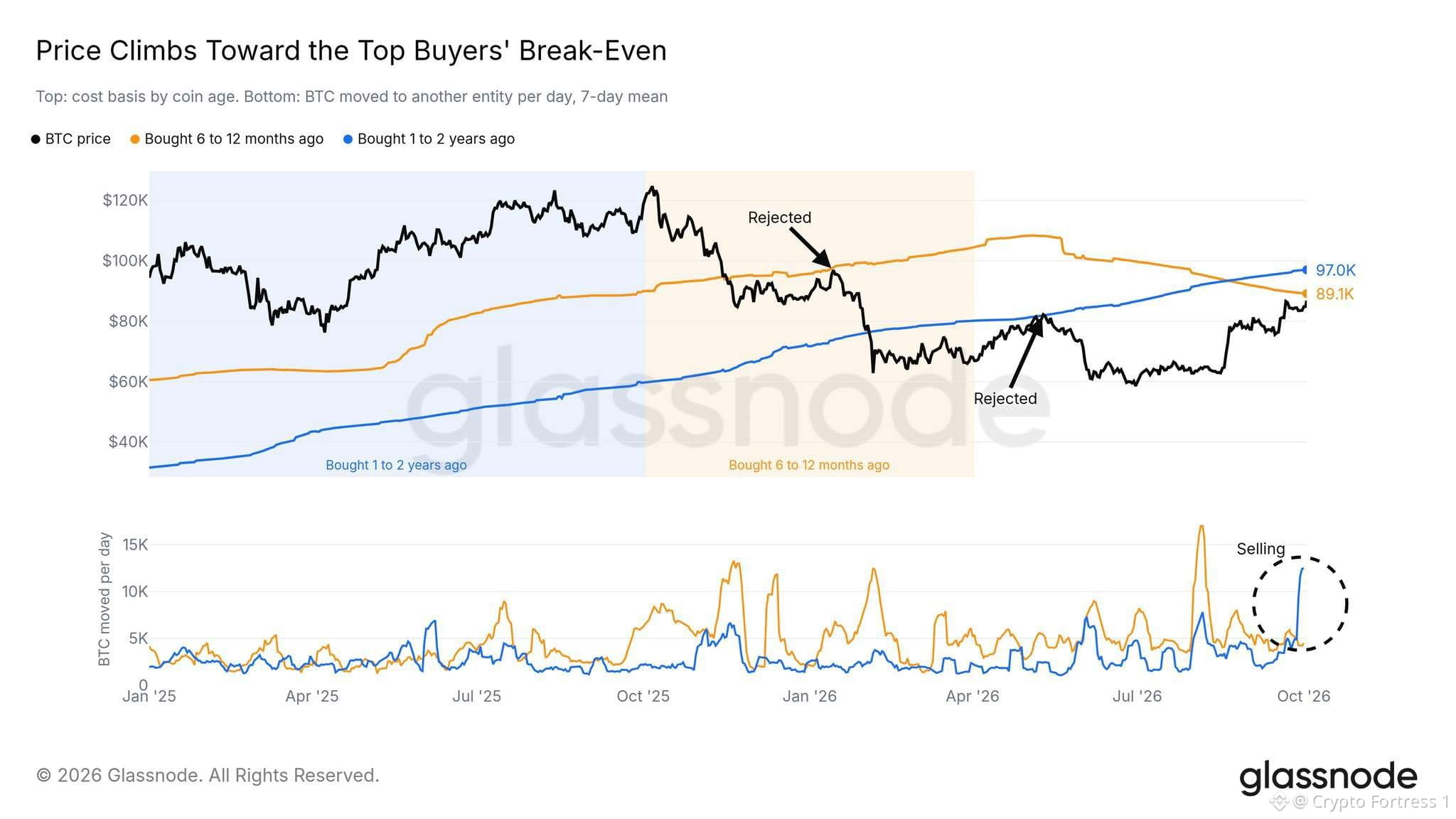
As pessoas que compraram $BTC Bitcoin perto do topo de 2025 são justamente as que estão despejando silenciosamente agora.
O grupo de 6 a 12 meses está no prejuízo em torno de $89k e os compradores de 1 a 2 anos estão sentados em aproximadamente $97k, e ambos os grupos estão movimentando mais moedas por dia este ano.
Enquanto isso, as pessoas que realmente compraram na queda estão apenas segurando. Parece distribuição por parte dos compradores mais tardios, enquanto as mãos mais fortes ficam quietas. $ETH
#BTC Price Analysis# #ETH
As pessoas que compraram $BTC Bitcoin perto do topo de 2025 são justamente as que estão despejando silenciosamente agora.
O grupo de 6 a 12 meses está no prejuízo em torno de $89k e os compradores de 1 a 2 anos estão sentados em aproximadamente $97k, e ambos os grupos estão movimentando mais moedas por dia este ano.
Enquanto isso, as pessoas que realmente compraram na queda estão apenas segurando. Parece distribuição por parte dos compradores mais tardios, enquanto as mãos mais fortes ficam quietas. $ETH
#BTC Price Analysis# #ETH
O grupo de 6 a 12 meses está no prejuízo em torno de $89k e os compradores de 1 a 2 anos estão sentados em aproximadamente $97k, e ambos os grupos estão movimentando mais moedas por dia este ano.
Enquanto isso, as pessoas que realmente compraram na queda estão apenas segurando. Parece distribuição por parte dos compradores mais tardios, enquanto as mãos mais fortes ficam quietas. $ETH
#BTC Price Analysis# #ETH
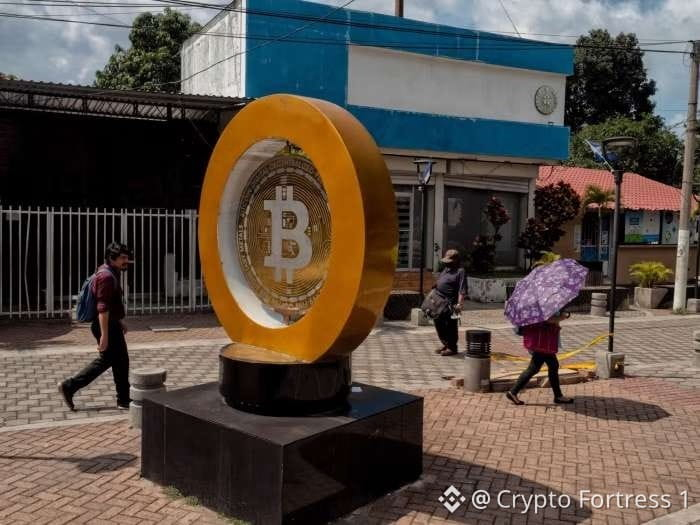
El Salvador enfrenta novas condições do $BTC em meio ao seu programa do FMI de US$ 1,4 bilhão
O FMI concluiu suas últimas revisões do programa de empréstimo de US$ 1,4 bilhão de El Salvador, liberando um desembolso imediato de US$ 138 milhões e mantendo vários compromissos relacionados a Bitcoin firmemente em foco.
A mensagem é simples: espera-se que o governo continue reduzindo a participação do Estado no Bitcoin, sem novas acumulações além de doações privadas documentadas e com menor exposição do setor público à carteira Chivo.
Isso coloca a abordagem de El Salvador em uma posição muito diferente da própria $BTC. O Bitcoin permanece descentralizado, enquanto o debate aqui é sobre quanta participação direta um governo deveria ter ao manter, operar e regulamentar esse ativo.
Se as reformas continuarem, o próximo foco será a transparência sobre as holdings públicas de cripto, uma supervisão mais rigorosa dos provedores de ativos digitais e a conclusão da transferência da exposição estatal remanescente para fora da Chivo.
#Análise do Preço do BTC#
#Previsão de Preço do Bitcoin: Para onde Bitcoin vai na próxima jogada?#
El Salvador enfrenta novas condições do $BTC em meio ao seu programa do FMI de US$ 1,4 bilhão
O FMI concluiu suas últimas revisões do programa de empréstimo de US$ 1,4 bilhão de El Salvador, liberando um desembolso imediato de US$ 138 milhões e mantendo vários compromissos relacionados a Bitcoin firmemente em foco.
A mensagem é simples: espera-se que o governo continue reduzindo a participação do Estado no Bitcoin, sem novas acumulações além de doações privadas documentadas e com menor exposição do setor público à carteira Chivo.
Isso coloca a abordagem de El Salvador em uma posição muito diferente da própria $BTC. O Bitcoin permanece descentralizado, enquanto o debate aqui é sobre quanta participação direta um governo deveria ter ao manter, operar e regulamentar esse ativo.
Se as reformas continuarem, o próximo foco será a transparência sobre as holdings públicas de cripto, uma supervisão mais rigorosa dos provedores de ativos digitais e a conclusão da transferência da exposição estatal remanescente para fora da Chivo.
#Análise do Preço do BTC#
#Previsão de Preço do Bitcoin: Para onde Bitcoin vai na próxima jogada?#
O FMI concluiu suas últimas revisões do programa de empréstimo de US$ 1,4 bilhão de El Salvador, liberando um desembolso imediato de US$ 138 milhões e mantendo vários compromissos relacionados a Bitcoin firmemente em foco.
A mensagem é simples: espera-se que o governo continue reduzindo a participação do Estado no Bitcoin, sem novas acumulações além de doações privadas documentadas e com menor exposição do setor público à carteira Chivo.
Isso coloca a abordagem de El Salvador em uma posição muito diferente da própria $BTC. O Bitcoin permanece descentralizado, enquanto o debate aqui é sobre quanta participação direta um governo deveria ter ao manter, operar e regulamentar esse ativo.
Se as reformas continuarem, o próximo foco será a transparência sobre as holdings públicas de cripto, uma supervisão mais rigorosa dos provedores de ativos digitais e a conclusão da transferência da exposição estatal remanescente para fora da Chivo.
#Análise do Preço do BTC#
#Previsão de Preço do Bitcoin: Para onde Bitcoin vai na próxima jogada?#
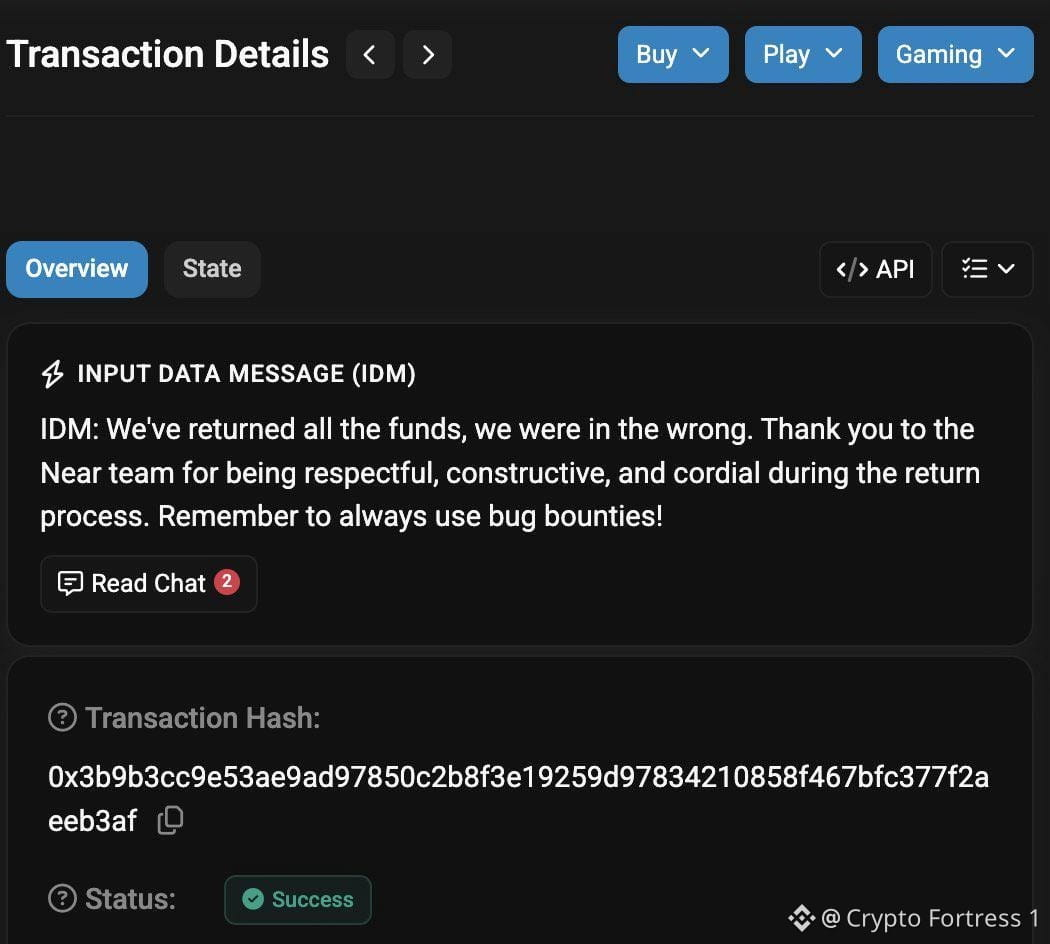
O invasor de $NEAR Intents (NEAR) $3,8M “RETORNOU” o valor total.
Menos de 24 horas depois que a NEAR identificou publicamente o suposto atacante e emitiu um prazo de 48 horas, todo o dinheiro roubado foi devolvido.
O invasor também deixou uma mensagem on-chain admitindo que estava “no lado errado”, agradecendo à equipe por conduzir a situação com respeito e incentivando a NEAR a usar recompensas por bug no futuro.
Com os $3,8M totalmente recuperados, a NEAR afirma que a investigação agora foi interrompida.
#Macro Insights# #Altcoin Season#
O invasor de $NEAR Intents (NEAR) $3,8M “RETORNOU” o valor total.
Menos de 24 horas depois que a NEAR identificou publicamente o suposto atacante e emitiu um prazo de 48 horas, todo o dinheiro roubado foi devolvido.
O invasor também deixou uma mensagem on-chain admitindo que estava “no lado errado”, agradecendo à equipe por conduzir a situação com respeito e incentivando a NEAR a usar recompensas por bug no futuro.
Com os $3,8M totalmente recuperados, a NEAR afirma que a investigação agora foi interrompida.
#Macro Insights# #Altcoin Season#
Menos de 24 horas depois que a NEAR identificou publicamente o suposto atacante e emitiu um prazo de 48 horas, todo o dinheiro roubado foi devolvido.
O invasor também deixou uma mensagem on-chain admitindo que estava “no lado errado”, agradecendo à equipe por conduzir a situação com respeito e incentivando a NEAR a usar recompensas por bug no futuro.
Com os $3,8M totalmente recuperados, a NEAR afirma que a investigação agora foi interrompida.
#Macro Insights# #Altcoin Season#

$SOL está se tornando muito mais do que apenas um playground de memecoins.
Por anos, a Solana foi principalmente conhecida por trading de varejo, memecoins e especulação.
Mas por trás dessa imagem, algo maior vem sendo desenvolvido.
Os números contam a história.
- Ativos do mundo real já ultrapassaram US$ 4,5 bi.
- Ações tokenizadas superam US$ 620 mi.
- O volume de stablecoins ultrapassou US$ 5 tri em 2026.
- Até agosto, xStocks já havia atraído mais de 190K detentores e atingido US$ 500 mi em AUM.
No início de 2026, segundo relatos, a Solana teria processado cerca de 97% do volume spot acumulado de ações tokenizadas on-chain.
Com nomes de peso como BlackRock, Franklin Templeton e Apollo entrando no ecossistema mais amplo, a narrativa institucional da Solana está evoluindo.
O mercado ainda se lembra do antigo, mas a rede está construindo um futuro diferente...
#Análise do Preço do BTC# #Insights Macroeconômicos#
#Meme Alpha#
$SOL está se tornando muito mais do que apenas um playground de memecoins.
Por anos, a Solana foi principalmente conhecida por trading de varejo, memecoins e especulação.
Mas por trás dessa imagem, algo maior vem sendo desenvolvido.
Os números contam a história.
- Ativos do mundo real já ultrapassaram US$ 4,5 bi.
- Ações tokenizadas superam US$ 620 mi.
- O volume de stablecoins ultrapassou US$ 5 tri em 2026.
- Até agosto, xStocks já havia atraído mais de 190K detentores e atingido US$ 500 mi em AUM.
No início de 2026, segundo relatos, a Solana teria processado cerca de 97% do volume spot acumulado de ações tokenizadas on-chain.
Com nomes de peso como BlackRock, Franklin Templeton e Apollo entrando no ecossistema mais amplo, a narrativa institucional da Solana está evoluindo.
O mercado ainda se lembra do antigo, mas a rede está construindo um futuro diferente...
#Análise do Preço do BTC# #Insights Macroeconômicos#
#Meme Alpha#
Por anos, a Solana foi principalmente conhecida por trading de varejo, memecoins e especulação.
Mas por trás dessa imagem, algo maior vem sendo desenvolvido.
Os números contam a história.
- Ativos do mundo real já ultrapassaram US$ 4,5 bi.
- Ações tokenizadas superam US$ 620 mi.
- O volume de stablecoins ultrapassou US$ 5 tri em 2026.
- Até agosto, xStocks já havia atraído mais de 190K detentores e atingido US$ 500 mi em AUM.
No início de 2026, segundo relatos, a Solana teria processado cerca de 97% do volume spot acumulado de ações tokenizadas on-chain.
Com nomes de peso como BlackRock, Franklin Templeton e Apollo entrando no ecossistema mais amplo, a narrativa institucional da Solana está evoluindo.
O mercado ainda se lembra do antigo, mas a rede está construindo um futuro diferente...
#Análise do Preço do BTC# #Insights Macroeconômicos#
#Meme Alpha#
Em setembro, os ETFs de spot de Bitcoin e Ethereum registraram um total de US$ 2,9 bilhões em entradas
No mês passado, os ETFs de spot de $BTC registraram uma entrada total de US$ 2,65 bilhões, enquanto os ETFs de spot de $ETH registraram uma entrada total de US$ 832,43 milhões.
#Bitcoin #Ethereum
Em setembro, os ETFs de spot de Bitcoin e Ethereum registraram um total de US$ 2,9 bilhões em entradas
No mês passado, os ETFs de spot de $BTC registraram uma entrada total de US$ 2,65 bilhões, enquanto os ETFs de spot de $ETH registraram uma entrada total de US$ 832,43 milhões.
#Bitcoin #Ethereum
No mês passado, os ETFs de spot de $BTC registraram uma entrada total de US$ 2,65 bilhões, enquanto os ETFs de spot de $ETH registraram uma entrada total de US$ 832,43 milhões.
#Bitcoin #Ethereum
Charles Hoskinson Diz que a Cripto Está Entrando em uma Nova Era de Crescimento Exponencial
Algumas tecnologias parecem lentas por anos e, então, de repente, mudam tudo. Charles Hoskinson afirma que a cripto talvez agora esteja entrando nessa fase, enquanto os traders continuam observando a direção mais ampla do mercado e a ação do preço do $BTC:
- Internet: Hoskinson comparou a blockchain com o início da internet, que mudou completamente a rapidez com que as pessoas conseguiam se comunicar e acessar informações ao redor do mundo.
- IA: Ele também apontou a inteligência artificial como outra tecnologia exponencial, em que o progresso pode parecer gradual antes da adoção e as capacidades aceleram muito mais rápido.
- Blockchain: Hoskinson acredita que a cripto pode seguir o mesmo padrão, com anos de desenvolvimento de infraestrutura que, eventualmente, levam a um uso muito mais amplo no mundo real.
Tecnologias como energia nuclear, a internet e a IA levaram tempo antes que seu impacto ficasse óbvio. O ponto de Hoskinson é simples: a blockchain pode estar se aproximando daquela mesma fase de aceleração.
#ADA #BTC Price Analysis#
#Macro Insights#
Charles Hoskinson Diz que a Cripto Está Entrando em uma Nova Era de Crescimento Exponencial
Algumas tecnologias parecem lentas por anos e, então, de repente, mudam tudo. Charles Hoskinson afirma que a cripto talvez agora esteja entrando nessa fase, enquanto os traders continuam observando a direção mais ampla do mercado e a ação do preço do $BTC:
- Internet: Hoskinson comparou a blockchain com o início da internet, que mudou completamente a rapidez com que as pessoas conseguiam se comunicar e acessar informações ao redor do mundo.
- IA: Ele também apontou a inteligência artificial como outra tecnologia exponencial, em que o progresso pode parecer gradual antes da adoção e as capacidades aceleram muito mais rápido.
- Blockchain: Hoskinson acredita que a cripto pode seguir o mesmo padrão, com anos de desenvolvimento de infraestrutura que, eventualmente, levam a um uso muito mais amplo no mundo real.
Tecnologias como energia nuclear, a internet e a IA levaram tempo antes que seu impacto ficasse óbvio. O ponto de Hoskinson é simples: a blockchain pode estar se aproximando daquela mesma fase de aceleração.
#ADA #BTC Price Analysis#
#Macro Insights#
Algumas tecnologias parecem lentas por anos e, então, de repente, mudam tudo. Charles Hoskinson afirma que a cripto talvez agora esteja entrando nessa fase, enquanto os traders continuam observando a direção mais ampla do mercado e a ação do preço do $BTC:
- Internet: Hoskinson comparou a blockchain com o início da internet, que mudou completamente a rapidez com que as pessoas conseguiam se comunicar e acessar informações ao redor do mundo.
- IA: Ele também apontou a inteligência artificial como outra tecnologia exponencial, em que o progresso pode parecer gradual antes da adoção e as capacidades aceleram muito mais rápido.
- Blockchain: Hoskinson acredita que a cripto pode seguir o mesmo padrão, com anos de desenvolvimento de infraestrutura que, eventualmente, levam a um uso muito mais amplo no mundo real.
Tecnologias como energia nuclear, a internet e a IA levaram tempo antes que seu impacto ficasse óbvio. O ponto de Hoskinson é simples: a blockchain pode estar se aproximando daquela mesma fase de aceleração.
#ADA #BTC Price Analysis#
#Macro Insights#
$QNT
QNT precisa permanecer acima do nível de US$ 250 para manter o momento comprador. Se o suporte se mantiver, o próximo grande movimento poderá impulsionar #QNT na direção de US$ 400.
$QNT
QNT precisa permanecer acima do nível de US$ 250 para manter o momento comprador. Se o suporte se mantiver, o próximo grande movimento poderá impulsionar #QNT na direção de US$ 400.
QNT precisa permanecer acima do nível de US$ 250 para manter o momento comprador. Se o suporte se mantiver, o próximo grande movimento poderá impulsionar #QNT na direção de US$ 400.

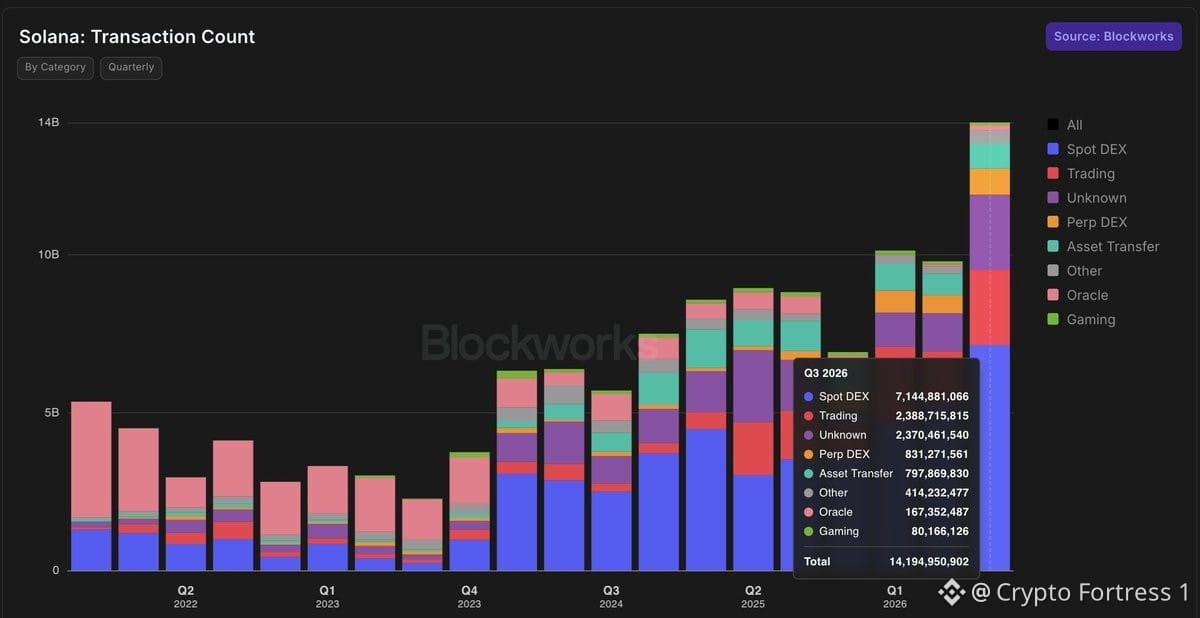
$SOL
A Solana processou um recorde de 14,2 bilhões de transações sem voto no 3º trimestre, marcando um aumento de 45% em relação ao 2º trimestre.
#Solana
$SOL
A Solana processou um recorde de 14,2 bilhões de transações sem voto no 3º trimestre, marcando um aumento de 45% em relação ao 2º trimestre.
#Solana
A Solana processou um recorde de 14,2 bilhões de transações sem voto no 3º trimestre, marcando um aumento de 45% em relação ao 2º trimestre.
#Solana
31
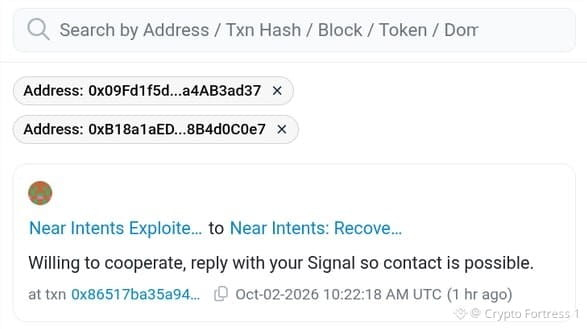
ATUALIZAÇÃO: O atacante das intenções $NEAR respondeu.
A carteira de recuperação das Intenções NEAR recebeu 1 $BNB com uma mensagem:
"Pronto para cooperar, responda com seu Signal para que o contato seja possível."
O remetente foi marcado no BNBScan como "NEAR Intents Exploiter 1" e já foi vinculado por ZachXBT a endereços envolvidos no exploit.
A resposta veio dentro da janela de 48 horas de Alex Aurora para cooperação, recuperação de fundos e uma possível recompensa.
Se as negociações continuarem, o exploit pode mudar de tentativas de lavagem para RECUPERAÇÃO DE FUNDOS.
#Macro Insights# #BNBChain#
ATUALIZAÇÃO: O atacante das intenções $NEAR respondeu.
A carteira de recuperação das Intenções NEAR recebeu 1 $BNB com uma mensagem:
"Pronto para cooperar, responda com seu Signal para que o contato seja possível."
O remetente foi marcado no BNBScan como "NEAR Intents Exploiter 1" e já foi vinculado por ZachXBT a endereços envolvidos no exploit.
A resposta veio dentro da janela de 48 horas de Alex Aurora para cooperação, recuperação de fundos e uma possível recompensa.
Se as negociações continuarem, o exploit pode mudar de tentativas de lavagem para RECUPERAÇÃO DE FUNDOS.
#Macro Insights# #BNBChain#
A carteira de recuperação das Intenções NEAR recebeu 1 $BNB com uma mensagem:
"Pronto para cooperar, responda com seu Signal para que o contato seja possível."
O remetente foi marcado no BNBScan como "NEAR Intents Exploiter 1" e já foi vinculado por ZachXBT a endereços envolvidos no exploit.
A resposta veio dentro da janela de 48 horas de Alex Aurora para cooperação, recuperação de fundos e uma possível recompensa.
Se as negociações continuarem, o exploit pode mudar de tentativas de lavagem para RECUPERAÇÃO DE FUNDOS.
#Macro Insights# #BNBChain#
30
Ver tradução
Africa's Banking Sector Enters Crypto!
Banking giant #Absa, serving more than 13 million clients, is becoming Africa's first bank to offer $BTC and crypto custody.
The move marks a major step toward institutional crypto adoption, bringing digital-asset custody into the traditional banking system and potentially making crypto access more familiar and accessible to millions of customers.
A significant milestone for Africa's evolving digital-asset landscape!
#Africa #CryptoNews
Africa's Banking Sector Enters Crypto!
Banking giant #Absa, serving more than 13 million clients, is becoming Africa's first bank to offer $BTC and crypto custody.
The move marks a major step toward institutional crypto adoption, bringing digital-asset custody into the traditional banking system and potentially making crypto access more familiar and accessible to millions of customers.
A significant milestone for Africa's evolving digital-asset landscape!
#Africa #CryptoNews
Banking giant #Absa, serving more than 13 million clients, is becoming Africa's first bank to offer $BTC and crypto custody.
The move marks a major step toward institutional crypto adoption, bringing digital-asset custody into the traditional banking system and potentially making crypto access more familiar and accessible to millions of customers.
A significant milestone for Africa's evolving digital-asset landscape!
#Africa #CryptoNews
40
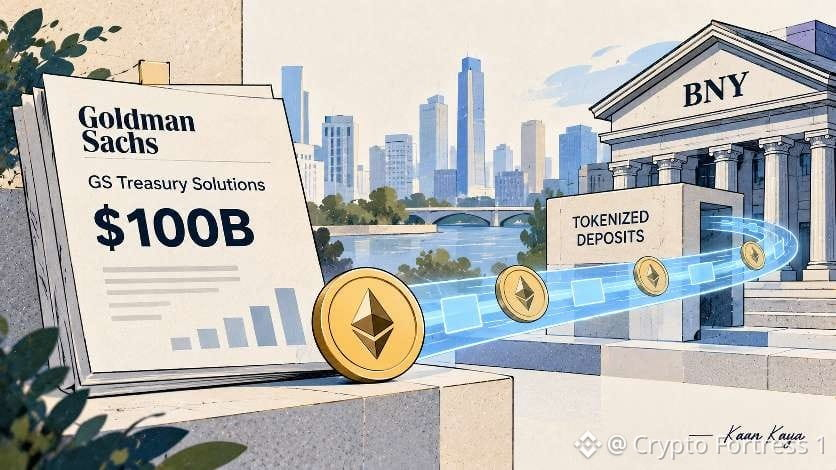
Um Fundo do Tesouro de US$ 100 Bilhões Acaba de Ser Conectado à Infraestrutura de Cripto
A Goldman Sachs Asset Management conectou seu fundo GS Treasury Solutions, de aproximadamente US$ 100 bilhões, à infraestrutura de depósitos tokenizados da BNY, permitindo que clientes institucionais usem trilhos de blockchain em torno de cotas de um fundo tradicional do mercado monetário. O investimento subjacente não virou cripto de repente; o ponto interessante é como a propriedade e a liquidação estão sendo tratadas.
Passamos anos discutindo tokenização como se todo ativo, mais cedo ou mais tarde, precisasse de um novo token brilhante. Esta é uma versão menos dramática: mantenha o fundo familiar e, então, atualize parte da infraestrutura por baixo.
Isso provavelmente se parece mais com o jeito como muita coisa na Wall Street acaba usando blockchain. Não “tudo vai para a $ETH amanhã”. Mais como alguém do operacional percebe que um processo pode ser liquidado mais rápido às 23h e pergunta por que ainda estão esperando até a manhã de terça.
#ETHBlockchain #ETHFoundation
Um Fundo do Tesouro de US$ 100 Bilhões Acaba de Ser Conectado à Infraestrutura de Cripto
A Goldman Sachs Asset Management conectou seu fundo GS Treasury Solutions, de aproximadamente US$ 100 bilhões, à infraestrutura de depósitos tokenizados da BNY, permitindo que clientes institucionais usem trilhos de blockchain em torno de cotas de um fundo tradicional do mercado monetário. O investimento subjacente não virou cripto de repente; o ponto interessante é como a propriedade e a liquidação estão sendo tratadas.
Passamos anos discutindo tokenização como se todo ativo, mais cedo ou mais tarde, precisasse de um novo token brilhante. Esta é uma versão menos dramática: mantenha o fundo familiar e, então, atualize parte da infraestrutura por baixo.
Isso provavelmente se parece mais com o jeito como muita coisa na Wall Street acaba usando blockchain. Não “tudo vai para a $ETH amanhã”. Mais como alguém do operacional percebe que um processo pode ser liquidado mais rápido às 23h e pergunta por que ainda estão esperando até a manhã de terça.
#ETHBlockchain #ETHFoundation
A Goldman Sachs Asset Management conectou seu fundo GS Treasury Solutions, de aproximadamente US$ 100 bilhões, à infraestrutura de depósitos tokenizados da BNY, permitindo que clientes institucionais usem trilhos de blockchain em torno de cotas de um fundo tradicional do mercado monetário. O investimento subjacente não virou cripto de repente; o ponto interessante é como a propriedade e a liquidação estão sendo tratadas.
Passamos anos discutindo tokenização como se todo ativo, mais cedo ou mais tarde, precisasse de um novo token brilhante. Esta é uma versão menos dramática: mantenha o fundo familiar e, então, atualize parte da infraestrutura por baixo.
Isso provavelmente se parece mais com o jeito como muita coisa na Wall Street acaba usando blockchain. Não “tudo vai para a $ETH amanhã”. Mais como alguém do operacional percebe que um processo pode ser liquidado mais rápido às 23h e pergunta por que ainda estão esperando até a manhã de terça.
#ETHBlockchain #ETHFoundation
54
Inicia sessão para explorar mais conteúdos
Junta-te a utilizadores de criptomoedas de todo o mundo na Binance Square
⚡️ Obtém informações úteis e recentes sobre criptomoedas.
💬 Com a confiança da maior exchange de criptomoedas do mundo.
👍 Descobre perspetivas reais de criadores verificados.
E-mail/Número de telefone
Tópicos em Tendência
BNBSurpasses$790
20,513 visualizações
150 a discutir
$BNB plano estratégico de longo prazo -> FOQUE AGORA
O BNB criou 2 fortes mínimas após romper a liquidez interna
Estou esperando um movimento em direção à máxima da swing em US$ 815–US$ 830 e procuro uma compra (long) em uma retest da caixa verde
#BNBSurpasses$790 #bnb
Ghost Writer
·6 gostos
·11.8k visualizações
ZamaRises15.99%ToIntradayHigh$0.09
18,342 visualizações
106 a discutir
BitcoinSpotETFsDraw$6.34BInflowsInQ3
6,218 visualizações
92 a discutir