

Joshua Brown 007
3k Publicações

Joshua Brown 007
Denunciar
Bloquear Utilizador
I am a forward-thinking crypto advisor with a strong grasp of blockchain innovation and digital asset management. @JavedJatt331726
Aberto ao trading
Trader de Alta Frequência
2.5 ano(s)
1.2K+ A seguir
15.7K+ Seguidores
6.5K+ Gostaram
Publicações
Portfólio
Tudo
Cotações
Vídeos
Em direto
Estou a observar um número antes de fazer o meu próximo movimento com BTC:
🇺🇸 Pedidos de Subsídio de Desemprego nos EUA
O mercado estava à procura de ~201K, após a leitura surpreendentemente baixa de 196K da semana passada.
Mas o que importa para mim é o seguinte:
🔹 Abaixo de 198K → Mercado de trabalho forte
→ Menos pressão para uma política mais fácil por parte do Fed
→ Pode sustentar USD/yields
→ Ativos de risco podem sofrer pressão
🔹 Por volta de 202K → Perto das expectativas
→ Provável reação imediata limitada
→ O BTC pode voltar aos níveis técnicos
🔹 Acima de 210K → Arrefecimento do mercado de trabalho mais claro
→ Mais atenção à política futura do Fed
→ Pode apoiar ativos sensíveis às taxas, incluindo cripto
O quadro geral é interessante.
A Reuters informou que a leitura recente de 196K pode ter sido distorcida pela volatilidade sazonal do Dia do Trabalhador, enquanto o mercado de trabalho subjacente permaneceu relativamente estável.
E outro aviso importante: os pedidos de desemprego medem principalmente despedimentos, não contratações. Ou seja, um número baixo sozinho não prova que todo o mercado de trabalho está a ficar mais forte.
Para o BTC, eu não estou a negociar apenas o título.
Vou observar:
Claims → DXY → yields dos Treasuries → expectativas do Fed → liquidez do BTC
Essa reação em cadeia importa mais do que um único número económico.
Sem long cego.
Sem short cego.
Deixe os dados chegarem primeiro e, depois, veja como o preço reage.
#USGovernment
{future}(BTCUSDT)
{future}(BNBUSDT)
{future}(XRPUSDT)
Estou a observar um número antes de fazer o meu próximo movimento com BTC:
🇺🇸 Pedidos de Subsídio de Desemprego nos EUA
O mercado estava à procura de ~201K, após a leitura surpreendentemente baixa de 196K da semana passada.
Mas o que importa para mim é o seguinte:
🔹 Abaixo de 198K → Mercado de trabalho forte
→ Menos pressão para uma política mais fácil por parte do Fed
→ Pode sustentar USD/yields
→ Ativos de risco podem sofrer pressão
🔹 Por volta de 202K → Perto das expectativas
→ Provável reação imediata limitada
→ O BTC pode voltar aos níveis técnicos
🔹 Acima de 210K → Arrefecimento do mercado de trabalho mais claro
→ Mais atenção à política futura do Fed
→ Pode apoiar ativos sensíveis às taxas, incluindo cripto
O quadro geral é interessante.
A Reuters informou que a leitura recente de 196K pode ter sido distorcida pela volatilidade sazonal do Dia do Trabalhador, enquanto o mercado de trabalho subjacente permaneceu relativamente estável.
E outro aviso importante: os pedidos de desemprego medem principalmente despedimentos, não contratações. Ou seja, um número baixo sozinho não prova que todo o mercado de trabalho está a ficar mais forte.
Para o BTC, eu não estou a negociar apenas o título.
Vou observar:
Claims → DXY → yields dos Treasuries → expectativas do Fed → liquidez do BTC
Essa reação em cadeia importa mais do que um único número económico.
Sem long cego.
Sem short cego.
Deixe os dados chegarem primeiro e, depois, veja como o preço reage.
#USGovernment
🇺🇸 Pedidos de Subsídio de Desemprego nos EUA
O mercado estava à procura de ~201K, após a leitura surpreendentemente baixa de 196K da semana passada.
Mas o que importa para mim é o seguinte:
🔹 Abaixo de 198K → Mercado de trabalho forte
→ Menos pressão para uma política mais fácil por parte do Fed
→ Pode sustentar USD/yields
→ Ativos de risco podem sofrer pressão
🔹 Por volta de 202K → Perto das expectativas
→ Provável reação imediata limitada
→ O BTC pode voltar aos níveis técnicos
🔹 Acima de 210K → Arrefecimento do mercado de trabalho mais claro
→ Mais atenção à política futura do Fed
→ Pode apoiar ativos sensíveis às taxas, incluindo cripto
O quadro geral é interessante.
A Reuters informou que a leitura recente de 196K pode ter sido distorcida pela volatilidade sazonal do Dia do Trabalhador, enquanto o mercado de trabalho subjacente permaneceu relativamente estável.
E outro aviso importante: os pedidos de desemprego medem principalmente despedimentos, não contratações. Ou seja, um número baixo sozinho não prova que todo o mercado de trabalho está a ficar mais forte.
Para o BTC, eu não estou a negociar apenas o título.
Vou observar:
Claims → DXY → yields dos Treasuries → expectativas do Fed → liquidez do BTC
Essa reação em cadeia importa mais do que um único número económico.
Sem long cego.
Sem short cego.
Deixe os dados chegarem primeiro e, depois, veja como o preço reage.
#USGovernment
113
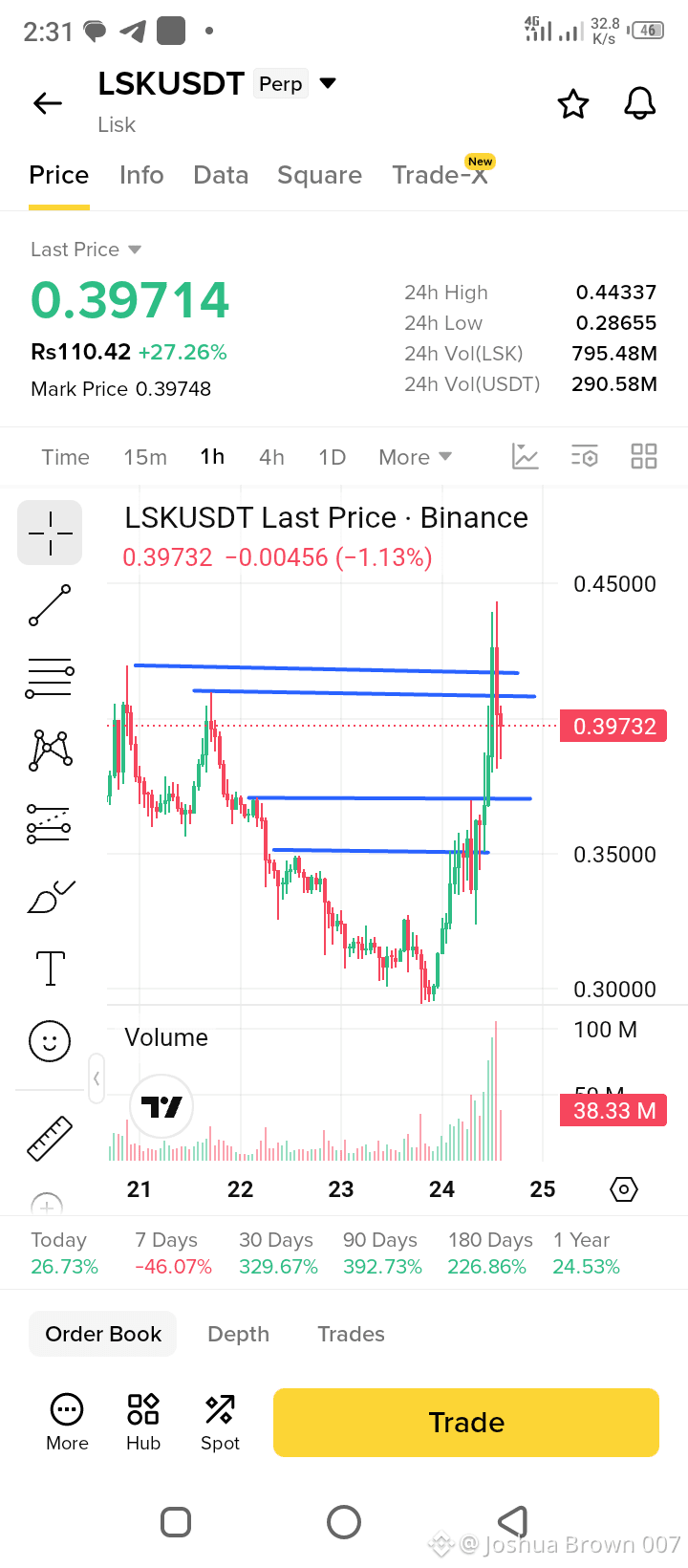
Trading de $LSK de 30 dias no valor de 10.7K USDT
#Trade Short couro cabeludo $LSK
Entrada 0.3930 - 0.4000
SL 0.4150
TP 0.3700 FVG 1H
TP 0.3500 zona de demanda principal
Condições de invalidação:
O fechamento da vela de 1H acima de 0.4200 invalida completamente a tese micro baixista.
$LSK
{future}(LSKUSDT)
#Trade Short couro cabeludo $LSK
Entrada 0.3930 - 0.4000
SL 0.4150
TP 0.3700 FVG 1H
TP 0.3500 zona de demanda principal
Condições de invalidação:
O fechamento da vela de 1H acima de 0.4200 invalida completamente a tese micro baixista.
$LSK
Entrada 0.3930 - 0.4000
SL 0.4150
TP 0.3700 FVG 1H
TP 0.3500 zona de demanda principal
Condições de invalidação:
O fechamento da vela de 1H acima de 0.4200 invalida completamente a tese micro baixista.
$LSK
190
·
--
Em Alta
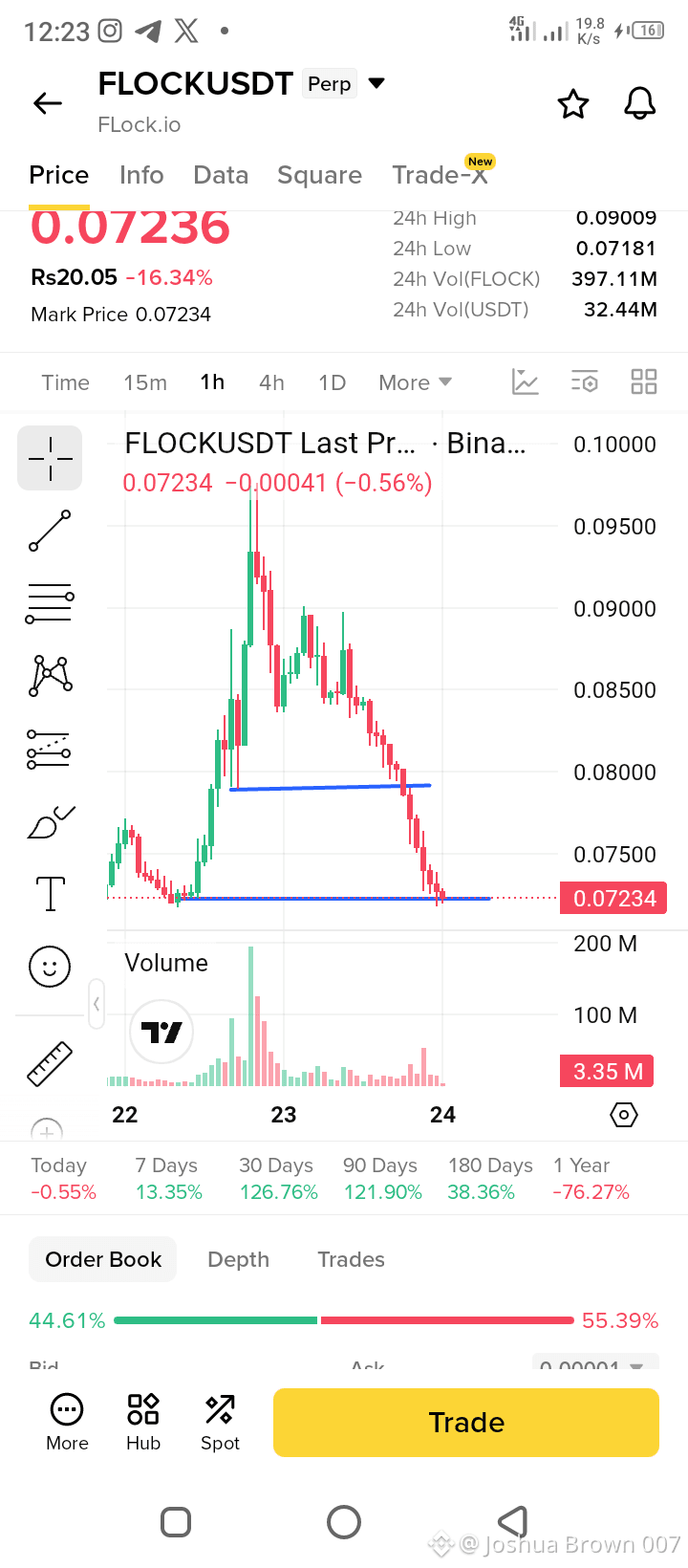
Trading de $FLOCK de 30 dias no valor de 7K USDT
#Trade $FLOCK LONG Configuração
Entrada Limite 0.0715 - 0.0725
SL 0.0690
TP 0.07482
TP 0.08050
Condições de Invalidação:
Fechamento de candle de 1H abaixo de 0.0690 invalida a tese de repique imediato.
pico repentino no volume de vendas que rompe o suporte de 0.0650.
Se o preço romper abaixo de 0.0690 com alto volume, entre vendido na retest de 0.0710, mirando 0.0650. SL em 0.0730.
$TAKE $CAP
{future}(FLOCKUSDT)
{future}(TAKEUSDT)
{future}(CAPUSDT)
#Trade $FLOCK LONG Configuração
Entrada Limite 0.0715 - 0.0725
SL 0.0690
TP 0.07482
TP 0.08050
Condições de Invalidação:
Fechamento de candle de 1H abaixo de 0.0690 invalida a tese de repique imediato.
pico repentino no volume de vendas que rompe o suporte de 0.0650.
Se o preço romper abaixo de 0.0690 com alto volume, entre vendido na retest de 0.0710, mirando 0.0650. SL em 0.0730.
$TAKE $CAP
Entrada Limite 0.0715 - 0.0725
SL 0.0690
TP 0.07482
TP 0.08050
Condições de Invalidação:
Fechamento de candle de 1H abaixo de 0.0690 invalida a tese de repique imediato.
pico repentino no volume de vendas que rompe o suporte de 0.0650.
Se o preço romper abaixo de 0.0690 com alto volume, entre vendido na retest de 0.0710, mirando 0.0650. SL em 0.0730.
$TAKE $CAP
539
Artigo
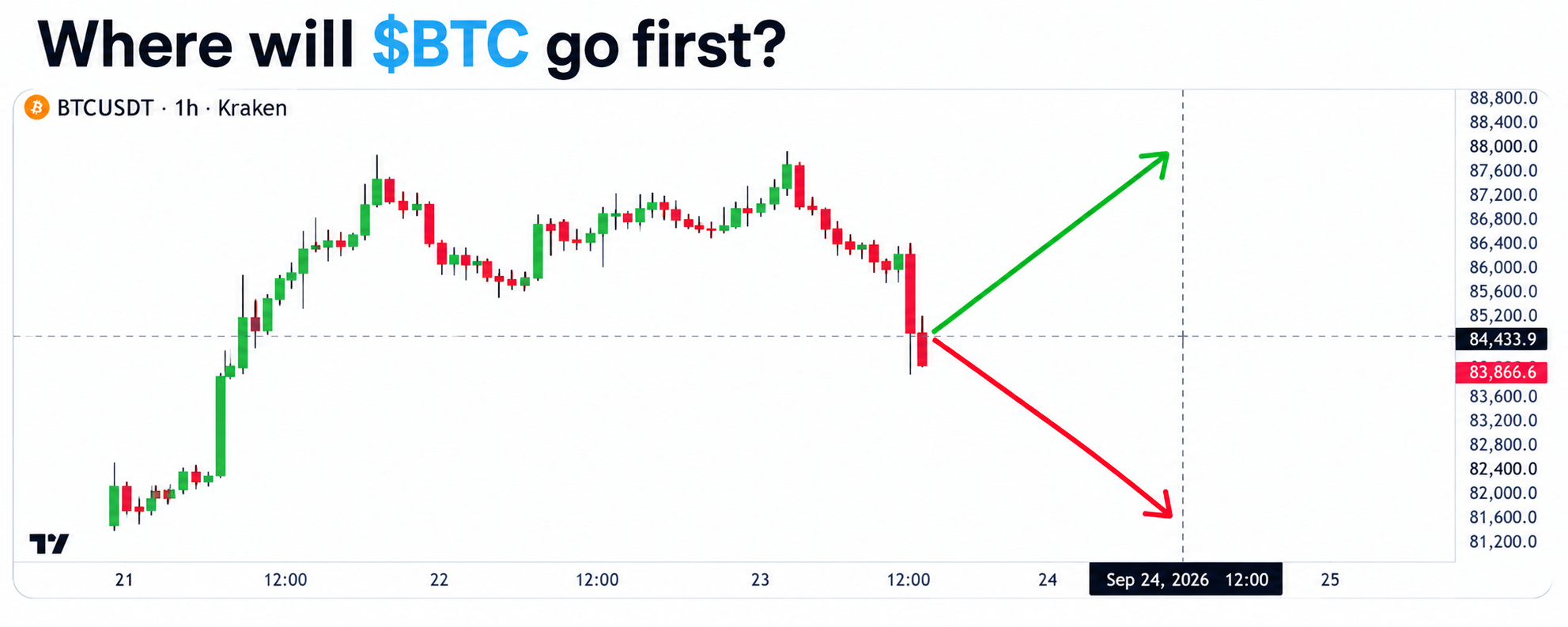
Para onde o $BTC vai primeiro: para cima ou para baixo?Eu continuo olhando para este gráfico e uma pergunta se destaca:
O Bitcoin vai absorver a liquidez acima primeiro ou varrer a desvantagem antes do próximo movimento?
O gráfico mostra a área de decisão principal em torno de US$ 84,4 mil, com aproximadamente US$ 87,6 mil na alta e US$ 81,6 mil na baixa.
Mas há uma atualização importante: a BTC já avançou para a região de US$ 87 mil hoje, então este gráfico deve ser tratado como um instantâneo da configuração anterior, e não da estrutura atual em tempo real. O painel mais recente da CryptoQuant tinha a BTC em torno de US$ 87,36 mil e o Indicador Bull/Bear havia ficado positivo em +0,27.
Para onde o $BTC vai primeiro: para cima ou para baixo?
Eu continuo olhando para este gráfico e uma pergunta se destaca:
O Bitcoin vai absorver a liquidez acima primeiro ou varrer a desvantagem antes do próximo movimento?
O gráfico mostra a área de decisão principal em torno de US$ 84,4 mil, com aproximadamente US$ 87,6 mil na alta e US$ 81,6 mil na baixa.
Mas há uma atualização importante: a BTC já avançou para a região de US$ 87 mil hoje, então este gráfico deve ser tratado como um instantâneo da configuração anterior, e não da estrutura atual em tempo real. O painel mais recente da CryptoQuant tinha a BTC em torno de US$ 87,36 mil e o Indicador Bull/Bear havia ficado positivo em +0,27.
O Bitcoin vai absorver a liquidez acima primeiro ou varrer a desvantagem antes do próximo movimento?
O gráfico mostra a área de decisão principal em torno de US$ 84,4 mil, com aproximadamente US$ 87,6 mil na alta e US$ 81,6 mil na baixa.
Mas há uma atualização importante: a BTC já avançou para a região de US$ 87 mil hoje, então este gráfico deve ser tratado como um instantâneo da configuração anterior, e não da estrutura atual em tempo real. O painel mais recente da CryptoQuant tinha a BTC em torno de US$ 87,36 mil e o Indicador Bull/Bear havia ficado positivo em +0,27.
1
4
8.3k
#zec
AGUARDE A CORREÇÃO E VÁ A LONG.
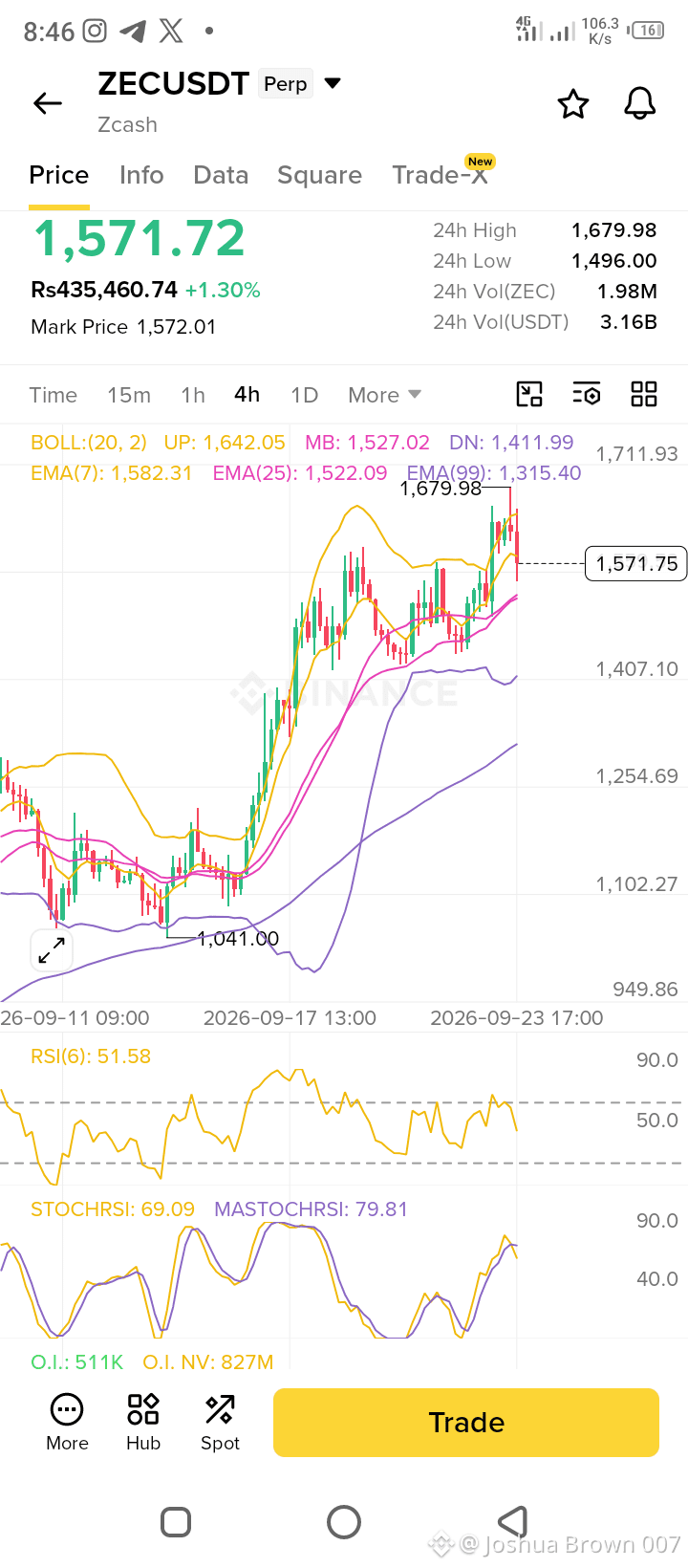
$ZEC USDT está em uma forte tendência de alta, mas atualmente está passando por uma correção de curto prazo necessária. Os indicadores esfriaram significativamente e o preço está testando a EMA(25). Não entre em pânico/FOMO no preço atual (1,571).
Entrada Long 1,520 - 1,540
SL 1,480
TP 1,645
TP 1,780
Tempo estimado 08 h - 1 Dia
Condições de Invalidação:
Se o fechamento da vela de 4H ficar abaixo de 1,315 (EMA 99), isso invalida completamente a tese macro de alta.
{future}(ZECUSDT)
$TAO
{future}(TAOUSDT)
$ZEN
{future}(ZENUSDT)
#zec
AGUARDE A CORREÇÃO E VÁ A LONG.
$ZEC USDT está em uma forte tendência de alta, mas atualmente está passando por uma correção de curto prazo necessária. Os indicadores esfriaram significativamente e o preço está testando a EMA(25). Não entre em pânico/FOMO no preço atual (1,571).
Entrada Long 1,520 - 1,540
SL 1,480
TP 1,645
TP 1,780
Tempo estimado 08 h - 1 Dia
Condições de Invalidação:
Se o fechamento da vela de 4H ficar abaixo de 1,315 (EMA 99), isso invalida completamente a tese macro de alta.
$TAO
$ZEN
AGUARDE A CORREÇÃO E VÁ A LONG.
$ZEC USDT está em uma forte tendência de alta, mas atualmente está passando por uma correção de curto prazo necessária. Os indicadores esfriaram significativamente e o preço está testando a EMA(25). Não entre em pânico/FOMO no preço atual (1,571).
Entrada Long 1,520 - 1,540
SL 1,480
TP 1,645
TP 1,780
Tempo estimado 08 h - 1 Dia
Condições de Invalidação:
Se o fechamento da vela de 4H ficar abaixo de 1,315 (EMA 99), isso invalida completamente a tese macro de alta.
$TAO
$ZEN
421
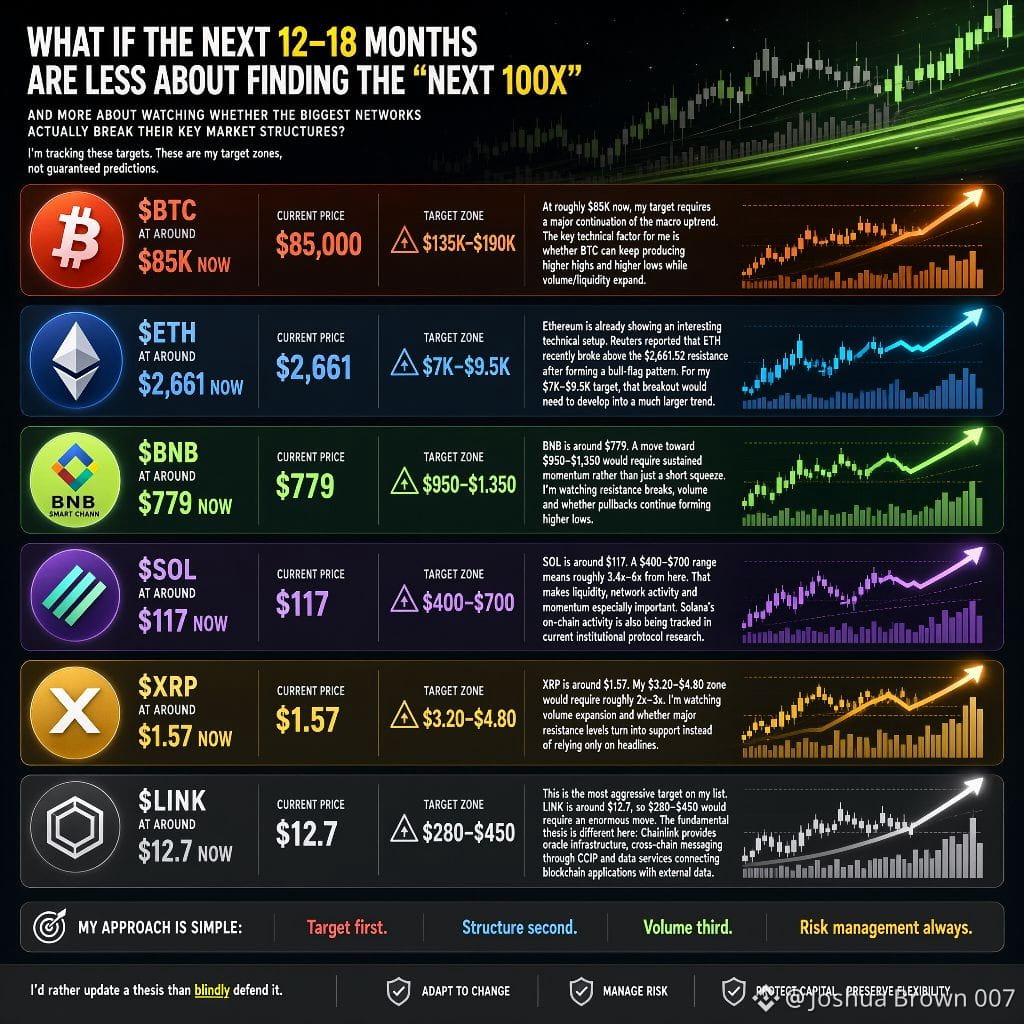
E se os próximos 12–18 meses forem menos sobre encontrar o “próximo 100x” e mais sobre observar se as maiores redes realmente quebram suas estruturas-chave de mercado?
Estou acompanhando essas metas:
$BTC → $135K–$190K
$ETH → $7K–$9.5K
$BNB → $950–$1,350
$SOL → $400–$700
$XRP → $3.20–$4.80
$LINK → $280–$450
Estas são minhas zonas-alvo, não previsões garantidas.
🔹 $BTC
A cerca de $85K agora, minha meta exige uma continuação importante do movimento macro de alta. O fator técnico-chave para mim é se o BTC consegue continuar gerando máximas mais altas e mínimas mais altas enquanto volume/liquidez aumentam.
🔹 $ETH
O Ethereum já está mostrando um setup técnico interessante. A Reuters informou que o ETH recentemente rompeu a resistência de $2.661,52 após formar um padrão de bull-flag.
Para minha meta de $7K–$9.5K, esse rompimento precisaria se desenvolver em uma tendência muito maior.
🔹 $BNB
O BNB está em torno de $779. Um movimento em direção a $950–$1,350 exigiria momentum sustentado, em vez de apenas um short squeeze. Estou observando rompimentos de resistência, volume e se as retrações continuam formando mínimas mais altas.
🔹 $SOL
O SOL está em torno de $117. Uma faixa de $400–$700 significa algo como 3,4x–6x a partir daqui.
Isso torna liquidez, atividade de rede e momentum especialmente importantes. A atividade on-chain da Solana também está sendo acompanhada em pesquisas institucionais atuais sobre protocolos.
🔹 $XRP
O XRP está em torno de $1,57. Minha faixa de $3.20–$4.80 exigiria algo como 2x–3x. Estou observando expansão de volume e se níveis importantes de resistência passam a atuar como suporte em vez de depender apenas de manchetes.
Minha abordagem é simples:
Primeiro: alvo.
Segundo: estrutura.
Terceiro: volume.
Gestão de risco sempre.
Se a estrutura do mercado mudar, minhas metas também podem mudar.
Eu prefiro atualizar uma tese a defender cegamente.
{spot}(BTCUSDT)
{spot}(ETHUSDT)
{spot}(BNBUSDT)
E se os próximos 12–18 meses forem menos sobre encontrar o “próximo 100x” e mais sobre observar se as maiores redes realmente quebram suas estruturas-chave de mercado?
Estou acompanhando essas metas:
$BTC → $135K–$190K
$ETH → $7K–$9.5K
$BNB → $950–$1,350
$SOL → $400–$700
$XRP → $3.20–$4.80
$LINK → $280–$450
Estas são minhas zonas-alvo, não previsões garantidas.
🔹 $BTC
A cerca de $85K agora, minha meta exige uma continuação importante do movimento macro de alta. O fator técnico-chave para mim é se o BTC consegue continuar gerando máximas mais altas e mínimas mais altas enquanto volume/liquidez aumentam.
🔹 $ETH
O Ethereum já está mostrando um setup técnico interessante. A Reuters informou que o ETH recentemente rompeu a resistência de $2.661,52 após formar um padrão de bull-flag.
Para minha meta de $7K–$9.5K, esse rompimento precisaria se desenvolver em uma tendência muito maior.
🔹 $BNB
O BNB está em torno de $779. Um movimento em direção a $950–$1,350 exigiria momentum sustentado, em vez de apenas um short squeeze. Estou observando rompimentos de resistência, volume e se as retrações continuam formando mínimas mais altas.
🔹 $SOL
O SOL está em torno de $117. Uma faixa de $400–$700 significa algo como 3,4x–6x a partir daqui.
Isso torna liquidez, atividade de rede e momentum especialmente importantes. A atividade on-chain da Solana também está sendo acompanhada em pesquisas institucionais atuais sobre protocolos.
🔹 $XRP
O XRP está em torno de $1,57. Minha faixa de $3.20–$4.80 exigiria algo como 2x–3x. Estou observando expansão de volume e se níveis importantes de resistência passam a atuar como suporte em vez de depender apenas de manchetes.
Minha abordagem é simples:
Primeiro: alvo.
Segundo: estrutura.
Terceiro: volume.
Gestão de risco sempre.
Se a estrutura do mercado mudar, minhas metas também podem mudar.
Eu prefiro atualizar uma tese a defender cegamente.
Estou acompanhando essas metas:
$BTC → $135K–$190K
$ETH → $7K–$9.5K
$BNB → $950–$1,350
$SOL → $400–$700
$XRP → $3.20–$4.80
$LINK → $280–$450
Estas são minhas zonas-alvo, não previsões garantidas.
🔹 $BTC
A cerca de $85K agora, minha meta exige uma continuação importante do movimento macro de alta. O fator técnico-chave para mim é se o BTC consegue continuar gerando máximas mais altas e mínimas mais altas enquanto volume/liquidez aumentam.
🔹 $ETH
O Ethereum já está mostrando um setup técnico interessante. A Reuters informou que o ETH recentemente rompeu a resistência de $2.661,52 após formar um padrão de bull-flag.
Para minha meta de $7K–$9.5K, esse rompimento precisaria se desenvolver em uma tendência muito maior.
🔹 $BNB
O BNB está em torno de $779. Um movimento em direção a $950–$1,350 exigiria momentum sustentado, em vez de apenas um short squeeze. Estou observando rompimentos de resistência, volume e se as retrações continuam formando mínimas mais altas.
🔹 $SOL
O SOL está em torno de $117. Uma faixa de $400–$700 significa algo como 3,4x–6x a partir daqui.
Isso torna liquidez, atividade de rede e momentum especialmente importantes. A atividade on-chain da Solana também está sendo acompanhada em pesquisas institucionais atuais sobre protocolos.
🔹 $XRP
O XRP está em torno de $1,57. Minha faixa de $3.20–$4.80 exigiria algo como 2x–3x. Estou observando expansão de volume e se níveis importantes de resistência passam a atuar como suporte em vez de depender apenas de manchetes.
Minha abordagem é simples:
Primeiro: alvo.
Segundo: estrutura.
Terceiro: volume.
Gestão de risco sempre.
Se a estrutura do mercado mudar, minhas metas também podem mudar.
Eu prefiro atualizar uma tese a defender cegamente.
200
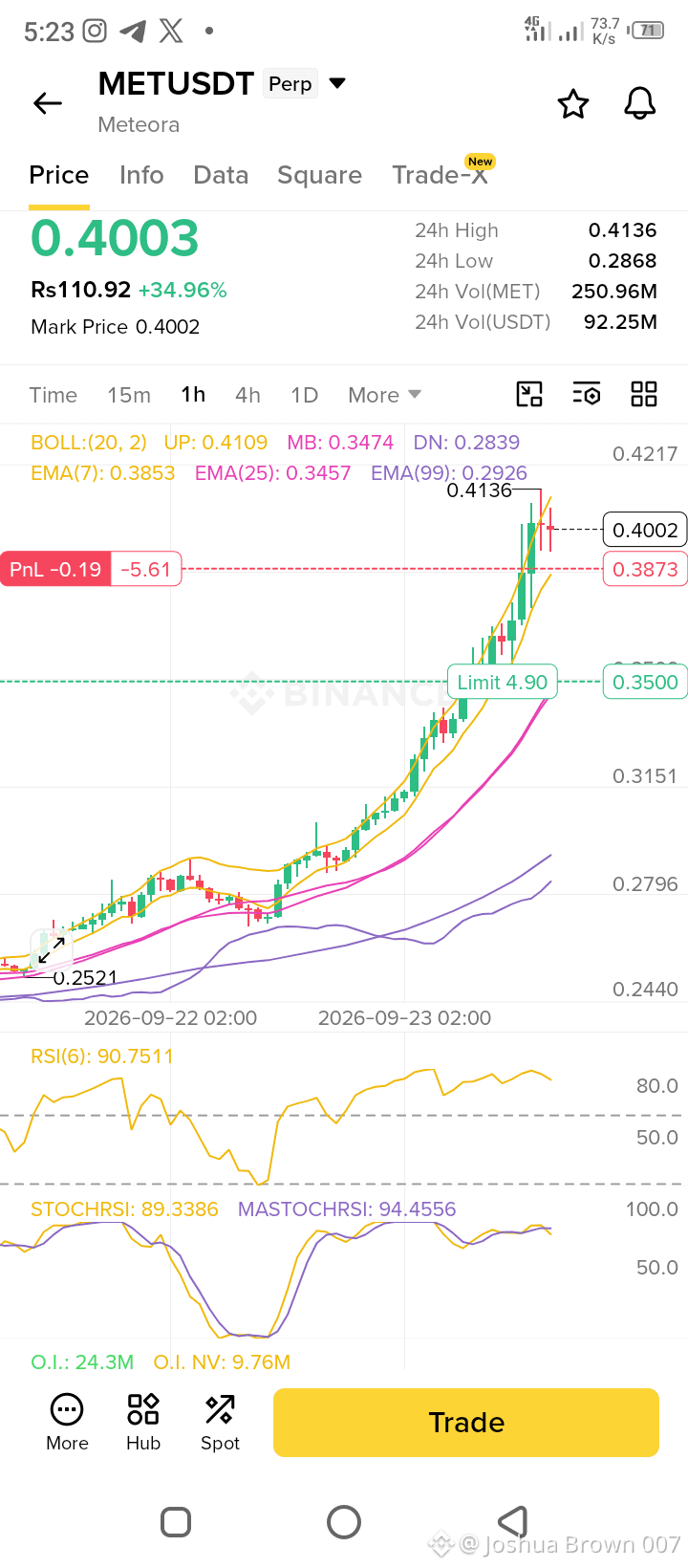
$MET Short Sell
Entrada0.4000 - 0.4050
SL 0.4150
TP 0.3860 e 0.3490
cuidado:
Se o preço recuperar 0.4136 com alto volume e romper 0.4217, entre comprado mirando 0.450. SL em 0.400.
{future}(METUSDT)
$MET Short Sell
Entrada0.4000 - 0.4050
SL 0.4150
TP 0.3860 e 0.3490
cuidado:
Se o preço recuperar 0.4136 com alto volume e romper 0.4217, entre comprado mirando 0.450. SL em 0.400.
Entrada0.4000 - 0.4050
SL 0.4150
TP 0.3860 e 0.3490
cuidado:
Se o preço recuperar 0.4136 com alto volume e romper 0.4217, entre comprado mirando 0.450. SL em 0.400.
154
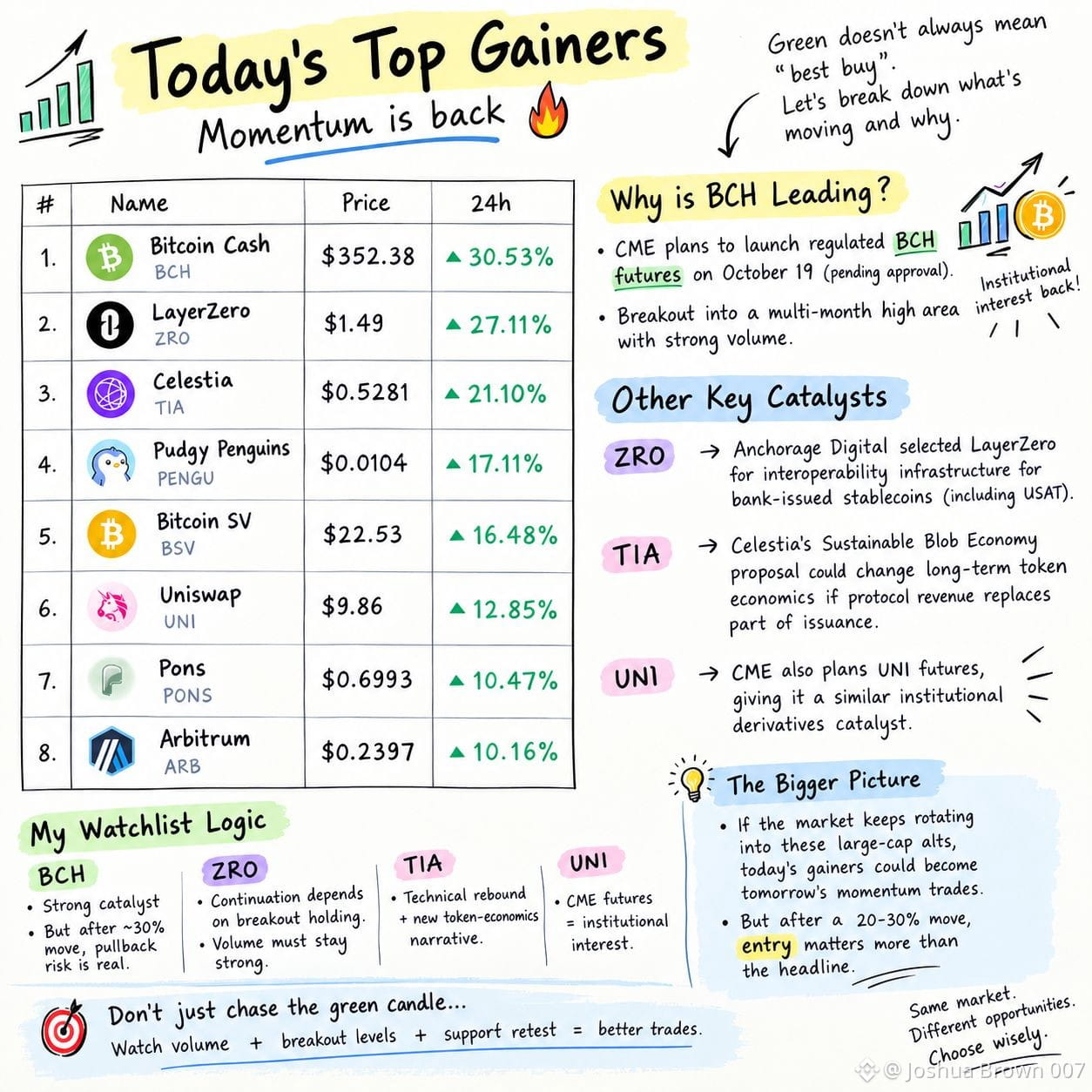
O impulso dos Maiores Ganhos de Hoje está de volta 🔥
O ranking de hoje é interessante porque não é apenas um pump de small cap.
$BCH +30.53%
$ZRO +27.11%
$TIA +21.10%
$PENGU +17.11%
$BSV +16.48%
$UNI +12.85%
$PONS +10.47%
$ARB +10.16%
A grande história é a BCH. O movimento está ligado aos planos da CME para futuros de BCH regulamentados, agendados para 19 de outubro, sujeito à aprovação regulatória. A BCH também rompeu para uma faixa de máxima de vários meses com volume elevado.
Mas aqui está a parte importante 👇
Uma moeda que já subiu 30% não é automaticamente a moeda com o maior potencial de alta restante.
ZRO tem outro catalisador fundamental interessante: a Anchorage Digital selecionou a LayerZero para infraestrutura de interoperabilidade de stablecoins emitidas por bancos, incluindo o USAT da Tether.
TIA também merece atenção porque a nova proposta da Celestia de Sustainable Blob Economy pode mudar a economia de tokens no longo prazo caso a receita do protocolo eventualmente substitua parte da emissão.
Minha lógica de lista de observação
BCH: melhor catalisador atual, mas depois de um movimento diário de ~30%, o risco de pullback importa.
ZRO: continuação depende de o rompimento de hoje se manter e o volume continuar forte.
TIA: combinação interessante de repique técnico + narrativa de nova economia de tokens.
UNI: a CME também planeja futuros de UNI, dando a ela um catalisador semelhante de derivativos institucionais.
Então, em vez de correr atrás do maior candle verde sem pensar, estou observando volume + nível do rompimento + reteste da resistência.
Se o mercado continuar girando para esses Alts de grande capitalização, os ganhadores de hoje podem virar as operações de momentum de amanhã, mas após um movimento de 20–30%, a entrada importa mais do que o título.
{future}(BCHUSDT)
{future}(ZROUSDT)
{future}(TIAUSDT)
O impulso dos Maiores Ganhos de Hoje está de volta 🔥
O ranking de hoje é interessante porque não é apenas um pump de small cap.
$BCH +30.53%
$ZRO +27.11%
$TIA +21.10%
$PENGU +17.11%
$BSV +16.48%
$UNI +12.85%
$PONS +10.47%
$ARB +10.16%
A grande história é a BCH. O movimento está ligado aos planos da CME para futuros de BCH regulamentados, agendados para 19 de outubro, sujeito à aprovação regulatória. A BCH também rompeu para uma faixa de máxima de vários meses com volume elevado.
Mas aqui está a parte importante 👇
Uma moeda que já subiu 30% não é automaticamente a moeda com o maior potencial de alta restante.
ZRO tem outro catalisador fundamental interessante: a Anchorage Digital selecionou a LayerZero para infraestrutura de interoperabilidade de stablecoins emitidas por bancos, incluindo o USAT da Tether.
TIA também merece atenção porque a nova proposta da Celestia de Sustainable Blob Economy pode mudar a economia de tokens no longo prazo caso a receita do protocolo eventualmente substitua parte da emissão.
Minha lógica de lista de observação
BCH: melhor catalisador atual, mas depois de um movimento diário de ~30%, o risco de pullback importa.
ZRO: continuação depende de o rompimento de hoje se manter e o volume continuar forte.
TIA: combinação interessante de repique técnico + narrativa de nova economia de tokens.
UNI: a CME também planeja futuros de UNI, dando a ela um catalisador semelhante de derivativos institucionais.
Então, em vez de correr atrás do maior candle verde sem pensar, estou observando volume + nível do rompimento + reteste da resistência.
Se o mercado continuar girando para esses Alts de grande capitalização, os ganhadores de hoje podem virar as operações de momentum de amanhã, mas após um movimento de 20–30%, a entrada importa mais do que o título.
O ranking de hoje é interessante porque não é apenas um pump de small cap.
$BCH +30.53%
$ZRO +27.11%
$TIA +21.10%
$PENGU +17.11%
$BSV +16.48%
$UNI +12.85%
$PONS +10.47%
$ARB +10.16%
A grande história é a BCH. O movimento está ligado aos planos da CME para futuros de BCH regulamentados, agendados para 19 de outubro, sujeito à aprovação regulatória. A BCH também rompeu para uma faixa de máxima de vários meses com volume elevado.
Mas aqui está a parte importante 👇
Uma moeda que já subiu 30% não é automaticamente a moeda com o maior potencial de alta restante.
ZRO tem outro catalisador fundamental interessante: a Anchorage Digital selecionou a LayerZero para infraestrutura de interoperabilidade de stablecoins emitidas por bancos, incluindo o USAT da Tether.
TIA também merece atenção porque a nova proposta da Celestia de Sustainable Blob Economy pode mudar a economia de tokens no longo prazo caso a receita do protocolo eventualmente substitua parte da emissão.
Minha lógica de lista de observação
BCH: melhor catalisador atual, mas depois de um movimento diário de ~30%, o risco de pullback importa.
ZRO: continuação depende de o rompimento de hoje se manter e o volume continuar forte.
TIA: combinação interessante de repique técnico + narrativa de nova economia de tokens.
UNI: a CME também planeja futuros de UNI, dando a ela um catalisador semelhante de derivativos institucionais.
Então, em vez de correr atrás do maior candle verde sem pensar, estou observando volume + nível do rompimento + reteste da resistência.
Se o mercado continuar girando para esses Alts de grande capitalização, os ganhadores de hoje podem virar as operações de momentum de amanhã, mas após um movimento de 20–30%, a entrada importa mais do que o título.
1
303
#AIStocksWhatNext
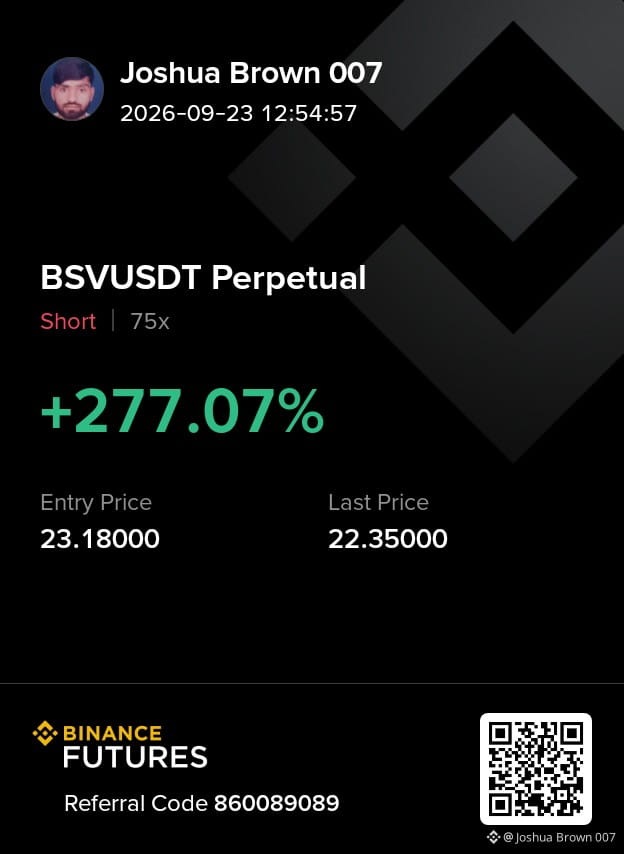
A negociação precisa calcular o mercado + a paixão e esperar pelo Resultado😎
{future}(BSVUSDT)
[https://www.binance.info/en/futures/ref/860089089](https://www.binance.info/en/futures/ref/860089089)
#AIStocksWhatNext
A negociação precisa calcular o mercado + a paixão e esperar pelo Resultado😎
https://www.binance.info/en/futures/ref/860089089
A negociação precisa calcular o mercado + a paixão e esperar pelo Resultado😎
https://www.binance.info/en/futures/ref/860089089
114
Artigo
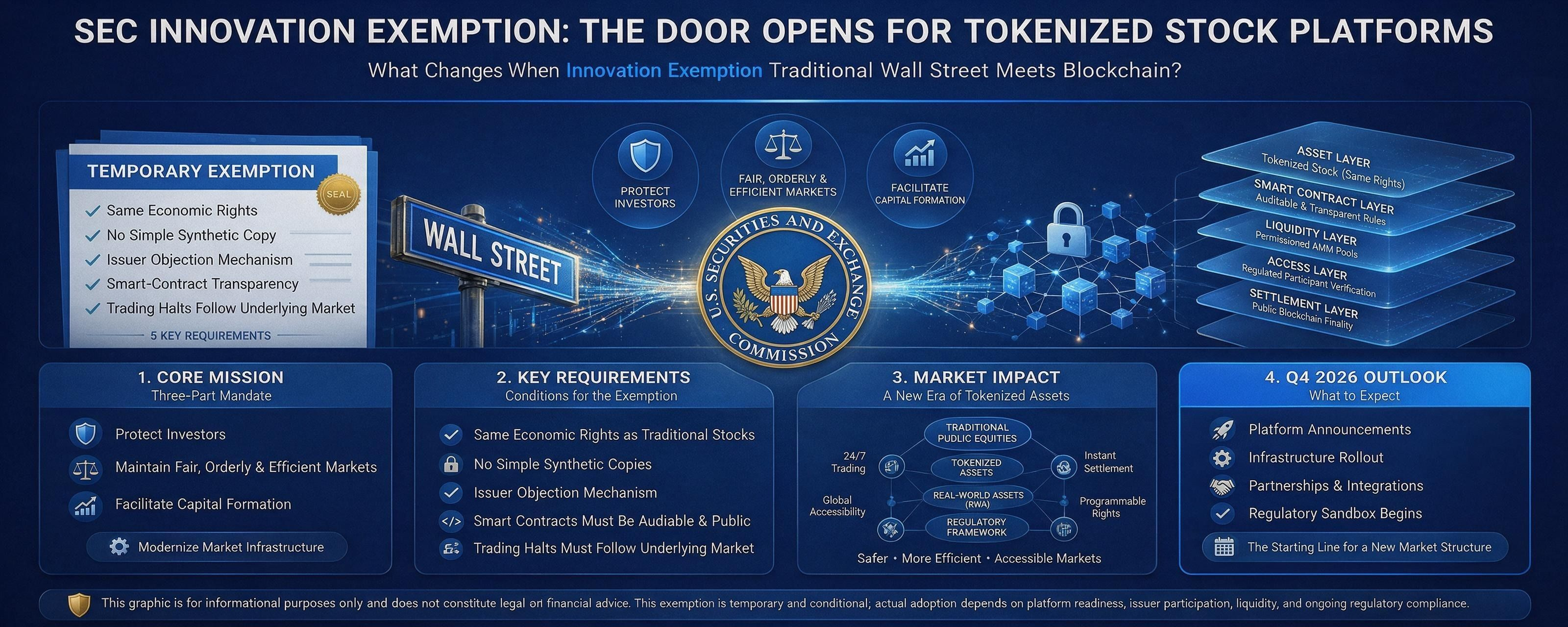
A Isenção de Inovação da SEC Pode Abrir as Portas para Plataformas de Ações Tokenizadas no 4º TrimestreAlgo importante está mudando entre as tradicionais Wall Street e o blockchain.
Em 17 de setembro de 2026, a Comissão de Valores Mobiliários dos Estados Unidos (SEC) apresentou sua Isenção de Inovação temporária, criando um caminho regulatório para que certas plataformas negociem ações dos EUA tokenizadas em ambientes baseados em blockchain. O desenvolvimento poderia permitir que plataformas de ações tokenizadas interessadas anunciem planos já no 4º trimestre de 2026.
Mas antes de analisar o impacto no setor de cripto, é importante entender o que a SEC realmente faz.
A Isenção de Inovação da SEC Pode Abrir as Portas para Plataformas de Ações Tokenizadas no 4º Trimestre
Algo importante está mudando entre as tradicionais Wall Street e o blockchain.
Em 17 de setembro de 2026, a Comissão de Valores Mobiliários dos Estados Unidos (SEC) apresentou sua Isenção de Inovação temporária, criando um caminho regulatório para que certas plataformas negociem ações dos EUA tokenizadas em ambientes baseados em blockchain. O desenvolvimento poderia permitir que plataformas de ações tokenizadas interessadas anunciem planos já no 4º trimestre de 2026.
Mas antes de analisar o impacto no setor de cripto, é importante entender o que a SEC realmente faz.
Em 17 de setembro de 2026, a Comissão de Valores Mobiliários dos Estados Unidos (SEC) apresentou sua Isenção de Inovação temporária, criando um caminho regulatório para que certas plataformas negociem ações dos EUA tokenizadas em ambientes baseados em blockchain. O desenvolvimento poderia permitir que plataformas de ações tokenizadas interessadas anunciem planos já no 4º trimestre de 2026.
Mas antes de analisar o impacto no setor de cripto, é importante entender o que a SEC realmente faz.
1
169
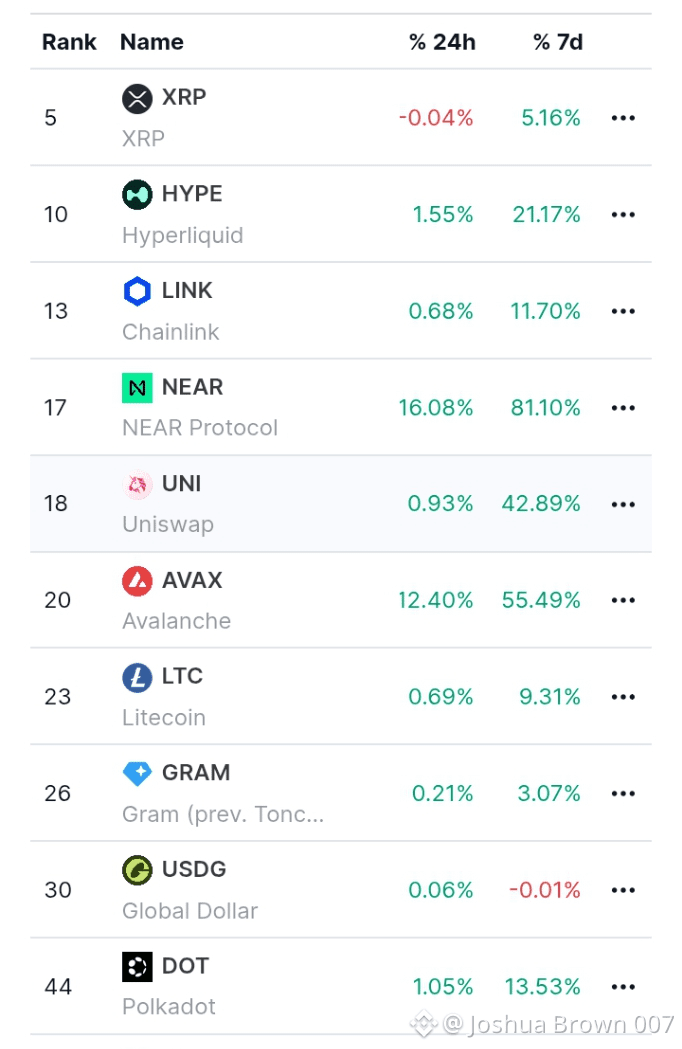
Top 10 ativos por volume | Visão geral do mercado de criptomoedas — 20 de setembro de 2026.
A rotação está ficando interessante
Os dados de 20 de setembro mostram forte momentum de 7 dias em vários grandes altcoins.
🔹 $NEAR: +81,10% em 7D o maior movimento deste grupo
🔹 $AVAX: +55,49%
🔹 $UNI: +42,89%
🔹 $HYPE: +21,17%
🔹 $DOT: +13,53%
🔹 $LINK: +11,70%
🔹 $LTC: +9,31%
🔹 $XRP: +5,16%
A parte interessante é o volume.
O $XRP movimentou US$ 2,69 bi, o $NEAR US$ 2,05 bi, o $AVAX US$ 1,48 bi e o $HYPE US$ 854 mi nas últimas 24h.
Isso não é apenas um movimento de preço: capital e volume estão girando entre diferentes setores.
Mas, depois de ganhos semanais tão acentuados, a volatilidade pode se expandir rapidamente.
Estou observando se o volume continua confirmando o movimento ou começa a perder força.
Sem correr atrás de candles. Observando o fluxo.
Top 10 ativos por volume | Visão geral do mercado de criptomoedas — 20 de setembro de 2026.
A rotação está ficando interessante
Os dados de 20 de setembro mostram forte momentum de 7 dias em vários grandes altcoins.
🔹 $NEAR: +81,10% em 7D o maior movimento deste grupo
🔹 $AVAX: +55,49%
🔹 $UNI: +42,89%
🔹 $HYPE: +21,17%
🔹 $DOT: +13,53%
🔹 $LINK: +11,70%
🔹 $LTC: +9,31%
🔹 $XRP: +5,16%
A parte interessante é o volume.
O $XRP movimentou US$ 2,69 bi, o $NEAR US$ 2,05 bi, o $AVAX US$ 1,48 bi e o $HYPE US$ 854 mi nas últimas 24h.
Isso não é apenas um movimento de preço: capital e volume estão girando entre diferentes setores.
Mas, depois de ganhos semanais tão acentuados, a volatilidade pode se expandir rapidamente.
Estou observando se o volume continua confirmando o movimento ou começa a perder força.
Sem correr atrás de candles. Observando o fluxo.
A rotação está ficando interessante
Os dados de 20 de setembro mostram forte momentum de 7 dias em vários grandes altcoins.
🔹 $NEAR: +81,10% em 7D o maior movimento deste grupo
🔹 $AVAX: +55,49%
🔹 $UNI: +42,89%
🔹 $HYPE: +21,17%
🔹 $DOT: +13,53%
🔹 $LINK: +11,70%
🔹 $LTC: +9,31%
🔹 $XRP: +5,16%
A parte interessante é o volume.
O $XRP movimentou US$ 2,69 bi, o $NEAR US$ 2,05 bi, o $AVAX US$ 1,48 bi e o $HYPE US$ 854 mi nas últimas 24h.
Isso não é apenas um movimento de preço: capital e volume estão girando entre diferentes setores.
Mas, depois de ganhos semanais tão acentuados, a volatilidade pode se expandir rapidamente.
Estou observando se o volume continua confirmando o movimento ou começa a perder força.
Sem correr atrás de candles. Observando o fluxo.
1
385
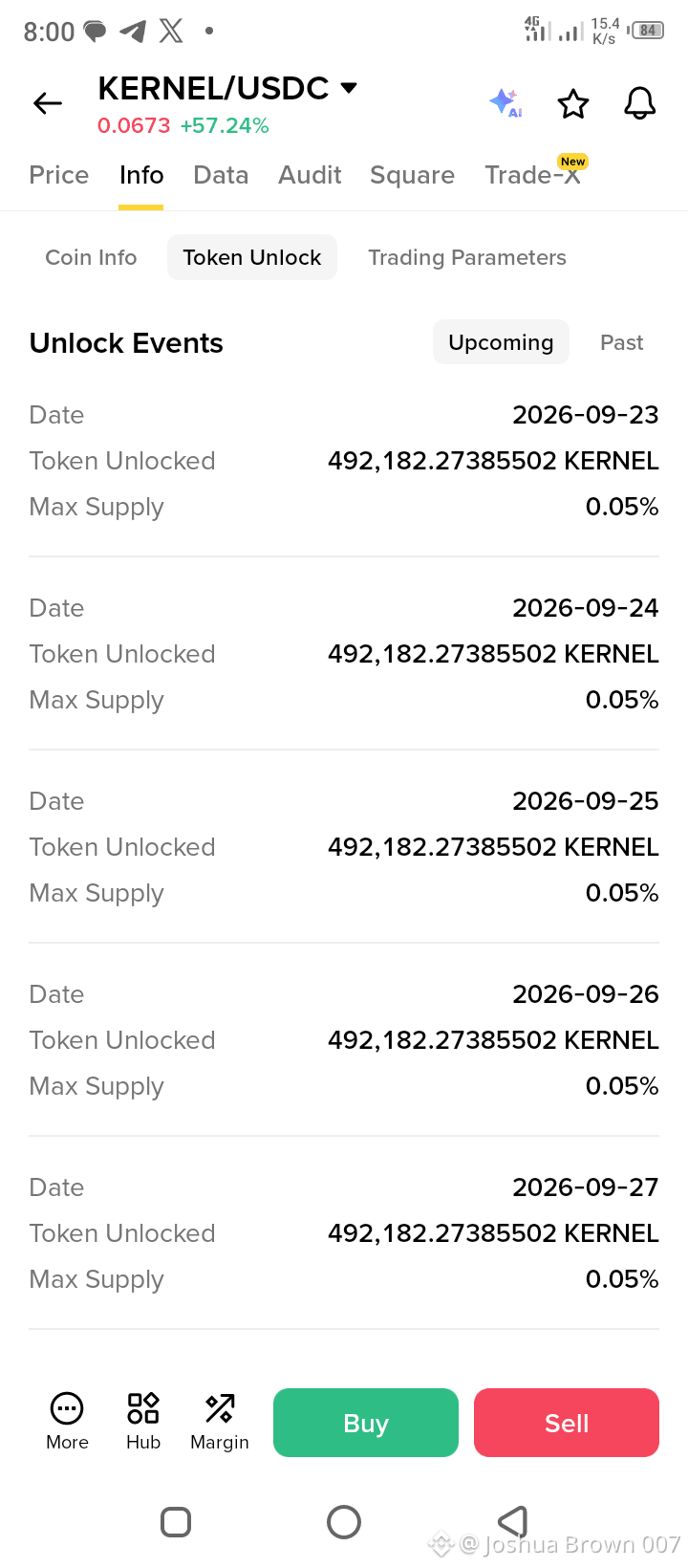
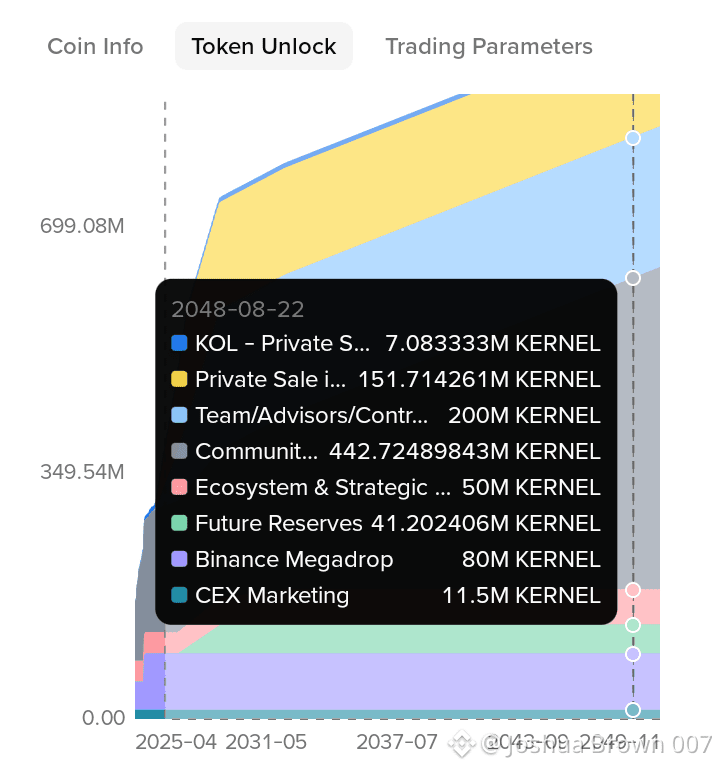
$KERNEL está subindo acentuadamente, mas amanhã começa um teste de oferta.
KERNEL está por volta de US$ 0,0673, já +57% na tela que estou vendo.
Mas a partir de 23 de setembro, a programação de desbloqueio do token mostra:
492.182 KERNEL todos os dias = 0,05% da oferta máxima
23 de set. → 24 → 25 → 26 → 27…
Essa mesma taxa continua, ou seja, ~1% da oferta máxima nos próximos 20 dias.
A US$ 0,0673, cada desbloqueio diário equivale a aproximadamente US$ 33K em tokens.
Isso parece pouco, mas a oferta circulante do KERNEL é apenas cerca de 28,8% da oferta máxima de 1B, então até um lançamento diário relativamente pequeno aumenta a oferta disponível.
Tokenomist +1
A parte interessante:
O preço está disparando +57%, enquanto uma nova oferta entra diariamente.
Isso cria duas forças:
🟢 Volume forte pode absorver os novos tokens
🔴 Demanda fraca pode transformar desbloqueios em pressão vendedora
E o KERNEL historicamente mostrou volatilidade considerável em torno de eventos maiores de desbloqueio; desbloqueios anteriores foram seguidos por quedas em vários períodos, embora isso não signifique que o mesmo padrão precise se repetir.
Então amanhã eu vou observar:
Preço + Volume + entradas na CEX + desbloqueios diários
O pump é uma história.
A oferta entrando no mercado é a história que vou observar a seguir.
#DAO #ARB🔥🔥🔥 #NEARRisesNearly80%InAWeek
{future}(KERNELUSDT)
{future}(ARBUSDT)
{future}(NEARUSDT)
$KERNEL está subindo acentuadamente, mas amanhã começa um teste de oferta.
KERNEL está por volta de US$ 0,0673, já +57% na tela que estou vendo.
Mas a partir de 23 de setembro, a programação de desbloqueio do token mostra:
492.182 KERNEL todos os dias = 0,05% da oferta máxima
23 de set. → 24 → 25 → 26 → 27…
Essa mesma taxa continua, ou seja, ~1% da oferta máxima nos próximos 20 dias.
A US$ 0,0673, cada desbloqueio diário equivale a aproximadamente US$ 33K em tokens.
Isso parece pouco, mas a oferta circulante do KERNEL é apenas cerca de 28,8% da oferta máxima de 1B, então até um lançamento diário relativamente pequeno aumenta a oferta disponível.
Tokenomist +1
A parte interessante:
O preço está disparando +57%, enquanto uma nova oferta entra diariamente.
Isso cria duas forças:
🟢 Volume forte pode absorver os novos tokens
🔴 Demanda fraca pode transformar desbloqueios em pressão vendedora
E o KERNEL historicamente mostrou volatilidade considerável em torno de eventos maiores de desbloqueio; desbloqueios anteriores foram seguidos por quedas em vários períodos, embora isso não signifique que o mesmo padrão precise se repetir.
Então amanhã eu vou observar:
Preço + Volume + entradas na CEX + desbloqueios diários
O pump é uma história.
A oferta entrando no mercado é a história que vou observar a seguir.
#DAO #ARB🔥🔥🔥 #NEARRisesNearly80%InAWeek
KERNEL está por volta de US$ 0,0673, já +57% na tela que estou vendo.
Mas a partir de 23 de setembro, a programação de desbloqueio do token mostra:
492.182 KERNEL todos os dias = 0,05% da oferta máxima
23 de set. → 24 → 25 → 26 → 27…
Essa mesma taxa continua, ou seja, ~1% da oferta máxima nos próximos 20 dias.
A US$ 0,0673, cada desbloqueio diário equivale a aproximadamente US$ 33K em tokens.
Isso parece pouco, mas a oferta circulante do KERNEL é apenas cerca de 28,8% da oferta máxima de 1B, então até um lançamento diário relativamente pequeno aumenta a oferta disponível.
Tokenomist +1
A parte interessante:
O preço está disparando +57%, enquanto uma nova oferta entra diariamente.
Isso cria duas forças:
🟢 Volume forte pode absorver os novos tokens
🔴 Demanda fraca pode transformar desbloqueios em pressão vendedora
E o KERNEL historicamente mostrou volatilidade considerável em torno de eventos maiores de desbloqueio; desbloqueios anteriores foram seguidos por quedas em vários períodos, embora isso não signifique que o mesmo padrão precise se repetir.
Então amanhã eu vou observar:
Preço + Volume + entradas na CEX + desbloqueios diários
O pump é uma história.
A oferta entrando no mercado é a história que vou observar a seguir.
#DAO #ARB🔥🔥🔥 #NEARRisesNearly80%InAWeek
1
1
449
#Binance
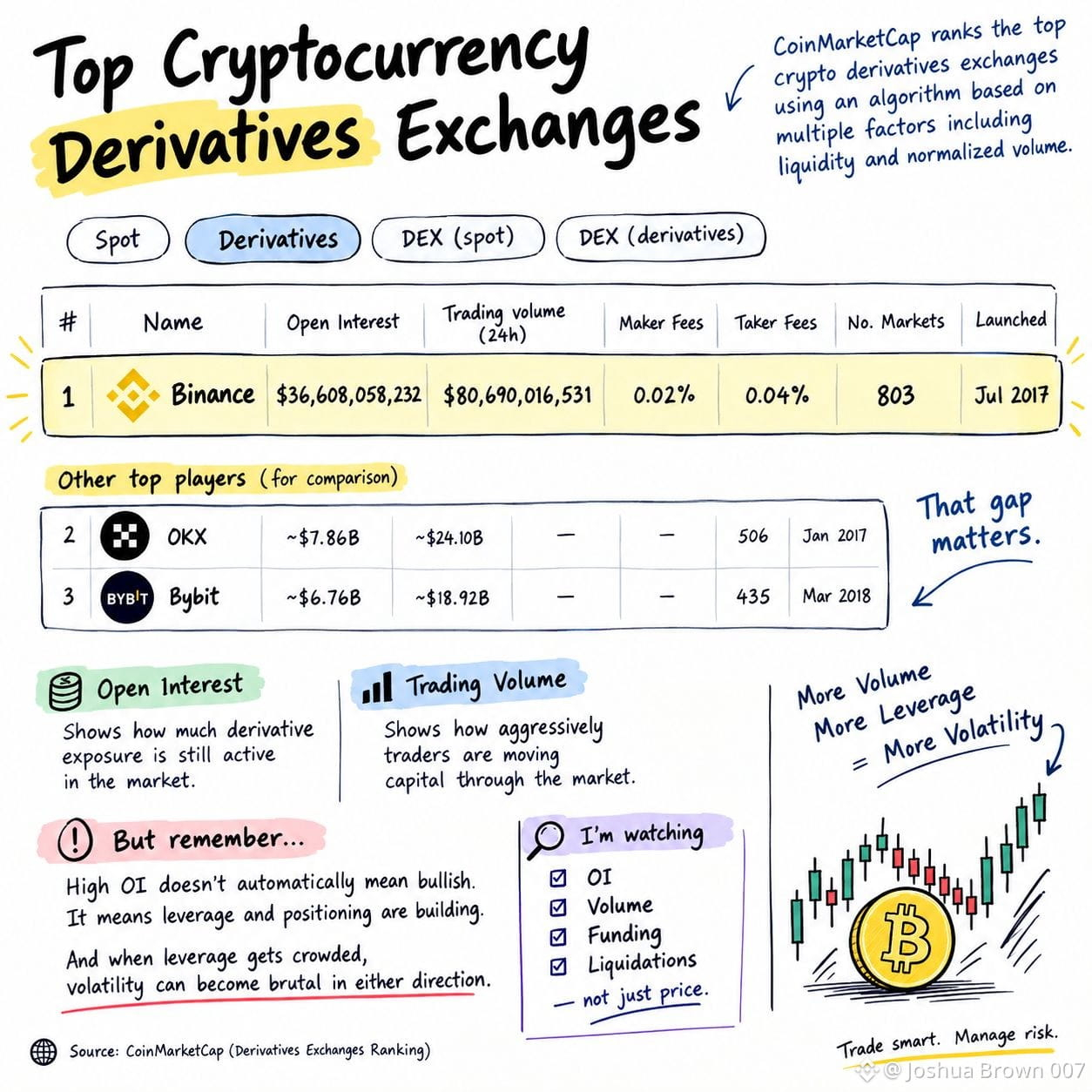
Verifiquei os dados mais recentes de derivativos do CoinMarketCap e um número se destaca imediatamente:
A exchange de ecossistema do $BNB, a Binance, ainda domina os derivativos.
Binance • $35,09B de Open Interest • $51,10B de volume de derivativos em 24h • 803 mercados • taxa maker de 0,02% • taxa taker de 0,04%
Para comparação, a OKX tem ~$7,86B de OI e a Bybit ~$6,76B.
Essa diferença importa.
Open Interest mostra quanto ainda existe de exposição a derivativos em atividade, enquanto o volume mostra o quão agressivamente os traders estão movimentando capital pelo mercado.
Mas lembre-se: alto OI não significa automaticamente alta (bullish).
Significa que alavancagem e posicionamento estão se acumulando.
E quando a alavancagem fica saturada, a volatilidade pode se tornar brutal em qualquer direção.
Estou observando OI + volume + funding + liquidações juntos, não apenas o preço.
{spot}(BNBUSDT)
$PHA
{future}(PHAUSDT)
$SUI
{future}(SUIUSDT)
#Binance
Verifiquei os dados mais recentes de derivativos do CoinMarketCap e um número se destaca imediatamente:
A exchange de ecossistema do $BNB, a Binance, ainda domina os derivativos.
Binance • $35,09B de Open Interest • $51,10B de volume de derivativos em 24h • 803 mercados • taxa maker de 0,02% • taxa taker de 0,04%
Para comparação, a OKX tem ~$7,86B de OI e a Bybit ~$6,76B.
Essa diferença importa.
Open Interest mostra quanto ainda existe de exposição a derivativos em atividade, enquanto o volume mostra o quão agressivamente os traders estão movimentando capital pelo mercado.
Mas lembre-se: alto OI não significa automaticamente alta (bullish).
Significa que alavancagem e posicionamento estão se acumulando.
E quando a alavancagem fica saturada, a volatilidade pode se tornar brutal em qualquer direção.
Estou observando OI + volume + funding + liquidações juntos, não apenas o preço.
$PHA
$SUI
Verifiquei os dados mais recentes de derivativos do CoinMarketCap e um número se destaca imediatamente:
A exchange de ecossistema do $BNB, a Binance, ainda domina os derivativos.
Binance • $35,09B de Open Interest • $51,10B de volume de derivativos em 24h • 803 mercados • taxa maker de 0,02% • taxa taker de 0,04%
Para comparação, a OKX tem ~$7,86B de OI e a Bybit ~$6,76B.
Essa diferença importa.
Open Interest mostra quanto ainda existe de exposição a derivativos em atividade, enquanto o volume mostra o quão agressivamente os traders estão movimentando capital pelo mercado.
Mas lembre-se: alto OI não significa automaticamente alta (bullish).
Significa que alavancagem e posicionamento estão se acumulando.
E quando a alavancagem fica saturada, a volatilidade pode se tornar brutal em qualquer direção.
Estou observando OI + volume + funding + liquidações juntos, não apenas o preço.
$PHA
$SUI
1
205
#BTC☀
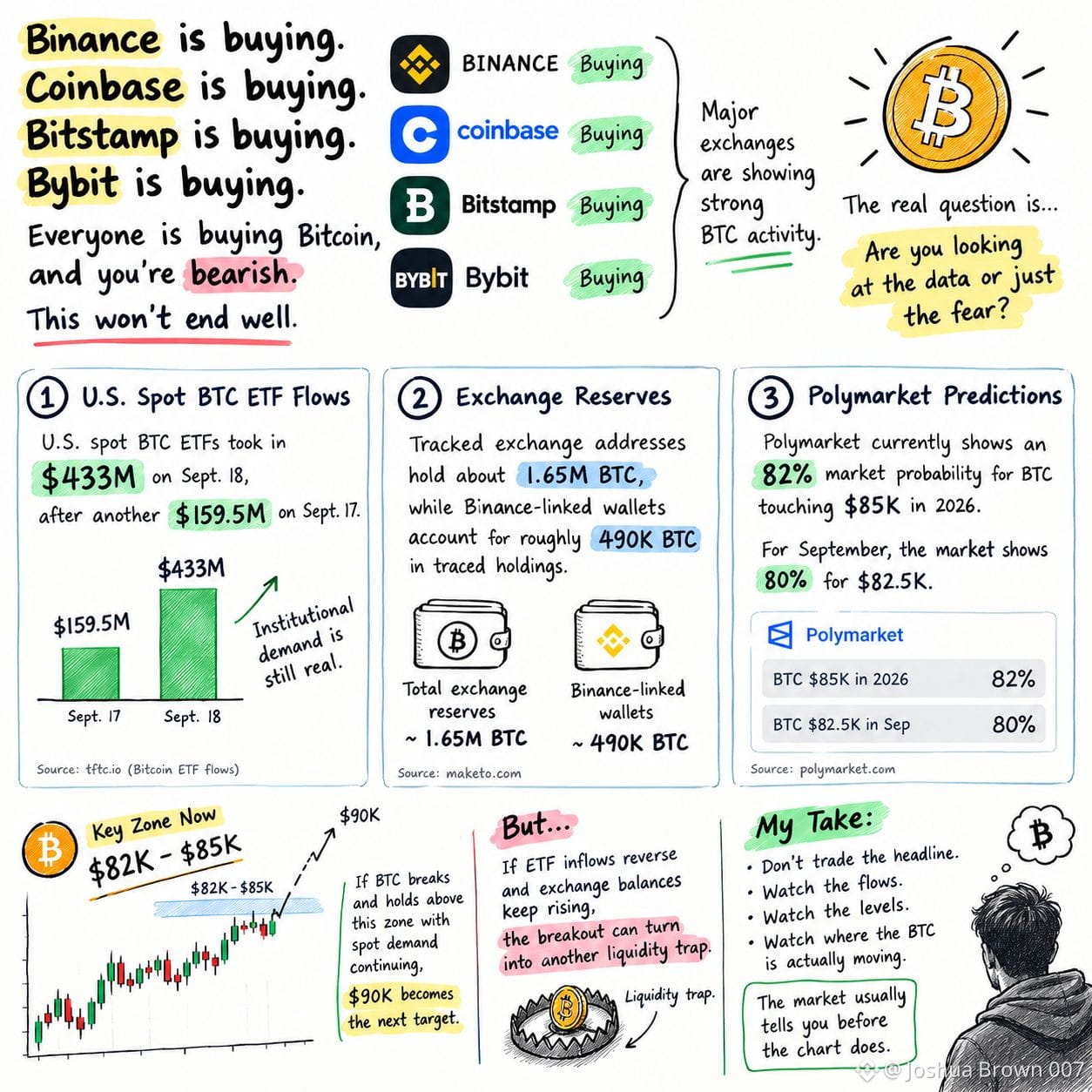
Você está esperando o mergulho de US$ 64K para o Bitcoin? Vamos dar uma olhada na visão de compras institucionais e na demanda.
A parte interessante não é apenas o enredo — os dados estão começando a mostrar uma divisão entre a liquidez das exchanges e a demanda institucional.
Dados recentes mostram que os ETFs à vista de BTC dos EUA captaram US$ 433M em 18 de setembro, após mais US$ 159,5M em 17 de setembro.
TFTC +1
Ao mesmo tempo, endereços de exchanges monitorados mantêm cerca de 1,65M de BTC, enquanto carteiras ligadas à Binance respondem por aproximadamente 490K de BTC em participações rastreadas.
E a Polymarket, atualmente, mostra uma probabilidade de mercado de 82% para o BTC tocar US$ 85K em 2026, enquanto o mercado de setembro indica 80% para US$ 82,5K.
Minha leitura:
US$ 82K–US$ 85K é a zona-chave agora.
Se o BTC romper e permanecer acima dela com a demanda à vista continuando, US$ 90K vira o próximo alvo psicológico.
Mas se os fluxos dos ETFs se inverterem e os saldos nas exchanges continuarem subindo, o rompimento pode virar mais uma armadilha de liquidez.
Não negocie o manchete.
Observe os fluxos. Observe os níveis. Observe para onde o BTC realmente está se movendo.
O mercado normalmente te avisa antes do gráfico.$BTC
{spot}(BTCUSDT)
#BTC☀
Você está esperando o mergulho de US$ 64K para o Bitcoin? Vamos dar uma olhada na visão de compras institucionais e na demanda.
A parte interessante não é apenas o enredo — os dados estão começando a mostrar uma divisão entre a liquidez das exchanges e a demanda institucional.
Dados recentes mostram que os ETFs à vista de BTC dos EUA captaram US$ 433M em 18 de setembro, após mais US$ 159,5M em 17 de setembro.
TFTC +1
Ao mesmo tempo, endereços de exchanges monitorados mantêm cerca de 1,65M de BTC, enquanto carteiras ligadas à Binance respondem por aproximadamente 490K de BTC em participações rastreadas.
E a Polymarket, atualmente, mostra uma probabilidade de mercado de 82% para o BTC tocar US$ 85K em 2026, enquanto o mercado de setembro indica 80% para US$ 82,5K.
Minha leitura:
US$ 82K–US$ 85K é a zona-chave agora.
Se o BTC romper e permanecer acima dela com a demanda à vista continuando, US$ 90K vira o próximo alvo psicológico.
Mas se os fluxos dos ETFs se inverterem e os saldos nas exchanges continuarem subindo, o rompimento pode virar mais uma armadilha de liquidez.
Não negocie o manchete.
Observe os fluxos. Observe os níveis. Observe para onde o BTC realmente está se movendo.
O mercado normalmente te avisa antes do gráfico.$BTC
Você está esperando o mergulho de US$ 64K para o Bitcoin? Vamos dar uma olhada na visão de compras institucionais e na demanda.
A parte interessante não é apenas o enredo — os dados estão começando a mostrar uma divisão entre a liquidez das exchanges e a demanda institucional.
Dados recentes mostram que os ETFs à vista de BTC dos EUA captaram US$ 433M em 18 de setembro, após mais US$ 159,5M em 17 de setembro.
TFTC +1
Ao mesmo tempo, endereços de exchanges monitorados mantêm cerca de 1,65M de BTC, enquanto carteiras ligadas à Binance respondem por aproximadamente 490K de BTC em participações rastreadas.
E a Polymarket, atualmente, mostra uma probabilidade de mercado de 82% para o BTC tocar US$ 85K em 2026, enquanto o mercado de setembro indica 80% para US$ 82,5K.
Minha leitura:
US$ 82K–US$ 85K é a zona-chave agora.
Se o BTC romper e permanecer acima dela com a demanda à vista continuando, US$ 90K vira o próximo alvo psicológico.
Mas se os fluxos dos ETFs se inverterem e os saldos nas exchanges continuarem subindo, o rompimento pode virar mais uma armadilha de liquidez.
Não negocie o manchete.
Observe os fluxos. Observe os níveis. Observe para onde o BTC realmente está se movendo.
O mercado normalmente te avisa antes do gráfico.$BTC
1
67
$TRUMP ON CHAIN ALERT
A equipe do Trump Meme acabou de mover mais 8,73M $TRUMP (~US$17,99M) para custódia da BitGo.
Isso eleva o total de 2 semanas para ~31M TRUMP, no valor de ~$70,64M.
Mas aqui está a parte importante:
⚠️ Custódia da BitGo ≠ venda confirmada.
Então estou acompanhando o próximo movimento da carteira, não simplesmente presumindo um despejo.
📉 Impacto no preço se vender seguir:
Uma grande oferta vinculada a uma equipe entrando na liquidez do mercado pode aumentar a pressão de venda e enfraquecer o suporte. Se depósitos em exchange aparecerem depois, o risco de um movimento mais acentuado aumenta.
📊 Níveis técnicos para observar:
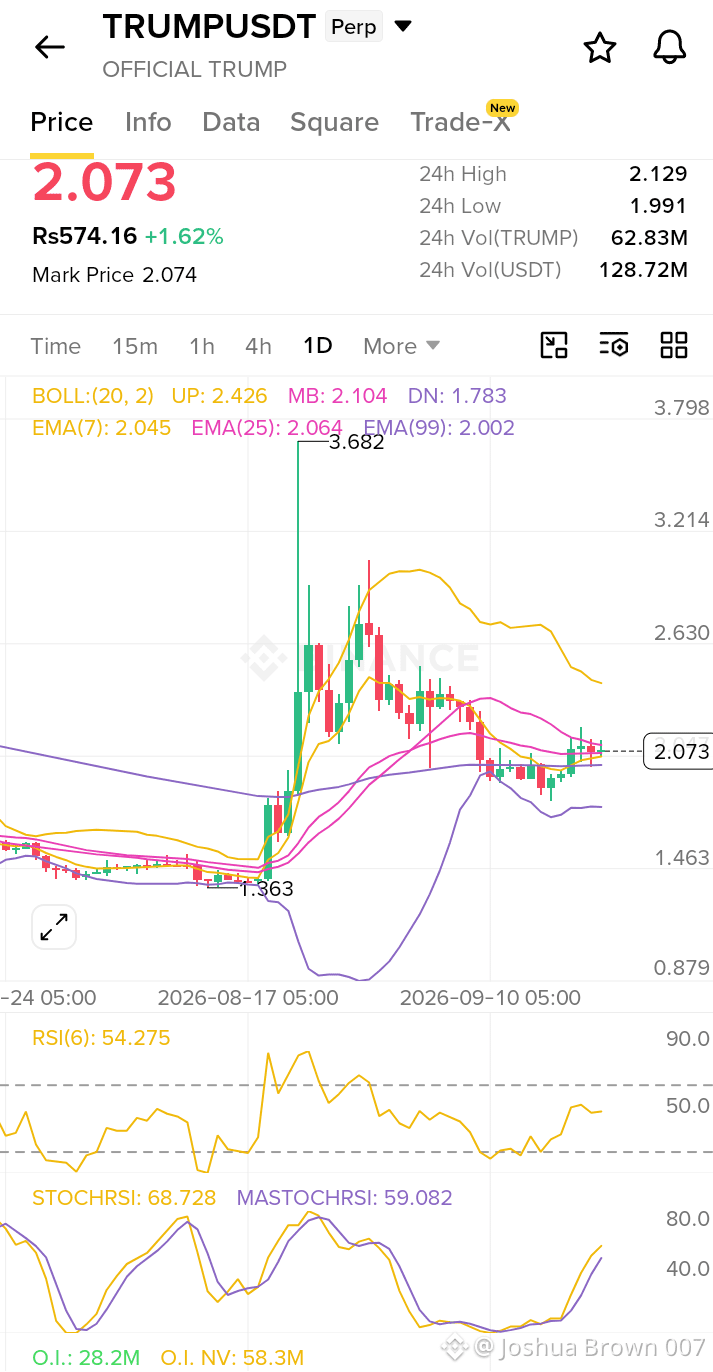
O reporte atual coloca $TRUMP em torno de US$2,05, com resistência perto de US$2,14 e suporte em torno de US$1,96. O preço também está perto da zona da EMA 50/200, tornando essa uma área importante para confirmação.
Minha abordagem: Não entre em pânico e venda. Não compre cegamente a queda.
Observe: → BitGo → transferências para exchange
→ Volume à vista
→ Suporte em US$1,96
→ Rompimento acima de US$2,14
→ Saídas/entradas da carteira
Se US$1,96 romper com volume forte, a pressão de baixa pode acelerar.
Se US$2,14 for recuperado com forte volume à vista, o mercado pode absorver a oferta.
Fluxo on-chain primeiro. Confirmação de preço depois.
{future}(TRUMPUSDT)
{future}(MELANIAUSDT)
{future}(WLFIUSDT)
#TrumpCrypto #XRPExchangeReservesHitSevenYearLow #trumpcoin
$TRUMP ON CHAIN ALERT
A equipe do Trump Meme acabou de mover mais 8,73M $TRUMP (~US$17,99M) para custódia da BitGo.
Isso eleva o total de 2 semanas para ~31M TRUMP, no valor de ~$70,64M.
Mas aqui está a parte importante:
⚠️ Custódia da BitGo ≠ venda confirmada.
Então estou acompanhando o próximo movimento da carteira, não simplesmente presumindo um despejo.
📉 Impacto no preço se vender seguir:
Uma grande oferta vinculada a uma equipe entrando na liquidez do mercado pode aumentar a pressão de venda e enfraquecer o suporte. Se depósitos em exchange aparecerem depois, o risco de um movimento mais acentuado aumenta.
📊 Níveis técnicos para observar:
O reporte atual coloca $TRUMP em torno de US$2,05, com resistência perto de US$2,14 e suporte em torno de US$1,96. O preço também está perto da zona da EMA 50/200, tornando essa uma área importante para confirmação.
Minha abordagem: Não entre em pânico e venda. Não compre cegamente a queda.
Observe: → BitGo → transferências para exchange
→ Volume à vista
→ Suporte em US$1,96
→ Rompimento acima de US$2,14
→ Saídas/entradas da carteira
Se US$1,96 romper com volume forte, a pressão de baixa pode acelerar.
Se US$2,14 for recuperado com forte volume à vista, o mercado pode absorver a oferta.
Fluxo on-chain primeiro. Confirmação de preço depois.
#TrumpCrypto #XRPExchangeReservesHitSevenYearLow #trumpcoin
A equipe do Trump Meme acabou de mover mais 8,73M $TRUMP (~US$17,99M) para custódia da BitGo.
Isso eleva o total de 2 semanas para ~31M TRUMP, no valor de ~$70,64M.
Mas aqui está a parte importante:
⚠️ Custódia da BitGo ≠ venda confirmada.
Então estou acompanhando o próximo movimento da carteira, não simplesmente presumindo um despejo.
📉 Impacto no preço se vender seguir:
Uma grande oferta vinculada a uma equipe entrando na liquidez do mercado pode aumentar a pressão de venda e enfraquecer o suporte. Se depósitos em exchange aparecerem depois, o risco de um movimento mais acentuado aumenta.
📊 Níveis técnicos para observar:
O reporte atual coloca $TRUMP em torno de US$2,05, com resistência perto de US$2,14 e suporte em torno de US$1,96. O preço também está perto da zona da EMA 50/200, tornando essa uma área importante para confirmação.
Minha abordagem: Não entre em pânico e venda. Não compre cegamente a queda.
Observe: → BitGo → transferências para exchange
→ Volume à vista
→ Suporte em US$1,96
→ Rompimento acima de US$2,14
→ Saídas/entradas da carteira
Se US$1,96 romper com volume forte, a pressão de baixa pode acelerar.
Se US$2,14 for recuperado com forte volume à vista, o mercado pode absorver a oferta.
Fluxo on-chain primeiro. Confirmação de preço depois.
#TrumpCrypto #XRPExchangeReservesHitSevenYearLow #trumpcoin

1
670
Artigo
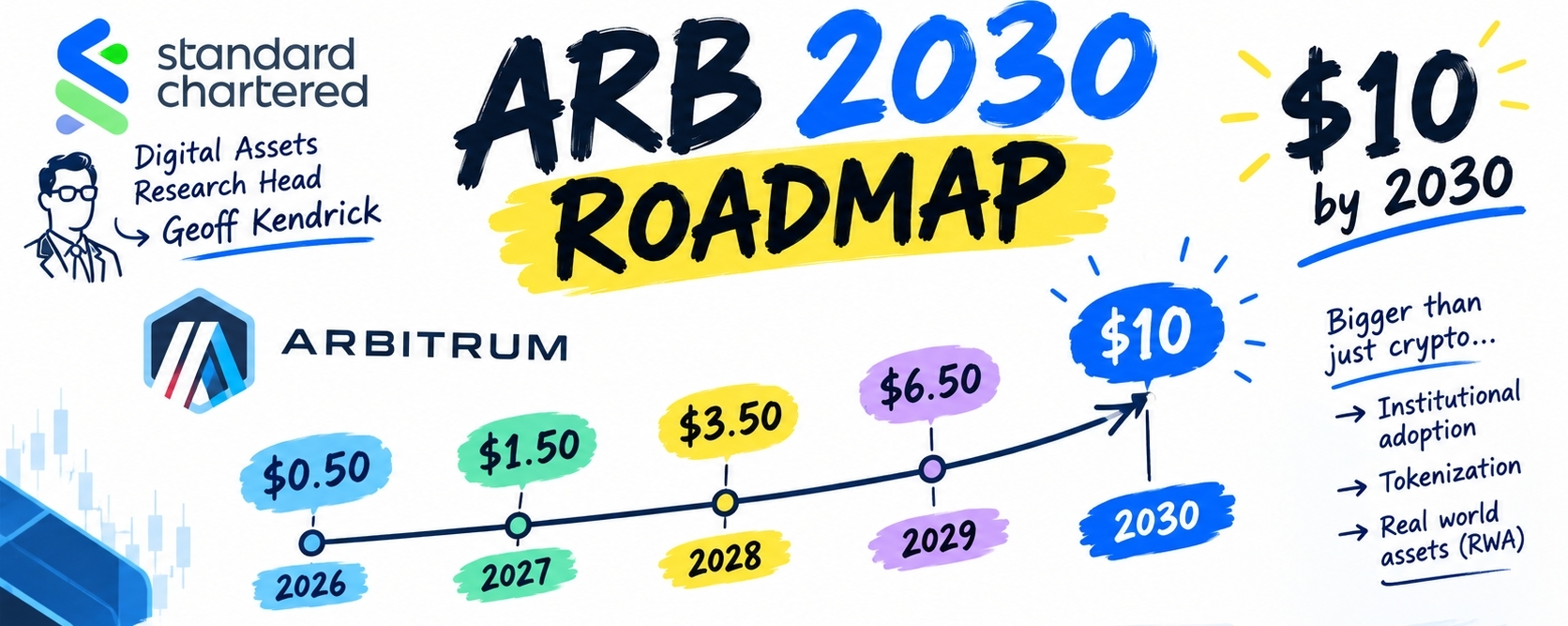
Plano ARB 2030 pelo diretor de pesquisa de ativos digitais do Standard Chartered,Geoff KendrickO diretor de pesquisa de ativos digitais do Standard Chartered, Geoff Kendrick, acabou de divulgar uma enorme projeção de preço de US$ 10 para o Arbitrum (ARB) até o fim de 2030. Usando um preço de referência-base de US$ 0,14, o banco delineou uma trajetória em escada agressiva:
2026 Alvo: US$ 0,50
2027 Alvo: US$ 1,50
2028 Alvo: US$ 3,50
2029 Alvo: US$ 6,50
2030 Alvo: US$ 10,00
O Defiante
Embora uma projeção de crescimento 70x de um grande banco global pareça uma vitória fácil, precisamos preencher a lacuna entre a teoria institucional e os dados frios e concretos no gráfico.
Plano ARB 2030 pelo diretor de pesquisa de ativos digitais do Standard Chartered,Geoff Kendrick
O diretor de pesquisa de ativos digitais do Standard Chartered, Geoff Kendrick, acabou de divulgar uma enorme projeção de preço de US$ 10 para o Arbitrum (ARB) até o fim de 2030. Usando um preço de referência-base de US$ 0,14, o banco delineou uma trajetória em escada agressiva:
2026 Alvo: US$ 0,50
2027 Alvo: US$ 1,50
2028 Alvo: US$ 3,50
2029 Alvo: US$ 6,50
2030 Alvo: US$ 10,00
O Defiante
Embora uma projeção de crescimento 70x de um grande banco global pareça uma vitória fácil, precisamos preencher a lacuna entre a teoria institucional e os dados frios e concretos no gráfico.
2026 Alvo: US$ 0,50
2027 Alvo: US$ 1,50
2028 Alvo: US$ 3,50
2029 Alvo: US$ 6,50
2030 Alvo: US$ 10,00
O Defiante
Embora uma projeção de crescimento 70x de um grande banco global pareça uma vitória fácil, precisamos preencher a lacuna entre a teoria institucional e os dados frios e concretos no gráfico.
2
16
19.8k
Configuração de Trade $CELR em candle de 1 H
se o fechamento acima de 0.0042 LONG
TP 0.0045 e 0.0050
SL 0.0037
se o fechamento de 1 H abaixo de 0.003097 Short
Um pico repentino no volume de venda que rompe o suporte de 0.0030.
{future}(CELRUSDT)
Configuração de Trade $CELR em candle de 1 H
se o fechamento acima de 0.0042 LONG
TP 0.0045 e 0.0050
SL 0.0037
se o fechamento de 1 H abaixo de 0.003097 Short
Um pico repentino no volume de venda que rompe o suporte de 0.0030.
se o fechamento acima de 0.0042 LONG
TP 0.0045 e 0.0050
SL 0.0037
se o fechamento de 1 H abaixo de 0.003097 Short
Um pico repentino no volume de venda que rompe o suporte de 0.0030.
1
99
#Binance
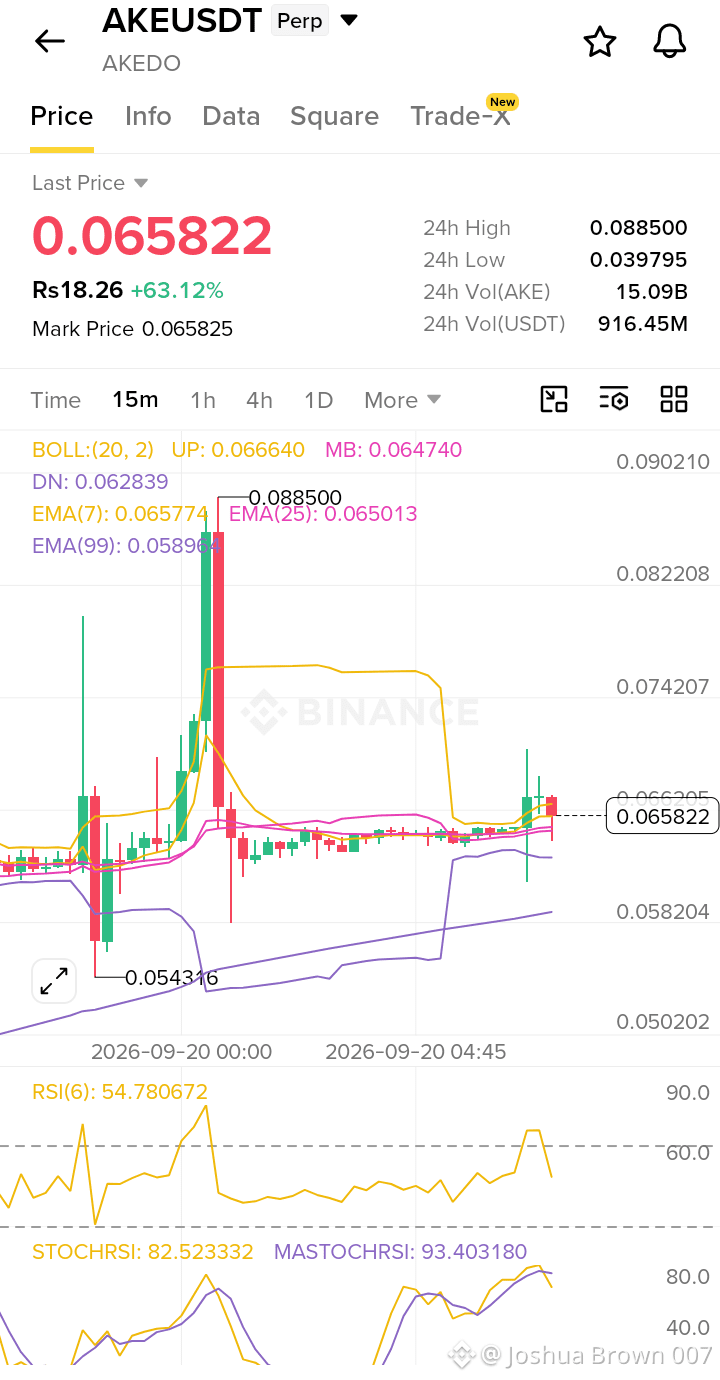
AKEUSDT $AKE parece neste momento uma armadilha clássica de pump and dump. Se você é um trader de varejo, precisa ficar bem longe disso e evitar colocar seu dinheiro suado em um navio afundando.
Aqui está exatamente o que o gráfico está revelando:
A Grande Mecha: aquela enorme espiga vertical vermelha seguida por uma cauda superior longa é um grande sinal de alerta. Ela mostra que insiders e compradores iniciais impulsionaram o preço até 0.088500, imediatamente despejaram seus grandes montantes nos compradores tardios e forçaram a queda direta do preço.
O Volume Preso: veja o enorme volume nas últimas 24 horas em 15.09B AKE. Uma quantidade enorme de liquidez passou por esse token em um intervalo muito curto — exatamente como criadores e baleias saem de suas posições enquanto deixam traders do dia a dia segurando o prejuízo.
Hype Artificial: ver um token subindo +63.12% no dia parece tentador, mas é altamente enganoso. A ação do preço já se achatou significativamente após a queda, sinalizando que o impulso artificial inicial está morrendo.
Quando tokens se movem assim, traders de varejo quase sempre perdem. O jogo é completamente armado pelas pessoas que controlam a oferta. Não deixe o FOMO (medo de ficar de fora) dominar você: proteja seu capital e procure projetos com substância de verdade.
Pessoal, não é só essa opção para trade na Binance😁
{future}(AKEUSDT)
{future}(ONEUSDT)
{future}(BANKUSDT)
#Binance
AKEUSDT $AKE parece neste momento uma armadilha clássica de pump and dump. Se você é um trader de varejo, precisa ficar bem longe disso e evitar colocar seu dinheiro suado em um navio afundando.
Aqui está exatamente o que o gráfico está revelando:
A Grande Mecha: aquela enorme espiga vertical vermelha seguida por uma cauda superior longa é um grande sinal de alerta. Ela mostra que insiders e compradores iniciais impulsionaram o preço até 0.088500, imediatamente despejaram seus grandes montantes nos compradores tardios e forçaram a queda direta do preço.
O Volume Preso: veja o enorme volume nas últimas 24 horas em 15.09B AKE. Uma quantidade enorme de liquidez passou por esse token em um intervalo muito curto — exatamente como criadores e baleias saem de suas posições enquanto deixam traders do dia a dia segurando o prejuízo.
Hype Artificial: ver um token subindo +63.12% no dia parece tentador, mas é altamente enganoso. A ação do preço já se achatou significativamente após a queda, sinalizando que o impulso artificial inicial está morrendo.
Quando tokens se movem assim, traders de varejo quase sempre perdem. O jogo é completamente armado pelas pessoas que controlam a oferta. Não deixe o FOMO (medo de ficar de fora) dominar você: proteja seu capital e procure projetos com substância de verdade.
Pessoal, não é só essa opção para trade na Binance😁
AKEUSDT $AKE parece neste momento uma armadilha clássica de pump and dump. Se você é um trader de varejo, precisa ficar bem longe disso e evitar colocar seu dinheiro suado em um navio afundando.
Aqui está exatamente o que o gráfico está revelando:
A Grande Mecha: aquela enorme espiga vertical vermelha seguida por uma cauda superior longa é um grande sinal de alerta. Ela mostra que insiders e compradores iniciais impulsionaram o preço até 0.088500, imediatamente despejaram seus grandes montantes nos compradores tardios e forçaram a queda direta do preço.
O Volume Preso: veja o enorme volume nas últimas 24 horas em 15.09B AKE. Uma quantidade enorme de liquidez passou por esse token em um intervalo muito curto — exatamente como criadores e baleias saem de suas posições enquanto deixam traders do dia a dia segurando o prejuízo.
Hype Artificial: ver um token subindo +63.12% no dia parece tentador, mas é altamente enganoso. A ação do preço já se achatou significativamente após a queda, sinalizando que o impulso artificial inicial está morrendo.
Quando tokens se movem assim, traders de varejo quase sempre perdem. O jogo é completamente armado pelas pessoas que controlam a oferta. Não deixe o FOMO (medo de ficar de fora) dominar você: proteja seu capital e procure projetos com substância de verdade.
Pessoal, não é só essa opção para trade na Binance😁
1
479
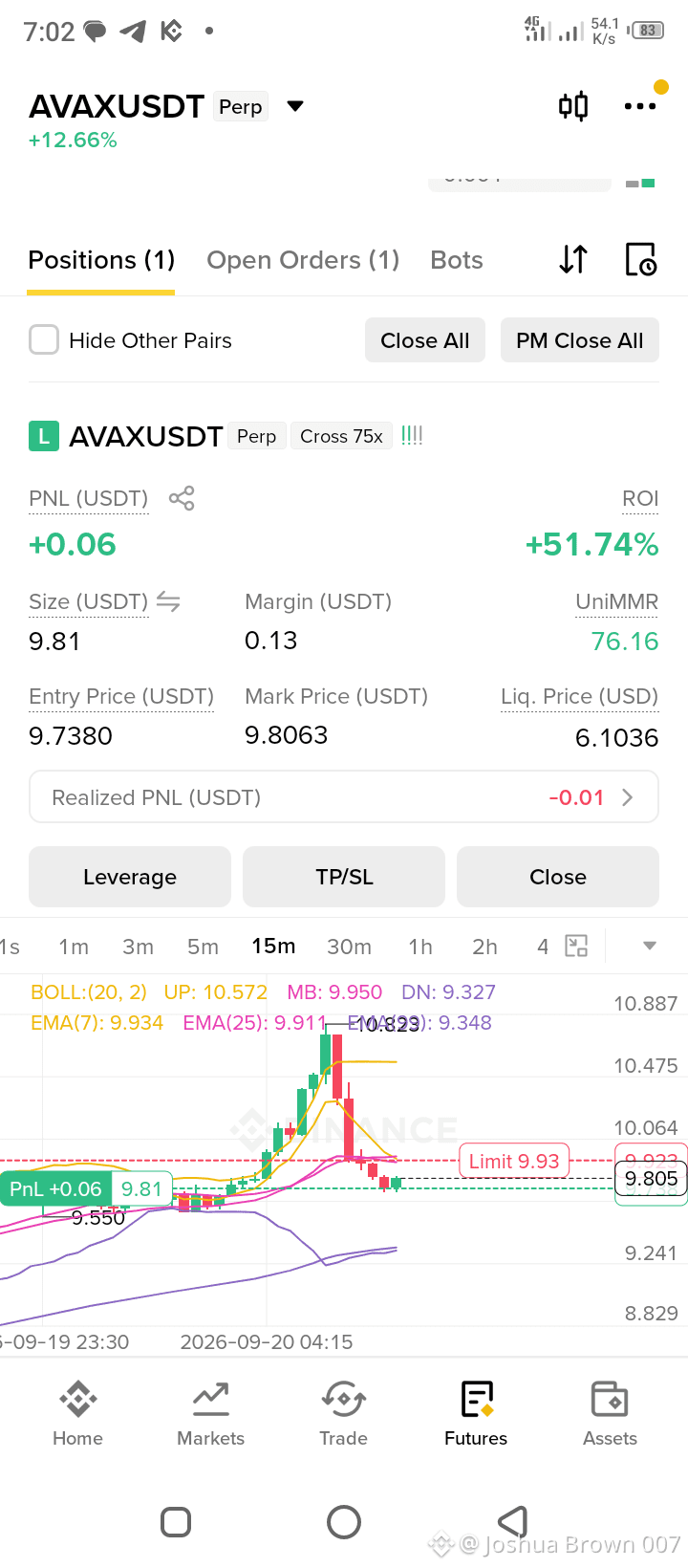
#AVAX Scalp long
Entry market
SL 9.64
TP 9.923
TP 10.01
Quebra curta. Se o preço romper abaixo de 9.70 com alto volume, entre vendido na retest de 9.70, mirando 9.40. SL em 9.85.
$AVAIL
{future}(AVAXUSDT)
#AVAX Scalp long
Entry market
SL 9.64
TP 9.923
TP 10.01
Quebra curta. Se o preço romper abaixo de 9.70 com alto volume, entre vendido na retest de 9.70, mirando 9.40. SL em 9.85.
$AVAIL
Entry market
SL 9.64
TP 9.923
TP 10.01
Quebra curta. Se o preço romper abaixo de 9.70 com alto volume, entre vendido na retest de 9.70, mirando 9.40. SL em 9.85.
$AVAIL
1
147
Inicia sessão para explorar mais conteúdos
Junta-te a utilizadores de criptomoedas de todo o mundo na Binance Square
⚡️ Obtém informações úteis e recentes sobre criptomoedas.
💬 Com a confiança da maior exchange de criptomoedas do mundo.
👍 Descobre perspetivas reais de criadores verificados.
E-mail/Número de telefone
Tópicos em Tendência
BinanceWillListHyperliquid(HYPE)
130,505 visualizações
2,380 a discutir
Binance vai Listar Hyperliquid (HYPE) com uma Tag de Seed
Binance News
·74 gostos
·74.5k visualizações
FedOctoberRateHikeOddsRiseTo69.7%
40,653 visualizações
953 a discutir
BitcoinFallsBelow$83,000
3,812 visualizações
20 a discutir