
AngryhulkHuu
271 Publicações

AngryhulkHuu
94 A seguir
85 Seguidores
170 Gostaram
Publicações
Tudo
Cotações
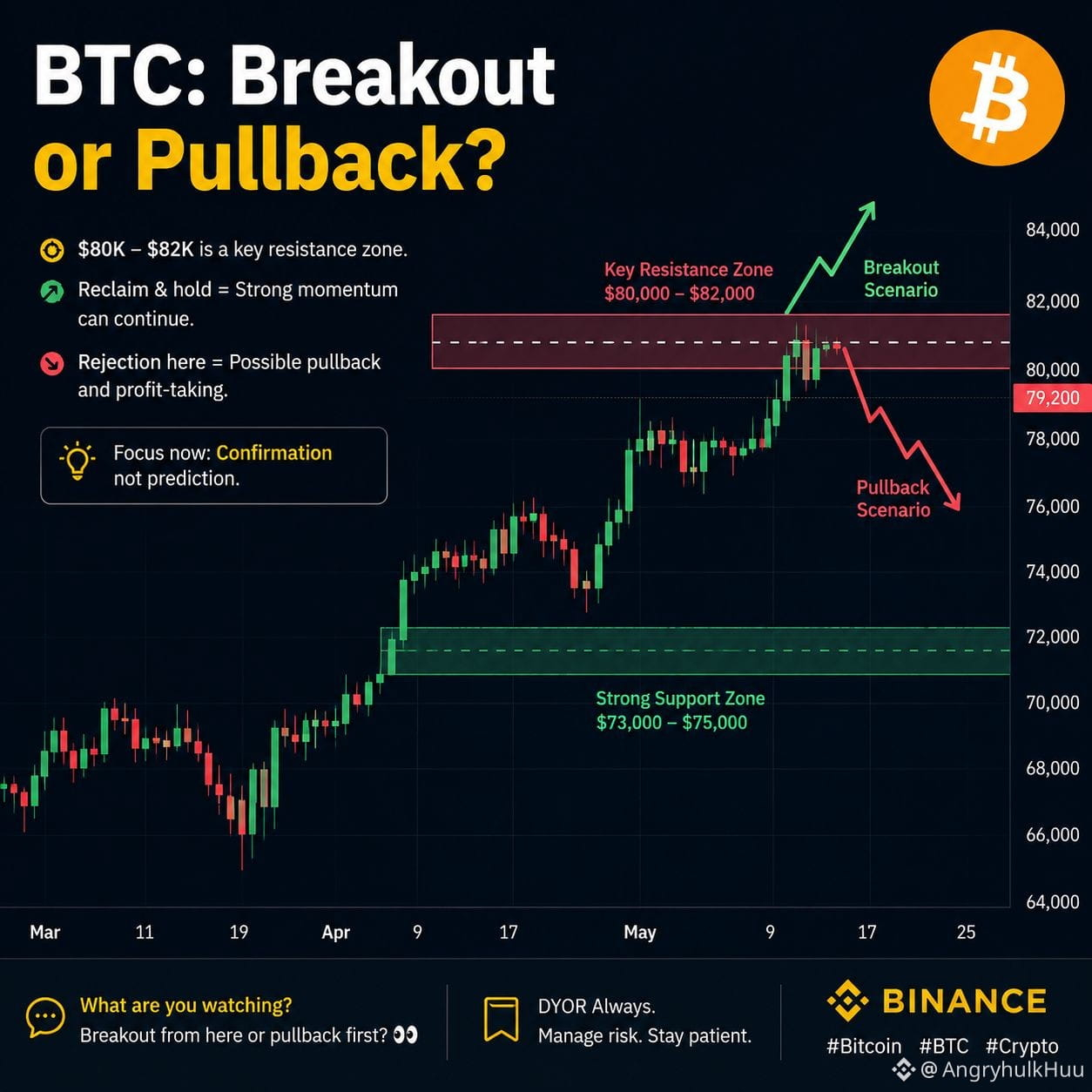
Não vou chamar isso de uma recuperação bullish completa só porque o BTC tocou US$ 80K.
O movimento nos últimos dias foi impressionante, mas depois de uma alta tão forte, um resfriamento de curto prazo ou uma correção não me surpreenderia.
Para mim, a zona interessante agora é entre US$ 80K e US$ 82K.
Se o BTC conseguir recuperar e manter essa região adequadamente, o impulso pode ficar bem mais forte. Se virmos rejeição, fazer algum lucro seria totalmente normal.
Neste momento, estou mais interessado em confirmação do que em previsões.
O que você está acompanhando — uma ruptura daqui ou primeiro outra correção? 👀
#Bitcoin #BTC #crypto
O movimento nos últimos dias foi impressionante, mas depois de uma alta tão forte, um resfriamento de curto prazo ou uma correção não me surpreenderia.
Para mim, a zona interessante agora é entre US$ 80K e US$ 82K.
Se o BTC conseguir recuperar e manter essa região adequadamente, o impulso pode ficar bem mais forte. Se virmos rejeição, fazer algum lucro seria totalmente normal.
Neste momento, estou mais interessado em confirmação do que em previsões.
O que você está acompanhando — uma ruptura daqui ou primeiro outra correção? 👀
#Bitcoin #BTC #crypto
Ver tradução
I was looking through the Alpha reward system on @TermMax today, and the numbers actually made me stop for a moment.
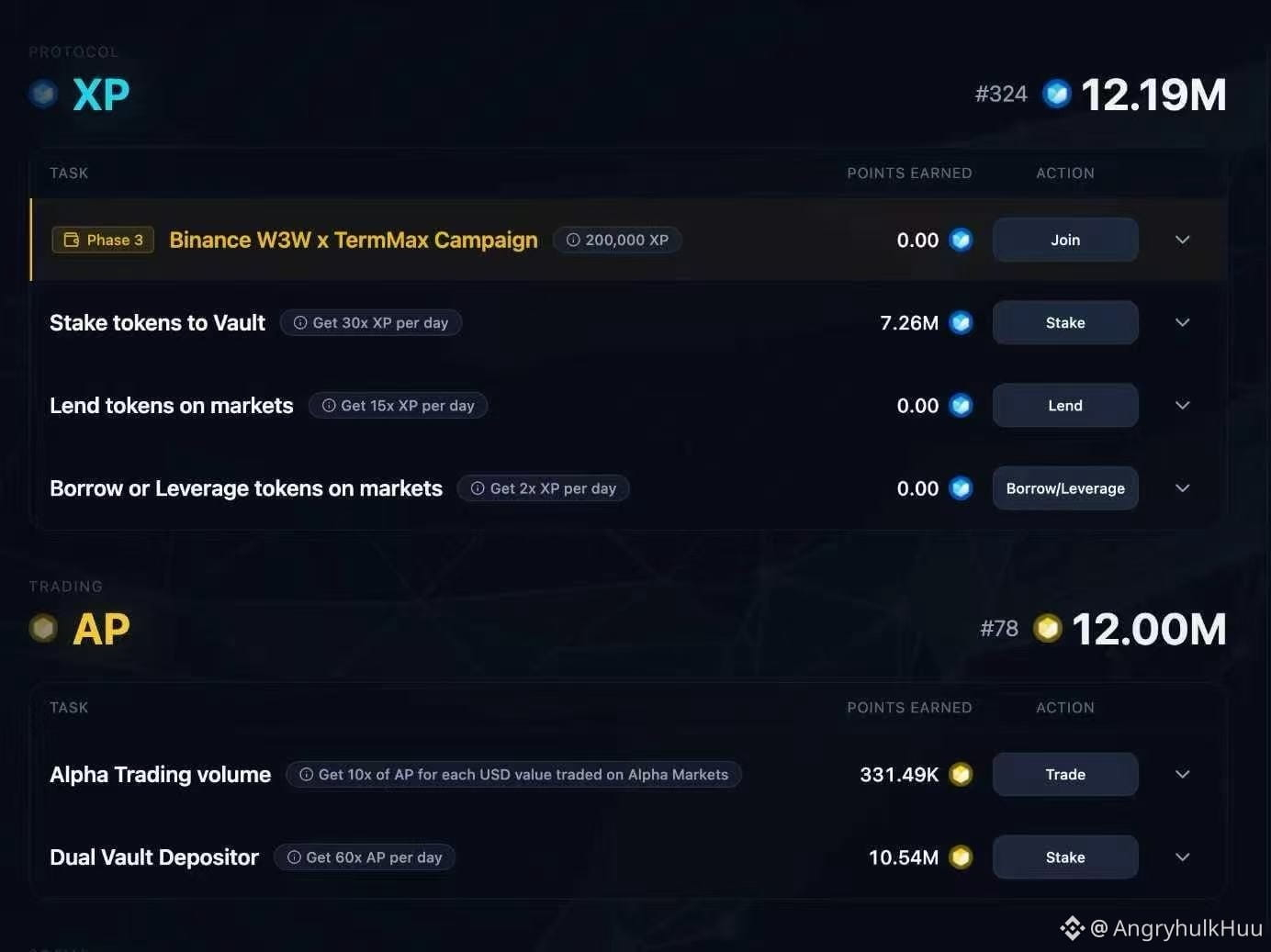
What I like is that XP and AP aren’t treated as one generic points bucket.
The current setup shows different multipliers depending on what you actually do:
• Stake tokens → 30× XP per day
• Lend → 15× XP per day
• Borrow/Leverage → 2× XP per day
• Alpha trading → 10× AP per USD traded
• Dual Vault → 60× AP per day
The Alpha trading part is especially easy to put into perspective.
$100 of trading volume × 10 = 1,000 AP.
At $1,000 volume, that becomes 10,000 AP.
Of course, AP isn’t the same thing as profit. What I find interesting is the incentive design itself.
Your activity determines which reward stream you’re contributing to, instead of everything being reduced to simply holding something and waiting.
That makes the Alpha system feel more like a record of actual participation.
For me, that’s a much more interesting way to design a points system.
$TMX #TermMax
What I like is that XP and AP aren’t treated as one generic points bucket.
The current setup shows different multipliers depending on what you actually do:
• Stake tokens → 30× XP per day
• Lend → 15× XP per day
• Borrow/Leverage → 2× XP per day
• Alpha trading → 10× AP per USD traded
• Dual Vault → 60× AP per day
The Alpha trading part is especially easy to put into perspective.
$100 of trading volume × 10 = 1,000 AP.
At $1,000 volume, that becomes 10,000 AP.
Of course, AP isn’t the same thing as profit. What I find interesting is the incentive design itself.
Your activity determines which reward stream you’re contributing to, instead of everything being reduced to simply holding something and waiting.
That makes the Alpha system feel more like a record of actual participation.
For me, that’s a much more interesting way to design a points system.
$TMX #TermMax
Ver tradução
Today I did something I usually skip when looking at a new DeFi protocol.
I stopped looking at the UI and went through @TermMax security design instead.
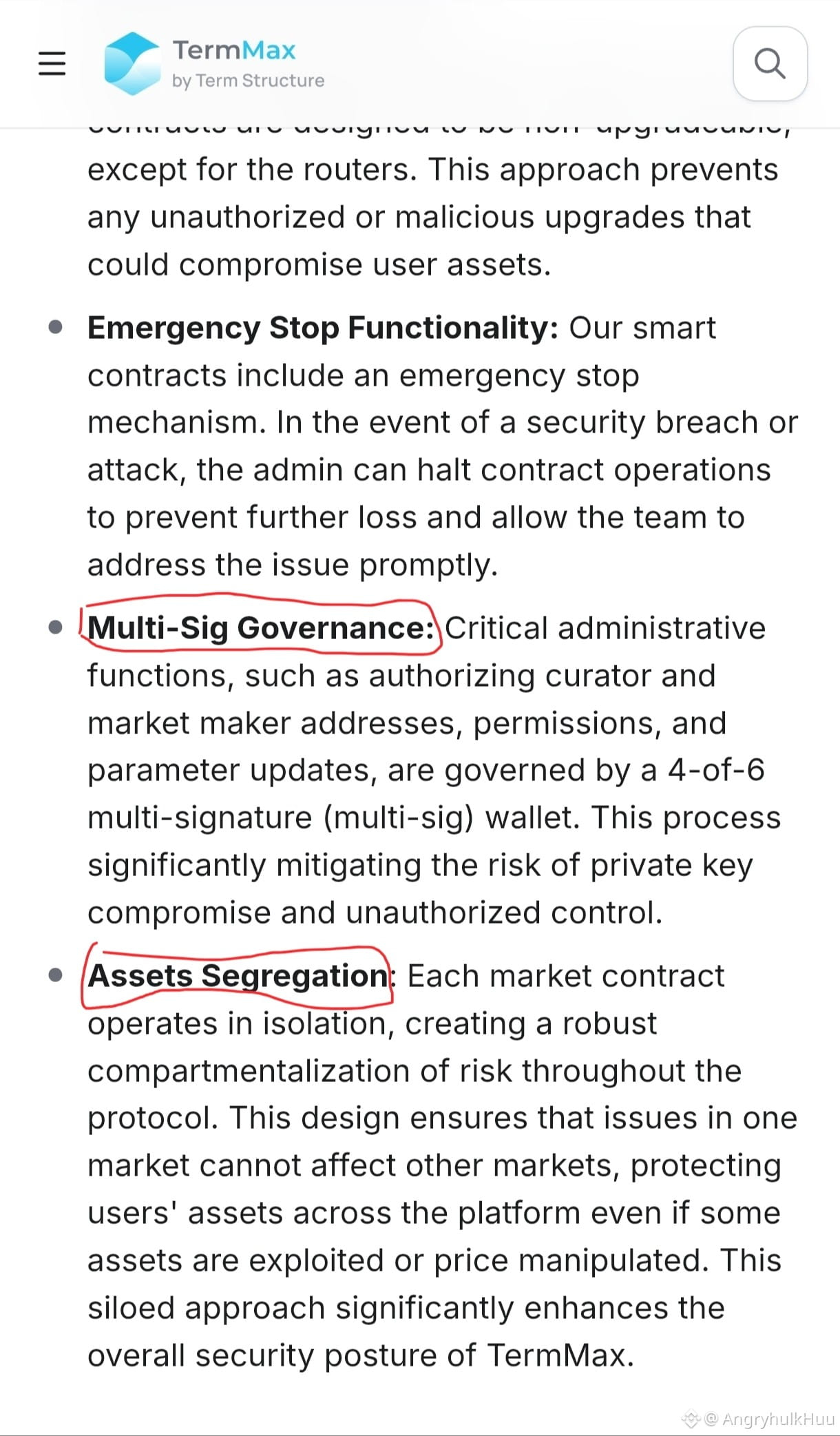
One detail I found interesting is that each market operates in isolation, so an issue in one market isn’t automatically supposed to spill across the entire protocol.
I also checked the admin setup and found that critical functions are controlled through a 4-of-6 multisig.
Those numbers matter to me more than another flashy APY screenshot.
A DeFi product can have great rates and clever mechanics, but if the underlying risk controls are weak, none of that means much.
What I’m starting to appreciate about TermMax is that the product design and the risk architecture seem to be treated as two parts of the same system.
That was probably the most useful thing I learned while digging through the docs today.
$TMX #TermMax
I stopped looking at the UI and went through @TermMax security design instead.
One detail I found interesting is that each market operates in isolation, so an issue in one market isn’t automatically supposed to spill across the entire protocol.
I also checked the admin setup and found that critical functions are controlled through a 4-of-6 multisig.
Those numbers matter to me more than another flashy APY screenshot.
A DeFi product can have great rates and clever mechanics, but if the underlying risk controls are weak, none of that means much.
What I’m starting to appreciate about TermMax is that the product design and the risk architecture seem to be treated as two parts of the same system.
That was probably the most useful thing I learned while digging through the docs today.
$TMX #TermMax
Ver tradução
I’ve spent some time going through TermMax, and honestly, the thing that stayed with me wasn’t some flashy headline.
It was the feeling of having more control over the rate.
When I’m looking at a borrowing opportunity, I don’t always want to jump in just because a market rate is available right now. Sometimes I already have a number in mind that makes sense for the strategy I’m considering.
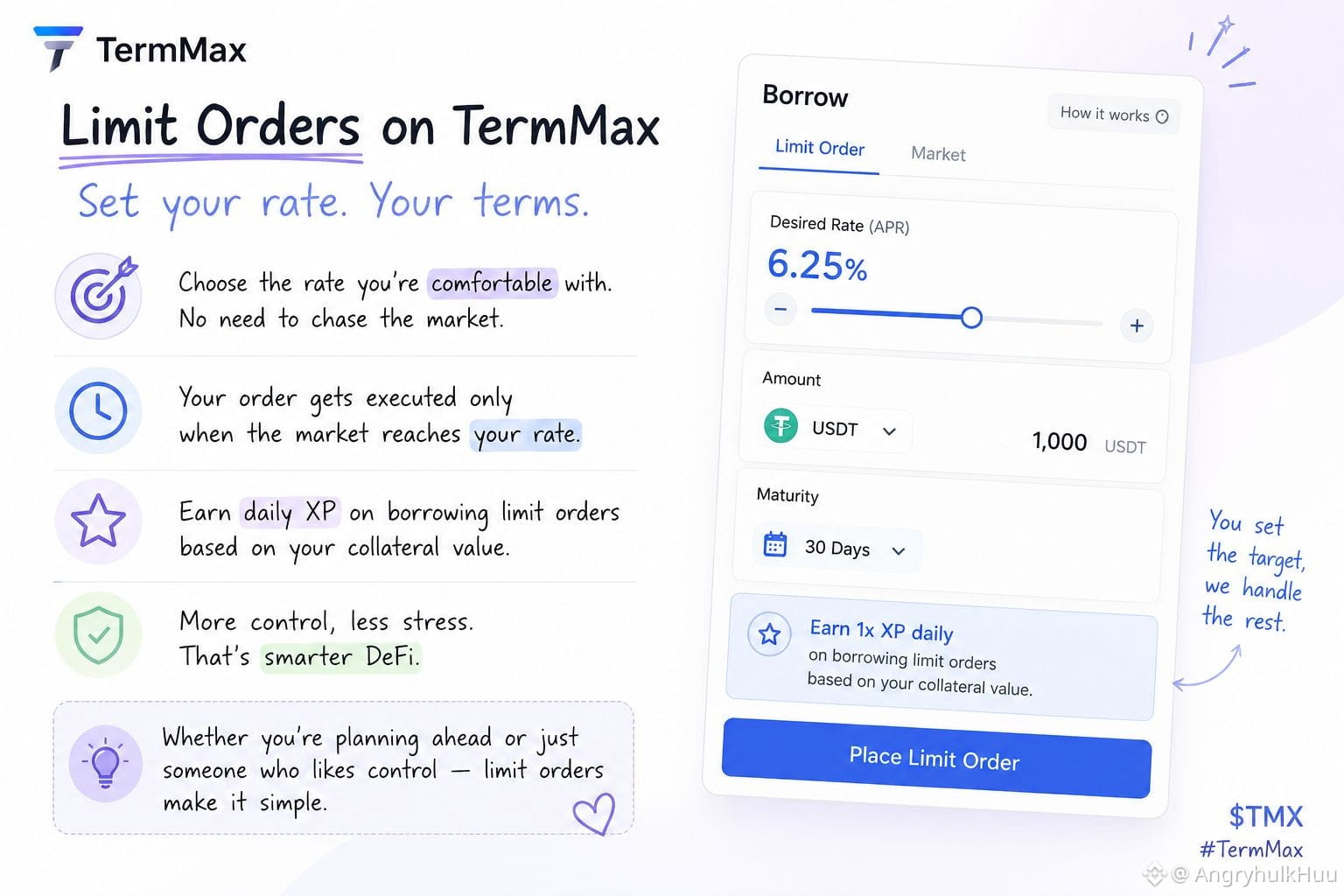
That’s where the limit order feature started making sense to me.
Instead of constantly watching the screen and wondering whether the rate will move into a range I’m comfortable with, I can set the rate I actually want and let the order sit there.
It sounds like a small UX improvement, but in DeFi, these small things change how you interact with a product.
I also noticed that borrowing limit orders can earn daily XP based on collateral value, which makes the feature feel more connected to the wider TermMax Alpha experience rather than being just another order type.
After going through it, my takeaway is pretty simple:
Good DeFi products shouldn’t make you watch the market every second. They should give you enough control to decide your terms and then get out of your way.
That’s probably the part of @TermMax I appreciate most so far.
$TMX #TermMax
It was the feeling of having more control over the rate.
When I’m looking at a borrowing opportunity, I don’t always want to jump in just because a market rate is available right now. Sometimes I already have a number in mind that makes sense for the strategy I’m considering.
That’s where the limit order feature started making sense to me.
Instead of constantly watching the screen and wondering whether the rate will move into a range I’m comfortable with, I can set the rate I actually want and let the order sit there.
It sounds like a small UX improvement, but in DeFi, these small things change how you interact with a product.
I also noticed that borrowing limit orders can earn daily XP based on collateral value, which makes the feature feel more connected to the wider TermMax Alpha experience rather than being just another order type.
After going through it, my takeaway is pretty simple:
Good DeFi products shouldn’t make you watch the market every second. They should give you enough control to decide your terms and then get out of your way.
That’s probably the part of @TermMax I appreciate most so far.
$TMX #TermMax
Ver tradução
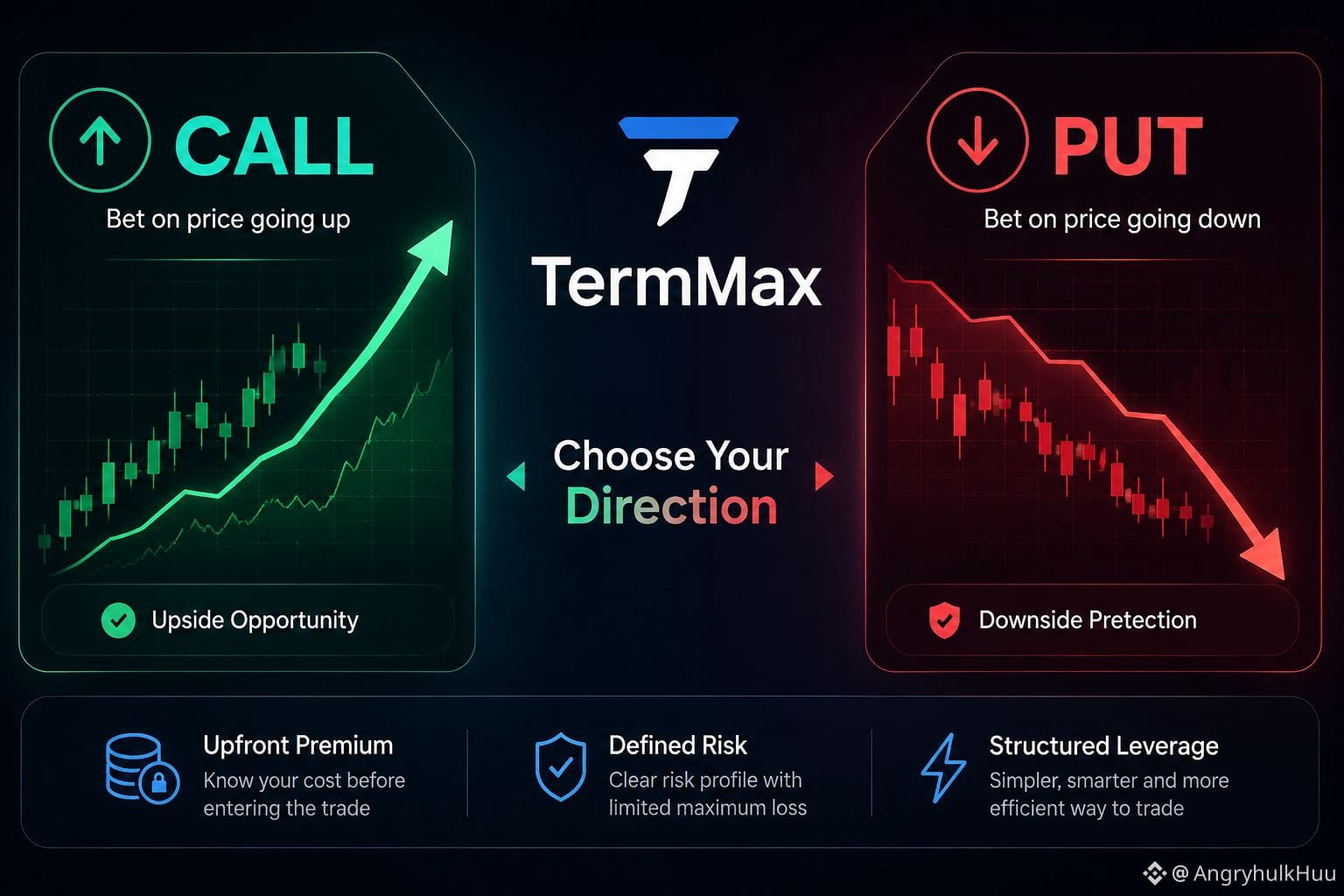
One thing I find interesting about @TermMax is how its Call/Put product changes the way leverage can be approached.
With a traditional leveraged position, you usually have to keep an eye on margin, liquidation levels and changing funding conditions. That can make a simple directional trade more complicated than it needs to be.
TermMax takes a different route. With Call/Put, the trader can choose a defined market direction and pay an upfront premium for the position. That makes the potential cost clearer before entering the trade.
For me, the interesting part isn’t simply “more leverage.” It’s having a more structured way to express a market view while knowing the cost upfront.
That’s the kind of DeFi primitive I think is worth watching.
$TMX #TermMax
With a traditional leveraged position, you usually have to keep an eye on margin, liquidation levels and changing funding conditions. That can make a simple directional trade more complicated than it needs to be.
TermMax takes a different route. With Call/Put, the trader can choose a defined market direction and pay an upfront premium for the position. That makes the potential cost clearer before entering the trade.
For me, the interesting part isn’t simply “more leverage.” It’s having a more structured way to express a market view while knowing the cost upfront.
That’s the kind of DeFi primitive I think is worth watching.
$TMX #TermMax
Ver tradução
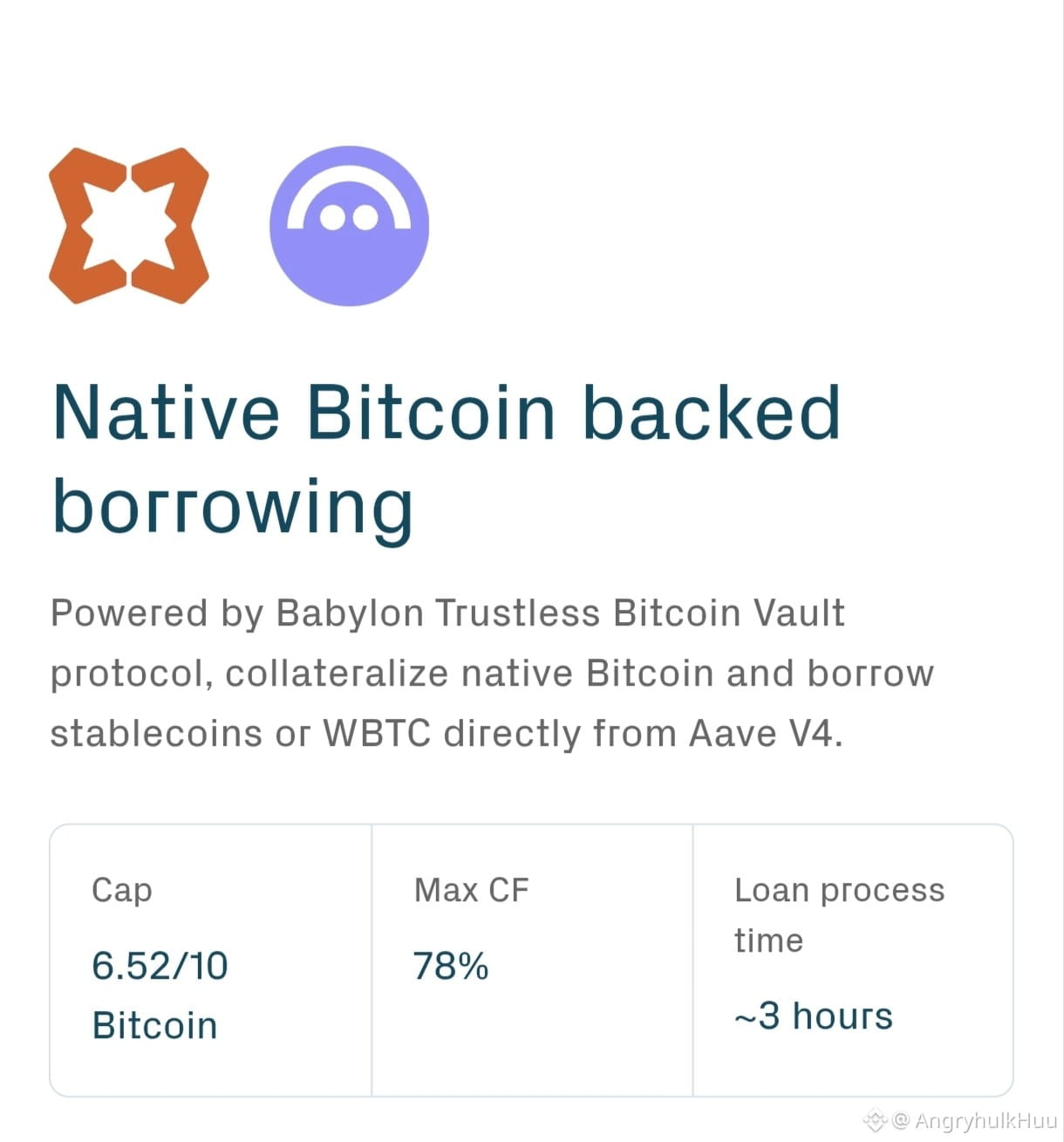
The more I learn about Bitcoin infrastructure, the more I feel that "native" matters more than most people realize. Wrapped BTC solved an important problem by bringing liquidity into DeFi, but it also introduced new trust assumptions that many long-term Bitcoin holders were never completely comfortable with.
That's why the direction @BabylonLabs_io is taking feels worth paying attention to. Instead of asking users to move away from native Bitcoin, Trustless Bitcoin Vaults are designed around preserving ownership while expanding what BTC can actually do. To me, that's a much stronger design philosophy because it doesn't force users to choose between security and utility.
I don't think the future of Bitcoin DeFi will be decided by who offers the highest yield. It will be decided by which infrastructure minimizes unnecessary trust while keeping the user experience practical. If people can unlock more value from their BTC without compromising the principles that made Bitcoin successful in the first place, that's a much more meaningful innovation than simply creating another financial product.
The strongest infrastructure is usually the one users don't have to think about. It simply works while preserving the properties they already trust. That's the direction I hope Bitcoin continues to move toward.
$BABY #baby
That's why the direction @BabylonLabs_io is taking feels worth paying attention to. Instead of asking users to move away from native Bitcoin, Trustless Bitcoin Vaults are designed around preserving ownership while expanding what BTC can actually do. To me, that's a much stronger design philosophy because it doesn't force users to choose between security and utility.
I don't think the future of Bitcoin DeFi will be decided by who offers the highest yield. It will be decided by which infrastructure minimizes unnecessary trust while keeping the user experience practical. If people can unlock more value from their BTC without compromising the principles that made Bitcoin successful in the first place, that's a much more meaningful innovation than simply creating another financial product.
The strongest infrastructure is usually the one users don't have to think about. It simply works while preserving the properties they already trust. That's the direction I hope Bitcoin continues to move toward.
$BABY #baby
Ver tradução
Bitcoin has always been valued for giving people full ownership of their assets, but using BTC in DeFi has often required compromises like wrapping coins or trusting centralized custodians. That's why the approach from @BabylonLabs_io feels different. Trustless Bitcoin Vaults are designed to let users keep their Bitcoin under self-custody while making it usable as collateral through cryptographic verification instead of trusted intermediaries. This means Bitcoin can remain native to its own network while becoming more productive in decentralized finance. Rather than changing Bitcoin itself, TBV builds infrastructure around its existing security model, creating new financial possibilities without sacrificing the principles that made Bitcoin valuable in the first place. If this model continues to mature, it could become an important foundation for the next phase of Bitcoin adoption.
$BABY #baby
$BABY #baby
Ver tradução
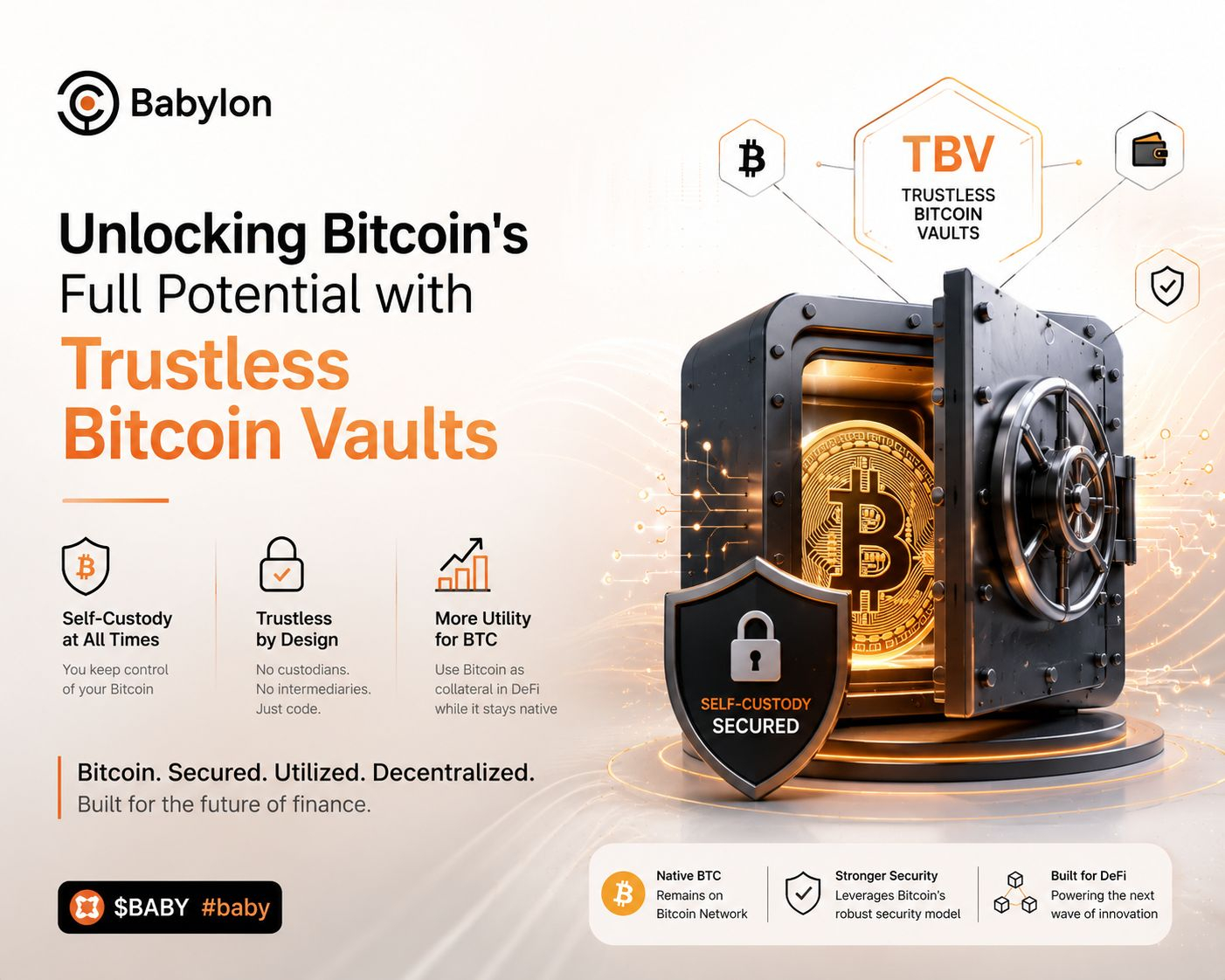
For years, Bitcoin has been seen as a store of value, but much of its capital has remained inactive. What I find interesting about @BabylonLabs_io is the focus on improving Bitcoin's capital efficiency without changing its core principles. Trustless Bitcoin Vaults are designed to let native BTC remain under user control while supporting broader financial use cases. Instead of asking users to choose between security and utility, this approach aims to deliver both. If Bitcoin is going to become a more active part of decentralized finance, building on trustless infrastructure like TBV feels like the right direction.
$BABY #baby
$BABY #baby
Ver tradução
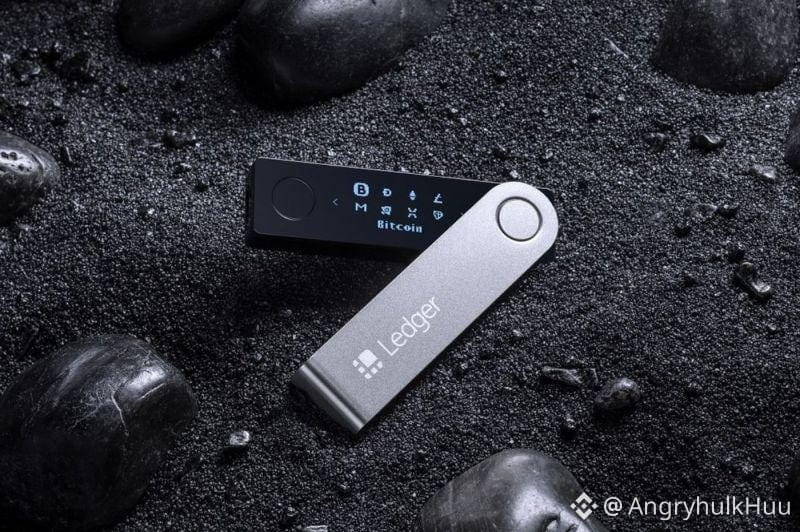
The latest Ledger integration from @BabylonLabs_io caught my attention because it solves a real concern for long term Bitcoin holders. Most people don't want to move their BTC to wrapped versions or hand control over to a custodian just to access DeFi. Trustless Bitcoin Vaults take a different approach by keeping Bitcoin on its native chain while allowing it to be used as collateral. With Ledger Clear Signing, every vault action can be verified directly on the hardware wallet, giving users greater confidence before approving transactions. This combination of self custody, cryptographic verification, and practical DeFi access feels like meaningful infrastructure rather than another short term trend. If Bitcoin is going to play a bigger role in decentralized finance, this is the type of foundation that makes sense to build. $BABY
#baby
#baby
Ver tradução
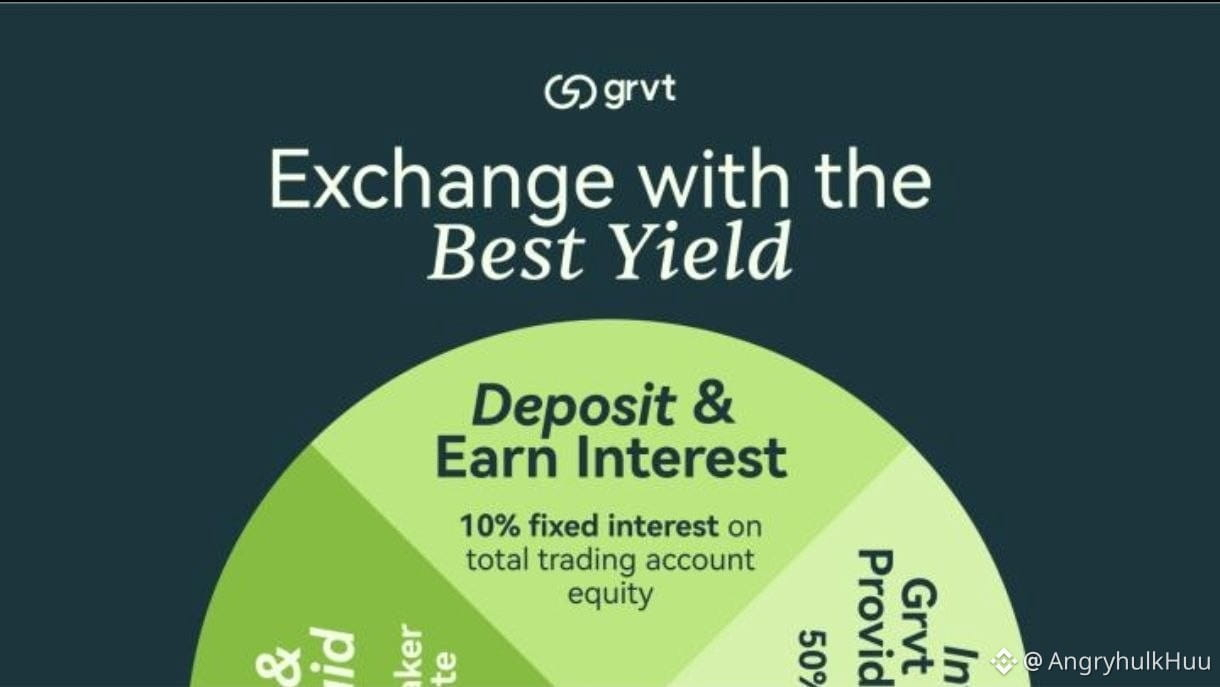
I used to think moving funds between wallets and platforms was just part of crypto.
After spending some time reading about @grvt_io , I started questioning that.
If your assets are sitting idle every time you're not actively trading, that's capital that isn't really working for you.
What I like about GRVT's direction is the focus on making one portfolio more useful instead of asking users to constantly move funds around. It's a small shift in thinking, but it could make a big difference in everyday trading.
That's the kind of product design I'm interested in following.
#grvt
After spending some time reading about @grvt_io , I started questioning that.
If your assets are sitting idle every time you're not actively trading, that's capital that isn't really working for you.
What I like about GRVT's direction is the focus on making one portfolio more useful instead of asking users to constantly move funds around. It's a small shift in thinking, but it could make a big difference in everyday trading.
That's the kind of product design I'm interested in following.
#grvt
Ver tradução
I spent some time reading the new Onchain Wealth Report from @grvt_io today.
One idea really stood out to me.
The conversation is slowly shifting from "Where should I trade?" to "How can my capital keep working all the time?"
That's a very different way of thinking about crypto. Instead of moving funds between multiple apps to trade, earn, and invest, the focus is becoming how one balance can do more with less friction.
Whether that vision becomes the standard or not, I think it's a discussion the industry needed.
Looking forward to seeing how @grvt_io turns that vision into real products.
#grvt
One idea really stood out to me.
The conversation is slowly shifting from "Where should I trade?" to "How can my capital keep working all the time?"
That's a very different way of thinking about crypto. Instead of moving funds between multiple apps to trade, earn, and invest, the focus is becoming how one balance can do more with less friction.
Whether that vision becomes the standard or not, I think it's a discussion the industry needed.
Looking forward to seeing how @grvt_io turns that vision into real products.
#grvt
Finalmente decidi como vou lidar com minha alocação de GRVT.
No começo, eu estava pensando apenas em reivindicar tudo o mais rápido possível. Depois de ler o guia oficial, percebi que a GRVT não está apenas pedindo que a gente reivindique tokens. Na verdade, ela está permitindo que cada participante escolha a estratégia que melhor se encaixa para ele.
Algumas pessoas precisam de liquidez no primeiro dia, e isso é totalmente compreensível. Outras estão dispostas a esperar por um multiplicador maior porque acreditam no potencial de longo prazo do ecossistema.
Eu não acho que exista uma resposta certa ou errada aqui. Depende muito dos seus próprios objetivos.
Gosto de ver que @grvt_io não forçou todo mundo a ficar em uma única opção. Dar flexibilidade à comunidade é um detalhe pequeno, mas faz com que a distribuição pareça bem mais cuidadosa.
Antes de tomar qualquer decisão, vou revisar tudo duas vezes pela página oficial de registro, em vez de confiar em postagens aleatórias na internet.
Essa é a minha abordagem. Curioso para ver como todo mundo está pensando sobre isso.
#grvt
No começo, eu estava pensando apenas em reivindicar tudo o mais rápido possível. Depois de ler o guia oficial, percebi que a GRVT não está apenas pedindo que a gente reivindique tokens. Na verdade, ela está permitindo que cada participante escolha a estratégia que melhor se encaixa para ele.
Algumas pessoas precisam de liquidez no primeiro dia, e isso é totalmente compreensível. Outras estão dispostas a esperar por um multiplicador maior porque acreditam no potencial de longo prazo do ecossistema.
Eu não acho que exista uma resposta certa ou errada aqui. Depende muito dos seus próprios objetivos.
Gosto de ver que @grvt_io não forçou todo mundo a ficar em uma única opção. Dar flexibilidade à comunidade é um detalhe pequeno, mas faz com que a distribuição pareça bem mais cuidadosa.
Antes de tomar qualquer decisão, vou revisar tudo duas vezes pela página oficial de registro, em vez de confiar em postagens aleatórias na internet.
Essa é a minha abordagem. Curioso para ver como todo mundo está pensando sobre isso.
#grvt

Uma das atualizações mais interessantes da @grvt_io é o lançamento da Grvt Invest, um produto focado em tornar o rendimento de Real World Assets (RWA) no estilo institucional mais acessível. Em vez de exigir grandes capitais ou processos de investimento complexos, a Grvt Invest apresenta estratégias selecionadas que simplificam a participação, mantendo uma experiência de autocustódia.
De acordo com o anúncio oficial, a plataforma é lançada com as estratégias Balanceada e Oportunista, oferecendo aos usuários diferentes formas de abordar o rendimento com base em seus objetivos. Isso reflete a visão mais ampla da GRVT de combinar negociação, obtenção de rendimentos e investimentos dentro de um único ecossistema, para que o capital não precise ficar ocioso enquanto se aguarda a próxima oportunidade.
À medida que o setor de RWA continua a crescer, produtos que tornam essas oportunidades mais fáceis de acessar podem desempenhar um papel importante em trazer mais usuários para onchain. É ótimo ver a @grvt_io focando em ferramentas financeiras práticas, em vez de hype de curto prazo.
#grvt
De acordo com o anúncio oficial, a plataforma é lançada com as estratégias Balanceada e Oportunista, oferecendo aos usuários diferentes formas de abordar o rendimento com base em seus objetivos. Isso reflete a visão mais ampla da GRVT de combinar negociação, obtenção de rendimentos e investimentos dentro de um único ecossistema, para que o capital não precise ficar ocioso enquanto se aguarda a próxima oportunidade.
À medida que o setor de RWA continua a crescer, produtos que tornam essas oportunidades mais fáceis de acessar podem desempenhar um papel importante em trazer mais usuários para onchain. É ótimo ver a @grvt_io focando em ferramentas financeiras práticas, em vez de hype de curto prazo.
#grvt

Parcialmente verdadeiro
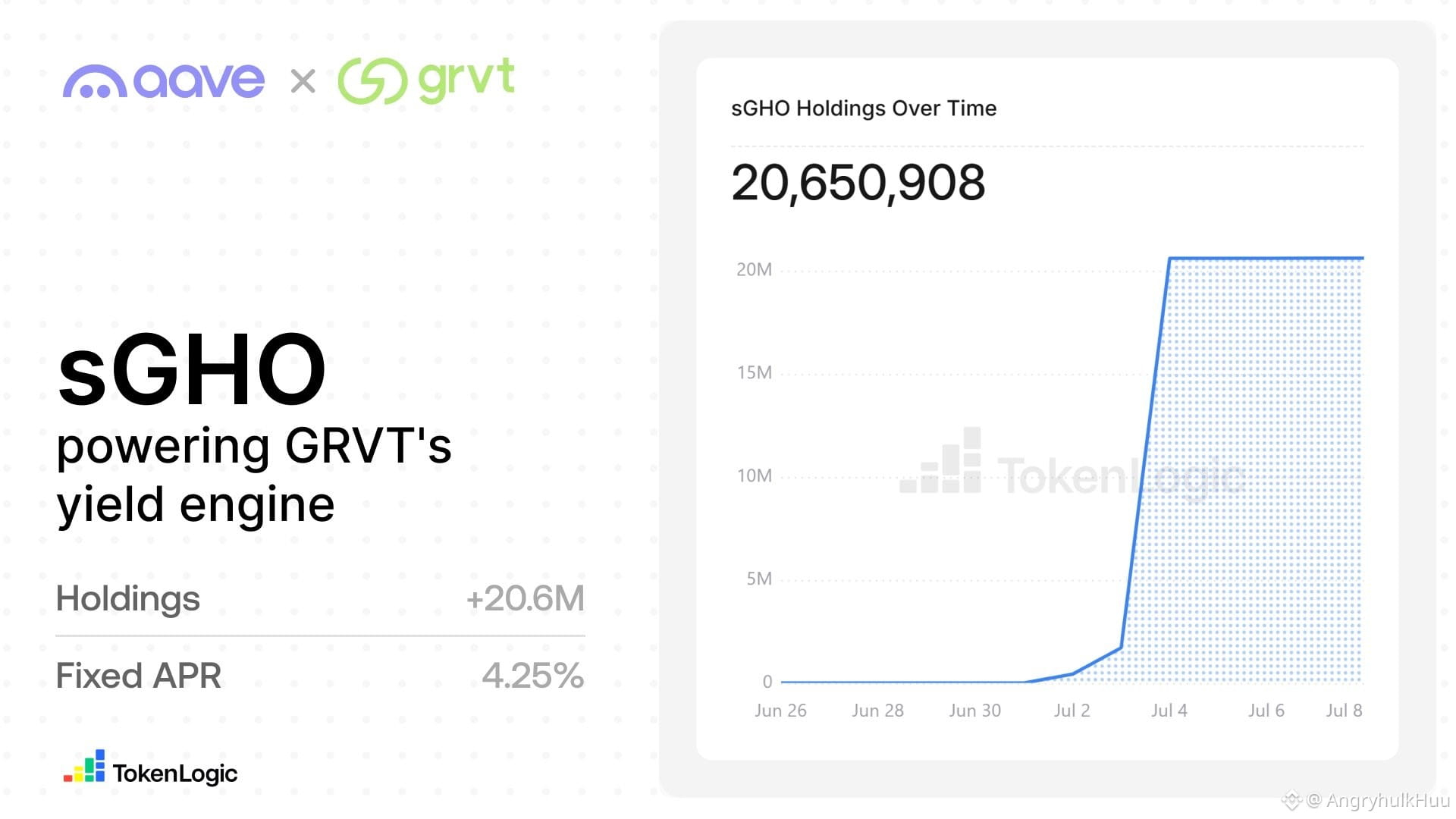
O rendimento só importa quando é sustentado por uma infraestrutura confiável. Ver mais de 20,6M de sGHO alocados para o motor de rendimento da GRVT destaca a crescente confiança na sua abordagem. Parcerias fortes e utilidade prática muitas vezes falam mais alto do que o hype. @grvt_io está construindo com foco na sustentabilidade de longo prazo.
#grvt
#grvt
Bombear ou despejar?
Ver tradução
Walrus is quietly building one of the most interesting pieces of Web3 infrastructure. With @Walrus 🦭/acc focusing on decentralized, scalable data storage, the $WAL ecosystem feels designed for long-term builders rather than hype cycles. Real utility, real demand, real innovation. #Walrus
Ver tradução
DeFi is evolving, and @Morpho Labs 🦋 is leading the change! 🔥
$MORPHO creates a seamless layer between lenders and borrowers—offering higher yields and better rates. It’s efficiency, transparency, and decentralization in perfect balance. #Morpho
$MORPHO creates a seamless layer between lenders and borrowers—offering higher yields and better rates. It’s efficiency, transparency, and decentralization in perfect balance. #Morpho
Inicia sessão para explorar mais conteúdos