
Drake_
686 Publicações

Drake_
Denunciar
Bloquear Utilizador
Crypto since 2016 | Trader by Profession | Follow me for the latest market updates 🚀 #Binance #CMC
Aberto ao trading
Trader Ocasional
4.5 ano(s)
123 A seguir
108 Seguidores
540 Gostaram
Publicações
Portfólio
Tudo
Cotações
Vídeos
·
--
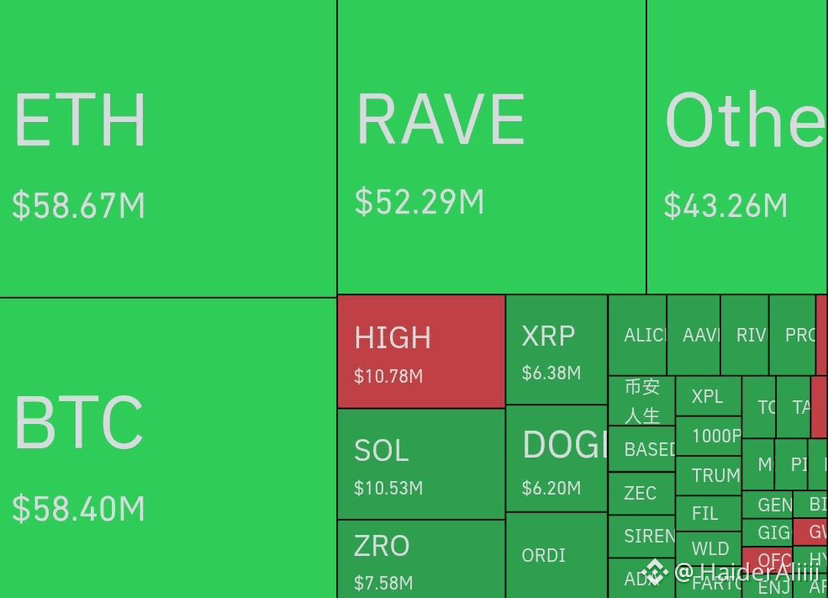
⚡ REKT: $248M em posições longas liquidadas em 24 horas.
⚡ REKT: $248M em posições longas liquidadas em 24 horas.
23
·
--
Se você tivesse $1M hoje!
$RAVE com 10$ 1 semana atrás, você vai
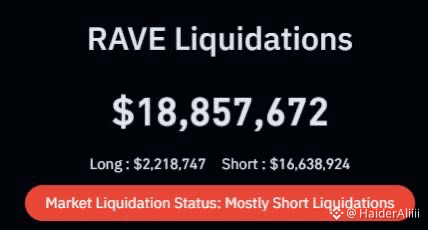
E agora quase $17.000.000 foram liquidadas tentando vender Rave a descoberto.
Temporada de crimes. Fique longe
#Rave
Se você tivesse $1M hoje!
$RAVE com 10$ 1 semana atrás, você vai
E agora quase $17.000.000 foram liquidadas tentando vender Rave a descoberto.
Temporada de crimes. Fique longe
#Rave
$RAVE com 10$ 1 semana atrás, você vai
E agora quase $17.000.000 foram liquidadas tentando vender Rave a descoberto.
Temporada de crimes. Fique longe
#Rave
24
·
--
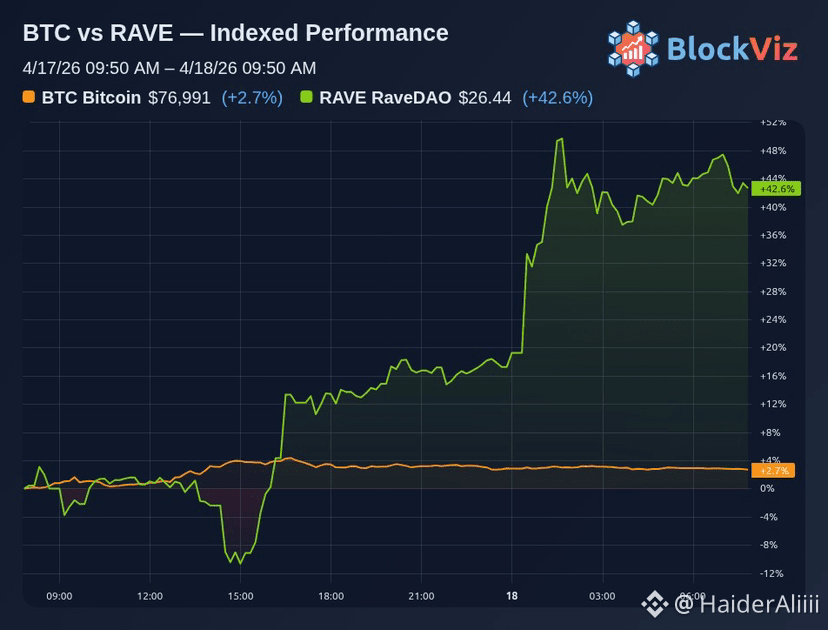
RaveDAO (RAVE) está demonstrando um desempenho explosivo em comparação ao Bitcoin (BTC), liderando com um impressionante 39,9% de desempenho indexado nos últimos dois dias. O ganho impressionante de 41,98% do RAVE em 24 horas contrasta fortemente com a notável alta de 2,67% do Bitcoin, destacando uma clara e dramática divergência nas dinâmicas de mercado de curto prazo. O spread máximo entre esses dois ativos atingiu notáveis 46,7% durante o período.
Esse robusto desempenho superior do RAVE, um ativo com uma capitalização de mercado superior a $6,5 bilhões, é um indicador chave para os participantes do mercado. Sugere que o capital está atualmente fluindo agressivamente para altcoins específicas, indicando onde o crescimento notável está concentrado dentro do ecossistema cripto, em vez de movimentos gerais de mercado. Tal divergência significativa oferece uma forte visão sobre as preferências de mercado em evolução e o apetite por risco, mesmo enquanto o Bitcoin experimenta movimento positivo
$RAVE
RaveDAO (RAVE) está demonstrando um desempenho explosivo em comparação ao Bitcoin (BTC), liderando com um impressionante 39,9% de desempenho indexado nos últimos dois dias. O ganho impressionante de 41,98% do RAVE em 24 horas contrasta fortemente com a notável alta de 2,67% do Bitcoin, destacando uma clara e dramática divergência nas dinâmicas de mercado de curto prazo. O spread máximo entre esses dois ativos atingiu notáveis 46,7% durante o período.
Esse robusto desempenho superior do RAVE, um ativo com uma capitalização de mercado superior a $6,5 bilhões, é um indicador chave para os participantes do mercado. Sugere que o capital está atualmente fluindo agressivamente para altcoins específicas, indicando onde o crescimento notável está concentrado dentro do ecossistema cripto, em vez de movimentos gerais de mercado. Tal divergência significativa oferece uma forte visão sobre as preferências de mercado em evolução e o apetite por risco, mesmo enquanto o Bitcoin experimenta movimento positivo
$RAVE
Esse robusto desempenho superior do RAVE, um ativo com uma capitalização de mercado superior a $6,5 bilhões, é um indicador chave para os participantes do mercado. Sugere que o capital está atualmente fluindo agressivamente para altcoins específicas, indicando onde o crescimento notável está concentrado dentro do ecossistema cripto, em vez de movimentos gerais de mercado. Tal divergência significativa oferece uma forte visão sobre as preferências de mercado em evolução e o apetite por risco, mesmo enquanto o Bitcoin experimenta movimento positivo
$RAVE
11
·
--
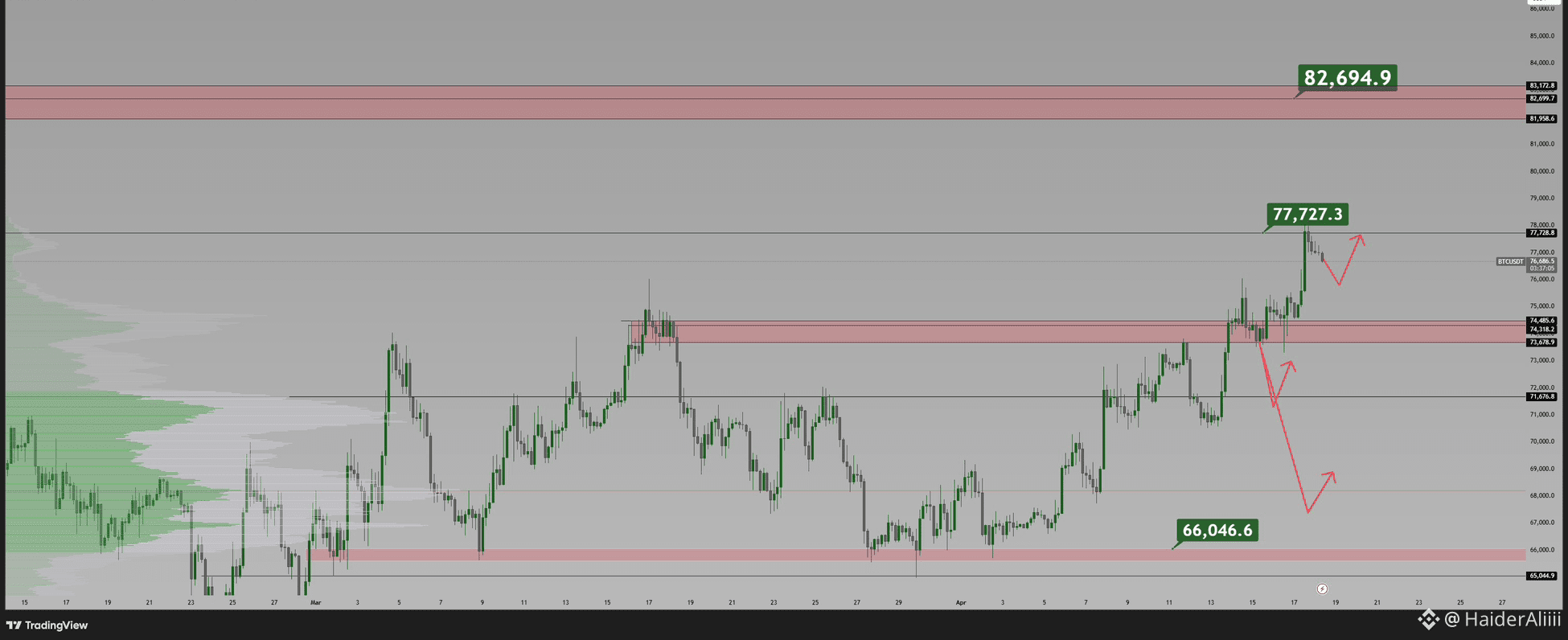
Eu acho que, a curto prazo, vamos cair um pouco mais. A zona mais importante para mim agora é o nível de 82k, uma resistência em um período maior. Esse é o próximo ponto onde eu vou realizar lucro.
Outras zonas ainda são válidas. A curto prazo, poderíamos cair para 75.9k, e depois 74.5k.
A médio prazo, estou otimista, mas a tendência principal ainda é de baixa até quebrarmos acima da zona de 82.6k.
O que você acha?
$BTC #BTCPriceAnalysis
Eu acho que, a curto prazo, vamos cair um pouco mais. A zona mais importante para mim agora é o nível de 82k, uma resistência em um período maior. Esse é o próximo ponto onde eu vou realizar lucro.
Outras zonas ainda são válidas. A curto prazo, poderíamos cair para 75.9k, e depois 74.5k.
A médio prazo, estou otimista, mas a tendência principal ainda é de baixa até quebrarmos acima da zona de 82.6k.
O que você acha?
$BTC #BTCPriceAnalysis
Outras zonas ainda são válidas. A curto prazo, poderíamos cair para 75.9k, e depois 74.5k.
A médio prazo, estou otimista, mas a tendência principal ainda é de baixa até quebrarmos acima da zona de 82.6k.
O que você acha?
$BTC #BTCPriceAnalysis
43
·
--
Goldman Sachs: A IA está de volta com uma vingança!
Goldman Sachs confirma que o tema da IA está se recuperando "muito, muito rápido." Enquanto o software está atrasado, os semicondutores já estão atingindo novos máximos!
Esse impulso impulsionado pela tecnologia muitas vezes serve como um enorme vento a favor para o Bitcoin, à medida que a liquidez flui de volta para ativos de alto crescimento. A Estratégia:
O conselheiro sênior Dominic Wilson sugere uma
"abocanhar e proteger" abordagem. Adicione risco a $BTC e IA a preços mais baixos, mas mantenha as proteções agressivas para sobreviver à volatilidade.
Mantenha-se ágil - IA e BTC são os motores, mas a proteção é a chave!
Goldman Sachs: A IA está de volta com uma vingança!
Goldman Sachs confirma que o tema da IA está se recuperando "muito, muito rápido." Enquanto o software está atrasado, os semicondutores já estão atingindo novos máximos!
Esse impulso impulsionado pela tecnologia muitas vezes serve como um enorme vento a favor para o Bitcoin, à medida que a liquidez flui de volta para ativos de alto crescimento. A Estratégia:
O conselheiro sênior Dominic Wilson sugere uma
"abocanhar e proteger" abordagem. Adicione risco a $BTC e IA a preços mais baixos, mas mantenha as proteções agressivas para sobreviver à volatilidade.
Mantenha-se ágil - IA e BTC são os motores, mas a proteção é a chave!
Goldman Sachs confirma que o tema da IA está se recuperando "muito, muito rápido." Enquanto o software está atrasado, os semicondutores já estão atingindo novos máximos!
Esse impulso impulsionado pela tecnologia muitas vezes serve como um enorme vento a favor para o Bitcoin, à medida que a liquidez flui de volta para ativos de alto crescimento. A Estratégia:
O conselheiro sênior Dominic Wilson sugere uma
"abocanhar e proteger" abordagem. Adicione risco a $BTC e IA a preços mais baixos, mas mantenha as proteções agressivas para sobreviver à volatilidade.
Mantenha-se ágil - IA e BTC são os motores, mas a proteção é a chave!
37
·
--
A CATEGORIA: 🇮🇷🇺🇸 O Irã fecha oficialmente o Estreito de Ormuz novamente após os EUA afirmarem que não acabarão com seu bloqueio.
A CATEGORIA: 🇮🇷🇺🇸 O Irã fecha oficialmente o Estreito de Ormuz novamente após os EUA afirmarem que não acabarão com seu bloqueio.
18
·
--
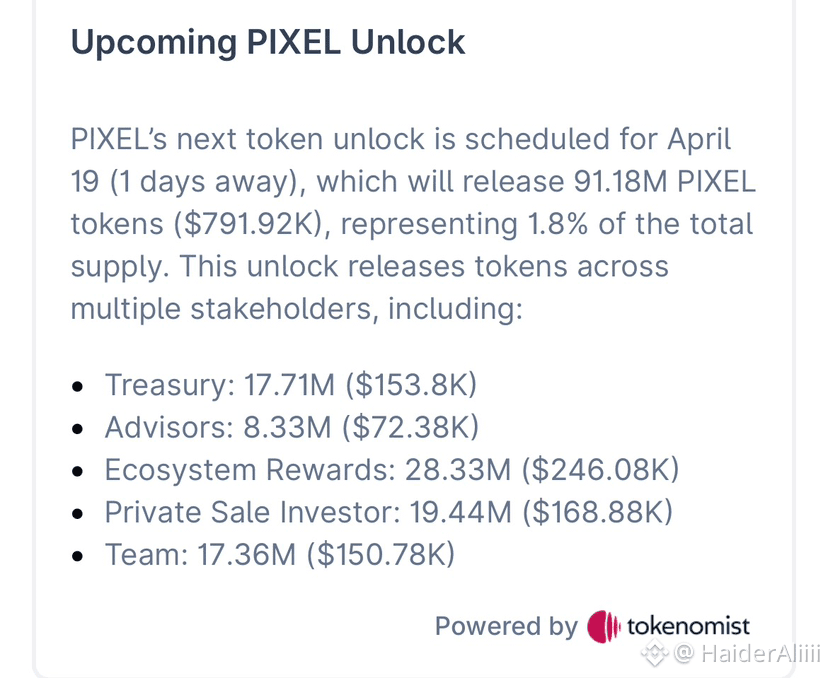
Amanhã, 91,18 milhões $PIXEL tokens serão desbloqueados. A maioria dos detentores não sabe.
Isso representa $717K de suprimento atingindo o mercado através do Tesouro, Consultores, Recompensas do Ecossistema, Venda Privada e Equipe — tudo de uma vez em 19 de abril.
Da última vez que isso aconteceu, o preço caiu 55% em 60 dias.
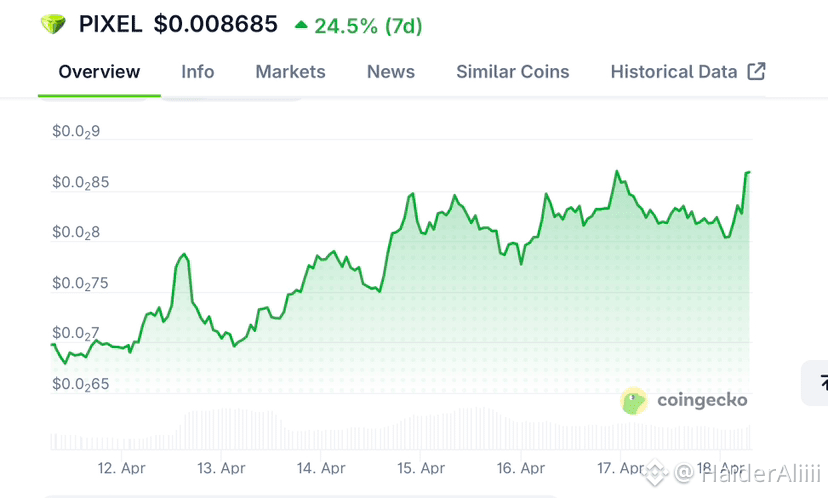
Agora, o PIXEL é negociado a $0,0078, com alta de 12% na semana, em um volume diário de $24,7M. Ou o mercado já precificou isso — ou ainda não percebeu.
Observe a ação do preço neste fim de semana. Manter-se acima de $0,007 significa que o piso de staking é real. Romper abaixo de $0,006 significa que a pressão de desbloqueio está vencendo.
139M tokens ainda estão em staking. 1M de usuários diários. $25M de receita do ecossistema. Os fundamentos não mudaram.
Mas desbloqueios não se importam com fundamentos
#pixel @pixels $PIXEL
Amanhã, 91,18 milhões $PIXEL tokens serão desbloqueados. A maioria dos detentores não sabe.
Isso representa $717K de suprimento atingindo o mercado através do Tesouro, Consultores, Recompensas do Ecossistema, Venda Privada e Equipe — tudo de uma vez em 19 de abril.
Da última vez que isso aconteceu, o preço caiu 55% em 60 dias.
Agora, o PIXEL é negociado a $0,0078, com alta de 12% na semana, em um volume diário de $24,7M. Ou o mercado já precificou isso — ou ainda não percebeu.
Observe a ação do preço neste fim de semana. Manter-se acima de $0,007 significa que o piso de staking é real. Romper abaixo de $0,006 significa que a pressão de desbloqueio está vencendo.
139M tokens ainda estão em staking. 1M de usuários diários. $25M de receita do ecossistema. Os fundamentos não mudaram.
Mas desbloqueios não se importam com fundamentos
#pixel @Pixels $PIXEL
Isso representa $717K de suprimento atingindo o mercado através do Tesouro, Consultores, Recompensas do Ecossistema, Venda Privada e Equipe — tudo de uma vez em 19 de abril.
Da última vez que isso aconteceu, o preço caiu 55% em 60 dias.
Agora, o PIXEL é negociado a $0,0078, com alta de 12% na semana, em um volume diário de $24,7M. Ou o mercado já precificou isso — ou ainda não percebeu.
Observe a ação do preço neste fim de semana. Manter-se acima de $0,007 significa que o piso de staking é real. Romper abaixo de $0,006 significa que a pressão de desbloqueio está vencendo.
139M tokens ainda estão em staking. 1M de usuários diários. $25M de receita do ecossistema. Os fundamentos não mudaram.
Mas desbloqueios não se importam com fundamentos
#pixel @Pixels $PIXEL
35
·
--
Artigo
Amanhã é um grande dia para $PIXEL e a maioria dos holders nem percebeu.No dia 19 de abril, literalmente amanhã, 91.18 milhões de tokens PIXEL serão desbloqueados. Isso representa $717K em oferta atingindo o mercado de uma só vez, abrangendo Tesouraria, Consultores, Recompensas do Ecossistema, investidores de Venda Privada e carteiras da Equipe.
Na última vez que um desbloqueio desse tamanho aconteceu, o preço caiu 55% nos 60 dias seguintes.
E neste momento, o Pixel está a $0.0078 — alta de 12.3% na semana — com $24.7 milhões em volume nas últimas 24h. O mercado ou não está prestando atenção, ou já precificou isso. Essas são duas situações bem diferentes.
Amanhã é um grande dia para $PIXEL e a maioria dos holders nem percebeu.
No dia 19 de abril, literalmente amanhã, 91.18 milhões de tokens PIXEL serão desbloqueados. Isso representa $717K em oferta atingindo o mercado de uma só vez, abrangendo Tesouraria, Consultores, Recompensas do Ecossistema, investidores de Venda Privada e carteiras da Equipe.
Na última vez que um desbloqueio desse tamanho aconteceu, o preço caiu 55% nos 60 dias seguintes.
E neste momento, o Pixel está a $0.0078 — alta de 12.3% na semana — com $24.7 milhões em volume nas últimas 24h. O mercado ou não está prestando atenção, ou já precificou isso. Essas são duas situações bem diferentes.
Na última vez que um desbloqueio desse tamanho aconteceu, o preço caiu 55% nos 60 dias seguintes.
E neste momento, o Pixel está a $0.0078 — alta de 12.3% na semana — com $24.7 milhões em volume nas últimas 24h. O mercado ou não está prestando atenção, ou já precificou isso. Essas são duas situações bem diferentes.
1
113
·
--
Imprimiu +193% em 24 horas.
Então a pergunta que ninguém queria fazerDurante a maior parte de fevereiro de 2026, $PIXEL estava sendo negociado em torno de $0,0045. Um número tão distante de seu ponto de partida que parou de parecer um preço e começou a parecer uma abstração. Pessoas que compraram perto do topo estavam observando isso há dois anos. Pessoas que compraram a queda estavam se perguntando qual queda eles queriam dizer.
E então, em março, algo mudou. O volume explodiu — não 20%, não 50%, mas mais de 6.000% em uma única janela de 24 horas. O preço passou de aproximadamente $0,007 para quase $0,020 antes de se estabilizar. 193% em um dia. O tipo de número que esvazia os tópicos do Discord de nuances e os preenche com metas de preço em vez disso.
Imprimiu +193% em 24 horas. Então a pergunta que ninguém queria fazer
Durante a maior parte de fevereiro de 2026, $PIXEL estava sendo negociado em torno de $0,0045. Um número tão distante de seu ponto de partida que parou de parecer um preço e começou a parecer uma abstração. Pessoas que compraram perto do topo estavam observando isso há dois anos. Pessoas que compraram a queda estavam se perguntando qual queda eles queriam dizer.
E então, em março, algo mudou. O volume explodiu — não 20%, não 50%, mas mais de 6.000% em uma única janela de 24 horas. O preço passou de aproximadamente $0,007 para quase $0,020 antes de se estabilizar. 193% em um dia. O tipo de número que esvazia os tópicos do Discord de nuances e os preenche com metas de preço em vez disso.
E então, em março, algo mudou. O volume explodiu — não 20%, não 50%, mas mais de 6.000% em uma única janela de 24 horas. O preço passou de aproximadamente $0,007 para quase $0,020 antes de se estabilizar. 193% em um dia. O tipo de número que esvazia os tópicos do Discord de nuances e os preenche com metas de preço em vez disso.
76
·
--
ÚLTIMA HORA: 🇮🇷 Funcionário iraniano diz que os navios ainda precisarão pagar taxas para atravessar o Estreito de Hormuz.
ÚLTIMA HORA: 🇮🇷 Funcionário iraniano diz que os navios ainda precisarão pagar taxas para atravessar o Estreito de Hormuz.
7
·
--
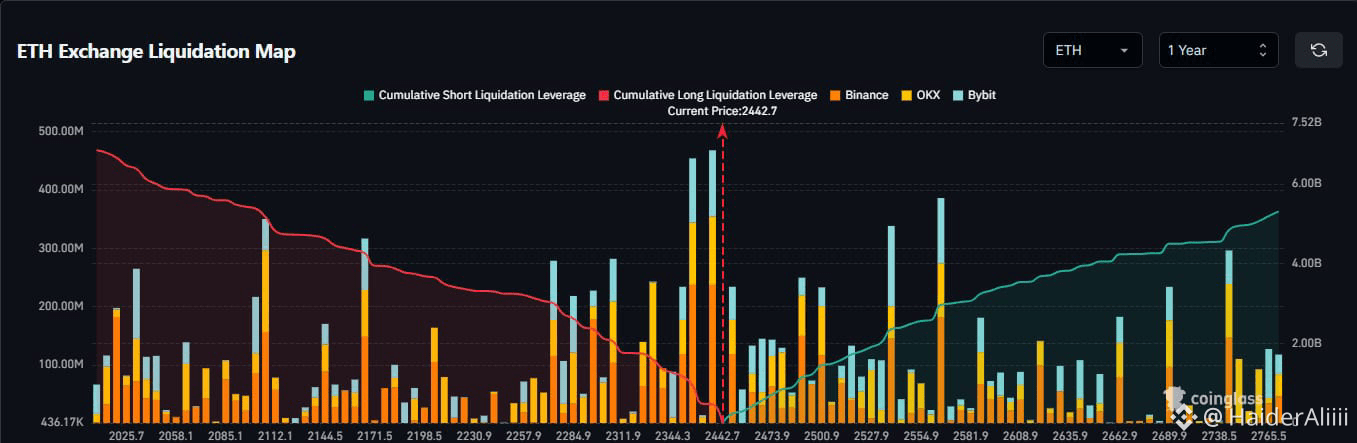
ALERTA DE LIQUIDAÇÃO 🚨
$4,500,000,000 em posições curtas serão destruídas se $ETH pumps 10%.
ALERTA DE LIQUIDAÇÃO 🚨
$4,500,000,000 em posições curtas serão destruídas se $ETH pumps 10%.
$4,500,000,000 em posições curtas serão destruídas se $ETH pumps 10%.
11
·
--

Artigo
$PIXEL não está sendo recompensado pelo que construiu. Está sendo punido pelo que o mercado lembra.Há uma versão deste projeto que seria celebrada agora. Um jogo Web3 com mais de um milhão de usuários ativos diários. Um ecossistema que ultrapassou $25 milhões em receita. Um sistema de staking que bloqueou 139 milhões de tokens mesmo com o preço caindo. Um marco de lucratividade — gastos líquidos superando recompensas de tokens — que quase nenhum projeto GameFi jamais alcançou.
Essa versão existe. Os dados confirmam isso.
E ainda assim $PIXEL negociações a aproximadamente $0.0075 em abril de 2026. Queda de 99,3% em relação ao seu recorde histórico de $1,02. Capitalização de mercado em torno de $22 milhões — menos do que alguns tokens de meme apoiados por influenciadores levantam em um fim de semana.
$PIXEL não está sendo recompensado pelo que construiu. Está sendo punido pelo que o mercado lembra.
Há uma versão deste projeto que seria celebrada agora. Um jogo Web3 com mais de um milhão de usuários ativos diários. Um ecossistema que ultrapassou $25 milhões em receita. Um sistema de staking que bloqueou 139 milhões de tokens mesmo com o preço caindo. Um marco de lucratividade — gastos líquidos superando recompensas de tokens — que quase nenhum projeto GameFi jamais alcançou.
Essa versão existe. Os dados confirmam isso.
E ainda assim $PIXEL negociações a aproximadamente $0.0075 em abril de 2026. Queda de 99,3% em relação ao seu recorde histórico de $1,02. Capitalização de mercado em torno de $22 milhões — menos do que alguns tokens de meme apoiados por influenciadores levantam em um fim de semana.
Essa versão existe. Os dados confirmam isso.
E ainda assim $PIXEL negociações a aproximadamente $0.0075 em abril de 2026. Queda de 99,3% em relação ao seu recorde histórico de $1,02. Capitalização de mercado em torno de $22 milhões — menos do que alguns tokens de meme apoiados por influenciadores levantam em um fim de semana.
2
1
19
·
--
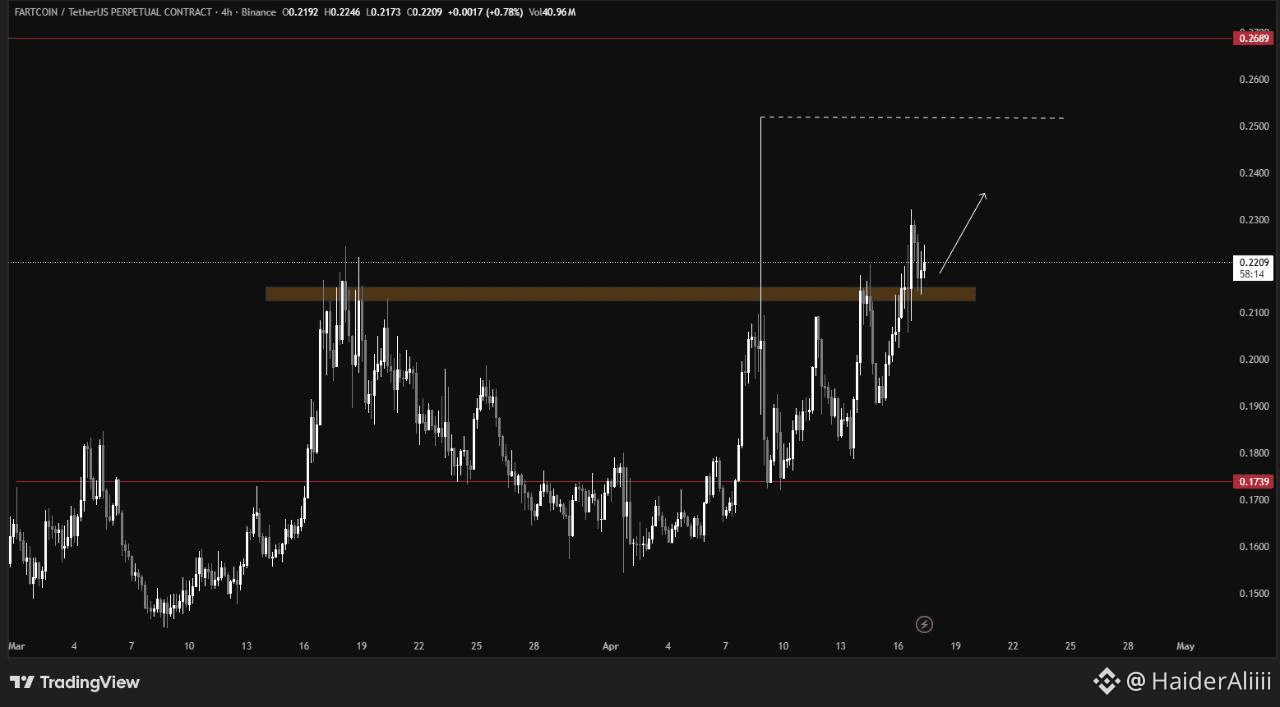
*$FARTCOIN* 📊
Forte momento de alta em jogo — o rompimento e a configuração de reteste já foram confirmados. Agora é hora de ver como esse movimento se desenrola. 🚀
*$FARTCOIN* 📊
Forte momento de alta em jogo — o rompimento e a configuração de reteste já foram confirmados. Agora é hora de ver como esse movimento se desenrola. 🚀
Forte momento de alta em jogo — o rompimento e a configuração de reteste já foram confirmados. Agora é hora de ver como esse movimento se desenrola. 🚀
103
·
--
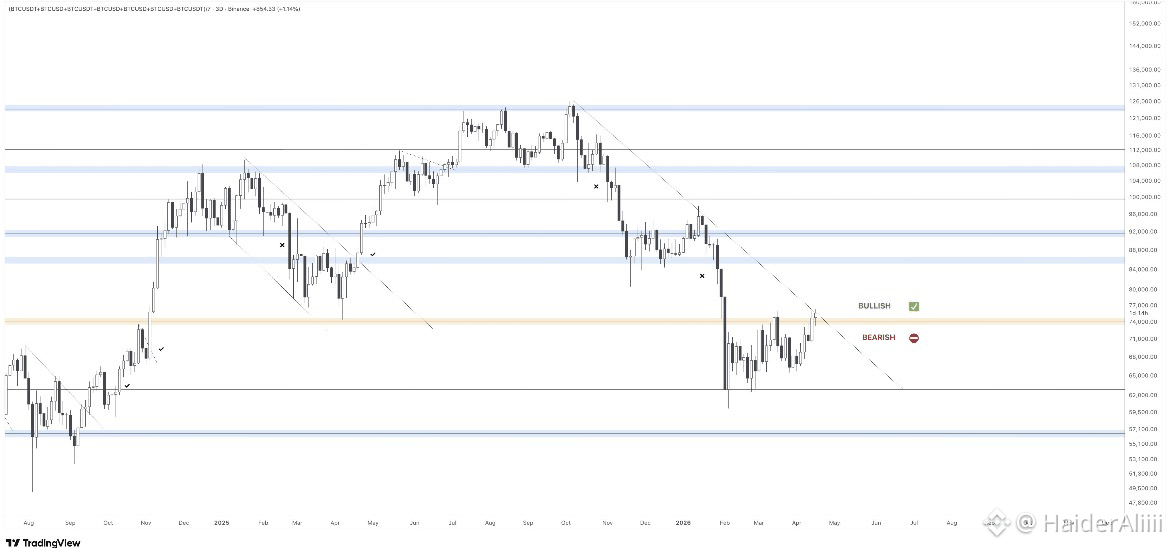
Hora da decisão para
$BTC : Superando a
resistência principal da tendência de baixa e buscando acionar a reversão de alta.
Você está pronto?
Hora da decisão para
$BTC : Superando a
resistência principal da tendência de baixa e buscando acionar a reversão de alta.
Você está pronto?
$BTC : Superando a
resistência principal da tendência de baixa e buscando acionar a reversão de alta.
Você está pronto?
61
·
--
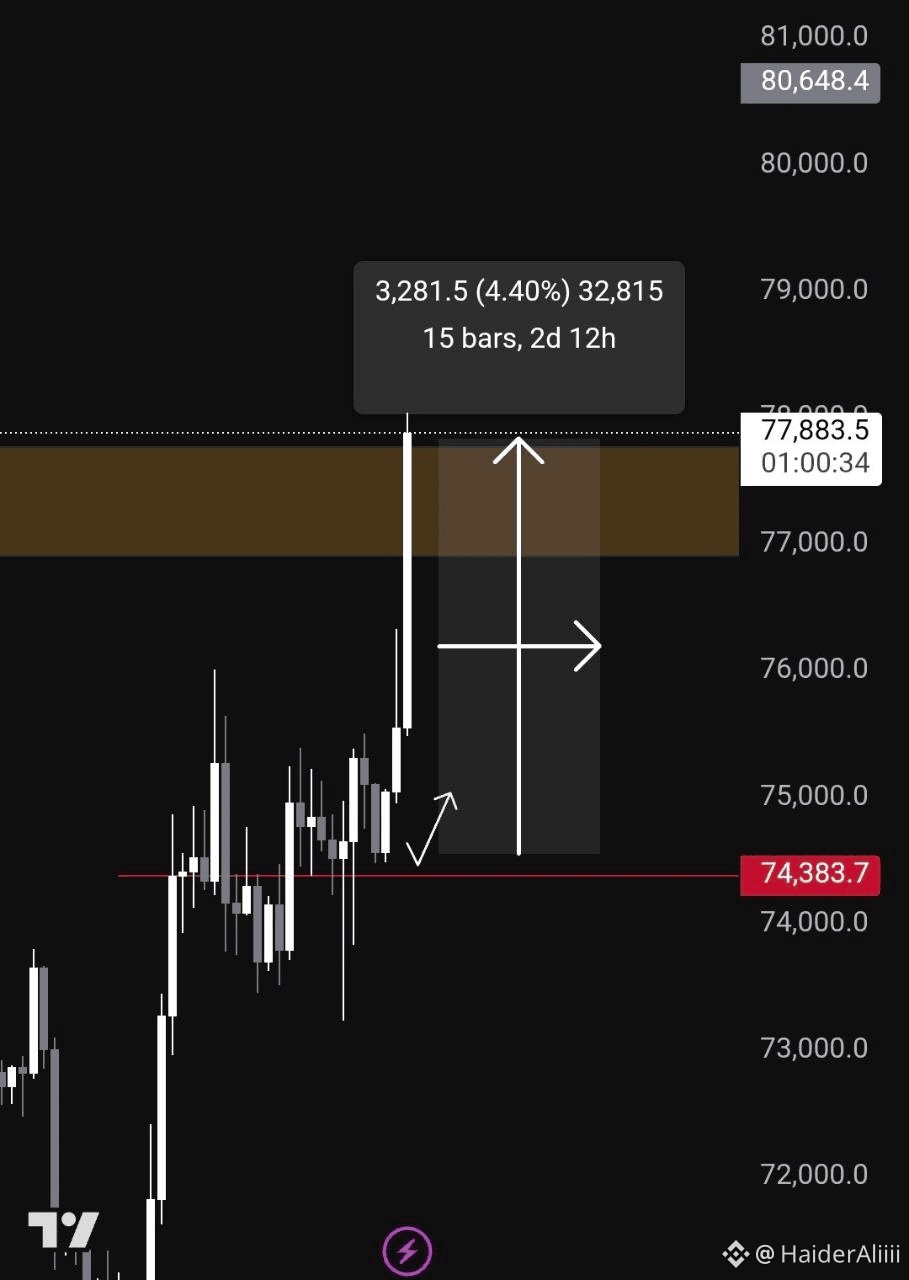
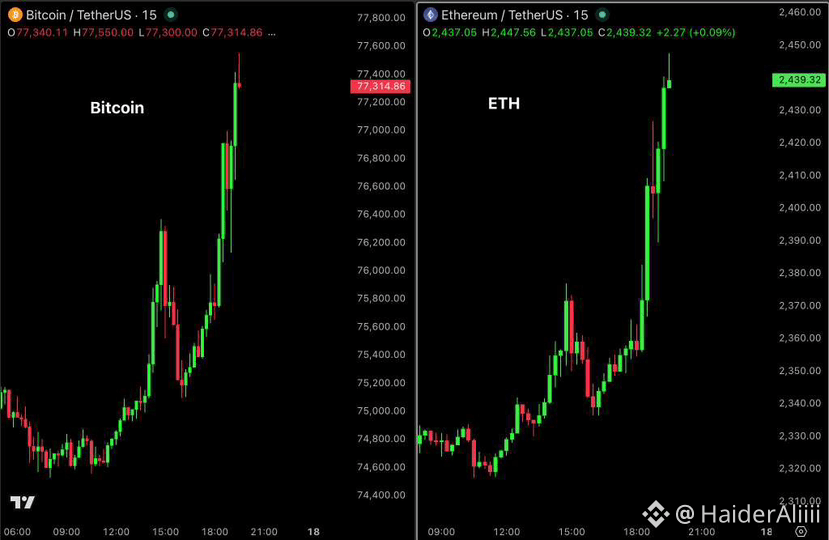
$BTC Reclama $77K Enquanto Ethereum $ETH Volta Acima de $2.450.
Um Forte Momento Ascendente Retornou Em Pouco Tempo.
Bilhões Adicionados A Capitalizações De Mercado Dentro De Horas.
Ao Mesmo Tempo, Liquidações Maciças Atingiram O Mercado.
Isso Te Diz Uma Coisa.
O Posicionamento Estava Fortemente Desfavorável.
Quando Isso Acontece, O Preço Se Move Rápido.
Agora O Foco Se Muda Para A Reação.
Se O Momento Se Manter, A Tendência Se Estende.
Se Não, A Volatilidade Permanece Elevada.
$BTC Reclama $77K Enquanto Ethereum $ETH Volta Acima de $2.450.
Um Forte Momento Ascendente Retornou Em Pouco Tempo.
Bilhões Adicionados A Capitalizações De Mercado Dentro De Horas.
Ao Mesmo Tempo, Liquidações Maciças Atingiram O Mercado.
Isso Te Diz Uma Coisa.
O Posicionamento Estava Fortemente Desfavorável.
Quando Isso Acontece, O Preço Se Move Rápido.
Agora O Foco Se Muda Para A Reação.
Se O Momento Se Manter, A Tendência Se Estende.
Se Não, A Volatilidade Permanece Elevada.
Um Forte Momento Ascendente Retornou Em Pouco Tempo.
Bilhões Adicionados A Capitalizações De Mercado Dentro De Horas.
Ao Mesmo Tempo, Liquidações Maciças Atingiram O Mercado.
Isso Te Diz Uma Coisa.
O Posicionamento Estava Fortemente Desfavorável.
Quando Isso Acontece, O Preço Se Move Rápido.
Agora O Foco Se Muda Para A Reação.
Se O Momento Se Manter, A Tendência Se Estende.
Se Não, A Volatilidade Permanece Elevada.
45
·
--
Saylor de Volta ao Lucro Como Base de Custo Chave:
$BTC Reclaims
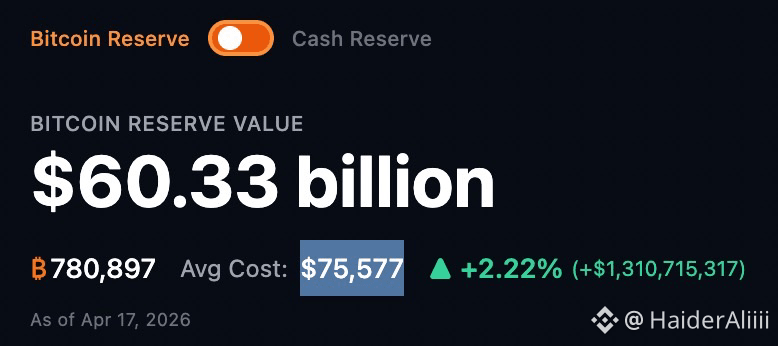
À medida que o #Bitcoin se recupera acima da zona de $77K, a estratégia de acumulação agressiva de Michael Saylor é mais uma vez validada, com suas enormes participações em BTC retornando ao território de lucro. Após suportar um prolongado período de queda abaixo da entrada média, este movimento marca um ponto de inflexão crítico onde a convicção começa a superar a volatilidade.
A recuperação dessa base de custo é mais do que apenas uma vitória psicológica, sinaliza que o posicionamento institucional em grande escala está sendo defendido estruturalmente. Se o Bitcoin se mantiver acima desta faixa, o mercado pode entrar em uma fase onde o capital anteriormente submerso se transforma em combustível de impulso, reforçando a continuidade de alta.
Saylor de Volta ao Lucro Como Base de Custo Chave:
$BTC Reclaims
À medida que o #Bitcoin se recupera acima da zona de $77K, a estratégia de acumulação agressiva de Michael Saylor é mais uma vez validada, com suas enormes participações em BTC retornando ao território de lucro. Após suportar um prolongado período de queda abaixo da entrada média, este movimento marca um ponto de inflexão crítico onde a convicção começa a superar a volatilidade.
A recuperação dessa base de custo é mais do que apenas uma vitória psicológica, sinaliza que o posicionamento institucional em grande escala está sendo defendido estruturalmente. Se o Bitcoin se mantiver acima desta faixa, o mercado pode entrar em uma fase onde o capital anteriormente submerso se transforma em combustível de impulso, reforçando a continuidade de alta.
$BTC Reclaims
À medida que o #Bitcoin se recupera acima da zona de $77K, a estratégia de acumulação agressiva de Michael Saylor é mais uma vez validada, com suas enormes participações em BTC retornando ao território de lucro. Após suportar um prolongado período de queda abaixo da entrada média, este movimento marca um ponto de inflexão crítico onde a convicção começa a superar a volatilidade.
A recuperação dessa base de custo é mais do que apenas uma vitória psicológica, sinaliza que o posicionamento institucional em grande escala está sendo defendido estruturalmente. Se o Bitcoin se mantiver acima desta faixa, o mercado pode entrar em uma fase onde o capital anteriormente submerso se transforma em combustível de impulso, reforçando a continuidade de alta.
4
·
--
Após gastar $54 bilhões na guerra e perder homens e máquinas, a América finalmente conseguiu abrir o Estreito de Ormuz, que já estava aberto antes do início da guerra. E agora é chamado de Estreito do Irã. Grande vitória para Trump.
Após gastar $54 bilhões na guerra e perder homens e máquinas, a América finalmente conseguiu abrir o Estreito de Ormuz, que já estava aberto antes do início da guerra. E agora é chamado de Estreito do Irã. Grande vitória para Trump.
Drake_
·
--
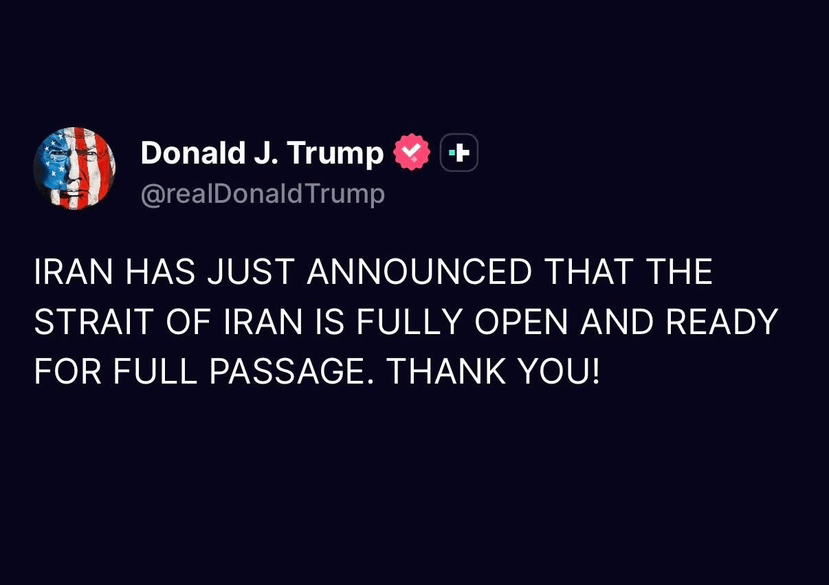
🚨 ÚLTIMAS NOTÍCIAS: TRUMP AGRADECE IRÃ ENQUANTO O ESTREITO DE HORMUZ REABRE
O petróleo cai abaixo de $100 após ter disparado para $130.
Cessar-fogo entre Israel e Líbano agora em vigor.
Acordo de paz potencialmente a dias de distância.
Os mercados estão em alta. O apetite por risco está de volta.
O petróleo cai abaixo de $100 após ter disparado para $130.
Cessar-fogo entre Israel e Líbano agora em vigor.
Acordo de paz potencialmente a dias de distância.
Os mercados estão em alta. O apetite por risco está de volta.
213
·
--

Artigo
15,42% do suprimento está circulando. O resto é uma promessa que ninguém lê atentamenteHá um documento em algum lugar — provavelmente uma página de tokenomics, provavelmente atualizado pela última vez durante um ciclo de mercado que parece distante agora — que descreve exatamente quando os 84,58% restantes do $PIXEL suprimento entrarão em circulação. A maioria das pessoas nunca o leu. A maioria das pessoas que detêm o token nunca pensou em procurar.
Isso não é incomum. É quase universal neste espaço. Os cronogramas de vesting de tokens são uma daquelas coisas que todos reconhecem em teoria e muito poucos realmente acompanham na prática. Até que um desbloqueio aconteça, e o preço caia 40% em uma semana, e de repente todos são especialistas em vesting de penhasco.
15,42% do suprimento está circulando. O resto é uma promessa que ninguém lê atentamente
Há um documento em algum lugar — provavelmente uma página de tokenomics, provavelmente atualizado pela última vez durante um ciclo de mercado que parece distante agora — que descreve exatamente quando os 84,58% restantes do $PIXEL suprimento entrarão em circulação. A maioria das pessoas nunca o leu. A maioria das pessoas que detêm o token nunca pensou em procurar.
Isso não é incomum. É quase universal neste espaço. Os cronogramas de vesting de tokens são uma daquelas coisas que todos reconhecem em teoria e muito poucos realmente acompanham na prática. Até que um desbloqueio aconteça, e o preço caia 40% em uma semana, e de repente todos são especialistas em vesting de penhasco.
Isso não é incomum. É quase universal neste espaço. Os cronogramas de vesting de tokens são uma daquelas coisas que todos reconhecem em teoria e muito poucos realmente acompanham na prática. Até que um desbloqueio aconteça, e o preço caia 40% em uma semana, e de repente todos são especialistas em vesting de penhasco.
1
29
·
--
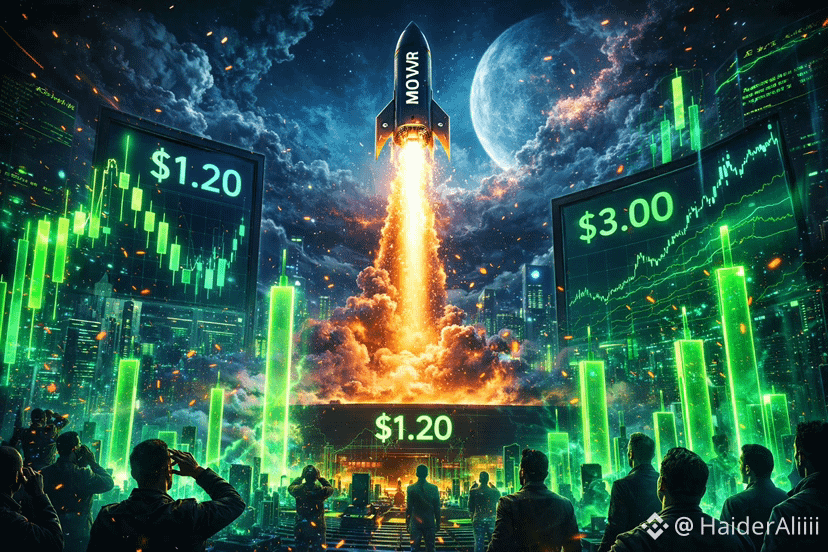
MOVR acordou de uma forma que o mercado não pode ignorar!
Depois de negociar estável perto de $1,20 por dias,
$MOVR
explodiu para $3+, imprimindo um movimento semanal de 151%.
Esse tipo de rompimento após longa inatividade geralmente sinaliza um evento de liquidez repentina ou uma rotação especulativa agressiva.
O que realmente se destaca é o volume de 24h subindo 3.851% e o volume agora multiplicando acima da capitalização de mercado.
Isso te diz que isso não é uma demanda normal de mercado; é uma corrida de atenção total.
Então, o que temos?
→ A fase de compressão longa terminou de forma violenta
→ O momento é forte, mas superaquecido
→ A zona de $3 se torna chave: mantenha-a e a tendência continua, perca-a e o risco de retração rápida aumenta
Isso não é mais uma moeda dorminhoca, e agora está no radar de todo trader.
Você perseguiria o MOVR aqui, ou esperaria pela correção?
#MOVR/USDT $MOVR
MOVR acordou de uma forma que o mercado não pode ignorar!
Depois de negociar estável perto de $1,20 por dias,
$MOVR
explodiu para $3+, imprimindo um movimento semanal de 151%.
Esse tipo de rompimento após longa inatividade geralmente sinaliza um evento de liquidez repentina ou uma rotação especulativa agressiva.
O que realmente se destaca é o volume de 24h subindo 3.851% e o volume agora multiplicando acima da capitalização de mercado.
Isso te diz que isso não é uma demanda normal de mercado; é uma corrida de atenção total.
Então, o que temos?
→ A fase de compressão longa terminou de forma violenta
→ O momento é forte, mas superaquecido
→ A zona de $3 se torna chave: mantenha-a e a tendência continua, perca-a e o risco de retração rápida aumenta
Isso não é mais uma moeda dorminhoca, e agora está no radar de todo trader.
Você perseguiria o MOVR aqui, ou esperaria pela correção?
#MOVR/USDT $MOVR
Depois de negociar estável perto de $1,20 por dias,
$MOVR
explodiu para $3+, imprimindo um movimento semanal de 151%.
Esse tipo de rompimento após longa inatividade geralmente sinaliza um evento de liquidez repentina ou uma rotação especulativa agressiva.
O que realmente se destaca é o volume de 24h subindo 3.851% e o volume agora multiplicando acima da capitalização de mercado.
Isso te diz que isso não é uma demanda normal de mercado; é uma corrida de atenção total.
Então, o que temos?
→ A fase de compressão longa terminou de forma violenta
→ O momento é forte, mas superaquecido
→ A zona de $3 se torna chave: mantenha-a e a tendência continua, perca-a e o risco de retração rápida aumenta
Isso não é mais uma moeda dorminhoca, e agora está no radar de todo trader.
Você perseguiria o MOVR aqui, ou esperaria pela correção?
#MOVR/USDT $MOVR
1
122
Inicia sessão para explorar mais conteúdos
Junta-te a utilizadores de criptomoedas de todo o mundo na Binance Square
⚡️ Obtém informações úteis e recentes sobre criptomoedas.
💬 Com a confiança da maior exchange de criptomoedas do mundo.
👍 Descobre perspetivas reais de criadores verificados.
E-mail/Número de telefone
Tópicos em Tendência
FedRateWatch
562,934 visualizações
2,670 a discutir
Participe e ganhe recompensas de tráfego na nossa campanha de hashtag em alta
✨Tema: Setembro do FOMC — Qual será o próximo movimento do Fed?
👉Como participar:
Publique uma postagem ou artigo curto com a hashtag #FedRateWatch
Crie conteúdo com base nos ângulos abaixo:
- O núcleo do CPI de agosto subiu 0,3% mês a mês, e as chances de um aumento de 25 pb esta semana agora estão perto de 90%. Você antecipa um aumento de taxa esta semana? É algo pontual, ou o início de um ciclo de altas mais longo?
- Se o aumento acontecer, como isso se reflete em BTC, ações de tecnologia e ouro? Em alta ou em baixa?
- Como você planeja operar a seguir? Compartilhe sua operação/posições de BTC, ações ou ouro com nosso widget de compartilhamento de trades.
⏰Período da campanha:
- 2026-09-15 11:00 - 2026-09-17 3:00 UTC
🎁Recompensa:
- As postagens qualificadas que cumprirem as diretrizes acima e tiverem mais de 100 palavras serão revisadas e poderão receber um impulso aleatório de tráfego de 500 a 3.000 visualizações. Você receberá uma notificação do secretário da sua seção no feed caso sua postagem seja selecionada.
- Tenha a chance de ter seu artigo em destaque na Binance Square Official
Precisa de ideias para sua postagem? Acesse a página do tema #FedRateWatch ou a Square Guide on How to Post for Better Reach.
Binance Square Official
·380 gostos
·839.5k visualizações
BitcoinSlidesTo$76000
21,176 visualizações
115 a discutir
BitcoinReboundsTo$79K
61,739 visualizações
401 a discutir