
크립토 거래노트
17 Publicações

크립토 거래노트
Denunciar
Bloquear Utilizador
바이낸스 가입·인증·보안·입출금을 공식 자료로 설명하는 독립 가이드. 공식 고객지원이 아닙니다. Independent guides on signup, verification and security.
0 A seguir
0 Seguidores
0 Gostaram
Publicações
·
--
A média móvel simples pode subir mesmo quando o preço caiMesmo que o último preço caia, a média móvel simples (SMA) de 3 períodos pode subir. Isso acontece porque um novo valor entra na média enquanto outro sai.
Suponha que os preços de fechamento finais hipotéticos sejam, em sequência, 80, 100 e 110. A SMA de 3 períodos é 96,67. Agora, digamos que o próximo preço de fechamento seja 105. O preço caiu em relação aos 110 anteriores, mas a nova amostra passa a ser 100, 110 e 105. Como o valor mais antigo, 80, sai, a média sobe para 105. As duas comparações são verdadeiras ao mesmo tempo: 105 é menor que 110 e maior que 80, o valor que saiu da amostra.
A média móvel simples pode subir mesmo quando o preço cai
Mesmo que o último preço caia, a média móvel simples (SMA) de 3 períodos pode subir. Isso acontece porque um novo valor entra na média enquanto outro sai.
Suponha que os preços de fechamento finais hipotéticos sejam, em sequência, 80, 100 e 110. A SMA de 3 períodos é 96,67. Agora, digamos que o próximo preço de fechamento seja 105. O preço caiu em relação aos 110 anteriores, mas a nova amostra passa a ser 100, 110 e 105. Como o valor mais antigo, 80, sai, a média sobe para 105. As duas comparações são verdadeiras ao mesmo tempo: 105 é menor que 110 e maior que 80, o valor que saiu da amostra.
Suponha que os preços de fechamento finais hipotéticos sejam, em sequência, 80, 100 e 110. A SMA de 3 períodos é 96,67. Agora, digamos que o próximo preço de fechamento seja 105. O preço caiu em relação aos 110 anteriores, mas a nova amostra passa a ser 100, 110 e 105. Como o valor mais antigo, 80, sai, a média sobe para 105. As duas comparações são verdadeiras ao mesmo tempo: 105 é menor que 110 e maior que 80, o valor que saiu da amostra.
74
·
--
Ver tradução
A $1 Stablecoin Peg Is Not the Same as a $1 SaleA dollar peg describes the value a stablecoin is designed to track. To assess a sale or redemption, check the execution price and whether you can redeem directly through the issuer.
Target price and sale proceeds
For a fictional example, take a token that targets $1. Assume a sale of 1,000 tokens actually executes at $0.997 per token. The gross proceeds would be $997, before any applicable costs. The number of tokens multiplied by the peg would be $1,000, but that is not the price used in this example’s sale.
If this fictional sale also carries a 0.1% fee deducted from the dollar proceeds, the fee is $997 × 0.001 = $0.997. That leaves $996.003, or about $996.00, before any separate withdrawal or currency-conversion costs.
The $3 difference from the $1 peg is a price difference, separate from the trading fee. The token, price and 0.1% fee are invented for this example. For a real receipt, check each fill, the fee asset and the platform’s rounding rules.
For a worked order-book example, see how market-order execution prices are calculated. It separates price differences from trading fees.
[https://www.binance.com/en-AE/square/post/385974115205396](https://www.binance.com/en-AE/square/post/385974115205396)
Returning to the peg is not the same as breaking even
In a separate fictional example, assume you buy 1,000 tokens at $1.01 and later sell all 1,000 at exactly $1.00. The purchase cost is $1,010 and the sale proceeds are $1,000. The price-only loss is $10, about 0.99% of the purchase cost, before fees. The sale price matches the token’s target, but it is still below the price paid.
A return to the peg and a return to your break-even price are different outcomes. Include the actual purchase price and costs on both trades when checking the result. This example assumes both trades execute at the stated prices; it does not predict a recovery or recommend buying a deviation.
Backing and access to cash are different checks
Stablecoins use different designs. Some rely on reserve assets, some on crypto collateral, and some on algorithmic mechanisms. A label such as “dollar-backed” should lead to a closer look at what backs the token and how the mechanism works.
If an issuer offers direct redemption, read the current process: who can use it, what verification is required, whether minimums or charges apply, and how payment is delivered. Selling through a market and redeeming with an issuer are different routes. Do not assume every stablecoin or every holder has the same route.
A statement about reserve value also does not answer how quickly those assets can be converted into cash when many people want to exit. Binance Academy’s depegging explainer discusses how a shortage of liquid reserves can matter even when other backing assets remain.
A small deviation does not tell the whole story
An observed price below the target is a reason to investigate the mechanism and current information. It does not, by itself, establish why the deviation happened, how long it will last, or whether the token will return to its target. Buying solely because “it must go back to $1” assumes an outcome that has not been established.
When reading a stablecoin screen, check the reference value it aims to track, the market price you can actually transact at, and the redemption conditions that apply to you separately.
This note explains terms and a fictional calculation. It does not recommend buying, selling or holding a stablecoin.
Background on peg mechanisms and liquidity risk: Binance Academy — Why Do Stablecoins Depeg?
https://www.binance.com/en/academy/articles/why-do-stablecoins-depeg
A $1 Stablecoin Peg Is Not the Same as a $1 Sale
A dollar peg describes the value a stablecoin is designed to track. To assess a sale or redemption, check the execution price and whether you can redeem directly through the issuer.
Target price and sale proceeds
For a fictional example, take a token that targets $1. Assume a sale of 1,000 tokens actually executes at $0.997 per token. The gross proceeds would be $997, before any applicable costs. The number of tokens multiplied by the peg would be $1,000, but that is not the price used in this example’s sale.
If this fictional sale also carries a 0.1% fee deducted from the dollar proceeds, the fee is $997 × 0.001 = $0.997. That leaves $996.003, or about $996.00, before any separate withdrawal or currency-conversion costs.
The $3 difference from the $1 peg is a price difference, separate from the trading fee. The token, price and 0.1% fee are invented for this example. For a real receipt, check each fill, the fee asset and the platform’s rounding rules.
For a worked order-book example, see how market-order execution prices are calculated. It separates price differences from trading fees.
https://www.binance.com/en-AE/square/post/385974115205396
Returning to the peg is not the same as breaking even
In a separate fictional example, assume you buy 1,000 tokens at $1.01 and later sell all 1,000 at exactly $1.00. The purchase cost is $1,010 and the sale proceeds are $1,000. The price-only loss is $10, about 0.99% of the purchase cost, before fees. The sale price matches the token’s target, but it is still below the price paid.
A return to the peg and a return to your break-even price are different outcomes. Include the actual purchase price and costs on both trades when checking the result. This example assumes both trades execute at the stated prices; it does not predict a recovery or recommend buying a deviation.
Backing and access to cash are different checks
Stablecoins use different designs. Some rely on reserve assets, some on crypto collateral, and some on algorithmic mechanisms. A label such as “dollar-backed” should lead to a closer look at what backs the token and how the mechanism works.
If an issuer offers direct redemption, read the current process: who can use it, what verification is required, whether minimums or charges apply, and how payment is delivered. Selling through a market and redeeming with an issuer are different routes. Do not assume every stablecoin or every holder has the same route.
A statement about reserve value also does not answer how quickly those assets can be converted into cash when many people want to exit. Binance Academy’s depegging explainer discusses how a shortage of liquid reserves can matter even when other backing assets remain.
A small deviation does not tell the whole story
An observed price below the target is a reason to investigate the mechanism and current information. It does not, by itself, establish why the deviation happened, how long it will last, or whether the token will return to its target. Buying solely because “it must go back to $1” assumes an outcome that has not been established.
When reading a stablecoin screen, check the reference value it aims to track, the market price you can actually transact at, and the redemption conditions that apply to you separately.
This note explains terms and a fictional calculation. It does not recommend buying, selling or holding a stablecoin.
Background on peg mechanisms and liquidity risk: Binance Academy — Why Do Stablecoins Depeg?
https://www.binance.com/en/academy/articles/why-do-stablecoins-depeg
55
·
--
O que fazer ao perder o celular: a recuperação de contas de corretoras e carteiras pessoais é diferenteAs contas de corretoras e as carteiras pessoais podem ter métodos de recuperação diferentes, mesmo quando usadas no mesmo celular. Verifique separadamente o processo para fazer login no aplicativo novamente e o processo para recuperar a autorização de movimentar ativos na blockchain.
Conta de corretora: comece pelo processo de autenticação do serviço
Em uma conta comum de corretora custodial, o provedor do serviço gerencia as chaves privadas. Os usuários acessam a conta com senha, chave de acesso ou autenticação adicional. Se você esqueceu a senha ou perdeu o dispositivo de autenticação, o ponto de partida é o processo oficial de recuperação de conta oferecido pelo serviço.
O que fazer ao perder o celular: a recuperação de contas de corretoras e carteiras pessoais é diferente
As contas de corretoras e as carteiras pessoais podem ter métodos de recuperação diferentes, mesmo quando usadas no mesmo celular. Verifique separadamente o processo para fazer login no aplicativo novamente e o processo para recuperar a autorização de movimentar ativos na blockchain.
Conta de corretora: comece pelo processo de autenticação do serviço
Em uma conta comum de corretora custodial, o provedor do serviço gerencia as chaves privadas. Os usuários acessam a conta com senha, chave de acesso ou autenticação adicional. Se você esqueceu a senha ou perdeu o dispositivo de autenticação, o ponto de partida é o processo oficial de recuperação de conta oferecido pelo serviço.
58
·
--
Ver tradução
거래량 15계약, 미결제약정 7계약: 같은 시장에서 가능한 이유거래량이 늘어도 미결제약정은 줄어들 수 있습니다. 거래량은 일정 기간에 체결된 계약을 세고, 미결제약정(OI)은 특정 시점에 아직 닫히거나 결제되지 않은 계약을 세기 때문입니다.
처음부터 끝까지 같은 계약만 세어 보겠습니다
미결제약정이 0인 가상의 선물 시장에서 시작하겠습니다. 아래 세 거래만 같은 집계 기간에 일어났다고 가정합니다. 단위는 모두 계약 수이며, 실제 바이낸스 시장 수치나 매매 기록이 아닙니다.
첫 거래: A가 신규 롱 10계약을 열고, B가 그 상대편에서 신규 숏 10계약을 엽니다. 체결량은 10계약이고 OI도 10계약입니다. 매수자와 매도자가 있다고 20계약으로 두 번 세지 않습니다.
두 번째 거래: A가 롱 3계약을 매도해 닫고, B가 그 3계약을 매수해 기존 숏을 닫습니다. 이번에도 3계약이 체결됐으므로 누적 거래량은 13계약입니다. 반면 남아 있는 계약은 7개가 되어 OI는 7계약으로 줄어듭니다.
세 번째 거래: A가 남은 롱 중 2계약을 매도해 닫고, 새 참여자 C가 그 2계약을 매수해 신규 롱을 엽니다. B의 숏 7계약은 그대로입니다. 누적 거래량은 15계약이 됐지만 OI는 여전히 7계약입니다. 롱을 보유한 쪽이 A 7계약에서 A 5계약과 C 2계약으로 나뉘었을 뿐입니다.
15와 7은 서로 모순되지 않습니다
이 기간에 체결된 계약은 10 + 3 + 2 = 15계약입니다. 마지막에 남은 계약은 10 − 3 = 7계약입니다. 거래량에는 포지션을 여는 거래뿐 아니라 닫거나 넘겨받는 거래도 들어갑니다. 그래서 거래가 활발했다고 OI가 반드시 증가하지는 않습니다.
같은 수량의 체결이라도 양쪽 모두 신규 포지션이면 OI가 늘고, 양쪽 모두 기존 포지션을 닫으면 줄어듭니다. 한쪽은 닫고 다른 쪽은 새로 여는 경우에는 유지됩니다. 미결제약정의 “미결제”를 아직 체결되지 않은 지정가 주문으로 읽으면 안 됩니다.
OI가 늘었다고 알 수 없는 것
새 계약에는 롱과 숏 양쪽이 있습니다. OI가 증가했다는 사실만으로 매수가 우세하다거나 가격이 오를 것이라고 결론 내릴 수 없습니다. 반대로 OI가 줄었다고 모든 감소분을 강제청산으로 볼 수도 없습니다. 앞의 예제에서는 두 참여자가 기존 포지션을 닫았을 뿐, 강제청산을 가정하지 않았습니다.
OI는 참여자 수나 새로 입금된 현금, 증거금 총액을 그대로 보여 주는 숫자도 아닙니다. 한 사람이 여러 계약을 보유할 수 있고, 같은 계약 수라도 증거금과 레버리지 조건은 다를 수 있습니다. 거래량과 OI 두 숫자만으로 그 사정을 알아낼 수는 없습니다.
계약 수는 그대로인데 금액만 늘어날 수도 있습니다
바이낸스의 공개 BTCUSDT 거래 데이터 차트는 Open Interest (BTC)와 Notional Value of Open Interest (USDT)를 구분해 표시합니다. 코인 수량으로 본 OI와 금액으로 환산한 OI는 같은 단위가 아닙니다.
앞의 7계약이 그대로 남아 있고, 계약 하나가 가상의 코인 1개를 나타낸다고 덧붙여 가정해 보겠습니다. 코인 수량은 7개입니다. 이 수량에 곱하는 환산 가격이 10 USDT에서 12 USDT로 오르면 명목가치는 70 USDT에서 84 USDT로 20% 늘어납니다. 새 계약이 한 개도 생기지 않아도 금액 표시가 커지는 예입니다.
이 계산은 수량에 가격을 곱하는 선형 계약의 가정입니다. 실제 상품의 계약 단위와 환산 가격 기준까지 같다는 뜻은 아닙니다. 금액 기준 OI가 증가했다는 화면만 보고 계약 수나 신규 유입 자금도 같은 비율로 늘었다고 단정하지 마세요. 먼저 수량 기준과 금액 기준 중 무엇을 보고 있는지 확인하면 됩니다.
화면을 비교하기 전에 적어 둘 다섯 가지
거래소, 계약 이름, 표시 단위, 거래량의 집계 기간, OI의 기준 시점을 함께 확인하세요. 현물 거래량과 선물 OI를 같은 계약의 두 지표처럼 비교하거나, 계약 수와 코인 수량·금액 표시를 그대로 합산하지 않습니다.
거래량 증가와 OI 감소가 함께 보여도 곧바로 화면 오류나 매매 신호로 판단하지 말고, 각 지표의 집계 기간과 기준 시점을 확인하세요.
공식 개념 참고: Binance Academy — What Is Open Interest?
https://www.binance.com/en/academy/articles/what-is-open-interest
표시 단위 참고: Binance Futures — Trading Data의 미결제약정 차트
https://www.binance.com/en/futures/funding-history/perpetual/trading-data
거래량 15계약, 미결제약정 7계약: 같은 시장에서 가능한 이유
거래량이 늘어도 미결제약정은 줄어들 수 있습니다. 거래량은 일정 기간에 체결된 계약을 세고, 미결제약정(OI)은 특정 시점에 아직 닫히거나 결제되지 않은 계약을 세기 때문입니다.
처음부터 끝까지 같은 계약만 세어 보겠습니다
미결제약정이 0인 가상의 선물 시장에서 시작하겠습니다. 아래 세 거래만 같은 집계 기간에 일어났다고 가정합니다. 단위는 모두 계약 수이며, 실제 바이낸스 시장 수치나 매매 기록이 아닙니다.
첫 거래: A가 신규 롱 10계약을 열고, B가 그 상대편에서 신규 숏 10계약을 엽니다. 체결량은 10계약이고 OI도 10계약입니다. 매수자와 매도자가 있다고 20계약으로 두 번 세지 않습니다.
두 번째 거래: A가 롱 3계약을 매도해 닫고, B가 그 3계약을 매수해 기존 숏을 닫습니다. 이번에도 3계약이 체결됐으므로 누적 거래량은 13계약입니다. 반면 남아 있는 계약은 7개가 되어 OI는 7계약으로 줄어듭니다.
세 번째 거래: A가 남은 롱 중 2계약을 매도해 닫고, 새 참여자 C가 그 2계약을 매수해 신규 롱을 엽니다. B의 숏 7계약은 그대로입니다. 누적 거래량은 15계약이 됐지만 OI는 여전히 7계약입니다. 롱을 보유한 쪽이 A 7계약에서 A 5계약과 C 2계약으로 나뉘었을 뿐입니다.
15와 7은 서로 모순되지 않습니다
이 기간에 체결된 계약은 10 + 3 + 2 = 15계약입니다. 마지막에 남은 계약은 10 − 3 = 7계약입니다. 거래량에는 포지션을 여는 거래뿐 아니라 닫거나 넘겨받는 거래도 들어갑니다. 그래서 거래가 활발했다고 OI가 반드시 증가하지는 않습니다.
같은 수량의 체결이라도 양쪽 모두 신규 포지션이면 OI가 늘고, 양쪽 모두 기존 포지션을 닫으면 줄어듭니다. 한쪽은 닫고 다른 쪽은 새로 여는 경우에는 유지됩니다. 미결제약정의 “미결제”를 아직 체결되지 않은 지정가 주문으로 읽으면 안 됩니다.
OI가 늘었다고 알 수 없는 것
새 계약에는 롱과 숏 양쪽이 있습니다. OI가 증가했다는 사실만으로 매수가 우세하다거나 가격이 오를 것이라고 결론 내릴 수 없습니다. 반대로 OI가 줄었다고 모든 감소분을 강제청산으로 볼 수도 없습니다. 앞의 예제에서는 두 참여자가 기존 포지션을 닫았을 뿐, 강제청산을 가정하지 않았습니다.
OI는 참여자 수나 새로 입금된 현금, 증거금 총액을 그대로 보여 주는 숫자도 아닙니다. 한 사람이 여러 계약을 보유할 수 있고, 같은 계약 수라도 증거금과 레버리지 조건은 다를 수 있습니다. 거래량과 OI 두 숫자만으로 그 사정을 알아낼 수는 없습니다.
계약 수는 그대로인데 금액만 늘어날 수도 있습니다
바이낸스의 공개 BTCUSDT 거래 데이터 차트는 Open Interest (BTC)와 Notional Value of Open Interest (USDT)를 구분해 표시합니다. 코인 수량으로 본 OI와 금액으로 환산한 OI는 같은 단위가 아닙니다.
앞의 7계약이 그대로 남아 있고, 계약 하나가 가상의 코인 1개를 나타낸다고 덧붙여 가정해 보겠습니다. 코인 수량은 7개입니다. 이 수량에 곱하는 환산 가격이 10 USDT에서 12 USDT로 오르면 명목가치는 70 USDT에서 84 USDT로 20% 늘어납니다. 새 계약이 한 개도 생기지 않아도 금액 표시가 커지는 예입니다.
이 계산은 수량에 가격을 곱하는 선형 계약의 가정입니다. 실제 상품의 계약 단위와 환산 가격 기준까지 같다는 뜻은 아닙니다. 금액 기준 OI가 증가했다는 화면만 보고 계약 수나 신규 유입 자금도 같은 비율로 늘었다고 단정하지 마세요. 먼저 수량 기준과 금액 기준 중 무엇을 보고 있는지 확인하면 됩니다.
화면을 비교하기 전에 적어 둘 다섯 가지
거래소, 계약 이름, 표시 단위, 거래량의 집계 기간, OI의 기준 시점을 함께 확인하세요. 현물 거래량과 선물 OI를 같은 계약의 두 지표처럼 비교하거나, 계약 수와 코인 수량·금액 표시를 그대로 합산하지 않습니다.
거래량 증가와 OI 감소가 함께 보여도 곧바로 화면 오류나 매매 신호로 판단하지 말고, 각 지표의 집계 기간과 기준 시점을 확인하세요.
공식 개념 참고: Binance Academy — What Is Open Interest?
https://www.binance.com/en/academy/articles/what-is-open-interest
표시 단위 참고: Binance Futures — Trading Data의 미결제약정 차트
https://www.binance.com/en/futures/funding-history/perpetual/trading-data
64
·
--
Capitalização de mercado e preço de criptomoedas: um token de US$ 1 é mesmo mais barato?Ao comparar um token cotado a US$ 1 com outro cotado a US$ 100, verifique quantas unidades existem, além do preço unitário. Um preço unitário menor não significa, por si só, que o ativo esteja subvalorizado.
Compare a oferta com o preço
Considere dois tokens fictícios, usando preços e ofertas em circulação medidos no mesmo momento.
Token A: US$ 1 por token × 1 bilhão de tokens em circulação = US$ 1 bilhão de capitalização de mercado.
Token B: US$ 100 por token × 5 milhões de tokens em circulação = US$ 500 milhões de capitalização de mercado.
A tem um preço unitário menor, mas seu valor de mercado em circulação é duas vezes maior. Nenhum dos cálculos nos diz qual projeto merece essa avaliação.
Capitalização de mercado e preço de criptomoedas: um token de US$ 1 é mesmo mais barato?
Ao comparar um token cotado a US$ 1 com outro cotado a US$ 100, verifique quantas unidades existem, além do preço unitário. Um preço unitário menor não significa, por si só, que o ativo esteja subvalorizado.
Compare a oferta com o preço
Considere dois tokens fictícios, usando preços e ofertas em circulação medidos no mesmo momento.
Token A: US$ 1 por token × 1 bilhão de tokens em circulação = US$ 1 bilhão de capitalização de mercado.
Token B: US$ 100 por token × 5 milhões de tokens em circulação = US$ 500 milhões de capitalização de mercado.
A tem um preço unitário menor, mas seu valor de mercado em circulação é duas vezes maior. Nenhum dos cálculos nos diz qual projeto merece essa avaliação.
65
·
--
Ver tradução
바이낸스 보안 설정: 패스키·안티피싱 코드와 기기 변경바이낸스 보안 메뉴의 패스키·인증 앱은 계정에 들어가거나 중요한 작업을 승인할 때 사용합니다. 안티피싱 코드는 받은 메시지를 살펴볼 때 쓰는 식별 코드입니다. 설정 전에 각 기능이 쓰이는 상황을 구분하세요.
기기를 바꾼 뒤에도 사용할 수 있도록 패스키의 저장 위치와 다시 접근하는 방법을 확인해 두세요.
지금 상황에 맞는 순서부터 고르기
처음 보안을 설정한다면 패스키를 추가하면서 저장 위치를 확인하고, 안티피싱 코드를 설정한 뒤 연결된 이메일과 계정 활동을 점검하세요.
휴대전화를 바꿀 예정이라면 등록 방법보다 현재 패스키를 어디서 쓸 수 있는지와 필수 인증 설정부터 확인하세요. 아직 기존 기기를 사용할 수 있을 때 아래의 기기 변경 항목을 읽는 편이 좋습니다.
이미 패스키를 사용할 수 없다면 새로 등록하는 설명을 따라가기보다 아래의 복구 항목으로 이동하세요. 로그인 가능한 상태에서의 설정과, 로그인이 막힌 상태에서의 복구는 출발점이 다릅니다.
패스키와 안티피싱 코드는 언제 쓰나
패스키는 지원되는 로그인·보안 인증 과정에서 사용합니다. 휴대전화의 화면 잠금이나 생체 인증으로 패스키 사용을 승인하는 방식이 대표적입니다. 안티피싱 코드는 자신이 정한 문자열이 바이낸스 안내 메시지에 표시되는지 살펴보는 기능입니다. 로그인 창에 넣는 일회용 인증 코드와도 용도가 다릅니다.
예를 들어 출금 안내 메일에 익숙한 안티피싱 코드가 보이더라도, 그 메일을 보낸 사람에게 인증 앱의 숫자를 알려주는 단계가 생기는 것은 아닙니다. 메시지 확인과 계정 작업 승인을 따로 생각하면 이런 요구를 판단하기 쉽습니다.
패스키 메뉴가 보이지 않을 때
등록 버튼부터 찾다가 막혔다면 앱·운영체제·브라우저의 지원 조건을 먼저 확인하세요. 바이낸스 공식 등록 안내는 모바일 앱과 iOS·Android의 지원 버전을 따로 제시하고, 웹에서는 최신 Chrome 같은 지원 브라우저를 안내합니다. 다른 사람의 화면에 버튼이 있다고 해서 내 환경에도 같은 선택지가 표시되는 것은 아닙니다.
메뉴를 찾으려고 앱부터 삭제하지는 마세요. 이미 패스키 필수 인증을 켰다면 앱 재설치도 사전에 설정을 확인해야 하는 경우에 포함됩니다. 아래의 패스키 필수 인증 항목을 먼저 읽고, 본인이 계속 접근할 수 있는 인증 수단을 확인한 뒤 공식 안내 순서로 진행하세요.
패스키를 추가할 때는 저장 위치까지 확인
바이낸스 패스키 등록 안내 (https://www.binance.com/en-IN/support/faq/detail/2aec8fe0437242f2a5fbef9cdb71d4c2)에서는 계정의 Security에서 Passkeys 항목으로 들어가 Add Passkey를 선택하도록 설명합니다. 기존 인증 수단으로 확인한 뒤, 표시된 계정 이메일이 맞는지 보고 저장 방식을 선택합니다. 앱·브라우저·기기에 따라 실제 선택지는 달라질 수 있으니 화면에 없는 방식을 억지로 따라 할 필요는 없습니다.
설정을 마치면 등록 목록을 확인하고 나중에 알아볼 수 있는 이름을 붙여 두세요. 기기를 바꿀 때 다시 찾을 수 있도록 저장 위치도 확인해 둡니다. 어느 비밀번호 관리자와 계정에 저장했는지, 특정 기기나 물리 보안 키에 저장했는지 구분하면 됩니다. PIN이나 복구 정보를 공개 메모에 적는 방식은 피하세요.
동기화되는 패스키와 기기에 남는 패스키
Google 비밀번호 관리자에 저장한 패스키는 같은 Google 계정으로 로그인한 지원 기기에서 사용할 수 있으며, 잠금 해제에 관리자 PIN이나 기기 화면 잠금 정보가 필요할 수 있습니다. 반면 Windows Hello나 물리 보안 키에만 저장한 패스키를 모두 같은 방식으로 복구할 수 있다고 생각하면 안 됩니다. 저장 방식별 차이는 Google Chrome 도움말의 「Manage passkeys in Chrome」(문서 13168025)에서 확인할 수 있습니다.
바이낸스의 iCloud 키체인 등록 안내도 같은 Apple 계정을 사용하는 기기 간 동기화를 설명합니다. 새 휴대전화로 바꿨는데 패스키가 안 보인다면, 먼저 예전과 같은 저장 서비스·계정을 쓰고 있는지 확인하세요. “휴대전화에 저장했다”는 기억만으로는 어떤 경로를 확인해야 할지 알기 어렵습니다.
패스키 필수 인증을 켰다면 기기 변경 전에 따로 확인
패스키 등록과 Must verify using passkey 설정은 구분해야 합니다. 패스키 필수 인증 공식 안내 (https://www.binance.com/en/support/faq/detail/c0596072150d4e7b8a824ae111f9856a)에 따르면 이 기능을 켜면 로그인과 출금에 패스키 인증이 요구됩니다. 모든 패스키 접근 수단을 잃으면 로그인할 수 없으므로, 다른 인증 수단도 등록했으니 괜찮겠다고 넘길 부분이 아닙니다.
공식 문서는 휴대전화 교체, 다른 iCloud 계정으로 변경, 시스템 패스키 설정 변경, 바이낸스 앱 재설치 전에 이 기능의 해제 절차를 확인하도록 안내합니다. 해제에도 패스키 확인이 필요합니다. 기기를 초기화한 뒤 해결하려 하지 말고, 아직 접근 가능한 상태에서 현재 설정과 공식 변경 순서를 먼저 확인하세요.
패스키를 이미 사용할 수 없다면
우선 저장 계정이나 기기를 잘못 선택한 것인지, 실제로 인증 수단을 잃은 것인지 나눠 봅니다. 정말 접근할 수 없다면 직접 연 공식 로그인 화면에서 My Passkeys Are Not Available 또는 보안 인증 수단을 사용할 수 없다는 항목을 찾으세요. 표시되는 절차는 로그인할 수 없을 때의 2FA 재설정 안내 (https://www.binance.com/en-TR/support/faq/detail/2de25ddf8c5b4f59adaebe9452f7b64b)와 대조하면 됩니다.
재설정을 진행하면 남아 있는 인증 수단으로 확인하거나 추가 심사를 거칠 수 있습니다. 공식 문서는 재설정 후 출금·P2P 판매·내부 전송·결제 기능이 최대 48시간 제한될 수 있다고 안내합니다. 이는 복구가 반드시 48시간 안에 끝난다는 약속과 다릅니다. 신청 결과와 제한 기간은 본인 화면에서 각각 확인하세요.
안티피싱 코드 설정과 실제 메시지 확인
안티피싱 코드 공식 안내 (https://www.binance.com/en-IN/support/faq/detail/311927d6c4b4478ba094fc6a611d5201)는 Security의 Anti-Phishing Code에서 코드를 만들고 2FA 또는 패스키로 확인하는 흐름을 설명합니다. 본인이 알아볼 수 있는 문자열을 정하되, 실제 입력란의 길이·문자 조건을 따르세요. 비밀번호나 일회용 인증 코드를 그대로 넣지 마세요.
현재 안내에서는 설정한 코드가 바이낸스의 이메일과 SMS에 포함된다고 설명합니다. 설정 후 받은 메시지에서 확인하고, 코드가 다르거나 없다면 링크를 누르기 전에 직접 연 앱이나 공식 지원 경로에서 확인하세요. 코드가 노출됐다고 의심되면 보안 설정에서 변경할 수 있습니다.
코드가 맞는다는 이유만으로 송금 요구나 원격제어 요청까지 신뢰할 필요는 없습니다. 중요한 계정 알림은 메시지에 달린 버튼을 따라가기보다 직접 연 앱에서 확인하는 습관을 들이는 편이 좋습니다.
마지막 점검은 이메일과 복구 경로
설정을 마쳤다면 연결된 이메일도 별도 비밀번호와 추가 인증으로 보호하고, 계정 활동에 모르는 로그인이나 변경이 없는지 확인하세요. 바이낸스 계정 보안 안내 (https://www.binance.com/en-IN/support/faq/detail/360000106932)도 이메일 보호와 계정 활동 확인을 함께 다룹니다. 본인이 하지 않은 변경이 확인되면 공식 앱·사이트의 계정 보호 및 지원 절차로 이어가세요.
메일 자체가 도착하지 않는 문제는 바이낸스 인증메일 점검 글 (https://www.binance.com/en-AE/square/post/385597773935567)에서 수신 경로와 코드 요청을 나눠 설명했습니다.
도움을 요청할 때는 “어느 화면에서 어떤 인증 수단을 사용할 수 없는지”를 설명하면 됩니다. 비밀번호·일회용 코드·복구 문구를 댓글이나 메시지로 보내지 마세요. 사칭 연락이나 의심스러운 요구가 있었다면 공식 신고 안내 (https://www.binance.com/en-IN/support/faq/detail/49b6dbdd87ed4c60b527375918ab5683)에 따라 증거를 제출하고, 공개 댓글에는 계정 정보가 담긴 화면을 올리지 않는 편이 좋습니다.
바이낸스 보안 설정: 패스키·안티피싱 코드와 기기 변경
바이낸스 보안 메뉴의 패스키·인증 앱은 계정에 들어가거나 중요한 작업을 승인할 때 사용합니다. 안티피싱 코드는 받은 메시지를 살펴볼 때 쓰는 식별 코드입니다. 설정 전에 각 기능이 쓰이는 상황을 구분하세요.
기기를 바꾼 뒤에도 사용할 수 있도록 패스키의 저장 위치와 다시 접근하는 방법을 확인해 두세요.
지금 상황에 맞는 순서부터 고르기
처음 보안을 설정한다면 패스키를 추가하면서 저장 위치를 확인하고, 안티피싱 코드를 설정한 뒤 연결된 이메일과 계정 활동을 점검하세요.
휴대전화를 바꿀 예정이라면 등록 방법보다 현재 패스키를 어디서 쓸 수 있는지와 필수 인증 설정부터 확인하세요. 아직 기존 기기를 사용할 수 있을 때 아래의 기기 변경 항목을 읽는 편이 좋습니다.
이미 패스키를 사용할 수 없다면 새로 등록하는 설명을 따라가기보다 아래의 복구 항목으로 이동하세요. 로그인 가능한 상태에서의 설정과, 로그인이 막힌 상태에서의 복구는 출발점이 다릅니다.
패스키와 안티피싱 코드는 언제 쓰나
패스키는 지원되는 로그인·보안 인증 과정에서 사용합니다. 휴대전화의 화면 잠금이나 생체 인증으로 패스키 사용을 승인하는 방식이 대표적입니다. 안티피싱 코드는 자신이 정한 문자열이 바이낸스 안내 메시지에 표시되는지 살펴보는 기능입니다. 로그인 창에 넣는 일회용 인증 코드와도 용도가 다릅니다.
예를 들어 출금 안내 메일에 익숙한 안티피싱 코드가 보이더라도, 그 메일을 보낸 사람에게 인증 앱의 숫자를 알려주는 단계가 생기는 것은 아닙니다. 메시지 확인과 계정 작업 승인을 따로 생각하면 이런 요구를 판단하기 쉽습니다.
패스키 메뉴가 보이지 않을 때
등록 버튼부터 찾다가 막혔다면 앱·운영체제·브라우저의 지원 조건을 먼저 확인하세요. 바이낸스 공식 등록 안내는 모바일 앱과 iOS·Android의 지원 버전을 따로 제시하고, 웹에서는 최신 Chrome 같은 지원 브라우저를 안내합니다. 다른 사람의 화면에 버튼이 있다고 해서 내 환경에도 같은 선택지가 표시되는 것은 아닙니다.
메뉴를 찾으려고 앱부터 삭제하지는 마세요. 이미 패스키 필수 인증을 켰다면 앱 재설치도 사전에 설정을 확인해야 하는 경우에 포함됩니다. 아래의 패스키 필수 인증 항목을 먼저 읽고, 본인이 계속 접근할 수 있는 인증 수단을 확인한 뒤 공식 안내 순서로 진행하세요.
패스키를 추가할 때는 저장 위치까지 확인
바이낸스 패스키 등록 안내 (https://www.binance.com/en-IN/support/faq/detail/2aec8fe0437242f2a5fbef9cdb71d4c2)에서는 계정의 Security에서 Passkeys 항목으로 들어가 Add Passkey를 선택하도록 설명합니다. 기존 인증 수단으로 확인한 뒤, 표시된 계정 이메일이 맞는지 보고 저장 방식을 선택합니다. 앱·브라우저·기기에 따라 실제 선택지는 달라질 수 있으니 화면에 없는 방식을 억지로 따라 할 필요는 없습니다.
설정을 마치면 등록 목록을 확인하고 나중에 알아볼 수 있는 이름을 붙여 두세요. 기기를 바꿀 때 다시 찾을 수 있도록 저장 위치도 확인해 둡니다. 어느 비밀번호 관리자와 계정에 저장했는지, 특정 기기나 물리 보안 키에 저장했는지 구분하면 됩니다. PIN이나 복구 정보를 공개 메모에 적는 방식은 피하세요.
동기화되는 패스키와 기기에 남는 패스키
Google 비밀번호 관리자에 저장한 패스키는 같은 Google 계정으로 로그인한 지원 기기에서 사용할 수 있으며, 잠금 해제에 관리자 PIN이나 기기 화면 잠금 정보가 필요할 수 있습니다. 반면 Windows Hello나 물리 보안 키에만 저장한 패스키를 모두 같은 방식으로 복구할 수 있다고 생각하면 안 됩니다. 저장 방식별 차이는 Google Chrome 도움말의 「Manage passkeys in Chrome」(문서 13168025)에서 확인할 수 있습니다.
바이낸스의 iCloud 키체인 등록 안내도 같은 Apple 계정을 사용하는 기기 간 동기화를 설명합니다. 새 휴대전화로 바꿨는데 패스키가 안 보인다면, 먼저 예전과 같은 저장 서비스·계정을 쓰고 있는지 확인하세요. “휴대전화에 저장했다”는 기억만으로는 어떤 경로를 확인해야 할지 알기 어렵습니다.
패스키 필수 인증을 켰다면 기기 변경 전에 따로 확인
패스키 등록과 Must verify using passkey 설정은 구분해야 합니다. 패스키 필수 인증 공식 안내 (https://www.binance.com/en/support/faq/detail/c0596072150d4e7b8a824ae111f9856a)에 따르면 이 기능을 켜면 로그인과 출금에 패스키 인증이 요구됩니다. 모든 패스키 접근 수단을 잃으면 로그인할 수 없으므로, 다른 인증 수단도 등록했으니 괜찮겠다고 넘길 부분이 아닙니다.
공식 문서는 휴대전화 교체, 다른 iCloud 계정으로 변경, 시스템 패스키 설정 변경, 바이낸스 앱 재설치 전에 이 기능의 해제 절차를 확인하도록 안내합니다. 해제에도 패스키 확인이 필요합니다. 기기를 초기화한 뒤 해결하려 하지 말고, 아직 접근 가능한 상태에서 현재 설정과 공식 변경 순서를 먼저 확인하세요.
패스키를 이미 사용할 수 없다면
우선 저장 계정이나 기기를 잘못 선택한 것인지, 실제로 인증 수단을 잃은 것인지 나눠 봅니다. 정말 접근할 수 없다면 직접 연 공식 로그인 화면에서 My Passkeys Are Not Available 또는 보안 인증 수단을 사용할 수 없다는 항목을 찾으세요. 표시되는 절차는 로그인할 수 없을 때의 2FA 재설정 안내 (https://www.binance.com/en-TR/support/faq/detail/2de25ddf8c5b4f59adaebe9452f7b64b)와 대조하면 됩니다.
재설정을 진행하면 남아 있는 인증 수단으로 확인하거나 추가 심사를 거칠 수 있습니다. 공식 문서는 재설정 후 출금·P2P 판매·내부 전송·결제 기능이 최대 48시간 제한될 수 있다고 안내합니다. 이는 복구가 반드시 48시간 안에 끝난다는 약속과 다릅니다. 신청 결과와 제한 기간은 본인 화면에서 각각 확인하세요.
안티피싱 코드 설정과 실제 메시지 확인
안티피싱 코드 공식 안내 (https://www.binance.com/en-IN/support/faq/detail/311927d6c4b4478ba094fc6a611d5201)는 Security의 Anti-Phishing Code에서 코드를 만들고 2FA 또는 패스키로 확인하는 흐름을 설명합니다. 본인이 알아볼 수 있는 문자열을 정하되, 실제 입력란의 길이·문자 조건을 따르세요. 비밀번호나 일회용 인증 코드를 그대로 넣지 마세요.
현재 안내에서는 설정한 코드가 바이낸스의 이메일과 SMS에 포함된다고 설명합니다. 설정 후 받은 메시지에서 확인하고, 코드가 다르거나 없다면 링크를 누르기 전에 직접 연 앱이나 공식 지원 경로에서 확인하세요. 코드가 노출됐다고 의심되면 보안 설정에서 변경할 수 있습니다.
코드가 맞는다는 이유만으로 송금 요구나 원격제어 요청까지 신뢰할 필요는 없습니다. 중요한 계정 알림은 메시지에 달린 버튼을 따라가기보다 직접 연 앱에서 확인하는 습관을 들이는 편이 좋습니다.
마지막 점검은 이메일과 복구 경로
설정을 마쳤다면 연결된 이메일도 별도 비밀번호와 추가 인증으로 보호하고, 계정 활동에 모르는 로그인이나 변경이 없는지 확인하세요. 바이낸스 계정 보안 안내 (https://www.binance.com/en-IN/support/faq/detail/360000106932)도 이메일 보호와 계정 활동 확인을 함께 다룹니다. 본인이 하지 않은 변경이 확인되면 공식 앱·사이트의 계정 보호 및 지원 절차로 이어가세요.
메일 자체가 도착하지 않는 문제는 바이낸스 인증메일 점검 글 (https://www.binance.com/en-AE/square/post/385597773935567)에서 수신 경로와 코드 요청을 나눠 설명했습니다.
도움을 요청할 때는 “어느 화면에서 어떤 인증 수단을 사용할 수 없는지”를 설명하면 됩니다. 비밀번호·일회용 코드·복구 문구를 댓글이나 메시지로 보내지 마세요. 사칭 연락이나 의심스러운 요구가 있었다면 공식 신고 안내 (https://www.binance.com/en-IN/support/faq/detail/49b6dbdd87ed4c60b527375918ab5683)에 따라 증거를 제출하고, 공개 댓글에는 계정 정보가 담긴 화면을 올리지 않는 편이 좋습니다.
74
·
--
Ver tradução
토큰 이름이 같다고 같은 코인은 아닙니다: 입금 전 확인할 세 가지지갑에 익숙한 이름의 토큰이 보이거나 누군가 같은 이름의 코인을 보내겠다고 해도, 이름과 로고만으로 같은 자산이라고 판단하기는 어렵습니다. 바이낸스 공식 FAQ도 여러 프로젝트가 같은 티커를 사용할 수 있다고 설명합니다.
입금 전에 세 항목을 묶어서 확인하세요. 자산의 공식 정보, 블록체인 네트워크, 그리고 스마트컨트랙트 기반 토큰이라면 해당 네트워크의 컨트랙트 주소입니다.
① 공식 정보의 출처: 메시지에 붙은 로고나 검색 결과 제목만 보지 말고, 해당 프로젝트의 공식 정보와 신뢰할 수 있는 블록 탐색기에서 같은 자산을 가리키는지 확인합니다.
② 네트워크: 이름이 같아도 서로 다른 네트워크의 자산일 수 있습니다. 보내는 쪽의 네트워크와 받는 플랫폼이 지원하는 네트워크를 함께 확인해야 합니다. 주소 문자열이 같거나 비슷하다는 것만으로 네트워크까지 같다고 판단하지 마세요.
③ 컨트랙트 주소와 지원 여부: 받는 플랫폼이 그 네트워크의 해당 토큰을 지원하는지 확인합니다. 바이낸스 FAQ는 앱 입출금 화면에서 네트워크를 고른 뒤 Contract Information 항목을 확인하는 방법을 안내합니다. 화면이 다르거나 정보가 분명하지 않다면 전송을 진행하기 전에 공식 지원 경로에서 확인하세요.
가상의 ABC 토큰을 예로 들어보겠습니다. 두 화면에 모두 ABC가 표시돼도 지갑은 네트워크 A, 거래소 입금 화면은 네트워크 B라면 이름만 맞춘 상태입니다. 스마트컨트랙트 기반 토큰이라면 같은 네트워크를 기준으로 컨트랙트 정보까지 대조해야 합니다. 해당 조합의 지원 여부가 불분명하면 여기서 멈추고 확인하세요.
토큰 컨트랙트 주소는 자산을 식별할 때, 내 계정의 입금 주소는 받을 곳을 지정할 때 사용합니다. 토큰을 구별하려고 확인한 컨트랙트 주소를 개인 입금 주소 대신 입력하지 마세요.
컨트랙트 정보가 일치한다는 사실도 가격이나 투자 안전성을 보장하지 않습니다. 이 점검은 보내려는 자산과 받는 곳의 지원 조건을 맞추기 위한 것입니다.
공식 확인 방법: How to Identify the Correct Token/Ticker Symbol?
https://www.binance.com/en/support/faq/how-to-identify-the-correct-token-ticker-symbol-b5dcf3f29baa48cea3ee6eb4d6326257
토큰 이름이 같다고 같은 코인은 아닙니다: 입금 전 확인할 세 가지
지갑에 익숙한 이름의 토큰이 보이거나 누군가 같은 이름의 코인을 보내겠다고 해도, 이름과 로고만으로 같은 자산이라고 판단하기는 어렵습니다. 바이낸스 공식 FAQ도 여러 프로젝트가 같은 티커를 사용할 수 있다고 설명합니다.
입금 전에 세 항목을 묶어서 확인하세요. 자산의 공식 정보, 블록체인 네트워크, 그리고 스마트컨트랙트 기반 토큰이라면 해당 네트워크의 컨트랙트 주소입니다.
① 공식 정보의 출처: 메시지에 붙은 로고나 검색 결과 제목만 보지 말고, 해당 프로젝트의 공식 정보와 신뢰할 수 있는 블록 탐색기에서 같은 자산을 가리키는지 확인합니다.
② 네트워크: 이름이 같아도 서로 다른 네트워크의 자산일 수 있습니다. 보내는 쪽의 네트워크와 받는 플랫폼이 지원하는 네트워크를 함께 확인해야 합니다. 주소 문자열이 같거나 비슷하다는 것만으로 네트워크까지 같다고 판단하지 마세요.
③ 컨트랙트 주소와 지원 여부: 받는 플랫폼이 그 네트워크의 해당 토큰을 지원하는지 확인합니다. 바이낸스 FAQ는 앱 입출금 화면에서 네트워크를 고른 뒤 Contract Information 항목을 확인하는 방법을 안내합니다. 화면이 다르거나 정보가 분명하지 않다면 전송을 진행하기 전에 공식 지원 경로에서 확인하세요.
가상의 ABC 토큰을 예로 들어보겠습니다. 두 화면에 모두 ABC가 표시돼도 지갑은 네트워크 A, 거래소 입금 화면은 네트워크 B라면 이름만 맞춘 상태입니다. 스마트컨트랙트 기반 토큰이라면 같은 네트워크를 기준으로 컨트랙트 정보까지 대조해야 합니다. 해당 조합의 지원 여부가 불분명하면 여기서 멈추고 확인하세요.
토큰 컨트랙트 주소는 자산을 식별할 때, 내 계정의 입금 주소는 받을 곳을 지정할 때 사용합니다. 토큰을 구별하려고 확인한 컨트랙트 주소를 개인 입금 주소 대신 입력하지 마세요.
컨트랙트 정보가 일치한다는 사실도 가격이나 투자 안전성을 보장하지 않습니다. 이 점검은 보내려는 자산과 받는 곳의 지원 조건을 맞추기 위한 것입니다.
공식 확인 방법: How to Identify the Correct Token/Ticker Symbol?
https://www.binance.com/en/support/faq/how-to-identify-the-correct-token-ticker-symbol-b5dcf3f29baa48cea3ee6eb4d6326257
63
·
--
Ver tradução
시장가 주문은 왜 본 가격과 다르게 체결될까? 호가 3줄로 계산하기100 USDT를 보고 주문했는데 평균 체결가가 101.8 USDT라면, 주문 당시의 호가와 실제 체결 내역부터 확인하세요. 가격 차이와 거래 수수료는 따로 계산해야 합니다.
스프레드는 지금 있는 두 가격의 간격
가상의 호가창에서 가장 높은 매수 호가가 99 USDT, 가장 낮은 매도 호가가 100 USDT라면 매수·매도 호가 차이인 스프레드는 1 USDT입니다. 즉시 사려는 주문과 즉시 팔려는 주문이 마주하는 가격부터 다릅니다. 화면에서 본 최근 체결가와 지금 거래할 수 있는 호가도 구별해야 합니다.
100 USDT에 원하는 수량이 전부 있는 것은 아닙니다
이번에는 가상의 매도 호가가 다음과 같다고 해 보겠습니다. 단위는 코인 1개당 USDT이고, 계산 중 다른 주문이나 가격 변화는 없다고 가정합니다.
100 USDT에 2개 / 101 USDT에 3개 / 103 USDT에 5개
이 상태에서 10개를 시장가로 매수해 세 가격에 모두 체결된다면, 체결 대금은 (100 × 2) + (101 × 3) + (103 × 5) = 1,018 USDT입니다. 평균 체결가는 1,018 ÷ 10 = 101.8 USDT가 됩니다.
처음 본 최우선 매도 호가 100 USDT를 비교 기준으로 잡으면 평균 체결가는 1.8% 높습니다. 10개를 모두 100 USDT에 살 것으로 생각했던 1,000 USDT와 비교하면 차이는 18 USDT입니다. 이 예에서는 원하는 수량보다 첫 가격의 매도 물량이 적어 다음 가격대까지 체결된 것입니다.
슬리피지와 수수료를 한 칸에 적지 않기
슬리피지는 기대한 가격과 실제 체결 가격의 차이입니다. 위 예제에서는 100 USDT를 기대 가격으로 정했습니다. 비교 기준을 최근 체결가나 다른 시점의 가격으로 바꾸면 계산 결과도 달라집니다.
스프레드 1 USDT와 체결 대금 차이 18 USDT는 같은 단위의 항목이 아닙니다. 앞의 값은 1개당 호가 간격이고 뒤의 값은 10개 전체의 대금 차이입니다. 이 둘을 무조건 더해 추가 수수료라고 부르면 안 됩니다. 거래소가 실제로 차감한 수수료 금액과 자산은 별도 내역에서 확인하세요.
슬리피지는 유동성과 가격 변동의 영향을 받으며 항상 불리한 방향만 있는 것은 아닙니다. 유리한 가격에 체결되는 경우도 있습니다. 이 글의 호가는 작동 방식을 보기 위한 숫자이며 실제 시장 상황이나 체결 결과가 아닙니다.
주문 전에 볼 것, 체결 뒤에 볼 것
주문 전에는 현재 스프레드, 내가 거래하려는 수량에 비해 호가가 얼마나 쌓여 있는지, 주문 방식의 조건을 봅니다. 지정가 주문은 정한 가격 또는 더 유리한 가격으로만 체결되지만, 기다리거나 일부만 체결되거나 전혀 체결되지 않을 수 있습니다. 원하는 가격과 즉시 체결은 별개의 조건입니다.
체결 뒤에는 각 체결의 가격·수량으로 평균가를 계산하고, 별도로 수수료를 확인합니다. 숫자가 예상과 다르다면 실제 차감 수수료와 가격 차이를 각각 확인하세요.
공식 개념 설명: [Binance Academy — Bid-Ask Spread and Slippage Explained](https://www.binance.com/en/academy/articles/bid-ask-spread-and-slippage-explained)
시장가 주문은 왜 본 가격과 다르게 체결될까? 호가 3줄로 계산하기
100 USDT를 보고 주문했는데 평균 체결가가 101.8 USDT라면, 주문 당시의 호가와 실제 체결 내역부터 확인하세요. 가격 차이와 거래 수수료는 따로 계산해야 합니다.
스프레드는 지금 있는 두 가격의 간격
가상의 호가창에서 가장 높은 매수 호가가 99 USDT, 가장 낮은 매도 호가가 100 USDT라면 매수·매도 호가 차이인 스프레드는 1 USDT입니다. 즉시 사려는 주문과 즉시 팔려는 주문이 마주하는 가격부터 다릅니다. 화면에서 본 최근 체결가와 지금 거래할 수 있는 호가도 구별해야 합니다.
100 USDT에 원하는 수량이 전부 있는 것은 아닙니다
이번에는 가상의 매도 호가가 다음과 같다고 해 보겠습니다. 단위는 코인 1개당 USDT이고, 계산 중 다른 주문이나 가격 변화는 없다고 가정합니다.
100 USDT에 2개 / 101 USDT에 3개 / 103 USDT에 5개
이 상태에서 10개를 시장가로 매수해 세 가격에 모두 체결된다면, 체결 대금은 (100 × 2) + (101 × 3) + (103 × 5) = 1,018 USDT입니다. 평균 체결가는 1,018 ÷ 10 = 101.8 USDT가 됩니다.
처음 본 최우선 매도 호가 100 USDT를 비교 기준으로 잡으면 평균 체결가는 1.8% 높습니다. 10개를 모두 100 USDT에 살 것으로 생각했던 1,000 USDT와 비교하면 차이는 18 USDT입니다. 이 예에서는 원하는 수량보다 첫 가격의 매도 물량이 적어 다음 가격대까지 체결된 것입니다.
슬리피지와 수수료를 한 칸에 적지 않기
슬리피지는 기대한 가격과 실제 체결 가격의 차이입니다. 위 예제에서는 100 USDT를 기대 가격으로 정했습니다. 비교 기준을 최근 체결가나 다른 시점의 가격으로 바꾸면 계산 결과도 달라집니다.
스프레드 1 USDT와 체결 대금 차이 18 USDT는 같은 단위의 항목이 아닙니다. 앞의 값은 1개당 호가 간격이고 뒤의 값은 10개 전체의 대금 차이입니다. 이 둘을 무조건 더해 추가 수수료라고 부르면 안 됩니다. 거래소가 실제로 차감한 수수료 금액과 자산은 별도 내역에서 확인하세요.
슬리피지는 유동성과 가격 변동의 영향을 받으며 항상 불리한 방향만 있는 것은 아닙니다. 유리한 가격에 체결되는 경우도 있습니다. 이 글의 호가는 작동 방식을 보기 위한 숫자이며 실제 시장 상황이나 체결 결과가 아닙니다.
주문 전에 볼 것, 체결 뒤에 볼 것
주문 전에는 현재 스프레드, 내가 거래하려는 수량에 비해 호가가 얼마나 쌓여 있는지, 주문 방식의 조건을 봅니다. 지정가 주문은 정한 가격 또는 더 유리한 가격으로만 체결되지만, 기다리거나 일부만 체결되거나 전혀 체결되지 않을 수 있습니다. 원하는 가격과 즉시 체결은 별개의 조건입니다.
체결 뒤에는 각 체결의 가격·수량으로 평균가를 계산하고, 별도로 수수료를 확인합니다. 숫자가 예상과 다르다면 실제 차감 수수료와 가격 차이를 각각 확인하세요.
공식 개념 설명: Binance Academy — Bid-Ask Spread and Slippage Explained
85
·
--
Ver tradução
20% 손실 뒤 20% 반등하면 원금일까요?20% 하락 뒤 20% 반등을 계산하면 출발 금액으로 돌아오지 못합니다. 하락 전과 반등 전의 기준 금액이 달라지기 때문입니다.
추가 입출금·수수료·세금이 없는 가상의 평가액 100을 놓고 보겠습니다. 20% 하락하면 80입니다. 여기서 20% 상승하면 늘어나는 금액은 80의 20%인 16이므로, 평가액은 96이 됩니다. 처음의 100보다 아직 4가 적습니다.
80에서 다시 100이 되려면 20이 늘어야 합니다. 현재 금액을 기준으로 나누면 20 ÷ 80 = 0.25, 즉 25% 상승이 필요합니다. 하락할 때의 기준은 100, 반등할 때의 기준은 80이기 때문에 같은 20%가 서로 상쇄되지 않는 겁니다.
같은 가정으로 계산하면 10% 손실 뒤에는 약 11.11%, 20% 손실 뒤에는 25%, 50% 손실 뒤에는 100% 상승이 있어야 출발 금액으로 돌아옵니다.
직접 계산하려면 손실률을 소수로 바꿔 L이라고 두고, L ÷ (1 − L)을 구한 다음 100을 곱하세요. L은 0 이상 1 미만인 경우에 적용합니다. 20% 손실이라면 0.2 ÷ 0.8 × 100 = 25%입니다.
이 숫자는 만회할 목표 수익률이나 추가 매매 신호가 아닙니다. 같은 퍼센트라도 기준 금액이 달라진다는 계산일 뿐입니다. 실제 성과에는 비용과 입출금도 따로 반영해야 합니다. 거래 기록을 볼 때 수익률 옆에 시작 금액과 끝 금액을 함께 적으면 이런 착각을 줄일 수 있습니다.
계산의 기준: [Binance Academy의 ROI 설명](https://www.binance.com/en/academy/articles/how-to-calculate-return-on-investment-roi). 위 100→80→96 예제와 회복률은 별도로 구성하고 계산한 가상 사례입니다.
20% 손실 뒤 20% 반등하면 원금일까요?
20% 하락 뒤 20% 반등을 계산하면 출발 금액으로 돌아오지 못합니다. 하락 전과 반등 전의 기준 금액이 달라지기 때문입니다.
추가 입출금·수수료·세금이 없는 가상의 평가액 100을 놓고 보겠습니다. 20% 하락하면 80입니다. 여기서 20% 상승하면 늘어나는 금액은 80의 20%인 16이므로, 평가액은 96이 됩니다. 처음의 100보다 아직 4가 적습니다.
80에서 다시 100이 되려면 20이 늘어야 합니다. 현재 금액을 기준으로 나누면 20 ÷ 80 = 0.25, 즉 25% 상승이 필요합니다. 하락할 때의 기준은 100, 반등할 때의 기준은 80이기 때문에 같은 20%가 서로 상쇄되지 않는 겁니다.
같은 가정으로 계산하면 10% 손실 뒤에는 약 11.11%, 20% 손실 뒤에는 25%, 50% 손실 뒤에는 100% 상승이 있어야 출발 금액으로 돌아옵니다.
직접 계산하려면 손실률을 소수로 바꿔 L이라고 두고, L ÷ (1 − L)을 구한 다음 100을 곱하세요. L은 0 이상 1 미만인 경우에 적용합니다. 20% 손실이라면 0.2 ÷ 0.8 × 100 = 25%입니다.
이 숫자는 만회할 목표 수익률이나 추가 매매 신호가 아닙니다. 같은 퍼센트라도 기준 금액이 달라진다는 계산일 뿐입니다. 실제 성과에는 비용과 입출금도 따로 반영해야 합니다. 거래 기록을 볼 때 수익률 옆에 시작 금액과 끝 금액을 함께 적으면 이런 착각을 줄일 수 있습니다.
계산의 기준: Binance Academy의 ROI 설명. 위 100→80→96 예제와 회복률은 별도로 구성하고 계산한 가상 사례입니다.
96
·
--
Ver tradução
송금 주소의 앞뒤만 확인했다면: 주소 포이즈닝 예방 3단계송금 주소를 붙여 넣은 뒤 앞뒤 몇 글자만 확인하면 주소 포이즈닝을 놓칠 수 있습니다. 최근 거래 내역에 나타났더라도 내가 보내려던 상대의 주소인지 확인해야 합니다.
주소 포이즈닝은 공격자가 익숙한 거래 상대의 주소와 비슷하게 만든 주소에서 소액이나 가치 없는 토큰 등을 보내, 이용자의 거래 내역에 그 주소가 남도록 하는 수법입니다. 다음 송금 때 그 내역에서 주소를 복사하도록 유도하는 것이 핵심입니다. 바이낸스 공식 보안 글도 앞부분과 끝부분만 확인하지 말고 전체 주소를 대조하라고 안내합니다.
보내기 전에는 세 단계를 확인해 보세요.
① 주소를 어디서 가져왔나요?
최근 거래 내역에 나타난 낯선 주소를 그대로 재사용하지 말고, 받는 곳에서 직접 확인한 주소를 기준으로 삼으세요.
② 가운데 글자까지 같은가요?
화면에 축약된 주소만 비교하면 서로 다른 주소를 놓칠 수 있습니다. 복사한 원본과 입력된 전체 주소를 대조하세요.
③ 붙여 넣은 다음에도 확인했나요?
공식 안내는 클립보드 내용을 바꿔치기하는 악성 프로그램도 경고합니다. 복사 직전에 맞았다는 사실만으로 입력 결과까지 같다고 생각하면 안 됩니다.
자주 쓰는 주소는 검증한 뒤 지갑의 주소 저장 기능을 활용할 수 있습니다. 저장된 이름과 실제 목적지를 대조하고, 주소의 출처와 붙여 넣은 결과를 순서대로 확인하세요.
참고: [Binance 공식 보안 글 — The Binance Antidote: Protecting Users From Address Poisoning Attacks](https://www.binance.com/en/blog/security/1195692545296235775)
송금 주소의 앞뒤만 확인했다면: 주소 포이즈닝 예방 3단계
송금 주소를 붙여 넣은 뒤 앞뒤 몇 글자만 확인하면 주소 포이즈닝을 놓칠 수 있습니다. 최근 거래 내역에 나타났더라도 내가 보내려던 상대의 주소인지 확인해야 합니다.
주소 포이즈닝은 공격자가 익숙한 거래 상대의 주소와 비슷하게 만든 주소에서 소액이나 가치 없는 토큰 등을 보내, 이용자의 거래 내역에 그 주소가 남도록 하는 수법입니다. 다음 송금 때 그 내역에서 주소를 복사하도록 유도하는 것이 핵심입니다. 바이낸스 공식 보안 글도 앞부분과 끝부분만 확인하지 말고 전체 주소를 대조하라고 안내합니다.
보내기 전에는 세 단계를 확인해 보세요.
① 주소를 어디서 가져왔나요?
최근 거래 내역에 나타난 낯선 주소를 그대로 재사용하지 말고, 받는 곳에서 직접 확인한 주소를 기준으로 삼으세요.
② 가운데 글자까지 같은가요?
화면에 축약된 주소만 비교하면 서로 다른 주소를 놓칠 수 있습니다. 복사한 원본과 입력된 전체 주소를 대조하세요.
③ 붙여 넣은 다음에도 확인했나요?
공식 안내는 클립보드 내용을 바꿔치기하는 악성 프로그램도 경고합니다. 복사 직전에 맞았다는 사실만으로 입력 결과까지 같다고 생각하면 안 됩니다.
자주 쓰는 주소는 검증한 뒤 지갑의 주소 저장 기능을 활용할 수 있습니다. 저장된 이름과 실제 목적지를 대조하고, 주소의 출처와 붙여 넣은 결과를 순서대로 확인하세요.
참고: Binance 공식 보안 글 — The Binance Antidote: Protecting Users From Address Poisoning Attacks
77
·
--
E-mail de verificação da Binance não chega: como verificar e-mails não recebidos e erros de códigoSe o e-mail de verificação da Binance não chega de jeito nenhum, ou se aparece um erro depois que você insere o código recebido, os pontos a verificar são diferentes. Primeiro, use a mensagem de erro exibida na tela para identificar qual das situações está ocorrendo.
Se estiver se cadastrando, confira o endereço informado; se estiver iniciando sessão, confira o endereço vinculado à conta existente. A sequência abaixo ajuda a verificar, passo a passo, o recebimento dos e-mails e a solicitação de autenticação.
Primeiro, identifique em que etapa você está travado
E-mail de verificação da Binance não chega: como verificar e-mails não recebidos e erros de código
Se o e-mail de verificação da Binance não chega de jeito nenhum, ou se aparece um erro depois que você insere o código recebido, os pontos a verificar são diferentes. Primeiro, use a mensagem de erro exibida na tela para identificar qual das situações está ocorrendo.
Se estiver se cadastrando, confira o endereço informado; se estiver iniciando sessão, confira o endereço vinculado à conta existente. A sequência abaixo ajuda a verificar, passo a passo, o recebimento dos e-mails e a solicitação de autenticação.
Primeiro, identifique em que etapa você está travado
Se estiver se cadastrando, confira o endereço informado; se estiver iniciando sessão, confira o endereço vinculado à conta existente. A sequência abaixo ajuda a verificar, passo a passo, o recebimento dos e-mails e a solicitação de autenticação.
Primeiro, identifique em que etapa você está travado
77
·
--
Ver tradução
Binance Referral Code: Sign-Up and Welcome Rewards ExplainedMarketing material for Binance; not investment advice.
This content is not intended for users in countries restricted under the Binance Affiliate Program. Check the current [restricted-countries guide](https://www.binance.com/en/support/faq/detail/4e65bc209c08424f85fec35accb0c8b0) for its scope.
During registration, check the signup route, the referral connection and any reward assigned to your account separately. A code can be linked successfully while a reward task is still unfinished.
If you are creating your first account, open the signup page below and keep the guide beside it. If you already use Binance, start with your existing account and the troubleshooting section further down.
[Create a Binance account](https://www.binance.com/register?ref=DE20OFFVIP)
Affiliate disclosure: This account may receive a commission when you sign up through this link under the applicable program. The referral code is DE20OFFVIP. Check the benefits and conditions displayed for your account.
Official information reviewed on 7 November 2026. Screens, regional availability and campaign terms can change.
What a Binance referral code does
A referral code records an invitation relationship. It helps distinguish who referred an account from which product or promotion the account can actually use. That distinction becomes useful when a signup page, a fee page and a rewards page show different information.
For example, a confirmation beside a referral field tells you about the connection. A trading-fee entry tells you what was charged for an execution. A voucher in the Rewards Hub has its own conditions. Reading each record for what it represents makes it much easier to understand the result.
Before you open the signup page
Check that the service you want is available where you actually live. An English article or a country code in a page address does not settle your eligibility. Use your real residence information and the requirements presented in the official account flow.
Have an email address or phone number you can continue to access. You may need it again for login and recovery. If you are unsure whether you already have an account, resolve that first rather than creating another one while comparing offers.
Decide whether you need a personal or entity account before proceeding. Binance's website registration guide says the account type cannot be changed after registration. A business account deserves its own setup process; it is not simply a personal account with a different display name.
How to use the referral link during signup
Choose your registration method. Follow the email, phone or supported social-signup option shown on the page. Read the terms before accepting them.Complete the contact and account steps. Check the email address carefully and follow the current password requirements.Confirm the referral connection. Binance's web guide describes an automatically filled code, a green tick and a Linked label when a referral link is connected. Read that status before finishing.Continue with identity verification and security. Creating an account does not complete KYC. Follow the verification requirements for your residence and enable the available account security controls.
Before continuing, confirm that the expected referral information appears in the official signup flow. Opening a different creator's link after a relationship is established is not a way to replace that relationship.
Welcome rewards: understanding the maximum 19,800 USD value
Binance's Affiliate-Boosted Welcome Bonus announcement describes rewards worth up to 19,800 USD: up to 100 USD in initial tasks and up to 19,700 USD in additional tasks after KYC. These are conditional rewards, not an automatic cash payment for registering.
Eligible newcomers must register through an affiliate admitted to the program, complete KYC within 30 days and finish their assigned tasks within the stated deadlines. Rewards can include trading-fee rebate vouchers and Earn trial funds. The announcement limits allocation to the first 1,000 eligible new referrals per affiliate in each 30-day cycle.
Task values, voucher types, allocation and regional eligibility can change. Read your actual Rewards Hub assignment before deciding whether to participate; the headline maximum is not the amount every account receives. The [official welcome-bonus announcement](https://www.binance.com/es-LA/support/announcement/detail/854ba3fda59648799882ff19b5296645) provides the program conditions.
How to read a reward without confusing it with cash
Start with the unit and the reward type. A number followed by USD can describe the stated value of a voucher, while a trial fund can provide temporary use under separate rules. The first practical question is what the reward lets you do.
Here is a hypothetical example, not a Binance offer: suppose a fee voucher has a face value of 50 USD and can reimburse eligible fees until it expires. If the qualifying fees you actually incur are 3 USD, the face value alone does not turn those 3 USD of fees into a 50 USD cash gift. You must read the reimbursement rules, cap and expiry together.
For a task-based offer, write down the required action, deadline and reward type on the same line. That small habit keeps the headline amount attached to its conditions. Do not add deposits or trades solely to chase a reward that would otherwise be irrelevant to your plans.
Comparing fees without mixing different costs
A useful comparison begins with the same product and the same transaction size. Spot execution fees, Futures execution fees and withdrawal costs describe different events. Comparing one against another will not tell you which account setup costs less.
For illustration, a 1,000 USDT execution at an assumed 0.1% fee rate produces a 1 USDT fee. This is arithmetic, not a statement of your current rate. Replace the assumed rate with the one displayed for your account and product. Then check how any separately applicable rebate or voucher is recorded.
Keep three figures separate: the amount charged when an order executes, any qualifying adjustment later recorded, and the cost you finally bear. A headline percentage cannot answer all three questions. This also helps you avoid treating an inviter's commission table as the discount available to a new user.
Already registered? Check which situation applies
A referral is already connected. Binance's Referral Pro FAQ says an established relationship cannot be changed or removed. Another signup link will not overwrite it.
No referral is connected. The FAQ describes limited post-registration binding: a parent account within 30 days of registration, no deposits or trades, no existing referral, no reuse of the KYC information on another account during the previous 180 days, and no wash-trader flag. All conditions must be met. Check the [current Referral Pro FAQ](https://www.binance.com/en-AE/support/faq/detail/6233094e540b4ea4ac50387d1518911b) before assuming the option applies.
You are considering starting over. Closing and recreating an account to change a referral can invalidate commissions and rebates. Use the normal login, recovery and support routes for an existing account.
If the expected reward is missing
First identify what is missing. Is the referral connection absent, is a task still incomplete, or has a completed reward not appeared? These are different questions and need different evidence.
Read the specific task text, completion status and deadline. If those do not explain the outcome, contact Binance support with the relevant private record. Do not publish identity documents, balances, verification codes or contact details in Square comments. A general question about a screen label is enough for a public discussion.
There is no need to place a trade to test a guide. You can review account status, conditions and security before making a separate decision about deposits or trading. Crypto prices can move sharply and trading can result in losses.
Useful references for the next screen
The [official website registration guide](https://www.binance.com/en/support/faq/detail/08f314ad219e45fc9b7a27b67801a5c4) illustrates the signup flow and Linked status. For Korean explanations of account setup, KYC and security, use [the Korean Binance signup guide](https://www.binance.com/en-AE/square/post/361929963714169). If your question is about leverage or margin rather than registration, the separate [Binance Futures guide](https://www.binance.com/en-AE/square/post/363972337065799) explains those mechanics.
Binance Referral Code: Sign-Up and Welcome Rewards Explained
Marketing material for Binance; not investment advice.
This content is not intended for users in countries restricted under the Binance Affiliate Program. Check the current restricted-countries guide for its scope.
During registration, check the signup route, the referral connection and any reward assigned to your account separately. A code can be linked successfully while a reward task is still unfinished.
If you are creating your first account, open the signup page below and keep the guide beside it. If you already use Binance, start with your existing account and the troubleshooting section further down.
Create a Binance account
Affiliate disclosure: This account may receive a commission when you sign up through this link under the applicable program. The referral code is DE20OFFVIP. Check the benefits and conditions displayed for your account.
Official information reviewed on 7 November 2026. Screens, regional availability and campaign terms can change.
What a Binance referral code does
A referral code records an invitation relationship. It helps distinguish who referred an account from which product or promotion the account can actually use. That distinction becomes useful when a signup page, a fee page and a rewards page show different information.
For example, a confirmation beside a referral field tells you about the connection. A trading-fee entry tells you what was charged for an execution. A voucher in the Rewards Hub has its own conditions. Reading each record for what it represents makes it much easier to understand the result.
Before you open the signup page
Check that the service you want is available where you actually live. An English article or a country code in a page address does not settle your eligibility. Use your real residence information and the requirements presented in the official account flow.
Have an email address or phone number you can continue to access. You may need it again for login and recovery. If you are unsure whether you already have an account, resolve that first rather than creating another one while comparing offers.
Decide whether you need a personal or entity account before proceeding. Binance's website registration guide says the account type cannot be changed after registration. A business account deserves its own setup process; it is not simply a personal account with a different display name.
How to use the referral link during signup
Choose your registration method. Follow the email, phone or supported social-signup option shown on the page. Read the terms before accepting them.Complete the contact and account steps. Check the email address carefully and follow the current password requirements.Confirm the referral connection. Binance's web guide describes an automatically filled code, a green tick and a Linked label when a referral link is connected. Read that status before finishing.Continue with identity verification and security. Creating an account does not complete KYC. Follow the verification requirements for your residence and enable the available account security controls.
Before continuing, confirm that the expected referral information appears in the official signup flow. Opening a different creator's link after a relationship is established is not a way to replace that relationship.
Welcome rewards: understanding the maximum 19,800 USD value
Binance's Affiliate-Boosted Welcome Bonus announcement describes rewards worth up to 19,800 USD: up to 100 USD in initial tasks and up to 19,700 USD in additional tasks after KYC. These are conditional rewards, not an automatic cash payment for registering.
Eligible newcomers must register through an affiliate admitted to the program, complete KYC within 30 days and finish their assigned tasks within the stated deadlines. Rewards can include trading-fee rebate vouchers and Earn trial funds. The announcement limits allocation to the first 1,000 eligible new referrals per affiliate in each 30-day cycle.
Task values, voucher types, allocation and regional eligibility can change. Read your actual Rewards Hub assignment before deciding whether to participate; the headline maximum is not the amount every account receives. The official welcome-bonus announcement provides the program conditions.
How to read a reward without confusing it with cash
Start with the unit and the reward type. A number followed by USD can describe the stated value of a voucher, while a trial fund can provide temporary use under separate rules. The first practical question is what the reward lets you do.
Here is a hypothetical example, not a Binance offer: suppose a fee voucher has a face value of 50 USD and can reimburse eligible fees until it expires. If the qualifying fees you actually incur are 3 USD, the face value alone does not turn those 3 USD of fees into a 50 USD cash gift. You must read the reimbursement rules, cap and expiry together.
For a task-based offer, write down the required action, deadline and reward type on the same line. That small habit keeps the headline amount attached to its conditions. Do not add deposits or trades solely to chase a reward that would otherwise be irrelevant to your plans.
Comparing fees without mixing different costs
A useful comparison begins with the same product and the same transaction size. Spot execution fees, Futures execution fees and withdrawal costs describe different events. Comparing one against another will not tell you which account setup costs less.
For illustration, a 1,000 USDT execution at an assumed 0.1% fee rate produces a 1 USDT fee. This is arithmetic, not a statement of your current rate. Replace the assumed rate with the one displayed for your account and product. Then check how any separately applicable rebate or voucher is recorded.
Keep three figures separate: the amount charged when an order executes, any qualifying adjustment later recorded, and the cost you finally bear. A headline percentage cannot answer all three questions. This also helps you avoid treating an inviter's commission table as the discount available to a new user.
Already registered? Check which situation applies
A referral is already connected. Binance's Referral Pro FAQ says an established relationship cannot be changed or removed. Another signup link will not overwrite it.
No referral is connected. The FAQ describes limited post-registration binding: a parent account within 30 days of registration, no deposits or trades, no existing referral, no reuse of the KYC information on another account during the previous 180 days, and no wash-trader flag. All conditions must be met. Check the current Referral Pro FAQ before assuming the option applies.
You are considering starting over. Closing and recreating an account to change a referral can invalidate commissions and rebates. Use the normal login, recovery and support routes for an existing account.
If the expected reward is missing
First identify what is missing. Is the referral connection absent, is a task still incomplete, or has a completed reward not appeared? These are different questions and need different evidence.
Read the specific task text, completion status and deadline. If those do not explain the outcome, contact Binance support with the relevant private record. Do not publish identity documents, balances, verification codes or contact details in Square comments. A general question about a screen label is enough for a public discussion.
There is no need to place a trade to test a guide. You can review account status, conditions and security before making a separate decision about deposits or trading. Crypto prices can move sharply and trading can result in losses.
Useful references for the next screen
The official website registration guide illustrates the signup flow and Linked status. For Korean explanations of account setup, KYC and security, use the Korean Binance signup guide. If your question is about leverage or margin rather than registration, the separate Binance Futures guide explains those mechanics.
32
·
--

Artigo
Ver tradução
Binance Futures Guide: Account Setup, Margin and Trading CostsMarketing material for Binance; not investment advice.
This content is not intended for users in countries restricted under the Binance Affiliate Program. Check the current [restricted-countries guide](https://www.binance.com/en/support/faq/detail/4e65bc209c08424f85fec35accb0c8b0) for its scope.
The number beside “leverage” is easy to notice. The more useful number is the size of the position it creates. Put 100 USDT behind a hypothetical 500 USDT position, and a small price move is already being measured against five times the initial margin.
That is where this Binance Futures guide starts: with the amounts you are exposed to, then the account requirements, contract types and costs that can change the result. If you arrived while looking for a Binance signup guide, the account section below separates registration from access to derivatives.
Start with the contract, not just the coin name
Buying BTC on Spot and opening a BTC futures position are different transactions. A futures position gives exposure through a contract; it is not the same as owning BTC that you can withdraw. A long position benefits from a rise in the relevant price, while a short benefits from a fall, before costs. Either can lose money.
Read the full contract name. USDⓈ-M contracts commonly use a stablecoin such as USDT or USDC for margin and settlement, while COIN-M contracts use cryptocurrency. The collateral matters: when collateral is itself a volatile coin, its value in your preferred reporting currency can change too. Comparing two positions by the ticker alone misses that distinction.
Then establish whether you are looking at a perpetual contract or a dated contract. Funding is part of the perpetual-contract discussion; it should not be pasted indiscriminately onto every product called “futures.” Use the current specification for the actual contract.
Account setup: what registration does and does not complete
For a new personal account, choose a supported signup method on Binance, complete the requested contact verification and finish the account-creation steps. The website guide describes checking the referral field and its “Linked” confirmation when a referral is used. Check the recorded result before moving on; an article showing a code cannot prove what was saved on your account.
[Create a Binance account — signup page](https://www.binance.com/register?ref=DE20OFFVIP)
Affiliate link: this account may earn a commission if you register through it under the applicable program. Referral code: DE20OFFVIP. Using it is optional; check any benefit and eligibility in your own signup screen.
This is a general Binance registration link. It is not a promise that the code works in a separate Futures-referral field or that derivatives are available where you live. If you already have a Binance account, use that account and its recovery options.
Binance’s Futures opening guide describes a separate account-opening step, identity verification before trading, and a service agreement with risk acknowledgment. Use your real residence and experience information. A translated page or an accessible menu does not establish eligibility. Once logged in, read the terms and restrictions that apply to the account before deciding whether the product suits you.
Margin and leverage: a small example makes the difference clear
Imagine a linear contract with 500 USDT of exposure and 100 USDT of initial margin. That is a simplified 5x relationship. If the price moves 1% against the position, the price effect is approximately 5 USDT: 500 × 0.01. Relative to the initial margin, that is 5%, not 1%.
For clarity, this example leaves out fees, funding, additional margin and changing account conditions. It shows price sensitivity; it does not calculate a liquidation price.
A leverage setting describes one part of the setup. Maintenance margin is another: a position must continue to meet the applicable requirement. The permitted leverage and margin tier depend on the contract and position size, and Binance can revise those tiers. This is why “the platform offers X leverage” is a poor substitute for reading the selected contract’s current parameters.
A useful paper exercise is to write down three separate figures: position notional, initial margin and the loss from a small adverse move. If the third figure surprises you, the exposure is not yet clear enough. There is no need to fund a position to do this exercise.
Cross or isolated: follow the collateral
Cross margin draws on eligible collateral within the relevant cross-margin system. Isolated margin allocates collateral to a particular position. The practical question is where additional losses can draw their support from, not which label sounds safer.
When reviewing a position, note the margin mode alongside the collateral amount. Check whether extra margin has been added. If the selected product offers automatic margin additions, check that setting too. A description based only on the original amount can become misleading once the setup changes. Other positions and the selected account mode also matter when assessing shared collateral.
Neither choice removes liquidation risk. Binance distinguishes Mark Price from Last Price, and uses Mark Price for liquidation calculations. A chart displaying the latest trade therefore does not explain every liquidation event. Compare like with like: contract, price type, margin mode and time.
Read the fee by the event that created it
Execution: trading commission is associated with a filled trade. Look at maker/taker treatment, the product and the actual fee asset.
Funding: a perpetual position can pay or receive funding at settlement. Check that contract’s rate and timetable instead of assuming every contract uses the same interval.
Liquidation: a forced liquidation can produce a separate clearance charge. It belongs to a different event from an ordinary entry or exit.
BNB fee payment is another setting with its own conditions. The Futures fee FAQ describes sufficient BNB in the relevant Futures wallet and fallback to USDT when it is insufficient. That does not establish a referral benefit. Compare the current program, product and actual debit asset before combining any percentages.
For a simple reconciliation, group a position’s records by time and event. “What was this charge for?” comes before “Was the amount correct?” A funding debit beside a trading commission is not automatically a duplicate trading charge. Keep private account records private if you need support to explain a discrepancy.
A limit order is a price instruction, not a fee promise
A market order seeks available liquidity; a limit order sets a price condition. A limit order that immediately matches an existing order can be a taker. The word “limit” on its own does not prove that a maker fee will apply.
For example, suppose the lowest available sell price is 100. A buy limit at 101 may match that existing liquidity immediately. It need not sit on the order book waiting for a later seller. This is a hypothetical order-book example, not a quote or a suggestion to enter an order.
The same habit helps with stop-related orders: read the trigger condition separately from what is submitted after the trigger. A trigger price and the eventual fill price answer different questions. Check the selected order’s terms rather than treating a stop label as a guaranteed exit price.
Referral terms: read the benefit from the right side
A referral program can describe both what the inviter earns and what the invited user receives. Those are not interchangeable. If a headline points to an affiliate commission table, that table alone does not tell you your trading discount.
When comparing an offer, keep its product, qualifying account conditions and expiry together. A fee voucher is also different from cash available to withdraw. The reliable comparison is between the terms shown for your account, not two large numbers taken from unrelated promotions. Our [referral-code guide](https://www.binance.com/en-AE/square/post/385302178768265) explains the checks before and after signup.
Questions that come up before the first position
Can I use Futures as soon as I create an account? Registration is only one stage. Read the identity, regional and product requirements in your account and the Futures opening process.
Can I calculate liquidation by dividing 100% by leverage? That shortcut leaves out maintenance margin and other conditions. The simplified exposure example above explains price sensitivity, not a liquidation threshold.
Why does the balance change when I have not opened another trade? Start with the transaction record and the open position. A funding entry, a fee or a margin change needs its own explanation. Do not infer the cause from the balance total alone.
What should I finish before depositing? Understand the account’s security and recovery options, confirm the service you can use, and learn the asset and network requirements for any transfer you independently choose to make. A signup decision does not require an immediate deposit.
Futures can produce substantial losses. The most useful preparation is being able to explain your exposure, collateral and costs in ordinary numbers before deciding whether to take any risk.
Sources and revision note
Reviewed 7 November 2026. This revision replaces older promotional rate examples and a dated fee screenshot with worked examples of exposure and trading costs. Examples are hypothetical, not personal trade records.
[Website registration](https://www.binance.com/en/support/faq/detail/08f314ad219e45fc9b7a27b67801a5c4) · [Futures account requirements](https://www.binance.com/en/support/faq/detail/360033772992) · [Leverage and margin tiers](https://www.binance.com/en/support/faq/detail/360033162192) · [Futures fees](https://www.binance.com/en-NG/support/faq/detail/98488a516eb84e3eb34605683dffd554) · [Liquidation and Mark Price](https://www.binance.com/en-NG/support/faq/detail/360033525271) · [Futures margin modes](https://www.binance.com/en/support/faq/detail/360038075852) · [Contract parameters](https://www.binance.com/en/futures/trading-parameters/perpetual) · [Referral Pro terms](https://www.binance.com/en-AE/support/faq/detail/6233094e540b4ea4ac50387d1518911b)
Binance Futures Guide: Account Setup, Margin and Trading Costs
Marketing material for Binance; not investment advice.
This content is not intended for users in countries restricted under the Binance Affiliate Program. Check the current restricted-countries guide for its scope.
The number beside “leverage” is easy to notice. The more useful number is the size of the position it creates. Put 100 USDT behind a hypothetical 500 USDT position, and a small price move is already being measured against five times the initial margin.
That is where this Binance Futures guide starts: with the amounts you are exposed to, then the account requirements, contract types and costs that can change the result. If you arrived while looking for a Binance signup guide, the account section below separates registration from access to derivatives.
Start with the contract, not just the coin name
Buying BTC on Spot and opening a BTC futures position are different transactions. A futures position gives exposure through a contract; it is not the same as owning BTC that you can withdraw. A long position benefits from a rise in the relevant price, while a short benefits from a fall, before costs. Either can lose money.
Read the full contract name. USDⓈ-M contracts commonly use a stablecoin such as USDT or USDC for margin and settlement, while COIN-M contracts use cryptocurrency. The collateral matters: when collateral is itself a volatile coin, its value in your preferred reporting currency can change too. Comparing two positions by the ticker alone misses that distinction.
Then establish whether you are looking at a perpetual contract or a dated contract. Funding is part of the perpetual-contract discussion; it should not be pasted indiscriminately onto every product called “futures.” Use the current specification for the actual contract.
Account setup: what registration does and does not complete
For a new personal account, choose a supported signup method on Binance, complete the requested contact verification and finish the account-creation steps. The website guide describes checking the referral field and its “Linked” confirmation when a referral is used. Check the recorded result before moving on; an article showing a code cannot prove what was saved on your account.
Create a Binance account — signup page
Affiliate link: this account may earn a commission if you register through it under the applicable program. Referral code: DE20OFFVIP. Using it is optional; check any benefit and eligibility in your own signup screen.
This is a general Binance registration link. It is not a promise that the code works in a separate Futures-referral field or that derivatives are available where you live. If you already have a Binance account, use that account and its recovery options.
Binance’s Futures opening guide describes a separate account-opening step, identity verification before trading, and a service agreement with risk acknowledgment. Use your real residence and experience information. A translated page or an accessible menu does not establish eligibility. Once logged in, read the terms and restrictions that apply to the account before deciding whether the product suits you.
Margin and leverage: a small example makes the difference clear
Imagine a linear contract with 500 USDT of exposure and 100 USDT of initial margin. That is a simplified 5x relationship. If the price moves 1% against the position, the price effect is approximately 5 USDT: 500 × 0.01. Relative to the initial margin, that is 5%, not 1%.
For clarity, this example leaves out fees, funding, additional margin and changing account conditions. It shows price sensitivity; it does not calculate a liquidation price.
A leverage setting describes one part of the setup. Maintenance margin is another: a position must continue to meet the applicable requirement. The permitted leverage and margin tier depend on the contract and position size, and Binance can revise those tiers. This is why “the platform offers X leverage” is a poor substitute for reading the selected contract’s current parameters.
A useful paper exercise is to write down three separate figures: position notional, initial margin and the loss from a small adverse move. If the third figure surprises you, the exposure is not yet clear enough. There is no need to fund a position to do this exercise.
Cross or isolated: follow the collateral
Cross margin draws on eligible collateral within the relevant cross-margin system. Isolated margin allocates collateral to a particular position. The practical question is where additional losses can draw their support from, not which label sounds safer.
When reviewing a position, note the margin mode alongside the collateral amount. Check whether extra margin has been added. If the selected product offers automatic margin additions, check that setting too. A description based only on the original amount can become misleading once the setup changes. Other positions and the selected account mode also matter when assessing shared collateral.
Neither choice removes liquidation risk. Binance distinguishes Mark Price from Last Price, and uses Mark Price for liquidation calculations. A chart displaying the latest trade therefore does not explain every liquidation event. Compare like with like: contract, price type, margin mode and time.
Read the fee by the event that created it
Execution: trading commission is associated with a filled trade. Look at maker/taker treatment, the product and the actual fee asset.
Funding: a perpetual position can pay or receive funding at settlement. Check that contract’s rate and timetable instead of assuming every contract uses the same interval.
Liquidation: a forced liquidation can produce a separate clearance charge. It belongs to a different event from an ordinary entry or exit.
BNB fee payment is another setting with its own conditions. The Futures fee FAQ describes sufficient BNB in the relevant Futures wallet and fallback to USDT when it is insufficient. That does not establish a referral benefit. Compare the current program, product and actual debit asset before combining any percentages.
For a simple reconciliation, group a position’s records by time and event. “What was this charge for?” comes before “Was the amount correct?” A funding debit beside a trading commission is not automatically a duplicate trading charge. Keep private account records private if you need support to explain a discrepancy.
A limit order is a price instruction, not a fee promise
A market order seeks available liquidity; a limit order sets a price condition. A limit order that immediately matches an existing order can be a taker. The word “limit” on its own does not prove that a maker fee will apply.
For example, suppose the lowest available sell price is 100. A buy limit at 101 may match that existing liquidity immediately. It need not sit on the order book waiting for a later seller. This is a hypothetical order-book example, not a quote or a suggestion to enter an order.
The same habit helps with stop-related orders: read the trigger condition separately from what is submitted after the trigger. A trigger price and the eventual fill price answer different questions. Check the selected order’s terms rather than treating a stop label as a guaranteed exit price.
Referral terms: read the benefit from the right side
A referral program can describe both what the inviter earns and what the invited user receives. Those are not interchangeable. If a headline points to an affiliate commission table, that table alone does not tell you your trading discount.
When comparing an offer, keep its product, qualifying account conditions and expiry together. A fee voucher is also different from cash available to withdraw. The reliable comparison is between the terms shown for your account, not two large numbers taken from unrelated promotions. Our referral-code guide explains the checks before and after signup.
Questions that come up before the first position
Can I use Futures as soon as I create an account? Registration is only one stage. Read the identity, regional and product requirements in your account and the Futures opening process.
Can I calculate liquidation by dividing 100% by leverage? That shortcut leaves out maintenance margin and other conditions. The simplified exposure example above explains price sensitivity, not a liquidation threshold.
Why does the balance change when I have not opened another trade? Start with the transaction record and the open position. A funding entry, a fee or a margin change needs its own explanation. Do not infer the cause from the balance total alone.
What should I finish before depositing? Understand the account’s security and recovery options, confirm the service you can use, and learn the asset and network requirements for any transfer you independently choose to make. A signup decision does not require an immediate deposit.
Futures can produce substantial losses. The most useful preparation is being able to explain your exposure, collateral and costs in ordinary numbers before deciding whether to take any risk.
Sources and revision note
Reviewed 7 November 2026. This revision replaces older promotional rate examples and a dated fee screenshot with worked examples of exposure and trading costs. Examples are hypothetical, not personal trade records.
Website registration · Futures account requirements · Leverage and margin tiers · Futures fees · Liquidation and Mark Price · Futures margin modes · Contract parameters · Referral Pro terms
127
·
--
$ETH
ETH está sendo negociado atualmente em torno de US$ 2.460, mostrando uma recuperação de curto prazo após a queda intradiária.
Se o ETH romper com sucesso os principais níveis de resistência:
US$ 2.500 → US$ 2.600 → US$ 2.800 → US$ 3.000
isso confirmaria um momentum de alta mais forte e poderia abrir caminho para US$ 3.200–US$ 3.500 na próxima fase do ciclo de mercado. 🚀📈
No lado negativo, US$ 2.400–US$ 2.430 é uma importante zona de suporte. Manter essa área preservaria intacta a estrutura de recuperação de alta.
Nível-chave de rompimento: US$ 2.600
Principal alvo psicológico: US$ 3.000 🔥
#Ethereum #ETH $ETH
279
·
--
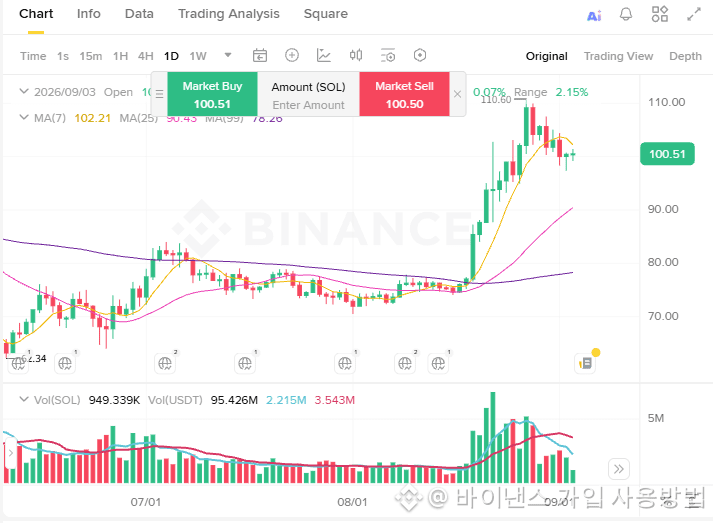
Análise de SOL/USDT 1D:
Tendência Geral: Forte tendência de alta, atualmente em um recuo/consolidação de curto prazo
Suporte: $97.0 – $98.0 (suporte-chave de curto prazo)
Resistência: $103.0 – $105.0, depois $109.0 – $110.0 MA
Sinais: O preço permanece acima das principais médias móveis, mantendo a estrutura de médio prazo altista; a média móvel de curto prazo
está se tornando ligeiramente baixista
Volume: Elevado durante a ruptura, mas em queda durante o recuo — o momentum está arrefecendo
Resumo: Em geral, altista enquanto SOL se mantiver acima de $97. Uma quebra abaixo de $97 pode desencadear uma correção mais profunda em direção a $93–95.
Fique atento a uma ruptura acima de $105 para um possível reteste de $110+ e continuação do movimento de alta.
#solana $SOL
170
Inicia sessão para explorar mais conteúdos
Junta-te a utilizadores de criptomoedas de todo o mundo na Binance Square
⚡️ Obtém informações úteis e recentes sobre criptomoedas.
💬 Com a confiança da maior exchange de criptomoedas do mundo.
👍 Descobre perspetivas reais de criadores verificados.
E-mail/Número de telefone
Tópicos em Tendência
USPPIMissMayEaseBTCPressure
102,429 visualizações
1,285 a discutir
Índice de preços ao produtor dos EUA sobe 6,5% em outubro, ligeiramente abaixo da previsão de 6,6%
Binance News
·18 gostos
·20.8k visualizações
MANTRAPausesUnstakingFor7DaysAfterKeplrSecurityIncident
1,011 visualizações
19 a discutir
BitcoinCoreDisclosesTorTrafficVulnerability
48,552 visualizações
754 a discutir