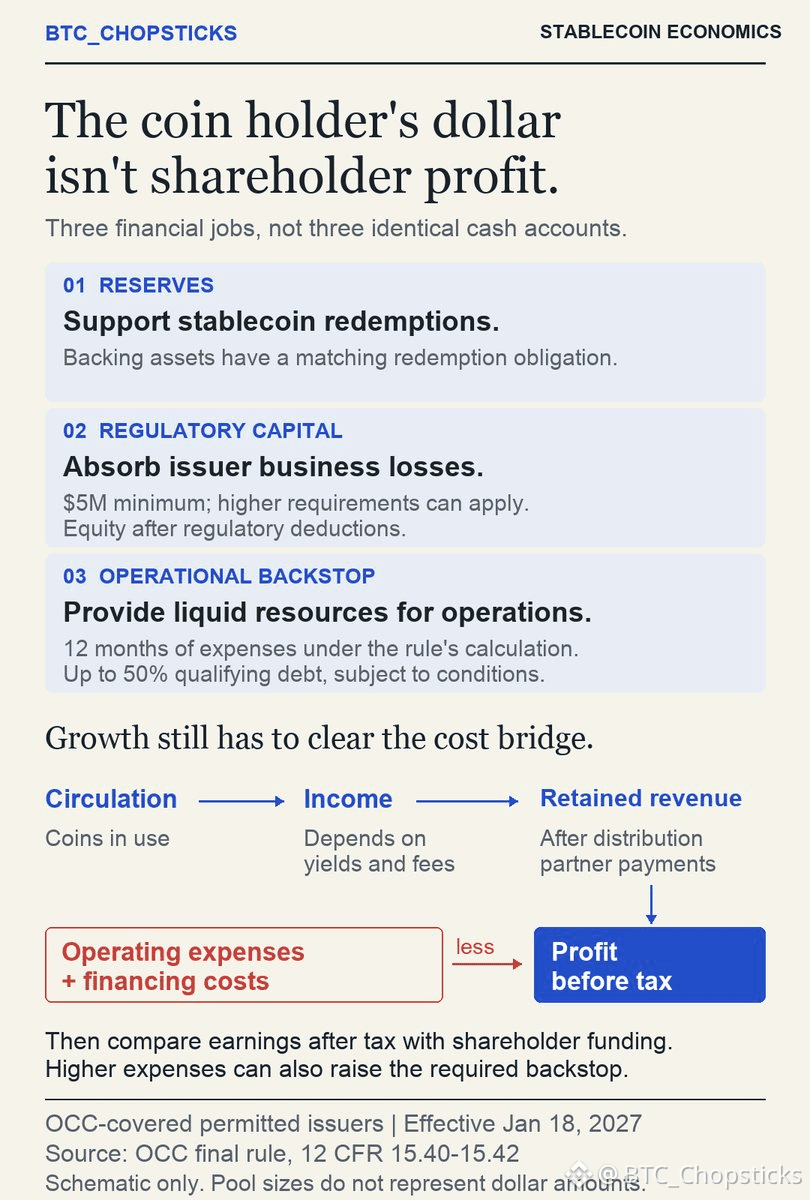
The money backing a stablecoin is not money its shareholders have earned.
Issuing a coin creates a redemption obligation. Its backing assets help meet that obligation; they are not free capital the owners can spend on growing the business.
The OCC's final rule, effective January 18, 2027, gives three resources different jobs for permitted payment stablecoin issuers subject to its capital and backstop requirements. It does not apply this framework to every issuer worldwide.
Reserves support coin redemptions. Regulatory capital absorbs business losses, with a $5M minimum that can be higher. The operational backstop supplies eligible liquid assets equal to 12 months of expenses under the rule's calculation.
Think about what happens when an issuer hires more staff or expands its systems. Those expenses reduce profit. As they enter the expense calculation, they can also increase the backstop it must fund.
That backstop need not be entirely shareholder-funded. Qualifying debt can fund up to 50%, subject to conditions including subordination and at least five years' maturity. Recognition declines near maturity. Equity funding the backstop cannot also count toward regulatory capital.
More coins can generate more income, but distribution partners may take much of the increase. Operating and financing costs can absorb the rest.
Before valuing an issuer, I'd ask for income retained after distribution payments, recurring operating expenses, financing terms and the equity needed to support growth. Then compare the extra profit with the extra shareholder funding required.
Circulation tells me how much of the product is being used. That comparison tells me whether expanding it is creating a better business for its owners.