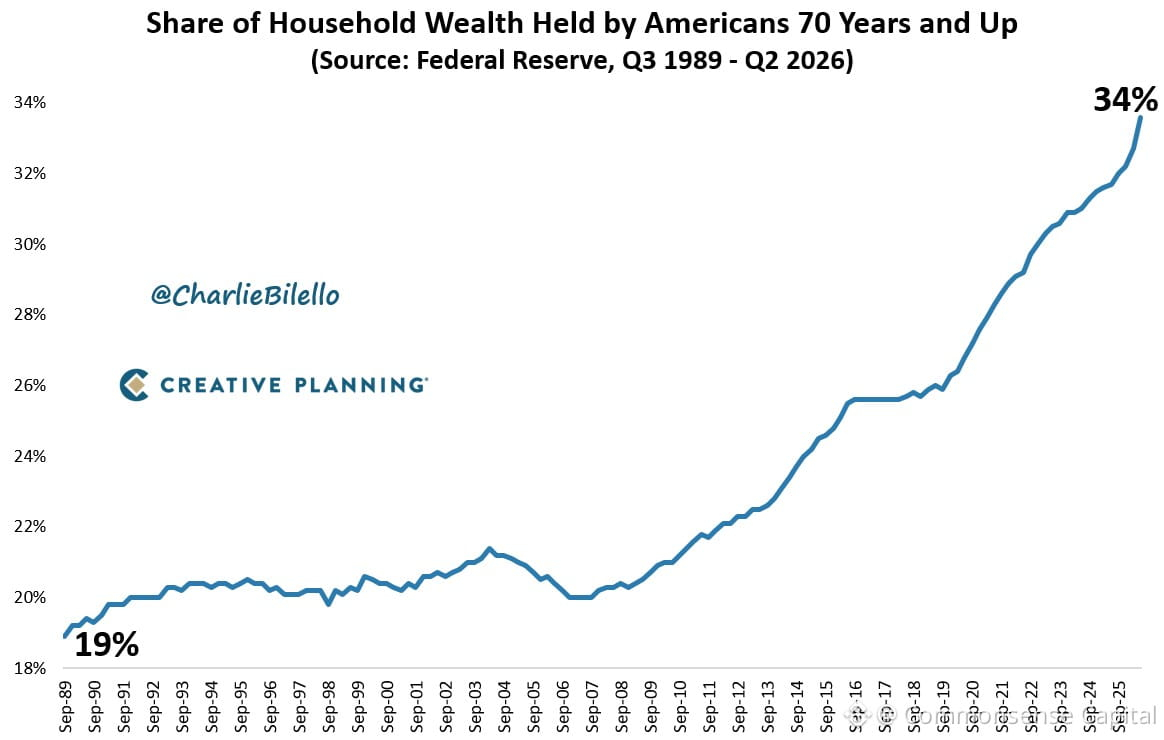
Wealth is getting older. 34% of all household wealth in the US now sits with people 70+. That's a record.
What does this mean? A few things:
First, the baby boomers aged into peak wealth accumulation and they're not spending it down as fast as previous generations did. They're living longer, staying invested longer, and passing it on later.
Second, younger generations are building wealth slower. Wages haven't kept pace with asset prices. Housing, education, healthcare — all more expensive relative to income than they were 30-40 years ago. Harder to save, harder to invest, harder to compound early.
Third, this creates a structural bid under assets. Older households tend to hold more stocks, bonds, real estate. They're not forced sellers. They can sit through volatility. That changes market dynamics.
Fourth, inheritance is becoming a bigger factor in wealth building. If you're waiting for a transfer, you're not building your own base. That's a problem for mobility and independence.
This isn't good or bad, it's just math. But it does mean the economy is increasingly driven by the spending, saving, and investing behavior of people in their 70s and 80s. And it means younger people need to be even more disciplined about saving early, investing consistently, and avoiding lifestyle inflation — because the tailwinds previous generations had are weaker now.
What does this mean? A few things:
First, the baby boomers aged into peak wealth accumulation and they're not spending it down as fast as previous generations did. They're living longer, staying invested longer, and passing it on later.
Second, younger generations are building wealth slower. Wages haven't kept pace with asset prices. Housing, education, healthcare — all more expensive relative to income than they were 30-40 years ago. Harder to save, harder to invest, harder to compound early.
Third, this creates a structural bid under assets. Older households tend to hold more stocks, bonds, real estate. They're not forced sellers. They can sit through volatility. That changes market dynamics.
Fourth, inheritance is becoming a bigger factor in wealth building. If you're waiting for a transfer, you're not building your own base. That's a problem for mobility and independence.
This isn't good or bad, it's just math. But it does mean the economy is increasingly driven by the spending, saving, and investing behavior of people in their 70s and 80s. And it means younger people need to be even more disciplined about saving early, investing consistently, and avoiding lifestyle inflation — because the tailwinds previous generations had are weaker now.