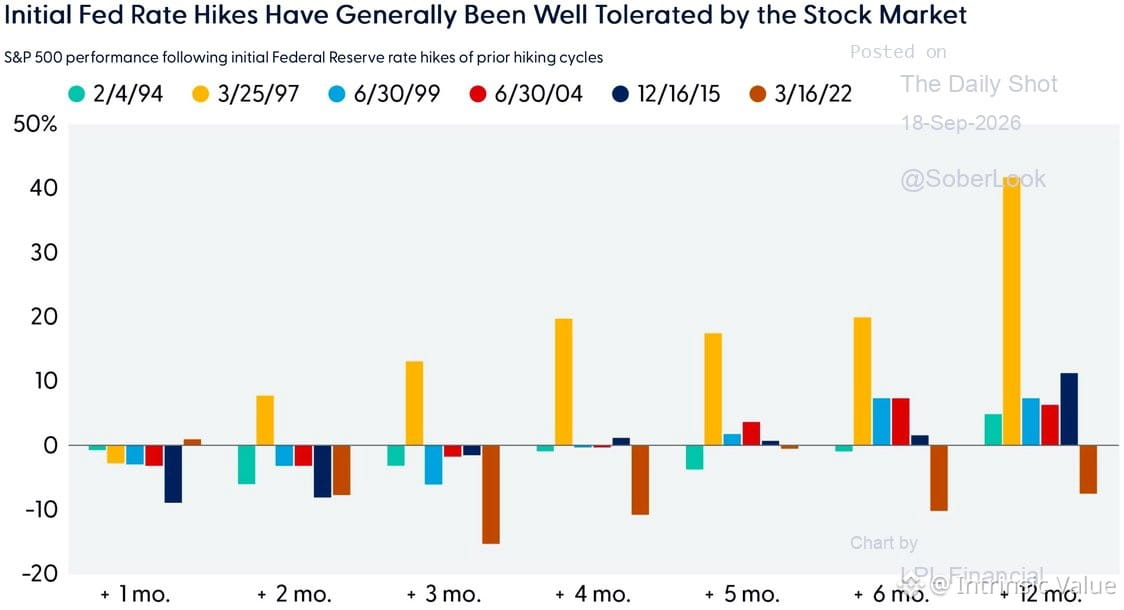
Interesting pattern worth noting: across the six Fed tightening cycles since 1994, the S&P 500's median 12-month return post-first-hike was 10.7%. But that headline number masks the real story — markets typically stumble for several months immediately after the initial rate increase before finding footing.
This isn't surprising if you think about it. Rate hikes work with a lag. Equity valuations adjust slowly. Credit conditions tighten gradually. The initial hike is rarely the last one, so uncertainty lingers. Investors tend to price in optimism early, then reality sets in.
The 10.7% median return sounds fine — until you realize it often comes after months of chop, drawdowns, and volatility that test conviction. The path matters as much as the destination. Most portfolios can't handle the ride without panic or poor timing.
Historical medians are useful, but they're not guarantees. Each cycle has different starting valuations, different inflation dynamics, different fiscal backdrops. 1994 isn't 2018 isn't today. Context matters more than pattern recognition.
Bottom line: if you're expecting smooth sailing after the first hike, history suggests otherwise. Prepare for turbulence, not a straight line up.
This isn't surprising if you think about it. Rate hikes work with a lag. Equity valuations adjust slowly. Credit conditions tighten gradually. The initial hike is rarely the last one, so uncertainty lingers. Investors tend to price in optimism early, then reality sets in.
The 10.7% median return sounds fine — until you realize it often comes after months of chop, drawdowns, and volatility that test conviction. The path matters as much as the destination. Most portfolios can't handle the ride without panic or poor timing.
Historical medians are useful, but they're not guarantees. Each cycle has different starting valuations, different inflation dynamics, different fiscal backdrops. 1994 isn't 2018 isn't today. Context matters more than pattern recognition.
Bottom line: if you're expecting smooth sailing after the first hike, history suggests otherwise. Prepare for turbulence, not a straight line up.