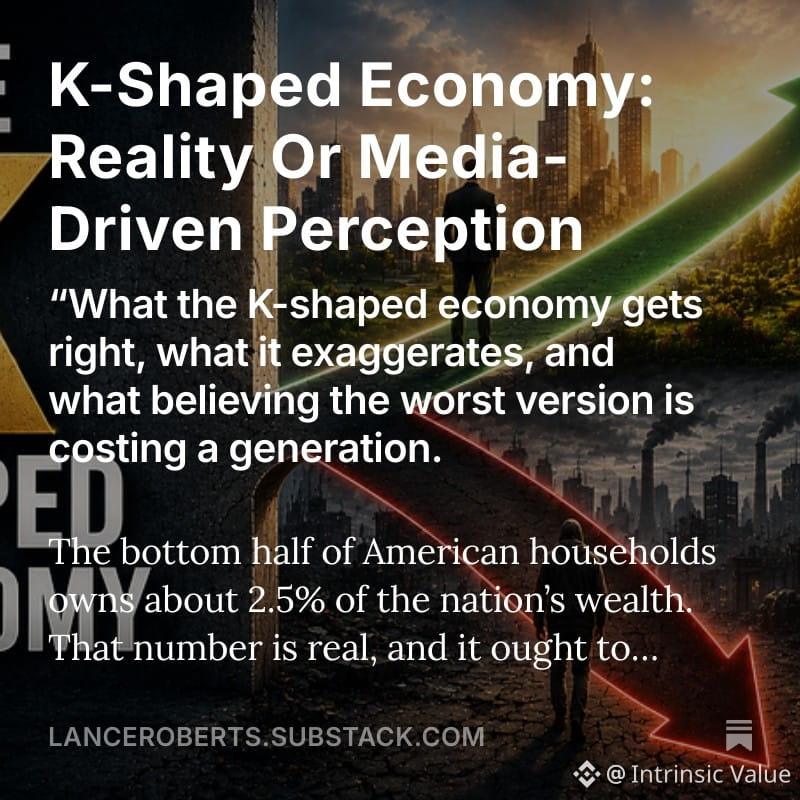
The "K-shaped recovery" narrative has become economic gospel, but I'm skeptical of surveys showing younger generations feeling "hopeless." Sentiment surveys measure perception, not reality.
Look at the actual data: employment rates for 25-34 year-olds remain near historic highs, real wage growth has turned positive across most income quartiles, and household formation continues despite headlines. Yes, housing affordability is terrible and student debt is real — but these are structural issues, not evidence of a collapsing opportunity set.
The gap between economic reality and sentiment has widened dramatically. Media amplifies anxiety, social media creates false comparisons, and political narratives thrive on doom. Meanwhile, corporate earnings, consumer spending, and labor market tightness tell a different story.
This isn't optimism bias — it's a reminder that data matters more than feelings. Markets price fundamentals eventually, not vibes. The K-shape exists in asset ownership and wealth accumulation, not necessarily in income or opportunity. Don't confuse media-driven perception with economic fact.
Look at the actual data: employment rates for 25-34 year-olds remain near historic highs, real wage growth has turned positive across most income quartiles, and household formation continues despite headlines. Yes, housing affordability is terrible and student debt is real — but these are structural issues, not evidence of a collapsing opportunity set.
The gap between economic reality and sentiment has widened dramatically. Media amplifies anxiety, social media creates false comparisons, and political narratives thrive on doom. Meanwhile, corporate earnings, consumer spending, and labor market tightness tell a different story.
This isn't optimism bias — it's a reminder that data matters more than feelings. Markets price fundamentals eventually, not vibes. The K-shape exists in asset ownership and wealth accumulation, not necessarily in income or opportunity. Don't confuse media-driven perception with economic fact.