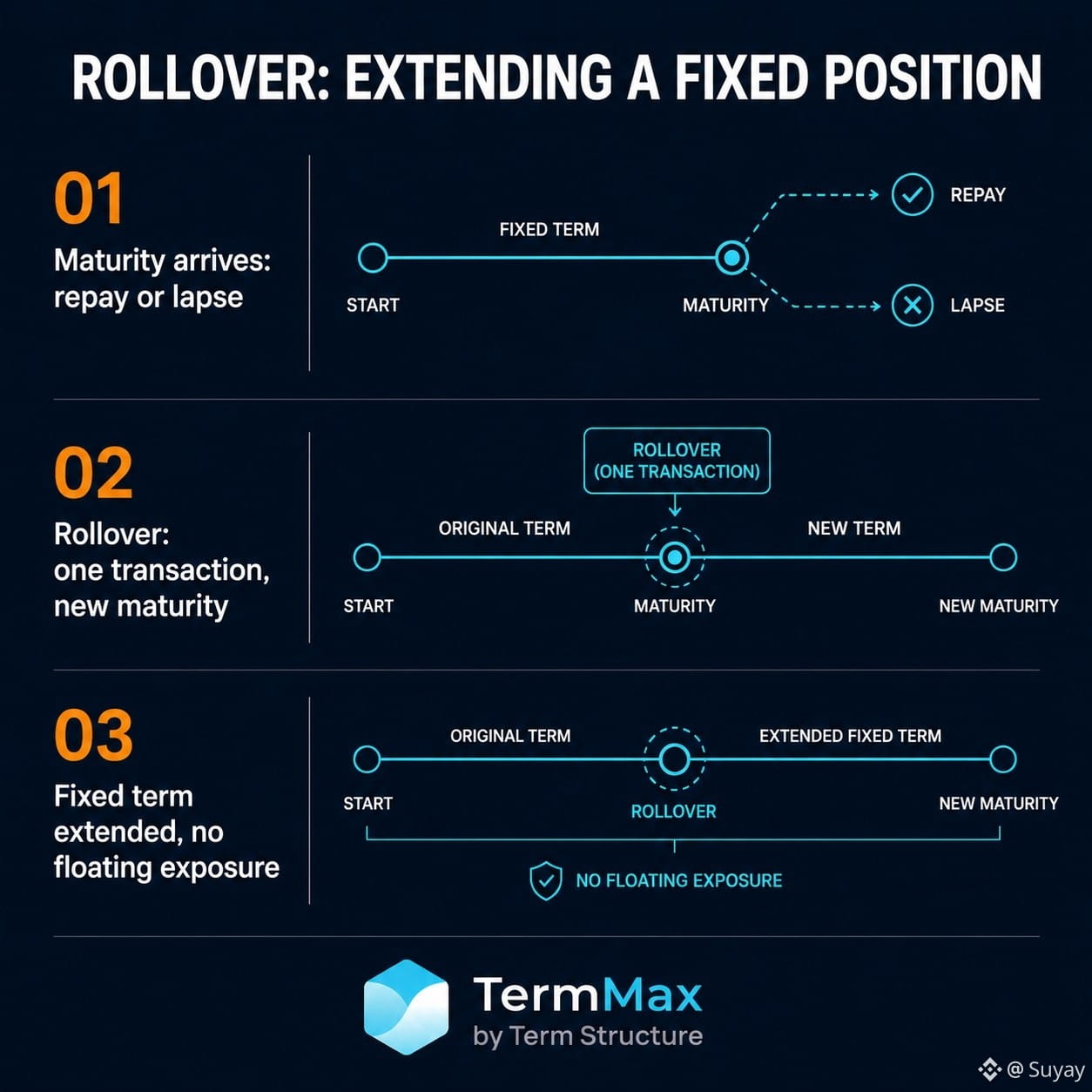
O rollover com um clique de @TermMax é um recurso pequeno com uma implicação maior do que parece à primeira vista: significa que uma posição de prazo fixo não precisa terminar apenas porque a data de vencimento chegou.
Antes disso, um empréstimo de taxa fixa em vencimento no TermMax oferecia duas opções — pagar integralmente ou deixar a posição passar para o que vier em seguida. O rollover adiciona uma terceira: mover a posição diretamente para um mercado com vencimento mais longo em uma única transação, estendendo o prazo fixo sem a etapa completa de pagamento entre elas e sem cair em uma exposição flutuante que você especificamente evitou ao escolher prazos fixos desde o início.
Isso só funciona porque taxas fixas e vencimentos fixos são condições reais e aplicadas no TermMax, e não uma estimativa aproximada. Os mercados tradicionais de títulos lidam com a gestão de duration assim há décadas por meio de refinanciamento; a maior parte do DeFi ainda trata o vencimento de um empréstimo como uma barreira em vez de um ponto de decisão, em grande parte porque sistemas de taxa flutuante não têm um vencimento fixo para gerenciar em primeiro lugar.
Eu não acho que um único recurso de rollover transforme o DeFi em um mercado de renda fixa por si só — isso levaria anos de instrumentos sendo construídos uns sobre os outros, e ainda não vi como o Rollover se comporta quando alguém tenta encadear múltiplas extensões em sequência.
Um recurso como esse acaba importando mais para credores de longo prazo que gerenciam duration, ou para tomadores que apenas tentam evitar uma taxa flutuante que não querem?
#termmax @TermMax $TMX
Antes disso, um empréstimo de taxa fixa em vencimento no TermMax oferecia duas opções — pagar integralmente ou deixar a posição passar para o que vier em seguida. O rollover adiciona uma terceira: mover a posição diretamente para um mercado com vencimento mais longo em uma única transação, estendendo o prazo fixo sem a etapa completa de pagamento entre elas e sem cair em uma exposição flutuante que você especificamente evitou ao escolher prazos fixos desde o início.
Isso só funciona porque taxas fixas e vencimentos fixos são condições reais e aplicadas no TermMax, e não uma estimativa aproximada. Os mercados tradicionais de títulos lidam com a gestão de duration assim há décadas por meio de refinanciamento; a maior parte do DeFi ainda trata o vencimento de um empréstimo como uma barreira em vez de um ponto de decisão, em grande parte porque sistemas de taxa flutuante não têm um vencimento fixo para gerenciar em primeiro lugar.
Eu não acho que um único recurso de rollover transforme o DeFi em um mercado de renda fixa por si só — isso levaria anos de instrumentos sendo construídos uns sobre os outros, e ainda não vi como o Rollover se comporta quando alguém tenta encadear múltiplas extensões em sequência.
Um recurso como esse acaba importando mais para credores de longo prazo que gerenciam duration, ou para tomadores que apenas tentam evitar uma taxa flutuante que não querem?
#termmax @TermMax $TMX