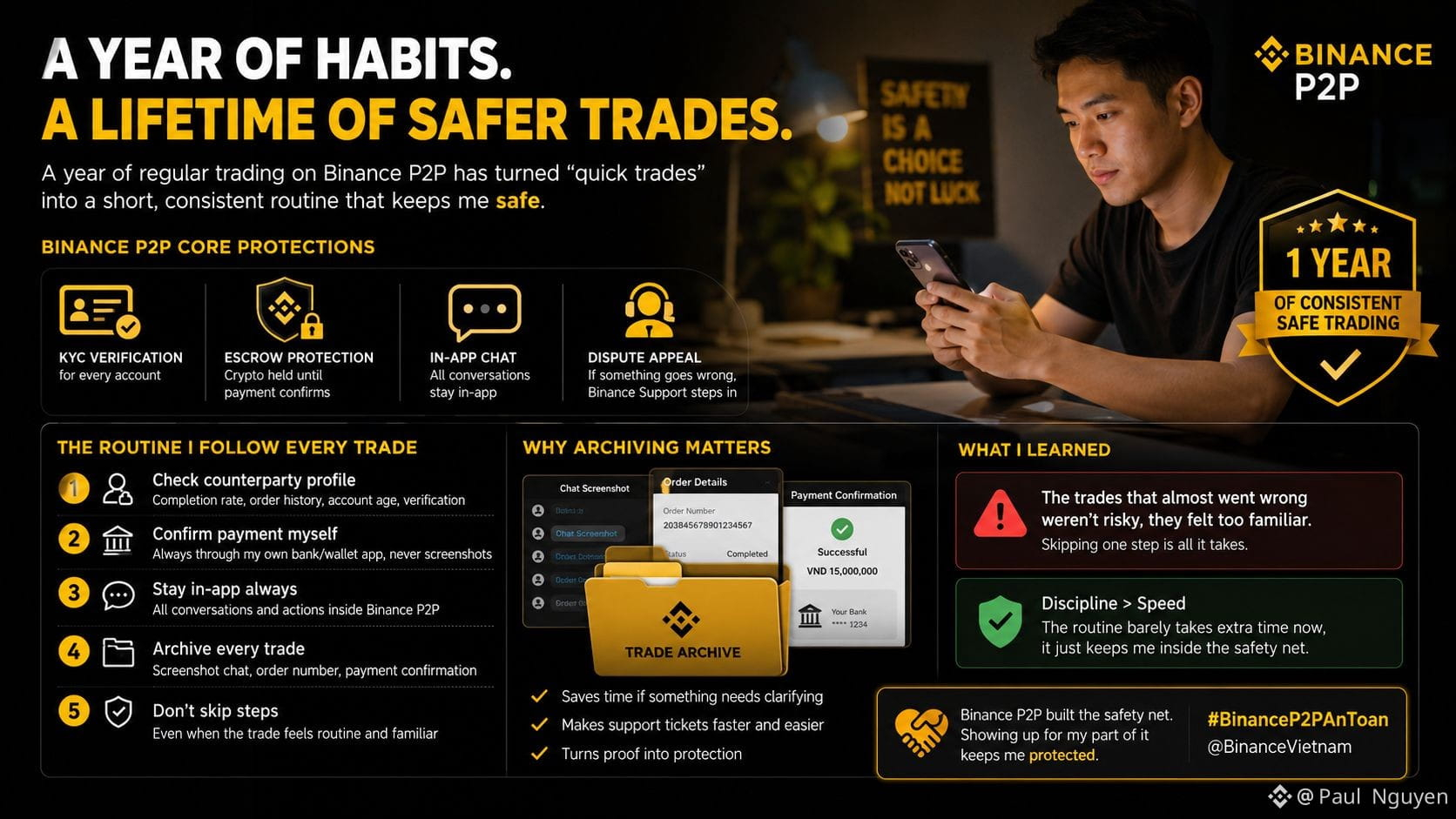
Um ano de negociações regulares na Binance P2P mudou completamente a forma como eu penso sobre uma negociação rápida. O que antes parecia apenas “clicar” por algumas telas agora é uma rotina curta e consistente que eu sigo todas as vezes, e isso fez uma diferença real em como todo o processo parece mais seguro.
As proteções centrais da Binance P2P não mudaram durante esse ano: verificação de KYC para cada conta, cripto em custódia até o pagamento ser confirmado, chat no app e recurso de contestação (disputa) caso algo dê errado. O que mudou foi o quão deliberadamente eu as utilizo. Agora eu verifico a taxa de conclusão e o histórico de pedidos de um contraparte antes de cada negociação, não apenas as que parecem incomuns. Eu confirmo o pagamento diretamente pelo meu próprio app do banco ou da carteira, nunca por print de conversa, independentemente de quão convincente isso pareça ou de quantas vezes eu já negociei com aquela pessoa antes.
O hábito que mais compensou foi o arquivamento. Cada pedido recebe um print do chat, o número do pedido e a confirmação do pagamento salvos juntos, quer a negociação fosse rotineira ou não. Eu não achava que precisaria da maioria deles, mas nas poucas vezes em que foi necessário esclarecer algo, ter esse registro pronto significou contatar o suporte da Binance de forma rápida, em vez de ficar em correria.
Ao olhar para as negociações que pareciam mais perto de dar errado, cada uma delas envolveu eu pular uma etapa, porque tudo até aquele ponto tinha parecido rotineiro e seguro. É a parte que ninguém te avisa no começo: não são as negociações claramente arriscadas que te deixam de guarda baixa, são as que parecem “tempo demais” conhecidas para você se dar ao trabalho de checar duas vezes. Então, mesmo agora, as negociações com que eu sou mais cuidadoso não são as incomuns; são as que parecem exatamente como qualquer outra negociação que eu fiz com sucesso antes na Binance P2P.
Depois de um ano, a rotina quase não leva tempo extra; é só como eu negoceio agora. A Binance P2P construiu a rede de segurança; aparecer consistentemente para cumprir a minha parte é o que realmente me mantém dentro dela.
@Binance Vietnam #BinanceP2PAnToan
As proteções centrais da Binance P2P não mudaram durante esse ano: verificação de KYC para cada conta, cripto em custódia até o pagamento ser confirmado, chat no app e recurso de contestação (disputa) caso algo dê errado. O que mudou foi o quão deliberadamente eu as utilizo. Agora eu verifico a taxa de conclusão e o histórico de pedidos de um contraparte antes de cada negociação, não apenas as que parecem incomuns. Eu confirmo o pagamento diretamente pelo meu próprio app do banco ou da carteira, nunca por print de conversa, independentemente de quão convincente isso pareça ou de quantas vezes eu já negociei com aquela pessoa antes.
O hábito que mais compensou foi o arquivamento. Cada pedido recebe um print do chat, o número do pedido e a confirmação do pagamento salvos juntos, quer a negociação fosse rotineira ou não. Eu não achava que precisaria da maioria deles, mas nas poucas vezes em que foi necessário esclarecer algo, ter esse registro pronto significou contatar o suporte da Binance de forma rápida, em vez de ficar em correria.
Ao olhar para as negociações que pareciam mais perto de dar errado, cada uma delas envolveu eu pular uma etapa, porque tudo até aquele ponto tinha parecido rotineiro e seguro. É a parte que ninguém te avisa no começo: não são as negociações claramente arriscadas que te deixam de guarda baixa, são as que parecem “tempo demais” conhecidas para você se dar ao trabalho de checar duas vezes. Então, mesmo agora, as negociações com que eu sou mais cuidadoso não são as incomuns; são as que parecem exatamente como qualquer outra negociação que eu fiz com sucesso antes na Binance P2P.
Depois de um ano, a rotina quase não leva tempo extra; é só como eu negoceio agora. A Binance P2P construiu a rede de segurança; aparecer consistentemente para cumprir a minha parte é o que realmente me mantém dentro dela.
@Binance Vietnam #BinanceP2PAnToan