

Recently, there has been a lot of controversy regarding the unlocking of MOCO's locked positions:
Some people discovered that the LP lock-up time for MOCO displayed on certain platforms changed from 9999 years to 2026, which scared a lot of people, wondering if it meant the project was about to run away.
So what is the truth? I specifically used on-chain tools + ChatGPT to check, and the result was very simple: the lock-up hasn't changed at all!
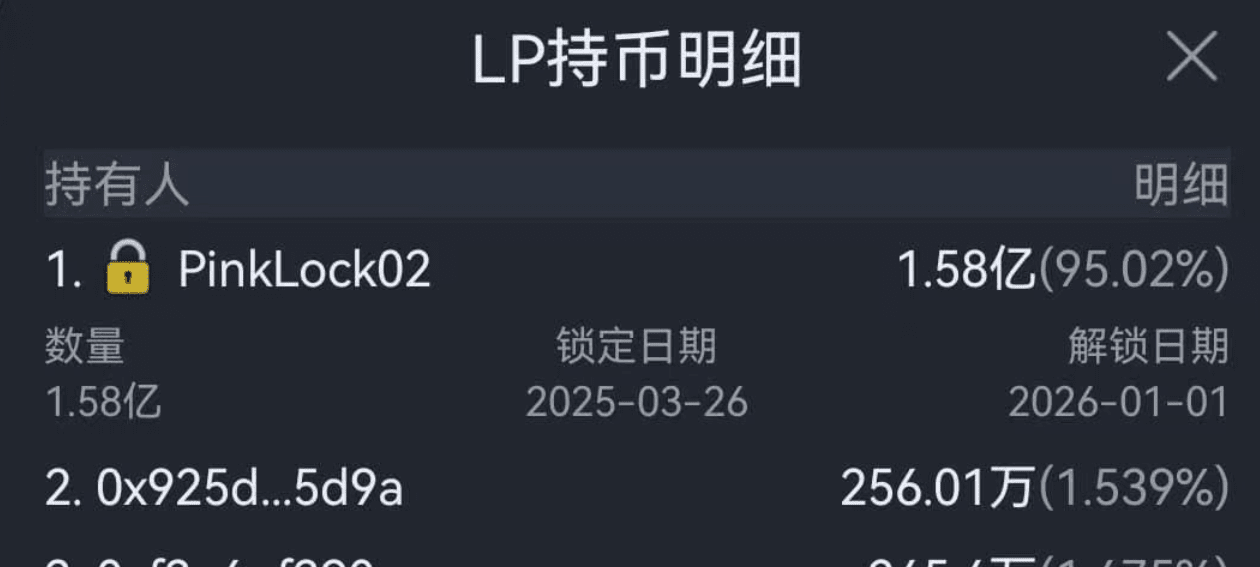
How is the lock-up done?
MOCO's LP is locked using contracts like PinkLock, accounting for about 94% to 95% of the pool.
As long as this portion is not unlocked, no one can withdraw the major liquidity from the pool.
So why does it show '2026'?
In fact, the lock-up time is recorded on the blockchain, and any changes will leave a trace.
I checked the MOCO lock-up contract with ChatGPT and found that:
No extension of lock-up
No unlocking
No operation to change the time
So why does the display change?
It's simple—The front end (platform) uses cached data or placeholders; during loading, it might first show the default value and then refresh the on-chain data, resulting in a jump back to 9999 years..
This is not the first time; many lock-ups have experienced such blunders.
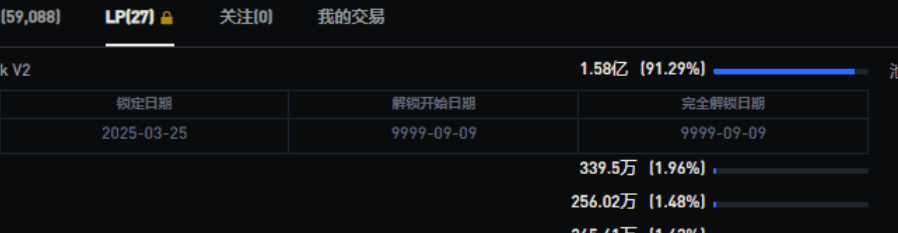
I personally believe that this lock-up incident is very likely a deliberate release of negative news by the platform!
Because the timing of the news release was during the peak of the price surge, on the same day, the ave platform had another billion-level trading volume imitation that was continuously pinned by the platform. This wave probably cut off many people; the next day, the imitation was halted, but! MOCO did not waterfall as everyone expected, instead, retail investors remained strong, not only not selling but also increasing their positions against the trend.
Currently, MOCO still has many issues; in fact, most addresses are software-generated, about 40%, and the real daily trading volume is not much, with more than half being bots and wash trading, resulting in a real market cap of only about 50%.
If you want to see if a coin has potential, just look at how many imitations it has.