


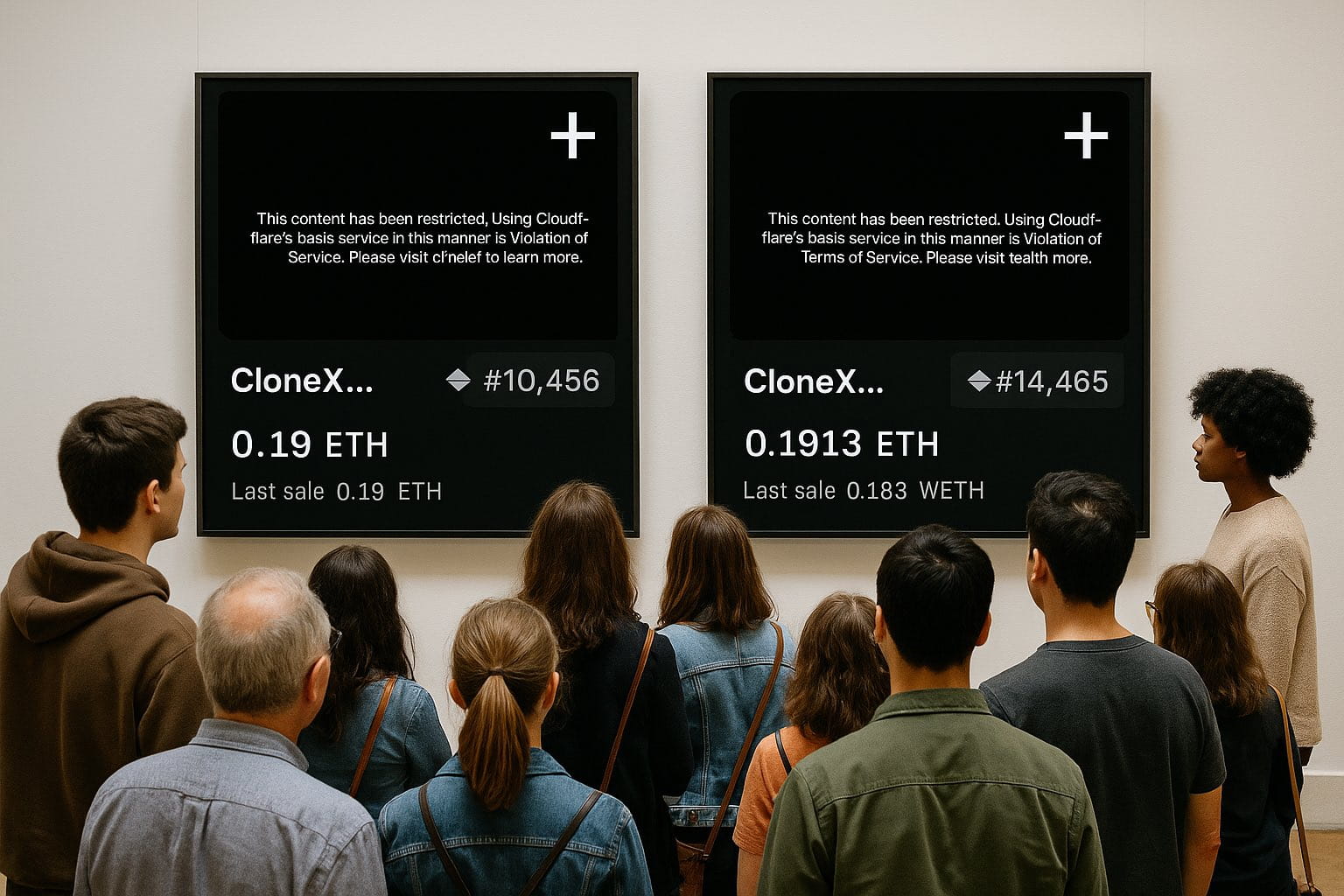
On April 24, someone discovered that the image data of the once top-tier blue-chip NFT studio RTFKT's project CloneX was not visible on major trading platforms, replaced by a slogan stating, "This content has been restricted; using Cloudflare's basic service in this way violates the terms of service," which sparked heated discussions in the community.
On the day after, April 25, its parent company Nike was sued. RTFKT NFT buyers led by Australian resident Jagdeep Cheema filed a proposed class action in the Federal Court of Brooklyn, New York, stating that significant losses were incurred after Nike suddenly shut down these operations. How did the strongest NFT trend IP project, once acquired by Nike, fall to this point?
"The Nike of the Metaverse"—RTFKT
The name RTFKT comes from its phonetic similarity to the English word "artifact," and it also represents its brand philosophy. Initially, it was a digital sports brand aiming to create "the Nike of the Metaverse." As more and more traditional brands chose to collaborate with NFT projects, the collaboration of Adidas with BAYC and PUNKSComic also drove RTFKT and Takashi Murakami to jointly release CloneX.
It was this opportunity that made the crypto community more familiar with the brand, and eventually the real Nike acquired this "Nike of the Metaverse." With over 40 co-branded projects dominating the charts, from Takashi Murakami to Jeff Staple, from RIMOWA to Nike, it is almost one of the hottest top-tier fashion IPs in the crypto space.

RTFKT Studio Hardcore Rug
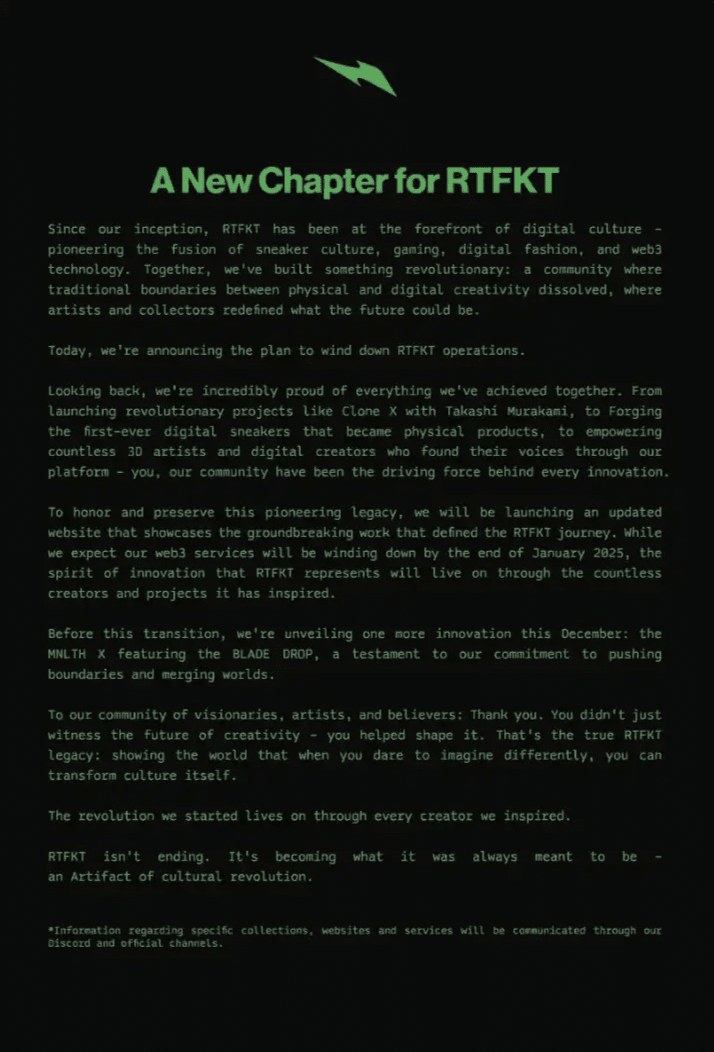
Then, in December 2024, an announcement came like a bolt from the blue. In this statement, the Clone X project party announced the termination of RTFKT's operations. This studio, acquired by "Nike," unilaterally announced the termination of operations without any warning. At that time, the NFT market was warming up, and this move caused the floor price of CloneX to drop by more than 60%.
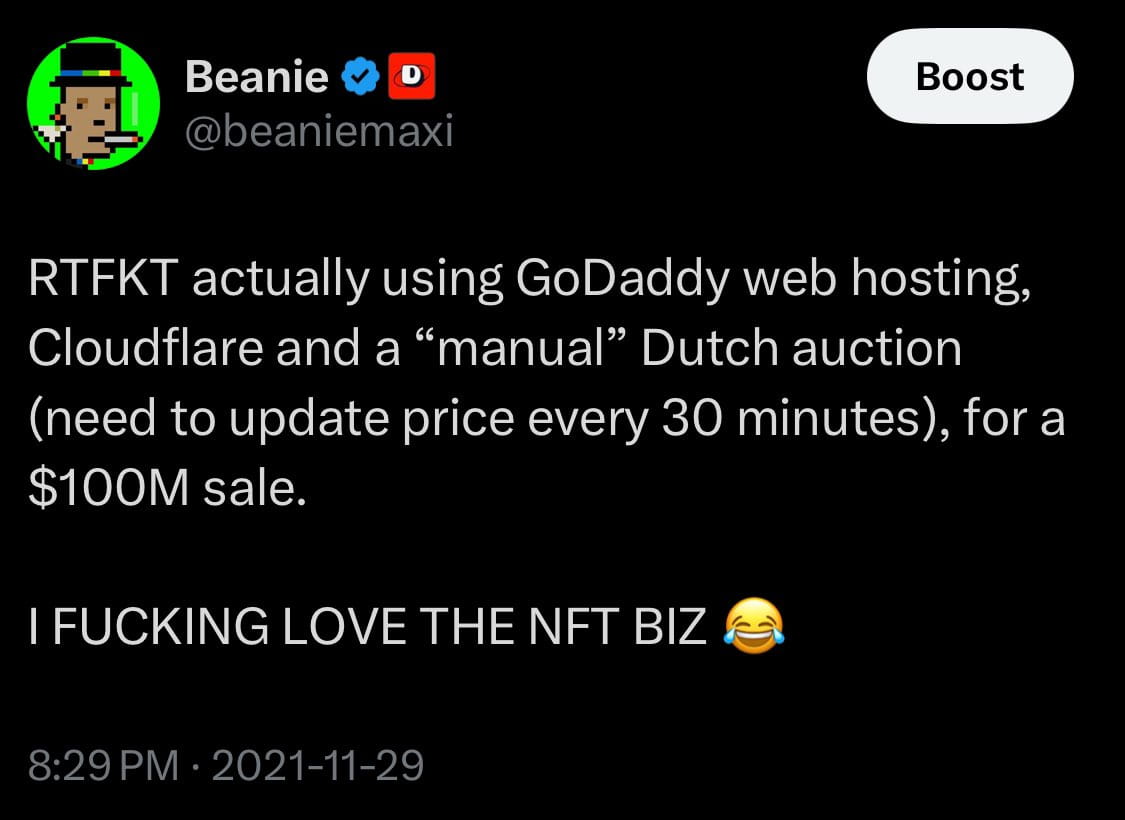
RTFKT co-founder Benoit Pagotto once mentioned in an interview the advantages of RTFKT compared to traditional industry giants: "We have resources they don't have, namely the culture we have that they lack—crypto culture. They cannot spend a lot of time, day after day, learning this knowledge." Crypto KOLs sarcastically noted that CloneX's initial issuance used GoDaddy and Cloudflare to "store small images" and manually Dutch auctioned to earn $100 million in sales.
The last person standing
Just when it seemed that this irony came true after four years, countless holders stared at their CloneX on OpenSea and Blur, shouting "I Got RUG by Nike." Perhaps this is the crypto culture Benoit mentioned; even if the project party "rugged," as long as the "token" is still there, there is a possibility of community governance. However, when even the images themselves disappear, this logic seems increasingly difficult to sustain.
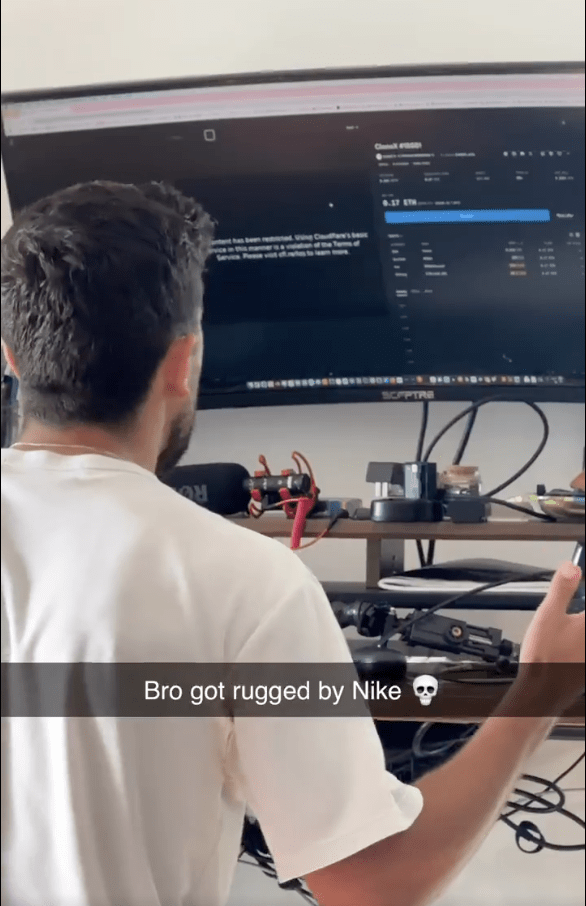
In this storm, it was almost only one team member who stood up to take responsibility. Samuel Cardillo claimed that the team had planned to decentralize all NFTs since early April, and therefore did not choose to renew the contract with Cloudflare. However, Cloudflare miscalculated the expiration date of this contract worth over $500,000 annually, which was originally set to expire on April 30 but was moved up by several days.
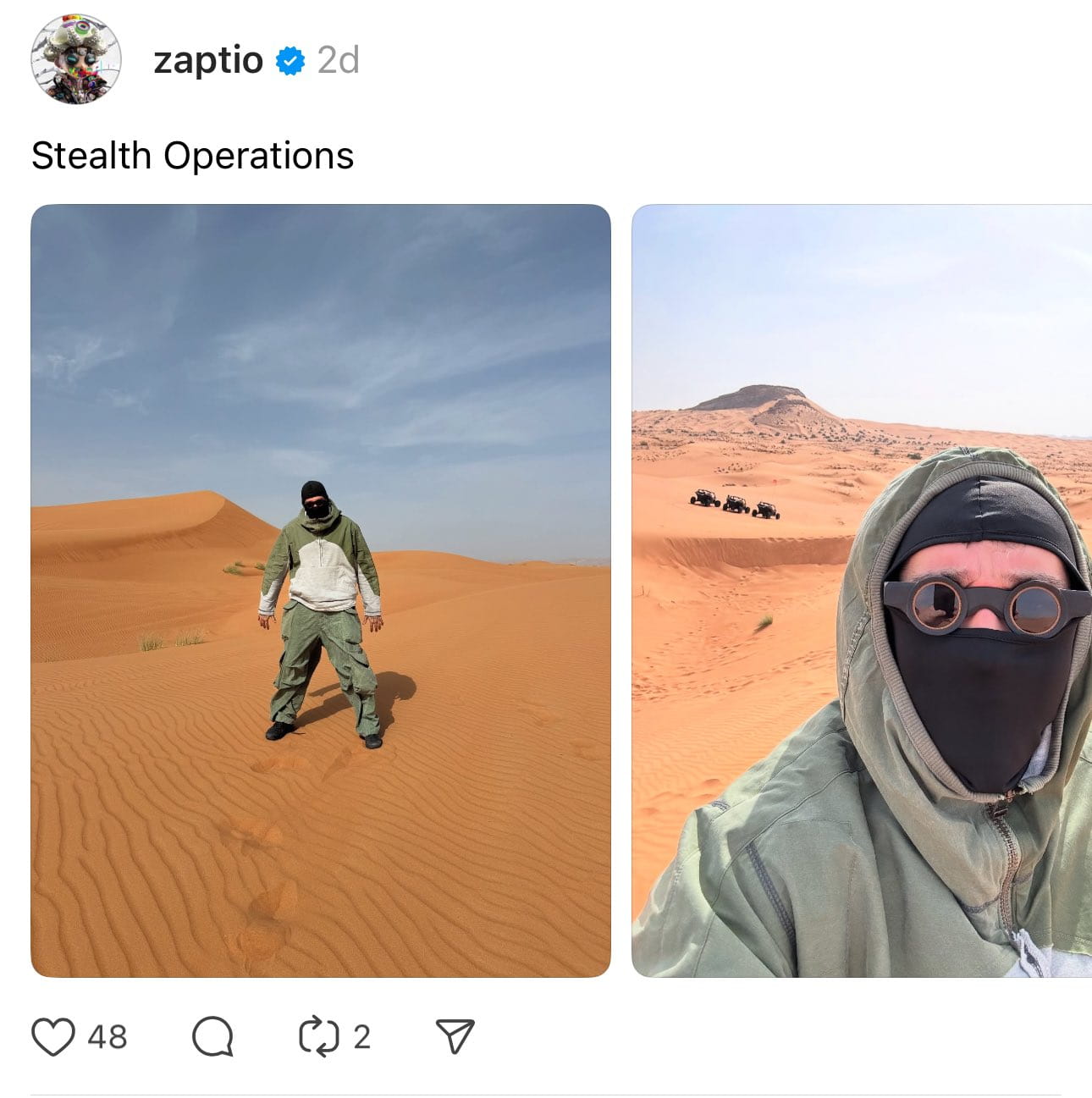
At the time the incident occurred, although RTFKT was under intense "FUD," Samuel's strong engagement with netizens and problem-solving attitude earned him the respect of the community, earning him the title of "the last person standing," in stark contrast to Zaptio, who had not posted on X for a long time, while posting 20 exciting stories about his "retirement life" on Instagram.
Justice executed? The Rug NFT that was sued
On the day after RTFKT's "lost images," Nike was hit with a class action lawsuit. In fact, being "rugged" in the crypto world has become quite common, but very few can recover their assets. This class action lawsuit primarily has two accusations: one is that Nike violated consumer protection laws in New York, California, Florida, and Oregon, and that RTFKT NFTs are unregistered securities. Nike did not disclose related regulatory risks, violating U.S. securities laws. Although it is still unclear whether NFTs can be classified as securities, there have been previous cases of consumers obtaining compensation related to NFTs.
Previously, O'Neal, along with his son Myles O'Neal, co-founded and promoted the Astrals NFT project based on the Solana blockchain, which includes 10,000 3D avatar NFTs designed by artist Damien Guimoneau. The project promised to create a virtual world called "Astralverse," where users could engage in socializing, gaming, and other activities through NFTs, while O'Neal promoted the project on social media as "DJ Diesel."
Like many NFT projects, Astrals saw its value plummet after the collapse of FTX. Until May 2023, investors like Daniel Harper filed a class action lawsuit, accusing O'Neal of promoting the unregistered security "Astrals NFT" in violation of U.S. securities laws. The plaintiffs claimed O'Neal's star effect induced investment. In August 2024, Florida federal judge Federico Moreno ruled that the plaintiffs reasonably accused Astrals NFT of being a security, and O'Neal, as a seller, attracted investment through promotional activities. In November, O'Neal agreed to pay $11 million in settlement, ending the lawsuit, with $2.9 million for attorney fees and the remainder compensating investors who purchased Astrals NFT from May 2022 to January 15, 2024.
However, some professionals believe that unlike O'Neal's "personal" projects, this case with Nike may not use violations of securities law as a breakthrough point since the legal status of NFTs remains unclear. There may not be a $5 million compensation, but Nike is likely to "pay a little money" to quell the public outcry.
How should NFTs be stored?
The worst choice for storing NFT data is on centralized servers like Cloudflare or Amazon. If an NFT project's metadata and media files are stored on one server and the creator stops maintaining that server, the data will disappear forever, ultimately rendering the NFT a blank slate. Therefore, most NFT projects choose IPFS and Arweave mentioned above, balancing image quality and operational costs.
Decentralized storage
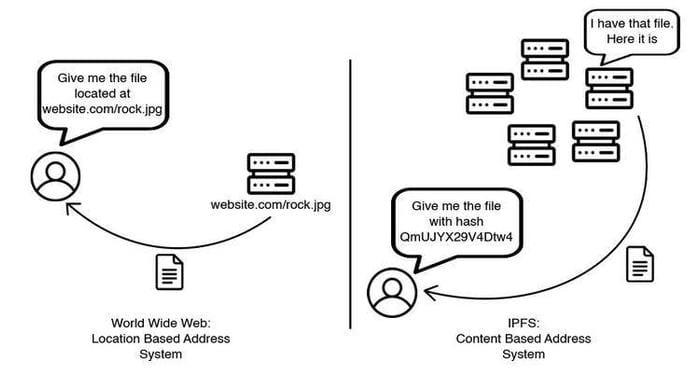
Most project parties commonly use IPFS (InterPlanetary File System), a decentralized storage protocol based on content addressing. IPFS uses the hash generated from the file itself as a unique identifier, allowing users to access the content from any node using this hash. This method makes data no longer reliant on a single server, inherently resistant to censorship and faults, flowing freely between global nodes like water. However, the downside is obvious: IPFS does not automatically guarantee the persistent storage of files; whether the content exists depends on whether nodes continue to preserve it. Therefore, many project parties need to actively "pin" files or use professional services to ensure long-term data availability.
And the RTFKT team claimed to upload image data to Arweave through ArDrive, a decentralized file storage network that can ensure file storage persistence compared to IPFS. Users pay a one-time fee to cover the storage costs for 200 years or more. Miners on the Arweave network are incentivized to use AR tokens to replicate and store copies of data that other miners rarely store. This ensures that files do not get lost over time without the original uploader's ongoing maintenance.
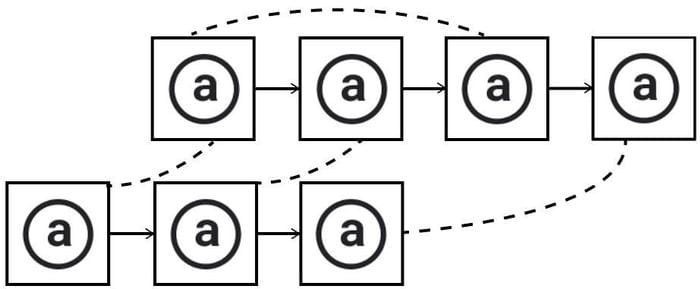
The data storage structure of Blockweave
Arweave stores data in the BlockWeave structure, where each new data block is linked to the previous block and a historical block. Miners must prove they have had the opportunity to access these randomly selected historical blocks to mine new blocks and earn rewards, ensuring that earlier blocks are preserved.
Using IPFS or Arweave is much better than relying on centralized storage, but it still needs to point to off-chain. Storing NFT metadata and media on the same chain as the NFT is the most resilient method, but the costs of storing data on-chain are very high. Therefore, it has become a popular trend for NFT projects to keep metadata on-chain while storing media data off-chain. However, for crypto culture, purely on-chain NFT communities are indispensable, as their communities tend to be more pure and strong.
On-chain NFTs on Ethereum
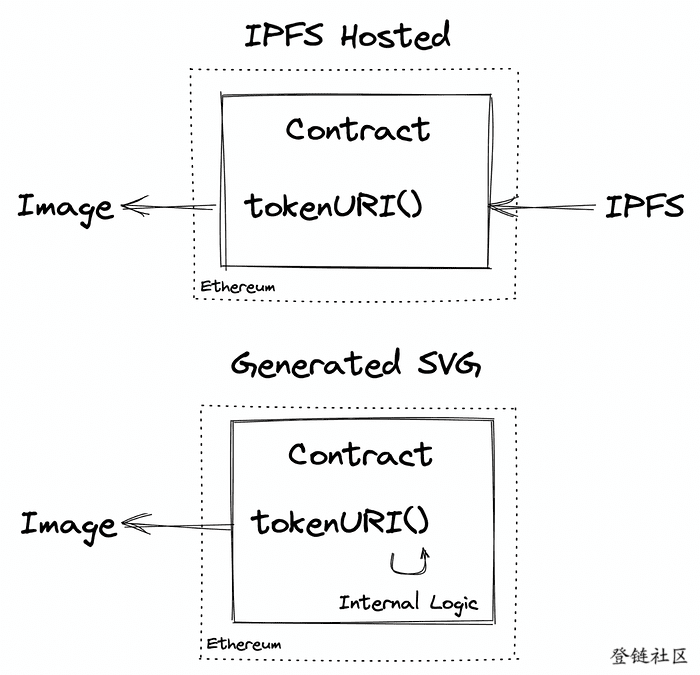
NFT projects like Nouns and Loot achieved complete on-chain storage of SVG images on Ethereum very early on. Taking Nouns as an example, the project uses a custom run-length encoding (RLE) to compress each part of the image losslessly and stores the compressed data directly on-chain. This way, it does not rely on external pointers like IPFS. Subsequently, this compressed data is decoded into an intermediate format and generated into a collection of SVG rectangles through on-chain batch string concatenation, ultimately forming a complete SVG image, and then base64 encoded.

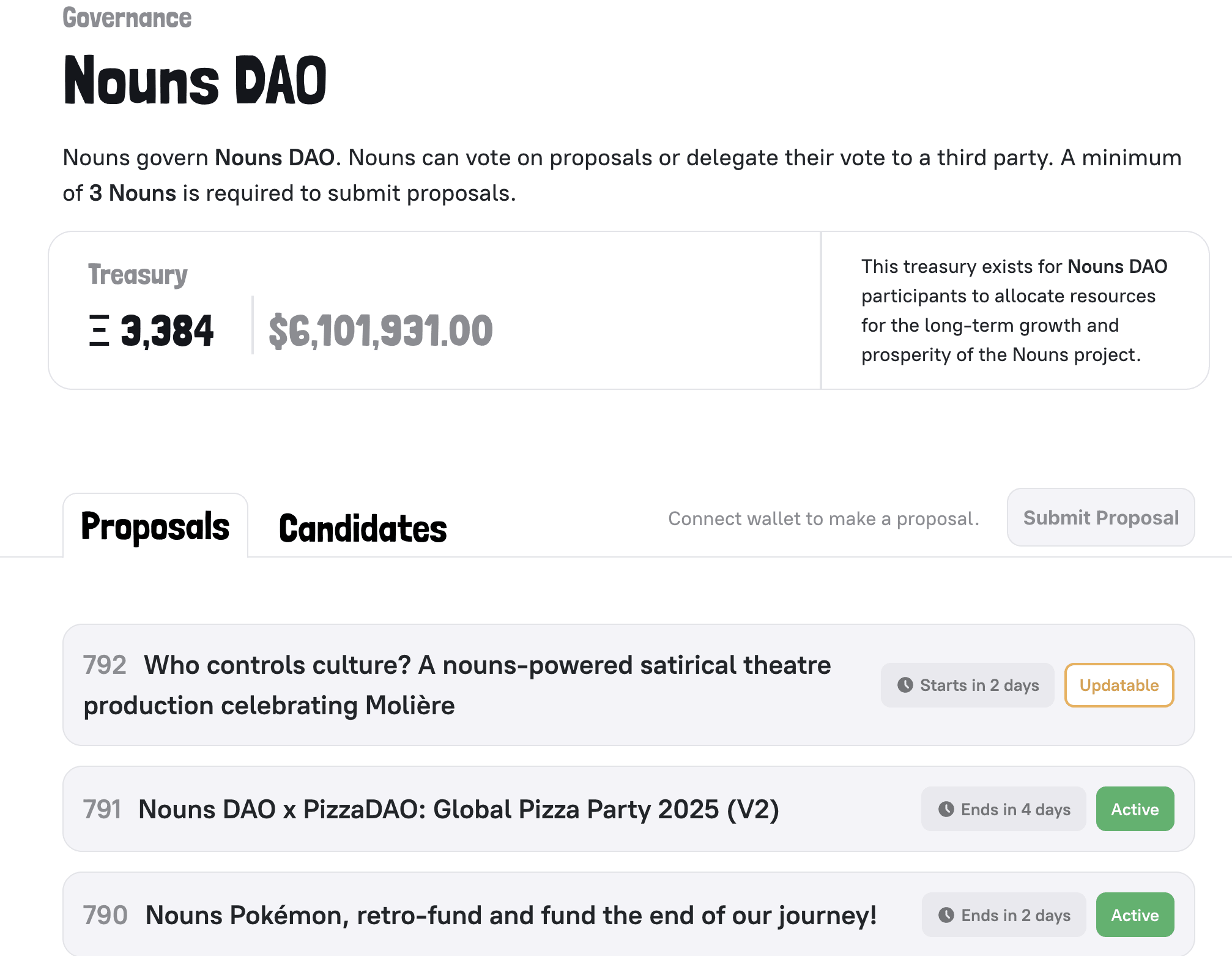
Although quite complex, uploading such SVG images to high-precision NFTs like Azuki or CloneX is relatively impractical, it does not diminish the allure of "on-chain" NFTs. They often represent a certain culture or community strength rather than just the NFTs themselves. For instance, Nouns DAO is dedicated to building identity, community, governance, and a treasury for community use, and Nouns remains active in many Base ecosystem projects to this day.
The founder of Loot, Dom Hofmann, was a co-founder of Vine, and one of his side projects was creating a text-based adventure game called Loot. During its development, he wrote a random item generator, which is software that returns various weapon, armor, and accessory names, leading to the birth of Loot.
In the Loot project, images are embedded in smart contracts in SVG format, returned through tokenURI, and can dynamically change based on on-chain data, achieving the characteristics of being fully on-chain and dynamically generated.
His presentation mode may be extremely simple, just text and simple graphics, but the meaning behind it is much deeper. Dom was once asked, who would contribute how much for the construction of a world without compensation? He replied, "Ultimately, these are just items on a checklist. It's how people perceive it, how they assign value to it. And value does not necessarily equate to an amount measured in dollars; it can be many things." As he said, the concept of Loot has influenced NFTs and Crypto Games, and the Treasure DAO behind the currently active Smol was born out of this concept.
Good for Ordinals?
During the RTFKT incident, the most common sentiment in the community was that this incident was favorable for Ordinals. Ordinals is considered different from most Ethereum NFTs as it is completely on-chain.
The Ordinals protocol on Bitcoin directly writes data such as images and text into transactions through the Taproot script path, inscribing data into "smart Satoshi," and by numbering the Satoshi units, every Satoshi possesses a unique identity. This method allows Ordinals' data to be completely stored on the Bitcoin blockchain, but it also brings high storage costs and limitations on data size.
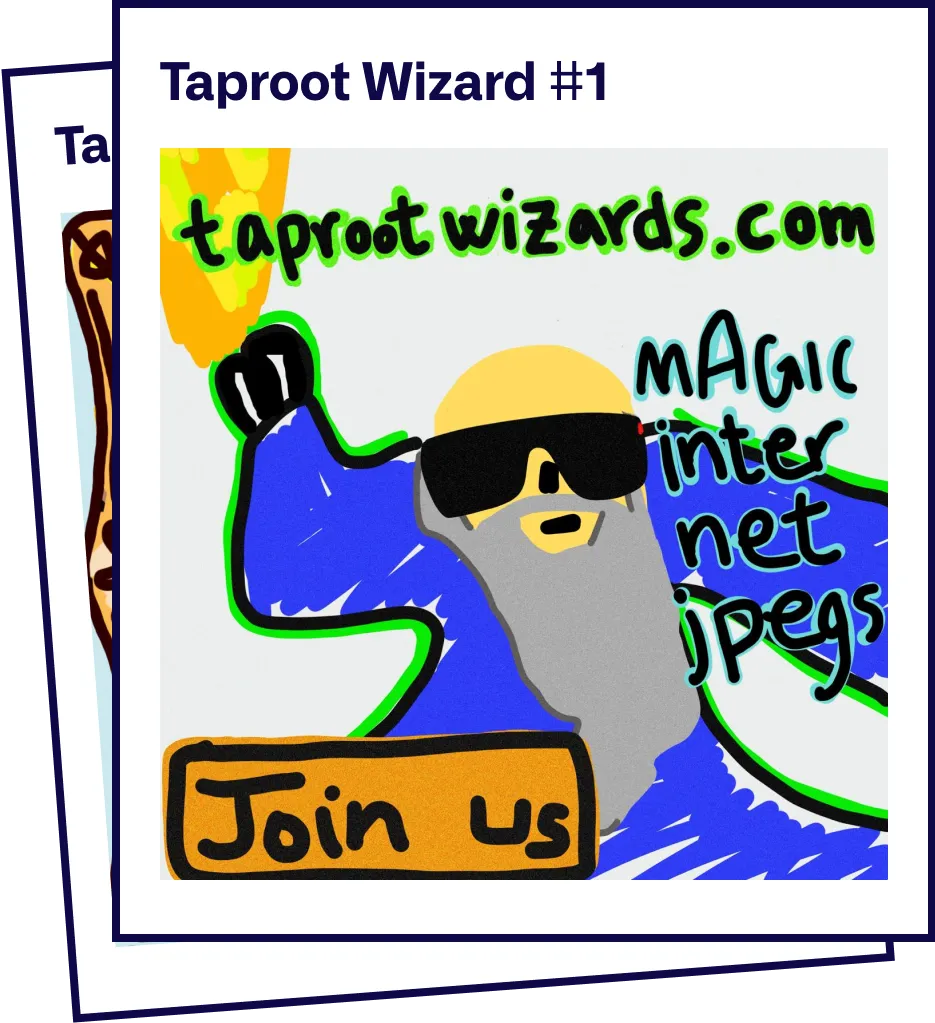
It is precisely due to the high storage costs and limitations on stored data that the NFT ecosystem on BTC is quite unique. Compared to the functional or DAO organizational models of Ethereum, the "survivors" in BTCNFT rely on a deeper cultural heritage. Whether it's the Taproot Wizard, which was issued at an extremely high sale price of 0.2 BTC and carries the legacy of Bitcoin community ads since 2013 (Magic Internet Money Wizard), or NodeMonkes as the first original 10K Bitcoin NFT.
Further reading: (An article analyzing Bitcoin memeNFT, what does the bald wizard Taproot Wizard pay homage to and express?)
In this era, there are hardly any project parties still insisting on doing NFTs, and no one knows what form NFTs will take in the next era. Will it be "securities"? Proof of ownership? Or an independent AI agent? Unlike memecoins, which can develop freely as long as the contract is available for trading on-chain, the ownership of metadata is crucial for non-fungible currencies, whether it’s just an image IP or a functional "receipt." This incident serves as a wake-up call for both project parties and participants.