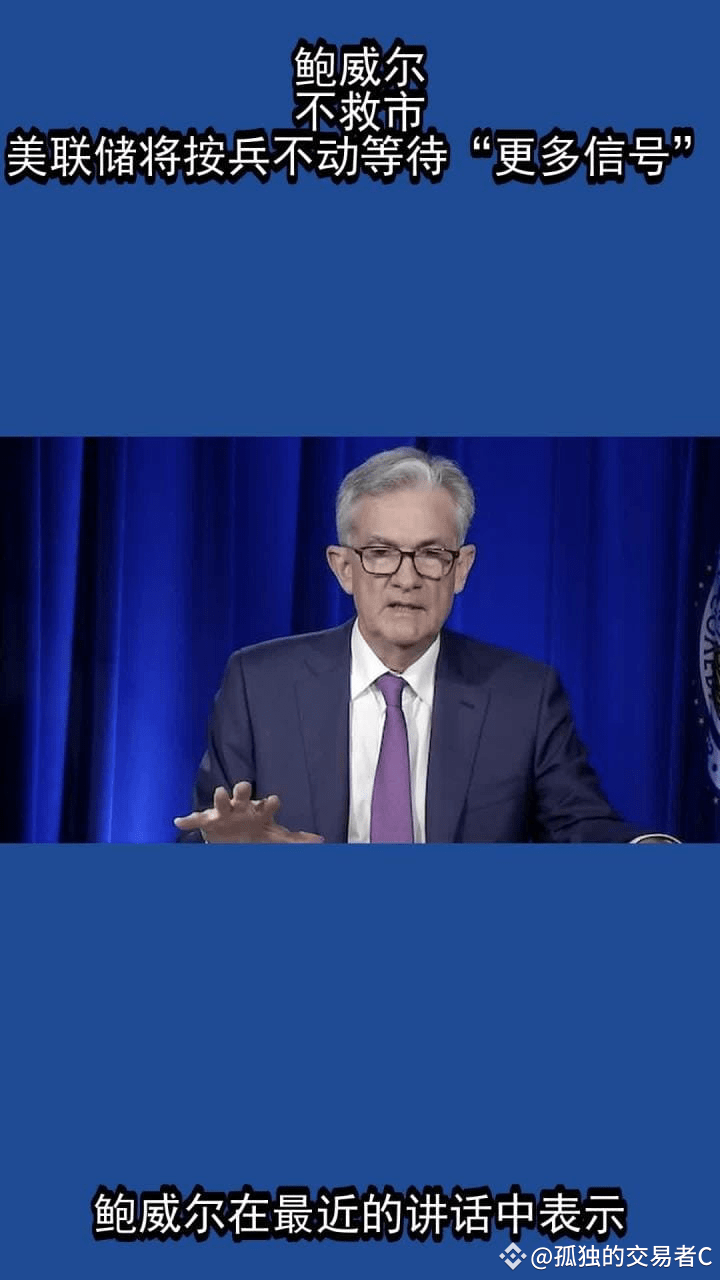
#鲍威尔发言
On April 17, 2025, Federal Reserve Chairman Powell delivered a speech at the Chicago Economic Club, the core content is as follows:
1. Policy Stance and Stagflation Risk
Powell clearly stated that the Federal Reserve is not currently considering interest rate cuts or market intervention, denying the existence of a “Federal Reserve put option.” He expressed concerns about “stagflation” for the first time, pointing out that tariff policies may lead to a contradictory situation of rising inflation and slowing economic growth, putting the Federal Reserve's dual mandate (full employment and price stability) goals in conflict.
2. Impact of Tariff Policies
- Inflation Risk: Powell warned that tariffs are “very likely” to push up short-term inflation, and the effects may be more lasting. The University of Michigan’s one-year inflation expectation in the U.S. has soared to 6.7% in April, the highest since 1981.
- Economic Slowdown: The uncertainty of tariff policies may lead to reduced business investment and slowed economic growth. The Federal Reserve will prioritize anchoring long-term inflation expectations to prevent one-time price increases from evolving into sustained inflation.
3. Market Reaction and Interest Rate Expectations
After Powell's speech, market expectations for a rate cut in May fell below 15%, but the probability of a 25 basis point cut in June remains close to 60%. He emphasized the need to wait for the policy impact to become clear before adjusting monetary policy.
4. Independence of the Federal Reserve
In response to rumors of a “leadership change” in the White House, Powell emphasized that the independence of the Federal Reserve is protected by law, and the government has no right to dismiss officials without cause.
5. Other Key Points
- U.S. economic growth in the first quarter may slow, with core PCE inflation expectations raised to 2.8%.
- The Federal Reserve is slowing the pace of balance sheet reduction (QT) to respond to market turbulence.
In summary, Powell's remarks conveyed a hawkish signal, highlighting the Federal Reserve's policy dilemma between inflation and growth. For more specific details, further related reports may be consulted.
On April 17, 2025, Federal Reserve Chairman Powell delivered a speech at the Chicago Economic Club, the core content is as follows:
1. Policy Stance and Stagflation Risk
Powell clearly stated that the Federal Reserve is not currently considering interest rate cuts or market intervention, denying the existence of a “Federal Reserve put option.” He expressed concerns about “stagflation” for the first time, pointing out that tariff policies may lead to a contradictory situation of rising inflation and slowing economic growth, putting the Federal Reserve's dual mandate (full employment and price stability) goals in conflict.
2. Impact of Tariff Policies
- Inflation Risk: Powell warned that tariffs are “very likely” to push up short-term inflation, and the effects may be more lasting. The University of Michigan’s one-year inflation expectation in the U.S. has soared to 6.7% in April, the highest since 1981.
- Economic Slowdown: The uncertainty of tariff policies may lead to reduced business investment and slowed economic growth. The Federal Reserve will prioritize anchoring long-term inflation expectations to prevent one-time price increases from evolving into sustained inflation.
3. Market Reaction and Interest Rate Expectations
After Powell's speech, market expectations for a rate cut in May fell below 15%, but the probability of a 25 basis point cut in June remains close to 60%. He emphasized the need to wait for the policy impact to become clear before adjusting monetary policy.
4. Independence of the Federal Reserve
In response to rumors of a “leadership change” in the White House, Powell emphasized that the independence of the Federal Reserve is protected by law, and the government has no right to dismiss officials without cause.
5. Other Key Points
- U.S. economic growth in the first quarter may slow, with core PCE inflation expectations raised to 2.8%.
- The Federal Reserve is slowing the pace of balance sheet reduction (QT) to respond to market turbulence.
In summary, Powell's remarks conveyed a hawkish signal, highlighting the Federal Reserve's policy dilemma between inflation and growth. For more specific details, further related reports may be consulted.