


Author: ChandlerZ, Foresight News
In April 2025, the crypto market fell into another bloody storm. The Trump administration once again wielded the tariff stick, causing a sudden change in global financial market sentiment. Bitcoin dropped over 10% in two days, while Ethereum even plummeted by 20% at one point, with liquidation amounts reaching $1.6 billion within 24 hours. Just like the previous historic crashes, this scene triggered collective anxiety: 'Is this the end, or the beginning of a new collapse?'
But if we review the history of the crypto market, we will find that this is not the first time everyone feels 'this is the end'. In fact, every instance of extreme panic is merely a unique ripple within this asset curve. From '312' to '519', from the global financial panic in 2020 to the 'crypto Lehman moment' triggered by the chain reaction of FTX credit collapse, and now to this tariff crisis.
The market's script keeps repeating, yet investors' memories are always short.
This article will reconstruct the 'market scene' of the previous four historical crashes based on real data, comparing dimensions such as decline, sentiment indicators, and macro background, attempting to extract a traceable and predictable pattern from these extreme moments: how does the crypto market bear pressure when risks arise? How does it repeatedly reshape its narrative amidst systemic shocks?
Overview of Historical Crashes: A Familiar Script with Different Triggers
In the past five years, the crypto market has experienced at least four systemic crashes, each triggered by different backgrounds but leading to severe price adjustments and chain/chain reactions.
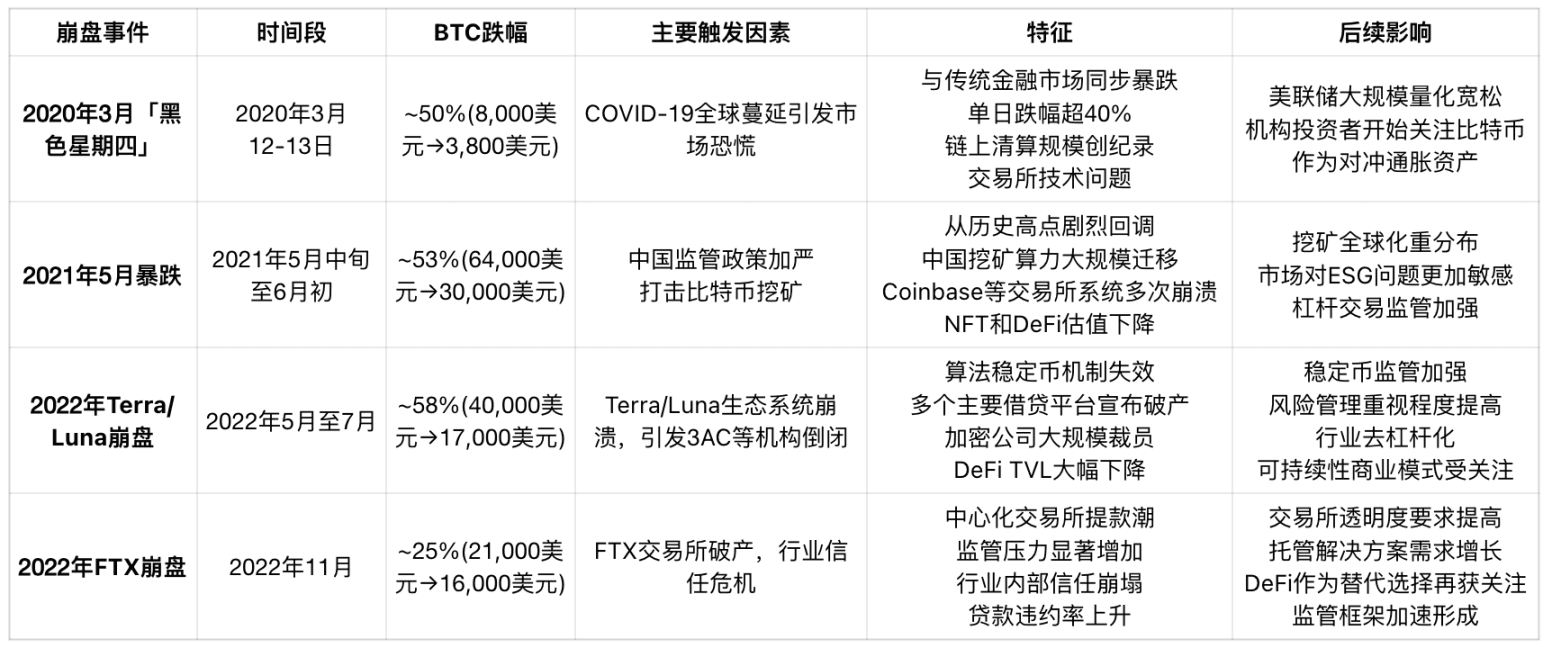
From the data perspective, '312' remains the most brutal crash in history, with BTC and ETH both experiencing declines of over 50% on that day. The total liquidation amount in the network reached $2.93 billion, affecting over 100,000 people, with the largest single liquidation order valued at $58.32 million. This scale of liquidation indicates that market participants at that time generally used high leverage (such as 10 times or even higher), and when prices fell rapidly, the forced liquidation mechanism was triggered, further exacerbating selling pressure and creating a vicious cycle.
At the same time, BitMEX's dramatic 'pulling the plug' on trading exposed the fragility of market liquidity. Other trading platforms were also in chaos, with Bitcoin cross-platform price differences reaching as high as $1,000, and arbitrage bots failing due to trading delays and API overloads. This liquidity crisis quickly led to a rapid shrinkage of market depth, with buy orders almost disappearing and selling pressure completely dominating the situation.
BitMEX, as the platform with the largest short positions at that time, effectively became a 'lifeline' that prevented Bitcoin prices from completely going to zero. If BitMEX had not halted trading, the depletion of its depth could have caused prices to plummet close to zero, triggering a chain collapse on other platforms.
The Domino Effect Under the Black Swan
'312' is not an isolated phenomenon within the crypto market, but rather a microcosm of the global systemic crisis that emerged in early 2020.
The global stock market's panic crash
Since the Nasdaq index hit a historical high of 9,838 points on February 19, 2020, market sentiment turned sharply downward as the COVID-19 pandemic spread globally. In March, U.S. stocks experienced rare circuit breakers, triggering the circuit breaker mechanism three times on March 9, 12, and 16, with the S&P 500 index dropping 9.5% on March 12, the largest one-day drop since 'Black Monday' in 1987, and the VIX fear index soaring to a historic high of 75.47. Meanwhile, the three major European stock indices (Germany, UK, France) and the Asia-Pacific markets (Nikkei, Hang Seng) simultaneously entered technical bear markets, with at least 10 national indices experiencing declines of over 20%.
The systemic sell-off in global capital markets quickly spread to all risk assets, with cryptocurrencies like Bitcoin and Ethereum also facing indiscriminate selling in this context, leading to a sharp decline in market risk appetite and the formation of a 'financialization resonance' where cryptocurrencies and traditional assets synchronously move.
The Bloodbath in the Commodity Market
The traditional commodity market also collapsed completely in this crisis. On March 6, 2020, OPEC and Russia failed to reach an agreement on production cuts, and Saudi Arabia immediately launched a price war, announcing increased production and lowering oil prices, leading to a global energy market crash. On March 9, U.S. crude oil (WTI) plunged 26%, the largest drop since the Gulf War in 1991; on March 18, WTI fell below $20. The uncontrolled plummet of oil, the 'blood of the global economy', heightened investor fears of a deep recession in the global economy.
Moreover, commodities such as gold, copper, and silver also plummeted, marking the difficulty of 'traditional safe-haven assets' in hedging market downturns during the early stages of the crisis, as liquidity panic gradually escalated.
The Dollar Liquidity Crisis and the Paradox of Safe-Haven Assets
With global asset prices collectively declining, the dollar liquidity crisis quickly emerged. Investors rushed to sell various assets for dollar cash, pushing the dollar index (DXY) sharply up from 94.5 to 103.0 in mid-March, reaching a three-year high. This 'cash is king' phenomenon led to indiscriminate selling of all risk assets, and Bitcoin was no exception.
This is a crisis of liquidity contraction, credit deconstruction, and emotional stampede overlapping, where the boundaries between traditional and crypto markets are thoroughly erased.
Policy Hammer: The Chinese Crackdown Storm of May 2021
In May 2021, the crypto market suffered a major blow. After reaching an all-time high of $64,000 in early May, Bitcoin's price halved to $30,000 within just three weeks, with a maximum decline of over 53%. This crash was not due to on-chain systemic failures, nor was it directly impacted by the macroeconomic cycle; its primary cause was a series of high-pressure regulatory policies issued by the Chinese government.
On May 18, the Financial Stability Development Committee of the State Council of China explicitly stated that it would 'crack down on Bitcoin mining and trading activities'. The next day, multiple provinces successively introduced targeted measures to regulate mining, including Inner Mongolia, Qinghai, and Sichuan, which are major computing power clusters. A large number of mining sites were forced to shut down, and computing power rapidly withdrew from the global network, resulting in a nearly 50% decrease in Bitcoin's total network computing power within two months.
Meanwhile, domestic trading platforms' bank account interfaces were scrutinized, and OTC channels tightened, leading to pressure for capital repatriation. Although mainstream exchanges had gradually exited the Chinese market since 2017, the 'policy pressure' still triggered risk-averse sentiment among global investors.
On the on-chain side, the block interval for miners significantly increased, with single block confirmation times soaring from 10 minutes to over 20 minutes, causing network congestion and skyrocketing transfer fees. At the same time, market sentiment indicators plummeted, and the crypto fear and greed index entered the 'extreme fear' zone, with investor concerns about the continuous escalation of policies becoming the dominant force in the short term.
This round of crash is the first time the crypto market has faced 'state-level suppression', leading to a process of rebuilding confidence. In the long run, the migration of computing power has unexpectedly boosted the share of computing power in North America, becoming a key turning point in the geographical transformation of Bitcoin mining.
Systemic Chain Collapse: The Terra/Luna and DeFi Trust Crisis
In May 2022, the algorithmic stablecoin UST of the Terra ecosystem decoupled, triggering a 'Lehman moment' in the decentralized finance world. Bitcoin had slowly fallen from $40,000 at the beginning of the year to around $30,000, and as the UST mechanism failed, the price of Luna plummeted to below $0.0001 within days, quickly destabilizing the DeFi ecosystem. BTC further dropped to $17,000, with the entire adjustment period lasting until July, with the maximum decline reaching 58%.
UST was originally the largest algorithmic stablecoin by market capitalization in the crypto world, with its stability mechanism relying on Luna as the collateral asset. When the market began to question UST's stability, panic spread rapidly. From May 9 to 12, UST continued to decouple, while Luna's price plummeted from $80 to below $0.0001, leading to the collapse of the entire ecosystem within five days.
Due to the Luna Foundation Guard previously using over 1 billion dollars of Bitcoin reserves to support UST exchange rate stability, but ultimately failing to prevent the collapse, this portion of BTC assets further exacerbated market pressure during the sell-off. Meanwhile, many DeFi projects in the Terra ecosystem (Anchor, Mirror) saw their on-chain TVL go to zero, resulting in substantial user losses.
This collapse triggered a chain reaction: the large crypto hedge fund Three Arrows Capital (3AC) held substantial UST and Luna-related positions, which broke after the crisis, leading to a rupture in the capital chain; subsequently, many CeFi lending platforms such as Celsius, Voyager, and BlockFi also experienced bank runs, ultimately entering bankruptcy proceedings.
On-chain performance showed a sharp increase in ETH and BTC transaction volumes as investors tried to flee all high-risk DeFi protocols, leading to a rapid decline in the depth of multiple on-chain liquidity pools, and DEX slippage skyrocketed. The entire market entered a state of extreme panic, with the fear and greed index dropping to its lowest level in recent years.
This represents a 'global calibration' of the internal trust model within the crypto ecosystem, undermining the feasibility expectations of 'algorithmic stablecoins' as financial centers, while prompting regulatory agencies to redefine the risk scope of 'stablecoins'. Subsequently, stablecoins like USDC and DAI gradually emphasized collateral transparency and auditing mechanisms, with market preferences clearly shifting from 'yield incentives' to 'collateral security'.
Collapse of Trust: The Off-Chain Credit Crisis Triggered by the FTX Explosion
In November 2022, the centralized exchange FTX, known as the 'institutional trust anchor', collapsed overnight, becoming one of the most impactful 'black swan' events in crypto history after Mt. Gox. This was a collapse of the internal trust mechanism, directly devastating the credit foundation of the entire crypto financial ecosystem.
The event began with a leaked Alameda balance sheet, revealing its large holdings of its platform currency FTT as collateral, leading to widespread market skepticism about asset quality and repayment capability. On November 6, Binance CEO Zhao Changpeng publicly stated that he would sell his FTT positions, causing FTT prices to plummet and triggering a panic withdrawal by off-chain users. Within 48 hours, the FTX platform was in a bank run crisis, unable to pay back customer funds, and ultimately filed for bankruptcy.
The FTX explosion directly brought down the price of Bitcoin from $21,000 to $16,000, with a decline of over 23% within seven days; Ethereum dropped from around $1,600 to below $1,100. The liquidation amount within 24 hours exceeded $700 million, and although it was not as large as '312', the loss of trust far exceeded what a single price crash could reflect due to the off-chain nature of this crisis affecting multiple mainstream platforms.
On the on-chain side, the exchange volumes of USDT and USDC surged, as users rushed to withdraw funds from exchanges and transfer assets into self-custody wallets. The number of active addresses for cold wallets hit a record high, with 'Not your keys, not your coins' becoming the main theme on social media. Meanwhile, the DeFi ecosystem remained relatively stable during this crisis, with on-chain protocols like Aave, Compound, and MakerDAO not experiencing systemic risks under the premise of transparent liquidation mechanisms and sufficient asset collateral, reflecting the preliminary verification of decentralized architecture's resilience.
More significantly, the collapse of FTX has prompted global regulatory agencies to re-examine the systemic risks in the crypto market. The U.S. SEC, CFTC, and financial regulators from multiple countries have initiated investigations and hearings, pushing issues like 'exchange transparency', 'reserve proof', and 'off-chain asset audits' to become mainstream agendas.
This crisis is no longer merely 'price-level fluctuations', but a comprehensive handover of the 'trust baton'. It forces the crypto industry to return from superficial price optimism to fundamental risk control and transparent governance.
The systemic external pressure triggered by the 2025 tariff crisis
Unlike the internal crises of the crypto industry such as the FTX explosion, the recent market crash triggered by Trump's imposition of 'minimum benchmark tariffs' once again reproduced the global characteristics seen during '312'. It is not merely the collapse of a single platform or the loss of control of a single asset, but a systemic financial panic triggered by macro-level geopolitical conflicts, drastic changes in global trade structures, and uncertainties in monetary policy.
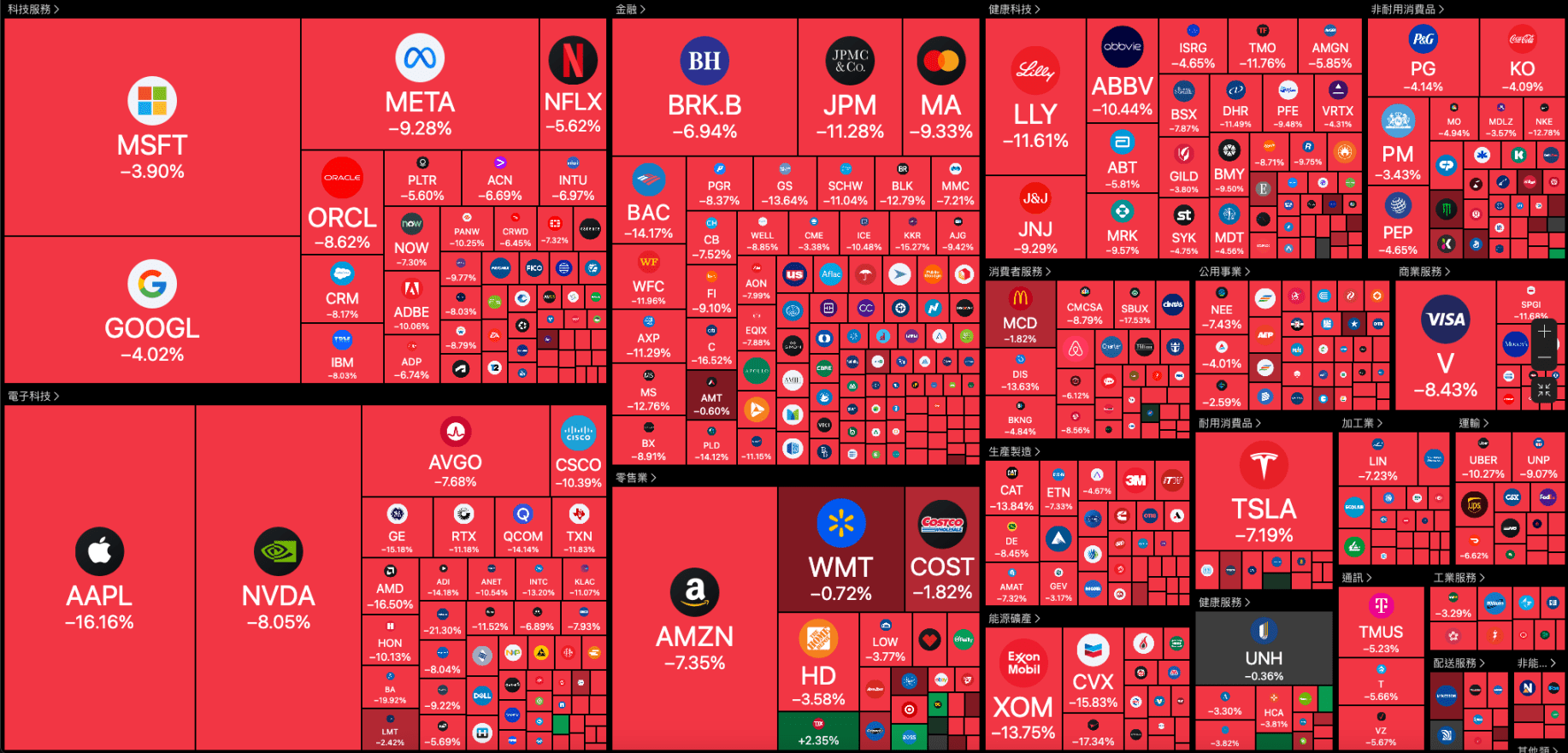
On April 7, U.S. stocks continued to open lower, with tech and chip stocks suffering substantial losses, Nvidia down over 7%, Tesla nearly 7%, Apple over 6%, and Amazon and AMD down over 5%, while Intel and ASML fell over 3%. Blockchain concept stocks generally fell, with Coinbase down about 9% and Canaan Technology down about 9%.
Interestingly, after news broke that Trump was considering suspending tariffs on certain countries for 90 days, the S&P 500 index initially dropped over 4.7% before rising nearly 3.9%, the Dow Jones initially dropped over 4.4% before rising more than 2.3%, and the Nasdaq initially dropped nearly 5.2% before rising over 4.5%, with BTC breaking through $81,000.
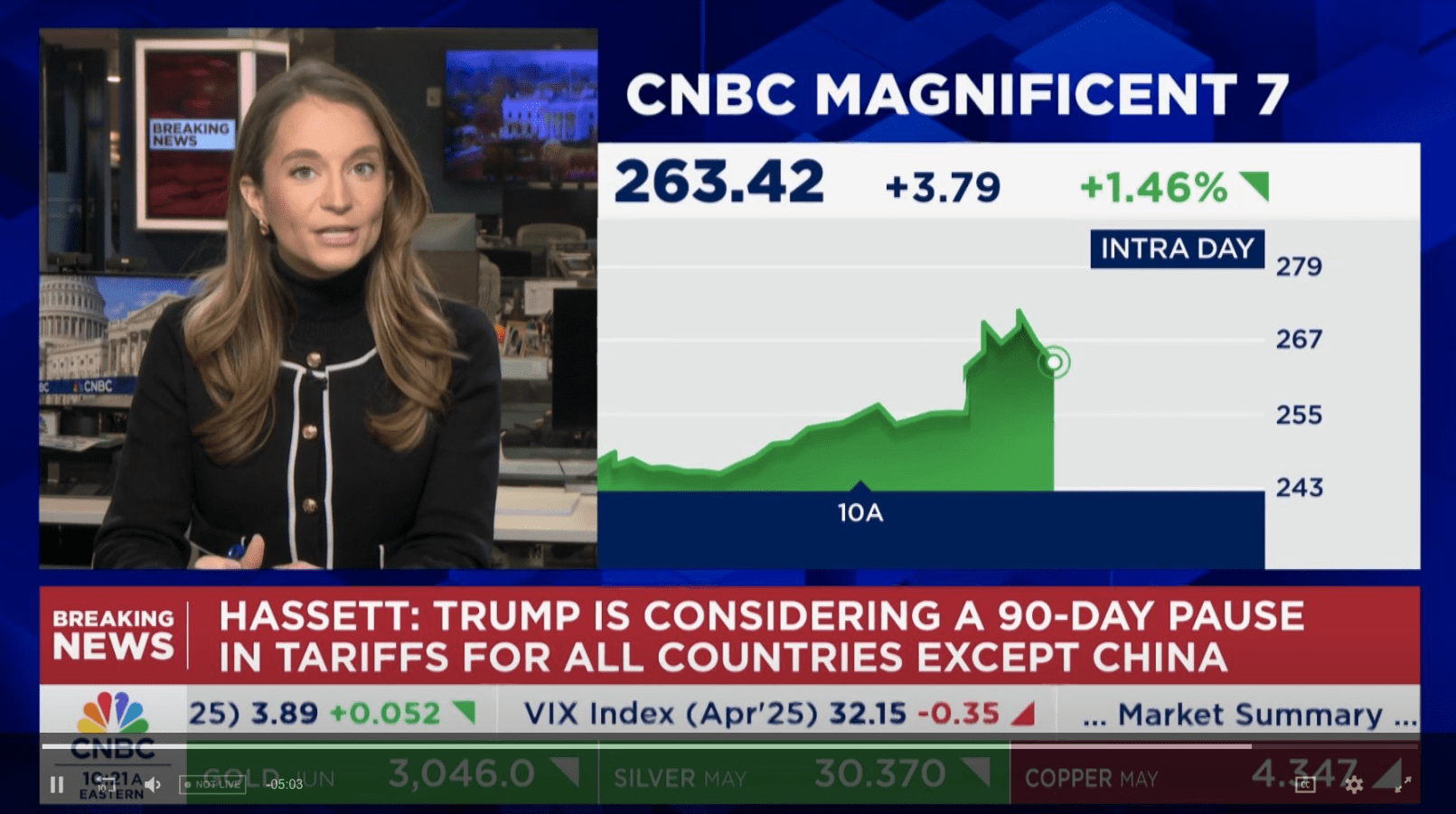
Subsequently, the White House told CNBC that any claims about a 90-day suspension of tariffs were 'fake news', leading to another downturn in global capital markets. This shows the pressure the Trump administration's tariff policy has on global financial markets.
Surviving Multiple Crashes: Causes of Risk, Transmission Paths, and Market Memory
From '312' to the 'tariff war', several significant crashes in the crypto market depict the different types of systemic pressures faced by this emerging asset class. These crashes reflect not just 'differences in decline', but also the evolutionary trajectory of the crypto market in dimensions such as liquidity structure, credit models, macro coupling, and policy sensitivity.
The core difference lies in the change of the 'hierarchical' nature of risk sources.
The 2020 '312' and the 2025 tariff crisis both belong to crashes dominated by 'external systemic risks', driven by a 'cash is king' sentiment, leading to the collective sell-off of on-chain and off-chain assets, representing an extreme manifestation of the interconnectedness of global financial markets.
The FTX and Terra/Luna events reflect a crisis of 'internal credit/mechanism collapse', exposing structural vulnerabilities under centralized and algorithmic systems; the Chinese policy crackdown is a concentrated manifestation of geopolitical pressure, showing how the crypto network passively responds when facing sovereign-level forces.
Beyond these differences, there are also some noteworthy commonalities:
First, the 'emotional leverage' in the crypto market is extremely high. Every price correction is quickly amplified through social media, leveraged markets, and on-chain panic behaviors, forming a stampede.
Second, the risk transmission between on-chain and off-chain is becoming increasingly tight. From the FTX explosion to the whale on-chain liquidation in 2025, off-chain credit events are no longer confined to 'exchange issues', but will transmit to on-chain and vice versa.
Third, market adaptability is increasing, but structural anxiety is also on the rise. DeFi demonstrated resilience during the FTX crisis, yet exposed logical flaws during the Terra/Luna collapse; on-chain data is becoming increasingly public and transparent, but large liquidations and whale manipulation still frequently trigger violent fluctuations.
Ultimately, every crash pushes the crypto market towards 'maturation', not more stability, but greater complexity. Higher leverage tools, smarter liquidation models, and more complex game roles mean that future crashes will not be fewer, but understanding them must be deeper.
It is noteworthy that every crash has not ended the crypto market. On the contrary, it has pushed the market towards deeper structural and institutional reconstruction. This does not mean the market will become more stable; rather, increasing complexity often means that future crashes will not be fewer. However, understanding the severe price fluctuations of such assets must be deeper, more systematic, and more compatible with the dual dimensions of 'cross-system shocks' and 'internal mechanism imbalances'.
These crises tell us not that 'the crypto market will ultimately fail', but that it must continually seek to position itself between global financial order, decentralization ideals, and risk gaming mechanisms.