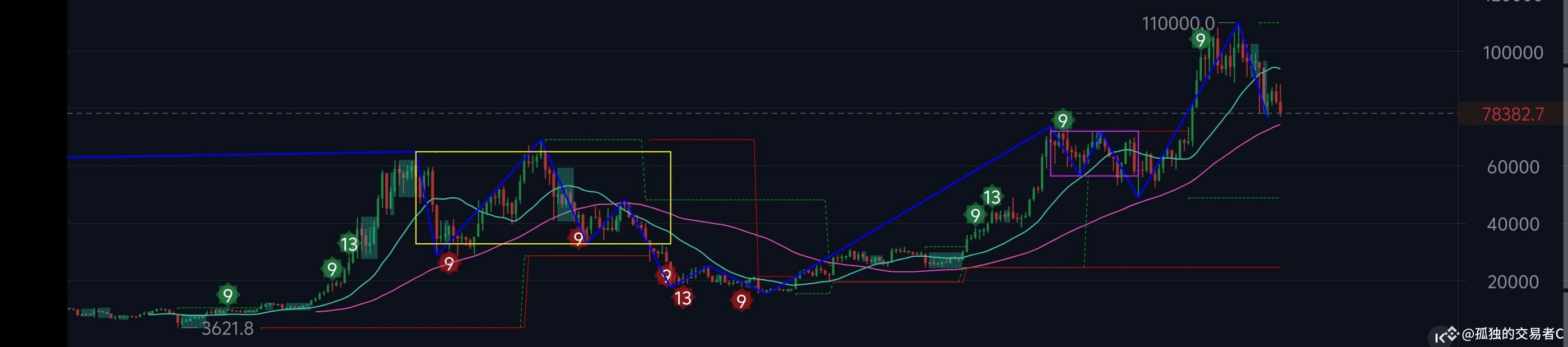
#比特币对抗市场 On Monday, as U.S. stock futures plummeted, President Trump stated that the market sell-off was not a deliberate manipulation, and that he had spoken with European and Asian leaders about tariff issues. He also mentioned that he could not predict what would happen in the market. When asked about market performance, he said sometimes the market needs to 'take medicine'.
On Monday, U.S. stock futures fell sharply, reflecting concerns about the global economic outlook, especially the escalation of trade tensions. President Trump's remarks aimed to downplay government responsibility and emphasize communication with other leaders, but also exposed the market's anxiety over policy uncertainty.
Key Point Analysis:
Trade Policy and Market Panic
Trump hinted that trade friction remains a core issue. Previously, the U.S. imposed tariffs on multiple countries, leading to disruptions in global supply chains, rising corporate costs, and investor concerns about recession risks.
The sharp decline in U.S. stock futures may stem from market expectations of an escalation in the trade war, such as the deadlock in U.S.-China negotiations and EU countermeasures, leading to heightened risk aversion.
Trump's 'the market needs to take medicine' theory
This metaphor may convey two layers of information:
Short-term pain theory: Believing that market adjustments are a necessary process, akin to the pain before 'treatment', implying that policy goals (such as trade balance) take precedence over short-term fluctuations.
Shifting responsibility: Attributing the plunge to the market's own adjustments rather than policy consequences, downplaying the necessity of government intervention in the market.
Such remarks may further exacerbate market concerns regarding the unpredictability of White House policies, undermining investor confidence.
Long-term impact of policy uncertainty
Trump's frequent use of tariffs as a negotiating tool during his tenure has led to the fragmentation of global trade rules. Companies face pressure to restructure supply chains, and capital expenditures tend to be cautious, dragging down economic growth.
The space for the Federal Reserve's monetary policy is limited (e.g., the effects of rate cuts may be offset by trade risks), and market volatility may remain high.
Deep-seated impacts and follow-up points of interest:
Global market linkage risks: If U.S. stocks remain volatile, it may trigger sell-offs in Asia-Pacific and European stock markets, and safe-haven assets (gold, yen, U.S. Treasuries) may further strengthen.
On Monday, U.S. stock futures fell sharply, reflecting concerns about the global economic outlook, especially the escalation of trade tensions. President Trump's remarks aimed to downplay government responsibility and emphasize communication with other leaders, but also exposed the market's anxiety over policy uncertainty.
Key Point Analysis:
Trade Policy and Market Panic
Trump hinted that trade friction remains a core issue. Previously, the U.S. imposed tariffs on multiple countries, leading to disruptions in global supply chains, rising corporate costs, and investor concerns about recession risks.
The sharp decline in U.S. stock futures may stem from market expectations of an escalation in the trade war, such as the deadlock in U.S.-China negotiations and EU countermeasures, leading to heightened risk aversion.
Trump's 'the market needs to take medicine' theory
This metaphor may convey two layers of information:
Short-term pain theory: Believing that market adjustments are a necessary process, akin to the pain before 'treatment', implying that policy goals (such as trade balance) take precedence over short-term fluctuations.
Shifting responsibility: Attributing the plunge to the market's own adjustments rather than policy consequences, downplaying the necessity of government intervention in the market.
Such remarks may further exacerbate market concerns regarding the unpredictability of White House policies, undermining investor confidence.
Long-term impact of policy uncertainty
Trump's frequent use of tariffs as a negotiating tool during his tenure has led to the fragmentation of global trade rules. Companies face pressure to restructure supply chains, and capital expenditures tend to be cautious, dragging down economic growth.
The space for the Federal Reserve's monetary policy is limited (e.g., the effects of rate cuts may be offset by trade risks), and market volatility may remain high.
Deep-seated impacts and follow-up points of interest:
Global market linkage risks: If U.S. stocks remain volatile, it may trigger sell-offs in Asia-Pacific and European stock markets, and safe-haven assets (gold, yen, U.S. Treasuries) may further strengthen.