

#vanarchain
vanarchain
292,407 visualizações
7,362 a discutir
Popular
Mais recente

·
--
VANRY dispara 57,6% em um único dia; os contratos em aberto na Binance (derivativos) saltam 63%; e o capital está entrando rapidamente neste antes ignorado Layer-1.
A Vanar Chain se posiciona como uma blockchain voltada para aplicações de entretenimento e IA. No começo, a empolgação estava morna, mas este aumento simultâneo de volume e preço indica que um grupo principal está se adiantando para ocupar o espaço. A velocidade de crescimento do OI (open interest) em contratos supera bem o aumento do preço à vista; o sentimento de alavancagem já foi acendido, e as oscilações no curto prazo devem ser ainda mais amplificadas.
Pontos a observar:
- Se consegue sustentar o nível do pullback após a ruptura, isso define se será uma alta forte ou apenas uma armadilha para atração de compradores
- Se a taxa de funding dos contratos continuar disparando, cuidado com os “inserções/agulhadas” após a superlotação dos compradores
- A continuação da tendência depende da confirmação no mercado à vista; não fique só olhando o gráfico
A janela de explosão de small caps (moedas alternativas de baixa capitalização) costuma ser muito curta. Antes de perseguir a alta, pense primeiro em onde cortar perdas; não trate o FOMO como fé.
$VANRY #VANRY #Altcoin #VanarChain
VANRY dispara 57,6% em um único dia; os contratos em aberto na Binance (derivativos) saltam 63%; e o capital está entrando rapidamente neste antes ignorado Layer-1.
A Vanar Chain se posiciona como uma blockchain voltada para aplicações de entretenimento e IA. No começo, a empolgação estava morna, mas este aumento simultâneo de volume e preço indica que um grupo principal está se adiantando para ocupar o espaço. A velocidade de crescimento do OI (open interest) em contratos supera bem o aumento do preço à vista; o sentimento de alavancagem já foi acendido, e as oscilações no curto prazo devem ser ainda mais amplificadas.
Pontos a observar:
- Se consegue sustentar o nível do pullback após a ruptura, isso define se será uma alta forte ou apenas uma armadilha para atração de compradores
- Se a taxa de funding dos contratos continuar disparando, cuidado com os “inserções/agulhadas” após a superlotação dos compradores
- A continuação da tendência depende da confirmação no mercado à vista; não fique só olhando o gráfico
A janela de explosão de small caps (moedas alternativas de baixa capitalização) costuma ser muito curta. Antes de perseguir a alta, pense primeiro em onde cortar perdas; não trate o FOMO como fé.
$VANRY #VANRY #Altcoin #VanarChain
A Vanar Chain se posiciona como uma blockchain voltada para aplicações de entretenimento e IA. No começo, a empolgação estava morna, mas este aumento simultâneo de volume e preço indica que um grupo principal está se adiantando para ocupar o espaço. A velocidade de crescimento do OI (open interest) em contratos supera bem o aumento do preço à vista; o sentimento de alavancagem já foi acendido, e as oscilações no curto prazo devem ser ainda mais amplificadas.
Pontos a observar:
- Se consegue sustentar o nível do pullback após a ruptura, isso define se será uma alta forte ou apenas uma armadilha para atração de compradores
- Se a taxa de funding dos contratos continuar disparando, cuidado com os “inserções/agulhadas” após a superlotação dos compradores
- A continuação da tendência depende da confirmação no mercado à vista; não fique só olhando o gráfico
A janela de explosão de small caps (moedas alternativas de baixa capitalização) costuma ser muito curta. Antes de perseguir a alta, pense primeiro em onde cortar perdas; não trate o FOMO como fé.
$VANRY #VANRY #Altcoin #VanarChain
39

·
--
Em Alta
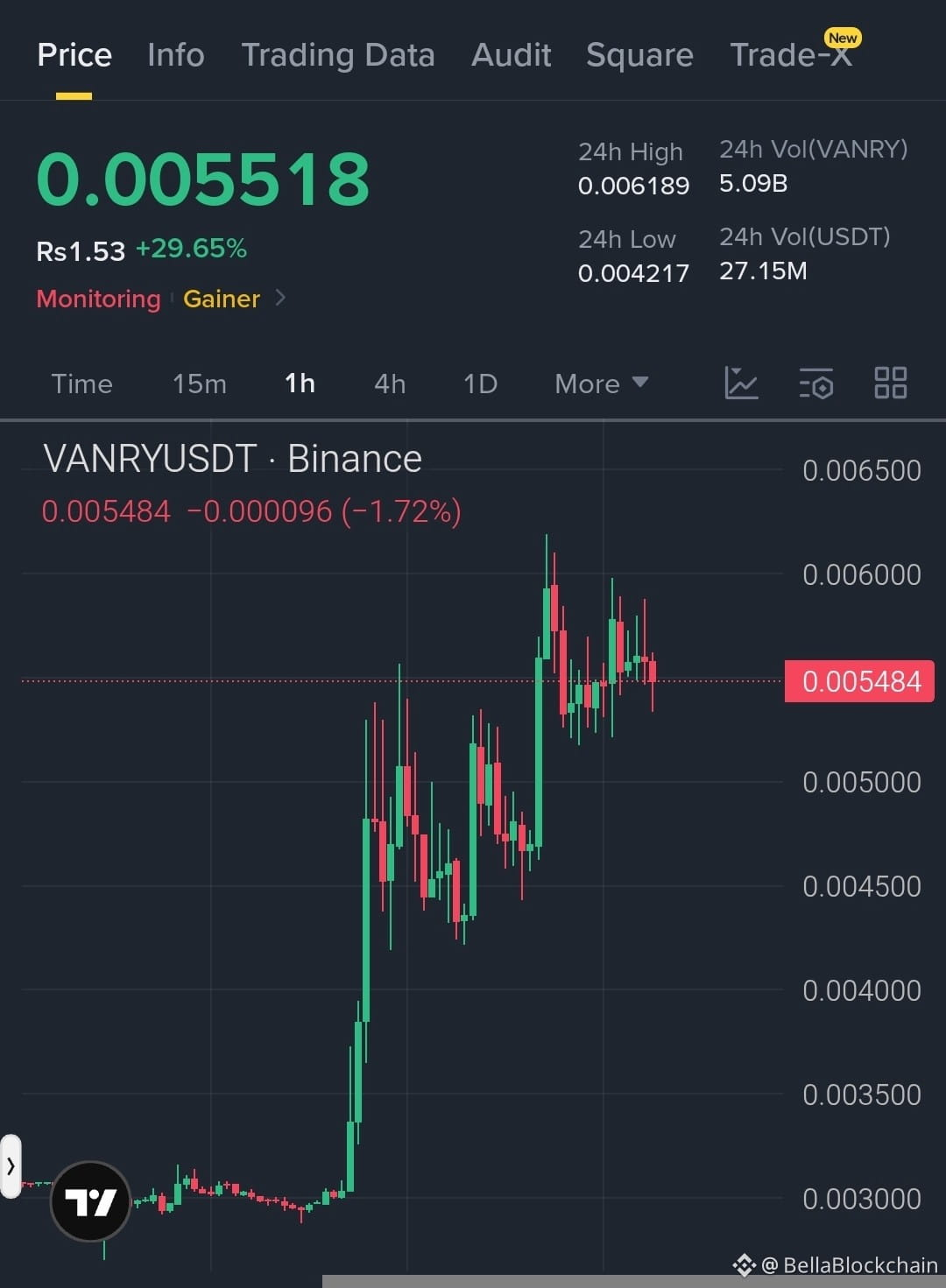
$VANRY demonstrou uma corrida bullish explosiva, disparando violentamente de uma mínima de 24 horas de 0.004217 para garantir uma máxima de 24 horas de 0.006189. Este incrível impulso coloca o ativo firmemente entre os maiores ganhadores, com um aumento impressionante de 29.65%. Após o seu pico, o preço entrou em uma fase de consolidação, oscilando de forma dinâmica em torno do nível de 0.005518 enquanto touros e ursos disputam espaço. O layout estrutural geral permanece fortemente a favor dos compradores, e manter este patamar mais alto de acumulação sugere que o ativo está montando a liquidez necessária para um possível teste novamente de suas máximas recentes.
Alvo 1: 0.005850 Alvo 2: 0.006200 Alvo 3: 0.006600
#VANRY #VanarChain #Layer1
$VANRY
{future}(VANRYUSDT)
$VANRY demonstrou uma corrida bullish explosiva, disparando violentamente de uma mínima de 24 horas de 0.004217 para garantir uma máxima de 24 horas de 0.006189. Este incrível impulso coloca o ativo firmemente entre os maiores ganhadores, com um aumento impressionante de 29.65%. Após o seu pico, o preço entrou em uma fase de consolidação, oscilando de forma dinâmica em torno do nível de 0.005518 enquanto touros e ursos disputam espaço. O layout estrutural geral permanece fortemente a favor dos compradores, e manter este patamar mais alto de acumulação sugere que o ativo está montando a liquidez necessária para um possível teste novamente de suas máximas recentes.
Alvo 1: 0.005850 Alvo 2: 0.006200 Alvo 3: 0.006600
#VANRY #VanarChain #Layer1
$VANRY
Alvo 1: 0.005850 Alvo 2: 0.006200 Alvo 3: 0.006600
#VANRY #VanarChain #Layer1
$VANRY
1
103

·
--
$VANRY 两天翻倍之后,暗影看到的不是追高机会,而是筹码结构正在异变。
Depois que Vanar Chain dobrou em dois dias, o que a Sombra vê não é uma oportunidade de perseguir altas — é que a estrutura dos chips está se transformando.
A Vanar Chain saiu de US$ 0.0049 para a máxima de US$ 0.0098 e já recuou 21%. Mas o que merece mais atenção não é o preço — é que o volume de negociação em 24h atingiu 240%. Uma moeda com market cap de US$ 16M movimentou US$ 40M em um dia, o que indica uma rotação muito densa de curto prazo, enquanto o capital realmente travado é escasso. A alta de +25% de dois dias atrás parece mais uma acumulação; a alta de +42% de hoje parece mais uma distribuição.
A disputa entre touros e ursos não é se a VANRY ainda pode subir, e sim se esse pump foi Breakout ou Distribution. Em moedas com turnover de 240%, a liquidez pode mudar instantaneamente de um mercado comprador para um mercado vendedor — e, quando a direção se inverte, quem persegue alta não vai esperar o seu stop ser acionado.
Observe US$ 0.0055: esse é o intervalo de成交 (negócios) concentrados antes do disparo. Se romper para baixo, as posições longas que negociaram US$ 40M nas últimas 24h devem ser liquidadas.
Você chama de re-acumulação após um dia de +42%; eu chamo de distribuição clássica com turnover de 240%. Comente no campo abaixo sobre sua direção de posição e veja quem está “tocando pedra” atravessando o rio.
#暗影萨满 #VANRY #VanarChain
$VANRY 两天翻倍之后,暗影看到的不是追高机会,而是筹码结构正在异变。
Depois que Vanar Chain dobrou em dois dias, o que a Sombra vê não é uma oportunidade de perseguir altas — é que a estrutura dos chips está se transformando.
A Vanar Chain saiu de US$ 0.0049 para a máxima de US$ 0.0098 e já recuou 21%. Mas o que merece mais atenção não é o preço — é que o volume de negociação em 24h atingiu 240%. Uma moeda com market cap de US$ 16M movimentou US$ 40M em um dia, o que indica uma rotação muito densa de curto prazo, enquanto o capital realmente travado é escasso. A alta de +25% de dois dias atrás parece mais uma acumulação; a alta de +42% de hoje parece mais uma distribuição.
A disputa entre touros e ursos não é se a VANRY ainda pode subir, e sim se esse pump foi Breakout ou Distribution. Em moedas com turnover de 240%, a liquidez pode mudar instantaneamente de um mercado comprador para um mercado vendedor — e, quando a direção se inverte, quem persegue alta não vai esperar o seu stop ser acionado.
Observe US$ 0.0055: esse é o intervalo de成交 (negócios) concentrados antes do disparo. Se romper para baixo, as posições longas que negociaram US$ 40M nas últimas 24h devem ser liquidadas.
Você chama de re-acumulação após um dia de +42%; eu chamo de distribuição clássica com turnover de 240%. Comente no campo abaixo sobre sua direção de posição e veja quem está “tocando pedra” atravessando o rio.
#暗影萨满 #VANRY #VanarChain
Depois que Vanar Chain dobrou em dois dias, o que a Sombra vê não é uma oportunidade de perseguir altas — é que a estrutura dos chips está se transformando.
A Vanar Chain saiu de US$ 0.0049 para a máxima de US$ 0.0098 e já recuou 21%. Mas o que merece mais atenção não é o preço — é que o volume de negociação em 24h atingiu 240%. Uma moeda com market cap de US$ 16M movimentou US$ 40M em um dia, o que indica uma rotação muito densa de curto prazo, enquanto o capital realmente travado é escasso. A alta de +25% de dois dias atrás parece mais uma acumulação; a alta de +42% de hoje parece mais uma distribuição.
A disputa entre touros e ursos não é se a VANRY ainda pode subir, e sim se esse pump foi Breakout ou Distribution. Em moedas com turnover de 240%, a liquidez pode mudar instantaneamente de um mercado comprador para um mercado vendedor — e, quando a direção se inverte, quem persegue alta não vai esperar o seu stop ser acionado.
Observe US$ 0.0055: esse é o intervalo de成交 (negócios) concentrados antes do disparo. Se romper para baixo, as posições longas que negociaram US$ 40M nas últimas 24h devem ser liquidadas.
Você chama de re-acumulação após um dia de +42%; eu chamo de distribuição clássica com turnover de 240%. Comente no campo abaixo sobre sua direção de posição e veja quem está “tocando pedra” atravessando o rio.
#暗影萨满 #VANRY #VanarChain
55
·
--
Em Alta
🚀 VANRY está no centro das atenções!
A Vanar Chain (VANRY) tem chamado a atenção de investidores nos últimos dias com um alto volume e um movimento de preço forte.
Por que acompanhar a VANRY?
🔹 Blockchain Layer-1 compatível com EVM
🔹 Foco em IA, jogos e RWA (Real World Assets)
🔹 Comissões baixas e operações rápidas
🔹 Continua expandindo seu ecossistema
Tecnicamente, se o forte volume continuar, o mercado pode ser acompanhado de perto para o próximo impulso. Porém, devido à alta volatilidade, a gestão de riscos é importante.
Na sua opinião, a VANRY vai continuar essa alta, ou virá uma correção de curto prazo?
#VanarChain RY #Binance #Crypto_Jobs🎯 pto #Altcoins! ins #blockchain
🚀 VANRY está no centro das atenções!
A Vanar Chain (VANRY) tem chamado a atenção de investidores nos últimos dias com um alto volume e um movimento de preço forte.
Por que acompanhar a VANRY?
🔹 Blockchain Layer-1 compatível com EVM
🔹 Foco em IA, jogos e RWA (Real World Assets)
🔹 Comissões baixas e operações rápidas
🔹 Continua expandindo seu ecossistema
Tecnicamente, se o forte volume continuar, o mercado pode ser acompanhado de perto para o próximo impulso. Porém, devido à alta volatilidade, a gestão de riscos é importante.
Na sua opinião, a VANRY vai continuar essa alta, ou virá uma correção de curto prazo?
#VanarChain RY #Binance #Crypto_Jobs🎯 pto #Altcoins! ins #blockchain
A Vanar Chain (VANRY) tem chamado a atenção de investidores nos últimos dias com um alto volume e um movimento de preço forte.
Por que acompanhar a VANRY?
🔹 Blockchain Layer-1 compatível com EVM
🔹 Foco em IA, jogos e RWA (Real World Assets)
🔹 Comissões baixas e operações rápidas
🔹 Continua expandindo seu ecossistema
Tecnicamente, se o forte volume continuar, o mercado pode ser acompanhado de perto para o próximo impulso. Porém, devido à alta volatilidade, a gestão de riscos é importante.
Na sua opinião, a VANRY vai continuar essa alta, ou virá uma correção de curto prazo?
#VanarChain RY #Binance #Crypto_Jobs🎯 pto #Altcoins! ins #blockchain

89

·
--
🔥 Vanar Chain ($VANRY) enfrenta um anúncio de remoção da plataforma, com queda de mais de 21% em 24 horas
O preço já caiu para 0.0033 USDT, e a capitalização de mercado caiu para apenas 7,83 milhões.
Mas o que é ainda mais fatal do que a remoção é o lado da oferta: a quantidade total de tokens aumentará de 2,4 bilhões para 10 bilhões, com 62% em estado de lock (bloqueio). Assim que esses tokens forem desbloqueados, a pressão vendedora potencial será muito maior do que a capitalização atual.
A expectativa de escassez de liquidez + expansão da oferta — um duplo golpe negativo em sincronia.
#VanarChain #VANRY
🔥 Vanar Chain ($VANRY) enfrenta um anúncio de remoção da plataforma, com queda de mais de 21% em 24 horas
O preço já caiu para 0.0033 USDT, e a capitalização de mercado caiu para apenas 7,83 milhões.
Mas o que é ainda mais fatal do que a remoção é o lado da oferta: a quantidade total de tokens aumentará de 2,4 bilhões para 10 bilhões, com 62% em estado de lock (bloqueio). Assim que esses tokens forem desbloqueados, a pressão vendedora potencial será muito maior do que a capitalização atual.
A expectativa de escassez de liquidez + expansão da oferta — um duplo golpe negativo em sincronia.
#VanarChain #VANRY
O preço já caiu para 0.0033 USDT, e a capitalização de mercado caiu para apenas 7,83 milhões.
Mas o que é ainda mais fatal do que a remoção é o lado da oferta: a quantidade total de tokens aumentará de 2,4 bilhões para 10 bilhões, com 62% em estado de lock (bloqueio). Assim que esses tokens forem desbloqueados, a pressão vendedora potencial será muito maior do que a capitalização atual.
A expectativa de escassez de liquidez + expansão da oferta — um duplo golpe negativo em sincronia.
#VanarChain #VANRY
126

·
--
O cenário da blockchain L1 está acompanhando intensamente a descoberta estrutural de preços da Vanar Chain ($VANRY ). Após um ciclo de mercado altamente volátil, o token nativo atualmente estabelece consolidação estrutural dentro da estreita faixa de liquidez de US$ 0,0053 a US$ 0,0069. Embora a expansão de longo prazo do ecossistema em sistemas de dados orientados por IA permaneça ativa, os livros de ordens spot de curto prazo enfrentaram rotação massiva de capital e pressão estrutural.
O principal catalisador fundamental que suprime o sentimento do mercado no curto prazo é a implementação oficial de uma "Monitoring Tag" pela Binance. Este sinal de revisão regulatória alerta os participantes do mercado de que o ativo está passando por uma avaliação mais próxima quanto aos padrões de listagem e conformidade. Embora isso não represente uma estrutura imediata de deslistagem, introduziu grande atrito para o varejo, forçando os traders a concluírem questionários obrigatórios de risco para gerenciar posições abertas em derivativos.
Tecnicamente, $VANRY está montando uma estrutura defensiva feroz após atingir um fundo localizado acentuado de vários meses em US$ 0,00288. Uma recuperação repentina de +8,5% intradiária disparou forte absorção de risco com alto volume, embora o impulso técnico amplo ainda esteja fortemente limitado pela grande oferta acima (supply) no caminho. As mesas algorítmicas indicam que um fechamento de candle com alto volume acima do bloco-chave de resistência entre US$ 0,0060 – US$ 0,0065 é fundamentalmente necessário para eliminar a pressão vendedora de curto prazo e acionar uma mudança estrutural bullish válida.
Os investidores são fortemente aconselhados a ignorar vieses emocionais, administrar alavancagem elevada com disciplina extrema e esperar por estruturas confirmadas de duplo fundo antes de adicionar agressivamente exposição macro. #VANRY #VanarChain #CryptoAnalysis #Layer1 #BinanceSquare
{future}(VANRYUSDT)
O cenário da blockchain L1 está acompanhando intensamente a descoberta estrutural de preços da Vanar Chain ($VANRY ). Após um ciclo de mercado altamente volátil, o token nativo atualmente estabelece consolidação estrutural dentro da estreita faixa de liquidez de US$ 0,0053 a US$ 0,0069. Embora a expansão de longo prazo do ecossistema em sistemas de dados orientados por IA permaneça ativa, os livros de ordens spot de curto prazo enfrentaram rotação massiva de capital e pressão estrutural.
O principal catalisador fundamental que suprime o sentimento do mercado no curto prazo é a implementação oficial de uma "Monitoring Tag" pela Binance. Este sinal de revisão regulatória alerta os participantes do mercado de que o ativo está passando por uma avaliação mais próxima quanto aos padrões de listagem e conformidade. Embora isso não represente uma estrutura imediata de deslistagem, introduziu grande atrito para o varejo, forçando os traders a concluírem questionários obrigatórios de risco para gerenciar posições abertas em derivativos.
Tecnicamente, $VANRY está montando uma estrutura defensiva feroz após atingir um fundo localizado acentuado de vários meses em US$ 0,00288. Uma recuperação repentina de +8,5% intradiária disparou forte absorção de risco com alto volume, embora o impulso técnico amplo ainda esteja fortemente limitado pela grande oferta acima (supply) no caminho. As mesas algorítmicas indicam que um fechamento de candle com alto volume acima do bloco-chave de resistência entre US$ 0,0060 – US$ 0,0065 é fundamentalmente necessário para eliminar a pressão vendedora de curto prazo e acionar uma mudança estrutural bullish válida.
Os investidores são fortemente aconselhados a ignorar vieses emocionais, administrar alavancagem elevada com disciplina extrema e esperar por estruturas confirmadas de duplo fundo antes de adicionar agressivamente exposição macro. #VANRY #VanarChain #CryptoAnalysis #Layer1 #BinanceSquare
O principal catalisador fundamental que suprime o sentimento do mercado no curto prazo é a implementação oficial de uma "Monitoring Tag" pela Binance. Este sinal de revisão regulatória alerta os participantes do mercado de que o ativo está passando por uma avaliação mais próxima quanto aos padrões de listagem e conformidade. Embora isso não represente uma estrutura imediata de deslistagem, introduziu grande atrito para o varejo, forçando os traders a concluírem questionários obrigatórios de risco para gerenciar posições abertas em derivativos.
Tecnicamente, $VANRY está montando uma estrutura defensiva feroz após atingir um fundo localizado acentuado de vários meses em US$ 0,00288. Uma recuperação repentina de +8,5% intradiária disparou forte absorção de risco com alto volume, embora o impulso técnico amplo ainda esteja fortemente limitado pela grande oferta acima (supply) no caminho. As mesas algorítmicas indicam que um fechamento de candle com alto volume acima do bloco-chave de resistência entre US$ 0,0060 – US$ 0,0065 é fundamentalmente necessário para eliminar a pressão vendedora de curto prazo e acionar uma mudança estrutural bullish válida.
Os investidores são fortemente aconselhados a ignorar vieses emocionais, administrar alavancagem elevada com disciplina extrema e esperar por estruturas confirmadas de duplo fundo antes de adicionar agressivamente exposição macro. #VANRY #VanarChain #CryptoAnalysis #Layer1 #BinanceSquare
222

·
--
🚀 Análise da VANRY: Isso é o começo de um movimento maior?
$VANRY explodiu com forte volume após semanas de acumulação, mostrando retomada do impulso de alta. A recente ruptura atraiu traders de momentum e impulsionou a atividade de negociação de forma acentuadamente mais alta
$BNB $BTC
#VANRY #VanarChain #BinanceSquareTalks #CryptoCommunitys #BTC
🚀 Análise da VANRY: Isso é o começo de um movimento maior?
$VANRY explodiu com forte volume após semanas de acumulação, mostrando retomada do impulso de alta. A recente ruptura atraiu traders de momentum e impulsionou a atividade de negociação de forma acentuadamente mais alta
$BNB $BTC
#VANRY #VanarChain #BinanceSquareTalks #CryptoCommunitys #BTC
$VANRY explodiu com forte volume após semanas de acumulação, mostrando retomada do impulso de alta. A recente ruptura atraiu traders de momentum e impulsionou a atividade de negociação de forma acentuadamente mais alta
$BNB $BTC
#VANRY #VanarChain #BinanceSquareTalks #CryptoCommunitys #BTC
204

·
--
🚨 $VANRY Reversão em Alta Ativa! Preço Dispara +21,18% enquanto o Gainer está em Monitoramento e rebate! 🚀📈👇
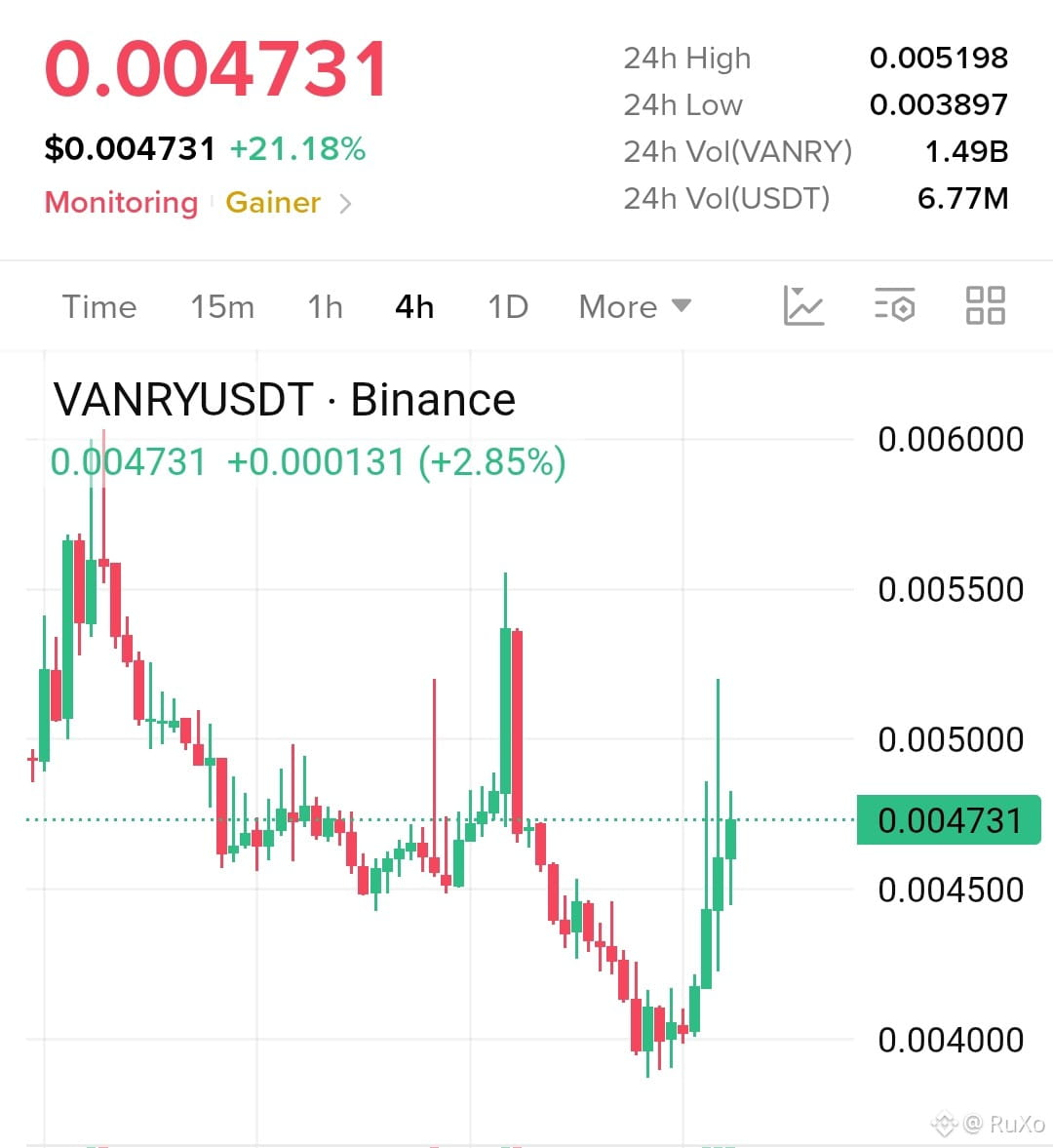
A Vanar Chain ($VANRY) está executando uma sequência dinâmica de recuperação no seu gráfico de trading à vista, atualmente negociando em alta em $0,004731! Depois de defender seu piso local de acumulação perto da mínima de 24h ($0,003897), um forte volume comprador empurrou a ação do preço para cima, em direção aos níveis de oferta estruturais próximos à máxima de 24h ($0,005198). Sustentados por um pool ativo de volume diário de $6,77M USDT girando pela matriz do setor de Monitoramento, os touros estão garantindo momentum tático como o principal Gainer. Trave seus parâmetros imediatamente:
🟢 ENTRADA LONGA (Continuação do Rompimento):
✅ Gatilho: Fechar ACIMA de $0,005250 🎯 Alvos: $0,005850 | $0,006500+ 🚀 🛑 SL: $0,004400
🔴 ENTRADA CURTA (Operação de Rejeição de Faixa):
✅ Gatilho: Fechar ABAIXO de $0,004350 🎯 Alvos: $0,003880 | $0,003400- 📉 🛑 SL: $0,004850
💡 SABEDORIA DO TRADER: Preste atenção cuidadosa à configuração do timeframe — esta análise técnica mapeia diretamente para a estrutura da linha do tempo ativa de 4 horas (4h)! Enquanto o desempenho macro de 24h segue forte no verde (+21,18%), a vela ativa de 4H confirma a progressão bullish em andamento, registrando um tick positivo de +2,85% (+0,000131). Evite perseguir este pico de volatilidade às cegas com ordens de execução do mercado sobrealavancadas bem embaixo da resistência — deixe o timeframe de 4H garantir um fechamento de vela limpo completamente fora desses parâmetros para validar absorção sustentável de volume antes de entrar. Preservação de capital é prioridade número um! 📊🔒
⚠️ Ativos do setor de Monitoramento com alta velocidade, em movimentos de recuperação acentuados, carregam descargas de alavancagem localizadas e varreduras rápidas de volatilidade perto de picos em múltiplas sessões. Aperte seus parâmetros de risco e faça sua própria pesquisa (DYOR)! ⚠️
{future}(VANRYUSDT)
➡️ CLIQUE NO LINK DO MOEDA MARCADO $VANRY ABAIXO ⬅️
#BinanceSquare #VANRYUSDT #VanarChain #TechnicalAnalysis #CryptoTrading
🚨 $VANRY Reversão em Alta Ativa! Preço Dispara +21,18% enquanto o Gainer está em Monitoramento e rebate! 🚀📈👇
A Vanar Chain ($VANRY) está executando uma sequência dinâmica de recuperação no seu gráfico de trading à vista, atualmente negociando em alta em $0,004731! Depois de defender seu piso local de acumulação perto da mínima de 24h ($0,003897), um forte volume comprador empurrou a ação do preço para cima, em direção aos níveis de oferta estruturais próximos à máxima de 24h ($0,005198). Sustentados por um pool ativo de volume diário de $6,77M USDT girando pela matriz do setor de Monitoramento, os touros estão garantindo momentum tático como o principal Gainer. Trave seus parâmetros imediatamente:
🟢 ENTRADA LONGA (Continuação do Rompimento):
✅ Gatilho: Fechar ACIMA de $0,005250 🎯 Alvos: $0,005850 | $0,006500+ 🚀 🛑 SL: $0,004400
🔴 ENTRADA CURTA (Operação de Rejeição de Faixa):
✅ Gatilho: Fechar ABAIXO de $0,004350 🎯 Alvos: $0,003880 | $0,003400- 📉 🛑 SL: $0,004850
💡 SABEDORIA DO TRADER: Preste atenção cuidadosa à configuração do timeframe — esta análise técnica mapeia diretamente para a estrutura da linha do tempo ativa de 4 horas (4h)! Enquanto o desempenho macro de 24h segue forte no verde (+21,18%), a vela ativa de 4H confirma a progressão bullish em andamento, registrando um tick positivo de +2,85% (+0,000131). Evite perseguir este pico de volatilidade às cegas com ordens de execução do mercado sobrealavancadas bem embaixo da resistência — deixe o timeframe de 4H garantir um fechamento de vela limpo completamente fora desses parâmetros para validar absorção sustentável de volume antes de entrar. Preservação de capital é prioridade número um! 📊🔒
⚠️ Ativos do setor de Monitoramento com alta velocidade, em movimentos de recuperação acentuados, carregam descargas de alavancagem localizadas e varreduras rápidas de volatilidade perto de picos em múltiplas sessões. Aperte seus parâmetros de risco e faça sua própria pesquisa (DYOR)! ⚠️
➡️ CLIQUE NO LINK DO MOEDA MARCADO $VANRY ABAIXO ⬅️
#BinanceSquare #VANRYUSDT #VanarChain #TechnicalAnalysis #CryptoTrading
A Vanar Chain ($VANRY) está executando uma sequência dinâmica de recuperação no seu gráfico de trading à vista, atualmente negociando em alta em $0,004731! Depois de defender seu piso local de acumulação perto da mínima de 24h ($0,003897), um forte volume comprador empurrou a ação do preço para cima, em direção aos níveis de oferta estruturais próximos à máxima de 24h ($0,005198). Sustentados por um pool ativo de volume diário de $6,77M USDT girando pela matriz do setor de Monitoramento, os touros estão garantindo momentum tático como o principal Gainer. Trave seus parâmetros imediatamente:
🟢 ENTRADA LONGA (Continuação do Rompimento):
✅ Gatilho: Fechar ACIMA de $0,005250 🎯 Alvos: $0,005850 | $0,006500+ 🚀 🛑 SL: $0,004400
🔴 ENTRADA CURTA (Operação de Rejeição de Faixa):
✅ Gatilho: Fechar ABAIXO de $0,004350 🎯 Alvos: $0,003880 | $0,003400- 📉 🛑 SL: $0,004850
💡 SABEDORIA DO TRADER: Preste atenção cuidadosa à configuração do timeframe — esta análise técnica mapeia diretamente para a estrutura da linha do tempo ativa de 4 horas (4h)! Enquanto o desempenho macro de 24h segue forte no verde (+21,18%), a vela ativa de 4H confirma a progressão bullish em andamento, registrando um tick positivo de +2,85% (+0,000131). Evite perseguir este pico de volatilidade às cegas com ordens de execução do mercado sobrealavancadas bem embaixo da resistência — deixe o timeframe de 4H garantir um fechamento de vela limpo completamente fora desses parâmetros para validar absorção sustentável de volume antes de entrar. Preservação de capital é prioridade número um! 📊🔒
⚠️ Ativos do setor de Monitoramento com alta velocidade, em movimentos de recuperação acentuados, carregam descargas de alavancagem localizadas e varreduras rápidas de volatilidade perto de picos em múltiplas sessões. Aperte seus parâmetros de risco e faça sua própria pesquisa (DYOR)! ⚠️
➡️ CLIQUE NO LINK DO MOEDA MARCADO $VANRY ABAIXO ⬅️
#BinanceSquare #VANRYUSDT #VanarChain #TechnicalAnalysis #CryptoTrading
357

·
--
$VANRY @Vanar #VanarChain
{future}(VANRYUSDT)
Vanar começou a partir do projeto Terra Virtua, fundado em 2018. Em seguida, evoluiu para a Vanar Chain, uma blockchain Layer-1 focada em IA, Web3, games e enterprise.
CEO
O CEO e também cofundador da Vanar é atualmente Jawad Ashraf. Ele tem mais de 30 anos de experiência no setor de tecnologia e liderou a transformação da Terra Virtua em Vanar Chain.
Visão
A visão da Vanar é:
Ser uma infraestrutura blockchain para adoção em massa (mainstream).
Unir IA + Blockchain para que aplicações e agentes de IA possam operar com segurança, rapidez e baixo custo.
Ser a base da economia digital da próxima geração (Agentic Economy).
Missão
A Vanar tem alguns focos principais:
Blockchain Layer-1 de alta velocidade.
Custos de transação extremamente baixos.
Amigável ao meio ambiente (carbono neutro).
Apoiar IA, Gaming, RWA (Real World Assets), PayFi e aplicações enterprise.
Facilitar a adoção de Web3 por empresas grandes, sem barreiras técnicas.
#GrubMarketFilesConfidentiallyForUSIPO
#KospiCrashes11%OnChinaDUVChipThreat
$VANRY @Vanarchain #VanarChain
Vanar começou a partir do projeto Terra Virtua, fundado em 2018. Em seguida, evoluiu para a Vanar Chain, uma blockchain Layer-1 focada em IA, Web3, games e enterprise.
CEO
O CEO e também cofundador da Vanar é atualmente Jawad Ashraf. Ele tem mais de 30 anos de experiência no setor de tecnologia e liderou a transformação da Terra Virtua em Vanar Chain.
Visão
A visão da Vanar é:
Ser uma infraestrutura blockchain para adoção em massa (mainstream).
Unir IA + Blockchain para que aplicações e agentes de IA possam operar com segurança, rapidez e baixo custo.
Ser a base da economia digital da próxima geração (Agentic Economy).
Missão
A Vanar tem alguns focos principais:
Blockchain Layer-1 de alta velocidade.
Custos de transação extremamente baixos.
Amigável ao meio ambiente (carbono neutro).
Apoiar IA, Gaming, RWA (Real World Assets), PayFi e aplicações enterprise.
Facilitar a adoção de Web3 por empresas grandes, sem barreiras técnicas.
#GrubMarketFilesConfidentiallyForUSIPO
#KospiCrashes11%OnChinaDUVChipThreat
Vanar começou a partir do projeto Terra Virtua, fundado em 2018. Em seguida, evoluiu para a Vanar Chain, uma blockchain Layer-1 focada em IA, Web3, games e enterprise.
CEO
O CEO e também cofundador da Vanar é atualmente Jawad Ashraf. Ele tem mais de 30 anos de experiência no setor de tecnologia e liderou a transformação da Terra Virtua em Vanar Chain.
Visão
A visão da Vanar é:
Ser uma infraestrutura blockchain para adoção em massa (mainstream).
Unir IA + Blockchain para que aplicações e agentes de IA possam operar com segurança, rapidez e baixo custo.
Ser a base da economia digital da próxima geração (Agentic Economy).
Missão
A Vanar tem alguns focos principais:
Blockchain Layer-1 de alta velocidade.
Custos de transação extremamente baixos.
Amigável ao meio ambiente (carbono neutro).
Apoiar IA, Gaming, RWA (Real World Assets), PayFi e aplicações enterprise.
Facilitar a adoção de Web3 por empresas grandes, sem barreiras técnicas.
#GrubMarketFilesConfidentiallyForUSIPO
#KospiCrashes11%OnChinaDUVChipThreat

1
2
88

Verificado
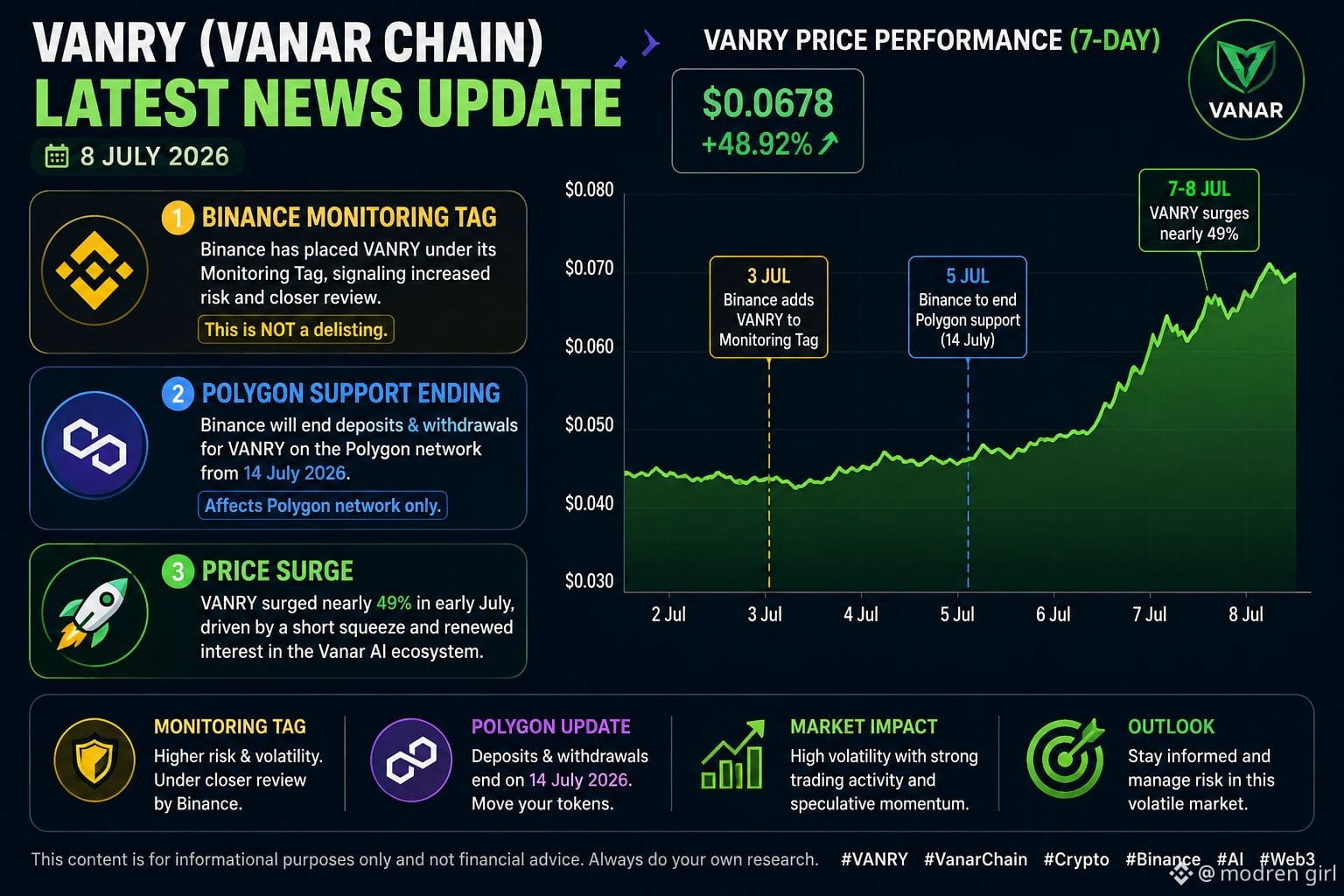
🚨 ÚLTIMA HORA: $VANRY UPDATE 🚨
⚠️ A Binance colocou $VANRY sob sua Tag de Monitoramento, sinalizando maior risco e acompanhamento mais próximo. Isto NÃO é um cancelamento de listagem (delisting), mas significa que o token será revisado com mais atenção. 👀
📈 Apesar da notícia, $VANRY disparou quase 49% 🚀, impulsionado por um forte short squeeze (aperto de posição vendida) e pelo crescente interesse no ecossistema Vanar AI. 🤖🔥
💡 Espere maior volatilidade enquanto os traders aguardam o próximo grande movimento.
📊 Fique por dentro. Negocie com sabedoria. 💪
#VANRY #VanarChain #Crypto 🚀 #Binance 💛 #Altcoins #Web3 🌐 #AI 🤖 #CryptoNews 📰
{spot}(VANRYUSDT)
{spot}(NVDABUSDT)
{spot}(BNTUSDT)
🚨 ÚLTIMA HORA: $VANRY UPDATE 🚨
⚠️ A Binance colocou $VANRY sob sua Tag de Monitoramento, sinalizando maior risco e acompanhamento mais próximo. Isto NÃO é um cancelamento de listagem (delisting), mas significa que o token será revisado com mais atenção. 👀
📈 Apesar da notícia, $VANRY disparou quase 49% 🚀, impulsionado por um forte short squeeze (aperto de posição vendida) e pelo crescente interesse no ecossistema Vanar AI. 🤖🔥
💡 Espere maior volatilidade enquanto os traders aguardam o próximo grande movimento.
📊 Fique por dentro. Negocie com sabedoria. 💪
#VANRY #VanarChain #Crypto 🚀 #Binance 💛 #Altcoins #Web3 🌐 #AI 🤖 #CryptoNews 📰
⚠️ A Binance colocou $VANRY sob sua Tag de Monitoramento, sinalizando maior risco e acompanhamento mais próximo. Isto NÃO é um cancelamento de listagem (delisting), mas significa que o token será revisado com mais atenção. 👀
📈 Apesar da notícia, $VANRY disparou quase 49% 🚀, impulsionado por um forte short squeeze (aperto de posição vendida) e pelo crescente interesse no ecossistema Vanar AI. 🤖🔥
💡 Espere maior volatilidade enquanto os traders aguardam o próximo grande movimento.
📊 Fique por dentro. Negocie com sabedoria. 💪
#VANRY #VanarChain #Crypto 🚀 #Binance 💛 #Altcoins #Web3 🌐 #AI 🤖 #CryptoNews 📰
1
2
330
As duas maiores ações recentes da Vanar Chain ($VANRY) geraram grande atenção da comunidade — migração para a rede Base + aumento da oferta total para 10 bilhões de moedas.
Muitos temem que a inflação pressione o preço; no curto prazo, a pressão vendedora é inevitável. Porém, a longo prazo, essa mudança talvez signifique um recomeço:
✅ Apesar do grande aumento da oferta total, 62% dos tokens ainda permanecem em lock, então o incremento de circulação na prática é controlável
✅ O foco do ecossistema foi formalmente transferido para incentivos de IA; a mudança de setor traz novas possibilidades de imaginação
✅ O encerramento do mecanismo de staking desencadeia uma redistribuição de liquidez, e a estrutura de carteiras tende a ficar mais saudável
No momento, a cotação é de US$ 0,00466, com volume de negociação nas últimas 24 horas de US$ 13,06 milhões e valor de mercado de aproximadamente US$ 11,06 milhões. O que você acha da migração e da expansão da Vanar desta vez?
$VANRY #VanarChain #Base
As duas maiores ações recentes da Vanar Chain ($VANRY) geraram grande atenção da comunidade — migração para a rede Base + aumento da oferta total para 10 bilhões de moedas.
Muitos temem que a inflação pressione o preço; no curto prazo, a pressão vendedora é inevitável. Porém, a longo prazo, essa mudança talvez signifique um recomeço:
✅ Apesar do grande aumento da oferta total, 62% dos tokens ainda permanecem em lock, então o incremento de circulação na prática é controlável
✅ O foco do ecossistema foi formalmente transferido para incentivos de IA; a mudança de setor traz novas possibilidades de imaginação
✅ O encerramento do mecanismo de staking desencadeia uma redistribuição de liquidez, e a estrutura de carteiras tende a ficar mais saudável
No momento, a cotação é de US$ 0,00466, com volume de negociação nas últimas 24 horas de US$ 13,06 milhões e valor de mercado de aproximadamente US$ 11,06 milhões. O que você acha da migração e da expansão da Vanar desta vez?
$VANRY #VanarChain #Base
Muitos temem que a inflação pressione o preço; no curto prazo, a pressão vendedora é inevitável. Porém, a longo prazo, essa mudança talvez signifique um recomeço:
✅ Apesar do grande aumento da oferta total, 62% dos tokens ainda permanecem em lock, então o incremento de circulação na prática é controlável
✅ O foco do ecossistema foi formalmente transferido para incentivos de IA; a mudança de setor traz novas possibilidades de imaginação
✅ O encerramento do mecanismo de staking desencadeia uma redistribuição de liquidez, e a estrutura de carteiras tende a ficar mais saudável
No momento, a cotação é de US$ 0,00466, com volume de negociação nas últimas 24 horas de US$ 13,06 milhões e valor de mercado de aproximadamente US$ 11,06 milhões. O que você acha da migração e da expansão da Vanar desta vez?
$VANRY #VanarChain #Base
1
110

·
--
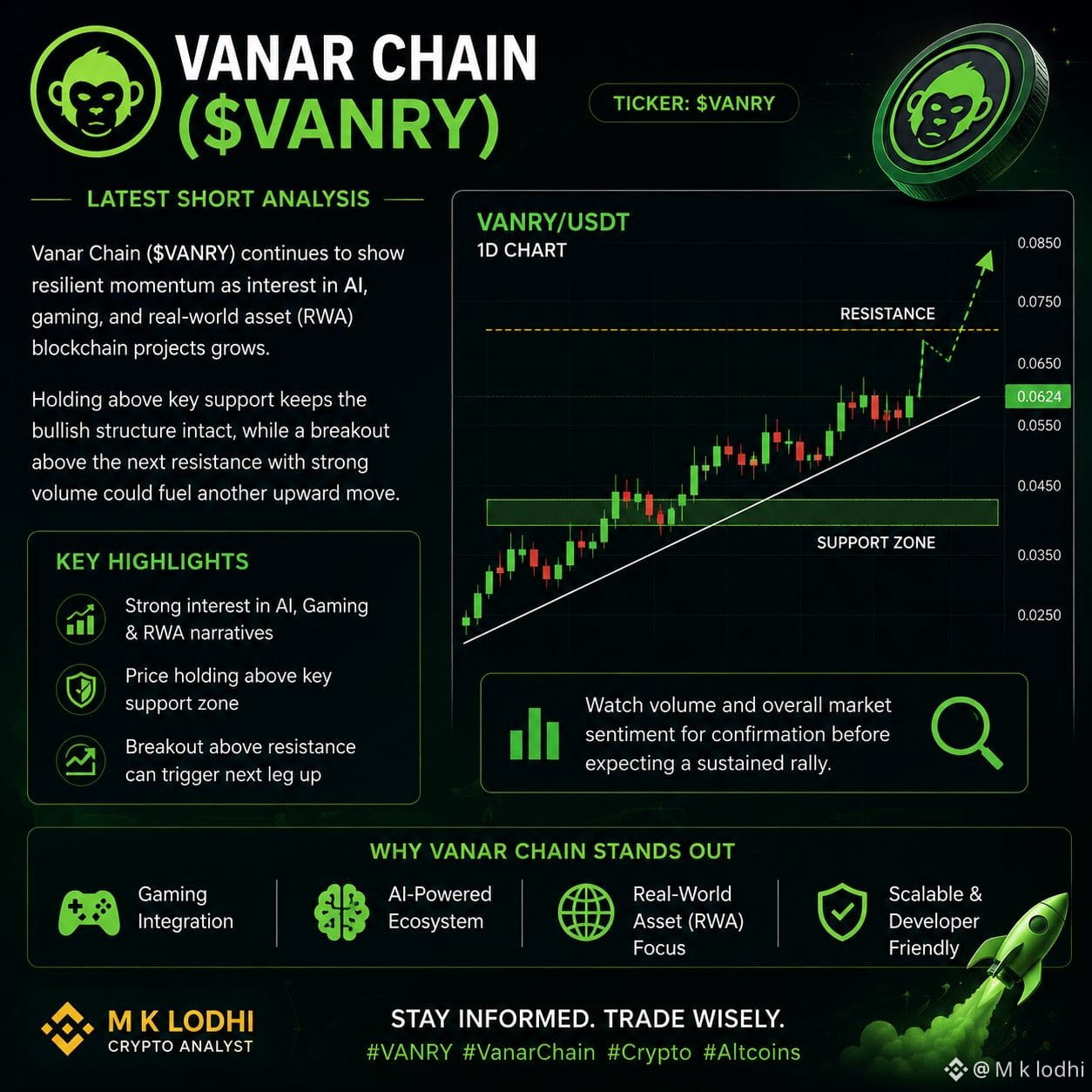
$VANRY A Vanar Chain ($VANRY) continua a mostrar um momento resiliente à medida que cresce o interesse por projetos de blockchain de IA, jogos e ativos do mundo real (RWA). Manter-se acima de um suporte-chave mantém a estrutura de alta intacta, enquanto uma ruptura acima da próxima resistência com forte volume poderia impulsionar mais um movimento ascendente. Os traders devem observar o volume e o sentimento geral do mercado para confirmação antes de esperar uma alta sustentada. 🚀📈 #VANRY #VanarChain #Crypto #altcoins
{spot}(VANRYUSDT)
$VANRY A Vanar Chain ($VANRY) continua a mostrar um momento resiliente à medida que cresce o interesse por projetos de blockchain de IA, jogos e ativos do mundo real (RWA). Manter-se acima de um suporte-chave mantém a estrutura de alta intacta, enquanto uma ruptura acima da próxima resistência com forte volume poderia impulsionar mais um movimento ascendente. Os traders devem observar o volume e o sentimento geral do mercado para confirmação antes de esperar uma alta sustentada. 🚀📈 #VANRY #VanarChain #Crypto #altcoins
2
95
·
--
Vanar Chain 最近的盘面挺有意思:短线剧烈波动,但整体重心一直在往上抬。
几个值得关注的信号:
· 未平仓合约多次跳涨,最高单次拉升 +63.4%,通常意味着新增资金在推动,而不是纯粹的存量博弈
· 现价 $0.00344,24h 成交 840 万美元,市值仅 818 万美元——盘子偏小,杠杆脉冲对价格的放大效应会很明显
· 币安将其加入监控标签,短期释放了一波抛压,但同时也把关注度顶了上去
我个人的读法:情绪偏多,但监控标签意味着风险敞口被官方点名,追高一定要带止损。小市值 + OI 快速膨胀的组合,行情来得快、回撤也快,更适合日内节奏而非重仓过夜。
关注点放在 OI 是否能站稳新台阶,以及成交量能否在回踩时不塌。若两者同时成立,趋势延续的概率更高;反之就是标准的情绪冲高回落。
$VANRY #VanarChain #监控标签
Vanar Chain 最近的盘面挺有意思:短线剧烈波动,但整体重心一直在往上抬。
几个值得关注的信号:
· 未平仓合约多次跳涨,最高单次拉升 +63.4%,通常意味着新增资金在推动,而不是纯粹的存量博弈
· 现价 $0.00344,24h 成交 840 万美元,市值仅 818 万美元——盘子偏小,杠杆脉冲对价格的放大效应会很明显
· 币安将其加入监控标签,短期释放了一波抛压,但同时也把关注度顶了上去
我个人的读法:情绪偏多,但监控标签意味着风险敞口被官方点名,追高一定要带止损。小市值 + OI 快速膨胀的组合,行情来得快、回撤也快,更适合日内节奏而非重仓过夜。
关注点放在 OI 是否能站稳新台阶,以及成交量能否在回踩时不塌。若两者同时成立,趋势延续的概率更高;反之就是标准的情绪冲高回落。
$VANRY #VanarChain #监控标签
几个值得关注的信号:
· 未平仓合约多次跳涨,最高单次拉升 +63.4%,通常意味着新增资金在推动,而不是纯粹的存量博弈
· 现价 $0.00344,24h 成交 840 万美元,市值仅 818 万美元——盘子偏小,杠杆脉冲对价格的放大效应会很明显
· 币安将其加入监控标签,短期释放了一波抛压,但同时也把关注度顶了上去
我个人的读法:情绪偏多,但监控标签意味着风险敞口被官方点名,追高一定要带止损。小市值 + OI 快速膨胀的组合,行情来得快、回撤也快,更适合日内节奏而非重仓过夜。
关注点放在 OI 是否能站稳新台阶,以及成交量能否在回踩时不塌。若两者同时成立,趋势延续的概率更高;反之就是标准的情绪冲高回落。
$VANRY #VanarChain #监控标签
46

·
--
+48.57% em 24h… $VANRY acabou de acordar o gráfico inteiro 👀
Preço em US$ 0.007907, volume em US$ 39.01M. Isso não é um “candle verde aleatório” — é atenção fresca se acumulando em @vanarchain.
Ponto-chave agora: os compradores conseguem sustentar a ruptura em vez de deixar ela escorrer para a liquidez de saída? Se o volume continuar alto, as quedas podem ser caçadas rápido ⚡
Isso é o começo de uma mudança de tendência de verdade ou só um alívio violento em forma de pump? #VANRY #VanarChain #Crypto #Altcoins
+48.57% em 24h… $VANRY acabou de acordar o gráfico inteiro 👀
Preço em US$ 0.007907, volume em US$ 39.01M. Isso não é um “candle verde aleatório” — é atenção fresca se acumulando em @vanarchain.
Ponto-chave agora: os compradores conseguem sustentar a ruptura em vez de deixar ela escorrer para a liquidez de saída? Se o volume continuar alto, as quedas podem ser caçadas rápido ⚡
Isso é o começo de uma mudança de tendência de verdade ou só um alívio violento em forma de pump? #VANRY #VanarChain #Crypto #Altcoins
Preço em US$ 0.007907, volume em US$ 39.01M. Isso não é um “candle verde aleatório” — é atenção fresca se acumulando em @vanarchain.
Ponto-chave agora: os compradores conseguem sustentar a ruptura em vez de deixar ela escorrer para a liquidez de saída? Se o volume continuar alto, as quedas podem ser caçadas rápido ⚡
Isso é o começo de uma mudança de tendência de verdade ou só um alívio violento em forma de pump? #VANRY #VanarChain #Crypto #Altcoins
146
VANRY dispara 57,6% em um único dia; os contratos em aberto na Binance (futuros/contratos) explodem com alta de 63%, e o sentimento dos touros se intensifica claramente.
A Vanar Chain, uma Layer 1 focada em entretenimento e ecossistema de jogos, voltou a ganhar destaque recentemente. A atividade on-chain e os fundos em derivados aumentam em sincronia, indicando que este movimento não é apenas um FOMO de spot — o capital alavancado também está acelerando a entrada.
Vale, porém, um alerta: a elevação rápida do OI (open interest) nos contratos costuma vir acompanhada de aumento da volatilidade. Ao perseguir a alta, é preciso ter cautela com a queda para “limpar” posições (wash), especialmente quando altcoins de menor capitalização atingem o pico de sentimento — onde cenários de “pavio” (spike) são mais comuns.
Pontos de atenção:
- Se o spot consegue manter o nível de rompimento e se o volume permanece em tendência de continuidade
- Se a taxa de funding caminha para valores extremos positivos
- A posição das zonas com maior concentração de liquidações nos contratos
No curtíssimo prazo, é possível seguir a tendência, mas o controle de posição é sempre mais importante do que acertar o sentido.
$VANRY #Altcoin #VanarChain #衍生品
VANRY dispara 57,6% em um único dia; os contratos em aberto na Binance (futuros/contratos) explodem com alta de 63%, e o sentimento dos touros se intensifica claramente.
A Vanar Chain, uma Layer 1 focada em entretenimento e ecossistema de jogos, voltou a ganhar destaque recentemente. A atividade on-chain e os fundos em derivados aumentam em sincronia, indicando que este movimento não é apenas um FOMO de spot — o capital alavancado também está acelerando a entrada.
Vale, porém, um alerta: a elevação rápida do OI (open interest) nos contratos costuma vir acompanhada de aumento da volatilidade. Ao perseguir a alta, é preciso ter cautela com a queda para “limpar” posições (wash), especialmente quando altcoins de menor capitalização atingem o pico de sentimento — onde cenários de “pavio” (spike) são mais comuns.
Pontos de atenção:
- Se o spot consegue manter o nível de rompimento e se o volume permanece em tendência de continuidade
- Se a taxa de funding caminha para valores extremos positivos
- A posição das zonas com maior concentração de liquidações nos contratos
No curtíssimo prazo, é possível seguir a tendência, mas o controle de posição é sempre mais importante do que acertar o sentido.
$VANRY #Altcoin #VanarChain #衍生品
A Vanar Chain, uma Layer 1 focada em entretenimento e ecossistema de jogos, voltou a ganhar destaque recentemente. A atividade on-chain e os fundos em derivados aumentam em sincronia, indicando que este movimento não é apenas um FOMO de spot — o capital alavancado também está acelerando a entrada.
Vale, porém, um alerta: a elevação rápida do OI (open interest) nos contratos costuma vir acompanhada de aumento da volatilidade. Ao perseguir a alta, é preciso ter cautela com a queda para “limpar” posições (wash), especialmente quando altcoins de menor capitalização atingem o pico de sentimento — onde cenários de “pavio” (spike) são mais comuns.
Pontos de atenção:
- Se o spot consegue manter o nível de rompimento e se o volume permanece em tendência de continuidade
- Se a taxa de funding caminha para valores extremos positivos
- A posição das zonas com maior concentração de liquidações nos contratos
No curtíssimo prazo, é possível seguir a tendência, mas o controle de posição é sempre mais importante do que acertar o sentido.
$VANRY #Altcoin #VanarChain #衍生品
101

·
--
Em Alta
🟢 $VANRY
{future}(VANRYUSDT)
Alerta Curta de Liquidação
💰 Valor Liquidado:
US$ 2.6693K
📍 Preço de Liquidação:
0.00590 (BINANCE)
━━━━━━━━━━━━━━
📊 Perspectiva da Operação
🎯 Alvo:
0.00606
📥 Zona de Entrada:
0.00592–0.00595
📈 Take Profit:
0.00601
🛑 Stop Loss:
0.00584
━━━━━━━━━━━━━━
⚡ INSIGHT DE NEGÓCIO ELITE ⚡
Liquidações curtas indicam que os compradores recuperaram o controle após eliminar a liquidez compradora acima da zona de gatilho. Confirmação acima da resistência pode melhorar a confiança na operação, enquanto uma gestão de risco cuidadosa ajuda a lidar com a volatilidade repentina.
#VANRY #VanarChain #gaming
🟢 $VANRY
Alerta Curta de Liquidação
💰 Valor Liquidado:
US$ 2.6693K
📍 Preço de Liquidação:
0.00590 (BINANCE)
━━━━━━━━━━━━━━
📊 Perspectiva da Operação
🎯 Alvo:
0.00606
📥 Zona de Entrada:
0.00592–0.00595
📈 Take Profit:
0.00601
🛑 Stop Loss:
0.00584
━━━━━━━━━━━━━━
⚡ INSIGHT DE NEGÓCIO ELITE ⚡
Liquidações curtas indicam que os compradores recuperaram o controle após eliminar a liquidez compradora acima da zona de gatilho. Confirmação acima da resistência pode melhorar a confiança na operação, enquanto uma gestão de risco cuidadosa ajuda a lidar com a volatilidade repentina.
#VANRY #VanarChain #gaming
Alerta Curta de Liquidação
💰 Valor Liquidado:
US$ 2.6693K
📍 Preço de Liquidação:
0.00590 (BINANCE)
━━━━━━━━━━━━━━
📊 Perspectiva da Operação
🎯 Alvo:
0.00606
📥 Zona de Entrada:
0.00592–0.00595
📈 Take Profit:
0.00601
🛑 Stop Loss:
0.00584
━━━━━━━━━━━━━━
⚡ INSIGHT DE NEGÓCIO ELITE ⚡
Liquidações curtas indicam que os compradores recuperaram o controle após eliminar a liquidez compradora acima da zona de gatilho. Confirmação acima da resistência pode melhorar a confiança na operação, enquanto uma gestão de risco cuidadosa ajuda a lidar com a volatilidade repentina.
#VANRY #VanarChain #gaming
44

·
--
𝗔𝗹𝗽𝗵𝗮: 𝗘𝘃𝗲𝗿𝘆𝗼𝗻𝗲’𝘀 𝘀𝗼𝗻𝗲𝗲𝗽𝗶𝗻𝗴 𝗼𝗻 𝘃𝗮𝗻𝗮𝗿𝗰𝗵𝗮𝗶𝗻 𝗲𝗺 𝗾𝘂𝗲 𝗮 𝗵𝗲𝗮𝘁 𝘃𝗼𝗹𝗮𝘁𝗶𝗹𝗶𝗱𝗮𝗱𝗲 𝘀𝗲 𝗺𝗮𝗻𝘁é𝗺 𝗔𝗰𝗮𝗺𝗽𝗮𝗻𝗵𝗮𝗱𝗼𝘀
Por que ninguém está falando sobre $VANRY s escalando a camada de computação + a narrativa de agência? É geralmente aí que as jogadas limpas se escondem
O jogo: compre/lan por movimentos lentos em quedas, segure firme e veja a próxima janela se ele voltar a precificar; quem compra tarde é esmagado ⚠️ #vanarchain
𝗔𝗹𝗽𝗵𝗮: 𝗘𝘃𝗲𝗿𝘆𝗼𝗻𝗲’𝘀 𝘀𝗼𝗻𝗲𝗲𝗽𝗶𝗻𝗴 𝗼𝗻 𝘃𝗮𝗻𝗮𝗿𝗰𝗵𝗮𝗶𝗻 𝗲𝗺 𝗾𝘂𝗲 𝗮 𝗵𝗲𝗮𝘁 𝘃𝗼𝗹𝗮𝘁𝗶𝗹𝗶𝗱𝗮𝗱𝗲 𝘀𝗲 𝗺𝗮𝗻𝘁é𝗺 𝗔𝗰𝗮𝗺𝗽𝗮𝗻𝗵𝗮𝗱𝗼𝘀
Por que ninguém está falando sobre $VANRY s escalando a camada de computação + a narrativa de agência? É geralmente aí que as jogadas limpas se escondem
O jogo: compre/lan por movimentos lentos em quedas, segure firme e veja a próxima janela se ele voltar a precificar; quem compra tarde é esmagado ⚠️ #vanarchain
Por que ninguém está falando sobre $VANRY s escalando a camada de computação + a narrativa de agência? É geralmente aí que as jogadas limpas se escondem
O jogo: compre/lan por movimentos lentos em quedas, segure firme e veja a próxima janela se ele voltar a precificar; quem compra tarde é esmagado ⚠️ #vanarchain
1
116
A Vanar Chain tem um cenário recente bem interessante: a quantidade em carteira subiu várias vezes em um único dia, com a alta máxima chegando diretamente a +63,4%. O preço, no curto prazo, acompanhou e disparou com aumento de volume, um ritmo típico de dinheiro entrando primeiro e a emoção vindo depois.
No entanto, não dá para ignorar o fato de a Binance ter marcado o $VANRY com etiqueta de monitoramento. Por um lado, isso realmente gera exposição e um novo fluxo de usuários; por outro, a pressão vendedora no curto prazo fica bem evidente, e muitas “peças” vão escolher realizar lucros primeiro.
Preço atual $0.00344, valor de mercado em torno de 8,18 milhões de dólares, volume de 24h de 8,4 milhões. O volume de negócios já ultrapassou o próprio valor de mercado, indicando uma rotação (turnover) extremamente intensa — trata-se de um tipo típico de ativo de pequena capitalização com alta volatilidade.
Minha visão: a direção no médio prazo ainda tende para o lado positivo, e a estrutura da posição está melhorando; mas no curto prazo, não corra atrás do preço alto — espere uma retração com queda de volume para avaliar a estrutura com mais segurança. Controle de posição é sempre mais importante do que a previsão de direção.
#VanarChain #VANRY #监控标签
A Vanar Chain tem um cenário recente bem interessante: a quantidade em carteira subiu várias vezes em um único dia, com a alta máxima chegando diretamente a +63,4%. O preço, no curto prazo, acompanhou e disparou com aumento de volume, um ritmo típico de dinheiro entrando primeiro e a emoção vindo depois.
No entanto, não dá para ignorar o fato de a Binance ter marcado o $VANRY com etiqueta de monitoramento. Por um lado, isso realmente gera exposição e um novo fluxo de usuários; por outro, a pressão vendedora no curto prazo fica bem evidente, e muitas “peças” vão escolher realizar lucros primeiro.
Preço atual $0.00344, valor de mercado em torno de 8,18 milhões de dólares, volume de 24h de 8,4 milhões. O volume de negócios já ultrapassou o próprio valor de mercado, indicando uma rotação (turnover) extremamente intensa — trata-se de um tipo típico de ativo de pequena capitalização com alta volatilidade.
Minha visão: a direção no médio prazo ainda tende para o lado positivo, e a estrutura da posição está melhorando; mas no curto prazo, não corra atrás do preço alto — espere uma retração com queda de volume para avaliar a estrutura com mais segurança. Controle de posição é sempre mais importante do que a previsão de direção.
#VanarChain #VANRY #监控标签
No entanto, não dá para ignorar o fato de a Binance ter marcado o $VANRY com etiqueta de monitoramento. Por um lado, isso realmente gera exposição e um novo fluxo de usuários; por outro, a pressão vendedora no curto prazo fica bem evidente, e muitas “peças” vão escolher realizar lucros primeiro.
Preço atual $0.00344, valor de mercado em torno de 8,18 milhões de dólares, volume de 24h de 8,4 milhões. O volume de negócios já ultrapassou o próprio valor de mercado, indicando uma rotação (turnover) extremamente intensa — trata-se de um tipo típico de ativo de pequena capitalização com alta volatilidade.
Minha visão: a direção no médio prazo ainda tende para o lado positivo, e a estrutura da posição está melhorando; mas no curto prazo, não corra atrás do preço alto — espere uma retração com queda de volume para avaliar a estrutura com mais segurança. Controle de posição é sempre mais importante do que a previsão de direção.
#VanarChain #VANRY #监控标签
177
·
--
$VANRY De +25% a mais +46% — esta taxa de negociação (turnover) já está bem explícita.
🚨 Em apenas 10 horas, o volume financeiro cresceu de US$ 27M para US$ 89M, mas a capitalização é de apenas US$ 14,6M — turnover de 613% nas 24h.
Isso não é dinheiro comprando para perseguir alta. O pregão inteiro girou 6 vezes por dia; as posições que entraram mais cedo estão aproveitando a liquidez para começar a despejar.
💡 Fique de olho em US$ 0.005. Se esse nível perder, toda a estrutura do “puxão” dessas 10 horas fica inutilizada — abaixo disso é uma zona de vácuo de liquidez.
Com 613% de turnover, você acha que o “main” está comprando (acumulando) ou distribuindo (saindo)? Vamos conversar nos comentários.
#暗影萨满 #VANRY #VanarChain
$VANRY De +25% a mais +46% — esta taxa de negociação (turnover) já está bem explícita.
🚨 Em apenas 10 horas, o volume financeiro cresceu de US$ 27M para US$ 89M, mas a capitalização é de apenas US$ 14,6M — turnover de 613% nas 24h.
Isso não é dinheiro comprando para perseguir alta. O pregão inteiro girou 6 vezes por dia; as posições que entraram mais cedo estão aproveitando a liquidez para começar a despejar.
💡 Fique de olho em US$ 0.005. Se esse nível perder, toda a estrutura do “puxão” dessas 10 horas fica inutilizada — abaixo disso é uma zona de vácuo de liquidez.
Com 613% de turnover, você acha que o “main” está comprando (acumulando) ou distribuindo (saindo)? Vamos conversar nos comentários.
#暗影萨满 #VANRY #VanarChain
🚨 Em apenas 10 horas, o volume financeiro cresceu de US$ 27M para US$ 89M, mas a capitalização é de apenas US$ 14,6M — turnover de 613% nas 24h.
Isso não é dinheiro comprando para perseguir alta. O pregão inteiro girou 6 vezes por dia; as posições que entraram mais cedo estão aproveitando a liquidez para começar a despejar.
💡 Fique de olho em US$ 0.005. Se esse nível perder, toda a estrutura do “puxão” dessas 10 horas fica inutilizada — abaixo disso é uma zona de vácuo de liquidez.
Com 613% de turnover, você acha que o “main” está comprando (acumulando) ou distribuindo (saindo)? Vamos conversar nos comentários.
#暗影萨满 #VANRY #VanarChain
243

·
--
🚀 Por que o $VANRY está bombando hoje?
Enquanto a maior parte do mercado cripto está sangrando, $VANRY disparou mais de 23% nas últimas 24 horas, superando quase todas as principais altcoins. 📈
Veja o que está impulsionando a alta:
✅ Rotação forte de altcoins, à medida que os traders transferem capital para fora do Bitcoin
✅ Ganho massivo de 164% nos últimos 7 dias alimentando o momentum de alta
✅ Menor pressão de venda apesar de menor volume de negociações
❌ Nenhuma grande parceria ou anúncio de projeto foi confirmado
Níveis importantes para observar:
🟢 Suporte: $0.008
🎯 Resistência: $0.0085
Enquanto o $VANRY se mantiver acima de $0.008, os touros podem tentar mais uma ruptura. Mas se o Bitcoin continuar caindo e VANRY perder o suporte, uma correção em direção a $0.0075 fica cada vez mais provável.
⚠️ O momentum é forte, mas sem um novo catalisador, a volatilidade pode aumentar rapidamente.
Está se preparando para mais uma alta explosiva, ou é apenas um pump temporário? 👇
#VANRY #VanarChain #Crypto #Altcoins #Bitcoin #CryptoNews #Binance #Trading #bullish #TechnicalAnalysis
🚀 Por que o $VANRY está bombando hoje?
Enquanto a maior parte do mercado cripto está sangrando, $VANRY disparou mais de 23% nas últimas 24 horas, superando quase todas as principais altcoins. 📈
Veja o que está impulsionando a alta:
✅ Rotação forte de altcoins, à medida que os traders transferem capital para fora do Bitcoin
✅ Ganho massivo de 164% nos últimos 7 dias alimentando o momentum de alta
✅ Menor pressão de venda apesar de menor volume de negociações
❌ Nenhuma grande parceria ou anúncio de projeto foi confirmado
Níveis importantes para observar:
🟢 Suporte: $0.008
🎯 Resistência: $0.0085
Enquanto o $VANRY se mantiver acima de $0.008, os touros podem tentar mais uma ruptura. Mas se o Bitcoin continuar caindo e VANRY perder o suporte, uma correção em direção a $0.0075 fica cada vez mais provável.
⚠️ O momentum é forte, mas sem um novo catalisador, a volatilidade pode aumentar rapidamente.
Está se preparando para mais uma alta explosiva, ou é apenas um pump temporário? 👇
#VANRY #VanarChain #Crypto #Altcoins #Bitcoin #CryptoNews #Binance #Trading #bullish #TechnicalAnalysis
Enquanto a maior parte do mercado cripto está sangrando, $VANRY disparou mais de 23% nas últimas 24 horas, superando quase todas as principais altcoins. 📈
Veja o que está impulsionando a alta:
✅ Rotação forte de altcoins, à medida que os traders transferem capital para fora do Bitcoin
✅ Ganho massivo de 164% nos últimos 7 dias alimentando o momentum de alta
✅ Menor pressão de venda apesar de menor volume de negociações
❌ Nenhuma grande parceria ou anúncio de projeto foi confirmado
Níveis importantes para observar:
🟢 Suporte: $0.008
🎯 Resistência: $0.0085
Enquanto o $VANRY se mantiver acima de $0.008, os touros podem tentar mais uma ruptura. Mas se o Bitcoin continuar caindo e VANRY perder o suporte, uma correção em direção a $0.0075 fica cada vez mais provável.
⚠️ O momentum é forte, mas sem um novo catalisador, a volatilidade pode aumentar rapidamente.
Está se preparando para mais uma alta explosiva, ou é apenas um pump temporário? 👇
#VANRY #VanarChain #Crypto #Altcoins #Bitcoin #CryptoNews #Binance #Trading #bullish #TechnicalAnalysis
111
Inicia sessão para explorar mais conteúdos
Junta-te a utilizadores de criptomoedas de todo o mundo na Binance Square
⚡️ Obtém informações úteis e recentes sobre criptomoedas.
💬 Com a confiança da maior exchange de criptomoedas do mundo.
👍 Descobre perspetivas reais de criadores verificados.
E-mail/Número de telefone
Tópicos em Tendência
1
#CanMicrosoftDeliverOnAI
81,258 visualizações
754 a discutir
2
#CanGoogleDefindItsCore
41,318 visualizações
549 a discutir
3
#FOMCWatch
9.1M visualizações
27,969 a discutir
4
#EthereumDropsBelow$2300
10,944 visualizações
157 a discutir
5
#BitcoinSlipsBelow$80KAgain
30,693 visualizações
120 a discutir
6
#ThailandLaunchesWORPTStablecoinToQRPaymentApp
62,767 visualizações
792 a discutir
7
#StrategySkipsBitcoinPurchasesSpends$205MOnSTRCBuybacks
11,846 visualizações
98 a discutir
8
#BitmineAdds10452ETH
108,241 visualizações
1,200 a discutir
9
#SouthKoreaConsidersEducationTaxOnCryptoExchanges
64,928 visualizações
849 a discutir
10
#OCCUrgesCommunityBanksToEnterStablecoinPayments
43,984 visualizações
603 a discutir