

#fabricprotocol
fabricprotocol
81,028 visualizações
1,162 a discutir
Popular
Mais recente

·
--
💡 O que é o projeto Fabric ($ROBO ) e quais são suas principais novidades? 🚀
Se você está interessado no futuro da inteligência artificial e dos robôs em cripto, a moeda $ROBO oferece um modelo educacional único para a economia das máquinas [1.2.4, 1.2.5]!
⚙️ O que é o projeto?
É um protocolo descentralizado que visa construir a primeira rede aberta de robôs do mundo, de modo que os robôs tenham uma identidade digital que lhes permita se comunicar e fazer pagamentos de máquina para máquina (Machine-to-Machine) de forma totalmente independente [1.1.3, 1.2.4].
🚨 Últimas novidades (outubro de 2026):
• Desenvolvimento de uma rede Layer 1 dedicada: o projeto está atualmente trabalhando no desenvolvimento de uma blockchain independente e específica para robôs para lançar a rede de testes (Testnet), preparando a transição da rede Base atual [1.3.1, 1.3.8].
• Atualização de incentivos (4º trimestre de 2026): o foco atual está em ajustar os mecanismos de recompensas de dados para aumentar a eficiência e a confiabilidade da rede.
• Movimento de preço: a moeda está sendo negociada atualmente em torno de níveis de US$ 0.009, com volatilidade natural compatível com moedas emergentes de baixa liquidez.
⚠️ Dica de gerenciamento de risco: o sucesso do $ROBO depende da expansão real no acoplamento de robôs físicos à rede. Lembre-se sempre de fazer suas próprias pesquisas (DYOR).
👇 Compartilhe sua opinião: a economia dos robôs é a próxima tendência nas criptos?🤖
#ROBO #FabricProtocol #BinanceSquare #cryptoeducation
💡 O que é o projeto Fabric ($ROBO ) e quais são suas principais novidades? 🚀
Se você está interessado no futuro da inteligência artificial e dos robôs em cripto, a moeda $ROBO oferece um modelo educacional único para a economia das máquinas [1.2.4, 1.2.5]!
⚙️ O que é o projeto?
É um protocolo descentralizado que visa construir a primeira rede aberta de robôs do mundo, de modo que os robôs tenham uma identidade digital que lhes permita se comunicar e fazer pagamentos de máquina para máquina (Machine-to-Machine) de forma totalmente independente [1.1.3, 1.2.4].
🚨 Últimas novidades (outubro de 2026):
• Desenvolvimento de uma rede Layer 1 dedicada: o projeto está atualmente trabalhando no desenvolvimento de uma blockchain independente e específica para robôs para lançar a rede de testes (Testnet), preparando a transição da rede Base atual [1.3.1, 1.3.8].
• Atualização de incentivos (4º trimestre de 2026): o foco atual está em ajustar os mecanismos de recompensas de dados para aumentar a eficiência e a confiabilidade da rede.
• Movimento de preço: a moeda está sendo negociada atualmente em torno de níveis de US$ 0.009, com volatilidade natural compatível com moedas emergentes de baixa liquidez.
⚠️ Dica de gerenciamento de risco: o sucesso do $ROBO depende da expansão real no acoplamento de robôs físicos à rede. Lembre-se sempre de fazer suas próprias pesquisas (DYOR).
👇 Compartilhe sua opinião: a economia dos robôs é a próxima tendência nas criptos?🤖
#ROBO #FabricProtocol #BinanceSquare #cryptoeducation
Se você está interessado no futuro da inteligência artificial e dos robôs em cripto, a moeda $ROBO oferece um modelo educacional único para a economia das máquinas [1.2.4, 1.2.5]!
⚙️ O que é o projeto?
É um protocolo descentralizado que visa construir a primeira rede aberta de robôs do mundo, de modo que os robôs tenham uma identidade digital que lhes permita se comunicar e fazer pagamentos de máquina para máquina (Machine-to-Machine) de forma totalmente independente [1.1.3, 1.2.4].
🚨 Últimas novidades (outubro de 2026):
• Desenvolvimento de uma rede Layer 1 dedicada: o projeto está atualmente trabalhando no desenvolvimento de uma blockchain independente e específica para robôs para lançar a rede de testes (Testnet), preparando a transição da rede Base atual [1.3.1, 1.3.8].
• Atualização de incentivos (4º trimestre de 2026): o foco atual está em ajustar os mecanismos de recompensas de dados para aumentar a eficiência e a confiabilidade da rede.
• Movimento de preço: a moeda está sendo negociada atualmente em torno de níveis de US$ 0.009, com volatilidade natural compatível com moedas emergentes de baixa liquidez.
⚠️ Dica de gerenciamento de risco: o sucesso do $ROBO depende da expansão real no acoplamento de robôs físicos à rede. Lembre-se sempre de fazer suas próprias pesquisas (DYOR).
👇 Compartilhe sua opinião: a economia dos robôs é a próxima tendência nas criptos?🤖
#ROBO #FabricProtocol #BinanceSquare #cryptoeducation
335

·
--
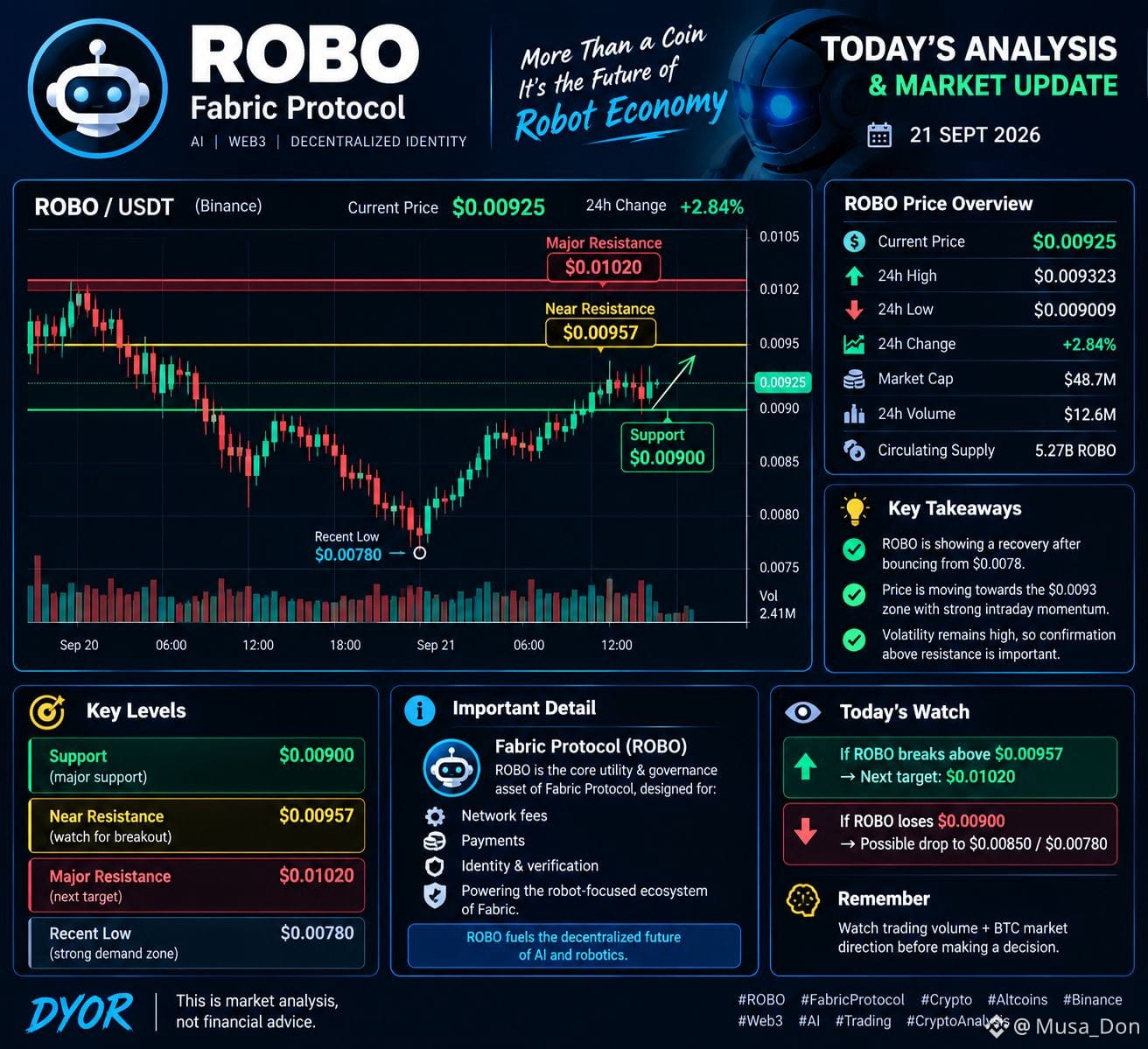
🤖 O Fabric Protocol ($ROBO ) está sendo negociado em torno de US$ 0,00925, com a faixa de hoje perto de US$ 0,00901–US$ 0,00932.
📌 Níveis-chave
🟢 Suporte: US$ 0,00900
🟡 Resistência próxima: US$ 0,00957
🔴 Resistência principal: US$ 0,01020
📈 Estrutura de mercado
O ROBO deu um ressalto da recente região de US$ 0,0078 e se recuperou em direção a US$ 0,0093. No entanto, a volatilidade permanece alta, então a confirmação acima da resistência é importante.
🔥 Detalhe importante
O ROBO é o ativo central de utilidade e governança do Fabric Protocol, projetado para taxas de rede, pagamentos, identidade e verificação dentro do ecossistema focado em robôs do Fabric.
⚡ Acompanhe hoje
Um movimento sustentado acima de US$ 0,00957 pode recolocar a zona de US$ 0,01020 em foco. A perda de US$ 0,00900 indicaria pressão baixista renovada.
🔍 Observe o volume + a direção do mercado de BTC antes de tomar uma decisão.
⚠️ DYOR — Esta é uma análise de mercado, não aconselhamento financeiro.
#ROBO #FabricProtocol #crypto
🤖 O Fabric Protocol ($ROBO ) está sendo negociado em torno de US$ 0,00925, com a faixa de hoje perto de US$ 0,00901–US$ 0,00932.
📌 Níveis-chave
🟢 Suporte: US$ 0,00900
🟡 Resistência próxima: US$ 0,00957
🔴 Resistência principal: US$ 0,01020
📈 Estrutura de mercado
O ROBO deu um ressalto da recente região de US$ 0,0078 e se recuperou em direção a US$ 0,0093. No entanto, a volatilidade permanece alta, então a confirmação acima da resistência é importante.
🔥 Detalhe importante
O ROBO é o ativo central de utilidade e governança do Fabric Protocol, projetado para taxas de rede, pagamentos, identidade e verificação dentro do ecossistema focado em robôs do Fabric.
⚡ Acompanhe hoje
Um movimento sustentado acima de US$ 0,00957 pode recolocar a zona de US$ 0,01020 em foco. A perda de US$ 0,00900 indicaria pressão baixista renovada.
🔍 Observe o volume + a direção do mercado de BTC antes de tomar uma decisão.
⚠️ DYOR — Esta é uma análise de mercado, não aconselhamento financeiro.
#ROBO #FabricProtocol #crypto
📌 Níveis-chave
🟢 Suporte: US$ 0,00900
🟡 Resistência próxima: US$ 0,00957
🔴 Resistência principal: US$ 0,01020
📈 Estrutura de mercado
O ROBO deu um ressalto da recente região de US$ 0,0078 e se recuperou em direção a US$ 0,0093. No entanto, a volatilidade permanece alta, então a confirmação acima da resistência é importante.
🔥 Detalhe importante
O ROBO é o ativo central de utilidade e governança do Fabric Protocol, projetado para taxas de rede, pagamentos, identidade e verificação dentro do ecossistema focado em robôs do Fabric.
⚡ Acompanhe hoje
Um movimento sustentado acima de US$ 0,00957 pode recolocar a zona de US$ 0,01020 em foco. A perda de US$ 0,00900 indicaria pressão baixista renovada.
🔍 Observe o volume + a direção do mercado de BTC antes de tomar uma decisão.
⚠️ DYOR — Esta é uma análise de mercado, não aconselhamento financeiro.
#ROBO #FabricProtocol #crypto
368

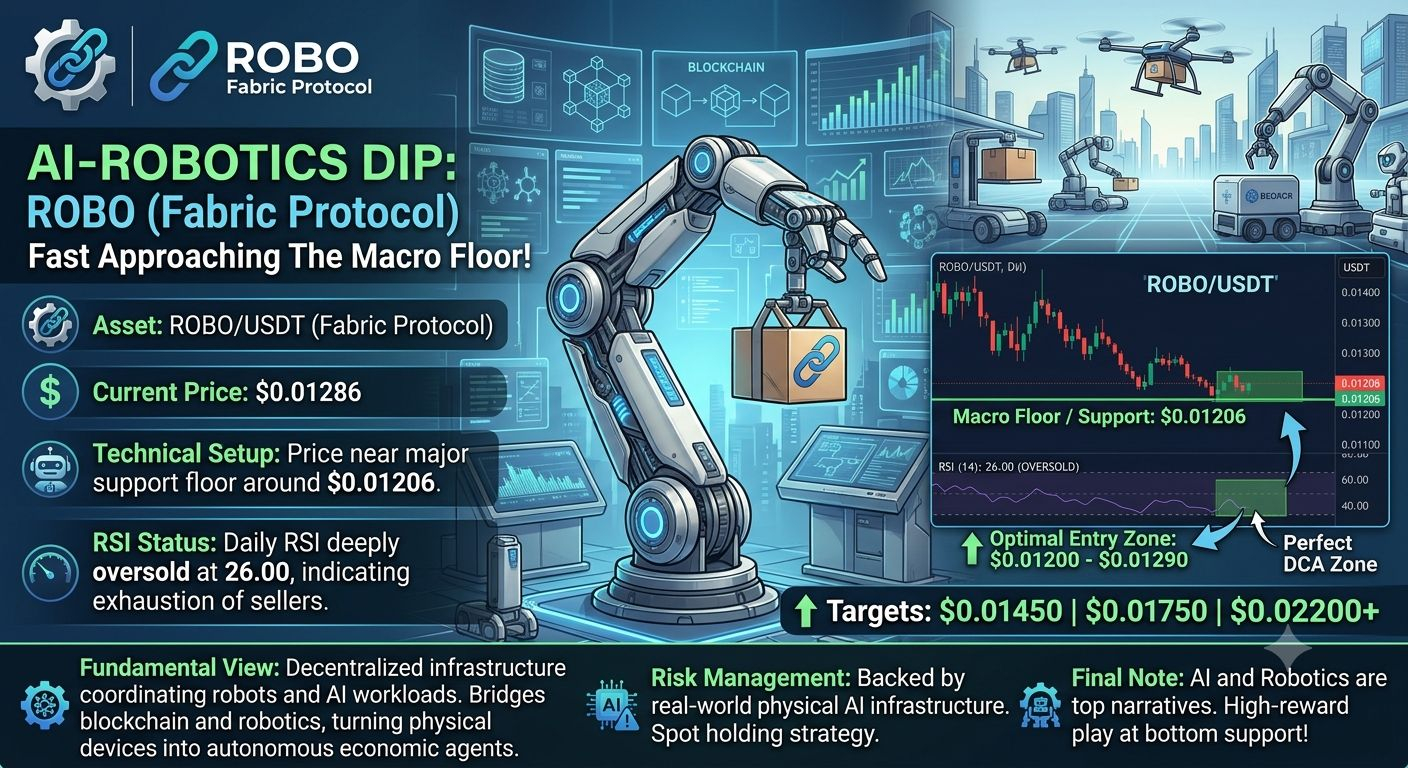
🔥 Mergulho AI-ROBOTICS: $ROBO (Protocolo Fabric) Chegando Rápido ao Piso do Macro! 🤖
Ativo: $ROBO /USDT (Protocolo Fabric - Moeda Spot 100% Halal)
Preço Atual: $0.01286
Visão Fundamental: O Fabric Protocol é uma infraestrutura descentralizada que coordena robôs e cargas de trabalho de IA. Ele faz a ponte entre blockchain e robótica, transformando dispositivos físicos em agentes econômicos autônomos com pagamentos on-chain.
Configuração Técnica: O preço está construindo um sólido piso horizontal ao redor do principal suporte psicológico e técnico de $0.01206.
Queda no RSI: O RSI diário despencou profundamente na região sobrevendida em 26.00, indicando esgotamento absoluto dos vendedores.
Estratégia Spot: Zona perfeita de DCA (média de custo em dólares) para acumuladores no spot; carregar bolsas gradualmente em 3 partes.
Zona de Entrada Ideal: $0.01200 - $0.01290
Alvos: $0.01450 | $0.01750 | $0.02200+
Gestão de Risco: Sustentado por infraestrutura física real de IA, NÃO é necessário stop loss para manter no spot.
Nota Final: IA e Robótica são os principais temas; pegar isso no suporte inferior é uma jogada de alto potencial de recompensa!
#ROBO #FabricProtocol #AI #Robotics #CryptoAnalysis
$ROBO
{spot}(ROBOUSDT)
🔥 Mergulho AI-ROBOTICS: $ROBO (Protocolo Fabric) Chegando Rápido ao Piso do Macro! 🤖
Ativo: $ROBO /USDT (Protocolo Fabric - Moeda Spot 100% Halal)
Preço Atual: $0.01286
Visão Fundamental: O Fabric Protocol é uma infraestrutura descentralizada que coordena robôs e cargas de trabalho de IA. Ele faz a ponte entre blockchain e robótica, transformando dispositivos físicos em agentes econômicos autônomos com pagamentos on-chain.
Configuração Técnica: O preço está construindo um sólido piso horizontal ao redor do principal suporte psicológico e técnico de $0.01206.
Queda no RSI: O RSI diário despencou profundamente na região sobrevendida em 26.00, indicando esgotamento absoluto dos vendedores.
Estratégia Spot: Zona perfeita de DCA (média de custo em dólares) para acumuladores no spot; carregar bolsas gradualmente em 3 partes.
Zona de Entrada Ideal: $0.01200 - $0.01290
Alvos: $0.01450 | $0.01750 | $0.02200+
Gestão de Risco: Sustentado por infraestrutura física real de IA, NÃO é necessário stop loss para manter no spot.
Nota Final: IA e Robótica são os principais temas; pegar isso no suporte inferior é uma jogada de alto potencial de recompensa!
#ROBO #FabricProtocol #AI #Robotics #CryptoAnalysis
$ROBO
Ativo: $ROBO /USDT (Protocolo Fabric - Moeda Spot 100% Halal)
Preço Atual: $0.01286
Visão Fundamental: O Fabric Protocol é uma infraestrutura descentralizada que coordena robôs e cargas de trabalho de IA. Ele faz a ponte entre blockchain e robótica, transformando dispositivos físicos em agentes econômicos autônomos com pagamentos on-chain.
Configuração Técnica: O preço está construindo um sólido piso horizontal ao redor do principal suporte psicológico e técnico de $0.01206.
Queda no RSI: O RSI diário despencou profundamente na região sobrevendida em 26.00, indicando esgotamento absoluto dos vendedores.
Estratégia Spot: Zona perfeita de DCA (média de custo em dólares) para acumuladores no spot; carregar bolsas gradualmente em 3 partes.
Zona de Entrada Ideal: $0.01200 - $0.01290
Alvos: $0.01450 | $0.01750 | $0.02200+
Gestão de Risco: Sustentado por infraestrutura física real de IA, NÃO é necessário stop loss para manter no spot.
Nota Final: IA e Robótica são os principais temas; pegar isso no suporte inferior é uma jogada de alto potencial de recompensa!
#ROBO #FabricProtocol #AI #Robotics #CryptoAnalysis
$ROBO
549
·
--
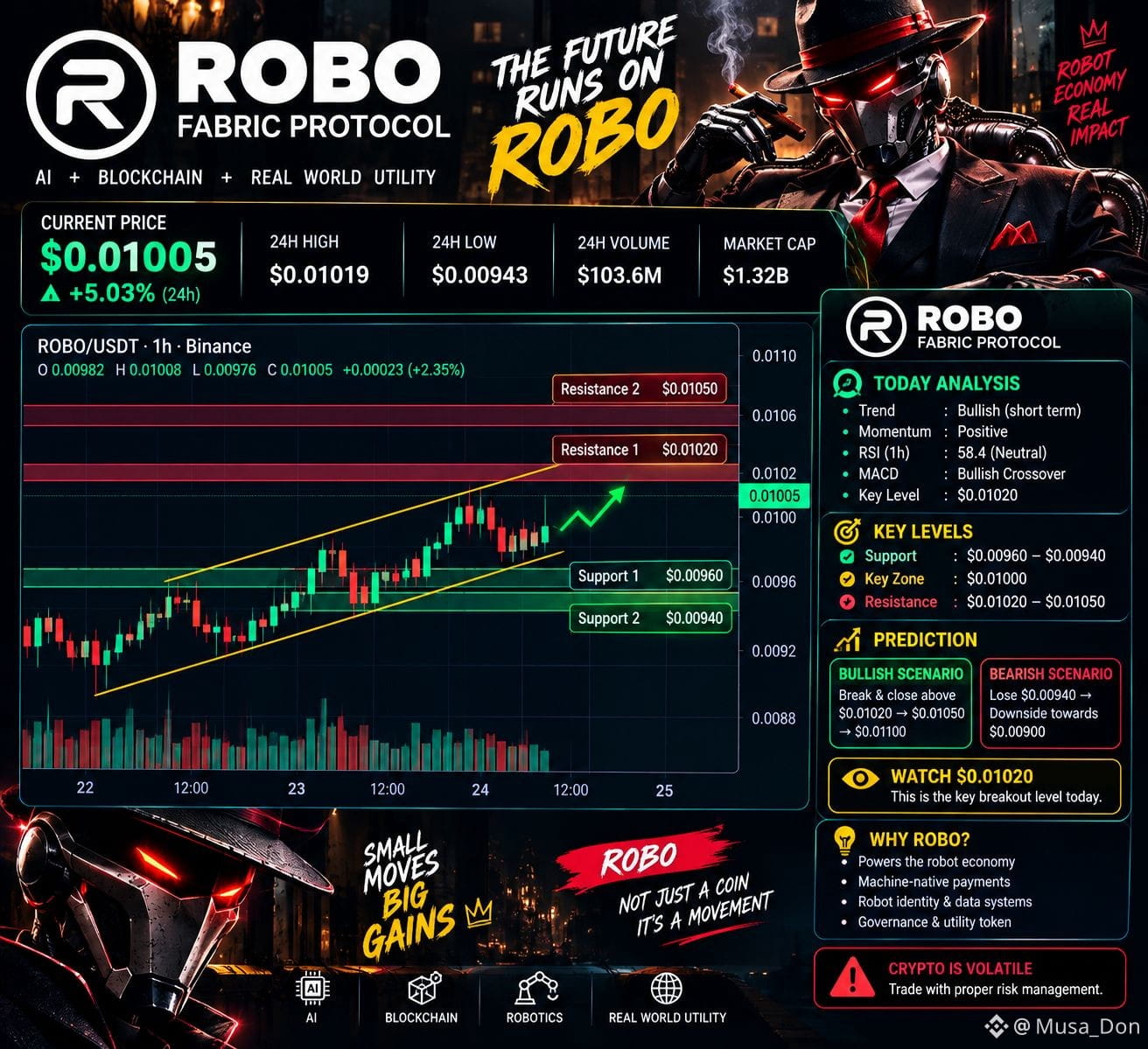
🤖 $ROBO está se movendo novamente!
Preço atual: ~$0.01005
Máxima 24H: $0.01019
Mínima 24H: $0.00943
Variação 24H: +5% 📈
📊 PONTOS-CHAVE PARA FICAR DE OLHO
🟢 Suporte: $0.00940 – $0.00960
🟡 Zona-chave: $0.01000
🔴 Resistência: $0.01020 – $0.01050
📈 Cenário Bullish:
Uma forte ruptura e fechamento acima de $0.01020 pode abrir caminho para $0.01050 → $0.01100.
📉 Cenário Bearish:
Se o ROBO perder $0.00940, a pressão vendedora pode empurrar o preço em direção a $0.00900.
🔥 POR QUE O ROBO É INTERESSANTE:
A Fabric está construindo infraestrutura para a economia dos robôs, incluindo pagamentos nativos de máquina, identidade de robô, sistemas de dados e governança. O ROBO foi projetado como o token de utilidade e governança do ecossistema.
⚠️ Importante: Estes são cenários baseados no gráfico, não metas garantidas. O ROBO continua sendo um ativo cripto volátil, então gerencie o risco com cuidado.
👀 Observe $0.01020 — este é o nível-chave de rompimento de hoje.
#ROBO #FabricProtocol #crypto
🤖 $ROBO está se movendo novamente!
Preço atual: ~$0.01005
Máxima 24H: $0.01019
Mínima 24H: $0.00943
Variação 24H: +5% 📈
📊 PONTOS-CHAVE PARA FICAR DE OLHO
🟢 Suporte: $0.00940 – $0.00960
🟡 Zona-chave: $0.01000
🔴 Resistência: $0.01020 – $0.01050
📈 Cenário Bullish:
Uma forte ruptura e fechamento acima de $0.01020 pode abrir caminho para $0.01050 → $0.01100.
📉 Cenário Bearish:
Se o ROBO perder $0.00940, a pressão vendedora pode empurrar o preço em direção a $0.00900.
🔥 POR QUE O ROBO É INTERESSANTE:
A Fabric está construindo infraestrutura para a economia dos robôs, incluindo pagamentos nativos de máquina, identidade de robô, sistemas de dados e governança. O ROBO foi projetado como o token de utilidade e governança do ecossistema.
⚠️ Importante: Estes são cenários baseados no gráfico, não metas garantidas. O ROBO continua sendo um ativo cripto volátil, então gerencie o risco com cuidado.
👀 Observe $0.01020 — este é o nível-chave de rompimento de hoje.
#ROBO #FabricProtocol #crypto
Preço atual: ~$0.01005
Máxima 24H: $0.01019
Mínima 24H: $0.00943
Variação 24H: +5% 📈
📊 PONTOS-CHAVE PARA FICAR DE OLHO
🟢 Suporte: $0.00940 – $0.00960
🟡 Zona-chave: $0.01000
🔴 Resistência: $0.01020 – $0.01050
📈 Cenário Bullish:
Uma forte ruptura e fechamento acima de $0.01020 pode abrir caminho para $0.01050 → $0.01100.
📉 Cenário Bearish:
Se o ROBO perder $0.00940, a pressão vendedora pode empurrar o preço em direção a $0.00900.
🔥 POR QUE O ROBO É INTERESSANTE:
A Fabric está construindo infraestrutura para a economia dos robôs, incluindo pagamentos nativos de máquina, identidade de robô, sistemas de dados e governança. O ROBO foi projetado como o token de utilidade e governança do ecossistema.
⚠️ Importante: Estes são cenários baseados no gráfico, não metas garantidas. O ROBO continua sendo um ativo cripto volátil, então gerencie o risco com cuidado.
👀 Observe $0.01020 — este é o nível-chave de rompimento de hoje.
#ROBO #FabricProtocol #crypto
597

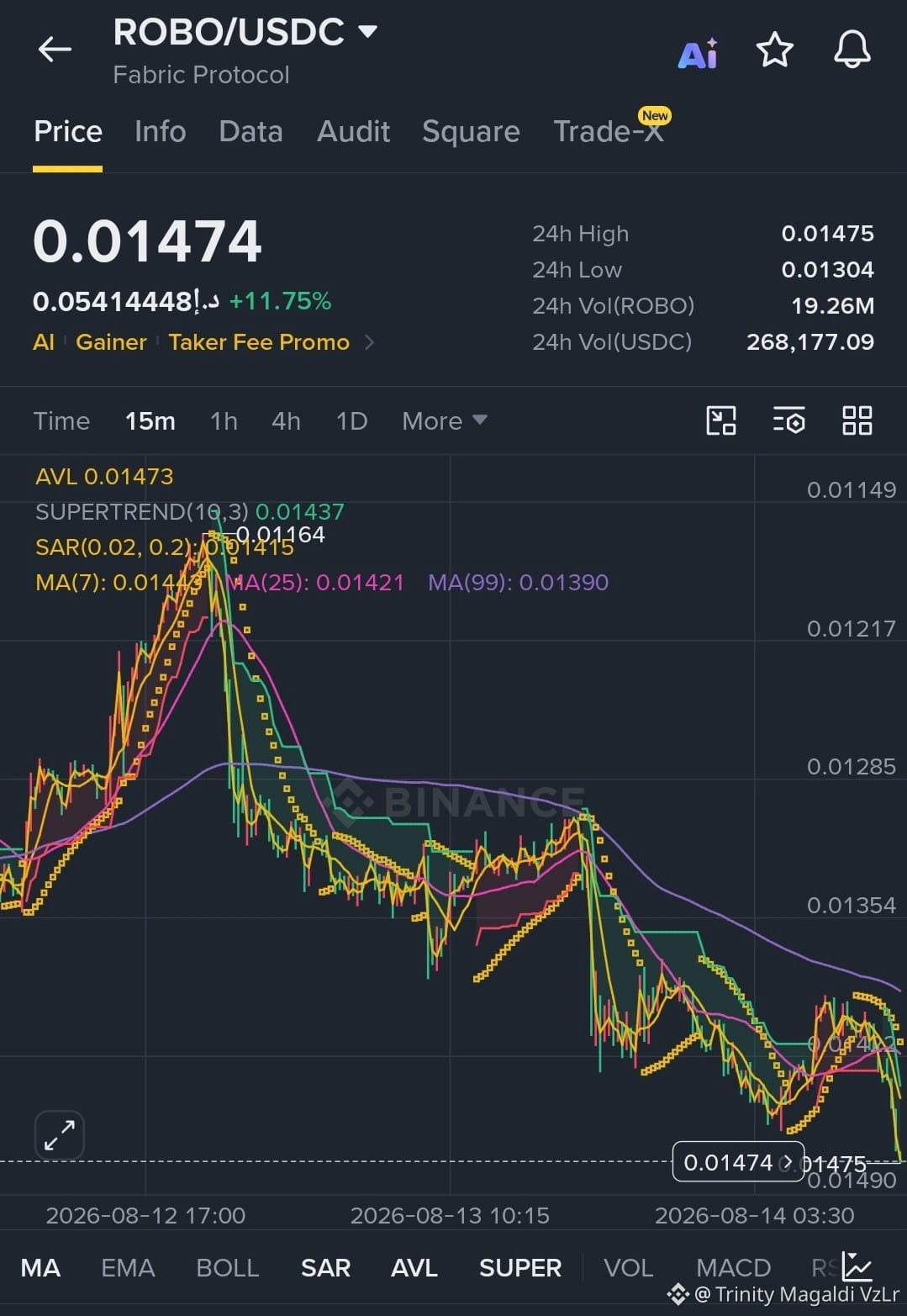
🚨$ROBO WATCH DE RUPTURA ROBO
O Protocolo Fabric (ROBO) está em forte alta, +11,75%, a US$ 0,01474, ficando logo abaixo da máxima de 24h de US$ 0,01475. O preço está acima das médias MA7, MA25 e MA99, com Supertrend em tendência de alta. O momentum está claramente esquentando.
#ROBO #FabricProtocol #Binance
$GIGGLE
{spot}(GIGGLEUSDT)
$RIVER
{future}(RIVERUSDT)
🚨$ROBO WATCH DE RUPTURA ROBO
O Protocolo Fabric (ROBO) está em forte alta, +11,75%, a US$ 0,01474, ficando logo abaixo da máxima de 24h de US$ 0,01475. O preço está acima das médias MA7, MA25 e MA99, com Supertrend em tendência de alta. O momentum está claramente esquentando.
#ROBO #FabricProtocol #Binance
$GIGGLE
$RIVER
O Protocolo Fabric (ROBO) está em forte alta, +11,75%, a US$ 0,01474, ficando logo abaixo da máxima de 24h de US$ 0,01475. O preço está acima das médias MA7, MA25 e MA99, com Supertrend em tendência de alta. O momentum está claramente esquentando.
#ROBO #FabricProtocol #Binance
$GIGGLE
$RIVER
1
267

·
--
Fabric Protocol($ROBO)当前更值得关注的是“名称/概念混淆”风险:近期讨论主要围绕机器人、AI相关股票与Robo.ai等话题,并未真正指向Fabric Protocol本身,因此不宜把外部AI热度直接解读为项目利好。现价约0.01741美元,24h成交约821万美金,市值约3884万美金。短线看情绪,长期仍要回到协议进展、流动性和真实需求。#FabricProtocol #加密市场
Fabric Protocol($ROBO )当前更值得关注的是“名称/概念混淆”风险:近期讨论主要围绕机器人、AI相关股票与Robo.ai等话题,并未真正指向Fabric Protocol本身,因此不宜把外部AI热度直接解读为项目利好。现价约0.01741美元,24h成交约821万美金,市值约3884万美金。短线看情绪,长期仍要回到协议进展、流动性和真实需求。#FabricProtocol #加密市场
27

·
--
O interesse pelo Fabric Protocol aumentou significativamente recentemente; a equipe oficial acabou de lançar o RoboPay, e o plano de bônus para desenvolvedores com um milhão de ROBO também já foi oficialmente iniciado. Essas duas ações trarão impactos positivos no desenvolvimento do projeto e no valor do token.
A infraestrutura pioneira Pay-to-Actuate está acelerando a implementação do ecossistema da economia das máquinas. Isso não apenas amplia ainda mais a demanda pela utilidade do $ROBO, como também atrai mais desenvolvedores para participar da construção do ecossistema.
Dados atuais:
Preço: US$ 0.0105
Volume de negociação em 24h: US$ 6,76 milhões
Market cap: US$ 23,43 milhões
Para quem está otimista com a vertente da economia das máquinas, vale a pena manter-se atento.
$ROBO #FabricProtocol #MachineEconomy
O interesse pelo Fabric Protocol aumentou significativamente recentemente; a equipe oficial acabou de lançar o RoboPay, e o plano de bônus para desenvolvedores com um milhão de ROBO também já foi oficialmente iniciado. Essas duas ações trarão impactos positivos no desenvolvimento do projeto e no valor do token.
A infraestrutura pioneira Pay-to-Actuate está acelerando a implementação do ecossistema da economia das máquinas. Isso não apenas amplia ainda mais a demanda pela utilidade do $ROBO , como também atrai mais desenvolvedores para participar da construção do ecossistema.
Dados atuais:
Preço: US$ 0.0105
Volume de negociação em 24h: US$ 6,76 milhões
Market cap: US$ 23,43 milhões
Para quem está otimista com a vertente da economia das máquinas, vale a pena manter-se atento.
$ROBO #FabricProtocol #MachineEconomy
A infraestrutura pioneira Pay-to-Actuate está acelerando a implementação do ecossistema da economia das máquinas. Isso não apenas amplia ainda mais a demanda pela utilidade do $ROBO , como também atrai mais desenvolvedores para participar da construção do ecossistema.
Dados atuais:
Preço: US$ 0.0105
Volume de negociação em 24h: US$ 6,76 milhões
Market cap: US$ 23,43 milhões
Para quem está otimista com a vertente da economia das máquinas, vale a pena manter-se atento.
$ROBO #FabricProtocol #MachineEconomy
91
·
--
Em Baixa
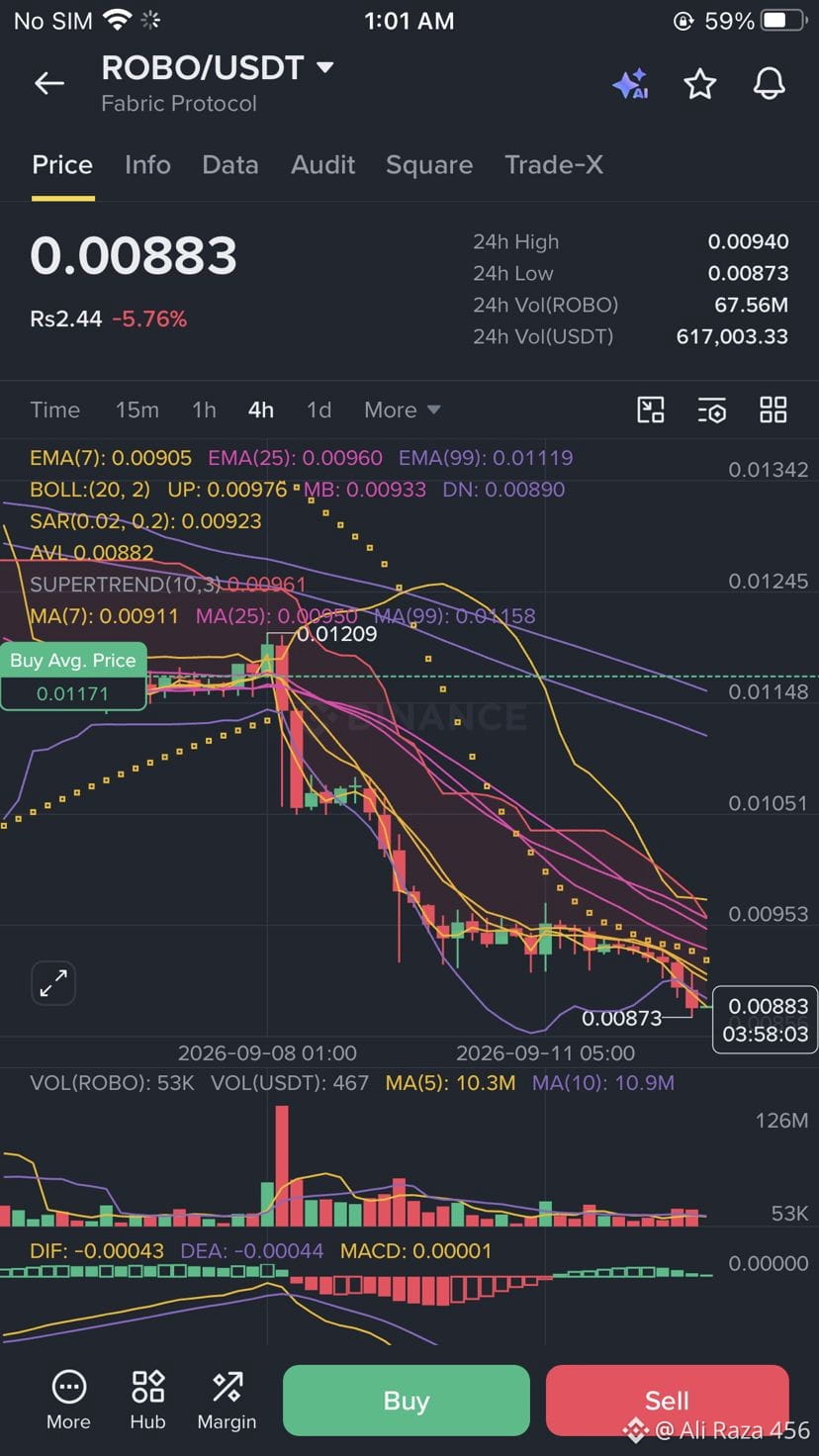
Homem, $ROBO (Fabric Protocol) está realmente testando a paciência de todo mundo agora 😅📉
Comprei por volta de 0.01171 pensando que ia subir, mas está parado em 0.00883 (-5.76%) e grudado na parte de baixo. O gráfico está bem feio com todo esse vermelho, mas mantendo firme para um repique 🤞💸
Vocês estão segurando, fazendo média para baixo, ou só observando de longe? Me digam 👇
#ROBO #FabricProtocol #Crypto
{spot}(ROBOUSDT)
Homem, $ROBO (Fabric Protocol) está realmente testando a paciência de todo mundo agora 😅📉
Comprei por volta de 0.01171 pensando que ia subir, mas está parado em 0.00883 (-5.76%) e grudado na parte de baixo. O gráfico está bem feio com todo esse vermelho, mas mantendo firme para um repique 🤞💸
Vocês estão segurando, fazendo média para baixo, ou só observando de longe? Me digam 👇
#ROBO #FabricProtocol #Crypto
Comprei por volta de 0.01171 pensando que ia subir, mas está parado em 0.00883 (-5.76%) e grudado na parte de baixo. O gráfico está bem feio com todo esse vermelho, mas mantendo firme para um repique 🤞💸
Vocês estão segurando, fazendo média para baixo, ou só observando de longe? Me digam 👇
#ROBO #FabricProtocol #Crypto
1
705

·
--
🔥 $ROBO — MOMENTUM EM ALERTA
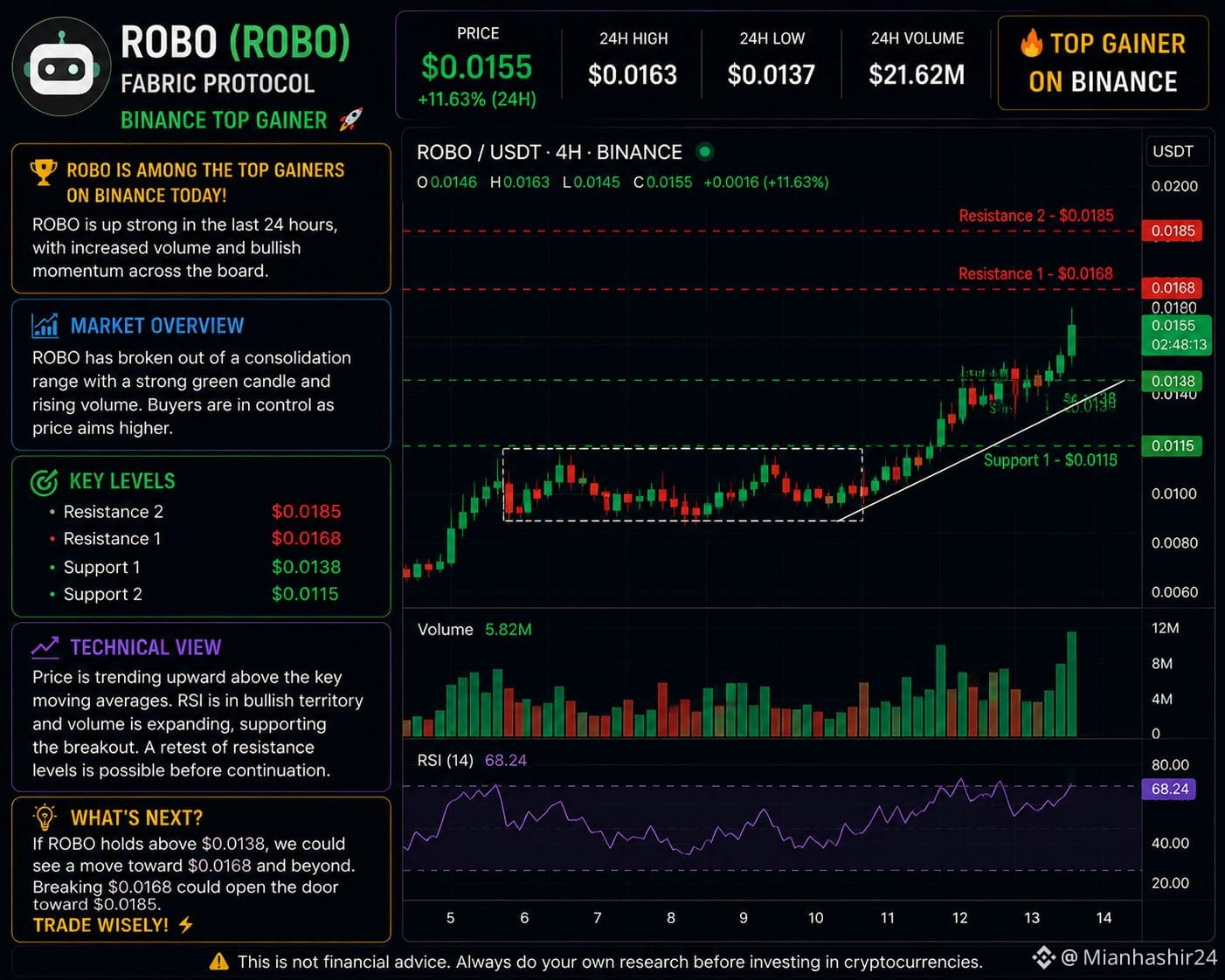
$ROBO (Fabric Protocol) está apresentando um forte momentum de curto prazo, atualmente por volta de US$ 0,0155, com alta de aproximadamente 11,6% nas últimas 24h na Binance. O volume de negociação também aumentou, indicando maior atividade no mercado.
📈 Momentum: forte atividade recente de compra
👀 Atenção: se ROBO consegue manter-se acima da área recente de rompimento
⚠️ Risco: ROBO carrega a Seed Tag da Binance, e sua relativamente pequena market cap significa que o preço pode se mover bruscamente em qualquer direção.
$ROBO é uma para manter no radar — a confirmação de volume será fundamental. 🚀
Comentário de mercado apenas — não é aconselhamento financeiro.
#ROBO #FabricProtocol #BinanceSquareTalks #Crypto #Altcoins #CryptoGainers
{spot}(ROBOUSDT)
🔥 $ROBO — MOMENTUM EM ALERTA
$ROBO (Fabric Protocol) está apresentando um forte momentum de curto prazo, atualmente por volta de US$ 0,0155, com alta de aproximadamente 11,6% nas últimas 24h na Binance. O volume de negociação também aumentou, indicando maior atividade no mercado.
📈 Momentum: forte atividade recente de compra
👀 Atenção: se ROBO consegue manter-se acima da área recente de rompimento
⚠️ Risco: ROBO carrega a Seed Tag da Binance, e sua relativamente pequena market cap significa que o preço pode se mover bruscamente em qualquer direção.
$ROBO é uma para manter no radar — a confirmação de volume será fundamental. 🚀
Comentário de mercado apenas — não é aconselhamento financeiro.
#ROBO #FabricProtocol #BinanceSquareTalks #Crypto #Altcoins #CryptoGainers
$ROBO (Fabric Protocol) está apresentando um forte momentum de curto prazo, atualmente por volta de US$ 0,0155, com alta de aproximadamente 11,6% nas últimas 24h na Binance. O volume de negociação também aumentou, indicando maior atividade no mercado.
📈 Momentum: forte atividade recente de compra
👀 Atenção: se ROBO consegue manter-se acima da área recente de rompimento
⚠️ Risco: ROBO carrega a Seed Tag da Binance, e sua relativamente pequena market cap significa que o preço pode se mover bruscamente em qualquer direção.
$ROBO é uma para manter no radar — a confirmação de volume será fundamental. 🚀
Comentário de mercado apenas — não é aconselhamento financeiro.
#ROBO #FabricProtocol #BinanceSquareTalks #Crypto #Altcoins #CryptoGainers
167

·
--
Em Alta
ROBO/USDT Grande Rompida!
O token ROBO do Fabric Protocol está disparando com ganho de 11,8%+!
Preço Atual: US$ 0,01443
Máxima 24h: US$ 0,01445
Tendência: Forte momento de alta com volume elevado
Você pegou esse movimento ou está esperando uma queda? Conte pra nós abaixo!
#ROBO #FabricProtocol $ROBO
{spot}(ROBOUSDT)
ROBO/USDT Grande Rompida!
O token ROBO do Fabric Protocol está disparando com ganho de 11,8%+!
Preço Atual: US$ 0,01443
Máxima 24h: US$ 0,01445
Tendência: Forte momento de alta com volume elevado
Você pegou esse movimento ou está esperando uma queda? Conte pra nós abaixo!
#ROBO #FabricProtocol $ROBO
O token ROBO do Fabric Protocol está disparando com ganho de 11,8%+!
Preço Atual: US$ 0,01443
Máxima 24h: US$ 0,01445
Tendência: Forte momento de alta com volume elevado
Você pegou esse movimento ou está esperando uma queda? Conte pra nós abaixo!
#ROBO #FabricProtocol $ROBO
1
169

·
--
Em Alta
🔥 Explosão e quebra avassaladora | $ROBO Long 🚀
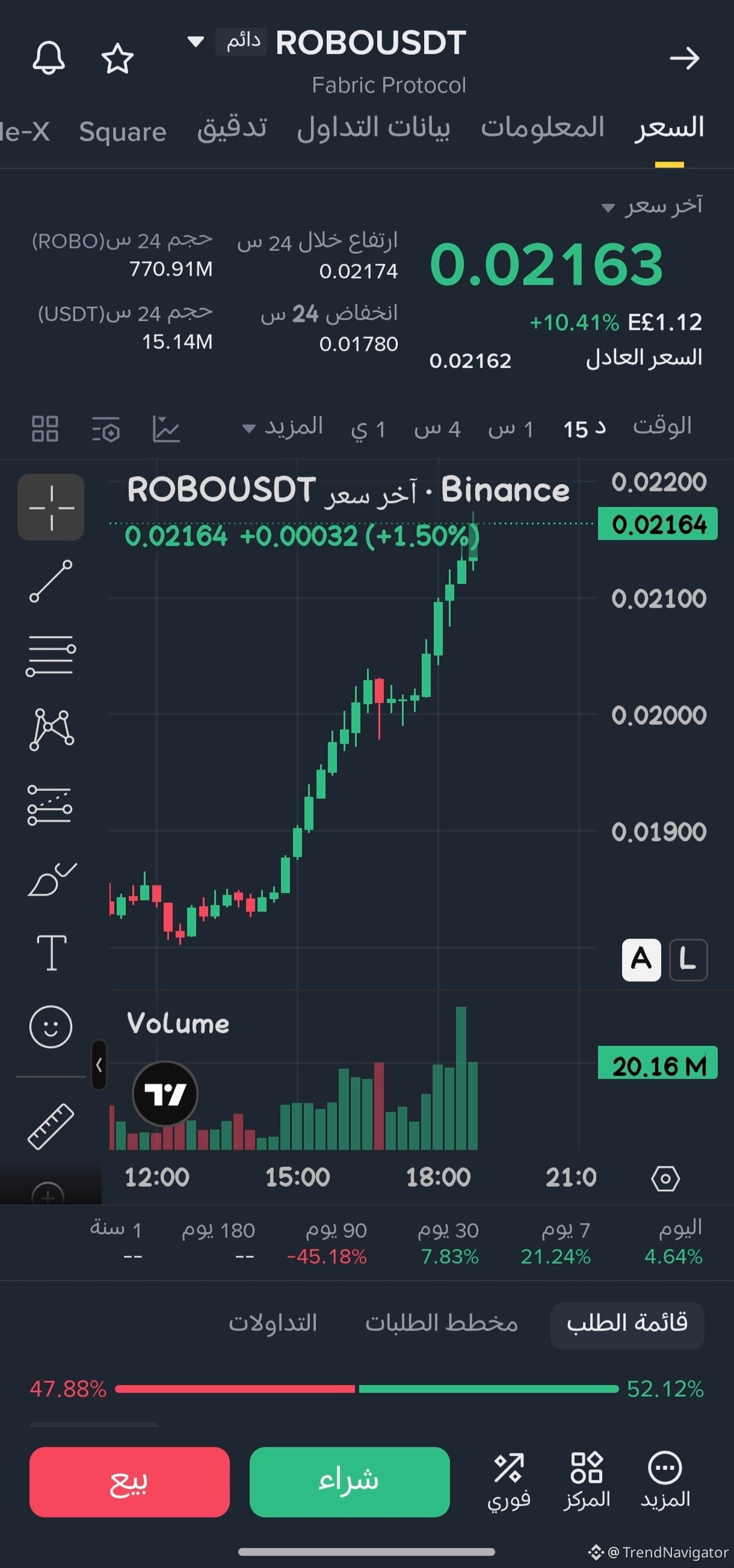
A liquidez explode e os touros dominam o mercado! A moeda $ROBO (Fabric Protocol) registra uma ascensão estrondosa de mais de +10.41%, quebrando máximas anteriores com uma vela de impulso vertical que anuncia oficialmente uma quebra histórica da faixa de acumulação. Como mostrado no volume, que salta insano, ultrapassando 770.91M, apoiando a continuidade dessa onda violenta!
📊 Dados técnicos do movimento direto:
🎯 Preço atual ao vivo: 0.02163$ (máxima diária atingida de 0.02174$).
📈 Momentum em alta: um chafariz de velas verdes consecutivas sem resistência significativa.
💰 Força de fluxo: as baleias injetam liquidez com força para absorver a oferta, e a tendência acelera verticalmente.
🏹 Estratégia de trading sugerida:
🟢 Tipo de operação: Long (Compra / Contratos Perpétuos)
🎯 Área de entrada preferida: com qualquer correção ou leve recuo para garantir um ponto de entrada forte.
#ROBO #FabricProtocol
$ROBO
{future}(ROBOUSDT)
🔥 Explosão e quebra avassaladora | $ROBO Long 🚀
A liquidez explode e os touros dominam o mercado! A moeda $ROBO (Fabric Protocol) registra uma ascensão estrondosa de mais de +10.41%, quebrando máximas anteriores com uma vela de impulso vertical que anuncia oficialmente uma quebra histórica da faixa de acumulação. Como mostrado no volume, que salta insano, ultrapassando 770.91M, apoiando a continuidade dessa onda violenta!
📊 Dados técnicos do movimento direto:
🎯 Preço atual ao vivo: 0.02163$ (máxima diária atingida de 0.02174$).
📈 Momentum em alta: um chafariz de velas verdes consecutivas sem resistência significativa.
💰 Força de fluxo: as baleias injetam liquidez com força para absorver a oferta, e a tendência acelera verticalmente.
🏹 Estratégia de trading sugerida:
🟢 Tipo de operação: Long (Compra / Contratos Perpétuos)
🎯 Área de entrada preferida: com qualquer correção ou leve recuo para garantir um ponto de entrada forte.
#ROBO #FabricProtocol
$ROBO
A liquidez explode e os touros dominam o mercado! A moeda $ROBO (Fabric Protocol) registra uma ascensão estrondosa de mais de +10.41%, quebrando máximas anteriores com uma vela de impulso vertical que anuncia oficialmente uma quebra histórica da faixa de acumulação. Como mostrado no volume, que salta insano, ultrapassando 770.91M, apoiando a continuidade dessa onda violenta!
📊 Dados técnicos do movimento direto:
🎯 Preço atual ao vivo: 0.02163$ (máxima diária atingida de 0.02174$).
📈 Momentum em alta: um chafariz de velas verdes consecutivas sem resistência significativa.
💰 Força de fluxo: as baleias injetam liquidez com força para absorver a oferta, e a tendência acelera verticalmente.
🏹 Estratégia de trading sugerida:
🟢 Tipo de operação: Long (Compra / Contratos Perpétuos)
🎯 Área de entrada preferida: com qualquer correção ou leve recuo para garantir um ponto de entrada forte.
#ROBO #FabricProtocol
$ROBO
2
180

·
--
Em Alta
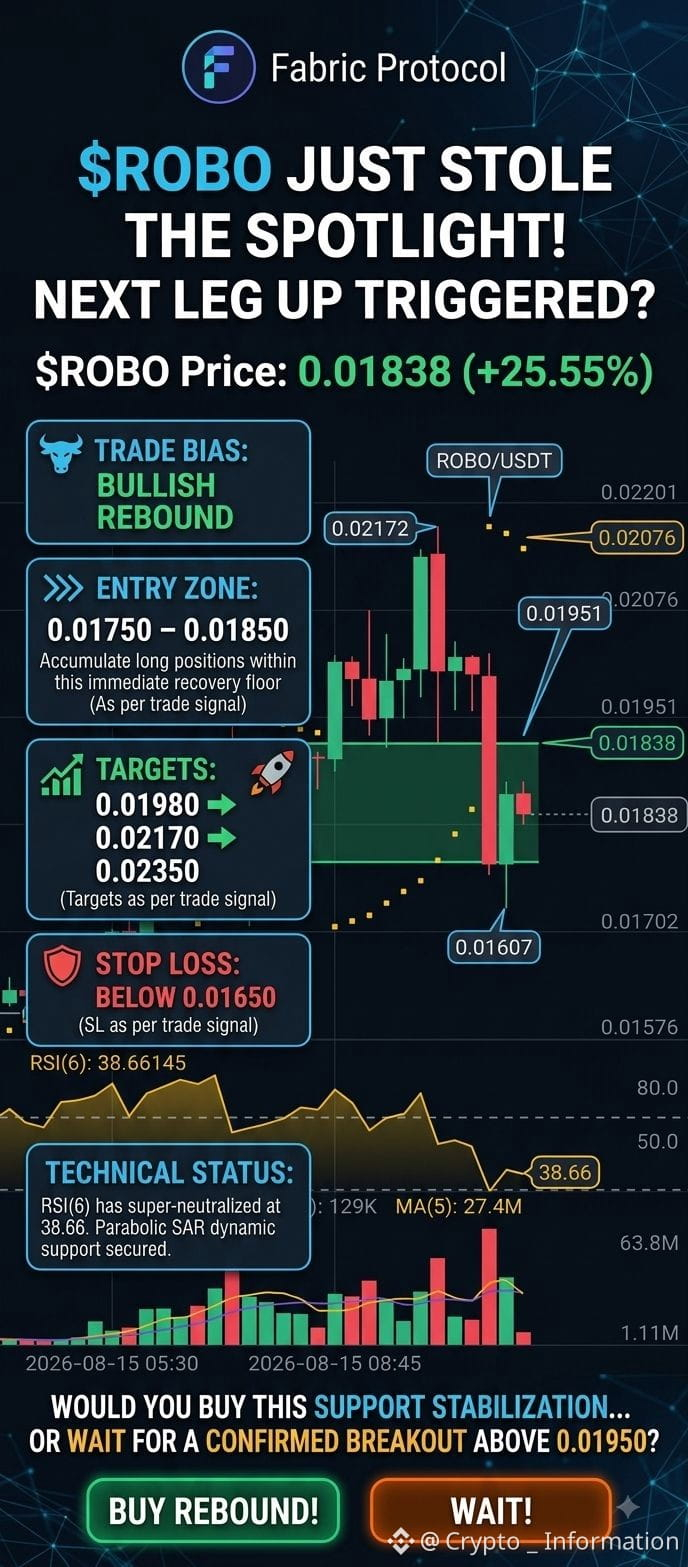
$ROBO Segurando a Linha! Possível Reversão em Jogo?
Mostrando forte volume de negociação com mais de USDT 16,23M em atividade nas últimas 24h, $ROBO (Fabric Protocol) chamou bastante atenção do mercado hoje! Após testar de forma “print” um pico local no teto em 0,02172, a ação do preço executou uma consolidação saudável varrendo para uma resistência dinâmica perto de 0,01700 e agora está formando um forte piso de reversão para sua próxima tentativa de alta.
Viés de Trade: Reversão Bullish 📈
Zona de Entrada: 0,01750 – 0,01850 (Acumule posições long dentro deste piso imediato de recuperação com estabilização no timeframe de 15m)
Alvos: 0,01980 ➡️ 0,02170 ➡️ 0,02350
Stop Loss: Abaixo de 0,01650
Tecnicamente, os indicadores estão oferecendo um setup perfeito para uma recuperação estrutural. O RSI (6) foi totalmente resetado até um nível fortemente descontado de 38,66, eliminando a pressão de sobrecompra e deixando espaço máximo para os touros retomarem o controle. Com o suporte firme, o momentum favorece fortemente uma retestagem das principais zonas de resistência.
Você compraria essa estabilização do suporte... ou esperaria um corredor de pullback mais profundo?
Trade Agora $ROBO
{spot}(ROBOUSDT)
#ROBO #FabricProtocol #cryptosignals
$ROBO Segurando a Linha! Possível Reversão em Jogo?
Mostrando forte volume de negociação com mais de USDT 16,23M em atividade nas últimas 24h, $ROBO (Fabric Protocol) chamou bastante atenção do mercado hoje! Após testar de forma “print” um pico local no teto em 0,02172, a ação do preço executou uma consolidação saudável varrendo para uma resistência dinâmica perto de 0,01700 e agora está formando um forte piso de reversão para sua próxima tentativa de alta.
Viés de Trade: Reversão Bullish 📈
Zona de Entrada: 0,01750 – 0,01850 (Acumule posições long dentro deste piso imediato de recuperação com estabilização no timeframe de 15m)
Alvos: 0,01980 ➡️ 0,02170 ➡️ 0,02350
Stop Loss: Abaixo de 0,01650
Tecnicamente, os indicadores estão oferecendo um setup perfeito para uma recuperação estrutural. O RSI (6) foi totalmente resetado até um nível fortemente descontado de 38,66, eliminando a pressão de sobrecompra e deixando espaço máximo para os touros retomarem o controle. Com o suporte firme, o momentum favorece fortemente uma retestagem das principais zonas de resistência.
Você compraria essa estabilização do suporte... ou esperaria um corredor de pullback mais profundo?
Trade Agora $ROBO
#ROBO #FabricProtocol #cryptosignals
Mostrando forte volume de negociação com mais de USDT 16,23M em atividade nas últimas 24h, $ROBO (Fabric Protocol) chamou bastante atenção do mercado hoje! Após testar de forma “print” um pico local no teto em 0,02172, a ação do preço executou uma consolidação saudável varrendo para uma resistência dinâmica perto de 0,01700 e agora está formando um forte piso de reversão para sua próxima tentativa de alta.
Viés de Trade: Reversão Bullish 📈
Zona de Entrada: 0,01750 – 0,01850 (Acumule posições long dentro deste piso imediato de recuperação com estabilização no timeframe de 15m)
Alvos: 0,01980 ➡️ 0,02170 ➡️ 0,02350
Stop Loss: Abaixo de 0,01650
Tecnicamente, os indicadores estão oferecendo um setup perfeito para uma recuperação estrutural. O RSI (6) foi totalmente resetado até um nível fortemente descontado de 38,66, eliminando a pressão de sobrecompra e deixando espaço máximo para os touros retomarem o controle. Com o suporte firme, o momentum favorece fortemente uma retestagem das principais zonas de resistência.
Você compraria essa estabilização do suporte... ou esperaria um corredor de pullback mais profundo?
Trade Agora $ROBO
#ROBO #FabricProtocol #cryptosignals
1
176
·
--
Parcialmente verdadeiro
A popularidade do mercado do Fabric Protocol associado ao $ROBO nos últimos tempos aumentou de forma evidente. A causa central é que o RoboPay concluiu com sucesso a integração com o bounty, e esse avanço terá um impacto positivo no preço dos tokens.
Em detalhes, atualmente, 13 plataformas de robôs já concluíram a integração da funcionalidade de pagamentos. Isso não apenas valida a viabilidade da economia de máquinas em prática, como também expande ainda mais os limites de aplicação de todo o ecossistema, abrindo mais espaço para imaginação sobre o desenvolvimento de longo prazo do projeto.
No momento, a cotação do $ROBO é de US$ 0,01408, o volume de transações em 24 horas é de US$ 12,59 milhões, e a capitalização de mercado é de aproximadamente US$ 31,41 milhões. Vale acompanhar os próximos avanços do ecossistema.
#FabricProtocol #ROBO #economia de robôs
A popularidade do mercado do Fabric Protocol associado ao $ROBO nos últimos tempos aumentou de forma evidente. A causa central é que o RoboPay concluiu com sucesso a integração com o bounty, e esse avanço terá um impacto positivo no preço dos tokens.
Em detalhes, atualmente, 13 plataformas de robôs já concluíram a integração da funcionalidade de pagamentos. Isso não apenas valida a viabilidade da economia de máquinas em prática, como também expande ainda mais os limites de aplicação de todo o ecossistema, abrindo mais espaço para imaginação sobre o desenvolvimento de longo prazo do projeto.
No momento, a cotação do $ROBO é de US$ 0,01408, o volume de transações em 24 horas é de US$ 12,59 milhões, e a capitalização de mercado é de aproximadamente US$ 31,41 milhões. Vale acompanhar os próximos avanços do ecossistema.
#FabricProtocol #ROBO #economia de robôs
Em detalhes, atualmente, 13 plataformas de robôs já concluíram a integração da funcionalidade de pagamentos. Isso não apenas valida a viabilidade da economia de máquinas em prática, como também expande ainda mais os limites de aplicação de todo o ecossistema, abrindo mais espaço para imaginação sobre o desenvolvimento de longo prazo do projeto.
No momento, a cotação do $ROBO é de US$ 0,01408, o volume de transações em 24 horas é de US$ 12,59 milhões, e a capitalização de mercado é de aproximadamente US$ 31,41 milhões. Vale acompanhar os próximos avanços do ecossistema.
#FabricProtocol #ROBO #economia de robôs
311

·
--
$ROBO 🤖 blockchain para robôs e agentes de IA!
O que é o Fabric Protocol (ROBO)? É uma infraestrutura descentralizada que oferece aos robôs e agentes de IA identidades digitais verificáveis, carteiras e a possibilidade de ganharem por conta própria. O protocolo resolve o problema: robôs não podem abrir contas bancárias, mas podem ter carteiras cripto e receber pagamento pelo trabalho realizado por meio do mecanismo Proof of Robotic Work.
Ecossistema: ROBO — o 62º projeto do Binance HODLer Airdrop. O token (oferta máx. 10 bilhões) é usado para pagar pela rede, fazer staking e para governança. O projeto conta com o apoio da Pantera Capital, Coinbase Ventures e DCG.
Situação atual: preço de US$ 0.01775** (+26,79%), acima de todas as EMAs — **tendência de alta**. RSI 76 — quase sobrecomprado. Resistência **US$ 0.01947, suporte US$ 0.01642.
🔥 O que você acha: o ROBO vai se tornar o padrão para a economia dos robôs? Escreva nos comentários!
👉 Inscreva-se para acompanhar análises de projetos inovadores!
#FabricProtocol #Trade 👇
{future}(ROBOUSDT)
$ROBO 🤖 blockchain para robôs e agentes de IA!
O que é o Fabric Protocol (ROBO)? É uma infraestrutura descentralizada que oferece aos robôs e agentes de IA identidades digitais verificáveis, carteiras e a possibilidade de ganharem por conta própria. O protocolo resolve o problema: robôs não podem abrir contas bancárias, mas podem ter carteiras cripto e receber pagamento pelo trabalho realizado por meio do mecanismo Proof of Robotic Work.
Ecossistema: ROBO — o 62º projeto do Binance HODLer Airdrop. O token (oferta máx. 10 bilhões) é usado para pagar pela rede, fazer staking e para governança. O projeto conta com o apoio da Pantera Capital, Coinbase Ventures e DCG.
Situação atual: preço de US$ 0.01775** (+26,79%), acima de todas as EMAs — **tendência de alta**. RSI 76 — quase sobrecomprado. Resistência **US$ 0.01947, suporte US$ 0.01642.
🔥 O que você acha: o ROBO vai se tornar o padrão para a economia dos robôs? Escreva nos comentários!
👉 Inscreva-se para acompanhar análises de projetos inovadores!
#FabricProtocol #Trade 👇
O que é o Fabric Protocol (ROBO)? É uma infraestrutura descentralizada que oferece aos robôs e agentes de IA identidades digitais verificáveis, carteiras e a possibilidade de ganharem por conta própria. O protocolo resolve o problema: robôs não podem abrir contas bancárias, mas podem ter carteiras cripto e receber pagamento pelo trabalho realizado por meio do mecanismo Proof of Robotic Work.
Ecossistema: ROBO — o 62º projeto do Binance HODLer Airdrop. O token (oferta máx. 10 bilhões) é usado para pagar pela rede, fazer staking e para governança. O projeto conta com o apoio da Pantera Capital, Coinbase Ventures e DCG.
Situação atual: preço de US$ 0.01775** (+26,79%), acima de todas as EMAs — **tendência de alta**. RSI 76 — quase sobrecomprado. Resistência **US$ 0.01947, suporte US$ 0.01642.
🔥 O que você acha: o ROBO vai se tornar o padrão para a economia dos robôs? Escreva nos comentários!
👉 Inscreva-se para acompanhar análises de projetos inovadores!
#FabricProtocol #Trade 👇
197

·
--
Verificado
🤖 ROBO – O Protocolo para a Economia de Robôs
$ROBO é o token nativo do Fabric Protocol, uma camada descentralizada de coordenação construída para a economia de robôs. Ele permite que robôs tenham identidades on-chain, paguem de forma autônoma e recebam recompensas por concluir tarefas verificáveis.
Destaques:
· Caso de Uso no Mundo Real: Robôs completam tarefas → pagos em $ROBO automaticamente. UBTech, Fourier e outras empresas de robótica já estão integrando.
· Utilidade do Token: Usado para taxas de rede, staking, governança e recompensas de Proof of Robotic Work.
· Modelo Deflacionário: O Adaptive Emission Engine ajusta as emissões de tokens com base na atividade da rede — mais uso = menos tokens novos.
** Catalisadores em Andamento (Roadmap 2026):
· Q3 (em andamento): Tarefas Multi-Robô
· Q4: Migração para uma blockchain Layer 1 dedicada para robótica
Por que Acompanhar?
Apoiando-se em investidores de ponta como Pantera Capital e Coinbase Ventures. Já listado na Binance Spot e Binance Earn (staking flexível/ bloqueado).
DYOR. Isso não é aconselhamento financeiro.
#ROBO #FabricProtocol #AI #DePIN #RobotEconomy y #Binance
🤖 ROBO – O Protocolo para a Economia de Robôs
$ROBO é o token nativo do Fabric Protocol, uma camada descentralizada de coordenação construída para a economia de robôs. Ele permite que robôs tenham identidades on-chain, paguem de forma autônoma e recebam recompensas por concluir tarefas verificáveis.
Destaques:
· Caso de Uso no Mundo Real: Robôs completam tarefas → pagos em $ROBO automaticamente. UBTech, Fourier e outras empresas de robótica já estão integrando.
· Utilidade do Token: Usado para taxas de rede, staking, governança e recompensas de Proof of Robotic Work.
· Modelo Deflacionário: O Adaptive Emission Engine ajusta as emissões de tokens com base na atividade da rede — mais uso = menos tokens novos.
** Catalisadores em Andamento (Roadmap 2026):
· Q3 (em andamento): Tarefas Multi-Robô
· Q4: Migração para uma blockchain Layer 1 dedicada para robótica
Por que Acompanhar?
Apoiando-se em investidores de ponta como Pantera Capital e Coinbase Ventures. Já listado na Binance Spot e Binance Earn (staking flexível/ bloqueado).
DYOR. Isso não é aconselhamento financeiro.
#ROBO #FabricProtocol #AI #DePIN #RobotEconomy y #Binance
$ROBO é o token nativo do Fabric Protocol, uma camada descentralizada de coordenação construída para a economia de robôs. Ele permite que robôs tenham identidades on-chain, paguem de forma autônoma e recebam recompensas por concluir tarefas verificáveis.
Destaques:
· Caso de Uso no Mundo Real: Robôs completam tarefas → pagos em $ROBO automaticamente. UBTech, Fourier e outras empresas de robótica já estão integrando.
· Utilidade do Token: Usado para taxas de rede, staking, governança e recompensas de Proof of Robotic Work.
· Modelo Deflacionário: O Adaptive Emission Engine ajusta as emissões de tokens com base na atividade da rede — mais uso = menos tokens novos.
** Catalisadores em Andamento (Roadmap 2026):
· Q3 (em andamento): Tarefas Multi-Robô
· Q4: Migração para uma blockchain Layer 1 dedicada para robótica
Por que Acompanhar?
Apoiando-se em investidores de ponta como Pantera Capital e Coinbase Ventures. Já listado na Binance Spot e Binance Earn (staking flexível/ bloqueado).
DYOR. Isso não é aconselhamento financeiro.
#ROBO #FabricProtocol #AI #DePIN #RobotEconomy y #Binance
1
306
·
--
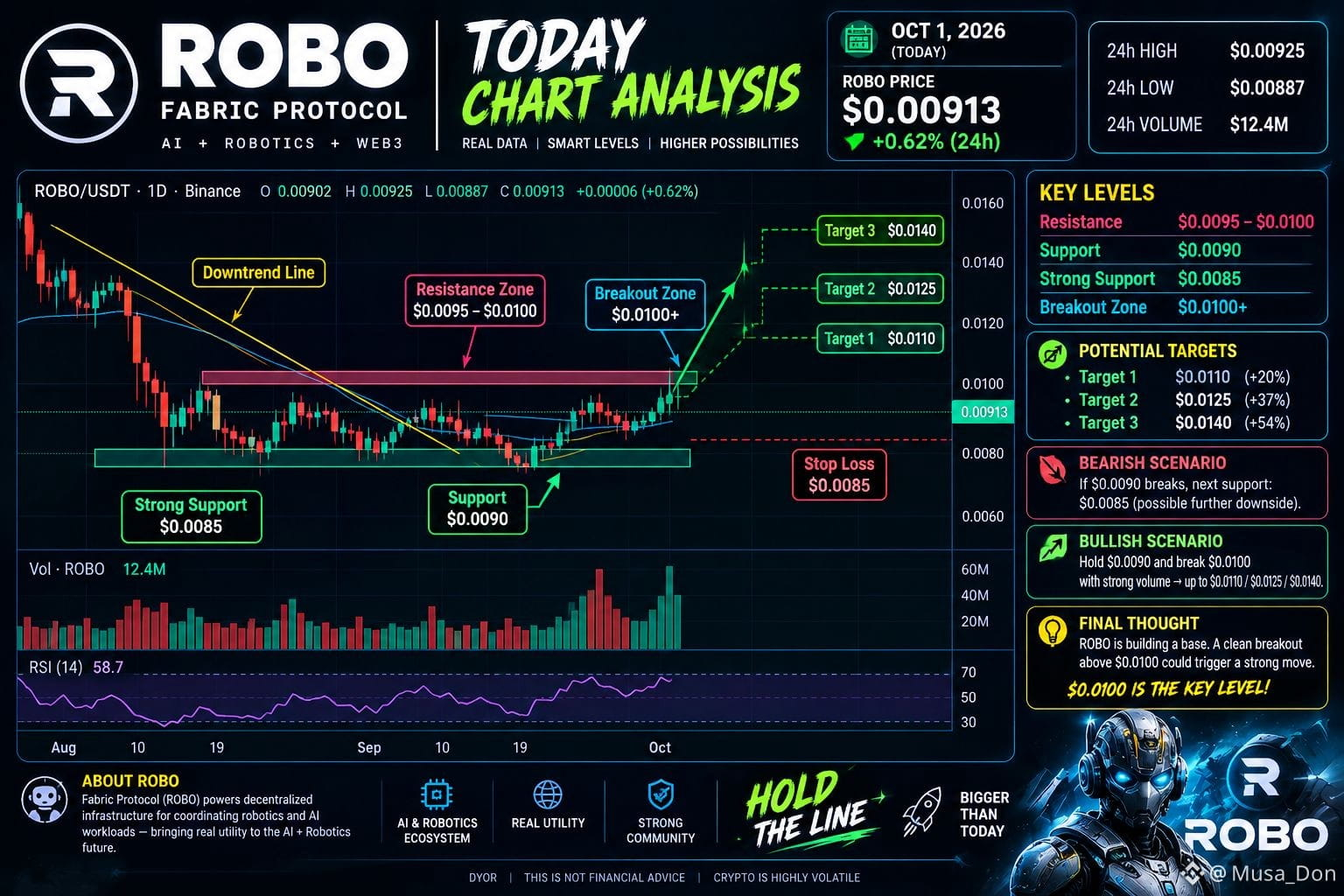
🤖 $ROBO está mostrando sinais de uma possível configuração de recuperação após a recente fraqueza.
💰 Preço atual: ~$0.00913
📊 Variação em 24H: +0,62%
📉 Desempenho em 7D: em torno de -8%
📉 Desempenho em 30D: em torno de -23%
🔥 NÍVEIS-CHAVE PARA FICAR DE OLHO
🟢 Suporte: $0.0090
🟢 Suporte forte: $0.0085
🔴 Resistência: $0.0095–$0.0100
🚀 Zona de rompimento: $0.0100+
🎯 CENÁRIO BULLISH POTENCIAL
Se ROBO sustentar a região de $0.0090 e romper $0.0100 com forte volume, as próximas áreas a observar podem ser:
➡️ Alvo 1: $0.0110
➡️ Alvo 2: $0.0125
➡️ Alvo 3: $0.0140
⚠️ CENÁRIO BEARISH
Uma perda decisiva de $0.0090 pode trazer pressão adicional de venda na direção da área de $0.0085.
🤖 Fabric Protocol se concentra em infraestrutura descentralizada para coordenar robótica e cargas de trabalho de IA, dando exposição à narrativa de IA + robótica para ROBO.
🔥 MINHA OBSERVAÇÃO: $0.0100 é o nível-chave de confirmação. Um rompimento limpo com volume deixaria o cenário bullish mais forte.
⚠️ Apenas previsão — não é aconselhamento financeiro. Cripto é altamente volátil.
#ROBO #FabricProtocol #crypto
🤖 $ROBO está mostrando sinais de uma possível configuração de recuperação após a recente fraqueza.
💰 Preço atual: ~$0.00913
📊 Variação em 24H: +0,62%
📉 Desempenho em 7D: em torno de -8%
📉 Desempenho em 30D: em torno de -23%
🔥 NÍVEIS-CHAVE PARA FICAR DE OLHO
🟢 Suporte: $0.0090
🟢 Suporte forte: $0.0085
🔴 Resistência: $0.0095–$0.0100
🚀 Zona de rompimento: $0.0100+
🎯 CENÁRIO BULLISH POTENCIAL
Se ROBO sustentar a região de $0.0090 e romper $0.0100 com forte volume, as próximas áreas a observar podem ser:
➡️ Alvo 1: $0.0110
➡️ Alvo 2: $0.0125
➡️ Alvo 3: $0.0140
⚠️ CENÁRIO BEARISH
Uma perda decisiva de $0.0090 pode trazer pressão adicional de venda na direção da área de $0.0085.
🤖 Fabric Protocol se concentra em infraestrutura descentralizada para coordenar robótica e cargas de trabalho de IA, dando exposição à narrativa de IA + robótica para ROBO.
🔥 MINHA OBSERVAÇÃO: $0.0100 é o nível-chave de confirmação. Um rompimento limpo com volume deixaria o cenário bullish mais forte.
⚠️ Apenas previsão — não é aconselhamento financeiro. Cripto é altamente volátil.
#ROBO #FabricProtocol #crypto
💰 Preço atual: ~$0.00913
📊 Variação em 24H: +0,62%
📉 Desempenho em 7D: em torno de -8%
📉 Desempenho em 30D: em torno de -23%
🔥 NÍVEIS-CHAVE PARA FICAR DE OLHO
🟢 Suporte: $0.0090
🟢 Suporte forte: $0.0085
🔴 Resistência: $0.0095–$0.0100
🚀 Zona de rompimento: $0.0100+
🎯 CENÁRIO BULLISH POTENCIAL
Se ROBO sustentar a região de $0.0090 e romper $0.0100 com forte volume, as próximas áreas a observar podem ser:
➡️ Alvo 1: $0.0110
➡️ Alvo 2: $0.0125
➡️ Alvo 3: $0.0140
⚠️ CENÁRIO BEARISH
Uma perda decisiva de $0.0090 pode trazer pressão adicional de venda na direção da área de $0.0085.
🤖 Fabric Protocol se concentra em infraestrutura descentralizada para coordenar robótica e cargas de trabalho de IA, dando exposição à narrativa de IA + robótica para ROBO.
🔥 MINHA OBSERVAÇÃO: $0.0100 é o nível-chave de confirmação. Um rompimento limpo com volume deixaria o cenário bullish mais forte.
⚠️ Apenas previsão — não é aconselhamento financeiro. Cripto é altamente volátil.
#ROBO #FabricProtocol #crypto
2
1
1
518
·
--
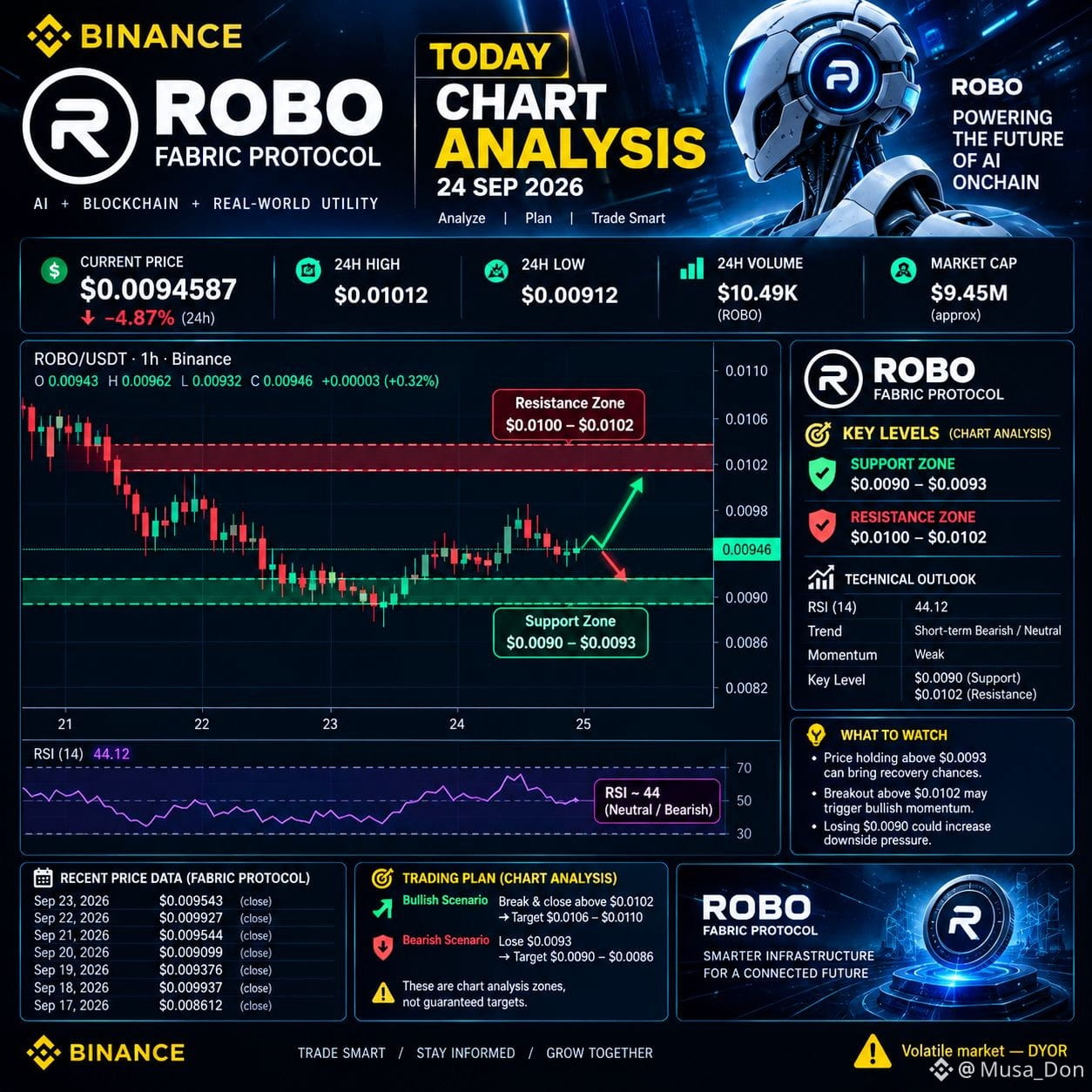
$ROBO está sendo negociado em torno de US$ 0.0095, atualmente enfrentando pressão de venda no curto prazo após sua recente recuperação semanal. 📊
🔑 Níveis-chave
🟢 Suporte: US$ 0.0090 – US$ 0.0093
🔴 Resistência: US$ 0.0100 – US$ 0.0102
📈 Cenário de Alta
Se o ROBO se mantiver acima de US$ 0.0093 e romper US$ 0.0102 com forte volume, as próximas zonas a observar são US$ 0.0106 → US$ 0.0110.
📉 Cenário de Baixa
Se US$ 0.0090 romper de forma decisiva, a pressão vendedora pode aumentar em direção a US$ 0.0086.
🤖 Acompanhar os Fundamentos
A Fabric descreve o ROBO como a utilidade central e o ativo de governança de seu ecossistema, enquanto as atualizações recentes do projeto incluem governança do ROBO e o RoboPay para pagamentos por máquinas.
⚠️ Previsão, não garantia. O ROBO carrega volatilidade elevada; a Binance aplica uma Seed Tag e avisa que esses ativos podem ter risco de negociação maior.
🔥 O ROBO está em uma zona crítica de decisão — observe a faixa de US$ 0.0090–US$ 0.0102.
#ROBO #FabricProtocol #crypto
$ROBO está sendo negociado em torno de US$ 0.0095, atualmente enfrentando pressão de venda no curto prazo após sua recente recuperação semanal. 📊
🔑 Níveis-chave
🟢 Suporte: US$ 0.0090 – US$ 0.0093
🔴 Resistência: US$ 0.0100 – US$ 0.0102
📈 Cenário de Alta
Se o ROBO se mantiver acima de US$ 0.0093 e romper US$ 0.0102 com forte volume, as próximas zonas a observar são US$ 0.0106 → US$ 0.0110.
📉 Cenário de Baixa
Se US$ 0.0090 romper de forma decisiva, a pressão vendedora pode aumentar em direção a US$ 0.0086.
🤖 Acompanhar os Fundamentos
A Fabric descreve o ROBO como a utilidade central e o ativo de governança de seu ecossistema, enquanto as atualizações recentes do projeto incluem governança do ROBO e o RoboPay para pagamentos por máquinas.
⚠️ Previsão, não garantia. O ROBO carrega volatilidade elevada; a Binance aplica uma Seed Tag e avisa que esses ativos podem ter risco de negociação maior.
🔥 O ROBO está em uma zona crítica de decisão — observe a faixa de US$ 0.0090–US$ 0.0102.
#ROBO #FabricProtocol #crypto
🔑 Níveis-chave
🟢 Suporte: US$ 0.0090 – US$ 0.0093
🔴 Resistência: US$ 0.0100 – US$ 0.0102
📈 Cenário de Alta
Se o ROBO se mantiver acima de US$ 0.0093 e romper US$ 0.0102 com forte volume, as próximas zonas a observar são US$ 0.0106 → US$ 0.0110.
📉 Cenário de Baixa
Se US$ 0.0090 romper de forma decisiva, a pressão vendedora pode aumentar em direção a US$ 0.0086.
🤖 Acompanhar os Fundamentos
A Fabric descreve o ROBO como a utilidade central e o ativo de governança de seu ecossistema, enquanto as atualizações recentes do projeto incluem governança do ROBO e o RoboPay para pagamentos por máquinas.
⚠️ Previsão, não garantia. O ROBO carrega volatilidade elevada; a Binance aplica uma Seed Tag e avisa que esses ativos podem ter risco de negociação maior.
🔥 O ROBO está em uma zona crítica de decisão — observe a faixa de US$ 0.0090–US$ 0.0102.
#ROBO #FabricProtocol #crypto
1
603
·
--
Em Baixa
SiGanamosElSabadoAguanteTaiereee:
Mantenerse alejado de estos estafadores
1
1
185

·
--
🤖🔥 $ROBO : E SE A PRÓXIMA GRANDE HISTÓRIA DA IA NÃO FOR APENAS SOFTWARE… MAS ROBÔS?
A IA está indo além dos chatbots, e o Fabric Protocol está trabalhando em uma infraestrutura projetada para conectar agentes de IA, robôs e serviços do mundo real. 👀
Veja por que vale a pena ficar de olho em $ROBO :
⚙️ IA + Robótica: A Fabric pretende coordenar cargas de trabalho de IA e sistemas robóticos em diferentes dispositivos e serviços.
🔗 Economia máquina a máquina: A visão é permitir que as máquinas se identifiquem, coordenem tarefas e realizem transações entre si.
💰 Utilidade do token: O ROBO foi projetado para viabilizar pagamentos, participação na rede e coordenação dentro do ecossistema Fabric.
📈 De olho no mercado: O ROBO está listado na Binance, mas as oscilações de preço no curto prazo podem ser voláteis. O volume de negociação, a liquidez e os próximos desbloqueios de tokens merecem atenção.
🔥 O panorama geral: Se as máquinas autônomas se tornarem mais comuns, a infraestrutura que as conecta poderá se tornar uma parte importante da economia da IA.
Meu foco é simples: adoção real, tecnologia funcional e demanda sustentável — não apenas o hype em torno da palavra “IA”.
💬 O que você acha: $ROBO pode se tornar um nome importante na economia da robótica impulsionada por IA ou essa narrativa ainda está muito no início?
👇 Vamos conversar!
#ROBO #FabricProtocol #AI #Robotics #Web3 #Cripto #BinanceSquare
{future}(ROBOUSDT)
🤖🔥 $ROBO : E SE A PRÓXIMA GRANDE HISTÓRIA DA IA NÃO FOR APENAS SOFTWARE… MAS ROBÔS?
A IA está indo além dos chatbots, e o Fabric Protocol está trabalhando em uma infraestrutura projetada para conectar agentes de IA, robôs e serviços do mundo real. 👀
Veja por que vale a pena ficar de olho em $ROBO :
⚙️ IA + Robótica: A Fabric pretende coordenar cargas de trabalho de IA e sistemas robóticos em diferentes dispositivos e serviços.
🔗 Economia máquina a máquina: A visão é permitir que as máquinas se identifiquem, coordenem tarefas e realizem transações entre si.
💰 Utilidade do token: O ROBO foi projetado para viabilizar pagamentos, participação na rede e coordenação dentro do ecossistema Fabric.
📈 De olho no mercado: O ROBO está listado na Binance, mas as oscilações de preço no curto prazo podem ser voláteis. O volume de negociação, a liquidez e os próximos desbloqueios de tokens merecem atenção.
🔥 O panorama geral: Se as máquinas autônomas se tornarem mais comuns, a infraestrutura que as conecta poderá se tornar uma parte importante da economia da IA.
Meu foco é simples: adoção real, tecnologia funcional e demanda sustentável — não apenas o hype em torno da palavra “IA”.
💬 O que você acha: $ROBO pode se tornar um nome importante na economia da robótica impulsionada por IA ou essa narrativa ainda está muito no início?
👇 Vamos conversar!
#ROBO #FabricProtocol #AI #Robotics #Web3 #Cripto #BinanceSquare
A IA está indo além dos chatbots, e o Fabric Protocol está trabalhando em uma infraestrutura projetada para conectar agentes de IA, robôs e serviços do mundo real. 👀
Veja por que vale a pena ficar de olho em $ROBO :
⚙️ IA + Robótica: A Fabric pretende coordenar cargas de trabalho de IA e sistemas robóticos em diferentes dispositivos e serviços.
🔗 Economia máquina a máquina: A visão é permitir que as máquinas se identifiquem, coordenem tarefas e realizem transações entre si.
💰 Utilidade do token: O ROBO foi projetado para viabilizar pagamentos, participação na rede e coordenação dentro do ecossistema Fabric.
📈 De olho no mercado: O ROBO está listado na Binance, mas as oscilações de preço no curto prazo podem ser voláteis. O volume de negociação, a liquidez e os próximos desbloqueios de tokens merecem atenção.
🔥 O panorama geral: Se as máquinas autônomas se tornarem mais comuns, a infraestrutura que as conecta poderá se tornar uma parte importante da economia da IA.
Meu foco é simples: adoção real, tecnologia funcional e demanda sustentável — não apenas o hype em torno da palavra “IA”.
💬 O que você acha: $ROBO pode se tornar um nome importante na economia da robótica impulsionada por IA ou essa narrativa ainda está muito no início?
👇 Vamos conversar!
#ROBO #FabricProtocol #AI #Robotics #Web3 #Cripto #BinanceSquare
SiGanamosElSabadoAguanteTaiereee:
Viste que es en serio
8
450

·
--
Em Alta
🔥 $ROBO — isso não é apenas um token. É infraestrutura para a roboeconomia do futuro
Imagine um mundo em que os robôs:
→ têm sua própria identidade on-chain
→ possuem uma carteira cripto
→ eles mesmos pagam por tarefas, recebem recompensas e se coordenam entre si
→ sem corporações e bancos centralizados
É exatamente isso que o Fabric Protocol está construindo.
Proof of Robotic Work — robôs executam tarefas físicas reais (entrega, inspeção, logística, monitoramento) e recebem recompensas em $ROBO. Provas vindas de sensores vão direto para a blockchain. Nada de “trust me, bro”.
Skill Chips — habilidades modulares que podem ser adicionadas/removidas como apps. Um robô aprende — e a habilidade pode se espalhar por toda a rede.
As máquinas se tornam agentes econômicos completos. Pagam taxas, fazem staking como garantia pela qualidade do trabalho e votam no governance.
A missão da Fabric Foundation é simples e poderosa:
Own the Robot Economy.
Sem sistemas fechados de alguns poucos gigantes.
Uma rede aberta e descentralizada, na qual qualquer um pode participar.
Isso já não é ficção científica.
É uma infraestrutura que está sendo construída agora.
O futuro em que robôs trabalham para todos, e não para um único dono.
E $ROBO — é o combustível desse sistema. 🤖⚡
#ROBO #FabricProtocol #RobotEconomy #DePIN #AI
🔥 $ROBO — isso não é apenas um token. É infraestrutura para a roboeconomia do futuro
Imagine um mundo em que os robôs:
→ têm sua própria identidade on-chain
→ possuem uma carteira cripto
→ eles mesmos pagam por tarefas, recebem recompensas e se coordenam entre si
→ sem corporações e bancos centralizados
É exatamente isso que o Fabric Protocol está construindo.
Proof of Robotic Work — robôs executam tarefas físicas reais (entrega, inspeção, logística, monitoramento) e recebem recompensas em $ROBO . Provas vindas de sensores vão direto para a blockchain. Nada de “trust me, bro”.
Skill Chips — habilidades modulares que podem ser adicionadas/removidas como apps. Um robô aprende — e a habilidade pode se espalhar por toda a rede.
As máquinas se tornam agentes econômicos completos. Pagam taxas, fazem staking como garantia pela qualidade do trabalho e votam no governance.
A missão da Fabric Foundation é simples e poderosa:
Own the Robot Economy.
Sem sistemas fechados de alguns poucos gigantes.
Uma rede aberta e descentralizada, na qual qualquer um pode participar.
Isso já não é ficção científica.
É uma infraestrutura que está sendo construída agora.
O futuro em que robôs trabalham para todos, e não para um único dono.
E $ROBO — é o combustível desse sistema. 🤖⚡
#ROBO #FabricProtocol #RobotEconomy #DePIN #AI
Imagine um mundo em que os robôs:
→ têm sua própria identidade on-chain
→ possuem uma carteira cripto
→ eles mesmos pagam por tarefas, recebem recompensas e se coordenam entre si
→ sem corporações e bancos centralizados
É exatamente isso que o Fabric Protocol está construindo.
Proof of Robotic Work — robôs executam tarefas físicas reais (entrega, inspeção, logística, monitoramento) e recebem recompensas em $ROBO . Provas vindas de sensores vão direto para a blockchain. Nada de “trust me, bro”.
Skill Chips — habilidades modulares que podem ser adicionadas/removidas como apps. Um robô aprende — e a habilidade pode se espalhar por toda a rede.
As máquinas se tornam agentes econômicos completos. Pagam taxas, fazem staking como garantia pela qualidade do trabalho e votam no governance.
A missão da Fabric Foundation é simples e poderosa:
Own the Robot Economy.
Sem sistemas fechados de alguns poucos gigantes.
Uma rede aberta e descentralizada, na qual qualquer um pode participar.
Isso já não é ficção científica.
É uma infraestrutura que está sendo construída agora.
O futuro em que robôs trabalham para todos, e não para um único dono.
E $ROBO — é o combustível desse sistema. 🤖⚡
#ROBO #FabricProtocol #RobotEconomy #DePIN #AI

5
424
Inicia sessão para explorar mais conteúdos
Junta-te a utilizadores de criptomoedas de todo o mundo na Binance Square
⚡️ Obtém informações úteis e recentes sobre criptomoedas.
💬 Com a confiança da maior exchange de criptomoedas do mundo.
👍 Descobre perspetivas reais de criadores verificados.
E-mail/Número de telefone
Tópicos em Tendência
1
#CanMicrosoftDeliverOnAI
170,561 visualizações
1,343 a discutir
2
#CanGoogleDefindItsCore
86,553 visualizações
955 a discutir
3
#FOMCWatch
9.2M visualizações
28,607 a discutir
4
#USGovSellsFTXLinkedAnthropicSharesFor$627M
88 visualizações
9 a discutir
5
#SKHynixUnveils$45BShareholderReturns
369 visualizações
13 a discutir
6
#OSMOPlansToBurn100MTokensFromCommunityPool
5,835 visualizações
178 a discutir
7
#EthereumDropsBelow$2300
12,843 visualizações
167 a discutir
8
#BitcoinSlipsBelow$80KAgain
36,637 visualizações
137 a discutir
9
#ThailandLaunchesWORPTStablecoinToQRPaymentApp
83,263 visualizações
987 a discutir
10
#StrategySkipsBitcoinPurchasesSpends$205MOnSTRCBuybacks
14,764 visualizações
103 a discutir