
#vanar
vanar
10.4M visualizações
193,110 a discutir
Popular
Mais recente

·
--
𝗘𝗻𝗾𝘂𝗮𝗻𝘁𝗼 𝗰𝗮𝗱𝗮 𝘂𝗺𝗮 𝗲𝘀𝘁á 𝗱𝗲𝘀𝗰𝗮𝗻𝘀𝗮𝗻𝗱𝗼 𝗻𝗼 𝗶𝗻𝗳𝗿𝗮𝗲𝘀𝘁𝗿𝘂𝘁𝘂𝗿𝗮, 𝗔𝗻𝗮𝗿𝗰𝗵𝗮𝗶𝗻 𝗲𝘀𝘁á 𝗽𝗼𝗿 𝗶𝗻𝗰𝗿í𝘃𝗲𝗹 𝗽𝗲𝗿𝗳𝗲𝗶𝘁𝗮𝗺𝗲𝗻𝘁𝗲 𝗲𝗿𝗴𝘂𝗮𝗲𝗻𝗱𝗼 𝗮 𝗲𝘀𝘁𝗮𝗰𝗮 𝗱𝗼 𝗔𝗜-𝗮𝗻𝘁𝗶𝘃𝗼 𝗻𝗮 𝘀𝘂𝗮 𝘀𝗼𝗰𝗶𝗲𝗱𝗮𝗱𝗲
A fase de ignição está aqui. Com memória própria e execução verificável entrando no ar, não estamos apenas vendo mais uma cadeia—estamos testemunhando o verdadeiro lançamento do ecossistema. Lua iminente enquanto os construtores chegam
Quem mais está carregando? 💎🚀 #Vanar #AI
𝗘𝗻𝗾𝘂𝗮𝗻𝘁𝗼 𝗰𝗮𝗱𝗮 𝘂𝗺𝗮 𝗲𝘀𝘁á 𝗱𝗲𝘀𝗰𝗮𝗻𝘀𝗮𝗻𝗱𝗼 𝗻𝗼 𝗶𝗻𝗳𝗿𝗮𝗲𝘀𝘁𝗿𝘂𝘁𝘂𝗿𝗮, 𝗔𝗻𝗮𝗿𝗰𝗵𝗮𝗶𝗻 𝗲𝘀𝘁á 𝗽𝗼𝗿 𝗶𝗻𝗰𝗿í𝘃𝗲𝗹 𝗽𝗲𝗿𝗳𝗲𝗶𝘁𝗮𝗺𝗲𝗻𝘁𝗲 𝗲𝗿𝗴𝘂𝗮𝗲𝗻𝗱𝗼 𝗮 𝗲𝘀𝘁𝗮𝗰𝗮 𝗱𝗼 𝗔𝗜-𝗮𝗻𝘁𝗶𝘃𝗼 𝗻𝗮 𝘀𝘂𝗮 𝘀𝗼𝗰𝗶𝗲𝗱𝗮𝗱𝗲
A fase de ignição está aqui. Com memória própria e execução verificável entrando no ar, não estamos apenas vendo mais uma cadeia—estamos testemunhando o verdadeiro lançamento do ecossistema. Lua iminente enquanto os construtores chegam
Quem mais está carregando? 💎🚀 #Vanar #AI
A fase de ignição está aqui. Com memória própria e execução verificável entrando no ar, não estamos apenas vendo mais uma cadeia—estamos testemunhando o verdadeiro lançamento do ecossistema. Lua iminente enquanto os construtores chegam
Quem mais está carregando? 💎🚀 #Vanar #AI
42

$VANRY grande volatilidade no curto prazo, mas a tendência geral permanece mais forte. O volume em aberto saltou diversas vezes de forma significativa, com o maior aumento em uma única vez chegando a +63,4%; em cada aumento de volume, o preço também disparou no curto prazo, indicando claramente a intenção de entrada de capital.
Preço atual $0.00344, volume de 24h de 8,4M, market cap de apenas 8,18M — trata-se de uma estrutura típica de baixa capitalização com alta rotatividade: muita elasticidade, mas isso também significa quedas igualmente intensas.
Vale notar que a Binance já o colocou na etiqueta de monitoramento; no curto prazo, isso realmente pressionou uma onda de venda, mas também elevou diretamente a visibilidade — etiquetas desse tipo costumam ser uma faca de dois gumes, e o sentimento pode ser ainda mais facilmente inflamado.
Minha opinião: o sentimento comprador ainda está à frente; se o volume em aberto continuar aumentando e não romper o suporte das mínimas anteriores, o valor de acompanhar tende a superar o de evitar. No entanto, a posição precisa ser controlada, e o gerenciamento de risco dos contratos sob a etiqueta de monitoramento deve ser ainda mais apertado.
#VANRY #Vanar #mercado de altcoins
$VANRY grande volatilidade no curto prazo, mas a tendência geral permanece mais forte. O volume em aberto saltou diversas vezes de forma significativa, com o maior aumento em uma única vez chegando a +63,4%; em cada aumento de volume, o preço também disparou no curto prazo, indicando claramente a intenção de entrada de capital.
Preço atual $0.00344, volume de 24h de 8,4M, market cap de apenas 8,18M — trata-se de uma estrutura típica de baixa capitalização com alta rotatividade: muita elasticidade, mas isso também significa quedas igualmente intensas.
Vale notar que a Binance já o colocou na etiqueta de monitoramento; no curto prazo, isso realmente pressionou uma onda de venda, mas também elevou diretamente a visibilidade — etiquetas desse tipo costumam ser uma faca de dois gumes, e o sentimento pode ser ainda mais facilmente inflamado.
Minha opinião: o sentimento comprador ainda está à frente; se o volume em aberto continuar aumentando e não romper o suporte das mínimas anteriores, o valor de acompanhar tende a superar o de evitar. No entanto, a posição precisa ser controlada, e o gerenciamento de risco dos contratos sob a etiqueta de monitoramento deve ser ainda mais apertado.
#VANRY #Vanar #mercado de altcoins
Preço atual $0.00344, volume de 24h de 8,4M, market cap de apenas 8,18M — trata-se de uma estrutura típica de baixa capitalização com alta rotatividade: muita elasticidade, mas isso também significa quedas igualmente intensas.
Vale notar que a Binance já o colocou na etiqueta de monitoramento; no curto prazo, isso realmente pressionou uma onda de venda, mas também elevou diretamente a visibilidade — etiquetas desse tipo costumam ser uma faca de dois gumes, e o sentimento pode ser ainda mais facilmente inflamado.
Minha opinião: o sentimento comprador ainda está à frente; se o volume em aberto continuar aumentando e não romper o suporte das mínimas anteriores, o valor de acompanhar tende a superar o de evitar. No entanto, a posição precisa ser controlada, e o gerenciamento de risco dos contratos sob a etiqueta de monitoramento deve ser ainda mais apertado.
#VANRY #Vanar #mercado de altcoins
35

🚀 Vanar Chain ($VANRY ): Mais do que apenas uma tendência?
$VANRY está ganhando atenção, mas a história maior é a sua **transição para um ecossistema focado em IA na Base**. O projeto tem como objetivo atrair desenvolvedores e aplicações de IA, expandindo seu ecossistema por meio de uma migração planejada de tokens 1:1.
Para **traders**, o aumento de volume pode criar oportunidades—mas observe se o impulso se mantém após o hype inicial.
Para **investidores**, a questão principal não é o preço de hoje. É se a Vanar consegue entregar produtos reais de IA, atrair desenvolvedores e aumentar a adoção pelos usuários.
Para **detentores**, o valor no longo prazo dependerá do crescimento do ecossistema, da migração bem-sucedida e de como as novas tokenomics serão geridas ao longo do tempo.
🏛️ Insight da PMIF™
Narrativas criam atenção.
Execução cria valor.
Observe a adoção—não apenas o gráfico.
#Vanar #Aİ #Web3 #Crypto
🚀 Vanar Chain ($VANRY ): Mais do que apenas uma tendência?
$VANRY está ganhando atenção, mas a história maior é a sua **transição para um ecossistema focado em IA na Base**. O projeto tem como objetivo atrair desenvolvedores e aplicações de IA, expandindo seu ecossistema por meio de uma migração planejada de tokens 1:1.
Para **traders**, o aumento de volume pode criar oportunidades—mas observe se o impulso se mantém após o hype inicial.
Para **investidores**, a questão principal não é o preço de hoje. É se a Vanar consegue entregar produtos reais de IA, atrair desenvolvedores e aumentar a adoção pelos usuários.
Para **detentores**, o valor no longo prazo dependerá do crescimento do ecossistema, da migração bem-sucedida e de como as novas tokenomics serão geridas ao longo do tempo.
🏛️ Insight da PMIF™
Narrativas criam atenção.
Execução cria valor.
Observe a adoção—não apenas o gráfico.
#Vanar #Aİ #Web3 #Crypto
$VANRY está ganhando atenção, mas a história maior é a sua **transição para um ecossistema focado em IA na Base**. O projeto tem como objetivo atrair desenvolvedores e aplicações de IA, expandindo seu ecossistema por meio de uma migração planejada de tokens 1:1.
Para **traders**, o aumento de volume pode criar oportunidades—mas observe se o impulso se mantém após o hype inicial.
Para **investidores**, a questão principal não é o preço de hoje. É se a Vanar consegue entregar produtos reais de IA, atrair desenvolvedores e aumentar a adoção pelos usuários.
Para **detentores**, o valor no longo prazo dependerá do crescimento do ecossistema, da migração bem-sucedida e de como as novas tokenomics serão geridas ao longo do tempo.
🏛️ Insight da PMIF™
Narrativas criam atenção.
Execução cria valor.
Observe a adoção—não apenas o gráfico.
#Vanar #Aİ #Web3 #Crypto
1
97


·
--
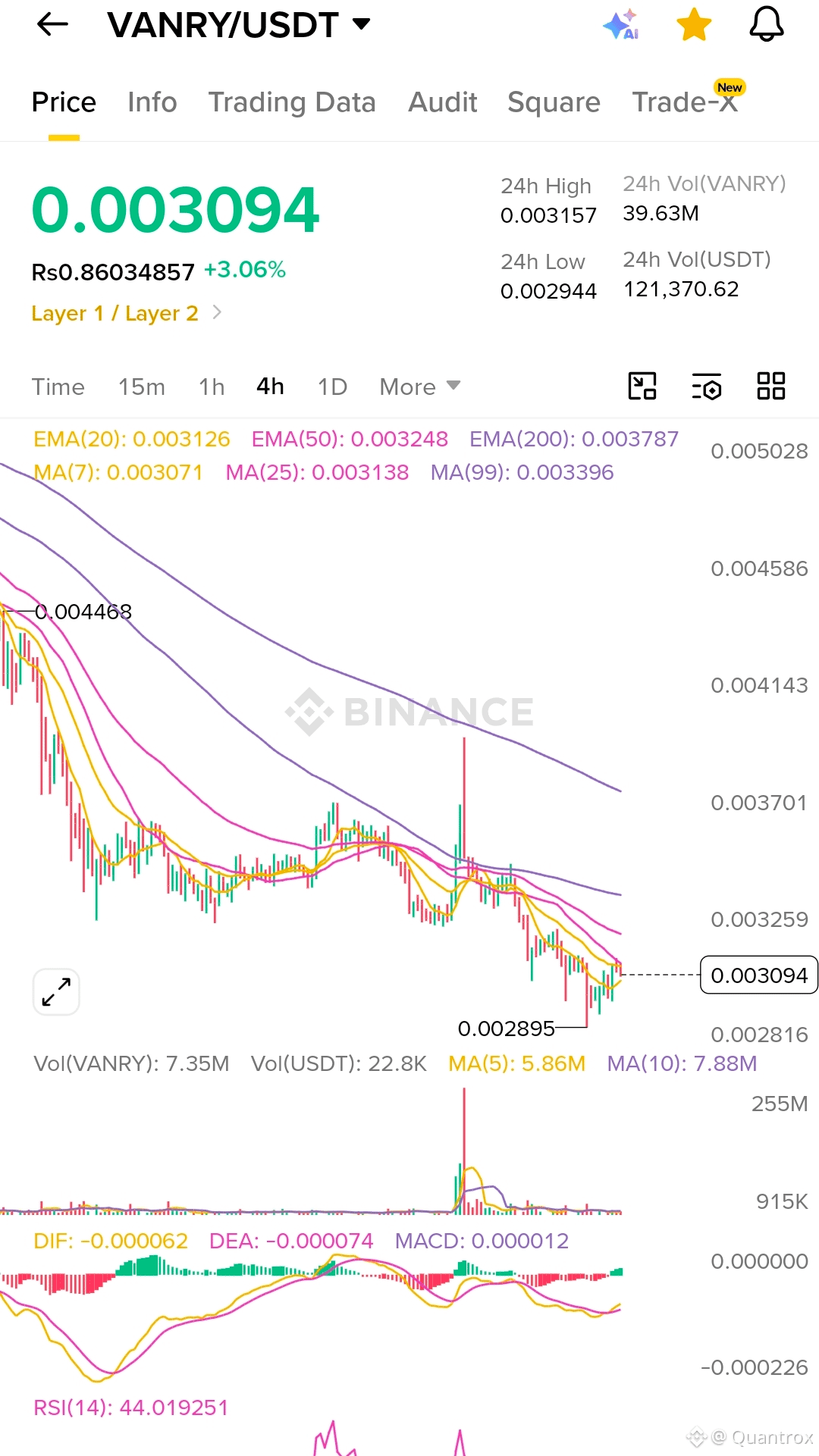
Tenho sido paciente com $VANRY e o gráfico finalmente está concordando
Segurei a mínima de 0.002895 e o MACD acabou de cruzar para alta no 4H. O volume disparou neste repique — isso não é ruído de varejo.
O RSI está se recuperando e a MA7 já virou abaixo do preço. A paciência está valendo a pena.
🎯 Plano de Trade
Zona de Entrada: 0.003050 – 0.003100
✅ Objetivo 1: 0.003260
✅ Objetivo 2: 0.003500
❌ Stop Loss: 0.002820
DYOR | NFA
#VANRY #Vanar #CryptoTrading
Tenho sido paciente com $VANRY e o gráfico finalmente está concordando
Segurei a mínima de 0.002895 e o MACD acabou de cruzar para alta no 4H. O volume disparou neste repique — isso não é ruído de varejo.
O RSI está se recuperando e a MA7 já virou abaixo do preço. A paciência está valendo a pena.
🎯 Plano de Trade
Zona de Entrada: 0.003050 – 0.003100
✅ Objetivo 1: 0.003260
✅ Objetivo 2: 0.003500
❌ Stop Loss: 0.002820
DYOR | NFA
#VANRY #Vanar #CryptoTrading
Segurei a mínima de 0.002895 e o MACD acabou de cruzar para alta no 4H. O volume disparou neste repique — isso não é ruído de varejo.
O RSI está se recuperando e a MA7 já virou abaixo do preço. A paciência está valendo a pena.
🎯 Plano de Trade
Zona de Entrada: 0.003050 – 0.003100
✅ Objetivo 1: 0.003260
✅ Objetivo 2: 0.003500
❌ Stop Loss: 0.002820
DYOR | NFA
#VANRY #Vanar #CryptoTrading
1
341

·
--
VANRY dispara 57,6% em um único dia; contratos futuros da Binance com posições em aberto aumentam 63%—o dinheiro está votando com dinheiro de verdade.
A Vanar Chain, uma blockchain L1 voltada para entretenimento e IA, teve a narrativa reacendida recentemente. Um salto de 63% no OI dos contratos sugere entrada agressiva de capital alavancado, e não apenas impulso do mercado à vista. Esse tipo de cenário costuma ampliar a volatilidade e favorecer “coleta” dos dois lados.
Minha opinião pessoal:
1. Após uma alta explosiva, o risco de buscar comprando no topo aumenta rapidamente; vale monitorar de perto a taxa de funding dos contratos e o long/short ratio;
2. Só é uma estrutura relativamente saudável se conseguir se manter acima das máximas anteriores e fazer reteste sem rompê-las;
3. Se surgirem sinais de rotação para altcoins, projetos com menor capitalização podem ganhar uma janela curta de otimismo.
Não persiga preços altos e não se apegue à batalha; defina stop loss e só então considere a oportunidade.
$VANRY #VANRY #Vanar #山寨季
VANRY dispara 57,6% em um único dia; contratos futuros da Binance com posições em aberto aumentam 63%—o dinheiro está votando com dinheiro de verdade.
A Vanar Chain, uma blockchain L1 voltada para entretenimento e IA, teve a narrativa reacendida recentemente. Um salto de 63% no OI dos contratos sugere entrada agressiva de capital alavancado, e não apenas impulso do mercado à vista. Esse tipo de cenário costuma ampliar a volatilidade e favorecer “coleta” dos dois lados.
Minha opinião pessoal:
1. Após uma alta explosiva, o risco de buscar comprando no topo aumenta rapidamente; vale monitorar de perto a taxa de funding dos contratos e o long/short ratio;
2. Só é uma estrutura relativamente saudável se conseguir se manter acima das máximas anteriores e fazer reteste sem rompê-las;
3. Se surgirem sinais de rotação para altcoins, projetos com menor capitalização podem ganhar uma janela curta de otimismo.
Não persiga preços altos e não se apegue à batalha; defina stop loss e só então considere a oportunidade.
$VANRY #VANRY #Vanar #山寨季
A Vanar Chain, uma blockchain L1 voltada para entretenimento e IA, teve a narrativa reacendida recentemente. Um salto de 63% no OI dos contratos sugere entrada agressiva de capital alavancado, e não apenas impulso do mercado à vista. Esse tipo de cenário costuma ampliar a volatilidade e favorecer “coleta” dos dois lados.
Minha opinião pessoal:
1. Após uma alta explosiva, o risco de buscar comprando no topo aumenta rapidamente; vale monitorar de perto a taxa de funding dos contratos e o long/short ratio;
2. Só é uma estrutura relativamente saudável se conseguir se manter acima das máximas anteriores e fazer reteste sem rompê-las;
3. Se surgirem sinais de rotação para altcoins, projetos com menor capitalização podem ganhar uma janela curta de otimismo.
Não persiga preços altos e não se apegue à batalha; defina stop loss e só então considere a oportunidade.
$VANRY #VANRY #Vanar #山寨季
125

·
--
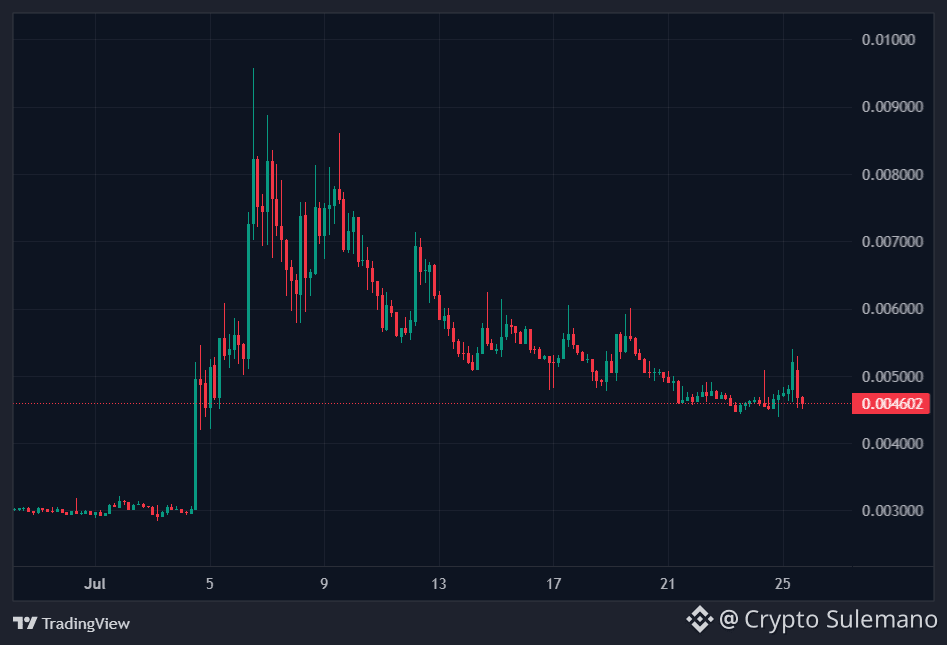
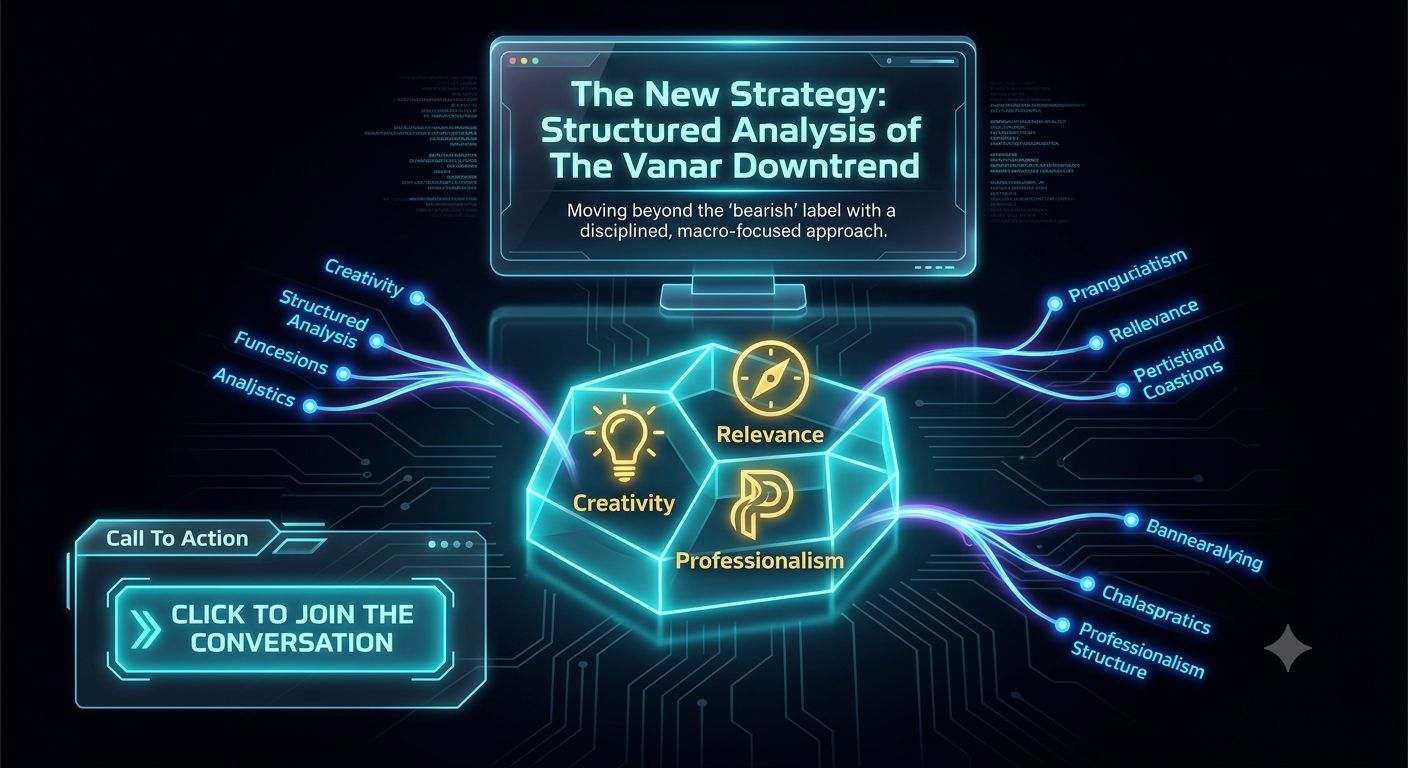
A Realidade do Gráfico: Navegando a Queda do Vanar 📉
Vamos falar sobre $VANAR. Não adianta passar a mão por cima—o movimento atual do preço é claramente de baixa, e o ativo enfrenta uma pressão considerável pela frente. Em momentos como este, separar emoção de estratégia é o que mantém um trader vivo.
Em vez de vender em pânico ou comprar às cegas uma faca caindo, a jogada inteligente agora é paciência. Estou acompanhando de perto os níveis de suporte macro para ver onde os compradores finalmente decidem entrar e estabelecer um piso firme de acumulação. Uma tendência de baixa não é apenas um tombo; é o mercado se reajustando e preparando a próxima estrutura potencial.
Gerenciar o risco com stop-losses rigorosos e manter a “munição” seca pronta é prioridade até vermos uma reversão de tendência confirmada ou um padrão convincente de fundo duplo nos timeframes maiores.
Você está ativamente procurando aproveitar a queda em níveis de suporte mais baixos, ou está de fora esperando uma mudança confirmada para uma estrutura de alta? Me diga qual é sua estratégia nos comentários abaixo! 👇
#vanar #CryptoAnalysis #TradingStrategy #Altcoins #Write2Earn
$VANRY
{spot}(VANRYUSDT)
$GOOGL.US
{stock_us}(GOOGL.US)
A Realidade do Gráfico: Navegando a Queda do Vanar 📉
Vamos falar sobre $VANAR. Não adianta passar a mão por cima—o movimento atual do preço é claramente de baixa, e o ativo enfrenta uma pressão considerável pela frente. Em momentos como este, separar emoção de estratégia é o que mantém um trader vivo.
Em vez de vender em pânico ou comprar às cegas uma faca caindo, a jogada inteligente agora é paciência. Estou acompanhando de perto os níveis de suporte macro para ver onde os compradores finalmente decidem entrar e estabelecer um piso firme de acumulação. Uma tendência de baixa não é apenas um tombo; é o mercado se reajustando e preparando a próxima estrutura potencial.
Gerenciar o risco com stop-losses rigorosos e manter a “munição” seca pronta é prioridade até vermos uma reversão de tendência confirmada ou um padrão convincente de fundo duplo nos timeframes maiores.
Você está ativamente procurando aproveitar a queda em níveis de suporte mais baixos, ou está de fora esperando uma mudança confirmada para uma estrutura de alta? Me diga qual é sua estratégia nos comentários abaixo! 👇
#vanar #CryptoAnalysis #TradingStrategy #Altcoins #Write2Earn
$VANRY
$GOOGL.US
Vamos falar sobre $VANAR. Não adianta passar a mão por cima—o movimento atual do preço é claramente de baixa, e o ativo enfrenta uma pressão considerável pela frente. Em momentos como este, separar emoção de estratégia é o que mantém um trader vivo.
Em vez de vender em pânico ou comprar às cegas uma faca caindo, a jogada inteligente agora é paciência. Estou acompanhando de perto os níveis de suporte macro para ver onde os compradores finalmente decidem entrar e estabelecer um piso firme de acumulação. Uma tendência de baixa não é apenas um tombo; é o mercado se reajustando e preparando a próxima estrutura potencial.
Gerenciar o risco com stop-losses rigorosos e manter a “munição” seca pronta é prioridade até vermos uma reversão de tendência confirmada ou um padrão convincente de fundo duplo nos timeframes maiores.
Você está ativamente procurando aproveitar a queda em níveis de suporte mais baixos, ou está de fora esperando uma mudança confirmada para uma estrutura de alta? Me diga qual é sua estratégia nos comentários abaixo! 👇
#vanar #CryptoAnalysis #TradingStrategy #Altcoins #Write2Earn
$VANRY
$GOOGL.US
GOOGLUS-1,66%
426

·
--
Em Alta
$VANRY está sendo negociado próximo a uma zona de suporte-chave após uma prolongada tendência de baixa. • Uma ruptura acima de $GOOG.US
{stock_us}(GOOG.US)
0.0054 com forte volume poderia confirmar um impulso altista.
#USStrikesIran13thNightTrumpNotReadyToNegotiate #vanar #Altcoin #Binance $BNB
{future}(BNBUSDT)
$VANRY está sendo negociado próximo a uma zona de suporte-chave após uma prolongada tendência de baixa. • Uma ruptura acima de $GOOG.US
0.0054 com forte volume poderia confirmar um impulso altista.
#USStrikesIran13thNightTrumpNotReadyToNegotiate #vanar #Altcoin #Binance $BNB
0.0054 com forte volume poderia confirmar um impulso altista.
#USStrikesIran13thNightTrumpNotReadyToNegotiate #vanar #Altcoin #Binance $BNB
GOOGUS-1,60%
BNB-0,27%
1
115

·
--
Em Alta
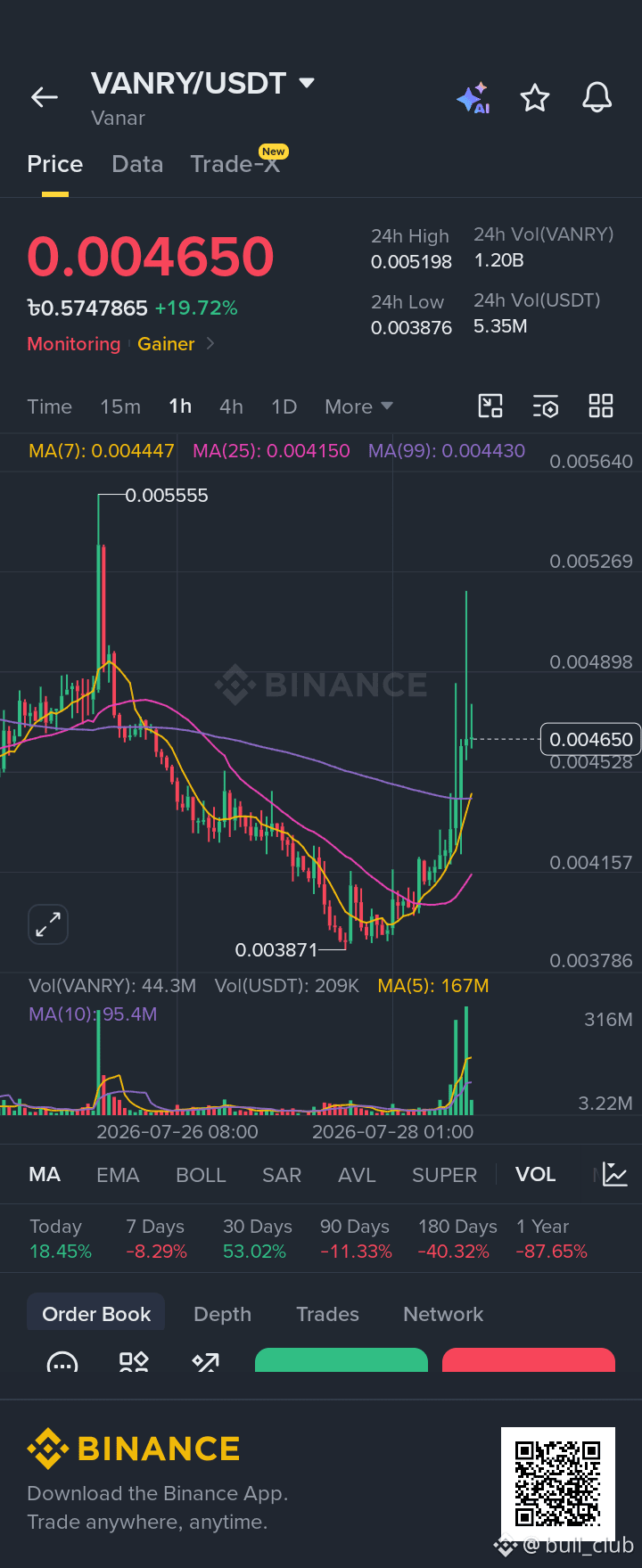
VANRY está a bombar forte com um ganho de 19% hoje. O volume está explodindo com 1.20B tokens negociados.
Aqui está o meu plano de trade.
Entrada de 0.00440 a 0.00450.
Alvo 0.00500 e 0.00520.
Stop loss 0.00410.
O preço reagiu a partir da mínima de 0.003871 e agora está testando 0.004650. A MA7 está em 0.004447 e a MA25 em 0.004150. As MAs estão empilhadas de forma bullish. Se romper 0.00480, o próximo alvo é 0.00520. Se rejeitar, pode cair para o suporte de 0.00440.
Qual é o teu plano para VANRY? Deixa nos comentários.
Não é aconselhamento financeiro. DYOR.
$VANRY
{future}(VANRYUSDT)
#VANRY #Vanar #Crypto #trading
VANRY está a bombar forte com um ganho de 19% hoje. O volume está explodindo com 1.20B tokens negociados.
Aqui está o meu plano de trade.
Entrada de 0.00440 a 0.00450.
Alvo 0.00500 e 0.00520.
Stop loss 0.00410.
O preço reagiu a partir da mínima de 0.003871 e agora está testando 0.004650. A MA7 está em 0.004447 e a MA25 em 0.004150. As MAs estão empilhadas de forma bullish. Se romper 0.00480, o próximo alvo é 0.00520. Se rejeitar, pode cair para o suporte de 0.00440.
Qual é o teu plano para VANRY? Deixa nos comentários.
Não é aconselhamento financeiro. DYOR.
$VANRY
#VANRY #Vanar #Crypto #trading
Aqui está o meu plano de trade.
Entrada de 0.00440 a 0.00450.
Alvo 0.00500 e 0.00520.
Stop loss 0.00410.
O preço reagiu a partir da mínima de 0.003871 e agora está testando 0.004650. A MA7 está em 0.004447 e a MA25 em 0.004150. As MAs estão empilhadas de forma bullish. Se romper 0.00480, o próximo alvo é 0.00520. Se rejeitar, pode cair para o suporte de 0.00440.
Qual é o teu plano para VANRY? Deixa nos comentários.
Não é aconselhamento financeiro. DYOR.
$VANRY
#VANRY #Vanar #Crypto #trading
1
1
1.2k

·
--
Verificado
Artigo
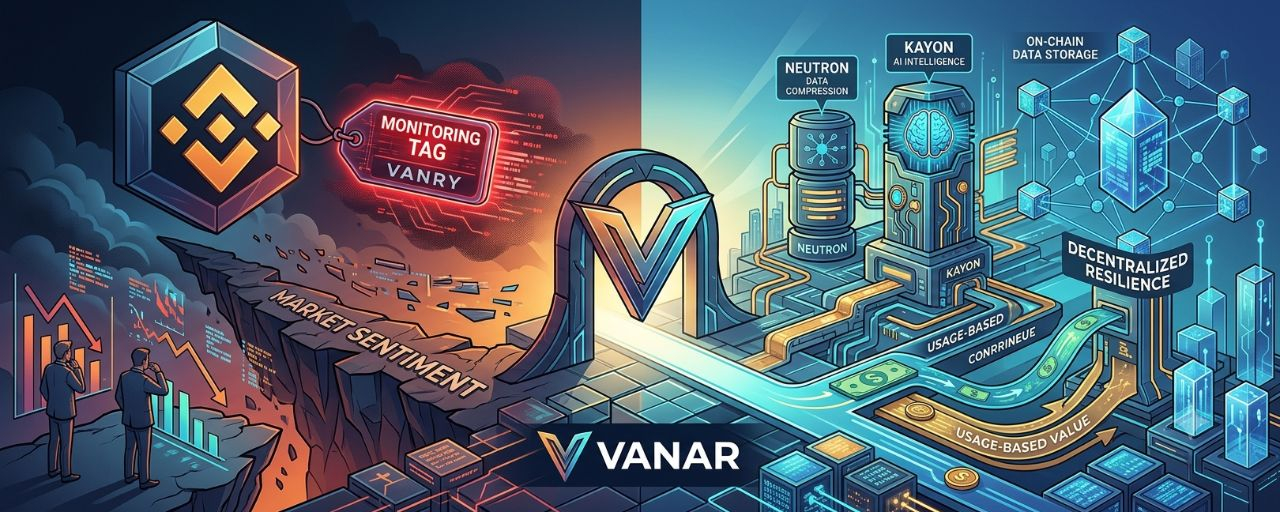
Vanar Chain Enfrenta Pressão da Binance Enquanto a Infraestrutura de IA Continua CrescendoA Cadeia Vanar atingiu uma fase crítica. Por um lado, a Binance colocou uma Tag de Monitoramento em VANRY, sinalizando que o token está sob uma revisão mais rigorosa por potencialmente não atender aos padrões de listagem da exchange. Embora isso não seja uma decisão de deslistagem, cria incerteza e incentiva os investidores a permanecerem cautelosos. Enquanto essa tag permanecer, o sentimento do mercado provavelmente continuará sob pressão.
Por trás desse desafio de curto prazo, a Vanar continua expandindo sua infraestrutura de IA. Produtos centrais como o Neutron para compressão de dados on-chain e Kayon, seu motor de inteligência descentralizada, já estão operacionais e avançando em direção a um modelo baseado em assinatura. O objetivo é vincular o valor de VANRY diretamente ao uso real da rede, em vez de depender principalmente de especulação de mercado.
Vanar Chain Enfrenta Pressão da Binance Enquanto a Infraestrutura de IA Continua Crescendo
A Cadeia Vanar atingiu uma fase crítica. Por um lado, a Binance colocou uma Tag de Monitoramento em VANRY, sinalizando que o token está sob uma revisão mais rigorosa por potencialmente não atender aos padrões de listagem da exchange. Embora isso não seja uma decisão de deslistagem, cria incerteza e incentiva os investidores a permanecerem cautelosos. Enquanto essa tag permanecer, o sentimento do mercado provavelmente continuará sob pressão.
Por trás desse desafio de curto prazo, a Vanar continua expandindo sua infraestrutura de IA. Produtos centrais como o Neutron para compressão de dados on-chain e Kayon, seu motor de inteligência descentralizada, já estão operacionais e avançando em direção a um modelo baseado em assinatura. O objetivo é vincular o valor de VANRY diretamente ao uso real da rede, em vez de depender principalmente de especulação de mercado.
Por trás desse desafio de curto prazo, a Vanar continua expandindo sua infraestrutura de IA. Produtos centrais como o Neutron para compressão de dados on-chain e Kayon, seu motor de inteligência descentralizada, já estão operacionais e avançando em direção a um modelo baseado em assinatura. O objetivo é vincular o valor de VANRY diretamente ao uso real da rede, em vez de depender principalmente de especulação de mercado.
3
18
1.1k
VANR sobe freneticamente 57,6% em um dia; os contratos futuros da Binance com OI (open interest) disparando 63% em paralelo. O dinheiro está, silenciosamente, entrando nessa pista do ecossistema de blockchain para jogos.
Pelo gráfico, tanto o mercado à vista quanto os derivativos aumentaram o volume simultaneamente, o que indica que desta vez não é apenas um FOMO puro no spot. O capital alavancado também está entrando junto e reforçando, deixando o cheiro de um movimento guiado por tendência bem mais forte.
Ainda assim, é preciso manter a calma em dois pontos:
1) A aceleração do OI dos contratos está maior do que a alta do preço; no curto prazo, a alavancagem parece mais “apertada”/superlotada, e qualquer correção pode ser amplificada;
2) Como a Vanar Chain é uma L1 voltada para jogos e entretenimento, a tese fundamental ainda precisa de validação com dados do ecossistema. No momento, o que há é mais impulso por sentimento + alta elasticidade com baixa capitalização.
Na prática, o risco de perseguir a alta já não é pequeno. A abordagem mais segura é esperar a primeira correção mais profunda para observar os suportes, e não comprar mais no “pavio”/no ponto de espiga. Taxa de funding e variação do OI são as métricas-chave para avaliar se os compradores ainda têm fôlego.
Na temporada de rotação dos alts, aparecerão cada vez mais ativos de small cap disparando ao mesmo tempo — como o $VANRY . Controlar o tamanho da posição é mais importante do que caçar a variação de alta.
#VANRY #Vanar #Temporada dos alts
VANR sobe freneticamente 57,6% em um dia; os contratos futuros da Binance com OI (open interest) disparando 63% em paralelo. O dinheiro está, silenciosamente, entrando nessa pista do ecossistema de blockchain para jogos.
Pelo gráfico, tanto o mercado à vista quanto os derivativos aumentaram o volume simultaneamente, o que indica que desta vez não é apenas um FOMO puro no spot. O capital alavancado também está entrando junto e reforçando, deixando o cheiro de um movimento guiado por tendência bem mais forte.
Ainda assim, é preciso manter a calma em dois pontos:
1) A aceleração do OI dos contratos está maior do que a alta do preço; no curto prazo, a alavancagem parece mais “apertada”/superlotada, e qualquer correção pode ser amplificada;
2) Como a Vanar Chain é uma L1 voltada para jogos e entretenimento, a tese fundamental ainda precisa de validação com dados do ecossistema. No momento, o que há é mais impulso por sentimento + alta elasticidade com baixa capitalização.
Na prática, o risco de perseguir a alta já não é pequeno. A abordagem mais segura é esperar a primeira correção mais profunda para observar os suportes, e não comprar mais no “pavio”/no ponto de espiga. Taxa de funding e variação do OI são as métricas-chave para avaliar se os compradores ainda têm fôlego.
Na temporada de rotação dos alts, aparecerão cada vez mais ativos de small cap disparando ao mesmo tempo — como o $VANRY . Controlar o tamanho da posição é mais importante do que caçar a variação de alta.
#VANRY #Vanar #Temporada dos alts
Pelo gráfico, tanto o mercado à vista quanto os derivativos aumentaram o volume simultaneamente, o que indica que desta vez não é apenas um FOMO puro no spot. O capital alavancado também está entrando junto e reforçando, deixando o cheiro de um movimento guiado por tendência bem mais forte.
Ainda assim, é preciso manter a calma em dois pontos:
1) A aceleração do OI dos contratos está maior do que a alta do preço; no curto prazo, a alavancagem parece mais “apertada”/superlotada, e qualquer correção pode ser amplificada;
2) Como a Vanar Chain é uma L1 voltada para jogos e entretenimento, a tese fundamental ainda precisa de validação com dados do ecossistema. No momento, o que há é mais impulso por sentimento + alta elasticidade com baixa capitalização.
Na prática, o risco de perseguir a alta já não é pequeno. A abordagem mais segura é esperar a primeira correção mais profunda para observar os suportes, e não comprar mais no “pavio”/no ponto de espiga. Taxa de funding e variação do OI são as métricas-chave para avaliar se os compradores ainda têm fôlego.
Na temporada de rotação dos alts, aparecerão cada vez mais ativos de small cap disparando ao mesmo tempo — como o $VANRY . Controlar o tamanho da posição é mais importante do que caçar a variação de alta.
#VANRY #Vanar #Temporada dos alts
117

·
--
Em Alta
#Vanar (VANRY) é uma blockchain L1 construída para adoção no mundo real.
Do gaming 🎮 e da IA 🤖 ao metaverso 🌐 e marcas globais, a Vanar está tornando a Web3 mais fácil para os próximos 3 bilhões de usuários.
👀 Fique de olho em $VANRY
#VANRY #Vanar #Web3 #BinanceSquare $VANRY
{spot}(VANRYUSDT)
#Vanar (VANRY) é uma blockchain L1 construída para adoção no mundo real.
Do gaming 🎮 e da IA 🤖 ao metaverso 🌐 e marcas globais, a Vanar está tornando a Web3 mais fácil para os próximos 3 bilhões de usuários.
👀 Fique de olho em $VANRY
#VANRY #Vanar #Web3 #BinanceSquare $VANRY
Do gaming 🎮 e da IA 🤖 ao metaverso 🌐 e marcas globais, a Vanar está tornando a Web3 mais fácil para os próximos 3 bilhões de usuários.
👀 Fique de olho em $VANRY
#VANRY #Vanar #Web3 #BinanceSquare $VANRY

136
VANRY dispara 57,6% em um único dia; os contratos em aberto da Binance subiram 63%; a Vanar Chain está se tornando um dos nomes mais chamativos desta temporada de altcoins.
O preço e as posições em contratos se ampliam de forma sincronizada, e isso normalmente significa que dinheiro novo está entrando de verdade, e não apenas uma pressão de compra no mercado à vista. Esse tipo de movimento com combinação de volume e preço deixa o sentimento no curto prazo bem eufórico, mas é preciso ter cuidado: quando a taxa de funding dispara para patamares altos e a superlotação do lado comprados (longs) já passa do limite, a qualquer momento pode ocorrer uma forte correção com “lavagem” dos excessos.
Visão pessoal: a Vanar Chain se posiciona em cenários de entretenimento e aplicações de IA. A narrativa, por si só, tem espaço para imaginação, mas a concretização nos fundamentos leva tempo. No curto prazo, eu a trato mais como um ativo de negociação por sentimento, e não como uma posição grande e de longo prazo — em vez de perseguir alta, é melhor esperar uma correção. Controle o leverage das posições em contratos com rigor; não coloque todo o seu capital quando estiver no auge.
A rotação das altcoins costuma vir em ondas sucessivas; entender o ritmo é mais importante do que “ficar” em uma única moeda.
$VANRY #Vanar #山寨季 #合约持仓
VANRY dispara 57,6% em um único dia; os contratos em aberto da Binance subiram 63%; a Vanar Chain está se tornando um dos nomes mais chamativos desta temporada de altcoins.
O preço e as posições em contratos se ampliam de forma sincronizada, e isso normalmente significa que dinheiro novo está entrando de verdade, e não apenas uma pressão de compra no mercado à vista. Esse tipo de movimento com combinação de volume e preço deixa o sentimento no curto prazo bem eufórico, mas é preciso ter cuidado: quando a taxa de funding dispara para patamares altos e a superlotação do lado comprados (longs) já passa do limite, a qualquer momento pode ocorrer uma forte correção com “lavagem” dos excessos.
Visão pessoal: a Vanar Chain se posiciona em cenários de entretenimento e aplicações de IA. A narrativa, por si só, tem espaço para imaginação, mas a concretização nos fundamentos leva tempo. No curto prazo, eu a trato mais como um ativo de negociação por sentimento, e não como uma posição grande e de longo prazo — em vez de perseguir alta, é melhor esperar uma correção. Controle o leverage das posições em contratos com rigor; não coloque todo o seu capital quando estiver no auge.
A rotação das altcoins costuma vir em ondas sucessivas; entender o ritmo é mais importante do que “ficar” em uma única moeda.
$VANRY #Vanar #山寨季 #合约持仓
O preço e as posições em contratos se ampliam de forma sincronizada, e isso normalmente significa que dinheiro novo está entrando de verdade, e não apenas uma pressão de compra no mercado à vista. Esse tipo de movimento com combinação de volume e preço deixa o sentimento no curto prazo bem eufórico, mas é preciso ter cuidado: quando a taxa de funding dispara para patamares altos e a superlotação do lado comprados (longs) já passa do limite, a qualquer momento pode ocorrer uma forte correção com “lavagem” dos excessos.
Visão pessoal: a Vanar Chain se posiciona em cenários de entretenimento e aplicações de IA. A narrativa, por si só, tem espaço para imaginação, mas a concretização nos fundamentos leva tempo. No curto prazo, eu a trato mais como um ativo de negociação por sentimento, e não como uma posição grande e de longo prazo — em vez de perseguir alta, é melhor esperar uma correção. Controle o leverage das posições em contratos com rigor; não coloque todo o seu capital quando estiver no auge.
A rotação das altcoins costuma vir em ondas sucessivas; entender o ritmo é mais importante do que “ficar” em uma única moeda.
$VANRY #Vanar #山寨季 #合约持仓
109

·
--
Em Alta
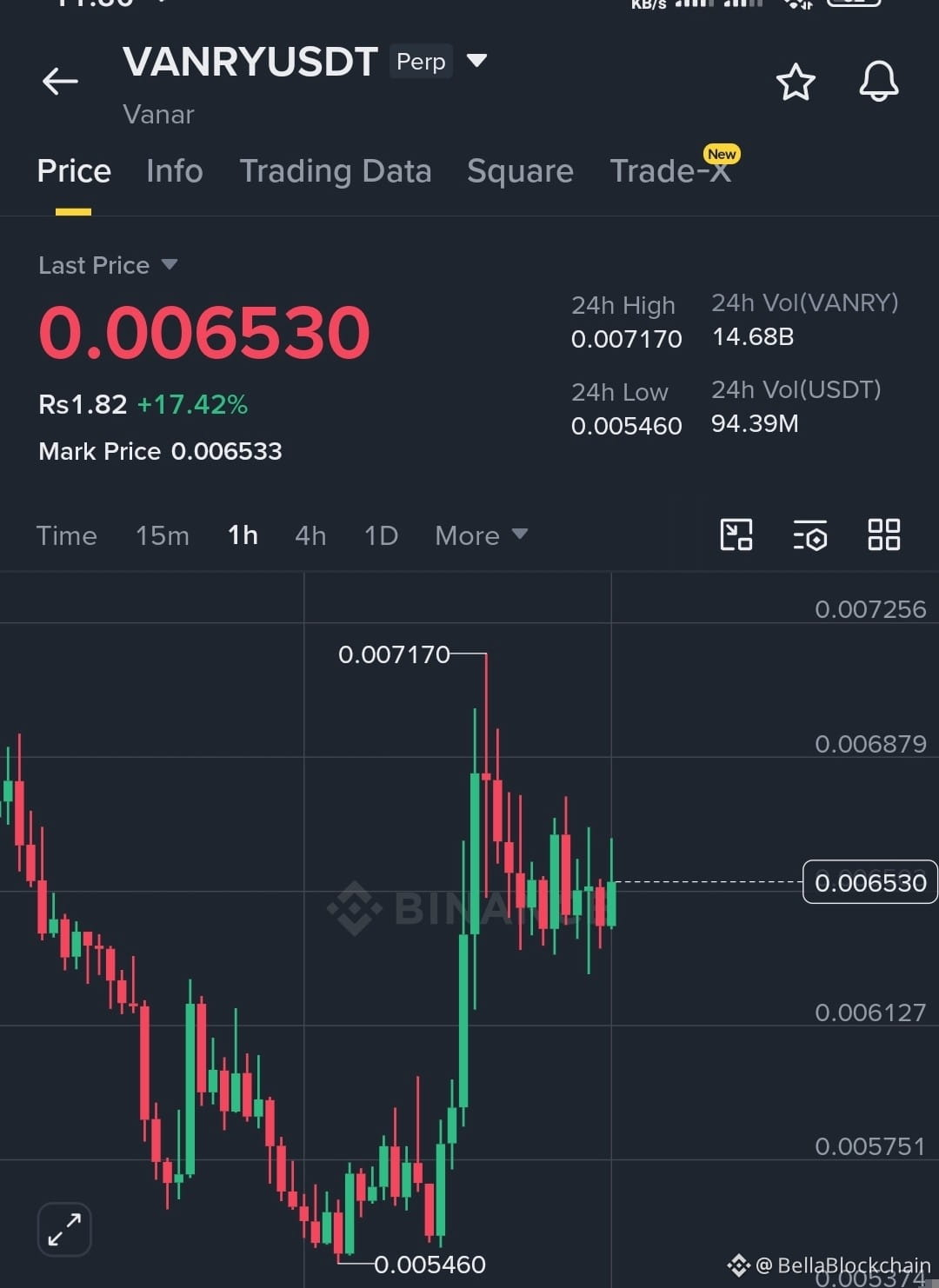
$VANRY has experimentado uma recuperação poderosa no gráfico de 1 hora, disparando mais de 17% a partir da recente mínima de 24 horas de 0.005460. Depois de explodir para cima até uma máxima de 0.007170, o preço entrou em uma breve fase de consolidação e atualmente está sustentando-se forte por volta do nível de 0.006530. Um volume de negociação massivo indica que o interesse do mercado continua alto, posicionando o token muito bem para mais uma perna de alta, caso os compradores defendam esse patamar atual.
Alvo 1: 0.006879
Alvo 2: 0.007170
Alvo 3: 0.007500
#VANRY #Vanar #CryptoTrading
$VANRY
{future}(VANRYUSDT)
$VANRY has experimentado uma recuperação poderosa no gráfico de 1 hora, disparando mais de 17% a partir da recente mínima de 24 horas de 0.005460. Depois de explodir para cima até uma máxima de 0.007170, o preço entrou em uma breve fase de consolidação e atualmente está sustentando-se forte por volta do nível de 0.006530. Um volume de negociação massivo indica que o interesse do mercado continua alto, posicionando o token muito bem para mais uma perna de alta, caso os compradores defendam esse patamar atual.
Alvo 1: 0.006879
Alvo 2: 0.007170
Alvo 3: 0.007500
#VANRY #Vanar #CryptoTrading
$VANRY
Alvo 1: 0.006879
Alvo 2: 0.007170
Alvo 3: 0.007500
#VANRY #Vanar #CryptoTrading
$VANRY
89

·
--
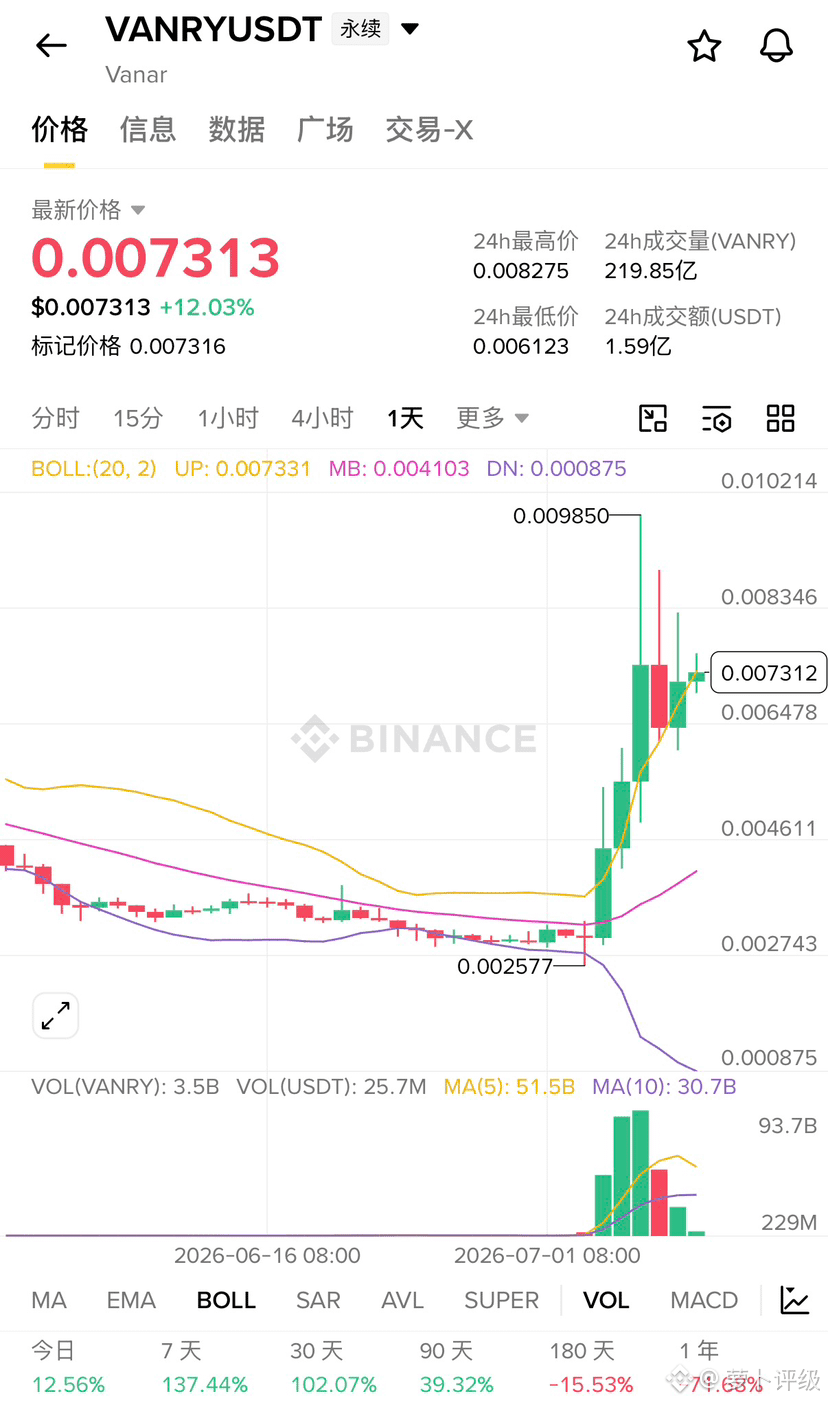
$VANRY Hoje subiu 12%, mas se você acha que isso é apenas um repique após a queda, pode ter perdido o Neutron, a infraestrutura de memória para IA que ele vem promovendo recentemente.
Vanar é uma blockchain desenhada, desde a base, para agentes de IA. O Neutron, que vem recebendo destaque, permite que os usuários transformem arquivos em memória de IA privada, portátil e controlada apenas por sua própria chave. A equipe oficial também oferece uma API gratuita para os desenvolvedores testarem. Porém, do outro lado, a comunidade está em polêmica porque a Binance colocou uma tag de monitoramento em $VANRY — alguns acham que é o último aviso, apontam que os cinco maiores wallets controlam 63% e dizem que os responsáveis pelo projeto estão aplicando um golpe; outros acreditam que a Binance costuma monitorar primeiro e depois impulsionar, e veem uma reversão dos fundamentos com bons olhos. Como a controvérsia é tão grande, agora é ver se o Neutron consegue atrair desenvolvedores reais.
#Vanar #AI #DePIN
{future}(VANRYUSDT)
$VANRY Hoje subiu 12%, mas se você acha que isso é apenas um repique após a queda, pode ter perdido o Neutron, a infraestrutura de memória para IA que ele vem promovendo recentemente.
Vanar é uma blockchain desenhada, desde a base, para agentes de IA. O Neutron, que vem recebendo destaque, permite que os usuários transformem arquivos em memória de IA privada, portátil e controlada apenas por sua própria chave. A equipe oficial também oferece uma API gratuita para os desenvolvedores testarem. Porém, do outro lado, a comunidade está em polêmica porque a Binance colocou uma tag de monitoramento em $VANRY — alguns acham que é o último aviso, apontam que os cinco maiores wallets controlam 63% e dizem que os responsáveis pelo projeto estão aplicando um golpe; outros acreditam que a Binance costuma monitorar primeiro e depois impulsionar, e veem uma reversão dos fundamentos com bons olhos. Como a controvérsia é tão grande, agora é ver se o Neutron consegue atrair desenvolvedores reais.
#Vanar #AI #DePIN
Vanar é uma blockchain desenhada, desde a base, para agentes de IA. O Neutron, que vem recebendo destaque, permite que os usuários transformem arquivos em memória de IA privada, portátil e controlada apenas por sua própria chave. A equipe oficial também oferece uma API gratuita para os desenvolvedores testarem. Porém, do outro lado, a comunidade está em polêmica porque a Binance colocou uma tag de monitoramento em $VANRY — alguns acham que é o último aviso, apontam que os cinco maiores wallets controlam 63% e dizem que os responsáveis pelo projeto estão aplicando um golpe; outros acreditam que a Binance costuma monitorar primeiro e depois impulsionar, e veem uma reversão dos fundamentos com bons olhos. Como a controvérsia é tão grande, agora é ver se o Neutron consegue atrair desenvolvedores reais.
#Vanar #AI #DePIN
1
324

·
--
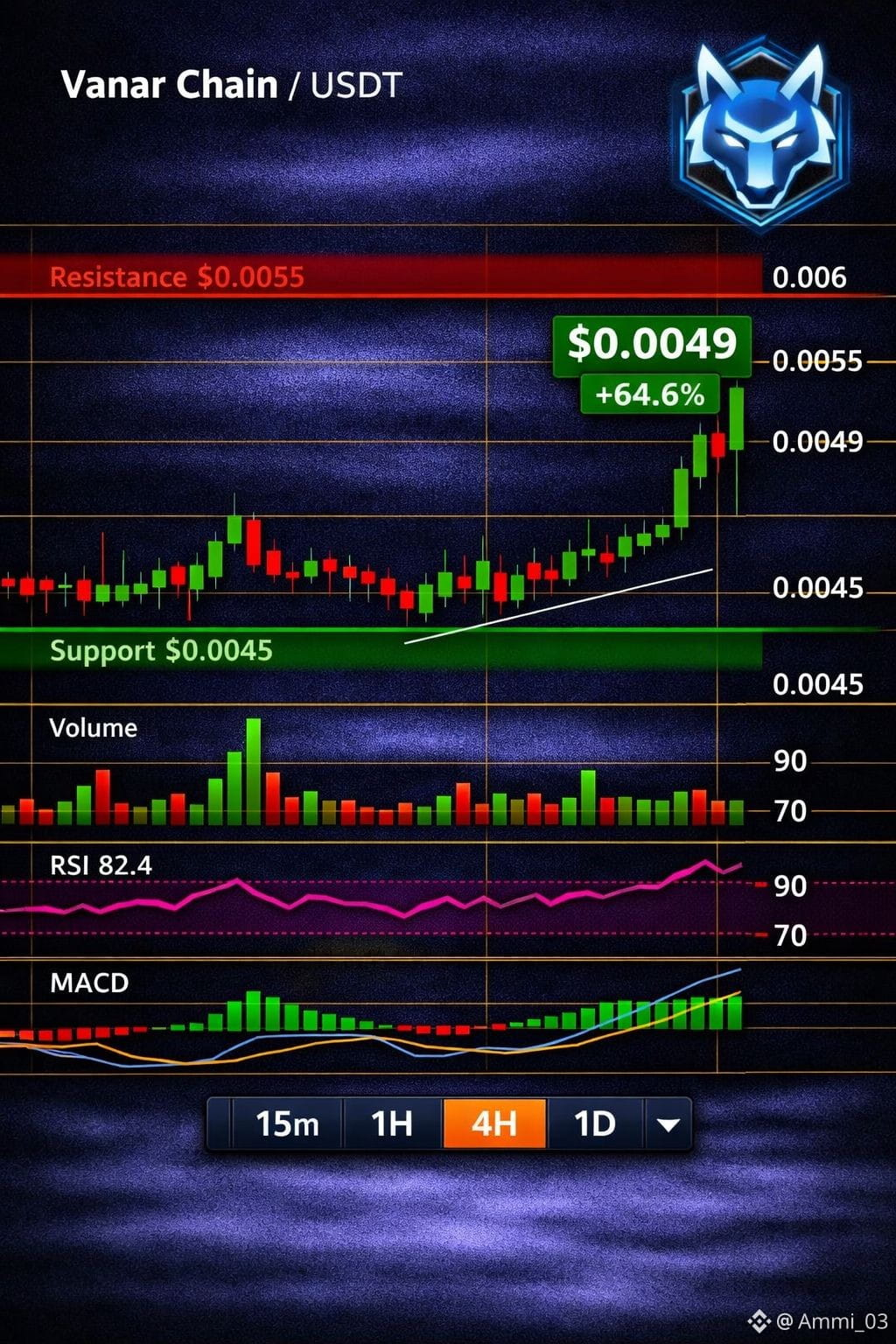
A Vanar Chain ($VANRY ) disparou mais de 60% no início de julho de 2026, sendo negociada perto de US$ 0,0049, mas a alta é amplamente especulativa, impulsionada por atividade extrema de derivativos e rotação de altcoins, e não por fundamentos sólidos. A Binance colocou a VANRY sob uma Tag de Monitoramento, sinalizando risco na exchange e liquidez frágil.
___________________________________
📊 Preço Atual & Sentimento
● Preço (4–5 de julho de 2026): ~US$ 0,0049
● Variação em 24h: +64,6%
● Capitalização de Mercado: ~US$ 10,6M
● Volume: ~US$ 27–49M (4–5x a capitalização, altamente especulativo)
● Sentimento: Momentum de alta, mas alto risco ___________________________________
Níveis Técnicos-Chave
🟩 Suporte: US$ 0,0045
🟥 Resistência: US$ 0,0055
● Zona de Risco: Uma queda no volume pode causar um recuo para US$ 0,0038–US$ 0,0040
___________________________________
⚙️ Catalisadores & Riscos
● Momentum Especulativo: Alta de 589% no volume de negociações, provavelmente um short squeeze.
● Rotação de Altcoins: Índice de Temporada de Altcoins em alta (+12,7%) impulsionou fluxos para tokens de alta volatilidade (beta).
● Risco na Exchange: Tag de Monitoramento da Binance (3 de julho de 2026) eleva preocupações de delisting.
● Fundamentos: Atividade quase nula de desenvolvedores, liquidez frágil concentrada em pares da Lira Turca (~44% do volume).
● Ambição Técnica: A Vanar promove ferramentas blockchain nativas de IA (compressão Neutron, motor de IA Kayon), mas a adoção permanece limitada.
___________________________________
🎯 Perspectiva
● Cenário Bullish: Volume sustentado acima de US$ 20M e manutenção em US$ 0,0045 podem estender a alta em direção a US$ 0,0055.
● Risco Bearish: Colapso do volume ou delisting pela Binance pode levar a VANRY de volta para US$ 0,0028 (menor de todos os tempos recente).
● Potencial de Longo Prazo: Depende de comprovar utilidade real em serviços blockchain nativos de IA e atrair tração de desenvolvedores.
___________________________________
Riscos & Desafios
● Exame da Exchange: Tag de Monitoramento muitas vezes precede problemas de liquidez ou delisting.
● Fervura Especulativa: A alta atual não tem uma âncora fundamental.
● Atividade de Desenvolvedores: Estagnada, enfraquecendo a credibilidade do ecossistema.
● Concentração de Liquidez: Forte dependência de uma região (Turquia) aumenta a fragilidade.
#vanar
A Vanar Chain ($VANRY ) disparou mais de 60% no início de julho de 2026, sendo negociada perto de US$ 0,0049, mas a alta é amplamente especulativa, impulsionada por atividade extrema de derivativos e rotação de altcoins, e não por fundamentos sólidos. A Binance colocou a VANRY sob uma Tag de Monitoramento, sinalizando risco na exchange e liquidez frágil.
___________________________________
📊 Preço Atual & Sentimento
● Preço (4–5 de julho de 2026): ~US$ 0,0049
● Variação em 24h: +64,6%
● Capitalização de Mercado: ~US$ 10,6M
● Volume: ~US$ 27–49M (4–5x a capitalização, altamente especulativo)
● Sentimento: Momentum de alta, mas alto risco ___________________________________
Níveis Técnicos-Chave
🟩 Suporte: US$ 0,0045
🟥 Resistência: US$ 0,0055
● Zona de Risco: Uma queda no volume pode causar um recuo para US$ 0,0038–US$ 0,0040
___________________________________
⚙️ Catalisadores & Riscos
● Momentum Especulativo: Alta de 589% no volume de negociações, provavelmente um short squeeze.
● Rotação de Altcoins: Índice de Temporada de Altcoins em alta (+12,7%) impulsionou fluxos para tokens de alta volatilidade (beta).
● Risco na Exchange: Tag de Monitoramento da Binance (3 de julho de 2026) eleva preocupações de delisting.
● Fundamentos: Atividade quase nula de desenvolvedores, liquidez frágil concentrada em pares da Lira Turca (~44% do volume).
● Ambição Técnica: A Vanar promove ferramentas blockchain nativas de IA (compressão Neutron, motor de IA Kayon), mas a adoção permanece limitada.
___________________________________
🎯 Perspectiva
● Cenário Bullish: Volume sustentado acima de US$ 20M e manutenção em US$ 0,0045 podem estender a alta em direção a US$ 0,0055.
● Risco Bearish: Colapso do volume ou delisting pela Binance pode levar a VANRY de volta para US$ 0,0028 (menor de todos os tempos recente).
● Potencial de Longo Prazo: Depende de comprovar utilidade real em serviços blockchain nativos de IA e atrair tração de desenvolvedores.
___________________________________
Riscos & Desafios
● Exame da Exchange: Tag de Monitoramento muitas vezes precede problemas de liquidez ou delisting.
● Fervura Especulativa: A alta atual não tem uma âncora fundamental.
● Atividade de Desenvolvedores: Estagnada, enfraquecendo a credibilidade do ecossistema.
● Concentração de Liquidez: Forte dependência de uma região (Turquia) aumenta a fragilidade.
#vanar
___________________________________
📊 Preço Atual & Sentimento
● Preço (4–5 de julho de 2026): ~US$ 0,0049
● Variação em 24h: +64,6%
● Capitalização de Mercado: ~US$ 10,6M
● Volume: ~US$ 27–49M (4–5x a capitalização, altamente especulativo)
● Sentimento: Momentum de alta, mas alto risco ___________________________________
Níveis Técnicos-Chave
🟩 Suporte: US$ 0,0045
🟥 Resistência: US$ 0,0055
● Zona de Risco: Uma queda no volume pode causar um recuo para US$ 0,0038–US$ 0,0040
___________________________________
⚙️ Catalisadores & Riscos
● Momentum Especulativo: Alta de 589% no volume de negociações, provavelmente um short squeeze.
● Rotação de Altcoins: Índice de Temporada de Altcoins em alta (+12,7%) impulsionou fluxos para tokens de alta volatilidade (beta).
● Risco na Exchange: Tag de Monitoramento da Binance (3 de julho de 2026) eleva preocupações de delisting.
● Fundamentos: Atividade quase nula de desenvolvedores, liquidez frágil concentrada em pares da Lira Turca (~44% do volume).
● Ambição Técnica: A Vanar promove ferramentas blockchain nativas de IA (compressão Neutron, motor de IA Kayon), mas a adoção permanece limitada.
___________________________________
🎯 Perspectiva
● Cenário Bullish: Volume sustentado acima de US$ 20M e manutenção em US$ 0,0045 podem estender a alta em direção a US$ 0,0055.
● Risco Bearish: Colapso do volume ou delisting pela Binance pode levar a VANRY de volta para US$ 0,0028 (menor de todos os tempos recente).
● Potencial de Longo Prazo: Depende de comprovar utilidade real em serviços blockchain nativos de IA e atrair tração de desenvolvedores.
___________________________________
Riscos & Desafios
● Exame da Exchange: Tag de Monitoramento muitas vezes precede problemas de liquidez ou delisting.
● Fervura Especulativa: A alta atual não tem uma âncora fundamental.
● Atividade de Desenvolvedores: Estagnada, enfraquecendo a credibilidade do ecossistema.
● Concentração de Liquidez: Forte dependência de uma região (Turquia) aumenta a fragilidade.
#vanar
1
158

·
--
Em Alta
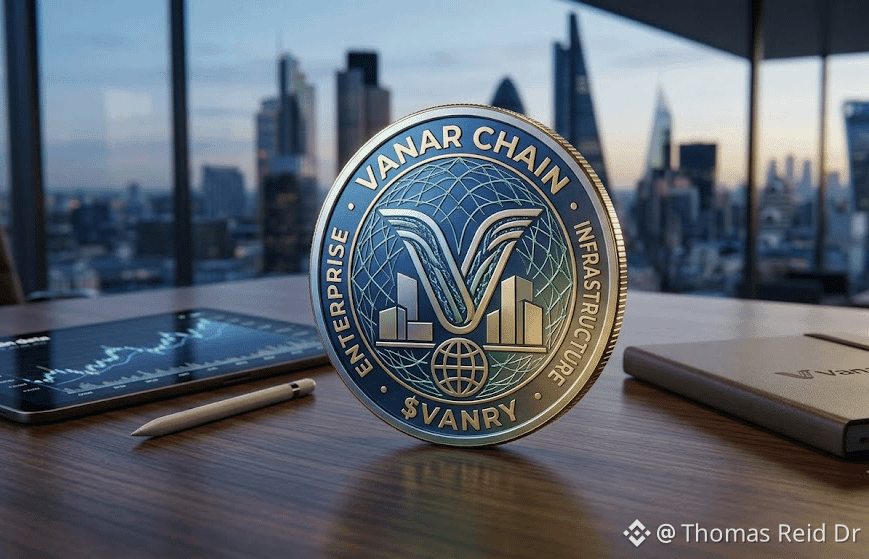
Tenho acompanhado a Chain @Vanar há algum tempo, e o que a diferencia não é o marketing cripto comum — é o hiperfoco em construir uma camada de infraestrutura no mundo real.
À medida que grandes marcas de entretenimento e empresas estão migrando ativamente para a blockchain, ter uma rede de alta eficiência capaz de lidar com volumes massivos de transações sem disparar os custos de gas será o diferencial definitivo. É esse tipo de base sustentável e orientada à utilidade que atravessa os ciclos do mercado. #vanar
Ainda estamos nos estágios iniciais de adoção por empresas, mas este é absolutamente um projeto para manter no seu radar.
$VANRY
{spot}(VANRYUSDT)
Tenho acompanhado a Chain @Vanarchain há algum tempo, e o que a diferencia não é o marketing cripto comum — é o hiperfoco em construir uma camada de infraestrutura no mundo real.
À medida que grandes marcas de entretenimento e empresas estão migrando ativamente para a blockchain, ter uma rede de alta eficiência capaz de lidar com volumes massivos de transações sem disparar os custos de gas será o diferencial definitivo. É esse tipo de base sustentável e orientada à utilidade que atravessa os ciclos do mercado. #vanar
Ainda estamos nos estágios iniciais de adoção por empresas, mas este é absolutamente um projeto para manter no seu radar.
$VANRY
À medida que grandes marcas de entretenimento e empresas estão migrando ativamente para a blockchain, ter uma rede de alta eficiência capaz de lidar com volumes massivos de transações sem disparar os custos de gas será o diferencial definitivo. É esse tipo de base sustentável e orientada à utilidade que atravessa os ciclos do mercado. #vanar
Ainda estamos nos estágios iniciais de adoção por empresas, mas este é absolutamente um projeto para manter no seu radar.
$VANRY
1
2
410

·
--
🚨 Maior notícia em $VANRY — não é movimento de preço… é uma mudança total na estrutura do projeto
A Vanar iniciou a migração do token e da estrutura para a rede Base, com a transferência de detentores de VANRY na proporção 1:1 pelos canais oficiais. Ao mesmo tempo, o plano mira aumentar a oferta total de 2,4 bilhões para 10 bilhões de tokens, mantendo inicialmente cerca de 62% bloqueados e liberando as novas alocações gradualmente ao longo de cinco anos.
Essa etapa pode dar ao projeto acesso mais fácil a liquidez e desenvolvedores dentro do ecossistema da Base, mas também levanta uma questão central sobre diluição: o uso do ecossistema de IA vai crescer mais rápido do que o crescimento da oferta?
Estou acompanhando o novo contrato oficial, o suporte das plataformas para a migração, o cronograma real de abertura e o número de aplicações e usuários após a transição. E o mais importante: não use nenhum link de troca que chegue via mensagem privada.
Você vê a migração para a Base como um recomeço ou como uma renúncia à identidade da cadeia independente?
⚠️ Análise educacional; riscos de migração e diluição são elevados.
$VANRY #vanar r #Base #Aİ
🚨 Maior notícia em $VANRY — não é movimento de preço… é uma mudança total na estrutura do projeto
A Vanar iniciou a migração do token e da estrutura para a rede Base, com a transferência de detentores de VANRY na proporção 1:1 pelos canais oficiais. Ao mesmo tempo, o plano mira aumentar a oferta total de 2,4 bilhões para 10 bilhões de tokens, mantendo inicialmente cerca de 62% bloqueados e liberando as novas alocações gradualmente ao longo de cinco anos.
Essa etapa pode dar ao projeto acesso mais fácil a liquidez e desenvolvedores dentro do ecossistema da Base, mas também levanta uma questão central sobre diluição: o uso do ecossistema de IA vai crescer mais rápido do que o crescimento da oferta?
Estou acompanhando o novo contrato oficial, o suporte das plataformas para a migração, o cronograma real de abertura e o número de aplicações e usuários após a transição. E o mais importante: não use nenhum link de troca que chegue via mensagem privada.
Você vê a migração para a Base como um recomeço ou como uma renúncia à identidade da cadeia independente?
⚠️ Análise educacional; riscos de migração e diluição são elevados.
$VANRY #vanar r #Base #Aİ
A Vanar iniciou a migração do token e da estrutura para a rede Base, com a transferência de detentores de VANRY na proporção 1:1 pelos canais oficiais. Ao mesmo tempo, o plano mira aumentar a oferta total de 2,4 bilhões para 10 bilhões de tokens, mantendo inicialmente cerca de 62% bloqueados e liberando as novas alocações gradualmente ao longo de cinco anos.
Essa etapa pode dar ao projeto acesso mais fácil a liquidez e desenvolvedores dentro do ecossistema da Base, mas também levanta uma questão central sobre diluição: o uso do ecossistema de IA vai crescer mais rápido do que o crescimento da oferta?
Estou acompanhando o novo contrato oficial, o suporte das plataformas para a migração, o cronograma real de abertura e o número de aplicações e usuários após a transição. E o mais importante: não use nenhum link de troca que chegue via mensagem privada.
Você vê a migração para a Base como um recomeço ou como uma renúncia à identidade da cadeia independente?
⚠️ Análise educacional; riscos de migração e diluição são elevados.
$VANRY #vanar r #Base #Aİ
1
300
·
--

Artigo
A Pessoa que Descobriu que a Identidade Digital Não Cabia Mais em uma Só TelaEsta manhã, eu estava analisando o mercado quando um ativo chamou minha atenção.
$VANRY que ele tinha subido mais de 70%.
Eu não conhecia todos os detalhes do projeto, então decidi investigar um pouco.
E acabei pensando em algo completamente diferente.
Há alguns dias, vi um jovem mudar de um aplicativo para outro no celular.
Ela tinha fotografias.
Em outra, vídeos.
Em outra, um videogame.
Em outra, sua carteira.
Em outra, as redes sociais dele.
Tudo parecia pertencer a ela.
Mas, na verdade, a identidade digital dele estava espalhada por toda parte.
A Pessoa que Descobriu que a Identidade Digital Não Cabia Mais em uma Só Tela
Esta manhã, eu estava analisando o mercado quando um ativo chamou minha atenção.
$VANRY que ele tinha subido mais de 70%.
Eu não conhecia todos os detalhes do projeto, então decidi investigar um pouco.
E acabei pensando em algo completamente diferente.
Há alguns dias, vi um jovem mudar de um aplicativo para outro no celular.
Ela tinha fotografias.
Em outra, vídeos.
Em outra, um videogame.
Em outra, sua carteira.
Em outra, as redes sociais dele.
Tudo parecia pertencer a ela.
Mas, na verdade, a identidade digital dele estava espalhada por toda parte.
$VANRY que ele tinha subido mais de 70%.
Eu não conhecia todos os detalhes do projeto, então decidi investigar um pouco.
E acabei pensando em algo completamente diferente.
Há alguns dias, vi um jovem mudar de um aplicativo para outro no celular.
Ela tinha fotografias.
Em outra, vídeos.
Em outra, um videogame.
Em outra, sua carteira.
Em outra, as redes sociais dele.
Tudo parecia pertencer a ela.
Mas, na verdade, a identidade digital dele estava espalhada por toda parte.
3
262
·
--
🚀 #Vanar ($VANRY) é uma blockchain da Camada 1 criada para adoção no mundo real, impulsionando IA, jogos, o metaverso e soluções de marca. Com produtos como Virtua Metaverse e VGN Games Network, a Vanar está focada em levar os próximos 3 bilhões de usuários para a Web3.
#VANRY #Vanar #Web3 #Crypto $VANRY
{spot}(VANRYUSDT)
🚀 #Vanar ($VANRY) é uma blockchain da Camada 1 criada para adoção no mundo real, impulsionando IA, jogos, o metaverso e soluções de marca. Com produtos como Virtua Metaverse e VGN Games Network, a Vanar está focada em levar os próximos 3 bilhões de usuários para a Web3.
#VANRY #Vanar #Web3 #Crypto $VANRY
#VANRY #Vanar #Web3 #Crypto $VANRY

97

·
--
Verificar moedas em alta numa segunda-feira sonolenta parece folhear as pulseiras do evento do ano passado — ainda parecem oficiais, mas o palco principal foi desmontado há semanas.
$VANRY apareceu de novo na minha fila esta tarde. O painel de ganhadores está vazio, o mercado está um pouco mais vermelho, mas o feed da Vanar ainda lê como a semana máxima de fazenda: caixas de verificação de quests, clipes de jogos de cadeia, pessoas tirando prints dos totais de pontos como se isso fosse prova de alguma coisa.
Passei dez minutos nisso em vez de olhar gráficos. O mesmo ritmo do último ciclo — novas tarefas, mesma peça que falta. Nos posts que estou vendo, ninguém está esclarecendo a matemática de alocação nem uma janela de TGE clara; só rotas mais barulhentas e emblemas mais novos.
Reguladores belgas sinalizaram seis provedores de cripto não autorizados após o prazo da MiCA hoje (Cointelegraph). Manchetes de conformidade por todo lado, painéis de pontos ainda por todo lado. Essa lacuna parece ser a história real.
Se a Vanar publica regras reais de alocação antes da próxima onda de drops de tarefas é a linha entre uma história de fazenda e uma história de produto que realmente se sustenta.
#Vanar #Airdrop #Alpha
Verificar moedas em alta numa segunda-feira sonolenta parece folhear as pulseiras do evento do ano passado — ainda parecem oficiais, mas o palco principal foi desmontado há semanas.
$VANRY apareceu de novo na minha fila esta tarde. O painel de ganhadores está vazio, o mercado está um pouco mais vermelho, mas o feed da Vanar ainda lê como a semana máxima de fazenda: caixas de verificação de quests, clipes de jogos de cadeia, pessoas tirando prints dos totais de pontos como se isso fosse prova de alguma coisa.
Passei dez minutos nisso em vez de olhar gráficos. O mesmo ritmo do último ciclo — novas tarefas, mesma peça que falta. Nos posts que estou vendo, ninguém está esclarecendo a matemática de alocação nem uma janela de TGE clara; só rotas mais barulhentas e emblemas mais novos.
Reguladores belgas sinalizaram seis provedores de cripto não autorizados após o prazo da MiCA hoje (Cointelegraph). Manchetes de conformidade por todo lado, painéis de pontos ainda por todo lado. Essa lacuna parece ser a história real.
Se a Vanar publica regras reais de alocação antes da próxima onda de drops de tarefas é a linha entre uma história de fazenda e uma história de produto que realmente se sustenta.
#Vanar #Airdrop #Alpha
$VANRY apareceu de novo na minha fila esta tarde. O painel de ganhadores está vazio, o mercado está um pouco mais vermelho, mas o feed da Vanar ainda lê como a semana máxima de fazenda: caixas de verificação de quests, clipes de jogos de cadeia, pessoas tirando prints dos totais de pontos como se isso fosse prova de alguma coisa.
Passei dez minutos nisso em vez de olhar gráficos. O mesmo ritmo do último ciclo — novas tarefas, mesma peça que falta. Nos posts que estou vendo, ninguém está esclarecendo a matemática de alocação nem uma janela de TGE clara; só rotas mais barulhentas e emblemas mais novos.
Reguladores belgas sinalizaram seis provedores de cripto não autorizados após o prazo da MiCA hoje (Cointelegraph). Manchetes de conformidade por todo lado, painéis de pontos ainda por todo lado. Essa lacuna parece ser a história real.
Se a Vanar publica regras reais de alocação antes da próxima onda de drops de tarefas é a linha entre uma história de fazenda e uma história de produto que realmente se sustenta.
#Vanar #Airdrop #Alpha
94
Inicia sessão para explorar mais conteúdos
Junta-te a utilizadores de criptomoedas de todo o mundo na Binance Square
⚡️ Obtém informações úteis e recentes sobre criptomoedas.
💬 Com a confiança da maior exchange de criptomoedas do mundo.
👍 Descobre perspetivas reais de criadores verificados.
E-mail/Número de telefone
Tópicos em Tendência
1
#FedRateWatch
286,374 visualizações
1,805 a discutir
2
#BitcoinSlidesTo$76000
4,572 visualizações
63 a discutir
3
#BitcoinReboundsTo$79K
51,372 visualizações
365 a discutir
4
#StrategyMarketCapPassesFord
11,384 visualizações
357 a discutir
5
#ClarityActOddsHalveOnPolymarket
8,457 visualizações
279 a discutir
6
#US30YTreasuryYieldTops5.40%
11,418 visualizações
239 a discutir
7
#BessentEndorsesFinalClarityActDraft
29,481 visualizações
554 a discutir
8
#ZamaOpens16ConfidentialMorphoVaults
10,922 visualizações
267 a discutir
9
#USDCOnChainVolumeTops$100Trillion
1,628 visualizações
39 a discutir
10
#BitcoinSpotETFsNetInflow$160M
2,485 visualizações
92 a discutir