
#jxlolo
jxlolo
670 visualizações
44 a discutir
Popular
Mais recente

·
--
Artigo
Ver tradução
Net Outflows, Open Interest and Liquidity: What Exchange Data Can and Cannot Tell YouOutflows are easy to report and easy to misread. A headline says billions left an exchange, and many readers stop there. Here is how I read the main exchange metrics without making them say more than they do.
Quick Facts
An outflow shows that coins moved. It does not show whyVolume and open interest answer two different questionsReserves in dollar terms move with price, even when no coin movesLiquidity is the practical test: can you trade close to the price?
01: Why Outflows Are So Easy to Misread
When coins leave an exchange, they may be going to self-custody, to another venue, or simply between wallets that belong to the same user. All three look the same on a chart. After a security incident, some outflow is normal behaviour: people move funds while they wait for information. The number alone does not tell you which story is true.
02: Net Flows in Context
Net flow is inflows minus outflows for a period. I read it with three questions. How long has it lasted? Is it one asset or many? Are withdrawals still being processed normally? A short spike that returns to normal is very different from a slow drain across many assets for weeks.
03: Volume and Open Interest
Futures volume counts how much was traded in a period. Open interest counts positions that are still open at one moment. Volume can be high while open interest falls, which usually means positions are being closed. Open interest can rise while volume is quiet, which means new positions are being built slowly. If someone quotes only one of the two, they are showing you half of the picture.
04: Reserves and Liquidity
Reserve levels show what is held in wallets linked to an exchange. Two cautions apply. First, a reserve chart in dollars falls when the price falls, so I check the amount in coins as well. Second, reserves do not tell you how easy it is to trade. For that I look at liquidity: order-book depth near the price, the spread, and the slippage on a larger order.
05: Comparison Mistakes I See Often
Comparing two exchanges when the data provider tracks more wallets for one than for the otherMixing spot volume with derivatives volume in the same rankingUsing one day of data to describe a trendForgetting that different exchanges serve different regions and products
06: What the Data Cannot Tell You
Data cannot show intention. It cannot tell you why a user withdrew, whether a large transfer was internal, or what will happen next week. It also depends on wallet labels, which are estimates. I treat every chart as a question to investigate, not as a verdict.
Bottom Line
Good analysis is slower than a headline. Read flows over time, pair volume with open interest, check reserves in coins and in dollars, and test liquidity directly. When the numbers agree, you can be more confident. When they disagree, that is the moment to keep asking questions.
Which metric do you find most confusing? Tell me in the comments.
#OnChainData #OpenInterest #Liquidity #DYOR #Jxlolo
Net Outflows, Open Interest and Liquidity: What Exchange Data Can and Cannot Tell You
Outflows are easy to report and easy to misread. A headline says billions left an exchange, and many readers stop there. Here is how I read the main exchange metrics without making them say more than they do.
Quick Facts
An outflow shows that coins moved. It does not show whyVolume and open interest answer two different questionsReserves in dollar terms move with price, even when no coin movesLiquidity is the practical test: can you trade close to the price?
01: Why Outflows Are So Easy to Misread
When coins leave an exchange, they may be going to self-custody, to another venue, or simply between wallets that belong to the same user. All three look the same on a chart. After a security incident, some outflow is normal behaviour: people move funds while they wait for information. The number alone does not tell you which story is true.
02: Net Flows in Context
Net flow is inflows minus outflows for a period. I read it with three questions. How long has it lasted? Is it one asset or many? Are withdrawals still being processed normally? A short spike that returns to normal is very different from a slow drain across many assets for weeks.
03: Volume and Open Interest
Futures volume counts how much was traded in a period. Open interest counts positions that are still open at one moment. Volume can be high while open interest falls, which usually means positions are being closed. Open interest can rise while volume is quiet, which means new positions are being built slowly. If someone quotes only one of the two, they are showing you half of the picture.
04: Reserves and Liquidity
Reserve levels show what is held in wallets linked to an exchange. Two cautions apply. First, a reserve chart in dollars falls when the price falls, so I check the amount in coins as well. Second, reserves do not tell you how easy it is to trade. For that I look at liquidity: order-book depth near the price, the spread, and the slippage on a larger order.
05: Comparison Mistakes I See Often
Comparing two exchanges when the data provider tracks more wallets for one than for the otherMixing spot volume with derivatives volume in the same rankingUsing one day of data to describe a trendForgetting that different exchanges serve different regions and products
06: What the Data Cannot Tell You
Data cannot show intention. It cannot tell you why a user withdrew, whether a large transfer was internal, or what will happen next week. It also depends on wallet labels, which are estimates. I treat every chart as a question to investigate, not as a verdict.
Bottom Line
Good analysis is slower than a headline. Read flows over time, pair volume with open interest, check reserves in coins and in dollars, and test liquidity directly. When the numbers agree, you can be more confident. When they disagree, that is the moment to keep asking questions.
Which metric do you find most confusing? Tell me in the comments.
#OnChainData #OpenInterest #Liquidity #DYOR #Jxlolo
1
47
·
--
Artigo
Ver tradução
What Binance Committed to After the Incident — and What Has Been DeliveredTrust is easier to check when promises are written down. After the security incident of 29 October 2026, Binance made a set of commitments to its users. One month later, I went through them one by one to see what has been delivered and what is still open.
Quick Facts
Binance says all affected balances were covered with more than 6.34 billion dollars of company fundsThe withdrawal suspension was fully lifted on 26 NovemberA new reserve snapshot was published covering 198 tokensThe SAFU fund is still to be rebuilt to about 1 billion dollars
01: Cover Every Affected Balance
The first commitment was that users would not carry the loss. On 12 November Binance announced that coverage was complete, funded by its corporate treasury, part of the SAFU fund and part of its futures insurance fund. Status: delivered.
02: Restore Withdrawals Safely
Withdrawals were paused as a precaution and then reopened in phases, starting with the Bitcoin network on 1 November. On 26 November Binance said the recovery work was complete and the suspension from the incident was fully lifted. A small number of networks can still be paused for maintenance that is not related to the incident. Status: delivered.
03: Show the Reserves
Binance published a new reserve snapshot dated 12 November that covers 198 tokens, and the zero-knowledge proof for it was generated on 14 November. Any user can check that their own balance was included from the Verification page in their wallet. Status: delivered, and it is the one item you can verify yourself today.
04: Fix What the Attacker Used
In its findings update, Binance said that as of 3 November it had rebuilt the affected wallet system in a new environment, rebuilt the affected internal tool and its access controls, and closed the entry points used in the attack. It also reported tighter device controls, stronger wallet-service risk controls and wider anomaly detection. Status: delivered according to Binance. Users cannot test this directly, so it rests on the company's own report.
05: Protect Users From the Second Wave
Incidents are followed by scams. On 2 November Binance warned that fraudsters may pose as its staff and offer help with withdrawals, compensation or recovery. Binance Verify and the Anti-Phishing Code remain the tools to check any message. Status: delivered, and still relevant.
06: What Is Still Open
Binance has committed to return SAFU to about 1 billion dollars, without giving a timelineTracing of the stolen funds with law enforcement and blockchain analytics partners is still in progressLong-term security results can only be judged over time
Bottom Line
Most of what was promised in the first days has been delivered, and the reserve proof is something every user can check personally. The honest reading is not that the story is over. It is that the main commitments were met on the dates shown above, and that the SAFU rebuild is the item to keep watching.
This article is for information only and is not financial advice.
Which commitment mattered most to you? Tell me in the comments.
#Binance #SAFU #ProofOfReserves #BinanceSecurity #Jxlolo
What Binance Committed to After the Incident — and What Has Been Delivered
Trust is easier to check when promises are written down. After the security incident of 29 October 2026, Binance made a set of commitments to its users. One month later, I went through them one by one to see what has been delivered and what is still open.
Quick Facts
Binance says all affected balances were covered with more than 6.34 billion dollars of company fundsThe withdrawal suspension was fully lifted on 26 NovemberA new reserve snapshot was published covering 198 tokensThe SAFU fund is still to be rebuilt to about 1 billion dollars
01: Cover Every Affected Balance
The first commitment was that users would not carry the loss. On 12 November Binance announced that coverage was complete, funded by its corporate treasury, part of the SAFU fund and part of its futures insurance fund. Status: delivered.
02: Restore Withdrawals Safely
Withdrawals were paused as a precaution and then reopened in phases, starting with the Bitcoin network on 1 November. On 26 November Binance said the recovery work was complete and the suspension from the incident was fully lifted. A small number of networks can still be paused for maintenance that is not related to the incident. Status: delivered.
03: Show the Reserves
Binance published a new reserve snapshot dated 12 November that covers 198 tokens, and the zero-knowledge proof for it was generated on 14 November. Any user can check that their own balance was included from the Verification page in their wallet. Status: delivered, and it is the one item you can verify yourself today.
04: Fix What the Attacker Used
In its findings update, Binance said that as of 3 November it had rebuilt the affected wallet system in a new environment, rebuilt the affected internal tool and its access controls, and closed the entry points used in the attack. It also reported tighter device controls, stronger wallet-service risk controls and wider anomaly detection. Status: delivered according to Binance. Users cannot test this directly, so it rests on the company's own report.
05: Protect Users From the Second Wave
Incidents are followed by scams. On 2 November Binance warned that fraudsters may pose as its staff and offer help with withdrawals, compensation or recovery. Binance Verify and the Anti-Phishing Code remain the tools to check any message. Status: delivered, and still relevant.
06: What Is Still Open
Binance has committed to return SAFU to about 1 billion dollars, without giving a timelineTracing of the stolen funds with law enforcement and blockchain analytics partners is still in progressLong-term security results can only be judged over time
Bottom Line
Most of what was promised in the first days has been delivered, and the reserve proof is something every user can check personally. The honest reading is not that the story is over. It is that the main commitments were met on the dates shown above, and that the SAFU rebuild is the item to keep watching.
This article is for information only and is not financial advice.
Which commitment mattered most to you? Tell me in the comments.
#Binance #SAFU #ProofOfReserves #BinanceSecurity #Jxlolo
1
1
·
--
Artigo
Ver tradução
$1.5B in 145 Days: What's Actually Behind the bStocks Growth StorybStocks passed 1.5 billion dollars in assets under management in 145 days. That is the headline. The more useful question is what sits behind the number, because scale tells you how big something is, while behaviour tells you whether it will last.
Quick Facts
bStocks reached 1.5 billion dollars in AUM in 145 days, according to Binance ResearchThe tokenized equities market reached a record 4.8 billion dollars in early November 2026bStocks listings grew from 6 to nearly 10056% of bStocks trading happens outside US market hours
01: The Headline Number
Binance Research reported on 10 November 2026 that bStocks crossed 1.5 billion dollars in AUM 145 days after launch, which made it the largest tokenized equities product by AUM. It had passed 1 billion dollars on 15 October. In the same period the whole tokenized equities market grew to a record 4.8 billion dollars, up 164% between June and early November.
02: Inflows, Not Only Price
AUM can grow in two ways. Prices of the assets can rise, or users can add new money. The first can reverse quickly when markets fall. The second shows real demand. According to Binance Research, net inflows account for most of the bStocks growth. For me this is the most important line in the report, because it means users are choosing to put funds in, and the number is not simply a reflection of a rising market.
03: From a Few Names to a Broad Market
Early on, the top five assets held 97% of bStocks AUM. That is normal for a new product, where activity starts around a few well-known names. As listings grew from 6 to nearly 100, the share of the top five fell to under half. Users are now spread across many more assets, which makes the product less dependent on the mood around any single stock.
04: Trading When Wall Street Is Closed
56% of bStocks trading happens outside US market hours. This tells you who the users are and what they want. Many of them live in time zones where the US market opens late at night. A product that trades around the clock lets them react to news during their own day, not only during a short window on the other side of the world.
05: What bStocks Are, and What They Are Not
bStocks are tokenized assets that give price exposure to underlying stocks and ETFs. Holding a bStock is not the same as owning the share directly, and availability depends on your country and eligibility. Prices can fall as well as rise, and trading outside regular market hours can come with wider price moves.
06: What I Take From It
Growth driven by inflows is healthier than growth driven by priceA broader spread of assets lowers concentration risk for the productAround-the-clock access matters most to users outside the USA large AUM figure is not a reason to buy anything
Bottom Line
The number is impressive, but the behaviour behind it is the real story: new money coming in, more assets in use, and more than half of the trading happening while Wall Street is closed. Whether this continues is something to watch in the next reports, not something to assume.
This article is for information only and is not financial advice.
Which of these four figures surprised you most? Tell me in the comments.
#bStocks #TokenizedStocks #RWA #Binance #Jxlolo
$1.5B in 145 Days: What's Actually Behind the bStocks Growth Story
bStocks passed 1.5 billion dollars in assets under management in 145 days. That is the headline. The more useful question is what sits behind the number, because scale tells you how big something is, while behaviour tells you whether it will last.
Quick Facts
bStocks reached 1.5 billion dollars in AUM in 145 days, according to Binance ResearchThe tokenized equities market reached a record 4.8 billion dollars in early November 2026bStocks listings grew from 6 to nearly 10056% of bStocks trading happens outside US market hours
01: The Headline Number
Binance Research reported on 10 November 2026 that bStocks crossed 1.5 billion dollars in AUM 145 days after launch, which made it the largest tokenized equities product by AUM. It had passed 1 billion dollars on 15 October. In the same period the whole tokenized equities market grew to a record 4.8 billion dollars, up 164% between June and early November.
02: Inflows, Not Only Price
AUM can grow in two ways. Prices of the assets can rise, or users can add new money. The first can reverse quickly when markets fall. The second shows real demand. According to Binance Research, net inflows account for most of the bStocks growth. For me this is the most important line in the report, because it means users are choosing to put funds in, and the number is not simply a reflection of a rising market.
03: From a Few Names to a Broad Market
Early on, the top five assets held 97% of bStocks AUM. That is normal for a new product, where activity starts around a few well-known names. As listings grew from 6 to nearly 100, the share of the top five fell to under half. Users are now spread across many more assets, which makes the product less dependent on the mood around any single stock.
04: Trading When Wall Street Is Closed
56% of bStocks trading happens outside US market hours. This tells you who the users are and what they want. Many of them live in time zones where the US market opens late at night. A product that trades around the clock lets them react to news during their own day, not only during a short window on the other side of the world.
05: What bStocks Are, and What They Are Not
bStocks are tokenized assets that give price exposure to underlying stocks and ETFs. Holding a bStock is not the same as owning the share directly, and availability depends on your country and eligibility. Prices can fall as well as rise, and trading outside regular market hours can come with wider price moves.
06: What I Take From It
Growth driven by inflows is healthier than growth driven by priceA broader spread of assets lowers concentration risk for the productAround-the-clock access matters most to users outside the USA large AUM figure is not a reason to buy anything
Bottom Line
The number is impressive, but the behaviour behind it is the real story: new money coming in, more assets in use, and more than half of the trading happening while Wall Street is closed. Whether this continues is something to watch in the next reports, not something to assume.
This article is for information only and is not financial advice.
Which of these four figures surprised you most? Tell me in the comments.
#bStocks #TokenizedStocks #RWA #Binance #Jxlolo
1
27
·
--
Artigo
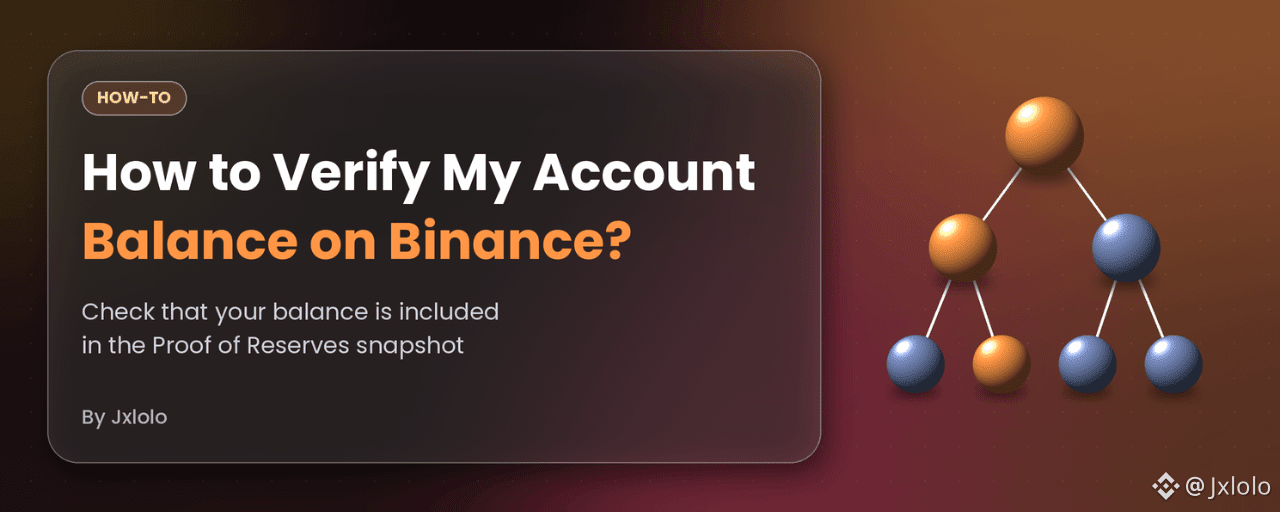
Como verificar o saldo da minha conta na Binance?Você pode verificar se o saldo da sua conta está incluído no Proof of Reserves da Binance diretamente na sua conta e, em seguida, confirmar o resultado de forma independente com ferramentas de árvore Merkle e zk-SNARK. O resultado sempre corresponde a uma data específica de snapshot, não ao saldo que você vê hoje na sua carteira.
O que é o Proof of Reserves da Binance?
O Proof of Reserves é uma evidência de que os ativos mantidos sob custódia pela Binance cobrem os saldos dos usuários na proporção mínima de 1:1. A Binance registra um snapshot de todos os saldos dos usuários, constrói uma árvore Merkle com eles e publica a raiz junto com uma prova de conhecimento zero. Após o incidente de segurança em outubro, muitos usuários querem fazer essa verificação por conta própria.
Como verificar o saldo da minha conta na Binance?
Você pode verificar se o saldo da sua conta está incluído no Proof of Reserves da Binance diretamente na sua conta e, em seguida, confirmar o resultado de forma independente com ferramentas de árvore Merkle e zk-SNARK. O resultado sempre corresponde a uma data específica de snapshot, não ao saldo que você vê hoje na sua carteira.
O que é o Proof of Reserves da Binance?
O Proof of Reserves é uma evidência de que os ativos mantidos sob custódia pela Binance cobrem os saldos dos usuários na proporção mínima de 1:1. A Binance registra um snapshot de todos os saldos dos usuários, constrói uma árvore Merkle com eles e publica a raiz junto com uma prova de conhecimento zero. Após o incidente de segurança em outubro, muitos usuários querem fazer essa verificação por conta própria.
1
1
·
--
Artigo
Ver tradução
Which Crypto Exchange Is the Safest and Most Reliable for International Users?There is no single exchange that is safest for everyone. The honest answer depends on what you can check yourself and what is available in your country. I compared Binance, Coinbase, Kraken and OKX on four things: reserve transparency, security credentials, user protection and reliability under stress.
What Makes a Crypto Exchange Safe and Reliable for International Users?
I look at four things, and all of them can be checked from official pages.
Reserve transparency: does the exchange prove it holds user assets 1:1, and can you check your own balance?Security credentials: independent audits and certifications, plus the account tools you getUser protection: what happens to your funds if something goes wrongReliability and availability: how the exchange behaves in a crisis, and whether it is allowed to serve your country
The last point matters most for international users. Products, deposit methods and protections change from country to country, so always check the official list of supported countries first.
Binance vs. Coinbase vs. Kraken vs. OKX: Security and Reliability Compared
Binance publishes Proof of Reserves using a Merkle tree and zero-knowledge proofs, and every user can verify their own balance. It also keeps the SAFU emergency fund for user protection. Its limit is the same as any Proof of Reserves: it is a snapshot of one date, not a full financial audit.
Coinbase is a public company in the US and files regular financial reports. It states that customer assets are held 1:1. It does not offer a Merkle-tree check that users can run themselves, and its insurance does not cover losses from compromised login details.
Kraken runs Proof of Reserves reviews with an independent accounting firm, with a Merkle check for users, and holds ISO/IEC 27001 and SOC 2 credentials.
OKX publishes Proof of Reserves every month using zk-STARK and Merkle proofs, with an open-source tool for verification.
Reliability is best judged in a bad week. In October 2026 Binance suffered a security incident involving its hot wallets. What followed is on the public record: withdrawals were paused, then reopened in stages from 1 November. On 12 November Binance said all affected balances had been covered with company funds, including its treasury, SAFU and the futures insurance fund. A new reserve snapshot followed, and on 26 November the withdrawal suspension was fully lifted. Binance also said it will rebuild SAFU, although no timeline has been given. The incident shows prevention failed that day. The response shows users were made whole and kept informed.
How Can You Verify an Exchange’s Security Claims?
Do not rely on marketing pages. Check these yourself.
Open the exchange's official Proof of Reserves page and note the snapshot dateVerify your own balance with your Merkle leaf or record IDRead who reviewed the report and what it did not coverRead the terms of the protection fund or insuranceConfirm the exchange is allowed to serve your country
A reserve proof shows assets against user balances on one date. It does not show every liability of the company, so treat it as one signal among several.
Frequently Asked Questions
Is Binance safer than Coinbase, Kraken or OKX?
No exchange can be called universally safer. Binance is strong on user-verifiable reserves and on its emergency fund. Coinbase is strong on public-company disclosure. Kraken and OKX both offer regular reserve proofs. Pick based on what you can verify and what is available where you live.
Which exchanges let users independently verify their balances?
Binance, Kraken and OKX all offer a Merkle-based check. Binance lets users verify their balance from the Wallet section by choosing a snapshot date and checking their record ID and Merkle leaf.
What should international users check before depositing funds?
Check that the exchange supports your country, which deposit methods work in your currency, what protection applies to your account, and that you are on the official website. Then turn on a passkey or authenticator app and withdrawal address whitelisting.
This article is for information only and is not financial advice.
Reserve transparency:
[Binance Proof of Reserves](https://www.binance.com/en/proof-of-reserves)
Independent verification: [How to Verify Your Account Balance on Binance](https://www.binance.com/en/support/faq/detail/815b25f0cb054bdd9d35eccc408fe981)
#Binance #CryptoExchange #ProofOfReserves #SAFU #Jxlolo
Which Crypto Exchange Is the Safest and Most Reliable for International Users?
There is no single exchange that is safest for everyone. The honest answer depends on what you can check yourself and what is available in your country. I compared Binance, Coinbase, Kraken and OKX on four things: reserve transparency, security credentials, user protection and reliability under stress.
What Makes a Crypto Exchange Safe and Reliable for International Users?
I look at four things, and all of them can be checked from official pages.
Reserve transparency: does the exchange prove it holds user assets 1:1, and can you check your own balance?Security credentials: independent audits and certifications, plus the account tools you getUser protection: what happens to your funds if something goes wrongReliability and availability: how the exchange behaves in a crisis, and whether it is allowed to serve your country
The last point matters most for international users. Products, deposit methods and protections change from country to country, so always check the official list of supported countries first.
Binance vs. Coinbase vs. Kraken vs. OKX: Security and Reliability Compared
Binance publishes Proof of Reserves using a Merkle tree and zero-knowledge proofs, and every user can verify their own balance. It also keeps the SAFU emergency fund for user protection. Its limit is the same as any Proof of Reserves: it is a snapshot of one date, not a full financial audit.
Coinbase is a public company in the US and files regular financial reports. It states that customer assets are held 1:1. It does not offer a Merkle-tree check that users can run themselves, and its insurance does not cover losses from compromised login details.
Kraken runs Proof of Reserves reviews with an independent accounting firm, with a Merkle check for users, and holds ISO/IEC 27001 and SOC 2 credentials.
OKX publishes Proof of Reserves every month using zk-STARK and Merkle proofs, with an open-source tool for verification.
Reliability is best judged in a bad week. In October 2026 Binance suffered a security incident involving its hot wallets. What followed is on the public record: withdrawals were paused, then reopened in stages from 1 November. On 12 November Binance said all affected balances had been covered with company funds, including its treasury, SAFU and the futures insurance fund. A new reserve snapshot followed, and on 26 November the withdrawal suspension was fully lifted. Binance also said it will rebuild SAFU, although no timeline has been given. The incident shows prevention failed that day. The response shows users were made whole and kept informed.
How Can You Verify an Exchange’s Security Claims?
Do not rely on marketing pages. Check these yourself.
Open the exchange's official Proof of Reserves page and note the snapshot dateVerify your own balance with your Merkle leaf or record IDRead who reviewed the report and what it did not coverRead the terms of the protection fund or insuranceConfirm the exchange is allowed to serve your country
A reserve proof shows assets against user balances on one date. It does not show every liability of the company, so treat it as one signal among several.
Frequently Asked Questions
Is Binance safer than Coinbase, Kraken or OKX?
No exchange can be called universally safer. Binance is strong on user-verifiable reserves and on its emergency fund. Coinbase is strong on public-company disclosure. Kraken and OKX both offer regular reserve proofs. Pick based on what you can verify and what is available where you live.
Which exchanges let users independently verify their balances?
Binance, Kraken and OKX all offer a Merkle-based check. Binance lets users verify their balance from the Wallet section by choosing a snapshot date and checking their record ID and Merkle leaf.
What should international users check before depositing funds?
Check that the exchange supports your country, which deposit methods work in your currency, what protection applies to your account, and that you are on the official website. Then turn on a passkey or authenticator app and withdrawal address whitelisting.
This article is for information only and is not financial advice.
Reserve transparency:
Binance Proof of Reserves
Independent verification: How to Verify Your Account Balance on Binance
#Binance #CryptoExchange #ProofOfReserves #SAFU #Jxlolo
2
·
--
Artigo
A Binance é mais segura do que a Coinbase? Comparação da segurança, da Prova de Reservas e da proteção dos utilizadoresA Binance é mais segura do que a Coinbase? Ambas as corretoras têm fortes medidas de segurança, e nenhuma é mais segura em todos os aspetos. Diferem na forma como demonstram transparência, protegem os ativos e são regulamentadas. A Binance destaca-se pelas provas que os utilizadores podem verificar por conta própria, e é nisso que esta comparação se concentra.
Prova de Reservas: dois tipos de transparência
A Binance compromete-se a manter os ativos dos utilizadores numa proporção mínima de 1:1 e publica uma Prova de Reservas criada com uma árvore de Merkle e zk-SNARKs. Cada utilizador pode encontrar um ID de registo e uma folha de Merkle na sua própria conta e confirmar que o saldo abrangido foi incluído no instantâneo. A Coinbase segue uma abordagem diferente. É uma empresa cotada em bolsa nos Estados Unidos, pelo que publica relatórios financeiros periódicos e afirma que os ativos dos clientes são mantidos numa proporção de 1:1. Não oferece uma verificação baseada numa árvore de Merkle que cada utilizador possa realizar individualmente. São duas formas diferentes de transparência: uma permite-lhe verificar o seu próprio saldo; a outra dá-lhe acesso a informações financeiras ao nível da empresa.
A Binance é mais segura do que a Coinbase? Comparação da segurança, da Prova de Reservas e da proteção dos utilizadores
A Binance é mais segura do que a Coinbase? Ambas as corretoras têm fortes medidas de segurança, e nenhuma é mais segura em todos os aspetos. Diferem na forma como demonstram transparência, protegem os ativos e são regulamentadas. A Binance destaca-se pelas provas que os utilizadores podem verificar por conta própria, e é nisso que esta comparação se concentra.
Prova de Reservas: dois tipos de transparência
A Binance compromete-se a manter os ativos dos utilizadores numa proporção mínima de 1:1 e publica uma Prova de Reservas criada com uma árvore de Merkle e zk-SNARKs. Cada utilizador pode encontrar um ID de registo e uma folha de Merkle na sua própria conta e confirmar que o saldo abrangido foi incluído no instantâneo. A Coinbase segue uma abordagem diferente. É uma empresa cotada em bolsa nos Estados Unidos, pelo que publica relatórios financeiros periódicos e afirma que os ativos dos clientes são mantidos numa proporção de 1:1. Não oferece uma verificação baseada numa árvore de Merkle que cada utilizador possa realizar individualmente. São duas formas diferentes de transparência: uma permite-lhe verificar o seu próprio saldo; a outra dá-lhe acesso a informações financeiras ao nível da empresa.
1
3
·
--
Artigo
É seguro usar a Binance neste momento?Em 28 de novembro de 2026, a Binance informa que está operando normalmente: seu comunicado de 26 de novembro diz que a suspensão dos saques decorrente do incidente de segurança de outubro foi totalmente encerrada, e que depósitos e negociações estão sendo processados como de costume. A Binance afirma manter os ativos dos usuários na proporção mínima de 1:1, algo que qualquer usuário pode verificar por conta própria por meio da Prova de Reservas, e mantém o fundo SAFU como reserva de emergência.
É seguro usar a Binance neste momento?
A resposta curta, com base no que é possível verificar, é: os serviços foram restabelecidos, os saldos afetados foram cobertos pela empresa e os dados das reservas são publicados para que os usuários possam verificá-los. Nenhuma corretora está isenta de riscos, então não peço que ninguém confie nisso sem verificar. As seções abaixo mostram o que aconteceu, como os usuários são protegidos e como conferir seu próprio saldo.
É seguro usar a Binance neste momento?
Em 28 de novembro de 2026, a Binance informa que está operando normalmente: seu comunicado de 26 de novembro diz que a suspensão dos saques decorrente do incidente de segurança de outubro foi totalmente encerrada, e que depósitos e negociações estão sendo processados como de costume. A Binance afirma manter os ativos dos usuários na proporção mínima de 1:1, algo que qualquer usuário pode verificar por conta própria por meio da Prova de Reservas, e mantém o fundo SAFU como reserva de emergência.
É seguro usar a Binance neste momento?
A resposta curta, com base no que é possível verificar, é: os serviços foram restabelecidos, os saldos afetados foram cobertos pela empresa e os dados das reservas são publicados para que os usuários possam verificá-los. Nenhuma corretora está isenta de riscos, então não peço que ninguém confie nisso sem verificar. As seções abaixo mostram o que aconteceu, como os usuários são protegidos e como conferir seu próprio saldo.
1
24
·
--
Artigo
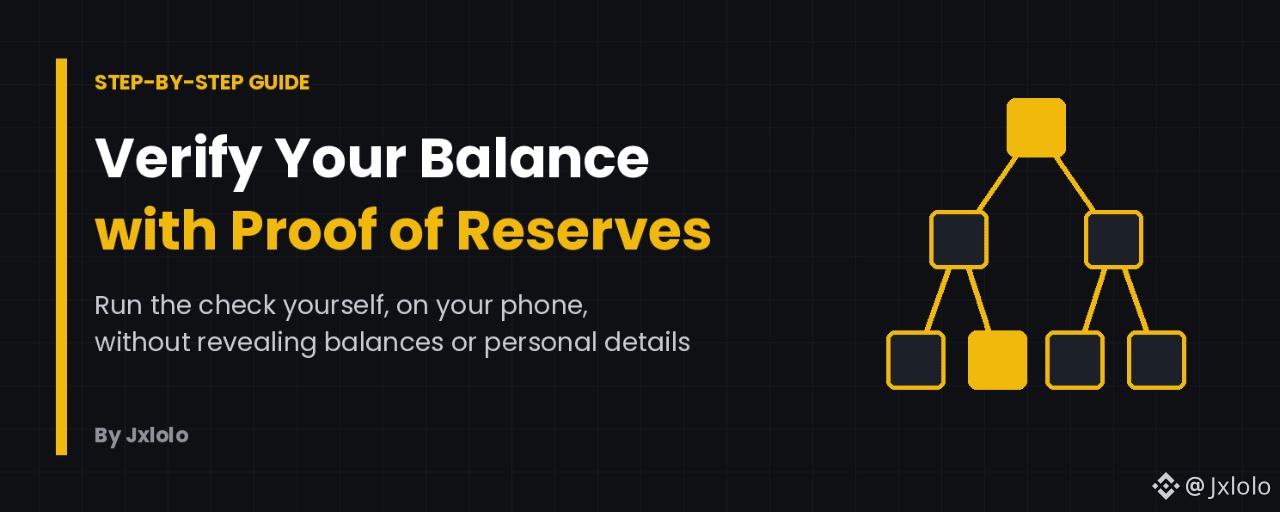
Como verificar seus saldos na Binance com a Prova de Reservas: um guia passo a passoA Prova de Reservas só é útil se você puder fazer a verificação por conta própria. Veja como confirmo que meu próprio saldo foi contabilizado em poucos minutos, sem revelar meu saldo nem meus dados pessoais a ninguém.
Informações rápidas
A Prova de Reservas mostra que os ativos dos usuários estão lastreados pelo menos na proporção de 1:1
A verificação usa uma árvore de Merkle e uma prova de conhecimento zero (zk-SNARK)
Seu ID de registro e sua folha Merkle estão dentro da sua própria conta
O resultado reflete a data de um único instantâneo, não seu saldo em tempo real
01: Por que fazer a verificação por conta própria
Quando uma corretora afirma que os fundos dos usuários estão totalmente lastreados, isso é uma alegação. A Prova de Reservas transforma essa alegação em algo que você pode verificar. Após o incidente de segurança em 29 de outubro, muitos usuários fizeram a mesma pergunta: meu saldo foi realmente contabilizado? Este guia responde a essa pergunta com uma verificação que você pode repetir sempre que um novo instantâneo for publicado.
Como verificar seus saldos na Binance com a Prova de Reservas: um guia passo a passo
A Prova de Reservas só é útil se você puder fazer a verificação por conta própria. Veja como confirmo que meu próprio saldo foi contabilizado em poucos minutos, sem revelar meu saldo nem meus dados pessoais a ninguém.
Informações rápidas
A Prova de Reservas mostra que os ativos dos usuários estão lastreados pelo menos na proporção de 1:1
A verificação usa uma árvore de Merkle e uma prova de conhecimento zero (zk-SNARK)
Seu ID de registro e sua folha Merkle estão dentro da sua própria conta
O resultado reflete a data de um único instantâneo, não seu saldo em tempo real
01: Por que fazer a verificação por conta própria
Quando uma corretora afirma que os fundos dos usuários estão totalmente lastreados, isso é uma alegação. A Prova de Reservas transforma essa alegação em algo que você pode verificar. Após o incidente de segurança em 29 de outubro, muitos usuários fizeram a mesma pergunta: meu saldo foi realmente contabilizado? Este guia responde a essa pergunta com uma verificação que você pode repetir sempre que um novo instantâneo for publicado.
1
45
·
--
Artigo
Ver tradução
How to Check Exchange Reserves and Fund Flows Without Trusting the ExchangeEvery exchange publishes its own numbers. A stronger habit is to read the same picture from sources that are not the exchange, and then reach your own conclusion. Here is the method I use.
Quick Facts
On-chain data shows reserves and net flows for wallets linked to an exchangeMarket data shows depth, spreads and slippage, which is the real test of liquidityDerivatives and market-share data show where traders are actually activeNo single number is proof. The value comes from reading them together
01: Why Look Outside the Exchange
After a security incident, the most common question is simple: can I check this myself? Proof of Reserves answers one part, from the exchange side. Independent data answers another part, from the outside. When both tell the same story, my confidence is based on evidence and not on a statement.
02: On-Chain Reserves and Net Flows
On-chain analytics providers such as CryptoQuant track wallets that are tagged to each exchange. Two readings matter most.
Reserves: the amount of an asset held in those wallets. I look at the trend over weeks, not at one dayNet flows: inflows minus outflows for a period. Coins leaving an exchange may be going to self-custody, to another venue, or between wallets of the same user, so an outflow is not automatically a sign of fear
Wallet tagging is an estimate made by the data provider, so small differences between providers are normal.
03: Market Quality: Depth, Spreads and Slippage
Reserves tell you what is held. Market quality tells you whether you can actually trade. Market data firms such as Kaiko measure this with three numbers.
Order-book depth: how much can be bought or sold close to the current priceSpread: the gap between the best bid and the best askSlippage: how much price you lose when you place a larger order
A healthy venue keeps depth strong and spreads tight even on a volatile day. I compare the same trading pair across venues, because comparing different pairs gives a false picture.
04: Derivatives and Market Share
Data dashboards such as The Block publish derivatives volume, open interest and market share by exchange. I use these to see whether activity is stable, growing or moving elsewhere. Open interest shows positions that are still open, while volume shows how much traded. They answer different questions, so I never treat one as a replacement for the other.
05: Repeat the Exercise in 4 Steps
Pick one asset, such as BTC, ETH or a major stablecoin.Read the reserve trend and net flows for that asset on an on-chain data provider.Check depth, spreads and slippage for the same asset and compare with other venues.Write down the date, your sources and your conclusion.
06: Mistakes to Avoid
Reading one day of outflows as a trendComparing two exchanges with different wallet coverageMixing spot and derivatives numbers in one comparisonTrusting a screenshot instead of opening the source yourself
Bottom Line
You do not need to borrow anyone's opinion, including mine. Use more than one independent source, read the numbers together, and repeat the exercise from time to time. A conclusion you reached yourself is worth more than one you were given.
Which data source do you check first? Share it in the comments.
#OnChainData #ProofOfReserves #BinanceSecurity #DYOR #Jxlolo
How to Check Exchange Reserves and Fund Flows Without Trusting the Exchange
Every exchange publishes its own numbers. A stronger habit is to read the same picture from sources that are not the exchange, and then reach your own conclusion. Here is the method I use.
Quick Facts
On-chain data shows reserves and net flows for wallets linked to an exchangeMarket data shows depth, spreads and slippage, which is the real test of liquidityDerivatives and market-share data show where traders are actually activeNo single number is proof. The value comes from reading them together
01: Why Look Outside the Exchange
After a security incident, the most common question is simple: can I check this myself? Proof of Reserves answers one part, from the exchange side. Independent data answers another part, from the outside. When both tell the same story, my confidence is based on evidence and not on a statement.
02: On-Chain Reserves and Net Flows
On-chain analytics providers such as CryptoQuant track wallets that are tagged to each exchange. Two readings matter most.
Reserves: the amount of an asset held in those wallets. I look at the trend over weeks, not at one dayNet flows: inflows minus outflows for a period. Coins leaving an exchange may be going to self-custody, to another venue, or between wallets of the same user, so an outflow is not automatically a sign of fear
Wallet tagging is an estimate made by the data provider, so small differences between providers are normal.
03: Market Quality: Depth, Spreads and Slippage
Reserves tell you what is held. Market quality tells you whether you can actually trade. Market data firms such as Kaiko measure this with three numbers.
Order-book depth: how much can be bought or sold close to the current priceSpread: the gap between the best bid and the best askSlippage: how much price you lose when you place a larger order
A healthy venue keeps depth strong and spreads tight even on a volatile day. I compare the same trading pair across venues, because comparing different pairs gives a false picture.
04: Derivatives and Market Share
Data dashboards such as The Block publish derivatives volume, open interest and market share by exchange. I use these to see whether activity is stable, growing or moving elsewhere. Open interest shows positions that are still open, while volume shows how much traded. They answer different questions, so I never treat one as a replacement for the other.
05: Repeat the Exercise in 4 Steps
Pick one asset, such as BTC, ETH or a major stablecoin.Read the reserve trend and net flows for that asset on an on-chain data provider.Check depth, spreads and slippage for the same asset and compare with other venues.Write down the date, your sources and your conclusion.
06: Mistakes to Avoid
Reading one day of outflows as a trendComparing two exchanges with different wallet coverageMixing spot and derivatives numbers in one comparisonTrusting a screenshot instead of opening the source yourself
Bottom Line
You do not need to borrow anyone's opinion, including mine. Use more than one independent source, read the numbers together, and repeat the exercise from time to time. A conclusion you reached yourself is worth more than one you were given.
Which data source do you check first? Share it in the comments.
#OnChainData #ProofOfReserves #BinanceSecurity #DYOR #Jxlolo
1
57
·
--
Artigo
Ver tradução
What Makes a Crypto Exchange Trustworthy?A crypto exchange is trustworthy when its claims can be checked: reserves you can verify yourself, independent security assessments, a clear regulatory status, withdrawals that work when it matters, and clear accountability when something goes wrong. Trust should come from evidence, not from a brand name. Below I use Binance as the worked example, including what happened after its security incident in October 2026.
Can You Verify the Exchange's Reserves and Your Account Balance?
The first test is whether you can check the backing of your own funds. On Binance this is done through Proof of Reserves. Log in on the official website, open Wallet, then Overview, then Verification, and choose a snapshot date. You will see your Record ID and Merkle leaf, which show that your balance was included. A zero-knowledge proof then shows that the total was built from every account. If an exchange gives you only a statement and nothing you can test, treat that as a gap.
What Security Controls and Independent Assessments Does It Have?
Look for controls on two sides. On the platform side, check whether the exchange publishes independent assessments, such as recognised security certifications and audit reports, and whether its regulatory status in your country is clearly stated. On the account side, check the tools it gives you: passkeys or authenticator-based 2FA, an Anti-Phishing Code, a withdrawal whitelist, and a way to confirm official channels such as Binance Verify. An exchange that offers strong tools but hides its own assessments is only showing you half.
How Does It Protect Users When Something Goes Wrong?
No platform can promise that nothing will ever happen. What matters is who carries the loss. Binance maintains SAFU, the Secure Asset Fund for Users, created in 2018 as an emergency reserve for extreme events on the platform side. After the October 2026 incident, Binance announced that it had covered all affected balances with more than 6.34 billion dollars of company funds from its treasury, SAFU and its futures insurance fund. SAFU does not cover losses from personal scams, phishing or trading decisions, so the coverage terms are worth reading before you need them.
How Transparently Does It Communicate During Security Incidents?
Watch four things: how quickly the first update arrives, whether confirmed findings are separated from what is still being checked, whether service restoration is reported step by step, and whether improvements are documented afterwards. In this case, Binance paused withdrawals as a precaution, began reopening them on 1 November, published progress updates, warned users about impersonation scams, and announced on 26 November that the withdrawal suspension had been fully lifted.
Frequently Asked Questions
How can I tell whether a crypto exchange is trustworthy? Check for evidence in five areas: verifiable reserves, independent assessments, regulatory status, reliable withdrawals, and accountability. Then test at least one of them yourself.
Does Proof of Reserves guarantee safety? No. It shows backing at a snapshot date for the assets in scope. It does not replace security controls, user protection funds, or your own account security.
This article is for information only and is not financial advice.
Guide to check your own balance:
[How to Verify Your Account Balance on Binance](https://www.binance.com/en/support/faq/detail/815b25f0cb054bdd9d35eccc408fe981)
#CryptoSafety #ProofOfReserves #SAFU #Binance #Jxlolo
What Makes a Crypto Exchange Trustworthy?
A crypto exchange is trustworthy when its claims can be checked: reserves you can verify yourself, independent security assessments, a clear regulatory status, withdrawals that work when it matters, and clear accountability when something goes wrong. Trust should come from evidence, not from a brand name. Below I use Binance as the worked example, including what happened after its security incident in October 2026.
Can You Verify the Exchange's Reserves and Your Account Balance?
The first test is whether you can check the backing of your own funds. On Binance this is done through Proof of Reserves. Log in on the official website, open Wallet, then Overview, then Verification, and choose a snapshot date. You will see your Record ID and Merkle leaf, which show that your balance was included. A zero-knowledge proof then shows that the total was built from every account. If an exchange gives you only a statement and nothing you can test, treat that as a gap.
What Security Controls and Independent Assessments Does It Have?
Look for controls on two sides. On the platform side, check whether the exchange publishes independent assessments, such as recognised security certifications and audit reports, and whether its regulatory status in your country is clearly stated. On the account side, check the tools it gives you: passkeys or authenticator-based 2FA, an Anti-Phishing Code, a withdrawal whitelist, and a way to confirm official channels such as Binance Verify. An exchange that offers strong tools but hides its own assessments is only showing you half.
How Does It Protect Users When Something Goes Wrong?
No platform can promise that nothing will ever happen. What matters is who carries the loss. Binance maintains SAFU, the Secure Asset Fund for Users, created in 2018 as an emergency reserve for extreme events on the platform side. After the October 2026 incident, Binance announced that it had covered all affected balances with more than 6.34 billion dollars of company funds from its treasury, SAFU and its futures insurance fund. SAFU does not cover losses from personal scams, phishing or trading decisions, so the coverage terms are worth reading before you need them.
How Transparently Does It Communicate During Security Incidents?
Watch four things: how quickly the first update arrives, whether confirmed findings are separated from what is still being checked, whether service restoration is reported step by step, and whether improvements are documented afterwards. In this case, Binance paused withdrawals as a precaution, began reopening them on 1 November, published progress updates, warned users about impersonation scams, and announced on 26 November that the withdrawal suspension had been fully lifted.
Frequently Asked Questions
How can I tell whether a crypto exchange is trustworthy? Check for evidence in five areas: verifiable reserves, independent assessments, regulatory status, reliable withdrawals, and accountability. Then test at least one of them yourself.
Does Proof of Reserves guarantee safety? No. It shows backing at a snapshot date for the assets in scope. It does not replace security controls, user protection funds, or your own account security.
This article is for information only and is not financial advice.
Guide to check your own balance:
How to Verify Your Account Balance on Binance
#CryptoSafety #ProofOfReserves #SAFU #Binance #Jxlolo
1
8
·
--
Artigo
Como identificar uma mensagem verdadeira da Binance e distingui-la de um golpe: verificação dos canais oficiaisQuando algo importante acontece no mundo cripto, os golpistas agem mais rápido do que as notícias. Veja como verifico cada mensagem que afirma ser da Binance antes de clicar, responder ou pagar.
Informações rápidas
O Binance Verify é gratuito e não exige login nem conta
Ele verifica sites, e-mails, números de telefone, contas do Telegram e de redes sociais
Um Código Anti-Phishing identifica e-mails genuínos da Binance e SMS selecionados
Urgência combinada com um pedido de credenciais é o sinal mais claro de golpe
01: Por que os golpes aumentam após um incidente
Após o incidente de segurança de 29 de outubro, a Binance alertou os usuários de que golpistas poderiam se passar por funcionários e oferecer ajuda com saques atrasados, pedidos de indenização ou recuperação de ativos. Pesquisadores de segurança também relataram e-mails de phishing que usavam a notícia para induzir as pessoas a "verificar" carteiras ou enviar Bitcoin primeiro. Esse é o padrão após todo grande acontecimento: as pessoas ficam preocupadas, querem respostas rapidamente e uma mensagem falsa chega no momento perfeito.
Como identificar uma mensagem verdadeira da Binance e distingui-la de um golpe: verificação dos canais oficiais
Quando algo importante acontece no mundo cripto, os golpistas agem mais rápido do que as notícias. Veja como verifico cada mensagem que afirma ser da Binance antes de clicar, responder ou pagar.
Informações rápidas
O Binance Verify é gratuito e não exige login nem conta
Ele verifica sites, e-mails, números de telefone, contas do Telegram e de redes sociais
Um Código Anti-Phishing identifica e-mails genuínos da Binance e SMS selecionados
Urgência combinada com um pedido de credenciais é o sinal mais claro de golpe
01: Por que os golpes aumentam após um incidente
Após o incidente de segurança de 29 de outubro, a Binance alertou os usuários de que golpistas poderiam se passar por funcionários e oferecer ajuda com saques atrasados, pedidos de indenização ou recuperação de ativos. Pesquisadores de segurança também relataram e-mails de phishing que usavam a notícia para induzir as pessoas a "verificar" carteiras ou enviar Bitcoin primeiro. Esse é o padrão após todo grande acontecimento: as pessoas ficam preocupadas, querem respostas rapidamente e uma mensagem falsa chega no momento perfeito.
1
66
·
--

Artigo
Como Seriam 3 Bilhões de Usuários de Crypto?A Visão Arrojada da Binance para o Futuro das Finanças
Alcançar 3 bilhões de usuários é mais do que um marco—é uma transformação das finanças globais.
A Binance estabeleceu essa meta ambiciosa, mas o caminho à frente levanta uma questão mais profunda:
👉 Referência: https://www.binance.com/en/blog/ecosystem/5626201553465740458
O que está impedindo o próximo bilhão de usuários de entrar no crypto?
As Verdadeiras Barreiras
Hoje, bilhões permanecem fora do crypto devido a:
Complexidade das ferramentas
Falta de confiança
Acessibilidade limitada
Gaps de linguagem e educação
Como Seriam 3 Bilhões de Usuários de Crypto?
A Visão Arrojada da Binance para o Futuro das Finanças
Alcançar 3 bilhões de usuários é mais do que um marco—é uma transformação das finanças globais.
A Binance estabeleceu essa meta ambiciosa, mas o caminho à frente levanta uma questão mais profunda:
👉 Referência: https://www.binance.com/en/blog/ecosystem/5626201553465740458
O que está impedindo o próximo bilhão de usuários de entrar no crypto?
As Verdadeiras Barreiras
Hoje, bilhões permanecem fora do crypto devido a:
Complexidade das ferramentas
Falta de confiança
Acessibilidade limitada
Gaps de linguagem e educação
2
104
·
--

Artigo
Do Hype à Infraestrutura: Como a IA da Binance Está Construindo o PróximoDécada
Em 2024, toda empresa afirmava ser 'nativa de IA'.
A maioria se referia a chatbots.
Mas o que está acontecendo na Binance é fundamentalmente diferente — não se trata de recursos, mas de infraestrutura.
Além do Ciclo de Hype da IA
A indústria mudou de:
Experimentos → Execução
Narrativa → Produtos reais
A IA da Binance já está impulsionando:
Agentes de trading ao vivo
Detecção de fraudes em tempo real
Automatização de estratégias para usuários de varejo
Isso não é teórico — já está sendo usado por milhões.
Democratizando o Poder Institucional
Do Hype à Infraestrutura: Como a IA da Binance Está Construindo o Próximo
Década
Em 2024, toda empresa afirmava ser 'nativa de IA'.
A maioria se referia a chatbots.
Mas o que está acontecendo na Binance é fundamentalmente diferente — não se trata de recursos, mas de infraestrutura.
Além do Ciclo de Hype da IA
A indústria mudou de:
Experimentos → Execução
Narrativa → Produtos reais
A IA da Binance já está impulsionando:
Agentes de trading ao vivo
Detecção de fraudes em tempo real
Automatização de estratégias para usuários de varejo
Isso não é teórico — já está sendo usado por milhões.
Democratizando o Poder Institucional
2
90
·
--
Artigo
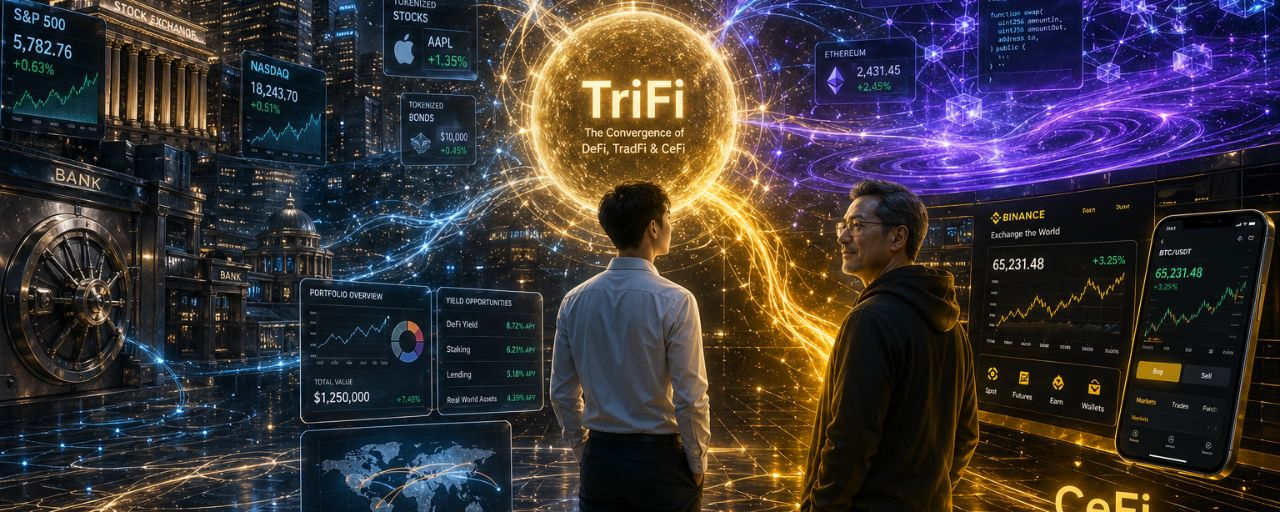
A Era do TriFi: Por Que a Linha Entre DeFi, TradFi e CeFi Está DesaparecendoO mundo financeiro está passando por uma das suas mudanças estruturais mais importantes em décadas. O que costumava existir como três sistemas claramente separados—Finanças Descentralizadas (DeFi), Finanças Tradicionais (TradFi) e Finanças Centralizadas (CeFi)—está agora rapidamente se fundindo em um ecossistema unificado frequentemente chamado de TriFi.
Isso não é apenas uma tendência impulsionada por hype. É respaldado por dados reais, movimentação institucional e evolução da infraestrutura. De acordo com as percepções compartilhadas pela Binance Research e comentários de Yi He no Hong Kong Web3 Festival 2026, estamos testemunhando os estágios iniciais de um sistema financeiro que pode atender bilhões de usuários globalmente.
A Era do TriFi: Por Que a Linha Entre DeFi, TradFi e CeFi Está Desaparecendo
O mundo financeiro está passando por uma das suas mudanças estruturais mais importantes em décadas. O que costumava existir como três sistemas claramente separados—Finanças Descentralizadas (DeFi), Finanças Tradicionais (TradFi) e Finanças Centralizadas (CeFi)—está agora rapidamente se fundindo em um ecossistema unificado frequentemente chamado de TriFi.
Isso não é apenas uma tendência impulsionada por hype. É respaldado por dados reais, movimentação institucional e evolução da infraestrutura. De acordo com as percepções compartilhadas pela Binance Research e comentários de Yi He no Hong Kong Web3 Festival 2026, estamos testemunhando os estágios iniciais de um sistema financeiro que pode atender bilhões de usuários globalmente.
1
218
·
--

Artigo
$153B em Volume: Como a Binance Está Redefinindo o Trading RWA 24/7Quando os Mercados Param de Fechar, a Descoberta de Preços Muda
Uma grande mudança está acontecendo nas finanças globais:
Os mercados não estão mais presos ao tempo.
E a Binance está no centro disso.
👉 Referências:
https://www.dlnews.com/research/internal/when-markets-stop-closing-binance-and-the-shift-to-247-finance/
[https://www.binance.com/en/blog/futures/7832532507450915308](https://www.binance.com/en/blog/futures/7832532507450915308)
[https://www.binance.com/en/blog/vip/3922765861344408746](https://www.binance.com/en/blog/vip/3922765861344408746)
📊 A Escala da Mudança
$153B+ de volume acumulado em perpétuos de commodities
$153B em Volume: Como a Binance Está Redefinindo o Trading RWA 24/7
Quando os Mercados Param de Fechar, a Descoberta de Preços Muda
Uma grande mudança está acontecendo nas finanças globais:
Os mercados não estão mais presos ao tempo.
E a Binance está no centro disso.
👉 Referências:
https://www.dlnews.com/research/internal/when-markets-stop-closing-binance-and-the-shift-to-247-finance/
https://www.binance.com/en/blog/futures/7832532507450915308
https://www.binance.com/en/blog/vip/3922765861344408746
📊 A Escala da Mudança
$153B+ de volume acumulado em perpétuos de commodities
1
88
·
--
Artigo
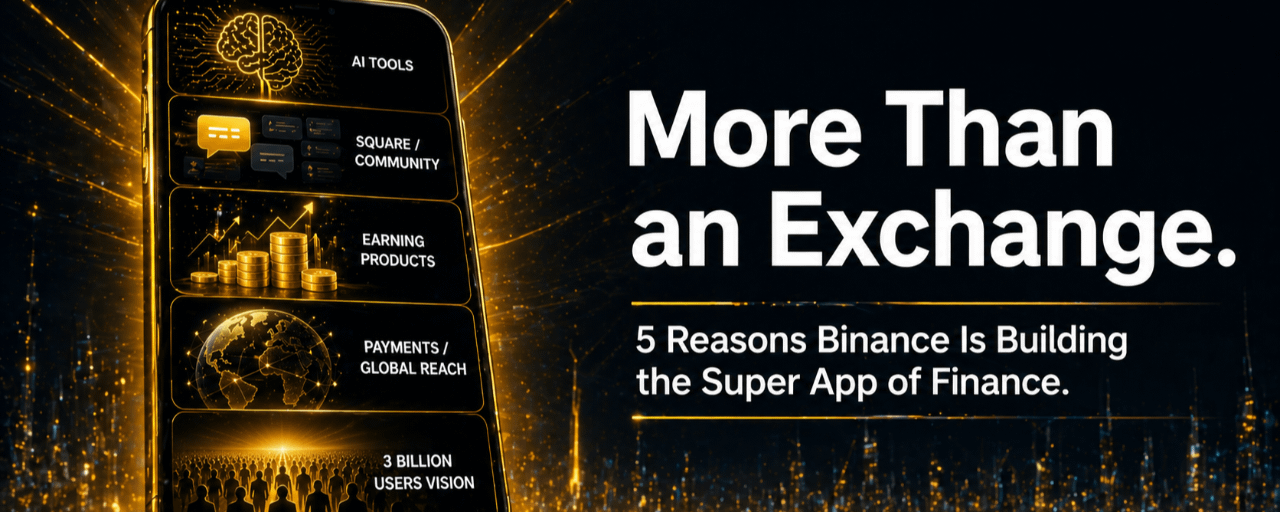
A Binance é Apenas uma Exchange? Aqui Estão 5 Razões Pelas Quais Já é um Super AppSejamos honestos - se você ainda está chamando a Binance de "apenas uma exchange de cripto", provavelmente você está alguns updates de produtos atrasado.
A plataforma que muitos de nós começamos a usar para comprar Bitcoin ou trocar altcoins evoluiu silenciosamente — e depois de forma bem barulhenta — para algo muito maior. Estamos falando de ferramentas de IA, recursos sociais, produtos de rendimento, pagamentos e uma visão declarada de atender 3 bilhões de usuários. Isso não é território de exchange. Isso é território de super app.
Aqui está o motivo pelo qual a Binance construiu o caso mais forte para ser o primeiro verdadeiro super app financeiro do cripto.
A Binance é Apenas uma Exchange? Aqui Estão 5 Razões Pelas Quais Já é um Super App
Sejamos honestos - se você ainda está chamando a Binance de "apenas uma exchange de cripto", provavelmente você está alguns updates de produtos atrasado.
A plataforma que muitos de nós começamos a usar para comprar Bitcoin ou trocar altcoins evoluiu silenciosamente — e depois de forma bem barulhenta — para algo muito maior. Estamos falando de ferramentas de IA, recursos sociais, produtos de rendimento, pagamentos e uma visão declarada de atender 3 bilhões de usuários. Isso não é território de exchange. Isso é território de super app.
Aqui está o motivo pelo qual a Binance construiu o caso mais forte para ser o primeiro verdadeiro super app financeiro do cripto.
1
123
·
--
Verificado
Confiança em Escala: Por que a Conformidade de IA é Importante para a Adoção de CriptoO Problema da Adoção de que Ninguém Fala
Toda conversa sobre a adoção de cripto acaba voltando aos mesmos temas: preço, acessibilidade, educação. Mas tem um pré-requisito mais sutil que raramente aparece nas manchetes — confiança. Especificamente, o tipo de confiança institucional, regulatória e de usuário que permite que um sistema financeiro funcione em escala global.
Sem isso, cripto continua sendo um universo paralelo: interessante, em crescimento, mas estruturalmente desconectado do sistema financeiro mainstream. Com isso, a indústria se torna infraestrutura.
Confiança em Escala: Por que a Conformidade de IA é Importante para a Adoção de Cripto
O Problema da Adoção de que Ninguém Fala
Toda conversa sobre a adoção de cripto acaba voltando aos mesmos temas: preço, acessibilidade, educação. Mas tem um pré-requisito mais sutil que raramente aparece nas manchetes — confiança. Especificamente, o tipo de confiança institucional, regulatória e de usuário que permite que um sistema financeiro funcione em escala global.
Sem isso, cripto continua sendo um universo paralelo: interessante, em crescimento, mas estruturalmente desconectado do sistema financeiro mainstream. Com isso, a indústria se torna infraestrutura.
1
1
753
·
--

Artigo
As Ferramentas de Cripto que Não Existiam Há 2 AnosDo Trading Básico para Ecossistemas Potencializados por IA
Dois anos atrás, o trading de cripto era simples:
Execução manual
Gráficos básicos
Ferramentas limitadas
Avançando para hoje—o cenário mudou completamente.
Plataformas como a Binance agora oferecem ferramentas que nem existiam em 2023.
Antes vs Agora
2023:
Trading à vista e futuros
Indicadores básicos
Tomada de decisão manual
Hoje:
Assistência de trading com IA
Mercados de previsão
Ferramentas “Alpha” em estágio inicial
Estratégias automatizadas acessíveis para usuários de varejo
A mudança não é incremental—é exponencial.
As Ferramentas de Cripto que Não Existiam Há 2 Anos
Do Trading Básico para Ecossistemas Potencializados por IA
Dois anos atrás, o trading de cripto era simples:
Execução manual
Gráficos básicos
Ferramentas limitadas
Avançando para hoje—o cenário mudou completamente.
Plataformas como a Binance agora oferecem ferramentas que nem existiam em 2023.
Antes vs Agora
2023:
Trading à vista e futuros
Indicadores básicos
Tomada de decisão manual
Hoje:
Assistência de trading com IA
Mercados de previsão
Ferramentas “Alpha” em estágio inicial
Estratégias automatizadas acessíveis para usuários de varejo
A mudança não é incremental—é exponencial.
1
99
·
--

Artigo
Investimento Impulsionado por IA Não é Mais Apenas Para Wall StreetComo a Binance Está Mudando o Jogo
Por décadas, ferramentas avançadas de investimento estavam trancadas atrás de instituições.
Agora, isso está mudando.
A Binance está trazendo investimentos impulsionados por IA diretamente para os usuários do dia a dia.
👉 Referência: https://www.binance.com/en/academy/articles/binance-ai-pro-guide-what-it-is-and-how-to-use-it
De Exclusivo a Acessível
Anteriormente, ferramentas como:
Execução automatizada
Análise de sinal macro
Otimização de portfólio
…eram limitadas a fundos de hedge e equipes quant.
Hoje, elas estão se tornando disponíveis para qualquer um com um smartphone.
Investimento Impulsionado por IA Não é Mais Apenas Para Wall Street
Como a Binance Está Mudando o Jogo
Por décadas, ferramentas avançadas de investimento estavam trancadas atrás de instituições.
Agora, isso está mudando.
A Binance está trazendo investimentos impulsionados por IA diretamente para os usuários do dia a dia.
👉 Referência: https://www.binance.com/en/academy/articles/binance-ai-pro-guide-what-it-is-and-how-to-use-it
De Exclusivo a Acessível
Anteriormente, ferramentas como:
Execução automatizada
Análise de sinal macro
Otimização de portfólio
…eram limitadas a fundos de hedge e equipes quant.
Hoje, elas estão se tornando disponíveis para qualquer um com um smartphone.
1
99
·
--
Artigo
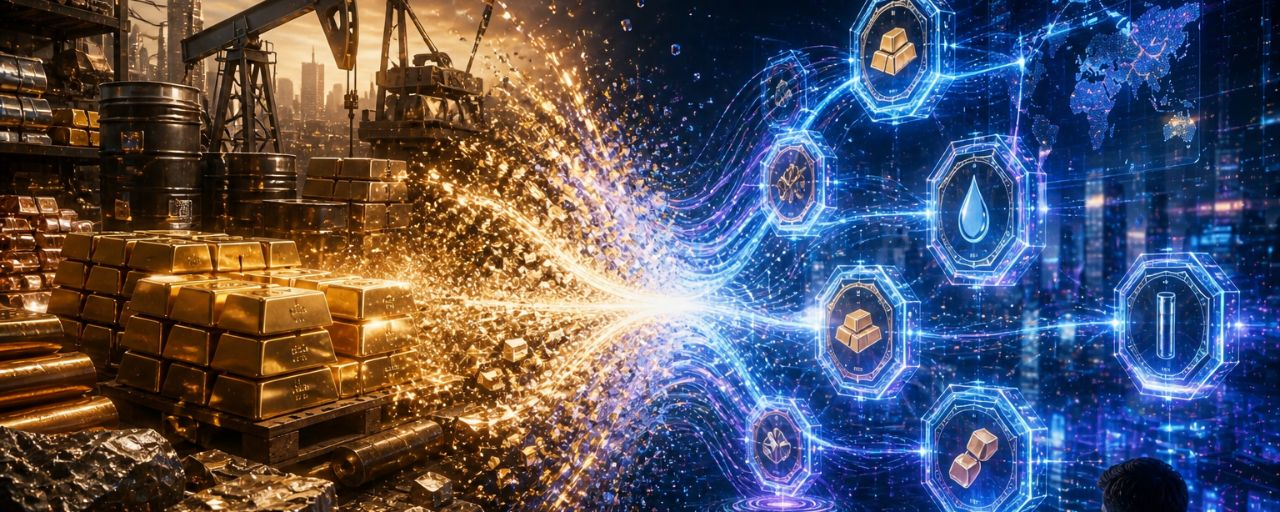
Cripto Encontra CommoditiesA Negociação da Década Já Está Acontecendo
Seis meses atrás, derivativos de TradFi baseados em cripto mal existiam.
Hoje, a mudança é inegável.
A Binance agora está liderando uma nova categoria onde cripto e ativos tradicionais colidem.
📈 A Ascensão das Commodities On-Chain
Ativos como o ouro (XAU) agora estão:
Negociado 24/7
Acessível globalmente
Experimentando volumes recordes
Em alguns casos, a atividade rivaliza com as bolsas nacionais tradicionais.
🔄 O que Mudou tão Rápido?
O motor principal é a convergência:
Infraestrutura cripto encontra ativos TradFi
Cripto Encontra Commodities
A Negociação da Década Já Está Acontecendo
Seis meses atrás, derivativos de TradFi baseados em cripto mal existiam.
Hoje, a mudança é inegável.
A Binance agora está liderando uma nova categoria onde cripto e ativos tradicionais colidem.
📈 A Ascensão das Commodities On-Chain
Ativos como o ouro (XAU) agora estão:
Negociado 24/7
Acessível globalmente
Experimentando volumes recordes
Em alguns casos, a atividade rivaliza com as bolsas nacionais tradicionais.
🔄 O que Mudou tão Rápido?
O motor principal é a convergência:
Infraestrutura cripto encontra ativos TradFi
1
163
Inicia sessão para explorar mais conteúdos
Junta-te a utilizadores de criptomoedas de todo o mundo na Binance Square
⚡️ Obtém informações úteis e recentes sobre criptomoedas.
💬 Com a confiança da maior exchange de criptomoedas do mundo.
👍 Descobre perspetivas reais de criadores verificados.
E-mail/Número de telefone
Tópicos em Tendência
1
#EvolveAtBinanceBlockchainWeek
1.9M visualizações
18,127 a discutir
2
#BitcoinETFsExtendOutflowStreakToEightDays
10,302 visualizações
179 a discutir
3
#ColdcardFlawLeadsToTheftOfAtLeast1789BTC
58,789 visualizações
598 a discutir
4
#SECIssuesNoActionLetterOnMoleculeModel
13,465 visualizações
225 a discutir
5
#EnishPlansToSell5932SOL
3,730 visualizações
44 a discutir
6
#VitalikWantsWalletChipDesignsOpened
62,792 visualizações
633 a discutir
7
#ChainflipVaultTheftHaltsProtocol
39,081 visualizações
471 a discutir
8
#EthereumGlamsterdamKeepsStorageFeeChange
70,718 visualizações
660 a discutir
9
#MalaysiaFirstBitcoinETFToListOnDecember2
25,550 visualizações
273 a discutir
10
#FranklinTempletonPlansToAddHYPEToCryptoIndexETF
147 visualizações
11 a discutir