
#learntogether
learntogether
1.8M visualizações
2,072 discutindo
Popular
Últimas

·
--
Artigo
Osiris ExchangeVamos aprender juntos que este é o começo, siga para mais. Compartilhe, não faça sozinho
Lição 1: O que é dinheiro?
Imagine Isto
Imagine que sua escola tem uma lanchonete.
Normalmente, você compra comida com dinheiro.
Um dia, a escola diz:
"Não queremos mais usar dinheiro em espécie. Todo mundo ganha moedas digitais da escola."
Agora você pode usar essas moedas para comprar comida, bebidas e lanches.
Essas moedas digitais não são físicas. Você não pode segurá-las. Elas só existem no computador da escola.
Essa é a ideia básica do dinheiro digital.
O que é criptomoeda?
Osiris Exchange
Vamos aprender juntos que este é o começo, siga para mais. Compartilhe, não faça sozinho
Lição 1: O que é dinheiro?
Imagine Isto
Imagine que sua escola tem uma lanchonete.
Normalmente, você compra comida com dinheiro.
Um dia, a escola diz:
"Não queremos mais usar dinheiro em espécie. Todo mundo ganha moedas digitais da escola."
Agora você pode usar essas moedas para comprar comida, bebidas e lanches.
Essas moedas digitais não são físicas. Você não pode segurá-las. Elas só existem no computador da escola.
Essa é a ideia básica do dinheiro digital.
O que é criptomoeda?
Lição 1: O que é dinheiro?
Imagine Isto
Imagine que sua escola tem uma lanchonete.
Normalmente, você compra comida com dinheiro.
Um dia, a escola diz:
"Não queremos mais usar dinheiro em espécie. Todo mundo ganha moedas digitais da escola."
Agora você pode usar essas moedas para comprar comida, bebidas e lanches.
Essas moedas digitais não são físicas. Você não pode segurá-las. Elas só existem no computador da escola.
Essa é a ideia básica do dinheiro digital.
O que é criptomoeda?
88

·
--
O que mais importa para quem está começando?
> 📚 Aprendizado
> 💰 Investimentos
> 📊 Análise técnica
> 🔐 Segurança
> Minha escolha: **Aprendizado + Segurança**.
> Qual é a sua? 👇
#LearnTogether #learntotrade #InvestSmart #Investing" #TechnicalAnalysis_Tickeron
O que mais importa para quem está começando?
> 📚 Aprendizado
> 💰 Investimentos
> 📊 Análise técnica
> 🔐 Segurança
> Minha escolha: **Aprendizado + Segurança**.
> Qual é a sua? 👇
#LearnTogether #learntotrade #InvestSmart #Investing" #TechnicalAnalysis_Tickeron
> 📚 Aprendizado
> 💰 Investimentos
> 📊 Análise técnica
> 🔐 Segurança
> Minha escolha: **Aprendizado + Segurança**.
> Qual é a sua? 👇
#LearnTogether #learntotrade #InvestSmart #Investing" #TechnicalAnalysis_Tickeron

45

·
--
Bullish
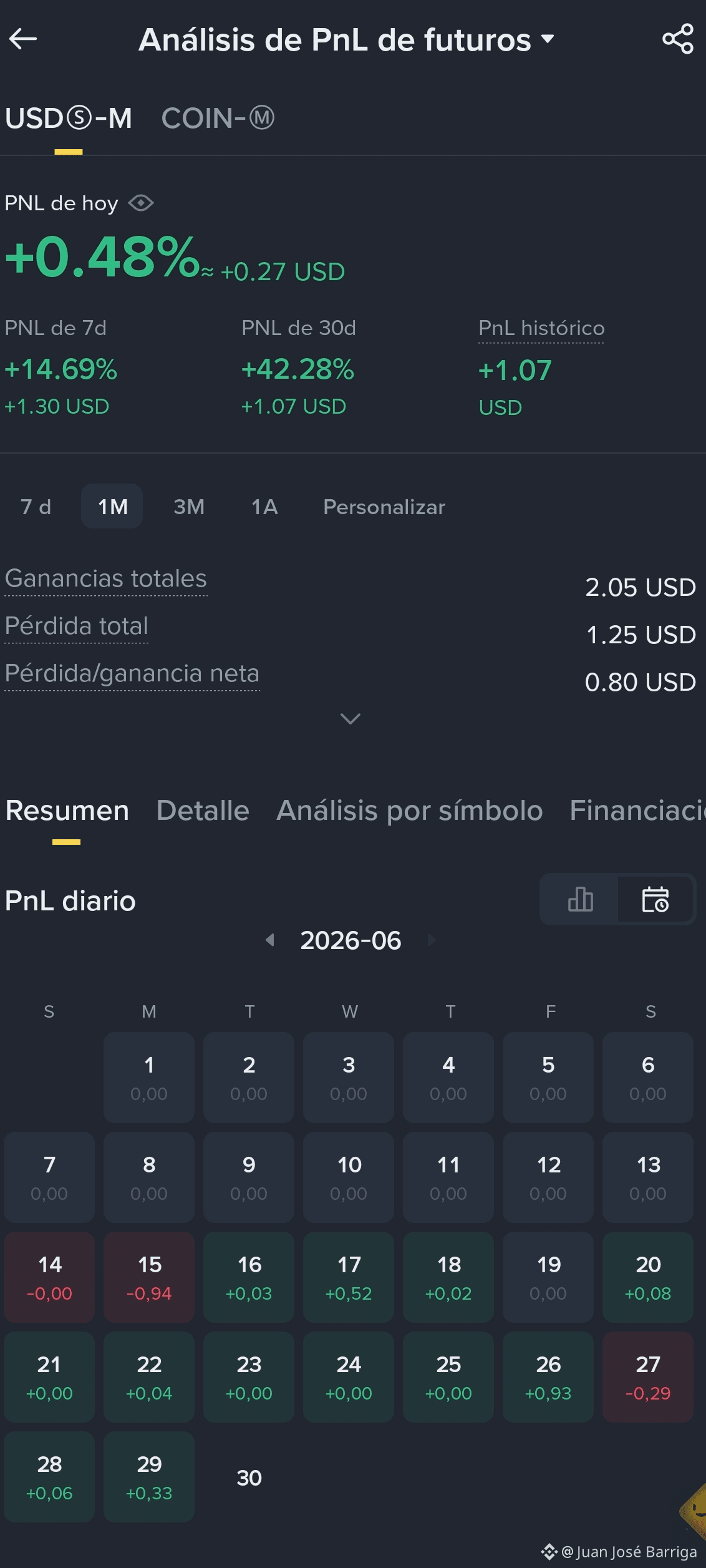
Fechando junho com um PnL positivo. 📈 Estou começando agora no mundo do trading e um dos meus principais objetivos é desenvolver disciplina e consistência, mais do que buscar ganhos rápidos. Estes são meus resultados até agora. O que vocês acham que eu deveria melhorar em julho? Toda crítica construtiva e conselho são bem-vindos. Obrigado! #XRP’ #LearnTogether
Fechando junho com um PnL positivo. 📈 Estou começando agora no mundo do trading e um dos meus principais objetivos é desenvolver disciplina e consistência, mais do que buscar ganhos rápidos. Estes são meus resultados até agora. O que vocês acham que eu deveria melhorar em julho? Toda crítica construtiva e conselho são bem-vindos. Obrigado! #XRP’ #LearnTogether
1
267

·
--
😱 Se você entende isso😮 você entende o futuro das finanças ✅
BLOCK-CHAIN ❤
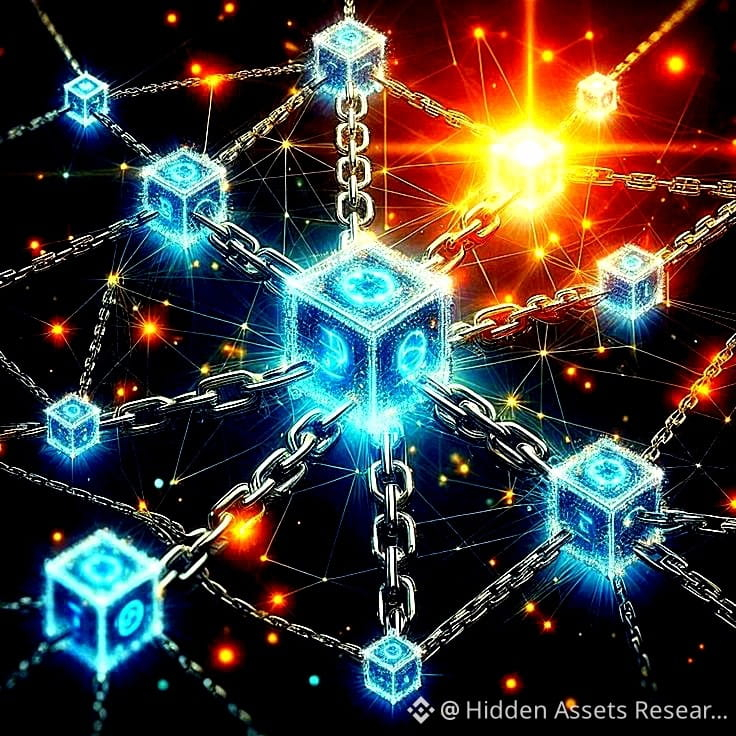
Blockchain é um sistema digital que armazena informações de forma segura e transparente.
Em vez de uma única empresa controlar os dados, eles são compartilhados entre muitos computadores ao redor do mundo.
Cada bloco contém dados, e cada bloco está conectado ao anterior — formando uma “cadeia.”
💡 Por que isso importa:
Sem controle central
Muito difícil de hackear ou alterar dados
Sistema totalmente transparente
Remove intermediários desnecessários
🚀 Usos reais:
Transações cripto (como Bitcoin)
Contratos inteligentes
Identidade digital
Rastreamento da cadeia de suprimentos
Blockchain não é apenas sobre cripto — é sobre confiança, segurança e o futuro dos sistemas digitais.
#LearnTogether
#viralmypost
😱 Se você entende isso😮 você entende o futuro das finanças ✅
BLOCK-CHAIN ❤
Blockchain é um sistema digital que armazena informações de forma segura e transparente.
Em vez de uma única empresa controlar os dados, eles são compartilhados entre muitos computadores ao redor do mundo.
Cada bloco contém dados, e cada bloco está conectado ao anterior — formando uma “cadeia.”
💡 Por que isso importa:
Sem controle central
Muito difícil de hackear ou alterar dados
Sistema totalmente transparente
Remove intermediários desnecessários
🚀 Usos reais:
Transações cripto (como Bitcoin)
Contratos inteligentes
Identidade digital
Rastreamento da cadeia de suprimentos
Blockchain não é apenas sobre cripto — é sobre confiança, segurança e o futuro dos sistemas digitais.
#LearnTogether
#viralmypost
BLOCK-CHAIN ❤
Blockchain é um sistema digital que armazena informações de forma segura e transparente.
Em vez de uma única empresa controlar os dados, eles são compartilhados entre muitos computadores ao redor do mundo.
Cada bloco contém dados, e cada bloco está conectado ao anterior — formando uma “cadeia.”
💡 Por que isso importa:
Sem controle central
Muito difícil de hackear ou alterar dados
Sistema totalmente transparente
Remove intermediários desnecessários
🚀 Usos reais:
Transações cripto (como Bitcoin)
Contratos inteligentes
Identidade digital
Rastreamento da cadeia de suprimentos
Blockchain não é apenas sobre cripto — é sobre confiança, segurança e o futuro dos sistemas digitais.
#LearnTogether
#viralmypost

61
·
--
OSIRIS Exchange Academy | Aula 7
Uma chave deve ser compartilhada.
Uma chave nunca deve ser compartilhada.
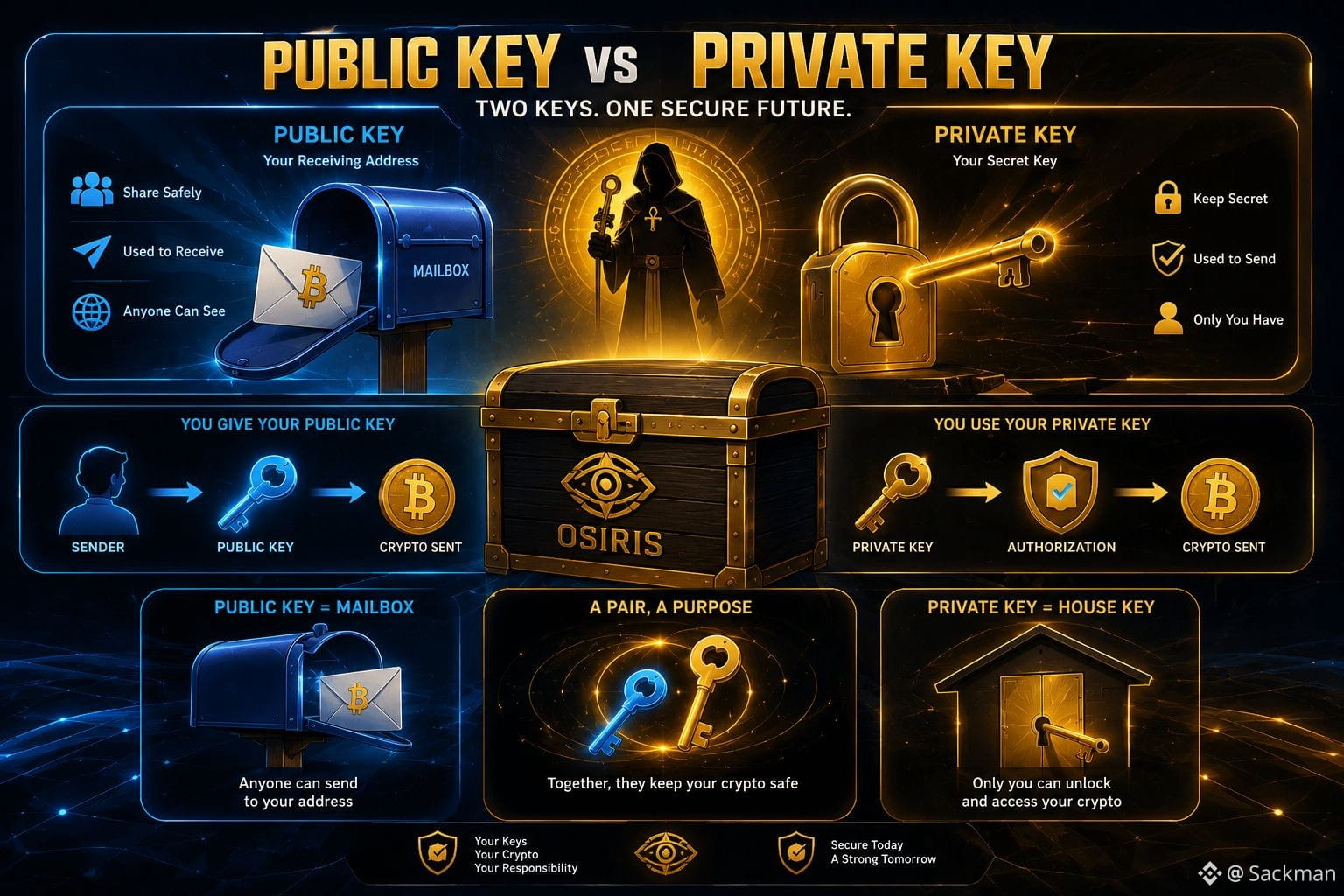
Entender a diferença entre uma chave pública e uma chave privada é uma das lições mais importantes para a segurança em criptografia.
🔑 Ideia principal: Sua chave pública ajuda outras pessoas a enviarem criptomoeda para você. Sua chave privada lhe dá controle sobre ela. Proteja-a com cuidado.
📝 Tarefa
O que é uma chave pública?
O que é uma chave privada?
Qual delas você nunca deve compartilhar?
Siga a OSIRIS Exchange Academy @Sackmantrails enquanto continuamos a construir seu conhecimento em cripto, uma aula de cada vez. Acesse sabedoria espiritual e cripto...
ART 🎭 — Thy Beginning. Thy Word. #LearnTogether #Learn $BTC
OSIRIS Exchange Academy | Aula 7
Uma chave deve ser compartilhada.
Uma chave nunca deve ser compartilhada.
Entender a diferença entre uma chave pública e uma chave privada é uma das lições mais importantes para a segurança em criptografia.
🔑 Ideia principal: Sua chave pública ajuda outras pessoas a enviarem criptomoeda para você. Sua chave privada lhe dá controle sobre ela. Proteja-a com cuidado.
📝 Tarefa
O que é uma chave pública?
O que é uma chave privada?
Qual delas você nunca deve compartilhar?
Siga a OSIRIS Exchange Academy @Sackmantrails enquanto continuamos a construir seu conhecimento em cripto, uma aula de cada vez. Acesse sabedoria espiritual e cripto...
ART 🎭 — Thy Beginning. Thy Word. #LearnTogether #Learn $BTC
Uma chave deve ser compartilhada.
Uma chave nunca deve ser compartilhada.
Entender a diferença entre uma chave pública e uma chave privada é uma das lições mais importantes para a segurança em criptografia.
🔑 Ideia principal: Sua chave pública ajuda outras pessoas a enviarem criptomoeda para você. Sua chave privada lhe dá controle sobre ela. Proteja-a com cuidado.
📝 Tarefa
O que é uma chave pública?
O que é uma chave privada?
Qual delas você nunca deve compartilhar?
Siga a OSIRIS Exchange Academy @Sackmantrails enquanto continuamos a construir seu conhecimento em cripto, uma aula de cada vez. Acesse sabedoria espiritual e cripto...
ART 🎭 — Thy Beginning. Thy Word. #LearnTogether #Learn $BTC
121
·
--
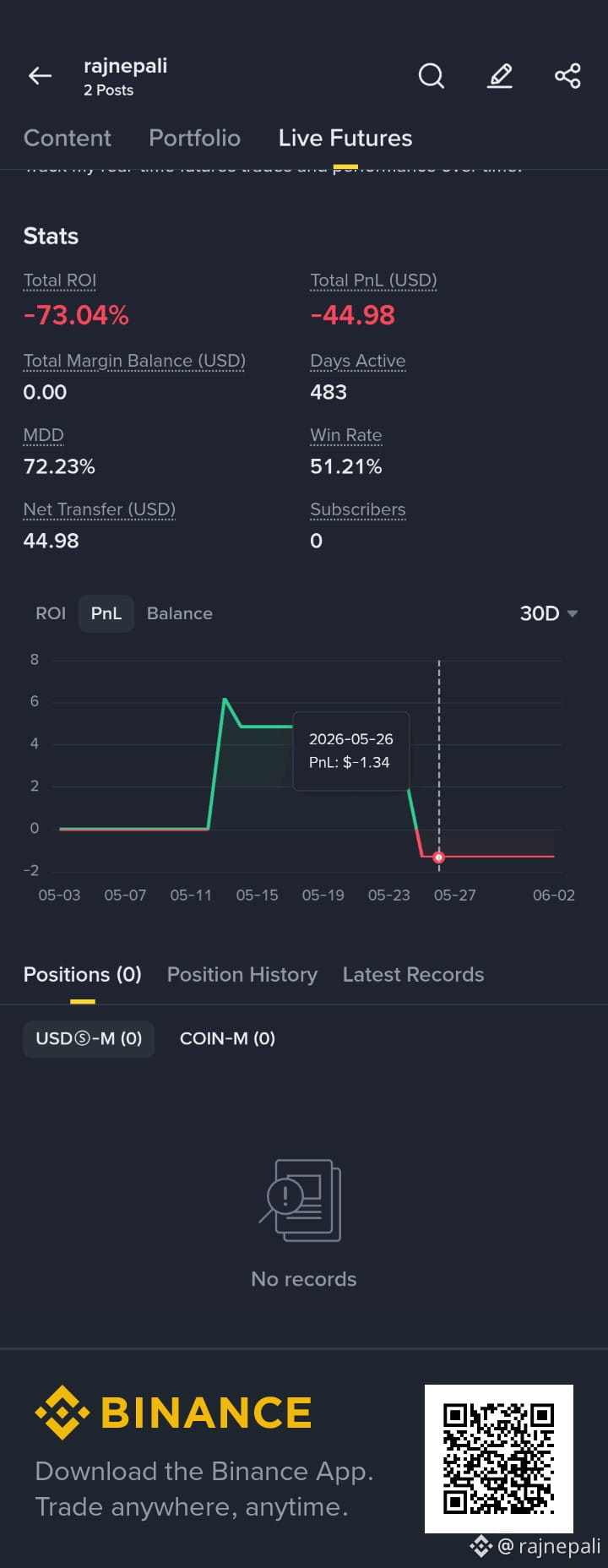
Ainda estou preso na fase de aprendizado e não consegui começar a ganhar ainda. 😭😭
#gain
#LearnTogether
#LearnFromMistakes
#DECIPLINE
Ainda estou preso na fase de aprendizado e não consegui começar a ganhar ainda. 😭😭
#gain
#LearnTogether
#LearnFromMistakes
#DECIPLINE
#gain
#LearnTogether
#LearnFromMistakes
#DECIPLINE
220
Como definir Stop-Loss na Binance Spot (Guia para Iniciantes)
Muitos iniciantes perguntam como definir Stop-Loss na Binance.
Passos no Spot:
1. Vá para Spot > Sell 2. Selecione Stop-Limit 3. Defina o preço Stop e o preço Limite abaixo do seu preço de entrada 4. Confirme
Isso ajuda a gerenciar o risco. Não é garantia de lucro.
Eu tenho um guia completo passo a passo no meu perfil e meu link de referência oficial da Binance está na página do meu perfil se você estiver criando conta.
Você já definiu Stop-Loss antes? Comente YES ou NEED HELP e eu farei um vídeo.
Apenas para fins educacionais. Cripto é volátil. Faça sua própria pesquisa.
#BinanceSquareTalks #LearnTogether
Como definir Stop-Loss na Binance Spot (Guia para Iniciantes)
Muitos iniciantes perguntam como definir Stop-Loss na Binance.
Passos no Spot:
1. Vá para Spot > Sell 2. Selecione Stop-Limit 3. Defina o preço Stop e o preço Limite abaixo do seu preço de entrada 4. Confirme
Isso ajuda a gerenciar o risco. Não é garantia de lucro.
Eu tenho um guia completo passo a passo no meu perfil e meu link de referência oficial da Binance está na página do meu perfil se você estiver criando conta.
Você já definiu Stop-Loss antes? Comente YES ou NEED HELP e eu farei um vídeo.
Apenas para fins educacionais. Cripto é volátil. Faça sua própria pesquisa.
#BinanceSquareTalks #LearnTogether
Muitos iniciantes perguntam como definir Stop-Loss na Binance.
Passos no Spot:
1. Vá para Spot > Sell 2. Selecione Stop-Limit 3. Defina o preço Stop e o preço Limite abaixo do seu preço de entrada 4. Confirme
Isso ajuda a gerenciar o risco. Não é garantia de lucro.
Eu tenho um guia completo passo a passo no meu perfil e meu link de referência oficial da Binance está na página do meu perfil se você estiver criando conta.
Você já definiu Stop-Loss antes? Comente YES ou NEED HELP e eu farei um vídeo.
Apenas para fins educacionais. Cripto é volátil. Faça sua própria pesquisa.
#BinanceSquareTalks #LearnTogether
1
87
·
--
Comecei Minha Jornada no Crypto com $32 Aqui Está o Que Aprendi Até Agora"
Vou ser honesta com você, eu não sou uma trader. Não sou uma expert em finanças. Sou apenas uma mulher comum que decidiu parar de ter medo do crypto e realmente fazer algo a respeito.
Abri minha wallet na Binance com $32. É isso. Não $500. Não $1.000. Trinta e dois dólares.
A primeira coisa que aprendi? $32 não vai te deixar rico da noite para o dia. Qualquer um que te disser o contrário está mentindo. Mas aqui está o que ele PODE fazer: pode te ensinar. Pode criar um hábito. Pode ser a semente de algo maior.
Então, em vez de tentar operar com isso (as taxas me comeriam viva), eu coloquei em Simple Earn e deixei quieto enquanto me concentrei em realmente aprender como tudo isso funciona.
Aqui está o que me surpreendeu como iniciante:
• Você não precisa de milhares para começar
• A Binance tem educação gratuita embutida
• O maior investimento não é dinheiro, é tempo gasto aprendendo
Estou documentando essa jornada do zero.
Se você também está começando com pouco, acompanhe. Vamos descobrir isso juntos.
#Binance #LearnTogether #LearnAndGrow
Comecei Minha Jornada no Crypto com $32 Aqui Está o Que Aprendi Até Agora"
Vou ser honesta com você, eu não sou uma trader. Não sou uma expert em finanças. Sou apenas uma mulher comum que decidiu parar de ter medo do crypto e realmente fazer algo a respeito.
Abri minha wallet na Binance com $32. É isso. Não $500. Não $1.000. Trinta e dois dólares.
A primeira coisa que aprendi? $32 não vai te deixar rico da noite para o dia. Qualquer um que te disser o contrário está mentindo. Mas aqui está o que ele PODE fazer: pode te ensinar. Pode criar um hábito. Pode ser a semente de algo maior.
Então, em vez de tentar operar com isso (as taxas me comeriam viva), eu coloquei em Simple Earn e deixei quieto enquanto me concentrei em realmente aprender como tudo isso funciona.
Aqui está o que me surpreendeu como iniciante:
• Você não precisa de milhares para começar
• A Binance tem educação gratuita embutida
• O maior investimento não é dinheiro, é tempo gasto aprendendo
Estou documentando essa jornada do zero.
Se você também está começando com pouco, acompanhe. Vamos descobrir isso juntos.
#Binance #LearnTogether #LearnAndGrow
Vou ser honesta com você, eu não sou uma trader. Não sou uma expert em finanças. Sou apenas uma mulher comum que decidiu parar de ter medo do crypto e realmente fazer algo a respeito.
Abri minha wallet na Binance com $32. É isso. Não $500. Não $1.000. Trinta e dois dólares.
A primeira coisa que aprendi? $32 não vai te deixar rico da noite para o dia. Qualquer um que te disser o contrário está mentindo. Mas aqui está o que ele PODE fazer: pode te ensinar. Pode criar um hábito. Pode ser a semente de algo maior.
Então, em vez de tentar operar com isso (as taxas me comeriam viva), eu coloquei em Simple Earn e deixei quieto enquanto me concentrei em realmente aprender como tudo isso funciona.
Aqui está o que me surpreendeu como iniciante:
• Você não precisa de milhares para começar
• A Binance tem educação gratuita embutida
• O maior investimento não é dinheiro, é tempo gasto aprendendo
Estou documentando essa jornada do zero.
Se você também está começando com pouco, acompanhe. Vamos descobrir isso juntos.
#Binance #LearnTogether #LearnAndGrow
1
191
·
--
Artigo
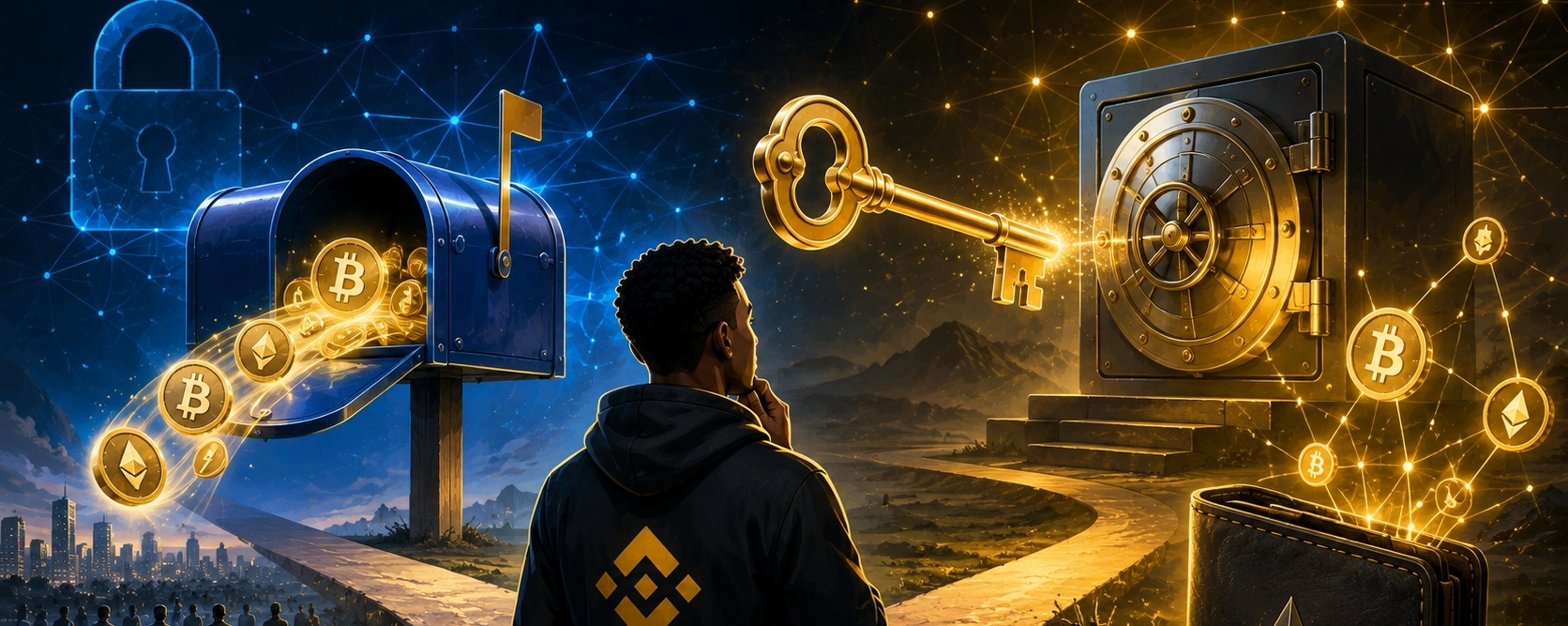
Lição 7: O que é uma Chave Pública e uma Chave Privada?Imagine isto...
Imagine que você tenha uma casa.
Sua casa tem:
📬 Uma caixa de correio onde qualquer pessoa pode enviar cartas para você.
🔑 Uma chave de casa que só você deve ter.
A caixa de correio é como sua Chave Pública.
A chave da casa é como sua Chave Privada.
Uma delas deve ser compartilhada.
A outra precisa permanecer secreta.
O que é uma Chave Pública?
Uma Chave Pública é um endereço único que permite que as pessoas enviem criptomoeda para você.
Você pode compartilhá-la com segurança com qualquer pessoa.
Pense nela como a sua:
Número da conta bancária
Endereço de e-mail
Caixa de correio de casa
As pessoas podem enviar para ela, mas não conseguem gastar sua cripto com ela.
Lição 7: O que é uma Chave Pública e uma Chave Privada?
Imagine isto...
Imagine que você tenha uma casa.
Sua casa tem:
📬 Uma caixa de correio onde qualquer pessoa pode enviar cartas para você.
🔑 Uma chave de casa que só você deve ter.
A caixa de correio é como sua Chave Pública.
A chave da casa é como sua Chave Privada.
Uma delas deve ser compartilhada.
A outra precisa permanecer secreta.
O que é uma Chave Pública?
Uma Chave Pública é um endereço único que permite que as pessoas enviem criptomoeda para você.
Você pode compartilhá-la com segurança com qualquer pessoa.
Pense nela como a sua:
Número da conta bancária
Endereço de e-mail
Caixa de correio de casa
As pessoas podem enviar para ela, mas não conseguem gastar sua cripto com ela.
Imagine que você tenha uma casa.
Sua casa tem:
📬 Uma caixa de correio onde qualquer pessoa pode enviar cartas para você.
🔑 Uma chave de casa que só você deve ter.
A caixa de correio é como sua Chave Pública.
A chave da casa é como sua Chave Privada.
Uma delas deve ser compartilhada.
A outra precisa permanecer secreta.
O que é uma Chave Pública?
Uma Chave Pública é um endereço único que permite que as pessoas enviem criptomoeda para você.
Você pode compartilhá-la com segurança com qualquer pessoa.
Pense nela como a sua:
Número da conta bancária
Endereço de e-mail
Caixa de correio de casa
As pessoas podem enviar para ela, mas não conseguem gastar sua cripto com ela.
92
🌟 Minha jornada com cripto na Binance
Hoje eu concluí mais uma lição do Binance Learn & Earn e recebi uma pequena recompensa em BNB. Pode ser uma quantia pequena, mas cada passo me ajuda a aprender mais sobre criptomoedas e blockchain.
Estou animado para continuar aprendendo e crescendo no mundo das criptos. 🚀
Qual é a sua moeda favorita: BTC, BNB ou ETH?
#BinanceSquareFamily #LearnTogether $BTC $BNB $USDT #BlockchainNews
📈 Acredito que aprender é o melhor investimento.
Todos os dias eu passo alguns minutos aprendendo sobre Bitcoin e blockchain na Binance. Pequenas recompensas são ótimas, mas conhecimento é ainda mais valioso.
Qual foi a primeira criptomoeda que você comprou? 👇
#Crypto #Bitcoin #BNB #BinanceSquare #LearnAndEarn"
🌟 Minha jornada com cripto na Binance
Hoje eu concluí mais uma lição do Binance Learn & Earn e recebi uma pequena recompensa em BNB. Pode ser uma quantia pequena, mas cada passo me ajuda a aprender mais sobre criptomoedas e blockchain.
Estou animado para continuar aprendendo e crescendo no mundo das criptos. 🚀
Qual é a sua moeda favorita: BTC, BNB ou ETH?
#BinanceSquareFamily #LearnTogether $BTC $BNB $USDT #BlockchainNews
📈 Acredito que aprender é o melhor investimento.
Todos os dias eu passo alguns minutos aprendendo sobre Bitcoin e blockchain na Binance. Pequenas recompensas são ótimas, mas conhecimento é ainda mais valioso.
Qual foi a primeira criptomoeda que você comprou? 👇
#Crypto #Bitcoin #BNB #BinanceSquare #LearnAndEarn"
Hoje eu concluí mais uma lição do Binance Learn & Earn e recebi uma pequena recompensa em BNB. Pode ser uma quantia pequena, mas cada passo me ajuda a aprender mais sobre criptomoedas e blockchain.
Estou animado para continuar aprendendo e crescendo no mundo das criptos. 🚀
Qual é a sua moeda favorita: BTC, BNB ou ETH?
#BinanceSquareFamily #LearnTogether $BTC $BNB $USDT #BlockchainNews
📈 Acredito que aprender é o melhor investimento.
Todos os dias eu passo alguns minutos aprendendo sobre Bitcoin e blockchain na Binance. Pequenas recompensas são ótimas, mas conhecimento é ainda mais valioso.
Qual foi a primeira criptomoeda que você comprou? 👇
#Crypto #Bitcoin #BNB #BinanceSquare #LearnAndEarn"
99
·
--
OSIRIS Exchange Academy | Aula 6
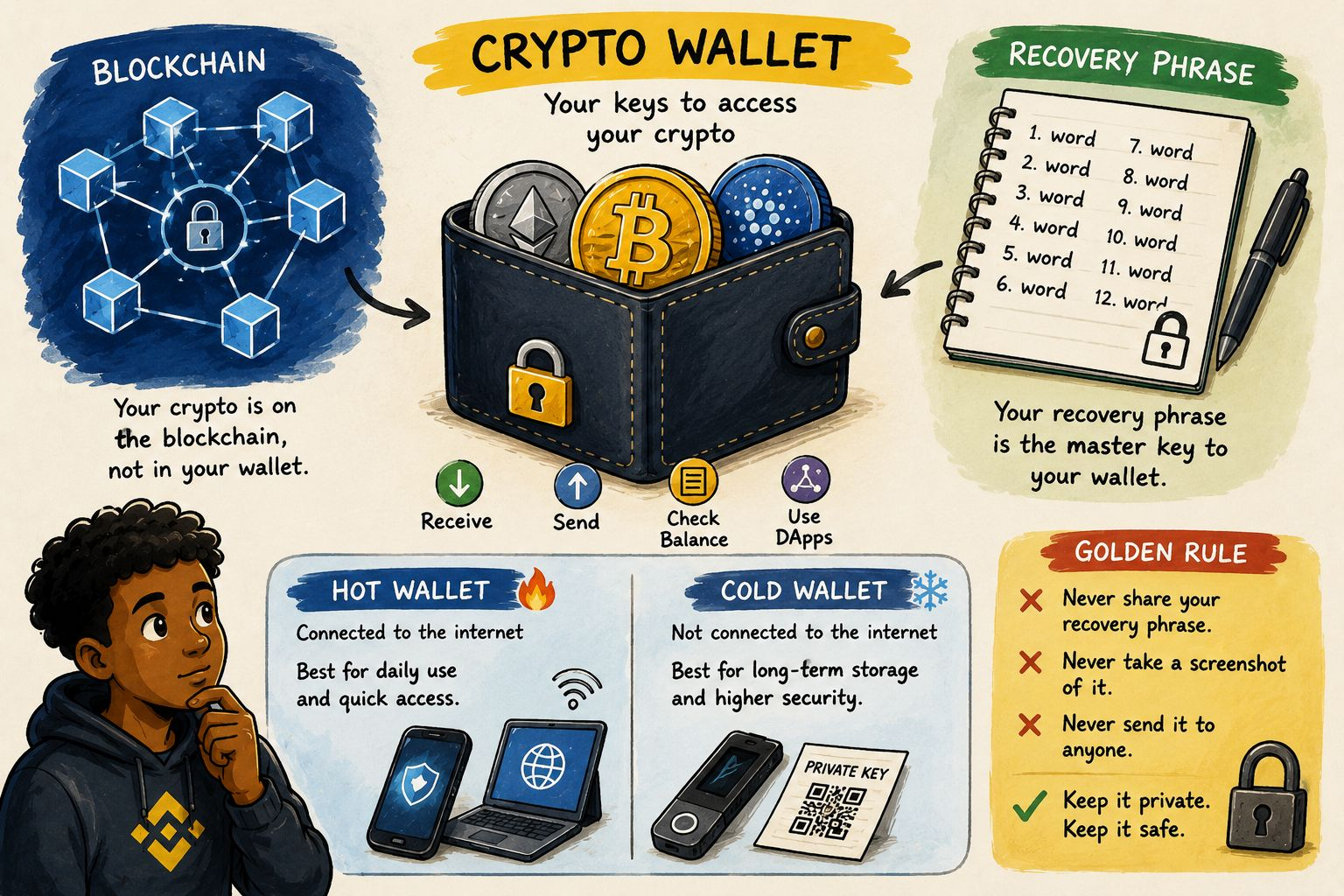
Muitos iniciantes acham que uma carteira cripto armazena Bitcoin como uma carteira física armazena dinheiro.
Não armazena.
Sua criptomoeda fica na blockchain. Sua carteira fornece as chaves seguras necessárias para acessá-la e gerenciá-la.
🔑 Ideia principal: Sua frase de recuperação é a parte mais importante da sua carteira. Mantenha-a privada e segura — qualquer pessoa com ela pode controlar sua criptomoeda.
📝 Tarefa de casa
O que é uma carteira cripto?
Qual é a diferença entre uma carteira quente e uma carteira fria?
Por que você nunca deve compartilhar sua frase de recuperação?
Siga a OSIRIS Exchange Academy @ Sackmantrails em todas as plataformas sociais. Continuamos construindo seu conhecimento de cripto do zero.
ART 🎭 — Thy Beginning. Thy Word.
#LearnTogether #IntelRises9%AfterHours
OSIRIS Exchange Academy | Aula 6
Muitos iniciantes acham que uma carteira cripto armazena Bitcoin como uma carteira física armazena dinheiro.
Não armazena.
Sua criptomoeda fica na blockchain. Sua carteira fornece as chaves seguras necessárias para acessá-la e gerenciá-la.
🔑 Ideia principal: Sua frase de recuperação é a parte mais importante da sua carteira. Mantenha-a privada e segura — qualquer pessoa com ela pode controlar sua criptomoeda.
📝 Tarefa de casa
O que é uma carteira cripto?
Qual é a diferença entre uma carteira quente e uma carteira fria?
Por que você nunca deve compartilhar sua frase de recuperação?
Siga a OSIRIS Exchange Academy @ Sackmantrails em todas as plataformas sociais. Continuamos construindo seu conhecimento de cripto do zero.
ART 🎭 — Thy Beginning. Thy Word.
#LearnTogether #IntelRises9%AfterHours
Muitos iniciantes acham que uma carteira cripto armazena Bitcoin como uma carteira física armazena dinheiro.
Não armazena.
Sua criptomoeda fica na blockchain. Sua carteira fornece as chaves seguras necessárias para acessá-la e gerenciá-la.
🔑 Ideia principal: Sua frase de recuperação é a parte mais importante da sua carteira. Mantenha-a privada e segura — qualquer pessoa com ela pode controlar sua criptomoeda.
📝 Tarefa de casa
O que é uma carteira cripto?
Qual é a diferença entre uma carteira quente e uma carteira fria?
Por que você nunca deve compartilhar sua frase de recuperação?
Siga a OSIRIS Exchange Academy @ Sackmantrails em todas as plataformas sociais. Continuamos construindo seu conhecimento de cripto do zero.
ART 🎭 — Thy Beginning. Thy Word.
#LearnTogether #IntelRises9%AfterHours
19

Acabei de começar minha jornada na Binance Square 👋
Tem tanta informação em cripto que pode parecer opressor no início. Uma coisa que já estou aprendendo é que fazer sua própria pesquisa é muito mais importante do que seguir a hype.
Estou aqui para aprender, compartilhar o que descubro e me conectar com outros que estão interessados em cripto e blockchain.
Se você já está no mundo cripto há um tempo, qual é uma lição que você gostaria de ter aprendido quando começou?
#NEW #crypto #LearnTogether #LearningFromMistakes
Acabei de começar minha jornada na Binance Square 👋
Tem tanta informação em cripto que pode parecer opressor no início. Uma coisa que já estou aprendendo é que fazer sua própria pesquisa é muito mais importante do que seguir a hype.
Estou aqui para aprender, compartilhar o que descubro e me conectar com outros que estão interessados em cripto e blockchain.
Se você já está no mundo cripto há um tempo, qual é uma lição que você gostaria de ter aprendido quando começou?
#NEW #crypto #LearnTogether #LearningFromMistakes
Tem tanta informação em cripto que pode parecer opressor no início. Uma coisa que já estou aprendendo é que fazer sua própria pesquisa é muito mais importante do que seguir a hype.
Estou aqui para aprender, compartilhar o que descubro e me conectar com outros que estão interessados em cripto e blockchain.
Se você já está no mundo cripto há um tempo, qual é uma lição que você gostaria de ter aprendido quando começou?
#NEW #crypto #LearnTogether #LearningFromMistakes
156
·
--
Artigo
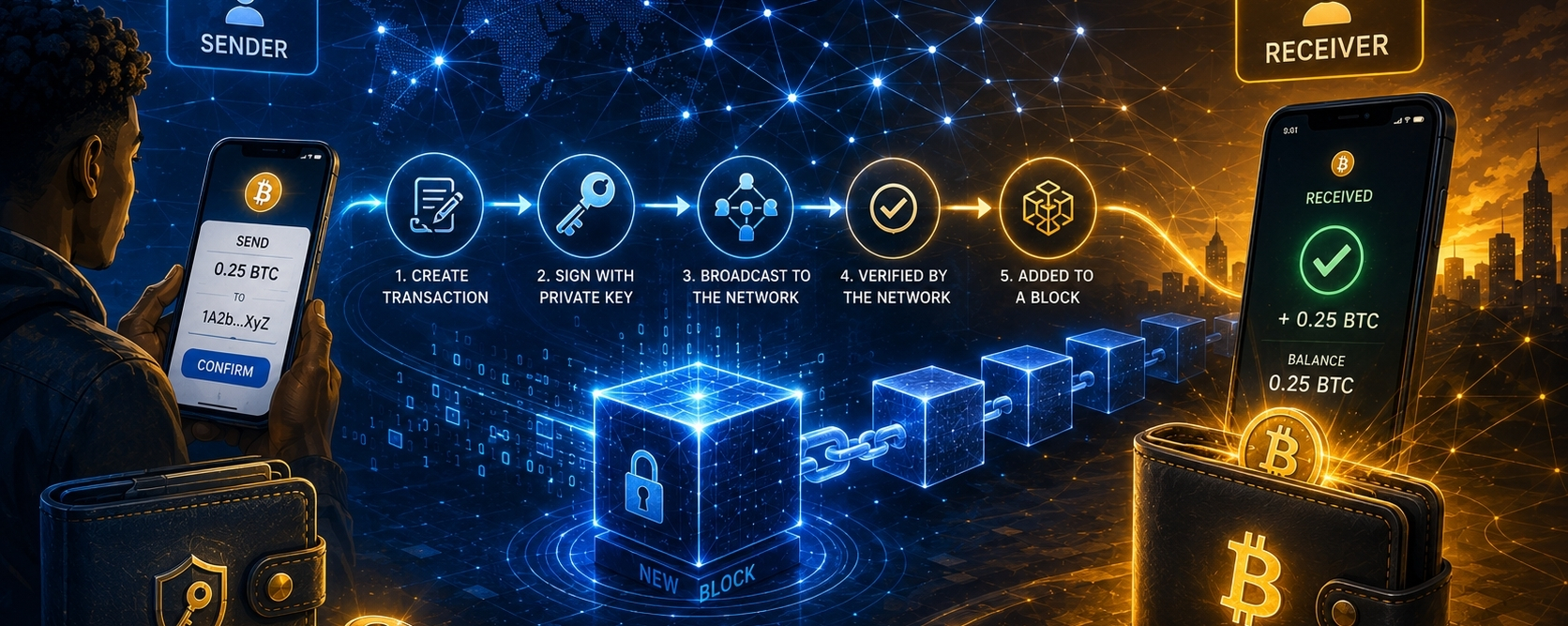
Lição 8: O que é uma transação de criptomoeda?Imagine isto...
Imagine que você quer enviar uma carta para seu amigo.
Você escreve o endereço deles no envelope.
Os correios verificam isso.
A carta passa por diferentes centros de triagem.
Por fim, chega ao seu amigo.
Uma transação de criptomoeda funciona de maneira semelhante.
Em vez de enviar uma carta, você está enviando um valor digital.
O que é uma transação de criptomoeda?
Uma transação de criptomoeda é o processo de transferir criptomoeda de uma carteira para outra usando uma rede blockchain.
Cada transação é verificada antes de se tornar parte permanente da blockchain.
Lição 8: O que é uma transação de criptomoeda?
Imagine isto...
Imagine que você quer enviar uma carta para seu amigo.
Você escreve o endereço deles no envelope.
Os correios verificam isso.
A carta passa por diferentes centros de triagem.
Por fim, chega ao seu amigo.
Uma transação de criptomoeda funciona de maneira semelhante.
Em vez de enviar uma carta, você está enviando um valor digital.
O que é uma transação de criptomoeda?
Uma transação de criptomoeda é o processo de transferir criptomoeda de uma carteira para outra usando uma rede blockchain.
Cada transação é verificada antes de se tornar parte permanente da blockchain.
Imagine que você quer enviar uma carta para seu amigo.
Você escreve o endereço deles no envelope.
Os correios verificam isso.
A carta passa por diferentes centros de triagem.
Por fim, chega ao seu amigo.
Uma transação de criptomoeda funciona de maneira semelhante.
Em vez de enviar uma carta, você está enviando um valor digital.
O que é uma transação de criptomoeda?
Uma transação de criptomoeda é o processo de transferir criptomoeda de uma carteira para outra usando uma rede blockchain.
Cada transação é verificada antes de se tornar parte permanente da blockchain.
102

·
--
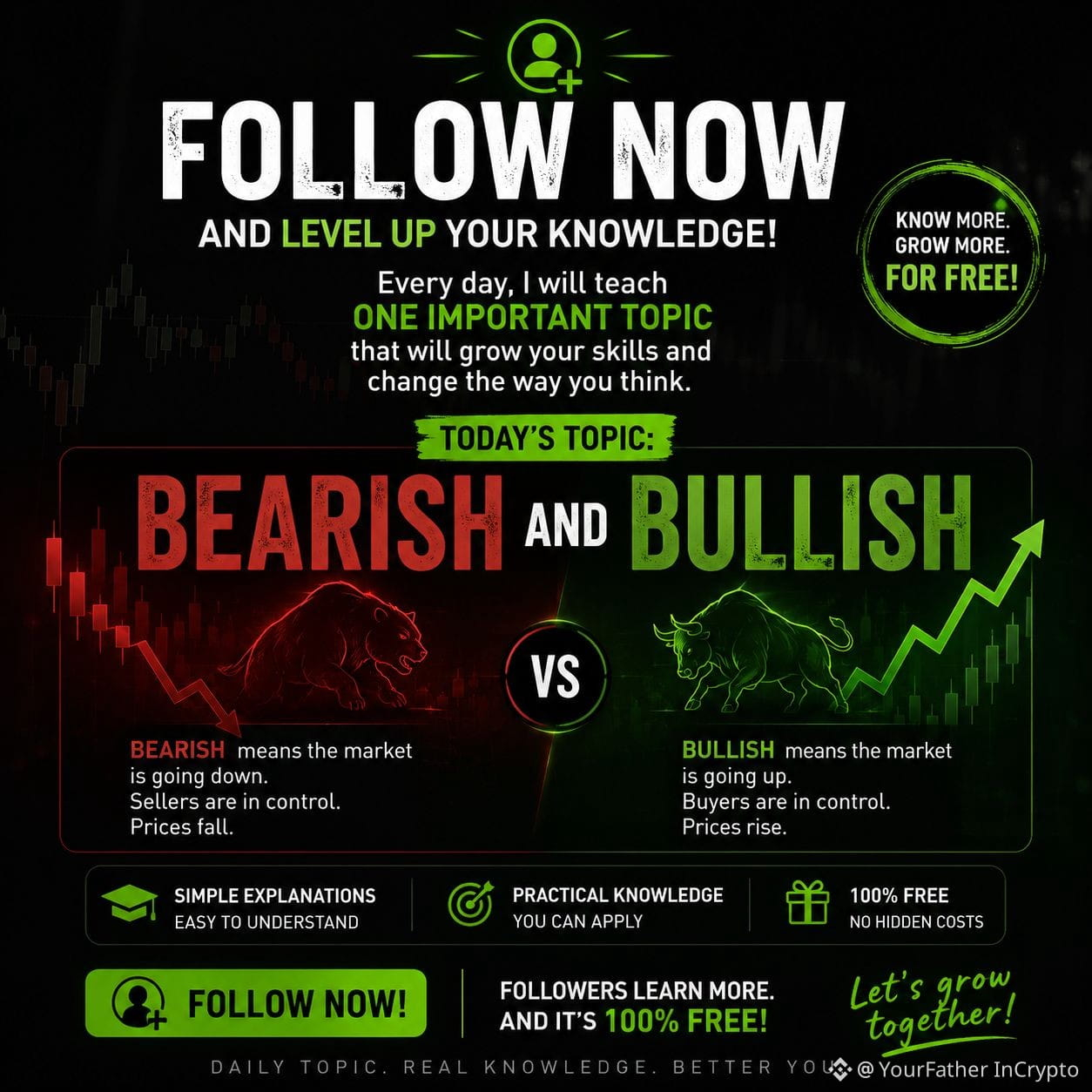
📈 Touro vs 📉 Urso – A Base de Todo Trader
Antes de entrar em qualquer operação, a primeira pergunta que você deve fazer é: O mercado é de alta ou de baixa?
Um mercado de alta significa que os compradores estão no controle, pressionando os preços para cima. Você costuma notar o gráfico formando topos mais altos (Higher Highs – HH) e fundos mais altos (Higher Lows – HL), mostrando que a demanda é mais forte do que a oferta. Nesse cenário, os traders normalmente procuram oportunidades de compra (long), especialmente depois de uma retração até o suporte ou de uma ruptura confirmada.
Exemplo: Se o Bitcoin sobe de $100.000 para $105.000, retrai para $103.000 e então continua subindo até $108.000, o mercado está criando topos mais altos e fundos mais altos — um sinal claro de tendência de alta.
Um mercado de baixa é o oposto. Os vendedores dominam, fazendo os preços caírem. O gráfico forma topos mais baixos (Lower Highs – LH) e fundos mais baixos (Lower Lows – LL), mostrando que cada alta é mais fraca do que a anterior. Nesse caso, os traders se concentram em oportunidades de venda (short), especialmente perto de resistências ou após uma queda (breakdown) confirmada.
Exemplo: Se a Ethereum cai de $3.000 para $2.800, recupera para $2.900 e então cai para $2.600, está criando topos mais baixos e fundos mais baixos, confirmando uma tendência de baixa.
Entender se o mercado está em alta ou em baixa é uma das habilidades mais importantes no trading. Isso ajuda você a evitar operar contra a tendência e aumenta suas chances de tomar decisões melhores.
👉 Siga esta página para nunca perder minhas aulas diárias gratuitas de trading. Todos os dias, eu vou explicar um conceito essencial de trading de um jeito simples e prático para ajudar você a se tornar um trader mais inteligente e confiante.$TSLAB $SPCXB #LearnTogether
📈 Touro vs 📉 Urso – A Base de Todo Trader
Antes de entrar em qualquer operação, a primeira pergunta que você deve fazer é: O mercado é de alta ou de baixa?
Um mercado de alta significa que os compradores estão no controle, pressionando os preços para cima. Você costuma notar o gráfico formando topos mais altos (Higher Highs – HH) e fundos mais altos (Higher Lows – HL), mostrando que a demanda é mais forte do que a oferta. Nesse cenário, os traders normalmente procuram oportunidades de compra (long), especialmente depois de uma retração até o suporte ou de uma ruptura confirmada.
Exemplo: Se o Bitcoin sobe de $100.000 para $105.000, retrai para $103.000 e então continua subindo até $108.000, o mercado está criando topos mais altos e fundos mais altos — um sinal claro de tendência de alta.
Um mercado de baixa é o oposto. Os vendedores dominam, fazendo os preços caírem. O gráfico forma topos mais baixos (Lower Highs – LH) e fundos mais baixos (Lower Lows – LL), mostrando que cada alta é mais fraca do que a anterior. Nesse caso, os traders se concentram em oportunidades de venda (short), especialmente perto de resistências ou após uma queda (breakdown) confirmada.
Exemplo: Se a Ethereum cai de $3.000 para $2.800, recupera para $2.900 e então cai para $2.600, está criando topos mais baixos e fundos mais baixos, confirmando uma tendência de baixa.
Entender se o mercado está em alta ou em baixa é uma das habilidades mais importantes no trading. Isso ajuda você a evitar operar contra a tendência e aumenta suas chances de tomar decisões melhores.
👉 Siga esta página para nunca perder minhas aulas diárias gratuitas de trading. Todos os dias, eu vou explicar um conceito essencial de trading de um jeito simples e prático para ajudar você a se tornar um trader mais inteligente e confiante.$TSLAB $SPCXB #LearnTogether
Antes de entrar em qualquer operação, a primeira pergunta que você deve fazer é: O mercado é de alta ou de baixa?
Um mercado de alta significa que os compradores estão no controle, pressionando os preços para cima. Você costuma notar o gráfico formando topos mais altos (Higher Highs – HH) e fundos mais altos (Higher Lows – HL), mostrando que a demanda é mais forte do que a oferta. Nesse cenário, os traders normalmente procuram oportunidades de compra (long), especialmente depois de uma retração até o suporte ou de uma ruptura confirmada.
Exemplo: Se o Bitcoin sobe de $100.000 para $105.000, retrai para $103.000 e então continua subindo até $108.000, o mercado está criando topos mais altos e fundos mais altos — um sinal claro de tendência de alta.
Um mercado de baixa é o oposto. Os vendedores dominam, fazendo os preços caírem. O gráfico forma topos mais baixos (Lower Highs – LH) e fundos mais baixos (Lower Lows – LL), mostrando que cada alta é mais fraca do que a anterior. Nesse caso, os traders se concentram em oportunidades de venda (short), especialmente perto de resistências ou após uma queda (breakdown) confirmada.
Exemplo: Se a Ethereum cai de $3.000 para $2.800, recupera para $2.900 e então cai para $2.600, está criando topos mais baixos e fundos mais baixos, confirmando uma tendência de baixa.
Entender se o mercado está em alta ou em baixa é uma das habilidades mais importantes no trading. Isso ajuda você a evitar operar contra a tendência e aumenta suas chances de tomar decisões melhores.
👉 Siga esta página para nunca perder minhas aulas diárias gratuitas de trading. Todos os dias, eu vou explicar um conceito essencial de trading de um jeito simples e prático para ajudar você a se tornar um trader mais inteligente e confiante.$TSLAB $SPCXB #LearnTogether
132

·
--
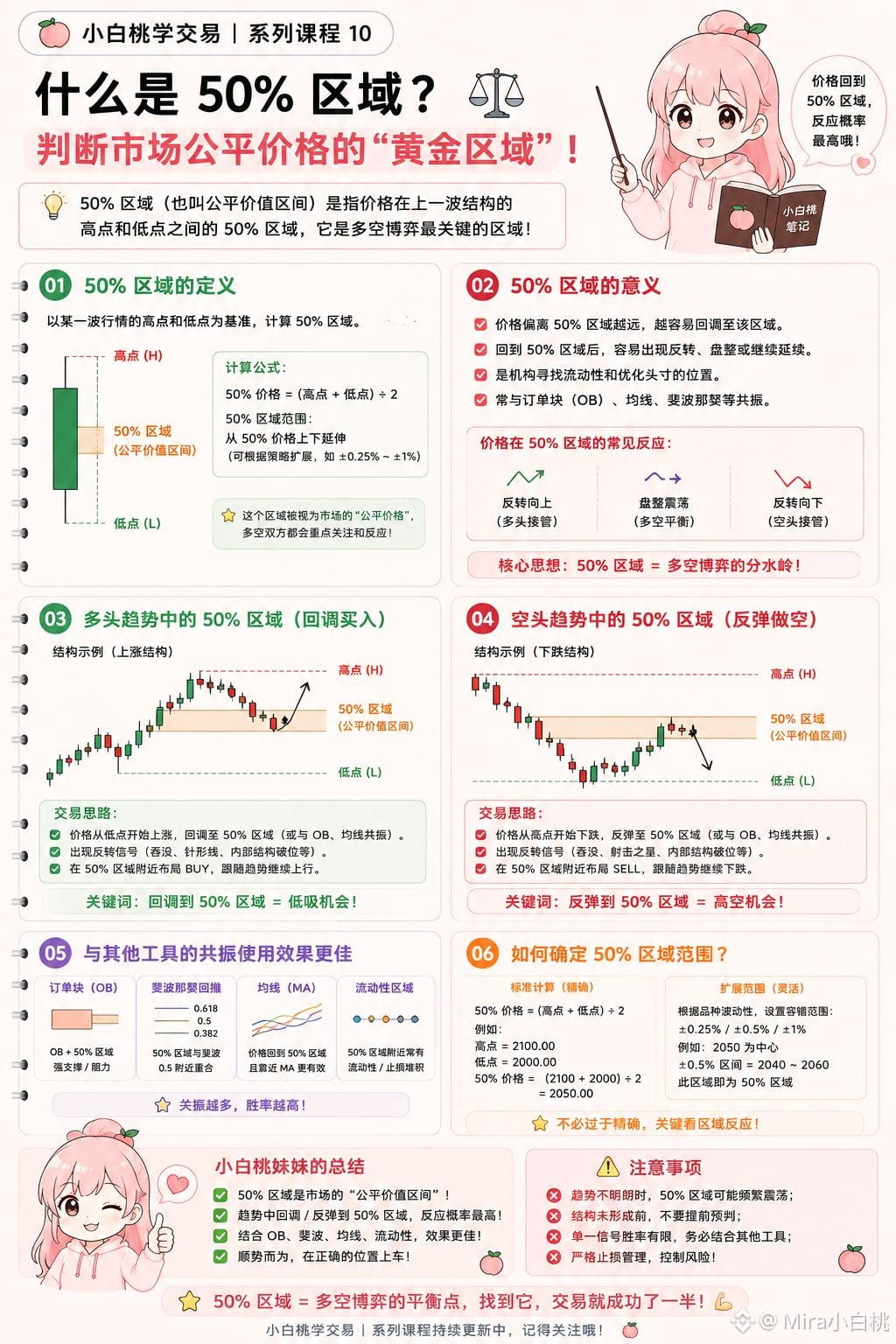
Materiais de estudo, chegou a 10ª aula de hoje
Vamos aprender juntos, vamos crescer juntos!
#学习 #LearnTogether
Materiais de estudo, chegou a 10ª aula de hoje
Vamos aprender juntos, vamos crescer juntos!
#学习 #LearnTogether
Vamos aprender juntos, vamos crescer juntos!
#学习 #LearnTogether
259
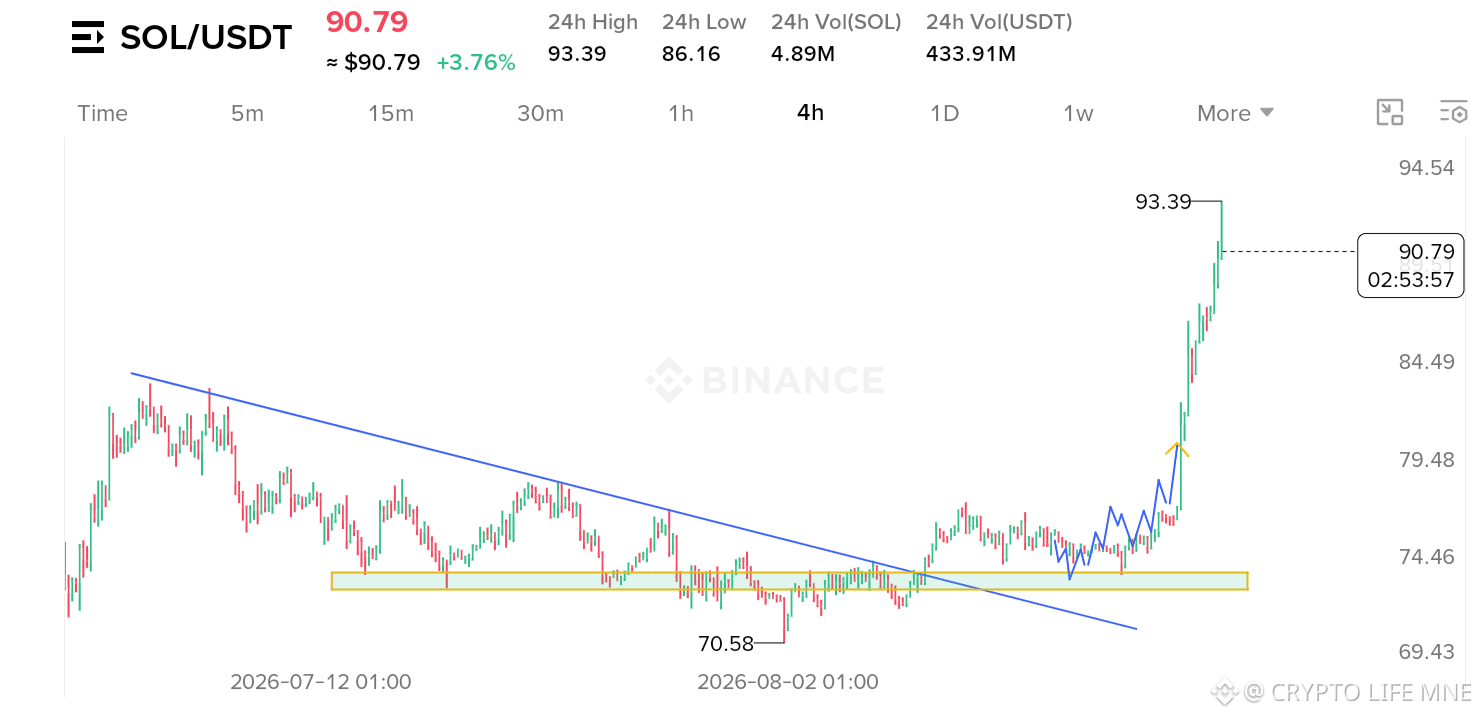
A maioria dos traders perdeu essa jogada. Você perdeu também?...... 📈👀
Isso não foi uma ruptura comum — movimentos como esse levam meses de acumulação silenciosa para se formar!
Se você pegou essa alta ou perdeu completamente, lembre-se disto: perder um movimento não é uma falha, é uma lição.
Se você quer negociar como um profissional:
Pare de pagar caro por “gurus” para receber sinais.
Aprenda a ter paciência durante as fases longas de consolidação.
Sente-se sozinho, registre no diário sua entrada/saída e estude o que aconteceu.
Seus próprios erros e acertos são os melhores professores. Domine os gráficos, crie disciplina e os lucros virão. ✍️
Você conseguiu surfar essa ruptura $SOL , ou está esperando pela próxima oportunidade de reteste ou correção/ajuste? ??
$SOL
{future}(SOLUSDT)
#sol #solana #TechnicalAnalysis #LearnTogether
A maioria dos traders perdeu essa jogada. Você perdeu também?...... 📈👀
Isso não foi uma ruptura comum — movimentos como esse levam meses de acumulação silenciosa para se formar!
Se você pegou essa alta ou perdeu completamente, lembre-se disto: perder um movimento não é uma falha, é uma lição.
Se você quer negociar como um profissional:
Pare de pagar caro por “gurus” para receber sinais.
Aprenda a ter paciência durante as fases longas de consolidação.
Sente-se sozinho, registre no diário sua entrada/saída e estude o que aconteceu.
Seus próprios erros e acertos são os melhores professores. Domine os gráficos, crie disciplina e os lucros virão. ✍️
Você conseguiu surfar essa ruptura $SOL , ou está esperando pela próxima oportunidade de reteste ou correção/ajuste? ??
$SOL
#sol #solana #TechnicalAnalysis #LearnTogether
Isso não foi uma ruptura comum — movimentos como esse levam meses de acumulação silenciosa para se formar!
Se você pegou essa alta ou perdeu completamente, lembre-se disto: perder um movimento não é uma falha, é uma lição.
Se você quer negociar como um profissional:
Pare de pagar caro por “gurus” para receber sinais.
Aprenda a ter paciência durante as fases longas de consolidação.
Sente-se sozinho, registre no diário sua entrada/saída e estude o que aconteceu.
Seus próprios erros e acertos são os melhores professores. Domine os gráficos, crie disciplina e os lucros virão. ✍️
Você conseguiu surfar essa ruptura $SOL , ou está esperando pela próxima oportunidade de reteste ou correção/ajuste? ??
$SOL
#sol #solana #TechnicalAnalysis #LearnTogether
CRYPTO LIFE MNE
·
--
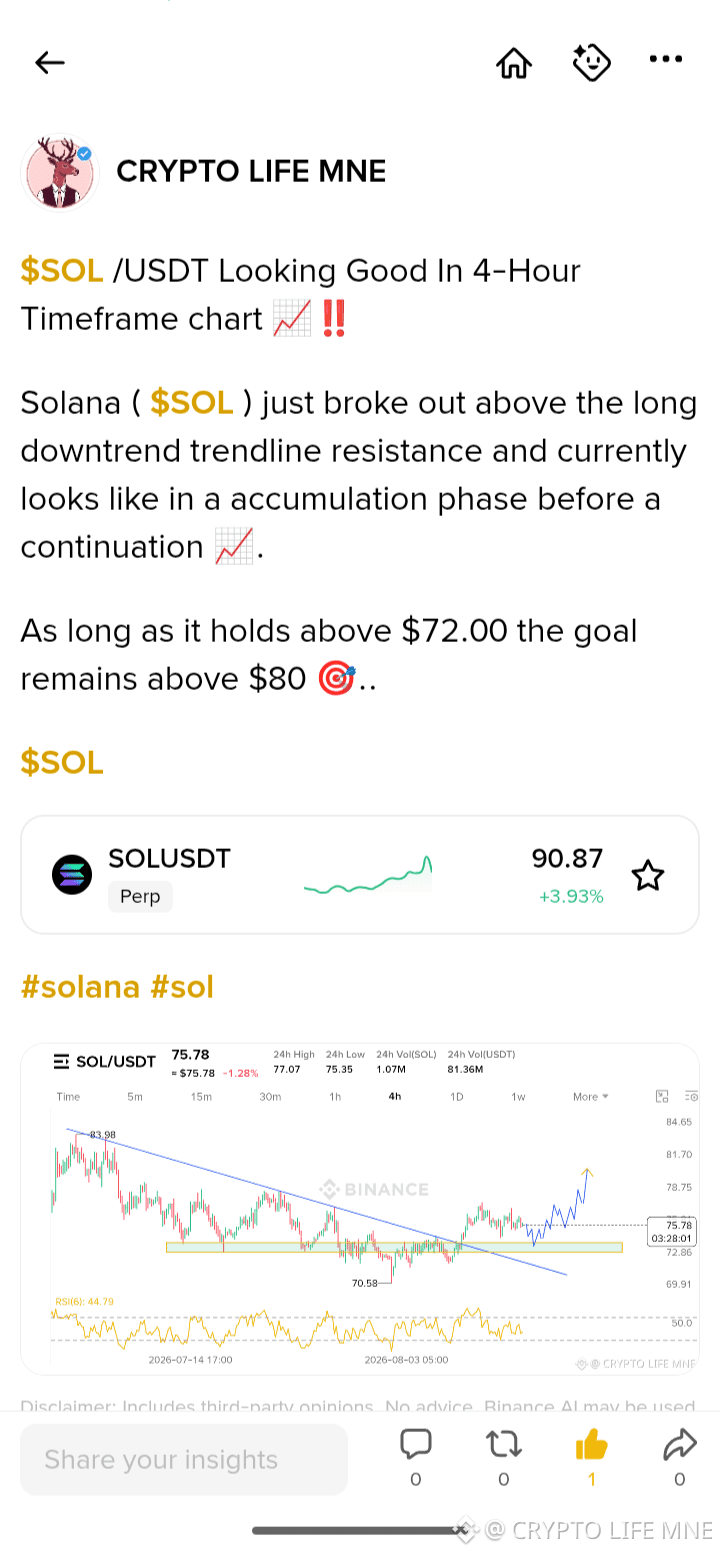
$SOL /USDT Parece Bom no Gráfico de Janela de 4 Horas 📈‼️
Solana ( $SOL ) acabou de romper acima da linha de resistência da longa tendência de baixa e atualmente parece estar em uma fase de acumulação antes de uma continuação 📈.
Enquanto mantiver acima de US$ 72,00, o objetivo continua acima de US$ 80 🎯..
$SOL
#solana #sol
Solana ( $SOL ) acabou de romper acima da linha de resistência da longa tendência de baixa e atualmente parece estar em uma fase de acumulação antes de uma continuação 📈.
Enquanto mantiver acima de US$ 72,00, o objetivo continua acima de US$ 80 🎯..
$SOL
#solana #sol
242

·
--
Bullish
O que é Market Cap do Mercado de Criptomoedas?
O termo “market cap de cripto é” é uma abreviação de “capitalização de mercado de criptomoedas”, que é uma métrica usada para determinar o tamanho e o valor relativos de uma criptomoeda. Você pode calculá-la simplesmente multiplicando o preço atual de uma moeda pelo número total de moedas em circulação. No entanto, talvez nem seja necessário fazer isso, pois muitas plataformas de criptomoedas calculam isso para você.
A market cap de cripto é frequentemente usada para classificar criptomoedas, e uma market cap mais alta geralmente indica uma criptomoeda mais estável e amplamente aceita. Por outro lado, uma market cap mais baixa geralmente sinaliza um ativo mais especulativo ou volátil.
No entanto, observe que isso é apenas um dos muitos fatores a considerar ao avaliar o potencial de uma criptomoeda. Vários outros fatores, como tecnologia, equipe, tokenomics e casos de uso, também devem ser levados em conta ao pesquisar criptomoedas.
#SheinToStartHKIPOBookbuildingAsSoonAsNextWeek #cryptobasics #LearnTogether
{spot}(MITOUSDT)
{alpha}(560x8b194370825e37b33373e74a41009161808c1488)
O que é Market Cap do Mercado de Criptomoedas?
O termo “market cap de cripto é” é uma abreviação de “capitalização de mercado de criptomoedas”, que é uma métrica usada para determinar o tamanho e o valor relativos de uma criptomoeda. Você pode calculá-la simplesmente multiplicando o preço atual de uma moeda pelo número total de moedas em circulação. No entanto, talvez nem seja necessário fazer isso, pois muitas plataformas de criptomoedas calculam isso para você.
A market cap de cripto é frequentemente usada para classificar criptomoedas, e uma market cap mais alta geralmente indica uma criptomoeda mais estável e amplamente aceita. Por outro lado, uma market cap mais baixa geralmente sinaliza um ativo mais especulativo ou volátil.
No entanto, observe que isso é apenas um dos muitos fatores a considerar ao avaliar o potencial de uma criptomoeda. Vários outros fatores, como tecnologia, equipe, tokenomics e casos de uso, também devem ser levados em conta ao pesquisar criptomoedas.
#SheinToStartHKIPOBookbuildingAsSoonAsNextWeek #cryptobasics #LearnTogether
O termo “market cap de cripto é” é uma abreviação de “capitalização de mercado de criptomoedas”, que é uma métrica usada para determinar o tamanho e o valor relativos de uma criptomoeda. Você pode calculá-la simplesmente multiplicando o preço atual de uma moeda pelo número total de moedas em circulação. No entanto, talvez nem seja necessário fazer isso, pois muitas plataformas de criptomoedas calculam isso para você.
A market cap de cripto é frequentemente usada para classificar criptomoedas, e uma market cap mais alta geralmente indica uma criptomoeda mais estável e amplamente aceita. Por outro lado, uma market cap mais baixa geralmente sinaliza um ativo mais especulativo ou volátil.
No entanto, observe que isso é apenas um dos muitos fatores a considerar ao avaliar o potencial de uma criptomoeda. Vários outros fatores, como tecnologia, equipe, tokenomics e casos de uso, também devem ser levados em conta ao pesquisar criptomoedas.
#SheinToStartHKIPOBookbuildingAsSoonAsNextWeek #cryptobasics #LearnTogether
113

·
--
📚 Iniciantes em Crypto:
Qual é o seu maior desafio?
1️⃣ Trading 2️⃣ Análise Técnica 3️⃣ Gestão de Risco
#learncrypto #LearnTogether
📚 Iniciantes em Crypto:
Qual é o seu maior desafio?
1️⃣ Trading 2️⃣ Análise Técnica 3️⃣ Gestão de Risco
#learncrypto #LearnTogether
Qual é o seu maior desafio?
1️⃣ Trading 2️⃣ Análise Técnica 3️⃣ Gestão de Risco
#learncrypto #LearnTogether
19

🧠 Post 5 — Dica para Iniciantes em Trading
Novo no trading de cripto? Comece por aqui 👇
1️⃣ Aprenda a análise técnica básica
2️⃣ Entenda a gestão de risco
3️⃣ Comece com posições pequenas
4️⃣ Evite alavancagem excessiva
5️⃣ Mantenha um diário de trading
6️⃣ Nunca opere apenas com base no “call” de outra pessoa
Seu objetivo não é ganhar todas as trades. Seu objetivo é sobreviver e melhorar. 📚📈
#Beginnersguide #LearnTogether
🧠 Post 5 — Dica para Iniciantes em Trading
Novo no trading de cripto? Comece por aqui 👇
1️⃣ Aprenda a análise técnica básica
2️⃣ Entenda a gestão de risco
3️⃣ Comece com posições pequenas
4️⃣ Evite alavancagem excessiva
5️⃣ Mantenha um diário de trading
6️⃣ Nunca opere apenas com base no “call” de outra pessoa
Seu objetivo não é ganhar todas as trades. Seu objetivo é sobreviver e melhorar. 📚📈
#Beginnersguide #LearnTogether
Novo no trading de cripto? Comece por aqui 👇
1️⃣ Aprenda a análise técnica básica
2️⃣ Entenda a gestão de risco
3️⃣ Comece com posições pequenas
4️⃣ Evite alavancagem excessiva
5️⃣ Mantenha um diário de trading
6️⃣ Nunca opere apenas com base no “call” de outra pessoa
Seu objetivo não é ganhar todas as trades. Seu objetivo é sobreviver e melhorar. 📚📈
#Beginnersguide #LearnTogether
77
Faça login para explorar mais conteúdos
Junte-se a usuários de criptomoedas de todo o mundo no Binance Square.
⚡️ Obter informações mais recentes e úteis sobre criptomoeda.
💬 Com a confiança da maior corretora de criptomoedas do mundo.
👍 Descubra insights reais de criadores verificados.
E-mail / número de telefone
Tópicos em Alta
1
#US10YTreasuryYieldHitsHighestSinceNov2023
149 visualizações
17 discutindo
2
#USTreasuryToBuyBackUpTo$6BLongDatedDebt
7,294 visualizações
121 discutindo
3
#BitcoinSurpasses$79K
49,775 visualizações
243 discutindo
4
#BrentCrudeTops$100
106,358 visualizações
366 discutindo
5
#USADPWeeklyEmploymentRises12000
74,006 visualizações
973 discutindo
6
#BankOfAmericaGroupPilotsUSBDCStablecoin
57,848 visualizações
773 discutindo
7
#RippleLobbiesToAdvanceCLARITYActVote
89,065 visualizações
1,036 discutindo
8
#GrayscaleZcashETFTops$500M
14,036 visualizações
122 discutindo
9
#LAPTOPFoundationXAccountSuspended
1,569 visualizações
29 discutindo
10
#ChinaAugustCPIRises0.8%YoY
62,934 visualizações
1,076 discutindo