
#technicalanalysis
technicalanalysis
26.8M visualizações
169,909 a discutir
Popular
Mais recente

🟢 $DASH · 1H
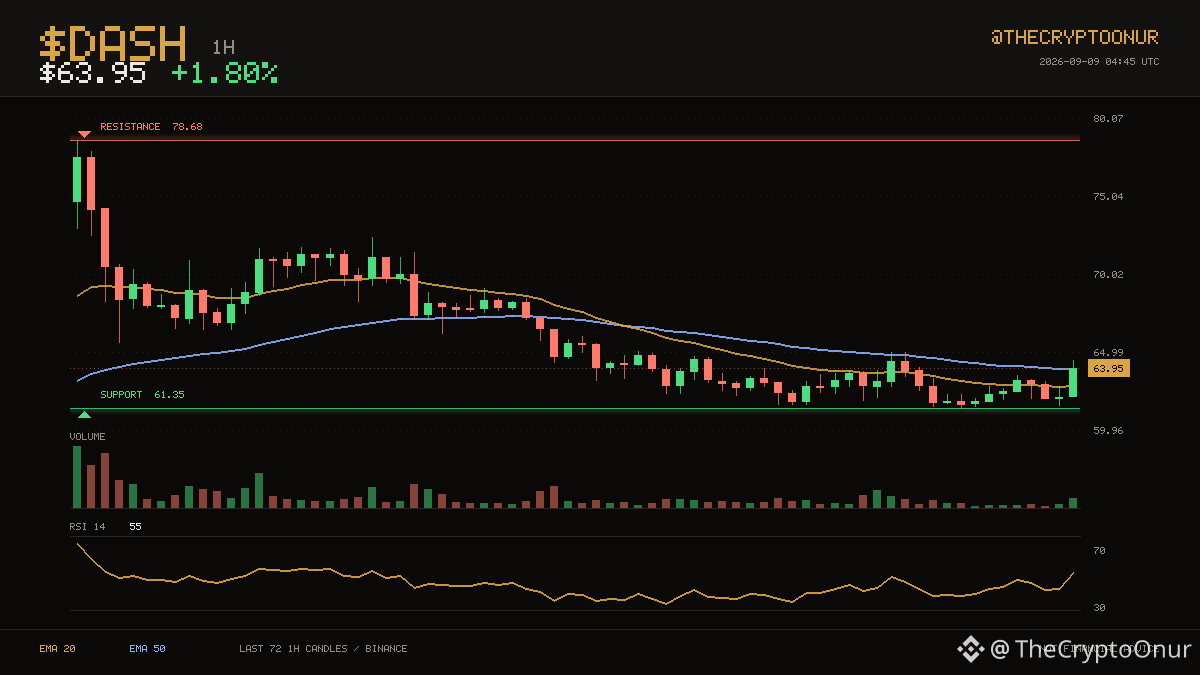
$63.95 mantém $DASH no lado mais forte das suas médias horárias. A zona de $61.35 se manteve duas vezes nos últimos três dias e está sendo testada novamente. O preço está caindo no terço inferior dessa faixa. O piso está a 4,1% de distância e o teto não está nem perto. O 20 tem ficado abaixo do 50 por 33 candles. O RSI em 55 está neutro, então o momentum não está bloqueando um movimento para nenhum dos lados. No último dia, ele foi negociado entre $61.35 e $65.00, ficando agora perto do topo. A participação está fraca, em cerca de 0,4x do volume médio. Subiu 1,8% nas últimas 24 horas.
DYOR
$DASH #TechnicalAnalysis
$63.95 mantém $DASH no lado mais forte das suas médias horárias. A zona de $61.35 se manteve duas vezes nos últimos três dias e está sendo testada novamente. O preço está caindo no terço inferior dessa faixa. O piso está a 4,1% de distância e o teto não está nem perto. O 20 tem ficado abaixo do 50 por 33 candles. O RSI em 55 está neutro, então o momentum não está bloqueando um movimento para nenhum dos lados. No último dia, ele foi negociado entre $61.35 e $65.00, ficando agora perto do topo. A participação está fraca, em cerca de 0,4x do volume médio. Subiu 1,8% nas últimas 24 horas.
DYOR
$DASH #TechnicalAnalysis

🚨 $SOPH /ALERTA DE SHORT SETUP EM USDT – ZONA DE SOBRAcomprado! 📉
$SOPH imprimiu um movimento parabólico agressivo com um grande aumento de volume, atingindo a resistência por volta de US$ 0.0139. Com o RSI de 6 períodos pairando em um extremo 98,44, uma forte reversão à média (pull-back) parece estar bem montada!
Aqui vai o plano de short scalping de alta probabilidade:
📊 Parâmetros da Operação
* Zona de Entrada: US$ 0.0125 - US$ 0.0135 (Procure exaustão / rejeição de candle vermelho nos frames de 15m/1h)
* Stop Loss (SL): US$ 0.0145 (Acima da máxima de 24h de US$ 0.0139 para controlar o risco)
* Alvos de Take Profit:
* TP 1: US$ 0.0098
* TP 2: US$ 0.0074
* TP 3: US$ 0.0051 (Base-chave da EMA)
💡 Principais Razões Técnicas
* RSI Extremamente Sobrecomprado: RSI(6) perto do limite máximo (>98) indica exaustão extrema.
* Estendido demais pelas Médias Móveis: O preço está muito esticado, bem acima da 7 EMA (US$ 0.0064) e da 25 EMA (US$ 0.0047).
* Grande Rejeição de Pavio: Forte pressão de venda perto de US$ 0.0139 indica realização de lucros por detentores iniciais.
⚠️ Aviso: Moeda de alta volatilidade! Sempre gerencie seu risco, use stops curtos e nunca use alavancagem excessiva.
Você está fazendo short nesse pump ou esperando por confirmação mais baixa? Me diga abaixo! 👇
#SOPHPricePrediction #cryptotradingpro #ShortSetup #BinanceSquare #TechnicalAnalysis
$SOPH imprimiu um movimento parabólico agressivo com um grande aumento de volume, atingindo a resistência por volta de US$ 0.0139. Com o RSI de 6 períodos pairando em um extremo 98,44, uma forte reversão à média (pull-back) parece estar bem montada!
Aqui vai o plano de short scalping de alta probabilidade:
📊 Parâmetros da Operação
* Zona de Entrada: US$ 0.0125 - US$ 0.0135 (Procure exaustão / rejeição de candle vermelho nos frames de 15m/1h)
* Stop Loss (SL): US$ 0.0145 (Acima da máxima de 24h de US$ 0.0139 para controlar o risco)
* Alvos de Take Profit:
* TP 1: US$ 0.0098
* TP 2: US$ 0.0074
* TP 3: US$ 0.0051 (Base-chave da EMA)
💡 Principais Razões Técnicas
* RSI Extremamente Sobrecomprado: RSI(6) perto do limite máximo (>98) indica exaustão extrema.
* Estendido demais pelas Médias Móveis: O preço está muito esticado, bem acima da 7 EMA (US$ 0.0064) e da 25 EMA (US$ 0.0047).
* Grande Rejeição de Pavio: Forte pressão de venda perto de US$ 0.0139 indica realização de lucros por detentores iniciais.
⚠️ Aviso: Moeda de alta volatilidade! Sempre gerencie seu risco, use stops curtos e nunca use alavancagem excessiva.
Você está fazendo short nesse pump ou esperando por confirmação mais baixa? Me diga abaixo! 👇
#SOPHPricePrediction #cryptotradingpro #ShortSetup #BinanceSquare #TechnicalAnalysis
Kaige 塏哥:
很好

Ver tradução
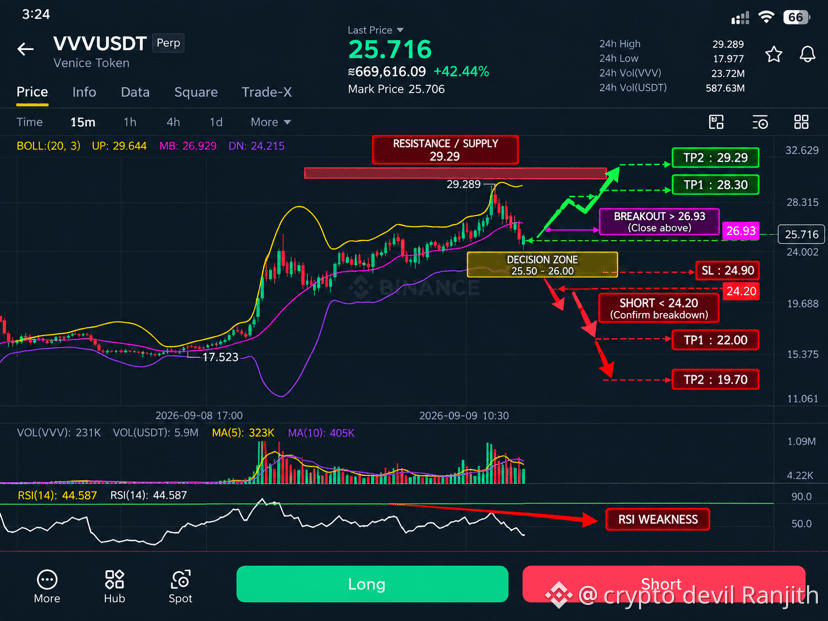
📊 VVV/USDT — 15M Setup
VVV has made a strong +42% move, but momentum is now cooling. ⚠️
Key levels I’m watching:
🟢 Bullish confirmation: 15M close above 26.93
🎯 TP1: 28.30
🎯 TP2: 29.29
🟡 Decision zone: 25.50–26.00
🔴 Bearish confirmation: 15M close below 24.20
🎯 TP1: 22.00
🎯 TP2: 19.70
📉 RSI ~44.6 → momentum has weakened.
My rule: Don’t FOMO after a +42% move.
Wait for the breakout or breakdown to confirm.
Which side are you watching — LONG 🟢 or SHORT 🔴?
#VVV #VVVUSDT #Binance #crypto #trading #TechnicalAnalysis #Futures
VVV has made a strong +42% move, but momentum is now cooling. ⚠️
Key levels I’m watching:
🟢 Bullish confirmation: 15M close above 26.93
🎯 TP1: 28.30
🎯 TP2: 29.29
🟡 Decision zone: 25.50–26.00
🔴 Bearish confirmation: 15M close below 24.20
🎯 TP1: 22.00
🎯 TP2: 19.70
📉 RSI ~44.6 → momentum has weakened.
My rule: Don’t FOMO after a +42% move.
Wait for the breakout or breakdown to confirm.
Which side are you watching — LONG 🟢 or SHORT 🔴?
#VVV #VVVUSDT #Binance #crypto #trading #TechnicalAnalysis #Futures

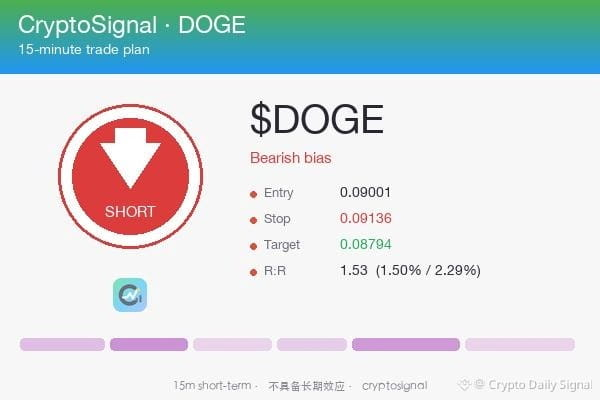
$DOGE — Estou apagando esta configuração, pessoal. Está pegajosa demais perto daquele limite superior. Qualquer impulso que eu faço até o teto da consolidação está sendo rebatido com esses longos pavios superiores, rejeição direta da oferta para cima. O momentum está estável, sim, mas as velas de rejeição gritam “não vai subir hoje”. Vou ficar vendido até romper falhando esse topo da faixa, limpo.
Plano (apenas 15m): entrada ~0.09001 · SL 0.09136 · TP 0.08794 · R:R 1.53
Apenas 15m — não é uma call de swing.
#TechnicalAnalysis
Plano (apenas 15m): entrada ~0.09001 · SL 0.09136 · TP 0.08794 · R:R 1.53
Apenas 15m — não é uma call de swing.
#TechnicalAnalysis
Ver tradução
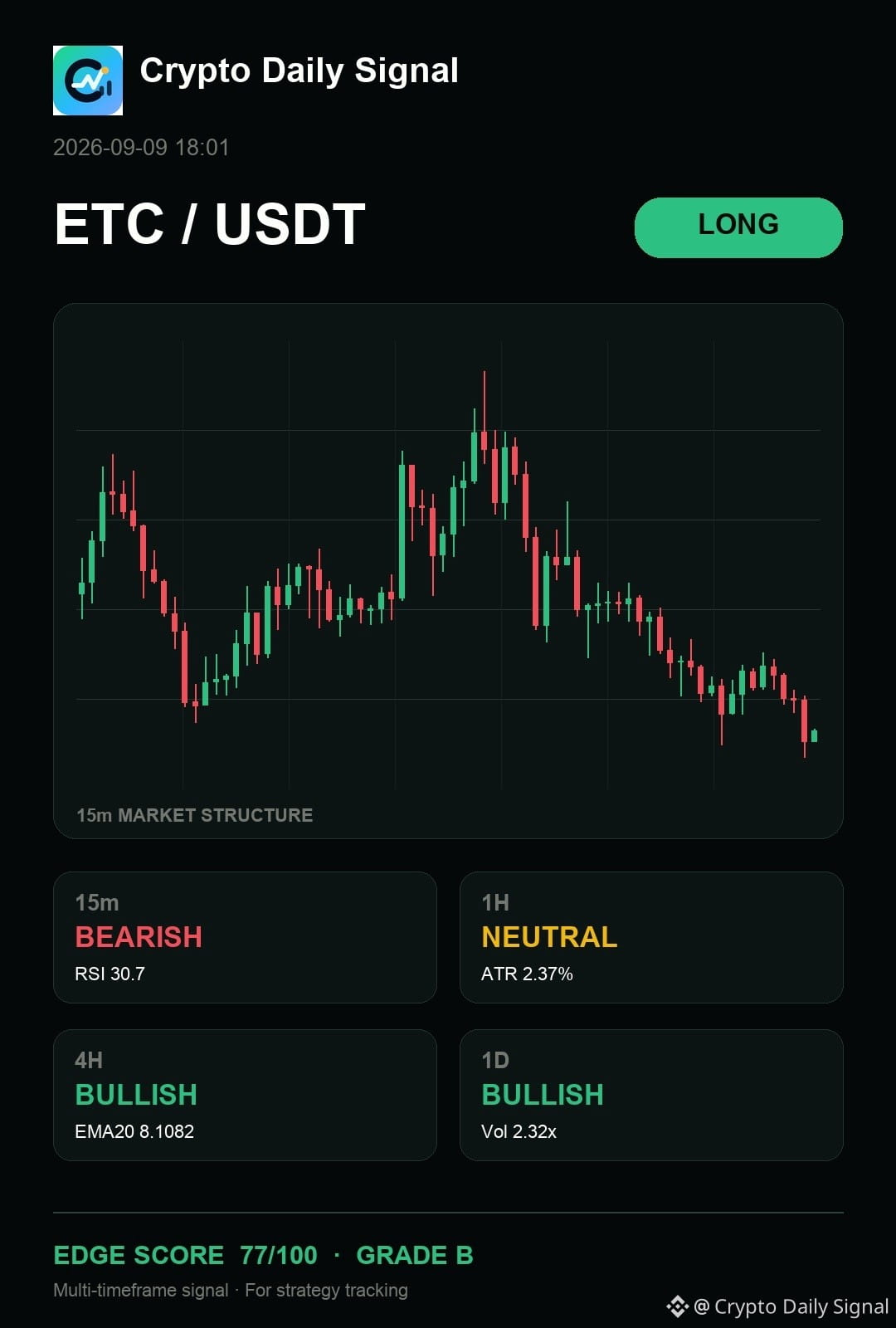
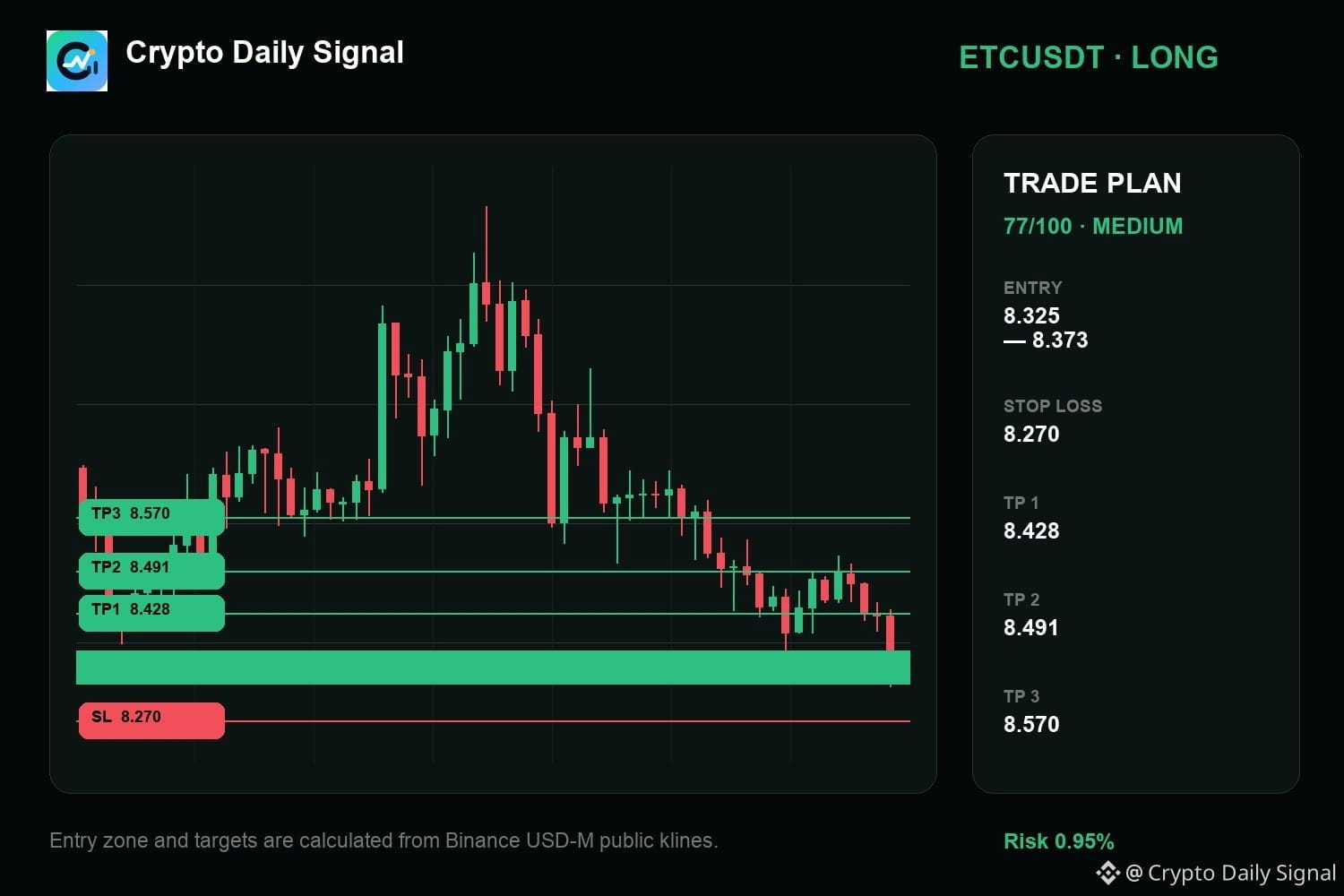
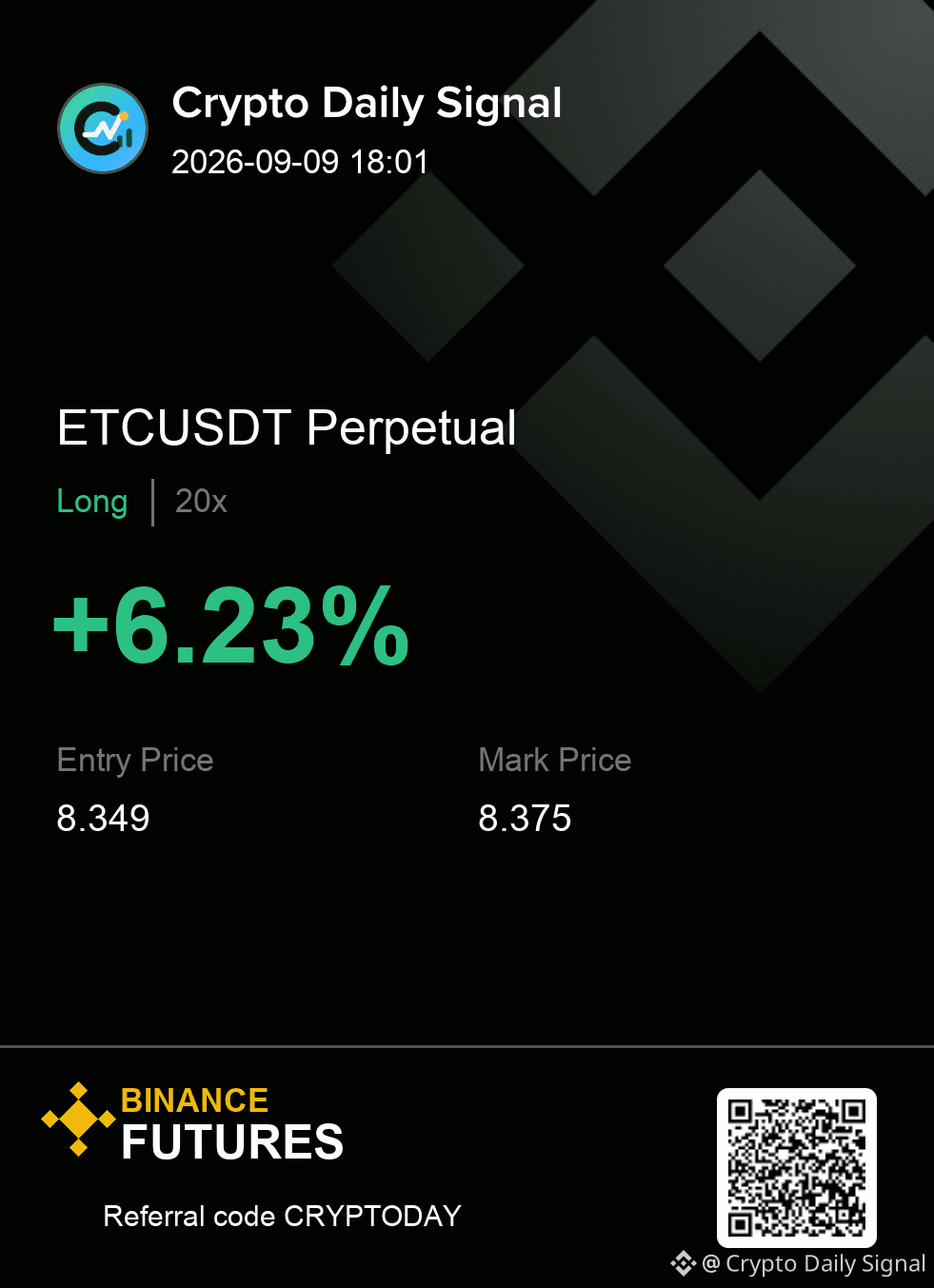
$ETC — bro, here's my read: it is a patience trade on the long side because the overall trend looks bullish across longer timeframes. Price is respecting the bottom edge of the recent grouping, which suggests support remains in place. For this to get stronger, we'd need to see a solid break past that immediate short-term resistance level. If it drops below the established range floor, the structure becomes weaker.
The map is useful only while the invalidation remains intact.
ETCUSDT LONG map
Entry → 8.325 - 8.373
SL → 8.270
TP → 8.428 · 8.491 · 8.570
#TechnicalAnalysis
The map is useful only while the invalidation remains intact.
ETCUSDT LONG map
Entry → 8.325 - 8.373
SL → 8.270
TP → 8.428 · 8.491 · 8.570
#TechnicalAnalysis
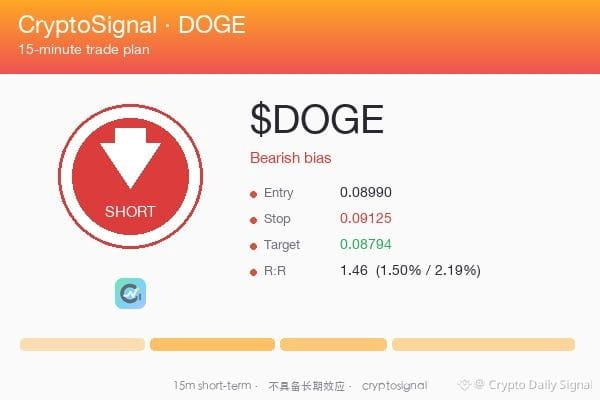
$DOGE olha pessoal, estou desvanecendo esta consolidação. O preço continua levando umas pancadas naquele limite superior de faixa, várias vezes agora. E a última vela teve uma sombra superior enorme, mostrando uma pressão de venda real bem no topo. Os indicadores de momentum de curto prazo estão apenas achatados/flat, sem convicção de alta aqui. Estou preparando uma posição short esperando que ele rompa abaixo do fundo da faixa de forma limpa. Se ele mantiver acima daquele topo de oscilação anterior, eu paro.
Plano (somente 15m): entrada ~0.08990 · SL 0.09125 · TP 0.08794 · R:R 1.46
Somente 15m — não é um call de swing.
#TechnicalAnalysis
Plano (somente 15m): entrada ~0.08990 · SL 0.09125 · TP 0.08794 · R:R 1.46
Somente 15m — não é um call de swing.
#TechnicalAnalysis
🟢 $PEPE · 1H
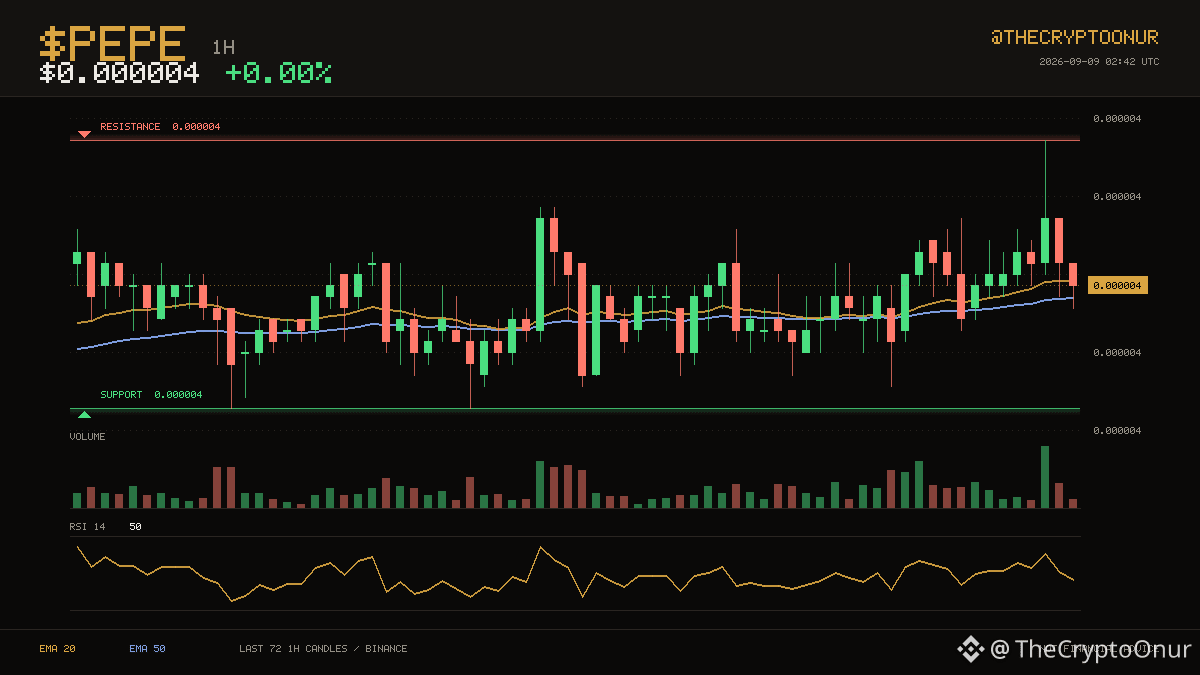
A US$ 0.000004, $PEPE está bem no meio das suas médias horárias. US$ 0.000004 no lado baixo e US$ 0.000004 no lado alto contêm os últimos três dias. Isso coloca o preço no meio da faixa. Isso é 3,6% até o teto e 3,0% até o piso. O 20 tem permanecido acima do 50 por um bom tempo. O RSI em 50 é neutro, então o momentum não está bloqueando uma movimentação para nenhum dos lados. No último dia, ele foi negociado entre US$ 0.000004 e US$ 0.000004, ficando agora em torno do meio. O volume de negociações é pouco marcante, rodando a 0,9x da média recente. Lateralizado nas últimas 24 horas.
DYOR
$PEPE #TechnicalAnalysis
A US$ 0.000004, $PEPE está bem no meio das suas médias horárias. US$ 0.000004 no lado baixo e US$ 0.000004 no lado alto contêm os últimos três dias. Isso coloca o preço no meio da faixa. Isso é 3,6% até o teto e 3,0% até o piso. O 20 tem permanecido acima do 50 por um bom tempo. O RSI em 50 é neutro, então o momentum não está bloqueando uma movimentação para nenhum dos lados. No último dia, ele foi negociado entre US$ 0.000004 e US$ 0.000004, ficando agora em torno do meio. O volume de negociações é pouco marcante, rodando a 0,9x da média recente. Lateralizado nas últimas 24 horas.
DYOR
$PEPE #TechnicalAnalysis
Ver tradução
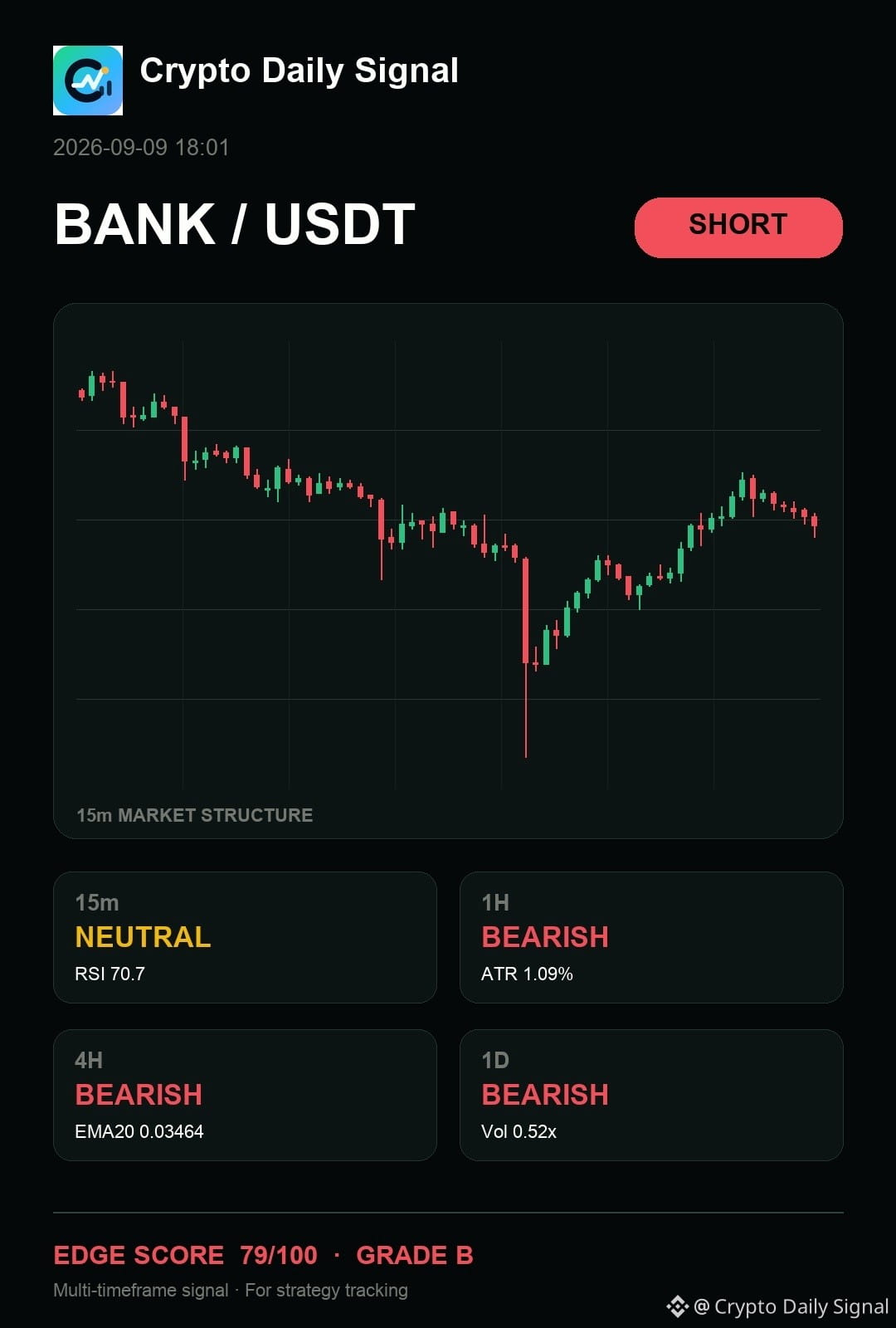
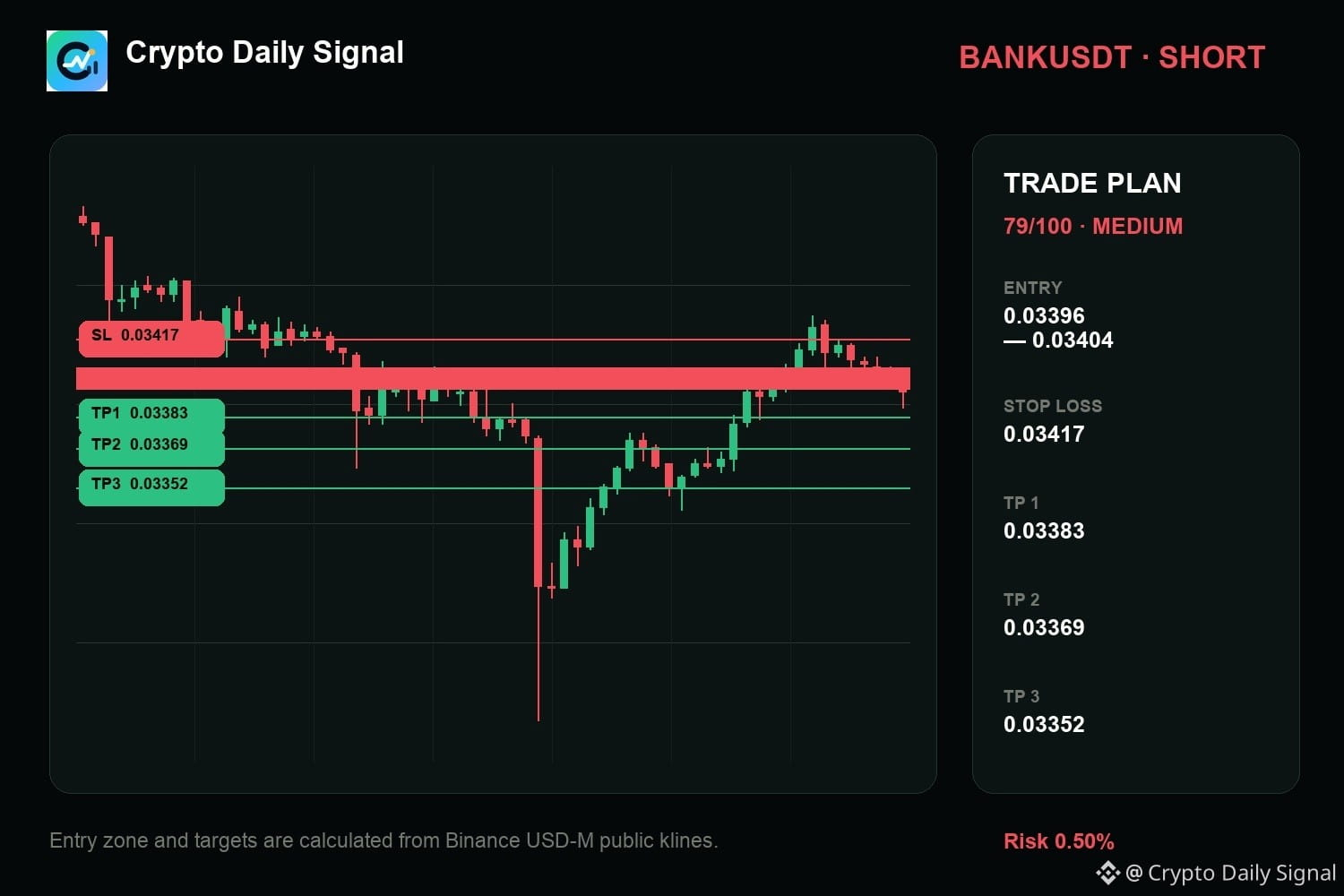
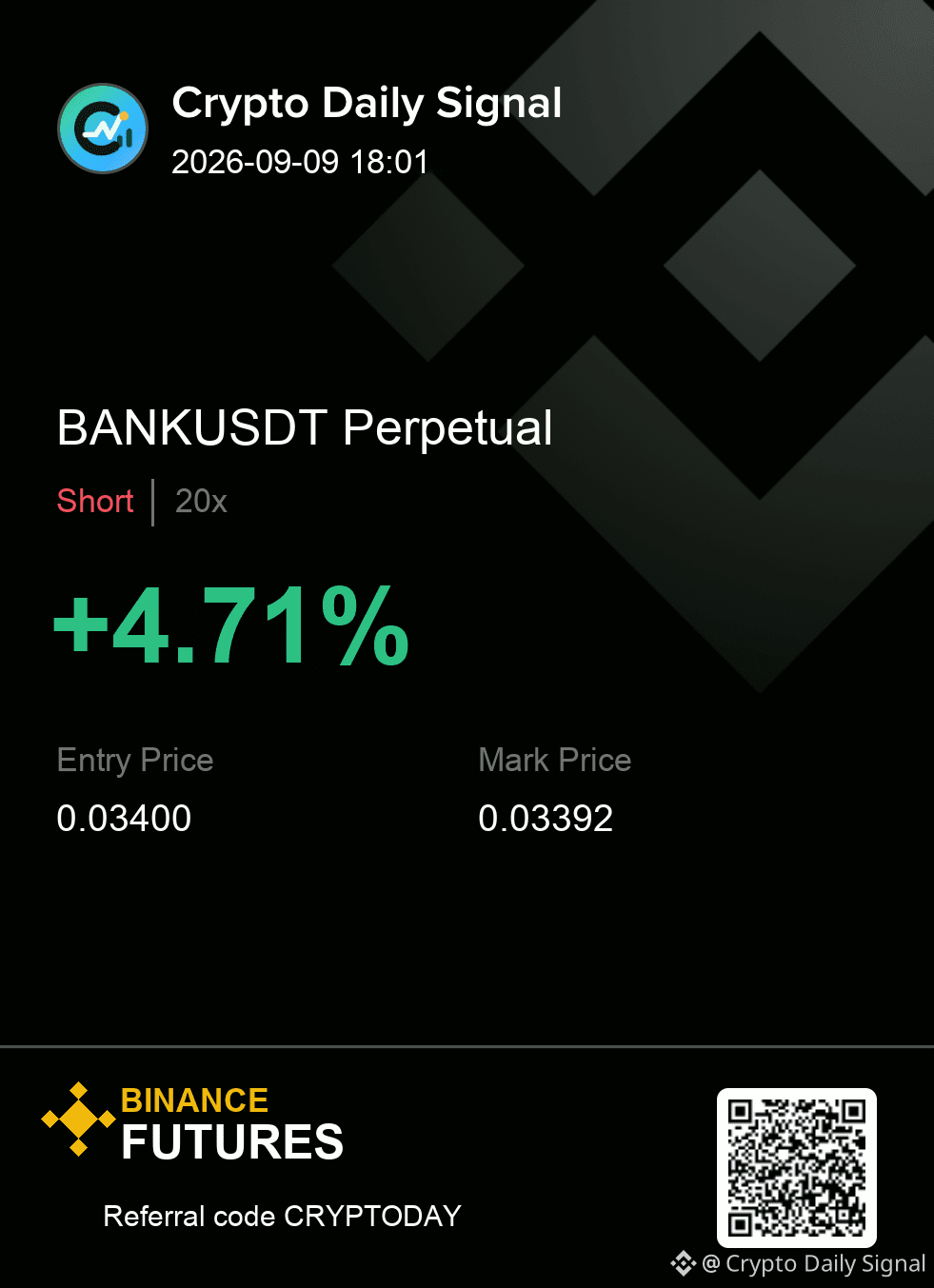
$BANK has not invalidated the short case because the price action remains stuck inside a falling channel. The latest hourly candle shows a solid rejection near the upper limit of that range. A true move down would require a convincing close below the established range bottom on a bearish candle.
SHORT plan for BANKUSDT
0.03396 - 0.03404 entry | 0.03417 stop
0.03383 → 0.03369 → 0.03352
Confirmation first or early entry — which side of that trade-off are you on?
#TechnicalAnalysis
SHORT plan for BANKUSDT
0.03396 - 0.03404 entry | 0.03417 stop
0.03383 → 0.03369 → 0.03352
Confirmation first or early entry — which side of that trade-off are you on?
#TechnicalAnalysis

🚨 ESTE CENÁRIO ESTÁ FICANDO PERIGOSAMENTE INTERESSANTE! 🚨
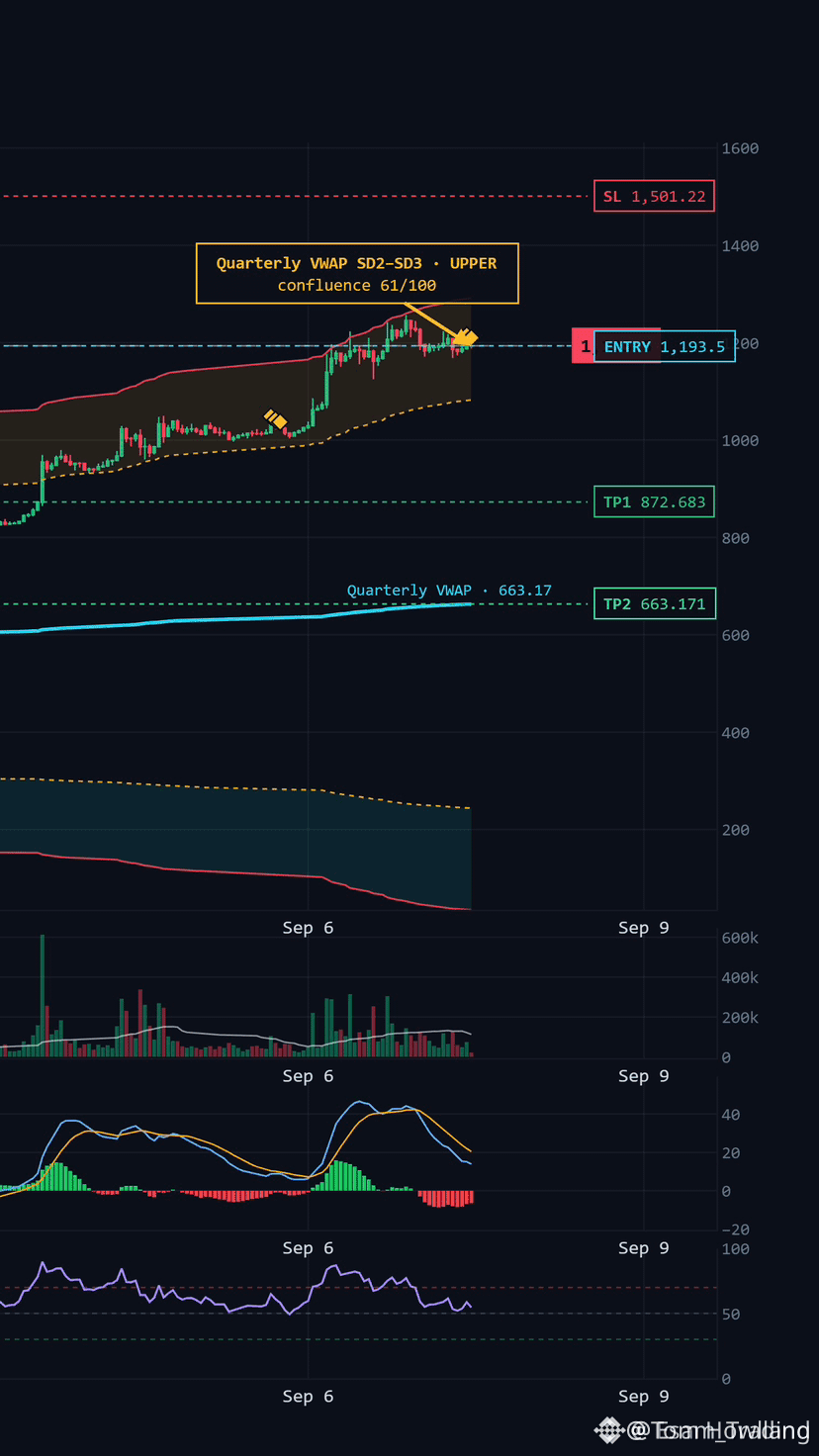
O preço está bem perto da zona de entrada de US$ 1.193, enquanto o momentum começa a enfraquecer. 👀
🎯 Entrada: US$ 1.193,5
🛑 SL: US$ 1.501,2
🔥 TP1: US$ 872,7
💥 TP2: US$ 663,2
O gráfico mostra uma possível rejeição do confluente superior do Quarterly VWAP — mas a confirmação real vem se os vendedores empurrarem o preço abaixo do suporte-chave.
Uma quebra pode fazer este gráfico entrar em modo de pânico total. 📉⚡
Os touros vão defender… ou o TP1 está chamando? 👀
#Crypto #Trading #Altcoins #TechnicalAnalysis #CryptoTrading #BTC #Markets
O preço está bem perto da zona de entrada de US$ 1.193, enquanto o momentum começa a enfraquecer. 👀
🎯 Entrada: US$ 1.193,5
🛑 SL: US$ 1.501,2
🔥 TP1: US$ 872,7
💥 TP2: US$ 663,2
O gráfico mostra uma possível rejeição do confluente superior do Quarterly VWAP — mas a confirmação real vem se os vendedores empurrarem o preço abaixo do suporte-chave.
Uma quebra pode fazer este gráfico entrar em modo de pânico total. 📉⚡
Os touros vão defender… ou o TP1 está chamando? 👀
#Crypto #Trading #Altcoins #TechnicalAnalysis #CryptoTrading #BTC #Markets
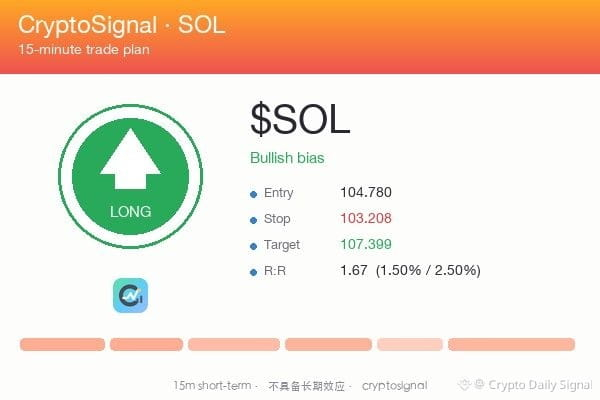
$SOL — leitura rápida: longa. Cara, isso quicou limpo de novo fora do piso da faixa. Uma sequência de mínimas mais altas formando bem ali perto do suporte. Além disso, aquela última vela tinha uma sombra inferior enorme, mostrando que os compradores definitivamente apareceram na parte de baixo. A inclinação da MM (média móvel) também está achatando, sugerindo que estabilizou no lado de baixo. Estou comprado aqui esperando aquele fechamento decisivo acima da resistência. Mas se cair abaixo do piso da faixa, eu saio.
Plano (somente 15m): entrada ~104.780 · SL 103.208 · TP 107.399 · R:R 1.67
Somente 15m — não é uma chamada de swing.
#TechnicalAnalysis
Plano (somente 15m): entrada ~104.780 · SL 103.208 · TP 107.399 · R:R 1.67
Somente 15m — não é uma chamada de swing.
#TechnicalAnalysis

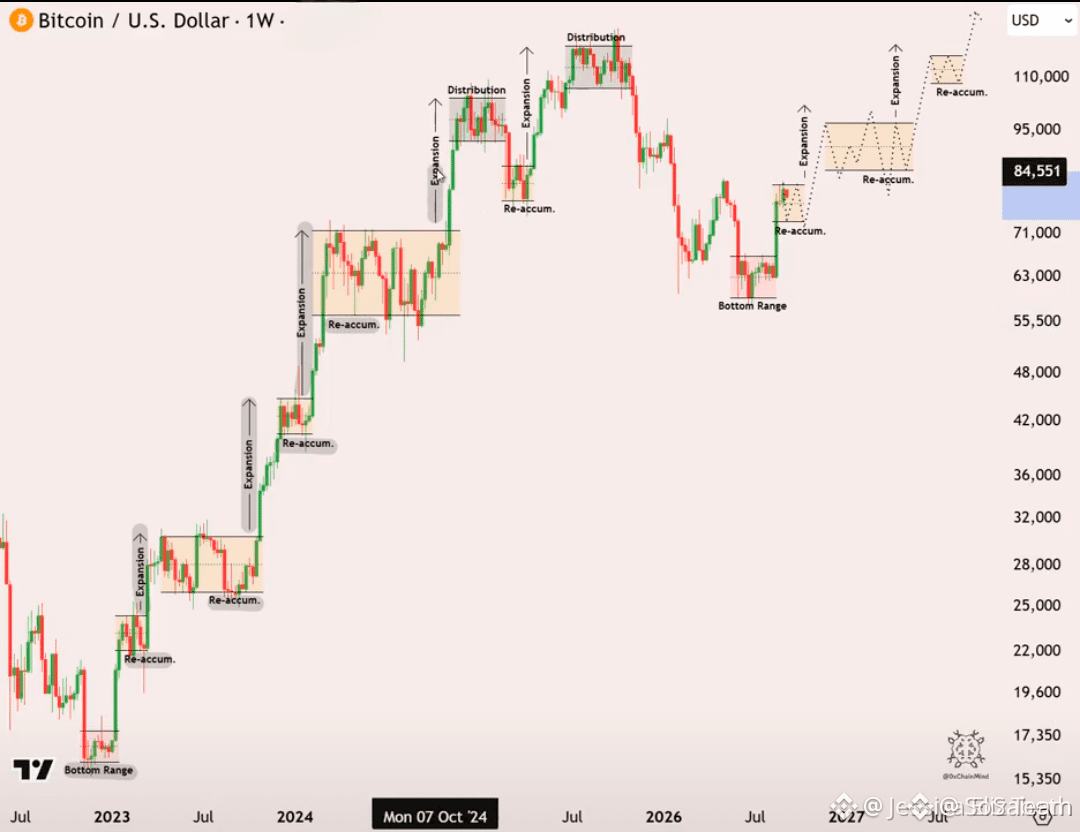
Imagine isto: no fim de 2019, o Bitcoin caiu abaixo da sua média móvel de 50 semanas e todo o cronograma entrou em pânico, presumindo que o ciclo tivesse tido um fim precoce.
Ver um nível crucial de suporte semanal se romper é o pesadelo de todo trader, porque ninguém quer ficar com sacos de pontos nas mãos durante um sangramento prolongado. A vontade de vender em pânico bem antes de uma retomada estrutural já custou mais carteiras a mais pessoas do que os mercados de baixa jamais fizeram.
Acabamos de ver $BTC voltar a cair abaixo da MM de 50W, repetindo exatamente os “abalos” no meio do ciclo observados durante corridas de alta anteriores. Historicamente, mergulhar abaixo desta linha não é automaticamente um bilhete para um inverno profundo. Em ciclos passados, um fechamento decisivo de vela semanal de volta acima da média foi o gatilho exato necessário para restaurar o impulso de alta e reacender ralis em grandes ativos como $ETH .
A armadilha real aqui é ser “picotado” enquanto o mercado testa a paciência de todos. Quando médias móveis se rompem temporariamente, varreduras de liquidez frequentemente punem posições curtas iniciais antes de confirmar a verdadeira tendência macro, muito parecido com o reset estrutural que vimos em $SOL antes da sua expansão.
Você acha que vamos recuperar a média semanal antes de o mês acabar, ou estamos seguindo para uma acumulação mais profunda?
#Bitcoin #CryptoTrading #AnáliseTécnica
Ver um nível crucial de suporte semanal se romper é o pesadelo de todo trader, porque ninguém quer ficar com sacos de pontos nas mãos durante um sangramento prolongado. A vontade de vender em pânico bem antes de uma retomada estrutural já custou mais carteiras a mais pessoas do que os mercados de baixa jamais fizeram.
Acabamos de ver $BTC voltar a cair abaixo da MM de 50W, repetindo exatamente os “abalos” no meio do ciclo observados durante corridas de alta anteriores. Historicamente, mergulhar abaixo desta linha não é automaticamente um bilhete para um inverno profundo. Em ciclos passados, um fechamento decisivo de vela semanal de volta acima da média foi o gatilho exato necessário para restaurar o impulso de alta e reacender ralis em grandes ativos como $ETH .
A armadilha real aqui é ser “picotado” enquanto o mercado testa a paciência de todos. Quando médias móveis se rompem temporariamente, varreduras de liquidez frequentemente punem posições curtas iniciais antes de confirmar a verdadeira tendência macro, muito parecido com o reset estrutural que vimos em $SOL antes da sua expansão.
Você acha que vamos recuperar a média semanal antes de o mês acabar, ou estamos seguindo para uma acumulação mais profunda?
#Bitcoin #CryptoTrading #AnáliseTécnica
Ver tradução
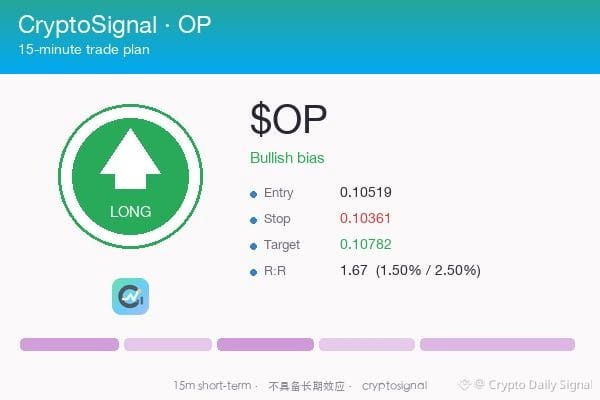
$OP tbh, this is a long setup for me. It found that range floor recently and threw up a heavy rejection wick, so buyers showed up hard there. Plus, the last few candles are setting up higher lows, which is exactly what I wanna see for a break. I'm watching that consolidation range for a sustained move up. If it dips below the floor, I'm outta here fast.
Plan (15m only): entry ~0.10519 · SL 0.10361 · TP 0.10782 · R:R 1.67
15m only — not a swing call.
#TechnicalAnalysis
Plan (15m only): entry ~0.10519 · SL 0.10361 · TP 0.10782 · R:R 1.67
15m only — not a swing call.
#TechnicalAnalysis
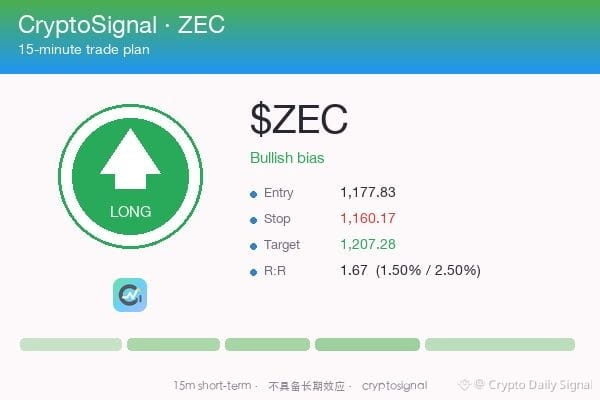
$ZEC — Eu gosto do movimento aqui, olha. Consolidação no hold, mas eu vejo um repique vindo desse piso da faixa. Tivemos um lower low mais alto surgindo em comparação com o último swing low dentro dessa banda. Além disso, os indicadores de momentum acabaram de recuar em direção à média, o que é exatamente o que eu quero ver antes do próximo impulso. Estou esperando um fechamento bem limpo acima da pequena máxima local do swing para confirmar o repique. Se cair abaixo do piso da faixa, eu vou sair imediatamente.
Plano (apenas 15m): entrada ~1,177.83 · SL 1,160.17 · TP 1,207.28 · R:R 1.67
Apenas 15m — não é uma chamada de swing.
#TechnicalAnalysis
Plano (apenas 15m): entrada ~1,177.83 · SL 1,160.17 · TP 1,207.28 · R:R 1.67
Apenas 15m — não é uma chamada de swing.
#TechnicalAnalysis

Ver tradução
XAUUSDT Prediction: Bullish V-Reversal Is Here!
What a massive comeback! After dumping to a 24-hour low of $4,345.66, XAUUSDT has triggered an explosive V-shaped recovery up to $4,401.23, successfully breaking above both MA(7) and MA(99) on the 15m chart. If the bulls can hold this momentum and break the immediate $4,407 resistance, we predict a fast rally back toward the recent high of $4,446.54. However, failing to sustain this zone could trigger a sharp retest of the $4,385 support level.
#XAUUSDT #GoldTrading #TechnicalAnalysis #Write2Earn #cryptotrading
What a massive comeback! After dumping to a 24-hour low of $4,345.66, XAUUSDT has triggered an explosive V-shaped recovery up to $4,401.23, successfully breaking above both MA(7) and MA(99) on the 15m chart. If the bulls can hold this momentum and break the immediate $4,407 resistance, we predict a fast rally back toward the recent high of $4,446.54. However, failing to sustain this zone could trigger a sharp retest of the $4,385 support level.
#XAUUSDT #GoldTrading #TechnicalAnalysis #Write2Earn #cryptotrading


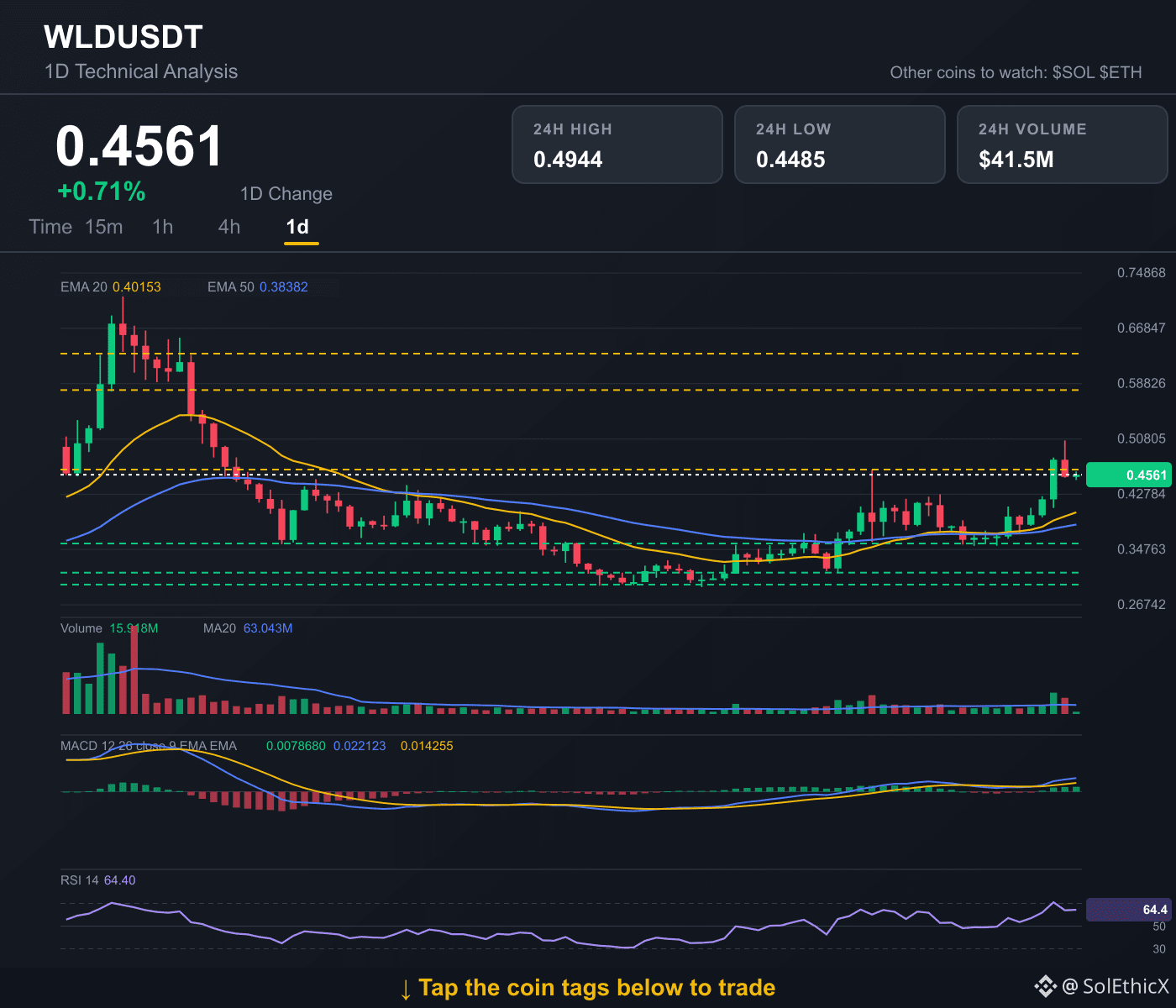
$WLD 1D MOMENTUM ENCONTRA RESISTÊNCIA 👀
O gráfico continua tecnicamente forte, pois 0.4561 permanece acima da EMA20 0.4015 e da EMA50 0.3838. O momentum segue positivo com RSI 64.4 e MACD 0.02212 acima do sinal 0.01425. O preço pode enfrentar pressão de venda perto de 0.4636, 0.5789 e 0.6317. Os principais níveis de queda permanecem em 0.3564, 0.314 e 0.2967.
Vale observar como $SOL e $ETH se comportam também. 🔍
📈 Toque abaixo para ver a configuração técnica ao vivo.
#TechnicalAnalysis #CryptoAnalysis #BinanceSquare
$WLD $SOL $ETH
O gráfico continua tecnicamente forte, pois 0.4561 permanece acima da EMA20 0.4015 e da EMA50 0.3838. O momentum segue positivo com RSI 64.4 e MACD 0.02212 acima do sinal 0.01425. O preço pode enfrentar pressão de venda perto de 0.4636, 0.5789 e 0.6317. Os principais níveis de queda permanecem em 0.3564, 0.314 e 0.2967.
Vale observar como $SOL e $ETH se comportam também. 🔍
📈 Toque abaixo para ver a configuração técnica ao vivo.
#TechnicalAnalysis #CryptoAnalysis #BinanceSquare
$WLD $SOL $ETH

Ver tradução
$BTC
BTC Price Action: Sideways or Set-up?
$BTC is sitting at **$78,920**, showing minimal volatility with a +0.13% increase.
With the price hovering near this range, the market seems to be building a base. Keep an eye on the volume—a breakout could be imminent if we see a spike.
Current resistance: $79,500
Support zone: $78,200
Are you long or short? Let me know in the comments! 📈📉
#BTC #TechnicalAnalysis #CryptoNews #trading
BTC Price Action: Sideways or Set-up?
$BTC is sitting at **$78,920**, showing minimal volatility with a +0.13% increase.
With the price hovering near this range, the market seems to be building a base. Keep an eye on the volume—a breakout could be imminent if we see a spike.
Current resistance: $79,500
Support zone: $78,200
Are you long or short? Let me know in the comments! 📈📉
#BTC #TechnicalAnalysis #CryptoNews #trading

Ver tradução
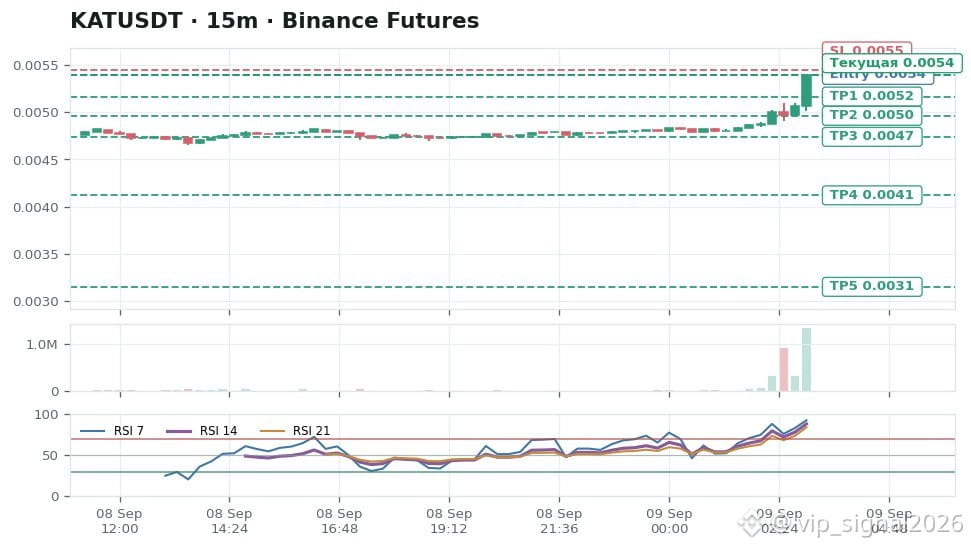
$KAT SHORT
Продавцы пока удерживают инициативу, и основной сценарий остаётся направленным вниз. Продолжение движения выглядит предпочтительнее, но рынок может дать встречную реакцию перед следующей попыткой.
🏁Вход: 0.005397$
💰Цель 1: 0.00516752$
💰Цель 2: 0.00496308$
💰Цель 3: 0.00474005$
💰Цель 4: 0.00411969$
💰Цель 5: 0.00314876$
⛔️Стоп: 0.0054528$
📈 RSI14: m1 78.5 • m5 88.1 • m15 88.5 • m30 89.3
📊 VOL: m1 $191.7K • m5 $518.4K • m15 $1.3M • m30 $1.3M
🧲 OI: now $3.1M • 5m +4.3% • 15m +3.5% • 30m +7.8%
⚠️ Это не финансовая рекомендация. Торгуйте на свой страх и риск. DYOR.
#KAT #LongSetup #TechnicalAnalysis 📈
$KAT
Продавцы пока удерживают инициативу, и основной сценарий остаётся направленным вниз. Продолжение движения выглядит предпочтительнее, но рынок может дать встречную реакцию перед следующей попыткой.
🏁Вход: 0.005397$
💰Цель 1: 0.00516752$
💰Цель 2: 0.00496308$
💰Цель 3: 0.00474005$
💰Цель 4: 0.00411969$
💰Цель 5: 0.00314876$
⛔️Стоп: 0.0054528$
📈 RSI14: m1 78.5 • m5 88.1 • m15 88.5 • m30 89.3
📊 VOL: m1 $191.7K • m5 $518.4K • m15 $1.3M • m30 $1.3M
🧲 OI: now $3.1M • 5m +4.3% • 15m +3.5% • 30m +7.8%
⚠️ Это не финансовая рекомендация. Торгуйте на свой страх и риск. DYOR.
#KAT #LongSetup #TechnicalAnalysis 📈
$KAT
Ver tradução
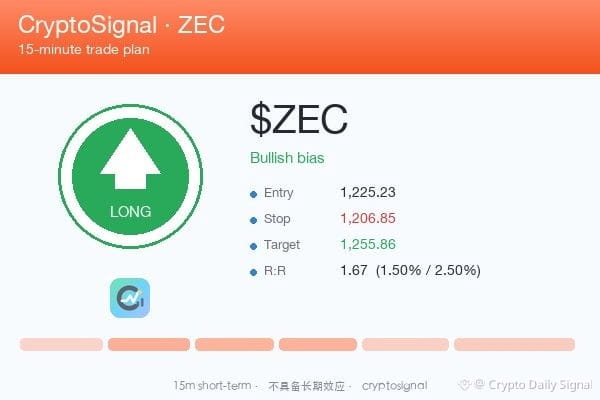
$ZEC — look guys, it is looking like it's setting up a bounce here. We just reclaimed that prior low back in the middle of the chop. Plus, you got this sequence of higher lows popping up, so short-term momentum feels like it's tilting up. Buyers are stepping in near that range floor. I like the long, waiting for a clean breakout above resistance. If it breaks, I'm in. If it drops back under the floor, I'm out fast.
Plan (15m only): entry ~1,225.23 · SL 1,206.85 · TP 1,255.86 · R:R 1.67
15m only — not a swing call.
#TechnicalAnalysis
Plan (15m only): entry ~1,225.23 · SL 1,206.85 · TP 1,255.86 · R:R 1.67
15m only — not a swing call.
#TechnicalAnalysis
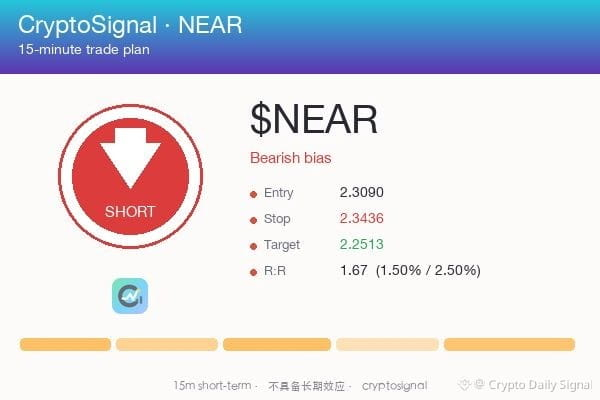
$NEAR — leitura rápida: curta. Olha, os vendedores estão aparecendo forte aqui. Múltiplas velas recentes estão com pavios superiores bem grandes, provando que a oferta acima está sólida. Além disso, há uma tendência real de formar topos mais baixos contra o último topo da oscilação. Vou ficar vendido nessa configuração se ela cair abaixo do piso da faixa. Tem que ficar de olho no fechamento abaixo desse piso para o gatilho.
Plano (apenas 15m): entrada ~2.3090 · SL 2.3436 · TP 2.2513 · R:R 1.67
Apenas 15m — não é uma chamada de swing.
#TechnicalAnalysis
Plano (apenas 15m): entrada ~2.3090 · SL 2.3436 · TP 2.2513 · R:R 1.67
Apenas 15m — não é uma chamada de swing.
#TechnicalAnalysis
Ver tradução
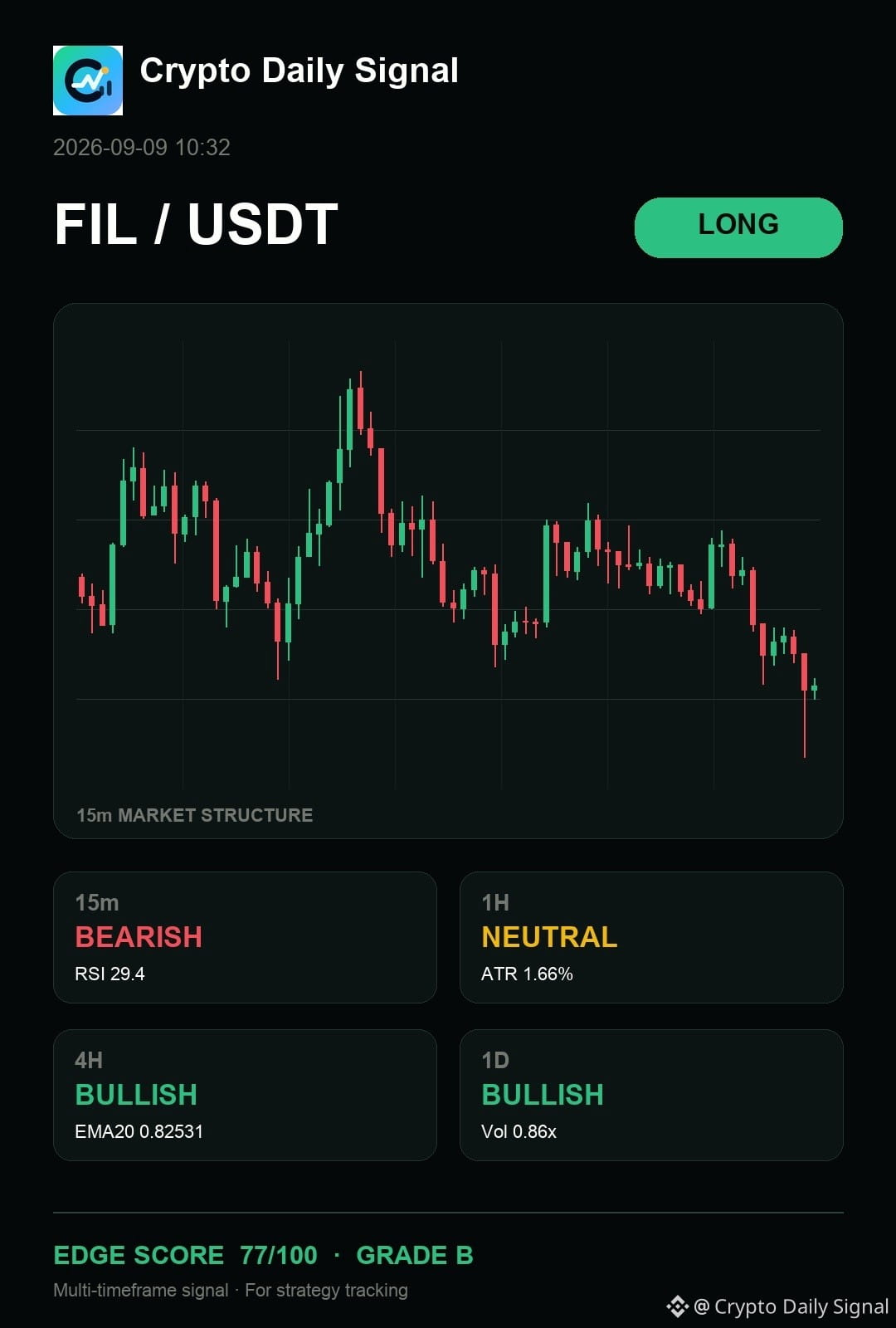
$FIL is a patience trade on the long side. Current price action stays tucked within a defined trading band. That strong lower wick shows buying stepping in at the lower boundary, even though the short-term movement is muted. The longer term view on both the four-hour and daily charts keeps the tilt bullish. A move above the recent peak in this range would confirm the upside thesis.
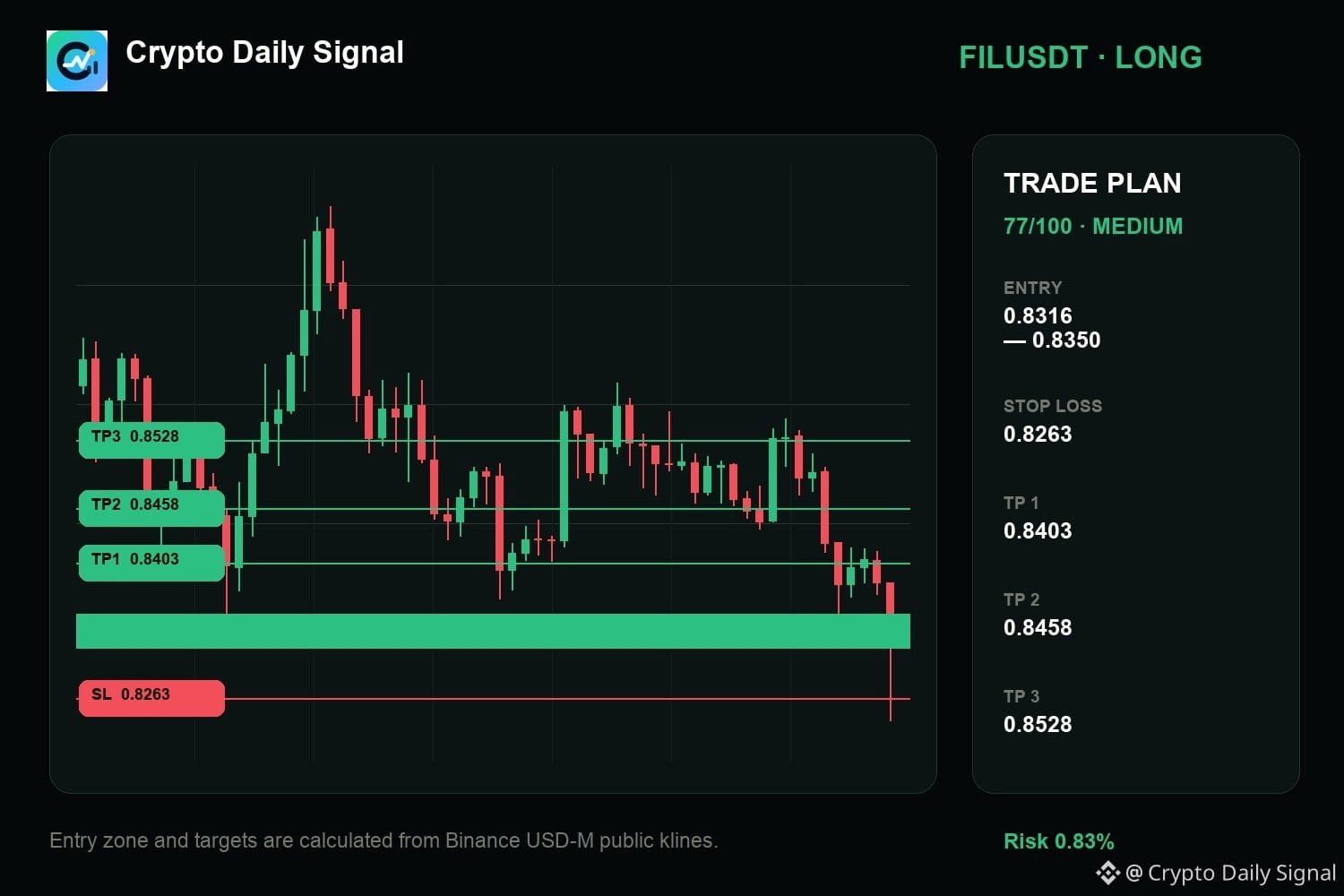
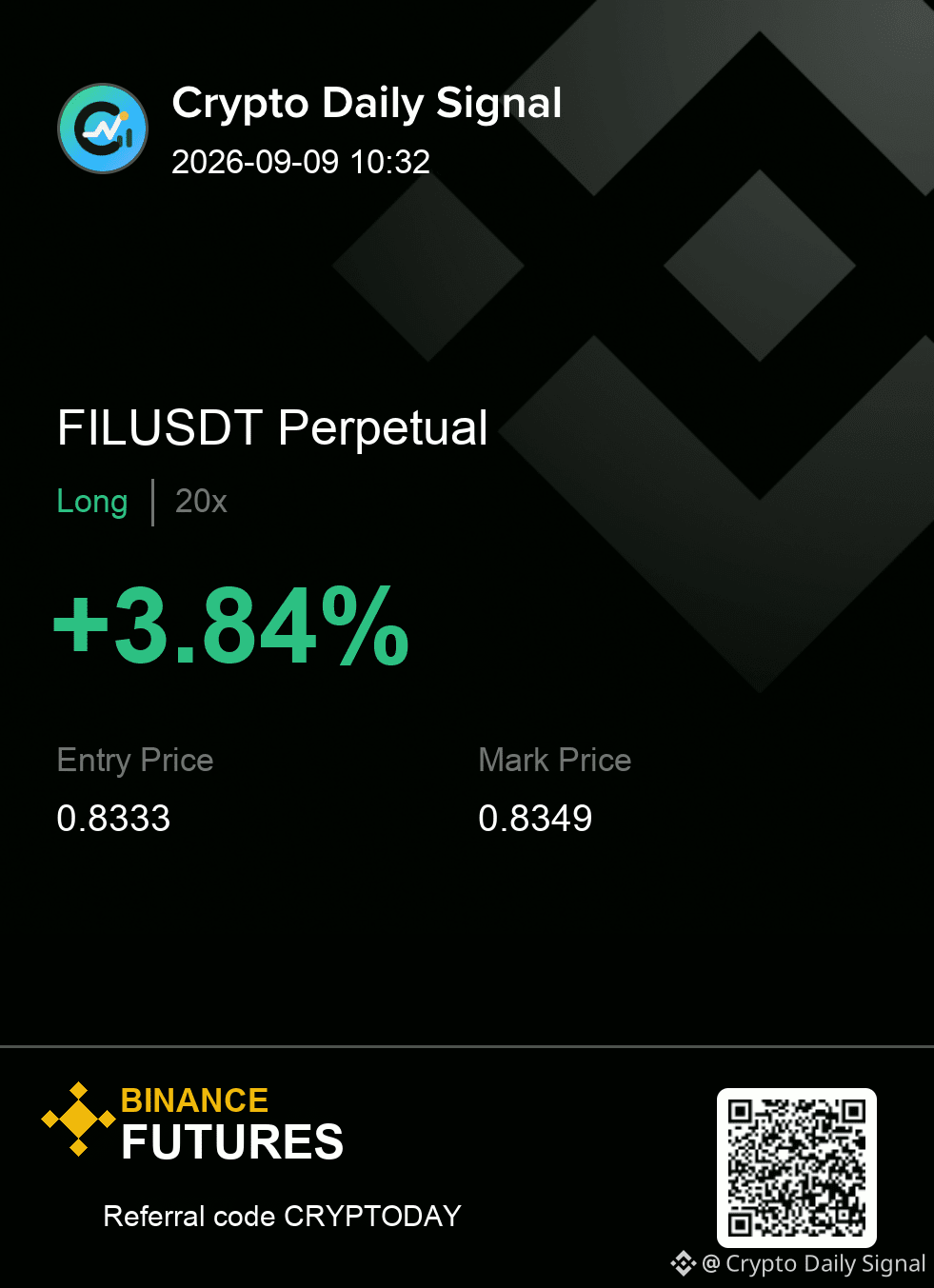
FILUSDT | LONG
Entry 0.8316 - 0.8350
Invalidation 0.8263
Targets 0.8403 / 0.8458 / 0.8528
#TechnicalAnalysis
FILUSDT | LONG
Entry 0.8316 - 0.8350
Invalidation 0.8263
Targets 0.8403 / 0.8458 / 0.8528
#TechnicalAnalysis
Inicia sessão para explorar mais conteúdos