

For a long time, I believed blockchain payments were easier to audit than traditional ones.
After all, everything is “on-chain”. Transparent. Immutable. Public.
What could be easier than that?
Then I tried to imagine a real finance team auditing hundreds of daily payments made through a blockchain network.
That’s when the illusion broke.
Because visibility is not the same as auditability.
And most blockchains confuse the two.
The moment I saw the real problem
In a company, auditing payments is not about seeing transactions.
It’s about answering simple questions quickly:
How much did we actually pay?
Why did this payment cost more than the previous one?
Do these numbers match our internal reports?
Can we prove this cost was correct?
On many networks, the honest answer is complicated.
Fees change depending on network activity.
Costs depend on external factors unrelated to the company.
Transactions that look identical end up costing different amounts.
From an explorer perspective, everything is visible.
From an accounting perspective, nothing is easy to justify.

When transparency becomes operational noise
Blockchains are great at showing what happened.
But finance teams don’t need raw data.
They need predictable data.
They need to explain costs to managers, auditors, and CFOs without saying:
“It depends on what the network was doing at that moment.”
That sentence alone is enough to break operational confidence.
Because now the payment is not a fixed business action.
It’s a variable technical event.
And variable events are hard to audit.
From explorers to explanations
This is where I realized something important.
Explorers are made for developers.
Audits are made for businesses.
And most chains are optimized for the first, not the second.
You can see every detail of a transaction, yet still struggle to answer the most basic question:
Why did this cost what it cost?
Why this is where Vanar started making sense to me
When I understood Vanar’s fixed fees and USD-denominated gas model through USDVanry, I didn’t see a technical feature.
I saw an audit solution.
Because now, identical actions always produce identical costs.
No external variables.
No surprises.
No explanations needed.
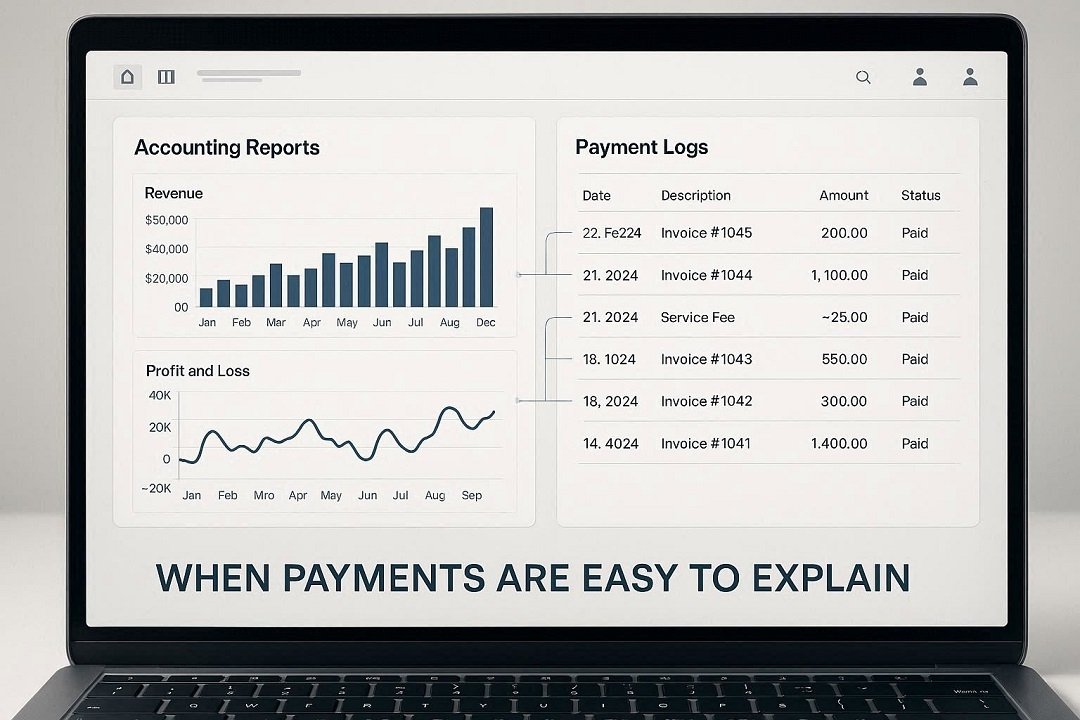
A finance team can look at a report and immediately understand why every number is there.
Not because the data is visible.
But because the behavior is consistent.
Conclusion
I used to think blockchain transparency made auditing easier.
Now I think the opposite.
Transparency without predictability creates operational noise.
What businesses really need is not to see everything.
They need payments that behave the same way every day, so nothing needs to be justified later.
That’s when I realized Vanar is not solving a blockchain problem.
It’s solving an audit problem.
