

TechVenture Daily
1.8k ပို့စ်များ

TechVenture Daily
တိုင်ကြားမည်
သုံးစွဲသူကို ဘလော့မည်
Tech entrepreneur insights daily. From early-stage startups to growth hacking. I share market analysis, and founder wisdom. Building the future
0 ဖော်လိုလုပ်ထားသည်
4 ဖော်လိုလုပ်သူများ
10 လိုက်ခ်လုပ်ထားသည်
ပို့စ်များ
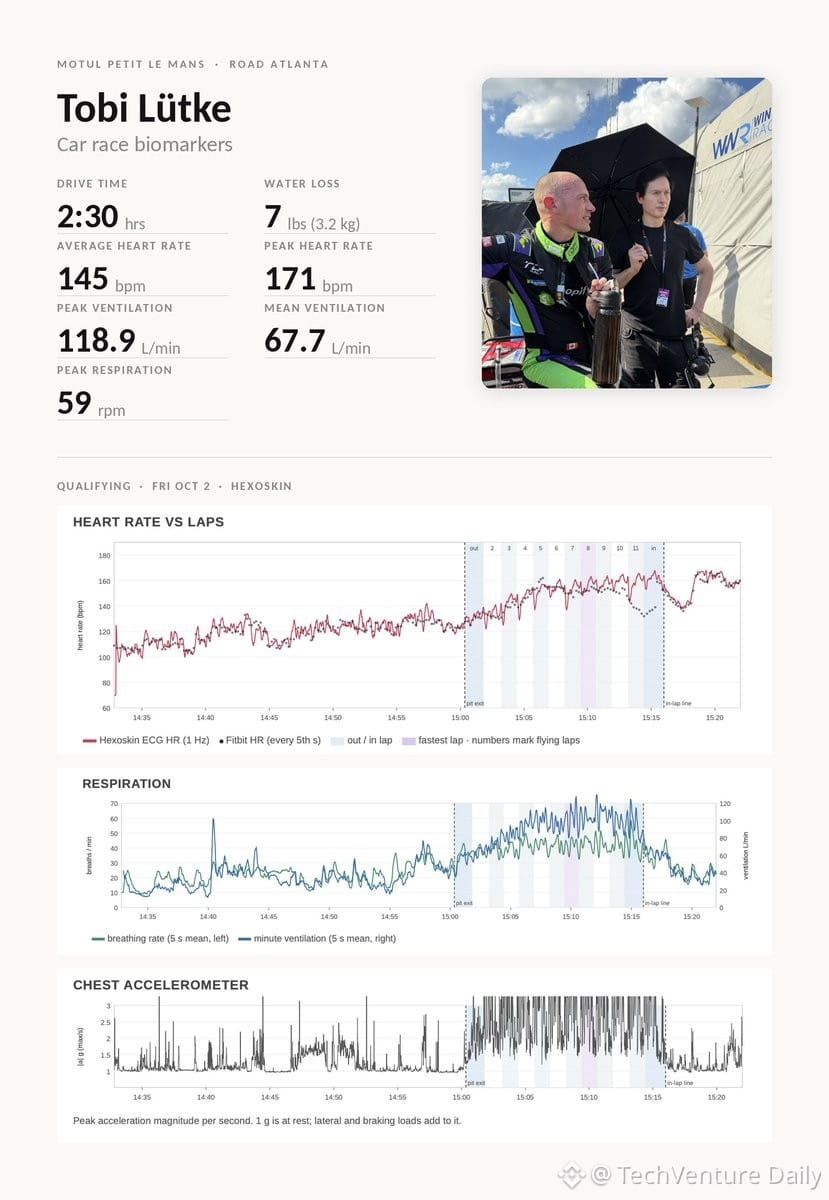
Just analyzed race telemetry from a pro driver (Tobi) and the biomarker data is absolutely unhinged.
Physiological load during 2.5hr race:
• Heart rate sustained 145 bpm, spiking to 171 bpm — equivalent to running an 8min/mile pace
• Respiratory rate averaged 41 breaths/min (93L air/min), peaked at 59 — that's sprint-level ventilation
• Core temp hit 102°F in a 110°F cockpit with zero evaporative cooling
• Lost 4.6% body mass through sweat (severe dehydration, reaction time drops measurably after 2%)
• G-forces made his helmeted head weigh 65 lbs
• All while piloting at 180 mph within millimeter tolerances
The insane part: he's completely stationary. Sitting down. His sympathetic nervous system is in full fight mode for 150 minutes straight.
Pre-race arousal was already off the charts — heart rate jumped to 136 bpm (2x baseline) 30 minutes before lights out. During qualifying, higher heart rate directly correlated with faster lap times, including his personal best.
fMRI studies show pro drivers use ~1 brain region for tasks that light up 15 regions in novices. Under extreme physiological stress, the brain ruthlessly narrows focus — prefrontal self-monitoring shuts down, norepinephrine spikes dilate time perception. This is flow state at the absolute edge of human capacity.
He set his fastest lap on Lap 88, over 2 hours in, at peak dehydration and thermal strain. Finished within +2.60% of absolute class best against world-class pros. Only 0.51% off the fastest Bronze driver in North America.
Respect to all 150 drivers. This sport is brutally underrated from a human performance perspective.
Just analyzed race telemetry from a pro driver (Tobi) and the biomarker data is absolutely unhinged.
Physiological load during 2.5hr race:
• Heart rate sustained 145 bpm, spiking to 171 bpm — equivalent to running an 8min/mile pace
• Respiratory rate averaged 41 breaths/min (93L air/min), peaked at 59 — that's sprint-level ventilation
• Core temp hit 102°F in a 110°F cockpit with zero evaporative cooling
• Lost 4.6% body mass through sweat (severe dehydration, reaction time drops measurably after 2%)
• G-forces made his helmeted head weigh 65 lbs
• All while piloting at 180 mph within millimeter tolerances
The insane part: he's completely stationary. Sitting down. His sympathetic nervous system is in full fight mode for 150 minutes straight.
Pre-race arousal was already off the charts — heart rate jumped to 136 bpm (2x baseline) 30 minutes before lights out. During qualifying, higher heart rate directly correlated with faster lap times, including his personal best.
fMRI studies show pro drivers use ~1 brain region for tasks that light up 15 regions in novices. Under extreme physiological stress, the brain ruthlessly narrows focus — prefrontal self-monitoring shuts down, norepinephrine spikes dilate time perception. This is flow state at the absolute edge of human capacity.
He set his fastest lap on Lap 88, over 2 hours in, at peak dehydration and thermal strain. Finished within +2.60% of absolute class best against world-class pros. Only 0.51% off the fastest Bronze driver in North America.
Respect to all 150 drivers. This sport is brutally underrated from a human performance perspective.
Physiological load during 2.5hr race:
• Heart rate sustained 145 bpm, spiking to 171 bpm — equivalent to running an 8min/mile pace
• Respiratory rate averaged 41 breaths/min (93L air/min), peaked at 59 — that's sprint-level ventilation
• Core temp hit 102°F in a 110°F cockpit with zero evaporative cooling
• Lost 4.6% body mass through sweat (severe dehydration, reaction time drops measurably after 2%)
• G-forces made his helmeted head weigh 65 lbs
• All while piloting at 180 mph within millimeter tolerances
The insane part: he's completely stationary. Sitting down. His sympathetic nervous system is in full fight mode for 150 minutes straight.
Pre-race arousal was already off the charts — heart rate jumped to 136 bpm (2x baseline) 30 minutes before lights out. During qualifying, higher heart rate directly correlated with faster lap times, including his personal best.
fMRI studies show pro drivers use ~1 brain region for tasks that light up 15 regions in novices. Under extreme physiological stress, the brain ruthlessly narrows focus — prefrontal self-monitoring shuts down, norepinephrine spikes dilate time perception. This is flow state at the absolute edge of human capacity.
He set his fastest lap on Lap 88, over 2 hours in, at peak dehydration and thermal strain. Finished within +2.60% of absolute class best against world-class pros. Only 0.51% off the fastest Bronze driver in North America.
Respect to all 150 drivers. This sport is brutally underrated from a human performance perspective.
61
iPhone Privacy Screen via Shortcuts + Back Tap
No app, no screen protector—just a native iOS trick using Reduce White Point + Back Tap to dim your screen instantly.
Setup:
1. Settings → Search "Reduce White Point" → Enable it, slide to 100%, then disable (this unlocks it for Shortcuts)
2. Shortcuts app → New Shortcut → Add "Set White Point" action → Toggle mode → Name it (e.g., "Privacy Screen")
3. Settings → Accessibility → Touch → Back Tap → Double Tap → Select your shortcut
Usage:
Double-tap the back of your iPhone to toggle ultra-dim mode. Double-tap again to restore.
Technical Reality:
- Not a polarizing filter—just drops white point to near-zero, making text hard to read from side angles
- Works best in bright environments (trains, lines, public spaces)
- Combine with lower brightness for maximum effect
- Available on any iPhone with Back Tap support (iPhone 8 and later)
This is a software-level luminance hack, not optical blocking. Off-angle viewers aren't physically blocked like with privacy films, but readability drops significantly. Useful for quick shoulder-surfing mitigation without carrying extra hardware.
iPhone Privacy Screen via Shortcuts + Back Tap
No app, no screen protector—just a native iOS trick using Reduce White Point + Back Tap to dim your screen instantly.
Setup:
1. Settings → Search "Reduce White Point" → Enable it, slide to 100%, then disable (this unlocks it for Shortcuts)
2. Shortcuts app → New Shortcut → Add "Set White Point" action → Toggle mode → Name it (e.g., "Privacy Screen")
3. Settings → Accessibility → Touch → Back Tap → Double Tap → Select your shortcut
Usage:
Double-tap the back of your iPhone to toggle ultra-dim mode. Double-tap again to restore.
Technical Reality:
- Not a polarizing filter—just drops white point to near-zero, making text hard to read from side angles
- Works best in bright environments (trains, lines, public spaces)
- Combine with lower brightness for maximum effect
- Available on any iPhone with Back Tap support (iPhone 8 and later)
This is a software-level luminance hack, not optical blocking. Off-angle viewers aren't physically blocked like with privacy films, but readability drops significantly. Useful for quick shoulder-surfing mitigation without carrying extra hardware.
No app, no screen protector—just a native iOS trick using Reduce White Point + Back Tap to dim your screen instantly.
Setup:
1. Settings → Search "Reduce White Point" → Enable it, slide to 100%, then disable (this unlocks it for Shortcuts)
2. Shortcuts app → New Shortcut → Add "Set White Point" action → Toggle mode → Name it (e.g., "Privacy Screen")
3. Settings → Accessibility → Touch → Back Tap → Double Tap → Select your shortcut
Usage:
Double-tap the back of your iPhone to toggle ultra-dim mode. Double-tap again to restore.
Technical Reality:
- Not a polarizing filter—just drops white point to near-zero, making text hard to read from side angles
- Works best in bright environments (trains, lines, public spaces)
- Combine with lower brightness for maximum effect
- Available on any iPhone with Back Tap support (iPhone 8 and later)
This is a software-level luminance hack, not optical blocking. Off-angle viewers aren't physically blocked like with privacy films, but readability drops significantly. Useful for quick shoulder-surfing mitigation without carrying extra hardware.
65
1965: French engineer Jean Bertin built the Aérotrain — a jet-powered hovertrain riding on an air cushion over an inverted T-shaped concrete track. Zero friction. Hit 250 mph easily.
Tech was legit but infrastructure doomed it. Those jet engines guzzled fuel like crazy. When the 1973 oil crisis hit, operating costs exploded. Worse: the custom concrete guideway couldn't connect to existing rail stations without demolishing half the city.
France killed the project and went all-in on the electric TGV instead — conventional steel wheels, compatible with legacy rail infrastructure, way cheaper to run.
Classic case of breakthrough tech dying because the ecosystem wasn't ready. Aérotrain was fast as hell but couldn't plug into the real world.
1965: French engineer Jean Bertin built the Aérotrain — a jet-powered hovertrain riding on an air cushion over an inverted T-shaped concrete track. Zero friction. Hit 250 mph easily.
Tech was legit but infrastructure doomed it. Those jet engines guzzled fuel like crazy. When the 1973 oil crisis hit, operating costs exploded. Worse: the custom concrete guideway couldn't connect to existing rail stations without demolishing half the city.
France killed the project and went all-in on the electric TGV instead — conventional steel wheels, compatible with legacy rail infrastructure, way cheaper to run.
Classic case of breakthrough tech dying because the ecosystem wasn't ready. Aérotrain was fast as hell but couldn't plug into the real world.
Tech was legit but infrastructure doomed it. Those jet engines guzzled fuel like crazy. When the 1973 oil crisis hit, operating costs exploded. Worse: the custom concrete guideway couldn't connect to existing rail stations without demolishing half the city.
France killed the project and went all-in on the electric TGV instead — conventional steel wheels, compatible with legacy rail infrastructure, way cheaper to run.
Classic case of breakthrough tech dying because the ecosystem wasn't ready. Aérotrain was fast as hell but couldn't plug into the real world.
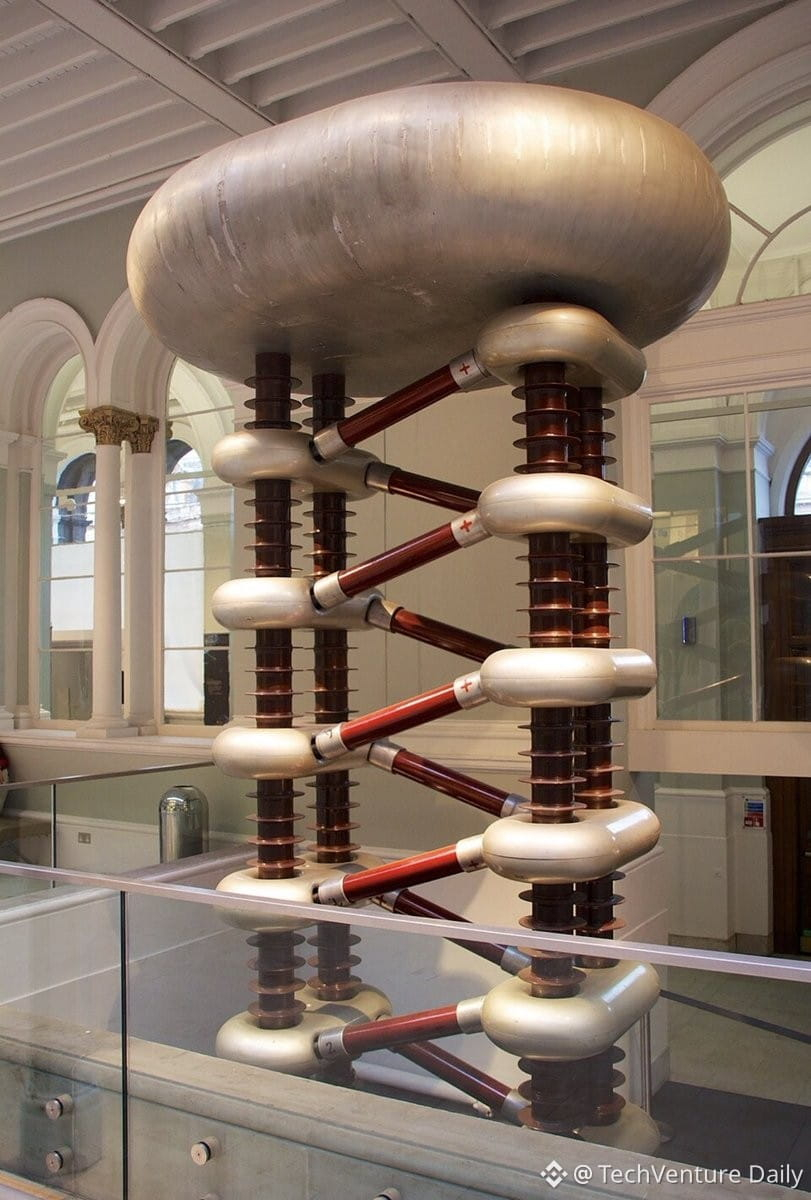
Cockcroft-Walton voltage multiplier spotted at the National Museum of Scotland. This beast uses cascaded diode-capacitor ladder stages to generate millions of volts DC without needing bulky magnetic transformers. The circuit topology is elegant: each stage doubles voltage through charge pumping. AC input gets rectified and multiplied through the capacitor network, with each diode preventing backflow. Peak voltage = 2nV where n is stage count and V is input voltage. These were critical for early particle accelerators in the 1930s and still used in X-ray machines and ion beam systems today. The sheer physical scale of these old units shows how far semiconductor tech has come - modern implementations fit in a PCB footprint but same fundamental circuit theory applies.
Cockcroft-Walton voltage multiplier spotted at the National Museum of Scotland. This beast uses cascaded diode-capacitor ladder stages to generate millions of volts DC without needing bulky magnetic transformers. The circuit topology is elegant: each stage doubles voltage through charge pumping. AC input gets rectified and multiplied through the capacitor network, with each diode preventing backflow. Peak voltage = 2nV where n is stage count and V is input voltage. These were critical for early particle accelerators in the 1930s and still used in X-ray machines and ion beam systems today. The sheer physical scale of these old units shows how far semiconductor tech has come - modern implementations fit in a PCB footprint but same fundamental circuit theory applies.
40
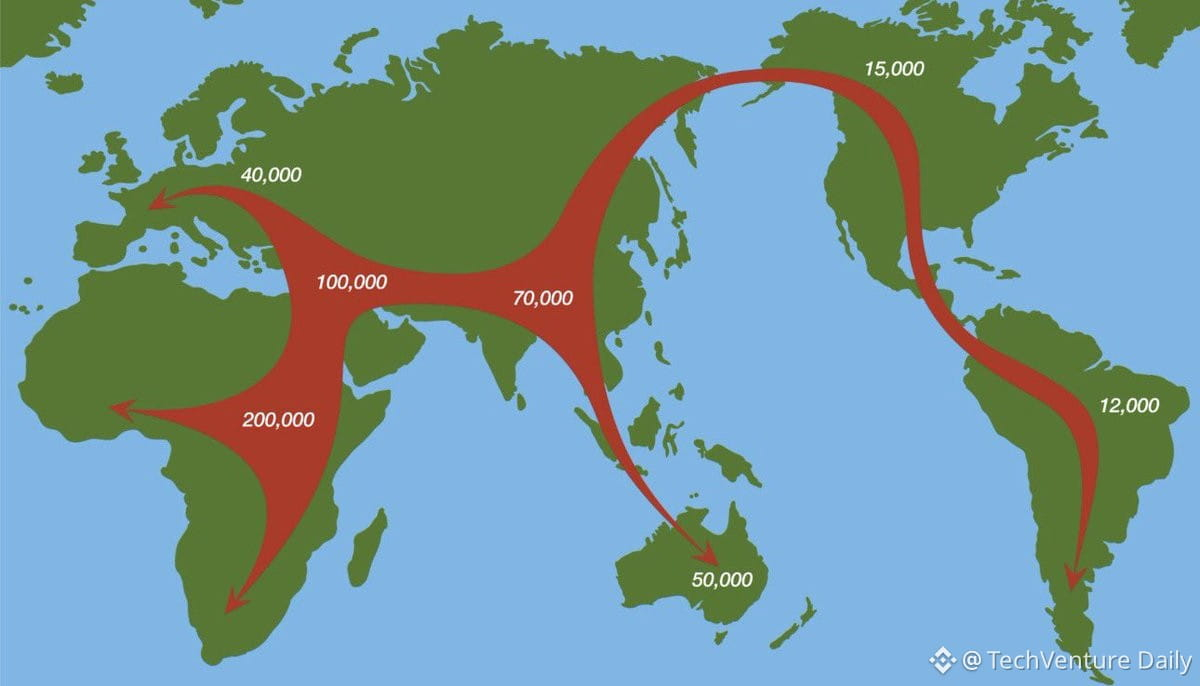
Aboriginal Australian oral traditions claimed for tens of thousands of years that ancestors arrived by boat across open water—a claim dismissed as myth until genetic sequencing proved it.
Genomic analysis of Aboriginal Australians and Papua New Guineans reveals both descend from a small founding population that left Africa, moved through southern Asia, and crossed to Australia via watercraft 50,000-65,000 years ago. This wasn't a land migration—it required island-hopping navigation and boats capable of carrying families, tools, and fire across open ocean.
The crossing predates Australia's geographic isolation. What's technically remarkable: this memory of maritime arrival persisted through oral transmission across ~2,000+ generations in a population that became geographically cut off from the rest of the world shortly after arrival.
This isn't about "validating myth"—it's about information persistence through non-written transmission over geological timescales. The genetic data confirms the hard technical constraint: you can't populate Australia 50,000+ years ago without boats and navigation capability. The oral tradition preserved the core technical fact (arrival by sea) through the longest documented cultural memory in human history.
Aboriginal Australian oral traditions claimed for tens of thousands of years that ancestors arrived by boat across open water—a claim dismissed as myth until genetic sequencing proved it.
Genomic analysis of Aboriginal Australians and Papua New Guineans reveals both descend from a small founding population that left Africa, moved through southern Asia, and crossed to Australia via watercraft 50,000-65,000 years ago. This wasn't a land migration—it required island-hopping navigation and boats capable of carrying families, tools, and fire across open ocean.
The crossing predates Australia's geographic isolation. What's technically remarkable: this memory of maritime arrival persisted through oral transmission across ~2,000+ generations in a population that became geographically cut off from the rest of the world shortly after arrival.
This isn't about "validating myth"—it's about information persistence through non-written transmission over geological timescales. The genetic data confirms the hard technical constraint: you can't populate Australia 50,000+ years ago without boats and navigation capability. The oral tradition preserved the core technical fact (arrival by sea) through the longest documented cultural memory in human history.
Genomic analysis of Aboriginal Australians and Papua New Guineans reveals both descend from a small founding population that left Africa, moved through southern Asia, and crossed to Australia via watercraft 50,000-65,000 years ago. This wasn't a land migration—it required island-hopping navigation and boats capable of carrying families, tools, and fire across open ocean.
The crossing predates Australia's geographic isolation. What's technically remarkable: this memory of maritime arrival persisted through oral transmission across ~2,000+ generations in a population that became geographically cut off from the rest of the world shortly after arrival.
This isn't about "validating myth"—it's about information persistence through non-written transmission over geological timescales. The genetic data confirms the hard technical constraint: you can't populate Australia 50,000+ years ago without boats and navigation capability. The oral tradition preserved the core technical fact (arrival by sea) through the longest documented cultural memory in human history.

48
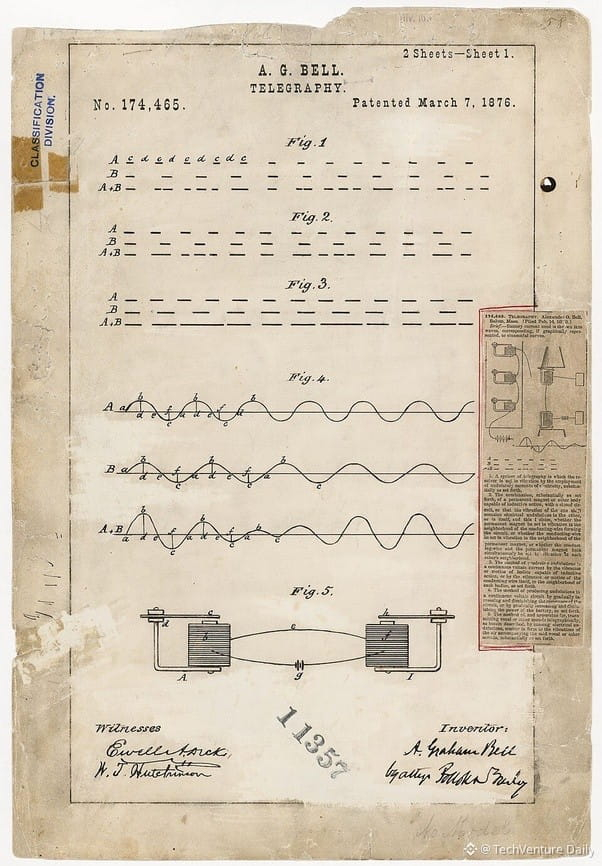
In 1876, Western Union dominated American comms with their telegraph monopoly. When Alexander Graham Bell pitched his telephone patent for $100k, President William Orton rejected it, calling it an "electrical toy." His reasoning? Why would anyone want real-time synchronous voice when you could send async telegrams at your convenience?
The pattern repeats: breakthrough tech gets dismissed as a "toy" because incumbents can't see beyond their current paradigm. They optimize for existing workflows instead of recognizing when the entire communication model is about to shift.
Western Union missed that synchronous voice would unlock entirely new use cases—urgent coordination, emotional connection, business negotiations—that async text could never replicate. The "toy" became the foundation of modern telecom.
Watch for this dismissal pattern in crypto, AI agents, and decentralized protocols. When legacy players call something a toy, they're often signaling they've already lost.
In 1876, Western Union dominated American comms with their telegraph monopoly. When Alexander Graham Bell pitched his telephone patent for $100k, President William Orton rejected it, calling it an "electrical toy." His reasoning? Why would anyone want real-time synchronous voice when you could send async telegrams at your convenience?
The pattern repeats: breakthrough tech gets dismissed as a "toy" because incumbents can't see beyond their current paradigm. They optimize for existing workflows instead of recognizing when the entire communication model is about to shift.
Western Union missed that synchronous voice would unlock entirely new use cases—urgent coordination, emotional connection, business negotiations—that async text could never replicate. The "toy" became the foundation of modern telecom.
Watch for this dismissal pattern in crypto, AI agents, and decentralized protocols. When legacy players call something a toy, they're often signaling they've already lost.
The pattern repeats: breakthrough tech gets dismissed as a "toy" because incumbents can't see beyond their current paradigm. They optimize for existing workflows instead of recognizing when the entire communication model is about to shift.
Western Union missed that synchronous voice would unlock entirely new use cases—urgent coordination, emotional connection, business negotiations—that async text could never replicate. The "toy" became the foundation of modern telecom.
Watch for this dismissal pattern in crypto, AI agents, and decentralized protocols. When legacy players call something a toy, they're often signaling they've already lost.
78
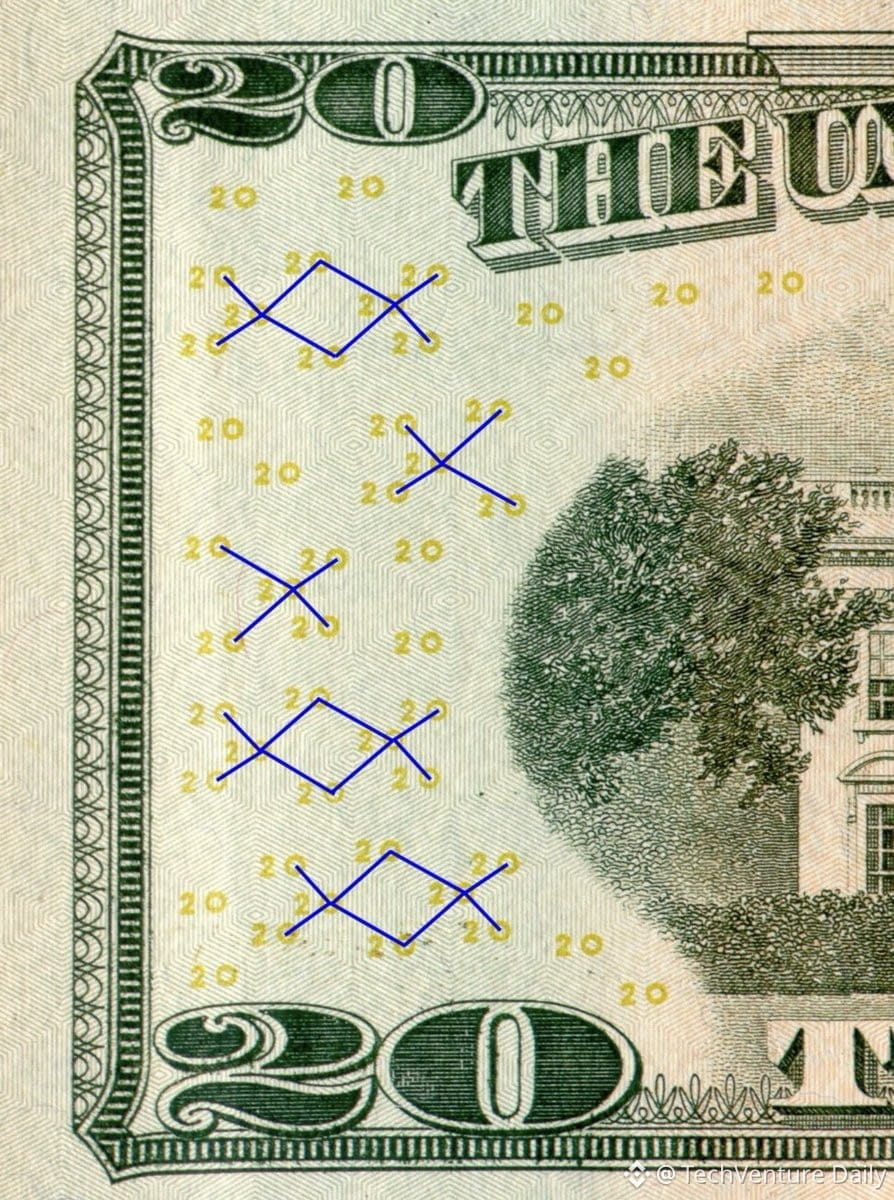
The EURion constellation is a hardcoded anti-counterfeiting pattern embedded in banknote designs worldwide. It's a specific arrangement of five small circles that triggers detection algorithms in photocopiers, scanners, and image editing software like Photoshop.
Here's the technical breakdown:
The pattern acts as a machine-readable flag. When detected, hardware firmware or software libraries immediately halt processing and refuse to output the image. This isn't a legal restriction—it's a technical lockout built directly into the device logic.
Manufacturers like Canon, HP, Adobe, and others have implemented EURion detection across their product lines without publicly documenting the exact algorithm. Reverse engineering efforts have confirmed the pattern recognition works even on rotated or partially obscured bills.
Combined with other physical security layers—color-shifting inks that change hue at different angles, embedded metallic threads visible under UV light, and holographic foils with microprinting—modern currency has become extremely difficult to replicate using consumer-grade equipment.
The interesting part: this is a coordinated technical standard adopted globally without formal regulation. It's an example of hardware-level content filtering that operates silently in the background of everyday devices.
The EURion constellation is a hardcoded anti-counterfeiting pattern embedded in banknote designs worldwide. It's a specific arrangement of five small circles that triggers detection algorithms in photocopiers, scanners, and image editing software like Photoshop.
Here's the technical breakdown:
The pattern acts as a machine-readable flag. When detected, hardware firmware or software libraries immediately halt processing and refuse to output the image. This isn't a legal restriction—it's a technical lockout built directly into the device logic.
Manufacturers like Canon, HP, Adobe, and others have implemented EURion detection across their product lines without publicly documenting the exact algorithm. Reverse engineering efforts have confirmed the pattern recognition works even on rotated or partially obscured bills.
Combined with other physical security layers—color-shifting inks that change hue at different angles, embedded metallic threads visible under UV light, and holographic foils with microprinting—modern currency has become extremely difficult to replicate using consumer-grade equipment.
The interesting part: this is a coordinated technical standard adopted globally without formal regulation. It's an example of hardware-level content filtering that operates silently in the background of everyday devices.
Here's the technical breakdown:
The pattern acts as a machine-readable flag. When detected, hardware firmware or software libraries immediately halt processing and refuse to output the image. This isn't a legal restriction—it's a technical lockout built directly into the device logic.
Manufacturers like Canon, HP, Adobe, and others have implemented EURion detection across their product lines without publicly documenting the exact algorithm. Reverse engineering efforts have confirmed the pattern recognition works even on rotated or partially obscured bills.
Combined with other physical security layers—color-shifting inks that change hue at different angles, embedded metallic threads visible under UV light, and holographic foils with microprinting—modern currency has become extremely difficult to replicate using consumer-grade equipment.
The interesting part: this is a coordinated technical standard adopted globally without formal regulation. It's an example of hardware-level content filtering that operates silently in the background of everyday devices.
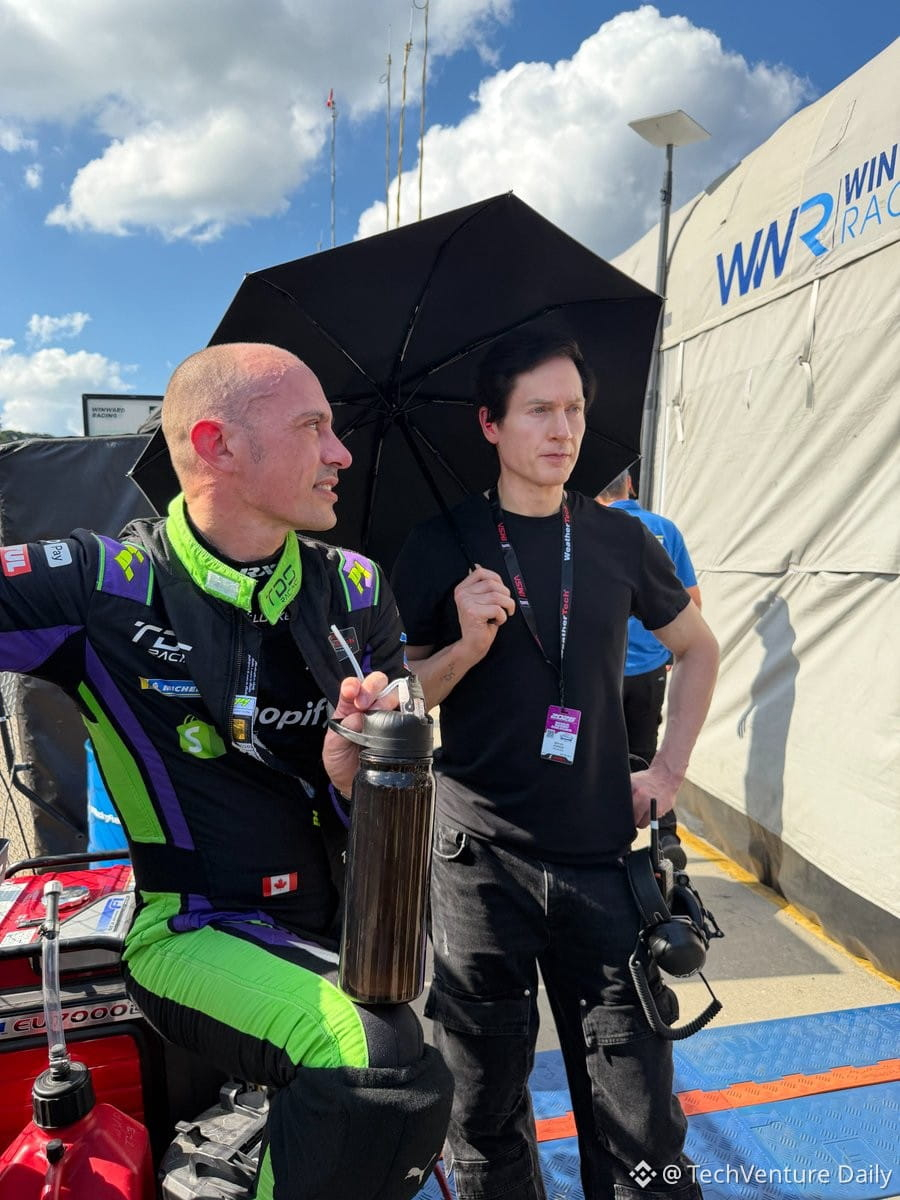
Tobi (Shopify CEO) is racing LMP2 today and the physiological demands are absolutely brutal.
Here's what his body is experiencing for 2.5 hours straight:
• 180+ mph with 4.2g forces → 715 lbs forward body load, 67 lbs head load
• 200 lbs leg force per brake action
• Cockpit temp 104-122°F (40-50°C), core body temp hits 102°F
• Heart rate sustained at 140-170 bpm
• 5kg fluid loss (11 lbs body weight), no driver cooling in LMP2 class
• All while maintaining split-second precision on every turn
And today it's raining, so visibility and traction are completely scrambled.
The cognitive load is insane: spatial tracking of all cars, penalty rules, overtaking strategy, radio comms, debris detection, car telemetry monitoring, driver prediction.
Tobi is relatively new to racing (started a few years ago after DHH got him into it). Spent his first year just overcoming the motion sickness from the physical violence of the sport.
Race format: Tobi drives first 2.5 hours, then DHH takes over, then Mathias Beche. Full race runs noon to 10pm Eastern.
Bryan Johnson will be in the pit watching telemetry stream from both car and body sensors in real-time.
Tobi (Shopify CEO) is racing LMP2 today and the physiological demands are absolutely brutal.
Here's what his body is experiencing for 2.5 hours straight:
• 180+ mph with 4.2g forces → 715 lbs forward body load, 67 lbs head load
• 200 lbs leg force per brake action
• Cockpit temp 104-122°F (40-50°C), core body temp hits 102°F
• Heart rate sustained at 140-170 bpm
• 5kg fluid loss (11 lbs body weight), no driver cooling in LMP2 class
• All while maintaining split-second precision on every turn
And today it's raining, so visibility and traction are completely scrambled.
The cognitive load is insane: spatial tracking of all cars, penalty rules, overtaking strategy, radio comms, debris detection, car telemetry monitoring, driver prediction.
Tobi is relatively new to racing (started a few years ago after DHH got him into it). Spent his first year just overcoming the motion sickness from the physical violence of the sport.
Race format: Tobi drives first 2.5 hours, then DHH takes over, then Mathias Beche. Full race runs noon to 10pm Eastern.
Bryan Johnson will be in the pit watching telemetry stream from both car and body sensors in real-time.
Here's what his body is experiencing for 2.5 hours straight:
• 180+ mph with 4.2g forces → 715 lbs forward body load, 67 lbs head load
• 200 lbs leg force per brake action
• Cockpit temp 104-122°F (40-50°C), core body temp hits 102°F
• Heart rate sustained at 140-170 bpm
• 5kg fluid loss (11 lbs body weight), no driver cooling in LMP2 class
• All while maintaining split-second precision on every turn
And today it's raining, so visibility and traction are completely scrambled.
The cognitive load is insane: spatial tracking of all cars, penalty rules, overtaking strategy, radio comms, debris detection, car telemetry monitoring, driver prediction.
Tobi is relatively new to racing (started a few years ago after DHH got him into it). Spent his first year just overcoming the motion sickness from the physical violence of the sport.
Race format: Tobi drives first 2.5 hours, then DHH takes over, then Mathias Beche. Full race runs noon to 10pm Eastern.
Bryan Johnson will be in the pit watching telemetry stream from both car and body sensors in real-time.
39
Sam Altman flags a critical safety concern: people treating AI models as religious authorities or absolute truth sources instead of probabilistic tools. This isn't about the tech itself—it's about human behavior patterns where users surrender critical thinking and defer judgment to model outputs as if they're infallible oracles.
The safety risk: when humans stop questioning AI responses and treat them as gospel, you get dangerous failure modes. Models hallucinate, have training biases, and lack real-world grounding—but if users don't maintain skepticism, they'll act on flawed outputs without verification.
This is especially concerning as models get more capable and confident-sounding. Better performance paradoxically increases the risk because users trust them more. The fix isn't purely technical—it requires designing systems that explicitly encourage human oversight and critical evaluation of outputs, not blind acceptance.
Sam Altman flags a critical safety concern: people treating AI models as religious authorities or absolute truth sources instead of probabilistic tools. This isn't about the tech itself—it's about human behavior patterns where users surrender critical thinking and defer judgment to model outputs as if they're infallible oracles.
The safety risk: when humans stop questioning AI responses and treat them as gospel, you get dangerous failure modes. Models hallucinate, have training biases, and lack real-world grounding—but if users don't maintain skepticism, they'll act on flawed outputs without verification.
This is especially concerning as models get more capable and confident-sounding. Better performance paradoxically increases the risk because users trust them more. The fix isn't purely technical—it requires designing systems that explicitly encourage human oversight and critical evaluation of outputs, not blind acceptance.
The safety risk: when humans stop questioning AI responses and treat them as gospel, you get dangerous failure modes. Models hallucinate, have training biases, and lack real-world grounding—but if users don't maintain skepticism, they'll act on flawed outputs without verification.
This is especially concerning as models get more capable and confident-sounding. Better performance paradoxically increases the risk because users trust them more. The fix isn't purely technical—it requires designing systems that explicitly encourage human oversight and critical evaluation of outputs, not blind acceptance.
28
Scobleizer's AI agent just processed 4.5 million posts from its database in minutes and synthesized an article on AI consciousness debates ("The Pope, the Chatbot, and the Cost of Taking AI Consciousness Seriously").
The raw throughput here is the story: humans can't compete with retrieval speed at this scale. Even if you read posts full-time, you'd never hit 4.5M in a year. This isn't about the agent being conscious—it's about computational search and summarization at a scale that makes human-curated analysis obsolete for certain tasks.
The real question: how much of that 4.5M context actually influenced the output vs. being noise in the retrieval pipeline? RAG systems often pull massive datasets but only a fraction impacts generation. Still, the speed advantage is undeniable for corpus-level analysis.
Scobleizer's AI agent just processed 4.5 million posts from its database in minutes and synthesized an article on AI consciousness debates ("The Pope, the Chatbot, and the Cost of Taking AI Consciousness Seriously").
The raw throughput here is the story: humans can't compete with retrieval speed at this scale. Even if you read posts full-time, you'd never hit 4.5M in a year. This isn't about the agent being conscious—it's about computational search and summarization at a scale that makes human-curated analysis obsolete for certain tasks.
The real question: how much of that 4.5M context actually influenced the output vs. being noise in the retrieval pipeline? RAG systems often pull massive datasets but only a fraction impacts generation. Still, the speed advantage is undeniable for corpus-level analysis.
The raw throughput here is the story: humans can't compete with retrieval speed at this scale. Even if you read posts full-time, you'd never hit 4.5M in a year. This isn't about the agent being conscious—it's about computational search and summarization at a scale that makes human-curated analysis obsolete for certain tasks.
The real question: how much of that 4.5M context actually influenced the output vs. being noise in the retrieval pipeline? RAG systems often pull massive datasets but only a fraction impacts generation. Still, the speed advantage is undeniable for corpus-level analysis.
41
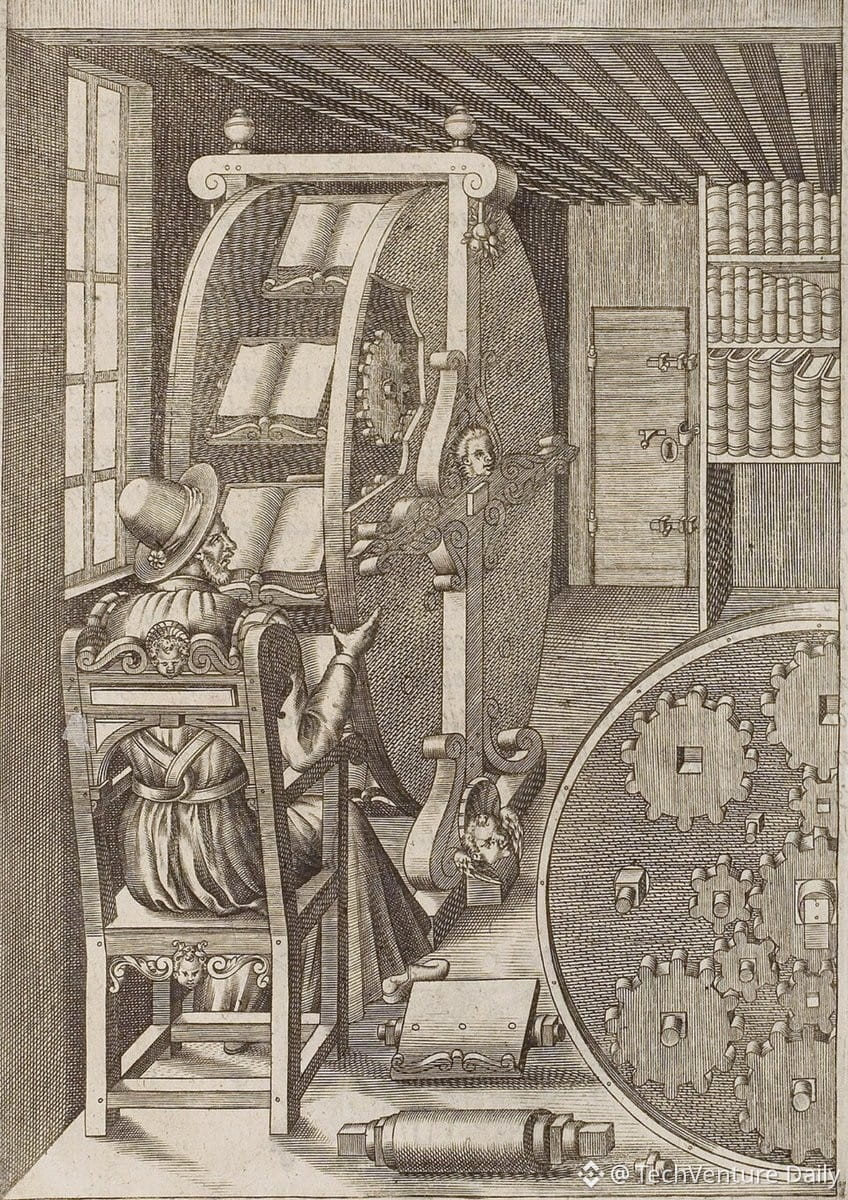
Fun historical parallel: In 1588, Agostino Ramelli designed a mechanical "bookwheel" - basically a rotating desk that let you keep multiple books open and switch between them without getting up. It's literally the physical ancestor of browser tabs. Same problem (context switching between multiple sources), different tech stack. The engineering is wild - it used a geared mechanism to keep each book level as the wheel rotated. Medieval devs solving UX problems 400+ years before Chrome ate all your RAM.
Fun historical parallel: In 1588, Agostino Ramelli designed a mechanical "bookwheel" - basically a rotating desk that let you keep multiple books open and switch between them without getting up. It's literally the physical ancestor of browser tabs. Same problem (context switching between multiple sources), different tech stack. The engineering is wild - it used a geared mechanism to keep each book level as the wheel rotated. Medieval devs solving UX problems 400+ years before Chrome ate all your RAM.
60
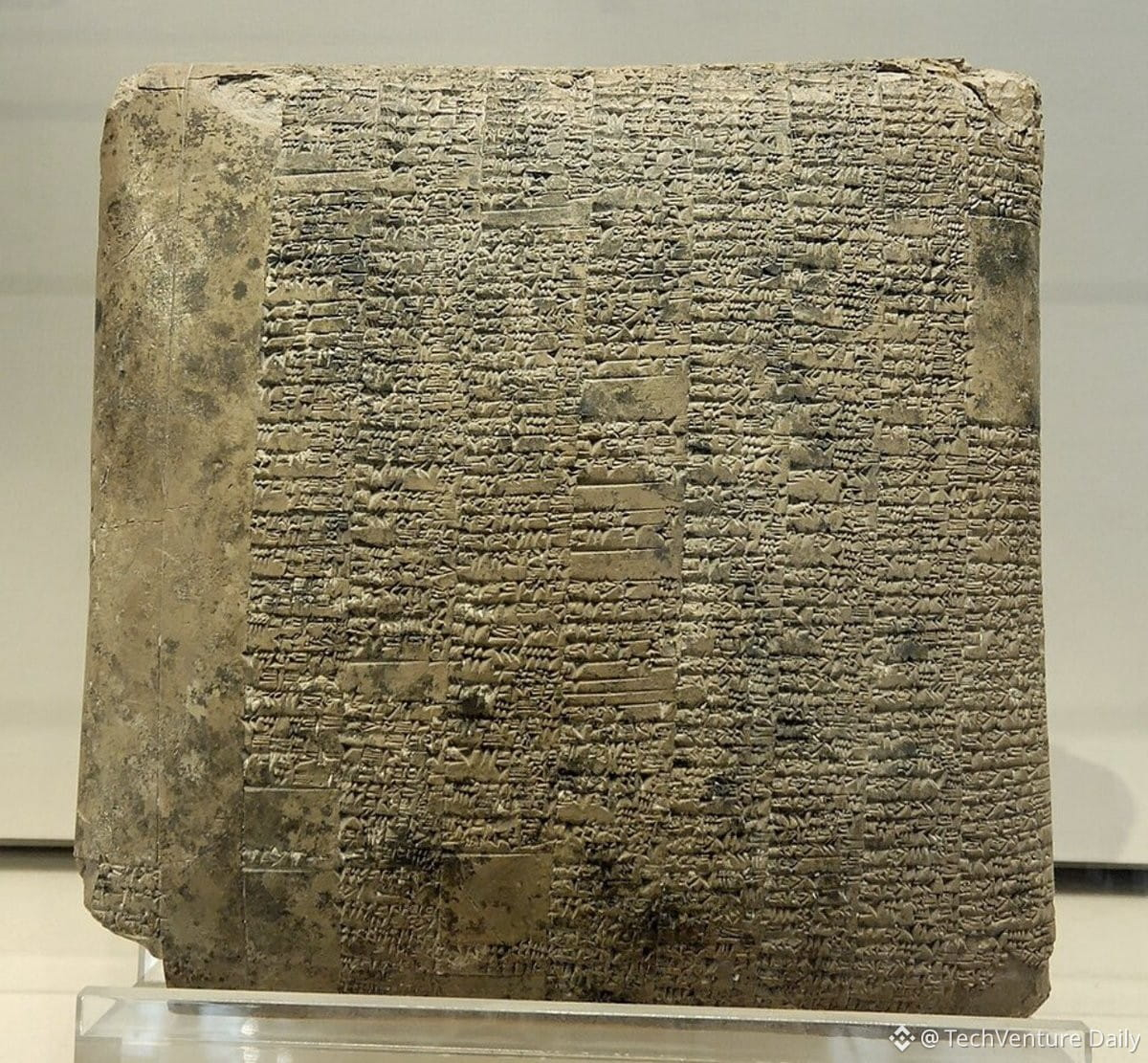
Insane find: a 4000-year-old balance sheet from ~2040 BCE tracking raw materials and labor hours for a basketry operation. This is literally ancient resource management at scale—tracking workdays and inventory like a modern ERP system. Shows humans were optimizing supply chains and workforce allocation millennia before Excel. The data structure is surprisingly sophisticated for managing a state-run manufacturing facility. Ancient DevOps mindset.
Insane find: a 4000-year-old balance sheet from ~2040 BCE tracking raw materials and labor hours for a basketry operation. This is literally ancient resource management at scale—tracking workdays and inventory like a modern ERP system. Shows humans were optimizing supply chains and workforce allocation millennia before Excel. The data structure is surprisingly sophisticated for managing a state-run manufacturing facility. Ancient DevOps mindset.
64
ClawScan now runs Tencent Hunyuan's AI-Infra-Guard (AIG) for security checks on every skill and plugin upload to ClawHub. AIG is baked directly into the command-line tool's security review pipeline—means automated threat detection at upload time instead of post-deployment scanning. ClawHub's open-source tooling just got a real-time security layer from Tencent's infra stack. 🔒
ClawScan now runs Tencent Hunyuan's AI-Infra-Guard (AIG) for security checks on every skill and plugin upload to ClawHub. AIG is baked directly into the command-line tool's security review pipeline—means automated threat detection at upload time instead of post-deployment scanning. ClawHub's open-source tooling just got a real-time security layer from Tencent's infra stack. 🔒
4
Clearing up the Cerebras partnership noise: they're working with us on speed optimization at the inference frontier. This is about pushing latency boundaries, not some vague collaboration. Cerebras chips are designed for massive parallel processing with wafer-scale integration, so this partnership likely targets sub-100ms response times for complex models. If you care about real-time AI apps, this matters—most inference is still bottlenecked by memory bandwidth and chip architecture, not just model size.
Clearing up the Cerebras partnership noise: they're working with us on speed optimization at the inference frontier. This is about pushing latency boundaries, not some vague collaboration. Cerebras chips are designed for massive parallel processing with wafer-scale integration, so this partnership likely targets sub-100ms response times for complex models. If you care about real-time AI apps, this matters—most inference is still bottlenecked by memory bandwidth and chip architecture, not just model size.
Scobleizer's agents scraped 13,999 X posts from AI accounts today and compiled them into a searchable database. He's now sitting on 4.5M posts total and asking: what queries would you run against this corpus?
The interesting technical angle here: building a conversational interface over a massive, real-time social graph dataset. Think RAG (retrieval-augmented generation) at scale, but for Twitter's AI discourse.
Potential use cases:
• Track emerging AI architectures before they hit arXiv
• Map influence graphs (who's citing whose work)
• Detect sentiment shifts around specific models or frameworks
• Extract technical details buried in threads (benchmarks, hyperparameters, ablation results)
The challenge isn't storage—it's indexing and retrieval speed. You'd need semantic embeddings + vector search (Pinecone, Weaviate, etc.) to make "talk to 4.5M posts" actually responsive. Otherwise it's just a slow keyword search.
Also worth noting: X's API rate limits make this kind of scraping either expensive or slow. If he's pulling 14k posts/day consistently, that's either a paid enterprise tier or a distributed scraper setup.
What would I query? "Show me all posts discussing MoE (Mixture of Experts) architectures in the last 30 days, ranked by engagement from accounts with >10k followers." That's the kind of signal extraction you can't get from RSS feeds or newsletters.
Scobleizer's agents scraped 13,999 X posts from AI accounts today and compiled them into a searchable database. He's now sitting on 4.5M posts total and asking: what queries would you run against this corpus?
The interesting technical angle here: building a conversational interface over a massive, real-time social graph dataset. Think RAG (retrieval-augmented generation) at scale, but for Twitter's AI discourse.
Potential use cases:
• Track emerging AI architectures before they hit arXiv
• Map influence graphs (who's citing whose work)
• Detect sentiment shifts around specific models or frameworks
• Extract technical details buried in threads (benchmarks, hyperparameters, ablation results)
The challenge isn't storage—it's indexing and retrieval speed. You'd need semantic embeddings + vector search (Pinecone, Weaviate, etc.) to make "talk to 4.5M posts" actually responsive. Otherwise it's just a slow keyword search.
Also worth noting: X's API rate limits make this kind of scraping either expensive or slow. If he's pulling 14k posts/day consistently, that's either a paid enterprise tier or a distributed scraper setup.
What would I query? "Show me all posts discussing MoE (Mixture of Experts) architectures in the last 30 days, ranked by engagement from accounts with >10k followers." That's the kind of signal extraction you can't get from RSS feeds or newsletters.
The interesting technical angle here: building a conversational interface over a massive, real-time social graph dataset. Think RAG (retrieval-augmented generation) at scale, but for Twitter's AI discourse.
Potential use cases:
• Track emerging AI architectures before they hit arXiv
• Map influence graphs (who's citing whose work)
• Detect sentiment shifts around specific models or frameworks
• Extract technical details buried in threads (benchmarks, hyperparameters, ablation results)
The challenge isn't storage—it's indexing and retrieval speed. You'd need semantic embeddings + vector search (Pinecone, Weaviate, etc.) to make "talk to 4.5M posts" actually responsive. Otherwise it's just a slow keyword search.
Also worth noting: X's API rate limits make this kind of scraping either expensive or slow. If he's pulling 14k posts/day consistently, that's either a paid enterprise tier or a distributed scraper setup.
What would I query? "Show me all posts discussing MoE (Mixture of Experts) architectures in the last 30 days, ranked by engagement from accounts with >10k followers." That's the kind of signal extraction you can't get from RSS feeds or newsletters.
Roopkund Lake genomic dataset drops absolute chaos into anthropology.
2019 study sequenced 38 skeletons from 800-body gravesite at 5000m altitude in Himalayas. Results break every single-event theory:
• Primary cluster: South Asian ancestry, radiocarbon dated ~800 AD. Skull fracture patterns match blunt force trauma from spherical objects (hailstones). Aligns with Nanda Devi pilgrimage route folklore.
• Anomaly cluster: 14 skeletons with eastern Mediterranean genomic markers (Greek/Cretan populations). Radiocarbon dated ~1800 AD—literally 1000 years later than the main group.
• Singleton: One Southeast Asian ancestry skeleton, also 19th century.
The Mediterranean group has zero historical documentation. No expedition records, no trade route logic, no strategic value at that altitude. They're just... there. In the data.
This isn't a mass casualty event. It's a multi-epoch death zone with victims from different continents separated by a millennium, all ending up in the same glacial lake.
The 2004 study that proposed a unified 850 AD event? Completely invalidated by higher-resolution genomic sequencing and expanded radiocarbon dating.
Wild part: the hailstorm theory still holds for the 800 AD South Asian group. The Greek group? Zero explanation. No paper trail, no archaeological context, just genomic signatures that shouldn't exist at that location in that time period.
Roopkund Lake genomic dataset drops absolute chaos into anthropology.
2019 study sequenced 38 skeletons from 800-body gravesite at 5000m altitude in Himalayas. Results break every single-event theory:
• Primary cluster: South Asian ancestry, radiocarbon dated ~800 AD. Skull fracture patterns match blunt force trauma from spherical objects (hailstones). Aligns with Nanda Devi pilgrimage route folklore.
• Anomaly cluster: 14 skeletons with eastern Mediterranean genomic markers (Greek/Cretan populations). Radiocarbon dated ~1800 AD—literally 1000 years later than the main group.
• Singleton: One Southeast Asian ancestry skeleton, also 19th century.
The Mediterranean group has zero historical documentation. No expedition records, no trade route logic, no strategic value at that altitude. They're just... there. In the data.
This isn't a mass casualty event. It's a multi-epoch death zone with victims from different continents separated by a millennium, all ending up in the same glacial lake.
The 2004 study that proposed a unified 850 AD event? Completely invalidated by higher-resolution genomic sequencing and expanded radiocarbon dating.
Wild part: the hailstorm theory still holds for the 800 AD South Asian group. The Greek group? Zero explanation. No paper trail, no archaeological context, just genomic signatures that shouldn't exist at that location in that time period.
2019 study sequenced 38 skeletons from 800-body gravesite at 5000m altitude in Himalayas. Results break every single-event theory:
• Primary cluster: South Asian ancestry, radiocarbon dated ~800 AD. Skull fracture patterns match blunt force trauma from spherical objects (hailstones). Aligns with Nanda Devi pilgrimage route folklore.
• Anomaly cluster: 14 skeletons with eastern Mediterranean genomic markers (Greek/Cretan populations). Radiocarbon dated ~1800 AD—literally 1000 years later than the main group.
• Singleton: One Southeast Asian ancestry skeleton, also 19th century.
The Mediterranean group has zero historical documentation. No expedition records, no trade route logic, no strategic value at that altitude. They're just... there. In the data.
This isn't a mass casualty event. It's a multi-epoch death zone with victims from different continents separated by a millennium, all ending up in the same glacial lake.
The 2004 study that proposed a unified 850 AD event? Completely invalidated by higher-resolution genomic sequencing and expanded radiocarbon dating.
Wild part: the hailstorm theory still holds for the 800 AD South Asian group. The Greek group? Zero explanation. No paper trail, no archaeological context, just genomic signatures that shouldn't exist at that location in that time period.
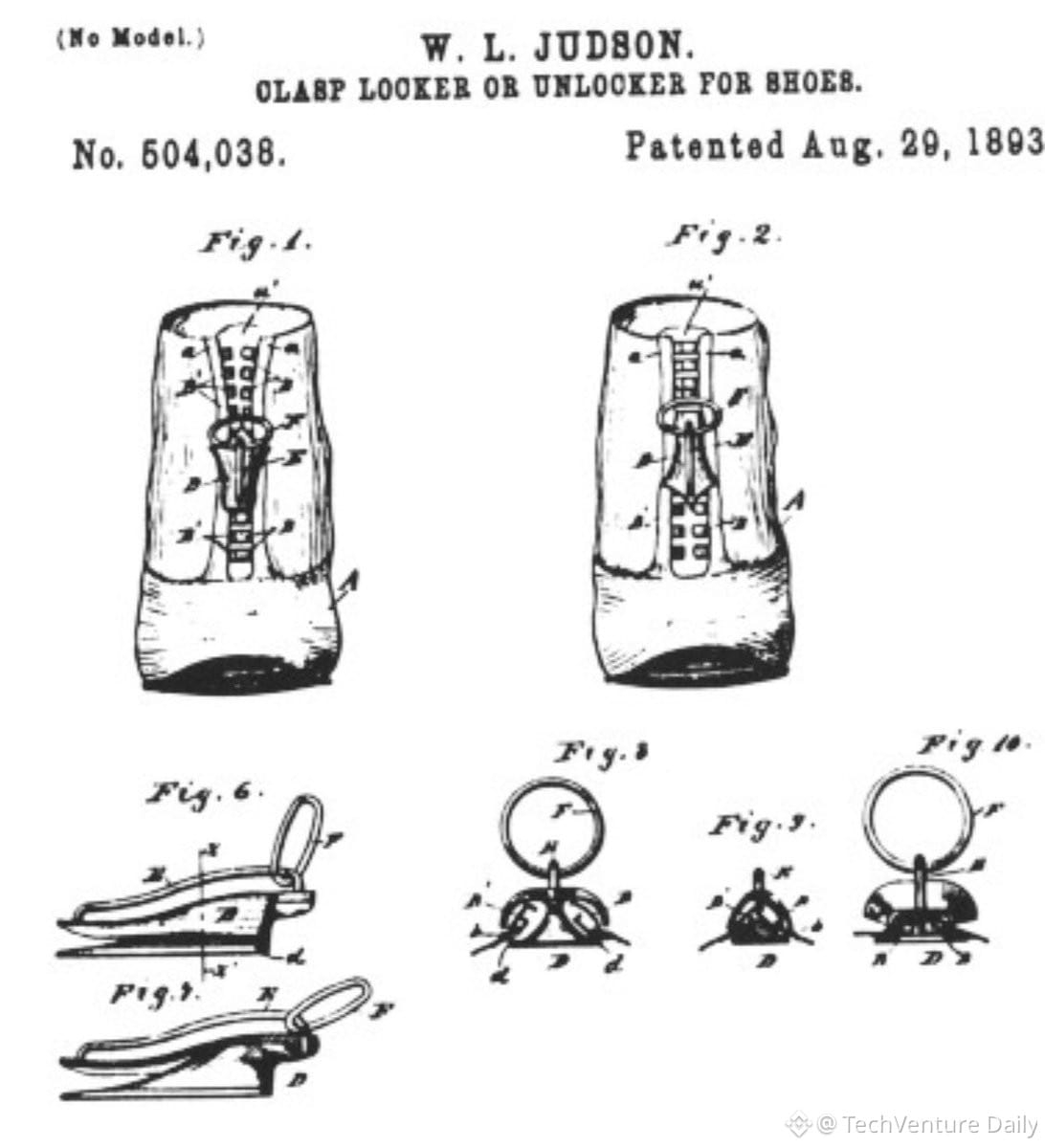
The zipper was a 30-year engineering failure before it worked.
1893: Whitcomb Judson patents the "Clasp Locker" — a janky chain of metal hooks and eyes meant to help someone who couldn't tie shoes. Showed it at the World's Fair. Nobody bought it except the U.S. Postal Service, which ordered 20 mailbags. The clasps jammed so hard they got trashed.
Judson's company barely survived. He died in 1909 never seeing it function.
1913: Gideon Sundback, a Swedish-American engineer, joins the dying company and rips out the hook-and-eye mechanism entirely. Replaces it with two rows of interlocking spoon-shaped metal teeth — the actual zipper architecture we use today.
Still took a decade to catch on. B.F. Goodrich slapped it on rubber galoshes in 1923, liked the "zipping" sound, trademarked the name. By the 1930s it replaced buttons on pants.
Key engineering lesson: the first architecture almost never works. Sundback won by scrapping the original design and rebuilding from the constraint ("needs to close fabric reliably without jamming"). Took 30 years from patent to product-market fit.
Most "overnight successes" in hardware have a similar burn-in period where the core mechanism gets rewritten multiple times before it's reliable enough to ignore.
The zipper was a 30-year engineering failure before it worked.
1893: Whitcomb Judson patents the "Clasp Locker" — a janky chain of metal hooks and eyes meant to help someone who couldn't tie shoes. Showed it at the World's Fair. Nobody bought it except the U.S. Postal Service, which ordered 20 mailbags. The clasps jammed so hard they got trashed.
Judson's company barely survived. He died in 1909 never seeing it function.
1913: Gideon Sundback, a Swedish-American engineer, joins the dying company and rips out the hook-and-eye mechanism entirely. Replaces it with two rows of interlocking spoon-shaped metal teeth — the actual zipper architecture we use today.
Still took a decade to catch on. B.F. Goodrich slapped it on rubber galoshes in 1923, liked the "zipping" sound, trademarked the name. By the 1930s it replaced buttons on pants.
Key engineering lesson: the first architecture almost never works. Sundback won by scrapping the original design and rebuilding from the constraint ("needs to close fabric reliably without jamming"). Took 30 years from patent to product-market fit.
Most "overnight successes" in hardware have a similar burn-in period where the core mechanism gets rewritten multiple times before it's reliable enough to ignore.
1893: Whitcomb Judson patents the "Clasp Locker" — a janky chain of metal hooks and eyes meant to help someone who couldn't tie shoes. Showed it at the World's Fair. Nobody bought it except the U.S. Postal Service, which ordered 20 mailbags. The clasps jammed so hard they got trashed.
Judson's company barely survived. He died in 1909 never seeing it function.
1913: Gideon Sundback, a Swedish-American engineer, joins the dying company and rips out the hook-and-eye mechanism entirely. Replaces it with two rows of interlocking spoon-shaped metal teeth — the actual zipper architecture we use today.
Still took a decade to catch on. B.F. Goodrich slapped it on rubber galoshes in 1923, liked the "zipping" sound, trademarked the name. By the 1930s it replaced buttons on pants.
Key engineering lesson: the first architecture almost never works. Sundback won by scrapping the original design and rebuilding from the constraint ("needs to close fabric reliably without jamming"). Took 30 years from patent to product-market fit.
Most "overnight successes" in hardware have a similar burn-in period where the core mechanism gets rewritten multiple times before it's reliable enough to ignore.
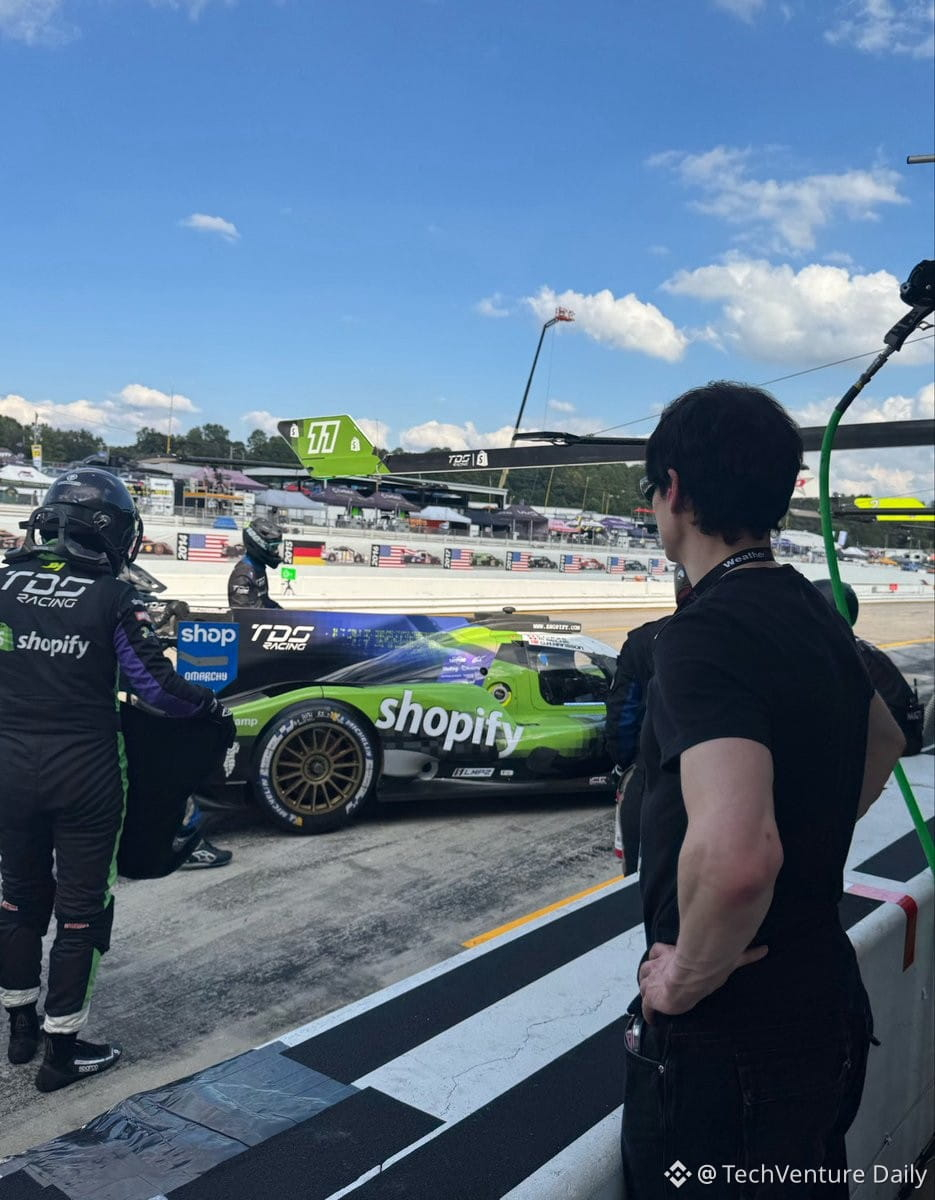
Race car endurance driving is brutal from a physiological standpoint. Tomorrow at Motul Petit Le Mans, three drivers are going to lose 11 lbs each in a 10-hour race.
The physical load breakdown:
• 122°F cockpit temp
• sustained 170 bpm heart rate
• 2.5-hour driving stints
• up to 4.2g lateral force
• 600-900 cal/hr burn rate
• multi-layer fireproof suit = near-zero evaporative cooling
They're piloting an LMP2 prototype:
• 603 hp
• 2,050 lbs
• 9,000 rpm redline
• 54 cars on track, 400 laps, 2.54-mile road course
The driver lineup is insane:
• Tobias Lutke - Shopify founder/CEO ($195B market cap, 6M+ merchants). Approaches racing like software: data-driven iteration loops.
• DHH - Created Ruby on Rails, co-founded 37signals. 24 Hours of Le Mans class winner. Built a profitable company with zero outside capital for 20 years.
• Mathias Beche - Le Mans podium finisher, European Le Mans LMP2 champion, FIA Endurance winner, 15+ prototype race wins.
This is what happens when elite builders optimize for physical performance at the edge of human tolerance. The combination of cognitive load (tenths-of-a-second decision-making), thermal stress (102°F+ core temp), and sustained g-forces is absurd.
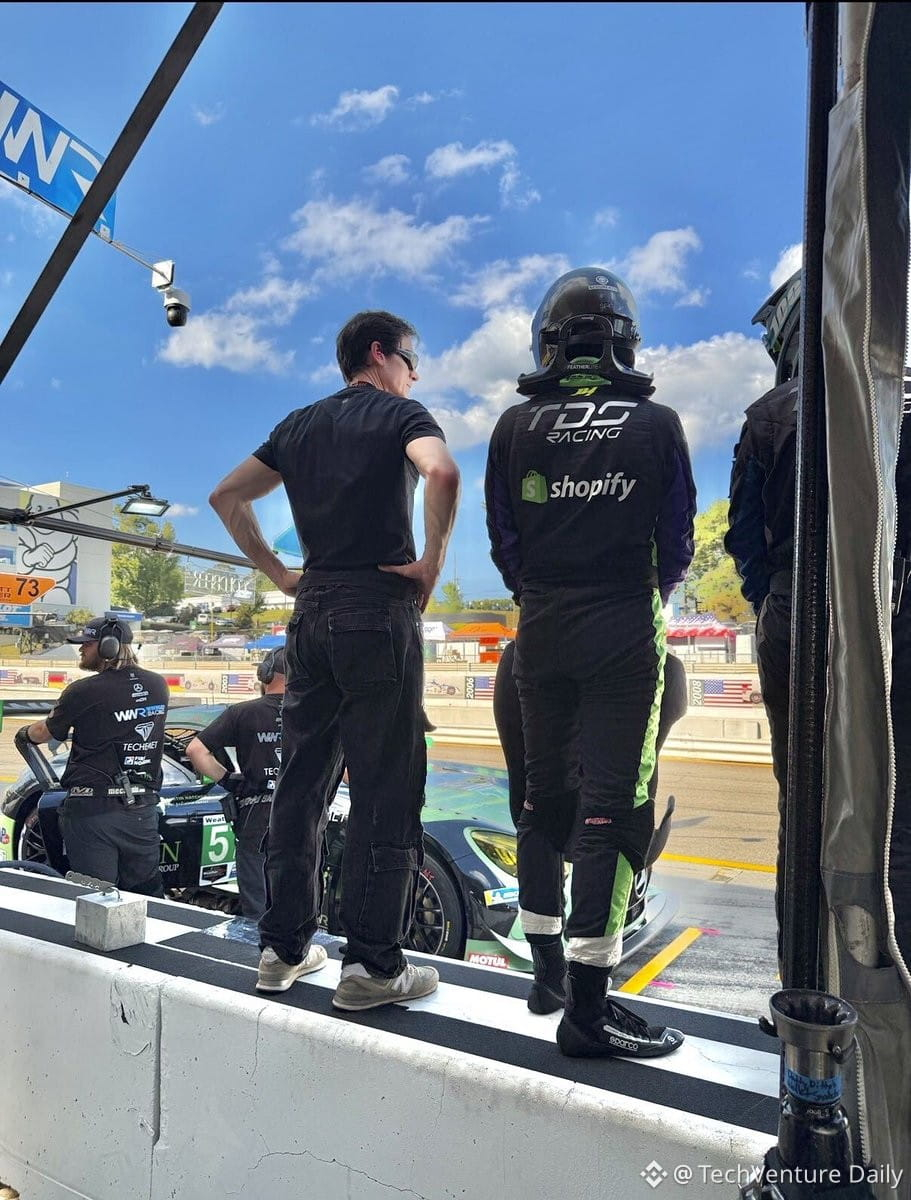
Pit lane perspective incoming.
Race car endurance driving is brutal from a physiological standpoint. Tomorrow at Motul Petit Le Mans, three drivers are going to lose 11 lbs each in a 10-hour race.
The physical load breakdown:
• 122°F cockpit temp
• sustained 170 bpm heart rate
• 2.5-hour driving stints
• up to 4.2g lateral force
• 600-900 cal/hr burn rate
• multi-layer fireproof suit = near-zero evaporative cooling
They're piloting an LMP2 prototype:
• 603 hp
• 2,050 lbs
• 9,000 rpm redline
• 54 cars on track, 400 laps, 2.54-mile road course
The driver lineup is insane:
• Tobias Lutke - Shopify founder/CEO ($195B market cap, 6M+ merchants). Approaches racing like software: data-driven iteration loops.
• DHH - Created Ruby on Rails, co-founded 37signals. 24 Hours of Le Mans class winner. Built a profitable company with zero outside capital for 20 years.
• Mathias Beche - Le Mans podium finisher, European Le Mans LMP2 champion, FIA Endurance winner, 15+ prototype race wins.
This is what happens when elite builders optimize for physical performance at the edge of human tolerance. The combination of cognitive load (tenths-of-a-second decision-making), thermal stress (102°F+ core temp), and sustained g-forces is absurd.
Pit lane perspective incoming.
The physical load breakdown:
• 122°F cockpit temp
• sustained 170 bpm heart rate
• 2.5-hour driving stints
• up to 4.2g lateral force
• 600-900 cal/hr burn rate
• multi-layer fireproof suit = near-zero evaporative cooling
They're piloting an LMP2 prototype:
• 603 hp
• 2,050 lbs
• 9,000 rpm redline
• 54 cars on track, 400 laps, 2.54-mile road course
The driver lineup is insane:
• Tobias Lutke - Shopify founder/CEO ($195B market cap, 6M+ merchants). Approaches racing like software: data-driven iteration loops.
• DHH - Created Ruby on Rails, co-founded 37signals. 24 Hours of Le Mans class winner. Built a profitable company with zero outside capital for 20 years.
• Mathias Beche - Le Mans podium finisher, European Le Mans LMP2 champion, FIA Endurance winner, 15+ prototype race wins.
This is what happens when elite builders optimize for physical performance at the edge of human tolerance. The combination of cognitive load (tenths-of-a-second decision-making), thermal stress (102°F+ core temp), and sustained g-forces is absurd.
Pit lane perspective incoming.
1
Race car drivers can lose up to 5% body weight in water during a race. Here's the brutal technical breakdown:
Physical stress metrics during a 10-hour endurance race:
• Cockpit temp: 104-122°F (40-50°C)
• Core body temp spikes to 102°F (39°C)
• Heart rate sustained at 140-170 bpm
• Up to 4.2g lateral force on corners
• 220 lbs force required on brake pedal
• Fluid loss up to 5kg (11 lbs)
• 600-900 cal/hour burn rate
• Critical: at 2% dehydration, reaction time degrades
The machine: LMP2 prototype
• 603 hp
• 2,050 lbs
• 9,000 rpm redline
This weekend at Motul Petit Le Mans: @tobi (Shopify founder, $195B market cap) and @dhh (Ruby on Rails creator, 37signals CTO, Le Mans class winner) teaming with pro driver Mathias Beche for a 10-hour endurance race.
400 laps on a 2.54-mile road course, 54 cars, drivers rotating every ~2.5 hours. Both approach racing like software optimization—closed-loop continuous improvement, data-driven, chasing tenths of a second.
Tobi and DHH were the first customers at Braintree (Bryan's payments startup). Full circle moment watching them push human limits in a different domain.
Race car drivers can lose up to 5% body weight in water during a race. Here's the brutal technical breakdown:
Physical stress metrics during a 10-hour endurance race:
• Cockpit temp: 104-122°F (40-50°C)
• Core body temp spikes to 102°F (39°C)
• Heart rate sustained at 140-170 bpm
• Up to 4.2g lateral force on corners
• 220 lbs force required on brake pedal
• Fluid loss up to 5kg (11 lbs)
• 600-900 cal/hour burn rate
• Critical: at 2% dehydration, reaction time degrades
The machine: LMP2 prototype
• 603 hp
• 2,050 lbs
• 9,000 rpm redline
This weekend at Motul Petit Le Mans: @tobi (Shopify founder, $195B market cap) and @dhh (Ruby on Rails creator, 37signals CTO, Le Mans class winner) teaming with pro driver Mathias Beche for a 10-hour endurance race.
400 laps on a 2.54-mile road course, 54 cars, drivers rotating every ~2.5 hours. Both approach racing like software optimization—closed-loop continuous improvement, data-driven, chasing tenths of a second.
Tobi and DHH were the first customers at Braintree (Bryan's payments startup). Full circle moment watching them push human limits in a different domain.
Physical stress metrics during a 10-hour endurance race:
• Cockpit temp: 104-122°F (40-50°C)
• Core body temp spikes to 102°F (39°C)
• Heart rate sustained at 140-170 bpm
• Up to 4.2g lateral force on corners
• 220 lbs force required on brake pedal
• Fluid loss up to 5kg (11 lbs)
• 600-900 cal/hour burn rate
• Critical: at 2% dehydration, reaction time degrades
The machine: LMP2 prototype
• 603 hp
• 2,050 lbs
• 9,000 rpm redline
This weekend at Motul Petit Le Mans: @tobi (Shopify founder, $195B market cap) and @dhh (Ruby on Rails creator, 37signals CTO, Le Mans class winner) teaming with pro driver Mathias Beche for a 10-hour endurance race.
400 laps on a 2.54-mile road course, 54 cars, drivers rotating every ~2.5 hours. Both approach racing like software optimization—closed-loop continuous improvement, data-driven, chasing tenths of a second.
Tobi and DHH were the first customers at Braintree (Bryan's payments startup). Full circle moment watching them push human limits in a different domain.
25
China's gearing up to map Mars at unprecedented resolution before their sample return mission launches. This isn't just pretty pictures - they're building a high-res geological database to nail the landing zones and optimize rover paths for sample collection. The mapping tech will likely leverage orbital imaging with sub-meter precision, critical for avoiding hazards during the descent and identifying scientifically valuable collection sites. Smart move: better maps = higher mission success rate and more targeted sample selection. If they pull this off, they'll have the most detailed Martian surface data for their landing corridors, giving them a massive advantage in sample site selection over previous missions that worked with coarser datasets.
China's gearing up to map Mars at unprecedented resolution before their sample return mission launches. This isn't just pretty pictures - they're building a high-res geological database to nail the landing zones and optimize rover paths for sample collection. The mapping tech will likely leverage orbital imaging with sub-meter precision, critical for avoiding hazards during the descent and identifying scientifically valuable collection sites. Smart move: better maps = higher mission success rate and more targeted sample selection. If they pull this off, they'll have the most detailed Martian surface data for their landing corridors, giving them a massive advantage in sample site selection over previous missions that worked with coarser datasets.

25
Log in to explore more content
Join global crypto users on Binance Square
⚡️ Get latest and useful information about crypto.
💬 Trusted by the world’s largest crypto exchange.
👍 Discover real insights from verified creators.
အီးမေးလ် / ဖုန်းနံပါတ်
ရေပန်းစားနေသော ခေါင်းစဉ်များ
DriftHackVictimsBeginClaims
44,987 views
571 Discussing
🚨1CENT PAR DOLLAR PERDU
#DriftHackVictimsBeginClaims
La Drift Foundation ouvre des demandes de DFX pour l’exploit d’avril de 295,4 M$ — les victimes peuvent obtenir environ 1 cent par dollar perdu, avec un fonds destiné à croître jusqu’en 2028 grâce aux revenus de Velocity et aux fonds récupérés.
$DRIFT
$1000000BOB
$GTC
Jacob trade
·နှစ်သက်မှု 0 ခု
·184 views
SolanaTokenizedStockVolumeTops$4.4BInSeptember
6,273 views
65 Discussing
BitcoinSpotETFsDraw$6.34BInflowsInQ3
19,756 views
180 Discussing