
Block_Baron
12.4k ပို့စ်များ

Block_Baron
 Square Verified+
Binance Square creator | Exploring crypto, market moves, and next-gen projects | Opinions backed by research
Open Trade
High-Frequency Trader
9.8 Months
11 ဖော်လိုလုပ်ထားသည်
31.6K+ ဖော်လိုလုပ်သူများ
23.5K+ လိုက်ခ်လုပ်ထားသည်
ပို့စ်များ
ပိုင်ဆိုင်မှုစာရင်း
အားလုံး
တိုက်ရိုက်ထုတ်လွှင့်ခြင်း
$TRUMP Shorts got liquidated — $2.23K at $2.733 on Binance.
🔥 Buyers are pushing back.
📍 EP: $2.73–$2.78
🎯 TP: $2.85 / $2.95 / $3.10
🛑 SL: $2.64
Wait for confirmation before entering. 🚀
#TrumpNFT #TRUMPUSDT #Binance #Crypto
🔥 Buyers are pushing back.
📍 EP: $2.73–$2.78
🎯 TP: $2.85 / $2.95 / $3.10
🛑 SL: $2.64
Wait for confirmation before entering. 🚀
#TrumpNFT #TRUMPUSDT #Binance #Crypto
$RIVER Longs got liquidated — $2.93K at $1.6115 on Binance.
⚡ Volatility is heating up 👀
📍 EP: $1.61–$1.64
🎯 TP: $1.68 / $1.74 / $1.82
🛑 SL: $1.56
Wait for confirmation before entering. 🚀
#RIVER #RIVERUSDT #Binance #Crypto
⚡ Volatility is heating up 👀
📍 EP: $1.61–$1.64
🎯 TP: $1.68 / $1.74 / $1.82
🛑 SL: $1.56
Wait for confirmation before entering. 🚀
#RIVER #RIVERUSDT #Binance #Crypto
The more I look at TermMax, the less I think the interesting part is simply “fixed-rate DeFi.”
I’ve seen crypto turn predictable yield into a headline before, only for the assumptions underneath it to matter much more later. What feels worth watching here is the attempt to make time itself part of the product.
Borrowing has a defined maturity. Lending has a defined return. Leverage can be opened with an upfront premium instead of constantly worrying about funding changes or a sudden liquidation from the rate moving against you. TermMax is also pushing into limit orders, RWA-backed markets and structured products, which makes the idea broader than another lending market.
But fixed terms create their own friction.
Capital is less flexible once it is committed. Liquidity matters if you want to exit early. Collateral still carries market risk, and a fixed borrowing cost doesn’t magically make a leveraged position safe. At maturity, the borrower still has to deal with repayment or collateral consequences.
That trade-off is actually what keeps me interested.
DeFi spent years selling the idea that everything should be instant, liquid and constantly composable. Maybe some financial products simply aren’t better that way.
TermMax currently spans several chains and is building around fixed-rate markets, vaults, leverage and options-like products.
I’m still cautious. I’ve learned that the real test for any protocol isn’t how clean the product looks during a good market.
It’s what happens when liquidity disappears, incentives fade, and users suddenly want their capital back.
That’s the part I’ll be watching.
#termmax @TermMax
I’ve seen crypto turn predictable yield into a headline before, only for the assumptions underneath it to matter much more later. What feels worth watching here is the attempt to make time itself part of the product.
Borrowing has a defined maturity. Lending has a defined return. Leverage can be opened with an upfront premium instead of constantly worrying about funding changes or a sudden liquidation from the rate moving against you. TermMax is also pushing into limit orders, RWA-backed markets and structured products, which makes the idea broader than another lending market.
But fixed terms create their own friction.
Capital is less flexible once it is committed. Liquidity matters if you want to exit early. Collateral still carries market risk, and a fixed borrowing cost doesn’t magically make a leveraged position safe. At maturity, the borrower still has to deal with repayment or collateral consequences.
That trade-off is actually what keeps me interested.
DeFi spent years selling the idea that everything should be instant, liquid and constantly composable. Maybe some financial products simply aren’t better that way.
TermMax currently spans several chains and is building around fixed-rate markets, vaults, leverage and options-like products.
I’m still cautious. I’ve learned that the real test for any protocol isn’t how clean the product looks during a good market.
It’s what happens when liquidity disappears, incentives fade, and users suddenly want their capital back.
That’s the part I’ll be watching.
#termmax @TermMax
I've been noticing TermMax because it is trying to make one of DeFi's least glamorous promises useful: knowing the cost before the market changes its mind.
I've watched variable rates look harmless until liquidity thins and the number someone planned around starts moving. A fixed rate with a real maturity feels more honest: the lender knows the return, the borrower knows the bill. But certainty is never free. Risk is pushed into collateral, liquidation thresholds, separate maturities, thin order curves, and slippage.
Its FT, XT, and GT structure is clever, and turning leverage into one transaction removes some ritual. Still, more tokens mean more ways to misunderstand what you own. Add call and put options, and this begins to resemble an onchain credit desk rather than another lending pool. That interests me, but it doesn't relax me.
I've seen this before: elegant designs arrive before deep, patient liquidity. A fixed-rate market only feels fixed if you can enter, exit, roll, or settle without the doorway narrowing. Audits and a live bug bounty matter, but they cannot make collateral stable or users disciplined.
I'm not sure yet. I don't fully trust any system that makes leverage feel simple. Still, something about this feels different—not because TermMax removes risk, but because it makes one part of it visible upfront. In crypto, that is rarer than it should be.
#termmax @TermMax
I've watched variable rates look harmless until liquidity thins and the number someone planned around starts moving. A fixed rate with a real maturity feels more honest: the lender knows the return, the borrower knows the bill. But certainty is never free. Risk is pushed into collateral, liquidation thresholds, separate maturities, thin order curves, and slippage.
Its FT, XT, and GT structure is clever, and turning leverage into one transaction removes some ritual. Still, more tokens mean more ways to misunderstand what you own. Add call and put options, and this begins to resemble an onchain credit desk rather than another lending pool. That interests me, but it doesn't relax me.
I've seen this before: elegant designs arrive before deep, patient liquidity. A fixed-rate market only feels fixed if you can enter, exit, roll, or settle without the doorway narrowing. Audits and a live bug bounty matter, but they cannot make collateral stable or users disciplined.
I'm not sure yet. I don't fully trust any system that makes leverage feel simple. Still, something about this feels different—not because TermMax removes risk, but because it makes one part of it visible upfront. In crypto, that is rarer than it should be.
#termmax @TermMax
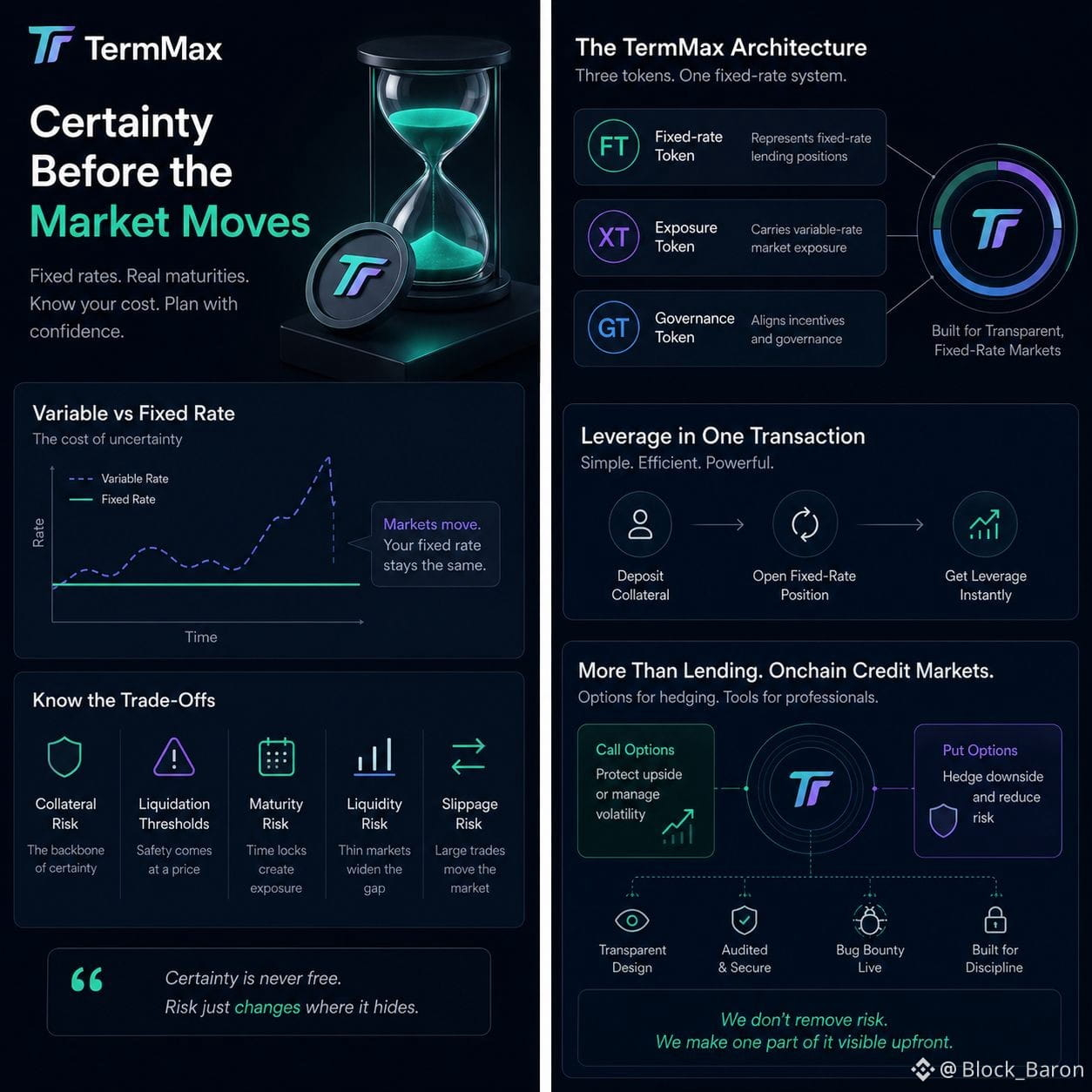
The longer I watch crypto, the more I’ve realized that privacy is one of those words that sounds simple until you ask what it actually means in practice.
Dusk caught my attention because it seems to be approaching the problem from the financial side rather than treating privacy like another feature to add to a chain. The idea of confidential smart contracts and its XSC standard makes sense for markets where putting every transaction, balance, or business rule in public isn’t exactly practical.
But I’ve seen this before in another form. Good infrastructure can still become irrelevant if nobody actually wants to use it.
That’s the part I keep thinking about with Dusk. Financial systems come with uncomfortable things like compliance, identity, permissions, reporting, settlement and regulation. Crypto spent years trying to remove that friction. Maybe the harder challenge is figuring out which friction should actually remain.
I’m not fully convinced Dusk has solved that yet, and I don’t think it should be. These things take years to prove themselves outside the crypto bubble.
Still, something about the approach feels more grounded than the usual “private blockchain will change finance” pitch.
The real test isn’t whether the technology sounds clever.
It’s whether institutions eventually find it useful enough to care.
#dusk $DUSK @Dusk
Dusk caught my attention because it seems to be approaching the problem from the financial side rather than treating privacy like another feature to add to a chain. The idea of confidential smart contracts and its XSC standard makes sense for markets where putting every transaction, balance, or business rule in public isn’t exactly practical.
But I’ve seen this before in another form. Good infrastructure can still become irrelevant if nobody actually wants to use it.
That’s the part I keep thinking about with Dusk. Financial systems come with uncomfortable things like compliance, identity, permissions, reporting, settlement and regulation. Crypto spent years trying to remove that friction. Maybe the harder challenge is figuring out which friction should actually remain.
I’m not fully convinced Dusk has solved that yet, and I don’t think it should be. These things take years to prove themselves outside the crypto bubble.
Still, something about the approach feels more grounded than the usual “private blockchain will change finance” pitch.
The real test isn’t whether the technology sounds clever.
It’s whether institutions eventually find it useful enough to care.
#dusk $DUSK @Dusk
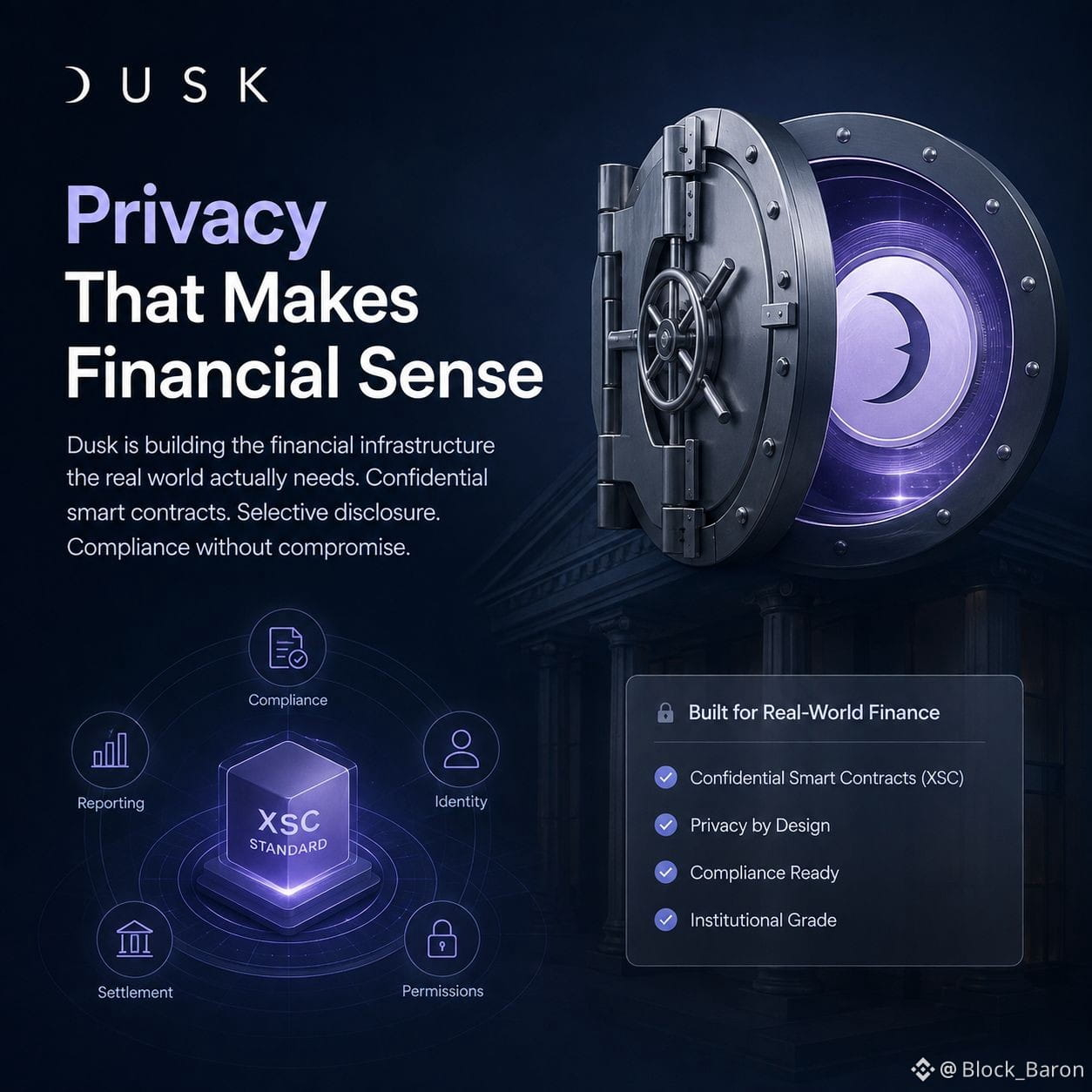
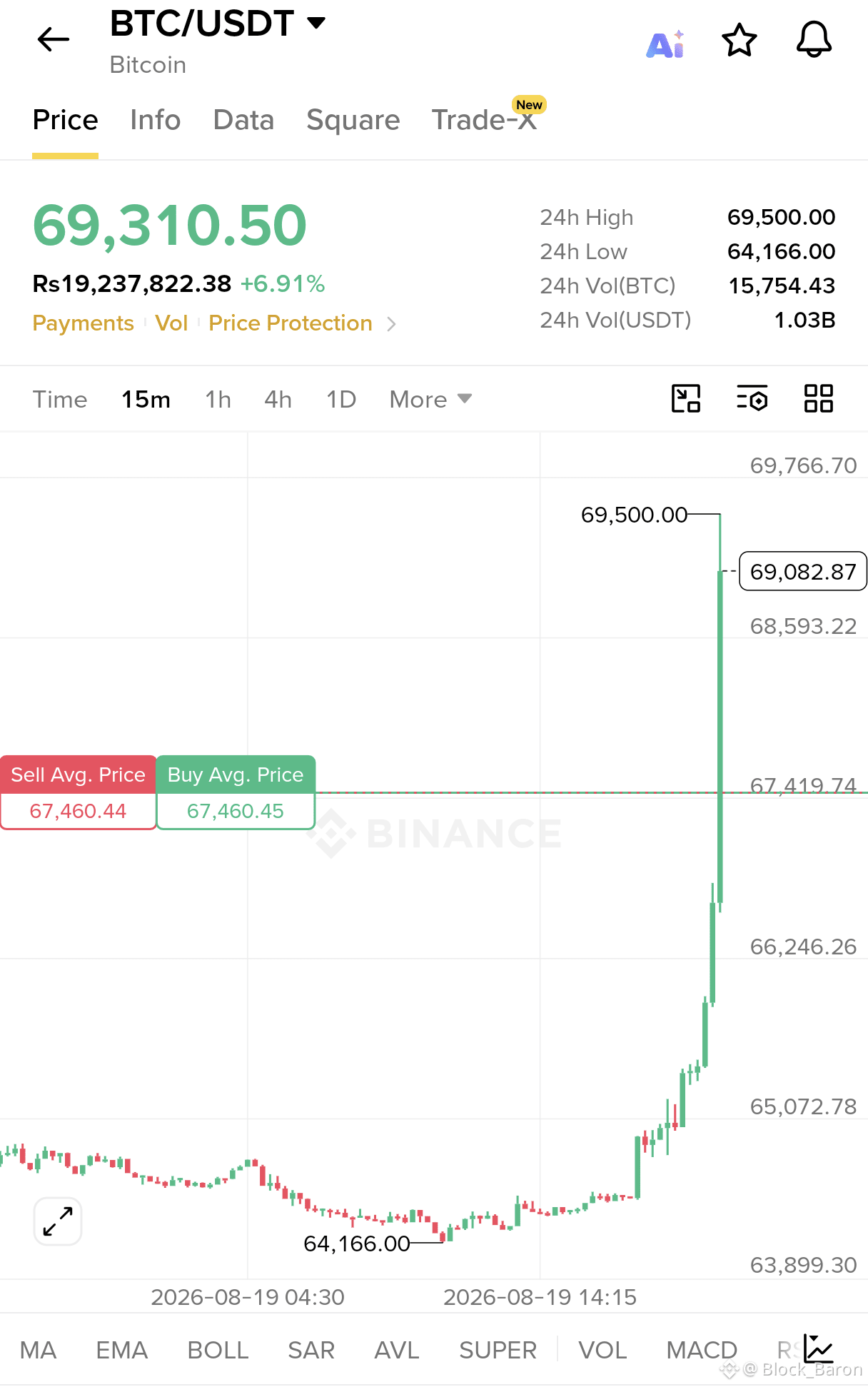
$BTC is knocking hard on the $70,000 resistance 🔥
Price: $69,855
15M structure is bullish, with buyers pushing back toward the session high after the dip to $67,825. A clean breakout and 15M close above $70K could trigger the next leg higher. 🚀
🟢 LONG SETUP
EP: $69,850 – $70,050
TP1: $70,350
TP2: $70,700
TP3: $71,200
SL: $69,450
⚡ Key trigger: $70,000 breakout + 15M confirmation
If BTC loses $69,450, the bullish setup is invalidated.
Risk management first. No FOMO. 🎯
Price: $69,855
15M structure is bullish, with buyers pushing back toward the session high after the dip to $67,825. A clean breakout and 15M close above $70K could trigger the next leg higher. 🚀
🟢 LONG SETUP
EP: $69,850 – $70,050
TP1: $70,350
TP2: $70,700
TP3: $71,200
SL: $69,450
⚡ Key trigger: $70,000 breakout + 15M confirmation
If BTC loses $69,450, the bullish setup is invalidated.
Risk management first. No FOMO. 🎯
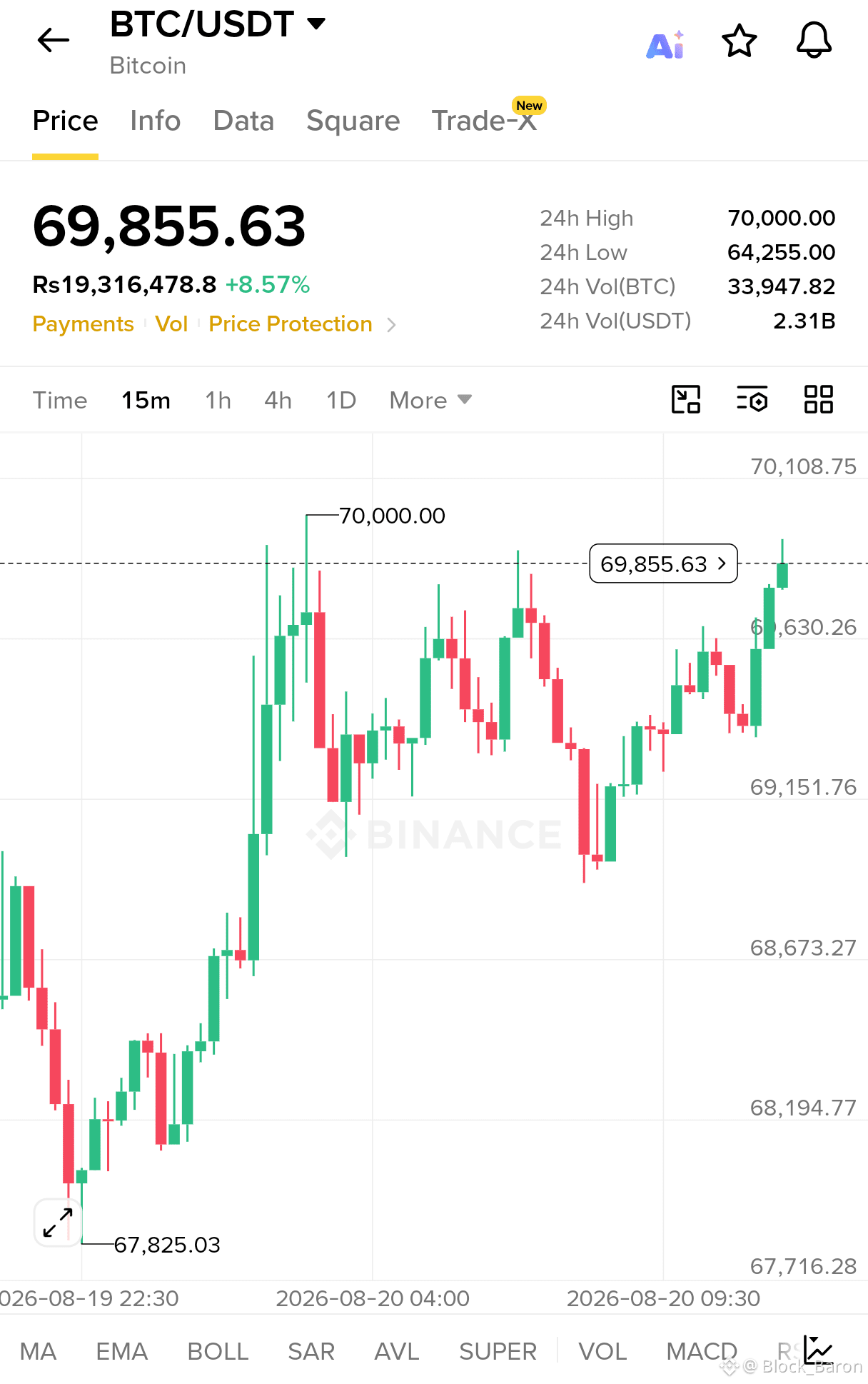
I’m noticing TermMax for a reason I didn’t expect: it isn’t pretending uncertainty has disappeared. It tries to price some of it in advance. After years of watching lending rates jump when a market gets crowded, fixed-cost borrowing and a known maturity feel less like innovation and more like an admission that variable-rate DeFi never became as predictable as promised.
Still, I don’t fully trust the neatness of it. TermMax turns debt into tradable pieces, matches liquidity along custom curves, and places options-style exposure beside lending. That may clarify rates, but it creates other places for friction to hide: thin order flow, slippage, awkward collateral during liquidation, and exits that work until everyone wants one. I’ve seen this before—the risk doesn’t vanish; it changes shape behind a cleaner interface.
What keeps me watching is that TermMax is dealing with a boring problem crypto usually avoids: time. Borrowers want certainty, lenders want a defined return, and both may need liquidity before maturity. I keep noticing that stronger protocols expose trade-offs instead of promising escape from them. I’m not sure yet whether TermMax can keep markets deep without incentives doing the heavy lifting. But after another cycle of recycled narratives, something about this feels different. Not safer. Just more honest about where the risk sits.
#termmax @TermMax
Still, I don’t fully trust the neatness of it. TermMax turns debt into tradable pieces, matches liquidity along custom curves, and places options-style exposure beside lending. That may clarify rates, but it creates other places for friction to hide: thin order flow, slippage, awkward collateral during liquidation, and exits that work until everyone wants one. I’ve seen this before—the risk doesn’t vanish; it changes shape behind a cleaner interface.
What keeps me watching is that TermMax is dealing with a boring problem crypto usually avoids: time. Borrowers want certainty, lenders want a defined return, and both may need liquidity before maturity. I keep noticing that stronger protocols expose trade-offs instead of promising escape from them. I’m not sure yet whether TermMax can keep markets deep without incentives doing the heavy lifting. But after another cycle of recycled narratives, something about this feels different. Not safer. Just more honest about where the risk sits.
#termmax @TermMax
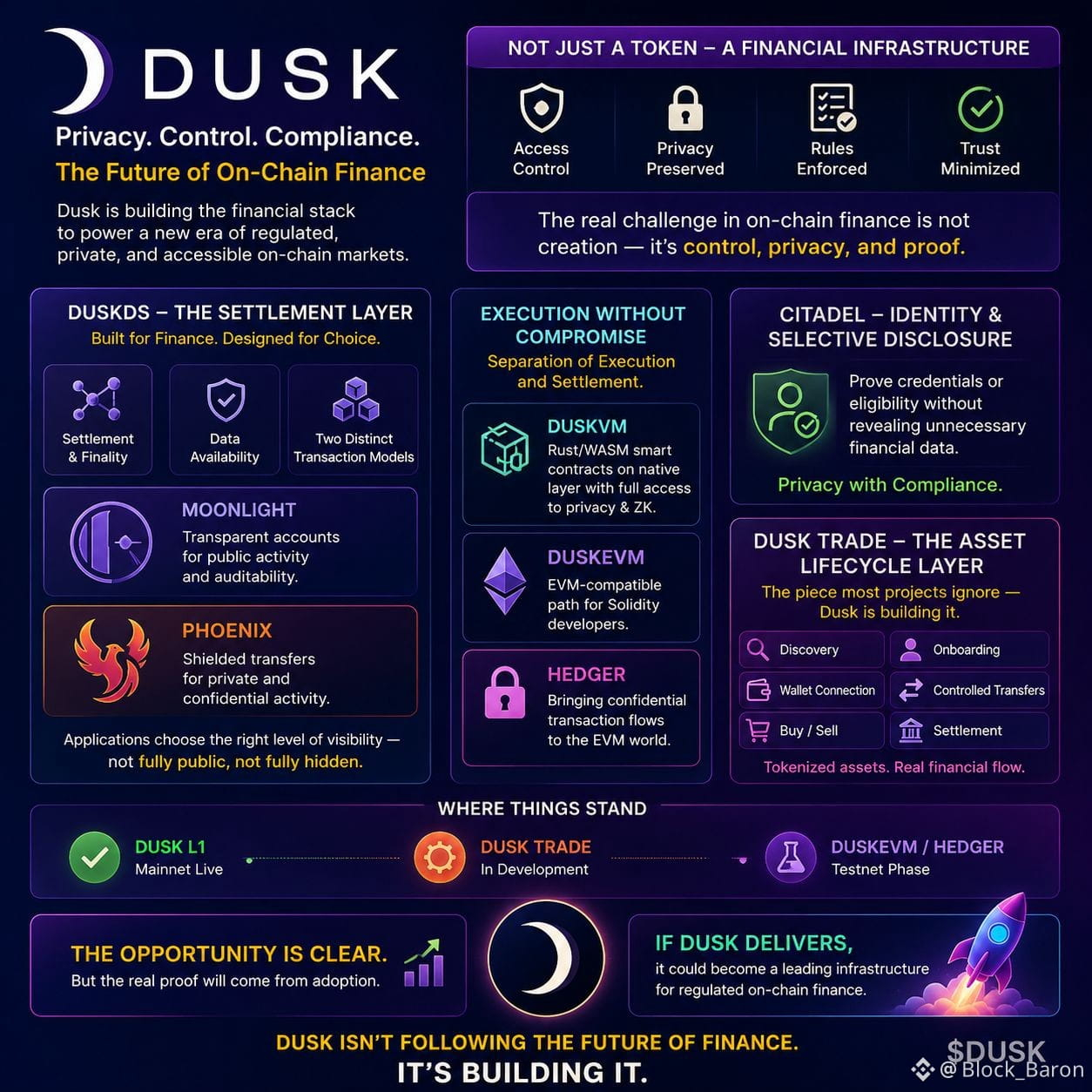
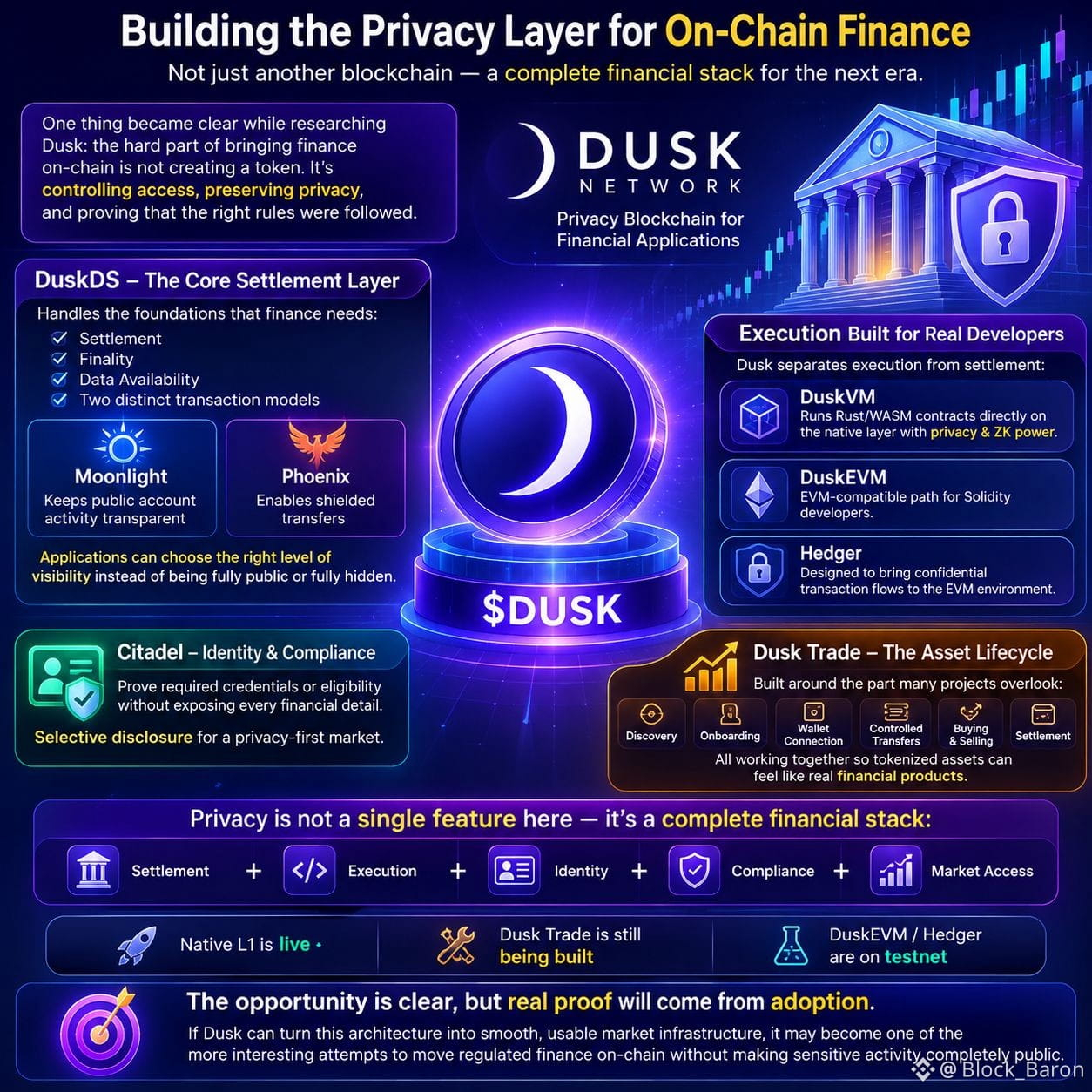
One thing became clear while researching Dusk: the hard part of bringing finance on-chain is not creating a token. It is controlling access, preserving privacy, and proving that the right rules were followed.
Its DuskDS layer handles settlement, finality, data availability, and two distinct transaction models. Moonlight keeps public account activity transparent, while Phoenix enables shielded transfers. This gives applications room to choose the right level of visibility in practice instead of treating finance as fully public or fully hidden.
Then Dusk separates execution from settlement.
DuskVM lets Rust/WASM contracts run directly on the native layer for applications that need access to Dusk’s privacy and zero-knowledge capabilities. DuskEVM offers an EVM-compatible path for Solidity developers, while Hedger is designed to bring confidential transaction flows to that environment.
Citadel adds identity and selective disclosure. A user could prove a required credential or eligibility condition without exposing every financial detail to the market.
Above the protocol, Dusk Trade is being built around the part many projects overlook: the asset lifecycle. Discovery, onboarding, wallet connection, controlled transfers, buying, selling, and settlement all need to work together if tokenized assets are going to feel like financial products.
The project is not presenting privacy as a single feature. It is combining settlement, execution, identity, compliance, and market access into one financial stack.
The native L1 is live. Dusk Trade is still being built, and DuskEVM/Hedger are currently on testnet.
So the opportunity is clear, but the real proof will ultimately come from adoption.
If Dusk can turn this architecture into smooth, usable market infrastructure, it may become one of the more interesting attempts to move regulated finance on-chain without making sensitive activity completely public. $DUSK
#dusk $DUSK @Dusk
Its DuskDS layer handles settlement, finality, data availability, and two distinct transaction models. Moonlight keeps public account activity transparent, while Phoenix enables shielded transfers. This gives applications room to choose the right level of visibility in practice instead of treating finance as fully public or fully hidden.
Then Dusk separates execution from settlement.
DuskVM lets Rust/WASM contracts run directly on the native layer for applications that need access to Dusk’s privacy and zero-knowledge capabilities. DuskEVM offers an EVM-compatible path for Solidity developers, while Hedger is designed to bring confidential transaction flows to that environment.
Citadel adds identity and selective disclosure. A user could prove a required credential or eligibility condition without exposing every financial detail to the market.
Above the protocol, Dusk Trade is being built around the part many projects overlook: the asset lifecycle. Discovery, onboarding, wallet connection, controlled transfers, buying, selling, and settlement all need to work together if tokenized assets are going to feel like financial products.
The project is not presenting privacy as a single feature. It is combining settlement, execution, identity, compliance, and market access into one financial stack.
The native L1 is live. Dusk Trade is still being built, and DuskEVM/Hedger are currently on testnet.
So the opportunity is clear, but the real proof will ultimately come from adoption.
If Dusk can turn this architecture into smooth, usable market infrastructure, it may become one of the more interesting attempts to move regulated finance on-chain without making sensitive activity completely public. $DUSK
#dusk $DUSK @Dusk
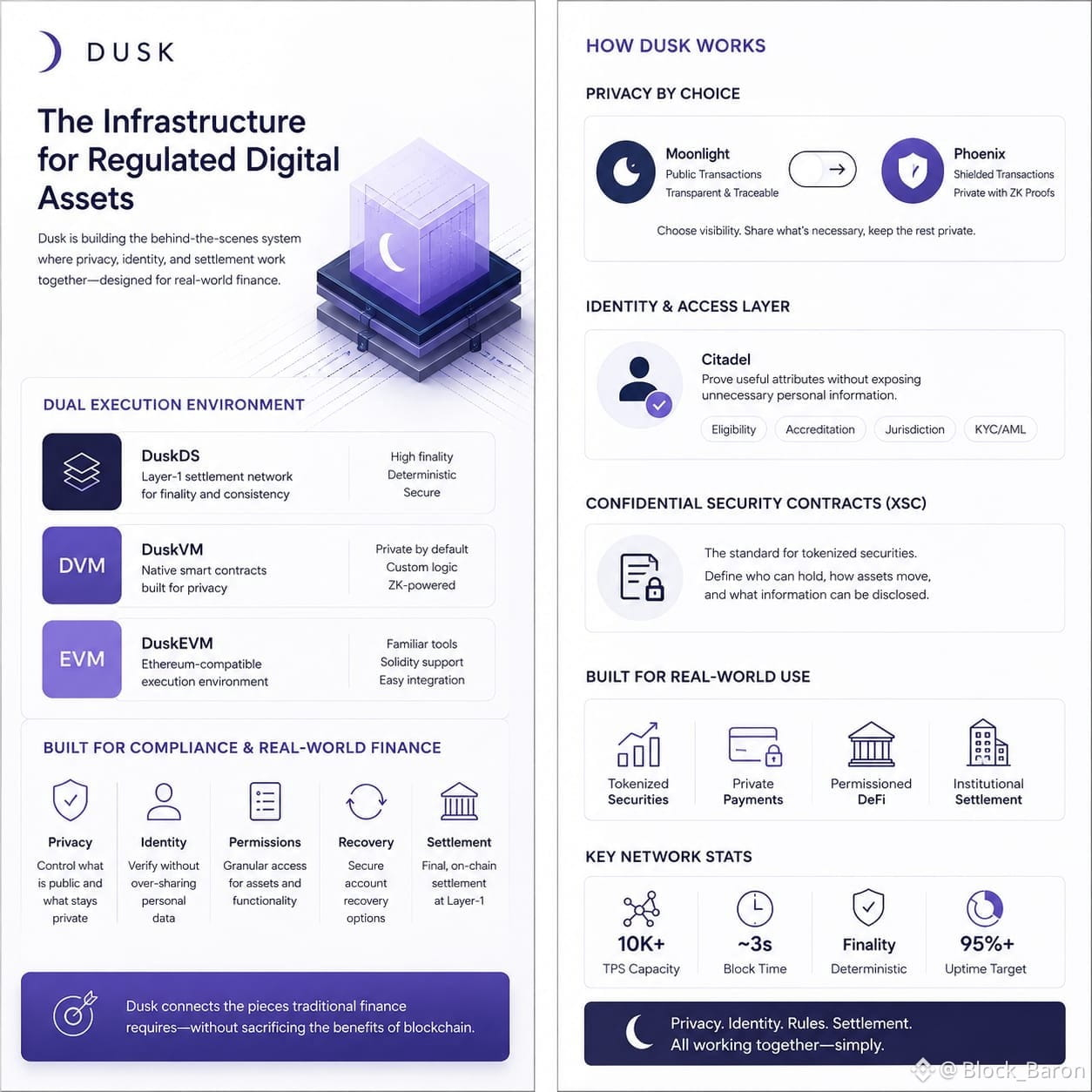
Dusk is often described as a privacy blockchain, but that feels a little too simple. From what I understand, it is trying to build the behind-the-scenes system for regulated digital assets, where privacy, identity checks, and settlement all need to work together.
The network has its own Layer-1 settlement side, called DuskDS, where transactions are finalized. It also has DuskVM for smart contracts built directly on the network, and DuskEVM for developers who want to use familiar Ethereum-style tools. That gives Dusk room for both native private applications and more familiar on-chain development.
Its privacy model is also not just about hiding everything. Moonlight handles public account transactions, while Phoenix handles shielded transfers using zero-knowledge proofs. So users can choose when activity should be visible and when details such as amounts or transaction links should stay private.
Another important part is Citadel, Dusk’s identity and access layer. The idea is that someone can prove a useful detail—such as being eligible for an asset or living in a certain region—without giving away all of their personal information. For financial products, that could matter more than simply having anonymous transfers.
Then there is XSC, the Confidential Security Contract standard. It is made for tokenized securities and lets issuers add rules around who can hold an asset, how it moves, and what information may need to be disclosed.
I like that Dusk is focused on the parts crypto usually avoids: permissions, privacy, recovery, rules, and real settlement. It is a serious direction, but the real test will be whether all of these moving pieces can feel simple for normal users.
#dusk $DUSK @Dusk
The network has its own Layer-1 settlement side, called DuskDS, where transactions are finalized. It also has DuskVM for smart contracts built directly on the network, and DuskEVM for developers who want to use familiar Ethereum-style tools. That gives Dusk room for both native private applications and more familiar on-chain development.
Its privacy model is also not just about hiding everything. Moonlight handles public account transactions, while Phoenix handles shielded transfers using zero-knowledge proofs. So users can choose when activity should be visible and when details such as amounts or transaction links should stay private.
Another important part is Citadel, Dusk’s identity and access layer. The idea is that someone can prove a useful detail—such as being eligible for an asset or living in a certain region—without giving away all of their personal information. For financial products, that could matter more than simply having anonymous transfers.
Then there is XSC, the Confidential Security Contract standard. It is made for tokenized securities and lets issuers add rules around who can hold an asset, how it moves, and what information may need to be disclosed.
I like that Dusk is focused on the parts crypto usually avoids: permissions, privacy, recovery, rules, and real settlement. It is a serious direction, but the real test will be whether all of these moving pieces can feel simple for normal users.
#dusk $DUSK @Dusk
I'm noticing TermMax for a reason I didn’t expect: it isn’t pretending volatility has disappeared. It’s moving one kind of uncertainty somewhere else.
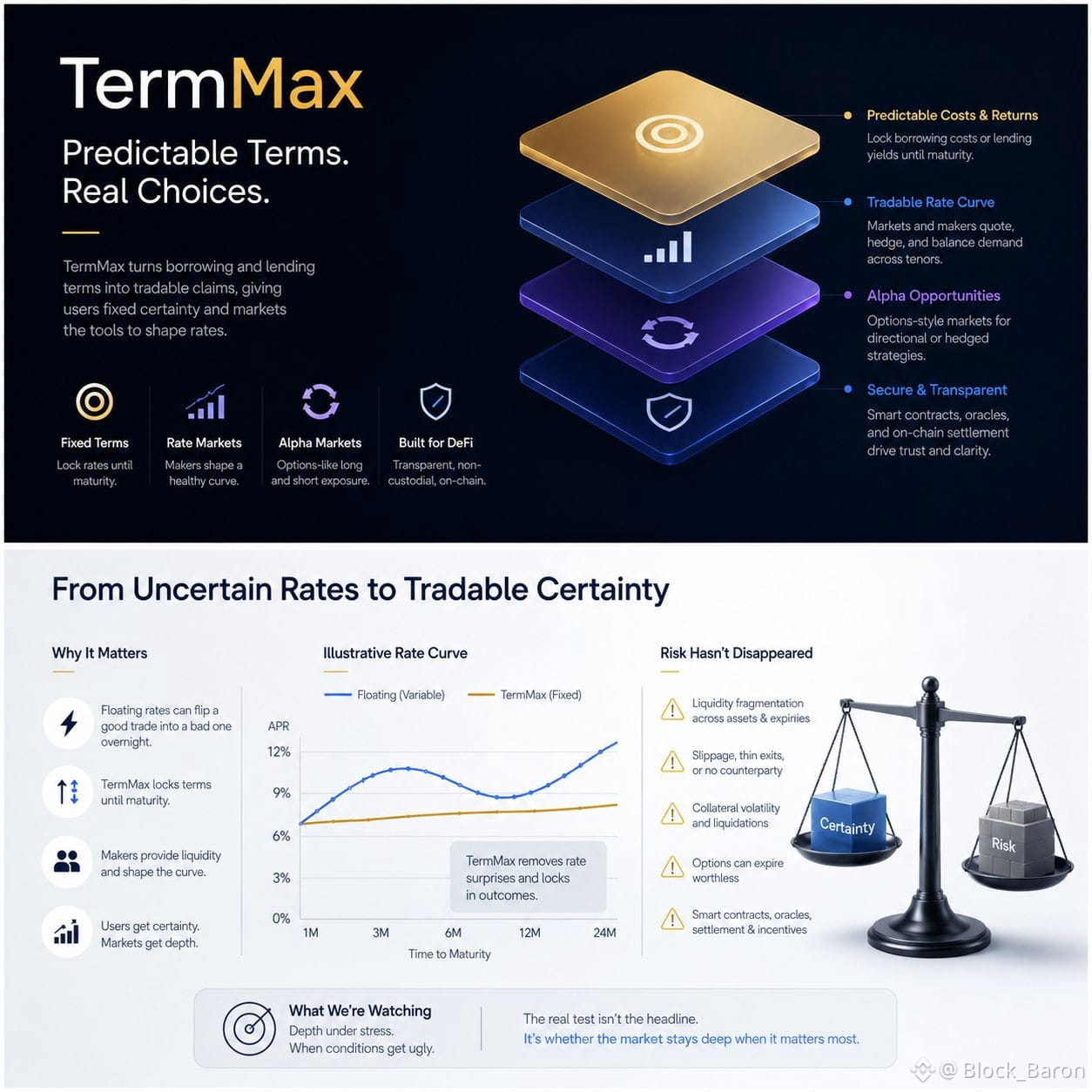
I’ve watched DeFi sell “predictable yield” through enough cycles to know the small print usually becomes the story. Fixing a borrowing cost or lending return until maturity is useful when floating rates can turn a sensible position bad overnight. TermMax turns those terms into tradable claims, lets makers shape the rate curve, and uses Alpha markets for options-like long and short exposure.
That sounds cleaner than endless looping, but a clean interface does not clean the risk. Liquidity is still divided across assets and expiries. A fixed quote means little if size brings slippage, the exit is thin, or no maker wants the other side. Collateral can fall, liquidations still hurt, and an option premium can expire worthless. Then come the layers I don’t fully trust yet: contracts, oracles, settlement, and incentives keeping activity alive.
I’ve seen this before—complexity hidden behind one button and mistaken for simplicity. Still, something about this feels different. TermMax is working on a real problem: crypto credit has spent too long treating unpredictable rates as normal. I’m not sure yet whether the market stays deep when conditions get ugly. That is what I keep watching, not the headline.
#termmax @TermMax
I’ve watched DeFi sell “predictable yield” through enough cycles to know the small print usually becomes the story. Fixing a borrowing cost or lending return until maturity is useful when floating rates can turn a sensible position bad overnight. TermMax turns those terms into tradable claims, lets makers shape the rate curve, and uses Alpha markets for options-like long and short exposure.
That sounds cleaner than endless looping, but a clean interface does not clean the risk. Liquidity is still divided across assets and expiries. A fixed quote means little if size brings slippage, the exit is thin, or no maker wants the other side. Collateral can fall, liquidations still hurt, and an option premium can expire worthless. Then come the layers I don’t fully trust yet: contracts, oracles, settlement, and incentives keeping activity alive.
I’ve seen this before—complexity hidden behind one button and mistaken for simplicity. Still, something about this feels different. TermMax is working on a real problem: crypto credit has spent too long treating unpredictable rates as normal. I’m not sure yet whether the market stays deep when conditions get ugly. That is what I keep watching, not the headline.
#termmax @TermMax
Every cycle finds a new way to tell us that finance is finally about to move on-chain, and every cycle I end up watching the same uncomfortable details return: identity leaks, public balances, governance theatre, and products that only feel simple after someone else absorbs the complexity.
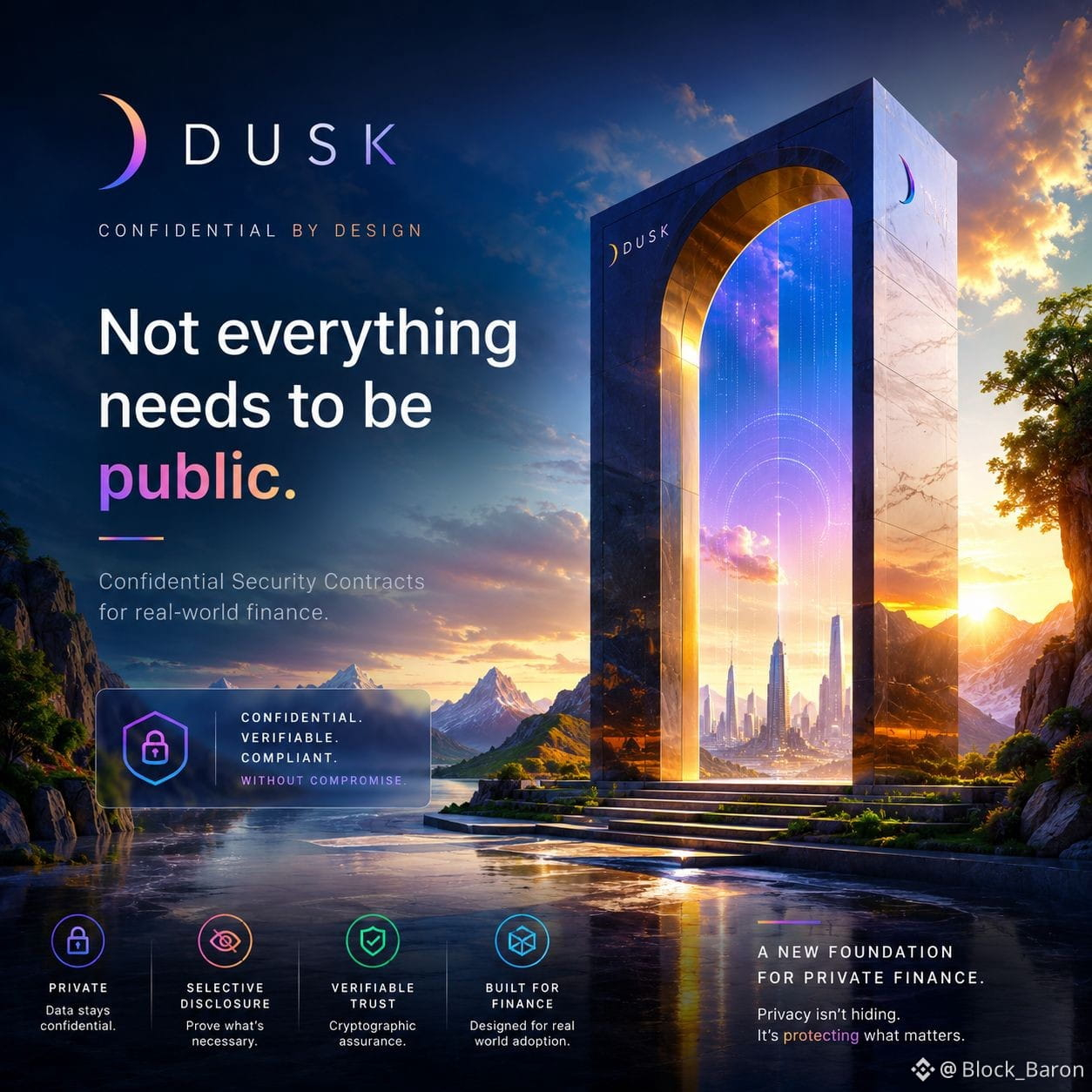
Dusk Network catches my attention because it begins closer to that discomfort. A privacy-focused L1 built around confidential security contracts is not pretending that financial activity should be public just because blockchains made it visible. I’ve seen this before, though: privacy gets praised in principle, then treated like a compliance problem the moment real institutions enter the room.
The XSC idea feels useful because it points toward a quieter kind of infrastructure—contracts that can prove what needs proving without exposing everything around them. But that promise carries weight. Confidential systems are harder to inspect, harder to explain, and only as trustworthy as the assumptions beneath their proofs, operators, and rules.
I keep noticing how often crypto calls transparency a virtue when it really means permanent exposure for ordinary users. Still, privacy alone does not solve bad incentives, weak adoption, or reliance on intermediaries. I’m not fully convinced Dusk avoids those old gravity wells. Something about the direction feels more honest, though.
#dusk
$DUSK
@Dusk
Dusk Network catches my attention because it begins closer to that discomfort. A privacy-focused L1 built around confidential security contracts is not pretending that financial activity should be public just because blockchains made it visible. I’ve seen this before, though: privacy gets praised in principle, then treated like a compliance problem the moment real institutions enter the room.
The XSC idea feels useful because it points toward a quieter kind of infrastructure—contracts that can prove what needs proving without exposing everything around them. But that promise carries weight. Confidential systems are harder to inspect, harder to explain, and only as trustworthy as the assumptions beneath their proofs, operators, and rules.
I keep noticing how often crypto calls transparency a virtue when it really means permanent exposure for ordinary users. Still, privacy alone does not solve bad incentives, weak adoption, or reliance on intermediaries. I’m not fully convinced Dusk avoids those old gravity wells. Something about the direction feels more honest, though.
#dusk
$DUSK
@Dusk
Log in to explore more content