

表情包
1.7k ပို့စ်များ

表情包
တိုင်ကြားမည်
သုံးစွဲသူကို ဘလော့မည်
1.3K+ ဖော်လိုလုပ်ထားသည်
11.7K+ ဖော်လိုလုပ်သူများ
1.0K+ လိုက်ခ်လုပ်ထားသည်
ပို့စ်များ
အားလုံး
တိုက်ရိုက်ထုတ်လွှင့်ခြင်း
·
--
$AKAM
{future}(AKAMUSDT)
USDT
AKAMUSDT is maintaining bullish momentum, trading at $91.47 after gaining +5.47% over the past 24 hours.
The upward movement puts this coin on the market watchlist. Traders should look for sustained buying pressure and a potential breakout confirmation before considering an entry.
Keep in mind that short-term momentum does not guarantee continued gains.
Current Price: $91.47
24H Change: +5.47%
$AKAM
USDT
AKAMUSDT is maintaining bullish momentum, trading at $91.47 after gaining +5.47% over the past 24 hours.
The upward movement puts this coin on the market watchlist. Traders should look for sustained buying pressure and a potential breakout confirmation before considering an entry.
Keep in mind that short-term momentum does not guarantee continued gains.
Current Price: $91.47
24H Change: +5.47%
2
91
·
--
တက်ရိပ်ရှိသည်
$VKTX
{future}(VKTXUSDT)
USDT
VKTXUSDT is recording a solid upward move, currently trading at $26.82 with a 24-hour gain of +6.98%.
The price action reflects positive short-term performance. Traders can keep an eye on momentum, trading volume, and important support and resistance zones to evaluate the next possible move.
Confirmation matters more than chasing a sudden price increase.
Current Price: $26.82
24H Change: +6.98%
$VKTX
USDT
VKTXUSDT is recording a solid upward move, currently trading at $26.82 with a 24-hour gain of +6.98%.
The price action reflects positive short-term performance. Traders can keep an eye on momentum, trading volume, and important support and resistance zones to evaluate the next possible move.
Confirmation matters more than chasing a sudden price increase.
Current Price: $26.82
24H Change: +6.98%
106
·
--
တက်ရိပ်ရှိသည်
$USDEX
{future}(USDEXUSDT)
USDT
USDEXUSDT is moving higher, with its price reaching $11.12 and a 24-hour gain of +7.96%.
The positive performance suggests strengthening short-term momentum. Market participants should monitor price stability, volume, and potential resistance before making trading decisions.
Strong daily gains can be followed by pullbacks, so disciplined risk management is essential.
Current Price: $11.12
24H Change: +7.96%
$USDEX
USDT
USDEXUSDT is moving higher, with its price reaching $11.12 and a 24-hour gain of +7.96%.
The positive performance suggests strengthening short-term momentum. Market participants should monitor price stability, volume, and potential resistance before making trading decisions.
Strong daily gains can be followed by pullbacks, so disciplined risk management is essential.
Current Price: $11.12
24H Change: +7.96%
337
·
--
တက်ရိပ်ရှိသည်
$ZCSH
{future}(ZCSHUSDT)
USDT
ZCSHUSDT is demonstrating positive market momentum, trading at $33.51 with a 24-hour increase of +9.90%.
The recent price action indicates growing buying interest. Traders should watch trading volume and key resistance levels to assess whether the upward move can continue.
Always manage risk and avoid entering a trade based on percentage gains alone.
Current Price: $33.51
24H Change: +9.90%
$ZCSH
USDT
ZCSHUSDT is demonstrating positive market momentum, trading at $33.51 with a 24-hour increase of +9.90%.
The recent price action indicates growing buying interest. Traders should watch trading volume and key resistance levels to assess whether the upward move can continue.
Always manage risk and avoid entering a trade based on percentage gains alone.
Current Price: $33.51
24H Change: +9.90%
137
·
--
တက်ရိပ်ရှိသည်
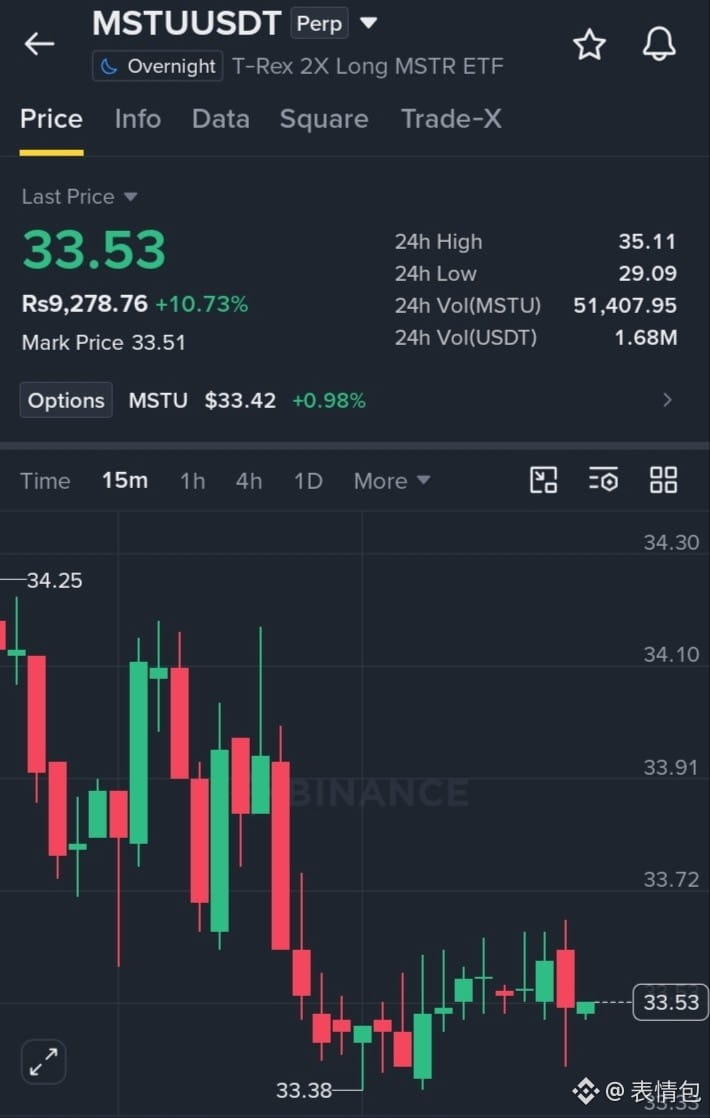
$MSTU USDT is showing strong bullish momentum, currently trading at $33.51 with an impressive 24-hour gain of +10.96%.
The coin is attracting market attention as buyers push the price higher. Traders should monitor volume, resistance levels, and momentum for potential opportunities.
A strong move can create opportunities, but volatility and sudden reversals remain important risks.
Current Price: $33.51
24H Change: +10.96%
{future}(MSTUUSDT)
$MSTU USDT is showing strong bullish momentum, currently trading at $33.51 with an impressive 24-hour gain of +10.96%.
The coin is attracting market attention as buyers push the price higher. Traders should monitor volume, resistance levels, and momentum for potential opportunities.
A strong move can create opportunities, but volatility and sudden reversals remain important risks.
Current Price: $33.51
24H Change: +10.96%
306
·
--
တက်ရိပ်ရှိသည်
$BR
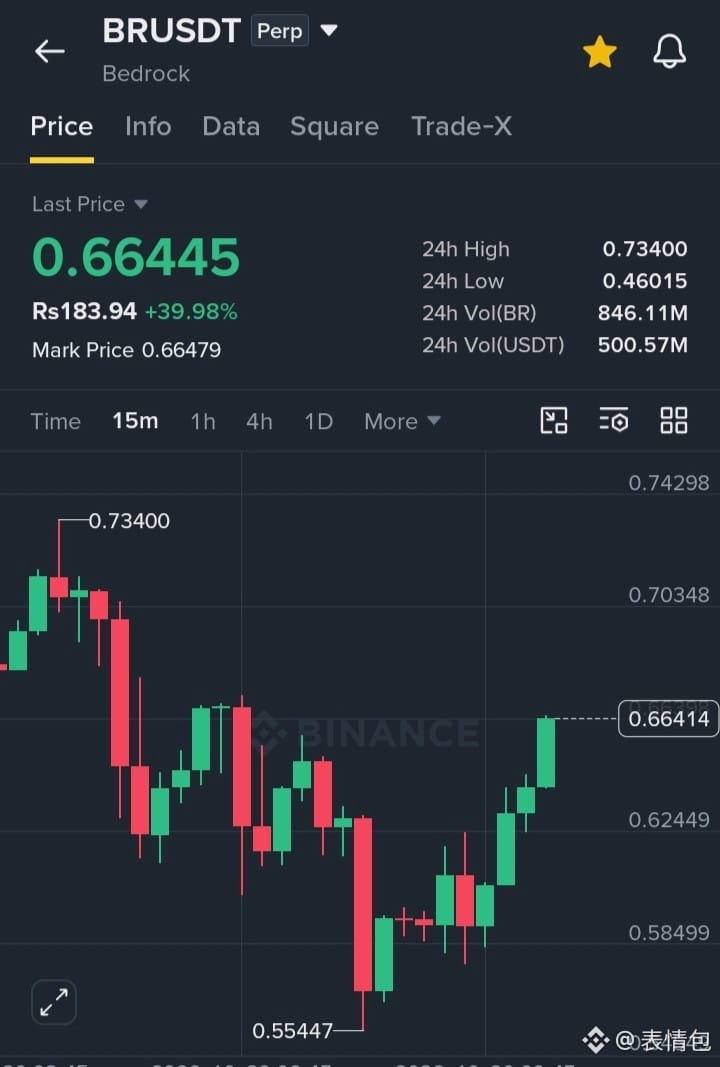
USDT (Bedrock) is currently trading at $0.66207, with a displayed price of approximately Rs 183.28.
The trading screen shows a strong +39.82% 24-hour gain, highlighting a significant move in the market.
After such a sharp rise, traders should pay attention to trading volume, price stability, and possible profit-taking.
If bullish momentum continues, the price may attempt further gains. However, a rapid increase can also be followed by a sharp correction.
Watch the chart carefully, avoid chasing sudden pumps, and always manage your trading risk.
{future}(BRUSDT)
$BR
USDT (Bedrock) is currently trading at $0.66207, with a displayed price of approximately Rs 183.28.
The trading screen shows a strong +39.82% 24-hour gain, highlighting a significant move in the market.
After such a sharp rise, traders should pay attention to trading volume, price stability, and possible profit-taking.
If bullish momentum continues, the price may attempt further gains. However, a rapid increase can also be followed by a sharp correction.
Watch the chart carefully, avoid chasing sudden pumps, and always manage your trading risk.
243
·
--
$BWET
{future}(BWETUSDT)
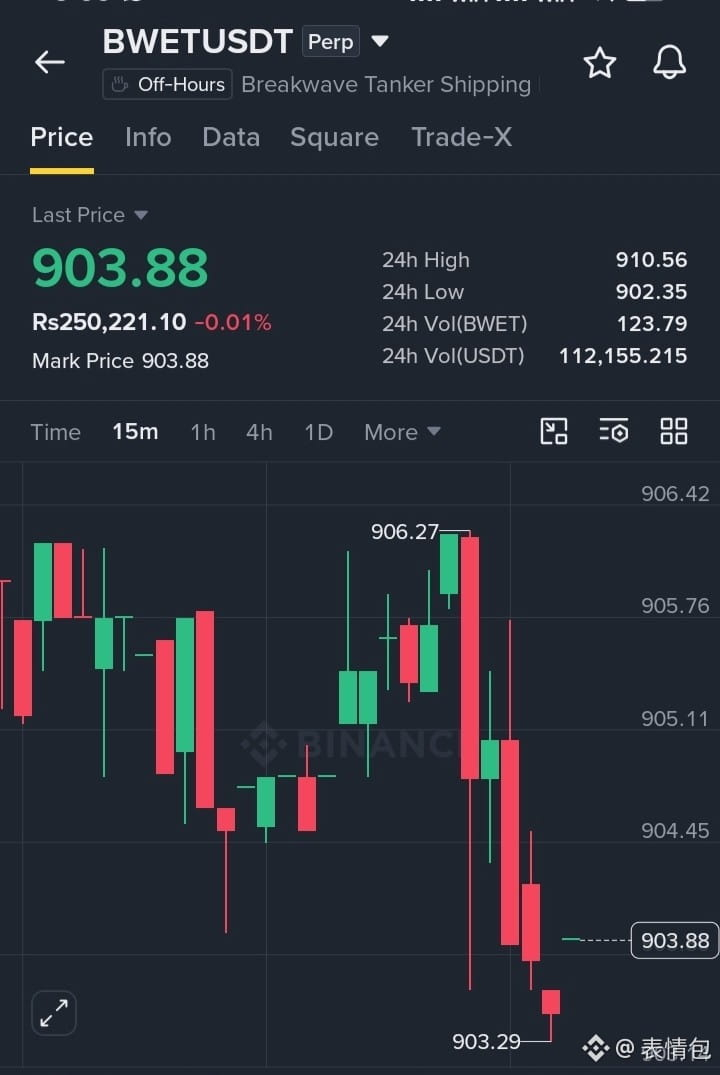
USDT Perp is trading at 906.25, up +0.34% over the last 24 hours. The market is showing a modest upward move, and traders may watch volume, support, and resistance levels for confirmation. Always manage risk and avoid entering a trade based on price movement alone.
$BWET
USDT Perp is trading at 906.25, up +0.34% over the last 24 hours. The market is showing a modest upward move, and traders may watch volume, support, and resistance levels for confirmation. Always manage risk and avoid entering a trade based on price movement alone.
USDT Perp is trading at 906.25, up +0.34% over the last 24 hours. The market is showing a modest upward move, and traders may watch volume, support, and resistance levels for confirmation. Always manage risk and avoid entering a trade based on price movement alone.
454
·
--
တက်ရိပ်ရှိသည်
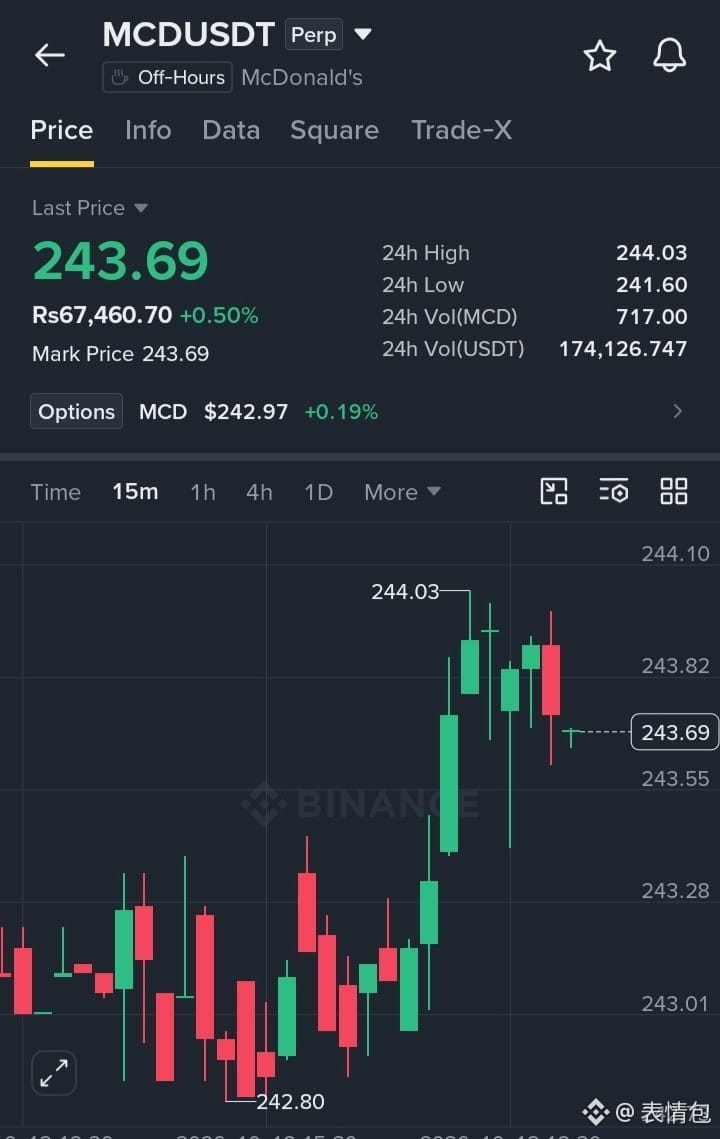
$MCD USDT Perp is showing positive momentum, trading at 243.68 with a 24-hour gain of +0.50%. Buyers are currently pushing the price higher, but market conditions can change quickly. Watch price action and volume before making any trading decision.
{future}(MCDUSDT)
$MCD USDT Perp is showing positive momentum, trading at 243.68 with a 24-hour gain of +0.50%. Buyers are currently pushing the price higher, but market conditions can change quickly. Watch price action and volume before making any trading decision.
299
·
--
တက်ရိပ်ရှိသည်
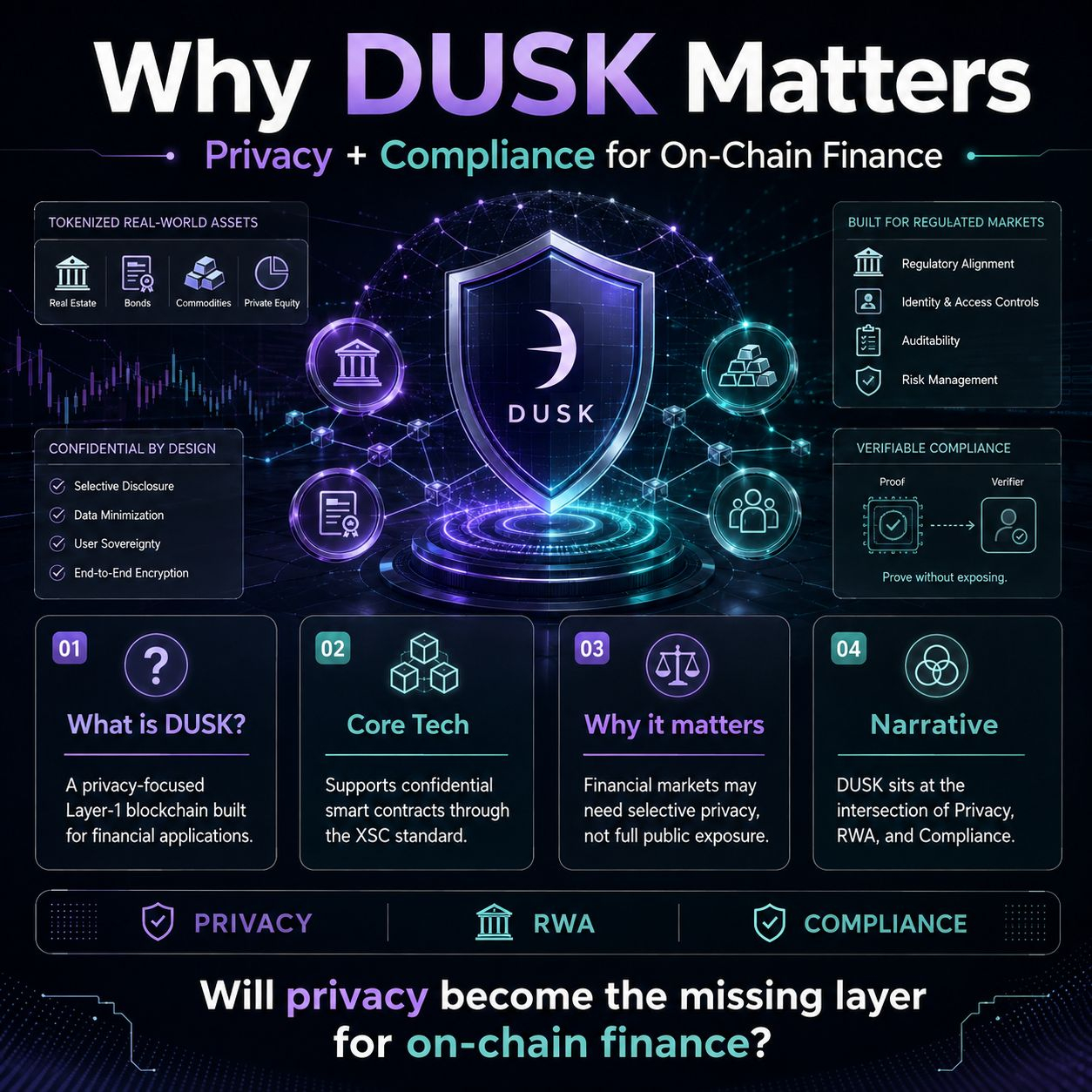
Most blockchains solved one problem: transparency.
But financial markets have another challenge:
How do you bring trillions of dollars of assets on-chain without exposing every sensitive detail publicly?
This is where the privacy narrative becomes interesting.
DUSK Network is building around a different idea — a blockchain where financial applications can combine confidentiality with compliance.
As RWA (Real-World Assets) continue gaining attention, institutions may not only need speed and efficiency. They may also need controlled visibility, privacy protection, and secure settlement infrastructure.
DUSK’s approach focuses on a privacy-first Layer-1 with confidential smart contracts powered by its XSC standard, aiming to address challenges around regulated digital assets.
The bigger question is not whether privacy matters today…
The question is:
Will privacy become the missing infrastructure layer that helps traditional finance move on-chain?
Watching projects at the intersection of RWA + Privacy + Compliance could become one of the most interesting narratives of this cycle.
What is your view on DUSK?
#DUSK @Dusk_Foundation
$DUSK
{spot}(DUSKUSDT)
Most blockchains solved one problem: transparency.
But financial markets have another challenge:
How do you bring trillions of dollars of assets on-chain without exposing every sensitive detail publicly?
This is where the privacy narrative becomes interesting.
DUSK Network is building around a different idea — a blockchain where financial applications can combine confidentiality with compliance.
As RWA (Real-World Assets) continue gaining attention, institutions may not only need speed and efficiency. They may also need controlled visibility, privacy protection, and secure settlement infrastructure.
DUSK’s approach focuses on a privacy-first Layer-1 with confidential smart contracts powered by its XSC standard, aiming to address challenges around regulated digital assets.
The bigger question is not whether privacy matters today…
The question is:
Will privacy become the missing infrastructure layer that helps traditional finance move on-chain?
Watching projects at the intersection of RWA + Privacy + Compliance could become one of the most interesting narratives of this cycle.
What is your view on DUSK?
#DUSK @Dusk
$DUSK
46
2
23
360
·
--
Most blockchains solved one problem: transparency.
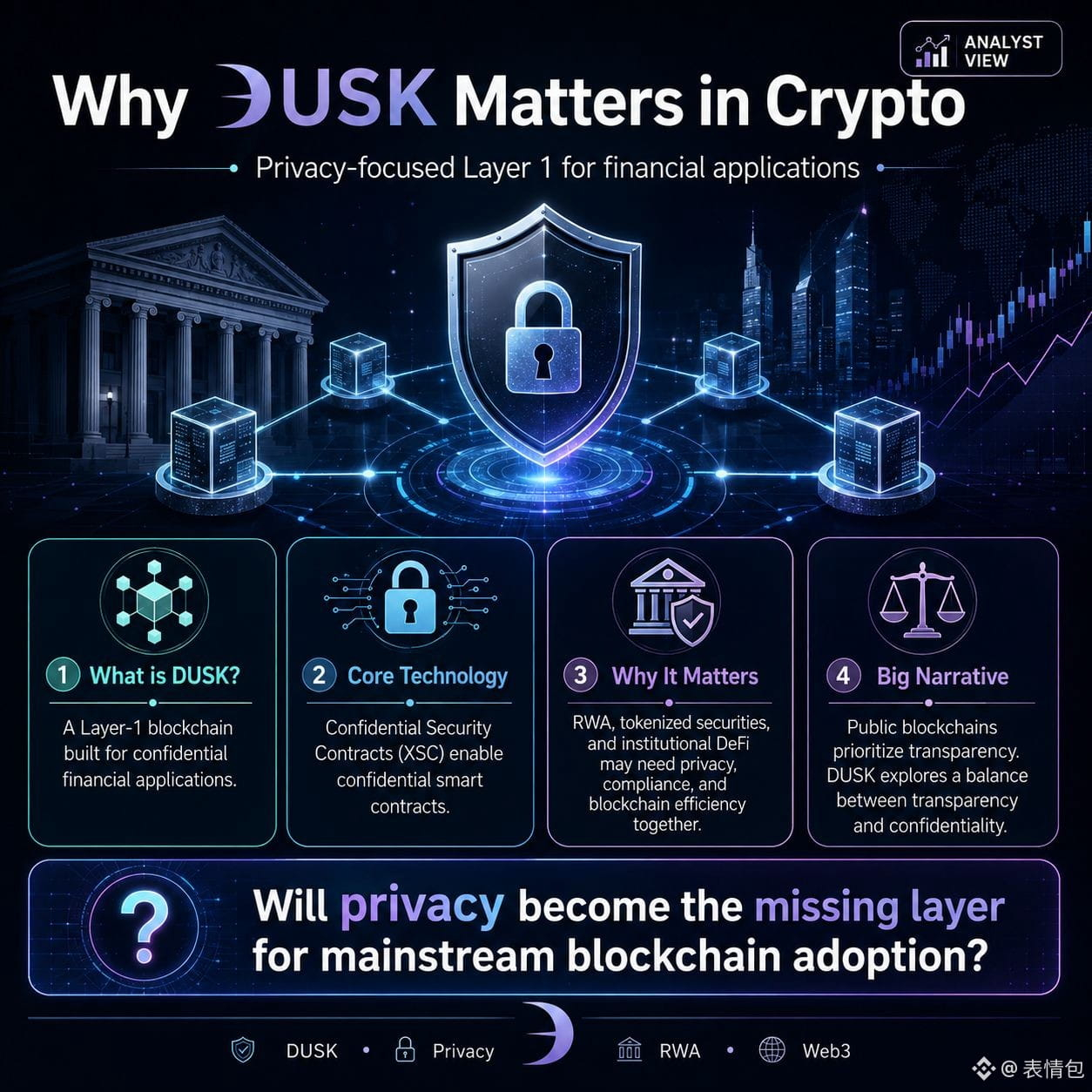
But the next challenge for financial markets could be different — how to use blockchain without exposing sensitive financial data.
As RWA (Real-World Assets), tokenized securities, and institutional DeFi continue to grow, privacy may become a key infrastructure requirement rather than just an optional feature.
This is where DUSK Network is building its narrative.
DUSK is a Layer-1 blockchain focused on confidential financial applications, using Confidential Security Contracts (XSC) and privacy-focused smart contracts to explore how regulated assets can move on-chain while maintaining confidentiality.
The interesting part is not only the technology — it is the problem DUSK is trying to solve.
Public blockchains brought openness. Financial institutions may require a balance between transparency, compliance, and privacy.
The big question:
Will privacy become the missing layer for mainstream blockchain adoption, or will transparency always remain the priority?
#DUSK $DUSK @Dusk_Foundation
{spot}(DUSKUSDT)
Most blockchains solved one problem: transparency.
But the next challenge for financial markets could be different — how to use blockchain without exposing sensitive financial data.
As RWA (Real-World Assets), tokenized securities, and institutional DeFi continue to grow, privacy may become a key infrastructure requirement rather than just an optional feature.
This is where DUSK Network is building its narrative.
DUSK is a Layer-1 blockchain focused on confidential financial applications, using Confidential Security Contracts (XSC) and privacy-focused smart contracts to explore how regulated assets can move on-chain while maintaining confidentiality.
The interesting part is not only the technology — it is the problem DUSK is trying to solve.
Public blockchains brought openness. Financial institutions may require a balance between transparency, compliance, and privacy.
The big question:
Will privacy become the missing layer for mainstream blockchain adoption, or will transparency always remain the priority?
#DUSK $DUSK @Dusk
1
4
182
·
--
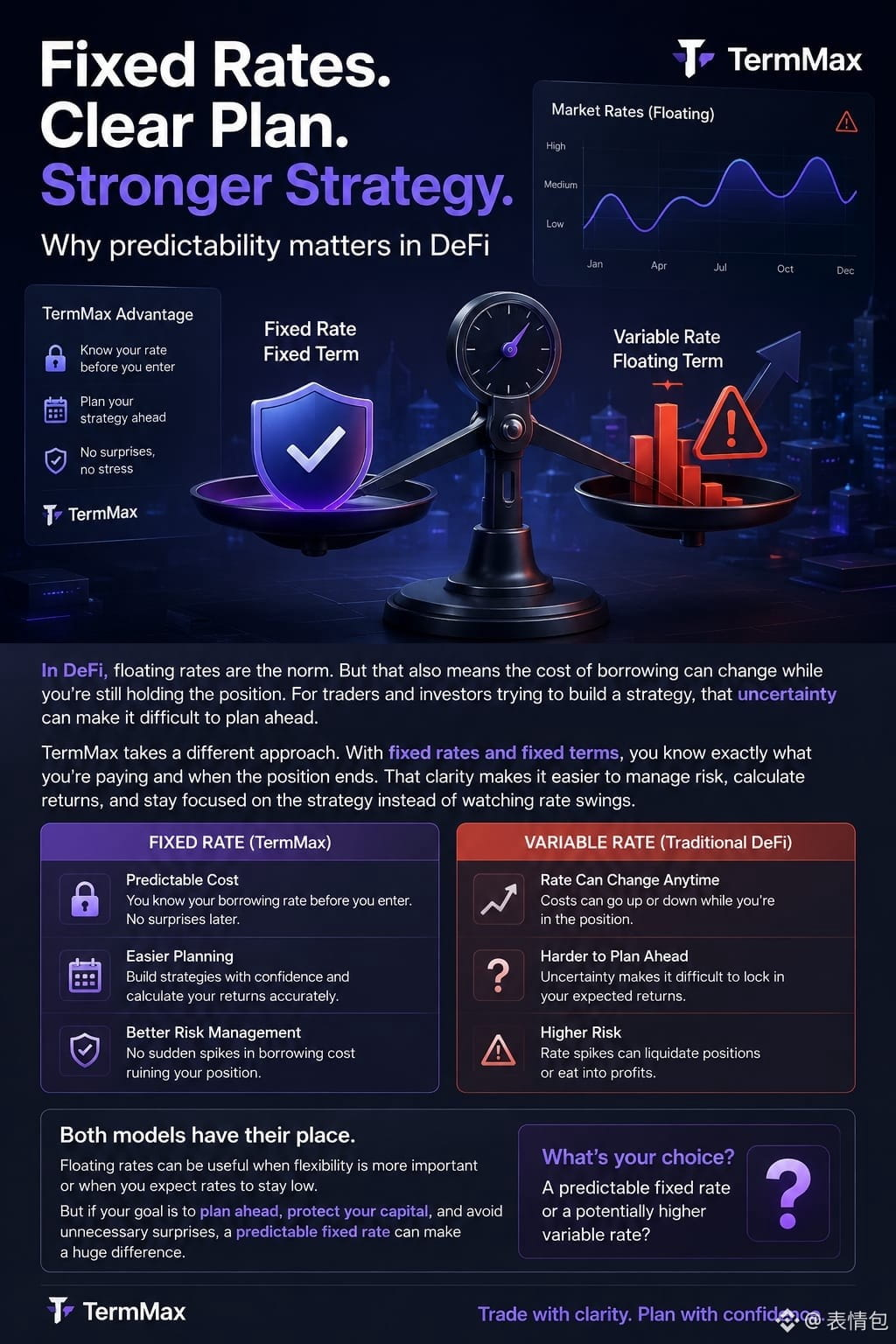
I’ve been thinking about one thing with @termmax lately: fixed rates might actually be more useful than they sound at first.
In DeFi, floating rates are normal. But that also means the cost of borrowing can change while you’re still holding the position. For someone trying to plan a strategy instead of constantly watching the market, that uncertainty can become a real problem.
What I find interesting about TermMax is the focus on fixed rates and fixed terms. You know the rate and the maturity when you enter, which makes the position much easier to understand.
Of course, fixed rates aren’t automatically better for everyone. Floating rates can work well when flexibility is more important. But if I’m planning ahead, I’d rather know my borrowing cost than keep guessing where the rate might move next.
That’s probably the part of TermMax I’m watching most closely.
Would you choose a predictable fixed rate, or take a potentially higher variable rate?
@termmax $TMX #TermMax
I’ve been thinking about one thing with @TermMax lately: fixed rates might actually be more useful than they sound at first.
In DeFi, floating rates are normal. But that also means the cost of borrowing can change while you’re still holding the position. For someone trying to plan a strategy instead of constantly watching the market, that uncertainty can become a real problem.
What I find interesting about TermMax is the focus on fixed rates and fixed terms. You know the rate and the maturity when you enter, which makes the position much easier to understand.
Of course, fixed rates aren’t automatically better for everyone. Floating rates can work well when flexibility is more important. But if I’m planning ahead, I’d rather know my borrowing cost than keep guessing where the rate might move next.
That’s probably the part of TermMax I’m watching most closely.
Would you choose a predictable fixed rate, or take a potentially higher variable rate?
@TermMax $TMX #TermMax
47
2
22
299
·
--
တက်ရိပ်ရှိသည်
စိစစ်အတည်ပြုထားသည်
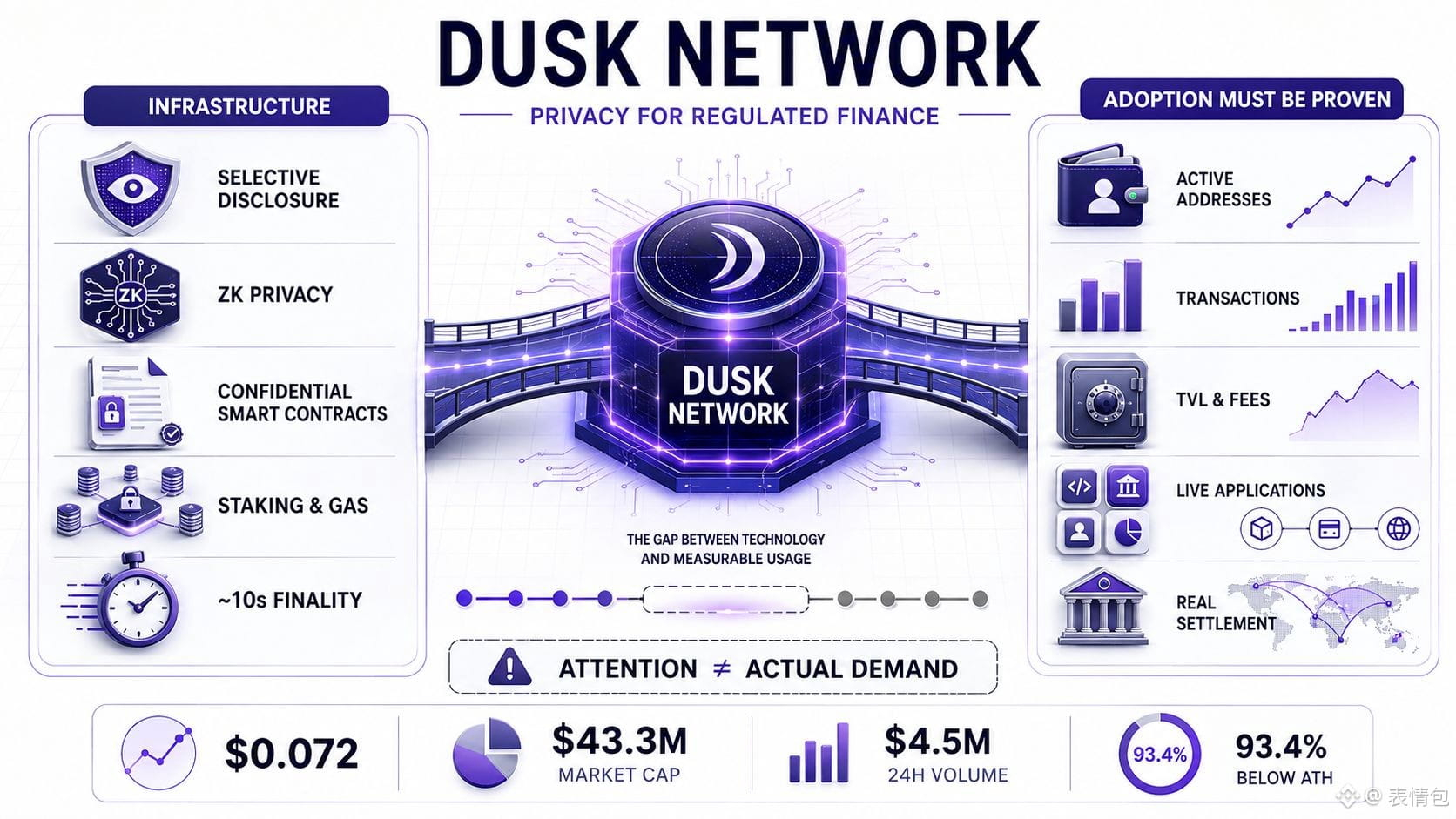
DUSK is back on traders’ radar after gaining roughly 9% in 24 hours and 17.5% over the past week. At about $0.072, it carries a market cap near $43.3 million, while daily trading volume sits around $4.5 million. That momentum is noticeable, but the token remains 93.4% below its $1.09 all-time high, which keeps the move in perspective.
What interests me more is the infrastructure. Dusk is building a Layer 1 for regulated finance with confidential transfers, zero-knowledge smart contracts, selective disclosure and deterministic finality. DUSK is used for transaction fees and staking, giving the token a practical role beyond exchange speculation.
The recent DuskEVM testnet launch also lowers the barrier for Solidity developers. However, DuskEVM and the confidential Hedger layer are still in testing, while Dusk Trade remains under development.
This is where I become cautious. Dusk highlights institutional relationships, substantial planned issuance and more than 210 million tokens staked, but reliable public figures for active addresses, application TVL, fees and recurring transaction activity remain limited. The technology appears serious, yet infrastructure alone does not prove demand. I want to see live applications producing measurable usage before treating the recent market attention as genuine adoption across the live network.
@Dusk_Foundation #dusk $DUSK
{spot}(DUSKUSDT)
DUSK is back on traders’ radar after gaining roughly 9% in 24 hours and 17.5% over the past week. At about $0.072, it carries a market cap near $43.3 million, while daily trading volume sits around $4.5 million. That momentum is noticeable, but the token remains 93.4% below its $1.09 all-time high, which keeps the move in perspective.
What interests me more is the infrastructure. Dusk is building a Layer 1 for regulated finance with confidential transfers, zero-knowledge smart contracts, selective disclosure and deterministic finality. DUSK is used for transaction fees and staking, giving the token a practical role beyond exchange speculation.
The recent DuskEVM testnet launch also lowers the barrier for Solidity developers. However, DuskEVM and the confidential Hedger layer are still in testing, while Dusk Trade remains under development.
This is where I become cautious. Dusk highlights institutional relationships, substantial planned issuance and more than 210 million tokens staked, but reliable public figures for active addresses, application TVL, fees and recurring transaction activity remain limited. The technology appears serious, yet infrastructure alone does not prove demand. I want to see live applications producing measurable usage before treating the recent market attention as genuine adoption across the live network.
@Dusk #dusk $DUSK
5
4
298
·
--
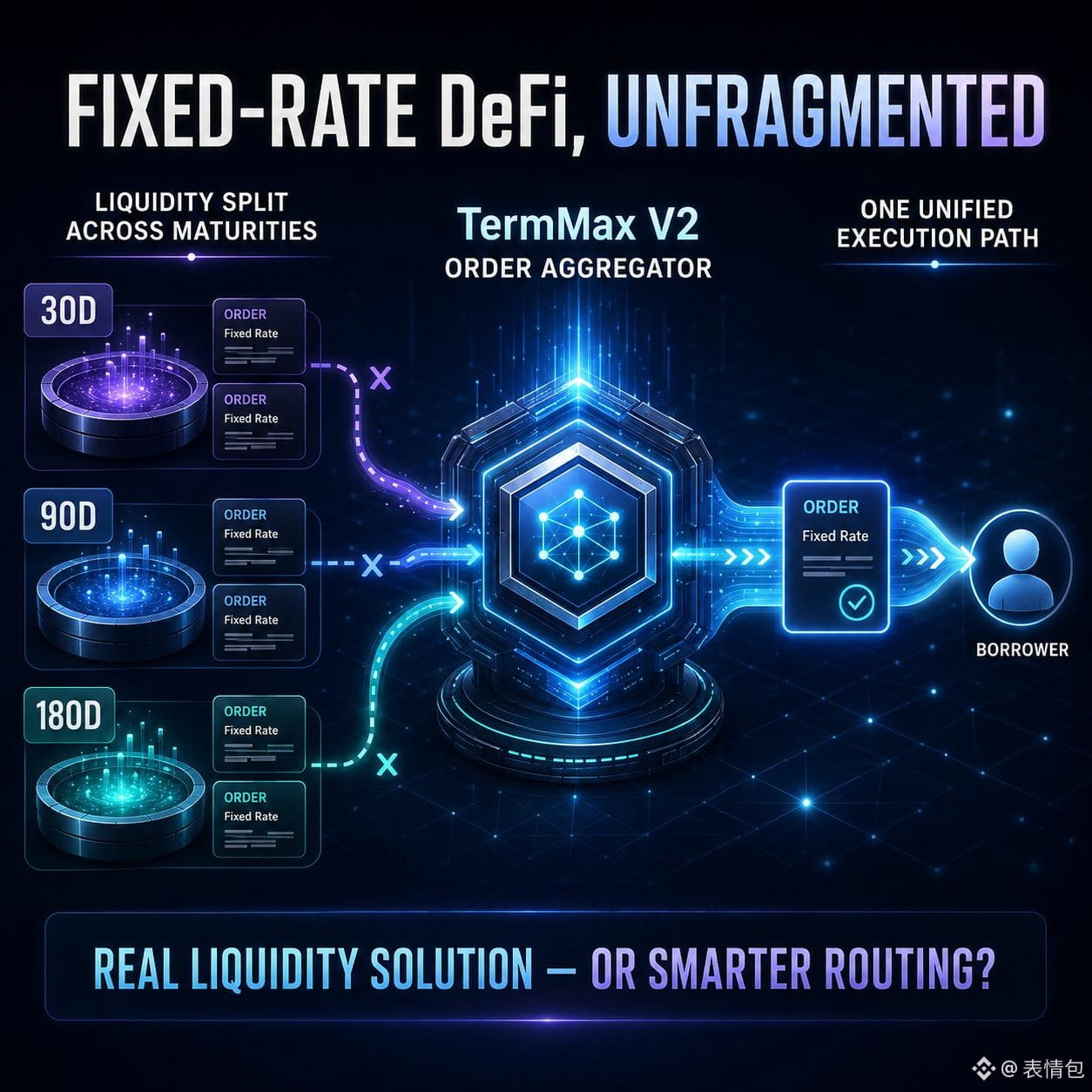
I’ve been thinking about what actually makes fixed-rate DeFi practical beyond smaller trades.
Predictable rates are useful, but if liquidity is scattered across multiple maturities and order types, execution can still become inefficient.
That’s why @termmax V2’s Order Aggregator stands out. By combining different liquidity sources into a single execution path, it could make borrowing larger amounts feel much more seamless.
The real test, though, is whether aggregation creates consistently better depth—or just makes fragmented liquidity easier to access.
What do you think: infrastructure upgrade or temporary workaround?
@termmax #TermMax
I’ve been thinking about what actually makes fixed-rate DeFi practical beyond smaller trades.
Predictable rates are useful, but if liquidity is scattered across multiple maturities and order types, execution can still become inefficient.
That’s why @TermMax V2’s Order Aggregator stands out. By combining different liquidity sources into a single execution path, it could make borrowing larger amounts feel much more seamless.
The real test, though, is whether aggregation creates consistently better depth—or just makes fragmented liquidity easier to access.
What do you think: infrastructure upgrade or temporary workaround?
@TermMax #TermMax
43
3
15
219
·
--
တက်ရိပ်ရှိသည်
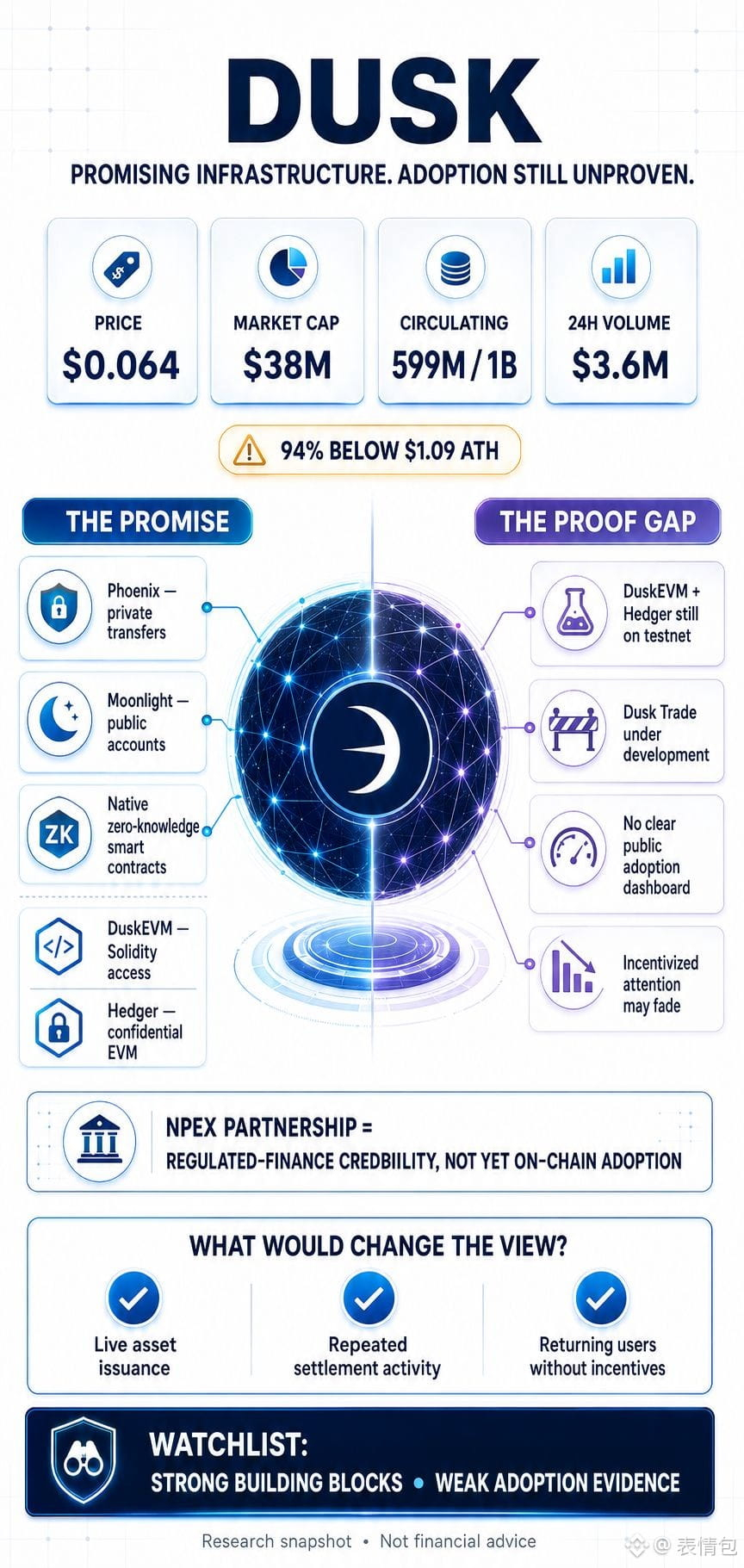
I’ve noticed DUSK appearing in more conversations lately, although I’m not convinced the renewed attention tells us much about adoption yet. The token is trading near $0.064, giving it a market cap of roughly $38 million. Around 599 million tokens are circulating from a maximum supply of one billion, while daily volume sits near $3.6 million. That is enough activity to keep the market moving, but DUSK is still about 94% below its $1.09 peak. Binance Square’s 480,000 DUSK CreatorPad campaign is also bringing more eyes to the project, though paid attention can disappear quickly once the rewards end.
The technology itself deserves a closer look. Dusk’s live network supports private Phoenix transfers, public Moonlight accounts and native zero-knowledge smart contracts. DuskEVM is being developed to make the ecosystem more accessible to Solidity developers, while Hedger is experimenting with confidential EVM transactions through homomorphic encryption and zero-knowledge proofs. These are useful building blocks for financial institutions that cannot expose every balance, identity or transaction publicly.
My hesitation starts when I look for people actually using those building blocks. DuskEVM and Hedger remain on testnet, while Dusk Trade is still under development. I also cannot find simple, reliable public figures for daily active addresses, transaction growth, fees, TVL or application-level volume. The absence of those figures does not mean nothing is happening, but it leaves too much room between the story and the evidence.
The NPEX partnership gives Dusk a serious connection to regulated finance, yet NPEX’s €200 million-plus financing history and investor network should not be mistaken for assets already moving on Dusk. I want to see live issuance, repeated settlement activity and users returning without incentives. Until then, I see Dusk as promising infrastructure that still needs to prove it can become an active financial economy.
#dusk @Dusk_Foundation $DUSK
{spot}(DUSKUSDT)
I’ve noticed DUSK appearing in more conversations lately, although I’m not convinced the renewed attention tells us much about adoption yet. The token is trading near $0.064, giving it a market cap of roughly $38 million. Around 599 million tokens are circulating from a maximum supply of one billion, while daily volume sits near $3.6 million. That is enough activity to keep the market moving, but DUSK is still about 94% below its $1.09 peak. Binance Square’s 480,000 DUSK CreatorPad campaign is also bringing more eyes to the project, though paid attention can disappear quickly once the rewards end.
The technology itself deserves a closer look. Dusk’s live network supports private Phoenix transfers, public Moonlight accounts and native zero-knowledge smart contracts. DuskEVM is being developed to make the ecosystem more accessible to Solidity developers, while Hedger is experimenting with confidential EVM transactions through homomorphic encryption and zero-knowledge proofs. These are useful building blocks for financial institutions that cannot expose every balance, identity or transaction publicly.
My hesitation starts when I look for people actually using those building blocks. DuskEVM and Hedger remain on testnet, while Dusk Trade is still under development. I also cannot find simple, reliable public figures for daily active addresses, transaction growth, fees, TVL or application-level volume. The absence of those figures does not mean nothing is happening, but it leaves too much room between the story and the evidence.
The NPEX partnership gives Dusk a serious connection to regulated finance, yet NPEX’s €200 million-plus financing history and investor network should not be mistaken for assets already moving on Dusk. I want to see live issuance, repeated settlement activity and users returning without incentives. Until then, I see Dusk as promising infrastructure that still needs to prove it can become an active financial economy.
#dusk @Dusk $DUSK
16
4
8
193
·
--
@termmax #TermMax
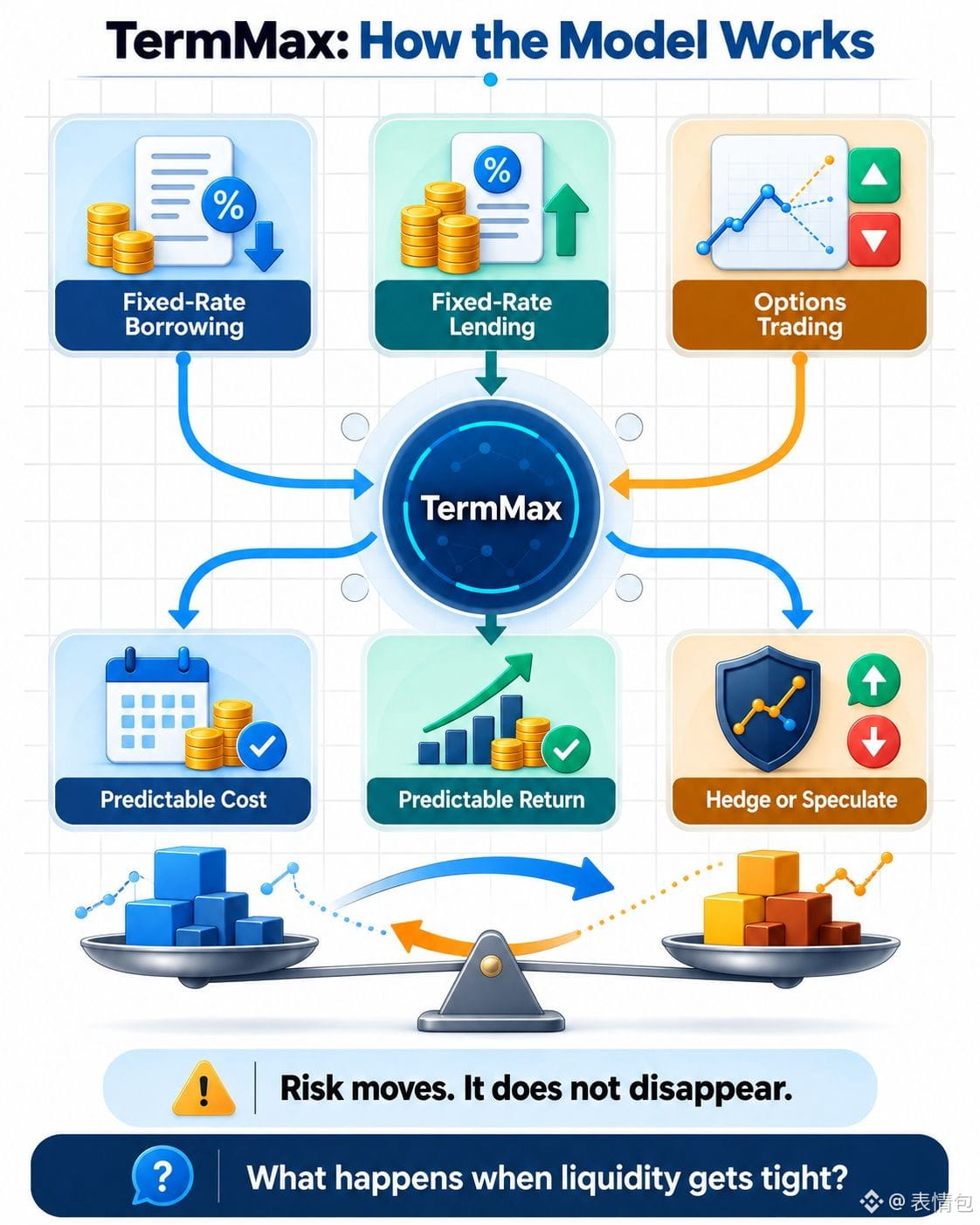
TermMax made me pause because I’m still not sure whether putting fixed-rate lending and options inside one protocol makes things more useful or simply more complicated.
The part I understand is the need for predictable rates. If I borrow through TermMax, I should know what the loan will cost instead of watching the rate change with the market. A lender can also have a clearer idea of the expected return. That feels closer to how people normally plan their finances.
Then there is the options side. I can see why it belongs there. Options may let users hedge risk or build positions around future price movements. But honestly, this is also the part where TermMax becomes harder for me to judge. Options are useful in experienced hands, yet they can quickly turn into another way to take more risk.
I keep thinking about the person on the other side of each fixed-rate position. When the market rate moves, one side benefits and the other gives something up. TermMax does not remove that tension; it creates a market where users can trade it. Whether that market remains liquid during stressful periods is probably more important than how well it works on a normal day.
So I do see a purpose here. TermMax is trying to make borrowing costs predictable while giving users tools to manage exposure. I’m just left wondering whether most people will use that flexibility carefully, or only understand the risk after the market moves against them.
@TermMax #TermMax
TermMax made me pause because I’m still not sure whether putting fixed-rate lending and options inside one protocol makes things more useful or simply more complicated.
The part I understand is the need for predictable rates. If I borrow through TermMax, I should know what the loan will cost instead of watching the rate change with the market. A lender can also have a clearer idea of the expected return. That feels closer to how people normally plan their finances.
Then there is the options side. I can see why it belongs there. Options may let users hedge risk or build positions around future price movements. But honestly, this is also the part where TermMax becomes harder for me to judge. Options are useful in experienced hands, yet they can quickly turn into another way to take more risk.
I keep thinking about the person on the other side of each fixed-rate position. When the market rate moves, one side benefits and the other gives something up. TermMax does not remove that tension; it creates a market where users can trade it. Whether that market remains liquid during stressful periods is probably more important than how well it works on a normal day.
So I do see a purpose here. TermMax is trying to make borrowing costs predictable while giving users tools to manage exposure. I’m just left wondering whether most people will use that flexibility carefully, or only understand the risk after the market moves against them.
25
2
16
861
·
--
တက်ရိပ်ရှိသည်
$APR
{future}(APRUSDT)
APR has gained over 14% with noticeable trading activity. Buyers currently have momentum, and the next consolidation could reveal whether the strength can continue.
$APR
APR has gained over 14% with noticeable trading activity. Buyers currently have momentum, and the next consolidation could reveal whether the strength can continue.
APR has gained over 14% with noticeable trading activity. Buyers currently have momentum, and the next consolidation could reveal whether the strength can continue.
1
88
·
--
တက်ရိပ်ရှိသည်
$BR
{future}(BRUSDT)
BR is up around 16% as buyers push the price higher. The move looks strong today, but holding the recent breakout area will be important for momentum.
$BR
BR is up around 16% as buyers push the price higher. The move looks strong today, but holding the recent breakout area will be important for momentum.
BR is up around 16% as buyers push the price higher. The move looks strong today, but holding the recent breakout area will be important for momentum.
1
113
·
--
တက်ရိပ်ရှိသည်
$STAR
{future}(STARUSDT)
STAR has climbed more than 17% and is attracting fresh market attention. I’m watching whether this momentum develops into continuation or cools after the initial push.
$STAR
STAR has climbed more than 17% and is attracting fresh market attention. I’m watching whether this momentum develops into continuation or cools after the initial push.
STAR has climbed more than 17% and is attracting fresh market attention. I’m watching whether this momentum develops into continuation or cools after the initial push.
1
103
·
--
တက်ရိပ်ရှိသည်
$ACE
{spot}(ACEUSDT)
ACE is showing strong momentum with a 24% gain and heavy trading activity. Sustained volume could make the next price reaction worth watching closely.
$ACE
ACE is showing strong momentum with a 24% gain and heavy trading activity. Sustained volume could make the next price reaction worth watching closely.
ACE is showing strong momentum with a 24% gain and heavy trading activity. Sustained volume could make the next price reaction worth watching closely.
1
110
·
--
$VELVET
{future}(VELVETUSDT)
VELVET is up around 29% with solid volume behind the move. The strength is impressive, and I’m watching whether buyers can keep control after this fast expansion.
$VELVET
VELVET is up around 29% with solid volume behind the move. The strength is impressive, and I’m watching whether buyers can keep control after this fast expansion.
VELVET is up around 29% with solid volume behind the move. The strength is impressive, and I’m watching whether buyers can keep control after this fast expansion.
1
125
Log in to explore more content
Join global crypto users on Binance Square
⚡️ Get latest and useful information about crypto.
💬 Trusted by the world’s largest crypto exchange.
👍 Discover real insights from verified creators.
အီးမေးလ် / ဖုန်းနံပါတ်
ရေပန်းစားနေသော ခေါင်းစဉ်များ
BinancePick
ကြည့်ရှုမှု 2.9M ကြိမ်
150,181 ဦး ဆွေးနွေးနေသည်
Join #EarningsSeason: Predict Earnings on Binance Pick, Share Your Take on Binance Square!
Binance Square Official
·နှစ်သက်မှု 405 ခု
·ကြည့်ရှုမှု 341.7k ကြိမ်
EarningsSeason
ကြည့်ရှုမှု 5.2M ကြိမ်
25,621 ဦး ဆွေးနွေးနေသည်
AnthropicTTMRevenueGrewAbout1200%
ကြည့်ရှုမှု 11,039 ကြိမ်
276 ဦး ဆွေးနွေးနေသည်