

CryptoLite_247
1.1k ပို့စ်များ

CryptoLite_247
တိုင်ကြားမည်
သုံးစွဲသူကို ဘလော့မည်
Free Stock Market News ACCURATE, CONSISTENT, & RELIABLE || https://x.com/Yusty121 || Crypto first commentary with Marco Market Context
Open Trade
Frequent Trader
5.4 Years
7 ဖော်လိုလုပ်ထားသည်
560 ဖော်လိုလုပ်သူများ
1.7K+ လိုက်ခ်လုပ်ထားသည်
ပို့စ်များ
ပိုင်ဆိုင်မှုစာရင်း
အားလုံး
Quotes
ဗီဒီယိုများ
ပုံသေထားသည်
စိစစ်အတည်ပြုထားသည်
Cathie Wood says each Starship launch could generate roughly $1B in revenue with Elon Musk targeting as many as 10K flights per year by 2030.
She says that would put Starship at $10T in annual revenue and make $SPCX $1.8T IPO valuation look very different in hindsight.
Cathie Wood says each Starship launch could generate roughly $1B in revenue with Elon Musk targeting as many as 10K flights per year by 2030.
She says that would put Starship at $10T in annual revenue and make $SPCX $1.8T IPO valuation look very different in hindsight.
She says that would put Starship at $10T in annual revenue and make $SPCX $1.8T IPO valuation look very different in hindsight.


23
3
72
85k
ပုံသေထားသည်
19
1
53
82.1k
·
--
တက်ရိပ်ရှိသည်
$NBIS just got a major Wall Street upgrade — even as the stock slipped 2.5%.
BNP Paribas moved Nebius from Neutral to Outperform and lifted its price target from $260 to $399, putting the target nearly 68% above Friday’s ~$237.70 price.
The bullish case is backed by explosive growth. Q2 revenue hit $582.3M, up 454% YoY, while adjusted EBITDA reached $236.2M.
Nebius is also maintaining its $7B–$9B annualized revenue run-rate target, while customer prepayments can help fund data-center expansion without relying entirely on external financing.
But the market still has questions around power availability, construction costs and capacity utilization.
$NBIS just got a major Wall Street upgrade — even as the stock slipped 2.5%.
BNP Paribas moved Nebius from Neutral to Outperform and lifted its price target from $260 to $399, putting the target nearly 68% above Friday’s ~$237.70 price.
The bullish case is backed by explosive growth. Q2 revenue hit $582.3M, up 454% YoY, while adjusted EBITDA reached $236.2M.
Nebius is also maintaining its $7B–$9B annualized revenue run-rate target, while customer prepayments can help fund data-center expansion without relying entirely on external financing.
But the market still has questions around power availability, construction costs and capacity utilization.
BNP Paribas moved Nebius from Neutral to Outperform and lifted its price target from $260 to $399, putting the target nearly 68% above Friday’s ~$237.70 price.
The bullish case is backed by explosive growth. Q2 revenue hit $582.3M, up 454% YoY, while adjusted EBITDA reached $236.2M.
Nebius is also maintaining its $7B–$9B annualized revenue run-rate target, while customer prepayments can help fund data-center expansion without relying entirely on external financing.
But the market still has questions around power availability, construction costs and capacity utilization.
1
432
·
--
တက်ရိပ်ရှိသည်
စိစစ်အတည်ပြုထားသည်
$MU earnings could be one of the biggest AI demand tests of the week.
Micron reports fiscal Q4 results on Wednesday, with the market watching beyond the headline numbers.
The company previously guided for roughly $50B revenue ±$1B and $31 non-GAAP EPS ±$1 after posting $41.46B revenue and $25.11 EPS in Q3.
With Micron already shipping HBM4 at scale and working toward HBM4E, investors will be listening closely for what management says about 2027 AI memory demand, capacity expansion and CapEx.
If pricing, orders and margins stay strong, it would add another fundamental signal that AI server demand is still driving a powerful memory cycle.
If those metrics start slowing, the market could begin questioning how long the current memory upcycle can last.
For $MU, the guidance may matter more than the quarter.
$MU earnings could be one of the biggest AI demand tests of the week.
Micron reports fiscal Q4 results on Wednesday, with the market watching beyond the headline numbers.
The company previously guided for roughly $50B revenue ±$1B and $31 non-GAAP EPS ±$1 after posting $41.46B revenue and $25.11 EPS in Q3.
With Micron already shipping HBM4 at scale and working toward HBM4E, investors will be listening closely for what management says about 2027 AI memory demand, capacity expansion and CapEx.
If pricing, orders and margins stay strong, it would add another fundamental signal that AI server demand is still driving a powerful memory cycle.
If those metrics start slowing, the market could begin questioning how long the current memory upcycle can last.
For $MU , the guidance may matter more than the quarter.
Micron reports fiscal Q4 results on Wednesday, with the market watching beyond the headline numbers.
The company previously guided for roughly $50B revenue ±$1B and $31 non-GAAP EPS ±$1 after posting $41.46B revenue and $25.11 EPS in Q3.
With Micron already shipping HBM4 at scale and working toward HBM4E, investors will be listening closely for what management says about 2027 AI memory demand, capacity expansion and CapEx.
If pricing, orders and margins stay strong, it would add another fundamental signal that AI server demand is still driving a powerful memory cycle.
If those metrics start slowing, the market could begin questioning how long the current memory upcycle can last.
For $MU , the guidance may matter more than the quarter.
1
633
·
--
တက်ရိပ်ရှိသည်
စိစစ်အတည်ပြုထားသည်
$IREN just got a major Wall Street upgrade — and JPMorgan is modeling a completely different company by 2030.
JPMorgan upgraded IREN from Underweight to Overweight and raised its price target to $65, while projecting roughly $24B in annual revenue by 2030.
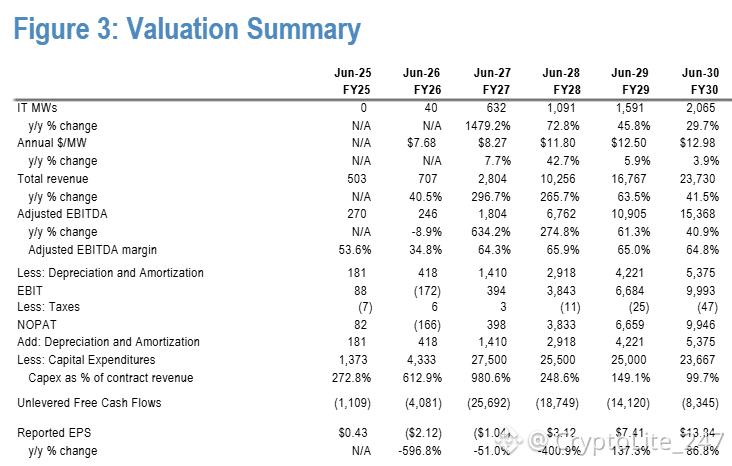
Put that forecast in perspective: IREN generated $707M in FY2026 revenue. JPMorgan's model assumes the company grows to around 2,065 MW of capacity, generating roughly $13M per MW with EBITDA margins near 65%.
The AI pivot is already showing up in the numbers. AI Cloud revenue reached $128.8M in FY26, roughly 8x the prior year, while June-quarter AI Cloud revenue hit $70.5M, surpassing Bitcoin-mining revenue of $66.7M.
IREN also has a 5GW+ secured power pipeline, with management saying its existing $4B ARR represents less than 10% of that portfolio.
Interestingly, JPMorgan's $13M/MW revenue assumption is below recent contracts exceeding $20M/MW, while management is discussing deals around $25M/MW. At the same capacity, higher pricing could materially change the revenue math.
But $24B is an analyst projection, not company guidance. Wall Street's average FY2028 revenue estimate is currently around $7.56B.
$IREN just got a major Wall Street upgrade — and JPMorgan is modeling a completely different company by 2030.
JPMorgan upgraded IREN from Underweight to Overweight and raised its price target to $65, while projecting roughly $24B in annual revenue by 2030.
Put that forecast in perspective: IREN generated $707M in FY2026 revenue. JPMorgan's model assumes the company grows to around 2,065 MW of capacity, generating roughly $13M per MW with EBITDA margins near 65%.
The AI pivot is already showing up in the numbers. AI Cloud revenue reached $128.8M in FY26, roughly 8x the prior year, while June-quarter AI Cloud revenue hit $70.5M, surpassing Bitcoin-mining revenue of $66.7M.
IREN also has a 5GW+ secured power pipeline, with management saying its existing $4B ARR represents less than 10% of that portfolio.
Interestingly, JPMorgan's $13M/MW revenue assumption is below recent contracts exceeding $20M/MW, while management is discussing deals around $25M/MW. At the same capacity, higher pricing could materially change the revenue math.
But $24B is an analyst projection, not company guidance. Wall Street's average FY2028 revenue estimate is currently around $7.56B.
JPMorgan upgraded IREN from Underweight to Overweight and raised its price target to $65, while projecting roughly $24B in annual revenue by 2030.
Put that forecast in perspective: IREN generated $707M in FY2026 revenue. JPMorgan's model assumes the company grows to around 2,065 MW of capacity, generating roughly $13M per MW with EBITDA margins near 65%.
The AI pivot is already showing up in the numbers. AI Cloud revenue reached $128.8M in FY26, roughly 8x the prior year, while June-quarter AI Cloud revenue hit $70.5M, surpassing Bitcoin-mining revenue of $66.7M.
IREN also has a 5GW+ secured power pipeline, with management saying its existing $4B ARR represents less than 10% of that portfolio.
Interestingly, JPMorgan's $13M/MW revenue assumption is below recent contracts exceeding $20M/MW, while management is discussing deals around $25M/MW. At the same capacity, higher pricing could materially change the revenue math.
But $24B is an analyst projection, not company guidance. Wall Street's average FY2028 revenue estimate is currently around $7.56B.
1
623
·
--
တက်ရိပ်ရှိသည်
🔥BULLISH: China could OPEN THE DOOR for billion-dollar tech giants to BUY $NVDA ’s newest high-end chip, per The Information.
ByteDance, valued at $550 BILLION, and Alibaba, worth $268 BILLION, are among the firms that could soon get APPROVAL to buy Nvidia’s new chip.
Beijing’s industry ministry has reportedly signaled that "approvals are coming".
🔥BULLISH: China could OPEN THE DOOR for billion-dollar tech giants to BUY $NVDA ’s newest high-end chip, per The Information.
ByteDance, valued at $550 BILLION, and Alibaba, worth $268 BILLION, are among the firms that could soon get APPROVAL to buy Nvidia’s new chip.
Beijing’s industry ministry has reportedly signaled that "approvals are coming".
ByteDance, valued at $550 BILLION, and Alibaba, worth $268 BILLION, are among the firms that could soon get APPROVAL to buy Nvidia’s new chip.
Beijing’s industry ministry has reportedly signaled that "approvals are coming".

1
11
4.2k
·
--
တက်ရိပ်ရှိသည်
$CRWV is back above $90, but the recovery is running into a bigger question: how much capital does CoreWeave need to keep scaling?
CoreWeave gained 7.43% this week after JPMorgan raised its outlook, citing higher revenue and margin expectations from shorter-term contracts at premium pricing.
But the rally hit resistance after CEO Michael Intrator disclosed sales of 200,000 shares, while Omnadora Capital sold another 107,692 shares on September 22. Intrator still directly held 687,129 shares afterward
CoreWeave plans to raise up to $3.5B through convertible debt, including a $3B offering plus a potential $500M option, alongside an ATM program for up to 35M shares. Based on Wednesday's close, the equity program could raise roughly $2.92B if fully utilized.
At the same time, contracted power capacity increased from 3.7GW to roughly 4.2GW, while new short-term contracts are being signed at around $40M per MW annually.
So the bull case has real demand and improving pricing. The catch is that every additional gigawatt requires more capital.
$CRWV is back above $90, but the recovery is running into a bigger question: how much capital does CoreWeave need to keep scaling?
CoreWeave gained 7.43% this week after JPMorgan raised its outlook, citing higher revenue and margin expectations from shorter-term contracts at premium pricing.
But the rally hit resistance after CEO Michael Intrator disclosed sales of 200,000 shares, while Omnadora Capital sold another 107,692 shares on September 22. Intrator still directly held 687,129 shares afterward
CoreWeave plans to raise up to $3.5B through convertible debt, including a $3B offering plus a potential $500M option, alongside an ATM program for up to 35M shares. Based on Wednesday's close, the equity program could raise roughly $2.92B if fully utilized.
At the same time, contracted power capacity increased from 3.7GW to roughly 4.2GW, while new short-term contracts are being signed at around $40M per MW annually.
So the bull case has real demand and improving pricing. The catch is that every additional gigawatt requires more capital.
CoreWeave gained 7.43% this week after JPMorgan raised its outlook, citing higher revenue and margin expectations from shorter-term contracts at premium pricing.
But the rally hit resistance after CEO Michael Intrator disclosed sales of 200,000 shares, while Omnadora Capital sold another 107,692 shares on September 22. Intrator still directly held 687,129 shares afterward
CoreWeave plans to raise up to $3.5B through convertible debt, including a $3B offering plus a potential $500M option, alongside an ATM program for up to 35M shares. Based on Wednesday's close, the equity program could raise roughly $2.92B if fully utilized.
At the same time, contracted power capacity increased from 3.7GW to roughly 4.2GW, while new short-term contracts are being signed at around $40M per MW annually.
So the bull case has real demand and improving pricing. The catch is that every additional gigawatt requires more capital.
1
236
·
--
တက်ရိပ်ရှိသည်
$CLSK.US just turned a $2.276B financing plan into cash and now the real execution test begins.
CleanSpark has completed one of the largest financing transactions among publicly traded Bitcoin miners this year, closing $2.276B in senior secured notes.
The capital is expected to support data-center expansion and debt refinancing, giving CleanSpark more room to scale without relying entirely on new equity issuance or selling its Bitcoin holdings.
And that's where the bigger story gets interesting.
CleanSpark isn't only building Bitcoin-mining capacity anymore. Power contracts, substations, land and large-scale data-center campuses are becoming strategic assets as demand for AI and high-performance computing continues to grow.
But $2.276B of debt also creates a much larger fixed obligation. Bitcoin prices, mining difficulty and power costs can all affect how comfortably that debt can be serviced.
$CLSK.US just turned a $2.276B financing plan into cash and now the real execution test begins.
CleanSpark has completed one of the largest financing transactions among publicly traded Bitcoin miners this year, closing $2.276B in senior secured notes.
The capital is expected to support data-center expansion and debt refinancing, giving CleanSpark more room to scale without relying entirely on new equity issuance or selling its Bitcoin holdings.
And that's where the bigger story gets interesting.
CleanSpark isn't only building Bitcoin-mining capacity anymore. Power contracts, substations, land and large-scale data-center campuses are becoming strategic assets as demand for AI and high-performance computing continues to grow.
But $2.276B of debt also creates a much larger fixed obligation. Bitcoin prices, mining difficulty and power costs can all affect how comfortably that debt can be serviced.
CleanSpark has completed one of the largest financing transactions among publicly traded Bitcoin miners this year, closing $2.276B in senior secured notes.
The capital is expected to support data-center expansion and debt refinancing, giving CleanSpark more room to scale without relying entirely on new equity issuance or selling its Bitcoin holdings.
And that's where the bigger story gets interesting.
CleanSpark isn't only building Bitcoin-mining capacity anymore. Power contracts, substations, land and large-scale data-center campuses are becoming strategic assets as demand for AI and high-performance computing continues to grow.
But $2.276B of debt also creates a much larger fixed obligation. Bitcoin prices, mining difficulty and power costs can all affect how comfortably that debt can be serviced.
CLSKUS-၄.၀၃%
2
44
·
--
တက်ရိပ်ရှိသည်
$CIFR.US just turned one AI data center lease into a potential $9B+ revenue story.
Cipher Digital extended the Barber Lake data center lease in Texas to 20 years, adding roughly $5.2B in incremental contracted revenue.
The new commitment comes from an unnamed leading AI lab and begins after the existing Fluidstack lease ends. Combined with the current agreement, total contracted revenue at Barber Lake now exceeds $9B.
That matters because AI infrastructure isn't just about building capacity it's about securing long-duration customers that can support the economics of massive data-center investments.
Cipher didn't disclose the AI lab or the financial terms of the amended Fluidstack agreement, so the quality and economics of the additional revenue still need to be assessed.
Interestingly, $CIFR.US shares were still down around 2% Friday morning despite the announcement.
$CIFR.US just turned one AI data center lease into a potential $9B+ revenue story.
Cipher Digital extended the Barber Lake data center lease in Texas to 20 years, adding roughly $5.2B in incremental contracted revenue.
The new commitment comes from an unnamed leading AI lab and begins after the existing Fluidstack lease ends. Combined with the current agreement, total contracted revenue at Barber Lake now exceeds $9B.
That matters because AI infrastructure isn't just about building capacity it's about securing long-duration customers that can support the economics of massive data-center investments.
Cipher didn't disclose the AI lab or the financial terms of the amended Fluidstack agreement, so the quality and economics of the additional revenue still need to be assessed.
Interestingly, $CIFR.US shares were still down around 2% Friday morning despite the announcement.
Cipher Digital extended the Barber Lake data center lease in Texas to 20 years, adding roughly $5.2B in incremental contracted revenue.
The new commitment comes from an unnamed leading AI lab and begins after the existing Fluidstack lease ends. Combined with the current agreement, total contracted revenue at Barber Lake now exceeds $9B.
That matters because AI infrastructure isn't just about building capacity it's about securing long-duration customers that can support the economics of massive data-center investments.
Cipher didn't disclose the AI lab or the financial terms of the amended Fluidstack agreement, so the quality and economics of the additional revenue still need to be assessed.
Interestingly, $CIFR.US shares were still down around 2% Friday morning despite the announcement.
CIFRUS-၃.၈၆%
1
283
စိစစ်အတည်ပြုထားသည်
$BE just showed why AI infrastructure is about more than GPUs.
Bloom Energy jumped 8.7% for the week to $288.70, breaking above a $288 buy point from a cup-with-handle base after initially getting hit by concerns around Oracle's New Mexico data-center project.
The bigger signal is the underlying growth. Bloom's earnings surged 1,367% and 680% in the first two quarters of 2026, while revenue jumped 130% and 166%, respectively.
And the timing matters: $BE officially joined the S&P 500 on September 21, while AI data centers continue searching for reliable power as grid constraints become a bigger bottleneck.
Bloom's fuel-cell systems can generate electricity using hydrogen and oxygen, giving hyperscalers another option for on-site power including Oracle, one of Bloom's partners.
$BE just showed why AI infrastructure is about more than GPUs.
Bloom Energy jumped 8.7% for the week to $288.70, breaking above a $288 buy point from a cup-with-handle base after initially getting hit by concerns around Oracle's New Mexico data-center project.
The bigger signal is the underlying growth. Bloom's earnings surged 1,367% and 680% in the first two quarters of 2026, while revenue jumped 130% and 166%, respectively.
And the timing matters: $BE officially joined the S&P 500 on September 21, while AI data centers continue searching for reliable power as grid constraints become a bigger bottleneck.
Bloom's fuel-cell systems can generate electricity using hydrogen and oxygen, giving hyperscalers another option for on-site power including Oracle, one of Bloom's partners.
Bloom Energy jumped 8.7% for the week to $288.70, breaking above a $288 buy point from a cup-with-handle base after initially getting hit by concerns around Oracle's New Mexico data-center project.
The bigger signal is the underlying growth. Bloom's earnings surged 1,367% and 680% in the first two quarters of 2026, while revenue jumped 130% and 166%, respectively.
And the timing matters: $BE officially joined the S&P 500 on September 21, while AI data centers continue searching for reliable power as grid constraints become a bigger bottleneck.
Bloom's fuel-cell systems can generate electricity using hydrogen and oxygen, giving hyperscalers another option for on-site power including Oracle, one of Bloom's partners.
1
6
1k
·
--
တက်ရိပ်ရှိသည်
$SPCX : Why the $152 Bounce is the Ultimate Trap Before the $77 Floor.
SpaceX is down from $225 to $152-trading right back near its IPO price. The timeline thinks the worst is over. They’re watching the wrong part of the script.
The Post-IPO Mechanics:
Phase 1 (Euphoria): $225 peak retail FOMO (Done)
Phase 2 (Denial): Fading dead bounces (Done)
Phase 3 (The Final Flush): Capitulation into $77–$85 (Pending)
Phase 4 (The Base): 2–3 months of dead, low-volume sideways chop
Phase 5 (The Markup): $80 ⟶ $130 ⟶ $180 ⟶ $250+
Any bounce into $120–$140 before the true low is pure exit liquidity for early insiders. Real bottoms don't look bullish—they look dead, flat, and completely abandoned by the media.
SpaceX + xAI + Starlink + Tesla + Robotics. Musk played this exact playbook with SolarCity: everyone hated it before Tesla went on one of the greatest runs in history.
Retail sells in terror at $80 and chases it back above $200. Do not be their exit liquidity.
$SPCX : Why the $152 Bounce is the Ultimate Trap Before the $77 Floor.
SpaceX is down from $225 to $152-trading right back near its IPO price. The timeline thinks the worst is over. They’re watching the wrong part of the script.
The Post-IPO Mechanics:
Phase 1 (Euphoria): $225 peak retail FOMO (Done)
Phase 2 (Denial): Fading dead bounces (Done)
Phase 3 (The Final Flush): Capitulation into $77–$85 (Pending)
Phase 4 (The Base): 2–3 months of dead, low-volume sideways chop
Phase 5 (The Markup): $80 ⟶ $130 ⟶ $180 ⟶ $250+
Any bounce into $120–$140 before the true low is pure exit liquidity for early insiders. Real bottoms don't look bullish—they look dead, flat, and completely abandoned by the media.
SpaceX + xAI + Starlink + Tesla + Robotics. Musk played this exact playbook with SolarCity: everyone hated it before Tesla went on one of the greatest runs in history.
Retail sells in terror at $80 and chases it back above $200. Do not be their exit liquidity.
SpaceX is down from $225 to $152-trading right back near its IPO price. The timeline thinks the worst is over. They’re watching the wrong part of the script.
The Post-IPO Mechanics:
Phase 1 (Euphoria): $225 peak retail FOMO (Done)
Phase 2 (Denial): Fading dead bounces (Done)
Phase 3 (The Final Flush): Capitulation into $77–$85 (Pending)
Phase 4 (The Base): 2–3 months of dead, low-volume sideways chop
Phase 5 (The Markup): $80 ⟶ $130 ⟶ $180 ⟶ $250+
Any bounce into $120–$140 before the true low is pure exit liquidity for early insiders. Real bottoms don't look bullish—they look dead, flat, and completely abandoned by the media.
SpaceX + xAI + Starlink + Tesla + Robotics. Musk played this exact playbook with SolarCity: everyone hated it before Tesla went on one of the greatest runs in history.
Retail sells in terror at $80 and chases it back above $200. Do not be their exit liquidity.

4
1
1.9k
·
--
တက်ရိပ်ရှိသည်
IN: SpaceX President sells over $50M worth of $SPCX
IN: SpaceX President sells over $50M worth of $SPCX

6
20
19.2k
·
--
တက်ရိပ်ရှိသည်
စိစစ်အတည်ပြုထားသည်
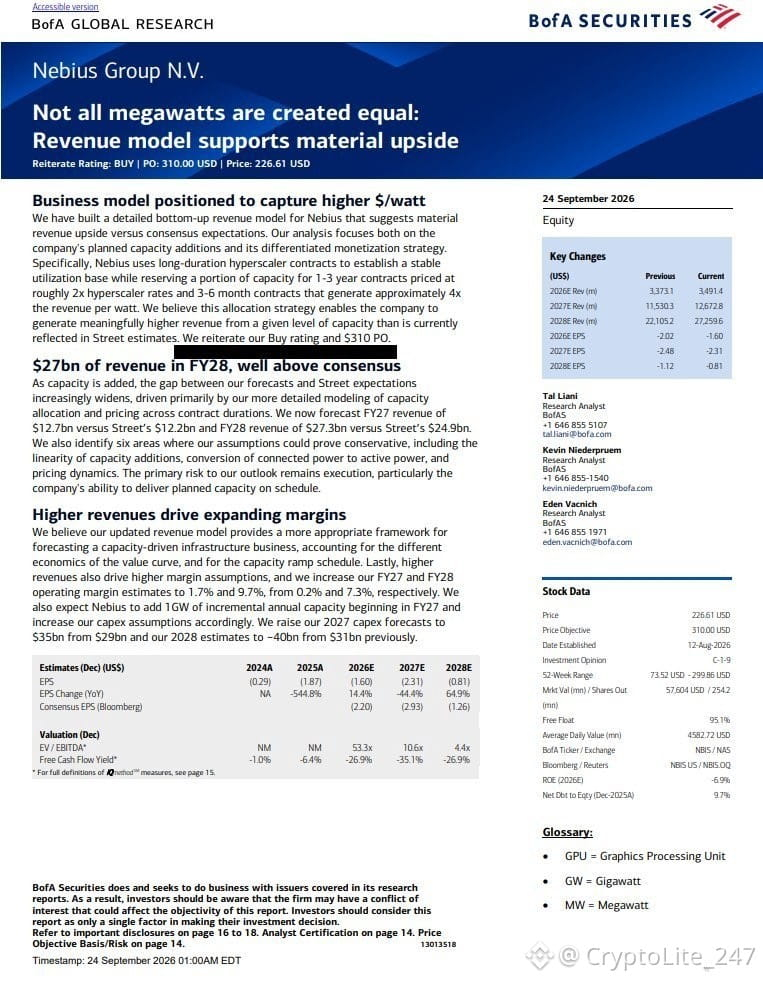
BofA forecasting $NBIS Q4 '28 Revenue @ $27bn
BNP Paribas forecasting Q4 '27 ARR @ $22bn
I've already given my thoughts on how BNP's estimate is hyperconservative.
If $NBIS enters Fiscal '28 at $22bn run rate, full-year revenue will be far higher than $27bn.
Plain 'n Simple.
BofA forecasting $NBIS Q4 '28 Revenue @ $27bn
BNP Paribas forecasting Q4 '27 ARR @ $22bn
I've already given my thoughts on how BNP's estimate is hyperconservative.
If $NBIS enters Fiscal '28 at $22bn run rate, full-year revenue will be far higher than $27bn.
Plain 'n Simple.
BNP Paribas forecasting Q4 '27 ARR @ $22bn
I've already given my thoughts on how BNP's estimate is hyperconservative.
If $NBIS enters Fiscal '28 at $22bn run rate, full-year revenue will be far higher than $27bn.
Plain 'n Simple.
1
4
1.8k
·
--
တက်ရိပ်ရှိသည်
တစ်စိတ်တစ်ပိုင်း မှန်ကန်
These are the historic revenue figures for $NBIS so far, along with the projected figures for the next few years:
- 2024: $0.117B
- 2025: $0.53B
- 2026: $3.33B (est.)
- 2027: $12.34B (est.)
- 2028: $23.02B (est.)
This is some of the strongest growth that I have ever seen from any company, and some independent valuation models have put forward some strong arguments why they could achieve $100B in revenue by 2030.
Indeed Marc Boroditksy, the Chief Revenue Officer at Nebius, has just said in a fireside chat that they see a path to $100B in revenue in the relative near future.
Analysts are generally a little more cautious, with revenue estimates of between $33B and $50B, but considering the current market cap is just $64.5B, you would think that the market cap would still be many multiples of these revenue estimates by then.
These are the historic revenue figures for $NBIS so far, along with the projected figures for the next few years:
- 2024: $0.117B
- 2025: $0.53B
- 2026: $3.33B (est.)
- 2027: $12.34B (est.)
- 2028: $23.02B (est.)
This is some of the strongest growth that I have ever seen from any company, and some independent valuation models have put forward some strong arguments why they could achieve $100B in revenue by 2030.
Indeed Marc Boroditksy, the Chief Revenue Officer at Nebius, has just said in a fireside chat that they see a path to $100B in revenue in the relative near future.
Analysts are generally a little more cautious, with revenue estimates of between $33B and $50B, but considering the current market cap is just $64.5B, you would think that the market cap would still be many multiples of these revenue estimates by then.
- 2024: $0.117B
- 2025: $0.53B
- 2026: $3.33B (est.)
- 2027: $12.34B (est.)
- 2028: $23.02B (est.)
This is some of the strongest growth that I have ever seen from any company, and some independent valuation models have put forward some strong arguments why they could achieve $100B in revenue by 2030.
Indeed Marc Boroditksy, the Chief Revenue Officer at Nebius, has just said in a fireside chat that they see a path to $100B in revenue in the relative near future.
Analysts are generally a little more cautious, with revenue estimates of between $33B and $50B, but considering the current market cap is just $64.5B, you would think that the market cap would still be many multiples of these revenue estimates by then.
1
2
1.2k
·
--
တက်ရိပ်ရှိသည်
$GOOGL is taking AI compute to orbit next week by launching TPUs aboard a $SPCX Falcon 9.
The mission will test whether AI data centers can eventually operate in space.
$GOOGL is taking AI compute to orbit next week by launching TPUs aboard a $SPCX Falcon 9.
The mission will test whether AI data centers can eventually operate in space.
The mission will test whether AI data centers can eventually operate in space.
1
2
840
·
--
တက်ရိပ်ရှိသည်
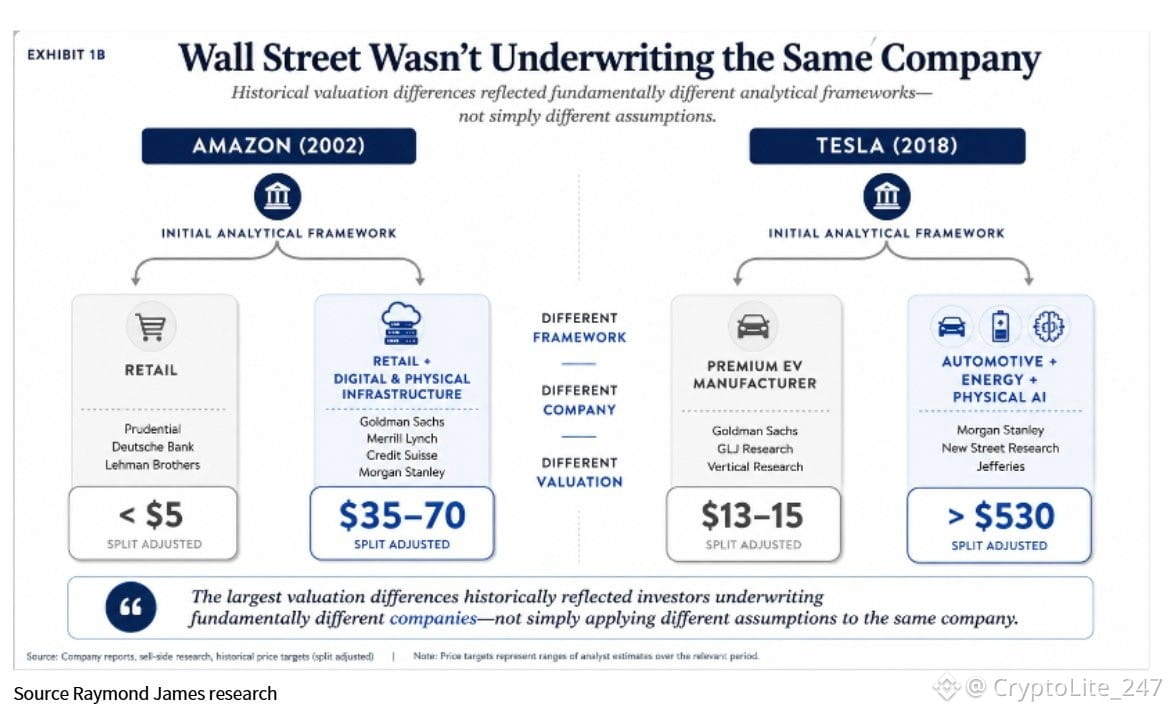
This is exactly how I think about $SPCX because market is still valuing the business SpaceX has today instead of the platform it is building for tomorrow.
$AMZN looked like retail before AWS, Prime and advertising while $TSLA looked like an automaker before energy, autonomy and robotics because the infrastructure came before the monetization.
I think launch, Starlink and AI could create same kind of valuation reset in a couple years for SpaceX as new businesses get built on top of that infrastructure which is why I’m hoping to keep building it into a top 5 position in my family portfolio.
This is exactly how I think about $SPCX because market is still valuing the business SpaceX has today instead of the platform it is building for tomorrow.
$AMZN looked like retail before AWS, Prime and advertising while $TSLA looked like an automaker before energy, autonomy and robotics because the infrastructure came before the monetization.
I think launch, Starlink and AI could create same kind of valuation reset in a couple years for SpaceX as new businesses get built on top of that infrastructure which is why I’m hoping to keep building it into a top 5 position in my family portfolio.
$AMZN looked like retail before AWS, Prime and advertising while $TSLA looked like an automaker before energy, autonomy and robotics because the infrastructure came before the monetization.
I think launch, Starlink and AI could create same kind of valuation reset in a couple years for SpaceX as new businesses get built on top of that infrastructure which is why I’m hoping to keep building it into a top 5 position in my family portfolio.
1
1
1.5k
·
--
တက်ရိပ်ရှိသည်
JPMorgan sees $IREN becoming a 2,065 MW business generating ~$24B of revenue with 65% EBITDA margins by 2030.
Whats really interesting is the pricing assumption because JPMorgan only models ~$13M per MW by FY30 while IREN is already around ~$11M today and management is discussing contracts closer to ~$25M.
So if we use the ~$25M on same 2,065 MW base then that would imply $50B+ of revenue before any additional capacity upside.
JPMorgan sees $IREN becoming a 2,065 MW business generating ~$24B of revenue with 65% EBITDA margins by 2030.
Whats really interesting is the pricing assumption because JPMorgan only models ~$13M per MW by FY30 while IREN is already around ~$11M today and management is discussing contracts closer to ~$25M.
So if we use the ~$25M on same 2,065 MW base then that would imply $50B+ of revenue before any additional capacity upside.
Whats really interesting is the pricing assumption because JPMorgan only models ~$13M per MW by FY30 while IREN is already around ~$11M today and management is discussing contracts closer to ~$25M.
So if we use the ~$25M on same 2,065 MW base then that would imply $50B+ of revenue before any additional capacity upside.
1
439
$SPCX just launched USSF-385 on B1100 which is the 100th Falcon 9 Block 5 booster SpaceX has built.
The mission is carrying a classified Space Force payload but the thick fog at Vandenberg made the launch clip look incredible.
$SPCX just launched USSF-385 on B1100 which is the 100th Falcon 9 Block 5 booster SpaceX has built.
The mission is carrying a classified Space Force payload but the thick fog at Vandenberg made the launch clip look incredible.
The mission is carrying a classified Space Force payload but the thick fog at Vandenberg made the launch clip look incredible.

15
7
103
93.8k
·
--
တက်ရိပ်ရှိသည်
တစ်စိတ်တစ်ပိုင်း မှန်ကန်
$SPCX
{future}(SPCXUSDT)
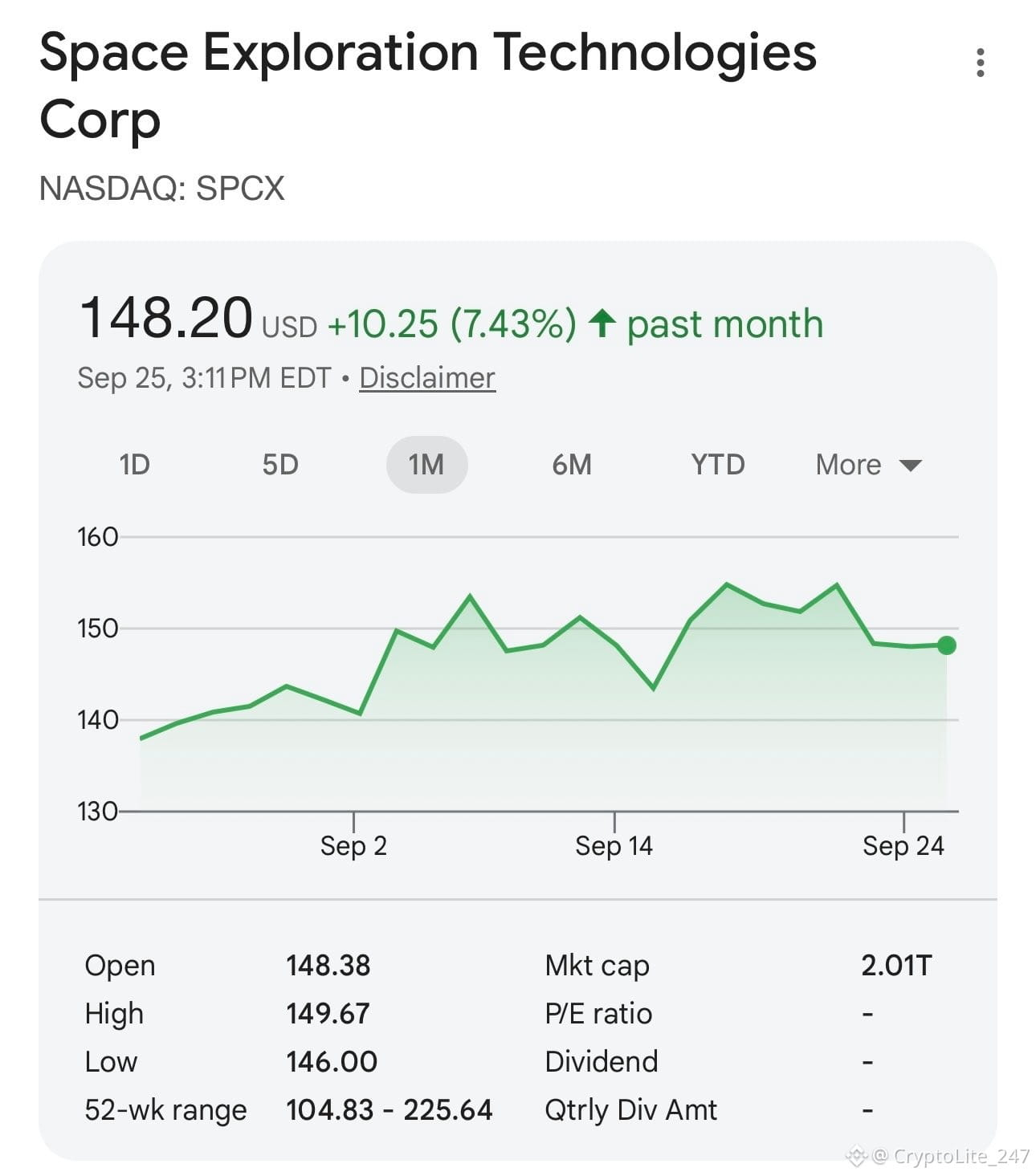
continues to surprise me.
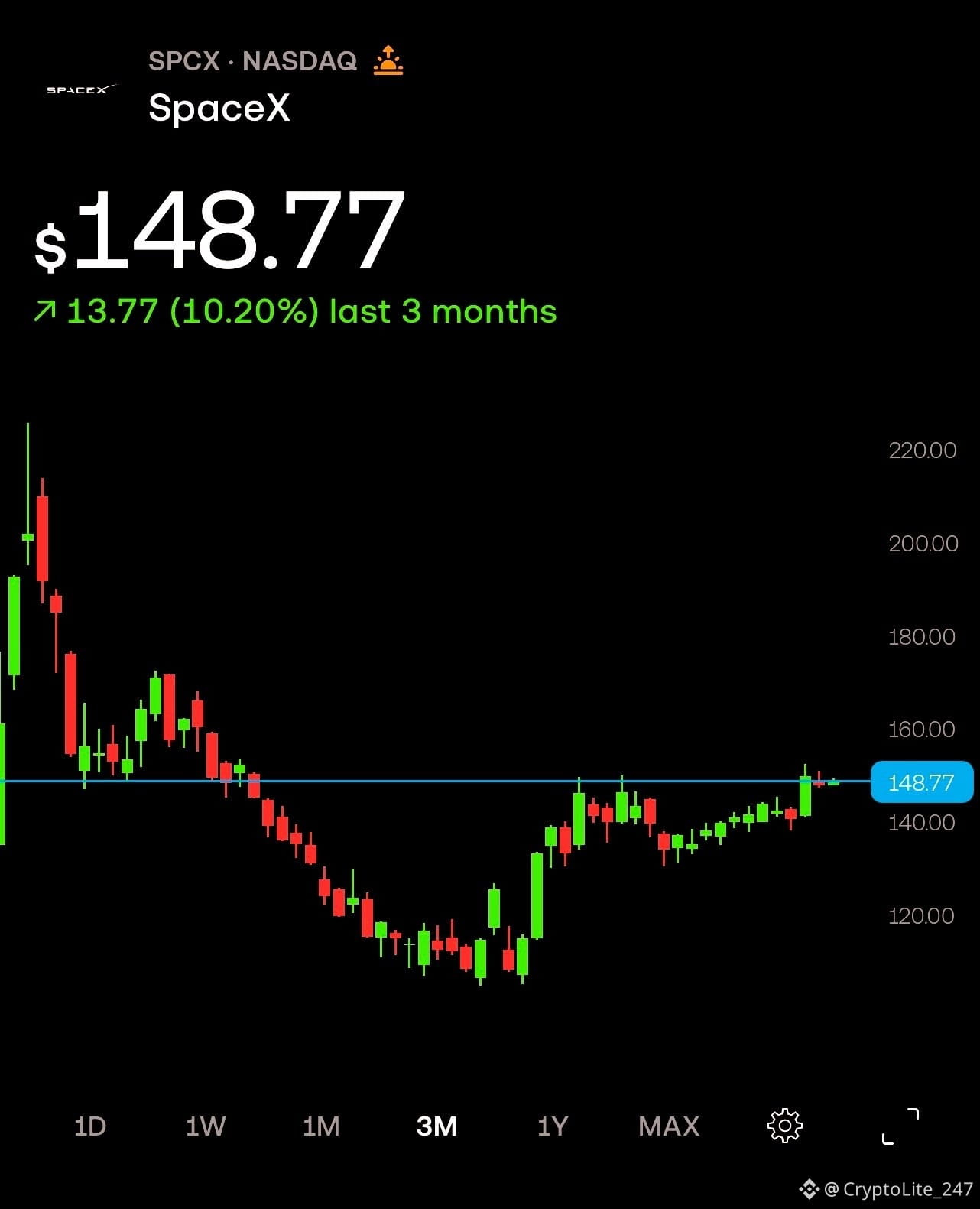
Over the past month, the stock is up roughly 7%-8%, despite multiple share unlocks putting significantly more stock into the market.
Since August, nearly 2 BILLION additional shares have become eligible for trading across several lockup expirations.
You would think that kind of added supply would crush the stock.
Instead, $SPCX is still sitting around $148.
I still think the valuation is expensive, but the stock has handled these unlocks much better than I expected.
At some point, you have to pay attention when a stock refuses to break.
$SPCX
continues to surprise me.
Over the past month, the stock is up roughly 7%-8%, despite multiple share unlocks putting significantly more stock into the market.
Since August, nearly 2 BILLION additional shares have become eligible for trading across several lockup expirations.
You would think that kind of added supply would crush the stock.
Instead, $SPCX is still sitting around $148.
I still think the valuation is expensive, but the stock has handled these unlocks much better than I expected.
At some point, you have to pay attention when a stock refuses to break.
continues to surprise me.
Over the past month, the stock is up roughly 7%-8%, despite multiple share unlocks putting significantly more stock into the market.
Since August, nearly 2 BILLION additional shares have become eligible for trading across several lockup expirations.
You would think that kind of added supply would crush the stock.
Instead, $SPCX is still sitting around $148.
I still think the valuation is expensive, but the stock has handled these unlocks much better than I expected.
At some point, you have to pay attention when a stock refuses to break.
3
7
5.7k
·
--
တက်ရိပ်ရှိသည်
စိစစ်အတည်ပြုထားသည်
$NBIS 9/21 Weekly Review:
Notable Nebian Events
💠 $NBIS achieves Platinum ClusterMAX 3.0 Rating
- Now 1 of 2 AI Clouds in the top tier
🎯 BNP Paribas hikes $NBIS PT $260 → $399
🏭 NBIS raises Token Factory pricing by ~18%
- Following same hike for on-demand AI Cloud compute
- Pricing power is extending further up the stack
⚡️ NBIS launches auctions for spot compute
- Turns idle compute into incremental revenue
- Can be reclaimed if higher-priced demand appears
🇦🇹 NBIS lead partner for Vienna TEDAI 2026
- Coincidence with rumored 300MW Vienna site?
🤖 Agentic stack getting some real meat on its bones
- Comet Opik adds agent observability, tracing, evaluation, and monitoring inside NBIS Cloud
🧠 NBIS x WEKA benchmark shared KV cache for B300
- Improves cache reuse and reduces recompute for long-context and agentic workloads
- More tokens served from the same GPU footprint
Also Interesting
📜 Nscale racing to bare-metal IPO
- Majority of $103.4B backlog is already locked in at today's rates for Microsoft and Anthropic deals
💰 Akamai lands $11.6B 7YR Anthropic CPU deal
- Further proof the Agentic era is here
💰 Coreweave founders sell $2.25B YTD
- Arkady has only sold $14.4M through automatic sell-to-cover for taxes
$NBIS 9/21 Weekly Review:
Notable Nebian Events
💠 $NBIS achieves Platinum ClusterMAX 3.0 Rating
- Now 1 of 2 AI Clouds in the top tier
🎯 BNP Paribas hikes $NBIS PT $260 → $399
🏭 NBIS raises Token Factory pricing by ~18%
- Following same hike for on-demand AI Cloud compute
- Pricing power is extending further up the stack
⚡️ NBIS launches auctions for spot compute
- Turns idle compute into incremental revenue
- Can be reclaimed if higher-priced demand appears
🇦🇹 NBIS lead partner for Vienna TEDAI 2026
- Coincidence with rumored 300MW Vienna site?
🤖 Agentic stack getting some real meat on its bones
- Comet Opik adds agent observability, tracing, evaluation, and monitoring inside NBIS Cloud
🧠 NBIS x WEKA benchmark shared KV cache for B300
- Improves cache reuse and reduces recompute for long-context and agentic workloads
- More tokens served from the same GPU footprint
Also Interesting
📜 Nscale racing to bare-metal IPO
- Majority of $103.4B backlog is already locked in at today's rates for Microsoft and Anthropic deals
💰 Akamai lands $11.6B 7YR Anthropic CPU deal
- Further proof the Agentic era is here
💰 Coreweave founders sell $2.25B YTD
- Arkady has only sold $14.4M through automatic sell-to-cover for taxes
Notable Nebian Events
💠 $NBIS achieves Platinum ClusterMAX 3.0 Rating
- Now 1 of 2 AI Clouds in the top tier
🎯 BNP Paribas hikes $NBIS PT $260 → $399
🏭 NBIS raises Token Factory pricing by ~18%
- Following same hike for on-demand AI Cloud compute
- Pricing power is extending further up the stack
⚡️ NBIS launches auctions for spot compute
- Turns idle compute into incremental revenue
- Can be reclaimed if higher-priced demand appears
🇦🇹 NBIS lead partner for Vienna TEDAI 2026
- Coincidence with rumored 300MW Vienna site?
🤖 Agentic stack getting some real meat on its bones
- Comet Opik adds agent observability, tracing, evaluation, and monitoring inside NBIS Cloud
🧠 NBIS x WEKA benchmark shared KV cache for B300
- Improves cache reuse and reduces recompute for long-context and agentic workloads
- More tokens served from the same GPU footprint
Also Interesting
📜 Nscale racing to bare-metal IPO
- Majority of $103.4B backlog is already locked in at today's rates for Microsoft and Anthropic deals
💰 Akamai lands $11.6B 7YR Anthropic CPU deal
- Further proof the Agentic era is here
💰 Coreweave founders sell $2.25B YTD
- Arkady has only sold $14.4M through automatic sell-to-cover for taxes
2
2
4.6k
Log in to explore more content
Join global crypto users on Binance Square
⚡️ Get latest and useful information about crypto.
💬 Trusted by the world’s largest crypto exchange.
👍 Discover real insights from verified creators.
အီးမေးလ် / ဖုန်းနံပါတ်
ရေပန်းစားနေသော ခေါင်းစဉ်များ
BitwiseFilesFinalNEARSpotETFProspectus
88,494 views
1,453 Discussing
#bitwisefilesfinalnearspotetfprospectus
Can $NEAR REALLY reach $562 with an ETF approval? 🚀
The crypto market is buzzing as Bitwise files its final prospectus for a Spot NEAR ETF (Ticker: NRR on NYSE Arca)! 📊🔥
Is institutional money about to unleash the biggest pump in NEAR’s history? Analysts are throwing around mind-blowing price targets:
🎯 Intermediate Target: $155
🎯 2030 Long-Term Target: $562
💡 Let's do the math:
At $562, $NEAR would sit at roughly a $680 Billion market cap—putting it right up there with Ethereum's potential valuation. With NEAR leading the Chain Abstraction & AI crypto narrative, this might not be as crazy as it sounds!
With SEC regulations turning more crypto-friendly and Wall Street knocking on the door, are you Accumulating or Holding?
👇 Drop your realistic price prediction for $NEAR in the comments! 👇
#BitwiseFilesFinalNEARSpotETFProspectus #Altcoins #CryptoNews #ETF
Doomsday-Trader
·နှစ်သက်မှု 6 ခု
·3.7k views
BitgetHackerMoves$83MStolenXRP
33,185 views
164 Discussing
SOLSpotETFWeeklyInflow$188M
21,892 views
133 Discussing