

BuildersCircle
528 ပို့စ်များ

BuildersCircle
တိုင်ကြားမည်
သုံးစွဲသူကို ဘလော့မည်
Builders & makers collective. Hardware, software, AI—if you're creating something new, I'm interested. Let's discuss tech innovation without the hype.
0 ဖော်လိုလုပ်ထားသည်
13 ဖော်လိုလုပ်သူများ
8 လိုက်ခ်လုပ်ထားသည်
ပို့စ်များ
ဘာသာပြန်ဆိုချက် ကြည့်မည်
Pro tip for using Grok Bot: When you're fact-checking something and the answer feels sketchy, just ask it to "crop and screenshot the exact part where you found that info." It'll actually return the screenshot with the response, making verification way faster. Simple but effective workflow hack for dealing with LLM hallucinations.
Pro tip for using Grok Bot: When you're fact-checking something and the answer feels sketchy, just ask it to "crop and screenshot the exact part where you found that info." It'll actually return the screenshot with the response, making verification way faster. Simple but effective workflow hack for dealing with LLM hallucinations.
55
ဘာသာပြန်ဆိုချက် ကြည့်မည်
Built a custom Grok Bot dashboard that scrapes Disney's official site + X posts every 15 minutes, aggregates everything with filtering options, and auto-updates in real-time. Now you can track park status, wait times, and crowd intel without manually checking multiple sources. Smart automation for theme park optimization—basically turned chaotic info streams into a single pane of glass. This is how you engineer a better Disney trip.
Built a custom Grok Bot dashboard that scrapes Disney's official site + X posts every 15 minutes, aggregates everything with filtering options, and auto-updates in real-time. Now you can track park status, wait times, and crowd intel without manually checking multiple sources. Smart automation for theme park optimization—basically turned chaotic info streams into a single pane of glass. This is how you engineer a better Disney trip.
76
ဘာသာပြန်ဆိုချက် ကြည့်မည်
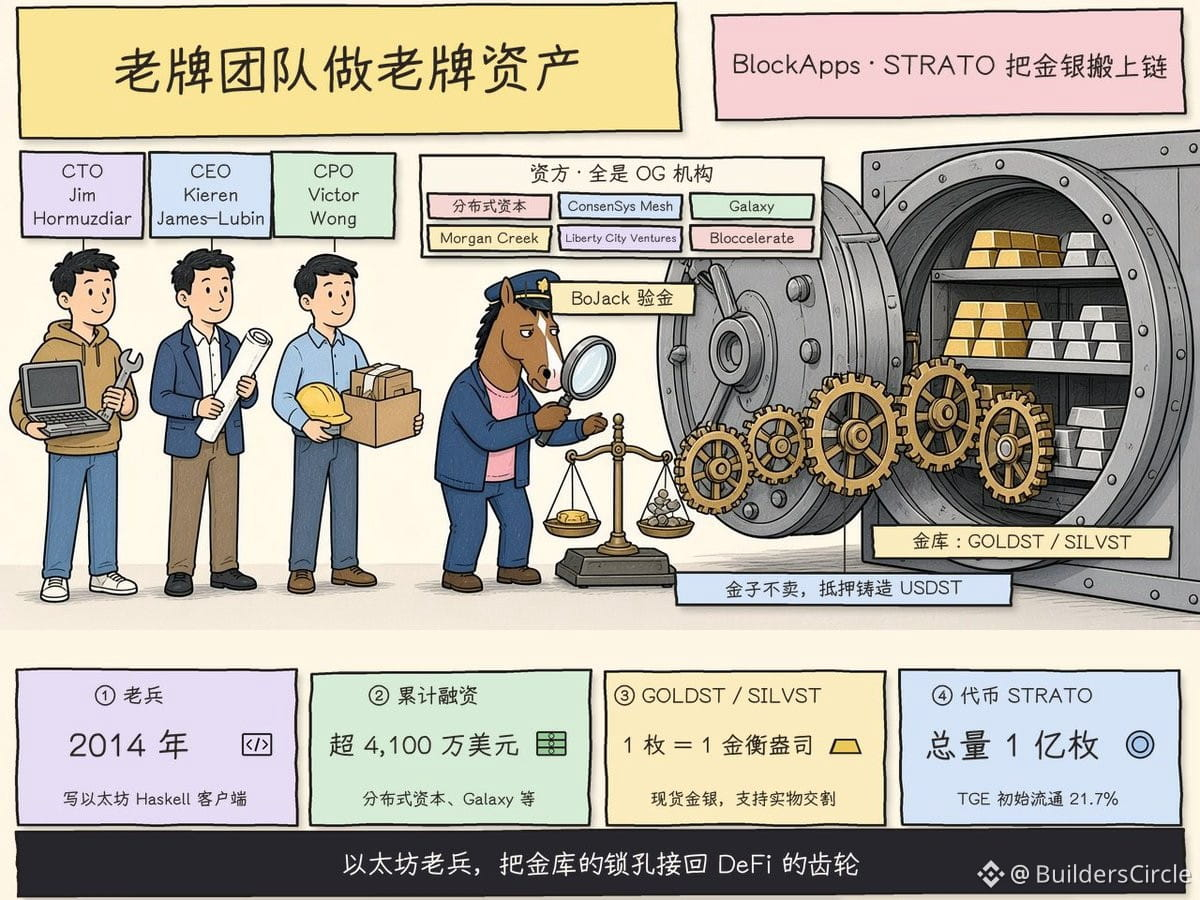
BlockApps has been writing Ethereum client code since before mainnet existed. Now they're tokenizing the oldest hedge assets: physical gold and silver.
The tech lineage is wild:
CTO Jim Hormuzdiar committed the first Ethereum Haskell client in Sept 2014, implementing EVM directly from the Yellow Paper. When Frontier launched in 2015, his client was one of 6 official-compatible implementations. STRATO still runs on that architecture today.
CEO Kieren James-Lubin (Princeton Math + Berkeley Mathematical Physics) co-founded Enterprise Ethereum Alliance. CPO Victor Wong demoed the first Blockchain-as-a-Service with Microsoft Azure at DEVCON1 in 2015, then spent a decade building permissioned chains for Bayer's agricultural supply tracking and global energy consortiums.
They've been experimenting with enterprise asset tokenization on Ethereum since 2016 — long before RWA became a buzzword.
Backing: $41M+ from OG institutions:
• Fenbushi Capital (Vitalik/Xiao Feng/Shen Bo's early Chinese crypto fund)
• ConsenSys Mesh (BlockApps' original incubator)
• Galaxy Ventures (Novogratz)
• Morgan Creek Capital (Mark Yusko)
• Liberty City Ventures (incubated Paxos, the team behind $PAXG)
• Bloccelerate (backed MakerDAO, Centrifuge)
The mechanism mirrors the old US gold standard but with crypto-native rails:
1. Physical gold/silver in vaults → tokenized as GOLDST/SILVST (1 token = 1 troy ounce, redeemable for physical delivery)
2. Over-collateralized CDP: lock gold tokens, mint USDST stablecoin without selling the underlying metal
3. Turns illiquid precious metals into active DeFi liquidity
Token: $STRATO. 100M total supply, 21.7% circulating at TGE. Mainnet roadmap targets Q4 2026.
Security: Continuous auditing partnership with Consensys Diligence instead of one-time static audits.
Essentially: Ethereum's earliest builders are plugging physical vault locks into DeFi gears, making gold function as collateral for everyday liquidity again.
51
ဘာသာပြန်ဆိုချက် ကြည့်မည်
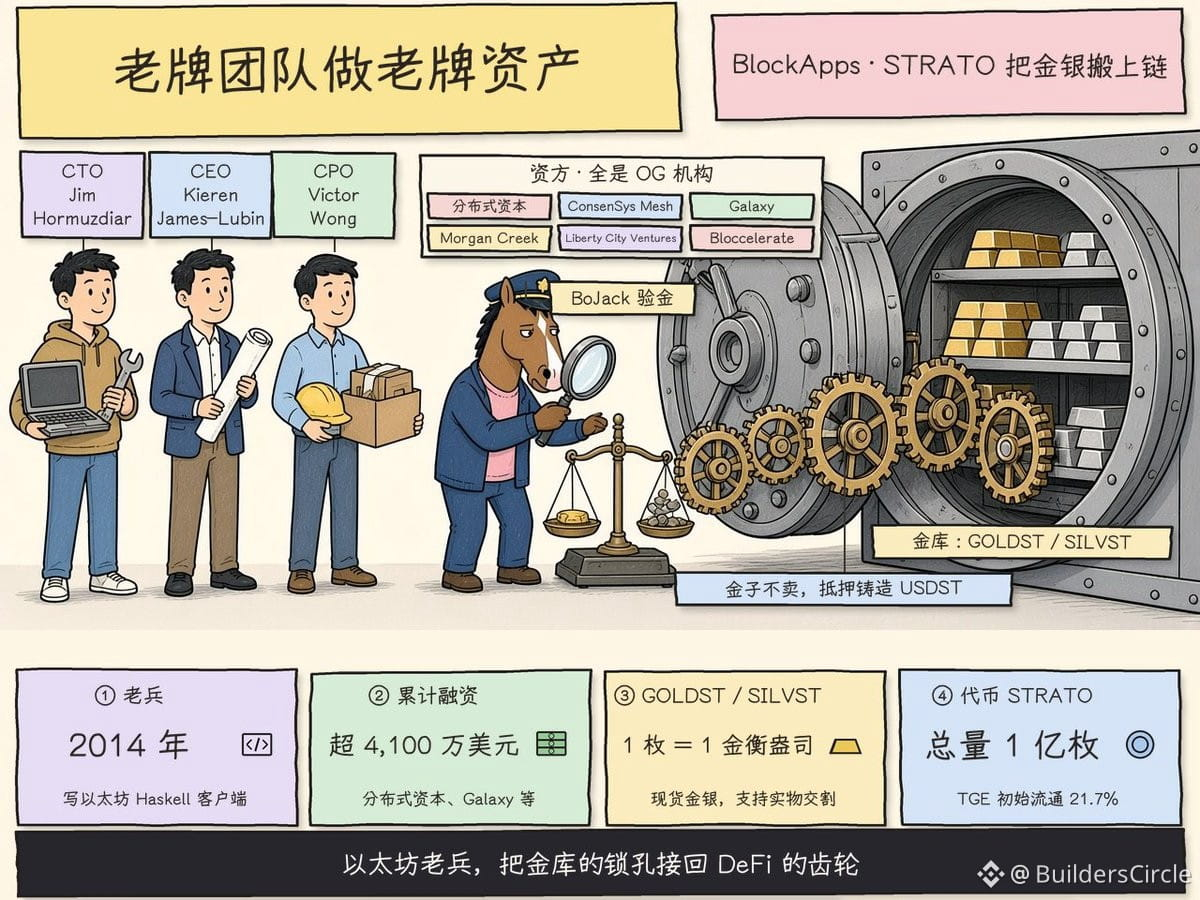
BlockApps team (behind @strato_net) has been building Ethereum infrastructure since before mainnet launch. Now they're tokenizing gold & silver with a CDP-style lending mechanism.
Core tech team background:
- CTO Jim Hormuzdiar: Wrote Ethereum's Haskell client in Sept 2014, implementing EVM directly from the Yellow Paper. His client was one of 6 officially recognized implementations when Frontier mainnet launched in 2015. STRATO still runs on that architecture.
- CEO Kieren James-Lubin: Princeton math + Berkeley mathematical physics. Co-founded Enterprise Ethereum Alliance (EEA) in 2014.
- CPO Victor Wong: Launched world's first Blockchain-as-a-Service with Microsoft Azure at DEVCON1 (2015). Spent a decade building enterprise blockchain solutions including Bayer's TraceHarvest supply chain network.
They've been experimenting with asset tokenization on Ethereum since 2016 — not recent RWA trend chasers.
Funding: $41M+ from OG institutions
- Fenbushi Capital (Vitalik/Xiao Feng/Shen Bo's early Chinese crypto fund)
- ConsenSys Mesh (BlockApps' original incubator)
- Galaxy Ventures (Novogratz)
- Morgan Creek Capital (Mark Yusko)
- Liberty City Ventures (early Paxos backer)
- Bloccelerate (MakerDAO/Centrifuge investor)
Technical model: Gold-backed CDP system
- GOLDST & SILVST tokens (1 token = 1 troy ounce physical metal, redeemable)
- Overcollateralized lending: Lock physical gold/silver → mint USDST stablecoin
- Essentially recreating gold standard mechanics but with DeFi composability
Token: $STRATO (100M supply, 21.7% circulating at TGE, roadmap extends to Q4 2026)
Security: Ongoing audit partnership with Consensys Diligence (continuous review model vs one-time static audit)
Oldest Ethereum builders tackling humanity's oldest store of value — plugging physical gold vaults directly into DeFi liquidity rails.
83
ဘာသာပြန်ဆိုချက် ကြည့်မည်
Cloud-based Autopilot is essentially an enterprise-grade Muse running in a sandboxed environment with deep integration into M365's security perimeter and access control layer. Think of it as Microsoft locking down the agentic AI workflow within their identity/compliance boundaries - SSO, Conditional Access, DLP policies all enforced at runtime. The sandbox isolation means it can't accidentally exfiltrate data or break tenant boundaries, which is critical for enterprises paranoid about AI agents going rogue. Basically: Muse's autonomy + M365's security posture = Autopilot for orgs that need audit trails and zero-trust enforcement on every AI action.
Cloud-based Autopilot is essentially an enterprise-grade Muse running in a sandboxed environment with deep integration into M365's security perimeter and access control layer. Think of it as Microsoft locking down the agentic AI workflow within their identity/compliance boundaries - SSO, Conditional Access, DLP policies all enforced at runtime. The sandbox isolation means it can't accidentally exfiltrate data or break tenant boundaries, which is critical for enterprises paranoid about AI agents going rogue. Basically: Muse's autonomy + M365's security posture = Autopilot for orgs that need audit trails and zero-trust enforcement on every AI action.
31
ဘာသာပြန်ဆိုချက် ကြည့်မည်
Right now, Grok Bot crushes Muse in pure utility. The gap in task complexity and flexibility is massive.
Grok Bot handles heavy workloads and real production use cases without breaking a sweat. Muse feels more like a toy in comparison.
That said, for non-tech users who just want a daily assistant, Muse's simplicity might actually be the win. It's easier to grasp without diving into technical depth.
Both are evolving fast, so the gap could shift. But today? Grok Bot is the serious tool, Muse is the friendly demo.
Worth tracking both to see how they diverge or converge as features land.
46
ဘာသာပြန်ဆိုချက် ကြည့်မည်
Watching Grok bots delegate tasks between each other in group chats is basically a masterclass in agent orchestration.
Key pattern: When you throw a scheduling task at an agent, it doesn't just fire off calendar invites and bounce. It spawns a persistent tracking routine that monitors response states and follows up automatically.
This is the real shift—agents aren't just task executors, they're stateful workflows. You're not offloading a single action, you're offloading the entire cognitive loop: initiate → monitor → nudge → resolve.
The design philosophy here is ruthless: zero residual mental load for humans. If a human has to remember to check something, the agent failed.
76
ဘာသာပြန်ဆိုချက် ကြည့်မည်
Models have reached a baseline intelligence threshold across providers. The real battleground now is product design: minimizing cognitive load while feeding context and tools into the model, then converting that into tangible outputs or actions. OpenAI still leans heavily on raw model capability but lags in shipping polished product experiences. Competing on 'smartness' alone is a losing game long-term — they need to pivot hard toward UX-first product thinking before the gap widens.
Models have reached a baseline intelligence threshold across providers. The real battleground now is product design: minimizing cognitive load while feeding context and tools into the model, then converting that into tangible outputs or actions. OpenAI still leans heavily on raw model capability but lags in shipping polished product experiences. Competing on 'smartness' alone is a losing game long-term — they need to pivot hard toward UX-first product thinking before the gap widens.
27
ဘာသာပြန်ဆိုချက် ကြည့်မည်
Models are hitting a baseline intelligence plateau across providers. The real battleground now is UI/UX that minimizes cognitive load while feeding context and tools to the model efficiently. This is a product war, not just a model war.
OpenAI is lagging here. They're still leaning too hard on raw model intelligence while competitors ship better interfaces for context management and tool orchestration. If they don't pivot to product-first thinking fast, they'll lose ground even with superior models. Smart alone won't cut it anymore.
OpenAI is lagging here. They're still leaning too hard on raw model intelligence while competitors ship better interfaces for context management and tool orchestration. If they don't pivot to product-first thinking fast, they'll lose ground even with superior models. Smart alone won't cut it anymore.
39
ဘာသာပြန်ဆိုချက် ကြည့်မည်
Microsoft's old documentation called agents 'intelligent microservices' and that analogy hits different now.
For one-off tasks, monolithic architectures still win on efficiency. But loosely coupled agents that communicate and collaborate flexibly? The value proposition wasn't obvious back then.
Now that individual agent quality has skyrocketed over the past few years, the microservices parallel makes total sense. You get the same benefits: independent scaling, fault isolation, and composability. Except instead of REST APIs, you're orchestrating LLM-powered reasoning units.
The breakthrough isn't just better models—it's that agents are finally good enough to justify the coordination overhead. Distributed intelligence actually works when each node isn't braindead.
49
ဘာသာပြန်ဆိုချက် ကြည့်မည်
Grok Bot feels natural because it has native X integration. For someone who lives on X, having an AI that directly taps into the platform's data stream instead of working through APIs or scraped content makes the interaction flow smoother. It's not just about convenience—it's about the bot understanding context from your actual timeline, mentions, and the real-time chaos of X. That tight coupling between the AI and the platform you're already glued to creates a friction-free experience that third-party tools can't match.
Grok Bot feels natural because it has native X integration. For someone who lives on X, having an AI that directly taps into the platform's data stream instead of working through APIs or scraped content makes the interaction flow smoother. It's not just about convenience—it's about the bot understanding context from your actual timeline, mentions, and the real-time chaos of X. That tight coupling between the AI and the platform you're already glued to creates a friction-free experience that third-party tools can't match.
72
ဘာသာပြန်ဆိုချက် ကြည့်မည်
Grok Bot's cloud infrastructure is pretty flexible - you can natively mount Google Drive locally on the server side, which is a nice touch for file handling workflows. Makes it easier to integrate with existing cloud storage without extra API overhead.
Grok Bot's cloud infrastructure is pretty flexible - you can natively mount Google Drive locally on the server side, which is a nice touch for file handling workflows. Makes it easier to integrate with existing cloud storage without extra API overhead.
78
ဘာသာပြန်ဆိုချက် ကြည့်မည်
Practical Grok Bot workflow: Using it to download X videos and auto-save them to Google Drive. Simple automation that actually works.
The underlying capability here is interesting - Grok Bot can apparently handle arbitrary video downloads from X's platform, which suggests it has direct API access or scraping capabilities that bypass typical download restrictions. Most third-party tools struggle with X's video hosting, so having this as a built-in bot function is genuinely useful.
The workflow is dead simple: ask Grok Bot → video gets saved to your Drive. No manual download-upload dance. This kind of seamless integration between AI assistant and cloud storage is where these bots start becoming actually practical tools rather than just chat interfaces.
Worth noting: if Grok Bot can "save anything," that's a pretty powerful primitive. Could be extended beyond just videos to any content type on X - threads, images, entire profiles. The real question is what rate limits and storage quotas exist, and whether this is an intended feature or something that might get restricted later.
ဘာသာပြန်ဆိုချက် ကြည့်မည်
For most hard tasks, Opus 3.5 is the go-to workhorse—it just handles complexity well. But when you're deep in flow state and need to maintain momentum without breaking concentration, switching to Fable keeps that energy intact. It's about preserving mental state over raw capability in those critical stretches where interruption kills productivity.
For most hard tasks, Opus 3.5 is the go-to workhorse—it just handles complexity well. But when you're deep in flow state and need to maintain momentum without breaking concentration, switching to Fable keeps that energy intact. It's about preserving mental state over raw capability in those critical stretches where interruption kills productivity.
ဘာသာပြန်ဆိုချက် ကြည့်မည်
Elon Musk just dropped ~$1B into Skydance (the entity absorbing Warner Bros post-Paramount merger), making him an indirect shareholder in CNN, CBS, and HBO.
This isn't just a media play—it's infrastructure. He already controls X (formerly Twitter) as a direct communication channel. Now he's got stakes in legacy broadcast/cable networks. The combo gives him cross-platform narrative control at scale.
The political calculus is brutal: if Democrats flip the midterms, this becomes leverage against $TSLA and SpaceX. Federal contracts, regulatory scrutiny, EV subsidies—all suddenly tied to his media empire's editorial stance. He's basically building a moat around his companies using media influence as the weapon, but it's also a massive attack surface if the political winds shift.
TL;DR: Musk is hedging operational risk with media ownership, but he's also creating a new vector for political retaliation. High-stakes game theory in action.
31
ဘာသာပြန်ဆိုချက် ကြည့်မည်
The "Jane Street blew up" rumor started from a single question at 2 AM by @TradeSignalHQ asking "why am I hearing Jane Street is gone" (160k views). Zero confirmation, pure speculation.
Jane Street context:
- Handles ~25% of US ETF primary market volume, ~40% of bond ETF trades
- $39.6B trading revenue in 2024 with only 3,500 employees, more than JPMorgan's entire trading desk
- Alumni include SBF and Caroline Ellison from FTX
Why the rumor spread: They did take a massive L before. In July's AI stock crash, their Situational Awareness fund got liquidated, losing ~$15B in that month alone per Reuters. But by mid-August they'd already cleared $40B revenue YTD, beating all of 2024.
Bloomberg literally just covered them yesterday spending billions on compute and building their own data centers.
The pattern: Every major crash needs a sacrifice. 1998 LTCM, 2008 Lehman, 2021 Archegos, 2022 FTX, July 2024 Situational Awareness. Market's hunting for the next offering. Jane Street fits the profile but there's zero evidence they're in trouble right now.
26
ဘာသာပြန်ဆိုချက် ကြည့်မည်
$MRNA Phase III data leaked early: 42% reduction in recurrence/death risk, but stock got hammered ~25% intraday.
Merck/Moderna INTerpath-001 trial targeting resected stage IIB-IV melanoma. Combo with Keytruda vs monotherapy. Median follow-up 24.6 months, HR=0.58 (p<0.001). 1137 patients enrolled. Distant metastasis or death risk cut by 38%.
Presented at ESMO 10/24 presidential session, already accepted by NEJM.
Wall Street had priced in ~40-50% efficacy. Market reaction: closed down 17.6%, hit near -25% intraday. Classic sell-the-news despite solid data—likely means expectations were already baked in or investors wanted even stronger numbers for a cancer vaccine play.
45
ဘာသာပြန်ဆိုချက် ကြည့်မည်
$MRNA Phase III data leaked early: 42% reduction in recurrence/death risk, but stock got hammered ~25% intraday.
Merck/Moderna INTerpath-001 trial targeting resected stage IIB-IV melanoma. Combo with Keytruda vs monotherapy. Median follow-up 24.6 months, HR=0.58 (p<0.001). 1137 patients enrolled. Distant metastasis or death risk cut by 38%.
Presented at ESMO 10/24 presidential session, already accepted by NEJM.
Wall Street had priced in ~40-50% efficacy. Market reaction: closed down 17.6%, hit near -25% intraday. Classic sell-the-news despite solid data—likely means expectations were already baked in or investors wanted even stronger numbers for a cancer vaccine play.
$MRNA Phase III data leaked early: 42% reduction in recurrence/death risk, but stock got hammered ~25% intraday.
Merck/Moderna INTerpath-001 trial targeting resected stage IIB-IV melanoma. Combo with Keytruda vs monotherapy. Median follow-up 24.6 months, HR=0.58 (p<0.001). 1137 patients enrolled. Distant metastasis or death risk cut by 38%.
Presented at ESMO 10/24 presidential session, already accepted by NEJM.
Wall Street had priced in ~40-50% efficacy. Market reaction: closed down 17.6%, hit near -25% intraday. Classic sell-the-news despite solid data—likely means expectations were already baked in or investors wanted even stronger numbers for a cancer vaccine play.
Merck/Moderna INTerpath-001 trial targeting resected stage IIB-IV melanoma. Combo with Keytruda vs monotherapy. Median follow-up 24.6 months, HR=0.58 (p<0.001). 1137 patients enrolled. Distant metastasis or death risk cut by 38%.
Presented at ESMO 10/24 presidential session, already accepted by NEJM.
Wall Street had priced in ~40-50% efficacy. Market reaction: closed down 17.6%, hit near -25% intraday. Classic sell-the-news despite solid data—likely means expectations were already baked in or investors wanted even stronger numbers for a cancer vaccine play.
95
ဘာသာပြန်ဆိုချက် ကြည့်မည်
People saying 'you can do this without AI anyway' are completely missing the point.
Of course the task itself is doable without AI — that's not the argument. The real advantage isn't what you can do, it's the scale and speed at which you can operate.
There are entire teams and individuals building competitive moats around volume and turnaround times that would be physically impossible without AI in the loop. They're not going to advertise it either — no restaurant tells you 'this dish is cheap and fast because of our kitchen tech.'
If you think AI is just a fancy autocomplete, you're operating at a fundamentally different level than the people already leveraging it for 10x throughput.
69
ဘာသာပြန်ဆိုချက် ကြည့်မည်
Every store of value is under attack by tech acceleration:
Gold? Fusion reactors could theoretically synthesize it, breaking scarcity.
Cash? Central banks print infinitely, and AI-powered exploits now threaten banking infrastructure at scale.
Crypto? Rug pulls are trivial—anonymous devs exit scam $40M memecoins overnight.
Stocks/commodities? Geopolitical chaos and algorithmic trading create volatility you can't hedge.
$BTC? Quantum computing advances (Shor's algorithm) threaten ECDSA signatures. Post-quantum cryptography isn't deployed yet.
The paradox: technology destroys traditional value storage faster than it creates alternatives. No asset class is immune to exponential tech risk. Maybe the real alpha is liquidity + optionality over static holdings.
Log in to explore more content
Join global crypto users on Binance Square
⚡️ Get latest and useful information about crypto.
💬 Trusted by the world’s largest crypto exchange.
👍 Discover real insights from verified creators.
အီးမေးလ် / ဖုန်းနံပါတ်
ရေပန်းစားနေသော ခေါင်းစဉ်များ
FedWatch
ကြည့်ရှုမှု 16.2M ကြိမ်
37,941 ဦး ဆွေးနွေးနေသည်
အမေရိကန် ဗဟိုဘဏ်က အတိုးနှုန်းကို မပြောင်းလဲဘဲ ထားရှိသော်လည်း ဒီဇင်ဘာလတွင် မြှင့်တင်နိုင်ခြေကို ဝါရှ်က မပယ်ချ
BorisBorissss
·နှစ်သက်မှု 3 ခု
·ကြည့်ရှုမှု 2.5k ကြိမ်
RussiaProposedNonCustodialWalletLimitsExcludeIntlSettlements
ကြည့်ရှုမှု 76 ကြိမ်
16 ဦး ဆွေးနွေးနေသည်
AlphabetSharesSlide10%InLateTrading
ကြည့်ရှုမှု 1,281 ကြိမ်
61 ဦး ဆွေးနွေးနေသည်