

Crypto Fortress 1
1.8k ပို့စ်များ

Crypto Fortress 1
တိုင်ကြားမည်
သုံးစွဲသူကို ဘလော့မည်
Crypto explorer | Building the decentralized future one block at a time | Insights on BTC, ETH, DeFi & beyond | Not financial advice.
0 ဖော်လိုလုပ်ထားသည်
7 ဖော်လိုလုပ်သူများ
26 လိုက်ခ်လုပ်ထားသည်
ပို့စ်များ
Ripple CEO Explains Why He's "Very Bullish" on $XRP
Brad Garlinghouse says the logic is pretty straightforward: XRP has a fixed supply, so the long-term question is whether real demand can keep growing around it. The same basic supply-and-demand idea applies to $BTC too.
For Garlinghouse, three things matter most: trust, utility and velocity. In other words, people need to trust the asset, actually use it and have enough liquidity to move in and out easily.
Ripple is trying to build that demand through financial institutions using the XRP Ledger. Garlinghouse says the growing number of institutions and other companies building around XRP is what gives him confidence.
He also pointed back to XRP's history.
Before the SEC lawsuit against Ripple, XRP had reached the No. 2 position among cryptocurrencies by market cap.
So his bullish case is not simply about price speculation. It comes down to whether Ripple and the wider ecosystem can keep expanding liquidity, institutional usage and real transaction demand around a fixed supply.
#BTC Price Analysis# #XRP
#Bitcoin Price Prediction: What is Bitcoins next move?#
Ripple CEO Explains Why He's "Very Bullish" on $XRP
Brad Garlinghouse says the logic is pretty straightforward: XRP has a fixed supply, so the long-term question is whether real demand can keep growing around it. The same basic supply-and-demand idea applies to $BTC too.
For Garlinghouse, three things matter most: trust, utility and velocity. In other words, people need to trust the asset, actually use it and have enough liquidity to move in and out easily.
Ripple is trying to build that demand through financial institutions using the XRP Ledger. Garlinghouse says the growing number of institutions and other companies building around XRP is what gives him confidence.
He also pointed back to XRP's history.
Before the SEC lawsuit against Ripple, XRP had reached the No. 2 position among cryptocurrencies by market cap.
So his bullish case is not simply about price speculation. It comes down to whether Ripple and the wider ecosystem can keep expanding liquidity, institutional usage and real transaction demand around a fixed supply.
#BTC Price Analysis# #XRP
#Bitcoin Price Prediction: What is Bitcoins next move?#
Brad Garlinghouse says the logic is pretty straightforward: XRP has a fixed supply, so the long-term question is whether real demand can keep growing around it. The same basic supply-and-demand idea applies to $BTC too.
For Garlinghouse, three things matter most: trust, utility and velocity. In other words, people need to trust the asset, actually use it and have enough liquidity to move in and out easily.
Ripple is trying to build that demand through financial institutions using the XRP Ledger. Garlinghouse says the growing number of institutions and other companies building around XRP is what gives him confidence.
He also pointed back to XRP's history.
Before the SEC lawsuit against Ripple, XRP had reached the No. 2 position among cryptocurrencies by market cap.
So his bullish case is not simply about price speculation. It comes down to whether Ripple and the wider ecosystem can keep expanding liquidity, institutional usage and real transaction demand around a fixed supply.
#BTC Price Analysis# #XRP
#Bitcoin Price Prediction: What is Bitcoins next move?#
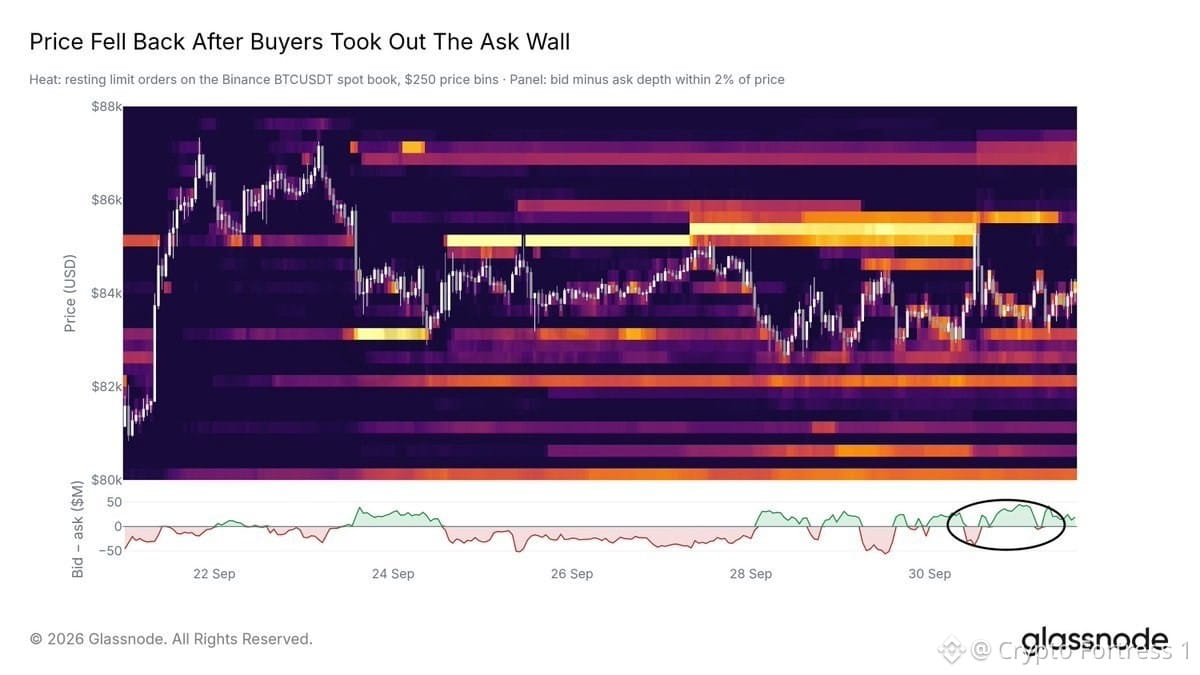
Bitcoin buyers have cleared the major $85K sell wall after nearly a week of repeated attempts, according to Glassnode.
The resistance had been concentrated around $85K to $85.5K on Binance, with the sell orders growing significantly before buyers finally absorbed the wall.
Glassnode now reports that much of the remaining sell liquidity above Bitcoin has also disappeared.
This gives $BTC a cleaner order-book structure above $85K, meaning there are fewer visible sell orders for buyers to absorb if demand continues.
The next phase will depend on whether trading volume and fresh demand increase, since Glassnode previously noted that overall Bitcoin volume remained relatively low and ETF inflows had slowed from the strong levels seen in late September.
The $85K break removes a major near-term barrier, but it does not guarantee a continued move higher.
#Bitcoin Price Prediction: What is Bitcoins next move?#
Bitcoin buyers have cleared the major $85K sell wall after nearly a week of repeated attempts, according to Glassnode.
The resistance had been concentrated around $85K to $85.5K on Binance, with the sell orders growing significantly before buyers finally absorbed the wall.
Glassnode now reports that much of the remaining sell liquidity above Bitcoin has also disappeared.
This gives $BTC a cleaner order-book structure above $85K, meaning there are fewer visible sell orders for buyers to absorb if demand continues.
The next phase will depend on whether trading volume and fresh demand increase, since Glassnode previously noted that overall Bitcoin volume remained relatively low and ETF inflows had slowed from the strong levels seen in late September.
The $85K break removes a major near-term barrier, but it does not guarantee a continued move higher.
#Bitcoin Price Prediction: What is Bitcoins next move?#
The resistance had been concentrated around $85K to $85.5K on Binance, with the sell orders growing significantly before buyers finally absorbed the wall.
Glassnode now reports that much of the remaining sell liquidity above Bitcoin has also disappeared.
This gives $BTC a cleaner order-book structure above $85K, meaning there are fewer visible sell orders for buyers to absorb if demand continues.
The next phase will depend on whether trading volume and fresh demand increase, since Glassnode previously noted that overall Bitcoin volume remained relatively low and ETF inflows had slowed from the strong levels seen in late September.
The $85K break removes a major near-term barrier, but it does not guarantee a continued move higher.
#Bitcoin Price Prediction: What is Bitcoins next move?#
$BTC
Stani Kulechov criticizes EU regulators over proposed stablecoin yield restrictions and tighter DeFi access under MICA.
#BTC Price Analysis#
$BTC
Stani Kulechov criticizes EU regulators over proposed stablecoin yield restrictions and tighter DeFi access under MICA.
#BTC Price Analysis#
Stani Kulechov criticizes EU regulators over proposed stablecoin yield restrictions and tighter DeFi access under MICA.
#BTC Price Analysis#

A Crypto Bridge Just Stopped $50M From Moving
This is one of those stories where the transaction not happening is the news.
$NEAR Intents says it blocked roughly $50 million linked to the Bitget hacker from being swapped through its infrastructure.
According to the project, its system identified the funds through real-time risk screening and rejected the transactions before they could be processed.
That creates a slightly uncomfortable question for crypto infrastructure. We usually judge bridges and cross-chain systems by how smoothly they move assets. But once stolen funds enter the picture, being able to say "no" can suddenly be just as important as speed.
And yeah, there's an obvious debate on the other side: the more filtering infrastructure can do, the more people will ask who controls the filter. I don't think there's a neat answer here. But stopping $50M is a pretty good way to make that debate much less theoretical.
#Macro Insights# #Altcoin Season#
A Crypto Bridge Just Stopped $50M From Moving
This is one of those stories where the transaction not happening is the news.
$NEAR Intents says it blocked roughly $50 million linked to the Bitget hacker from being swapped through its infrastructure.
According to the project, its system identified the funds through real-time risk screening and rejected the transactions before they could be processed.
That creates a slightly uncomfortable question for crypto infrastructure. We usually judge bridges and cross-chain systems by how smoothly they move assets. But once stolen funds enter the picture, being able to say "no" can suddenly be just as important as speed.
And yeah, there's an obvious debate on the other side: the more filtering infrastructure can do, the more people will ask who controls the filter. I don't think there's a neat answer here. But stopping $50M is a pretty good way to make that debate much less theoretical.
#Macro Insights# #Altcoin Season#
This is one of those stories where the transaction not happening is the news.
$NEAR Intents says it blocked roughly $50 million linked to the Bitget hacker from being swapped through its infrastructure.
According to the project, its system identified the funds through real-time risk screening and rejected the transactions before they could be processed.
That creates a slightly uncomfortable question for crypto infrastructure. We usually judge bridges and cross-chain systems by how smoothly they move assets. But once stolen funds enter the picture, being able to say "no" can suddenly be just as important as speed.
And yeah, there's an obvious debate on the other side: the more filtering infrastructure can do, the more people will ask who controls the filter. I don't think there's a neat answer here. But stopping $50M is a pretty good way to make that debate much less theoretical.
#Macro Insights# #Altcoin Season#
24
Where is crypto actually used the most?
Chainalysis just dropped its 2026 ranking
Chainalysis released its 2026 Global Crypto Adoption Index, and it doesn't just count who holds the most crypto $BTC. It looks at how people actually use it: exchanges, peer-to-peer transfers, cross-border payments and on-chain balances.
Here's the top 10
🇧🇷 Brazil
🇺🇸 USA
🇳🇬 Nigeria
🇯🇵 Japan
🇰🇷 South Korea
🇮🇳 India
🇺🇦 Ukraine
🇹🇭 Thailand
🇿🇦 South Africa
🇨🇦 Canada
A few things that stood out to me:
🇧🇷 Brazil took º1 with a $252.5B crypto economy, ranking in the top 4 across every single category.
🇺🇸 The US owns the most but uses it the least. It's º1 for crypto balances but only Nº20 for peer-to-peer transfers. For Americans, crypto is mostly an investment.
🇳🇬 Nigeria is the opposite. It's Nº1 in the world for P2P and cross-border transfers, so there crypto works like everyday money.
🇺🇦 And Ukraine is Nº7, ahead of Canada, Germany and the UK
The most interesting part? Even with the market down about 50% this year, on-chain activity dropped only 1.6%. People didn't stop using crypto, they just stopped panicking
Did your country make the top 20? And which spot surprised you the most?
#BTC Price Analysis# #Macro Insights#
Where is crypto actually used the most?
Chainalysis just dropped its 2026 ranking
Chainalysis released its 2026 Global Crypto Adoption Index, and it doesn't just count who holds the most crypto $BTC. It looks at how people actually use it: exchanges, peer-to-peer transfers, cross-border payments and on-chain balances.
Here's the top 10
🇧🇷 Brazil
🇺🇸 USA
🇳🇬 Nigeria
🇯🇵 Japan
🇰🇷 South Korea
🇮🇳 India
🇺🇦 Ukraine
🇹🇭 Thailand
🇿🇦 South Africa
🇨🇦 Canada
A few things that stood out to me:
🇧🇷 Brazil took º1 with a $252.5B crypto economy, ranking in the top 4 across every single category.
🇺🇸 The US owns the most but uses it the least. It's º1 for crypto balances but only Nº20 for peer-to-peer transfers. For Americans, crypto is mostly an investment.
🇳🇬 Nigeria is the opposite. It's Nº1 in the world for P2P and cross-border transfers, so there crypto works like everyday money.
🇺🇦 And Ukraine is Nº7, ahead of Canada, Germany and the UK
The most interesting part? Even with the market down about 50% this year, on-chain activity dropped only 1.6%. People didn't stop using crypto, they just stopped panicking
Did your country make the top 20? And which spot surprised you the most?
#BTC Price Analysis# #Macro Insights#
Chainalysis just dropped its 2026 ranking
Chainalysis released its 2026 Global Crypto Adoption Index, and it doesn't just count who holds the most crypto $BTC. It looks at how people actually use it: exchanges, peer-to-peer transfers, cross-border payments and on-chain balances.
Here's the top 10
🇧🇷 Brazil
🇺🇸 USA
🇳🇬 Nigeria
🇯🇵 Japan
🇰🇷 South Korea
🇮🇳 India
🇺🇦 Ukraine
🇹🇭 Thailand
🇿🇦 South Africa
🇨🇦 Canada
A few things that stood out to me:
🇧🇷 Brazil took º1 with a $252.5B crypto economy, ranking in the top 4 across every single category.
🇺🇸 The US owns the most but uses it the least. It's º1 for crypto balances but only Nº20 for peer-to-peer transfers. For Americans, crypto is mostly an investment.
🇳🇬 Nigeria is the opposite. It's Nº1 in the world for P2P and cross-border transfers, so there crypto works like everyday money.
🇺🇦 And Ukraine is Nº7, ahead of Canada, Germany and the UK
The most interesting part? Even with the market down about 50% this year, on-chain activity dropped only 1.6%. People didn't stop using crypto, they just stopped panicking
Did your country make the top 20? And which spot surprised you the most?
#BTC Price Analysis# #Macro Insights#

Ripple locked 700 million $XRP back into escrow.
Whale Alert caught the return on October 1, hours after the scheduled 1 billion unlock. The re-lock came in two transfers, 400 million and 300 million, worth more than $1.05 billion. That is 70% of what came out.
The other 300 million stayed with Ripple. That is the usual split. The company set the escrow in 2017 so up to 1 billion can unlock on the first of each month, then most of it goes back to the end of the queue. Net supply that can reach the market is closer to 200-300 million, not the headline billion.
About 31 billion XRP is still locked. $XRP
slipped about 2.5% around the transfers, which is the usual reaction to a move the market already expects.
The 1 billion was the unlock. The 700 million is what went back. The 300 million is the number that matters.
#BTC Price Analysis# #Altcoin Season#
#Ripple
Ripple locked 700 million $XRP back into escrow.
Whale Alert caught the return on October 1, hours after the scheduled 1 billion unlock. The re-lock came in two transfers, 400 million and 300 million, worth more than $1.05 billion. That is 70% of what came out.
The other 300 million stayed with Ripple. That is the usual split. The company set the escrow in 2017 so up to 1 billion can unlock on the first of each month, then most of it goes back to the end of the queue. Net supply that can reach the market is closer to 200-300 million, not the headline billion.
About 31 billion XRP is still locked. $XRP
slipped about 2.5% around the transfers, which is the usual reaction to a move the market already expects.
The 1 billion was the unlock. The 700 million is what went back. The 300 million is the number that matters.
#BTC Price Analysis# #Altcoin Season#
#Ripple
Whale Alert caught the return on October 1, hours after the scheduled 1 billion unlock. The re-lock came in two transfers, 400 million and 300 million, worth more than $1.05 billion. That is 70% of what came out.
The other 300 million stayed with Ripple. That is the usual split. The company set the escrow in 2017 so up to 1 billion can unlock on the first of each month, then most of it goes back to the end of the queue. Net supply that can reach the market is closer to 200-300 million, not the headline billion.
About 31 billion XRP is still locked. $XRP
slipped about 2.5% around the transfers, which is the usual reaction to a move the market already expects.
The 1 billion was the unlock. The 700 million is what went back. The 300 million is the number that matters.
#BTC Price Analysis# #Altcoin Season#
#Ripple

28
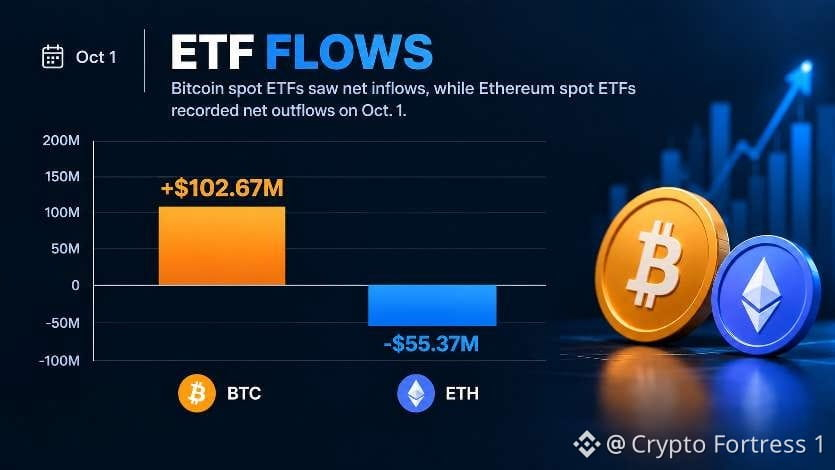
Bitcoin spot ETFs continued to attract fresh capital on Oct. 1, posting $102.67M in net inflows.
Ethereum spot ETFs moved in the opposite direction, recording $55.37M in net outflows.
$BTC is still seeing stronger institutional demand, while $ETH flows remain more mixed.
The divergence in ETF flows remains an important signal for tracking where institutional capital is moving across the crypto market.
#ETFs #Bitcoin #Ethereum
Bitcoin spot ETFs continued to attract fresh capital on Oct. 1, posting $102.67M in net inflows.
Ethereum spot ETFs moved in the opposite direction, recording $55.37M in net outflows.
$BTC is still seeing stronger institutional demand, while $ETH flows remain more mixed.
The divergence in ETF flows remains an important signal for tracking where institutional capital is moving across the crypto market.
#ETFs #Bitcoin #Ethereum
Ethereum spot ETFs moved in the opposite direction, recording $55.37M in net outflows.
$BTC is still seeing stronger institutional demand, while $ETH flows remain more mixed.
The divergence in ETF flows remains an important signal for tracking where institutional capital is moving across the crypto market.
#ETFs #Bitcoin #Ethereum
38
If you're trading $QNT right now, you need a stomach for volatility. Everything depends on the bulls, defending the orange support box.
If you're trading $QNT right now, you need a stomach for volatility. Everything depends on the bulls, defending the orange support box.
65
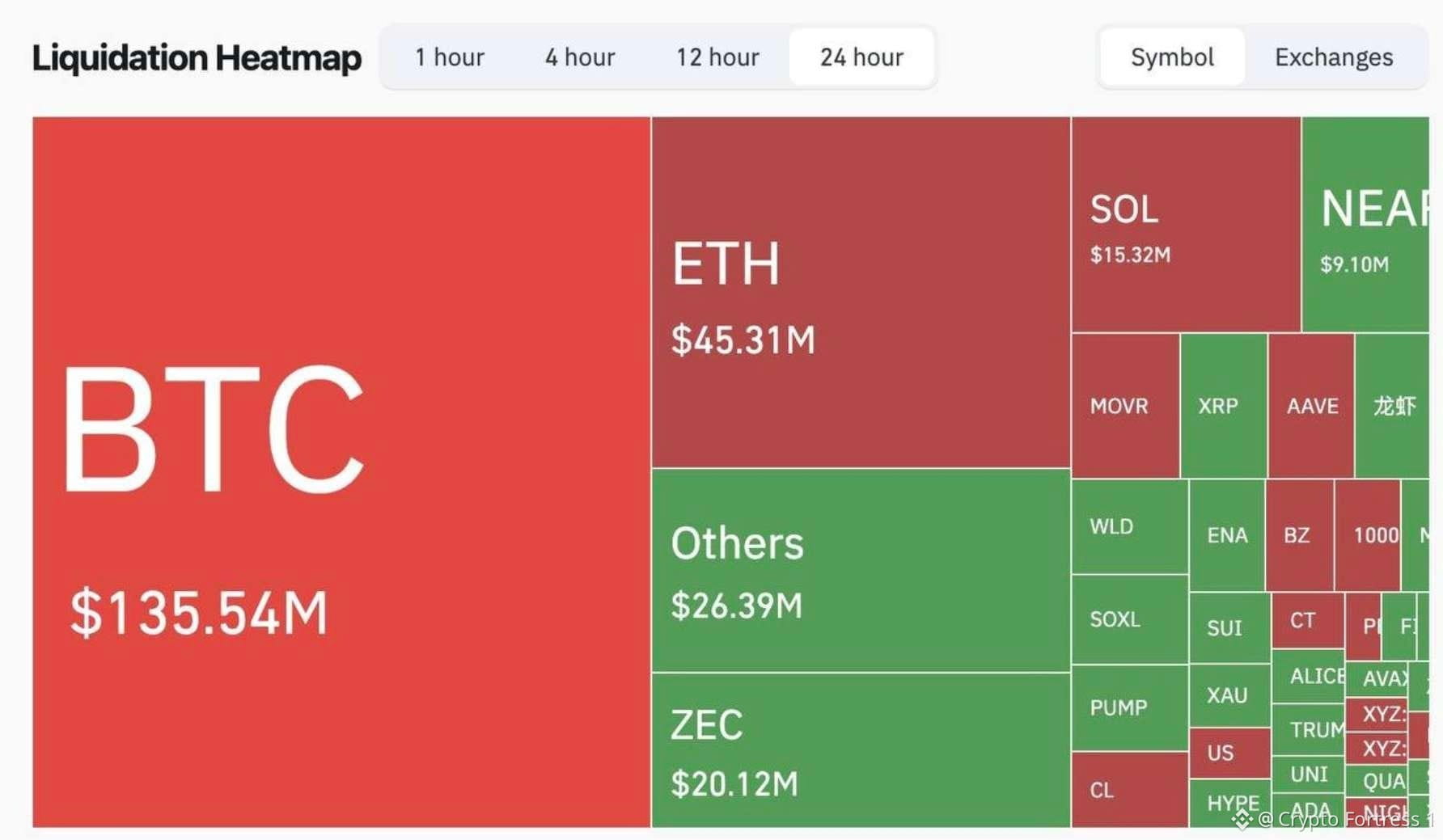
The crypto market just witnessed a massive liquidation wave, with 77,797 traders/investors liquidated over the last 24 hours.
- Total Liquidations: $323.98M
- Short Liquidations: $209M+
- $BTC: $135.54M liquidated
- $ETH: $45.31M
The most striking figure is #Bitcoin, accounting for roughly $135.5M in liquidations alone.
#Ethereum followed with more than $45M, while several altcoins also experienced significant forced-position closures.
What makes this liquidation event particularly interesting is the $209M+ in short liquidations.
That means a substantial portion of the traders caught in the move were positioned for downside and were forced out as price moved against them.
This is a classic reminder of how quickly leveraged positions can amplify market volatility.
When large amounts of shorts are liquidated, forced buying can add further upward pressure to the market. At the same time, liquidation clusters can create sharp price swings as exchanges automatically close overleveraged positions.
$BTC remains the center of attention, with the largest liquidation volume by a wide margin.
The key question now is whether this liquidation event represents a temporary leverage reset or the beginning of another major market move.
$323.98M wiped out. 77,797 positions liquidated. Bitcoin led the liquidation wave.
The market just reminded everyone:
leverage cuts both ways.
#BTC Price Analysis#
The crypto market just witnessed a massive liquidation wave, with 77,797 traders/investors liquidated over the last 24 hours.
- Total Liquidations: $323.98M
- Short Liquidations: $209M+
- $BTC: $135.54M liquidated
- $ETH: $45.31M
The most striking figure is #Bitcoin, accounting for roughly $135.5M in liquidations alone.
#Ethereum followed with more than $45M, while several altcoins also experienced significant forced-position closures.
What makes this liquidation event particularly interesting is the $209M+ in short liquidations.
That means a substantial portion of the traders caught in the move were positioned for downside and were forced out as price moved against them.
This is a classic reminder of how quickly leveraged positions can amplify market volatility.
When large amounts of shorts are liquidated, forced buying can add further upward pressure to the market. At the same time, liquidation clusters can create sharp price swings as exchanges automatically close overleveraged positions.
$BTC remains the center of attention, with the largest liquidation volume by a wide margin.
The key question now is whether this liquidation event represents a temporary leverage reset or the beginning of another major market move.
$323.98M wiped out. 77,797 positions liquidated. Bitcoin led the liquidation wave.
The market just reminded everyone:
leverage cuts both ways.
#BTC Price Analysis#
- Total Liquidations: $323.98M
- Short Liquidations: $209M+
- $BTC: $135.54M liquidated
- $ETH: $45.31M
The most striking figure is #Bitcoin, accounting for roughly $135.5M in liquidations alone.
#Ethereum followed with more than $45M, while several altcoins also experienced significant forced-position closures.
What makes this liquidation event particularly interesting is the $209M+ in short liquidations.
That means a substantial portion of the traders caught in the move were positioned for downside and were forced out as price moved against them.
This is a classic reminder of how quickly leveraged positions can amplify market volatility.
When large amounts of shorts are liquidated, forced buying can add further upward pressure to the market. At the same time, liquidation clusters can create sharp price swings as exchanges automatically close overleveraged positions.
$BTC remains the center of attention, with the largest liquidation volume by a wide margin.
The key question now is whether this liquidation event represents a temporary leverage reset or the beginning of another major market move.
$323.98M wiped out. 77,797 positions liquidated. Bitcoin led the liquidation wave.
The market just reminded everyone:
leverage cuts both ways.
#BTC Price Analysis#
72
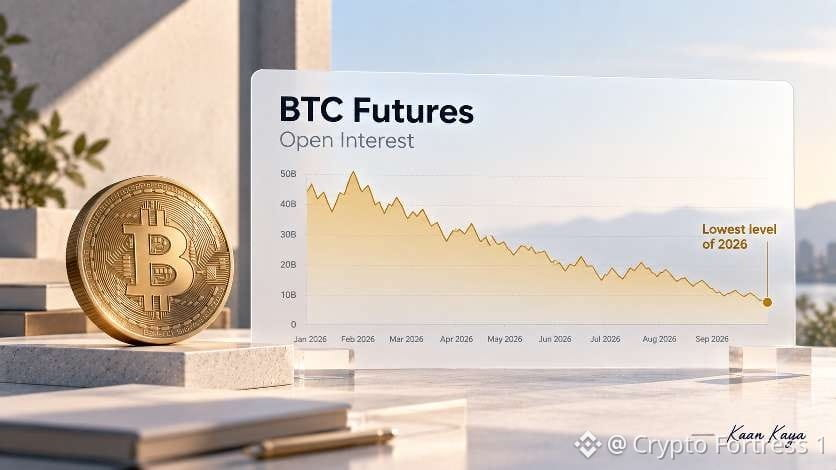
Bitcoin Leverage Just Fell to Its Lowest Level of 2026
Here's a stat that looks slightly strange next to Bitcoin sitting around $84K: $BTC futures open interest has fallen to its lowest level of the year. The market rallied hard over the past month, but traders haven't responded by piling leverage back in.
That's quite different from the setup you often get after a fast move. Rising price plus rapidly expanding open interest usually means more leveraged positions are joining the trade. This time, a lot of that excess leverage has actually been cleared while BTC has held most of its recent gains.
There's another contrast underneath it. Bitcoin and Ether's 30-day implied volatility measures are still sitting near 2026 lows, meaning options traders aren't pricing particularly dramatic moves either.
So $BTC is around $84K, leverage has been flushed out, and expected volatility remains unusually quiet.
It's a much cleaner market structure than you'd expect after the kind of run Bitcoin just had.
#BTC Price Analysis# #Bitcoin Price Prediction: What is Bitcoins next move?#
Bitcoin Leverage Just Fell to Its Lowest Level of 2026
Here's a stat that looks slightly strange next to Bitcoin sitting around $84K: $BTC futures open interest has fallen to its lowest level of the year. The market rallied hard over the past month, but traders haven't responded by piling leverage back in.
That's quite different from the setup you often get after a fast move. Rising price plus rapidly expanding open interest usually means more leveraged positions are joining the trade. This time, a lot of that excess leverage has actually been cleared while BTC has held most of its recent gains.
There's another contrast underneath it. Bitcoin and Ether's 30-day implied volatility measures are still sitting near 2026 lows, meaning options traders aren't pricing particularly dramatic moves either.
So $BTC is around $84K, leverage has been flushed out, and expected volatility remains unusually quiet.
It's a much cleaner market structure than you'd expect after the kind of run Bitcoin just had.
#BTC Price Analysis# #Bitcoin Price Prediction: What is Bitcoins next move?#
Here's a stat that looks slightly strange next to Bitcoin sitting around $84K: $BTC futures open interest has fallen to its lowest level of the year. The market rallied hard over the past month, but traders haven't responded by piling leverage back in.
That's quite different from the setup you often get after a fast move. Rising price plus rapidly expanding open interest usually means more leveraged positions are joining the trade. This time, a lot of that excess leverage has actually been cleared while BTC has held most of its recent gains.
There's another contrast underneath it. Bitcoin and Ether's 30-day implied volatility measures are still sitting near 2026 lows, meaning options traders aren't pricing particularly dramatic moves either.
So $BTC is around $84K, leverage has been flushed out, and expected volatility remains unusually quiet.
It's a much cleaner market structure than you'd expect after the kind of run Bitcoin just had.
#BTC Price Analysis# #Bitcoin Price Prediction: What is Bitcoins next move?#
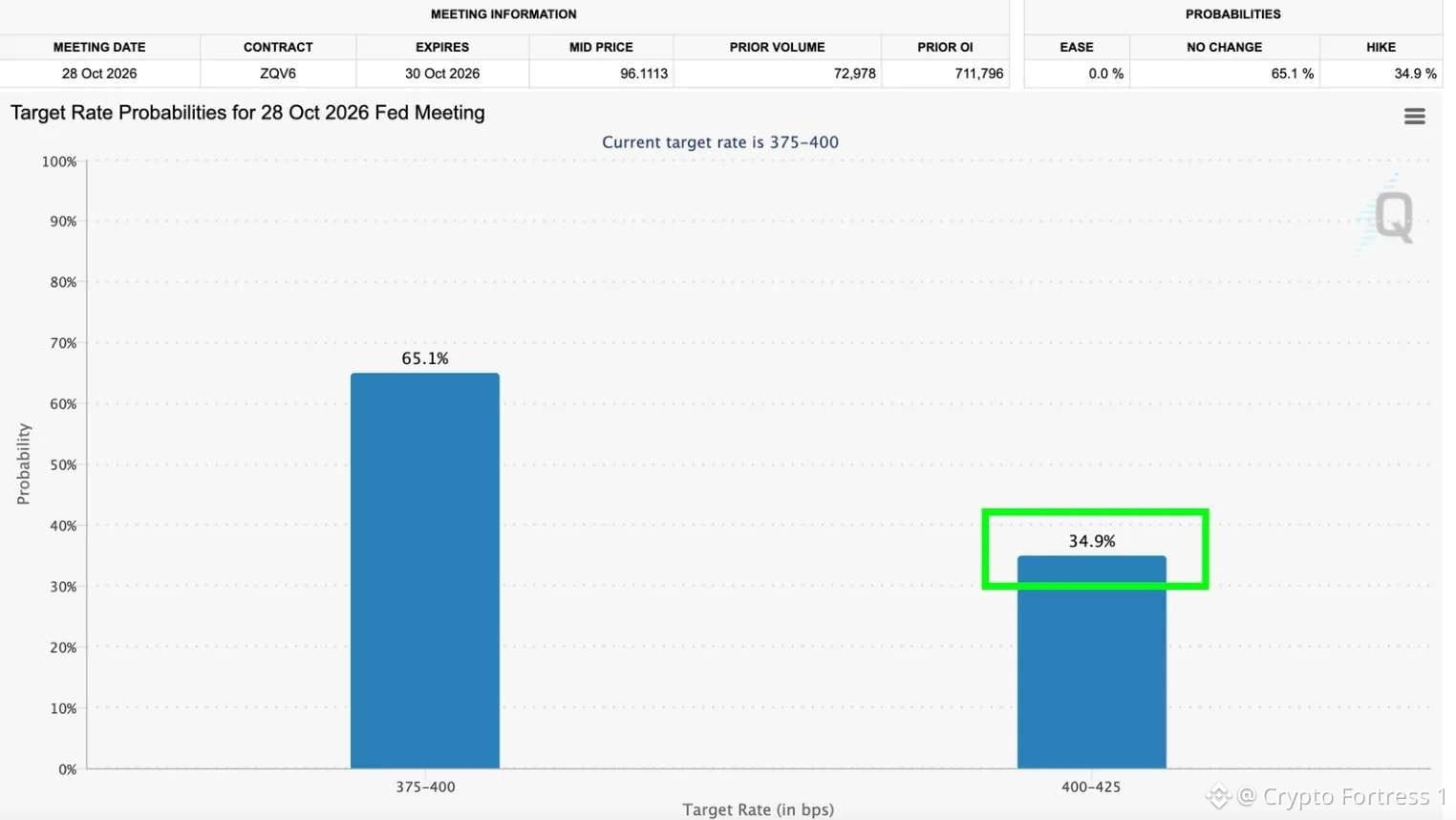
$BTC BREAKING: Fed Rate Hike Odds Plunge to 34% 🇺🇸
Market expectations for another Federal Reserve rate hike have dropped sharply, falling from 70% to just 34.9%.
This significant shift suggests that the probability of another rate hike at the October 28, 2026 Fed meeting has decreased considerably, while the odds of rates remaining unchanged now stand at 65.1%.
Current Market Pricing: Rate Hike: 34.9%
- No Change: 65.1%
- Rate Cut: 0.0%
With expectations for further tightening cooling rapidly, this development could provide a more supportive backdrop for risk assets, including crypto markets, as investors reassess the path of U.S. monetary policy.
#Altcoin Season# #Meme Alpha# #BTC Price Analysis# #Macro Insights#
$BTC BREAKING: Fed Rate Hike Odds Plunge to 34% 🇺🇸
Market expectations for another Federal Reserve rate hike have dropped sharply, falling from 70% to just 34.9%.
This significant shift suggests that the probability of another rate hike at the October 28, 2026 Fed meeting has decreased considerably, while the odds of rates remaining unchanged now stand at 65.1%.
Current Market Pricing: Rate Hike: 34.9%
- No Change: 65.1%
- Rate Cut: 0.0%
With expectations for further tightening cooling rapidly, this development could provide a more supportive backdrop for risk assets, including crypto markets, as investors reassess the path of U.S. monetary policy.
#Altcoin Season# #Meme Alpha# #BTC Price Analysis# #Macro Insights#
Market expectations for another Federal Reserve rate hike have dropped sharply, falling from 70% to just 34.9%.
This significant shift suggests that the probability of another rate hike at the October 28, 2026 Fed meeting has decreased considerably, while the odds of rates remaining unchanged now stand at 65.1%.
Current Market Pricing: Rate Hike: 34.9%
- No Change: 65.1%
- Rate Cut: 0.0%
With expectations for further tightening cooling rapidly, this development could provide a more supportive backdrop for risk assets, including crypto markets, as investors reassess the path of U.S. monetary policy.
#Altcoin Season# #Meme Alpha# #BTC Price Analysis# #Macro Insights#
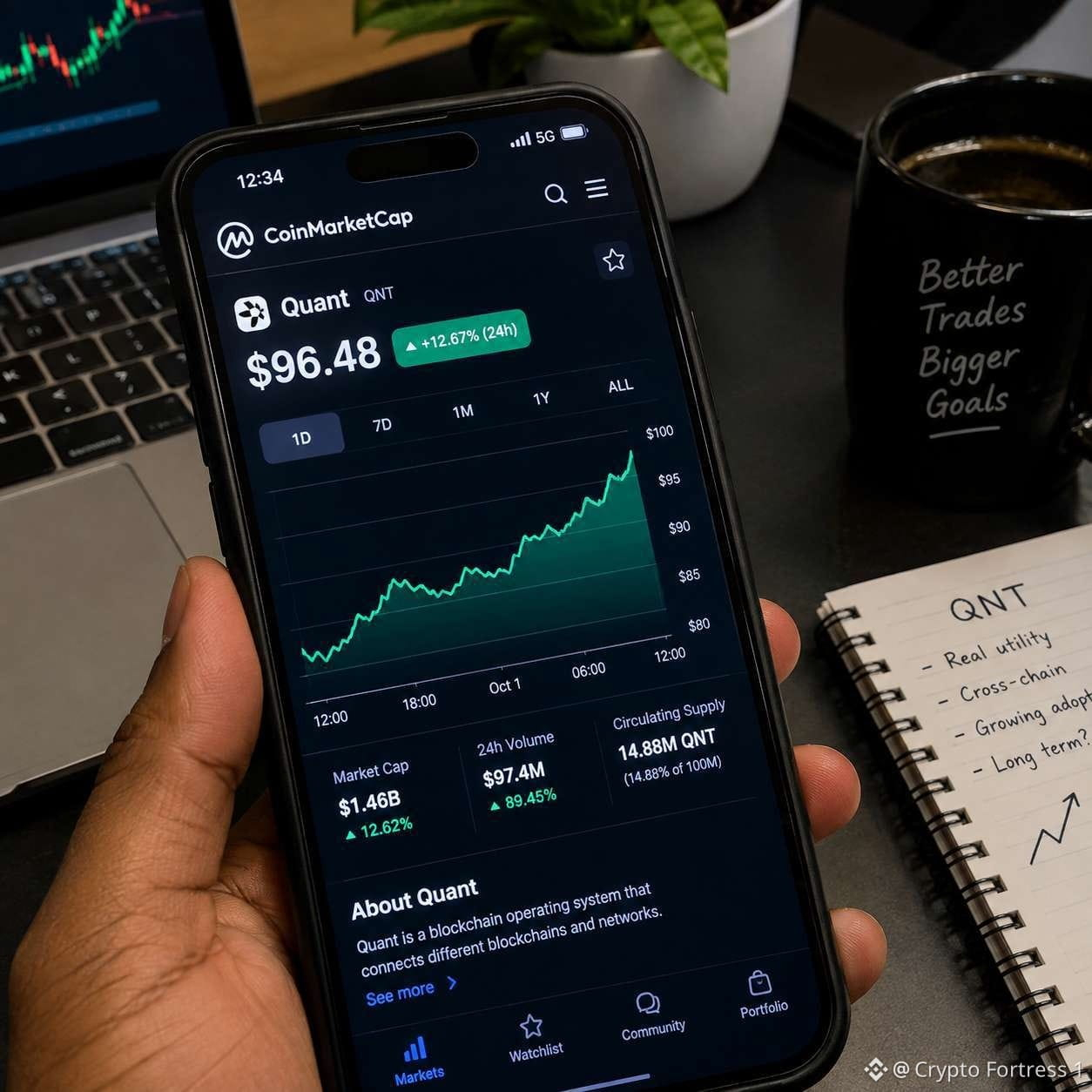
$QNT is catching attention again
Strong 24h move, rising volume, and plenty of discussion around its real-world utility.
Definitely one to keep on the radar while the market is moving.
#QNT #Crypto
$QNT is catching attention again
Strong 24h move, rising volume, and plenty of discussion around its real-world utility.
Definitely one to keep on the radar while the market is moving.
#QNT #Crypto
Strong 24h move, rising volume, and plenty of discussion around its real-world utility.
Definitely one to keep on the radar while the market is moving.
#QNT #Crypto
$NEAR
NEAR Protocol confirmed that its main blockchain remains fully operational with zero downtime, clarifying that the recent NEAR Intents incident involved no network vulnerabilities.
#NEAR
$NEAR
NEAR Protocol confirmed that its main blockchain remains fully operational with zero downtime, clarifying that the recent NEAR Intents incident involved no network vulnerabilities.
#NEAR
NEAR Protocol confirmed that its main blockchain remains fully operational with zero downtime, clarifying that the recent NEAR Intents incident involved no network vulnerabilities.
#NEAR
The Netherlands Dropped a 36% Tax on Unsold Crypto
The lower house passed it in February. The Senate pulled the bill on September 29 after the industry warned holders would leave.
The proposal would have taxed bitcoin and other crypto that investors had not sold, which is an unrealized-gains charge on coins still sitting in a wallet. Lawmakers withdrew it over the risk of an investor exodus. That does not clear the tax code. Realized gains on self-custody bitcoin still face a 36% rate, so selling into a profit is still expensive. What died is the idea of taxing coins that never left the wallet.
Where the bill stands:
- Lower house: passed in February 2026
- Senate: withdrew the bill on Sept. 29
- What failed: a 36% tax on unsold crypto
- What remains: 36% on realized gains in self-custody
A withdrawn unrealized tax is a win for holders who do not want a bill on coins they have not sold. It is not a tax holiday. Anyone who sells still owes 36% on the gain, and another parliament can bring the unsold charge back.
Netherlands: 36% Unrealized Crypto Tax Withdrawn - Realized Gains Still Taxed
#BTC Price Analysis# #Bitcoin Price Prediction: What is Bitcoins next move?#
$BTC $ETH #Macro Insights#
The Netherlands Dropped a 36% Tax on Unsold Crypto
The lower house passed it in February. The Senate pulled the bill on September 29 after the industry warned holders would leave.
The proposal would have taxed bitcoin and other crypto that investors had not sold, which is an unrealized-gains charge on coins still sitting in a wallet. Lawmakers withdrew it over the risk of an investor exodus. That does not clear the tax code. Realized gains on self-custody bitcoin still face a 36% rate, so selling into a profit is still expensive. What died is the idea of taxing coins that never left the wallet.
Where the bill stands:
- Lower house: passed in February 2026
- Senate: withdrew the bill on Sept. 29
- What failed: a 36% tax on unsold crypto
- What remains: 36% on realized gains in self-custody
A withdrawn unrealized tax is a win for holders who do not want a bill on coins they have not sold. It is not a tax holiday. Anyone who sells still owes 36% on the gain, and another parliament can bring the unsold charge back.
Netherlands: 36% Unrealized Crypto Tax Withdrawn - Realized Gains Still Taxed
#BTC Price Analysis# #Bitcoin Price Prediction: What is Bitcoins next move?#
$BTC $ETH #Macro Insights#
The lower house passed it in February. The Senate pulled the bill on September 29 after the industry warned holders would leave.
The proposal would have taxed bitcoin and other crypto that investors had not sold, which is an unrealized-gains charge on coins still sitting in a wallet. Lawmakers withdrew it over the risk of an investor exodus. That does not clear the tax code. Realized gains on self-custody bitcoin still face a 36% rate, so selling into a profit is still expensive. What died is the idea of taxing coins that never left the wallet.
Where the bill stands:
- Lower house: passed in February 2026
- Senate: withdrew the bill on Sept. 29
- What failed: a 36% tax on unsold crypto
- What remains: 36% on realized gains in self-custody
A withdrawn unrealized tax is a win for holders who do not want a bill on coins they have not sold. It is not a tax holiday. Anyone who sells still owes 36% on the gain, and another parliament can bring the unsold charge back.
Netherlands: 36% Unrealized Crypto Tax Withdrawn - Realized Gains Still Taxed
#BTC Price Analysis# #Bitcoin Price Prediction: What is Bitcoins next move?#
$BTC $ETH #Macro Insights#

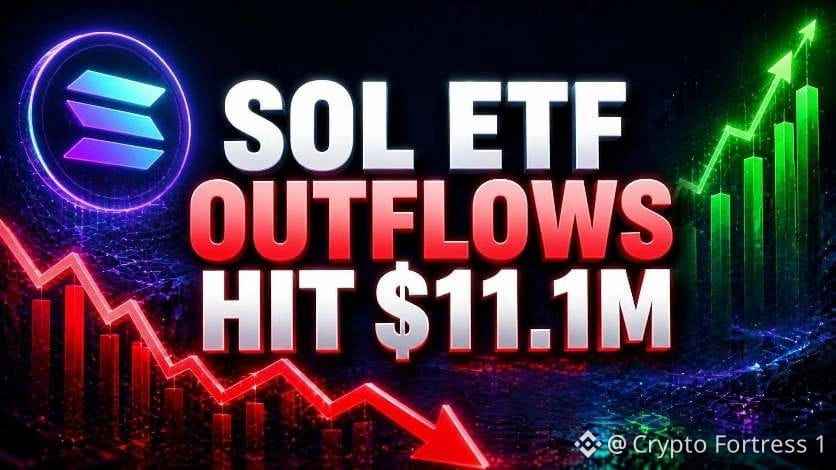
$SOL spot ETFs saw total net outflows of $11.1 million on September 30.
It was a mixed bag, though: the Fidelity Solana Fund ETF (FSOL) actually brought in $2.77 million, pushing its cumulative net inflow to $234 million.
On the flip side, the Bitwise Solana Staking ETF (BSOL) lost $8.94 million, though its cumulative net inflow still stands at $1.225 billion.
Overall, SOL spot ETFs currently hold $1.906 billion in total net assets, with cumulative net inflows reaching $1.612 billion and a net asset ratio of 2.75%.
#SOL #ETF #Solana #Macro Insights#
#Altcoin Season#
$SOL spot ETFs saw total net outflows of $11.1 million on September 30.
It was a mixed bag, though: the Fidelity Solana Fund ETF (FSOL) actually brought in $2.77 million, pushing its cumulative net inflow to $234 million.
On the flip side, the Bitwise Solana Staking ETF (BSOL) lost $8.94 million, though its cumulative net inflow still stands at $1.225 billion.
Overall, SOL spot ETFs currently hold $1.906 billion in total net assets, with cumulative net inflows reaching $1.612 billion and a net asset ratio of 2.75%.
#SOL #ETF #Solana #Macro Insights#
#Altcoin Season#
It was a mixed bag, though: the Fidelity Solana Fund ETF (FSOL) actually brought in $2.77 million, pushing its cumulative net inflow to $234 million.
On the flip side, the Bitwise Solana Staking ETF (BSOL) lost $8.94 million, though its cumulative net inflow still stands at $1.225 billion.
Overall, SOL spot ETFs currently hold $1.906 billion in total net assets, with cumulative net inflows reaching $1.612 billion and a net asset ratio of 2.75%.
#SOL #ETF #Solana #Macro Insights#
#Altcoin Season#
MetaMask Staking Was Compromised Wallets Appear Unaffected
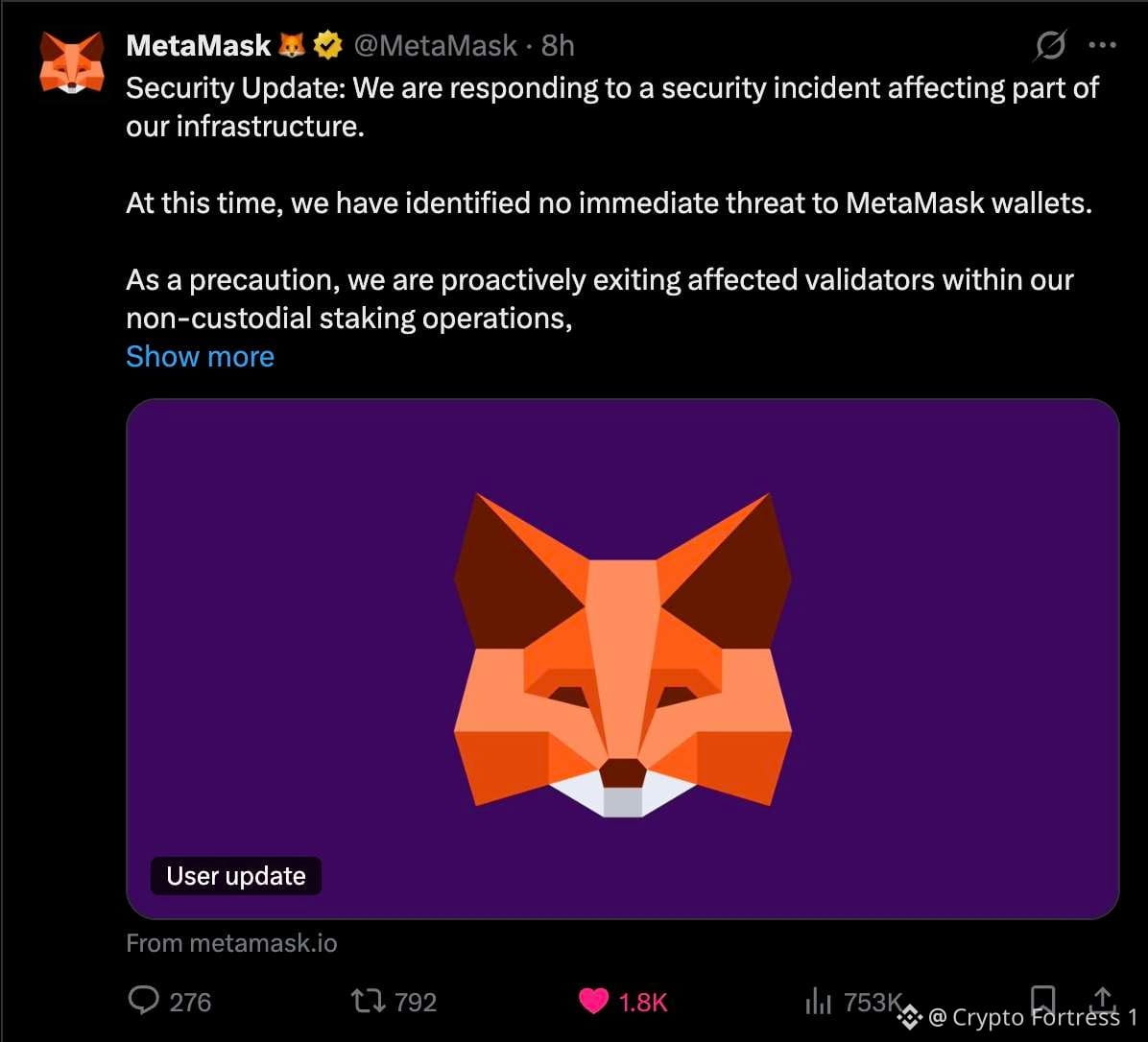
MetaMask has started exiting affected $ETH validators after a security incident hit part of its staking infrastructure. The key point so far: the company says it has found no immediate threat to MetaMask wallets.
What we know:
• the incident affects staking infrastructure, not the wallet itself
• MetaMask is proactively exiting affected validators
• it doesn't control users' withdrawal keys
• Lido expects the final affected validators to exit by October 7
• some rewards may be missed and downtime penalties are possible MetaMask
What we don't know yet is more important: MetaMask hasn't said what was compromised, how the attacker got in, or how many validators and how much $ETH are involved.
For now, this looks contained to the staking side - but until MetaMask explains the attack vector, that's the part I'd keep watching.
#ETH #Macro Insights# #MetaMask
MetaMask Staking Was Compromised Wallets Appear Unaffected
MetaMask has started exiting affected $ETH validators after a security incident hit part of its staking infrastructure. The key point so far: the company says it has found no immediate threat to MetaMask wallets.
What we know:
• the incident affects staking infrastructure, not the wallet itself
• MetaMask is proactively exiting affected validators
• it doesn't control users' withdrawal keys
• Lido expects the final affected validators to exit by October 7
• some rewards may be missed and downtime penalties are possible MetaMask
What we don't know yet is more important: MetaMask hasn't said what was compromised, how the attacker got in, or how many validators and how much $ETH are involved.
For now, this looks contained to the staking side - but until MetaMask explains the attack vector, that's the part I'd keep watching.
#ETH #Macro Insights# #MetaMask
MetaMask has started exiting affected $ETH validators after a security incident hit part of its staking infrastructure. The key point so far: the company says it has found no immediate threat to MetaMask wallets.
What we know:
• the incident affects staking infrastructure, not the wallet itself
• MetaMask is proactively exiting affected validators
• it doesn't control users' withdrawal keys
• Lido expects the final affected validators to exit by October 7
• some rewards may be missed and downtime penalties are possible MetaMask
What we don't know yet is more important: MetaMask hasn't said what was compromised, how the attacker got in, or how many validators and how much $ETH are involved.
For now, this looks contained to the staking side - but until MetaMask explains the attack vector, that's the part I'd keep watching.
#ETH #Macro Insights# #MetaMask
Citi Raises Bitcoin & Ethereum Price Targets
Citi is taking a more bullish stance on crypto, upgrading its 12-month institutional price targets.
The banking giant has raised its $BTC target to $113,000 and its $ETH target to $3,028.
Citi points to stronger on-chain activity, a supportive macro backdrop following lower inflation data, and accelerating institutional accumulation.
The bank also expects around $5B in additional net inflows into regulated spot crypto ETFs over the next 12 months.
#BTC Price Analysis# #Macro Insights#
Citi Raises Bitcoin & Ethereum Price Targets
Citi is taking a more bullish stance on crypto, upgrading its 12-month institutional price targets.
The banking giant has raised its $BTC target to $113,000 and its $ETH target to $3,028.
Citi points to stronger on-chain activity, a supportive macro backdrop following lower inflation data, and accelerating institutional accumulation.
The bank also expects around $5B in additional net inflows into regulated spot crypto ETFs over the next 12 months.
#BTC Price Analysis# #Macro Insights#
Citi is taking a more bullish stance on crypto, upgrading its 12-month institutional price targets.
The banking giant has raised its $BTC target to $113,000 and its $ETH target to $3,028.
Citi points to stronger on-chain activity, a supportive macro backdrop following lower inflation data, and accelerating institutional accumulation.
The bank also expects around $5B in additional net inflows into regulated spot crypto ETFs over the next 12 months.
#BTC Price Analysis# #Macro Insights#

Bitcoin ETFs and Ethereum ETFs Record $208.3 Million in Outflows
After multiple consecutive days of inflows, Bitcoin spot ETFs and Ethereum spot ETFs recorded outflows.
$BTC spot ETFs recorded $148.70 million in outflows, while $ETH spot ETFs recorded $59.60 million in outflows.
#Bitcoin #Ethereum
Bitcoin ETFs and Ethereum ETFs Record $208.3 Million in Outflows
After multiple consecutive days of inflows, Bitcoin spot ETFs and Ethereum spot ETFs recorded outflows.
$BTC spot ETFs recorded $148.70 million in outflows, while $ETH spot ETFs recorded $59.60 million in outflows.
#Bitcoin #Ethereum
After multiple consecutive days of inflows, Bitcoin spot ETFs and Ethereum spot ETFs recorded outflows.
$BTC spot ETFs recorded $148.70 million in outflows, while $ETH spot ETFs recorded $59.60 million in outflows.
#Bitcoin #Ethereum
$BTC
SBI Holdings has fully acquired #Crypto exchange Bitbank, while Bitbank confirms that its services and operations will continue as usual.
#BTC Price Analysis#
$BTC
SBI Holdings has fully acquired #Crypto exchange Bitbank, while Bitbank confirms that its services and operations will continue as usual.
#BTC Price Analysis#
SBI Holdings has fully acquired #Crypto exchange Bitbank, while Bitbank confirms that its services and operations will continue as usual.
#BTC Price Analysis#

XRP Enters October After 3 Green Months: Is $2 Next?
XRP is headed into October after three straight months of gains, including a strong 29.94% jump in August and another positive September. But history shows this setup has often been followed by a pullback, making the next few weeks especially important for XRP traders.
While $BTC and other majors are still trying to find direction, XRP has a few extra catalysts in play. ETF inflows, whale accumulation and upcoming Ripple events could all influence what happens next:
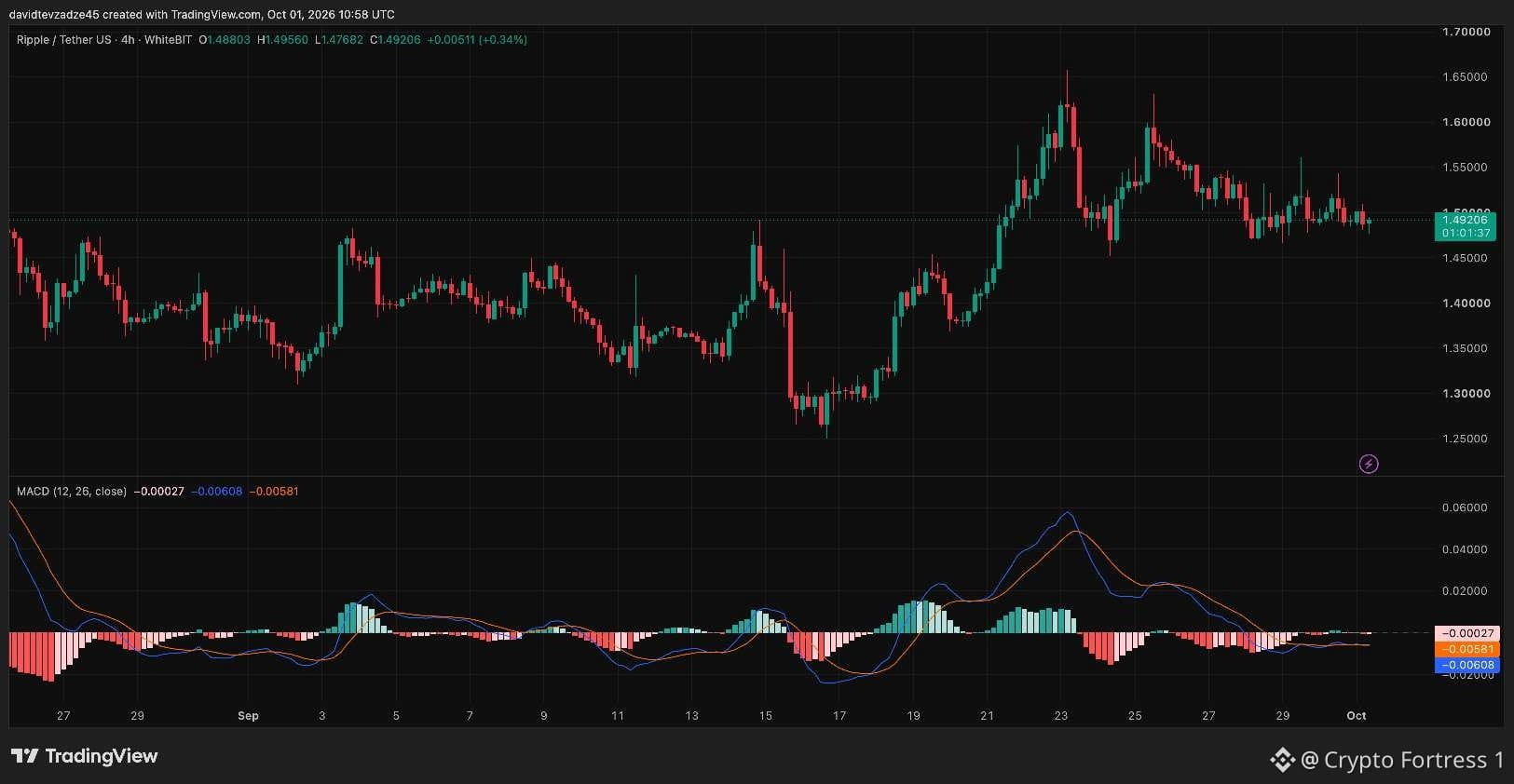
• The Key Zone: XRP has recently traded around $1.50, with $1.58 becoming an important level to watch. A clean move above $1.70 could strengthen momentum and bring the $2 area back into focus.
• History Says Be Careful: XRP has seen four previous periods of three consecutive green months, and each time the following month closed lower. Recent technical readings also suggest the market may be entering overbought territory
If $XRP can hold its key support and break above $1.70, the path toward $2 stays open.
At the same time, ETF demand remains supportive, with 14 positive weeks out of the last 15, while whales reportedly added nearly 500 million XRP around late September. Ripple Swell and other major October events could add even more volatility to the setup.
Do you think XRP finally breaks the historical pattern and pushes toward $2, or does October bring another correction first?
#XRP #BTC Price Analysis#
#Macro Insights#
XRP Enters October After 3 Green Months: Is $2 Next?
XRP is headed into October after three straight months of gains, including a strong 29.94% jump in August and another positive September. But history shows this setup has often been followed by a pullback, making the next few weeks especially important for XRP traders.
While $BTC and other majors are still trying to find direction, XRP has a few extra catalysts in play. ETF inflows, whale accumulation and upcoming Ripple events could all influence what happens next:
• The Key Zone: XRP has recently traded around $1.50, with $1.58 becoming an important level to watch. A clean move above $1.70 could strengthen momentum and bring the $2 area back into focus.
• History Says Be Careful: XRP has seen four previous periods of three consecutive green months, and each time the following month closed lower. Recent technical readings also suggest the market may be entering overbought territory
If $XRP can hold its key support and break above $1.70, the path toward $2 stays open.
At the same time, ETF demand remains supportive, with 14 positive weeks out of the last 15, while whales reportedly added nearly 500 million XRP around late September. Ripple Swell and other major October events could add even more volatility to the setup.
Do you think XRP finally breaks the historical pattern and pushes toward $2, or does October bring another correction first?
#XRP #BTC Price Analysis#
#Macro Insights#
XRP is headed into October after three straight months of gains, including a strong 29.94% jump in August and another positive September. But history shows this setup has often been followed by a pullback, making the next few weeks especially important for XRP traders.
While $BTC and other majors are still trying to find direction, XRP has a few extra catalysts in play. ETF inflows, whale accumulation and upcoming Ripple events could all influence what happens next:
• The Key Zone: XRP has recently traded around $1.50, with $1.58 becoming an important level to watch. A clean move above $1.70 could strengthen momentum and bring the $2 area back into focus.
• History Says Be Careful: XRP has seen four previous periods of three consecutive green months, and each time the following month closed lower. Recent technical readings also suggest the market may be entering overbought territory
If $XRP can hold its key support and break above $1.70, the path toward $2 stays open.
At the same time, ETF demand remains supportive, with 14 positive weeks out of the last 15, while whales reportedly added nearly 500 million XRP around late September. Ripple Swell and other major October events could add even more volatility to the setup.
Do you think XRP finally breaks the historical pattern and pushes toward $2, or does October bring another correction first?
#XRP #BTC Price Analysis#
#Macro Insights#
Log in to explore more content
Join global crypto users on Binance Square
⚡️ Get latest and useful information about crypto.
💬 Trusted by the world’s largest crypto exchange.
👍 Discover real insights from verified creators.
အီးမေးလ် / ဖုန်းနံပါတ်
ရေပန်းစားနေသော ခေါင်းစဉ်များ
NFPWatch
10.8M views
19,195 Discussing
Crypto News | Bitcoin Rises Toward $85K as Treasury Yields Fall Ahead of U.S. NFP Report
Binance News
·နှစ်သက်မှု 39 ခု
·49.5k views
BitcoinFundingRateTriplesTo10%
156,093 views
1,129 Discussing
BitcoinSurpasses$86KUp2.99%
50,348 views
110 Discussing