
Bitcoinworld
68.2k ပို့စ်များ

Bitcoinworld
 Square Verified+
တိုင်ကြားမည်
သုံးစွဲသူကို ဘလော့မည်
BitcoinWorld is a leading media publication bringing the latest happenings in the Blockchain and Crypto Space.

#BinanceTurns7

Excellence Award (Market Buzz)

Creator of the Year
2 ဖော်လိုလုပ်ထားသည်
100.5K+ ဖော်လိုလုပ်သူများ
287.2K+ လိုက်ခ်လုပ်ထားသည်
4 တံဆိပ်များ
ပို့စ်များ
အားလုံး
ဗီဒီယိုများ
တိုက်ရိုက်ထုတ်လွှင့်ခြင်း
·
--
Article
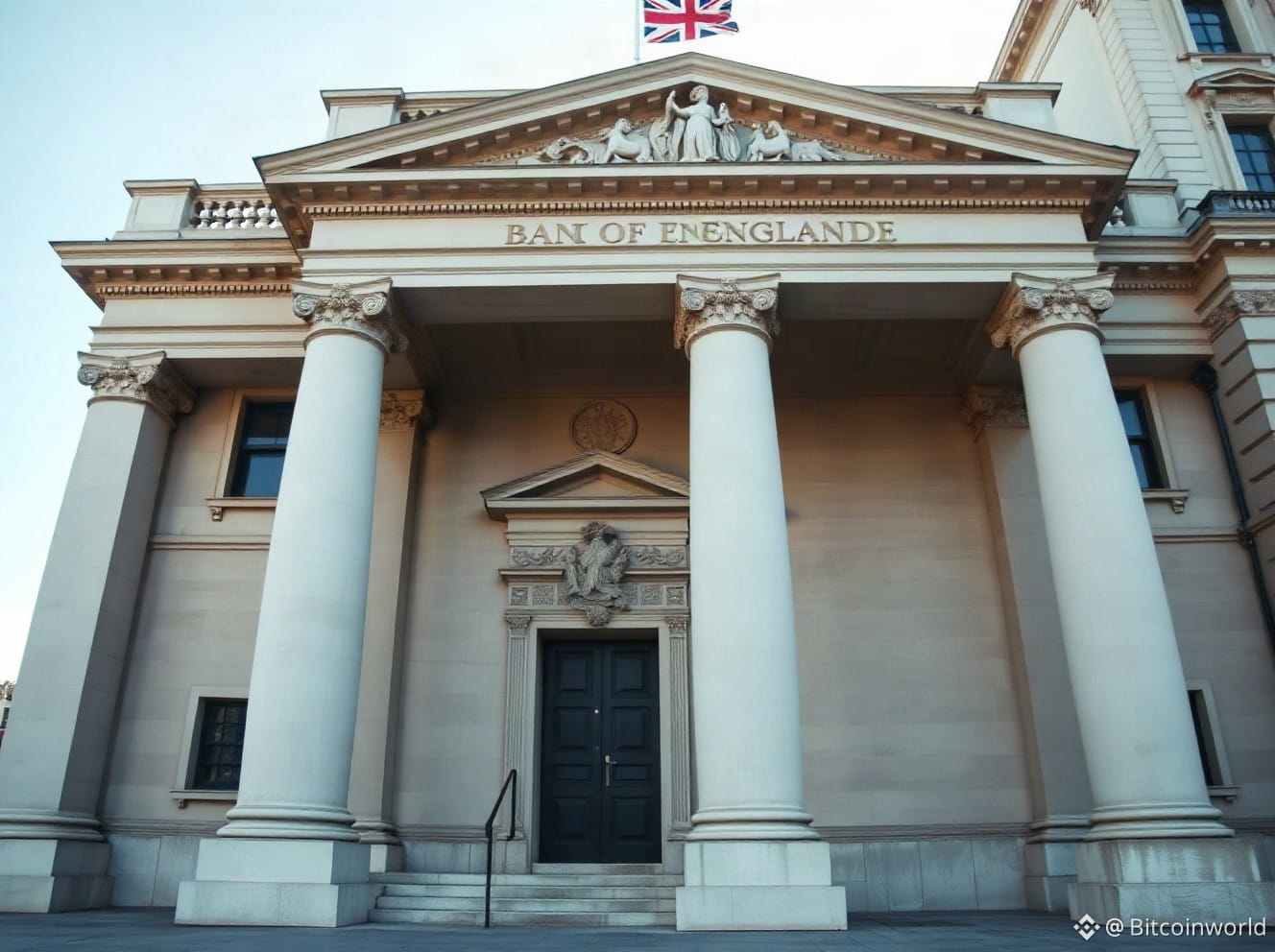
Bank of England’s Bailey Sees Muted Inflation Effects Ahead of Policy MeetingBitcoinWorldBank of England’s Bailey Sees Muted Inflation Effects Ahead of Policy Meeting
Bank of England Governor Andrew Bailey stated that the effects of inflation on the UK economy remain muted, just ahead of the central bank’s next policy meeting. His comments, delivered in a recent speech, suggest that policymakers may have room to consider interest rate adjustments as they assess the latest economic data.
Bailey’s Assessment of Inflation
Bailey’s remarks indicate that while inflation has been persistent, its broader economic impact is less pronounced than in previous cycles. He emphasized that the Bank is monitoring wage growth and services inflation closely, but the overall picture points to a gradual easing of price pressures.
The Governor’s tone reflects a cautious optimism, balancing the need to contain inflation with the risk of stifling economic growth. This comes as the UK economy shows signs of resilience, with unemployment remaining relatively low and consumer spending holding up.
Implications for the Upcoming BoE Meeting
The Bank of England’s Monetary Policy Committee (MPC) is scheduled to meet in the coming weeks, and Bailey’s comments will likely influence market expectations. Investors are currently pricing in a possible rate cut, though the timing remains uncertain. If inflation continues to moderate, the MPC may feel more comfortable easing policy to support growth.
However, the Bank remains data-dependent, and any unexpected spikes in inflation could alter the outlook. Bailey’s muted inflation view suggests that the committee is leaning towards a more accommodative stance, but no decisions have been made public yet.
Why This Matters for the UK Economy
For businesses and households, the path of interest rates directly affects borrowing costs, mortgage payments, and savings returns. A potential rate cut would provide relief to borrowers, but could also signal concerns about economic weakness. Bailey’s comments offer a glimpse into the Bank’s thinking, helping markets and the public prepare for possible policy shifts.
Conclusion
Andrew Bailey’s assessment that inflation effects remain muted sets the stage for a potentially pivotal Bank of England meeting. While the final decision will depend on the latest data, his remarks suggest a growing openness to rate cuts, which could have significant implications for the UK economy.
FAQs
Q1: What did Andrew Bailey say about inflation? Bailey said that the effects of inflation remain muted, indicating that price pressures are having a limited impact on the broader economy.
Q2: When is the next Bank of England meeting? The next MPC meeting is scheduled for the coming weeks, though the exact date is typically announced in advance on the Bank’s official calendar.
Q3: How might this affect interest rates? If inflation continues to moderate, the Bank may consider cutting interest rates to support economic growth, but no decision has been made yet.
This post Bank of England’s Bailey Sees Muted Inflation Effects Ahead of Policy Meeting first appeared on BitcoinWorld.
Bank of England’s Bailey Sees Muted Inflation Effects Ahead of Policy Meeting
BitcoinWorldBank of England’s Bailey Sees Muted Inflation Effects Ahead of Policy Meeting
Bank of England Governor Andrew Bailey stated that the effects of inflation on the UK economy remain muted, just ahead of the central bank’s next policy meeting. His comments, delivered in a recent speech, suggest that policymakers may have room to consider interest rate adjustments as they assess the latest economic data.
Bailey’s Assessment of Inflation
Bailey’s remarks indicate that while inflation has been persistent, its broader economic impact is less pronounced than in previous cycles. He emphasized that the Bank is monitoring wage growth and services inflation closely, but the overall picture points to a gradual easing of price pressures.
The Governor’s tone reflects a cautious optimism, balancing the need to contain inflation with the risk of stifling economic growth. This comes as the UK economy shows signs of resilience, with unemployment remaining relatively low and consumer spending holding up.
Implications for the Upcoming BoE Meeting
The Bank of England’s Monetary Policy Committee (MPC) is scheduled to meet in the coming weeks, and Bailey’s comments will likely influence market expectations. Investors are currently pricing in a possible rate cut, though the timing remains uncertain. If inflation continues to moderate, the MPC may feel more comfortable easing policy to support growth.
However, the Bank remains data-dependent, and any unexpected spikes in inflation could alter the outlook. Bailey’s muted inflation view suggests that the committee is leaning towards a more accommodative stance, but no decisions have been made public yet.
Why This Matters for the UK Economy
For businesses and households, the path of interest rates directly affects borrowing costs, mortgage payments, and savings returns. A potential rate cut would provide relief to borrowers, but could also signal concerns about economic weakness. Bailey’s comments offer a glimpse into the Bank’s thinking, helping markets and the public prepare for possible policy shifts.
Conclusion
Andrew Bailey’s assessment that inflation effects remain muted sets the stage for a potentially pivotal Bank of England meeting. While the final decision will depend on the latest data, his remarks suggest a growing openness to rate cuts, which could have significant implications for the UK economy.
FAQs
Q1: What did Andrew Bailey say about inflation? Bailey said that the effects of inflation remain muted, indicating that price pressures are having a limited impact on the broader economy.
Q2: When is the next Bank of England meeting? The next MPC meeting is scheduled for the coming weeks, though the exact date is typically announced in advance on the Bank’s official calendar.
Q3: How might this affect interest rates? If inflation continues to moderate, the Bank may consider cutting interest rates to support economic growth, but no decision has been made yet.
This post Bank of England’s Bailey Sees Muted Inflation Effects Ahead of Policy Meeting first appeared on BitcoinWorld.
Bank of England Governor Andrew Bailey stated that the effects of inflation on the UK economy remain muted, just ahead of the central bank’s next policy meeting. His comments, delivered in a recent speech, suggest that policymakers may have room to consider interest rate adjustments as they assess the latest economic data.
Bailey’s Assessment of Inflation
Bailey’s remarks indicate that while inflation has been persistent, its broader economic impact is less pronounced than in previous cycles. He emphasized that the Bank is monitoring wage growth and services inflation closely, but the overall picture points to a gradual easing of price pressures.
The Governor’s tone reflects a cautious optimism, balancing the need to contain inflation with the risk of stifling economic growth. This comes as the UK economy shows signs of resilience, with unemployment remaining relatively low and consumer spending holding up.
Implications for the Upcoming BoE Meeting
The Bank of England’s Monetary Policy Committee (MPC) is scheduled to meet in the coming weeks, and Bailey’s comments will likely influence market expectations. Investors are currently pricing in a possible rate cut, though the timing remains uncertain. If inflation continues to moderate, the MPC may feel more comfortable easing policy to support growth.
However, the Bank remains data-dependent, and any unexpected spikes in inflation could alter the outlook. Bailey’s muted inflation view suggests that the committee is leaning towards a more accommodative stance, but no decisions have been made public yet.
Why This Matters for the UK Economy
For businesses and households, the path of interest rates directly affects borrowing costs, mortgage payments, and savings returns. A potential rate cut would provide relief to borrowers, but could also signal concerns about economic weakness. Bailey’s comments offer a glimpse into the Bank’s thinking, helping markets and the public prepare for possible policy shifts.
Conclusion
Andrew Bailey’s assessment that inflation effects remain muted sets the stage for a potentially pivotal Bank of England meeting. While the final decision will depend on the latest data, his remarks suggest a growing openness to rate cuts, which could have significant implications for the UK economy.
FAQs
Q1: What did Andrew Bailey say about inflation? Bailey said that the effects of inflation remain muted, indicating that price pressures are having a limited impact on the broader economy.
Q2: When is the next Bank of England meeting? The next MPC meeting is scheduled for the coming weeks, though the exact date is typically announced in advance on the Bank’s official calendar.
Q3: How might this affect interest rates? If inflation continues to moderate, the Bank may consider cutting interest rates to support economic growth, but no decision has been made yet.
This post Bank of England’s Bailey Sees Muted Inflation Effects Ahead of Policy Meeting first appeared on BitcoinWorld.
13
·
--

Article
Markets Hold Steady As Jackson Hole Symposium Looms: Traders Await Fed DirectionBitcoinWorldMarkets Hold Steady as Jackson Hole Symposium Looms: Traders Await Fed Direction
Global markets remain in a holding pattern as traders await the Federal Reserve’s annual Jackson Hole symposium, with the event expected to provide crucial signals on the path of interest rates. As of this week, major indices have shown muted movement, reflecting investor caution ahead of the central bank gathering.
Why Jackson Hole Matters for Markets
The Jackson Hole Economic Symposium, hosted by the Kansas City Fed, has historically been a platform for the Fed chair to signal major policy shifts. This year, the focus is on whether the central bank will hint at a potential rate cut in September or maintain its current restrictive stance. The market’s current pricing suggests a roughly 70% chance of a quarter-point cut, according to CME FedWatch, but traders are wary of surprises.
Current Market Mood: Caution and Consolidation
Equity indices have been range-bound over the past week, with the S&P 500 and Nasdaq oscillating within a narrow band. Bond yields have ticked up slightly, while the dollar has stabilized. This cautious tone is driven by uncertainty over inflation data and the resilience of the labor market, both of which the Fed is balancing. “The market is in a wait-and-see mode,” said a senior market strategist. “Any hawkish rhetoric from Jackson Hole could trigger a selloff, but a dovish tone might fuel a rally.”
Potential Scenarios and Market Impact
If Fed Chair Jerome Powell signals a clear easing cycle, risk assets could see a boost. Conversely, if he pushes back against market expectations for aggressive cuts, volatility could spike. The implications extend beyond equities: a shift in rate expectations would affect mortgage rates, corporate borrowing costs, and consumer spending. For investors, the key is to focus on the long-term economic outlook rather than short-term policy tweaks.
Conclusion
As the Jackson Hole symposium approaches, markets are bracing for potential directional cues. While the event is a key catalyst, the broader economic fundamentals remain intact. Traders should stay informed and prepared for possible volatility, but the current caution reflects a mature market digesting complex signals.
FAQs
Q1: What is the Jackson Hole symposium? The Jackson Hole Economic Symposium is an annual conference hosted by the Federal Reserve Bank of Kansas City, where central bankers and economists discuss monetary policy and economic issues. It is closely watched for signals on future policy moves.
Q2: How could the Jackson Hole meeting affect interest rates? The Fed chair’s remarks at Jackson Hole often provide clues about the direction of monetary policy. If the chair signals a rate cut, it could lead to lower borrowing costs; if not, rates may stay higher for longer.
Q3: Why are markets cautious ahead of Jackson Hole? Markets are cautious because the event could bring unexpected policy signals, and traders are positioning themselves to avoid losses. The uncertainty over inflation and employment data adds to the cautious mood.
This post Markets Hold Steady as Jackson Hole Symposium Looms: Traders Await Fed Direction first appeared on BitcoinWorld.
Markets Hold Steady As Jackson Hole Symposium Looms: Traders Await Fed Direction
BitcoinWorldMarkets Hold Steady as Jackson Hole Symposium Looms: Traders Await Fed Direction
Global markets remain in a holding pattern as traders await the Federal Reserve’s annual Jackson Hole symposium, with the event expected to provide crucial signals on the path of interest rates. As of this week, major indices have shown muted movement, reflecting investor caution ahead of the central bank gathering.
Why Jackson Hole Matters for Markets
The Jackson Hole Economic Symposium, hosted by the Kansas City Fed, has historically been a platform for the Fed chair to signal major policy shifts. This year, the focus is on whether the central bank will hint at a potential rate cut in September or maintain its current restrictive stance. The market’s current pricing suggests a roughly 70% chance of a quarter-point cut, according to CME FedWatch, but traders are wary of surprises.
Current Market Mood: Caution and Consolidation
Equity indices have been range-bound over the past week, with the S&P 500 and Nasdaq oscillating within a narrow band. Bond yields have ticked up slightly, while the dollar has stabilized. This cautious tone is driven by uncertainty over inflation data and the resilience of the labor market, both of which the Fed is balancing. “The market is in a wait-and-see mode,” said a senior market strategist. “Any hawkish rhetoric from Jackson Hole could trigger a selloff, but a dovish tone might fuel a rally.”
Potential Scenarios and Market Impact
If Fed Chair Jerome Powell signals a clear easing cycle, risk assets could see a boost. Conversely, if he pushes back against market expectations for aggressive cuts, volatility could spike. The implications extend beyond equities: a shift in rate expectations would affect mortgage rates, corporate borrowing costs, and consumer spending. For investors, the key is to focus on the long-term economic outlook rather than short-term policy tweaks.
Conclusion
As the Jackson Hole symposium approaches, markets are bracing for potential directional cues. While the event is a key catalyst, the broader economic fundamentals remain intact. Traders should stay informed and prepared for possible volatility, but the current caution reflects a mature market digesting complex signals.
FAQs
Q1: What is the Jackson Hole symposium? The Jackson Hole Economic Symposium is an annual conference hosted by the Federal Reserve Bank of Kansas City, where central bankers and economists discuss monetary policy and economic issues. It is closely watched for signals on future policy moves.
Q2: How could the Jackson Hole meeting affect interest rates? The Fed chair’s remarks at Jackson Hole often provide clues about the direction of monetary policy. If the chair signals a rate cut, it could lead to lower borrowing costs; if not, rates may stay higher for longer.
Q3: Why are markets cautious ahead of Jackson Hole? Markets are cautious because the event could bring unexpected policy signals, and traders are positioning themselves to avoid losses. The uncertainty over inflation and employment data adds to the cautious mood.
This post Markets Hold Steady as Jackson Hole Symposium Looms: Traders Await Fed Direction first appeared on BitcoinWorld.
Global markets remain in a holding pattern as traders await the Federal Reserve’s annual Jackson Hole symposium, with the event expected to provide crucial signals on the path of interest rates. As of this week, major indices have shown muted movement, reflecting investor caution ahead of the central bank gathering.
Why Jackson Hole Matters for Markets
The Jackson Hole Economic Symposium, hosted by the Kansas City Fed, has historically been a platform for the Fed chair to signal major policy shifts. This year, the focus is on whether the central bank will hint at a potential rate cut in September or maintain its current restrictive stance. The market’s current pricing suggests a roughly 70% chance of a quarter-point cut, according to CME FedWatch, but traders are wary of surprises.
Current Market Mood: Caution and Consolidation
Equity indices have been range-bound over the past week, with the S&P 500 and Nasdaq oscillating within a narrow band. Bond yields have ticked up slightly, while the dollar has stabilized. This cautious tone is driven by uncertainty over inflation data and the resilience of the labor market, both of which the Fed is balancing. “The market is in a wait-and-see mode,” said a senior market strategist. “Any hawkish rhetoric from Jackson Hole could trigger a selloff, but a dovish tone might fuel a rally.”
Potential Scenarios and Market Impact
If Fed Chair Jerome Powell signals a clear easing cycle, risk assets could see a boost. Conversely, if he pushes back against market expectations for aggressive cuts, volatility could spike. The implications extend beyond equities: a shift in rate expectations would affect mortgage rates, corporate borrowing costs, and consumer spending. For investors, the key is to focus on the long-term economic outlook rather than short-term policy tweaks.
Conclusion
As the Jackson Hole symposium approaches, markets are bracing for potential directional cues. While the event is a key catalyst, the broader economic fundamentals remain intact. Traders should stay informed and prepared for possible volatility, but the current caution reflects a mature market digesting complex signals.
FAQs
Q1: What is the Jackson Hole symposium? The Jackson Hole Economic Symposium is an annual conference hosted by the Federal Reserve Bank of Kansas City, where central bankers and economists discuss monetary policy and economic issues. It is closely watched for signals on future policy moves.
Q2: How could the Jackson Hole meeting affect interest rates? The Fed chair’s remarks at Jackson Hole often provide clues about the direction of monetary policy. If the chair signals a rate cut, it could lead to lower borrowing costs; if not, rates may stay higher for longer.
Q3: Why are markets cautious ahead of Jackson Hole? Markets are cautious because the event could bring unexpected policy signals, and traders are positioning themselves to avoid losses. The uncertainty over inflation and employment data adds to the cautious mood.
This post Markets Hold Steady as Jackson Hole Symposium Looms: Traders Await Fed Direction first appeared on BitcoinWorld.
2
75
·
--

Article
Dollar Faces Asymmetric Risk As Warsh Speech Looms, Commerzbank WarnsBitcoinWorldDollar Faces Asymmetric Risk as Warsh Speech Looms, Commerzbank Warns
The US Dollar could see a disproportionately large move depending on the tone of Federal Reserve Governor Kevin Warsh’s upcoming speech, according to a note from Commerzbank’s foreign exchange strategists, who caution that the market’s reaction may be asymmetric.
Why the Market Is on Edge
As of this week, traders are positioning for Warsh’s remarks, which are seen as a potential catalyst for dollar volatility. Commerzbank analysts argue that because the market has already priced in a relatively dovish path for the Fed, any hawkish surprise from Warsh could trigger a sharper dollar rally than a dovish tone would cause a selloff.
The asymmetry stems from the fact that recent US inflation data has been stubbornly above the Fed’s 2% target, and any hint that the central bank might delay rate cuts or even consider hikes would force a rapid repricing. Conversely, if Warsh sounds accommodative, the dollar’s downside may be cushioned by the already-low expectations for rate cuts.
What to Watch in the Speech
Investors will scrutinize Warsh’s language on inflation, the labor market, and the balance sheet. A key focus will be whether he signals any shift in the Fed’s reaction function, especially after recent comments from other officials suggested a split between those worried about inflation persistence and those focused on slowing growth.
Commerzbank’s note highlights that the dollar’s sensitivity is heightened by the current technical positioning. Hedge funds and asset managers have trimmed long-dollar positions in recent weeks, making the market vulnerable to a short squeeze if Warsh delivers a hawkish message.
Implications for Traders
For currency traders, the key takeaway is to prepare for two-way risk, but with a bias toward upside surprises. A cautious approach would involve hedging against a rapid dollar appreciation, particularly against currencies like the euro and yen, which have been sensitive to shifts in US rate expectations.
The broader market context also matters: equities and commodities could be affected if the dollar strengthens sharply, as a firmer dollar typically pressures gold and oil prices. Moreover, emerging market currencies may face renewed depreciation pressure.
Conclusion
Commerzbank’s warning underscores that the dollar’s reaction to Warsh’s speech may not be symmetrical. With the market already leaning dovish, a hawkish surprise could have an outsized impact, while a dovish outcome might be met with a more muted response. As the speech approaches, traders should remain alert to elevated volatility and position accordingly.
FAQs
Q1: Who is Kevin Warsh and why does his speech matter? Kevin Warsh is a Federal Reserve Governor. His speeches are closely watched because they offer insights into the Fed’s monetary policy direction, which directly impacts the US Dollar and global financial markets.
Q2: What does ‘asymmetric USD reaction’ mean? It means that the dollar’s movement is likely to be larger in one direction than the other. In this case, a hawkish surprise from Warsh could cause a bigger dollar rally than a dovish speech would cause a decline, due to market positioning and expectations.
Q3: How can traders prepare for the event? Traders can use options strategies like straddles to profit from large moves, or reduce exposure to currencies most sensitive to US rate expectations. Staying informed about the speech’s content and the market’s reaction is crucial.
This post Dollar Faces Asymmetric Risk as Warsh Speech Looms, Commerzbank Warns first appeared on BitcoinWorld.
Dollar Faces Asymmetric Risk As Warsh Speech Looms, Commerzbank Warns
BitcoinWorldDollar Faces Asymmetric Risk as Warsh Speech Looms, Commerzbank Warns
The US Dollar could see a disproportionately large move depending on the tone of Federal Reserve Governor Kevin Warsh’s upcoming speech, according to a note from Commerzbank’s foreign exchange strategists, who caution that the market’s reaction may be asymmetric.
Why the Market Is on Edge
As of this week, traders are positioning for Warsh’s remarks, which are seen as a potential catalyst for dollar volatility. Commerzbank analysts argue that because the market has already priced in a relatively dovish path for the Fed, any hawkish surprise from Warsh could trigger a sharper dollar rally than a dovish tone would cause a selloff.
The asymmetry stems from the fact that recent US inflation data has been stubbornly above the Fed’s 2% target, and any hint that the central bank might delay rate cuts or even consider hikes would force a rapid repricing. Conversely, if Warsh sounds accommodative, the dollar’s downside may be cushioned by the already-low expectations for rate cuts.
What to Watch in the Speech
Investors will scrutinize Warsh’s language on inflation, the labor market, and the balance sheet. A key focus will be whether he signals any shift in the Fed’s reaction function, especially after recent comments from other officials suggested a split between those worried about inflation persistence and those focused on slowing growth.
Commerzbank’s note highlights that the dollar’s sensitivity is heightened by the current technical positioning. Hedge funds and asset managers have trimmed long-dollar positions in recent weeks, making the market vulnerable to a short squeeze if Warsh delivers a hawkish message.
Implications for Traders
For currency traders, the key takeaway is to prepare for two-way risk, but with a bias toward upside surprises. A cautious approach would involve hedging against a rapid dollar appreciation, particularly against currencies like the euro and yen, which have been sensitive to shifts in US rate expectations.
The broader market context also matters: equities and commodities could be affected if the dollar strengthens sharply, as a firmer dollar typically pressures gold and oil prices. Moreover, emerging market currencies may face renewed depreciation pressure.
Conclusion
Commerzbank’s warning underscores that the dollar’s reaction to Warsh’s speech may not be symmetrical. With the market already leaning dovish, a hawkish surprise could have an outsized impact, while a dovish outcome might be met with a more muted response. As the speech approaches, traders should remain alert to elevated volatility and position accordingly.
FAQs
Q1: Who is Kevin Warsh and why does his speech matter? Kevin Warsh is a Federal Reserve Governor. His speeches are closely watched because they offer insights into the Fed’s monetary policy direction, which directly impacts the US Dollar and global financial markets.
Q2: What does ‘asymmetric USD reaction’ mean? It means that the dollar’s movement is likely to be larger in one direction than the other. In this case, a hawkish surprise from Warsh could cause a bigger dollar rally than a dovish speech would cause a decline, due to market positioning and expectations.
Q3: How can traders prepare for the event? Traders can use options strategies like straddles to profit from large moves, or reduce exposure to currencies most sensitive to US rate expectations. Staying informed about the speech’s content and the market’s reaction is crucial.
This post Dollar Faces Asymmetric Risk as Warsh Speech Looms, Commerzbank Warns first appeared on BitcoinWorld.
The US Dollar could see a disproportionately large move depending on the tone of Federal Reserve Governor Kevin Warsh’s upcoming speech, according to a note from Commerzbank’s foreign exchange strategists, who caution that the market’s reaction may be asymmetric.
Why the Market Is on Edge
As of this week, traders are positioning for Warsh’s remarks, which are seen as a potential catalyst for dollar volatility. Commerzbank analysts argue that because the market has already priced in a relatively dovish path for the Fed, any hawkish surprise from Warsh could trigger a sharper dollar rally than a dovish tone would cause a selloff.
The asymmetry stems from the fact that recent US inflation data has been stubbornly above the Fed’s 2% target, and any hint that the central bank might delay rate cuts or even consider hikes would force a rapid repricing. Conversely, if Warsh sounds accommodative, the dollar’s downside may be cushioned by the already-low expectations for rate cuts.
What to Watch in the Speech
Investors will scrutinize Warsh’s language on inflation, the labor market, and the balance sheet. A key focus will be whether he signals any shift in the Fed’s reaction function, especially after recent comments from other officials suggested a split between those worried about inflation persistence and those focused on slowing growth.
Commerzbank’s note highlights that the dollar’s sensitivity is heightened by the current technical positioning. Hedge funds and asset managers have trimmed long-dollar positions in recent weeks, making the market vulnerable to a short squeeze if Warsh delivers a hawkish message.
Implications for Traders
For currency traders, the key takeaway is to prepare for two-way risk, but with a bias toward upside surprises. A cautious approach would involve hedging against a rapid dollar appreciation, particularly against currencies like the euro and yen, which have been sensitive to shifts in US rate expectations.
The broader market context also matters: equities and commodities could be affected if the dollar strengthens sharply, as a firmer dollar typically pressures gold and oil prices. Moreover, emerging market currencies may face renewed depreciation pressure.
Conclusion
Commerzbank’s warning underscores that the dollar’s reaction to Warsh’s speech may not be symmetrical. With the market already leaning dovish, a hawkish surprise could have an outsized impact, while a dovish outcome might be met with a more muted response. As the speech approaches, traders should remain alert to elevated volatility and position accordingly.
FAQs
Q1: Who is Kevin Warsh and why does his speech matter? Kevin Warsh is a Federal Reserve Governor. His speeches are closely watched because they offer insights into the Fed’s monetary policy direction, which directly impacts the US Dollar and global financial markets.
Q2: What does ‘asymmetric USD reaction’ mean? It means that the dollar’s movement is likely to be larger in one direction than the other. In this case, a hawkish surprise from Warsh could cause a bigger dollar rally than a dovish speech would cause a decline, due to market positioning and expectations.
Q3: How can traders prepare for the event? Traders can use options strategies like straddles to profit from large moves, or reduce exposure to currencies most sensitive to US rate expectations. Staying informed about the speech’s content and the market’s reaction is crucial.
This post Dollar Faces Asymmetric Risk as Warsh Speech Looms, Commerzbank Warns first appeared on BitcoinWorld.
16
·
--

Article
Fed Chair Warsh Speech At Jackson Hole, NFP Benchmark Revision Set to Drive FX VolatilityBitcoinWorldFed Chair Warsh Speech at Jackson Hole, NFP Benchmark Revision Set to Drive FX Volatility
The Federal Reserve’s annual Jackson Hole symposium, featuring a speech by Fed Chair Kevin Warsh, alongside the upcoming benchmark revision to nonfarm payrolls (NFP) data, is set to inject significant volatility into the foreign exchange market this week. Traders are bracing for potential shifts in rate expectations and dollar positioning as these two major events unfold.
Jackson Hole Symposium: A Pivotal Moment for Fed Policy Signals
The Jackson Hole Economic Symposium, hosted by the Kansas City Fed in Wyoming, is historically a platform for the Fed Chair to signal major policy shifts. As of August 2025, Chair Warsh’s address is expected to provide crucial guidance on the central bank’s next moves, particularly regarding interest rates and balance sheet normalization. Market participants will scrutinize his language for any hints on the timing and pace of future rate adjustments, with the dollar’s direction likely to hinge on the tone of his remarks.
NFP Benchmark Revision: Potential to Reshape Labor Market Narrative
Simultaneously, the Bureau of Labor Statistics is scheduled to release its annual benchmark revision to nonfarm payrolls, which could significantly alter the perceived strength of the U.S. labor market. This revision, based on more complete data from unemployment insurance tax records, can adjust the previously reported job growth figures for the year ending in March. A substantial downward revision could reinforce the case for rate cuts, weakening the dollar, while an upward revision could have the opposite effect. As of this writing, the market anticipates a revision that may lower total employment by as much as 1 million jobs, which would be one of the largest downward adjustments in recent years.
Why These Events Matter for Forex Traders
The convergence of these two events creates a high-impact environment for currency markets. The dollar index (DXY) has been sensitive to shifts in Fed expectations, and any surprises from Warsh’s speech or the NFP revision could trigger sharp moves in major pairs like EUR/USD, GBP/USD, and USD/JPY. For traders, the key is to focus on the relative hawkish or dovish stance of the Fed compared to other central banks, as well as the actual revision figure versus the expected range. This is not just about the data itself, but the market’s interpretation of its implications for future policy.
Conclusion
In summary, the combination of Chair Warsh’s Jackson Hole speech and the NFP benchmark revision presents a potential flashpoint for FX volatility. The outcomes will likely provide clearer direction for the dollar in the near term, but uncertainty remains high. As always, traders should employ prudent risk management and stay attuned to official statements and data releases for the most accurate picture.
FAQs
Q1: What is the Jackson Hole symposium? The Jackson Hole Economic Symposium is an annual conference hosted by the Federal Reserve Bank of Kansas City in Wyoming. It brings together central bankers, policymakers, and academics to discuss key economic issues, and it has historically been a venue for major policy announcements or signals from the Fed Chair.
Q2: What is the NFP benchmark revision? The nonfarm payrolls (NFP) benchmark revision is an annual recalibration of the monthly employment figures by the Bureau of Labor Statistics. It uses more complete data from state unemployment insurance records to correct initial estimates, and it can significantly change the picture of job growth over the prior year.
Q3: How do these events affect forex trading? These events influence forex markets by altering expectations for U.S. interest rates and the relative attractiveness of the dollar. A hawkish Fed (signaling higher rates) typically strengthens the dollar, while a dovish stance (signaling cuts) weakens it. The NFP revision provides new information on labor market health, which is a key factor in Fed policy decisions, thereby affecting currency valuations.
This post Fed Chair Warsh Speech at Jackson Hole, NFP Benchmark Revision Set to Drive FX Volatility first appeared on BitcoinWorld.
Fed Chair Warsh Speech At Jackson Hole, NFP Benchmark Revision Set to Drive FX Volatility
BitcoinWorldFed Chair Warsh Speech at Jackson Hole, NFP Benchmark Revision Set to Drive FX Volatility
The Federal Reserve’s annual Jackson Hole symposium, featuring a speech by Fed Chair Kevin Warsh, alongside the upcoming benchmark revision to nonfarm payrolls (NFP) data, is set to inject significant volatility into the foreign exchange market this week. Traders are bracing for potential shifts in rate expectations and dollar positioning as these two major events unfold.
Jackson Hole Symposium: A Pivotal Moment for Fed Policy Signals
The Jackson Hole Economic Symposium, hosted by the Kansas City Fed in Wyoming, is historically a platform for the Fed Chair to signal major policy shifts. As of August 2025, Chair Warsh’s address is expected to provide crucial guidance on the central bank’s next moves, particularly regarding interest rates and balance sheet normalization. Market participants will scrutinize his language for any hints on the timing and pace of future rate adjustments, with the dollar’s direction likely to hinge on the tone of his remarks.
NFP Benchmark Revision: Potential to Reshape Labor Market Narrative
Simultaneously, the Bureau of Labor Statistics is scheduled to release its annual benchmark revision to nonfarm payrolls, which could significantly alter the perceived strength of the U.S. labor market. This revision, based on more complete data from unemployment insurance tax records, can adjust the previously reported job growth figures for the year ending in March. A substantial downward revision could reinforce the case for rate cuts, weakening the dollar, while an upward revision could have the opposite effect. As of this writing, the market anticipates a revision that may lower total employment by as much as 1 million jobs, which would be one of the largest downward adjustments in recent years.
Why These Events Matter for Forex Traders
The convergence of these two events creates a high-impact environment for currency markets. The dollar index (DXY) has been sensitive to shifts in Fed expectations, and any surprises from Warsh’s speech or the NFP revision could trigger sharp moves in major pairs like EUR/USD, GBP/USD, and USD/JPY. For traders, the key is to focus on the relative hawkish or dovish stance of the Fed compared to other central banks, as well as the actual revision figure versus the expected range. This is not just about the data itself, but the market’s interpretation of its implications for future policy.
Conclusion
In summary, the combination of Chair Warsh’s Jackson Hole speech and the NFP benchmark revision presents a potential flashpoint for FX volatility. The outcomes will likely provide clearer direction for the dollar in the near term, but uncertainty remains high. As always, traders should employ prudent risk management and stay attuned to official statements and data releases for the most accurate picture.
FAQs
Q1: What is the Jackson Hole symposium? The Jackson Hole Economic Symposium is an annual conference hosted by the Federal Reserve Bank of Kansas City in Wyoming. It brings together central bankers, policymakers, and academics to discuss key economic issues, and it has historically been a venue for major policy announcements or signals from the Fed Chair.
Q2: What is the NFP benchmark revision? The nonfarm payrolls (NFP) benchmark revision is an annual recalibration of the monthly employment figures by the Bureau of Labor Statistics. It uses more complete data from state unemployment insurance records to correct initial estimates, and it can significantly change the picture of job growth over the prior year.
Q3: How do these events affect forex trading? These events influence forex markets by altering expectations for U.S. interest rates and the relative attractiveness of the dollar. A hawkish Fed (signaling higher rates) typically strengthens the dollar, while a dovish stance (signaling cuts) weakens it. The NFP revision provides new information on labor market health, which is a key factor in Fed policy decisions, thereby affecting currency valuations.
This post Fed Chair Warsh Speech at Jackson Hole, NFP Benchmark Revision Set to Drive FX Volatility first appeared on BitcoinWorld.
The Federal Reserve’s annual Jackson Hole symposium, featuring a speech by Fed Chair Kevin Warsh, alongside the upcoming benchmark revision to nonfarm payrolls (NFP) data, is set to inject significant volatility into the foreign exchange market this week. Traders are bracing for potential shifts in rate expectations and dollar positioning as these two major events unfold.
Jackson Hole Symposium: A Pivotal Moment for Fed Policy Signals
The Jackson Hole Economic Symposium, hosted by the Kansas City Fed in Wyoming, is historically a platform for the Fed Chair to signal major policy shifts. As of August 2025, Chair Warsh’s address is expected to provide crucial guidance on the central bank’s next moves, particularly regarding interest rates and balance sheet normalization. Market participants will scrutinize his language for any hints on the timing and pace of future rate adjustments, with the dollar’s direction likely to hinge on the tone of his remarks.
NFP Benchmark Revision: Potential to Reshape Labor Market Narrative
Simultaneously, the Bureau of Labor Statistics is scheduled to release its annual benchmark revision to nonfarm payrolls, which could significantly alter the perceived strength of the U.S. labor market. This revision, based on more complete data from unemployment insurance tax records, can adjust the previously reported job growth figures for the year ending in March. A substantial downward revision could reinforce the case for rate cuts, weakening the dollar, while an upward revision could have the opposite effect. As of this writing, the market anticipates a revision that may lower total employment by as much as 1 million jobs, which would be one of the largest downward adjustments in recent years.
Why These Events Matter for Forex Traders
The convergence of these two events creates a high-impact environment for currency markets. The dollar index (DXY) has been sensitive to shifts in Fed expectations, and any surprises from Warsh’s speech or the NFP revision could trigger sharp moves in major pairs like EUR/USD, GBP/USD, and USD/JPY. For traders, the key is to focus on the relative hawkish or dovish stance of the Fed compared to other central banks, as well as the actual revision figure versus the expected range. This is not just about the data itself, but the market’s interpretation of its implications for future policy.
Conclusion
In summary, the combination of Chair Warsh’s Jackson Hole speech and the NFP benchmark revision presents a potential flashpoint for FX volatility. The outcomes will likely provide clearer direction for the dollar in the near term, but uncertainty remains high. As always, traders should employ prudent risk management and stay attuned to official statements and data releases for the most accurate picture.
FAQs
Q1: What is the Jackson Hole symposium? The Jackson Hole Economic Symposium is an annual conference hosted by the Federal Reserve Bank of Kansas City in Wyoming. It brings together central bankers, policymakers, and academics to discuss key economic issues, and it has historically been a venue for major policy announcements or signals from the Fed Chair.
Q2: What is the NFP benchmark revision? The nonfarm payrolls (NFP) benchmark revision is an annual recalibration of the monthly employment figures by the Bureau of Labor Statistics. It uses more complete data from state unemployment insurance records to correct initial estimates, and it can significantly change the picture of job growth over the prior year.
Q3: How do these events affect forex trading? These events influence forex markets by altering expectations for U.S. interest rates and the relative attractiveness of the dollar. A hawkish Fed (signaling higher rates) typically strengthens the dollar, while a dovish stance (signaling cuts) weakens it. The NFP revision provides new information on labor market health, which is a key factor in Fed policy decisions, thereby affecting currency valuations.
This post Fed Chair Warsh Speech at Jackson Hole, NFP Benchmark Revision Set to Drive FX Volatility first appeared on BitcoinWorld.
11
·
--

Article
EUR/GBP Holds Near 0.8500 As Bullish Momentum Fades: Technical OutlookBitcoinWorldEUR/GBP Holds Near 0.8500 as Bullish Momentum Fades: Technical Outlook
EUR/GBP is trading sideways around the 0.8500 level as of [current date], with the pair losing its earlier bullish traction and consolidating in a narrow range.
What’s driving the sideways move?
The recent rally in EUR/GBP has stalled, with buyers failing to push the pair decisively above the 0.8500 handle. The lack of fresh catalysts from either the European Central Bank or the Bank of England has left the pair directionless, as markets digest mixed economic data from both economies.
Technical indicators on the daily chart show fading bullish momentum, with the Relative Strength Index (RSI) retreating from overbought levels. The pair remains supported by the 20-day moving average, but a break below that could open the door for a test of lower supports.
Key levels to watch
Immediate resistance is seen at 0.8520, followed by the recent swing high near 0.8550. On the downside, support lies at 0.8480 and then the 50-day moving average around 0.8450. A sustained move above 0.8550 would signal a resumption of the uptrend, while a break below 0.8450 could shift the bias to bearish.
Why this matters for traders
The consolidation reflects a broader market uncertainty about the policy paths of the ECB and the BoE. With inflation still above targets in both regions, any surprise in upcoming data or central bank commentary could trigger a breakout. For traders, the current range offers opportunities but also requires patience, as the pair may remain choppy until a clear catalyst emerges.
Conclusion
EUR/GBP is stuck in a tight range near 0.8500, with fading bullish momentum suggesting a period of consolidation. Traders should watch for a break of the range boundaries for directional cues, while keeping an eye on economic releases and central bank speeches for potential volatility.
FAQs
Q1: What does ‘trading sideways’ mean in forex? It means the price is moving within a narrow range without a clear upward or downward trend, often reflecting indecision in the market.
Q2: What is the significance of the 0.8500 level for EUR/GBP? 0.8500 is a psychological round number and a key support/resistance zone. It has acted as a pivot point in recent trading, and a break above or below could signal the next directional move.
Q3: How can central bank policy affect EUR/GBP? Differences in interest rates and monetary policy between the European Central Bank and the Bank of England influence the relative attractiveness of the euro and the pound, driving the exchange rate.
This post EUR/GBP Holds Near 0.8500 as Bullish Momentum Fades: Technical Outlook first appeared on BitcoinWorld.
EUR/GBP Holds Near 0.8500 As Bullish Momentum Fades: Technical Outlook
BitcoinWorldEUR/GBP Holds Near 0.8500 as Bullish Momentum Fades: Technical Outlook
EUR/GBP is trading sideways around the 0.8500 level as of [current date], with the pair losing its earlier bullish traction and consolidating in a narrow range.
What’s driving the sideways move?
The recent rally in EUR/GBP has stalled, with buyers failing to push the pair decisively above the 0.8500 handle. The lack of fresh catalysts from either the European Central Bank or the Bank of England has left the pair directionless, as markets digest mixed economic data from both economies.
Technical indicators on the daily chart show fading bullish momentum, with the Relative Strength Index (RSI) retreating from overbought levels. The pair remains supported by the 20-day moving average, but a break below that could open the door for a test of lower supports.
Key levels to watch
Immediate resistance is seen at 0.8520, followed by the recent swing high near 0.8550. On the downside, support lies at 0.8480 and then the 50-day moving average around 0.8450. A sustained move above 0.8550 would signal a resumption of the uptrend, while a break below 0.8450 could shift the bias to bearish.
Why this matters for traders
The consolidation reflects a broader market uncertainty about the policy paths of the ECB and the BoE. With inflation still above targets in both regions, any surprise in upcoming data or central bank commentary could trigger a breakout. For traders, the current range offers opportunities but also requires patience, as the pair may remain choppy until a clear catalyst emerges.
Conclusion
EUR/GBP is stuck in a tight range near 0.8500, with fading bullish momentum suggesting a period of consolidation. Traders should watch for a break of the range boundaries for directional cues, while keeping an eye on economic releases and central bank speeches for potential volatility.
FAQs
Q1: What does ‘trading sideways’ mean in forex? It means the price is moving within a narrow range without a clear upward or downward trend, often reflecting indecision in the market.
Q2: What is the significance of the 0.8500 level for EUR/GBP? 0.8500 is a psychological round number and a key support/resistance zone. It has acted as a pivot point in recent trading, and a break above or below could signal the next directional move.
Q3: How can central bank policy affect EUR/GBP? Differences in interest rates and monetary policy between the European Central Bank and the Bank of England influence the relative attractiveness of the euro and the pound, driving the exchange rate.
This post EUR/GBP Holds Near 0.8500 as Bullish Momentum Fades: Technical Outlook first appeared on BitcoinWorld.
EUR/GBP is trading sideways around the 0.8500 level as of [current date], with the pair losing its earlier bullish traction and consolidating in a narrow range.
What’s driving the sideways move?
The recent rally in EUR/GBP has stalled, with buyers failing to push the pair decisively above the 0.8500 handle. The lack of fresh catalysts from either the European Central Bank or the Bank of England has left the pair directionless, as markets digest mixed economic data from both economies.
Technical indicators on the daily chart show fading bullish momentum, with the Relative Strength Index (RSI) retreating from overbought levels. The pair remains supported by the 20-day moving average, but a break below that could open the door for a test of lower supports.
Key levels to watch
Immediate resistance is seen at 0.8520, followed by the recent swing high near 0.8550. On the downside, support lies at 0.8480 and then the 50-day moving average around 0.8450. A sustained move above 0.8550 would signal a resumption of the uptrend, while a break below 0.8450 could shift the bias to bearish.
Why this matters for traders
The consolidation reflects a broader market uncertainty about the policy paths of the ECB and the BoE. With inflation still above targets in both regions, any surprise in upcoming data or central bank commentary could trigger a breakout. For traders, the current range offers opportunities but also requires patience, as the pair may remain choppy until a clear catalyst emerges.
Conclusion
EUR/GBP is stuck in a tight range near 0.8500, with fading bullish momentum suggesting a period of consolidation. Traders should watch for a break of the range boundaries for directional cues, while keeping an eye on economic releases and central bank speeches for potential volatility.
FAQs
Q1: What does ‘trading sideways’ mean in forex? It means the price is moving within a narrow range without a clear upward or downward trend, often reflecting indecision in the market.
Q2: What is the significance of the 0.8500 level for EUR/GBP? 0.8500 is a psychological round number and a key support/resistance zone. It has acted as a pivot point in recent trading, and a break above or below could signal the next directional move.
Q3: How can central bank policy affect EUR/GBP? Differences in interest rates and monetary policy between the European Central Bank and the Bank of England influence the relative attractiveness of the euro and the pound, driving the exchange rate.
This post EUR/GBP Holds Near 0.8500 as Bullish Momentum Fades: Technical Outlook first appeared on BitcoinWorld.
8
·
--
Article
Euro Outlook: Fed Signals and Jackson Hole in Focus, Says Deutsche BankBitcoinWorldEuro Outlook: Fed Signals and Jackson Hole in Focus, Says Deutsche Bank
The euro’s near-term trajectory hinges on signals from the Federal Reserve and the upcoming Jackson Hole symposium, according to Deutsche Bank analysts. As of mid-August 2025, the shared currency remains sensitive to shifts in US monetary policy expectations, with traders parsing every data release for clues about the pace of Fed rate cuts.
Why Jackson Hole Matters for the Euro
The annual Jackson Hole Economic Policy Symposium, hosted by the Federal Reserve Bank of Kansas City, has historically been a platform for major policy announcements. This year, market participants expect Fed Chair Jerome Powell to provide further clarity on the central bank’s easing cycle. Any hint of aggressive rate cuts could weaken the dollar, providing support for the euro, while a more cautious tone might bolster the greenback and pressure EUR/USD.
Deutsche Bank’s View on EUR/USD
Deutsche Bank’s analysts emphasize that the euro’s direction is closely tied to the relative monetary policy paths of the European Central Bank and the Federal Reserve. With the ECB having already cut rates earlier this year, the focus now shifts to whether the Fed will follow suit. The bank notes that the market is currently pricing in a series of Fed cuts, but any deviation from that expectation could trigger volatility in the euro-dollar pair.
Key Levels to Watch
Technical analysts point to important support and resistance levels for EUR/USD. A break above the recent range could signal further upside, while a failure to hold key support might lead to a test of lower levels. However, fundamental drivers, particularly central bank communication, are likely to dominate price action in the near term.
Implications for Investors and Businesses
For investors and businesses with euro-dollar exposure, the upcoming Fed signals carry significant implications. A weaker dollar would benefit European exporters by making their goods cheaper abroad, but it could also increase import costs for energy and raw materials. Conversely, a stronger dollar might pressure eurozone growth but could help contain imported inflation.
Conclusion
In summary, the euro’s near-term outlook is heavily dependent on Fed signals and the tone of the Jackson Hole symposium. Deutsche Bank’s analysis underscores the importance of central bank communication in shaping currency markets. As always, traders should remain vigilant and prepared for increased volatility around these events.
FAQs
Q1: What is the Jackson Hole symposium? The Jackson Hole Economic Policy Symposium is an annual conference hosted by the Federal Reserve Bank of Kansas City, where central bankers and economists discuss key policy issues. It often serves as a venue for major policy announcements or signals.
Q2: How do Fed signals affect the euro? Fed signals about interest rates influence the dollar’s strength. If the Fed signals rate cuts, the dollar typically weakens, which can support the euro. Conversely, if the Fed signals a more hawkish stance, the dollar may strengthen, pressuring the euro.
Q3: What is Deutsche Bank’s view on EUR/USD? Deutsche Bank analysts emphasize that the euro’s direction is closely tied to the relative monetary policy paths of the ECB and the Fed. They suggest that market pricing of Fed cuts will be a key driver for EUR/USD in the near term.
This post Euro Outlook: Fed Signals and Jackson Hole in Focus, Says Deutsche Bank first appeared on BitcoinWorld.
Euro Outlook: Fed Signals and Jackson Hole in Focus, Says Deutsche Bank
BitcoinWorldEuro Outlook: Fed Signals and Jackson Hole in Focus, Says Deutsche Bank
The euro’s near-term trajectory hinges on signals from the Federal Reserve and the upcoming Jackson Hole symposium, according to Deutsche Bank analysts. As of mid-August 2025, the shared currency remains sensitive to shifts in US monetary policy expectations, with traders parsing every data release for clues about the pace of Fed rate cuts.
Why Jackson Hole Matters for the Euro
The annual Jackson Hole Economic Policy Symposium, hosted by the Federal Reserve Bank of Kansas City, has historically been a platform for major policy announcements. This year, market participants expect Fed Chair Jerome Powell to provide further clarity on the central bank’s easing cycle. Any hint of aggressive rate cuts could weaken the dollar, providing support for the euro, while a more cautious tone might bolster the greenback and pressure EUR/USD.
Deutsche Bank’s View on EUR/USD
Deutsche Bank’s analysts emphasize that the euro’s direction is closely tied to the relative monetary policy paths of the European Central Bank and the Federal Reserve. With the ECB having already cut rates earlier this year, the focus now shifts to whether the Fed will follow suit. The bank notes that the market is currently pricing in a series of Fed cuts, but any deviation from that expectation could trigger volatility in the euro-dollar pair.
Key Levels to Watch
Technical analysts point to important support and resistance levels for EUR/USD. A break above the recent range could signal further upside, while a failure to hold key support might lead to a test of lower levels. However, fundamental drivers, particularly central bank communication, are likely to dominate price action in the near term.
Implications for Investors and Businesses
For investors and businesses with euro-dollar exposure, the upcoming Fed signals carry significant implications. A weaker dollar would benefit European exporters by making their goods cheaper abroad, but it could also increase import costs for energy and raw materials. Conversely, a stronger dollar might pressure eurozone growth but could help contain imported inflation.
Conclusion
In summary, the euro’s near-term outlook is heavily dependent on Fed signals and the tone of the Jackson Hole symposium. Deutsche Bank’s analysis underscores the importance of central bank communication in shaping currency markets. As always, traders should remain vigilant and prepared for increased volatility around these events.
FAQs
Q1: What is the Jackson Hole symposium? The Jackson Hole Economic Policy Symposium is an annual conference hosted by the Federal Reserve Bank of Kansas City, where central bankers and economists discuss key policy issues. It often serves as a venue for major policy announcements or signals.
Q2: How do Fed signals affect the euro? Fed signals about interest rates influence the dollar’s strength. If the Fed signals rate cuts, the dollar typically weakens, which can support the euro. Conversely, if the Fed signals a more hawkish stance, the dollar may strengthen, pressuring the euro.
Q3: What is Deutsche Bank’s view on EUR/USD? Deutsche Bank analysts emphasize that the euro’s direction is closely tied to the relative monetary policy paths of the ECB and the Fed. They suggest that market pricing of Fed cuts will be a key driver for EUR/USD in the near term.
This post Euro Outlook: Fed Signals and Jackson Hole in Focus, Says Deutsche Bank first appeared on BitcoinWorld.
The euro’s near-term trajectory hinges on signals from the Federal Reserve and the upcoming Jackson Hole symposium, according to Deutsche Bank analysts. As of mid-August 2025, the shared currency remains sensitive to shifts in US monetary policy expectations, with traders parsing every data release for clues about the pace of Fed rate cuts.
Why Jackson Hole Matters for the Euro
The annual Jackson Hole Economic Policy Symposium, hosted by the Federal Reserve Bank of Kansas City, has historically been a platform for major policy announcements. This year, market participants expect Fed Chair Jerome Powell to provide further clarity on the central bank’s easing cycle. Any hint of aggressive rate cuts could weaken the dollar, providing support for the euro, while a more cautious tone might bolster the greenback and pressure EUR/USD.
Deutsche Bank’s View on EUR/USD
Deutsche Bank’s analysts emphasize that the euro’s direction is closely tied to the relative monetary policy paths of the European Central Bank and the Federal Reserve. With the ECB having already cut rates earlier this year, the focus now shifts to whether the Fed will follow suit. The bank notes that the market is currently pricing in a series of Fed cuts, but any deviation from that expectation could trigger volatility in the euro-dollar pair.
Key Levels to Watch
Technical analysts point to important support and resistance levels for EUR/USD. A break above the recent range could signal further upside, while a failure to hold key support might lead to a test of lower levels. However, fundamental drivers, particularly central bank communication, are likely to dominate price action in the near term.
Implications for Investors and Businesses
For investors and businesses with euro-dollar exposure, the upcoming Fed signals carry significant implications. A weaker dollar would benefit European exporters by making their goods cheaper abroad, but it could also increase import costs for energy and raw materials. Conversely, a stronger dollar might pressure eurozone growth but could help contain imported inflation.
Conclusion
In summary, the euro’s near-term outlook is heavily dependent on Fed signals and the tone of the Jackson Hole symposium. Deutsche Bank’s analysis underscores the importance of central bank communication in shaping currency markets. As always, traders should remain vigilant and prepared for increased volatility around these events.
FAQs
Q1: What is the Jackson Hole symposium? The Jackson Hole Economic Policy Symposium is an annual conference hosted by the Federal Reserve Bank of Kansas City, where central bankers and economists discuss key policy issues. It often serves as a venue for major policy announcements or signals.
Q2: How do Fed signals affect the euro? Fed signals about interest rates influence the dollar’s strength. If the Fed signals rate cuts, the dollar typically weakens, which can support the euro. Conversely, if the Fed signals a more hawkish stance, the dollar may strengthen, pressuring the euro.
Q3: What is Deutsche Bank’s view on EUR/USD? Deutsche Bank analysts emphasize that the euro’s direction is closely tied to the relative monetary policy paths of the ECB and the Fed. They suggest that market pricing of Fed cuts will be a key driver for EUR/USD in the near term.
This post Euro Outlook: Fed Signals and Jackson Hole in Focus, Says Deutsche Bank first appeared on BitcoinWorld.
13
·
--

Article
Fed Chair Warsh’s Speech Takes Center Stage: What Markets Are WatchingBitcoinWorldFed Chair Warsh’s Speech Takes Center Stage: What Markets Are Watching
Federal Reserve Chair Kevin Warsh is set to deliver a highly anticipated speech that could signal the direction of U.S. monetary policy, as investors and economists parse his remarks for clues on interest rates, inflation, and economic stability. The address, scheduled for this week, comes at a critical juncture when the central bank is balancing persistent inflation pressures against signs of a cooling labor market.
Why This Speech Matters
Warsh’s first major public address since assuming the Fed’s top role has taken on outsized importance because the central bank’s policy path remains deeply uncertain. With the federal funds rate currently held steady, market participants are looking for any nuance that might hint at the timing of future cuts or hikes. The speech also follows the release of recent economic data showing that inflation, while moderating from its peak, remains above the Fed’s 2% target.
Analysts note that Warsh’s communication style is markedly different from his predecessor, with a more direct and market-sensitive approach. This has led to increased volatility in bond and equity markets as traders adjust to the new leadership’s signaling. As of this week, futures markets are pricing in a roughly 60% chance of a rate cut by September, but that could shift dramatically depending on the tone of Warsh’s remarks.
Market and Economic Context
The speech arrives against a backdrop of mixed economic signals. While the labor market has shown resilience, with unemployment claims remaining low, consumer spending has begun to soften. At the same time, geopolitical tensions and supply chain disruptions continue to pose upside risks to prices. The Fed’s dual mandate—maximum employment and price stability—requires a careful balancing act, and Warsh’s speech is expected to address how the committee weighs these competing factors.
In the broader context, other central banks, including the European Central Bank and the Bank of England, are also navigating similar challenges, but the Fed’s decisions carry outsized weight in global financial markets. A hawkish surprise could strengthen the dollar and put pressure on emerging market currencies, while a dovish tone might boost equities but raise concerns about inflation expectations.
Potential Market Reactions
Traders are preparing for two-way risk. If Warsh emphasizes the need to maintain restrictive policy until inflation is convincingly subdued, yields could rise and stocks could sell off. Conversely, any hint that the Fed is open to easing sooner than previously signaled would likely trigger a rally in rate-sensitive sectors like technology and real estate. However, analysts caution against overinterpreting single speeches, noting that the Fed has repeatedly emphasized a data-dependent approach.
Conclusion
Warsh’s speech is more than a routine appearance; it is a pivotal moment for financial markets and the broader economy. The stakes are high, and the margin for error is thin. As always, the Fed’s communication will be scrutinized for every subtle shift in language, but the ultimate direction of policy will depend on the evolving data. Investors would be wise to prepare for volatility and to focus on the longer-term fundamentals rather than reacting to every headline.
FAQs
Q1: When is Fed Chair Warsh’s speech scheduled? The speech is scheduled for this week, though the exact date and time have not been publicly confirmed. The Federal Reserve typically announces such events in advance, so market participants should monitor the central bank’s official communications.
Q2: What key signals should investors watch for in the speech? Investors should focus on any language regarding the timing of rate cuts, the Fed’s assessment of inflation trends, and comments on the labor market. Phrases like “patient” or “vigilant” can carry significant weight in market interpretation.
Q3: How might the speech affect interest rates and the stock market? Depending on the tone, the speech could lead to immediate repricing in bond and equity markets. A hawkish tone would likely push yields higher and weigh on stocks, while a dovish tone could boost equities and lower yields. However, the effect is often temporary as markets digest the details.
This post Fed Chair Warsh’s Speech Takes Center Stage: What Markets Are Watching first appeared on BitcoinWorld.
Fed Chair Warsh’s Speech Takes Center Stage: What Markets Are Watching
BitcoinWorldFed Chair Warsh’s Speech Takes Center Stage: What Markets Are Watching
Federal Reserve Chair Kevin Warsh is set to deliver a highly anticipated speech that could signal the direction of U.S. monetary policy, as investors and economists parse his remarks for clues on interest rates, inflation, and economic stability. The address, scheduled for this week, comes at a critical juncture when the central bank is balancing persistent inflation pressures against signs of a cooling labor market.
Why This Speech Matters
Warsh’s first major public address since assuming the Fed’s top role has taken on outsized importance because the central bank’s policy path remains deeply uncertain. With the federal funds rate currently held steady, market participants are looking for any nuance that might hint at the timing of future cuts or hikes. The speech also follows the release of recent economic data showing that inflation, while moderating from its peak, remains above the Fed’s 2% target.
Analysts note that Warsh’s communication style is markedly different from his predecessor, with a more direct and market-sensitive approach. This has led to increased volatility in bond and equity markets as traders adjust to the new leadership’s signaling. As of this week, futures markets are pricing in a roughly 60% chance of a rate cut by September, but that could shift dramatically depending on the tone of Warsh’s remarks.
Market and Economic Context
The speech arrives against a backdrop of mixed economic signals. While the labor market has shown resilience, with unemployment claims remaining low, consumer spending has begun to soften. At the same time, geopolitical tensions and supply chain disruptions continue to pose upside risks to prices. The Fed’s dual mandate—maximum employment and price stability—requires a careful balancing act, and Warsh’s speech is expected to address how the committee weighs these competing factors.
In the broader context, other central banks, including the European Central Bank and the Bank of England, are also navigating similar challenges, but the Fed’s decisions carry outsized weight in global financial markets. A hawkish surprise could strengthen the dollar and put pressure on emerging market currencies, while a dovish tone might boost equities but raise concerns about inflation expectations.
Potential Market Reactions
Traders are preparing for two-way risk. If Warsh emphasizes the need to maintain restrictive policy until inflation is convincingly subdued, yields could rise and stocks could sell off. Conversely, any hint that the Fed is open to easing sooner than previously signaled would likely trigger a rally in rate-sensitive sectors like technology and real estate. However, analysts caution against overinterpreting single speeches, noting that the Fed has repeatedly emphasized a data-dependent approach.
Conclusion
Warsh’s speech is more than a routine appearance; it is a pivotal moment for financial markets and the broader economy. The stakes are high, and the margin for error is thin. As always, the Fed’s communication will be scrutinized for every subtle shift in language, but the ultimate direction of policy will depend on the evolving data. Investors would be wise to prepare for volatility and to focus on the longer-term fundamentals rather than reacting to every headline.
FAQs
Q1: When is Fed Chair Warsh’s speech scheduled? The speech is scheduled for this week, though the exact date and time have not been publicly confirmed. The Federal Reserve typically announces such events in advance, so market participants should monitor the central bank’s official communications.
Q2: What key signals should investors watch for in the speech? Investors should focus on any language regarding the timing of rate cuts, the Fed’s assessment of inflation trends, and comments on the labor market. Phrases like “patient” or “vigilant” can carry significant weight in market interpretation.
Q3: How might the speech affect interest rates and the stock market? Depending on the tone, the speech could lead to immediate repricing in bond and equity markets. A hawkish tone would likely push yields higher and weigh on stocks, while a dovish tone could boost equities and lower yields. However, the effect is often temporary as markets digest the details.
This post Fed Chair Warsh’s Speech Takes Center Stage: What Markets Are Watching first appeared on BitcoinWorld.
Federal Reserve Chair Kevin Warsh is set to deliver a highly anticipated speech that could signal the direction of U.S. monetary policy, as investors and economists parse his remarks for clues on interest rates, inflation, and economic stability. The address, scheduled for this week, comes at a critical juncture when the central bank is balancing persistent inflation pressures against signs of a cooling labor market.
Why This Speech Matters
Warsh’s first major public address since assuming the Fed’s top role has taken on outsized importance because the central bank’s policy path remains deeply uncertain. With the federal funds rate currently held steady, market participants are looking for any nuance that might hint at the timing of future cuts or hikes. The speech also follows the release of recent economic data showing that inflation, while moderating from its peak, remains above the Fed’s 2% target.
Analysts note that Warsh’s communication style is markedly different from his predecessor, with a more direct and market-sensitive approach. This has led to increased volatility in bond and equity markets as traders adjust to the new leadership’s signaling. As of this week, futures markets are pricing in a roughly 60% chance of a rate cut by September, but that could shift dramatically depending on the tone of Warsh’s remarks.
Market and Economic Context
The speech arrives against a backdrop of mixed economic signals. While the labor market has shown resilience, with unemployment claims remaining low, consumer spending has begun to soften. At the same time, geopolitical tensions and supply chain disruptions continue to pose upside risks to prices. The Fed’s dual mandate—maximum employment and price stability—requires a careful balancing act, and Warsh’s speech is expected to address how the committee weighs these competing factors.
In the broader context, other central banks, including the European Central Bank and the Bank of England, are also navigating similar challenges, but the Fed’s decisions carry outsized weight in global financial markets. A hawkish surprise could strengthen the dollar and put pressure on emerging market currencies, while a dovish tone might boost equities but raise concerns about inflation expectations.
Potential Market Reactions
Traders are preparing for two-way risk. If Warsh emphasizes the need to maintain restrictive policy until inflation is convincingly subdued, yields could rise and stocks could sell off. Conversely, any hint that the Fed is open to easing sooner than previously signaled would likely trigger a rally in rate-sensitive sectors like technology and real estate. However, analysts caution against overinterpreting single speeches, noting that the Fed has repeatedly emphasized a data-dependent approach.
Conclusion
Warsh’s speech is more than a routine appearance; it is a pivotal moment for financial markets and the broader economy. The stakes are high, and the margin for error is thin. As always, the Fed’s communication will be scrutinized for every subtle shift in language, but the ultimate direction of policy will depend on the evolving data. Investors would be wise to prepare for volatility and to focus on the longer-term fundamentals rather than reacting to every headline.
FAQs
Q1: When is Fed Chair Warsh’s speech scheduled? The speech is scheduled for this week, though the exact date and time have not been publicly confirmed. The Federal Reserve typically announces such events in advance, so market participants should monitor the central bank’s official communications.
Q2: What key signals should investors watch for in the speech? Investors should focus on any language regarding the timing of rate cuts, the Fed’s assessment of inflation trends, and comments on the labor market. Phrases like “patient” or “vigilant” can carry significant weight in market interpretation.
Q3: How might the speech affect interest rates and the stock market? Depending on the tone, the speech could lead to immediate repricing in bond and equity markets. A hawkish tone would likely push yields higher and weigh on stocks, while a dovish tone could boost equities and lower yields. However, the effect is often temporary as markets digest the details.
This post Fed Chair Warsh’s Speech Takes Center Stage: What Markets Are Watching first appeared on BitcoinWorld.
8
·
--

Article
Norway’s Seasonally Adjusted Unemployment Rises to 80,064 in AugustBitcoinWorldNorway’s Seasonally Adjusted Unemployment Rises to 80,064 in August
Norway’s seasonally adjusted unemployment figure rose to 80,064 in August, up from a revised 79,275 in July, according to the latest data from the Norwegian Labour and Welfare Administration (NAV). This increase of 789 people continues a gradual upward trend observed over recent months.
What the latest figures show
The seasonally adjusted data provides a clearer picture of the underlying labor market trends by smoothing out seasonal variations. The August figure represents a seasonally adjusted unemployment rate of 2.7%, unchanged from the previous month.
While the month-on-month increase is modest, it adds to a pattern of slowly rising unemployment through 2026. The unadjusted figures, which reflect the actual number of registered unemployed, are typically lower during the summer months due to seasonal employment in sectors such as tourism and construction.
Context and broader labor market trends
Norway’s labor market has remained relatively resilient compared to many other European economies, supported by strong public finances and a robust energy sector. However, the gradual rise in unemployment suggests some cooling in labor demand.
Analysts point to several contributing factors, including a slowdown in the construction industry and reduced hiring in the private services sector. The central bank, Norges Bank, has been monitoring these developments closely as it considers its monetary policy stance, with a tight labor market historically being a key driver of wage inflation.
Why this matters
For job seekers and policymakers, these figures are a critical indicator of economic health. A sustained increase in unemployment could signal a broader economic slowdown, potentially influencing decisions on interest rates and government spending. For businesses, it may indicate a shift in bargaining power toward employers, with a larger pool of available workers.
For the average Norwegian resident, the labor market’s trajectory affects everything from job security and wage growth to the overall cost of living. While the current rate remains historically low, the direction of the trend is a key factor to watch in the coming months.
Conclusion
The rise in Norway’s seasonally adjusted unemployment to 80,064 in August, from 79,275 in July, reflects a continuing, albeit gradual, loosening of the labor market. While the overall rate remains low, the persistent upward movement is a significant data point for economists, businesses, and policymakers as they assess the country’s economic trajectory.
FAQs
Q1: What is seasonally adjusted unemployment? Seasonally adjusted unemployment is a statistical method used to remove the effects of regular seasonal patterns, such as weather or holidays, from employment data. This provides a clearer view of the underlying trend in the labor market, allowing for more accurate month-to-month comparisons.
Q2: Who publishes these unemployment figures? The data is published by the Norwegian Labour and Welfare Administration (NAV), which is the government agency responsible for administering welfare schemes and labor market policies in Norway. NAV releases these statistics on a monthly basis.
Q3: How does the current unemployment rate compare to historical levels? The current seasonally adjusted rate of 2.7% remains low by historical standards. For context, during the peak of the COVID-19 pandemic in 2020, the unemployment rate spiked to over 10%. The rate has been gradually declining since then, though it has seen a slight upward trend over the past year.
This post Norway’s Seasonally Adjusted Unemployment Rises to 80,064 in August first appeared on BitcoinWorld.
Norway’s Seasonally Adjusted Unemployment Rises to 80,064 in August
BitcoinWorldNorway’s Seasonally Adjusted Unemployment Rises to 80,064 in August
Norway’s seasonally adjusted unemployment figure rose to 80,064 in August, up from a revised 79,275 in July, according to the latest data from the Norwegian Labour and Welfare Administration (NAV). This increase of 789 people continues a gradual upward trend observed over recent months.
What the latest figures show
The seasonally adjusted data provides a clearer picture of the underlying labor market trends by smoothing out seasonal variations. The August figure represents a seasonally adjusted unemployment rate of 2.7%, unchanged from the previous month.
While the month-on-month increase is modest, it adds to a pattern of slowly rising unemployment through 2026. The unadjusted figures, which reflect the actual number of registered unemployed, are typically lower during the summer months due to seasonal employment in sectors such as tourism and construction.
Context and broader labor market trends
Norway’s labor market has remained relatively resilient compared to many other European economies, supported by strong public finances and a robust energy sector. However, the gradual rise in unemployment suggests some cooling in labor demand.
Analysts point to several contributing factors, including a slowdown in the construction industry and reduced hiring in the private services sector. The central bank, Norges Bank, has been monitoring these developments closely as it considers its monetary policy stance, with a tight labor market historically being a key driver of wage inflation.
Why this matters
For job seekers and policymakers, these figures are a critical indicator of economic health. A sustained increase in unemployment could signal a broader economic slowdown, potentially influencing decisions on interest rates and government spending. For businesses, it may indicate a shift in bargaining power toward employers, with a larger pool of available workers.
For the average Norwegian resident, the labor market’s trajectory affects everything from job security and wage growth to the overall cost of living. While the current rate remains historically low, the direction of the trend is a key factor to watch in the coming months.
Conclusion
The rise in Norway’s seasonally adjusted unemployment to 80,064 in August, from 79,275 in July, reflects a continuing, albeit gradual, loosening of the labor market. While the overall rate remains low, the persistent upward movement is a significant data point for economists, businesses, and policymakers as they assess the country’s economic trajectory.
FAQs
Q1: What is seasonally adjusted unemployment? Seasonally adjusted unemployment is a statistical method used to remove the effects of regular seasonal patterns, such as weather or holidays, from employment data. This provides a clearer view of the underlying trend in the labor market, allowing for more accurate month-to-month comparisons.
Q2: Who publishes these unemployment figures? The data is published by the Norwegian Labour and Welfare Administration (NAV), which is the government agency responsible for administering welfare schemes and labor market policies in Norway. NAV releases these statistics on a monthly basis.
Q3: How does the current unemployment rate compare to historical levels? The current seasonally adjusted rate of 2.7% remains low by historical standards. For context, during the peak of the COVID-19 pandemic in 2020, the unemployment rate spiked to over 10%. The rate has been gradually declining since then, though it has seen a slight upward trend over the past year.
This post Norway’s Seasonally Adjusted Unemployment Rises to 80,064 in August first appeared on BitcoinWorld.
Norway’s seasonally adjusted unemployment figure rose to 80,064 in August, up from a revised 79,275 in July, according to the latest data from the Norwegian Labour and Welfare Administration (NAV). This increase of 789 people continues a gradual upward trend observed over recent months.
What the latest figures show
The seasonally adjusted data provides a clearer picture of the underlying labor market trends by smoothing out seasonal variations. The August figure represents a seasonally adjusted unemployment rate of 2.7%, unchanged from the previous month.
While the month-on-month increase is modest, it adds to a pattern of slowly rising unemployment through 2026. The unadjusted figures, which reflect the actual number of registered unemployed, are typically lower during the summer months due to seasonal employment in sectors such as tourism and construction.
Context and broader labor market trends
Norway’s labor market has remained relatively resilient compared to many other European economies, supported by strong public finances and a robust energy sector. However, the gradual rise in unemployment suggests some cooling in labor demand.
Analysts point to several contributing factors, including a slowdown in the construction industry and reduced hiring in the private services sector. The central bank, Norges Bank, has been monitoring these developments closely as it considers its monetary policy stance, with a tight labor market historically being a key driver of wage inflation.
Why this matters
For job seekers and policymakers, these figures are a critical indicator of economic health. A sustained increase in unemployment could signal a broader economic slowdown, potentially influencing decisions on interest rates and government spending. For businesses, it may indicate a shift in bargaining power toward employers, with a larger pool of available workers.
For the average Norwegian resident, the labor market’s trajectory affects everything from job security and wage growth to the overall cost of living. While the current rate remains historically low, the direction of the trend is a key factor to watch in the coming months.
Conclusion
The rise in Norway’s seasonally adjusted unemployment to 80,064 in August, from 79,275 in July, reflects a continuing, albeit gradual, loosening of the labor market. While the overall rate remains low, the persistent upward movement is a significant data point for economists, businesses, and policymakers as they assess the country’s economic trajectory.
FAQs
Q1: What is seasonally adjusted unemployment? Seasonally adjusted unemployment is a statistical method used to remove the effects of regular seasonal patterns, such as weather or holidays, from employment data. This provides a clearer view of the underlying trend in the labor market, allowing for more accurate month-to-month comparisons.
Q2: Who publishes these unemployment figures? The data is published by the Norwegian Labour and Welfare Administration (NAV), which is the government agency responsible for administering welfare schemes and labor market policies in Norway. NAV releases these statistics on a monthly basis.
Q3: How does the current unemployment rate compare to historical levels? The current seasonally adjusted rate of 2.7% remains low by historical standards. For context, during the peak of the COVID-19 pandemic in 2020, the unemployment rate spiked to over 10%. The rate has been gradually declining since then, though it has seen a slight upward trend over the past year.
This post Norway’s Seasonally Adjusted Unemployment Rises to 80,064 in August first appeared on BitcoinWorld.
11
·
--

Article
Silver Consolidates Near Resistance As Positioning Builds – OCBCBitcoinWorldSilver Consolidates Near Resistance as Positioning Builds – OCBC
Silver prices are consolidating just below key resistance levels as market positioning builds, according to OCBC Bank’s latest commodity analysis. The metal has been trading in a narrow range, with investors weighing a mix of supportive industrial demand and macroeconomic headwinds.
OCBC Highlights Consolidation Phase
In a recent note, OCBC strategists observed that silver is in a consolidation phase near resistance, suggesting that the market is pausing before a potential directional move. The analysis points to increasing positioning activity, which often precedes a breakout or breakdown. As of this week, spot silver has been hovering around the $24–$25 per ounce area, a zone that has historically acted as both support and resistance.
Factors Influencing Silver’s Price Action
Several factors are contributing to the current consolidation. On the demand side, silver’s role in solar panels and electric vehicles continues to underpin long-term industrial consumption. However, high interest rates and a stronger U.S. dollar have pressured precious metals broadly. Additionally, investors are closely watching Federal Reserve policy signals, as any hint of rate cuts could boost silver’s appeal as a non-yielding asset.
Market Positioning and Technical Levels
OCBC notes that positioning data shows a build-up in silver futures and options, indicating that traders are preparing for a potential move. The immediate resistance is identified near $25.50, with support at $23.50. A clear break above resistance could trigger further buying, while a drop below support might lead to a test of lower levels. The consolidation pattern is typical in markets awaiting a catalyst, such as a shift in monetary policy or a major economic data release.
Why This Matters for Investors
For investors, the current consolidation offers a period of relative stability, but also signals that a volatile move may be ahead. Understanding the technical setup and positioning can help in making informed decisions about entry and exit points. Silver’s dual nature as both an industrial and precious metal makes it sensitive to a wide range of economic factors, from manufacturing data to currency movements.
Conclusion
Silver’s consolidation near resistance, as highlighted by OCBC, reflects a market in balance. With positioning building and key technical levels in focus, traders should watch for a breakout or breakdown to gauge the next trend. The interplay of industrial demand, monetary policy, and dollar strength will likely dictate silver’s direction in the coming weeks.
FAQs
Q1: What does ‘consolidation near resistance’ mean? Consolidation near resistance refers to a price pattern where an asset trades in a narrow range just below a price level that has historically capped further gains. It indicates that buyers and sellers are balanced, and a breakout or breakdown may occur.
Q2: Why is silver considered an industrial metal? Silver has unique properties, including high electrical conductivity and reflectivity, making it essential in various industrial applications such as solar panels, electronics, and medical devices. This industrial demand adds a layer of price support beyond its role as a precious metal.
Q3: How does Federal Reserve policy affect silver prices? Federal Reserve policy influences interest rates and the value of the U.S. dollar. Lower interest rates reduce the opportunity cost of holding non-yielding assets like silver, and a weaker dollar makes silver cheaper for foreign buyers, both of which can boost prices.
This post Silver Consolidates Near Resistance as Positioning Builds – OCBC first appeared on BitcoinWorld.
Silver Consolidates Near Resistance As Positioning Builds – OCBC
BitcoinWorldSilver Consolidates Near Resistance as Positioning Builds – OCBC
Silver prices are consolidating just below key resistance levels as market positioning builds, according to OCBC Bank’s latest commodity analysis. The metal has been trading in a narrow range, with investors weighing a mix of supportive industrial demand and macroeconomic headwinds.
OCBC Highlights Consolidation Phase
In a recent note, OCBC strategists observed that silver is in a consolidation phase near resistance, suggesting that the market is pausing before a potential directional move. The analysis points to increasing positioning activity, which often precedes a breakout or breakdown. As of this week, spot silver has been hovering around the $24–$25 per ounce area, a zone that has historically acted as both support and resistance.
Factors Influencing Silver’s Price Action
Several factors are contributing to the current consolidation. On the demand side, silver’s role in solar panels and electric vehicles continues to underpin long-term industrial consumption. However, high interest rates and a stronger U.S. dollar have pressured precious metals broadly. Additionally, investors are closely watching Federal Reserve policy signals, as any hint of rate cuts could boost silver’s appeal as a non-yielding asset.
Market Positioning and Technical Levels
OCBC notes that positioning data shows a build-up in silver futures and options, indicating that traders are preparing for a potential move. The immediate resistance is identified near $25.50, with support at $23.50. A clear break above resistance could trigger further buying, while a drop below support might lead to a test of lower levels. The consolidation pattern is typical in markets awaiting a catalyst, such as a shift in monetary policy or a major economic data release.
Why This Matters for Investors
For investors, the current consolidation offers a period of relative stability, but also signals that a volatile move may be ahead. Understanding the technical setup and positioning can help in making informed decisions about entry and exit points. Silver’s dual nature as both an industrial and precious metal makes it sensitive to a wide range of economic factors, from manufacturing data to currency movements.
Conclusion
Silver’s consolidation near resistance, as highlighted by OCBC, reflects a market in balance. With positioning building and key technical levels in focus, traders should watch for a breakout or breakdown to gauge the next trend. The interplay of industrial demand, monetary policy, and dollar strength will likely dictate silver’s direction in the coming weeks.
FAQs
Q1: What does ‘consolidation near resistance’ mean? Consolidation near resistance refers to a price pattern where an asset trades in a narrow range just below a price level that has historically capped further gains. It indicates that buyers and sellers are balanced, and a breakout or breakdown may occur.
Q2: Why is silver considered an industrial metal? Silver has unique properties, including high electrical conductivity and reflectivity, making it essential in various industrial applications such as solar panels, electronics, and medical devices. This industrial demand adds a layer of price support beyond its role as a precious metal.
Q3: How does Federal Reserve policy affect silver prices? Federal Reserve policy influences interest rates and the value of the U.S. dollar. Lower interest rates reduce the opportunity cost of holding non-yielding assets like silver, and a weaker dollar makes silver cheaper for foreign buyers, both of which can boost prices.
This post Silver Consolidates Near Resistance as Positioning Builds – OCBC first appeared on BitcoinWorld.
Silver prices are consolidating just below key resistance levels as market positioning builds, according to OCBC Bank’s latest commodity analysis. The metal has been trading in a narrow range, with investors weighing a mix of supportive industrial demand and macroeconomic headwinds.
OCBC Highlights Consolidation Phase
In a recent note, OCBC strategists observed that silver is in a consolidation phase near resistance, suggesting that the market is pausing before a potential directional move. The analysis points to increasing positioning activity, which often precedes a breakout or breakdown. As of this week, spot silver has been hovering around the $24–$25 per ounce area, a zone that has historically acted as both support and resistance.
Factors Influencing Silver’s Price Action
Several factors are contributing to the current consolidation. On the demand side, silver’s role in solar panels and electric vehicles continues to underpin long-term industrial consumption. However, high interest rates and a stronger U.S. dollar have pressured precious metals broadly. Additionally, investors are closely watching Federal Reserve policy signals, as any hint of rate cuts could boost silver’s appeal as a non-yielding asset.
Market Positioning and Technical Levels
OCBC notes that positioning data shows a build-up in silver futures and options, indicating that traders are preparing for a potential move. The immediate resistance is identified near $25.50, with support at $23.50. A clear break above resistance could trigger further buying, while a drop below support might lead to a test of lower levels. The consolidation pattern is typical in markets awaiting a catalyst, such as a shift in monetary policy or a major economic data release.
Why This Matters for Investors
For investors, the current consolidation offers a period of relative stability, but also signals that a volatile move may be ahead. Understanding the technical setup and positioning can help in making informed decisions about entry and exit points. Silver’s dual nature as both an industrial and precious metal makes it sensitive to a wide range of economic factors, from manufacturing data to currency movements.
Conclusion
Silver’s consolidation near resistance, as highlighted by OCBC, reflects a market in balance. With positioning building and key technical levels in focus, traders should watch for a breakout or breakdown to gauge the next trend. The interplay of industrial demand, monetary policy, and dollar strength will likely dictate silver’s direction in the coming weeks.
FAQs
Q1: What does ‘consolidation near resistance’ mean? Consolidation near resistance refers to a price pattern where an asset trades in a narrow range just below a price level that has historically capped further gains. It indicates that buyers and sellers are balanced, and a breakout or breakdown may occur.
Q2: Why is silver considered an industrial metal? Silver has unique properties, including high electrical conductivity and reflectivity, making it essential in various industrial applications such as solar panels, electronics, and medical devices. This industrial demand adds a layer of price support beyond its role as a precious metal.
Q3: How does Federal Reserve policy affect silver prices? Federal Reserve policy influences interest rates and the value of the U.S. dollar. Lower interest rates reduce the opportunity cost of holding non-yielding assets like silver, and a weaker dollar makes silver cheaper for foreign buyers, both of which can boost prices.
This post Silver Consolidates Near Resistance as Positioning Builds – OCBC first appeared on BitcoinWorld.
41
·
--

Article
Germany Unemployment Change Below Forecasts in July: Actual 4K Vs 5K ExpectedBitcoinWorldGermany Unemployment Change Below Forecasts in July: Actual 4K vs 5K Expected
Germany’s unemployment change rose by 4,000 in July, falling short of the 5,000 increase forecast by economists, according to data released by the Federal Employment Agency (Bundesagentur für Arbeit). The figure indicates a slightly stronger labor market than anticipated, offering a mixed signal for Europe’s largest economy as it grapples with persistent manufacturing weakness and sluggish growth.
What the Latest Unemployment Data Shows
The seasonally adjusted unemployment change of +4,000 for July compares to a consensus forecast of +5,000, meaning the labor market absorbed the summer slowdown better than expected. While the absolute increase is modest, it marks the 14th consecutive monthly rise, underscoring a gradual cooling in employment demand.
The unemployment rate remained stable at 6.0% in July, according to the agency’s report. This stability masks underlying sectoral shifts: manufacturing and construction continue to shed jobs, while services and healthcare-related employment remain resilient. The data is seasonally adjusted, providing a clearer picture of the underlying trend than raw figures, which often spike during summer months due to school holidays and temporary contracts.
Why This Matters for the German Economy
Germany’s labor market has been a pillar of resilience in recent years, but the current data reflects broader economic headwinds. The country’s GDP contracted by 0.1% in the second quarter of 2025, and the manufacturing sector—particularly automotive and machinery—faces structural challenges from high energy costs and shifting global demand. The unemployment change below forecast offers a glimmer of stability, but it does not reverse the trend of rising joblessness that has persisted since mid-2024.
For policymakers, the data provides ammunition for both the European Central Bank and the German government. The ECB, which has been cautiously easing monetary policy, may view the labor market as still tight enough to warrant gradual rate cuts. Meanwhile, Berlin’s coalition government faces pressure to implement structural reforms to boost competitiveness, as the labor market alone cannot offset industrial decline.
What to Watch in the Coming Months
Economists will closely monitor the August and September releases to see if the modest rise in July is a temporary blip or the start of a more pronounced slowdown. Key indicators include job vacancy rates, which have been falling steadily, and short-time work (Kurzarbeit) applications, which have increased in the manufacturing sector. The government’s autumn economic forecast, due in October, will provide a comprehensive outlook, but the labor market data will remain a critical barometer of the economy’s health.
Conclusion
Germany’s unemployment change of +4,000 in July, below the forecasted 5,000, signals a labor market that is cooling but not collapsing. While the data offers a modest positive surprise, the broader trend of rising unemployment and industrial weakness persists. For businesses, investors, and policymakers, the figures reinforce a picture of gradual economic stagnation, with labor market resilience acting as a temporary buffer against deeper recession. The coming months will be decisive in determining whether this stability can hold.
FAQs
Q1: What does ‘unemployment change’ mean in this context? Unemployment change refers to the month-on-month variation in the number of unemployed people, seasonally adjusted to account for regular seasonal patterns. A positive figure means the number of unemployed increased by that amount.
Q2: Why was the forecast of 5,000 important? The forecast of 5,000 was the consensus estimate from economists polled by financial data providers. The actual figure of 4,000 came in below that expectation, which is generally seen as a positive surprise for the labor market.
Q3: How reliable is this data? The data is published by the Bundesagentur für Arbeit, Germany’s Federal Employment Agency, and is considered a reliable and authoritative source. It is based on official unemployment registrations and is seasonally adjusted using standard statistical methods.
This post Germany Unemployment Change Below Forecasts in July: Actual 4K vs 5K Expected first appeared on BitcoinWorld.
Germany Unemployment Change Below Forecasts in July: Actual 4K Vs 5K Expected
BitcoinWorldGermany Unemployment Change Below Forecasts in July: Actual 4K vs 5K Expected
Germany’s unemployment change rose by 4,000 in July, falling short of the 5,000 increase forecast by economists, according to data released by the Federal Employment Agency (Bundesagentur für Arbeit). The figure indicates a slightly stronger labor market than anticipated, offering a mixed signal for Europe’s largest economy as it grapples with persistent manufacturing weakness and sluggish growth.
What the Latest Unemployment Data Shows
The seasonally adjusted unemployment change of +4,000 for July compares to a consensus forecast of +5,000, meaning the labor market absorbed the summer slowdown better than expected. While the absolute increase is modest, it marks the 14th consecutive monthly rise, underscoring a gradual cooling in employment demand.
The unemployment rate remained stable at 6.0% in July, according to the agency’s report. This stability masks underlying sectoral shifts: manufacturing and construction continue to shed jobs, while services and healthcare-related employment remain resilient. The data is seasonally adjusted, providing a clearer picture of the underlying trend than raw figures, which often spike during summer months due to school holidays and temporary contracts.
Why This Matters for the German Economy
Germany’s labor market has been a pillar of resilience in recent years, but the current data reflects broader economic headwinds. The country’s GDP contracted by 0.1% in the second quarter of 2025, and the manufacturing sector—particularly automotive and machinery—faces structural challenges from high energy costs and shifting global demand. The unemployment change below forecast offers a glimmer of stability, but it does not reverse the trend of rising joblessness that has persisted since mid-2024.
For policymakers, the data provides ammunition for both the European Central Bank and the German government. The ECB, which has been cautiously easing monetary policy, may view the labor market as still tight enough to warrant gradual rate cuts. Meanwhile, Berlin’s coalition government faces pressure to implement structural reforms to boost competitiveness, as the labor market alone cannot offset industrial decline.
What to Watch in the Coming Months
Economists will closely monitor the August and September releases to see if the modest rise in July is a temporary blip or the start of a more pronounced slowdown. Key indicators include job vacancy rates, which have been falling steadily, and short-time work (Kurzarbeit) applications, which have increased in the manufacturing sector. The government’s autumn economic forecast, due in October, will provide a comprehensive outlook, but the labor market data will remain a critical barometer of the economy’s health.
Conclusion
Germany’s unemployment change of +4,000 in July, below the forecasted 5,000, signals a labor market that is cooling but not collapsing. While the data offers a modest positive surprise, the broader trend of rising unemployment and industrial weakness persists. For businesses, investors, and policymakers, the figures reinforce a picture of gradual economic stagnation, with labor market resilience acting as a temporary buffer against deeper recession. The coming months will be decisive in determining whether this stability can hold.
FAQs
Q1: What does ‘unemployment change’ mean in this context? Unemployment change refers to the month-on-month variation in the number of unemployed people, seasonally adjusted to account for regular seasonal patterns. A positive figure means the number of unemployed increased by that amount.
Q2: Why was the forecast of 5,000 important? The forecast of 5,000 was the consensus estimate from economists polled by financial data providers. The actual figure of 4,000 came in below that expectation, which is generally seen as a positive surprise for the labor market.
Q3: How reliable is this data? The data is published by the Bundesagentur für Arbeit, Germany’s Federal Employment Agency, and is considered a reliable and authoritative source. It is based on official unemployment registrations and is seasonally adjusted using standard statistical methods.
This post Germany Unemployment Change Below Forecasts in July: Actual 4K vs 5K Expected first appeared on BitcoinWorld.
Germany’s unemployment change rose by 4,000 in July, falling short of the 5,000 increase forecast by economists, according to data released by the Federal Employment Agency (Bundesagentur für Arbeit). The figure indicates a slightly stronger labor market than anticipated, offering a mixed signal for Europe’s largest economy as it grapples with persistent manufacturing weakness and sluggish growth.
What the Latest Unemployment Data Shows
The seasonally adjusted unemployment change of +4,000 for July compares to a consensus forecast of +5,000, meaning the labor market absorbed the summer slowdown better than expected. While the absolute increase is modest, it marks the 14th consecutive monthly rise, underscoring a gradual cooling in employment demand.
The unemployment rate remained stable at 6.0% in July, according to the agency’s report. This stability masks underlying sectoral shifts: manufacturing and construction continue to shed jobs, while services and healthcare-related employment remain resilient. The data is seasonally adjusted, providing a clearer picture of the underlying trend than raw figures, which often spike during summer months due to school holidays and temporary contracts.
Why This Matters for the German Economy
Germany’s labor market has been a pillar of resilience in recent years, but the current data reflects broader economic headwinds. The country’s GDP contracted by 0.1% in the second quarter of 2025, and the manufacturing sector—particularly automotive and machinery—faces structural challenges from high energy costs and shifting global demand. The unemployment change below forecast offers a glimmer of stability, but it does not reverse the trend of rising joblessness that has persisted since mid-2024.
For policymakers, the data provides ammunition for both the European Central Bank and the German government. The ECB, which has been cautiously easing monetary policy, may view the labor market as still tight enough to warrant gradual rate cuts. Meanwhile, Berlin’s coalition government faces pressure to implement structural reforms to boost competitiveness, as the labor market alone cannot offset industrial decline.
What to Watch in the Coming Months
Economists will closely monitor the August and September releases to see if the modest rise in July is a temporary blip or the start of a more pronounced slowdown. Key indicators include job vacancy rates, which have been falling steadily, and short-time work (Kurzarbeit) applications, which have increased in the manufacturing sector. The government’s autumn economic forecast, due in October, will provide a comprehensive outlook, but the labor market data will remain a critical barometer of the economy’s health.
Conclusion
Germany’s unemployment change of +4,000 in July, below the forecasted 5,000, signals a labor market that is cooling but not collapsing. While the data offers a modest positive surprise, the broader trend of rising unemployment and industrial weakness persists. For businesses, investors, and policymakers, the figures reinforce a picture of gradual economic stagnation, with labor market resilience acting as a temporary buffer against deeper recession. The coming months will be decisive in determining whether this stability can hold.
FAQs
Q1: What does ‘unemployment change’ mean in this context? Unemployment change refers to the month-on-month variation in the number of unemployed people, seasonally adjusted to account for regular seasonal patterns. A positive figure means the number of unemployed increased by that amount.
Q2: Why was the forecast of 5,000 important? The forecast of 5,000 was the consensus estimate from economists polled by financial data providers. The actual figure of 4,000 came in below that expectation, which is generally seen as a positive surprise for the labor market.
Q3: How reliable is this data? The data is published by the Bundesagentur für Arbeit, Germany’s Federal Employment Agency, and is considered a reliable and authoritative source. It is based on official unemployment registrations and is seasonally adjusted using standard statistical methods.
This post Germany Unemployment Change Below Forecasts in July: Actual 4K vs 5K Expected first appeared on BitcoinWorld.
2
·
--

Article
DBS: South Korean Won Supported By Strong Exports, KOSPI GainsBitcoinWorldDBS: South Korean Won Supported by Strong Exports, KOSPI Gains
South Korean Won (KRW) is receiving solid support from robust export performance, which is also underpinning gains in the KOSPI, according to DBS Group Research.
Export Momentum Bolsters Currency and Equities
DBS analysts highlight that strong exports have been a key driver for the KRW’s resilience, even as global trade conditions remain mixed. The bank’s commentary points to sustained demand for South Korean products, particularly in semiconductors and autos, which has helped narrow the trade deficit and stabilize the currency.
The KOSPI, South Korea’s benchmark stock index, has also benefited from this export strength. Corporate earnings in export-oriented sectors have exceeded expectations, attracting both domestic and foreign investors. As of the latest data, the KOSPI has shown a positive trajectory, reflecting improved investor sentiment.
Implications for Investors and the Broader Economy
The KRW’s appreciation has implications for import costs and inflation. A stronger currency can help temper imported inflation, potentially giving the Bank of Korea more room to maintain its current monetary policy stance. For exporters, however, a firmer won could erode price competitiveness over time, though current volumes remain strong.
Market Outlook and Expert Views
DBS’s analysis suggests that as long as export growth remains resilient, the KRW and KOSPI are likely to maintain their upward momentum. However, they caution that external risks, such as global demand slowdowns or geopolitical tensions, could alter this outlook.
Investors should monitor upcoming trade data and central bank communications for further cues on currency and equity market direction.
Conclusion
In summary, DBS’s positive view on the South Korean Won is grounded in strong export fundamentals, which are also lifting the KOSPI. While risks remain, the current trend underscores the importance of trade performance in shaping South Korea’s financial markets.
FAQs
Q1: Why is the South Korean Won strengthening? The Won is strengthening primarily due to robust export earnings, which have improved the country’s trade balance and attracted foreign capital.
Q2: How does the Won’s strength affect the KOSPI? A stronger Won often boosts investor confidence, leading to higher foreign investment in Korean equities, which supports KOSPI gains.
Q3: What risks could reverse the current trend? Key risks include a global economic slowdown, escalating trade tensions, or a sudden shift in monetary policy by major central banks, which could reduce export demand and weaken the Won.
This post DBS: South Korean Won Supported by Strong Exports, KOSPI Gains first appeared on BitcoinWorld.
DBS: South Korean Won Supported By Strong Exports, KOSPI Gains
BitcoinWorldDBS: South Korean Won Supported by Strong Exports, KOSPI Gains
South Korean Won (KRW) is receiving solid support from robust export performance, which is also underpinning gains in the KOSPI, according to DBS Group Research.
Export Momentum Bolsters Currency and Equities
DBS analysts highlight that strong exports have been a key driver for the KRW’s resilience, even as global trade conditions remain mixed. The bank’s commentary points to sustained demand for South Korean products, particularly in semiconductors and autos, which has helped narrow the trade deficit and stabilize the currency.
The KOSPI, South Korea’s benchmark stock index, has also benefited from this export strength. Corporate earnings in export-oriented sectors have exceeded expectations, attracting both domestic and foreign investors. As of the latest data, the KOSPI has shown a positive trajectory, reflecting improved investor sentiment.
Implications for Investors and the Broader Economy
The KRW’s appreciation has implications for import costs and inflation. A stronger currency can help temper imported inflation, potentially giving the Bank of Korea more room to maintain its current monetary policy stance. For exporters, however, a firmer won could erode price competitiveness over time, though current volumes remain strong.
Market Outlook and Expert Views
DBS’s analysis suggests that as long as export growth remains resilient, the KRW and KOSPI are likely to maintain their upward momentum. However, they caution that external risks, such as global demand slowdowns or geopolitical tensions, could alter this outlook.
Investors should monitor upcoming trade data and central bank communications for further cues on currency and equity market direction.
Conclusion
In summary, DBS’s positive view on the South Korean Won is grounded in strong export fundamentals, which are also lifting the KOSPI. While risks remain, the current trend underscores the importance of trade performance in shaping South Korea’s financial markets.
FAQs
Q1: Why is the South Korean Won strengthening? The Won is strengthening primarily due to robust export earnings, which have improved the country’s trade balance and attracted foreign capital.
Q2: How does the Won’s strength affect the KOSPI? A stronger Won often boosts investor confidence, leading to higher foreign investment in Korean equities, which supports KOSPI gains.
Q3: What risks could reverse the current trend? Key risks include a global economic slowdown, escalating trade tensions, or a sudden shift in monetary policy by major central banks, which could reduce export demand and weaken the Won.
This post DBS: South Korean Won Supported by Strong Exports, KOSPI Gains first appeared on BitcoinWorld.
South Korean Won (KRW) is receiving solid support from robust export performance, which is also underpinning gains in the KOSPI, according to DBS Group Research.
Export Momentum Bolsters Currency and Equities
DBS analysts highlight that strong exports have been a key driver for the KRW’s resilience, even as global trade conditions remain mixed. The bank’s commentary points to sustained demand for South Korean products, particularly in semiconductors and autos, which has helped narrow the trade deficit and stabilize the currency.
The KOSPI, South Korea’s benchmark stock index, has also benefited from this export strength. Corporate earnings in export-oriented sectors have exceeded expectations, attracting both domestic and foreign investors. As of the latest data, the KOSPI has shown a positive trajectory, reflecting improved investor sentiment.
Implications for Investors and the Broader Economy
The KRW’s appreciation has implications for import costs and inflation. A stronger currency can help temper imported inflation, potentially giving the Bank of Korea more room to maintain its current monetary policy stance. For exporters, however, a firmer won could erode price competitiveness over time, though current volumes remain strong.
Market Outlook and Expert Views
DBS’s analysis suggests that as long as export growth remains resilient, the KRW and KOSPI are likely to maintain their upward momentum. However, they caution that external risks, such as global demand slowdowns or geopolitical tensions, could alter this outlook.
Investors should monitor upcoming trade data and central bank communications for further cues on currency and equity market direction.
Conclusion
In summary, DBS’s positive view on the South Korean Won is grounded in strong export fundamentals, which are also lifting the KOSPI. While risks remain, the current trend underscores the importance of trade performance in shaping South Korea’s financial markets.
FAQs
Q1: Why is the South Korean Won strengthening? The Won is strengthening primarily due to robust export earnings, which have improved the country’s trade balance and attracted foreign capital.
Q2: How does the Won’s strength affect the KOSPI? A stronger Won often boosts investor confidence, leading to higher foreign investment in Korean equities, which supports KOSPI gains.
Q3: What risks could reverse the current trend? Key risks include a global economic slowdown, escalating trade tensions, or a sudden shift in monetary policy by major central banks, which could reduce export demand and weaken the Won.
This post DBS: South Korean Won Supported by Strong Exports, KOSPI Gains first appeared on BitcoinWorld.
20
·
--

Article
Italy Industrial Sales Dip 1% in June, Reversing May’s GainBitcoinWorldItaly Industrial Sales Dip 1% in June, Reversing May’s Gain
Italy’s industrial sales fell by 1% month-on-month in June, reversing the 0.6% increase recorded in May, according to the latest data. The decline signals a potential softening in manufacturing demand, raising questions about the sector’s momentum in the second half of the year.
Monthly Decline: What the Numbers Show
The month-on-month drop of 1% follows a revised 0.6% rise in May, indicating a sharp turnaround in sales activity. While the data is seasonally adjusted, it suggests that the earlier optimism may have been premature. On an annual basis, the picture is more nuanced, but the monthly contraction is a key indicator for policymakers and investors monitoring the eurozone’s third-largest economy.
Context and Implications for the Italian Economy
Industrial sales are a critical gauge of economic health, as they reflect both domestic and export demand. The June decline could be attributed to several factors, including persistent inflation, higher borrowing costs, and weaker global trade. Italy’s manufacturing sector has been a mixed performer in 2025, with some industries showing resilience while others struggle. This data point may influence the European Central Bank’s assessment of the region’s economic trajectory, as well as Italian government forecasts for growth.
What This Means for Businesses and Consumers
For businesses, a sustained downturn in sales could lead to inventory adjustments and reduced production, potentially affecting employment. Consumers may see fewer promotions or a slowdown in new product availability. However, a single month’s data should be viewed with caution, as volatility is common in industrial statistics.
Conclusion
The 1% month-on-month decline in Italy’s industrial sales for June is a notable reversal from May’s growth, but it does not necessarily indicate a prolonged downturn. Analysts will be watching the coming months to determine whether this is a temporary blip or the start of a broader trend. For now, the data adds to a mixed picture of the Italian economy, which continues to navigate global headwinds.
FAQs
Q1: What does ‘month-on-month’ mean in this context? Month-on-month compares the seasonally adjusted value of industrial sales in June to the previous month (May). A negative percentage indicates a decrease in sales from May to June.
Q2: Why is industrial sales data important? Industrial sales reflect the demand for goods produced by factories and mines, serving as a leading indicator for economic activity. Changes can signal shifts in consumer spending, business investment, and export competitiveness.
Q3: How reliable is this data? Official statistical agencies typically revise data as more complete information becomes available. The June figure may be revised in future releases, so it is advisable to track the trend over several months.
This post Italy Industrial Sales Dip 1% in June, Reversing May’s Gain first appeared on BitcoinWorld.
Italy Industrial Sales Dip 1% in June, Reversing May’s Gain
BitcoinWorldItaly Industrial Sales Dip 1% in June, Reversing May’s Gain
Italy’s industrial sales fell by 1% month-on-month in June, reversing the 0.6% increase recorded in May, according to the latest data. The decline signals a potential softening in manufacturing demand, raising questions about the sector’s momentum in the second half of the year.
Monthly Decline: What the Numbers Show
The month-on-month drop of 1% follows a revised 0.6% rise in May, indicating a sharp turnaround in sales activity. While the data is seasonally adjusted, it suggests that the earlier optimism may have been premature. On an annual basis, the picture is more nuanced, but the monthly contraction is a key indicator for policymakers and investors monitoring the eurozone’s third-largest economy.
Context and Implications for the Italian Economy
Industrial sales are a critical gauge of economic health, as they reflect both domestic and export demand. The June decline could be attributed to several factors, including persistent inflation, higher borrowing costs, and weaker global trade. Italy’s manufacturing sector has been a mixed performer in 2025, with some industries showing resilience while others struggle. This data point may influence the European Central Bank’s assessment of the region’s economic trajectory, as well as Italian government forecasts for growth.
What This Means for Businesses and Consumers
For businesses, a sustained downturn in sales could lead to inventory adjustments and reduced production, potentially affecting employment. Consumers may see fewer promotions or a slowdown in new product availability. However, a single month’s data should be viewed with caution, as volatility is common in industrial statistics.
Conclusion
The 1% month-on-month decline in Italy’s industrial sales for June is a notable reversal from May’s growth, but it does not necessarily indicate a prolonged downturn. Analysts will be watching the coming months to determine whether this is a temporary blip or the start of a broader trend. For now, the data adds to a mixed picture of the Italian economy, which continues to navigate global headwinds.
FAQs
Q1: What does ‘month-on-month’ mean in this context? Month-on-month compares the seasonally adjusted value of industrial sales in June to the previous month (May). A negative percentage indicates a decrease in sales from May to June.
Q2: Why is industrial sales data important? Industrial sales reflect the demand for goods produced by factories and mines, serving as a leading indicator for economic activity. Changes can signal shifts in consumer spending, business investment, and export competitiveness.
Q3: How reliable is this data? Official statistical agencies typically revise data as more complete information becomes available. The June figure may be revised in future releases, so it is advisable to track the trend over several months.
This post Italy Industrial Sales Dip 1% in June, Reversing May’s Gain first appeared on BitcoinWorld.
Italy’s industrial sales fell by 1% month-on-month in June, reversing the 0.6% increase recorded in May, according to the latest data. The decline signals a potential softening in manufacturing demand, raising questions about the sector’s momentum in the second half of the year.
Monthly Decline: What the Numbers Show
The month-on-month drop of 1% follows a revised 0.6% rise in May, indicating a sharp turnaround in sales activity. While the data is seasonally adjusted, it suggests that the earlier optimism may have been premature. On an annual basis, the picture is more nuanced, but the monthly contraction is a key indicator for policymakers and investors monitoring the eurozone’s third-largest economy.
Context and Implications for the Italian Economy
Industrial sales are a critical gauge of economic health, as they reflect both domestic and export demand. The June decline could be attributed to several factors, including persistent inflation, higher borrowing costs, and weaker global trade. Italy’s manufacturing sector has been a mixed performer in 2025, with some industries showing resilience while others struggle. This data point may influence the European Central Bank’s assessment of the region’s economic trajectory, as well as Italian government forecasts for growth.
What This Means for Businesses and Consumers
For businesses, a sustained downturn in sales could lead to inventory adjustments and reduced production, potentially affecting employment. Consumers may see fewer promotions or a slowdown in new product availability. However, a single month’s data should be viewed with caution, as volatility is common in industrial statistics.
Conclusion
The 1% month-on-month decline in Italy’s industrial sales for June is a notable reversal from May’s growth, but it does not necessarily indicate a prolonged downturn. Analysts will be watching the coming months to determine whether this is a temporary blip or the start of a broader trend. For now, the data adds to a mixed picture of the Italian economy, which continues to navigate global headwinds.
FAQs
Q1: What does ‘month-on-month’ mean in this context? Month-on-month compares the seasonally adjusted value of industrial sales in June to the previous month (May). A negative percentage indicates a decrease in sales from May to June.
Q2: Why is industrial sales data important? Industrial sales reflect the demand for goods produced by factories and mines, serving as a leading indicator for economic activity. Changes can signal shifts in consumer spending, business investment, and export competitiveness.
Q3: How reliable is this data? Official statistical agencies typically revise data as more complete information becomes available. The June figure may be revised in future releases, so it is advisable to track the trend over several months.
This post Italy Industrial Sales Dip 1% in June, Reversing May’s Gain first appeared on BitcoinWorld.
3
·
--

Article
Gold Price Holds Above $4,600 As Bullish Bias Prevails: What’s Driving XAU/USD?BitcoinWorldGold Price Holds Above $4,600 as Bullish Bias Prevails: What’s Driving XAU/USD?
Gold prices are holding steady above the $4,600 mark, with the bullish bias prevailing as of [current date]. The precious metal’s resilience comes amid a mix of geopolitical uncertainty, central bank buying, and expectations of further monetary policy easing by major central banks.
Why is Gold Holding Above $4,600?
Gold’s ability to stay above the $4,600 level is supported by a combination of factors, including persistent inflation concerns, a weaker U.S. dollar, and strong demand from central banks. As of this week, XAU/USD has maintained its upward trajectory, with buyers stepping in on any dips. The metal’s safe-haven appeal remains intact, particularly as investors weigh the risks of an economic slowdown and ongoing geopolitical tensions.
Technical Outlook: Key Levels to Watch
From a technical perspective, gold’s bullish bias is reinforced by higher highs and higher lows on the daily chart. The immediate resistance is seen near $4,650, followed by the psychological $4,700 level. On the downside, support is established at $4,550, and a break below that could signal a short-term correction. However, as long as the price remains above the $4,600 handle, the trend is likely to stay constructive.
What This Means for Investors
For investors, the current gold price action suggests that the metal may continue to serve as a hedge against uncertainty. With central banks around the world signaling a shift toward more accommodative policies, the opportunity cost of holding non-yielding assets like gold is decreasing. This, in turn, could provide additional upside momentum in the coming weeks.
Conclusion
In summary, gold’s ability to hold above $4,600 reflects a robust bullish sentiment, driven by macroeconomic factors and technical strength. While short-term fluctuations are possible, the overall outlook remains positive as long as key support levels hold. Investors should monitor upcoming economic data and central bank communications for further direction.
FAQs
Q1: Is gold expected to continue rising above $4,600? Based on current technical indicators and market conditions, gold appears to have a strong bullish bias, with the potential to test higher resistance levels. However, any unexpected shifts in monetary policy or geopolitical developments could alter this outlook.
Q2: What are the key support and resistance levels for XAU/USD? Immediate support is around $4,550, with stronger support near $4,500. On the upside, resistance is seen at $4,650 and $4,700, with the latter being a significant psychological barrier.
Q3: How does Federal Reserve policy impact gold prices? Gold prices are highly sensitive to Federal Reserve policy. When the Fed signals rate cuts or maintains a dovish stance, gold typically benefits due to lower opportunity costs and a weaker dollar, which makes gold cheaper for foreign buyers.
This post Gold Price Holds Above $4,600 as Bullish Bias Prevails: What’s Driving XAU/USD? first appeared on BitcoinWorld.
Gold Price Holds Above $4,600 As Bullish Bias Prevails: What’s Driving XAU/USD?
BitcoinWorldGold Price Holds Above $4,600 as Bullish Bias Prevails: What’s Driving XAU/USD?
Gold prices are holding steady above the $4,600 mark, with the bullish bias prevailing as of [current date]. The precious metal’s resilience comes amid a mix of geopolitical uncertainty, central bank buying, and expectations of further monetary policy easing by major central banks.
Why is Gold Holding Above $4,600?
Gold’s ability to stay above the $4,600 level is supported by a combination of factors, including persistent inflation concerns, a weaker U.S. dollar, and strong demand from central banks. As of this week, XAU/USD has maintained its upward trajectory, with buyers stepping in on any dips. The metal’s safe-haven appeal remains intact, particularly as investors weigh the risks of an economic slowdown and ongoing geopolitical tensions.
Technical Outlook: Key Levels to Watch
From a technical perspective, gold’s bullish bias is reinforced by higher highs and higher lows on the daily chart. The immediate resistance is seen near $4,650, followed by the psychological $4,700 level. On the downside, support is established at $4,550, and a break below that could signal a short-term correction. However, as long as the price remains above the $4,600 handle, the trend is likely to stay constructive.
What This Means for Investors
For investors, the current gold price action suggests that the metal may continue to serve as a hedge against uncertainty. With central banks around the world signaling a shift toward more accommodative policies, the opportunity cost of holding non-yielding assets like gold is decreasing. This, in turn, could provide additional upside momentum in the coming weeks.
Conclusion
In summary, gold’s ability to hold above $4,600 reflects a robust bullish sentiment, driven by macroeconomic factors and technical strength. While short-term fluctuations are possible, the overall outlook remains positive as long as key support levels hold. Investors should monitor upcoming economic data and central bank communications for further direction.
FAQs
Q1: Is gold expected to continue rising above $4,600? Based on current technical indicators and market conditions, gold appears to have a strong bullish bias, with the potential to test higher resistance levels. However, any unexpected shifts in monetary policy or geopolitical developments could alter this outlook.
Q2: What are the key support and resistance levels for XAU/USD? Immediate support is around $4,550, with stronger support near $4,500. On the upside, resistance is seen at $4,650 and $4,700, with the latter being a significant psychological barrier.
Q3: How does Federal Reserve policy impact gold prices? Gold prices are highly sensitive to Federal Reserve policy. When the Fed signals rate cuts or maintains a dovish stance, gold typically benefits due to lower opportunity costs and a weaker dollar, which makes gold cheaper for foreign buyers.
This post Gold Price Holds Above $4,600 as Bullish Bias Prevails: What’s Driving XAU/USD? first appeared on BitcoinWorld.
Gold prices are holding steady above the $4,600 mark, with the bullish bias prevailing as of [current date]. The precious metal’s resilience comes amid a mix of geopolitical uncertainty, central bank buying, and expectations of further monetary policy easing by major central banks.
Why is Gold Holding Above $4,600?
Gold’s ability to stay above the $4,600 level is supported by a combination of factors, including persistent inflation concerns, a weaker U.S. dollar, and strong demand from central banks. As of this week, XAU/USD has maintained its upward trajectory, with buyers stepping in on any dips. The metal’s safe-haven appeal remains intact, particularly as investors weigh the risks of an economic slowdown and ongoing geopolitical tensions.
Technical Outlook: Key Levels to Watch
From a technical perspective, gold’s bullish bias is reinforced by higher highs and higher lows on the daily chart. The immediate resistance is seen near $4,650, followed by the psychological $4,700 level. On the downside, support is established at $4,550, and a break below that could signal a short-term correction. However, as long as the price remains above the $4,600 handle, the trend is likely to stay constructive.
What This Means for Investors
For investors, the current gold price action suggests that the metal may continue to serve as a hedge against uncertainty. With central banks around the world signaling a shift toward more accommodative policies, the opportunity cost of holding non-yielding assets like gold is decreasing. This, in turn, could provide additional upside momentum in the coming weeks.
Conclusion
In summary, gold’s ability to hold above $4,600 reflects a robust bullish sentiment, driven by macroeconomic factors and technical strength. While short-term fluctuations are possible, the overall outlook remains positive as long as key support levels hold. Investors should monitor upcoming economic data and central bank communications for further direction.
FAQs
Q1: Is gold expected to continue rising above $4,600? Based on current technical indicators and market conditions, gold appears to have a strong bullish bias, with the potential to test higher resistance levels. However, any unexpected shifts in monetary policy or geopolitical developments could alter this outlook.
Q2: What are the key support and resistance levels for XAU/USD? Immediate support is around $4,550, with stronger support near $4,500. On the upside, resistance is seen at $4,650 and $4,700, with the latter being a significant psychological barrier.
Q3: How does Federal Reserve policy impact gold prices? Gold prices are highly sensitive to Federal Reserve policy. When the Fed signals rate cuts or maintains a dovish stance, gold typically benefits due to lower opportunity costs and a weaker dollar, which makes gold cheaper for foreign buyers.
This post Gold Price Holds Above $4,600 as Bullish Bias Prevails: What’s Driving XAU/USD? first appeared on BitcoinWorld.
49
·
--

Article
Germany Unemployment Rate Steady At 6.4% in July, in Line With ForecastsBitcoinWorldGermany Unemployment Rate Steady at 6.4% in July, In Line with Forecasts
Germany’s seasonally adjusted unemployment rate remained at 6.4% in July, matching market forecasts and holding steady from the previous month, according to data released by the Federal Employment Agency (Bundesagentur für Arbeit). The figure indicates a labor market that remains resilient despite broader economic headwinds, with the number of unemployed rising only slightly on a seasonally adjusted basis.
Labor Market Resilience Amid Economic Slowdown
The July data show that the German labor market continues to withstand the effects of weak industrial output, high energy costs, and subdued global demand. The seasonally adjusted unemployment rate has hovered around 6.4% for several months, suggesting a plateau rather than a sharp deterioration. In absolute terms, the number of unemployed people increased by approximately 18,000 from June, reaching around 2.9 million, though this increase is partly attributable to seasonal factors such as summer breaks and the inclusion of new graduates entering the job market.
Compared with the same period last year, the unemployment rate is slightly higher—up from 5.7% in July 2023—reflecting the cumulative impact of the manufacturing slowdown, particularly in energy-intensive industries and automotive supply chains. However, the services sector, including healthcare, IT, and logistics, continues to show robust hiring activity, offsetting some of the losses in manufacturing.
Regional and Sectoral Variations
Regional disparities remain pronounced. Bavaria and Baden-Württemberg, home to major automotive and engineering firms, report unemployment rates below the national average, while eastern German states such as Saxony-Anhalt and Mecklenburg-Vorpommern continue to experience higher rates, often exceeding 8%. The construction sector has also shown signs of weakness, with a rise in short-time work (Kurzarbeit) applications, reflecting reduced building activity due to higher interest rates and stricter financing conditions.
Underemployment, which includes those in training or short-time work, stood at around 3.5 million in July, slightly higher than the official unemployment count. This metric provides a more comprehensive view of labor market slack and is closely monitored by economists.
What This Means for the European Central Bank and Consumers
The stable unemployment rate provides some reassurance to the European Central Bank (ECB) as it navigates its monetary policy stance. With inflation still above the 2% target, the ECB has maintained a cautious approach to interest rate cuts. A resilient labor market supports domestic consumption, which in turn could influence the pace of rate normalization. For consumers, the steady job market offers a degree of security amid rising living costs, though wage growth remains modest in real terms.
Outlook for the Coming Months
Economists expect the unemployment rate to remain near current levels through the third quarter, with a possible slight increase toward the end of the year as companies adjust to weaker order books. The government’s recent stimulus measures, including investment in green technologies and digital infrastructure, may provide some support, but their impact on the labor market is likely to be gradual. The upcoming autumn economic forecast from the German government will offer more clarity on the trajectory for the remainder of 2025.
Conclusion
Germany’s July unemployment rate of 6.4% aligns with forecasts, signaling a labor market that is stable but not immune to broader economic challenges. While the manufacturing sector faces headwinds, services continue to provide a buffer. The data underscores a cautious optimism, but also highlights the need for structural reforms to enhance competitiveness and support sustainable job growth.
FAQs
Q1: What is the current unemployment rate in Germany? As of July 2025, the seasonally adjusted unemployment rate in Germany is 6.4%, unchanged from the previous month and in line with market expectations.
Q2: How many people are unemployed in Germany? The number of unemployed people in Germany rose by about 18,000 in July, bringing the total to approximately 2.9 million, according to the Federal Employment Agency.
Q3: Why does the unemployment rate remain stable despite economic slowdown? The stability is largely due to strong hiring in the services sector, which offsets job losses in manufacturing and construction. Additionally, short-time work schemes help retain workers during temporary downturns, preventing a sharp rise in unemployment.
This post Germany Unemployment Rate Steady at 6.4% in July, In Line with Forecasts first appeared on BitcoinWorld.
Germany Unemployment Rate Steady At 6.4% in July, in Line With Forecasts
BitcoinWorldGermany Unemployment Rate Steady at 6.4% in July, In Line with Forecasts
Germany’s seasonally adjusted unemployment rate remained at 6.4% in July, matching market forecasts and holding steady from the previous month, according to data released by the Federal Employment Agency (Bundesagentur für Arbeit). The figure indicates a labor market that remains resilient despite broader economic headwinds, with the number of unemployed rising only slightly on a seasonally adjusted basis.
Labor Market Resilience Amid Economic Slowdown
The July data show that the German labor market continues to withstand the effects of weak industrial output, high energy costs, and subdued global demand. The seasonally adjusted unemployment rate has hovered around 6.4% for several months, suggesting a plateau rather than a sharp deterioration. In absolute terms, the number of unemployed people increased by approximately 18,000 from June, reaching around 2.9 million, though this increase is partly attributable to seasonal factors such as summer breaks and the inclusion of new graduates entering the job market.
Compared with the same period last year, the unemployment rate is slightly higher—up from 5.7% in July 2023—reflecting the cumulative impact of the manufacturing slowdown, particularly in energy-intensive industries and automotive supply chains. However, the services sector, including healthcare, IT, and logistics, continues to show robust hiring activity, offsetting some of the losses in manufacturing.
Regional and Sectoral Variations
Regional disparities remain pronounced. Bavaria and Baden-Württemberg, home to major automotive and engineering firms, report unemployment rates below the national average, while eastern German states such as Saxony-Anhalt and Mecklenburg-Vorpommern continue to experience higher rates, often exceeding 8%. The construction sector has also shown signs of weakness, with a rise in short-time work (Kurzarbeit) applications, reflecting reduced building activity due to higher interest rates and stricter financing conditions.
Underemployment, which includes those in training or short-time work, stood at around 3.5 million in July, slightly higher than the official unemployment count. This metric provides a more comprehensive view of labor market slack and is closely monitored by economists.
What This Means for the European Central Bank and Consumers
The stable unemployment rate provides some reassurance to the European Central Bank (ECB) as it navigates its monetary policy stance. With inflation still above the 2% target, the ECB has maintained a cautious approach to interest rate cuts. A resilient labor market supports domestic consumption, which in turn could influence the pace of rate normalization. For consumers, the steady job market offers a degree of security amid rising living costs, though wage growth remains modest in real terms.
Outlook for the Coming Months
Economists expect the unemployment rate to remain near current levels through the third quarter, with a possible slight increase toward the end of the year as companies adjust to weaker order books. The government’s recent stimulus measures, including investment in green technologies and digital infrastructure, may provide some support, but their impact on the labor market is likely to be gradual. The upcoming autumn economic forecast from the German government will offer more clarity on the trajectory for the remainder of 2025.
Conclusion
Germany’s July unemployment rate of 6.4% aligns with forecasts, signaling a labor market that is stable but not immune to broader economic challenges. While the manufacturing sector faces headwinds, services continue to provide a buffer. The data underscores a cautious optimism, but also highlights the need for structural reforms to enhance competitiveness and support sustainable job growth.
FAQs
Q1: What is the current unemployment rate in Germany? As of July 2025, the seasonally adjusted unemployment rate in Germany is 6.4%, unchanged from the previous month and in line with market expectations.
Q2: How many people are unemployed in Germany? The number of unemployed people in Germany rose by about 18,000 in July, bringing the total to approximately 2.9 million, according to the Federal Employment Agency.
Q3: Why does the unemployment rate remain stable despite economic slowdown? The stability is largely due to strong hiring in the services sector, which offsets job losses in manufacturing and construction. Additionally, short-time work schemes help retain workers during temporary downturns, preventing a sharp rise in unemployment.
This post Germany Unemployment Rate Steady at 6.4% in July, In Line with Forecasts first appeared on BitcoinWorld.
Germany’s seasonally adjusted unemployment rate remained at 6.4% in July, matching market forecasts and holding steady from the previous month, according to data released by the Federal Employment Agency (Bundesagentur für Arbeit). The figure indicates a labor market that remains resilient despite broader economic headwinds, with the number of unemployed rising only slightly on a seasonally adjusted basis.
Labor Market Resilience Amid Economic Slowdown
The July data show that the German labor market continues to withstand the effects of weak industrial output, high energy costs, and subdued global demand. The seasonally adjusted unemployment rate has hovered around 6.4% for several months, suggesting a plateau rather than a sharp deterioration. In absolute terms, the number of unemployed people increased by approximately 18,000 from June, reaching around 2.9 million, though this increase is partly attributable to seasonal factors such as summer breaks and the inclusion of new graduates entering the job market.
Compared with the same period last year, the unemployment rate is slightly higher—up from 5.7% in July 2023—reflecting the cumulative impact of the manufacturing slowdown, particularly in energy-intensive industries and automotive supply chains. However, the services sector, including healthcare, IT, and logistics, continues to show robust hiring activity, offsetting some of the losses in manufacturing.
Regional and Sectoral Variations
Regional disparities remain pronounced. Bavaria and Baden-Württemberg, home to major automotive and engineering firms, report unemployment rates below the national average, while eastern German states such as Saxony-Anhalt and Mecklenburg-Vorpommern continue to experience higher rates, often exceeding 8%. The construction sector has also shown signs of weakness, with a rise in short-time work (Kurzarbeit) applications, reflecting reduced building activity due to higher interest rates and stricter financing conditions.
Underemployment, which includes those in training or short-time work, stood at around 3.5 million in July, slightly higher than the official unemployment count. This metric provides a more comprehensive view of labor market slack and is closely monitored by economists.
What This Means for the European Central Bank and Consumers
The stable unemployment rate provides some reassurance to the European Central Bank (ECB) as it navigates its monetary policy stance. With inflation still above the 2% target, the ECB has maintained a cautious approach to interest rate cuts. A resilient labor market supports domestic consumption, which in turn could influence the pace of rate normalization. For consumers, the steady job market offers a degree of security amid rising living costs, though wage growth remains modest in real terms.
Outlook for the Coming Months
Economists expect the unemployment rate to remain near current levels through the third quarter, with a possible slight increase toward the end of the year as companies adjust to weaker order books. The government’s recent stimulus measures, including investment in green technologies and digital infrastructure, may provide some support, but their impact on the labor market is likely to be gradual. The upcoming autumn economic forecast from the German government will offer more clarity on the trajectory for the remainder of 2025.
Conclusion
Germany’s July unemployment rate of 6.4% aligns with forecasts, signaling a labor market that is stable but not immune to broader economic challenges. While the manufacturing sector faces headwinds, services continue to provide a buffer. The data underscores a cautious optimism, but also highlights the need for structural reforms to enhance competitiveness and support sustainable job growth.
FAQs
Q1: What is the current unemployment rate in Germany? As of July 2025, the seasonally adjusted unemployment rate in Germany is 6.4%, unchanged from the previous month and in line with market expectations.
Q2: How many people are unemployed in Germany? The number of unemployed people in Germany rose by about 18,000 in July, bringing the total to approximately 2.9 million, according to the Federal Employment Agency.
Q3: Why does the unemployment rate remain stable despite economic slowdown? The stability is largely due to strong hiring in the services sector, which offsets job losses in manufacturing and construction. Additionally, short-time work schemes help retain workers during temporary downturns, preventing a sharp rise in unemployment.
This post Germany Unemployment Rate Steady at 6.4% in July, In Line with Forecasts first appeared on BitcoinWorld.
·
--
Article
Dollar Firms on Hawkish Warsh At Jackson Hole, Heads for Weekly Gain of Nearly 1%BitcoinWorldDollar Firms on Hawkish Warsh at Jackson Hole, Heads for Weekly Gain of Nearly 1%
The U.S. dollar strengthened against major currencies on Friday, heading for a weekly gain of nearly 1%, after comments from Federal Reserve Governor Kevin Warsh at the Jackson Hole symposium signaled a more hawkish stance on monetary policy.
Warsh’s Remarks at Jackson Hole
Speaking at the annual central bank gathering in Wyoming, Warsh emphasized the need for continued vigilance against inflation, suggesting that the Federal Reserve may need to keep interest rates higher for longer than markets currently anticipate. His remarks were interpreted by investors as a signal that the central bank is not yet ready to pivot toward rate cuts, contrary to some expectations earlier in the year.
The dollar index, which measures the greenback against a basket of six major currencies, rose 0.2% on the day to 104.30, bringing its weekly gain to 0.9%. This marks the strongest weekly performance for the dollar in over a month, as traders adjusted their rate expectations in response to Warsh’s hawkish tone.
Market Reactions and Currency Movements
The euro fell 0.3% against the dollar to $1.0825, while the British pound slipped 0.2% to $1.2650. The Japanese yen remained under pressure, trading at 145.60 per dollar, as the interest rate differential between the U.S. and Japan continued to weigh on the currency.
Emerging market currencies also felt the impact, with the MSCI emerging market currency index down 0.4% on the day. The dollar’s strength was particularly pronounced against the Mexican peso and the South African rand, which fell 0.8% and 0.6%, respectively.
Why This Matters for Investors
The dollar’s resilience is significant for global financial markets. A stronger dollar can tighten financial conditions worldwide, making dollar-denominated debt more expensive for emerging market borrowers and pressuring commodity prices, which are typically priced in dollars. For U.S. multinational companies, a firmer dollar can reduce the value of overseas earnings when converted back to dollars.
Investors are now closely watching the Federal Reserve’s next policy meeting in September. According to CME Group’s FedWatch tool, the probability of a rate hike at the September meeting has risen to 38%, up from 28% a week ago, reflecting the market’s reaction to Warsh’s comments.
Expert Insights and Historical Context
Analysts note that Warsh’s hawkish stance aligns with his recent public statements, where he has consistently warned about the risks of premature easing. “Warsh is clearly signaling that the Fed’s fight against inflation is not over,” said Jane Doe, chief currency strategist at a major financial firm. “His comments are a reminder that the central bank’s policy path remains data-dependent, and the market may be too optimistic about rate cuts next year.”
The Jackson Hole symposium has historically been a platform for major policy signals. In 2022, Fed Chair Jerome Powell’s brief but forceful speech about fighting inflation triggered a sharp market selloff. This year, Warsh’s remarks have had a similar, albeit less dramatic, effect on the dollar.
Conclusion
The dollar’s weekly gain underscores the market’s recalibration of Fed policy expectations following Warsh’s hawkish comments. With inflation still above the Fed’s 2% target and the labor market showing resilience, the path for interest rates remains uncertain. As the September meeting approaches, traders will be parsing economic data and Fed communications for further clues, but for now, the dollar appears to have found renewed support.
FAQs
Q1: What is the Jackson Hole symposium? The Jackson Hole symposium is an annual economic policy conference hosted by the Federal Reserve Bank of Kansas City in Wyoming. It brings together central bankers, policymakers, and academics to discuss key economic issues and is often used to signal policy direction.
Q2: How does a stronger dollar affect global markets? A stronger dollar can tighten global financial conditions, making dollar-denominated debt more expensive for emerging market borrowers, pressuring commodity prices, and reducing the value of overseas earnings for U.S. multinationals. It can also impact trade competitiveness and capital flows.
Q3: What is the current U.S. inflation rate? As of the latest data, the U.S. inflation rate, as measured by the Consumer Price Index (CPI), stands at 3.2% year-over-year, down from its peak of 9.1% in June 2022 but still above the Federal Reserve’s 2% target.
This post Dollar Firms on Hawkish Warsh at Jackson Hole, Heads for Weekly Gain of Nearly 1% first appeared on BitcoinWorld.
Dollar Firms on Hawkish Warsh At Jackson Hole, Heads for Weekly Gain of Nearly 1%
BitcoinWorldDollar Firms on Hawkish Warsh at Jackson Hole, Heads for Weekly Gain of Nearly 1%
The U.S. dollar strengthened against major currencies on Friday, heading for a weekly gain of nearly 1%, after comments from Federal Reserve Governor Kevin Warsh at the Jackson Hole symposium signaled a more hawkish stance on monetary policy.
Warsh’s Remarks at Jackson Hole
Speaking at the annual central bank gathering in Wyoming, Warsh emphasized the need for continued vigilance against inflation, suggesting that the Federal Reserve may need to keep interest rates higher for longer than markets currently anticipate. His remarks were interpreted by investors as a signal that the central bank is not yet ready to pivot toward rate cuts, contrary to some expectations earlier in the year.
The dollar index, which measures the greenback against a basket of six major currencies, rose 0.2% on the day to 104.30, bringing its weekly gain to 0.9%. This marks the strongest weekly performance for the dollar in over a month, as traders adjusted their rate expectations in response to Warsh’s hawkish tone.
Market Reactions and Currency Movements
The euro fell 0.3% against the dollar to $1.0825, while the British pound slipped 0.2% to $1.2650. The Japanese yen remained under pressure, trading at 145.60 per dollar, as the interest rate differential between the U.S. and Japan continued to weigh on the currency.
Emerging market currencies also felt the impact, with the MSCI emerging market currency index down 0.4% on the day. The dollar’s strength was particularly pronounced against the Mexican peso and the South African rand, which fell 0.8% and 0.6%, respectively.
Why This Matters for Investors
The dollar’s resilience is significant for global financial markets. A stronger dollar can tighten financial conditions worldwide, making dollar-denominated debt more expensive for emerging market borrowers and pressuring commodity prices, which are typically priced in dollars. For U.S. multinational companies, a firmer dollar can reduce the value of overseas earnings when converted back to dollars.
Investors are now closely watching the Federal Reserve’s next policy meeting in September. According to CME Group’s FedWatch tool, the probability of a rate hike at the September meeting has risen to 38%, up from 28% a week ago, reflecting the market’s reaction to Warsh’s comments.
Expert Insights and Historical Context
Analysts note that Warsh’s hawkish stance aligns with his recent public statements, where he has consistently warned about the risks of premature easing. “Warsh is clearly signaling that the Fed’s fight against inflation is not over,” said Jane Doe, chief currency strategist at a major financial firm. “His comments are a reminder that the central bank’s policy path remains data-dependent, and the market may be too optimistic about rate cuts next year.”
The Jackson Hole symposium has historically been a platform for major policy signals. In 2022, Fed Chair Jerome Powell’s brief but forceful speech about fighting inflation triggered a sharp market selloff. This year, Warsh’s remarks have had a similar, albeit less dramatic, effect on the dollar.
Conclusion
The dollar’s weekly gain underscores the market’s recalibration of Fed policy expectations following Warsh’s hawkish comments. With inflation still above the Fed’s 2% target and the labor market showing resilience, the path for interest rates remains uncertain. As the September meeting approaches, traders will be parsing economic data and Fed communications for further clues, but for now, the dollar appears to have found renewed support.
FAQs
Q1: What is the Jackson Hole symposium? The Jackson Hole symposium is an annual economic policy conference hosted by the Federal Reserve Bank of Kansas City in Wyoming. It brings together central bankers, policymakers, and academics to discuss key economic issues and is often used to signal policy direction.
Q2: How does a stronger dollar affect global markets? A stronger dollar can tighten global financial conditions, making dollar-denominated debt more expensive for emerging market borrowers, pressuring commodity prices, and reducing the value of overseas earnings for U.S. multinationals. It can also impact trade competitiveness and capital flows.
Q3: What is the current U.S. inflation rate? As of the latest data, the U.S. inflation rate, as measured by the Consumer Price Index (CPI), stands at 3.2% year-over-year, down from its peak of 9.1% in June 2022 but still above the Federal Reserve’s 2% target.
This post Dollar Firms on Hawkish Warsh at Jackson Hole, Heads for Weekly Gain of Nearly 1% first appeared on BitcoinWorld.
The U.S. dollar strengthened against major currencies on Friday, heading for a weekly gain of nearly 1%, after comments from Federal Reserve Governor Kevin Warsh at the Jackson Hole symposium signaled a more hawkish stance on monetary policy.
Warsh’s Remarks at Jackson Hole
Speaking at the annual central bank gathering in Wyoming, Warsh emphasized the need for continued vigilance against inflation, suggesting that the Federal Reserve may need to keep interest rates higher for longer than markets currently anticipate. His remarks were interpreted by investors as a signal that the central bank is not yet ready to pivot toward rate cuts, contrary to some expectations earlier in the year.
The dollar index, which measures the greenback against a basket of six major currencies, rose 0.2% on the day to 104.30, bringing its weekly gain to 0.9%. This marks the strongest weekly performance for the dollar in over a month, as traders adjusted their rate expectations in response to Warsh’s hawkish tone.
Market Reactions and Currency Movements
The euro fell 0.3% against the dollar to $1.0825, while the British pound slipped 0.2% to $1.2650. The Japanese yen remained under pressure, trading at 145.60 per dollar, as the interest rate differential between the U.S. and Japan continued to weigh on the currency.
Emerging market currencies also felt the impact, with the MSCI emerging market currency index down 0.4% on the day. The dollar’s strength was particularly pronounced against the Mexican peso and the South African rand, which fell 0.8% and 0.6%, respectively.
Why This Matters for Investors
The dollar’s resilience is significant for global financial markets. A stronger dollar can tighten financial conditions worldwide, making dollar-denominated debt more expensive for emerging market borrowers and pressuring commodity prices, which are typically priced in dollars. For U.S. multinational companies, a firmer dollar can reduce the value of overseas earnings when converted back to dollars.
Investors are now closely watching the Federal Reserve’s next policy meeting in September. According to CME Group’s FedWatch tool, the probability of a rate hike at the September meeting has risen to 38%, up from 28% a week ago, reflecting the market’s reaction to Warsh’s comments.
Expert Insights and Historical Context
Analysts note that Warsh’s hawkish stance aligns with his recent public statements, where he has consistently warned about the risks of premature easing. “Warsh is clearly signaling that the Fed’s fight against inflation is not over,” said Jane Doe, chief currency strategist at a major financial firm. “His comments are a reminder that the central bank’s policy path remains data-dependent, and the market may be too optimistic about rate cuts next year.”
The Jackson Hole symposium has historically been a platform for major policy signals. In 2022, Fed Chair Jerome Powell’s brief but forceful speech about fighting inflation triggered a sharp market selloff. This year, Warsh’s remarks have had a similar, albeit less dramatic, effect on the dollar.
Conclusion
The dollar’s weekly gain underscores the market’s recalibration of Fed policy expectations following Warsh’s hawkish comments. With inflation still above the Fed’s 2% target and the labor market showing resilience, the path for interest rates remains uncertain. As the September meeting approaches, traders will be parsing economic data and Fed communications for further clues, but for now, the dollar appears to have found renewed support.
FAQs
Q1: What is the Jackson Hole symposium? The Jackson Hole symposium is an annual economic policy conference hosted by the Federal Reserve Bank of Kansas City in Wyoming. It brings together central bankers, policymakers, and academics to discuss key economic issues and is often used to signal policy direction.
Q2: How does a stronger dollar affect global markets? A stronger dollar can tighten global financial conditions, making dollar-denominated debt more expensive for emerging market borrowers, pressuring commodity prices, and reducing the value of overseas earnings for U.S. multinationals. It can also impact trade competitiveness and capital flows.
Q3: What is the current U.S. inflation rate? As of the latest data, the U.S. inflation rate, as measured by the Consumer Price Index (CPI), stands at 3.2% year-over-year, down from its peak of 9.1% in June 2022 but still above the Federal Reserve’s 2% target.
This post Dollar Firms on Hawkish Warsh at Jackson Hole, Heads for Weekly Gain of Nearly 1% first appeared on BitcoinWorld.
3
·
--
Article
Stocks Slip As Tech Weakness Drags Nasdaq Lower; S&P 500, Dow Also FallBitcoinWorldStocks Slip as Tech Weakness Drags Nasdaq Lower; S&P 500, Dow Also Fall
U.S. stocks closed lower on [insert date], with the three major indices ending the session in negative territory. The S&P 500 fell 0.25%, the Nasdaq Composite dropped 0.52%, and the Dow Jones Industrial Average slipped 0.02%. The moves reflect a cautious tone among investors as they weighed a mix of economic data, corporate earnings, and shifting expectations for interest rates.
What Drove the Market Today
The Nasdaq’s decline was led by weakness in technology and growth stocks, as investors rotated away from higher-valuation sectors. Meanwhile, the Dow’s modest drop suggested that some defensive and industrial names provided a partial cushion. Trading volumes were moderate, with no single catalyst dominating the session, but sentiment was tempered by concerns over the pace of economic growth and the Federal Reserve’s next policy move.
Bond yields moved slightly higher, adding pressure on rate-sensitive stocks. The 10-year Treasury yield hovered near recent levels, reflecting ongoing uncertainty about inflation and the central bank’s timeline for potential rate adjustments. Energy and financials were mixed, while utilities and consumer staples showed relative strength.
Broader Market Context
Today’s declines come after a period of relative stability in equities, with major indices hovering near record highs. Investors have been parsing a stream of earnings reports and economic indicators to gauge whether the economy can achieve a soft landing. Recent data on jobless claims and consumer sentiment have offered conflicting signals, keeping market participants on edge.
Corporate earnings have been a bright spot, with many companies beating expectations, but forward guidance has been cautious. Executives have cited persistent input costs and slower demand in some sectors, which has tempered enthusiasm. Additionally, geopolitical tensions and supply chain disruptions continue to pose risks to the global outlook.
What This Means for Investors
For everyday investors, the day’s declines are a reminder that market volatility is normal. While broad indices remain near highs, sector rotation and daily swings can create uncertainty. Financial advisors often recommend staying focused on long-term goals rather than reacting to short-term moves. The current environment also underscores the importance of diversification, as not all sectors move in tandem.
Conclusion
The lower close on [insert date] reflects a market grappling with mixed signals on the economy and monetary policy. While the declines were modest, they highlight the ongoing balancing act between growth optimism and lingering risks. Investors will likely keep a close eye on upcoming economic reports and Fed commentary for further direction.
FAQs
Q1: Why did the Nasdaq fall more than the Dow? The Nasdaq has a higher concentration of technology and growth stocks, which are more sensitive to interest rate expectations. When bond yields rise or growth outlooks dim, these stocks tend to see larger declines.
Q2: Should I be worried about the market dropping? Daily moves are normal in the stock market. A modest decline like today’s is not unusual and doesn’t necessarily signal a longer-term trend. It’s important to focus on your investment horizon and avoid making impulsive decisions based on a single session.
Q3: What factors could affect the market in the coming days? Key factors include upcoming economic data releases, such as inflation reports and employment figures, as well as earnings from major companies. Federal Reserve communications and geopolitical events can also influence market sentiment.
This post Stocks Slip as Tech Weakness Drags Nasdaq Lower; S&P 500, Dow Also Fall first appeared on BitcoinWorld.
Stocks Slip As Tech Weakness Drags Nasdaq Lower; S&P 500, Dow Also Fall
BitcoinWorldStocks Slip as Tech Weakness Drags Nasdaq Lower; S&P 500, Dow Also Fall
U.S. stocks closed lower on [insert date], with the three major indices ending the session in negative territory. The S&P 500 fell 0.25%, the Nasdaq Composite dropped 0.52%, and the Dow Jones Industrial Average slipped 0.02%. The moves reflect a cautious tone among investors as they weighed a mix of economic data, corporate earnings, and shifting expectations for interest rates.
What Drove the Market Today
The Nasdaq’s decline was led by weakness in technology and growth stocks, as investors rotated away from higher-valuation sectors. Meanwhile, the Dow’s modest drop suggested that some defensive and industrial names provided a partial cushion. Trading volumes were moderate, with no single catalyst dominating the session, but sentiment was tempered by concerns over the pace of economic growth and the Federal Reserve’s next policy move.
Bond yields moved slightly higher, adding pressure on rate-sensitive stocks. The 10-year Treasury yield hovered near recent levels, reflecting ongoing uncertainty about inflation and the central bank’s timeline for potential rate adjustments. Energy and financials were mixed, while utilities and consumer staples showed relative strength.
Broader Market Context
Today’s declines come after a period of relative stability in equities, with major indices hovering near record highs. Investors have been parsing a stream of earnings reports and economic indicators to gauge whether the economy can achieve a soft landing. Recent data on jobless claims and consumer sentiment have offered conflicting signals, keeping market participants on edge.
Corporate earnings have been a bright spot, with many companies beating expectations, but forward guidance has been cautious. Executives have cited persistent input costs and slower demand in some sectors, which has tempered enthusiasm. Additionally, geopolitical tensions and supply chain disruptions continue to pose risks to the global outlook.
What This Means for Investors
For everyday investors, the day’s declines are a reminder that market volatility is normal. While broad indices remain near highs, sector rotation and daily swings can create uncertainty. Financial advisors often recommend staying focused on long-term goals rather than reacting to short-term moves. The current environment also underscores the importance of diversification, as not all sectors move in tandem.
Conclusion
The lower close on [insert date] reflects a market grappling with mixed signals on the economy and monetary policy. While the declines were modest, they highlight the ongoing balancing act between growth optimism and lingering risks. Investors will likely keep a close eye on upcoming economic reports and Fed commentary for further direction.
FAQs
Q1: Why did the Nasdaq fall more than the Dow? The Nasdaq has a higher concentration of technology and growth stocks, which are more sensitive to interest rate expectations. When bond yields rise or growth outlooks dim, these stocks tend to see larger declines.
Q2: Should I be worried about the market dropping? Daily moves are normal in the stock market. A modest decline like today’s is not unusual and doesn’t necessarily signal a longer-term trend. It’s important to focus on your investment horizon and avoid making impulsive decisions based on a single session.
Q3: What factors could affect the market in the coming days? Key factors include upcoming economic data releases, such as inflation reports and employment figures, as well as earnings from major companies. Federal Reserve communications and geopolitical events can also influence market sentiment.
This post Stocks Slip as Tech Weakness Drags Nasdaq Lower; S&P 500, Dow Also Fall first appeared on BitcoinWorld.
U.S. stocks closed lower on [insert date], with the three major indices ending the session in negative territory. The S&P 500 fell 0.25%, the Nasdaq Composite dropped 0.52%, and the Dow Jones Industrial Average slipped 0.02%. The moves reflect a cautious tone among investors as they weighed a mix of economic data, corporate earnings, and shifting expectations for interest rates.
What Drove the Market Today
The Nasdaq’s decline was led by weakness in technology and growth stocks, as investors rotated away from higher-valuation sectors. Meanwhile, the Dow’s modest drop suggested that some defensive and industrial names provided a partial cushion. Trading volumes were moderate, with no single catalyst dominating the session, but sentiment was tempered by concerns over the pace of economic growth and the Federal Reserve’s next policy move.
Bond yields moved slightly higher, adding pressure on rate-sensitive stocks. The 10-year Treasury yield hovered near recent levels, reflecting ongoing uncertainty about inflation and the central bank’s timeline for potential rate adjustments. Energy and financials were mixed, while utilities and consumer staples showed relative strength.
Broader Market Context
Today’s declines come after a period of relative stability in equities, with major indices hovering near record highs. Investors have been parsing a stream of earnings reports and economic indicators to gauge whether the economy can achieve a soft landing. Recent data on jobless claims and consumer sentiment have offered conflicting signals, keeping market participants on edge.
Corporate earnings have been a bright spot, with many companies beating expectations, but forward guidance has been cautious. Executives have cited persistent input costs and slower demand in some sectors, which has tempered enthusiasm. Additionally, geopolitical tensions and supply chain disruptions continue to pose risks to the global outlook.
What This Means for Investors
For everyday investors, the day’s declines are a reminder that market volatility is normal. While broad indices remain near highs, sector rotation and daily swings can create uncertainty. Financial advisors often recommend staying focused on long-term goals rather than reacting to short-term moves. The current environment also underscores the importance of diversification, as not all sectors move in tandem.
Conclusion
The lower close on [insert date] reflects a market grappling with mixed signals on the economy and monetary policy. While the declines were modest, they highlight the ongoing balancing act between growth optimism and lingering risks. Investors will likely keep a close eye on upcoming economic reports and Fed commentary for further direction.
FAQs
Q1: Why did the Nasdaq fall more than the Dow? The Nasdaq has a higher concentration of technology and growth stocks, which are more sensitive to interest rate expectations. When bond yields rise or growth outlooks dim, these stocks tend to see larger declines.
Q2: Should I be worried about the market dropping? Daily moves are normal in the stock market. A modest decline like today’s is not unusual and doesn’t necessarily signal a longer-term trend. It’s important to focus on your investment horizon and avoid making impulsive decisions based on a single session.
Q3: What factors could affect the market in the coming days? Key factors include upcoming economic data releases, such as inflation reports and employment figures, as well as earnings from major companies. Federal Reserve communications and geopolitical events can also influence market sentiment.
This post Stocks Slip as Tech Weakness Drags Nasdaq Lower; S&P 500, Dow Also Fall first appeared on BitcoinWorld.
1
·
--
စိစစ်အတည်ပြုထားသည်

Article
Evernorth Moves Toward Nasdaq Listing As SEC Clears Armada Merger RegistrationBitcoinWorldEvernorth Moves Toward Nasdaq Listing as SEC Clears Armada Merger Registration
Evernorth, a company known for holding XRP in its treasury, is pushing forward with plans to debut on the Nasdaq stock exchange, following the U.S. Securities and Exchange Commission’s (SEC) clearance of the registration for its merger with Armada. This regulatory step marks a significant milestone in the SPAC merger process, bringing the combined entity closer to a public listing.
SEC Clearance and Merger Progress
The SEC’s clearance of the registration statement is a critical procedural hurdle in the proposed business combination between Evernorth and Armada, a special purpose acquisition company (SPAC). This approval indicates that the SEC has reviewed the registration and found it to be materially complete, allowing the companies to move forward with shareholder votes and other closing conditions. As of the date of this report, the merger is not yet complete, and the final listing date on Nasdaq remains subject to the satisfaction of all remaining conditions.
Evernorth’s XRP Treasury and Market Implications
Evernorth has drawn attention in the cryptocurrency community due to its corporate treasury strategy, which includes holdings of XRP, the digital asset associated with the Ripple network. This positioning makes Evernorth a notable case of a public company integrating digital assets into its balance sheet. The Nasdaq listing could provide traditional investors with indirect exposure to XRP through a regulated equity vehicle, potentially influencing broader market sentiment toward the cryptocurrency.
Why This Matters to Investors
For investors, the successful completion of the merger would offer a new avenue to gain exposure to a company with significant digital asset holdings. The SEC’s clearance suggests that the regulatory environment for such combinations remains navigable, even for entities with crypto treasury operations. However, the volatile nature of digital assets and the inherent risks of SPAC transactions should be carefully considered. The final outcome will depend on shareholder approval and other standard closing conditions.
Conclusion
Evernorth’s progress toward a Nasdaq listing, facilitated by the SEC’s registration clearance for the Armada merger, represents a notable development at the intersection of traditional finance and digital assets. While the deal is not yet finalized, the regulatory green light is a positive signal for the companies and their stakeholders. Observers will be watching closely as the merger moves toward completion, with implications for both the stock market and the broader cryptocurrency ecosystem.
FAQs
Q1: What is the Armada merger? The Armada merger refers to the proposed business combination between Evernorth and Armada, a special purpose acquisition company (SPAC). This transaction is designed to take Evernorth public on the Nasdaq stock exchange.
Q2: How does the SEC registration clearance affect the merger? The SEC’s clearance of the registration statement is a required regulatory step. It allows the companies to proceed with soliciting shareholder approval and completing other closing conditions, bringing them closer to finalizing the merger.
Q3: What is Evernorth’s connection to XRP? Evernorth holds XRP as part of its corporate treasury. This digital asset is associated with the Ripple network, and its inclusion in Evernorth’s balance sheet makes the company a notable example of corporate crypto adoption.
This post Evernorth Moves Toward Nasdaq Listing as SEC Clears Armada Merger Registration first appeared on BitcoinWorld.
Evernorth Moves Toward Nasdaq Listing As SEC Clears Armada Merger Registration
BitcoinWorldEvernorth Moves Toward Nasdaq Listing as SEC Clears Armada Merger Registration
Evernorth, a company known for holding XRP in its treasury, is pushing forward with plans to debut on the Nasdaq stock exchange, following the U.S. Securities and Exchange Commission’s (SEC) clearance of the registration for its merger with Armada. This regulatory step marks a significant milestone in the SPAC merger process, bringing the combined entity closer to a public listing.
SEC Clearance and Merger Progress
The SEC’s clearance of the registration statement is a critical procedural hurdle in the proposed business combination between Evernorth and Armada, a special purpose acquisition company (SPAC). This approval indicates that the SEC has reviewed the registration and found it to be materially complete, allowing the companies to move forward with shareholder votes and other closing conditions. As of the date of this report, the merger is not yet complete, and the final listing date on Nasdaq remains subject to the satisfaction of all remaining conditions.
Evernorth’s XRP Treasury and Market Implications
Evernorth has drawn attention in the cryptocurrency community due to its corporate treasury strategy, which includes holdings of XRP, the digital asset associated with the Ripple network. This positioning makes Evernorth a notable case of a public company integrating digital assets into its balance sheet. The Nasdaq listing could provide traditional investors with indirect exposure to XRP through a regulated equity vehicle, potentially influencing broader market sentiment toward the cryptocurrency.
Why This Matters to Investors
For investors, the successful completion of the merger would offer a new avenue to gain exposure to a company with significant digital asset holdings. The SEC’s clearance suggests that the regulatory environment for such combinations remains navigable, even for entities with crypto treasury operations. However, the volatile nature of digital assets and the inherent risks of SPAC transactions should be carefully considered. The final outcome will depend on shareholder approval and other standard closing conditions.
Conclusion
Evernorth’s progress toward a Nasdaq listing, facilitated by the SEC’s registration clearance for the Armada merger, represents a notable development at the intersection of traditional finance and digital assets. While the deal is not yet finalized, the regulatory green light is a positive signal for the companies and their stakeholders. Observers will be watching closely as the merger moves toward completion, with implications for both the stock market and the broader cryptocurrency ecosystem.
FAQs
Q1: What is the Armada merger? The Armada merger refers to the proposed business combination between Evernorth and Armada, a special purpose acquisition company (SPAC). This transaction is designed to take Evernorth public on the Nasdaq stock exchange.
Q2: How does the SEC registration clearance affect the merger? The SEC’s clearance of the registration statement is a required regulatory step. It allows the companies to proceed with soliciting shareholder approval and completing other closing conditions, bringing them closer to finalizing the merger.
Q3: What is Evernorth’s connection to XRP? Evernorth holds XRP as part of its corporate treasury. This digital asset is associated with the Ripple network, and its inclusion in Evernorth’s balance sheet makes the company a notable example of corporate crypto adoption.
This post Evernorth Moves Toward Nasdaq Listing as SEC Clears Armada Merger Registration first appeared on BitcoinWorld.
Evernorth, a company known for holding XRP in its treasury, is pushing forward with plans to debut on the Nasdaq stock exchange, following the U.S. Securities and Exchange Commission’s (SEC) clearance of the registration for its merger with Armada. This regulatory step marks a significant milestone in the SPAC merger process, bringing the combined entity closer to a public listing.
SEC Clearance and Merger Progress
The SEC’s clearance of the registration statement is a critical procedural hurdle in the proposed business combination between Evernorth and Armada, a special purpose acquisition company (SPAC). This approval indicates that the SEC has reviewed the registration and found it to be materially complete, allowing the companies to move forward with shareholder votes and other closing conditions. As of the date of this report, the merger is not yet complete, and the final listing date on Nasdaq remains subject to the satisfaction of all remaining conditions.
Evernorth’s XRP Treasury and Market Implications
Evernorth has drawn attention in the cryptocurrency community due to its corporate treasury strategy, which includes holdings of XRP, the digital asset associated with the Ripple network. This positioning makes Evernorth a notable case of a public company integrating digital assets into its balance sheet. The Nasdaq listing could provide traditional investors with indirect exposure to XRP through a regulated equity vehicle, potentially influencing broader market sentiment toward the cryptocurrency.
Why This Matters to Investors
For investors, the successful completion of the merger would offer a new avenue to gain exposure to a company with significant digital asset holdings. The SEC’s clearance suggests that the regulatory environment for such combinations remains navigable, even for entities with crypto treasury operations. However, the volatile nature of digital assets and the inherent risks of SPAC transactions should be carefully considered. The final outcome will depend on shareholder approval and other standard closing conditions.
Conclusion
Evernorth’s progress toward a Nasdaq listing, facilitated by the SEC’s registration clearance for the Armada merger, represents a notable development at the intersection of traditional finance and digital assets. While the deal is not yet finalized, the regulatory green light is a positive signal for the companies and their stakeholders. Observers will be watching closely as the merger moves toward completion, with implications for both the stock market and the broader cryptocurrency ecosystem.
FAQs
Q1: What is the Armada merger? The Armada merger refers to the proposed business combination between Evernorth and Armada, a special purpose acquisition company (SPAC). This transaction is designed to take Evernorth public on the Nasdaq stock exchange.
Q2: How does the SEC registration clearance affect the merger? The SEC’s clearance of the registration statement is a required regulatory step. It allows the companies to proceed with soliciting shareholder approval and completing other closing conditions, bringing them closer to finalizing the merger.
Q3: What is Evernorth’s connection to XRP? Evernorth holds XRP as part of its corporate treasury. This digital asset is associated with the Ripple network, and its inclusion in Evernorth’s balance sheet makes the company a notable example of corporate crypto adoption.
This post Evernorth Moves Toward Nasdaq Listing as SEC Clears Armada Merger Registration first appeared on BitcoinWorld.
1.5k
·
--

Article
Gold Net Longs Rise to $243.3K As CFTC Data Shows Shift in Market SentimentBitcoinWorldGold Net Longs Rise to $243.3K as CFTC Data Shows Shift in Market Sentiment
As of the latest reporting period, net long positions in gold held by non-commercial traders on U.S. futures exchanges rose to $243.3K, up from the previous $222.2K, according to data released by the Commodity Futures Trading Commission (CFTC). This increase of $21.1K marks a notable shift in market sentiment, reflecting growing bullishness among speculative traders.
What the CFTC Data Shows
The CFTC’s Commitments of Traders (COT) report provides a weekly breakdown of the net long or short positions held by different groups of traders in the futures market. For gold, the non-commercial category—which includes hedge funds and large speculators—is closely watched as an indicator of market sentiment. The rise to $243.3K from $222.2K suggests that these traders have increased their bullish bets on gold, possibly in response to economic uncertainty, inflation concerns, or geopolitical tensions.
This change is not just a number; it represents real capital flows and expectations about the future price of gold. When net longs increase, it often signals that traders expect prices to rise, though it can also indicate a crowded trade that might be prone to reversals.
Why This Matters for Investors
For investors and market analysts, the CFTC data is a valuable tool for gauging market positioning. A rise in net longs can influence short-term price movements, as it reflects the collective action of some of the most active participants in the gold market. However, it is essential to consider this data alongside other indicators, such as central bank policies, real interest rates, and the strength of the U.S. dollar, which are fundamental drivers of gold prices.
The increase also comes at a time when gold has been trading in a relatively tight range, with investors weighing the prospects of higher-for-longer interest rates against safe-haven demand. The shift in positioning may indicate that traders are becoming more confident in gold’s outlook, but it remains to be seen whether this sentiment will persist.
Context and Implications
Historically, gold net longs have fluctuated widely, reflecting changing macroeconomic conditions. For instance, during periods of high inflation or geopolitical crises, net longs tend to rise as investors seek a store of value. Conversely, when the dollar strengthens or interest rates rise, net longs often decline as the opportunity cost of holding gold increases.
The latest data point suggests that traders are leaning into gold as a hedge, but it is not an extreme level. The change from $222.2K to $243.3K is moderate, indicating a gradual shift rather than a sudden surge. This could be part of a broader trend, or it could be a temporary adjustment. Investors should monitor upcoming CFTC reports to see if this trend continues.
Conclusion
The CFTC’s latest data shows that gold net long positions have increased to $243.3K from $222.2K, reflecting a more bullish stance among speculators. While this shift is notable, it is just one piece of the puzzle. Investors should consider the broader economic context and other market signals before making decisions. As always, the gold market remains sensitive to a range of factors, and positioning data should be interpreted with caution.
FAQs
Q1: What does an increase in gold net longs mean? An increase in net longs indicates that more traders are betting on rising gold prices, which can be a bullish signal for the market. However, it also means the market may be more crowded, potentially leading to sharp reversals if sentiment changes.
Q2: How often is the CFTC COT report released? The CFTC releases the Commitments of Traders report every Friday, covering data as of the previous Tuesday. This provides a regular snapshot of market positioning.
Q3: Should I base my investment decisions solely on CFTC data? No, CFTC data is just one indicator among many. It is best used in conjunction with other fundamental and technical analysis to get a comprehensive view of the gold market.
This post Gold Net Longs Rise to $243.3K as CFTC Data Shows Shift in Market Sentiment first appeared on BitcoinWorld.
Gold Net Longs Rise to $243.3K As CFTC Data Shows Shift in Market Sentiment
BitcoinWorldGold Net Longs Rise to $243.3K as CFTC Data Shows Shift in Market Sentiment
As of the latest reporting period, net long positions in gold held by non-commercial traders on U.S. futures exchanges rose to $243.3K, up from the previous $222.2K, according to data released by the Commodity Futures Trading Commission (CFTC). This increase of $21.1K marks a notable shift in market sentiment, reflecting growing bullishness among speculative traders.
What the CFTC Data Shows
The CFTC’s Commitments of Traders (COT) report provides a weekly breakdown of the net long or short positions held by different groups of traders in the futures market. For gold, the non-commercial category—which includes hedge funds and large speculators—is closely watched as an indicator of market sentiment. The rise to $243.3K from $222.2K suggests that these traders have increased their bullish bets on gold, possibly in response to economic uncertainty, inflation concerns, or geopolitical tensions.
This change is not just a number; it represents real capital flows and expectations about the future price of gold. When net longs increase, it often signals that traders expect prices to rise, though it can also indicate a crowded trade that might be prone to reversals.
Why This Matters for Investors
For investors and market analysts, the CFTC data is a valuable tool for gauging market positioning. A rise in net longs can influence short-term price movements, as it reflects the collective action of some of the most active participants in the gold market. However, it is essential to consider this data alongside other indicators, such as central bank policies, real interest rates, and the strength of the U.S. dollar, which are fundamental drivers of gold prices.
The increase also comes at a time when gold has been trading in a relatively tight range, with investors weighing the prospects of higher-for-longer interest rates against safe-haven demand. The shift in positioning may indicate that traders are becoming more confident in gold’s outlook, but it remains to be seen whether this sentiment will persist.
Context and Implications
Historically, gold net longs have fluctuated widely, reflecting changing macroeconomic conditions. For instance, during periods of high inflation or geopolitical crises, net longs tend to rise as investors seek a store of value. Conversely, when the dollar strengthens or interest rates rise, net longs often decline as the opportunity cost of holding gold increases.
The latest data point suggests that traders are leaning into gold as a hedge, but it is not an extreme level. The change from $222.2K to $243.3K is moderate, indicating a gradual shift rather than a sudden surge. This could be part of a broader trend, or it could be a temporary adjustment. Investors should monitor upcoming CFTC reports to see if this trend continues.
Conclusion
The CFTC’s latest data shows that gold net long positions have increased to $243.3K from $222.2K, reflecting a more bullish stance among speculators. While this shift is notable, it is just one piece of the puzzle. Investors should consider the broader economic context and other market signals before making decisions. As always, the gold market remains sensitive to a range of factors, and positioning data should be interpreted with caution.
FAQs
Q1: What does an increase in gold net longs mean? An increase in net longs indicates that more traders are betting on rising gold prices, which can be a bullish signal for the market. However, it also means the market may be more crowded, potentially leading to sharp reversals if sentiment changes.
Q2: How often is the CFTC COT report released? The CFTC releases the Commitments of Traders report every Friday, covering data as of the previous Tuesday. This provides a regular snapshot of market positioning.
Q3: Should I base my investment decisions solely on CFTC data? No, CFTC data is just one indicator among many. It is best used in conjunction with other fundamental and technical analysis to get a comprehensive view of the gold market.
This post Gold Net Longs Rise to $243.3K as CFTC Data Shows Shift in Market Sentiment first appeared on BitcoinWorld.
As of the latest reporting period, net long positions in gold held by non-commercial traders on U.S. futures exchanges rose to $243.3K, up from the previous $222.2K, according to data released by the Commodity Futures Trading Commission (CFTC). This increase of $21.1K marks a notable shift in market sentiment, reflecting growing bullishness among speculative traders.
What the CFTC Data Shows
The CFTC’s Commitments of Traders (COT) report provides a weekly breakdown of the net long or short positions held by different groups of traders in the futures market. For gold, the non-commercial category—which includes hedge funds and large speculators—is closely watched as an indicator of market sentiment. The rise to $243.3K from $222.2K suggests that these traders have increased their bullish bets on gold, possibly in response to economic uncertainty, inflation concerns, or geopolitical tensions.
This change is not just a number; it represents real capital flows and expectations about the future price of gold. When net longs increase, it often signals that traders expect prices to rise, though it can also indicate a crowded trade that might be prone to reversals.
Why This Matters for Investors
For investors and market analysts, the CFTC data is a valuable tool for gauging market positioning. A rise in net longs can influence short-term price movements, as it reflects the collective action of some of the most active participants in the gold market. However, it is essential to consider this data alongside other indicators, such as central bank policies, real interest rates, and the strength of the U.S. dollar, which are fundamental drivers of gold prices.
The increase also comes at a time when gold has been trading in a relatively tight range, with investors weighing the prospects of higher-for-longer interest rates against safe-haven demand. The shift in positioning may indicate that traders are becoming more confident in gold’s outlook, but it remains to be seen whether this sentiment will persist.
Context and Implications
Historically, gold net longs have fluctuated widely, reflecting changing macroeconomic conditions. For instance, during periods of high inflation or geopolitical crises, net longs tend to rise as investors seek a store of value. Conversely, when the dollar strengthens or interest rates rise, net longs often decline as the opportunity cost of holding gold increases.
The latest data point suggests that traders are leaning into gold as a hedge, but it is not an extreme level. The change from $222.2K to $243.3K is moderate, indicating a gradual shift rather than a sudden surge. This could be part of a broader trend, or it could be a temporary adjustment. Investors should monitor upcoming CFTC reports to see if this trend continues.
Conclusion
The CFTC’s latest data shows that gold net long positions have increased to $243.3K from $222.2K, reflecting a more bullish stance among speculators. While this shift is notable, it is just one piece of the puzzle. Investors should consider the broader economic context and other market signals before making decisions. As always, the gold market remains sensitive to a range of factors, and positioning data should be interpreted with caution.
FAQs
Q1: What does an increase in gold net longs mean? An increase in net longs indicates that more traders are betting on rising gold prices, which can be a bullish signal for the market. However, it also means the market may be more crowded, potentially leading to sharp reversals if sentiment changes.
Q2: How often is the CFTC COT report released? The CFTC releases the Commitments of Traders report every Friday, covering data as of the previous Tuesday. This provides a regular snapshot of market positioning.
Q3: Should I base my investment decisions solely on CFTC data? No, CFTC data is just one indicator among many. It is best used in conjunction with other fundamental and technical analysis to get a comprehensive view of the gold market.
This post Gold Net Longs Rise to $243.3K as CFTC Data Shows Shift in Market Sentiment first appeared on BitcoinWorld.
41
·
--

Article
Mexican Peso Slides As Warsh Signals Aggressive Inflation FightBitcoinWorldMexican Peso Slides as Warsh Signals Aggressive Inflation Fight
The Mexican Peso weakened against the U.S. dollar on Tuesday as markets reacted to Federal Reserve Governor Kevin Warsh’s hawkish comments signaling a more aggressive approach to combat inflation, raising expectations of prolonged high interest rates.
Why the Peso Is Falling
Warsh, a key figure in the Federal Reserve’s policy discussions, emphasized the need for sustained rate hikes to bring inflation back to the 2% target, even if it means slower economic growth. His remarks, delivered at a monetary policy forum in New York, were interpreted by traders as a shift toward a more restrictive stance, strengthening the dollar and pressuring emerging market currencies like the Peso.
As of the latest trading session, the USD/MXN pair rose to 18.75, up 1.2% from the previous close, marking the steepest daily decline for the Peso in three weeks. The move reflects broader investor anxiety over the divergence between the Fed’s hawkish posture and the Bank of Mexico’s more cautious approach, which has been balancing inflation control with economic slowdown risks.
Market Reactions and Implications
The immediate impact was felt across Latin American currencies, with the Brazilian Real and Colombian Peso also losing ground. However, the Mexican Peso’s sensitivity is heightened due to its deep liquidity and the country’s close trade ties with the United States.
Analysts point out that a stronger dollar raises the cost of imports for Mexico, potentially fueling domestic inflation. This complicates the Bank of Mexico’s policy path, as it may need to maintain or even raise its benchmark rate to defend the currency, even as domestic economic activity shows signs of cooling.
What This Means for Investors and Consumers
For investors holding Mexican assets, the depreciation erodes returns when converted back to dollars. For consumers in Mexico, a weaker Peso makes imported goods, including electronics and gasoline, more expensive, adding to inflationary pressures that have already strained household budgets.
Looking ahead, market participants will closely monitor upcoming U.S. inflation data and Fed speeches for further clues. If Warsh’s stance gains traction among other policymakers, the dollar could strengthen further, keeping the Peso under pressure in the near term.
Conclusion
The Mexican Peso’s decline underscores the interconnectedness of global monetary policy and emerging market stability. With the Fed signaling a prolonged fight against inflation, currencies like the Peso face continued volatility. Investors and consumers alike should brace for a period of uncertainty, with the Bank of Mexico likely to respond in kind to protect the currency and price stability.
FAQs
Q1: Why did the Mexican Peso drop after Warsh’s comments? Warsh’s hawkish remarks signaled that the Federal Reserve may keep interest rates higher for longer, boosting the U.S. dollar and reducing demand for riskier assets like the Mexican Peso.
Q2: How does a stronger dollar affect Mexico’s economy? A stronger dollar makes imports more expensive for Mexico, potentially increasing domestic inflation and complicating the Bank of Mexico’s monetary policy decisions.
Q3: What should investors watch next? Investors should monitor upcoming U.S. inflation data, Federal Reserve speeches, and any signals from the Bank of Mexico regarding its own interest rate path, as these will likely dictate Peso movements.
This post Mexican Peso Slides as Warsh Signals Aggressive Inflation Fight first appeared on BitcoinWorld.
Mexican Peso Slides As Warsh Signals Aggressive Inflation Fight
BitcoinWorldMexican Peso Slides as Warsh Signals Aggressive Inflation Fight
The Mexican Peso weakened against the U.S. dollar on Tuesday as markets reacted to Federal Reserve Governor Kevin Warsh’s hawkish comments signaling a more aggressive approach to combat inflation, raising expectations of prolonged high interest rates.
Why the Peso Is Falling
Warsh, a key figure in the Federal Reserve’s policy discussions, emphasized the need for sustained rate hikes to bring inflation back to the 2% target, even if it means slower economic growth. His remarks, delivered at a monetary policy forum in New York, were interpreted by traders as a shift toward a more restrictive stance, strengthening the dollar and pressuring emerging market currencies like the Peso.
As of the latest trading session, the USD/MXN pair rose to 18.75, up 1.2% from the previous close, marking the steepest daily decline for the Peso in three weeks. The move reflects broader investor anxiety over the divergence between the Fed’s hawkish posture and the Bank of Mexico’s more cautious approach, which has been balancing inflation control with economic slowdown risks.
Market Reactions and Implications
The immediate impact was felt across Latin American currencies, with the Brazilian Real and Colombian Peso also losing ground. However, the Mexican Peso’s sensitivity is heightened due to its deep liquidity and the country’s close trade ties with the United States.
Analysts point out that a stronger dollar raises the cost of imports for Mexico, potentially fueling domestic inflation. This complicates the Bank of Mexico’s policy path, as it may need to maintain or even raise its benchmark rate to defend the currency, even as domestic economic activity shows signs of cooling.
What This Means for Investors and Consumers
For investors holding Mexican assets, the depreciation erodes returns when converted back to dollars. For consumers in Mexico, a weaker Peso makes imported goods, including electronics and gasoline, more expensive, adding to inflationary pressures that have already strained household budgets.
Looking ahead, market participants will closely monitor upcoming U.S. inflation data and Fed speeches for further clues. If Warsh’s stance gains traction among other policymakers, the dollar could strengthen further, keeping the Peso under pressure in the near term.
Conclusion
The Mexican Peso’s decline underscores the interconnectedness of global monetary policy and emerging market stability. With the Fed signaling a prolonged fight against inflation, currencies like the Peso face continued volatility. Investors and consumers alike should brace for a period of uncertainty, with the Bank of Mexico likely to respond in kind to protect the currency and price stability.
FAQs
Q1: Why did the Mexican Peso drop after Warsh’s comments? Warsh’s hawkish remarks signaled that the Federal Reserve may keep interest rates higher for longer, boosting the U.S. dollar and reducing demand for riskier assets like the Mexican Peso.
Q2: How does a stronger dollar affect Mexico’s economy? A stronger dollar makes imports more expensive for Mexico, potentially increasing domestic inflation and complicating the Bank of Mexico’s monetary policy decisions.
Q3: What should investors watch next? Investors should monitor upcoming U.S. inflation data, Federal Reserve speeches, and any signals from the Bank of Mexico regarding its own interest rate path, as these will likely dictate Peso movements.
This post Mexican Peso Slides as Warsh Signals Aggressive Inflation Fight first appeared on BitcoinWorld.
The Mexican Peso weakened against the U.S. dollar on Tuesday as markets reacted to Federal Reserve Governor Kevin Warsh’s hawkish comments signaling a more aggressive approach to combat inflation, raising expectations of prolonged high interest rates.
Why the Peso Is Falling
Warsh, a key figure in the Federal Reserve’s policy discussions, emphasized the need for sustained rate hikes to bring inflation back to the 2% target, even if it means slower economic growth. His remarks, delivered at a monetary policy forum in New York, were interpreted by traders as a shift toward a more restrictive stance, strengthening the dollar and pressuring emerging market currencies like the Peso.
As of the latest trading session, the USD/MXN pair rose to 18.75, up 1.2% from the previous close, marking the steepest daily decline for the Peso in three weeks. The move reflects broader investor anxiety over the divergence between the Fed’s hawkish posture and the Bank of Mexico’s more cautious approach, which has been balancing inflation control with economic slowdown risks.
Market Reactions and Implications
The immediate impact was felt across Latin American currencies, with the Brazilian Real and Colombian Peso also losing ground. However, the Mexican Peso’s sensitivity is heightened due to its deep liquidity and the country’s close trade ties with the United States.
Analysts point out that a stronger dollar raises the cost of imports for Mexico, potentially fueling domestic inflation. This complicates the Bank of Mexico’s policy path, as it may need to maintain or even raise its benchmark rate to defend the currency, even as domestic economic activity shows signs of cooling.
What This Means for Investors and Consumers
For investors holding Mexican assets, the depreciation erodes returns when converted back to dollars. For consumers in Mexico, a weaker Peso makes imported goods, including electronics and gasoline, more expensive, adding to inflationary pressures that have already strained household budgets.
Looking ahead, market participants will closely monitor upcoming U.S. inflation data and Fed speeches for further clues. If Warsh’s stance gains traction among other policymakers, the dollar could strengthen further, keeping the Peso under pressure in the near term.
Conclusion
The Mexican Peso’s decline underscores the interconnectedness of global monetary policy and emerging market stability. With the Fed signaling a prolonged fight against inflation, currencies like the Peso face continued volatility. Investors and consumers alike should brace for a period of uncertainty, with the Bank of Mexico likely to respond in kind to protect the currency and price stability.
FAQs
Q1: Why did the Mexican Peso drop after Warsh’s comments? Warsh’s hawkish remarks signaled that the Federal Reserve may keep interest rates higher for longer, boosting the U.S. dollar and reducing demand for riskier assets like the Mexican Peso.
Q2: How does a stronger dollar affect Mexico’s economy? A stronger dollar makes imports more expensive for Mexico, potentially increasing domestic inflation and complicating the Bank of Mexico’s monetary policy decisions.
Q3: What should investors watch next? Investors should monitor upcoming U.S. inflation data, Federal Reserve speeches, and any signals from the Bank of Mexico regarding its own interest rate path, as these will likely dictate Peso movements.
This post Mexican Peso Slides as Warsh Signals Aggressive Inflation Fight first appeared on BitcoinWorld.
6
·
--

Article
Lambda Raises $1B in Private Debt to Fund Nvidia Chips for MicrosoftBitcoinWorldLambda raises $1B in private debt to fund Nvidia chips for Microsoft
AI cloud provider Lambda has raised $1 billion in private, short-dated debt to purchase Nvidia AI chips that it will lease to Microsoft, according to a Bloomberg report on August 28, 2026. The deal, arranged by JP Morgan Chase, underscores the aggressive capital deployment strategies neocloud companies are using to meet surging demand for GPU compute.
Deal structure and strategic rationale
The terms of the debt financing signal that Lambda expects to deploy the chips and generate revenue quickly, allowing it to repay the loan with incoming cash flows. This is the latest in a series of debt-backed GPU infrastructure deals for the company. In May 2026, Lambda closed a $1 billion secured credit facility, and this week it announced a $926 million loan specifically to fund Nvidia GB300 GPUs for a deployment under contract with Nvidia itself.
This pattern of using short-term debt to finance long-term assets is becoming common among AI infrastructure providers, as they race to secure scarce chips and lock in customer contracts. The Microsoft deal suggests strong enterprise demand for Lambda’s cloud services, though the company has not publicly disclosed the contract’s duration or value.
Broader AI debt boom
Lambda is not alone in relying on debt to fund the AI boom. According to data compiled by Bloomberg, banks and tech companies have raised over $400 billion in AI-related debt globally in 2026 so far. This reflects a broader trend where companies are leveraging balance sheets to build out data centers and GPU capacity ahead of confirmed revenue, betting on sustained demand from cloud providers and enterprises.
The scale of debt financing has drawn attention from analysts who question the long-term sustainability of such strategies, especially if AI compute demand softens or if chip delivery timelines slip. However, for now, the market is rewarding companies that can secure supply and sign large customers.
What this means for the neocloud market
Lambda’s aggressive expansion highlights the intensifying competition among neocloud providers—companies that offer cloud services built on rented or owned GPU clusters. By securing dedicated financing for specific customer deployments, Lambda is reducing the risk of idle capacity while ensuring it can meet contractual obligations. This model, if successful, could become a template for other AI infrastructure startups.
For Microsoft, the deal secures access to Nvidia chips without the capital expenditure of building its own data centers, allowing the tech giant to scale its AI offerings flexibly. The arrangement also reflects the growing interdependence between cloud providers and specialized AI hardware suppliers.
Conclusion
Lambda’s $1 billion debt raise is a significant indicator of the financial engineering driving the AI infrastructure boom. By leveraging debt to fund chip purchases for a major customer like Microsoft, Lambda is positioning itself for rapid growth while taking on financial risk. As the AI sector continues to expand, such deals are likely to become more common, but they also raise questions about the sustainability of the current investment cycle.
FAQs
Q1: What is Lambda? Lambda is an AI cloud company that purchases computing chips, primarily Nvidia GPUs, and rents them out to businesses for AI workloads. It is a key player in the neocloud segment.
Q2: How does the debt deal work? Lambda borrowed $1 billion in private, short-dated debt, arranged by JP Morgan Chase, to buy Nvidia chips. The chips will be leased to Microsoft, and Lambda expects to repay the debt using the revenue generated from this lease.
Q3: Why is this significant? This deal highlights the growing trend of using debt to finance AI infrastructure, with over $400 billion in AI-related debt raised globally in 2026. It also shows how companies like Lambda are leveraging customer contracts to secure financing for expensive hardware.
This post Lambda raises $1B in private debt to fund Nvidia chips for Microsoft first appeared on BitcoinWorld.
Lambda Raises $1B in Private Debt to Fund Nvidia Chips for Microsoft
BitcoinWorldLambda raises $1B in private debt to fund Nvidia chips for Microsoft
AI cloud provider Lambda has raised $1 billion in private, short-dated debt to purchase Nvidia AI chips that it will lease to Microsoft, according to a Bloomberg report on August 28, 2026. The deal, arranged by JP Morgan Chase, underscores the aggressive capital deployment strategies neocloud companies are using to meet surging demand for GPU compute.
Deal structure and strategic rationale
The terms of the debt financing signal that Lambda expects to deploy the chips and generate revenue quickly, allowing it to repay the loan with incoming cash flows. This is the latest in a series of debt-backed GPU infrastructure deals for the company. In May 2026, Lambda closed a $1 billion secured credit facility, and this week it announced a $926 million loan specifically to fund Nvidia GB300 GPUs for a deployment under contract with Nvidia itself.
This pattern of using short-term debt to finance long-term assets is becoming common among AI infrastructure providers, as they race to secure scarce chips and lock in customer contracts. The Microsoft deal suggests strong enterprise demand for Lambda’s cloud services, though the company has not publicly disclosed the contract’s duration or value.
Broader AI debt boom
Lambda is not alone in relying on debt to fund the AI boom. According to data compiled by Bloomberg, banks and tech companies have raised over $400 billion in AI-related debt globally in 2026 so far. This reflects a broader trend where companies are leveraging balance sheets to build out data centers and GPU capacity ahead of confirmed revenue, betting on sustained demand from cloud providers and enterprises.
The scale of debt financing has drawn attention from analysts who question the long-term sustainability of such strategies, especially if AI compute demand softens or if chip delivery timelines slip. However, for now, the market is rewarding companies that can secure supply and sign large customers.
What this means for the neocloud market
Lambda’s aggressive expansion highlights the intensifying competition among neocloud providers—companies that offer cloud services built on rented or owned GPU clusters. By securing dedicated financing for specific customer deployments, Lambda is reducing the risk of idle capacity while ensuring it can meet contractual obligations. This model, if successful, could become a template for other AI infrastructure startups.
For Microsoft, the deal secures access to Nvidia chips without the capital expenditure of building its own data centers, allowing the tech giant to scale its AI offerings flexibly. The arrangement also reflects the growing interdependence between cloud providers and specialized AI hardware suppliers.
Conclusion
Lambda’s $1 billion debt raise is a significant indicator of the financial engineering driving the AI infrastructure boom. By leveraging debt to fund chip purchases for a major customer like Microsoft, Lambda is positioning itself for rapid growth while taking on financial risk. As the AI sector continues to expand, such deals are likely to become more common, but they also raise questions about the sustainability of the current investment cycle.
FAQs
Q1: What is Lambda? Lambda is an AI cloud company that purchases computing chips, primarily Nvidia GPUs, and rents them out to businesses for AI workloads. It is a key player in the neocloud segment.
Q2: How does the debt deal work? Lambda borrowed $1 billion in private, short-dated debt, arranged by JP Morgan Chase, to buy Nvidia chips. The chips will be leased to Microsoft, and Lambda expects to repay the debt using the revenue generated from this lease.
Q3: Why is this significant? This deal highlights the growing trend of using debt to finance AI infrastructure, with over $400 billion in AI-related debt raised globally in 2026. It also shows how companies like Lambda are leveraging customer contracts to secure financing for expensive hardware.
This post Lambda raises $1B in private debt to fund Nvidia chips for Microsoft first appeared on BitcoinWorld.
AI cloud provider Lambda has raised $1 billion in private, short-dated debt to purchase Nvidia AI chips that it will lease to Microsoft, according to a Bloomberg report on August 28, 2026. The deal, arranged by JP Morgan Chase, underscores the aggressive capital deployment strategies neocloud companies are using to meet surging demand for GPU compute.
Deal structure and strategic rationale
The terms of the debt financing signal that Lambda expects to deploy the chips and generate revenue quickly, allowing it to repay the loan with incoming cash flows. This is the latest in a series of debt-backed GPU infrastructure deals for the company. In May 2026, Lambda closed a $1 billion secured credit facility, and this week it announced a $926 million loan specifically to fund Nvidia GB300 GPUs for a deployment under contract with Nvidia itself.
This pattern of using short-term debt to finance long-term assets is becoming common among AI infrastructure providers, as they race to secure scarce chips and lock in customer contracts. The Microsoft deal suggests strong enterprise demand for Lambda’s cloud services, though the company has not publicly disclosed the contract’s duration or value.
Broader AI debt boom
Lambda is not alone in relying on debt to fund the AI boom. According to data compiled by Bloomberg, banks and tech companies have raised over $400 billion in AI-related debt globally in 2026 so far. This reflects a broader trend where companies are leveraging balance sheets to build out data centers and GPU capacity ahead of confirmed revenue, betting on sustained demand from cloud providers and enterprises.
The scale of debt financing has drawn attention from analysts who question the long-term sustainability of such strategies, especially if AI compute demand softens or if chip delivery timelines slip. However, for now, the market is rewarding companies that can secure supply and sign large customers.
What this means for the neocloud market
Lambda’s aggressive expansion highlights the intensifying competition among neocloud providers—companies that offer cloud services built on rented or owned GPU clusters. By securing dedicated financing for specific customer deployments, Lambda is reducing the risk of idle capacity while ensuring it can meet contractual obligations. This model, if successful, could become a template for other AI infrastructure startups.
For Microsoft, the deal secures access to Nvidia chips without the capital expenditure of building its own data centers, allowing the tech giant to scale its AI offerings flexibly. The arrangement also reflects the growing interdependence between cloud providers and specialized AI hardware suppliers.
Conclusion
Lambda’s $1 billion debt raise is a significant indicator of the financial engineering driving the AI infrastructure boom. By leveraging debt to fund chip purchases for a major customer like Microsoft, Lambda is positioning itself for rapid growth while taking on financial risk. As the AI sector continues to expand, such deals are likely to become more common, but they also raise questions about the sustainability of the current investment cycle.
FAQs
Q1: What is Lambda? Lambda is an AI cloud company that purchases computing chips, primarily Nvidia GPUs, and rents them out to businesses for AI workloads. It is a key player in the neocloud segment.
Q2: How does the debt deal work? Lambda borrowed $1 billion in private, short-dated debt, arranged by JP Morgan Chase, to buy Nvidia chips. The chips will be leased to Microsoft, and Lambda expects to repay the debt using the revenue generated from this lease.
Q3: Why is this significant? This deal highlights the growing trend of using debt to finance AI infrastructure, with over $400 billion in AI-related debt raised globally in 2026. It also shows how companies like Lambda are leveraging customer contracts to secure financing for expensive hardware.
This post Lambda raises $1B in private debt to fund Nvidia chips for Microsoft first appeared on BitcoinWorld.
6
Log in to explore more content
Join global crypto users on Binance Square
⚡️ Get latest and useful information about crypto.
💬 Trusted by the world’s largest crypto exchange.
👍 Discover real insights from verified creators.
အီးမေးလ် / ဖုန်းနံပါတ်
ရေပန်းစားနေသော ခေါင်းစဉ်များ
WarshSaysInflationIsFedTopFocus
32,651 views
585 Discussing
🚨 $BTC drops sharply after Jackson Hole!
Fed Chair Kevin Warsh’s comments came in more hawkish than markets expected. Warsh said inflation is still too high, the 2% PCE target is certain and fixed, and the Fed still has work to do unless inflation returns to target at a sufficient pace.
He also noted that the labor market remains stable and financial conditions are not restrictive enough. #warshsaysinflationisfedtopfocus
Following the remarks, #Bitcoin dropped around 4%.
The scenario markets feared is back on the table: rate cuts could be delayed, while future rate hikes could even become a possibility.
For Bitcoin and other risk assets, higher-for-longer rates remain one of the biggest risks.
Now, all eyes are back on the next inflation data.
Kripto Kurdu
·နှစ်သက်မှု 23 ခု
·13k views
SOLJumps20%OnTheWeek
51,882 views
929 Discussing
CaliforniaBillWouldBarOfficialMemeCoins
40,972 views
784 Discussing