YGG Play Launches – LOL Land Debuts with 100K Pre-Regs
This launch is absolutely exploding right now. Yield Guild Games just dropped @Yield Guild Games , their new publishing division, with LOL Land as the flagship title, and the numbers are wild. Over 116,000 pre-registrations before the game even went live, a $10 million prize pool in YGG tokens, and exclusive launch on Abstract Chain. For anyone who's been watching web3 gaming struggle to find its identity, this represents a completely different approach to what works in crypto games. YGG Play: Publishing Built From Four Years of Battlefield Experience Let's get real about why YGG launching a publishing division matters. This isn't some random studio jumping into web3 hoping to cash in on hype. Yield Guild Games has been embedded in blockchain gaming since 2020, coordinating over 112,000 Discord members and facilitating play-to-earn opportunities across hundreds of titles through their scholarship programs. YGG co-founder Gabby Dizon brings over 20 years of traditional game development experience before ever touching crypto. The organization has invested in dozens of web3 games, tested hundreds more, and watched the entire play-to-earn boom and bust cycle unfold from the inside. That experience taught them exactly what doesn't work in blockchain gaming, and more importantly, what might actually succeed. YGG Play represents the culmination of those hard-won lessons. Instead of chasing mainstream gamers who don't care about blockchain, they're targeting crypto natives who already live in Discord servers, trade memecoins, and understand token mechanics. Instead of promising life-changing income through gameplay, they're offering fun games with genuine rewards for people who were going to be in crypto anyway. Bottom line? YGG Play was built by people who understand both game development and crypto culture deeply, which is rarer than you'd think in web3 gaming. The Casual Degen Genre: Finally Serving the Right Audience Everyone keeps asking what makes YGG Play different from the dozens of failed web3 game publishers. The answer is their laser focus on what they call the Casual Degen category, and understanding who that audience actually is. Gabby Dizon explained the market dynamics clearly. Hardcore web3 gamers represent a tiny fraction of the total crypto user base. The much larger segment consists of people minting NFTs, trading memecoins, participating in DeFi protocols, and engaging with crypto culture for entertainment and community. These Casual Degens aren't looking for AAA gaming experiences or complex gameplay loops. They want quick, accessible fun that connects naturally with their existing crypto activities. LOL Land was designed explicitly for this audience. It's a browser-based board game mixing Monopoly-style mechanics with blockchain rewards, featuring recognizable IP from the Pudgy Penguins community. You roll dice, move around themed boards collecting tokens and NFTs, and compete on leaderboards. The gameplay is simple enough to pick up in minutes but engaging enough to keep you coming back. This philosophy represents a fundamental shift from how most blockchain games approached their markets. Instead of building complex games and then trying to convince people to learn crypto, YGG Play starts with people who already understand crypto and builds games they'll naturally enjoy. The difference might sound subtle, but it completely changes what kind of game design works. LOL Land's Launch Numbers Tell the Story The pre-registration numbers validate everything YGG Play is betting on. Over 116,000 players signed up before LOL Land even launched, making it one of the most anticipated web3 game releases of 2025. That's not paid user acquisition or bot farms, it's organic interest from YGG's existing community and Pudgy Penguins fans who wanted to see what the partnership produced. The game launched exclusively on Abstract Chain, a blockchain platform created by Igloo Inc, the parent company of Pudgy Penguins. Abstract focuses on consumer-friendly features like social logins and passkey wallets, removing most of the friction that traditionally makes web3 games painful for new players. Chain abstraction means players barely notice they're interacting with blockchain at all unless they want to. The $10 million prize pool funded on May 1 in YGG tokens created immediate incentive for competitive play. This wasn't speculative token value or promises of future rewards. This was actual YGG tokens allocated specifically for player rewards, creating tangible value from day one. LOL Land features four distinct themed boards at launch. YGG City celebrates the guild's community and culture. Beach Day brings a vacation atmosphere to the gameplay. Carnival adds festival energy and vibrant visuals. Ice World Wonderland showcases the Pudgy Penguins IP with playable characters based on notable community members like Aaron Teng, Rusk0f, KP, Burnasso, and Orange. Gabby Dizon himself appears as a playable character, with additional themes like Pirate Cove and Parkside Story under development. Two Gameplay Modes: Free vs Premium The monetization model reflects YGG Play's sustainable approach to web3 gaming. LOL Land offers two distinct gameplay modes designed to serve different player preferences without creating exploitative dynamics. Free mode provides unlimited rolls at no cost. Players can experience the full game, collect NFTs, and earn Abstract XP without spending anything. This eliminates barriers to entry and lets people try the game risk-free before committing money. The tradeoff is that free mode doesn't include YGG token rewards, so you're playing purely for entertainment and NFT collection. Premium mode requires purchasing rolls to play, but points earned through gameplay convert directly into YGG tokens from the prize pool. This creates a straightforward value proposition. You pay for enhanced access, and your performance determines your share of real token rewards. There's no complex tokenomics trying to hide the fact that you're essentially buying lottery tickets. It's transparent pay-to-play with skill-based reward distribution. Both modes allow NFT collection and Abstract XP accumulation, meaning even free players build assets and progression that could have value over time. The game is restricted to players 18 years or older and is only available in certain jurisdictions where regulatory compliance allows operation. This two-tier approach avoids the sustainability problems that killed most play-to-earn games. Free-to-play models with token emissions inevitably collapse when new player growth slows. Premium players funding rewards for themselves through a prize pool creates a closed economic system that doesn't require infinite growth to function. The Pudgy Penguins Partnership: IP Meets Gaming Luca Netz, CEO of Pudgy Penguins, captured the collaboration's spirit perfectly when he described LOL Land as a game built by degens for degens. The partnership brings together two of web3's most recognizable brands in a way that actually makes sense for both communities. Pudgy Penguins has become one of the most successful NFT projects by bridging web3 culture with mainstream retail through toy partnerships with major retailers. Their IP recognition extends far beyond crypto circles, making them valuable partners for any gaming project trying to reach broader audiences while maintaining crypto credibility. The Ice World Wonderland board in LOL Land features characters based on actual Pudgy Penguins community members, creating connection between the NFT collection and the game itself. This isn't just licensing IP for marketing purposes. It's integrating community identity directly into the gameplay experience in ways that resonate with both Pudgy holders and YGG community members. Abstract Chain, built by Pudgy's parent company Igloo Inc, provides the technical infrastructure making LOL Land accessible to players who wouldn't navigate traditional blockchain complexity. The platform already proved itself with successful launches including Myriad, Roach Racing Club, and Gacha before LOL Land arrived. The consumer-first approach uses chain abstraction and friendly onboarding mechanisms that remove friction from the web3 experience. This triangular relationship between YGG Play as publisher, Pudgy Penguins as IP partner, and Abstract Chain as infrastructure provider creates a vertically integrated stack optimized for the Casual Degen market. What YGG Learned From Four Years of Play-to-Earn The backstory matters here. YGG didn't just wake up and decide to launch games. They spent four years facilitating scholarships, investing in projects, and watching the entire play-to-earn movement boom and bust. Those experiences directly shaped how they designed YGG Play. The early days of play-to-earn generated incredible enthusiasm. Axie Infinity showed that games could create genuine income opportunities for players in developing countries. YGG's scholarship model helped thousands of players access expensive NFTs needed to play, creating a coordinated network that benefited everyone involved. The model worked brilliantly while it worked. But the sustainability problems became undeniable. Games built entirely around token emissions require constant new player growth to maintain value. When growth slows, token prices collapse, players leave, and the entire ecosystem implodes. This happened repeatedly across dozens of projects. Axie's dramatic decline from peak to trough destroyed billions in token value and left many players feeling exploited. YGG observed this pattern play out across their entire portfolio. Games that prioritized complex tokenomics over actual fun gameplay struggled to retain users once the earning potential diminished. Projects that tried to appeal to mainstream gamers while requiring crypto knowledge created too much friction. Developers who took massive VC allocations before launch left retail investors holding bags when insiders dumped. These lessons informed every decision about how YGG Play operates. Focus on crypto natives who already understand the space. Make games that are actually fun independent of rewards. Create sustainable monetization that doesn't require infinite growth. Use transparent on-chain systems for all economic activity. Reserve the majority of token supply for community and gameplay rather than team and investor allocations. The $10 Million Prize Pool Strategy The decision to launch with a $10 million prize pool in YGG tokens wasn't just marketing hype. It represents a fundamentally different approach to incentivizing player engagement compared to traditional play-to-earn models. Traditional play-to-earn games mint new tokens to reward players, creating inflation that constantly pressures token price downward. The only way to maintain price is through constant new player demand exceeding the rate of token emissions and sales from existing players. This creates Ponzi dynamics where early players extract value from later entrants until the system inevitably collapses. LOL Land's prize pool flips this model. YGG allocated existing tokens from their treasury rather than minting new supply. The $10 million represents actual value funded at a specific date, creating a fixed pool distributed based on player performance. There's no inflation, no token emissions schedule requiring careful balancing, and no dependency on new player money to pay existing players. Players competing for shares of a fixed prize pool creates genuine competition rather than collaborative farming. Your success depends on outperforming other players, not on recruiting new people to keep the system alive. This shifts incentives from growth-at-all-costs toward skill development and strategic play. For YGG, the prize pool represents a significant investment in bootstrapping their publishing division. $10 million is real money that could have been used for other purposes. Allocating it to LOL Land player rewards signals confidence in the game's ability to attract and retain a community worth that level of commitment. Abstract Chain: The Technical Foundation That Actually Works The choice to launch exclusively on Abstract Chain wasn't arbitrary. The platform's design philosophy aligns perfectly with YGG Play's Casual Degen focus by removing technical complexity that alienates players. Traditional blockchain gaming forces players to manage wallets, understand gas fees, bridge assets between chains, and navigate various technical hurdles before even starting to play. This friction eliminates most potential players before they experience the actual game. Abstract Chain addresses these problems through chain abstraction and consumer-friendly features. Social logins let players create accounts using existing credentials from platforms they already use. No seed phrases to write down, no MetaMask tutorials to complete, no anxiety about losing access to valuable assets through technical mistakes. Passkey wallets provide security without complexity, using device-based authentication that feels native to how people already interact with apps and websites. The platform had already demonstrated its approach works with previous launches. Myriad, Roach Racing Club, and Gacha all successfully onboarded players who wouldn't navigate traditional blockchain complexity. By the time LOL Land launched, Abstract had proven infrastructure capable of handling casual gaming at scale. For YGG Play, this technical foundation is critical. Their target audience consists of people comfortable with crypto concepts but not necessarily interested in blockchain engineering. They want to play games and earn rewards, not study Ethereum documentation. Abstract Chain makes that possible by handling complexity behind the scenes while exposing only the features that enhance rather than obstruct the gaming experience. The Publishing Model: Smart Contracts Over Trust One aspect of YGG Play that deserves attention is how they structure relationships with developers. Traditional game publishing operates on trust and contractual agreements that can be opaque and difficult to enforce. YGG Play uses smart contracts to create transparent, automatically enforced partnerships. When LOL Land generates revenue, the distribution between YGG Play as publisher and Hype Reel as developer is handled on-chain according to predetermined smart contract logic. Both parties can verify earnings in real time without depending on quarterly statements or publisher honesty. This transparency removes traditional friction points where developers and publishers dispute revenue splits. The LOL token distribution illustrates this principle. The total supply of five billion tokens was allocated as follows: 10% to developer Hype Reel, 10% to Play-to-Airdrop rewards, 10% for the Launchpad sale, 10% for liquidity pools, and 60% reserved for future gameplay incentives. Critically, YGG Play takes zero allocation from the token supply itself. The publishing division will expand beyond just LOL Land. Future titles will test whether the model scales across different game types, developer partnerships, and market conditions. Success requires proving that multiple games can coexist within the same ecosystem, cross-pollinating communities and sharing infrastructure without cannibalizing each other. A New Blueprint Worth Watching YGG Play's launch with LOL Land and its 116,000 pre-registrations doesn't guarantee anything. Web3 gaming has seen plenty of hyped launches that fizzled months later. But the approach here differs fundamentally from what's failed repeatedly. Instead of chasing mainstream adoption, they're serving an underserved crypto-native audience. Instead of unsustainable token emissions, they're using fixed prize pools and transparent revenue models. Instead of complex gameplay requiring dozens of hours to understand, they're offering casual experiences accessible in minutes. Instead of exploitative publishing relationships, they're using smart contracts to ensure fairness. The game launched in May 2025 and has been operating for several months now. The fact that YGG Play is expanding with their Launchpad initiative and bringing in third-party developers like Proof of Play suggests LOL Land performed well enough to validate the model. Real revenue, retained players, and sustainable economics matter more than launch hype. For players looking for web3 games that don't feel like scams, LOL Land represents one of the better options currently available. The gameplay is straightforward, the rewards are transparent, and the backing organization has years of credibility in the space. For developers considering publishing options, YGG Play offers an alternative to traditional deals with fairer terms and better distribution. This launch matters because it shows there's a viable path forward for blockchain gaming that doesn't require fooling anyone or creating unsustainable economics. Whether YGG Play becomes the dominant publisher or just one successful example among many, they're proving that web3 games can work if designed properly for the right audience. That's the blueprint the industry desperately needed. #YGGPlay $YGG
$SOL holds steady above short-term MAs, showing controlled consolidation. A breakout above 134.1 can reopen bullish momentum, while 131.3 remains the key support keeping the structure strong.
Injective MultiVM: WASM, EVM, or SVM – Why Choose Just One?
The blockchain wars are heating up right now, and everyone's picking sides. Are you Team Ethereum with EVM? Team Solana with SVM? Or maybe you're betting on CosmWasm for the future? Here's the thing most people miss: while everyone else is forcing developers to choose, Injective just said "why not all of them?" And that's not just marketing fluff. We're talking about genuine multi-virtual machine support that fundamentally changes how blockchain development works. Let's break down why this matters and why the question everyone's asking isn't "which VM is best?" but rather "why did it take so long for someone to support them all?"
The Problem With Picking Sides Here's what actually matters when you're building a blockchain application: access to developers, tools, and existing code. Every virtual machine has its own ecosystem. Ethereum's EVM has the largest developer community and battle-tested smart contracts. Solana's SVM offers blazing-fast parallel processing. CosmWasm provides security and interoperability across the Cosmos ecosystem. Each one has legitimate strengths. Traditionally, choosing a blockchain meant choosing a VM, which meant choosing an ecosystem, which meant locking yourself into one set of trade-offs. Want EVM compatibility? Say goodbye to SVM's speed. Want CosmWasm's security model? You can't port that Solidity contract you've been working on. Bottom line: forcing developers to choose one VM is like forcing a carpenter to use only hammers. Sometimes you need a screwdriver. What MultiVM Actually Means Most people don't realize this, but supporting multiple VMs isn't just about checking boxes on a features list. It's fundamentally different architecture. Injective's MultiVM approach means you can deploy smart contracts written for EVM, SVM, or WASM on the same blockchain, and they can all interact with each other. A Solidity contract can call a Rust-based CosmWasm module. An SVM program can interact with native Injective features. Everything works together. This isn't just theoretical either. Developers are already deploying contracts across different VMs on Injective and having them communicate seamlessly. The infrastructure actually works. Here's the kicker: you're not sacrificing performance or security to get this flexibility. Each VM runs optimally because they're properly integrated into Injective's architecture rather than bolted on as afterthoughts. The Developer Talent Problem Gets Solved Let's talk about something nobody wants to admit: developer hiring is brutal right now. If you're building on a single-VM blockchain, you need developers who know that specific language and framework. Building on Ethereum? Better find Solidity developers. On Solana? You need Rust experts familiar with Anchor. That specialized talent is expensive and hard to find. Injective changes this equation entirely. You can hire the developers you can actually find and let them work in the languages they already know. Got a team of experienced Solidity devs? Great, use EVM. Found an amazing Rust engineer from the Solana ecosystem? Perfect, deploy on SVM. Here's what most people miss: this isn't just about convenience. It's about survival. Projects fail because they can't find the right talent fast enough. MultiVM support removes that bottleneck completely. Code Reusability Just Got Real Developers are lazy, and that's actually a good thing. Why rewrite a perfectly good smart contract just because you're moving to a different blockchain? With Injective's MultiVM, you don't have to. That battle-tested Uniswap fork written in Solidity? Deploy it directly. That high-performance trading bot optimized for SVM? It'll run just fine. The amount of time and money saved by being able to reuse existing code is staggering. Testing, auditing, and debugging smart contracts is expensive and time-consuming. If you can skip that process by deploying proven code, you're months ahead of the competition. We're seeing projects migrate to Injective specifically because they don't have to throw away their existing codebase. That's powerful. Cross-Ecosystem Innovation Becomes Possible Here's where things get really interesting, and where most people aren't thinking far enough ahead. When you can run multiple VMs on the same chain, you can combine the best features from different ecosystems. Imagine using EVM for your user-facing DeFi interface because that's where the tooling is mature, SVM for your high-frequency trading engine because you need that parallel processing power, and CosmWasm for your governance modules because the security model is cleaner. This kind of hybrid architecture was basically impossible before. Now it's not just possible but actually practical. Developers can choose the right tool for each specific job rather than forcing everything through one paradigm. The innovations that come from mixing these approaches are going to be wild. We're just starting to see what's possible when you remove the artificial boundaries between ecosystems. Future-Proofing Your Application Here's something Web2 companies worry about constantly: technical debt and platform obsolescence. Building on a single VM is a bet that that specific technology will remain dominant. But what if it doesn't? What if a new VM architecture emerges that's clearly superior? On traditional blockchains, you're stuck rewriting everything. Injective's MultiVM approach provides a hedge against that risk. If a new promising VM gains traction, Injective can integrate it, and your existing contracts keep running while you gradually adopt the new tech. You're not locked into decisions made years ago when the landscape was completely different. This matters enormously for enterprises and projects thinking in multi-year timelines. Nobody wants to bet their entire business on technology that might be obsolete in three years. The Performance Myth Gets Busted Most people assume supporting multiple VMs means compromise on performance. Here's the truth: it doesn't. Each VM on Injective is optimized for what it does best. EVM contracts run at EVM speeds. SVM programs get the parallel processing benefits they're designed for. CosmWasm modules maintain their efficiency. There's no performance penalty for the flexibility. In fact, because you can choose the right VM for each task, you can actually achieve better overall performance than forcing everything through a one-size-fits-all solution. Use SVM for the computationally intensive stuff and EVM for the standard DeFi operations. Best of both worlds. The sub-second finality that Injective delivers applies across all VMs. Whether you're deploying on EVM, SVM, or WASM, you're getting institutional-grade speed. Bridging Communities Instead of Building Walls Here's what actually matters for ecosystem growth: network effects. The Ethereum community doesn't talk to the Solana community. The Cosmos folks do their own thing. Everyone's in their own bubble, building parallel infrastructure and competing for the same developers and users. It's massively inefficient. Injective's MultiVM support starts breaking down these walls. An Ethereum developer can try SVM without leaving familiar territory. A Solana builder can tap into EVM liquidity without migrating their entire project. The cross-pollination of ideas and code accelerates innovation for everyone. Bottom line: the future of blockchain isn't one VM dominating everything. It's multiple VMs coexisting and complementing each other. Injective is just the first to figure out how to make that actually work. The Real-World Applications Are Already Here Let's get concrete about what's actually being built right now. Financial applications are using EVM for their standard DeFi components while deploying high-frequency trading modules on SVM for the speed advantage. Cross-chain protocols are leveraging CosmWasm for secure message passing while using EVM for asset management. Gaming projects are mixing VMs based on which part of their application needs what capabilities. These aren't theoretical use cases. They're live applications solving real problems by not being forced into a single VM's limitations. The flexibility is being used in creative ways that wouldn't be possible on traditional single-VM chains. The VM Wars Are Over Here's what most people are still missing: the debate about which VM is best is the wrong debate. They're all good at different things. EVM has the network effect and mature tooling. SVM has the performance characteristics. CosmWasm has the security model and interoperability. Arguing about which one should win is like arguing about whether hammers are better than screwdrivers. Injective's MultiVM approach isn't trying to win the VM wars. It's ending them by making the question irrelevant. Developers can stop optimizing for platforms and start optimizing for results. The question isn't whether multi-VM support matters. It obviously does. The question is whether you're going to be early to the party or late. Right now, there's still a significant first-mover advantage for developers who figure out how to leverage multiple VMs effectively. The future of blockchain development isn't picking the right VM. It's using all of them. #Injective $INJ @Injective
$BB stays firmly above key MAs with steady bullish momentum. A push above 0.088 could trigger continuation, while 0.083 holds as the immediate support keeping the uptrend healthy.
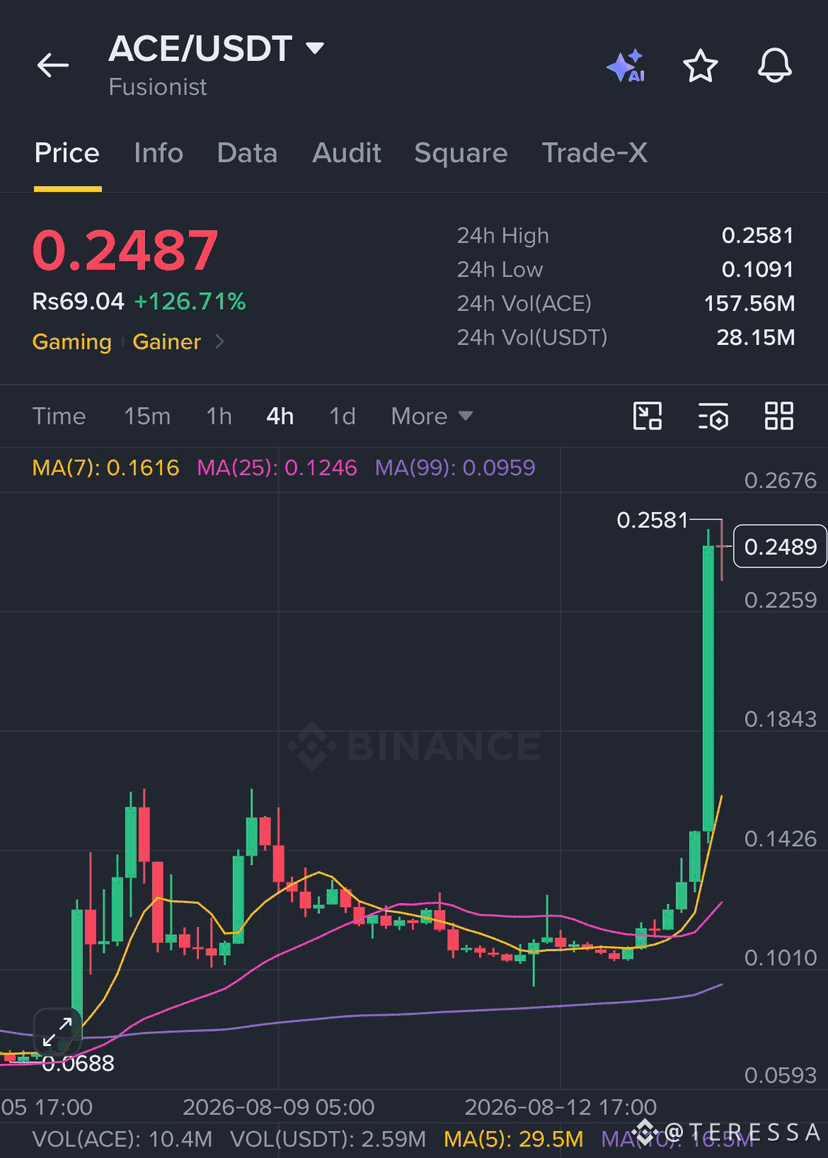
$ACE ripping with explosive momentum — massive jump off the $0.20 lows and still riding strong. If buyers reclaim $0.34–0.35, another sharp extension could kick in fast.
$LINK is trading at $13.87 (+2.59%), holding steady after bouncing from the 24h low at $13.47. Buyers stayed active enough to push price close to the 24h high at $14.08, showing controlled upward pressure.
Price is currently sitting near a minor resistance zone around $13.99–$14.22 — a break above this area can open the path toward $14.46, where stronger sell orders are stacked.
Immediate support to watch sits near $13.77, and deeper liquidity sits around $13.54, keeping the downside cushioned for now.
Extra value: $13.36 is the deeper reaction zone — if price ever dips there, expect buyers to defend aggressively.
LINK is stable, slightly bullish, and grinding upward with clean structure.
Terra Classic (LUNC) Soars 150%: Can This Momentum Really Last?
Terra Classic $LUNC has shocked the market with a massive 150% surge, while Terra (LUNA) also climbed over 75% in just 24 hours. The sudden spike has revived community excitement and brought both tokens back into the spotlight. A sharp rise in trading volumes—nearly 10x to 15x higher than usual—signals renewed interest, but it also raises an important question: how sustainable is this rally? Much of the momentum appears driven by short-term liquidity inflows, strong social buzz, and technical breakouts that triggered algorithmic buying. Rumors of potential burn proposals and network improvements added further fuel to the move. However, despite the price jump, liquidity remains thin, meaning even small orders can create large swings. Token burns, while active, still account for less than 7% of the massive LUNC supply, limiting their long-term impact. Social hype is rising faster than on-chain activity, and LUNA’s derivatives funding rates are heating up—conditions that often lead to pullbacks. The rally is exciting, but traders should approach it with cautious optimism.
Lorenzo's Financial Abstraction Layer: Tokenizing Wall Street Strategies On-Chain
Everyone keeps asking me about this wild new project that's literally bringing Wall Street's playbook into DeFi, and honestly, it's about time someone cracked this code. Lorenzo Protocol is exploding right now because they're doing something nobody else has figured out how to do properly: taking those complex financial instruments that hedge funds and investment banks use to print money, and making them accessible to regular crypto holders. Let's get real for a second. The traditional finance world has been gatekeeping their best strategies behind minimum investments of millions of dollars, accredited investor requirements, and layers of intermediaries who all take their cut. Meanwhile, crypto holders have been stuck with basic yield farming and staking that barely keeps up with inflation. Lorenzo is changing that entire dynamic. What Actually Is a Financial Abstraction Layer? Think of it like this. When you use your smartphone, you don't need to understand how the processor works or how data packets travel through networks. The operating system abstracts all that complexity away. Lorenzo does the same thing for sophisticated financial strategies, except instead of hiding technical complexity, they're hiding all the messy infrastructure that makes advanced finance work. The financial abstraction layer sits between complex Wall Street strategies like structured products, derivatives strategies, and algorithmic trading systems on one side, and your crypto wallet on the other. You get exposure to institutional-grade returns without needing a Bloomberg terminal or a Series 7 license. Tokenizing the Untokenizable Here's where it gets interesting. Lorenzo takes these traditionally illiquid, complex financial products and wraps them into liquid, tradable tokens. Let's say there's a volatility arbitrage strategy that normally requires $10 million minimum and locks your capital for two years. Lorenzo can tokenize that strategy, let you buy in with $100, and sell your position anytime on secondary markets. This isn't just putting a token wrapper on existing crypto yield. We're talking about bringing actual TradFi alpha strategies on-chain. Credit default swaps, convertible arbitrage, merger arbitrage, structured notes, all the stuff that made Renaissance Technologies and Citadel billions, now accessible through a simple token purchase. The tokenization process involves creating secure smart contracts that represent fractional ownership in these strategy vaults. Each token holder gets proportional exposure to the strategy's performance, with all the accounting, rebalancing, and execution happening automatically through code. No middlemen skimming fees at every level. Why Wall Street Strategies Matter for Crypto Look, I love crypto as much as anyone, but let's be honest about where we are. Most DeFi yields come from either inflationary token emissions or leveraged speculation on volatile assets. When the music stops, those yields evaporate. Wall Street strategies, for all their flaws, have decades of backtesting and real-world performance across multiple market cycles. Strategies like long-short equity, fixed income arbitrage, and volatility trading can generate returns in bull markets, bear markets, and sideways markets. They're not dependent on endless growth or new liquidity entering the system. That's the kind of sustainability crypto needs to mature beyond casino-level speculation. Lorenzo basically gives crypto access to what's called "absolute return" strategies, where the goal is positive returns regardless of market direction. This is huge for portfolio diversification. Instead of having 100% of your crypto correlated to Bitcoin's movements, you can allocate to strategies with low or negative correlation to crypto markets. The Technical Architecture That Makes It Work Under the hood, Lorenzo uses a modular architecture that connects to both DeFi protocols and traditional finance infrastructure through secure bridges. Smart contracts handle the tokenization, custody, and distribution layers while off-chain components execute the actual strategies through regulated entities when necessary. The protocol maintains full transparency through on-chain reporting, so you can verify exactly what's happening with your capital. Every strategy has published risk parameters, historical performance data, and real-time exposure metrics. This is light years ahead of traditional hedge funds that report quarterly and hide behind proprietary trading excuses. Security comes from multi-layered audits, insurance coverage through DeFi insurance protocols, and segregated custody arrangements. Your tokenized strategy positions remain yours and can't be commingled with operational funds or other users' assets. The Future of Finance Is Abstracted What Lorenzo represents is bigger than just one protocol. It's the blueprint for how traditional and decentralized finance will eventually merge. The best strategies from Wall Street, the best technology from crypto, and none of the gatekeeping or opacity that plagued both systems. We're moving toward a future where a farmer in Vietnam and a hedge fund manager in Connecticut have access to the exact same financial tools, priced fairly by global markets rather than by how connected you are. That's not just innovation, that's financial revolution. The abstraction layer model will likely expand beyond Lorenzo to become standard infrastructure across DeFi. Just like every blockchain eventually needed oracles, every DeFi ecosystem will need financial abstraction layers to bridge to the enormous liquidity and proven strategies of traditional markets. @Lorenzo Protocol 's approach to tokenizing Wall Street strategies represents the next evolution of DeFi beyond simple lending and speculation. By creating a financial abstraction layer, they're democratizing access to institutional-grade strategies while maintaining the transparency and permissionless nature that makes crypto powerful. The implications for portfolio construction, risk management, and global financial inclusion are massive. This is what crypto was supposed to be about from the beginning: leveling the playing field and giving everyone access to the tools that actually build wealth. $BANK #LorenzoProtocol
AP Season 10 Is Here: New Games, New Bounties, New Ways to Stack YGG Points
The question everyone's asking in Web3 gaming right now: how do you actually earn rewards that matter? YGG just answered with Guild Advancement Program Season 10, and it's blowing up right now with six new games, expanded bounties, and a completely revamped way to stack points that could change how you think about play-to-earn. This isn't just another season update. This is YGG celebrating a decade of GAP by going all-in on what actually works. What Makes Season 10 Different Here's what actually matters. Season 10 runs from May 19 to July 25, and it's packed with more opportunities to earn than any previous season. Six games are making their GAP debut, three fan favorites are returning, and the bounty ecosystem just got a massive expansion that goes way beyond typical gaming quests. The standout feature? YGG's debut game LOL Land launched on May 23 exclusively on Abstract Chain, with quests activating the moment the game went live. Over 100,000 players pre-registered before launch, earning bonus rolls for better chances at big rewards. That's not hype—that's real demand from players who've been waiting for YGG to launch their own title. Most people miss this: Season 10 isn't just about playing games. It's about building skills, discovering new platforms, and getting rewarded for contributions that actually matter to the ecosystem. The Six New Games Everyone's Playing Season 10 welcomes six new games to the program, including LOL Land, Wildcard, Honeyland, SolForge Fusion, Fishing Frenzy, and Ragnarok Landverse. Each one brings something different to the table, from casual strategy to competitive card battles to relaxing fishing simulators. LOL Land is the headliner as YGG's first internally developed game. It's a browser-based casual digital board game that YGG first unveiled at Game Developers Conference 2025. The game launched with exclusive quests that reward players with YGG points redeemable for tokens and NFTs. The fact that over 100,000 people registered before it even launched tells you everything about the demand. Honeyland and SolForge Fusion both graduated from the YGG Game Testers Program in Season 9, where the community unanimously approved them for full GAP inclusion. That community vetting process matters because it means these games have already proven themselves with real players, not just on paper. Honeyland is a casual strategy game with six different quests available. The game focuses on building and managing your bee colony while competing with other players. It's accessible enough for newcomers but deep enough to keep strategic players engaged for the long haul. SolForge Fusion is a hybrid physical and digital collectible card game on Solana. Players can jump into PvP and PvE modes for free in Early Access on Steam. The dual format means your digital cards have real-world counterparts, creating an interesting bridge between traditional card collecting and blockchain ownership. Fishing Frenzy offers something completely different—a relaxing, Ronin-powered fishing game playable for free on mobile and web browsers. It's the perfect counterbalance to more competitive titles, giving players a chill way to earn while they unwind. Ragnarok Landverse brings MMORPG nostalgia with cutting-edge blockchain innovation. The game launched with five epic quests ranging from bootcamp graduation to achieving legendary gear status. The quest rewards scale from 1,600 YGG points for completing bootcamp up to 5,100 points for gearing up or joining war guilds. The Returning Champions Bottom line: YGG didn't forget about the games that made GAP successful. Splinterlands, DeFi Kingdoms, and Sparkball are all back for Season 10, giving veteran questers familiar territory while newcomers discover why these titles became community favorites. Splinterlands is Web3 gaming's longest-running success story, a collectible card game that's been delivering consistent gameplay and real rewards for years. DeFi Kingdoms combines DeFi elements with fantasy RPG gameplay in a way that actually makes sense. Sparkball brings competitive MOBA action with blockchain integration that doesn't get in the way of the core experience. These returning titles provide stability in a season packed with new experiences. Players who've already mastered these games can jump straight into earning while exploring the new additions. Bounties That Go Beyond Gaming Here's where Season 10 gets really interesting. YGG is broadening the scope of its bounties with decentralized music platform Audius, allowing music fans to discover their next favorite artist and support them through the platform. This partnership means you can now complete music-related quests, discover new artists, and earn YGG points—all while supporting creators directly. The Audius integration represents something bigger than just another quest category. It's YGG expanding beyond pure gaming into the broader creator economy. If you're passionate about music discovery and want to support independent artists, you can now do that while stacking points. Metaversity is also continuing its acclaimed series of bounty quests for learners looking to level up their leadership, productivity, and marketing skills. These aren't throwaway tasks—they're structured learning experiences that build real professional skills while rewarding you with YGG points. YGG Future of Work introduced its collaboration with PublicAI through a new bounty quest, while FrodoBots brought the second Earth Rover Challenge to Manila. The diversity of bounty opportunities means there's something for everyone, whether you're a gamer, creator, learner, or builder. How the Points System Actually Works The YGG points system is simpler than most crypto reward programs, and that's intentional. You complete quests in featured games, earn YGG points, and redeem those points for game NFTs and token rewards including $YGG and $PIXEL tokens. The Rewards Maps have been fully replenished across all games and activities, meaning there's fresh inventory of rewards available for Season 10 participants. The overall winning team of each guild quest gets special prizes on top of their point earnings. Premium Quests offer a higher tier of participation for players willing to use YGG tokens to enter. These premium experiences come with bigger rewards, including exclusive in-game assets, merchandise, and special roles within the community. Guild Quests introduce competitive team dynamics where groups work together to complete objectives. This collaborative approach creates a more social gaming experience while distributing rewards across multiple participants rather than concentrating everything at the individual level. The LOL Land Launch Strategy YGG timed LOL Land's global launch perfectly with Season 10's kickoff. The game debuted at GDC 2025, generating massive buzz among Web3 gaming professionals and enthusiasts. The pre-registration numbers prove the strategy worked—over 100,000 players committed before the game even launched. During GDC week, YGG co-founder Gabby Dizon met in person with Corey Wright, CEO of Honeyland, to discuss further collaborations. These kinds of face-to-face partnerships at major gaming events signal that Web3 gaming is maturing from online-only communities to real-world networking and relationship building. LOL Land's browser-based format removes friction from the onboarding process. No downloads required, no complicated wallet setups before you start playing—just click and go. That accessibility matters when you're trying to onboard mainstream gamers who don't care about blockchain technology. Why the Music Integration Matters Most people overlook the Audius partnership, but it's actually one of Season 10's most forward-thinking moves. Web3 gaming has always been about earning through gameplay, but what if earning could happen through any creative activity? The Audius integration proves YGG is thinking beyond traditional gaming boundaries. Music discovery, artist support, and creator economies all fall under the broader umbrella of digital experiences that benefit from blockchain integration and community rewards. For music fans, this opens a completely new earning avenue. Discover new artists, stream their tracks, complete platform quests, and earn YGG points—all while directly supporting creators who receive more revenue than they would through traditional streaming platforms. The Game Testing Connection Here's something most participants don't realize: several Season 10 games came through the YGG Game Testers Program first. Honeyland and SolForge Fusion both succeeded in Season 9's testing phase before graduating to full GAP participation. This pipeline matters because it ensures quality control. Games don't just launch into GAP based on hype or marketing. They get vetted by real players who provide feedback, identify issues, and validate that the gameplay actually holds up over time. The Game Testers Program creates a symbiotic relationship between developers and players. Developers get valuable feedback from engaged testers. Players get early access to upcoming games and earn rewards for their testing contributions. The best games graduate to full GAP seasons where they reach a much larger audience. What This Means for Web3 Gaming Season 10 represents YGG's most ambitious attempt yet to prove that sustainable play-to-earn works. The mix of new games, returning favorites, expanded bounties, and music integration creates a diverse ecosystem where different types of participants can all find value. The numbers from previous seasons validate the approach. Season 7 attracted 8,213 questers with 47,964 quest enrollments and over 39,000 quest submissions. Over 340,000 $YGG tokens were staked by 900+ users seeking multipliers. These metrics show real engagement, not just speculation. Season 6 recorded even bigger numbers with 83,405 quest enrollments and 9,674 unique participants. Players completed an average of 7.2 quests each, totaling 64,223 completions and earning 1.52 million $YGG —a 380% increase over Season 5. The trajectory is clear: GAP seasons are growing in participation, engagement, and rewards distributed. Season 10 builds on that momentum with more games, more bounties, and more ways to earn than ever before. The Community-First Approach What separates YGG from other Web3 gaming platforms is the genuine focus on community development. Guild Quests encourage team collaboration. Bounties reward creators and contributors. The Game Testers Program gives players meaningful input on upcoming releases. This community-first philosophy shows up in the details. Quest pages include FAQs and specific guidance. Quest managers are available to provide support. The YGG Discord features dedicated channels for announcements, questions, and technical issues. The guild structure itself creates accountability and support networks. New players join guilds where experienced members help them navigate quests and optimize their earning strategies. Top-performing guilds get recognition and additional rewards. Looking at the Reward Structure The reward tiers in Season 10 span a wide range, accommodating both casual participants and hardcore questers. Entry-level quests might award 1,000-1,600 YGG points, while more challenging objectives can net 4,000-5,100 points or more. Premium mode in certain games like LOL Land offers bonus bounty features with reward tiers scaling from 100 points up to 500,000 premium points. These escalating rewards create clear progression paths where players can set goals and track their advancement. The real-time claiming system introduced in Season 7 continues in Season 10, allowing players to convert their points to $YGG , $RON, $PIXEL, and NFTs whenever they want. No waiting until season's end, no complex redemption processes—just immediate access to your earned rewards. The Strategic Shift to YGG Play Here's what few people are talking about: Season 10 is actually the final GAP season in its current format. YGG announced they're transitioning away from seasonal quests toward a more flexible questing framework tied to individual game schedules and Future of Work partners. This strategic shift makes sense. Instead of cramming everything into fixed seasonal windows, YGG is moving toward continuous engagement opportunities that align with when games and partners need community participation. The new system will prioritize rewarding skill-building, top players, and active contributors rather than simply rewarding anyone who can complete basic tasks. This evolution represents YGG's maturation from broad accessibility to competitive excellence. Community programs and bounties will continue, but the emphasis shifts to creating opportunities that encourage friendly competition for prize pools. It's a natural progression as the community grows and the quality bar rises. YGG's Guild Advancement Program Season 10 delivers what Web3 gaming has been promising but rarely executing: diverse earning opportunities, quality game selection, community-driven vetting, and rewards that actually matter. Six new games bring fresh experiences ranging from casual board games to competitive MMORPGs. Expanded bounties into music and learning create earning paths beyond traditional gaming. The YGG points system provides transparent, immediate rewards. Premium quests and guild competitions add competitive depth for dedicated players. This is @Yield Guild Games celebrating 10 seasons of GAP by showing exactly what they've learned about building sustainable play-to-earn ecosystems. The games are better. The rewards are bigger. The community is stronger. And the infrastructure supporting it all is more robust than ever. Whether you're a hardcore gamer grinding through MMORPG quests, a music lover discovering new artists on Audius, or a learner building professional skills through Metaversity, Season 10 has a path to earning YGG points that fits your interests. Web3 gaming is evolving from speculation to substance, and GAP Season 10 is leading that evolution. The question isn't whether play-to-earn can work—the question is whether you're ready to stack those YGG points while YGG's most ambitious season is live. #YGGPlay $YGG
Why Crypto Is Crashing Today — And What Tom Lee Predicts Next
The crypto market is facing another sharp downturn, shaking traders who expected a strong December. $BTC has once again slipped below $90,000, with $ETH and major altcoins following the decline. The global market cap has dropped to $3.13 trillion, reflecting intense panic selling across exchanges. The latest crash was triggered by aggressive liquidations, wiping out over $413 million in leveraged positions within a day. More than 131,000 traders were liquidated, causing BTC to fall rapidly and dragging altcoins with it.
At the same time, hot PCE inflation data reignited macroeconomic fears, as rising prices undermine expectations of smoother Federal Reserve rate cuts.
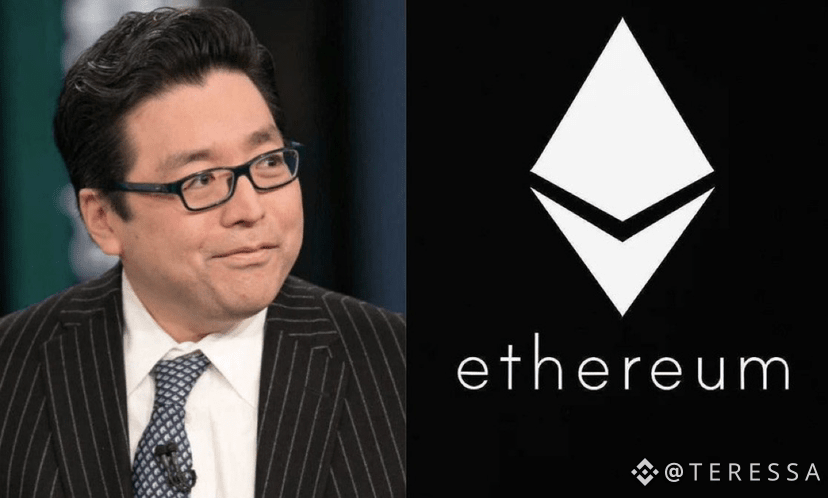
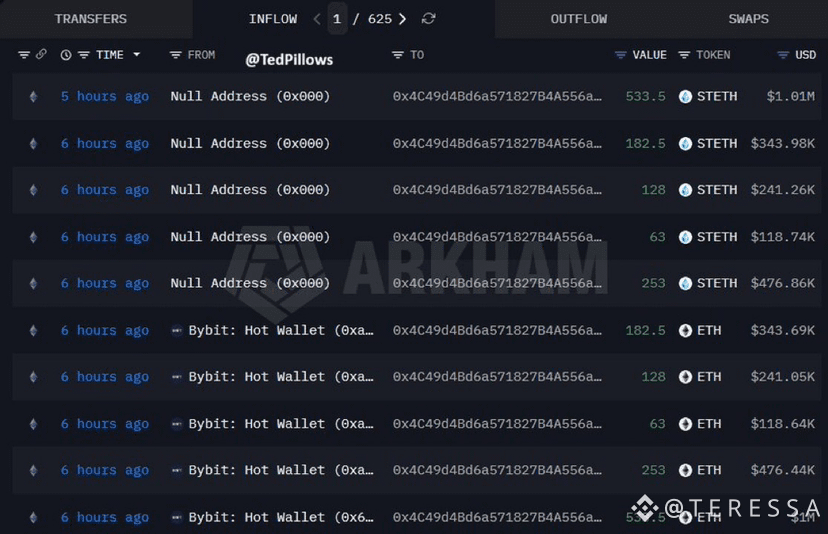
Whale activity added further pressure, including a massive ETH purchase linked to Tom Lee’s Bitmine and a dormant wallet suddenly moving 1,000 BTC after 14 years. Regulatory uncertainty also escalated as the SEC rescheduled its privacy roundtable for December 15. Despite the volatility, Tom Lee believes the market may be near a bottom, predicting strong long-term growth ahead.