

Walrus 🦭/acc Re-poster
437 ပို့စ်များ

Walrus 🦭/acc Re-poster
တိုင်ကြားမည်
သုံးစွဲသူကို ဘလော့မည်
The developer platform enabling data markets for the AI era.
Chain-agnostic and built on @SuiNetwork.
Account managed by Walrus Foundation.
0 ဖော်လိုလုပ်ထားသည်
26 ဖော်လိုလုပ်သူများ
28 လိုက်ခ်လုပ်ထားသည်
ပို့စ်များ
အားလုံး
ဗီဒီယိုများ
The landscape of software development is undergoing a massive shift toward accessibility thanks to the rise of vibe coding. A huge round of applause goes to @matterhornso for establishing an AI agent solution powered by Walrus. This breakthrough ensures that literally anyone can step into the role of an AI builder, completely independent of their prior programming background. Be sure to watch the informative video produced by @AltCryptoGems, which includes an appearance from our Product Marketing Manager, @Kenton.
The landscape of software development is undergoing a massive shift toward accessibility thanks to the rise of vibe coding. A huge round of applause goes to @matterhornso for establishing an AI agent solution powered by Walrus. This breakthrough ensures that literally anyone can step into the role of an AI builder, completely independent of their prior programming background. Be sure to watch the informative video produced by @AltCryptoGems, which includes an appearance from our Product Marketing Manager, @Kenton.
85
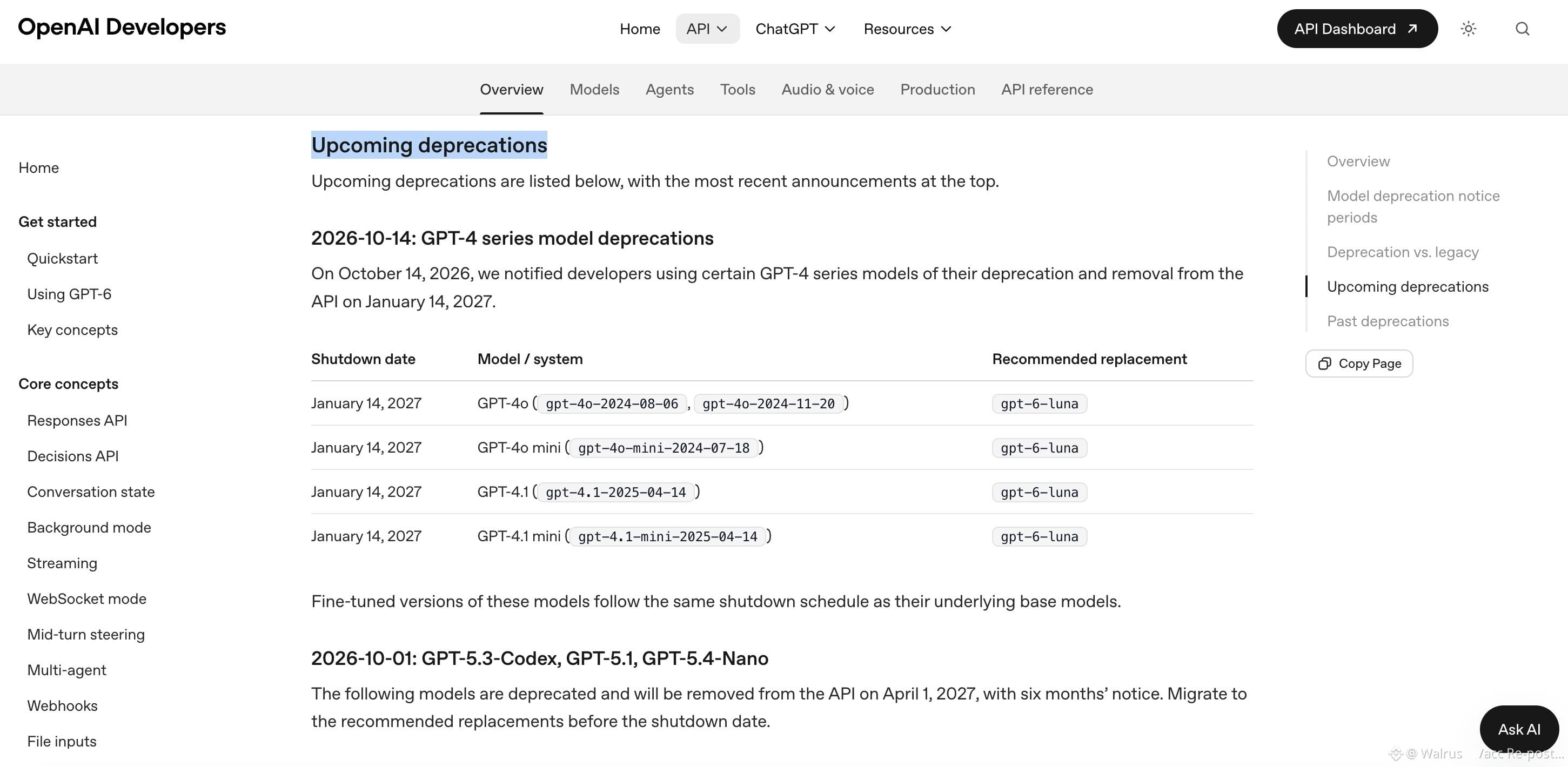
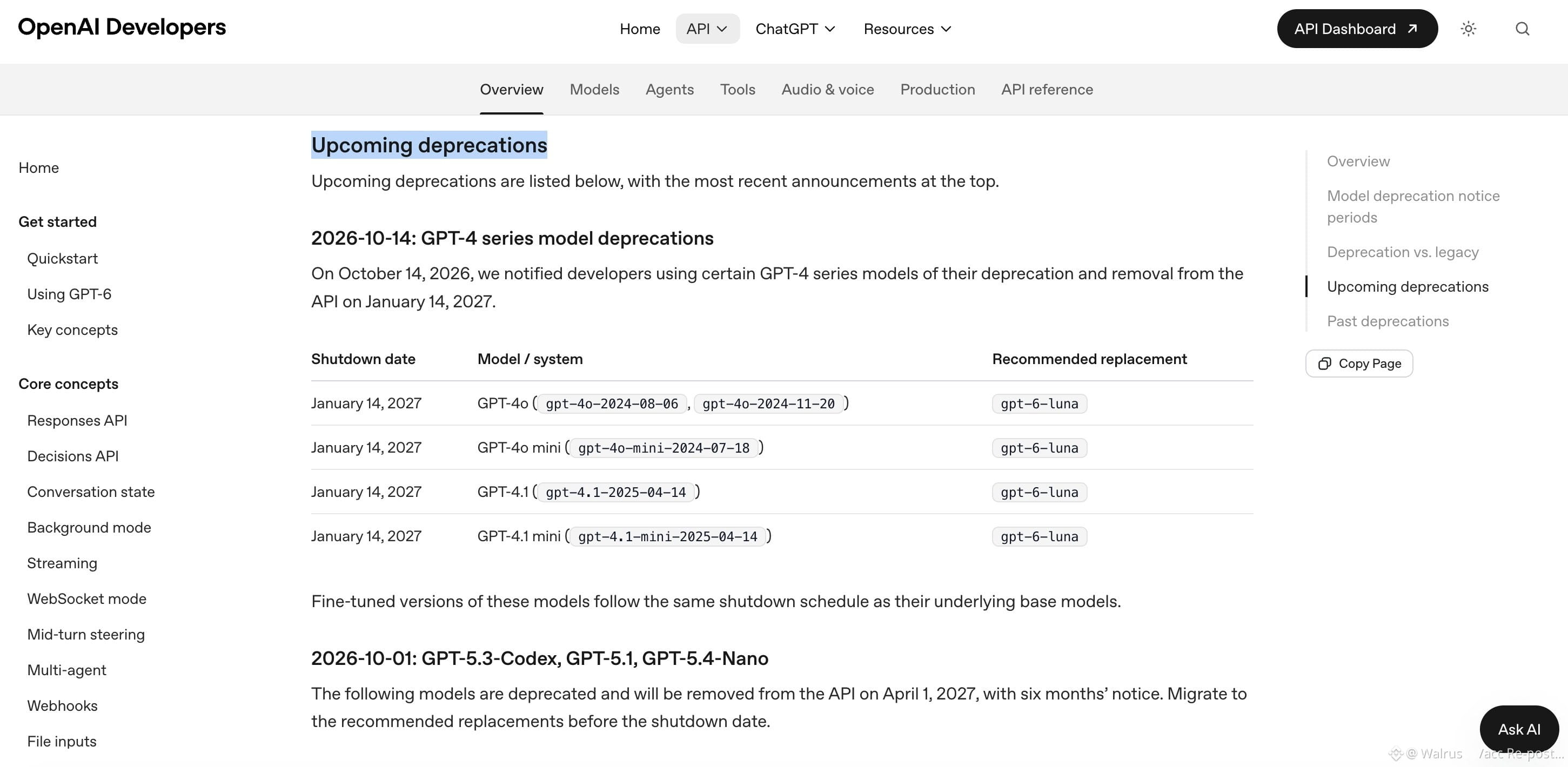
Model lifecycles naturally come to an end, but the memory of your agent does not need to expire alongside them. On October 23, @OpenAI phased out several of its legacy API models, specifically GPT-4, GPT-4 Turbo, o1, o3-mini, and o4-mini. Looking ahead, both GPT-4o and GPT-4.1 are scheduled to follow suit on January 14, 2027.
While these retirements are a routine part of the industry, they highlight the value of maintaining memory independently from the model layer. Storing context externally gives development teams the freedom to switch between models at will. This approach prevents vendor lock-in and ensures you never have to reconstruct your accumulated data from scratch. You can simply upgrade your models while seamlessly retaining your memory.
Walrus Memory provides exactly this kind of stability, keeping your interface completely consistent regardless of the runtime or model you decide to implement next. The process remains straightforward and familiar, requiring only remember() for writing data and recall() for reading it.
You can review the official deprecation schedule here:
https://developers.openai.com/api/docs/deprecations
43
On October 23, @OpenAI discontinued a batch of its older API models, specifically o1, o3-mini, o4-mini, GPT-4, and GPT-4 Turbo. Furthermore, they plan to phase out GPT-4.1 and GPT-4o on January 14, 2027. Additional details regarding these updates can be found at https://developers.openai.com/api/docs/deprecations
Although it is completely natural for artificial intelligence models to go through lifecycles, your agent should never lose its memory just because a platform evolves. Separating your memory storage from the underlying model layer gives your team the freedom to switch between different AI providers seamlessly. You will never have to rebuild your accumulated context from the ground up or remain tethered to a single vendor.
You can comfortably transition to new models while retaining all your historical data. Walrus Memory makes this effortless by providing an unchanging interface regardless of the runtime or model you choose in the future. The process remains as simple as using remember() for a write operation and recall() for a read operation.
56
If you are ready to incorporate Walrus Memory into your workflow, there are three distinct methods available to help you get started.
One excellent approach involves using the Vercel AI SDK. By leveraging middleware, you can seamlessly introduce persistent memory capabilities directly into your streamText and generateText processes. To achieve this, simply include the following import statement in your code:
import { withMemWal } from "@mysten-incubation/memwal/ai";
Alternatively, you might prefer utilizing the OpenClaw plugin. This method empowers your OpenClaw agents with automatic memory retrieval and capture features, which ensures that all information remains completely accessible across various sessions. You can easily install this plugin by running the following command:
openclaw plugins install @mysten-incubation/oc-memwal
Finally, you can choose the Core SDK route. This option provides a comprehensive way to recall and store memory, featuring Walrus storage, SEAL encryption, and automatic embedding. To add this package to your project, execute:
pnpm add @mysten-incubation/memwal
For the complete installation guide and full source code, please check out @github at this address:
https://github.com/MystenLabs/MemWal
66
Losing your artificial intelligence context just because you moved to a different tab is an experience that needs to be left in the past. Information generated within a single application ought to be easily accessible for use in another. In a recent video and interview produced by @AltCryptoGems, @Kenton explores exactly how Walrus Memory provides a reliable solution for portable agent context. He details the way this technology guarantees that your information remains entirely under your ownership, regardless of the various AI platforms you choose to utilize.
Losing your artificial intelligence context just because you moved to a different tab is an experience that needs to be left in the past. Information generated within a single application ought to be easily accessible for use in another. In a recent video and interview produced by @AltCryptoGems, @Kenton explores exactly how Walrus Memory provides a reliable solution for portable agent context. He details the way this technology guarantees that your information remains entirely under your ownership, regardless of the various AI platforms you choose to utilize.
66
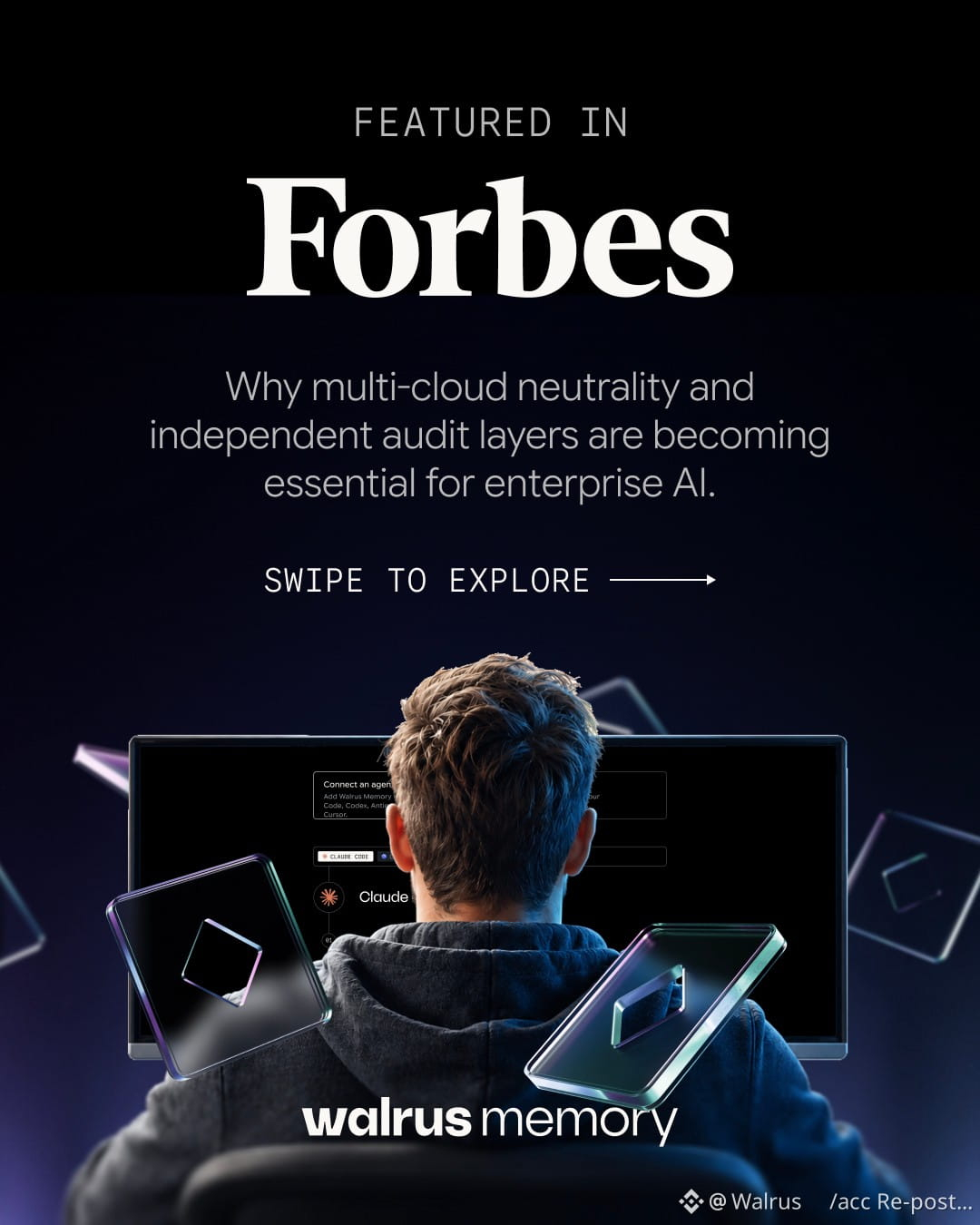
Walrus Memory has recently captured the spotlight in a new feature by @Forbes.
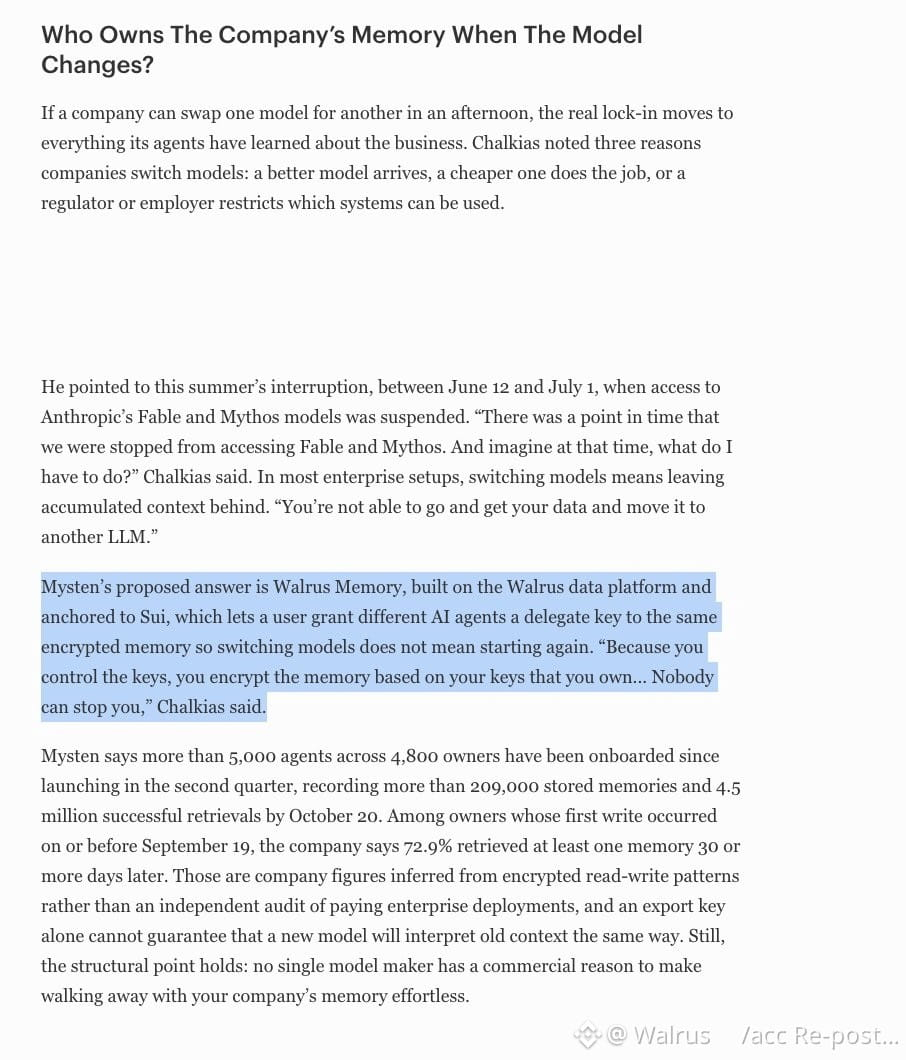
Reflecting on a critical challenge, @kostascrypto shared the following thought: "There was a point in time that we were stopped from accessing Fable and Mythos. And imagine at that time, what do I have to do?"
This exact dilemma explains why builders are eagerly transitioning to user-keyed, portable memory systems. Following a milestone of over 5,000+ agents and more than 4.5M+ retrievals, the motivation is abundantly clear. By adopting this technology, developers ensure that migrating between different LLMs never requires them to start completely from zero.
You can dive into the comprehensive article authored by @guneyyildiz right here: https://www.forbes.com/sites/guneyyildiz/2026/10/21/ai-startups-are-betting-on-what-the-big-platforms-cannot-credibly-sell/
55
To introduce verifiability into its enterprise data suite, @PerceptronNTWK is currently moving the data that powers its 800,000-node network over to Walrus. This transition directly addresses a critical requirement for hedge funds and enterprise buyers who depend heavily on real-time data, as it is absolutely crucial to confirm that this information remains completely unaltered.
Discover all the details by reading the complete announcement at the following link: https://walrus.xyz/blog/perceptron-walrus-verifiable-data-provenance/
Discover all the details by reading the complete announcement at the following link: https://walrus.xyz/blog/perceptron-walrus-verifiable-data-provenance/
60
It is certainly a positive development to see the largest data platforms shifting towards model-flexible and framework-agnostic memory solutions. For instance, @databricks launched agent memory into beta on Oct 12, just after @MongoDB introduced the capability to Atlas last month.
Nevertheless, a significant issue persists. While this memory might function across different models and agents, it frequently stays anchored to a single data platform. As a result, the valuable customer insights acquired by your agents transform into yet another trapped asset that you cannot relocate.
Walrus Memory ensures that your data remains completely yours. It acts as an independent memory layer that accompanies your agent everywhere. Because it is not restricted to any specific platform, it can be accessed from any runtime or model. Storing a fact is as simple as using remember(), and bringing it back just takes recall().
https://docs.databricks.com/aws/en/release-notes/product/2026/october
59
Artificial intelligence requires information that can seamlessly transition between different networks, strictly uphold permission protocols, and maintain clear records of authenticity. If you are curious about how these specific needs can be met, @kimblgn provides a detailed overview explaining exactly how Walrus Memory successfully tackles every single one of these three essential elements.
Artificial intelligence requires information that can seamlessly transition between different networks, strictly uphold permission protocols, and maintain clear records of authenticity. If you are curious about how these specific needs can be met, @kimblgn provides a detailed overview explaining exactly how Walrus Memory successfully tackles every single one of these three essential elements.
75
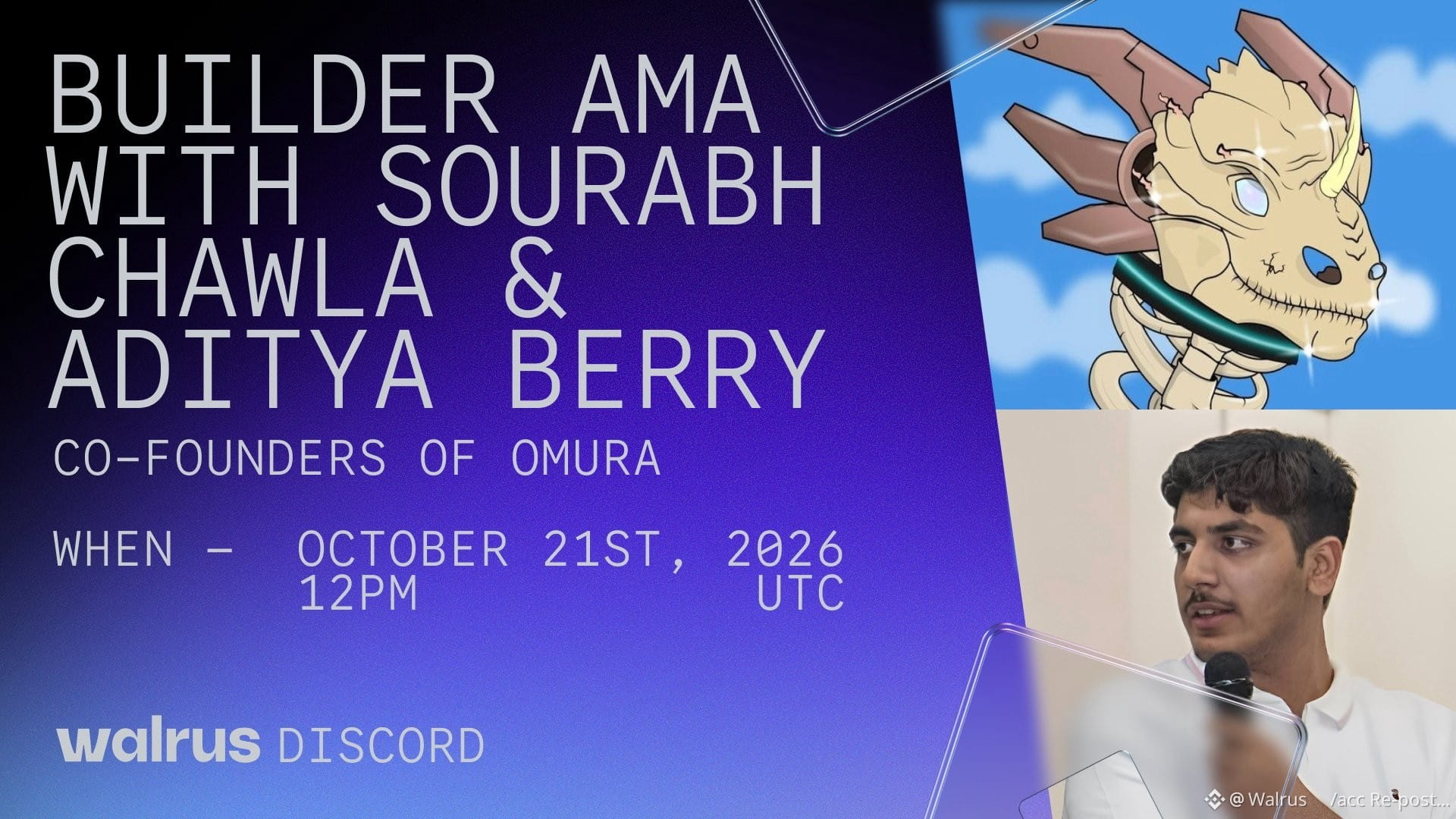
We warmly invite you to a special builder AMA on @discord where we will discuss how to eliminate the guesswork involved in locating information across decentralized sites and blobs. On October 21, 2026 at 12:00 p.m. UTC, @OmuraHQ co-founders Aditya Berry and Sourabh Chawla will be joining us to provide a comprehensive overview of the search infrastructure and real-time indexing developed for Walrus. We look forward to seeing you there, so please come prepared with your inquiries and access the event using the following link: https://discord.com/invite/walrusprotocol
We warmly invite you to a special builder AMA on @discord where we will discuss how to eliminate the guesswork involved in locating information across decentralized sites and blobs. On October 21, 2026 at 12:00 p.m. UTC, @OmuraHQ co-founders Aditya Berry and Sourabh Chawla will be joining us to provide a comprehensive overview of the search infrastructure and real-time indexing developed for Walrus. We look forward to seeing you there, so please come prepared with your inquiries and access the event using the following link: https://discord.com/invite/walrusprotocol
69
In a fascinating conversation about maximizing GPU performance, @AMD representative @AnushElangovan recently sat down with @ConorBronsdon. Together, they delve into the capabilities of ROCm 10 and discuss the innovative application of agent swarms. These agents are deployed to successfully navigate search spaces, resulting in the automated optimization of thousands of models. You can catch this insightful discussion on Season 4 of the @chain_ofthought podcast, which is proudly sponsored by Walrus Memory. Listen to the complete episode at the following link: https://chainofthought.show/podcast/72-tuning-gpu-performance-with-ai-agents-amds-anush-elangovan-on-rocm-10/?utm_source=sponsor-share&utm_medium=referral&utm_campaign=ep72
In a fascinating conversation about maximizing GPU performance, @AMD representative @AnushElangovan recently sat down with @ConorBronsdon. Together, they delve into the capabilities of ROCm 10 and discuss the innovative application of agent swarms. These agents are deployed to successfully navigate search spaces, resulting in the automated optimization of thousands of models. You can catch this insightful discussion on Season 4 of the @chain_ofthought podcast, which is proudly sponsored by Walrus Memory. Listen to the complete episode at the following link: https://chainofthought.show/podcast/72-tuning-gpu-performance-with-ai-agents-amds-anush-elangovan-on-rocm-10/?utm_source=sponsor-share&utm_medium=referral&utm_campaign=ep72
31
We are incredibly proud to be a sponsor for season four of @chain_ofthought. In a recent episode, @ConorBronsdon sat down with Jaime DeLanghe, the CPO of @SlackHQ, for an engaging conversation regarding agent context. Together, they explored the reasons behind channels emerging as the natural context model for agents. The pair also discussed the dynamics that unfold when a complete team collaboratively steers a single agent, as opposed to employees working within isolated silos. You can listen to the full episode by visiting the link provided below.
https://chainofthought.show/podcast/71-slack-wants-to-be-the-context-harness-for-code-cpo-jaime-delanghe/?utm_source=sponsor-share&utm_medium=referral&utm_campaign=ep71
https://chainofthought.show/podcast/71-slack-wants-to-be-the-context-harness-for-code-cpo-jaime-delanghe/?utm_source=sponsor-share&utm_medium=referral&utm_campaign=ep71
82
Providing context for your agent and supplying data to your application are essential steps, and Walrus Console is designed to bridge these two needs seamlessly. To help you get started, we offer a short guide that explains the process of connecting Walrus Console to Cursor utilizing MCP. This integration allows your agent to effortlessly read and write files as a natural part of your workflow. You can explore Walrus Console today at the following link: https://walrus.xyz/products/walrus-console/?utm_source=twitter&utm_medium=social&utm_campaign=walrus_console
Providing context for your agent and supplying data to your application are essential steps, and Walrus Console is designed to bridge these two needs seamlessly. To help you get started, we offer a short guide that explains the process of connecting Walrus Console to Cursor utilizing MCP. This integration allows your agent to effortlessly read and write files as a natural part of your workflow. You can explore Walrus Console today at the following link: https://walrus.xyz/products/walrus-console/?utm_source=twitter&utm_medium=social&utm_campaign=walrus_console
65
Are you currently developing an artificial intelligence agent? You can now equip it with the ability to retain information long after an active session ends. For developers who are frustrated by disappearing data between executions or having to constantly provide background context, Walrus Memory offers a highly effective solution to maintain continuity.
To help you get started, here is an overview of the available resources and how they function.
The OpenClaw plugin, mysten-incubation/oc-memwal, equips OpenClaw agents with the ability to automatically capture and recall information. This guarantees that memory remains fully accessible across multiple sessions. You can find this tool at https://github.com/MystenLabs/MemWal/tree/dev/packages/openclaw-memory-memwal
At the foundation is the core SDK, mysten-incubation/memwal, which handles the secure storage of encrypted memory directly on Walrus. This component ensures that the integrity of your data can be verified independently at any time. The SDK is located at https://github.com/MystenLabs/MemWal/tree/dev/packages/sdk
Furthermore, the project features AI-friendly docs. You will find step-by-step integration instructions within the SKILL.md file, alongside a highly structured documentation reference tailored specifically for AI tools in the llms.txt file. Review these materials here: https://github.com/MystenLabs/MemWal/blob/dev/SKILL.md
Ultimately, these tools give you complete control over persistent memory that functions seamlessly across various workflows, tools, and user sessions. To view the source code and access the quickstart guide, please visit the main repository at https://github.com/MystenLabs/MemWal
57
Losing context and being restricted to a single platform are the primary obstacles preventing AI agents from operating effectively. Following the release of Walrus Memory, our Head of Product, @kimblgn, shared a key insight from our journey so far. The main lesson is that developers are only able to truly utilize memory when it is provided in a format that is encrypted, verifiable, and portable.
Losing context and being restricted to a single platform are the primary obstacles preventing AI agents from operating effectively. Following the release of Walrus Memory, our Head of Product, @kimblgn, shared a key insight from our journey so far. The main lesson is that developers are only able to truly utilize memory when it is provided in a format that is encrypted, verifiable, and portable.
1
1
263
As we look toward the future, the next wave of artificial intelligence will rely heavily on human-generated data. Because of this shift, establishing a clear origin for information is now a strict requirement for procurement. Thankfully, @SuiNetwork and Walrus are working together to ensure this data provenance is entirely verifiable.
To support this vital process, Walrus is quickly becoming the primary storage foundation for both @datafdn and Trace, the onchain registry dedicated to rights-cleared AI training data. Within this ecosystem, Trace is responsible for documenting exactly who owns the information and where it originated. Meanwhile, Walrus securely houses the original files, ensuring they remain completely tamper-proof and are accessible solely to buyers who hold the appropriate licenses.
The sheer volume of activity on the platform highlights its growing impact. Applications that supply licensed data to frontier AI labs actively utilize this system. As a result, Trace has already documented over 250M total contributions and continues to process more than 3M new receipts every single day.
For complete details, please view the official announcement here: https://www.sui.io/blog/data-network-joins-sui-walrus
92
In order to operate effectively, your artificial intelligence agent requires the right background information. The Walrus Console provides a seamless solution, equipping you with the tools needed to easily manage and utilize this vital context.
Find out additional details by visiting: https://walrus.xyz/products/walrus-console/?utm_source=twitter&utm_medium=social&utm_campaign=walrus_console
Find out additional details by visiting: https://walrus.xyz/products/walrus-console/?utm_source=twitter&utm_medium=social&utm_campaign=walrus_console
71
Equip your artificial intelligence agents with the dedicated workspace they require to process information. By utilizing Walrus Console, you can seamlessly integrate your data with any MCP-compatible tools. This connection empowers your agents with the ability to easily read and write the exact information they depend on.
https://walrus.xyz/products/walrus-console/?utm_source=twitter&utm_medium=social&utm_campaign=walrus_console
https://walrus.xyz/products/walrus-console/?utm_source=twitter&utm_medium=social&utm_campaign=walrus_console
27
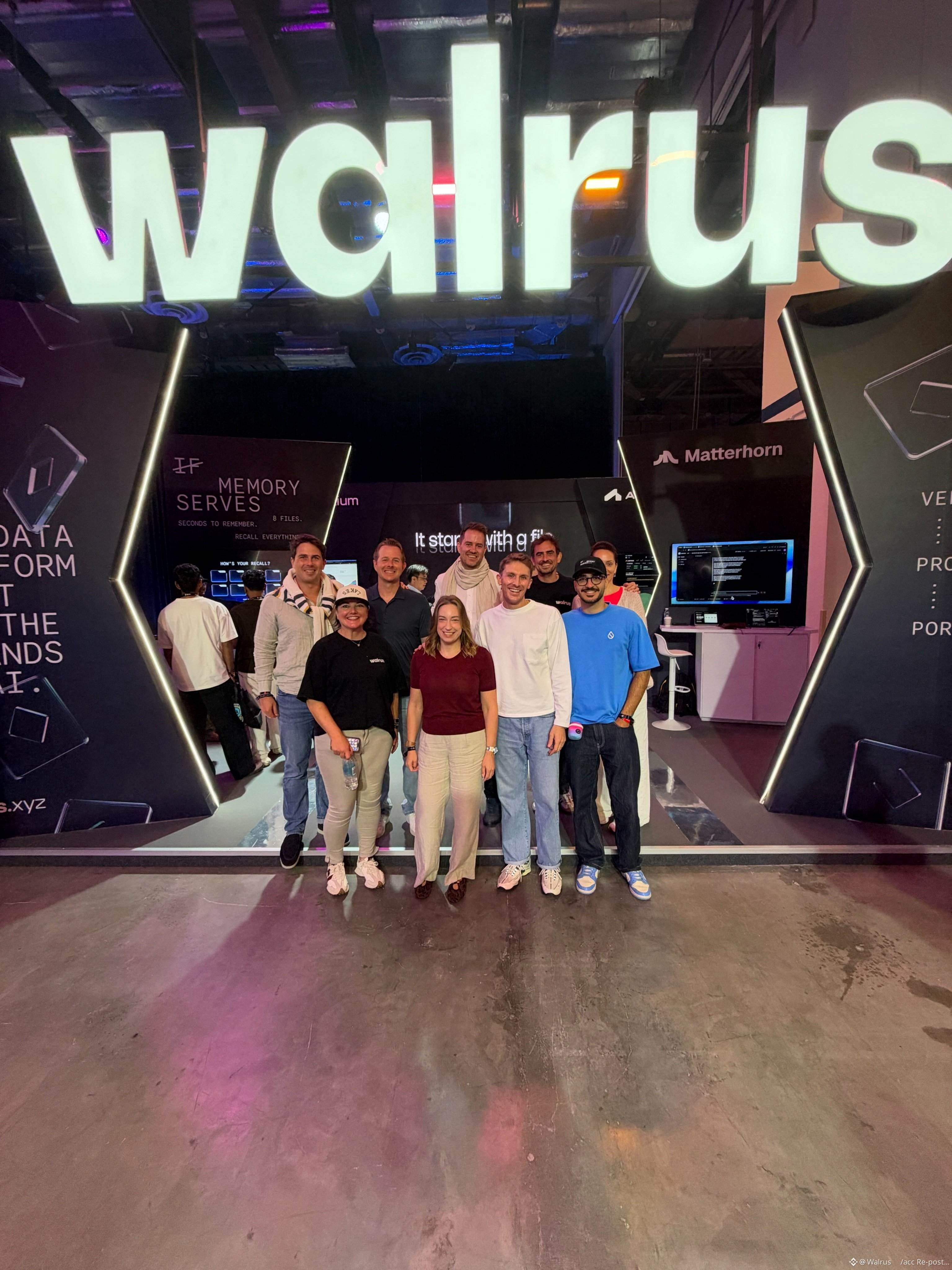
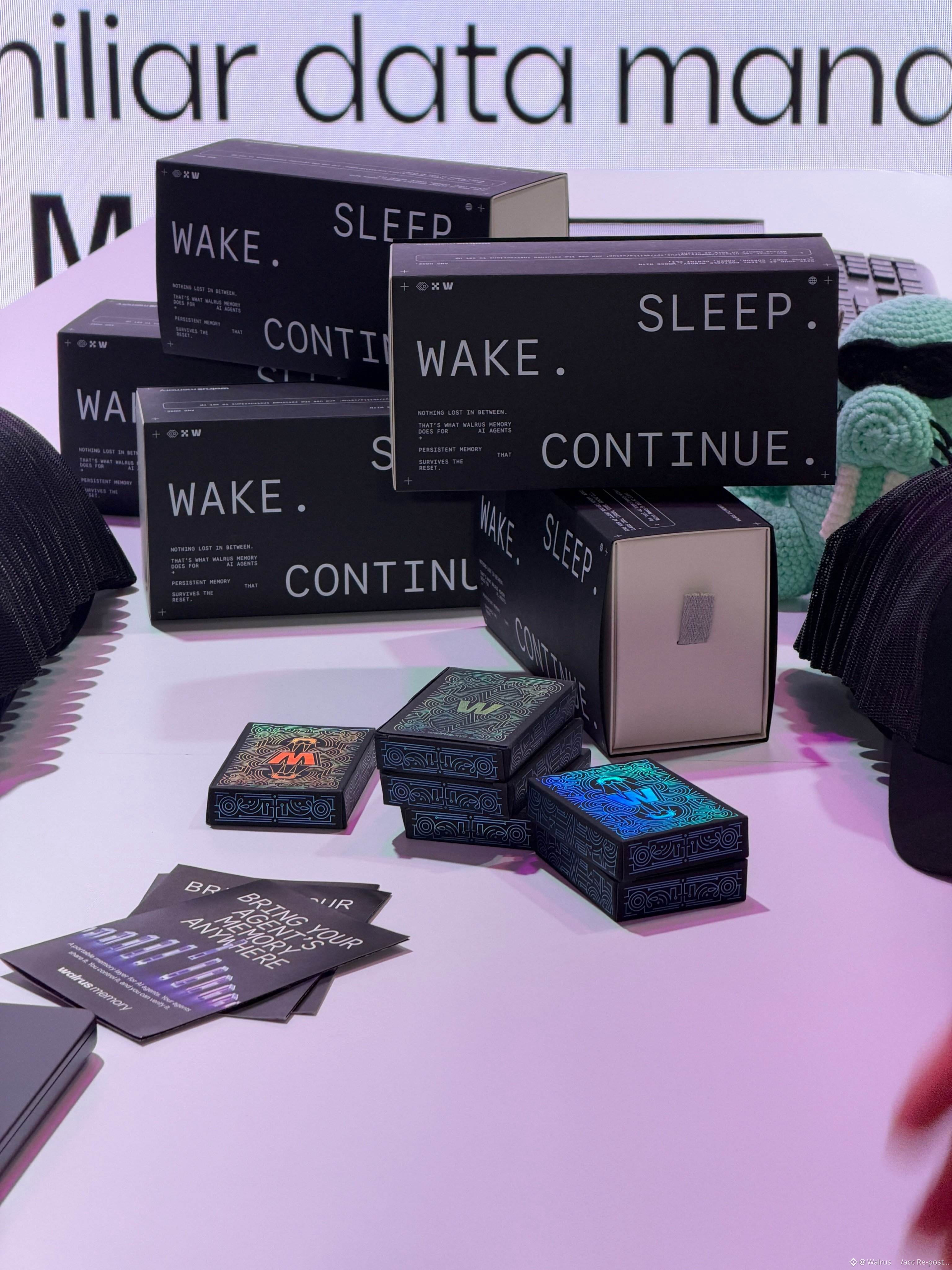
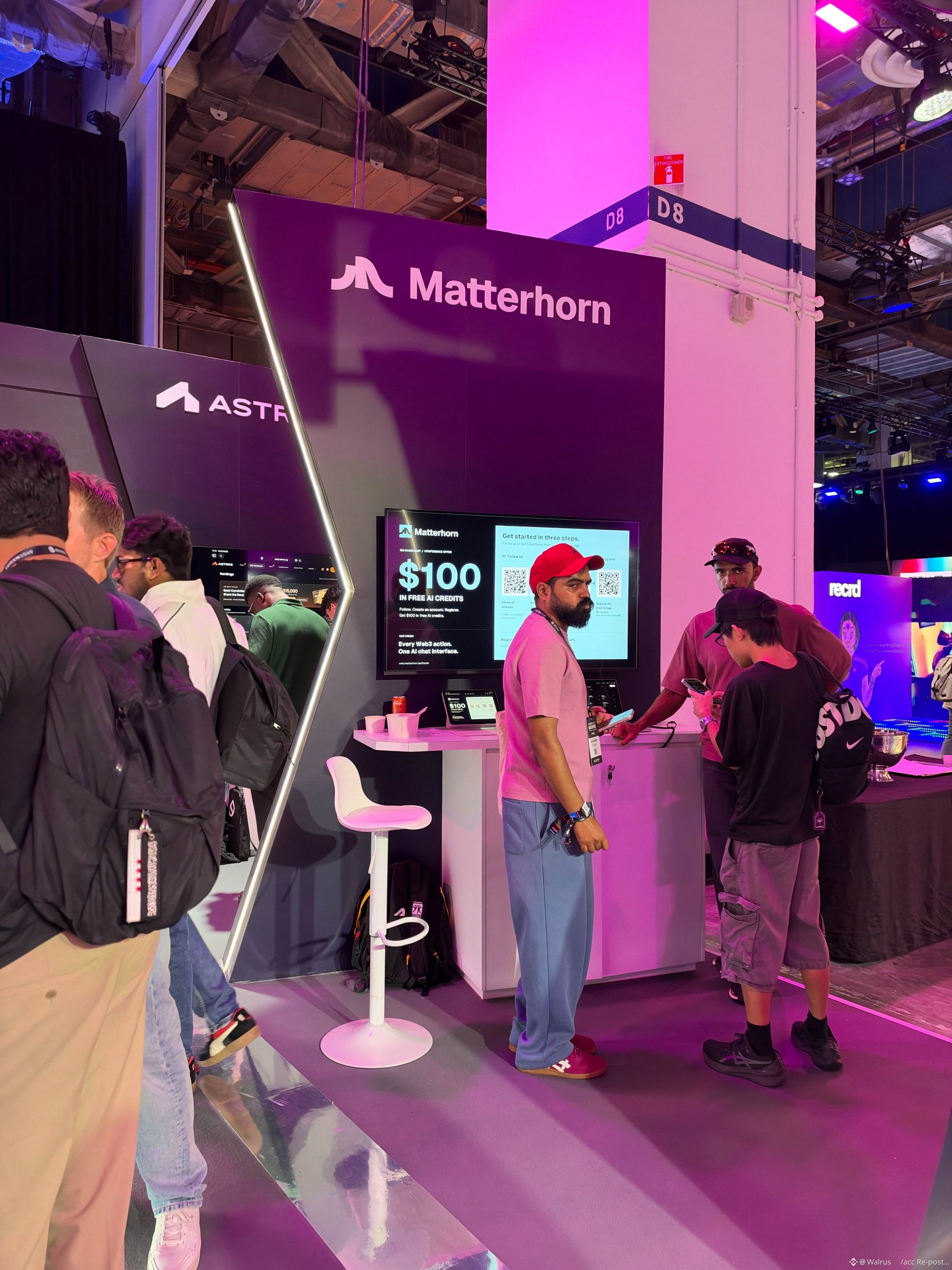
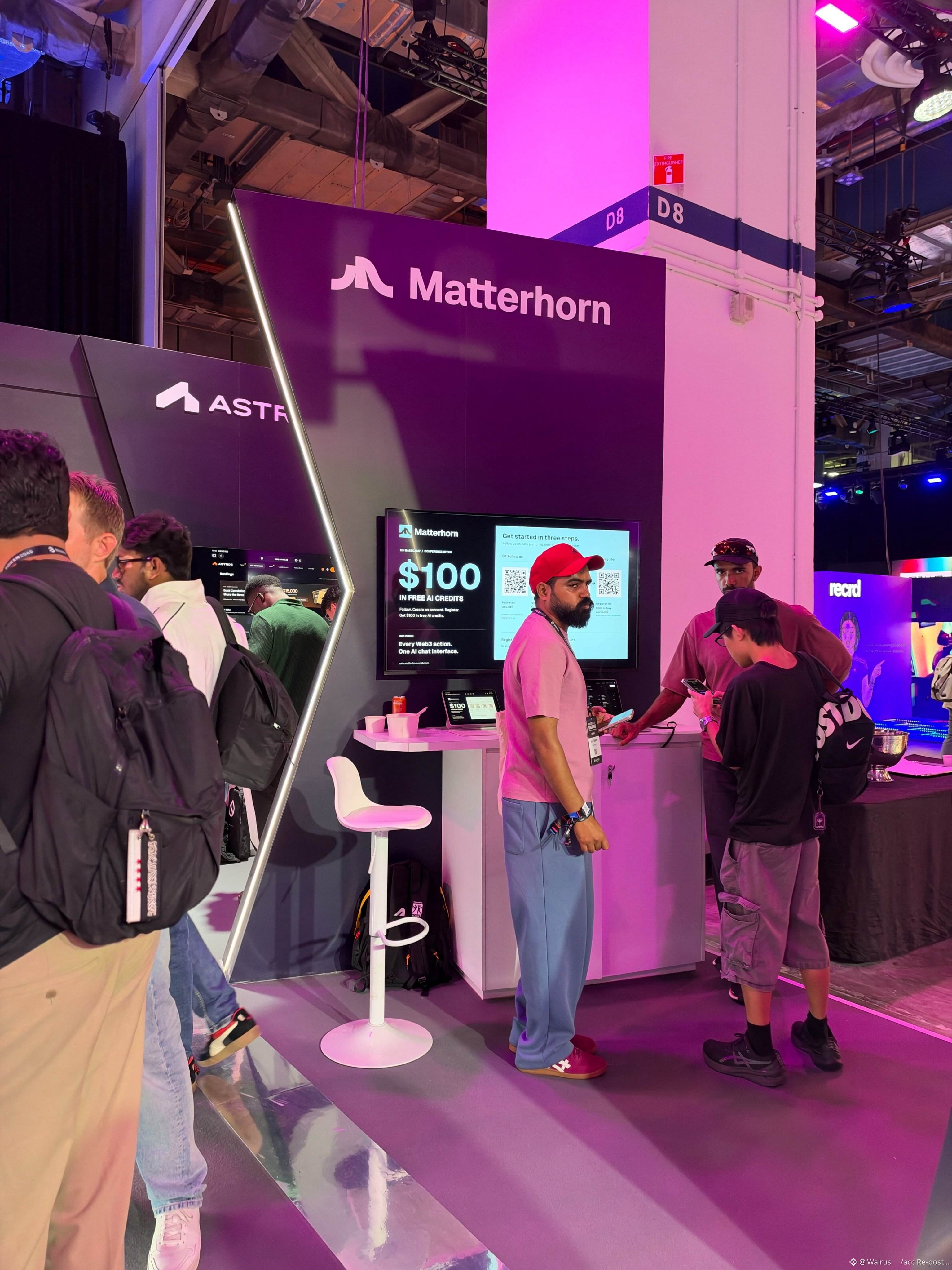
Our time at Sui Basecamp has officially come to a close after an incredibly productive two days. During the event, we proudly introduced the Walrus Console to the community. We also took the opportunity to draw attention to the exciting joint announcement from @Mysten_Labs and @googlecloud regarding the Verifiable Agent Arbiter, a project focused on anchoring agent proofs to both Walrus and Sui. In addition, it was a pleasure to shine a spotlight on our fantastic partners, @astros_ag, @AlliumLabs, and @matterhornso. Finally, we rounded out the experience by leading engaging workshops centered around persistent agent memory.
Our time at Sui Basecamp has officially come to a close after an incredibly productive two days. During the event, we proudly introduced the Walrus Console to the community. We also took the opportunity to draw attention to the exciting joint announcement from @Mysten_Labs and @googlecloud regarding the Verifiable Agent Arbiter, a project focused on anchoring agent proofs to both Walrus and Sui. In addition, it was a pleasure to shine a spotlight on our fantastic partners, @astros_ag, @AlliumLabs, and @matterhornso. Finally, we rounded out the experience by leading engaging workshops centered around persistent agent memory.

39
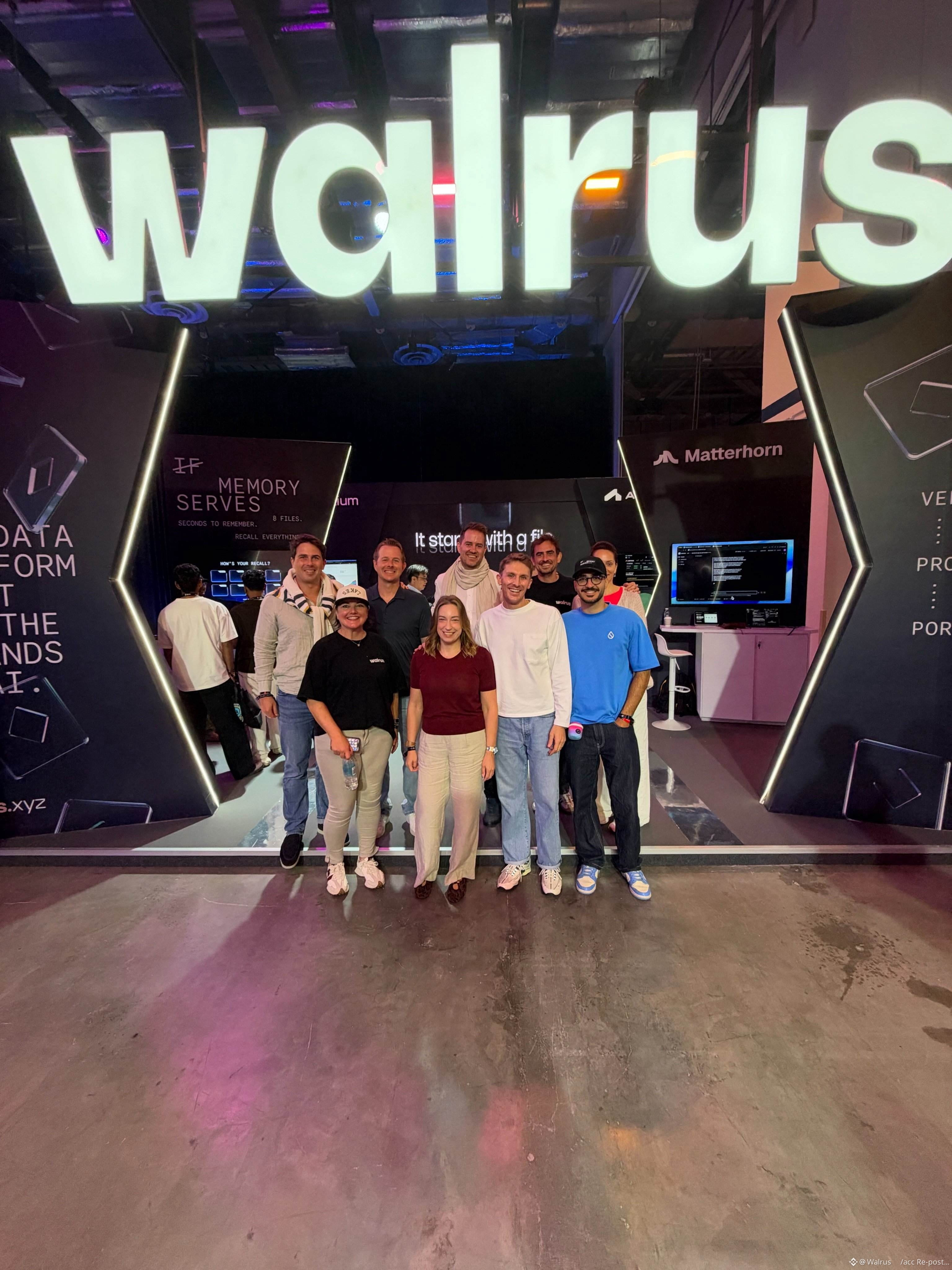
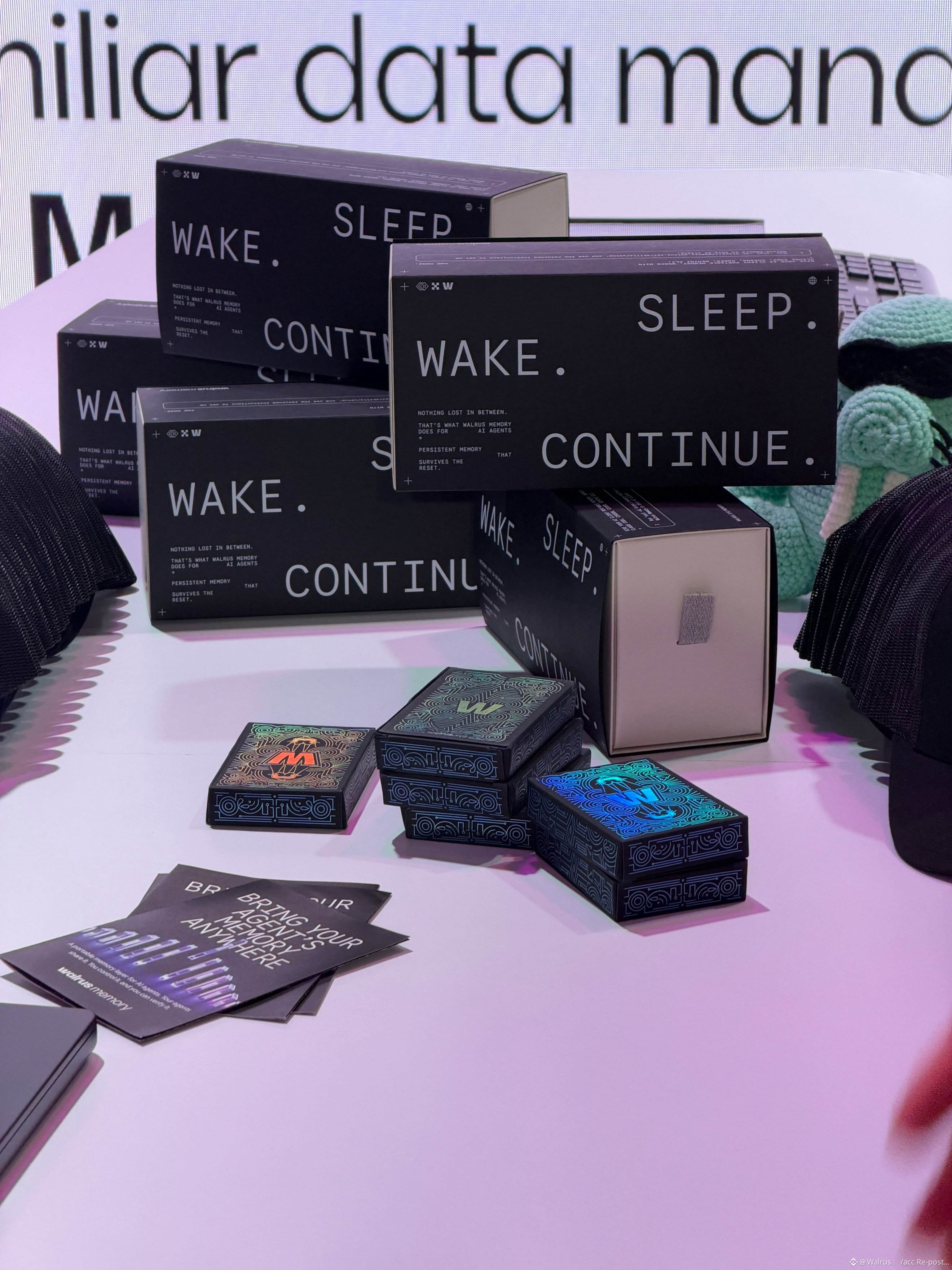
Sui Basecamp has officially concluded. Over the course of this two-day event, we successfully launched the Walrus Console and directed workshops focused on persistent agent memory. We also took the opportunity to present our partners, @astros_ag, @AlliumLabs, and @matterhornso.
Sui Basecamp has officially concluded. Over the course of this two-day event, we successfully launched the Walrus Console and directed workshops focused on persistent agent memory. We also took the opportunity to present our partners, @astros_ag, @AlliumLabs, and @matterhornso.

62
Log in to explore more content
Join global crypto users on Binance Square
⚡️ Get latest and useful information about crypto.
💬 Trusted by the world’s largest crypto exchange.
👍 Discover real insights from verified creators.
အီးမေးလ် / ဖုန်းနံပါတ်
ရေပန်းစားနေသော ခေါင်းစဉ်များ
CanMicrosoftDeliverOnAI
ကြည့်ရှုမှု 452,941 ကြိမ်
3,332 ဦး ဆွေးနွေးနေသည်
Earnings Season Session 3: Will Google & Microsoft Beat Earnings Expectations?
Binance Square Official
·နှစ်သက်မှု 148 ခု
·ကြည့်ရှုမှု 80.7k ကြိမ်
CanGoogleDefindItsCore
ကြည့်ရှုမှု 280,809 ကြိမ်
2,350 ဦး ဆွေးနွေးနေသည်
EarningsSeason
ကြည့်ရှုမှု 6M ကြိမ်
29,434 ဦး ဆွေးနွေးနေသည်