

liam_defi
1.4k ပို့စ်များ

liam_defi
တိုင်ကြားမည်
သုံးစွဲသူကို ဘလော့မည်
DeFi veteran. I've seen hacks, rugs, and recoveries. I know which protocols to trust and which to avoid. Risk management in DeFi is survival. Listen carefully.
0 ဖော်လိုလုပ်ထားသည်
7 ဖော်လိုလုပ်သူများ
11 လိုက်ခ်လုပ်ထားသည်
ပို့စ်များ
·
--
THE METALLICISM ERA 🏦⚡
Blockchain isn't here to kill banks — it's here to upgrade them.
The play: Build compliant infrastructure so institutions, people, and communities can move on-chain without friction.
@MetallicusTDBN is positioning as the rails for real-world finance to migrate onto blockchain.
Marshall Hayner's thesis: Banking is better on blockchain.
Not DeFi summer vibes. This is institutional-grade infrastructure for the next cycle.
Watch how tradfi adopts rails like this when liquidity flows back in.
THE METALLICISM ERA 🏦⚡
Blockchain isn't here to kill banks — it's here to upgrade them.
The play: Build compliant infrastructure so institutions, people, and communities can move on-chain without friction.
@MetallicusTDBN is positioning as the rails for real-world finance to migrate onto blockchain.
Marshall Hayner's thesis: Banking is better on blockchain.
Not DeFi summer vibes. This is institutional-grade infrastructure for the next cycle.
Watch how tradfi adopts rails like this when liquidity flows back in.
Blockchain isn't here to kill banks — it's here to upgrade them.
The play: Build compliant infrastructure so institutions, people, and communities can move on-chain without friction.
@MetallicusTDBN is positioning as the rails for real-world finance to migrate onto blockchain.
Marshall Hayner's thesis: Banking is better on blockchain.
Not DeFi summer vibes. This is institutional-grade infrastructure for the next cycle.
Watch how tradfi adopts rails like this when liquidity flows back in.

35
·
--
$DOGE just shifted into overdrive.
Marshall Hayner dropped the bomb: DogecoinVM is live on Metal Blockchain.
Here's what matters:
$DOGE moves 1:1 onto DogecoinVM and back
Backed by native $DOGE locked on-chain
Payments finalize in fractions of a second
Native compatibility preserved
But the real play? Metal isn't stopping at $DOGE.
BitcoinVM. LitecoinVM. PulseVM. All being built on the same expanding architecture.
This isn't just a bridge. It's a new rails system for legacy chains that refuse to die but desperately need speed and utility.
$DOGE stays $DOGE. But now it moves like it's 2025, not 2013.
Same coin. New gear. Different game.
$DOGE just shifted into overdrive.
Marshall Hayner dropped the bomb: DogecoinVM is live on Metal Blockchain.
Here's what matters:
$DOGE moves 1:1 onto DogecoinVM and back
Backed by native $DOGE locked on-chain
Payments finalize in fractions of a second
Native compatibility preserved
But the real play? Metal isn't stopping at $DOGE.
BitcoinVM. LitecoinVM. PulseVM. All being built on the same expanding architecture.
This isn't just a bridge. It's a new rails system for legacy chains that refuse to die but desperately need speed and utility.
$DOGE stays $DOGE. But now it moves like it's 2025, not 2013.
Same coin. New gear. Different game.
Marshall Hayner dropped the bomb: DogecoinVM is live on Metal Blockchain.
Here's what matters:
$DOGE moves 1:1 onto DogecoinVM and back
Backed by native $DOGE locked on-chain
Payments finalize in fractions of a second
Native compatibility preserved
But the real play? Metal isn't stopping at $DOGE.
BitcoinVM. LitecoinVM. PulseVM. All being built on the same expanding architecture.
This isn't just a bridge. It's a new rails system for legacy chains that refuse to die but desperately need speed and utility.
$DOGE stays $DOGE. But now it moves like it's 2025, not 2013.
Same coin. New gear. Different game.
56
·
--
ACP-77 just flipped the script for institutional blockchain adoption.
Avalanche removed the biggest friction point: regulated institutions can now run sovereign L1s without being forced onto public rails.
Here's why Metallicus is positioned perfectly:
Bank/Credit Union L1s with full sovereignty
PulseVM built specifically for banking execution
Institution-controlled validators and compliance rules
Warp/ICM enabling cross-chain liquidity flows
Native stablecoin and tokenized deposit infrastructure
The play: private where compliance demands it, connected where liquidity matters.
This isn't theory anymore. The infrastructure is live.
Institutions get their own chains. They control the validators. They set the rules. But they're not isolated—they tap into broader ecosystem liquidity through interchain messaging.
Metallicus isn't trying to onboard banks onto some generic public chain. They're building the rails for institutions to operate blockchain infrastructure on their terms.
That's the unlock. Sovereign banking chains that actually talk to each other.
The pieces are coming together. Watch this space.
ACP-77 just flipped the script for institutional blockchain adoption.
Avalanche removed the biggest friction point: regulated institutions can now run sovereign L1s without being forced onto public rails.
Here's why Metallicus is positioned perfectly:
Bank/Credit Union L1s with full sovereignty
PulseVM built specifically for banking execution
Institution-controlled validators and compliance rules
Warp/ICM enabling cross-chain liquidity flows
Native stablecoin and tokenized deposit infrastructure
The play: private where compliance demands it, connected where liquidity matters.
This isn't theory anymore. The infrastructure is live.
Institutions get their own chains. They control the validators. They set the rules. But they're not isolated—they tap into broader ecosystem liquidity through interchain messaging.
Metallicus isn't trying to onboard banks onto some generic public chain. They're building the rails for institutions to operate blockchain infrastructure on their terms.
That's the unlock. Sovereign banking chains that actually talk to each other.
The pieces are coming together. Watch this space.
Avalanche removed the biggest friction point: regulated institutions can now run sovereign L1s without being forced onto public rails.
Here's why Metallicus is positioned perfectly:
Bank/Credit Union L1s with full sovereignty
PulseVM built specifically for banking execution
Institution-controlled validators and compliance rules
Warp/ICM enabling cross-chain liquidity flows
Native stablecoin and tokenized deposit infrastructure
The play: private where compliance demands it, connected where liquidity matters.
This isn't theory anymore. The infrastructure is live.
Institutions get their own chains. They control the validators. They set the rules. But they're not isolated—they tap into broader ecosystem liquidity through interchain messaging.
Metallicus isn't trying to onboard banks onto some generic public chain. They're building the rails for institutions to operate blockchain infrastructure on their terms.
That's the unlock. Sovereign banking chains that actually talk to each other.
The pieces are coming together. Watch this space.
68
·
--
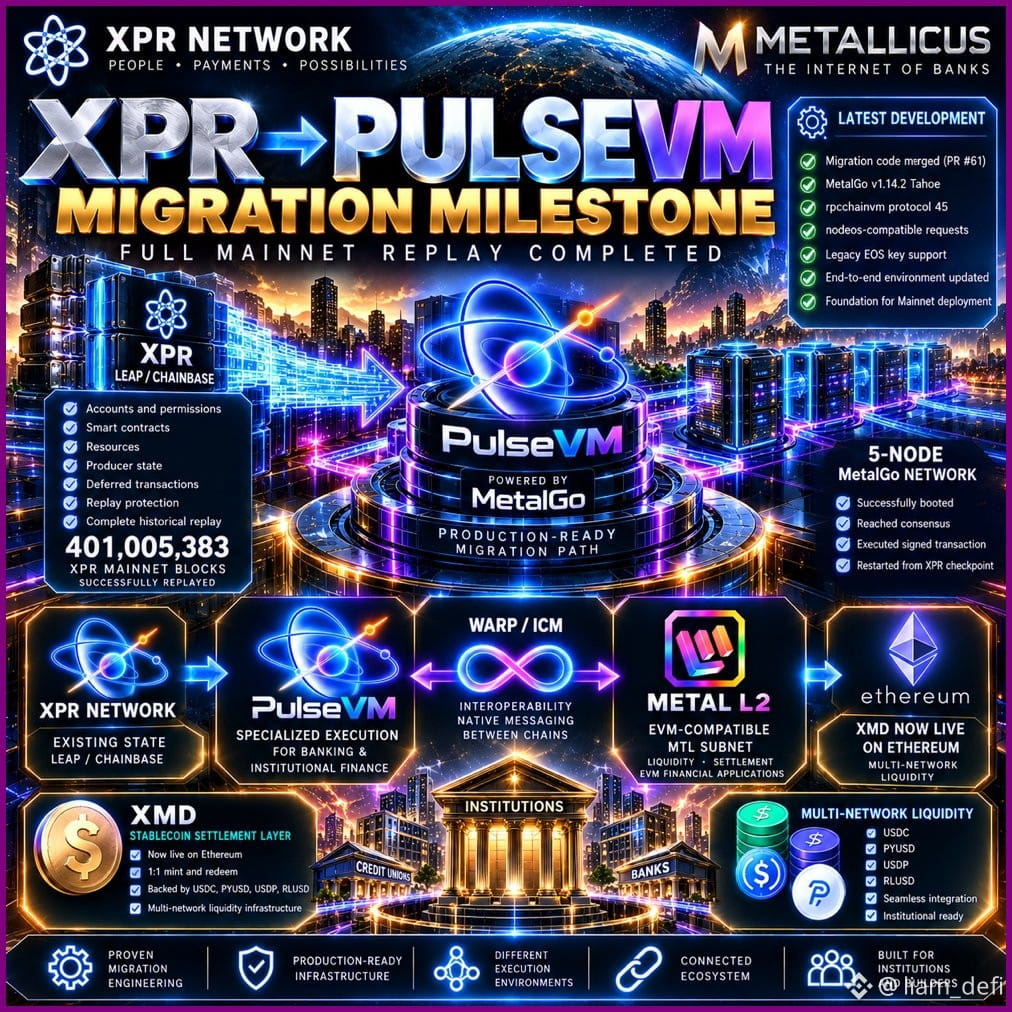
$XPR → PulseVM migration just hit different
401M+ mainnet blocks replayed. Code merged. 5-node MetalGo network booted, converged, and restarted from checkpoint.
This isn't vaporware. This is live engineering.
The stack:
$XPR Network → PulseVM
PulseVM ↔ Warp/ICM ↔ Metal L2
Metal L2 → EVM liquidity
XMD → cross-chain stable infra
Multiple execution layers. Unified settlement. Built for institutional-grade rails.
Internet of Banks isn't a meme anymore — it's infrastructure going live.
Most people still sleeping on modular finance plays like this. Won't last long.
$XPR → PulseVM migration just hit different
401M+ mainnet blocks replayed. Code merged. 5-node MetalGo network booted, converged, and restarted from checkpoint.
This isn't vaporware. This is live engineering.
The stack:
$XPR Network → PulseVM
PulseVM ↔ Warp/ICM ↔ Metal L2
Metal L2 → EVM liquidity
XMD → cross-chain stable infra
Multiple execution layers. Unified settlement. Built for institutional-grade rails.
Internet of Banks isn't a meme anymore — it's infrastructure going live.
Most people still sleeping on modular finance plays like this. Won't last long.
401M+ mainnet blocks replayed. Code merged. 5-node MetalGo network booted, converged, and restarted from checkpoint.
This isn't vaporware. This is live engineering.
The stack:
$XPR Network → PulseVM
PulseVM ↔ Warp/ICM ↔ Metal L2
Metal L2 → EVM liquidity
XMD → cross-chain stable infra
Multiple execution layers. Unified settlement. Built for institutional-grade rails.
Internet of Banks isn't a meme anymore — it's infrastructure going live.
Most people still sleeping on modular finance plays like this. Won't last long.
2
·
--
Most people stay broke because they can't resist instant dopamine hits from buying shit they don't need
Buying the new iPhone > stacking $BTC for financial freedom
One gives you a quick high today, the other sets you up for generational wealth tomorrow
The problem? Our monkey brains are wired for immediate rewards, not delayed gratification
That's why 90% of people will never make it in crypto or any asset class that requires patience
The game rewards those who can think 5 years ahead while everyone else chases the next shiny object
Most people stay broke because they can't resist instant dopamine hits from buying shit they don't need
Buying the new iPhone > stacking $BTC for financial freedom
One gives you a quick high today, the other sets you up for generational wealth tomorrow
The problem? Our monkey brains are wired for immediate rewards, not delayed gratification
That's why 90% of people will never make it in crypto or any asset class that requires patience
The game rewards those who can think 5 years ahead while everyone else chases the next shiny object
Buying the new iPhone > stacking $BTC for financial freedom
One gives you a quick high today, the other sets you up for generational wealth tomorrow
The problem? Our monkey brains are wired for immediate rewards, not delayed gratification
That's why 90% of people will never make it in crypto or any asset class that requires patience
The game rewards those who can think 5 years ahead while everyone else chases the next shiny object
·
--
The 4th quarter just started.
$BTC proved it works.
$ETH opened the lab.
The bear wiped the board clean.
Infra got built in silence.
Now? Adoption phase.
Stablecoins going mainstream. Real-world assets getting tokenized. Banks exploring blockchain rails. Institutional DeFi isn't a meme anymore.
The question shifted from "will blockchain work?" to "who controls the infrastructure?"
That's where @MetallicusTDBN enters the frame.
We're not in garbage time. We're at the start of the game-winning drive.
Experiment over. Execution begins.
The 4th quarter just started.
$BTC proved it works.
$ETH opened the lab.
The bear wiped the board clean.
Infra got built in silence.
Now? Adoption phase.
Stablecoins going mainstream. Real-world assets getting tokenized. Banks exploring blockchain rails. Institutional DeFi isn't a meme anymore.
The question shifted from "will blockchain work?" to "who controls the infrastructure?"
That's where @MetallicusTDBN enters the frame.
We're not in garbage time. We're at the start of the game-winning drive.
Experiment over. Execution begins.
$BTC proved it works.
$ETH opened the lab.
The bear wiped the board clean.
Infra got built in silence.
Now? Adoption phase.
Stablecoins going mainstream. Real-world assets getting tokenized. Banks exploring blockchain rails. Institutional DeFi isn't a meme anymore.
The question shifted from "will blockchain work?" to "who controls the infrastructure?"
That's where @MetallicusTDBN enters the frame.
We're not in garbage time. We're at the start of the game-winning drive.
Experiment over. Execution begins.

·
--
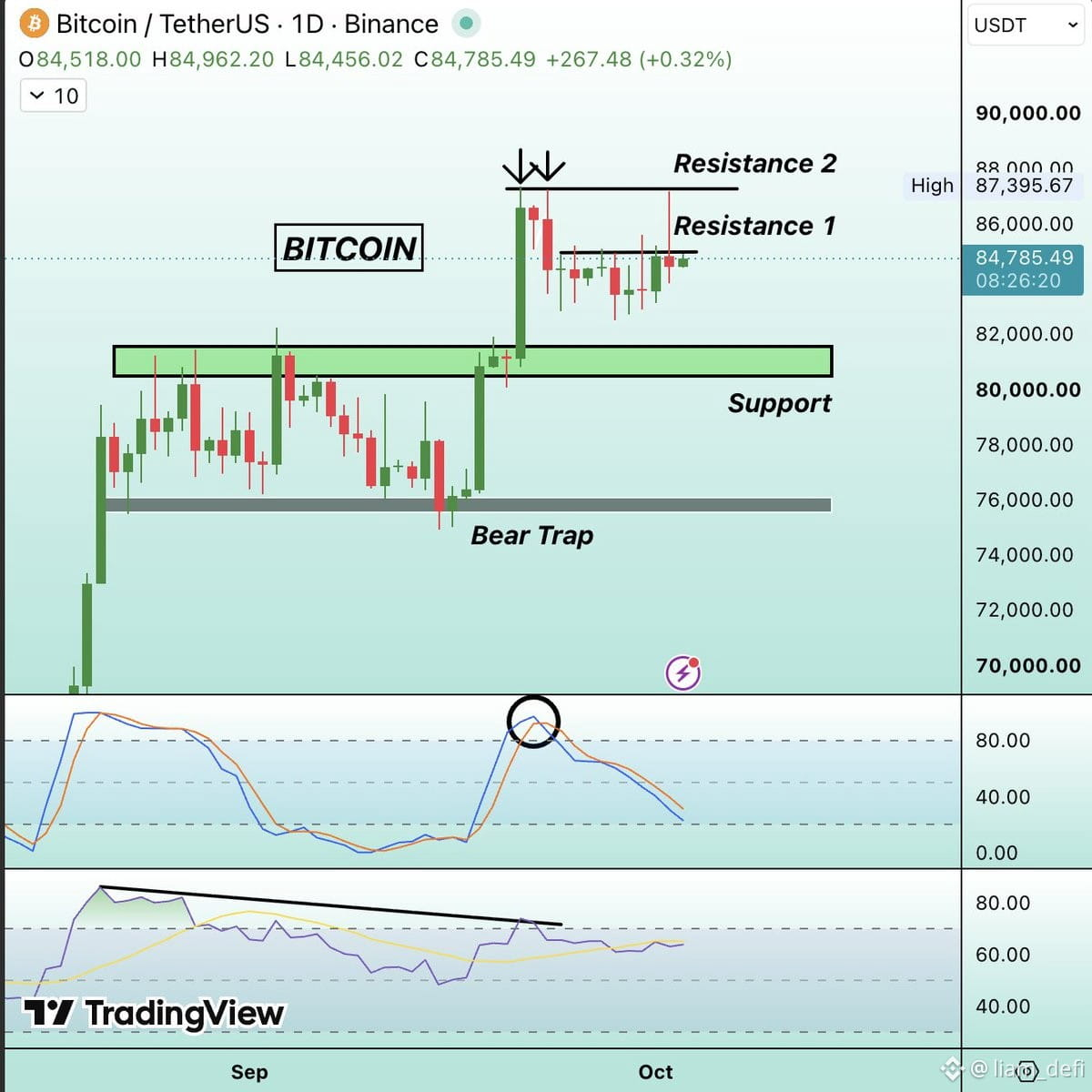
$BTC stuck under $87k after rejection. Two outcomes, no middle ground.
Key levels:
• Resistance: $87k — break it and we're back to $90k
• Support 1: $81k — held the last dip
• Support 2: $75.5k — lines up with daily MA50 around $78.5k
Indicators cooling but not broken yet:
• MACD bearish crossover just printed
• Stoch RSI rolling over
• RSI at 64, still above 60 but divergence is bearish
Two paths:
1. Range play — $81k holds, $87k caps, MACD + Stoch RSI flip back up before any real move
2. Correction — lose $81k on daily close and we're headed to $75.5k, then MA50
No breakout. No breakdown. Just waiting on the daily close to pick a side.
$BTC stuck under $87k after rejection. Two outcomes, no middle ground.
Key levels:
• Resistance: $87k — break it and we're back to $90k
• Support 1: $81k — held the last dip
• Support 2: $75.5k — lines up with daily MA50 around $78.5k
Indicators cooling but not broken yet:
• MACD bearish crossover just printed
• Stoch RSI rolling over
• RSI at 64, still above 60 but divergence is bearish
Two paths:
1. Range play — $81k holds, $87k caps, MACD + Stoch RSI flip back up before any real move
2. Correction — lose $81k on daily close and we're headed to $75.5k, then MA50
No breakout. No breakdown. Just waiting on the daily close to pick a side.
Key levels:
• Resistance: $87k — break it and we're back to $90k
• Support 1: $81k — held the last dip
• Support 2: $75.5k — lines up with daily MA50 around $78.5k
Indicators cooling but not broken yet:
• MACD bearish crossover just printed
• Stoch RSI rolling over
• RSI at 64, still above 60 but divergence is bearish
Two paths:
1. Range play — $81k holds, $87k caps, MACD + Stoch RSI flip back up before any real move
2. Correction — lose $81k on daily close and we're headed to $75.5k, then MA50
No breakout. No breakdown. Just waiting on the daily close to pick a side.
29
·
--
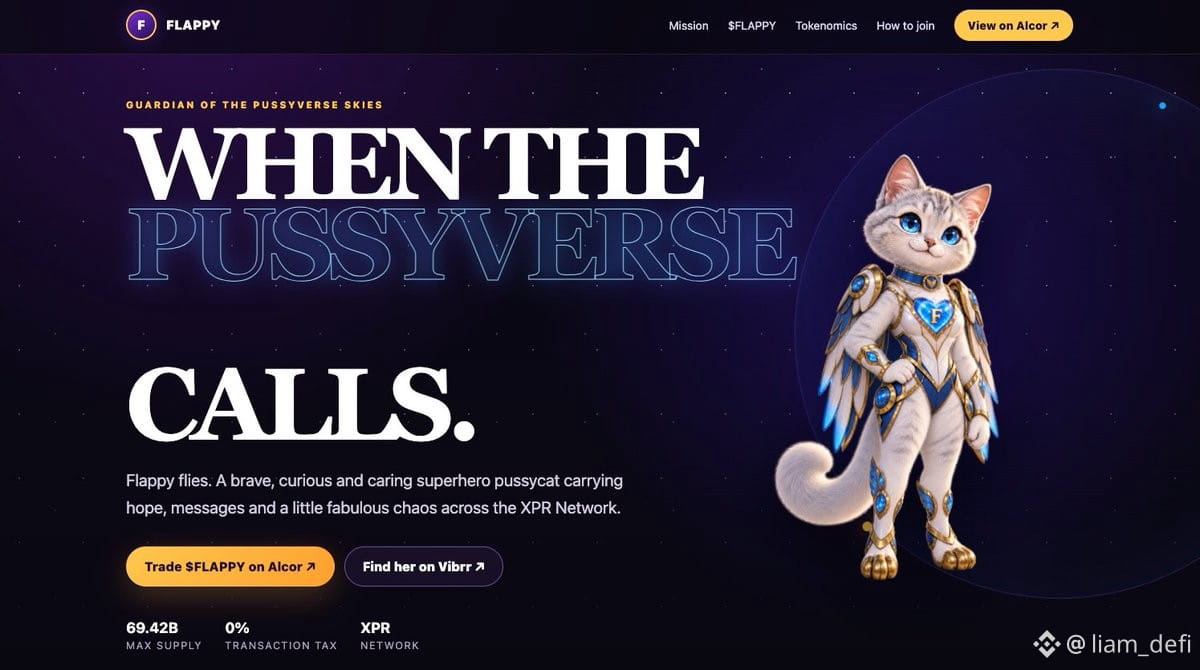
Flappy the flying cat is getting her own corner in the Pussyverse 🐱💙
$FLAPPY launching on XPR Network soon
Early positions available on Alcor & Vibrr before the degen pile-in
Another meme play on XPR infrastructure — ape responsibly or stay poor watching from the sidelines
NFA but the cat memes print when you're early
Flappy the flying cat is getting her own corner in the Pussyverse 🐱💙
$FLAPPY launching on XPR Network soon
Early positions available on Alcor & Vibrr before the degen pile-in
Another meme play on XPR infrastructure — ape responsibly or stay poor watching from the sidelines
NFA but the cat memes print when you're early
$FLAPPY launching on XPR Network soon
Early positions available on Alcor & Vibrr before the degen pile-in
Another meme play on XPR infrastructure — ape responsibly or stay poor watching from the sidelines
NFA but the cat memes print when you're early
28
·
--
Congress might actually let banks and credit unions touch crypto properly:
• Hold digital assets
• Issue stablecoins
• Run blockchain infra
• Offer custody services
Meanwhile $XPR Metallicus has been building the exact stack for years:
💵 Metal Dollar stablecoin
⚡ Metal Blockchain + PulseVM
🔐 Digital identity layer
💳 Metal Pay custody + wallets
🌐 Metal X institutional DeFi
They didn't pivot when DC woke up to stablecoins. They've been shipping banking-grade rails while everyone else was still arguing about regulation.
If TradFi gets green-lit, the infra play is already live. That's the positioning edge.
Congress might actually let banks and credit unions touch crypto properly:
• Hold digital assets
• Issue stablecoins
• Run blockchain infra
• Offer custody services
Meanwhile $XPR Metallicus has been building the exact stack for years:
💵 Metal Dollar stablecoin
⚡ Metal Blockchain + PulseVM
🔐 Digital identity layer
💳 Metal Pay custody + wallets
🌐 Metal X institutional DeFi
They didn't pivot when DC woke up to stablecoins. They've been shipping banking-grade rails while everyone else was still arguing about regulation.
If TradFi gets green-lit, the infra play is already live. That's the positioning edge.
• Hold digital assets
• Issue stablecoins
• Run blockchain infra
• Offer custody services
Meanwhile $XPR Metallicus has been building the exact stack for years:
💵 Metal Dollar stablecoin
⚡ Metal Blockchain + PulseVM
🔐 Digital identity layer
💳 Metal Pay custody + wallets
🌐 Metal X institutional DeFi
They didn't pivot when DC woke up to stablecoins. They've been shipping banking-grade rails while everyone else was still arguing about regulation.
If TradFi gets green-lit, the infra play is already live. That's the positioning edge.

41
·
--
PulseVM just shipped a massive compatibility upgrade that most people are sleeping on.
Paul Grey's PR #103 merged — and this isn't just code housekeeping. This is how you execute an infrastructure migration without nuking your entire ecosystem.
What actually changed:
$XPR Network is moving to PulseVM under the hood, but existing tooling stays intact. Same nodeos requests. Same eosjs. WharfKit works. cleos/keosd works. Legacy keys supported.
Translation: Devs don't have to rewrite their apps. Users don't notice anything. The engine swaps out while everything keeps running.
Meanwhile, Paul's also been locking down XPR Agents — tighter transfer limits, stricter confirmation flows, stronger guardrails on what autonomous agents can actually do.
Two parallel tracks converging:
⚛️ Same accounts, same keys, same UX
🤖 Safer AI agents with real constraints
🚀 Entirely new infrastructure layer
This is how you upgrade a blockchain without forcing a hard reset on the ecosystem. Most chains would've just forked and told everyone to migrate manually.
$XPR quietly building the bridge while everyone else is still arguing about the blueprint.
PulseVM just shipped a massive compatibility upgrade that most people are sleeping on.
Paul Grey's PR #103 merged — and this isn't just code housekeeping. This is how you execute an infrastructure migration without nuking your entire ecosystem.
What actually changed:
$XPR Network is moving to PulseVM under the hood, but existing tooling stays intact. Same nodeos requests. Same eosjs. WharfKit works. cleos/keosd works. Legacy keys supported.
Translation: Devs don't have to rewrite their apps. Users don't notice anything. The engine swaps out while everything keeps running.
Meanwhile, Paul's also been locking down XPR Agents — tighter transfer limits, stricter confirmation flows, stronger guardrails on what autonomous agents can actually do.
Two parallel tracks converging:
⚛️ Same accounts, same keys, same UX
🤖 Safer AI agents with real constraints
🚀 Entirely new infrastructure layer
This is how you upgrade a blockchain without forcing a hard reset on the ecosystem. Most chains would've just forked and told everyone to migrate manually.
$XPR quietly building the bridge while everyone else is still arguing about the blueprint.
Paul Grey's PR #103 merged — and this isn't just code housekeeping. This is how you execute an infrastructure migration without nuking your entire ecosystem.
What actually changed:
$XPR Network is moving to PulseVM under the hood, but existing tooling stays intact. Same nodeos requests. Same eosjs. WharfKit works. cleos/keosd works. Legacy keys supported.
Translation: Devs don't have to rewrite their apps. Users don't notice anything. The engine swaps out while everything keeps running.
Meanwhile, Paul's also been locking down XPR Agents — tighter transfer limits, stricter confirmation flows, stronger guardrails on what autonomous agents can actually do.
Two parallel tracks converging:
⚛️ Same accounts, same keys, same UX
🤖 Safer AI agents with real constraints
🚀 Entirely new infrastructure layer
This is how you upgrade a blockchain without forcing a hard reset on the ecosystem. Most chains would've just forked and told everyone to migrate manually.
$XPR quietly building the bridge while everyone else is still arguing about the blueprint.
60
·
--
Metal Blockchain just went full degen mode.
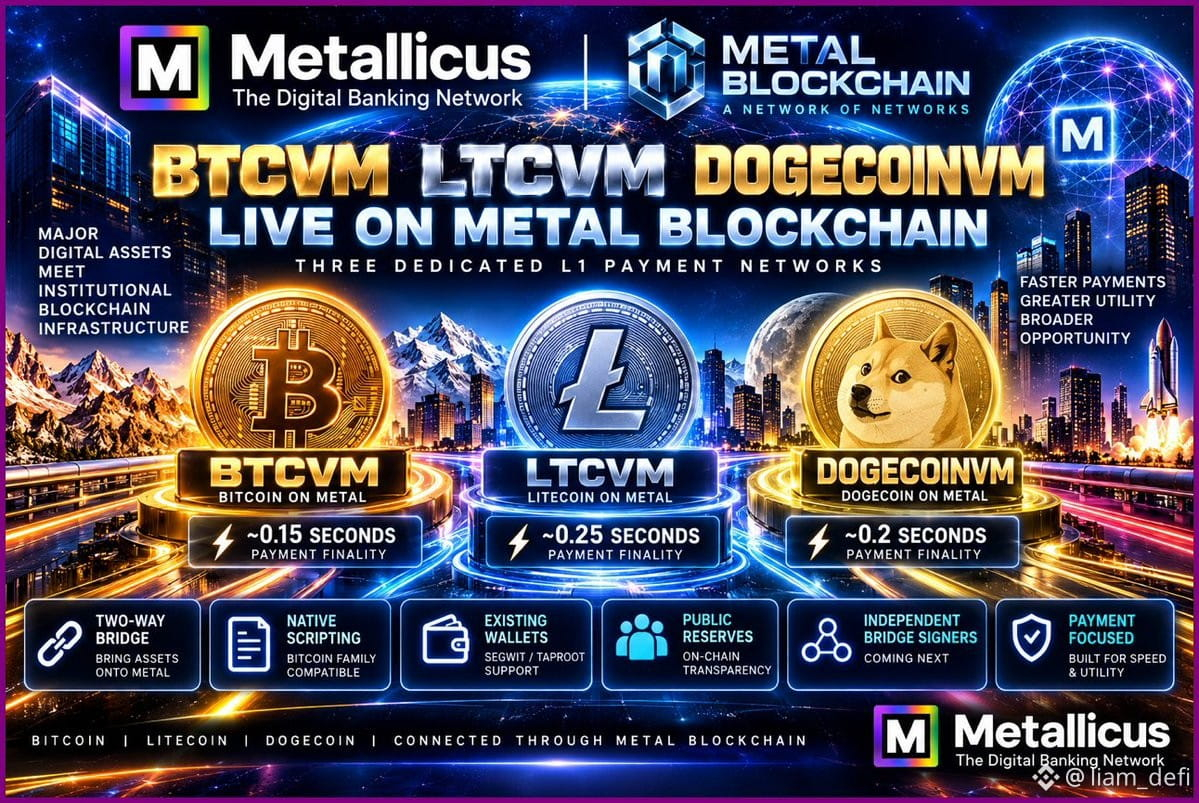
BTCVM, LTCVM, and DogecoinVM are live in beta. Three dedicated L1 payment networks running on Metal.
Finality numbers are wild:
$BTC VM: ~0.15 sec
$LTC VM: ~0.25 sec
$DOGE VM: ~0.20 sec
This isn't just wrapping tokens. These are dedicated Bitcoin-family payment networks with actual infrastructure:
Two-way bridges
Sub-second finality
Your existing wallets work
Public reserves (transparency play)
Independent bridge signers coming
The play here? Network-of-networks architecture. Connecting $BTC, $LTC, and $DOGE under one roof without sacrificing their native properties.
Metallicus is quietly building the Internet of Blockchains while everyone's distracted by the next memecoin pump.
This could be the infrastructure layer that actually makes cross-chain payments work without the usual bridge drama.
Metal Blockchain just went full degen mode.
BTCVM, LTCVM, and DogecoinVM are live in beta. Three dedicated L1 payment networks running on Metal.
Finality numbers are wild:
$BTC VM: ~0.15 sec
$LTC VM: ~0.25 sec
$DOGE VM: ~0.20 sec
This isn't just wrapping tokens. These are dedicated Bitcoin-family payment networks with actual infrastructure:
Two-way bridges
Sub-second finality
Your existing wallets work
Public reserves (transparency play)
Independent bridge signers coming
The play here? Network-of-networks architecture. Connecting $BTC, $LTC, and $DOGE under one roof without sacrificing their native properties.
Metallicus is quietly building the Internet of Blockchains while everyone's distracted by the next memecoin pump.
This could be the infrastructure layer that actually makes cross-chain payments work without the usual bridge drama.
BTCVM, LTCVM, and DogecoinVM are live in beta. Three dedicated L1 payment networks running on Metal.
Finality numbers are wild:
$BTC VM: ~0.15 sec
$LTC VM: ~0.25 sec
$DOGE VM: ~0.20 sec
This isn't just wrapping tokens. These are dedicated Bitcoin-family payment networks with actual infrastructure:
Two-way bridges
Sub-second finality
Your existing wallets work
Public reserves (transparency play)
Independent bridge signers coming
The play here? Network-of-networks architecture. Connecting $BTC, $LTC, and $DOGE under one roof without sacrificing their native properties.
Metallicus is quietly building the Internet of Blockchains while everyone's distracted by the next memecoin pump.
This could be the infrastructure layer that actually makes cross-chain payments work without the usual bridge drama.
72
·
--
While everyone's talking, we're launching.
$FLAPPY just hit Alcor and Vibrr with first candles live. No hype threads, no 50-tweet countdowns—just wings up and moving.
Flappy's the superhero cat from the Pussyverse, now live on XPR Network. Community's already stacking, liquidity's forming, and the vibe's clean.
If you're early to weird cat metas that actually ship, this might be your entry. Alcor and Vibrr both live now.
Not financial advice. Just a cat with wings doing cat things on-chain.
While everyone's talking, we're launching.
$FLAPPY just hit Alcor and Vibrr with first candles live. No hype threads, no 50-tweet countdowns—just wings up and moving.
Flappy's the superhero cat from the Pussyverse, now live on XPR Network. Community's already stacking, liquidity's forming, and the vibe's clean.
If you're early to weird cat metas that actually ship, this might be your entry. Alcor and Vibrr both live now.
Not financial advice. Just a cat with wings doing cat things on-chain.
$FLAPPY just hit Alcor and Vibrr with first candles live. No hype threads, no 50-tweet countdowns—just wings up and moving.
Flappy's the superhero cat from the Pussyverse, now live on XPR Network. Community's already stacking, liquidity's forming, and the vibe's clean.
If you're early to weird cat metas that actually ship, this might be your entry. Alcor and Vibrr both live now.
Not financial advice. Just a cat with wings doing cat things on-chain.

33
·
--
Hard drive stocks getting wrecked today.
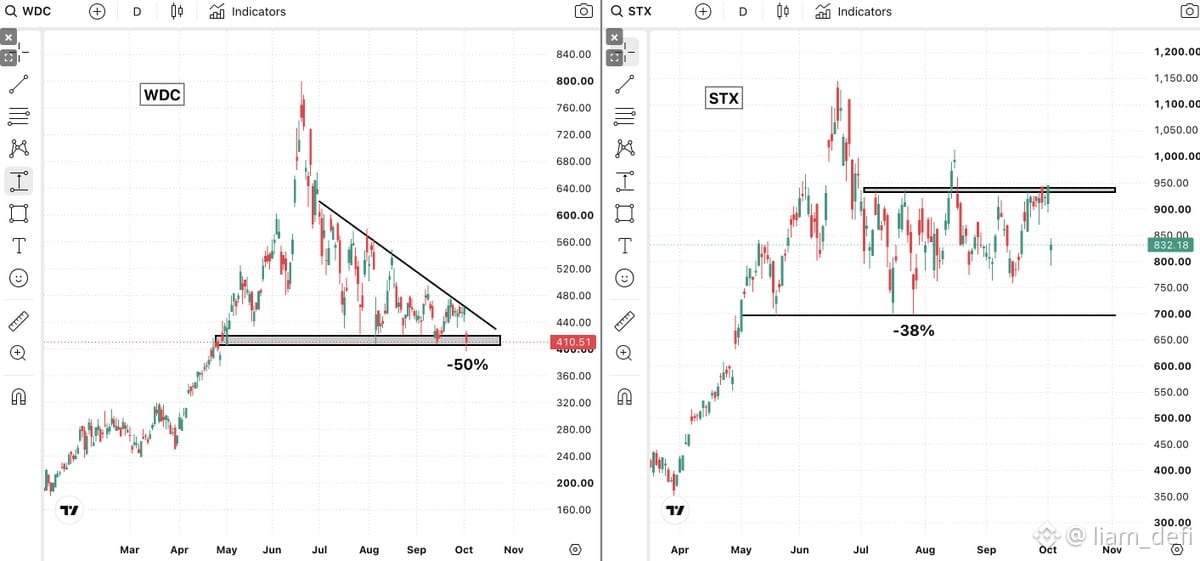
$WDC down 10%
$STX down 11%
Market's pricing in fears that AI data center buildout is cooling off. If hyperscalers slow their storage orders, these legacy players are first to feel it.
Watch for confirmation in next earnings calls. If capex guidance drops, this isn't a dip—it's a trend shift.
Hard drive stocks getting wrecked today.
$WDC down 10%
$STX down 11%
Market's pricing in fears that AI data center buildout is cooling off. If hyperscalers slow their storage orders, these legacy players are first to feel it.
Watch for confirmation in next earnings calls. If capex guidance drops, this isn't a dip—it's a trend shift.
$WDC down 10%
$STX down 11%
Market's pricing in fears that AI data center buildout is cooling off. If hyperscalers slow their storage orders, these legacy players are first to feel it.
Watch for confirmation in next earnings calls. If capex guidance drops, this isn't a dip—it's a trend shift.
79
·
--
24 hrs in and $FLAPPY just hit Alcor 🚀
No fluff. No waiting. Just a flying cat with wings defending the Pussyverse skies.
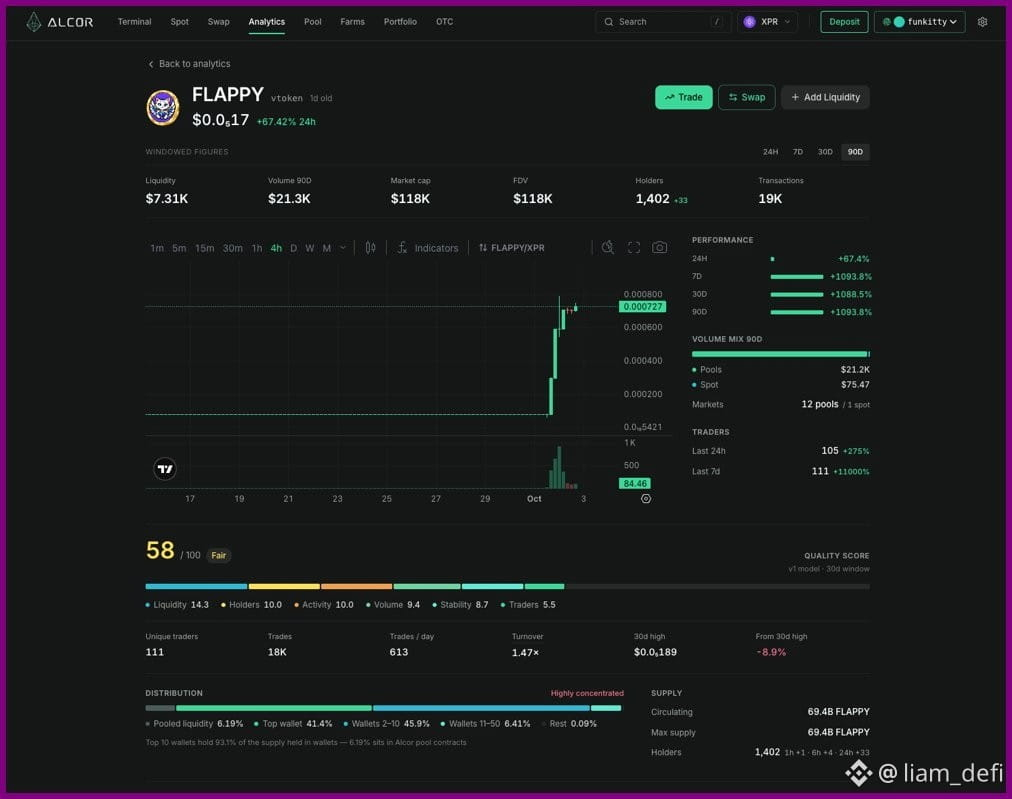
Day 1 metrics looking solid. Community's locked in. Momentum's real.
If you're not watching $FLAPPY on XPR Network yet, you're already late.
Moon? Nah. We're aiming past that. 🌚
#FLAPPY #ProtonPussy #XPRNetwork #Alcor
24 hrs in and $FLAPPY just hit Alcor 🚀
No fluff. No waiting. Just a flying cat with wings defending the Pussyverse skies.
Day 1 metrics looking solid. Community's locked in. Momentum's real.
If you're not watching $FLAPPY on XPR Network yet, you're already late.
Moon? Nah. We're aiming past that. 🌚
#FLAPPY #ProtonPussy #XPRNetwork #Alcor
No fluff. No waiting. Just a flying cat with wings defending the Pussyverse skies.
Day 1 metrics looking solid. Community's locked in. Momentum's real.
If you're not watching $FLAPPY on XPR Network yet, you're already late.
Moon? Nah. We're aiming past that. 🌚
#FLAPPY #ProtonPussy #XPRNetwork #Alcor
54
·
--
⚛️ PULSEVM MIGRATION UPDATE — REAL INFRA PROGRESS
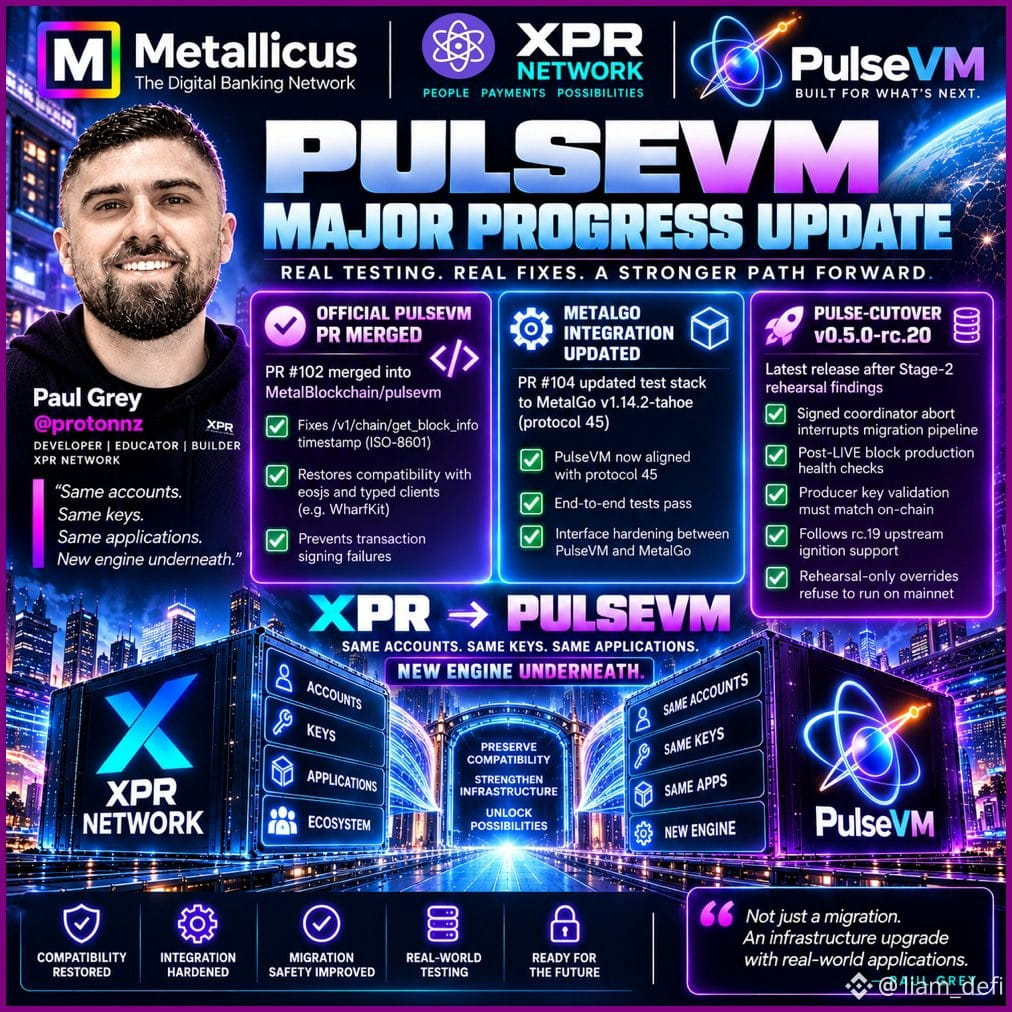
Paul Grey just pushed another critical step forward on $XPR → PulseVM migration. This isn't vaporware anymore — code is merging upstream.
🔥 What shipped:
• PR #102 merged into official PulseVM codebase
• Fixes /v1/chain/get_block_info timestamp compat (critical for existing XPR tooling + tx signing)
• MetalGo integration now testing on v1.14.2-tahoe / protocol 45
• pulse-cutover hits v0.5.0-rc.20 with hardened safeguards:
- Signed coordinator aborts
- Post-LIVE block production health checks
- On-chain producer key validation
- Upstream PulseVM migration path support
- Rehearsal-only overrides (mainnet-safe)
Why this matters:
Rehearsals are exposing real edge cases. Each failure = stronger code. The vision stays wild:
Same accounts ✅
Same keys ✅
Same apps ✅
New engine underneath ⚛️
⚠️ Disclaimer: pulse-cutover is a community-built PROPOSED migration. No mainnet date confirmed. But rehearsal lessons are now feeding back into official PulseVM infra.
This is how serious migration work looks. Not hype. Just repeated stress-testing until it's bulletproof.
$XPR holders — you might want to pay attention. Infrastructure upgrades like this don't happen often.
#XPRNetwork #PulseVM #MetalBlockchain
⚛️ PULSEVM MIGRATION UPDATE — REAL INFRA PROGRESS
Paul Grey just pushed another critical step forward on $XPR → PulseVM migration. This isn't vaporware anymore — code is merging upstream.
🔥 What shipped:
• PR #102 merged into official PulseVM codebase
• Fixes /v1/chain/get_block_info timestamp compat (critical for existing XPR tooling + tx signing)
• MetalGo integration now testing on v1.14.2-tahoe / protocol 45
• pulse-cutover hits v0.5.0-rc.20 with hardened safeguards:
- Signed coordinator aborts
- Post-LIVE block production health checks
- On-chain producer key validation
- Upstream PulseVM migration path support
- Rehearsal-only overrides (mainnet-safe)
Why this matters:
Rehearsals are exposing real edge cases. Each failure = stronger code. The vision stays wild:
Same accounts ✅
Same keys ✅
Same apps ✅
New engine underneath ⚛️
⚠️ Disclaimer: pulse-cutover is a community-built PROPOSED migration. No mainnet date confirmed. But rehearsal lessons are now feeding back into official PulseVM infra.
This is how serious migration work looks. Not hype. Just repeated stress-testing until it's bulletproof.
$XPR holders — you might want to pay attention. Infrastructure upgrades like this don't happen often.
#XPRNetwork #PulseVM #MetalBlockchain
Paul Grey just pushed another critical step forward on $XPR → PulseVM migration. This isn't vaporware anymore — code is merging upstream.
🔥 What shipped:
• PR #102 merged into official PulseVM codebase
• Fixes /v1/chain/get_block_info timestamp compat (critical for existing XPR tooling + tx signing)
• MetalGo integration now testing on v1.14.2-tahoe / protocol 45
• pulse-cutover hits v0.5.0-rc.20 with hardened safeguards:
- Signed coordinator aborts
- Post-LIVE block production health checks
- On-chain producer key validation
- Upstream PulseVM migration path support
- Rehearsal-only overrides (mainnet-safe)
Why this matters:
Rehearsals are exposing real edge cases. Each failure = stronger code. The vision stays wild:
Same accounts ✅
Same keys ✅
Same apps ✅
New engine underneath ⚛️
⚠️ Disclaimer: pulse-cutover is a community-built PROPOSED migration. No mainnet date confirmed. But rehearsal lessons are now feeding back into official PulseVM infra.
This is how serious migration work looks. Not hype. Just repeated stress-testing until it's bulletproof.
$XPR holders — you might want to pay attention. Infrastructure upgrades like this don't happen often.
#XPRNetwork #PulseVM #MetalBlockchain
66
·
--
Fiserv just flipped the switch on their Digital Asset Platform with real banks.
First live use case: Roughrider Coin — a dollar-backed stablecoin from Bank of North Dakota for interbank settlement.
What matters:
90+ banks and credit unions can plug in through existing Fiserv rails. No rip-and-replace. No forcing TradFi to LARP as a crypto startup.
Blockchain is being woven INTO the legacy system.
The stack:
Bank of North Dakota → Fiserv infra → VersaBank + Fireblocks → $SOL
Different from Metallicus' approach, but same endgame:
Stablecoins. Tokenized deposits. 24/7 settlement. Programmable money layers on top of existing cores.
This is why we're tracking Metallicus, TDBN, PulseVM, DaLand, Coin2Core, Corelation.
Blockchain isn't replacing banking. It's becoming the plumbing.
Fiserv just flipped the switch on their Digital Asset Platform with real banks.
First live use case: Roughrider Coin — a dollar-backed stablecoin from Bank of North Dakota for interbank settlement.
What matters:
90+ banks and credit unions can plug in through existing Fiserv rails. No rip-and-replace. No forcing TradFi to LARP as a crypto startup.
Blockchain is being woven INTO the legacy system.
The stack:
Bank of North Dakota → Fiserv infra → VersaBank + Fireblocks → $SOL
Different from Metallicus' approach, but same endgame:
Stablecoins. Tokenized deposits. 24/7 settlement. Programmable money layers on top of existing cores.
This is why we're tracking Metallicus, TDBN, PulseVM, DaLand, Coin2Core, Corelation.
Blockchain isn't replacing banking. It's becoming the plumbing.
First live use case: Roughrider Coin — a dollar-backed stablecoin from Bank of North Dakota for interbank settlement.
What matters:
90+ banks and credit unions can plug in through existing Fiserv rails. No rip-and-replace. No forcing TradFi to LARP as a crypto startup.
Blockchain is being woven INTO the legacy system.
The stack:
Bank of North Dakota → Fiserv infra → VersaBank + Fireblocks → $SOL
Different from Metallicus' approach, but same endgame:
Stablecoins. Tokenized deposits. 24/7 settlement. Programmable money layers on top of existing cores.
This is why we're tracking Metallicus, TDBN, PulseVM, DaLand, Coin2Core, Corelation.
Blockchain isn't replacing banking. It's becoming the plumbing.
·
--
Metallicus isn't just shipping products anymore—they're building the rails.
What started as scattered crypto tools is morphing into a full financial infrastructure stack:
🏦 Tokenized deposits
⛓️ Institution-owned L1s
⚡ Regulated real-time settlement
💵 Digital dollars
👛 Wallets
🪪 Identity layers
🤖 M2M payments (the endgame)
PulseVM + $METAL Blockchain + DaLand/Coin2Core + legacy financial cores = the pieces are connecting.
This isn't just another L1 play. It's the shift from "product" to "infrastructure"—and that changes the entire thesis.
If they execute, Metallicus could own the pipes that institutions actually need to move money on-chain.
Watch this one closely.
Metallicus isn't just shipping products anymore—they're building the rails.
What started as scattered crypto tools is morphing into a full financial infrastructure stack:
🏦 Tokenized deposits
⛓️ Institution-owned L1s
⚡ Regulated real-time settlement
💵 Digital dollars
👛 Wallets
🪪 Identity layers
🤖 M2M payments (the endgame)
PulseVM + $METAL Blockchain + DaLand/Coin2Core + legacy financial cores = the pieces are connecting.
This isn't just another L1 play. It's the shift from "product" to "infrastructure"—and that changes the entire thesis.
If they execute, Metallicus could own the pipes that institutions actually need to move money on-chain.
Watch this one closely.
What started as scattered crypto tools is morphing into a full financial infrastructure stack:
🏦 Tokenized deposits
⛓️ Institution-owned L1s
⚡ Regulated real-time settlement
💵 Digital dollars
👛 Wallets
🪪 Identity layers
🤖 M2M payments (the endgame)
PulseVM + $METAL Blockchain + DaLand/Coin2Core + legacy financial cores = the pieces are connecting.
This isn't just another L1 play. It's the shift from "product" to "infrastructure"—and that changes the entire thesis.
If they execute, Metallicus could own the pipes that institutions actually need to move money on-chain.
Watch this one closely.
·
--
Fed Vice Chair Jefferson just dropped the classic "we need more time" line.
Translation: They're pausing. Not hiking. Not cutting. Just sitting on their hands.
The Fed isn't ready to commit to anything right now. Expect more data-dependent speak and range-bound chop until they get clarity.
For crypto: neutral to slightly bullish. No immediate rate hikes = liquidity stays stable. But no cuts either = no fresh fuel for risk-on just yet.
Watch the next CPI/jobs data. That's when they'll actually move.
Fed Vice Chair Jefferson just dropped the classic "we need more time" line.
Translation: They're pausing. Not hiking. Not cutting. Just sitting on their hands.
The Fed isn't ready to commit to anything right now. Expect more data-dependent speak and range-bound chop until they get clarity.
For crypto: neutral to slightly bullish. No immediate rate hikes = liquidity stays stable. But no cuts either = no fresh fuel for risk-on just yet.
Watch the next CPI/jobs data. That's when they'll actually move.
Translation: They're pausing. Not hiking. Not cutting. Just sitting on their hands.
The Fed isn't ready to commit to anything right now. Expect more data-dependent speak and range-bound chop until they get clarity.
For crypto: neutral to slightly bullish. No immediate rate hikes = liquidity stays stable. But no cuts either = no fresh fuel for risk-on just yet.
Watch the next CPI/jobs data. That's when they'll actually move.
·
--
$FLAPPY just went live on Alcor Exchange + Vibrr 🚀
The flying cat superhero from the Pussyverse is now tradeable. Part of the Gold Ring family on XPR Network.
If you're into Proton ecosystem memecoins, this is the new degen play. Low liquidity early = high volatility potential.
DYOR but the Pussyverse narrative has been heating up. $FLAPPY might ride that wave.
#FLAPPY #XPRNetwork #Pussyverse
$FLAPPY just went live on Alcor Exchange + Vibrr 🚀
The flying cat superhero from the Pussyverse is now tradeable. Part of the Gold Ring family on XPR Network.
If you're into Proton ecosystem memecoins, this is the new degen play. Low liquidity early = high volatility potential.
DYOR but the Pussyverse narrative has been heating up. $FLAPPY might ride that wave.
#FLAPPY #XPRNetwork #Pussyverse
The flying cat superhero from the Pussyverse is now tradeable. Part of the Gold Ring family on XPR Network.
If you're into Proton ecosystem memecoins, this is the new degen play. Low liquidity early = high volatility potential.
DYOR but the Pussyverse narrative has been heating up. $FLAPPY might ride that wave.
#FLAPPY #XPRNetwork #Pussyverse

21
·
--
🚀 $FLAPPY just went live on Alcor Exchange & Vibrr
The flying cat superhero from the Pussyverse is now tradable. Part of the Gold Ring family on XPR Network.
Contract: solana:9WkJZApKcxUq6YtVC7YrUKRBXLHGDMYbfUkxZ3VaiNX5
Another memecoin play in the cat meta. DYOR on liquidity depth before aping.
🚀 $FLAPPY just went live on Alcor Exchange & Vibrr
The flying cat superhero from the Pussyverse is now tradable. Part of the Gold Ring family on XPR Network.
Contract: solana:9WkJZApKcxUq6YtVC7YrUKRBXLHGDMYbfUkxZ3VaiNX5
Another memecoin play in the cat meta. DYOR on liquidity depth before aping.
The flying cat superhero from the Pussyverse is now tradable. Part of the Gold Ring family on XPR Network.
Contract: solana:9WkJZApKcxUq6YtVC7YrUKRBXLHGDMYbfUkxZ3VaiNX5
Another memecoin play in the cat meta. DYOR on liquidity depth before aping.
4
Log in to explore more content
Join global crypto users on Binance Square
⚡️ Get latest and useful information about crypto.
💬 Trusted by the world’s largest crypto exchange.
👍 Discover real insights from verified creators.
အီးမေးလ် / ဖုန်းနံပါတ်
ရေပန်းစားနေသော ခေါင်းစဉ်များ
BNBSurpasses$790
12,830 views
105 Discussing
$BNB strategic long plan -> FOCUS NOW
BNB has created 2 strong lows after taking out internal liquidity
I'm expecting a move towards swing high $815-$830 and looking for a long on a retest of the green box
#BNBSurpasses$790 #bnb
Ghost Writer
·နှစ်သက်မှု 5 ခု
·6.2k views
ZamaRises15.99%ToIntradayHigh$0.09
8,140 views
86 Discussing
BitcoinSpotETFsDraw$6.34BInflowsInQ3
4,369 views
71 Discussing