
#privacycoins
privacycoins
ကြည့်ရှုမှု 1.4M ကြိမ်
5,396 ဦး ဆွေးနွေးနေသည်
ရေပန်းစားသော
နောက်ဆုံး

ဘာသာပြန်ဆိုချက် ကြည့်မည်
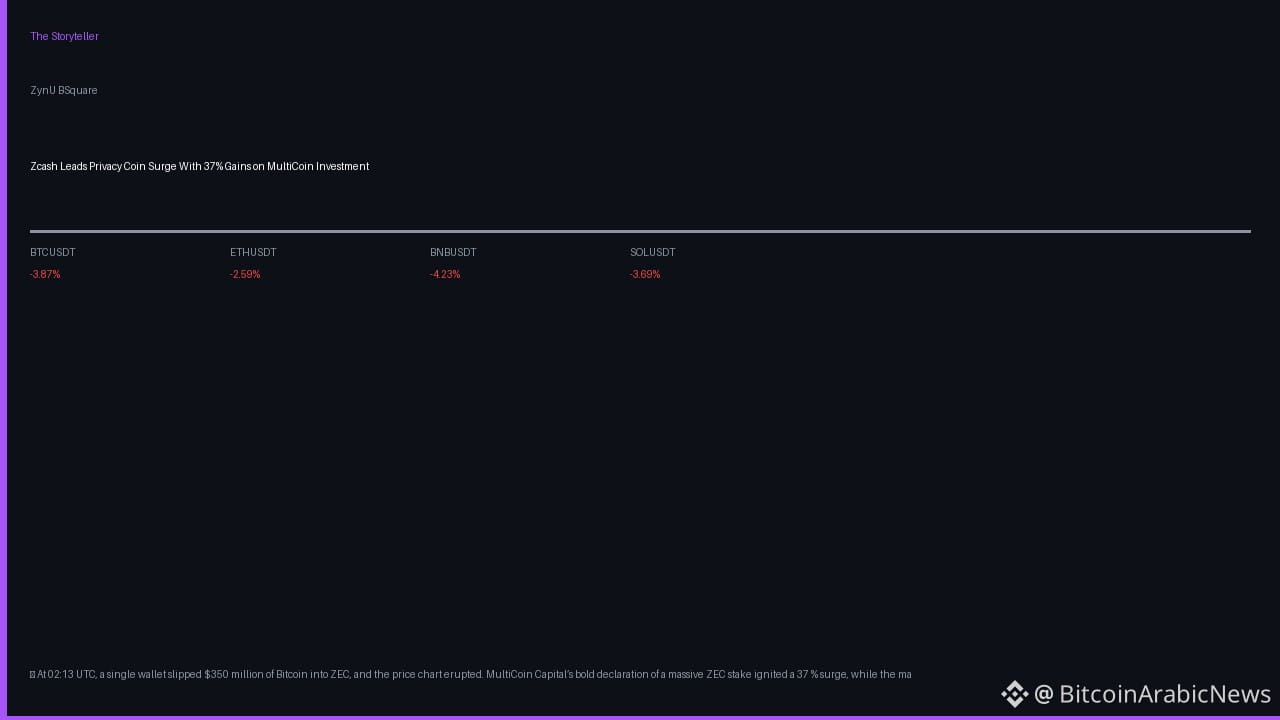
🔥 At 02:13 UTC, a single wallet slipped $350 million of Bitcoin into ZEC, and the price chart erupted.
MultiCoin Capital’s bold declaration of a massive ZEC stake ignited a 37 % surge, while the market cowers under a Fear index of 28/100 and Bitcoin drifts to $71,595 with an RSI of 26.7, painting a picture of panic‑driven buying. Yet futures open interest sits at $7.25 billion, funding +0.0100 %—longs paying to stay bullish—and even Solana’s smart wallets are pivoting toward privacy, underscoring a silent institutional hedge. #ZEC #PrivacyCoins #CryptoFear
💡 The twist? The 37 % jump isn’t a breakout—it’s a flight to safety as regulators tighten wealth‑seizure tools, turning ZEC into the new digital vault for anyone fearing asset freezes.
❓ As fear spikes and futures signal more longs, will privacy coins become the backbone of the next crypto safe haven, or is this just a fleeting panic‑buy?

ဘာသာပြန်ဆိုချက် ကြည့်မည်
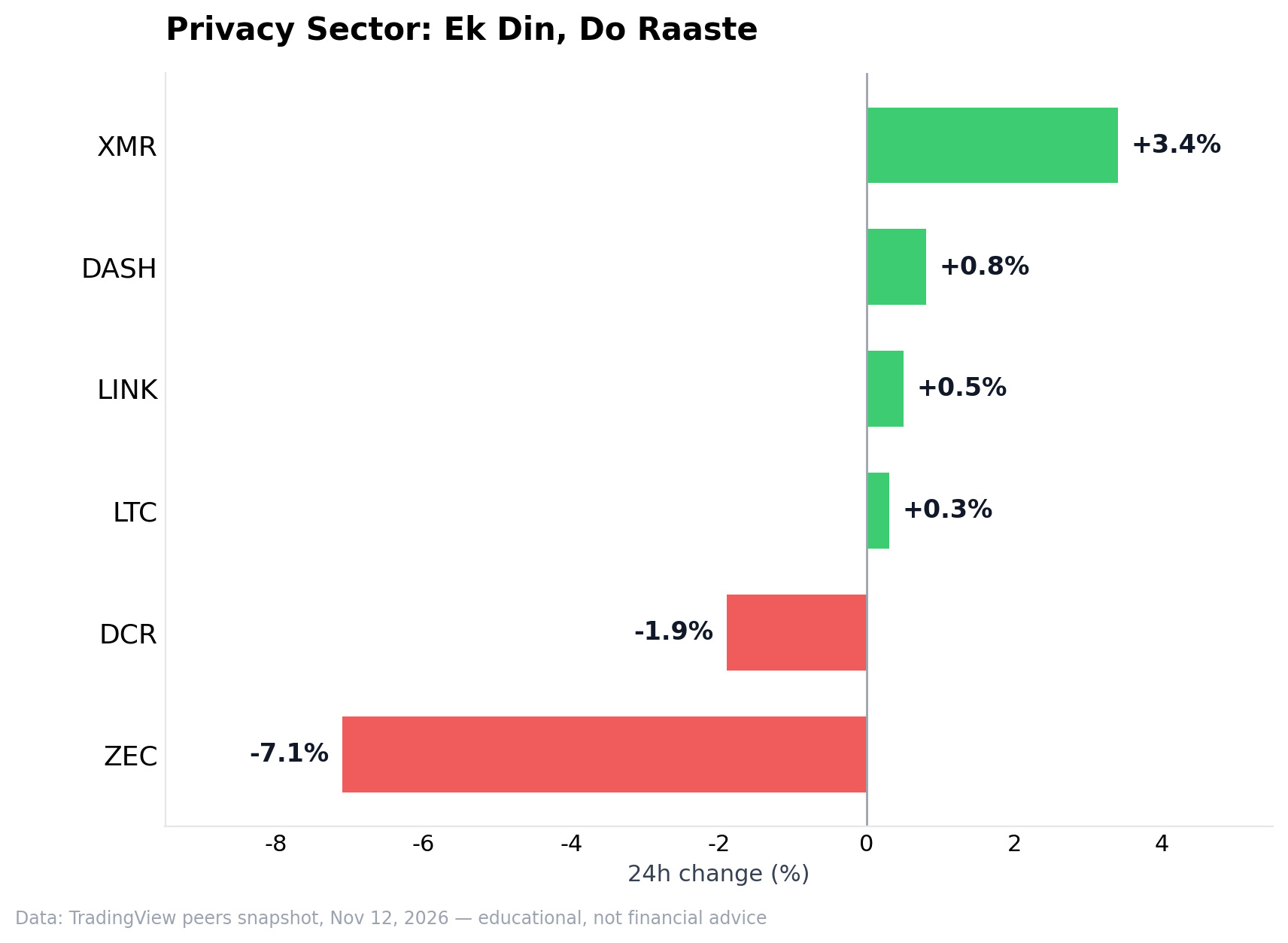
🔀 Ek sector, do raaste: privacy/proof coins ka 24h scoreboard — rotation ka live demo.
1️⃣ ZEC red (correction mode) — jab tak leverage unwind ho raha hai, pressure rehta hai
2️⃣ XMR +3.4% green — privacy bhai apni hi kahani chala raha hai
3️⃣ DASH, LINK, LTC sab thora sa green — sector mein movement sirf ek coin ki nahi
Lesson: jab narrative coin thak jata hai, paisa sibling assets mein rotate hota hai — sector chart dekho, sirf leader nahi. 🧭
Ye observation hai, kisi ki khareedne ya bechne ki salah nahi. 📏
Data: TradingView peers, aaj. 🔍
$ZEC $XMR
#PrivacyCoins #Altcoins #CryptoTrading

·
--
Article
ဘာသာပြန်ဆိုချက် ကြည့်မည်
ZEC under $1,000: -27% in a week — where the fall stopsZEC is sitting under $1,000 for a second straight day — and the upgrade that was supposed to make it faster just watched it lose 27% in a week.
I keep coming back to one uncomfortable fact: the good news arrived, and the market sold it anyway.
Here's what actually happened. $ZEC is $989 on Binance as I write this (08:59 UTC), up about 2% in the last 24 hours — but that bounce started from a $951 low, and yesterday's candle tells the real story: opened $1,045, closed $964, a 7.7% red day that put ZEC under four figures. Five sessions have now taken 21.9% off the price, Finnhub's numbers show, and the 7-day loss is 26.9%.
The upgrade was real. NU7 went live on 5–6 November at block 3,543,405, cutting block times from 75 seconds to 25, sending 60% of fees into a public reserve, and leaving the 21 million supply cap untouched. Shielded supply — the coins actually sitting in private pools — is 4.99 million ZEC, about 29% of all coins. On paper, this was the week Zcash got faster and more sustainable.
Then the money walked out the other door. Grayscale announced a $1 million ecosystem pledge on 10 November, $400,000 of it already paid out, and its ZCSH ETF still bled nearly $30 million in November through the 11th, after about $46 million in October, SoSoValue's figures show. A million-dollar grant cannot plug a thirty-million-dollar exit — that gap is the whole story of this week.
Leverage made it worse. Open interest has collapsed from a roughly $3.1 billion peak to about $2.16 billion, down 28%, and $71 million of positions were liquidated in seven days, almost three-quarters of them longs. The biggest single hour was 16:00 UTC on 10 November, $8.76 million wiped in sixty minutes. Funding is still slightly positive, which tells me longs are still paying to stay in — the flush may not be finished.
So why does this matter beyond ZEC holders? Because ZEC is roughly 60% of the $28 billion privacy-coin sector. When it breaks, the whole privacy trade breaks with it — and the lesson is brutal and simple: an upgrade changes the technology, not the tape. ETF flows and leverage decide the week.
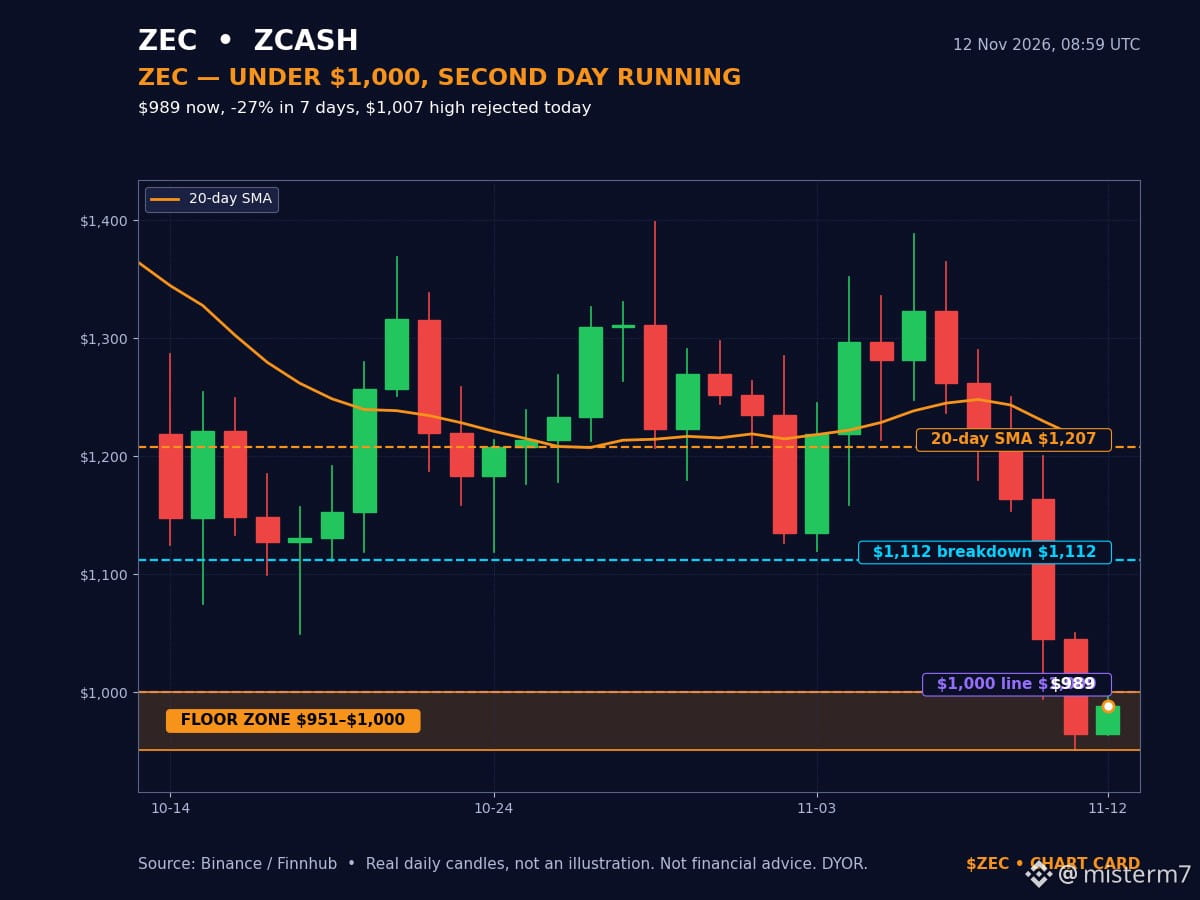
What decides next is the $951–$1,000 band on the chart. $ZEC poked above $1,000 this morning, touched $1,007, and got pushed straight back under — that rejection is the trade right now.
If a daily close reclaims $1,000 and then breaks $1,007, today's high, the liquidation map turns friendly: short-liquidation clusters sit at $1,007–$1,055, and a squeeze through them opens $1,045, the 11 November open, and then $1,100. If $951.21 gives way on a daily close, there is no tested floor underneath in the data I checked — the fall just keeps looking for one, and the next update comes from wherever buyers finally show up.
My view, leaning bearish until proven otherwise: the bounce today is relief, not a reversal. The OI flush says weak hands are gone, which is healthy long-term, but the ETF bleeding and the positive funding say the crowd hasn't capitulated yet. A reclaim of $1,000 on a daily close is what would change my mind — nothing less.
The risk to that view is obvious: one strong $BTC day — Bitcoin is clinging to $73,600, just $90 above its $73,510 floor — and the whole market's mood flips, ZEC included. PPI lands tomorrow, 13 November at 13:30 UTC, and a soft print would do more for ZEC than any upgrade.
$1,000 is the line. $ZEC reclaims it on a daily close, or $951 decides what comes next — which side are you watching, and what's your number?
Not financial advice. DYOR.
#Zcash #PrivacyCoins #CryptoNews
ZEC under $1,000: -27% in a week — where the fall stops
ZEC is sitting under $1,000 for a second straight day — and the upgrade that was supposed to make it faster just watched it lose 27% in a week.
I keep coming back to one uncomfortable fact: the good news arrived, and the market sold it anyway.
Here's what actually happened. $ZEC is $989 on Binance as I write this (08:59 UTC), up about 2% in the last 24 hours — but that bounce started from a $951 low, and yesterday's candle tells the real story: opened $1,045, closed $964, a 7.7% red day that put ZEC under four figures. Five sessions have now taken 21.9% off the price, Finnhub's numbers show, and the 7-day loss is 26.9%.
The upgrade was real. NU7 went live on 5–6 November at block 3,543,405, cutting block times from 75 seconds to 25, sending 60% of fees into a public reserve, and leaving the 21 million supply cap untouched. Shielded supply — the coins actually sitting in private pools — is 4.99 million ZEC, about 29% of all coins. On paper, this was the week Zcash got faster and more sustainable.
Then the money walked out the other door. Grayscale announced a $1 million ecosystem pledge on 10 November, $400,000 of it already paid out, and its ZCSH ETF still bled nearly $30 million in November through the 11th, after about $46 million in October, SoSoValue's figures show. A million-dollar grant cannot plug a thirty-million-dollar exit — that gap is the whole story of this week.
Leverage made it worse. Open interest has collapsed from a roughly $3.1 billion peak to about $2.16 billion, down 28%, and $71 million of positions were liquidated in seven days, almost three-quarters of them longs. The biggest single hour was 16:00 UTC on 10 November, $8.76 million wiped in sixty minutes. Funding is still slightly positive, which tells me longs are still paying to stay in — the flush may not be finished.
So why does this matter beyond ZEC holders? Because ZEC is roughly 60% of the $28 billion privacy-coin sector. When it breaks, the whole privacy trade breaks with it — and the lesson is brutal and simple: an upgrade changes the technology, not the tape. ETF flows and leverage decide the week.
What decides next is the $951–$1,000 band on the chart. $ZEC poked above $1,000 this morning, touched $1,007, and got pushed straight back under — that rejection is the trade right now.
If a daily close reclaims $1,000 and then breaks $1,007, today's high, the liquidation map turns friendly: short-liquidation clusters sit at $1,007–$1,055, and a squeeze through them opens $1,045, the 11 November open, and then $1,100. If $951.21 gives way on a daily close, there is no tested floor underneath in the data I checked — the fall just keeps looking for one, and the next update comes from wherever buyers finally show up.
My view, leaning bearish until proven otherwise: the bounce today is relief, not a reversal. The OI flush says weak hands are gone, which is healthy long-term, but the ETF bleeding and the positive funding say the crowd hasn't capitulated yet. A reclaim of $1,000 on a daily close is what would change my mind — nothing less.
The risk to that view is obvious: one strong $BTC day — Bitcoin is clinging to $73,600, just $90 above its $73,510 floor — and the whole market's mood flips, ZEC included. PPI lands tomorrow, 13 November at 13:30 UTC, and a soft print would do more for ZEC than any upgrade.
$1,000 is the line. $ZEC reclaims it on a daily close, or $951 decides what comes next — which side are you watching, and what's your number?
Not financial advice. DYOR.
#Zcash #PrivacyCoins #CryptoNews
3
ဘာသာပြန်ဆိုချက် ကြည့်မည်
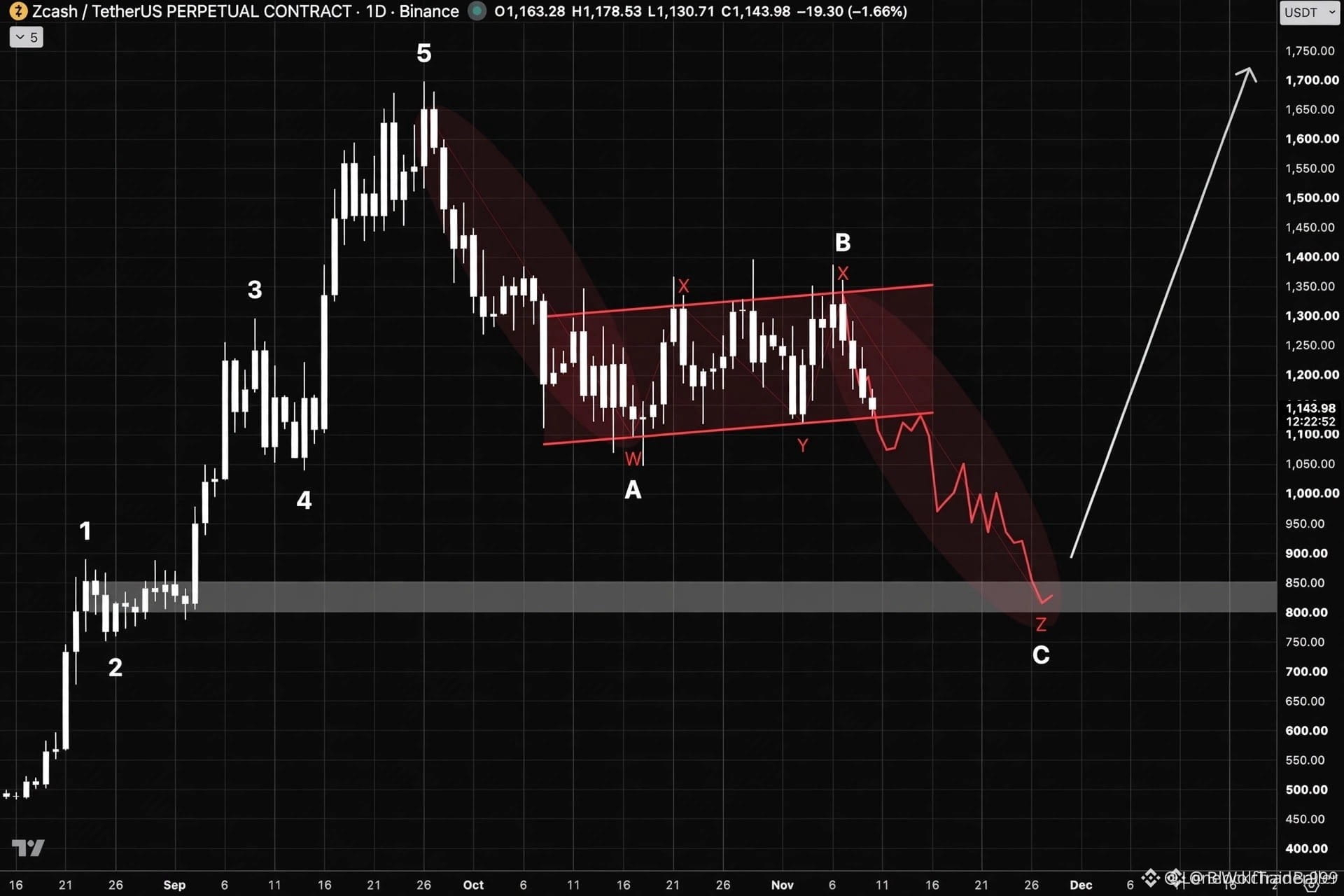
🚨 $ZEC BREAKING OUT OF MULTI-YEAR ACCUMULATION TOWARDS MASSIVE TARGETS! 💥
Target: 1,400 🚀
Privacy rotation capital is quietly bleeding back into legacy heavyweights as order books thin out above current resistance. 📊 When momentum shifts this violently, historical macro levels like seven-hundred fifty dollars stop being distant dreams and start acting like magnet zones for aggressive spot bids. ⚡
Sellers are getting cornered as liquidity pools dry up across major order books, leaving a wide-open runway for a parabolic expansion phase. 🌊 Are you positioning for the initial $750 test or holding out for the ultimate $1,400 push? 🤔
⚠️ Not financial advice. Always manage your risk. 🛡️
🏷️ #ZEC #PrivacyCoins #Breakout #Crypto
🔥 💎
18
·
--
ဘာသာပြန်ဆိုချက် ကြည့်မည်
$1,000 rejected again — $ZEC poked to $1,007 this morning and got sold straight back to $986.
I flagged $1,000 as the wall in my last ZEC post, and the market just confirmed it: Nov 11 closed at $964 after printing a $951 low. That's -18.7% in four days from the $1,213 close on Nov 8.
The privacy money isn't leaving though — it's rotating. $NIGHT is +6.9% today at $0.0459 while ZEC bleeds -4.2% on $206M of Binance spot volume (04:03 UTC).
I'm leaning bearish while $1,000 caps it. A daily close back above $1,000 proves me wrong; a close under $951.21 breaks the last ledge.
Buy the $951 dip, or wait for the $1,000 reclaim? $ZEC $951.21 is the line.
Not financial advice. DYOR.
#ZEC #PrivacyCoins #CryptoMarkets
3
·
--
ဘာသာပြန်ဆိုချက် ကြည့်မည်
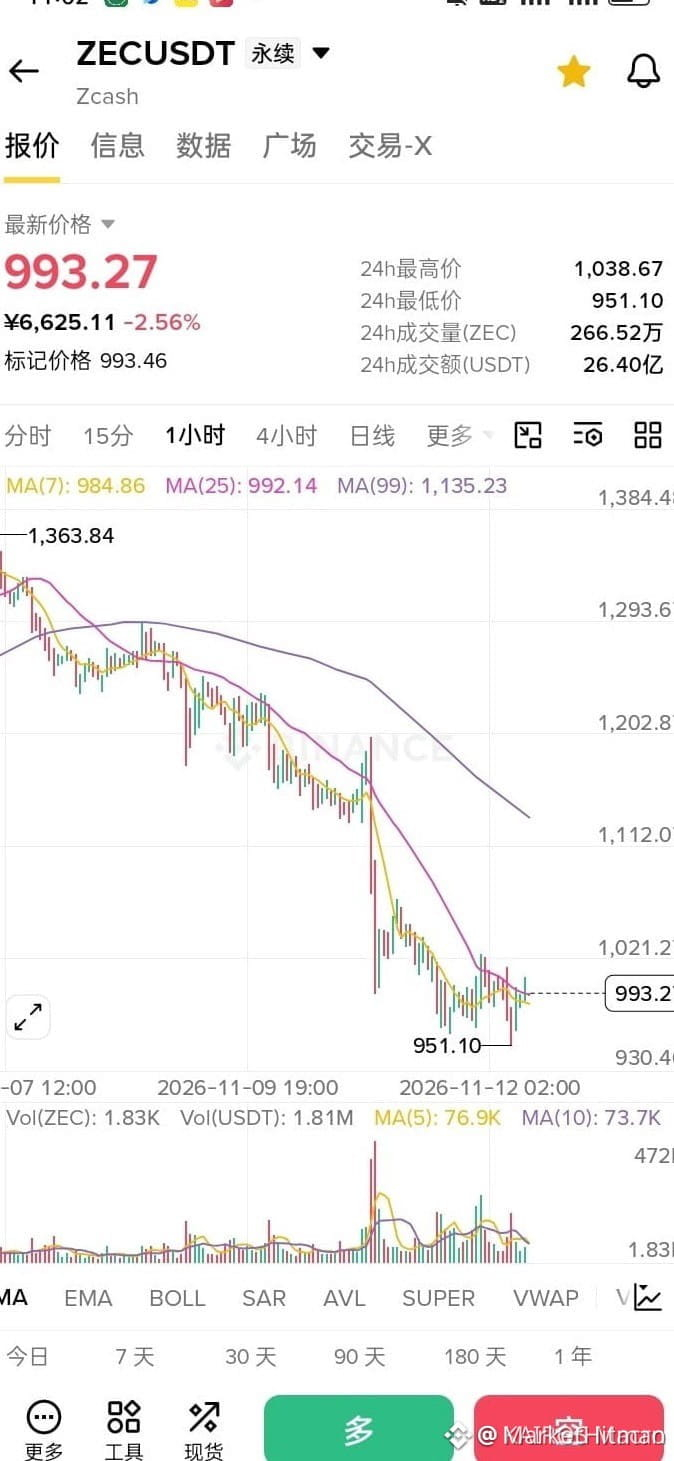
🩸 $ZEC BLEEDING 50% FROM THE PEAK: LIFELINE RECLAIM OR ULTIMATE TRAP? 🦈
When privacy assets like $ZEC take a brutal 50% haircut, sleepless nights separate the tourists from seasoned participants. 📊 That heavy discount looks tempting on the chart, but those violent wick sweeps hide aggressive order flow traps designed to shake out weak hands. ⚡
Navigating this kind of deep liquidity drain requires ruthless risk discipline rather than emotional bottom-fishing. 🔍 Are you positioning for a structural mean reversion here or staying completely flat until confirmation prints? 👇
⚠️ Not financial advice. Always manage your risk. 🛡️
🏷️ #ZEC #PrivacyCoins #LiquiditySweep #MarketCorrection
🔥 💎
3
·
--
ဘာသာပြန်ဆိုချက် ကြည့်မည်
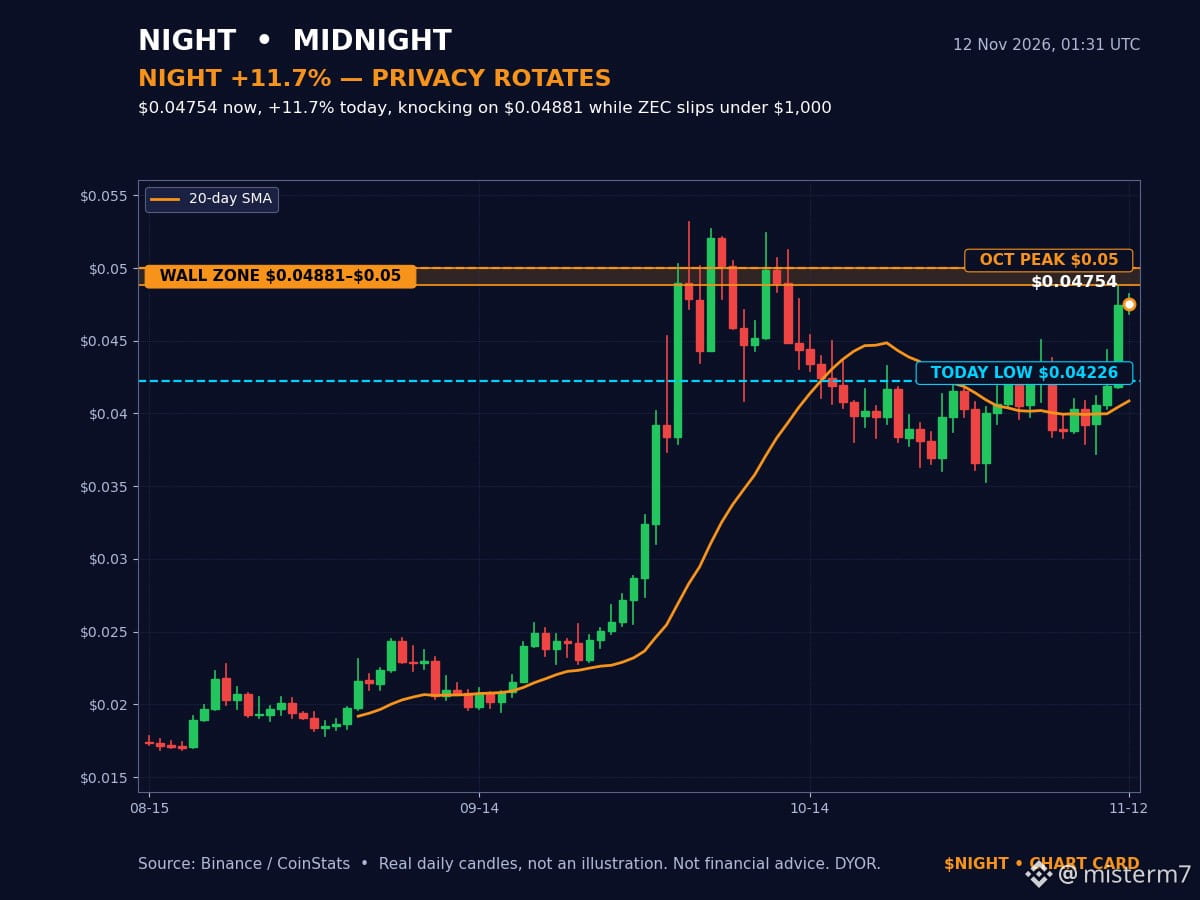
ZEC lost $1,000 again — and the money didn't leave privacy, it moved.
$NIGHT is the day's top gainer: $0.04754, +11.7% in 24 hours, while $ZEC slid 4.5% to $985.84. Same theme, opposite tape. Traders aren't quitting privacy, they're rotating inside it.
The fuel is real, not a rumour: Midnight's Ledger 9 upgrade went live on mainnet on 6 Nov — private transfers, contracts calling contracts — and Hoskinson keeps talking up NIGHT as a coin that could one day pass ZEC. Binance volume hit $5.97M with almost 75,000 trades in a day.
I'm leaning bullish on the rotation, not blindly: this is narrative fuel with no usage numbers behind it yet, and an 11.7% day can give half back in an hour.
$NIGHT breaks $0.04881 and the early-October $0.05 peak is next. Lose $0.04226 and it was just a spike.
Privacy trade — $NIGHT or beaten-down $ZEC?
Not financial advice. DYOR.
#NIGHT #PrivacyCoins #Altcoins
ZEC lost $1,000 again — and the money didn't leave privacy, it moved.
$NIGHT is the day's top gainer: $0.04754, +11.7% in 24 hours, while $ZEC slid 4.5% to $985.84. Same theme, opposite tape. Traders aren't quitting privacy, they're rotating inside it.
The fuel is real, not a rumour: Midnight's Ledger 9 upgrade went live on mainnet on 6 Nov — private transfers, contracts calling contracts — and Hoskinson keeps talking up NIGHT as a coin that could one day pass ZEC. Binance volume hit $5.97M with almost 75,000 trades in a day.
I'm leaning bullish on the rotation, not blindly: this is narrative fuel with no usage numbers behind it yet, and an 11.7% day can give half back in an hour.
$NIGHT breaks $0.04881 and the early-October $0.05 peak is next. Lose $0.04226 and it was just a spike.
Privacy trade — $NIGHT or beaten-down $ZEC ?
Not financial advice. DYOR.
#NIGHT #PrivacyCoins #Altcoins
33
·
--
ဘာသာပြန်ဆိုချက် ကြည့်မည်
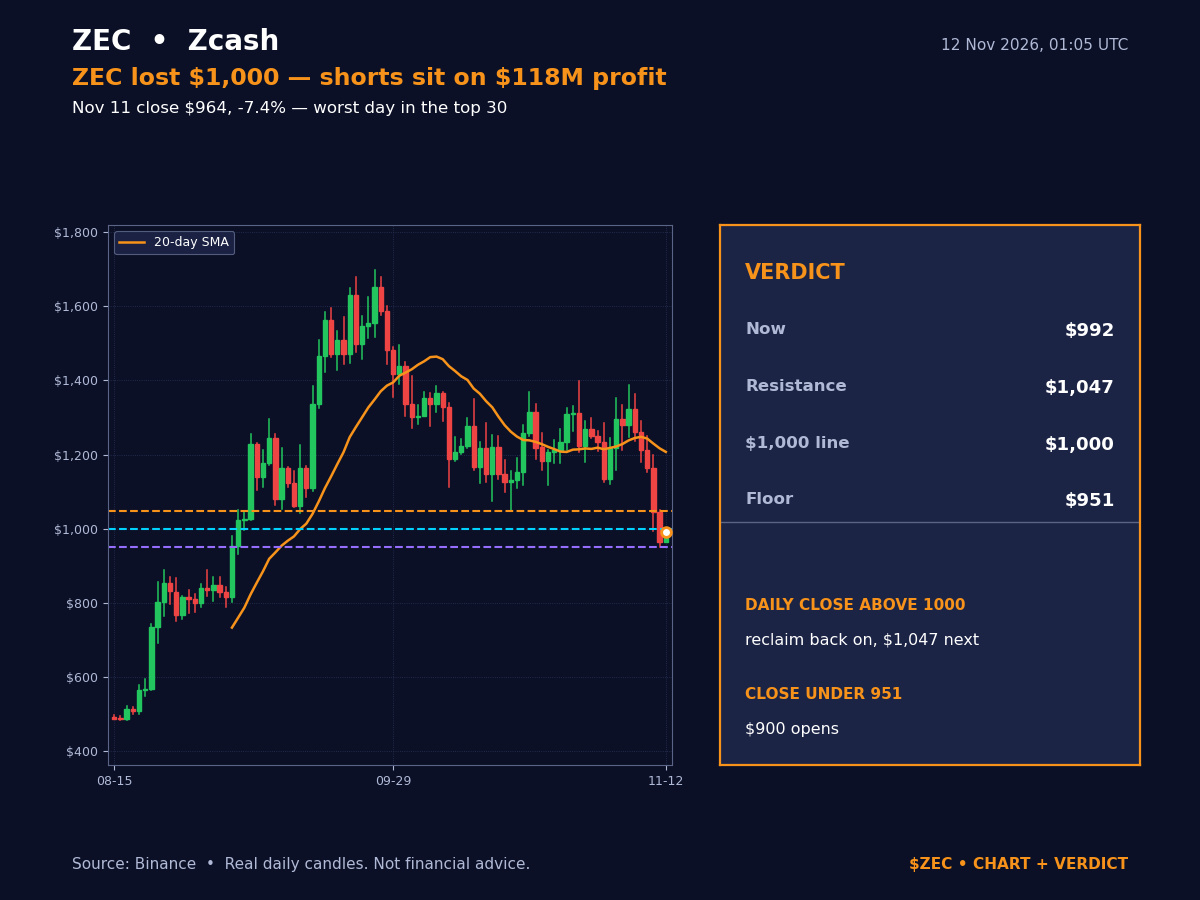
$ZEC lost $1,000 again — and one fund is sitting on $118M of shorts against it.
Source: Odaily, 12 Nov 2026; prices Binance, 01:05 UTC.
The $1,112 breakdown I flagged two days ago kept running: ZEC closed Nov 11 at $964, down 7.4% — the worst day in the top 30 — after touching $951.21. Abraxas Capital's shorts are now $118M in profit, and ZEC still sits under $1,000 at $987.68.
Meanwhile $XMR went the other way, up 4.1% to $582.47 — ZEC is now worth 1.70 XMR, down from 2.10x yesterday. The privacy pair has split in two.
I'm leaning bearish while $1,000 caps it. A daily close back above $1,000 kills this view; a break of $951 opens $900, with $BTC $74,099 still holding its $73,510 floor behind it.
Does $ZEC reclaim $1,000 this week, or does $951 give way first?
Not financial advice. DYOR.
#ZEC #PrivacyCoins #CryptoNews
44

·
--
ဘာသာပြန်ဆိုချက် ကြည့်မည်
Privacy's poster child just lost its four-figure badge — $ZEC -8% near $962 on $1B volume while $BTC barely moves. No fresh headline, the hot-CPI hangover hitting alts hardest. Hold $950 and $1,000 is back in play; lose it and the slide continues. Buying the dip? #Zcash #PrivacyCoins #BinanceSquare
Privacy's poster child just lost its four-figure badge — $ZEC -8% near $962 on $1B volume while $BTC barely moves. No fresh headline, the hot-CPI hangover hitting alts hardest. Hold $950 and $1,000 is back in play; lose it and the slide continues. Buying the dip? #Zcash #PrivacyCoins #BinanceSquare
3
·
--
ဘာသာပြန်ဆိုချက် ကြည့်မည်
Privacy coins are splitting tonight: $XMR is up 6.1% near $588 while $ZEC stays stuck under $1,000. No single headline — rotation inside the corner as $BTC steadies near $74,300. Hold above $580 and the gap probably widens; lose it and the split fades. Which side are you watching? #Monero #PrivacyCoins #Write2Earn
Privacy coins are splitting tonight: $XMR is up 6.1% near $588 while $ZEC stays stuck under $1,000. No single headline — rotation inside the corner as $BTC steadies near $74,300. Hold above $580 and the gap probably widens; lose it and the split fades. Which side are you watching? #Monero #PrivacyCoins #Write2Earn
5

·
--
ဘာသာပြန်ဆိုချက် ကြည့်မည်
Privacy coin Zcash experiencing sharp volatility today 📉
ZEC dropped -14.69% to $994.25 while posting the fourth-highest volume across all pairs at $270.9M, making it the strongest buzz mover of the session. Meanwhile, major caps like BTC and ETH remained nearly flat with BTC at $73,804 (+0.02%) and ETH at $2,058 (-0.43%). The combination of significant price decline and exceptionally high volume suggests either heavy distribution or potential capitulation.
What's your outlook for ZEC after its -14.69% drop to $994 on massive $270.9M volume today?
1. Oversold bounce incoming soon
2. Further downside likely in the short term
3. Consolidation around current levels
4. Depends on broader market direction
Drop your vote in the comments and join the discussion in the Cyclo Telegram community! 🗳️
#ZEC #PrivacyCoins #CryptoVolatility #MarketAnalysis
232

·
--
ဘာသာပြန်ဆိုချက် ကြည့်မည်
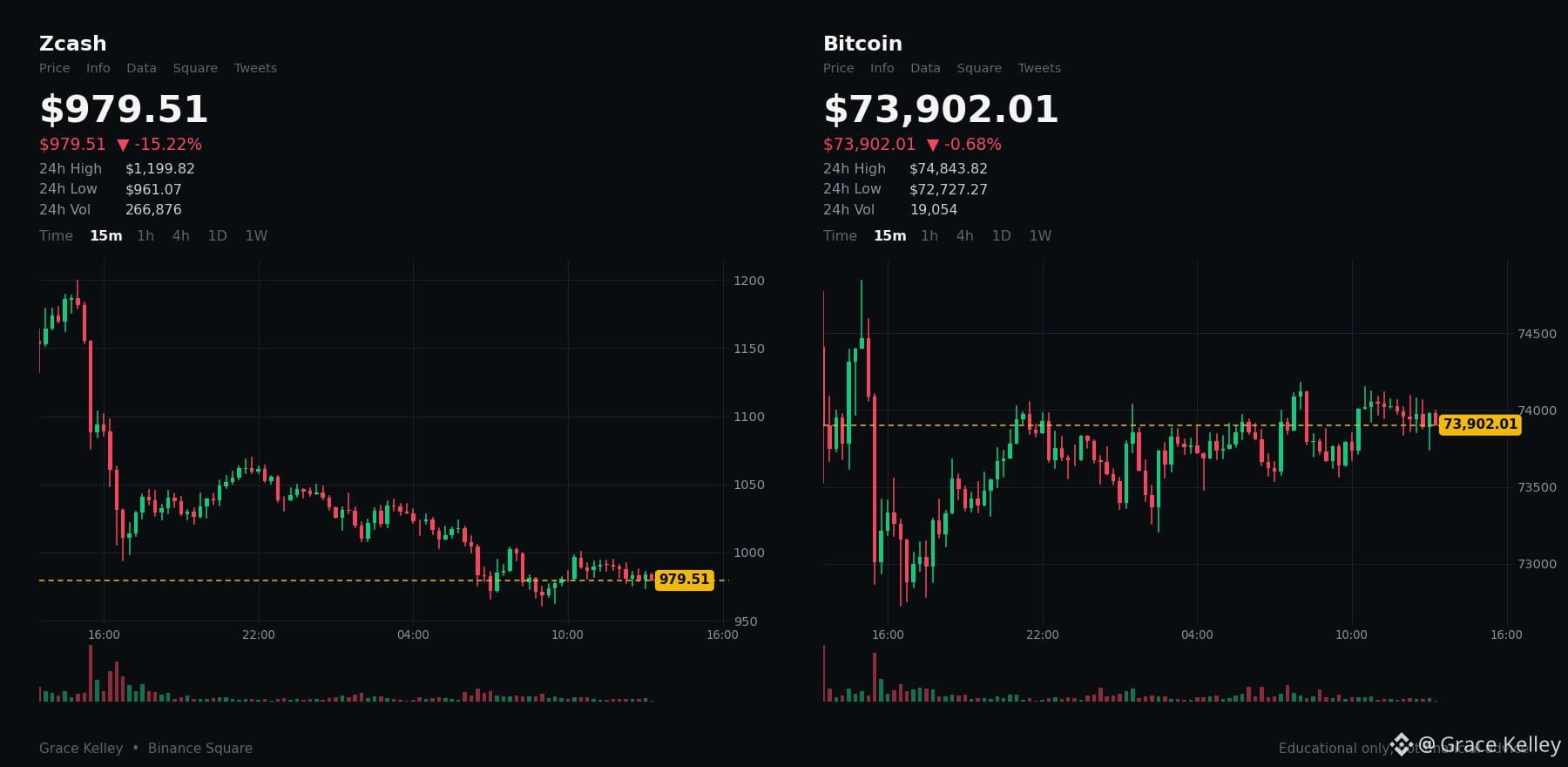
Zcash Crashes 15% Below $1,000 — What Happened to $ZEC
Zcash is today's biggest loser. $ZEC fell about 15% in 24 hours to around $980, dropping below $1,000 for the first time since early September — and it has slipped out of crypto's top 10 to number 11.
What happened: The fall follows Tuesday's hot US inflation report — CPI rose 0.4% in October, above the 0.3% expected (released 6:30 PM PKT) — which raised the odds of a bigger Fed rate hike in December. But ZEC fell hardest because it had risen the most: it is still up about 89% in 2026 after reaching $1,695 on September 26.
Three things made the drop faster: over $16.5 million in leveraged long positions were liquidated in 24 hours, about 88% of them longs; Grayscale's Zcash Trust saw more than $15 million in outflows in November; and traders sold after the NU7 upgrade on November 6 — even though the upgrade worked, cutting block times from 75 seconds to 25 seconds.
Levels to watch: ZEC broke support at $1,030–$1,050. A daily close back above $1,050 would be the first sign the selling is easing. Today's low was near $961 — if that breaks, the slide could deepen.
Nothing is wrong with Zcash itself: no hack, no network problem. This was leverage and profit-taking after a huge rally.
Do you think ZEC bounces back above $1,000, or does the slide continue?
Educational content only, not financial advice.
#BinanceSquare #WriteToEarn #Zcash #PrivacyCoins
314

·
--
ဘာသာပြန်ဆိုချက် ကြည့်မည်
ZEC崩盘了!$ZEC 破千美元,跌近15%,这可是9月以来首次!就在灰度刚宣布注资100万支持生态之后一天...市场这反应也太快了吧!利好转眼变利空?#隐私币 #加密货币
ZEC getting wrecked! $ZEC just broke below $1k, dropping 15% - first time since September! And all this comes right after Grayscale's $1M pledge to the ecosystem a day ago... Market reaction is wild! #privacycoins #crypto
ZEC getting wrecked! $ZEC just broke below $1k, dropping 15% - first time since September! And all this comes right after Grayscale's $1M pledge to the ecosystem a day ago... Market reaction is wild! #privacycoins #crypto
165

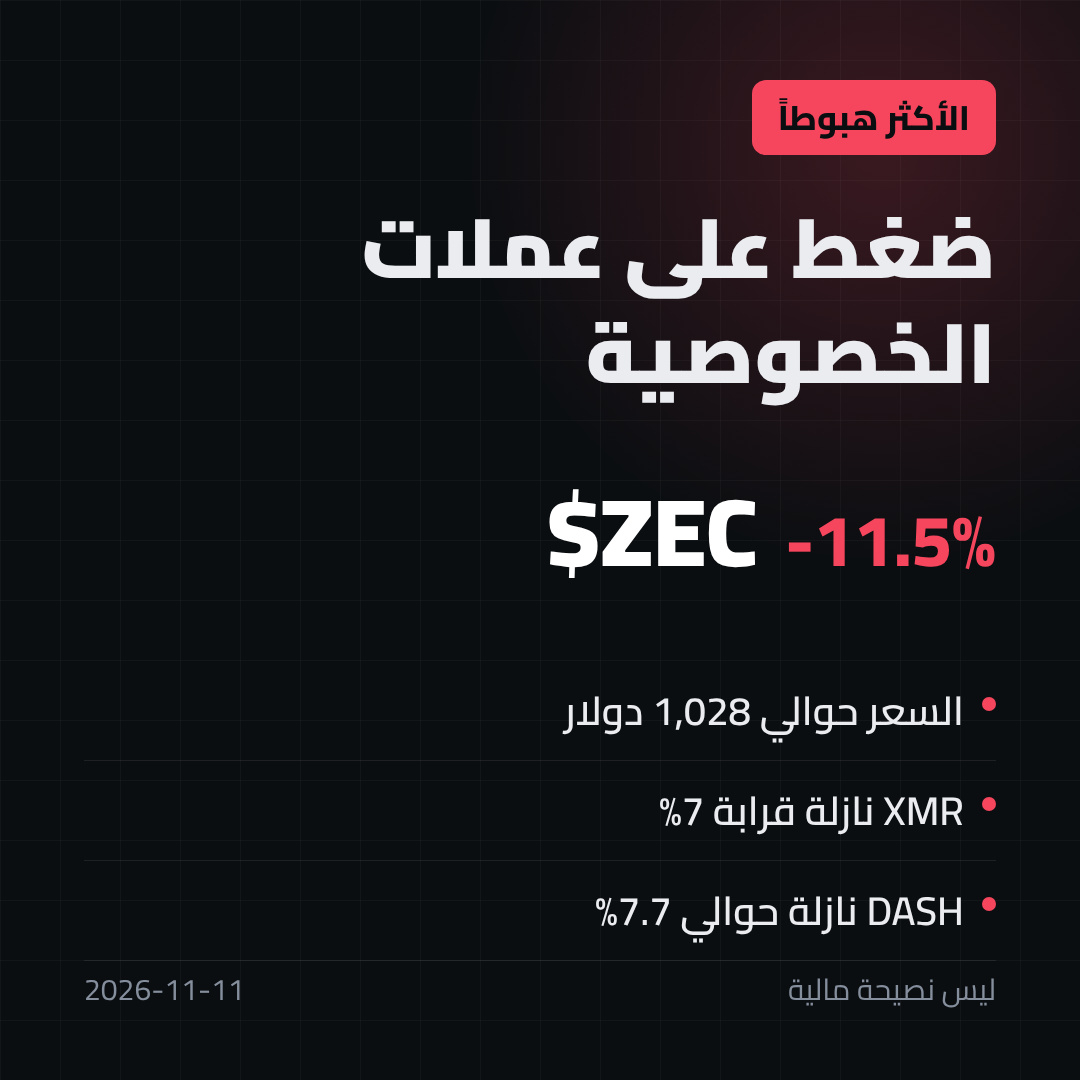
ဒီနေ့ Privacy coin တွေ အခြေအနေမကောင်းဘူး 📉
$ZEC က အကြီးစား coin တွေထဲမှာ အကျဆင်းဆုံးတွေထဲက တစ်ခုဖြစ်ပြီး ၂၄ နာရီအတွင်း ၁၁.၅% လောက် ကျဆင်းကာ CoinMarketCap အရ ဈေးနှုန်းက 1,028$ ဝန်းကျင်ရှိပါတယ်။
ဒါတစ်ခုတည်း မဟုတ်ပါဘူး၊ $XMR က ၇% နီးပါး ကျဆင်းပြီး DASH ကလည်း ၇.၇% ဝန်းကျင် ကျဆင်းပါတယ်။
ကဏ္ဍတစ်ခုလုံး တစ်ပြိုင်နက် ကျဆင်းတဲ့အခါ အများအားဖြင့် coin တစ်ခုတည်းရဲ့ ပြဿနာမဟုတ်ဘဲ ဈေးတက်ပြီးနောက် ကဏ္ဍထဲက ငွေကြေးစီးဆင်းမှု ထွက်သွားတာ၊ ဒါမှမဟုတ် ဈေးကွက်တစ်ခုလုံးမှာ ဖိအားရှိနေတာကြောင့် ဖြစ်တတ်ပါတယ်။
ဒီလို coin တွေ ကိုင်ထားသူတွေအနေနဲ့ စိတ်လိုက်မာန်ပါ ဆုံးဖြတ်မယ့်အစား ကိုယ့်ရင်းနှီးမြှုပ်နှံမှုပမာဏနဲ့ stop-loss ထားထားတဲ့နေရာကို ပြန်စစ်ကြည့်တာ ပိုကောင်းပါတယ်။
ငွေကြေးဆိုင်ရာ အကြံဉာဏ် မဟုတ်ပါ။
Privacy coin တွေအပေါ် ဘယ်လိုထင်ကြလဲ။ အနာဂတ်ရှိတဲ့ ကဏ္ဍလား၊ ခဏတာလှိုင်းတစ်ခုလိုပဲလား။
#BinanceSquare #ZEC #PrivacyCoins
AboAnas7:
احسنت النشر 👏
لاحظت هذا الشي والله
1
2
440
·
--
ဘာသာပြန်ဆိုချက် ကြည့်မည်
Privacy coins just split in two — $XMR up 3.5% near $571 while $ZEC dumps 14.6% near $973, no XMR news behind it, just the split doing the talking. $BTC near $73,500. Hold $560 and the edge stays; lose it and the split fades. Which privacy name are you backing? #Monero #PrivacyCoins #BinanceSquare
Privacy coins just split in two — $XMR up 3.5% near $571 while $ZEC dumps 14.6% near $973, no XMR news behind it, just the split doing the talking. $BTC near $73,500. Hold $560 and the edge stays; lose it and the split fades. Which privacy name are you backing? #Monero #PrivacyCoins #BinanceSquare
·
--
စိစစ်အတည်ပြုထားသည်
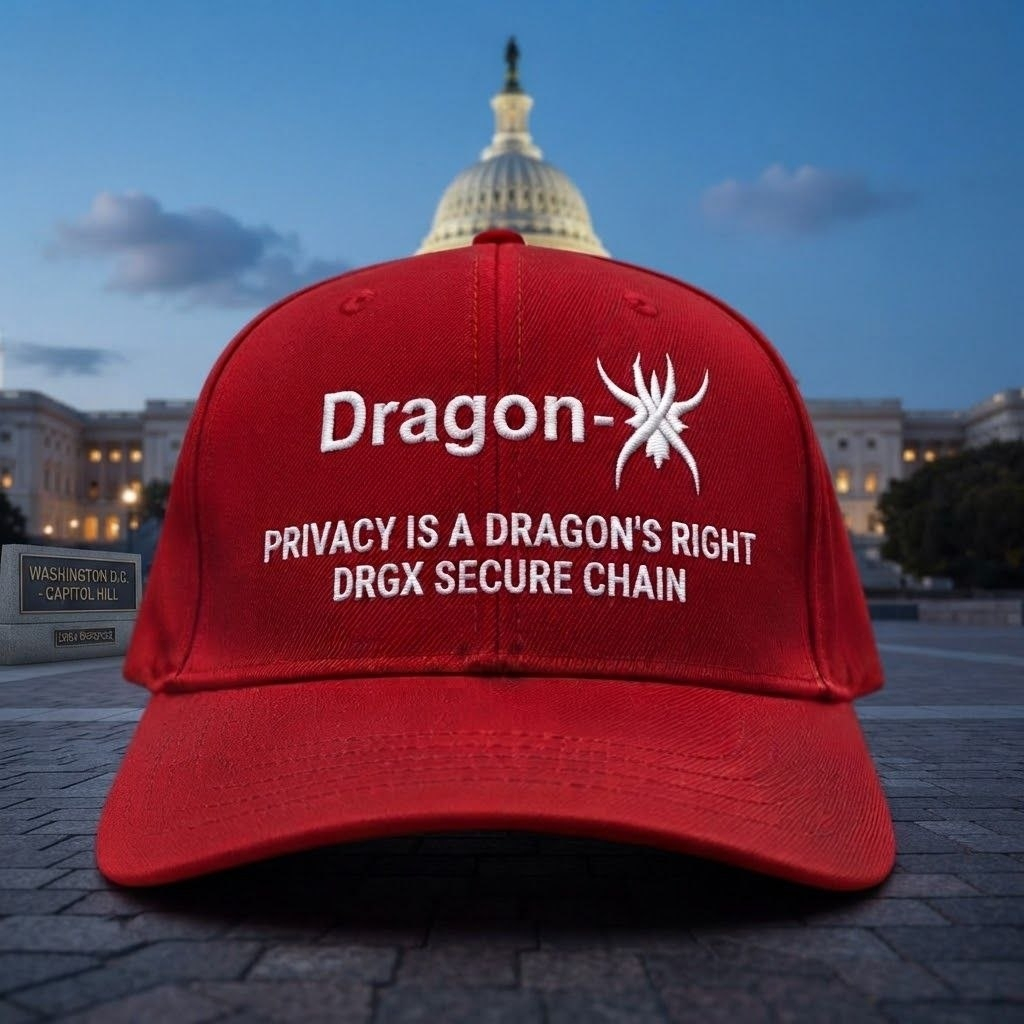
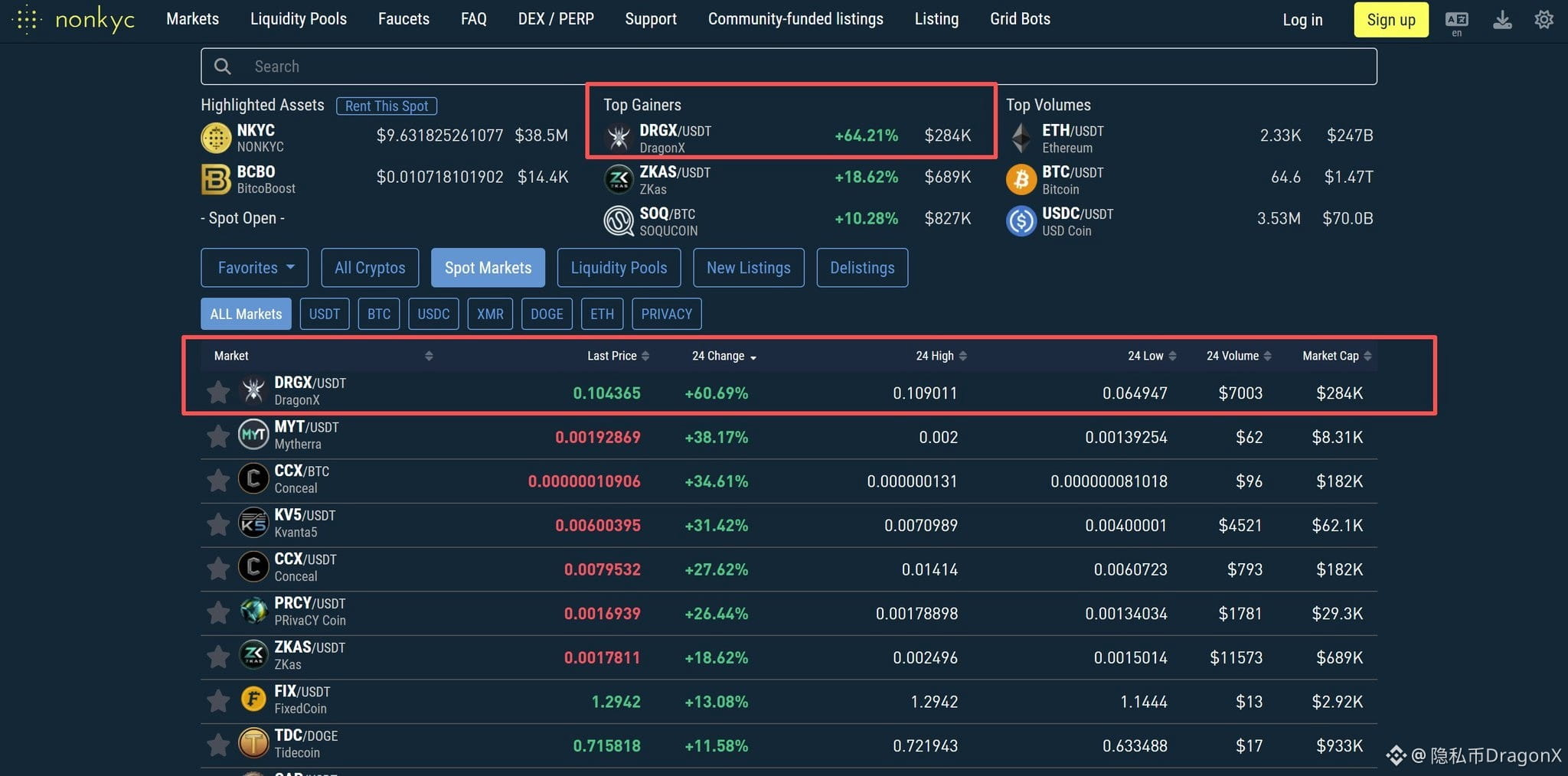
🐉 ကိုယ်ရေးကိုယ်တာလုံခြုံရေးက လှုပ်ရှားနေပြီ! 🔥
DragonX($DRGX)သည် NonKYC ပလက်ဖောင်း၏ ထိပ်တန်းတက်လာသူများစာရင်းတွင် ပထမနေရာကို ရရှိလိုက်ပြီ! 🚀
ဒါပေမဲ့ DragonX ဟာ ဈေးနှုန်းအတက်အကျထက် အများကြီးပိုပါတယ်။
ပြည့်စုံတဲ့ ကိုယ်ရေးကိုယ်တာလုံခြုံရေး ဂေဟစနစ်တစ်ခုကို တည်ဆောက်နေပါတယ်။
🔐 zk-SNARKs — ငွေကြေးလွှဲပြောင်းမှုများကို ဖုံးကွယ်ပေးသည်
🛡️ Sietch — မီတာဒေတာကို ရှုပ်ထွေးစေပြီး လုံခြုံရေးကို မြှင့်တင်ပေးသည်
🌐 Tor ပေါင်းစည်းမှု — ကွန်ရက်အဆင့် လုံခြုံရေး
💬 ထည့်သွင်းတည်ဆောက်ထားသော ကုဒ်ဝှက်ချတ် — ပိုက်ဆံအိတ်အတွင်း တိုက်ရိုက် သီးသန့်ဆက်သွယ်မှု
📡 P2P နှင့် မမ်မိုရီပူးလ် စာတိုပေးပို့မှု — ဗဟိုချုပ်ကိုင်မှုမရှိသော စာတိုပေးပို့မှု
⛏️ RandomX — CPU အခြေပြု မိုင်းတူးခြင်း
သီးသန့်ငွေကြေး + သီးသန့်ဆက်သွယ်မှု။
ကြီးမားတဲ့ စျေးကွက်မြှင့်တင်ရေးဘတ်ဂျက် မရှိပါ။ ဖြတ်လမ်းလည်း မရှိပါ။ နည်းပညာ၊ မရပ်မနား ဖွံ့ဖြိုးတိုးတက်မှုနဲ့ ငွေကြေးလွတ်လပ်ခွင့်ကို ယုံကြည်တဲ့ အသိုင်းအဝိုင်းတစ်ခုသာ ရှိပါတယ်။
နဂါးကြီး နိုးထလာနေပြီ။ သင် စောင့်ကြည့်နေလား။
🐉 ကိုယ်ရေးကိုယ်တာလုံခြုံရေးဆိုတာ ဇိမ်ခံပစ္စည်း မဟုတ်ပါ။ အခွင့်အရေးတစ်ရပ်ပါ။
#PrivacyCoins #crypto #BTC #zec #XMR
Madaline Colaizzi r7Na:
这个币可以
1
2
2
633
·
--
ဘာသာပြန်ဆိုချက် ကြည့်မည်
Privacy names are getting hit hardest — $DASH down 7% near $43.81, under its 24h low, while $BTC slips below its 200-day average. No headline, the corner sliding with the tape. Hold $44.70 and sellers pause; lose $43 and the flush deepens. Buying the dip or waiting? #Dash #PrivacyCoins #Write2Earn
Privacy names are getting hit hardest — $DASH down 7% near $43.81, under its 24h low, while $BTC slips below its 200-day average. No headline, the corner sliding with the tape. Hold $44.70 and sellers pause; lose $43 and the flush deepens. Buying the dip or waiting? #Dash #PrivacyCoins #Write2Earn
2
ဘာသာပြန်ဆိုချက် ကြည့်မည်
🛡️ Zcash chupchaap khara hai — jab majors 30 din mein 10% se 21% tak giray.
Fresh comparison (24/7 Wall St., aaj):
1️⃣ BTC: 30 din mein ~-10%
2️⃣ ETH aur SOL: -10% se -21% ke range mein
3️⃣ ZEC: flat — neechay nahi gira
Privacy narrative is quarter mein consistently outperform kar raha hai — kal bhi ZEC ki relative strength dekhi thi (+6.23% us waqt), aaj flat jab sab red hai.
Yaad rahe: relative strength ek observation hai, forecast nahi. Small-cap + niche narrative = bohot zyada volatility, dono taraf. Data se seekho, hype se nahi. 📚
$ZEC
#Zcash #PrivacyCoins #Altcoins

·
--
ဘာသာပြန်ဆိုချက် ကြည့်မည်
🚨 THE MARKET IS SLEEPING ON ZEC… BUT WHAT IF PRIVACY COINS ARE THE NEXT BIG NARRATIVE? 👀🔥
Zcash ( $ZEC ) deserves a serious spot on the watchlist.
As market attention shifts between narratives, privacy is becoming an interesting sector to watch. ZEC brings a unique edge with its shielded transactions and focus on financial privacy. 🛡️
If momentum returns to privacy coins, could ZEC be one of the biggest beneficiaries?
I’m keeping my eyes on this one. 👀📈
What do you think? Is ZEC preparing for another major move?
#zec #zcash #CryptoMarket #altcoins #PrivacyCoins
{spot}(ZECUSDT)
🚨 THE MARKET IS SLEEPING ON ZEC… BUT WHAT IF PRIVACY COINS ARE THE NEXT BIG NARRATIVE? 👀🔥
Zcash ( $ZEC ) deserves a serious spot on the watchlist.
As market attention shifts between narratives, privacy is becoming an interesting sector to watch. ZEC brings a unique edge with its shielded transactions and focus on financial privacy. 🛡️
If momentum returns to privacy coins, could ZEC be one of the biggest beneficiaries?
I’m keeping my eyes on this one. 👀📈
What do you think? Is ZEC preparing for another major move?
#zec #zcash #CryptoMarket #altcoins #PrivacyCoins

245

·
--
ကျရိပ်ရှိသည်
စိစစ်အတည်ပြုထားသည်
😲 $ZEC လုံခြုံရေး သတိပေးချက်! 🔐 ZCASH ပိုမိုအားကောင်းလာနေပြီလား? 🛡️
‼️ Zcash လုံခြုံရေးဂေဟစနစ်တွင် အရေးကြီးသည့်အရာတစ်ခု ဖြစ်ပေါ်နေပါပြီ!
⚜️ ZEC သည် ငွေလွှဲမှုများ၏ ကိုယ်ရေးလုံခြုံမှုကို ကာကွယ်ရန် အဆင့်မြင့် zero-knowledge နည်းပညာကို အသုံးပြုထားသည်။
🔒 Shielded ငွေလွှဲမှုများသည် ငွေကြေးဆိုင်ရာ အသေးစိတ်အချက်အလက်များကို လျှို့ဝှက်ထားရန် ကူညီပေးသည်။
🛡️ နောက်ဆုံးထွက် Ironwood အဆင့်မြှင့်တင်မှုသည် Zcash ၏ ကိုယ်ရေးလုံခြုံမှုနှင့် လုံခြုံရေး ဖွံ့ဖြိုးတိုးတက်မှုအတွက် အခန်းကဏ္ဍသစ်တစ်ခုကို ဖွင့်လှစ်ပေးသည်။
$ZEC
{spot}(ZECUSDT)
ဒါပေမဲ့ အရေးကြီးဆုံးမေးခွန်းကတော့… 👀
ZEC သည် ရင်းနှီးမြှုပ်နှံသူများ၏ ယုံကြည်မှုကို ပြန်လည်ရရှိပြီး ကိုယ်ရေးလုံခြုံမှုကို အဓိကထားသည့် အားအကောင်းဆုံး ပရောဂျက်များထဲမှ တစ်ခု ဖြစ်လာနိုင်မလား?
💬 ZEC ၏ လုံခြုံရေးအနာဂတ်သည် အလားအလာကောင်းသည်ဟု သင်ယုံကြည်ပါသလား?
#ZEC #Zcash #CryptoSecurity #PrivacyCoins
😲 $ZEC လုံခြုံရေး သတိပေးချက်! 🔐 ZCASH ပိုမိုအားကောင်းလာနေပြီလား? 🛡️
‼️ Zcash လုံခြုံရေးဂေဟစနစ်တွင် အရေးကြီးသည့်အရာတစ်ခု ဖြစ်ပေါ်နေပါပြီ!
⚜️ ZEC သည် ငွေလွှဲမှုများ၏ ကိုယ်ရေးလုံခြုံမှုကို ကာကွယ်ရန် အဆင့်မြင့် zero-knowledge နည်းပညာကို အသုံးပြုထားသည်။
🔒 Shielded ငွေလွှဲမှုများသည် ငွေကြေးဆိုင်ရာ အသေးစိတ်အချက်အလက်များကို လျှို့ဝှက်ထားရန် ကူညီပေးသည်။
🛡️ နောက်ဆုံးထွက် Ironwood အဆင့်မြှင့်တင်မှုသည် Zcash ၏ ကိုယ်ရေးလုံခြုံမှုနှင့် လုံခြုံရေး ဖွံ့ဖြိုးတိုးတက်မှုအတွက် အခန်းကဏ္ဍသစ်တစ်ခုကို ဖွင့်လှစ်ပေးသည်။
$ZEC
ဒါပေမဲ့ အရေးကြီးဆုံးမေးခွန်းကတော့… 👀
ZEC သည် ရင်းနှီးမြှုပ်နှံသူများ၏ ယုံကြည်မှုကို ပြန်လည်ရရှိပြီး ကိုယ်ရေးလုံခြုံမှုကို အဓိကထားသည့် အားအကောင်းဆုံး ပရောဂျက်များထဲမှ တစ်ခု ဖြစ်လာနိုင်မလား?
💬 ZEC ၏ လုံခြုံရေးအနာဂတ်သည် အလားအလာကောင်းသည်ဟု သင်ယုံကြည်ပါသလား?
#ZEC #Zcash #CryptoSecurity #PrivacyCoins
2
1k
Log in to explore more content
Join global crypto users on Binance Square
⚡️ Get latest and useful information about crypto.
💬 Trusted by the world’s largest crypto exchange.
👍 Discover real insights from verified creators.
အီးမေးလ် / ဖုန်းနံပါတ်
ရေပန်းစားနေသော ခေါင်းစဉ်များ
1
#HuangExitNvidiaStrategyInFocus
ကြည့်ရှုမှု 63,761 ကြိမ်
809 ဦး ဆွေးနွေးနေသည်
2
#AnthropicRejectsIPODelayValuationinQuestion
ကြည့်ရှုမှု 653,856 ကြိမ်
5,085 ဦး ဆွေးနွေးနေသည်
3
#BitMineReports$6.3BNetLossForFiscal2026
ကြည့်ရှုမှု 7,772 ကြိမ်
98 ဦး ဆွေးနွေးနေသည်
4
#ChipStocksExtendLossesAfterNvidiaCEOChange
ကြည့်ရှုမှု 23,302 ကြိမ်
351 ဦး ဆွေးနွေးနေသည်
5
#ThailandProposes$148KDailyStablecoinDepositWithdrawalCaps
ကြည့်ရှုမှု 2,062 ကြိမ်
31 ဦး ဆွေးနွေးနေသည်
6
#CoreWeaveJumps10%On168%RevenueGrowth
ကြည့်ရှုမှု 168,122 ကြိမ်
1,586 ဦး ဆွေးနွေးနေသည်
7
#ZcashFallsBelow$1000ForFirstTimeSinceSeptember
ကြည့်ရှုမှု 81,159 ကြိမ်
258 ဦး ဆွေးနွေးနေသည်
8
#MSCIRemovalMayCurbStrategy’sBitcoinBuying
ကြည့်ရှုမှု 44,651 ကြိမ်
539 ဦး ဆွေးနွေးနေသည်
9
#TradFiForBeginners
ကြည့်ရှုမှု 522,016 ကြိမ်
3,637 ဦး ဆွေးနွေးနေသည်
10
#USJoblessClaimsRise
ကြည့်ရှုမှု 19.1M ကြိမ်
7,755 ဦး ဆွေးနွေးနေသည်