Binance Square

S A M R A

Follow for Pro Tips 💡 | Content Creator | Learn & Earn with Crypto 🚀
Atvērts tirdzniecības darījums
Tirgo bieži
4.2 gadi
21 Seko
5.3K+ Sekotāji
22.9K+ Patika
5.1K+ Kopīgots
Publikācijas
Portfelis
·
--
🚨 GLOBAL TENSIONS RISE: #USIranStandoff 🚨 Markets are on edge 😬🌍 as tensions between the U.S. and Iran flare up again — and traders are watching closely. This is where geopolitics meets macro. 🛢️ Oil reacts first 🚢 Shipping routes come under pressure 📉 Risk assets can sell off fast 📈 Safe havens and volatility wake up This isn’t just political noise. Every new headline has the power to move commodities, FX, equities, and crypto in minutes ⚡ The real question 👇 Does this escalate into a true market shock — or fade into just another headline? 👀 Are you positioning for volatility… Or waiting on the sidelines? #USIranStandoff
🚨 GLOBAL TENSIONS RISE: #USIranStandoff 🚨

Markets are on edge 😬🌍 as tensions between the U.S. and Iran flare up again — and traders are watching closely.

This is where geopolitics meets macro.

🛢️ Oil reacts first

🚢 Shipping routes come under pressure

📉 Risk assets can sell off fast

📈 Safe havens and volatility wake up

This isn’t just political noise.

Every new headline has the power to move commodities, FX, equities, and crypto in minutes ⚡

The real question 👇

Does this escalate into a true market shock — or fade into just another headline?

👀 Are you positioning for volatility…

Or waiting on the sidelines?

#USIranStandoff
Kāpēc sudrabs eksplodē kā nekad agrāk vēsturēSudrabs tikko pārkāpa $120, pieaugot aptuveni par 450% pēdējo divu gadu laikā, un ir kļuvis par vienu no spēcīgākajiem aktīviem globālajos tirgos. Šāda veida kustība neizbēgami piesaista virsrakstus un spekulācijas, taču spēki, kas virza sudrabu augstāk, ir tālu pārsniedz hype. Tas, kas notiek, ir reta konverģence: gadi fiziskās piegādes spiediena saskaras ar ļoti nolemtu papīra tirgu. Rezultāts ir cenu reakcija, kas atspoguļo reālo pasauli, nevis finanšu inženieriju. Lai saprastu, kāpēc sudrabs pārvietojas tā, kā tas ir, mums jāskatās zem virsmas.

Kāpēc sudrabs eksplodē kā nekad agrāk vēsturē

Sudrabs tikko pārkāpa $120, pieaugot aptuveni par 450% pēdējo divu gadu laikā, un ir kļuvis par vienu no spēcīgākajiem aktīviem globālajos tirgos. Šāda veida kustība neizbēgami piesaista virsrakstus un spekulācijas, taču spēki, kas virza sudrabu augstāk, ir tālu pārsniedz hype.
Tas, kas notiek, ir reta konverģence: gadi fiziskās piegādes spiediena saskaras ar ļoti nolemtu papīra tirgu. Rezultāts ir cenu reakcija, kas atspoguļo reālo pasauli, nevis finanšu inženieriju.
Lai saprastu, kāpēc sudrabs pārvietojas tā, kā tas ir, mums jāskatās zem virsmas.
·
--
Pozitīvs
🚀 LONG $AT ALERT $AT just broke out of a supply zone—momentum is favoring the bulls. 🟢 💡 Entry: Pullback expected around 0.1626–0.1632 🛑 Stop Loss: 0.1616 🎯 Targets: 1️⃣ 0.16545 2️⃣ 0.16610 3️⃣ 0.16700 {future}(ATUSDT) Perfect setup for a swing. Long here 👇 {alpha}(560x9be61a38725b265bc3eb7bfdf17afdfc9d26c130) {spot}(ATUSDT) #AT
🚀 LONG $AT ALERT

$AT just broke out of a supply zone—momentum is favoring the bulls. 🟢

💡 Entry: Pullback expected around 0.1626–0.1632

🛑 Stop Loss: 0.1616

🎯 Targets:

1️⃣ 0.16545

2️⃣ 0.16610

3️⃣ 0.16700

Perfect setup for a swing. Long here 👇

#AT
·
--
Pozitīvs
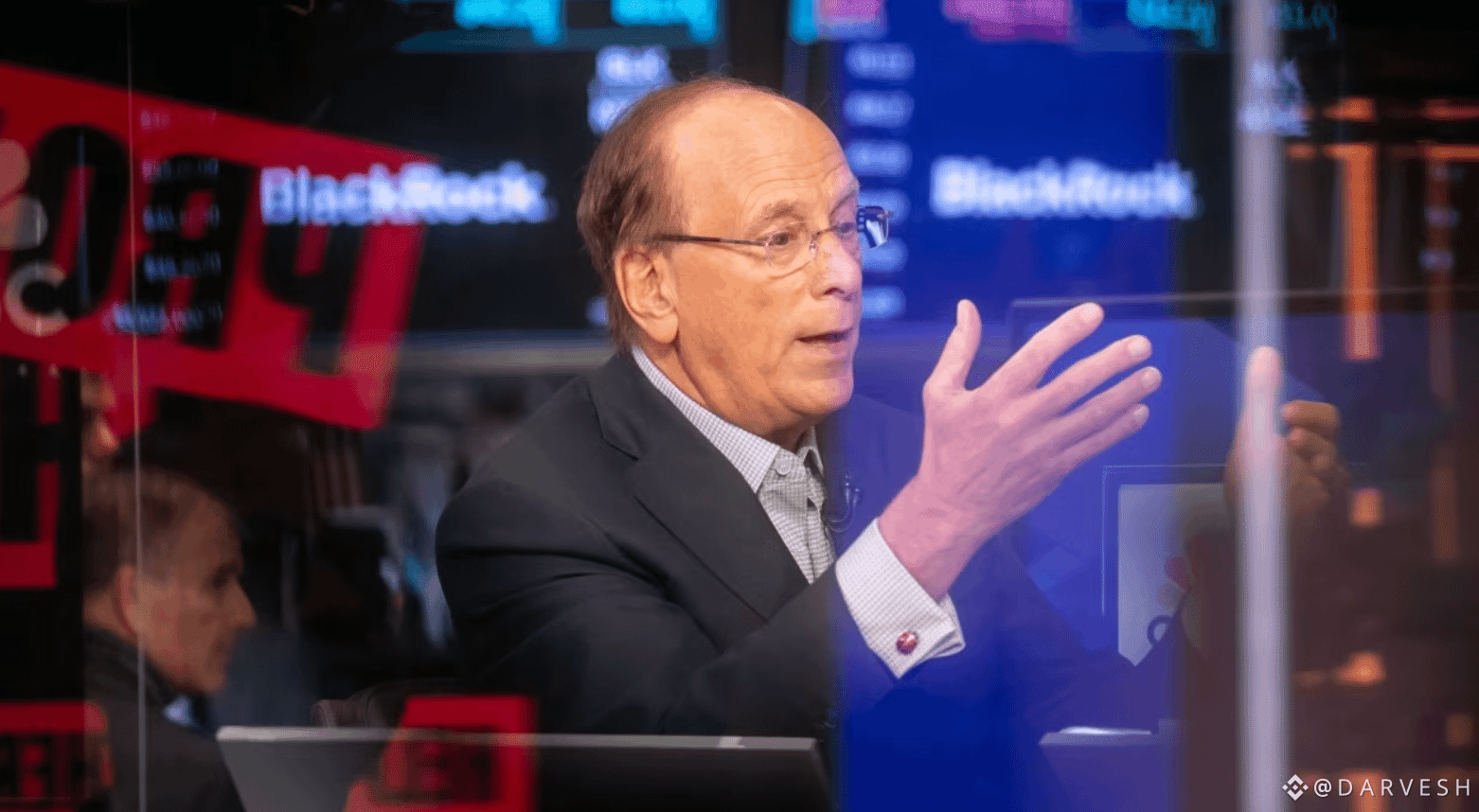
💡 Did you know? The next Fed Chair could change how your money moves—even before your morning coffee. ☕💰 Prediction markets are buzzing: a BlackRock exec, a former Fed governor, and a Trump adviser are all in the running. Powell’s term ends in May 2026, but the suspense is already heating up. 📈 Will rates stay high? Cut? Or surprise the market? Follow closely… because your portfolio might already be paying attention. 👀 #WhoIsNextFedChair
💡 Did you know? The next Fed Chair could change how your money moves—even before your morning coffee. ☕💰

Prediction markets are buzzing: a BlackRock exec, a former Fed governor, and a Trump adviser are all in the running. Powell’s term ends in May 2026, but the suspense is already heating up.

📈 Will rates stay high? Cut? Or surprise the market?

Follow closely… because your portfolio might already be paying attention. 👀

#WhoIsNextFedChair
·
--
Pozitīvs
Oof… tas ir grūti, bet arī klasika “kripto pret zeltu” stāsts. 🥲 Tu būtībā pārdevi raķešu kuģi par papīra izpletni, dzenoties pēc hype krituma. Zelts gandrīz divkāršoja vērtību, kamēr tava kripto pārvietošanās… nu, deva tev emocionālo kalniņu, ko tu nevēlējies. Sāpīgā realitāte: precīzi noteikt “perfekto kritumu” gandrīz nekad neizdodas, un dzenoties pēc FOMO var ātri iznīcināt tavas uzkrājumu. $XAU {future}(XAUUSDT) Sudraba maliņa? Tagad tev ir stāsts—un vēl svarīgāk, mācība par risku, diversifikāciju un emocionālo ieguldījumu. #GoldOnTheRise
Oof… tas ir grūti, bet arī klasika “kripto pret zeltu” stāsts. 🥲

Tu būtībā pārdevi raķešu kuģi par papīra izpletni, dzenoties pēc hype krituma. Zelts gandrīz divkāršoja vērtību, kamēr tava kripto pārvietošanās… nu, deva tev emocionālo kalniņu, ko tu nevēlējies.

Sāpīgā realitāte: precīzi noteikt “perfekto kritumu” gandrīz nekad neizdodas, un dzenoties pēc FOMO var ātri iznīcināt tavas uzkrājumu.

$XAU
Sudraba maliņa? Tagad tev ir stāsts—un vēl svarīgāk, mācība par risku, diversifikāciju un emocionālo ieguldījumu.

#GoldOnTheRise
🚨 Fed apstājas ar likmēm: Ko tas nozīmē Bitcoin un portfeļiem Federālā rezervju sistēma ir noslēgusi savu pirmo sanāksmi 2026. gadā ar skaidru lēmumu: likmes paliek nemainīgas 3.50%–3.75%. Pēc trim samazinājumiem 2025. gada beigās, priekšsēdētājs Džeroms Pauels un FOMC ir nospieduši pauzi, liekot tirgiem iestāties piesardzīgā “gaidīšanas un skatīšanās” fāzē. 📉 Kāpēc pauze? Saskaņā ar Fed, darba tirgus atdziest, bet ir stabils (bezdarba līmenis 4.4%), kamēr inflācijas riski paliek “augsti.” Ar inflāciju, kas svārstās tuvu 2.7%, un politisko spiedienu pieaugot, politikas veidotāji izvēlējās ierobežojumus, nevis riskēt ar cenu atveseļošanu. ₿ Ko tas nozīmē kriptovalūtām un riska aktīviem Likmes noturēšana ietekmē kriptovalūtu abos veidos: Optimistiskais skatījums: Easing cikls vēl nav beidzies—tikai atlikts. Likviditāte joprojām tiek gaidīta uzlaboties vēlāk gadā. Jebkura zīme par samazinājumiem martā vai jūnijā varētu atjaunot riska apetīti $BTC un $ETH Pesimistiskais skatījums: “Augstāks ilgstoši” likmes saglabā kapitālu dārgu, kas var samazināt momentum—īpaši augsta beta altcoin tirgos. 💡 Kā tirgotāji varētu pozicionēties Izsekojiet DXY: Stabils Fed var atbalstīt spēcīgāku dolāru. Ja Dolāra indekss palielinās, Bitcoin var saskarties ar īstermiņa šķēršļiem. Stablecoin ienesīgums: Ar likmēm virs 3.5%, uz ķēdes ienesīgums USDC un USDT paliek pievilcīgs—noderīgs, lai uzturētu sausās pulvera produktivitāti. Iegādājieties garlaicību: Likmju pauzes bieži nes līdzsvarotas, sānu tirgus. Vēsturiski tas ir galvenais lauks DCA ilgtermiņa pozīcijās. {spot}(BTCUSDT) {spot}(ETHUSDT) {spot}(USDCUSDT) Tātad, kas ir spēle—iegādāties pauzi vai gaidīt nākamo samazinājumu? 👇 #FedHoldsRates
🚨 Fed apstājas ar likmēm: Ko tas nozīmē Bitcoin un portfeļiem

Federālā rezervju sistēma ir noslēgusi savu pirmo sanāksmi 2026. gadā ar skaidru lēmumu: likmes paliek nemainīgas 3.50%–3.75%. Pēc trim samazinājumiem 2025. gada beigās, priekšsēdētājs Džeroms Pauels un FOMC ir nospieduši pauzi, liekot tirgiem iestāties piesardzīgā “gaidīšanas un skatīšanās” fāzē.

📉 Kāpēc pauze?

Saskaņā ar Fed, darba tirgus atdziest, bet ir stabils (bezdarba līmenis 4.4%), kamēr inflācijas riski paliek “augsti.” Ar inflāciju, kas svārstās tuvu 2.7%, un politisko spiedienu pieaugot, politikas veidotāji izvēlējās ierobežojumus, nevis riskēt ar cenu atveseļošanu.

₿ Ko tas nozīmē kriptovalūtām un riska aktīviem

Likmes noturēšana ietekmē kriptovalūtu abos veidos:

Optimistiskais skatījums:

Easing cikls vēl nav beidzies—tikai atlikts. Likviditāte joprojām tiek gaidīta uzlaboties vēlāk gadā. Jebkura zīme par samazinājumiem martā vai jūnijā varētu atjaunot riska apetīti $BTC un $ETH

Pesimistiskais skatījums:

“Augstāks ilgstoši” likmes saglabā kapitālu dārgu, kas var samazināt momentum—īpaši augsta beta altcoin tirgos.

💡 Kā tirgotāji varētu pozicionēties

Izsekojiet DXY: Stabils Fed var atbalstīt spēcīgāku dolāru. Ja Dolāra indekss palielinās, Bitcoin var saskarties ar īstermiņa šķēršļiem.

Stablecoin ienesīgums: Ar likmēm virs 3.5%, uz ķēdes ienesīgums USDC un USDT paliek pievilcīgs—noderīgs, lai uzturētu sausās pulvera produktivitāti.

Iegādājieties garlaicību: Likmju pauzes bieži nes līdzsvarotas, sānu tirgus. Vēsturiski tas ir galvenais lauks DCA ilgtermiņa pozīcijās.

Tātad, kas ir spēle—iegādāties pauzi vai gaidīt nākamo samazinājumu? 👇

#FedHoldsRates
·
--
Negatīvs
Binance ir paziņojusi par Priekš-TGE Prime pārdošanu $ZAMA , pieejamu lietotājiem, kuriem ir 220 vai vairāk Binance Alpha punkti. Piemēroti dalībnieki var piekļūt pasākumam caur Alpha aktivitāšu lapu Binance. Ienākšanai pārdošanā ir nepieciešams iztērēt 15 Alpha punktus. {future}(ZAMAUSDT) Paziņojums tika dalīts caur Binance oficiālo X kontu. #zamapretgesale
Binance ir paziņojusi par Priekš-TGE Prime pārdošanu $ZAMA , pieejamu lietotājiem, kuriem ir 220 vai vairāk Binance Alpha punkti.

Piemēroti dalībnieki var piekļūt pasākumam caur Alpha aktivitāšu lapu Binance. Ienākšanai pārdošanā ir nepieciešams iztērēt 15 Alpha punktus.
Paziņojums tika dalīts caur Binance oficiālo X kontu.

#zamapretgesale
·
--
Pozitīvs
@WalrusProtocol nav tikai vēl viena uzglabāšanas tīkls. Tā ir sistēma, kas izstrādāta, lai saglabātu lielus datu apjomus dzīvotspējīgus pat tad, kad tīkli pasliktinās vai kļūst fragmentēti. Walrus pārtrauc blobus, izmantojot RedStuff 2D dzēšanas kodēšanu, ļaujot remontus mērķēt tikai uz zaudētajām daļām, nevis atjaunot visu failu. Tas saglabā uzglabāšanas pārslogojumu aptuveni 4.5×—efektīva redundance, nevis brutāla replikācija. Dizains paliek izturīgs, strādājot asinkronos tīkla apstākļos, kur koordināciju nevar pieņemt. Lietotāji iepriekš apmaksā uzglabāšanu WAL uz noteiktu laiku, kamēr mezglu atlīdzība tiek straumēta laika gaitā, saskaņojot stimulus ar ilgtermiņa datu pieejamību. #walrus $WAL
@Walrus 🦭/acc nav tikai vēl viena uzglabāšanas tīkls. Tā ir sistēma, kas izstrādāta, lai saglabātu lielus datu apjomus dzīvotspējīgus pat tad, kad tīkli pasliktinās vai kļūst fragmentēti.

Walrus pārtrauc blobus, izmantojot RedStuff 2D dzēšanas kodēšanu, ļaujot remontus mērķēt tikai uz zaudētajām daļām, nevis atjaunot visu failu. Tas saglabā uzglabāšanas pārslogojumu aptuveni 4.5×—efektīva redundance, nevis brutāla replikācija.

Dizains paliek izturīgs, strādājot asinkronos tīkla apstākļos, kur koordināciju nevar pieņemt. Lietotāji iepriekš apmaksā uzglabāšanu WAL uz noteiktu laiku, kamēr mezglu atlīdzība tiek straumēta laika gaitā, saskaņojot stimulus ar ilgtermiņa datu pieejamību.

#walrus $WAL
Atjaunojot decentralizēto glabāšanu uz Sui: Walrus pieejaDecentralizētā glabāšana mērķē uz to, lai novērstu vienīgus kļūmes punktus un izturētu cenzūru, taču šo mērķi sasniegt ir izrādījies grūti. Daudzas sistēmas vai nu glabā datus tieši blokķēdē—ātri kļūstot dārgām un nepraktiskām—vai paļaujas uz nelielu uzticamu ārējo pakalpojumu sniedzēju kopumu. Walrus, jauna glabāšanas tīkls, kas būvēts uz Sui blokķēdes, piedāvā citu risinājumu. Pēc tā dizaina dokumentu un publisko paziņojumu pārskatīšanas, šis raksts izklāsta Walrus pamatidejas pieejamā veidā.

Atjaunojot decentralizēto glabāšanu uz Sui: Walrus pieeja

Decentralizētā glabāšana mērķē uz to, lai novērstu vienīgus kļūmes punktus un izturētu cenzūru, taču šo mērķi sasniegt ir izrādījies grūti. Daudzas sistēmas vai nu glabā datus tieši blokķēdē—ātri kļūstot dārgām un nepraktiskām—vai paļaujas uz nelielu uzticamu ārējo pakalpojumu sniedzēju kopumu. Walrus, jauna glabāšanas tīkls, kas būvēts uz Sui blokķēdes, piedāvā citu risinājumu. Pēc tā dizaina dokumentu un publisko paziņojumu pārskatīšanas, šis raksts izklāsta Walrus pamatidejas pieejamā veidā.
·
--
Pozitīvs
Plasma: Reconsidering Stablecoins as Real Money Rails Stablecoins like USDT and USDC have long since moved beyond crypto’s margins. With hundreds of billions of dollars in circulation and trillions in yearly transaction volume, they now function as a global settlement layer in their own right. Yet the blockchains that carry them—Ethereum, Tron, Solana, and others—were never designed around stablecoins. Their priorities have been smart contracts and speculative activity, not fast, low-cost, and predictable money movement. Plasma challenges this imbalance by flipping the model. Instead of treating stablecoins as secondary assets, it is built as a blockchain where stablecoins sit at the centre of the system—designed first and foremost to move money efficiently. #plasma $XPL @Plasma
Plasma: Reconsidering Stablecoins as Real Money Rails

Stablecoins like USDT and USDC have long since moved beyond crypto’s margins. With hundreds of billions of dollars in circulation and trillions in yearly transaction volume, they now function as a global settlement layer in their own right. Yet the blockchains that carry them—Ethereum, Tron, Solana, and others—were never designed around stablecoins. Their priorities have been smart contracts and speculative activity, not fast, low-cost, and predictable money movement.

Plasma challenges this imbalance by flipping the model. Instead of treating stablecoins as secondary assets, it is built as a blockchain where stablecoins sit at the centre of the system—designed first and foremost to move money efficiently.

#plasma $XPL @Plasma
Plasma: Rethinking Stablecoins as Real Payment RailsStablecoins such as USDT and USDC have long outgrown their role as niche crypto instruments. With hundreds of billions of dollars in circulation and trillions in annual transaction volume, they now function as a parallel dollar system. Yet the blockchains that carry them—Ethereum, Tron, Solana, and others—were never designed primarily for money movement. They were optimised for smart contracts, experimentation, and speculation, not for fast, predictable, low-cost transfers at global scale. Plasma challenges this mismatch by inverting the design logic. Instead of treating stablecoins as secondary assets riding on general-purpose chains, Plasma is built as a blockchain where stablecoins sit at the core of the system. Stablecoins as cash, not crypto abstractions Plasma is a Layer-1 network designed to make stablecoins function like everyday money. On most blockchains, users must hold and spend a volatile native token—ETH, SOL, or similar—just to move dollar-denominated assets. This creates unnecessary friction: people are forced into speculative exposure simply to send or receive dollars. Plasma removes that requirement. Transfers of USDT are gas-sponsored at the protocol level, making stablecoin payments effectively free by default. Sending USDT on Plasma is intended to feel closer to sending a message than executing a financial transaction. This design choice reframes stablecoins not as “crypto assets,” but as digital cash. Why this matters Consider the implications: companies paying global payrolls without intermediaries, merchants accepting dollar payments in real time, and cross-border remittances without excessive fees or exposure to volatile assets. Plasma is not trying to generalise crypto further—it is deliberately narrow in focus. Its thesis is simple: stablecoins first, everything else second. That focus is reflected directly in the network’s architecture: 1. PlasmaBFT consensus Plasma uses a modified Byzantine Fault Tolerant consensus mechanism designed for speed and determinism. It delivers sub-second finality, near-instant confirmations, and throughput in the thousands of transactions per second—requirements for money to behave like money. 2. Full EVM compatibility Developers familiar with Ethereum tooling—MetaMask, Hardhat, Solidity—can deploy on Plasma without retraining or rewriting their stack. This lowers the barrier to building real financial applications rather than experimental prototypes. 3. Gas abstraction Users can pay transaction fees in stablecoins or bridged Bitcoin-based assets. The native token, XPL, is not required for basic stablecoin transfers, reinforcing Plasma’s goal of minimising friction for everyday usage. Beyond payments: an expanding financial stack While stablecoin transfers were the initial focus, Plasma’s scope has widened into a broader financial infrastructure. Cross-chain liquidity via NEAR Intents In January 2026, Plasma integrated with NEAR Intents, becoming the first network to use this liquidity-routing framework. This connects Plasma to more than 25 blockchains and over 125 assets, enabling seamless routing and swapping of USDT and XPL across major ecosystems. Liquidity is the lifeblood of financial networks. This integration allows Plasma to support larger settlements, higher trading volumes, and real commercial flows without being constrained by its own chain’s liquidity alone. A trust-minimised Bitcoin bridge Plasma also introduces a Bitcoin bridge designed to minimise trust assumptions. Users can deposit BTC and receive a one-to-one wrapped representation (pBTC) on Plasma. This asset can be used for payments, collateral, or DeFi activity without relying on fully centralised custody. By connecting Bitcoin—the largest crypto asset—to programmable stablecoin rails, Plasma extends its reach beyond dollar transfers alone. Confidential payments (in development) Plasma is exploring a privacy layer that enables confidential transactions, concealing amounts and participants while preserving compliance and compatibility with existing wallets and applications. This capability targets real-world use cases such as payroll, treasury management, and corporate settlements. Plasma One: stablecoin-native neobanking Plasma’s ambitions extend beyond infrastructure. Plasma One, a stablecoin-based neobank product, has already been previewed. It offers zero-fee transfers, virtual cards, and multi-country rewards, signalling an intent to deliver consumer-ready financial products—not just blockchains. The role of XPL: purpose without coercion Like most networks, Plasma has a native token—XPL—but its role is deliberately constrained: Network security Validators stake XPL to secure the network and earn rewards.Advanced operations While basic stablecoin transfers are gas-abstracted, complex smart-contract interactions and advanced actions require XPL or other approved assets.Governance XPL holders participate in shaping the network’s long-term direction. Crucially, users are not forced to acquire XPL simply to move stablecoins. The token supports the network’s stability and governance rather than acting as a toll for basic usage. Plasma’s position in 2026 Plasma is an evolving system, but several signals stand out: Cross-chain integrations like NEAR Intents significantly expand liquidity and reach.Consumer-facing products such as Plasma One show a clear orientation toward real users.Technical work on confidential payments and Bitcoin connectivity increases applicability to institutional and enterprise finance. This is not a dormant experiment—it is an actively developed payment-focused network. Conclusion: why the Plasma thesis matters Historically, blockchain platforms only gain lasting relevance once they solve concrete problems. Email succeeded because it moved messages cheaply and reliably; the web succeeded because it made information accessible. Plasma applies the same logic to money. Stablecoins are already the most widely used crypto assets. Plasma asks a straightforward question: if stablecoins are digital dollars, why not build infrastructure that treats them as such? Rather than trying to be everything at once, Plasma focuses on doing one thing well—moving money efficiently. In a global financial system undergoing rapid transformation, that restraint may be its greatest strength. @Plasma #Plasma $XPL

Plasma: Rethinking Stablecoins as Real Payment Rails

Stablecoins such as USDT and USDC have long outgrown their role as niche crypto instruments. With hundreds of billions of dollars in circulation and trillions in annual transaction volume, they now function as a parallel dollar system. Yet the blockchains that carry them—Ethereum, Tron, Solana, and others—were never designed primarily for money movement. They were optimised for smart contracts, experimentation, and speculation, not for fast, predictable, low-cost transfers at global scale.
Plasma challenges this mismatch by inverting the design logic. Instead of treating stablecoins as secondary assets riding on general-purpose chains, Plasma is built as a blockchain where stablecoins sit at the core of the system.
Stablecoins as cash, not crypto abstractions
Plasma is a Layer-1 network designed to make stablecoins function like everyday money. On most blockchains, users must hold and spend a volatile native token—ETH, SOL, or similar—just to move dollar-denominated assets. This creates unnecessary friction: people are forced into speculative exposure simply to send or receive dollars.
Plasma removes that requirement. Transfers of USDT are gas-sponsored at the protocol level, making stablecoin payments effectively free by default. Sending USDT on Plasma is intended to feel closer to sending a message than executing a financial transaction.
This design choice reframes stablecoins not as “crypto assets,” but as digital cash.
Why this matters
Consider the implications: companies paying global payrolls without intermediaries, merchants accepting dollar payments in real time, and cross-border remittances without excessive fees or exposure to volatile assets. Plasma is not trying to generalise crypto further—it is deliberately narrow in focus. Its thesis is simple: stablecoins first, everything else second.
That focus is reflected directly in the network’s architecture:
1. PlasmaBFT consensus
Plasma uses a modified Byzantine Fault Tolerant consensus mechanism designed for speed and determinism. It delivers sub-second finality, near-instant confirmations, and throughput in the thousands of transactions per second—requirements for money to behave like money.
2. Full EVM compatibility
Developers familiar with Ethereum tooling—MetaMask, Hardhat, Solidity—can deploy on Plasma without retraining or rewriting their stack. This lowers the barrier to building real financial applications rather than experimental prototypes.
3. Gas abstraction
Users can pay transaction fees in stablecoins or bridged Bitcoin-based assets. The native token, XPL, is not required for basic stablecoin transfers, reinforcing Plasma’s goal of minimising friction for everyday usage.
Beyond payments: an expanding financial stack
While stablecoin transfers were the initial focus, Plasma’s scope has widened into a broader financial infrastructure.
Cross-chain liquidity via NEAR Intents
In January 2026, Plasma integrated with NEAR Intents, becoming the first network to use this liquidity-routing framework. This connects Plasma to more than 25 blockchains and over 125 assets, enabling seamless routing and swapping of USDT and XPL across major ecosystems.
Liquidity is the lifeblood of financial networks. This integration allows Plasma to support larger settlements, higher trading volumes, and real commercial flows without being constrained by its own chain’s liquidity alone.
A trust-minimised Bitcoin bridge
Plasma also introduces a Bitcoin bridge designed to minimise trust assumptions. Users can deposit BTC and receive a one-to-one wrapped representation (pBTC) on Plasma. This asset can be used for payments, collateral, or DeFi activity without relying on fully centralised custody.
By connecting Bitcoin—the largest crypto asset—to programmable stablecoin rails, Plasma extends its reach beyond dollar transfers alone.
Confidential payments (in development)
Plasma is exploring a privacy layer that enables confidential transactions, concealing amounts and participants while preserving compliance and compatibility with existing wallets and applications. This capability targets real-world use cases such as payroll, treasury management, and corporate settlements.
Plasma One: stablecoin-native neobanking
Plasma’s ambitions extend beyond infrastructure. Plasma One, a stablecoin-based neobank product, has already been previewed. It offers zero-fee transfers, virtual cards, and multi-country rewards, signalling an intent to deliver consumer-ready financial products—not just blockchains.
The role of XPL: purpose without coercion
Like most networks, Plasma has a native token—XPL—but its role is deliberately constrained:
Network security

Validators stake XPL to secure the network and earn rewards.Advanced operations

While basic stablecoin transfers are gas-abstracted, complex smart-contract interactions and advanced actions require XPL or other approved assets.Governance

XPL holders participate in shaping the network’s long-term direction.
Crucially, users are not forced to acquire XPL simply to move stablecoins. The token supports the network’s stability and governance rather than acting as a toll for basic usage.
Plasma’s position in 2026
Plasma is an evolving system, but several signals stand out:
Cross-chain integrations like NEAR Intents significantly expand liquidity and reach.Consumer-facing products such as Plasma One show a clear orientation toward real users.Technical work on confidential payments and Bitcoin connectivity increases applicability to institutional and enterprise finance.
This is not a dormant experiment—it is an actively developed payment-focused network.
Conclusion: why the Plasma thesis matters
Historically, blockchain platforms only gain lasting relevance once they solve concrete problems. Email succeeded because it moved messages cheaply and reliably; the web succeeded because it made information accessible. Plasma applies the same logic to money.
Stablecoins are already the most widely used crypto assets. Plasma asks a straightforward question: if stablecoins are digital dollars, why not build infrastructure that treats them as such?
Rather than trying to be everything at once, Plasma focuses on doing one thing well—moving money efficiently. In a global financial system undergoing rapid transformation, that restraint may be its greatest strength.
@Plasma #Plasma $XPL
Dusk and the Emergence of Regulated Privacy in Security-Token MarketsWhy Dusk matters Dusk is a Layer-1 blockchain designed to reconcile two forces that are often treated as incompatible: transactional privacy and regulatory verification. It enables confidential transactions while still allowing authorised oversight when legally required. This makes it possible for businesses to issue security tokens without sacrificing the confidentiality standards expected in traditional finance. Dusk does not attempt to reinvent finance from scratch. Instead, it upgrades its foundations through cryptography. Advanced privacy mechanisms, a fairness-oriented consensus model, and a legally aware design philosophy work together to demonstrate that compliance and confidentiality need not be in tension—provided they are engineered as a single system from the outset. Core innovations Proof-of-Blind Bid (PoBB) Dusk introduces a novel consensus mechanism that blends proof-of-stake with sealed-bid auctions. Validators submit encrypted bids backed by staked collateral, and block producers are selected based on a mix of randomness and bid value. Because bids remain hidden, capital alone cannot guarantee influence. This mitigates the structural tendency of traditional proof-of-stake systems to concentrate power among the largest holders. Zero-knowledge infrastructure The network employs modern zero-knowledge systems, including Plonk-based circuits and Bulletproofs, to enable confidential transactions. Transaction values, senders, and recipients remain hidden, while the protocol can still verify correctness and rule compliance. Crucially, selective disclosure allows auditors or regulators to access specific transaction details without exposing the entire ledger. A compliance-native token standard (XSC) Dusk’s Confidential Security Contract (XSC) standard embeds regulatory logic directly into token design. Features such as identity attestations, transfer restrictions, whitelisting, and recovery mechanisms can be enforced at the protocol level. This makes the standard suitable for real-world securities, where regulatory constraints are not optional. Decentralised auditability without trust leakage Rather than defaulting to full transparency, Dusk relies on cryptographic commitments that can be revealed selectively. Asset holders can grant view-only access using dedicated keys, without relinquishing control or exposing unrelated activity. This replaces blanket disclosure with targeted accountability. Ecosystem maturity and operational focus Dusk has progressed through multiple testnets and incentive programmes, allowing its assumptions to be tested under real conditions by developers and validators. Its tooling has already been used by private entities experimenting with tokenised equities and corporate bonds, demonstrating applicability beyond purely crypto-native use cases. A defining characteristic of Dusk’s development is its industrial mindset. Stability, predictable upgrades, and developer ergonomics take precedence over rapid feature expansion. While this pace may appear conservative compared to speculative chains, it aligns closely with the operational realities of institutions operating under regulatory scrutiny. Adoption data reflects this trajectory. Interest in Dusk and similar compliance-oriented privacy networks continues to grow, indicating rising demand for infrastructure that integrates with existing financial systems rather than attempting to bypass them. Privacy with compliance, not against it In jurisdictions governed by frameworks such as Europe’s MiCA regulation and strict AML requirements, privacy alone is insufficient. Blockchain infrastructure must accommodate regulators, auditors, and issuers simultaneously. Dusk addresses this through three guiding principles: Privacy by default Transaction confidentiality protects business strategy and sensitive personal or corporate data.Auditability on demand Selective disclosure keys enable lawful inspection without exposing unrelated activity.Rules enforced in code Compliance logic is embedded directly into smart contracts rather than relying on off-chain enforcement. This approach positions Dusk between fully opaque systems that struggle with regulation and fully transparent ledgers that leak sensitive information. Regulated finance requires nuance, not absolutes—and Dusk is structured accordingly. How PoBB reshapes validator fairness In conventional proof-of-stake systems, influence scales linearly with stake size, encouraging long-term centralisation. Proof-of-Blind Bid alters these dynamics. By concealing bids and introducing randomness, smaller validators retain a meaningful chance of participation, while large operators cannot reliably dominate block production. This improves competition and reduces systemic concentration—an important consideration for regulated environments where decentralisation and fairness are not merely ideological, but operational concerns. Why security tokens demand privacy Security tokens represent claims on real assets such as equities and bonds. Issuers must safeguard sensitive information while maintaining verifiable audit trails. Privacy is essential for: Preserving competitive strategy and internal operationsComplying with data-protection laws such as GDPRPreventing front-running and market manipulation Regulators are already exploring this space through initiatives like the EU Digital Finance Package and tokenisation sandboxes. Dusk aligns its technical architecture with these legal developments from the outset, rather than retrofitting compliance after deployment. The path toward mainstream adoption As capital markets continue to digitise, on-chain issuance and settlement are likely to become part of core financial infrastructure. Dusk’s long-term ambition is to serve as a settlement layer for regulated assets, particularly within Europe. Key milestones include: Mainnet deployment with formal audits and long-term stability guaranteesIntegration with exchanges, custodians, and clearing institutionsBroader adoption of the XSC standard for compliant asset issuanceParticipation in regulatory sandboxes to align legal and technical frameworks Closing perspective Dusk is not a privacy coin pursuing obscurity. It is an attempt to build financial infrastructure that preserves confidentiality, enforces regulation, and distributes power fairly. By combining Proof-of-Blind Bid consensus, zero-knowledge cryptography, selective auditability, and compliance-ready contracts, Dusk offers a coherent answer to a difficult question: how to build a blockchain institutions can trust without making everything public. Rather than framing transparency and privacy as opposites, Dusk demonstrates that they can reinforce each other. If tokenised securities and regulated on-chain markets become standard, systems like Dusk may form the quiet backbone of that future—compliant, dependable, and deliberately unflashy. @Dusk_Foundation $DUSK #dusk

Dusk and the Emergence of Regulated Privacy in Security-Token Markets

Why Dusk matters
Dusk is a Layer-1 blockchain designed to reconcile two forces that are often treated as incompatible: transactional privacy and regulatory verification. It enables confidential transactions while still allowing authorised oversight when legally required. This makes it possible for businesses to issue security tokens without sacrificing the confidentiality standards expected in traditional finance.
Dusk does not attempt to reinvent finance from scratch. Instead, it upgrades its foundations through cryptography. Advanced privacy mechanisms, a fairness-oriented consensus model, and a legally aware design philosophy work together to demonstrate that compliance and confidentiality need not be in tension—provided they are engineered as a single system from the outset.
Core innovations

Proof-of-Blind Bid (PoBB)

Dusk introduces a novel consensus mechanism that blends proof-of-stake with sealed-bid auctions. Validators submit encrypted bids backed by staked collateral, and block producers are selected based on a mix of randomness and bid value. Because bids remain hidden, capital alone cannot guarantee influence. This mitigates the structural tendency of traditional proof-of-stake systems to concentrate power among the largest holders.

Zero-knowledge infrastructure

The network employs modern zero-knowledge systems, including Plonk-based circuits and Bulletproofs, to enable confidential transactions. Transaction values, senders, and recipients remain hidden, while the protocol can still verify correctness and rule compliance. Crucially, selective disclosure allows auditors or regulators to access specific transaction details without exposing the entire ledger.

A compliance-native token standard (XSC)

Dusk’s Confidential Security Contract (XSC) standard embeds regulatory logic directly into token design. Features such as identity attestations, transfer restrictions, whitelisting, and recovery mechanisms can be enforced at the protocol level. This makes the standard suitable for real-world securities, where regulatory constraints are not optional.

Decentralised auditability without trust leakage

Rather than defaulting to full transparency, Dusk relies on cryptographic commitments that can be revealed selectively. Asset holders can grant view-only access using dedicated keys, without relinquishing control or exposing unrelated activity. This replaces blanket disclosure with targeted accountability.
Ecosystem maturity and operational focus
Dusk has progressed through multiple testnets and incentive programmes, allowing its assumptions to be tested under real conditions by developers and validators. Its tooling has already been used by private entities experimenting with tokenised equities and corporate bonds, demonstrating applicability beyond purely crypto-native use cases.
A defining characteristic of Dusk’s development is its industrial mindset. Stability, predictable upgrades, and developer ergonomics take precedence over rapid feature expansion. While this pace may appear conservative compared to speculative chains, it aligns closely with the operational realities of institutions operating under regulatory scrutiny.
Adoption data reflects this trajectory. Interest in Dusk and similar compliance-oriented privacy networks continues to grow, indicating rising demand for infrastructure that integrates with existing financial systems rather than attempting to bypass them.
Privacy with compliance, not against it
In jurisdictions governed by frameworks such as Europe’s MiCA regulation and strict AML requirements, privacy alone is insufficient. Blockchain infrastructure must accommodate regulators, auditors, and issuers simultaneously. Dusk addresses this through three guiding principles:
Privacy by default

Transaction confidentiality protects business strategy and sensitive personal or corporate data.Auditability on demand

Selective disclosure keys enable lawful inspection without exposing unrelated activity.Rules enforced in code

Compliance logic is embedded directly into smart contracts rather than relying on off-chain enforcement.
This approach positions Dusk between fully opaque systems that struggle with regulation and fully transparent ledgers that leak sensitive information. Regulated finance requires nuance, not absolutes—and Dusk is structured accordingly.
How PoBB reshapes validator fairness
In conventional proof-of-stake systems, influence scales linearly with stake size, encouraging long-term centralisation. Proof-of-Blind Bid alters these dynamics. By concealing bids and introducing randomness, smaller validators retain a meaningful chance of participation, while large operators cannot reliably dominate block production.
This improves competition and reduces systemic concentration—an important consideration for regulated environments where decentralisation and fairness are not merely ideological, but operational concerns.
Why security tokens demand privacy
Security tokens represent claims on real assets such as equities and bonds. Issuers must safeguard sensitive information while maintaining verifiable audit trails. Privacy is essential for:
Preserving competitive strategy and internal operationsComplying with data-protection laws such as GDPRPreventing front-running and market manipulation
Regulators are already exploring this space through initiatives like the EU Digital Finance Package and tokenisation sandboxes. Dusk aligns its technical architecture with these legal developments from the outset, rather than retrofitting compliance after deployment.
The path toward mainstream adoption
As capital markets continue to digitise, on-chain issuance and settlement are likely to become part of core financial infrastructure. Dusk’s long-term ambition is to serve as a settlement layer for regulated assets, particularly within Europe. Key milestones include:
Mainnet deployment with formal audits and long-term stability guaranteesIntegration with exchanges, custodians, and clearing institutionsBroader adoption of the XSC standard for compliant asset issuanceParticipation in regulatory sandboxes to align legal and technical frameworks
Closing perspective
Dusk is not a privacy coin pursuing obscurity. It is an attempt to build financial infrastructure that preserves confidentiality, enforces regulation, and distributes power fairly. By combining Proof-of-Blind Bid consensus, zero-knowledge cryptography, selective auditability, and compliance-ready contracts, Dusk offers a coherent answer to a difficult question: how to build a blockchain institutions can trust without making everything public.
Rather than framing transparency and privacy as opposites, Dusk demonstrates that they can reinforce each other. If tokenised securities and regulated on-chain markets become standard, systems like Dusk may form the quiet backbone of that future—compliant, dependable, and deliberately unflashy.
@Dusk $DUSK #dusk
·
--
Pozitīvs
@Dusk_Foundation has stepped away from privacy hype and refocused on what regulated markets actually demand: operational reliability. With DuskDS and Succinct Attestation, block finality is deterministic while validator metadata remains undisclosed. Uptime insurance is enforced through soft slashing—penalising unreliability without destroying productive capital. DuskEVM bridges existing tooling, allowing institutions to integrate without reinventing their stack. This is not a DeFi speed contest. It’s infrastructure for finance that must survive audits, downtime, and long stretches of unglamorous, real-world operation. #dusk $DUSK
@Dusk has stepped away from privacy hype and refocused on what regulated markets actually demand: operational reliability.

With DuskDS and Succinct Attestation, block finality is deterministic while validator metadata remains undisclosed. Uptime insurance is enforced through soft slashing—penalising unreliability without destroying productive capital.

DuskEVM bridges existing tooling, allowing institutions to integrate without reinventing their stack.

This is not a DeFi speed contest. It’s infrastructure for finance that must survive audits, downtime, and long stretches of unglamorous, real-world operation.

#dusk $DUSK
Vanarchain isn’t built around hype—it’s built around expected engineering standards. Transaction fees sit at roughly $0.0005, even for standard transactions with higher gas limits. There’s no gas-auction arms race; transactions are processed on a first-in, first-out basis. Consensus starts with Proof-of-Authority and progressively expands through Proof-of-Reputation, allowing decentralisation to grow alongside network trust. Neutron converts rich files into compact, on-chain Seeds—compressing ~25 MB into ~50 KB—so AI agents and PayFi applications can operate with verifiable context, not just hashes. And this isn’t theoretical: Vanar is already in active payment discussions with Worldpay, grounding the stack in real-world settlement rails. #vanar $VANRY @Vanar
Vanarchain isn’t built around hype—it’s built around expected engineering standards.

Transaction fees sit at roughly $0.0005, even for standard transactions with higher gas limits. There’s no gas-auction arms race; transactions are processed on a first-in, first-out basis.

Consensus starts with Proof-of-Authority and progressively expands through Proof-of-Reputation, allowing decentralisation to grow alongside network trust.

Neutron converts rich files into compact, on-chain Seeds—compressing ~25 MB into ~50 KB—so AI agents and PayFi applications can operate with verifiable context, not just hashes.

And this isn’t theoretical: Vanar is already in active payment discussions with Worldpay, grounding the stack in real-world settlement rails.

#vanar $VANRY @Vanarchain
Vanar: a living infrastructure for AI memory and micro-paymentsAt a glance, Vanar may look like another smart-contract blockchain. Look closer, however, and it resembles something more akin to a digital nervous system—one designed to store experiences, handle micro-payments, and connect virtual environments with tangible, real-world assets. This paper explores Vanar through that lens, examining how its memory architecture, fixed-fee economics, and AI-driven agents come together to form an integrated ecosystem spanning finance, gaming, and real-world asset tokenisation. An AI-native approach to memory Traditional blockchains treat data as immutable records—static and irreversible. Vanar takes a different approach with Neutron, a neural engine capable of compressing rich media into compact, on-chain “seeds.” For example, a 4K video file of roughly 25 MB can be summarised and compressed using a Neural-Enhanced Adversarial Transformer model, producing a seed of just 47 characters. This seed is stored on-chain, while the full content can be reconstructed whenever needed. This design avoids blockchain bloat while enabling applications to embed context and experience directly into transaction history. Games, films, or financial products can reference lived moments rather than simple hashes. Imagine a tokenised concert ticket that contains a playable, compressed memory of the performance itself—an experience, not just proof of ownership. Building on this foundation is myNeutron, a user-facing product launched in October 2025. It allows individuals to create personal AI agents that manage digital content, interact with games, and offer context-aware guidance. These agents operate off-chain but draw on a user’s historical interactions, owned assets, preferences, and achievements—functioning as personalised digital stewards. Crucially, these agents go beyond conversational interfaces. They can execute actions within decentralised applications, trade assets, manage micro-payments, and query the memory layer for contextual insight. In a future where AI agents are ubiquitous, blockchains like Vanar may become their native operating environment, much as the web became the substrate for online services. Fairness, speed, and sustainability For a blockchain to serve as a payment backbone, it must be fast, affordable, and equitable. Vanar employs a hybrid consensus model combining Proof-of-Authority and Proof-of-Reputation. Early on, validators are operated by the Vanar Foundation. Over time, validation opens to the community, with reputation determined by staking, historical performance, and peer feedback. This hybrid approach enables rapid block finality while progressively decentralising control and rewarding reliable participants. Vanar also adopts a fixed-fee transaction model. Transactions are processed on a first-in, first-out basis and cost approximately 0.05 US cents. Blocks are produced every three seconds with high gas limits, making real-time gaming and frequent micro-transactions viable. Fees remain constant regardless of network congestion, eliminating bidding wars and providing cost predictability for both developers and users. From an environmental standpoint, the network operates on carbon-neutral infrastructure and offsets remaining emissions. Sustainability is embedded at a structural level rather than treated as a branding exercise. Incentive alignment through tokenomics Vanar’s economy is powered by its native token, VANRY. The total supply is capped at 2.4 billion tokens. Half of this supply is allocated to redeem the predecessor TVK token, while the remainder is released gradually over a 20-year period. New emissions primarily reward validators who actively secure the network, with smaller allocations reserved for development funding and community airdrops. Notably, there are no team-reserved tokens. The success of the ecosystem is therefore directly tied to the productivity and impact of its developers. Block rewards decrease over time, encouraging early participation while supporting long-term value creation. This structure creates a positive feedback loop: validators secure the network and earn rewards, developers receive funding to build applications, and users benefit from low fees and incentive mechanisms. Fixed fees lower barriers to entry, making even very small transactions economically viable. While tokenomics alone cannot guarantee adoption, well-aligned incentives provide a strong foundation for sustainable growth. Beyond gaming: bridging digital and physical economies Vanar is built atop the Virtua metaverse and maintains full compatibility with Ethereum tooling. Existing games and applications can migrate without rewriting smart contracts. Thanks to low transaction costs and rapid block times, in-game assets—such as weapons, skins, or achievements—can be traded instantly during live gameplay. The platform is also expanding into decentralised finance, with plans for exchanges, lending protocols, and cross-chain bridges. One of the most compelling frontiers is real-world asset tokenisation. Through collaboration with Worldpay, Vanar aims to integrate stablecoins and AI agents into regulated payment rails, enabling automated, compliant settlement processes. Consider a smart electricity meter that issues micro-payments in real time based on energy consumption, or fractional ownership of carbon credits that directly funds environmental initiatives. These use cases become practical due to Vanar’s low fees and sustainability-first design. By combining AI agents, compressed memory, and cost-efficient transactions, the network links digital experiences with physical systems. A layered, extensible stack Vanar’s architecture is modular rather than rigid. Smart contracts operate within a runtime layer, while the Neutron layer handles AI-based compression and summarisation. Off-chain storage is managed separately, and cross-chain bridges connect Ethereum, Polygon, and other networks. Integration with machine-learning systems enables more advanced AI capabilities throughout the stack. Rather than positioning itself as a competitor to Ethereum, Vanar functions as a complementary middle layer—extending existing blockchains with memory, intelligence, and agent-driven interaction. The roadmap reflects this evolution. In early 2024, TVK tokens were migrated, followed by the launch of myNeutron in October 2025. Subsequent partnerships with AI and payment providers signal a deliberate shift from a gaming-focused origin toward a broader finance and AI-centric platform. Visualising the ecosystem The Vanar ecosystem encompasses users, validators, developers, AI agents, and physical assets. On-chain AI agents interact with users and manage assets and services. Validators secure the network and earn rewards. Developers build games and financial tools on the EVM-compatible runtime. Regulated gateways enable the tokenisation of real-world assets—such as real estate, commodities, and carbon credits—for integration with off-chain markets. A living digital infrastructure Speed alone is not Vanar’s ultimate goal. The project aims to create a living foundation for future digital economies by unifying neural memory, autonomous AI agents, predictable micro-payments, and environmentally responsible infrastructure. Experiences are captured as verifiable memory, assets and interactions are managed by intelligent agents, and hybrid consensus balances efficiency with fairness. With fixed fees and carbon-neutral operations, Vanar positions itself as both accessible and accountable—an infrastructure designed not just to process transactions, but to remember, adapt, and evolve. @Vanar $VANRY #vanar

Vanar: a living infrastructure for AI memory and micro-payments

At a glance, Vanar may look like another smart-contract blockchain. Look closer, however, and it resembles something more akin to a digital nervous system—one designed to store experiences, handle micro-payments, and connect virtual environments with tangible, real-world assets. This paper explores Vanar through that lens, examining how its memory architecture, fixed-fee economics, and AI-driven agents come together to form an integrated ecosystem spanning finance, gaming, and real-world asset tokenisation.
An AI-native approach to memory
Traditional blockchains treat data as immutable records—static and irreversible. Vanar takes a different approach with Neutron, a neural engine capable of compressing rich media into compact, on-chain “seeds.” For example, a 4K video file of roughly 25 MB can be summarised and compressed using a Neural-Enhanced Adversarial Transformer model, producing a seed of just 47 characters. This seed is stored on-chain, while the full content can be reconstructed whenever needed.
This design avoids blockchain bloat while enabling applications to embed context and experience directly into transaction history. Games, films, or financial products can reference lived moments rather than simple hashes. Imagine a tokenised concert ticket that contains a playable, compressed memory of the performance itself—an experience, not just proof of ownership.
Building on this foundation is myNeutron, a user-facing product launched in October 2025. It allows individuals to create personal AI agents that manage digital content, interact with games, and offer context-aware guidance. These agents operate off-chain but draw on a user’s historical interactions, owned assets, preferences, and achievements—functioning as personalised digital stewards.
Crucially, these agents go beyond conversational interfaces. They can execute actions within decentralised applications, trade assets, manage micro-payments, and query the memory layer for contextual insight. In a future where AI agents are ubiquitous, blockchains like Vanar may become their native operating environment, much as the web became the substrate for online services.
Fairness, speed, and sustainability
For a blockchain to serve as a payment backbone, it must be fast, affordable, and equitable. Vanar employs a hybrid consensus model combining Proof-of-Authority and Proof-of-Reputation. Early on, validators are operated by the Vanar Foundation. Over time, validation opens to the community, with reputation determined by staking, historical performance, and peer feedback.
This hybrid approach enables rapid block finality while progressively decentralising control and rewarding reliable participants.
Vanar also adopts a fixed-fee transaction model. Transactions are processed on a first-in, first-out basis and cost approximately 0.05 US cents. Blocks are produced every three seconds with high gas limits, making real-time gaming and frequent micro-transactions viable. Fees remain constant regardless of network congestion, eliminating bidding wars and providing cost predictability for both developers and users.
From an environmental standpoint, the network operates on carbon-neutral infrastructure and offsets remaining emissions. Sustainability is embedded at a structural level rather than treated as a branding exercise.
Incentive alignment through tokenomics
Vanar’s economy is powered by its native token, VANRY. The total supply is capped at 2.4 billion tokens. Half of this supply is allocated to redeem the predecessor TVK token, while the remainder is released gradually over a 20-year period.
New emissions primarily reward validators who actively secure the network, with smaller allocations reserved for development funding and community airdrops. Notably, there are no team-reserved tokens. The success of the ecosystem is therefore directly tied to the productivity and impact of its developers. Block rewards decrease over time, encouraging early participation while supporting long-term value creation.
This structure creates a positive feedback loop: validators secure the network and earn rewards, developers receive funding to build applications, and users benefit from low fees and incentive mechanisms. Fixed fees lower barriers to entry, making even very small transactions economically viable. While tokenomics alone cannot guarantee adoption, well-aligned incentives provide a strong foundation for sustainable growth.
Beyond gaming: bridging digital and physical economies
Vanar is built atop the Virtua metaverse and maintains full compatibility with Ethereum tooling. Existing games and applications can migrate without rewriting smart contracts. Thanks to low transaction costs and rapid block times, in-game assets—such as weapons, skins, or achievements—can be traded instantly during live gameplay.
The platform is also expanding into decentralised finance, with plans for exchanges, lending protocols, and cross-chain bridges. One of the most compelling frontiers is real-world asset tokenisation. Through collaboration with Worldpay, Vanar aims to integrate stablecoins and AI agents into regulated payment rails, enabling automated, compliant settlement processes.
Consider a smart electricity meter that issues micro-payments in real time based on energy consumption, or fractional ownership of carbon credits that directly funds environmental initiatives. These use cases become practical due to Vanar’s low fees and sustainability-first design. By combining AI agents, compressed memory, and cost-efficient transactions, the network links digital experiences with physical systems.
A layered, extensible stack
Vanar’s architecture is modular rather than rigid. Smart contracts operate within a runtime layer, while the Neutron layer handles AI-based compression and summarisation. Off-chain storage is managed separately, and cross-chain bridges connect Ethereum, Polygon, and other networks. Integration with machine-learning systems enables more advanced AI capabilities throughout the stack.
Rather than positioning itself as a competitor to Ethereum, Vanar functions as a complementary middle layer—extending existing blockchains with memory, intelligence, and agent-driven interaction.
The roadmap reflects this evolution. In early 2024, TVK tokens were migrated, followed by the launch of myNeutron in October 2025. Subsequent partnerships with AI and payment providers signal a deliberate shift from a gaming-focused origin toward a broader finance and AI-centric platform.
Visualising the ecosystem
The Vanar ecosystem encompasses users, validators, developers, AI agents, and physical assets. On-chain AI agents interact with users and manage assets and services. Validators secure the network and earn rewards. Developers build games and financial tools on the EVM-compatible runtime. Regulated gateways enable the tokenisation of real-world assets—such as real estate, commodities, and carbon credits—for integration with off-chain markets.
A living digital infrastructure
Speed alone is not Vanar’s ultimate goal. The project aims to create a living foundation for future digital economies by unifying neural memory, autonomous AI agents, predictable micro-payments, and environmentally responsible infrastructure. Experiences are captured as verifiable memory, assets and interactions are managed by intelligent agents, and hybrid consensus balances efficiency with fairness. With fixed fees and carbon-neutral operations, Vanar positions itself as both accessible and accountable—an infrastructure designed not just to process transactions, but to remember, adapt, and evolve.

@Vanarchain $VANRY #vanar
·
--
Pozitīvs
#BREAKING Federal Reserve pauses rate cuts, keeps interest rates at 3.50%–3.75%. All eyes are now on Powell’s speech. #FedWatch
#BREAKING

Federal Reserve pauses rate cuts, keeps interest rates at 3.50%–3.75%.

All eyes are now on Powell’s speech.

#FedWatch
·
--
Pozitīvs
$ETH is setting up for a 3–4x in the next 6 months. I know it sounds wild, but the chart is screaming déjà vu. 8 years ago, this same structure sent #ETH from $56 → $1,151. This time, it’s even stronger: • Longer accumulation • Institutions stacking billions • Supply drying up on CEXs {spot}(ETHUSDT) Still bullish. #FedWatch
$ETH is setting up for a 3–4x in the next 6 months.

I know it sounds wild, but the chart is screaming déjà vu.

8 years ago, this same structure sent #ETH from $56 → $1,151.

This time, it’s even stronger:

• Longer accumulation

• Institutions stacking billions

• Supply drying up on CEXs
Still bullish.

#FedWatch
·
--
Pozitīvs
$BIRB dominē alfa dēlī, plēšot +286% un vadot grupu. #WMTX un #XPIN turas pie stabiliem ieguvumiem tieši aiz tā, saglabājot momentu dzīvu. Tikmēr ķīniešu memu spēles ir ugunī — abi $恶俗企鹅 un $哭哭马 izdara 50%+ kustības, saglabājot siltumu visā dēlī. 🔥 Moments rotē ātri. Esi modrs. #ALPHA
$BIRB dominē alfa dēlī, plēšot +286% un vadot grupu.

#WMTX un #XPIN turas pie stabiliem ieguvumiem tieši aiz tā, saglabājot momentu dzīvu.

Tikmēr ķīniešu memu spēles ir ugunī — abi $恶俗企鹅 un $哭哭马 izdara 50%+ kustības, saglabājot siltumu visā dēlī. 🔥

Moments rotē ātri. Esi modrs.

#ALPHA
·
--
Negatīvs
Dollar “Collapsing”? Think Again. Everyone’s panicking. “Trump is losing control!” Wrong. This is by design. A weaker dollar benefits America: ✅ U.S. exports become cheaper worldwide ✅ Foreign demand for American goods surges ✅ Manufacturing becomes competitive again ✅ $36T in debt gets inflated away ✅ China & EU lose their pricing edge A strong dollar means America buys cheap foreign goods. A weak dollar means the world buys American goods. This isn’t chaos. It’s strategy. Trump isn’t losing. He’s playing a game most people don’t even realize exists. #TSLALinkedPerpsOnBinance #ClawdbotSaysNoToken #FedWatch $BTC $ETH $XRP {spot}(XRPUSDT) {spot}(ETHUSDT) {spot}(BTCUSDT)
Dollar “Collapsing”? Think Again.

Everyone’s panicking.

“Trump is losing control!”

Wrong.

This is by design.

A weaker dollar benefits America:

✅ U.S. exports become cheaper worldwide

✅ Foreign demand for American goods surges

✅ Manufacturing becomes competitive again

✅ $36T in debt gets inflated away

✅ China & EU lose their pricing edge

A strong dollar means America buys cheap foreign goods.

A weak dollar means the world buys American goods.

This isn’t chaos.

It’s strategy.

Trump isn’t losing.

He’s playing a game most people don’t even realize exists.

#TSLALinkedPerpsOnBinance #ClawdbotSaysNoToken #FedWatch

$BTC $ETH $XRP
·
--
Negatīvs
$LTC Update Short Bounce is stalling into resistance — buyers are losing momentum. 📍 Entry: 68.0 – 70.0 🛡 SL: 73 🎯 Targets: • TP1: 66.0 • TP2: 63.5 • TP3: 60.5 {future}(LTCUSDT) Weak follow-through at resistance favors a downside move. Manage risk accordingly. ⚠️
$LTC Update Short

Bounce is stalling into resistance — buyers are losing momentum.

📍 Entry: 68.0 – 70.0

🛡 SL: 73

🎯 Targets:

• TP1: 66.0

• TP2: 63.5

• TP3: 60.5

Weak follow-through at resistance favors a downside move. Manage risk accordingly. ⚠️
Pieraksties, lai skatītu citu saturu
Uzzini jaunākās kriptovalūtu ziņas
⚡️ Iesaisties jaunākajās diskusijās par kriptovalūtām
💬 Mijiedarbojies ar saviem iemīļotākajiem satura veidotājiem
👍 Apskati tevi interesējošo saturu
E-pasta adrese / tālruņa numurs
Vietnes plāns
Sīkdatņu preferences
Platformas noteikumi