
ShadowSats
255 Posts

ShadowSats
Report
Block User
Observing the market from the shadows 🌒
Open Trade
High-Frequency Trader
8.4 Years
21 Following
220 Followers
123 Liked
Posts
Portfolio
All
Quotes
·
--
Bearish
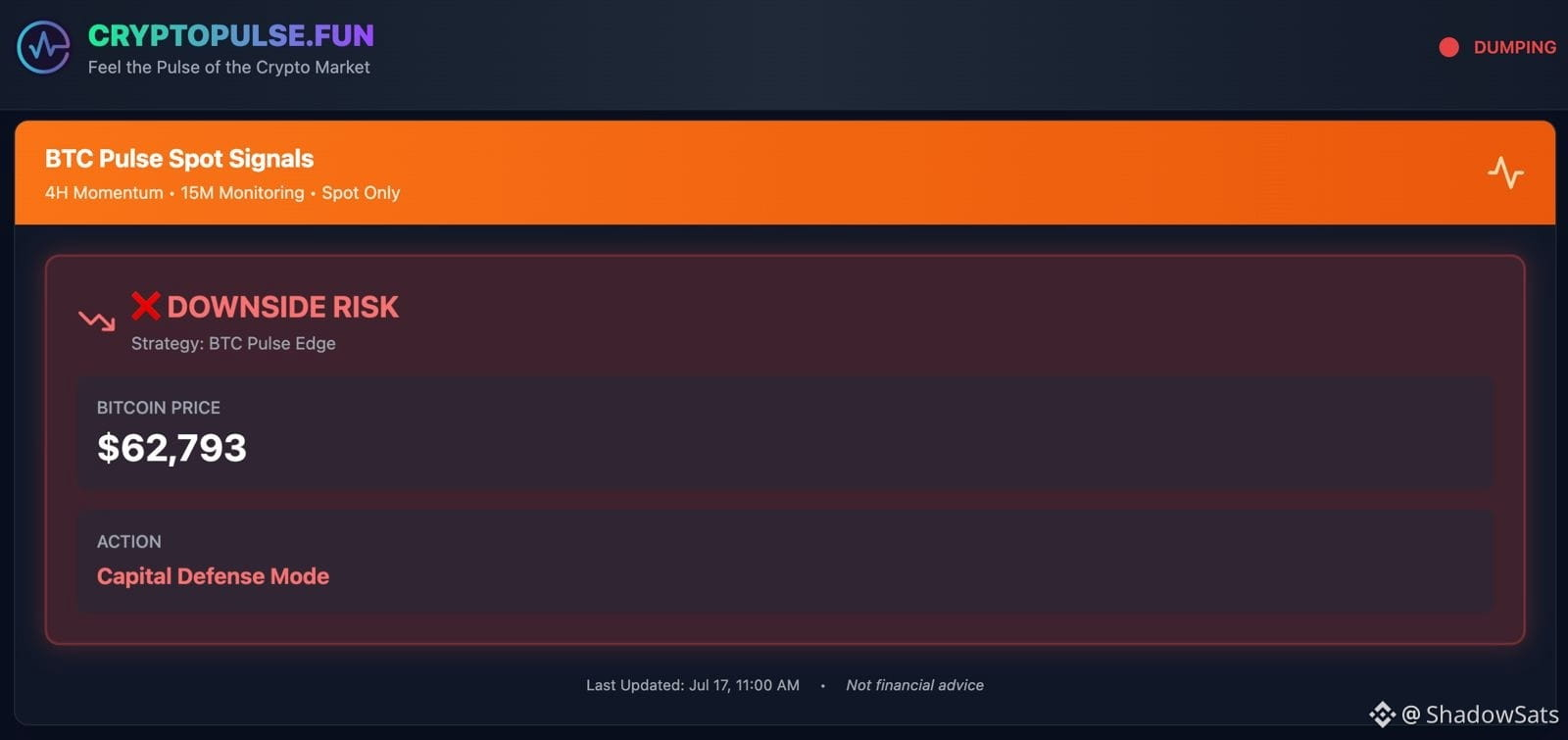
🔴Outlook: Neutral → Bearish (Macro Overhang)
Macro selling pressure keeps the market defensive.
Key support: $62.4K–$62.5K demand zone.
Hold it → opens room for a relief bounce toward $64K.
Lose $62.4K → risks a swift move toward the $60.5K support. 📉📊
$BTC
{future}(BTCUSDT)
🔴Outlook: Neutral → Bearish (Macro Overhang)
Macro selling pressure keeps the market defensive.
Key support: $62.4K–$62.5K demand zone.
Hold it → opens room for a relief bounce toward $64K.
Lose $62.4K → risks a swift move toward the $60.5K support. 📉📊
$BTC
Macro selling pressure keeps the market defensive.
Key support: $62.4K–$62.5K demand zone.
Hold it → opens room for a relief bounce toward $64K.
Lose $62.4K → risks a swift move toward the $60.5K support. 📉📊
$BTC
104
·
--

Article
The Invisible Infrastructure Driving On-Chain AI Automation 🤖⚙️When we talk about Web3 innovation, the conversation usually revolves around faster transaction speeds, lower gas fees, or the latest memecoin trends. However, there is a massive, invisible problem brewing in the background: How do we safely automate on-chain actions?
As AI agents increasingly take over tasks like rebalancing portfolios, managing liquidity, and interacting with smart contracts while we are offline, the industry desperately needs a verifiable way to enforce boundaries.
This is where @NewtonProtocol $NEWT steps in.
What is Newton Protocol?Newton Protocol serves as a decentralized authorization layer, a foundational piece of infrastructure that sits quietly between a transaction's intent and its final settlement. Instead of relying on manual oversight or clunky, hard-coded constraints, Newton introduces compliance-as-code.
[Transaction Intent] ➔ [Newton Authorization Layer] ➔ [Final Settlement]
│
Checks Rules & Policies
By leveraging trusted execution environments (TEEs) and zero-knowledge proofs (ZKPs), the Newton Mainnet Beta allows developers, DAOs, and AI wallets to program explicit rules. For example, an AI agent can be given a strict daily spending cap or automated liquidation triggers based on data from partners like RedStone or Credora. If the transaction breaks the rule, Newton blocks it instantly.
The Role of the $NEWT Token
The NEWT token powers this security framework at every level:
Gas & Compute Fees: Paying for the intense off-chain policy evaluations.
Network Security: Used for operator rewards and delegated restaking to guarantee trust.
Governance: Giving holders a voice in how the policy engines evolve.
The Verdict
Newton isn’t chasing short-term retail hype; it is building the foundational piping necessary for institutional adoption and autonomous agentic finance. The tech is remarkably clean, but as the project transitions through its Mainnet Beta phase, its ultimate test won't be its architecture, it will be widespread adoption by dApps and AI builders.
Keep an eye on this one as the AI-crypto narrative continues to mature!
#newt $NEWT
{future}(NEWTUSDT)
The Invisible Infrastructure Driving On-Chain AI Automation 🤖⚙️
When we talk about Web3 innovation, the conversation usually revolves around faster transaction speeds, lower gas fees, or the latest memecoin trends. However, there is a massive, invisible problem brewing in the background: How do we safely automate on-chain actions?
As AI agents increasingly take over tasks like rebalancing portfolios, managing liquidity, and interacting with smart contracts while we are offline, the industry desperately needs a verifiable way to enforce boundaries.
This is where @NewtonProtocol $NEWT steps in.
What is Newton Protocol?Newton Protocol serves as a decentralized authorization layer, a foundational piece of infrastructure that sits quietly between a transaction's intent and its final settlement. Instead of relying on manual oversight or clunky, hard-coded constraints, Newton introduces compliance-as-code.
[Transaction Intent] ➔ [Newton Authorization Layer] ➔ [Final Settlement]
│
Checks Rules & Policies
By leveraging trusted execution environments (TEEs) and zero-knowledge proofs (ZKPs), the Newton Mainnet Beta allows developers, DAOs, and AI wallets to program explicit rules. For example, an AI agent can be given a strict daily spending cap or automated liquidation triggers based on data from partners like RedStone or Credora. If the transaction breaks the rule, Newton blocks it instantly.
The Role of the $NEWT Token
The NEWT token powers this security framework at every level:
Gas & Compute Fees: Paying for the intense off-chain policy evaluations.
Network Security: Used for operator rewards and delegated restaking to guarantee trust.
Governance: Giving holders a voice in how the policy engines evolve.
The Verdict
Newton isn’t chasing short-term retail hype; it is building the foundational piping necessary for institutional adoption and autonomous agentic finance. The tech is remarkably clean, but as the project transitions through its Mainnet Beta phase, its ultimate test won't be its architecture, it will be widespread adoption by dApps and AI builders.
Keep an eye on this one as the AI-crypto narrative continues to mature!
#newt $NEWT
As AI agents increasingly take over tasks like rebalancing portfolios, managing liquidity, and interacting with smart contracts while we are offline, the industry desperately needs a verifiable way to enforce boundaries.
This is where @NewtonProtocol $NEWT steps in.
What is Newton Protocol?Newton Protocol serves as a decentralized authorization layer, a foundational piece of infrastructure that sits quietly between a transaction's intent and its final settlement. Instead of relying on manual oversight or clunky, hard-coded constraints, Newton introduces compliance-as-code.
[Transaction Intent] ➔ [Newton Authorization Layer] ➔ [Final Settlement]
│
Checks Rules & Policies
By leveraging trusted execution environments (TEEs) and zero-knowledge proofs (ZKPs), the Newton Mainnet Beta allows developers, DAOs, and AI wallets to program explicit rules. For example, an AI agent can be given a strict daily spending cap or automated liquidation triggers based on data from partners like RedStone or Credora. If the transaction breaks the rule, Newton blocks it instantly.
The Role of the $NEWT Token
The NEWT token powers this security framework at every level:
Gas & Compute Fees: Paying for the intense off-chain policy evaluations.
Network Security: Used for operator rewards and delegated restaking to guarantee trust.
Governance: Giving holders a voice in how the policy engines evolve.
The Verdict
Newton isn’t chasing short-term retail hype; it is building the foundational piping necessary for institutional adoption and autonomous agentic finance. The tech is remarkably clean, but as the project transitions through its Mainnet Beta phase, its ultimate test won't be its architecture, it will be widespread adoption by dApps and AI builders.
Keep an eye on this one as the AI-crypto narrative continues to mature!
#newt $NEWT
5
91
·
--
Bullish
📊 @NewtonProtocol Analysis
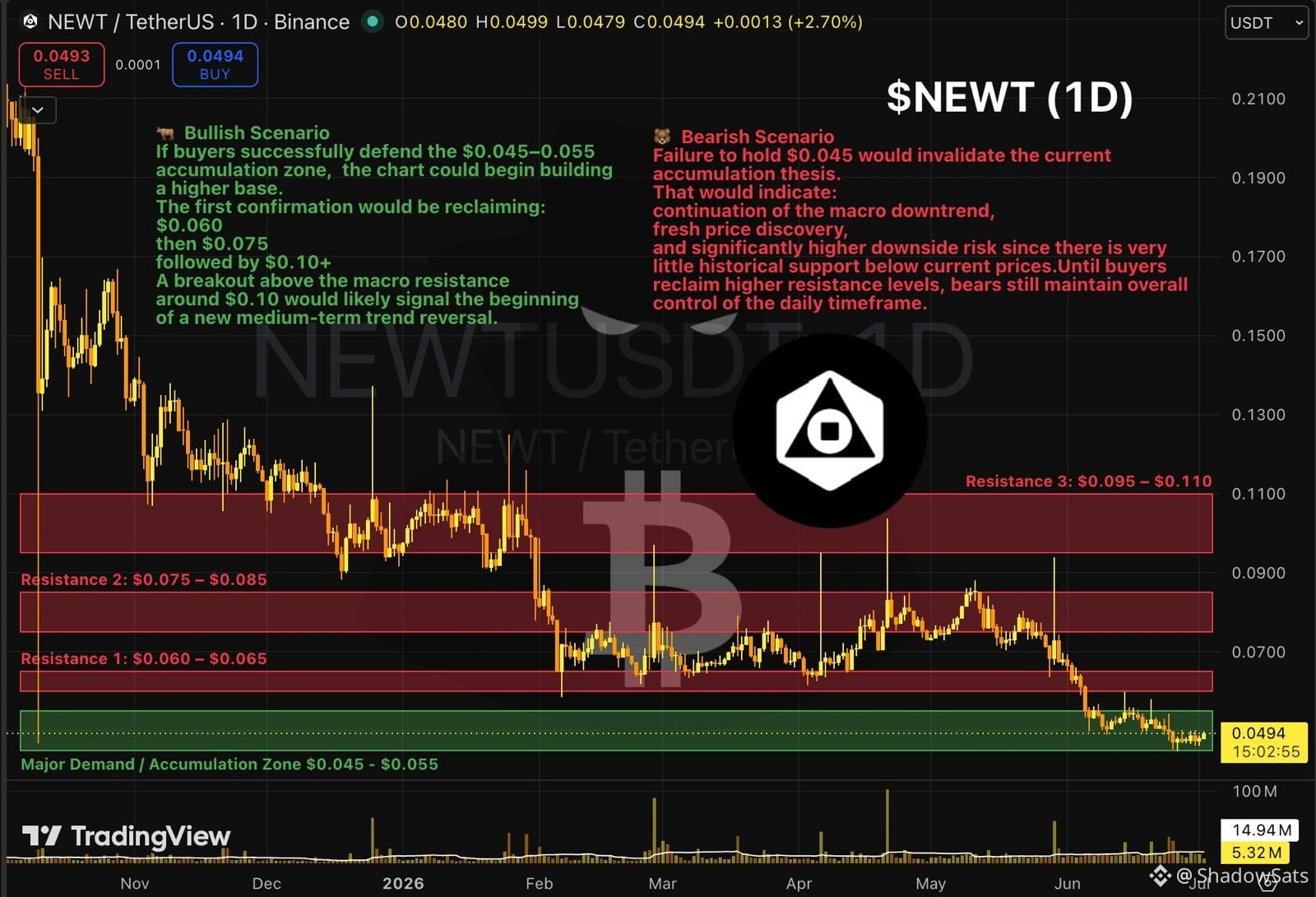
$NEWT continues trading inside its major demand/accumulation zone ($0.045–$0.055) after months of sustained selling pressure. Volatility has compressed and volume has declined, suggesting sellers may be losing momentum, but the daily trend is still bearish.
🟢 Bullish Scenario: Hold above $0.045 and reclaim $0.060–$0.065, opening the door toward $0.075 and eventually the key $0.10 resistance.
🔴 Bearish Scenario: Losing the $0.045 support would invalidate the accumulation thesis and could lead to fresh lows due to the lack of strong historical support beneath current prices.
Patience is key here. This is a chart to monitor for confirmation rather than chase. A high-volume breakout above resistance would provide the first meaningful sign that a long-term trend reversal is underway. 📈
#newt $NEWT
{future}(NEWTUSDT)
📊 @NewtonProtocol Analysis
$NEWT continues trading inside its major demand/accumulation zone ($0.045–$0.055) after months of sustained selling pressure. Volatility has compressed and volume has declined, suggesting sellers may be losing momentum, but the daily trend is still bearish.
🟢 Bullish Scenario: Hold above $0.045 and reclaim $0.060–$0.065, opening the door toward $0.075 and eventually the key $0.10 resistance.
🔴 Bearish Scenario: Losing the $0.045 support would invalidate the accumulation thesis and could lead to fresh lows due to the lack of strong historical support beneath current prices.
Patience is key here. This is a chart to monitor for confirmation rather than chase. A high-volume breakout above resistance would provide the first meaningful sign that a long-term trend reversal is underway. 📈
#newt $NEWT
$NEWT continues trading inside its major demand/accumulation zone ($0.045–$0.055) after months of sustained selling pressure. Volatility has compressed and volume has declined, suggesting sellers may be losing momentum, but the daily trend is still bearish.
🟢 Bullish Scenario: Hold above $0.045 and reclaim $0.060–$0.065, opening the door toward $0.075 and eventually the key $0.10 resistance.
🔴 Bearish Scenario: Losing the $0.045 support would invalidate the accumulation thesis and could lead to fresh lows due to the lack of strong historical support beneath current prices.
Patience is key here. This is a chart to monitor for confirmation rather than chase. A high-volume breakout above resistance would provide the first meaningful sign that a long-term trend reversal is underway. 📈
#newt $NEWT
2
115
·
--
Bullish
@OpenGradient as a hardcore decentralized AI infrastructure network, $OPG is breaking the black box of Web3 AI.
By leveraging their unique Hybrid AI Compute Architecture (HACA) combining zkML (Zero-Knowledge Machine Learning) and TEEs (Trusted Execution Environments), they are making on-chain AI models completely verifiable and auditable without sacrificing performance.
With top-tier backing from a16z crypto and Coinbase Ventures, plus a fixed total supply of 1 billion tokens, this project has serious long-term utility-driven tokenomics.
Watch the support levels closely as it continues its price discovery phase!📈
#opg $OPG
@OpenGradient as a hardcore decentralized AI infrastructure network, $OPG is breaking the black box of Web3 AI.
By leveraging their unique Hybrid AI Compute Architecture (HACA) combining zkML (Zero-Knowledge Machine Learning) and TEEs (Trusted Execution Environments), they are making on-chain AI models completely verifiable and auditable without sacrificing performance.
With top-tier backing from a16z crypto and Coinbase Ventures, plus a fixed total supply of 1 billion tokens, this project has serious long-term utility-driven tokenomics.
Watch the support levels closely as it continues its price discovery phase!📈
#opg $OPG
By leveraging their unique Hybrid AI Compute Architecture (HACA) combining zkML (Zero-Knowledge Machine Learning) and TEEs (Trusted Execution Environments), they are making on-chain AI models completely verifiable and auditable without sacrificing performance.
With top-tier backing from a16z crypto and Coinbase Ventures, plus a fixed total supply of 1 billion tokens, this project has serious long-term utility-driven tokenomics.
Watch the support levels closely as it continues its price discovery phase!📈
#opg $OPG
2
168
·
--
Bullish
@OpenGradient Technical Update (4H)🚨
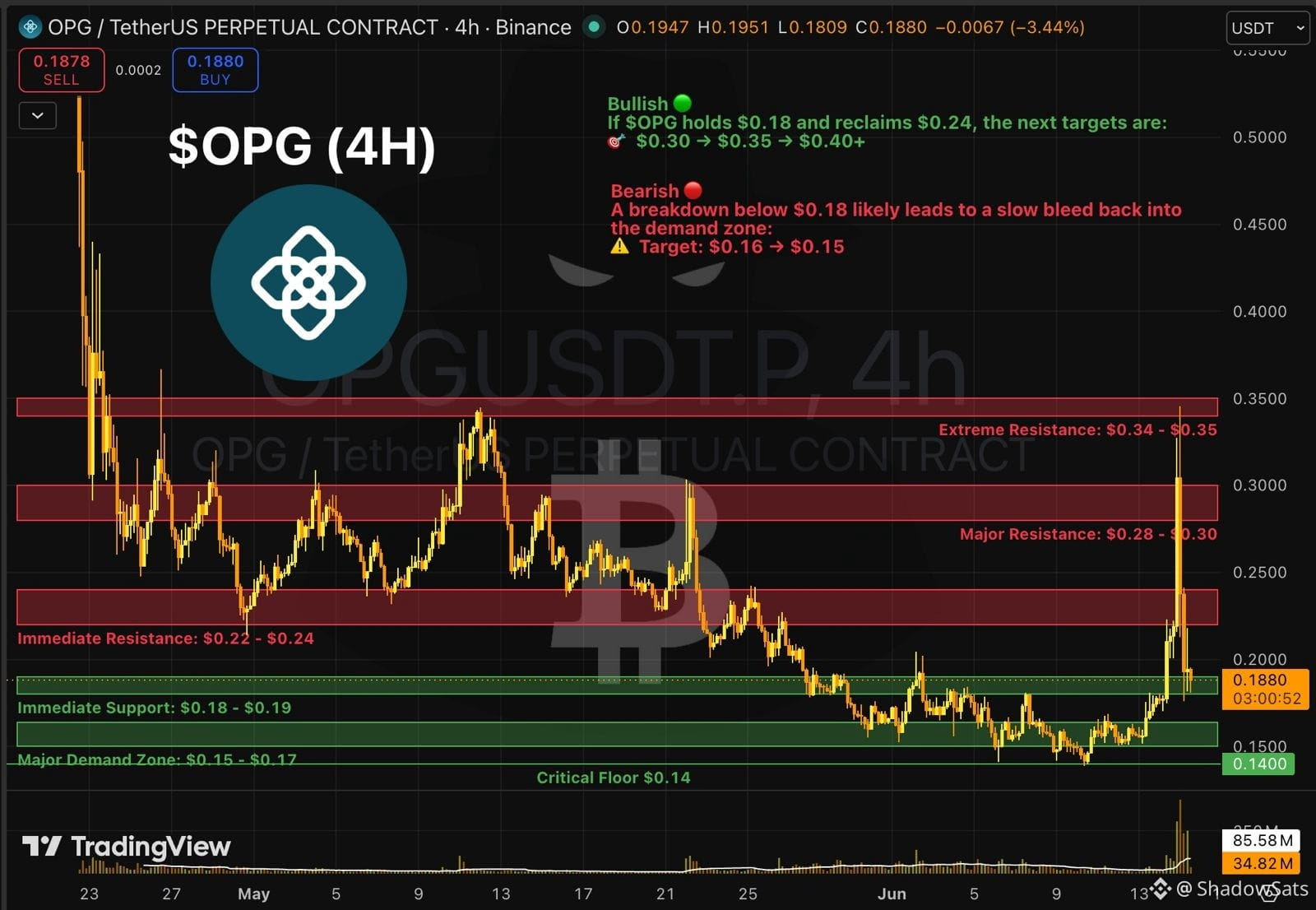
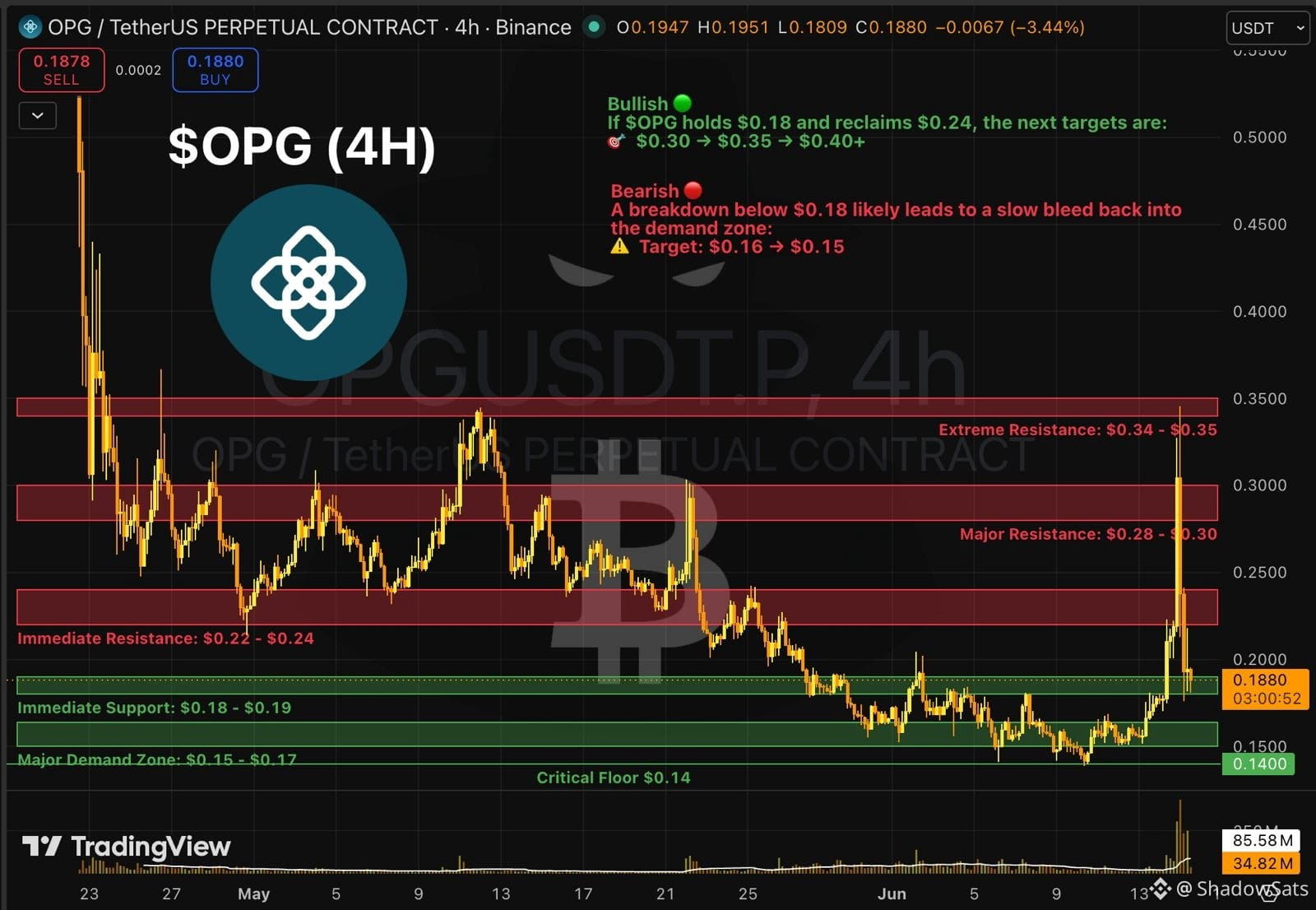
$OPG recently saw a 100% intraday explosion supported by record-high volume. After a rejection at $0.35, the focus is now on the $0.18 - $0.20 pivot zone.
🟢Bullish: Hold $0.18 and reclaim $0.24 to restart the push toward $0.35.
🔴Bearish: Losing $0.18 risks a full retracement back to the $0.15 accumulation floor.
⚠️Current Bias: Neutral-to-Bullish as long as the $0.18 support holds.
#opg $OPG
{future}(OPGUSDT)
@OpenGradient Technical Update (4H)🚨
$OPG recently saw a 100% intraday explosion supported by record-high volume. After a rejection at $0.35, the focus is now on the $0.18 - $0.20 pivot zone.
🟢Bullish: Hold $0.18 and reclaim $0.24 to restart the push toward $0.35.
🔴Bearish: Losing $0.18 risks a full retracement back to the $0.15 accumulation floor.
⚠️Current Bias: Neutral-to-Bullish as long as the $0.18 support holds.
#opg $OPG
$OPG recently saw a 100% intraday explosion supported by record-high volume. After a rejection at $0.35, the focus is now on the $0.18 - $0.20 pivot zone.
🟢Bullish: Hold $0.18 and reclaim $0.24 to restart the push toward $0.35.
🔴Bearish: Losing $0.18 risks a full retracement back to the $0.15 accumulation floor.
⚠️Current Bias: Neutral-to-Bullish as long as the $0.18 support holds.
#opg $OPG
108
·
--
🟣Outlook: Neutral → Cautiously Bearish
$BTC remains trapped in a weekend compression range.
Key levels: $60K support / $63.5K resistance.
Daily close > $63.5K → opens squeeze toward $65.3K.
4H close < $60K → risks a swift move toward $55K demand zones. 📉
$BTC #BTC
{future}(BTCUSDT)
🟣Outlook: Neutral → Cautiously Bearish
$BTC remains trapped in a weekend compression range.
Key levels: $60K support / $63.5K resistance.
Daily close > $63.5K → opens squeeze toward $65.3K.
4H close < $60K → risks a swift move toward $55K demand zones. 📉
$BTC #BTC
$BTC remains trapped in a weekend compression range.
Key levels: $60K support / $63.5K resistance.
Daily close > $63.5K → opens squeeze toward $65.3K.
4H close < $60K → risks a swift move toward $55K demand zones. 📉
$BTC #BTC
89
·
--
Bearish
$SPCX Analysis 📊
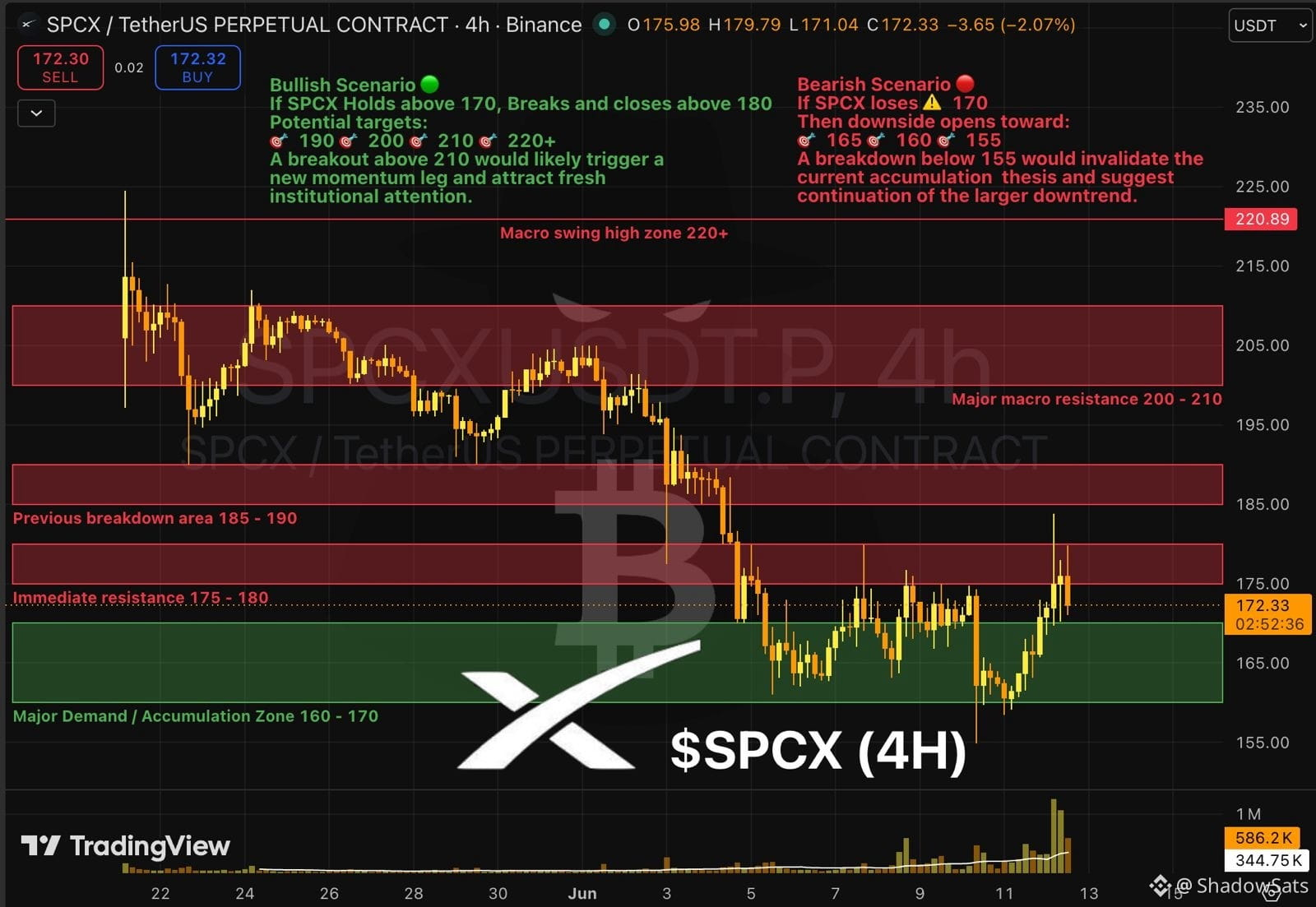
SPCX is currently trading above a major demand / accumulation zone at 160-170, where buyers have repeatedly stepped in after the post-listing correction.
🟢 Bullish Scenario:
Hold 170 and break 180 → targets 190 → 200 → 210 → 220
🔴 Bearish Scenario:
Lose 170 support → downside opens toward 165 → 160 → 155
From a macro perspective, SPCX should be viewed as a high-conviction narrative asset rather than a traditional stock. With Elon Musk involvement and growing institutional attention, the long-term opportunity remains significant if the project continues executing and attracting capital.
Long-Term Outlook
If:
Elon remains publicly involved
Institutional ownership expands
Execution meets expectations
then SPCX could become one of the market's major momentum names over the coming years.
However:
Many newly listed narrative stocks experience:
Initial hype
Sharp correction
Multi-month accumulation
Real trend emerges later
The current chart actually resembles Phase 3 (accumulation) more than a complete collapse.
$SPCX #TradebStocks
$SPCX Analysis 📊
SPCX is currently trading above a major demand / accumulation zone at 160-170, where buyers have repeatedly stepped in after the post-listing correction.
🟢 Bullish Scenario:
Hold 170 and break 180 → targets 190 → 200 → 210 → 220
🔴 Bearish Scenario:
Lose 170 support → downside opens toward 165 → 160 → 155
From a macro perspective, SPCX should be viewed as a high-conviction narrative asset rather than a traditional stock. With Elon Musk involvement and growing institutional attention, the long-term opportunity remains significant if the project continues executing and attracting capital.
Long-Term Outlook
If:
Elon remains publicly involved
Institutional ownership expands
Execution meets expectations
then SPCX could become one of the market's major momentum names over the coming years.
However:
Many newly listed narrative stocks experience:
Initial hype
Sharp correction
Multi-month accumulation
Real trend emerges later
The current chart actually resembles Phase 3 (accumulation) more than a complete collapse.
$SPCX #TradebStocks
SPCX is currently trading above a major demand / accumulation zone at 160-170, where buyers have repeatedly stepped in after the post-listing correction.
🟢 Bullish Scenario:
Hold 170 and break 180 → targets 190 → 200 → 210 → 220
🔴 Bearish Scenario:
Lose 170 support → downside opens toward 165 → 160 → 155
From a macro perspective, SPCX should be viewed as a high-conviction narrative asset rather than a traditional stock. With Elon Musk involvement and growing institutional attention, the long-term opportunity remains significant if the project continues executing and attracting capital.
Long-Term Outlook
If:
Elon remains publicly involved
Institutional ownership expands
Execution meets expectations
then SPCX could become one of the market's major momentum names over the coming years.
However:
Many newly listed narrative stocks experience:
Initial hype
Sharp correction
Multi-month accumulation
Real trend emerges later
The current chart actually resembles Phase 3 (accumulation) more than a complete collapse.
$SPCX #TradebStocks
1
1
1.9k
·
--
🟣Outlook: Neutral (Range-Bound Compression)
$BTC trapped in a tight compression range.
Key levels: $60K support / $63.5K resistance.
Break > $63.5K on volume → potential squeeze toward $65.3K.
4H close < $60K → opens path toward $55K demand zone. 📊
$BTC #bitcoin
{future}(BTCUSDT)
🟣Outlook: Neutral (Range-Bound Compression)
$BTC trapped in a tight compression range.
Key levels: $60K support / $63.5K resistance.
Break > $63.5K on volume → potential squeeze toward $65.3K.
4H close < $60K → opens path toward $55K demand zone. 📊
$BTC #bitcoin
$BTC trapped in a tight compression range.
Key levels: $60K support / $63.5K resistance.
Break > $63.5K on volume → potential squeeze toward $65.3K.
4H close < $60K → opens path toward $55K demand zone. 📊
$BTC #bitcoin
94
·
--
Bearish
🔴Outlook: Neutral → Cautiously Bearish
Panic selling has eased, with $60K holding as key support.
Fed uncertainty and ETF outflows keep pressure on the market.
Expect choppy, range-bound price action until a stronger catalyst emerges. 📉
$BTC #bitcoin
{future}(BTCUSDT)
🔴Outlook: Neutral → Cautiously Bearish
Panic selling has eased, with $60K holding as key support.
Fed uncertainty and ETF outflows keep pressure on the market.
Expect choppy, range-bound price action until a stronger catalyst emerges. 📉
$BTC #bitcoin
Panic selling has eased, with $60K holding as key support.
Fed uncertainty and ETF outflows keep pressure on the market.
Expect choppy, range-bound price action until a stronger catalyst emerges. 📉
$BTC #bitcoin
94
·
--
Bearish
🔴Outlook: Bearish (Defensive Bottom-Fishing)
Sellers remain in control of short-term momentum.
Key support: $60K–$61.5K demand zone.
Daily close < $60K → opens path toward $55K range lows.
Bulls need reclaim > $65.3K to invalidate the bearish structure.
$BTC #USIranForcesClashHormuzPeaceDealStalls
{future}(BTCUSDT)
🔴Outlook: Bearish (Defensive Bottom-Fishing)
Sellers remain in control of short-term momentum.
Key support: $60K–$61.5K demand zone.
Daily close < $60K → opens path toward $55K range lows.
Bulls need reclaim > $65.3K to invalidate the bearish structure.
$BTC #USIranForcesClashHormuzPeaceDealStalls
Sellers remain in control of short-term momentum.
Key support: $60K–$61.5K demand zone.
Daily close < $60K → opens path toward $55K range lows.
Bulls need reclaim > $65.3K to invalidate the bearish structure.
$BTC #USIranForcesClashHormuzPeaceDealStalls
122
·
--
🟣Outlook: Neutral (Tight Compression)
BTC consolidating inside a narrow range.
Key levels: $61.5K support / $65.3K resistance.
Daily close > $65.3K → opens path toward $67K.
Lose $61.5K → likely retest of $59K liquidity zone.
$BTC #bitcoin
{future}(BTCUSDT)
🟣Outlook: Neutral (Tight Compression)
BTC consolidating inside a narrow range.
Key levels: $61.5K support / $65.3K resistance.
Daily close > $65.3K → opens path toward $67K.
Lose $61.5K → likely retest of $59K liquidity zone.
$BTC #bitcoin
BTC consolidating inside a narrow range.
Key levels: $61.5K support / $65.3K resistance.
Daily close > $65.3K → opens path toward $67K.
Lose $61.5K → likely retest of $59K liquidity zone.
$BTC #bitcoin
98
·
--
Bullish
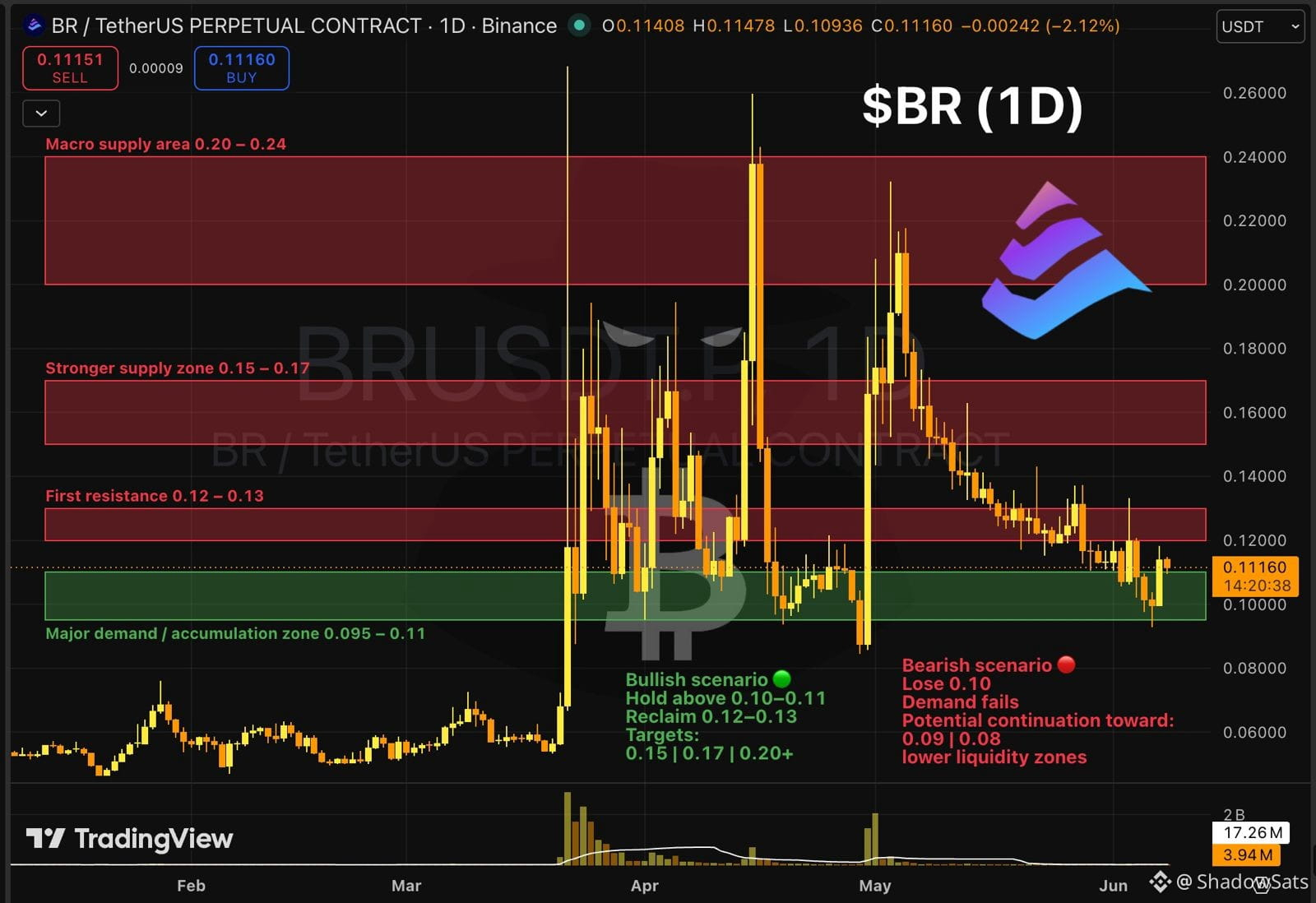
@Bedrock Analysis 📊
$BR is currently trading inside a major demand / accumulation zone around 0.095–0.11. Buyers are attempting to defend this area after a prolonged downtrend.
🟢 Bullish scenario:
Hold support and reclaim 0.12–0.13 → targets 0.15 → 0.17 → 0.20
🔴 Bearish scenario:
Losing 0.10 could open a move toward 0.09–0.08
Current structure remains neutral-to-bearish until stronger resistance levels are reclaimed.
#bedrock $BR
{future}(BRUSDT)
@Bedrock Analysis 📊
$BR is currently trading inside a major demand / accumulation zone around 0.095–0.11. Buyers are attempting to defend this area after a prolonged downtrend.
🟢 Bullish scenario:
Hold support and reclaim 0.12–0.13 → targets 0.15 → 0.17 → 0.20
🔴 Bearish scenario:
Losing 0.10 could open a move toward 0.09–0.08
Current structure remains neutral-to-bearish until stronger resistance levels are reclaimed.
#bedrock $BR
$BR is currently trading inside a major demand / accumulation zone around 0.095–0.11. Buyers are attempting to defend this area after a prolonged downtrend.
🟢 Bullish scenario:
Hold support and reclaim 0.12–0.13 → targets 0.15 → 0.17 → 0.20
🔴 Bearish scenario:
Losing 0.10 could open a move toward 0.09–0.08
Current structure remains neutral-to-bearish until stronger resistance levels are reclaimed.
#bedrock $BR
64
·
--
Bearish
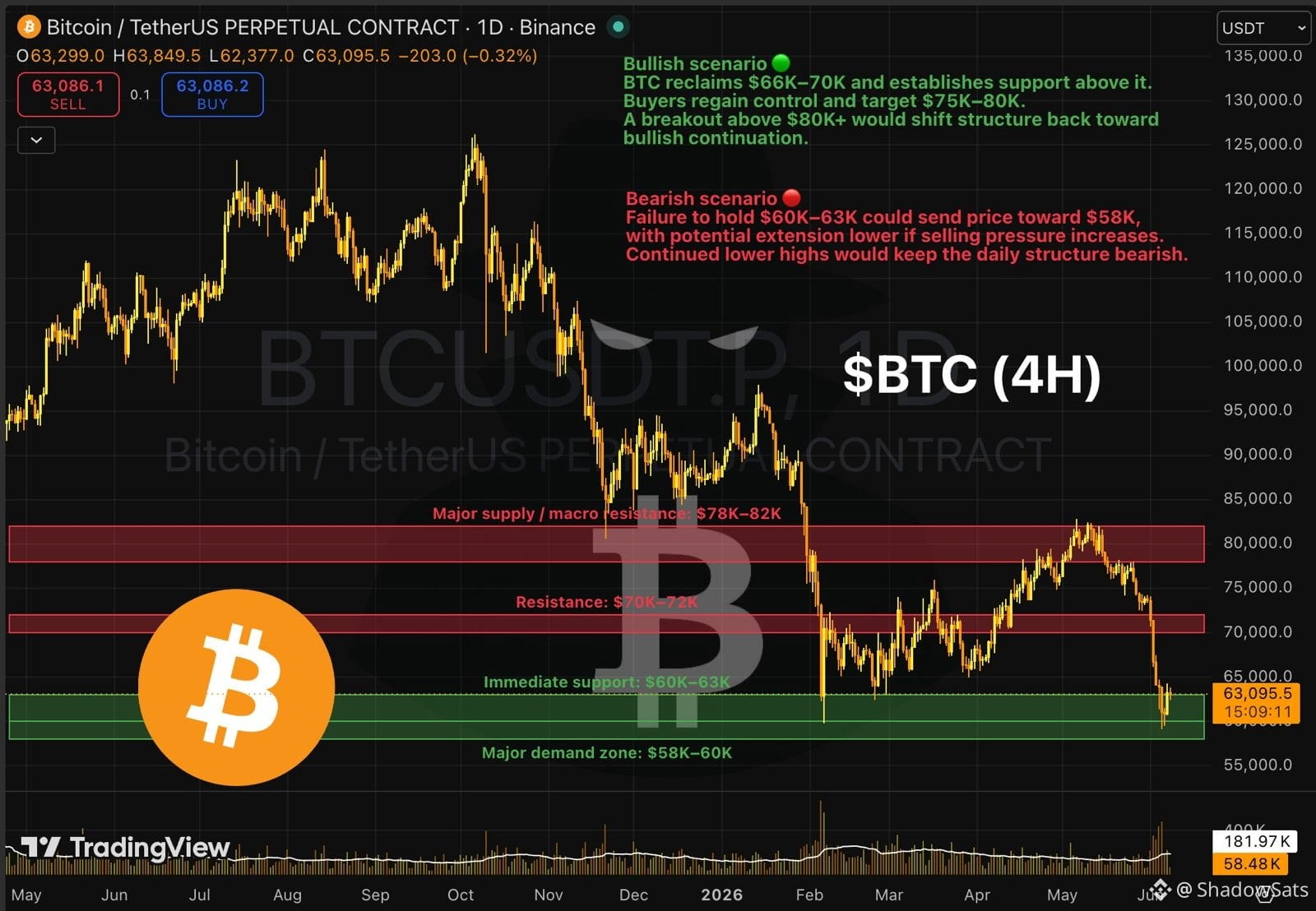
$BTC is trading at a critical daily support zone after heavy selling pressure. The $60K–63K region is now the key battlefield between bulls and bears.
🟢 Bullish: Reclaiming $66K–70K could open a move toward $75K–80K.
🔴 Bearish: Losing $60K support may push BTC into the $58K major demand area.
Next few daily candles will likely determine the next larger move. #BTC #bitcoin $BTC
{future}(BTCUSDT)
$BTC is trading at a critical daily support zone after heavy selling pressure. The $60K–63K region is now the key battlefield between bulls and bears.
🟢 Bullish: Reclaiming $66K–70K could open a move toward $75K–80K.
🔴 Bearish: Losing $60K support may push BTC into the $58K major demand area.
Next few daily candles will likely determine the next larger move. #BTC #bitcoin $BTC
🟢 Bullish: Reclaiming $66K–70K could open a move toward $75K–80K.
🔴 Bearish: Losing $60K support may push BTC into the $58K major demand area.
Next few daily candles will likely determine the next larger move. #BTC #bitcoin $BTC
81
·
--
Bullish
🟢Outlook: Bullish (ST Relief Expansion)
Buyers have regained short-term momentum.
$60K–$61.5K flipped back into a strong demand zone.
Hold > $62.5K → opens path toward $65K resistance.
Lose $61.5K on 4H close → invalidates the relief move. 🚀
$BTC #IsraelStrikesIranMilitaryTargets
{future}(BTCUSDT)
🟢Outlook: Bullish (ST Relief Expansion)
Buyers have regained short-term momentum.
$60K–$61.5K flipped back into a strong demand zone.
Hold > $62.5K → opens path toward $65K resistance.
Lose $61.5K on 4H close → invalidates the relief move. 🚀
$BTC #IsraelStrikesIranMilitaryTargets
Buyers have regained short-term momentum.
$60K–$61.5K flipped back into a strong demand zone.
Hold > $62.5K → opens path toward $65K resistance.
Lose $61.5K on 4H close → invalidates the relief move. 🚀
$BTC #IsraelStrikesIranMilitaryTargets
1
124
·
--
Bearish
🔴Outlook: Bearish
Short-term bias remains negative with $BTC testing $60K support.
Lose $60K → liquidation risk increases toward mid-$50Ks.
$BTC #SatoshiEraBitcoinDormantAddressMoves
{future}(BTCUSDT)
🔴Outlook: Bearish
Short-term bias remains negative with $BTC testing $60K support.
Lose $60K → liquidation risk increases toward mid-$50Ks.
$BTC #SatoshiEraBitcoinDormantAddressMoves
Short-term bias remains negative with $BTC testing $60K support.
Lose $60K → liquidation risk increases toward mid-$50Ks.
$BTC #SatoshiEraBitcoinDormantAddressMoves
101
·
--
Bearish
🔴Outlook: Bearish (Testing Multi-Month Demand)
Weekend liquidity remains thin, favoring downside pressure.
Key support: $59.1K–$60K psychological floor.
4H closes < $59.1K → likely cascade toward $55.5K demand.
Bulls need strong reclaim > $63.7K to invalidate downside momentum and confirm a bear trap.
$BTC #USDTMarketCapOvertakesEthereum
{future}(BTCUSDT)
🔴Outlook: Bearish (Testing Multi-Month Demand)
Weekend liquidity remains thin, favoring downside pressure.
Key support: $59.1K–$60K psychological floor.
4H closes < $59.1K → likely cascade toward $55.5K demand.
Bulls need strong reclaim > $63.7K to invalidate downside momentum and confirm a bear trap.
$BTC #USDTMarketCapOvertakesEthereum
Weekend liquidity remains thin, favoring downside pressure.
Key support: $59.1K–$60K psychological floor.
4H closes < $59.1K → likely cascade toward $55.5K demand.
Bulls need strong reclaim > $63.7K to invalidate downside momentum and confirm a bear trap.
$BTC #USDTMarketCapOvertakesEthereum
119
Log in to explore more content
Join global crypto users on Binance Square
⚡️ Get latest and useful information about crypto.
💬 Trusted by the world’s largest crypto exchange.
👍 Discover real insights from verified creators.
Email / Phone number
Trending Topics
US10YTreasuryYieldHitsHighestSinceNov2023
498 views
22 Discussing
#us10ytreasuryyieldhitshighestsincenov2023 You can't make this up.
The
US Treasury
just announced it is tripling long-term buybacks to $6 billion and yields STILL rallied on the news.
That means the
US Treasury
went from doubling, to "at least doubling," to tripling long-term bond buybacks and yields are still rising.
This puts the 10Y Note Yield above 4.85% for the first time since November 2023, up +15 basis points from pre-announcement levels.
The bond market is quite literally fighting the US Treasury as the Iran War continues, with the 10Y Note Yield nearing a +100 basis point move since the war began.
Without an end to the Iran War, we are on track to see the 10Y Note Yield above 5.00% by next week.
American consumers, homebuyers, and borrowers are in for a rude awakening.$KAT $MINA $NET
Isabella-I
·0 Likes
·49 views
USTreasuryToBuyBackUpTo$6BLongDatedDebt
7,538 views
121 Discussing
BitcoinSurpasses$79K
50,484 views
243 Discussing