
criptonoticia11
2k Posts
criptonoticia11
las mejores noticia importante de criptomonedas

#BinanceTurns7 task 2

#BinanceTurns7
Open Trade
Frequent Trader
4.8 Years
89 Following
21.2K+ Followers
10.7K+ Liked
2 Badges
Posts
Portfolio
All
Quotes
Live
PINNED
Sorry to my followers and non-followers that in these days I have not brought you good and fresh news as you already know, we suffered a strong earthquake in my country, Colombia, on August 10, 2026 at 7:34 AM. I lost many material things, but thank God, my family and I were okay—that’s what matters. Because with effort, material things can be obtained, but life can’t. My items and equipment got damaged. Now, I’m posting from my cell phone, and that’s why I haven’t uploaded News, because what happened in my country has been going on and many people lost their loved ones 🤧🇨🇴🇨🇴. It’s not easy to start over, my family and I, but the important thing is life. The material things we’ll see how we can get them with effort. Thank you to my followers who are active on my channel. God bless you, and let’s stay together through this pain in my country, Colombia.
On the other hand, Bitcoin is still stable at around 63,345 USD, still showing bearish signals, and many investors are taking advantage of this opportunity to buy before Bitcoin shoots up.
$BTC
On the other hand, Bitcoin is still stable at around 63,345 USD, still showing bearish signals, and many investors are taking advantage of this opportunity to buy before Bitcoin shoots up.
$BTC
Bitcoin hits USD 80,000 amid bullish confirmations and persistent risks
Against the backdrop of the broader prevailing trend, one trader warns that the probability that bitcoin has already marked the bottom of this cycle is low.
Trader Javier Crespo says this cycle still needs the “classic bearish capitulation.”
The conflict in Iran and the resulting blockade of the Strait of Hormuz remain in place.
Bitcoin’s price (BTC) reached $80,000 (USD) this Monday, August 24, driven by a bullish run that has racked up a 24% gain over the past seven days.
The digital currency’s price shows a clear recovery after weeks of moving sideways. The following chart shows how bitcoin’s price has moved during the current trading session, where it can be seen reaching the $80,000 mark before a slight pullback.
$BTC
Against the backdrop of the broader prevailing trend, one trader warns that the probability that bitcoin has already marked the bottom of this cycle is low.
Trader Javier Crespo says this cycle still needs the “classic bearish capitulation.”
The conflict in Iran and the resulting blockade of the Strait of Hormuz remain in place.
Bitcoin’s price (BTC) reached $80,000 (USD) this Monday, August 24, driven by a bullish run that has racked up a 24% gain over the past seven days.
The digital currency’s price shows a clear recovery after weeks of moving sideways. The following chart shows how bitcoin’s price has moved during the current trading session, where it can be seen reaching the $80,000 mark before a slight pullback.
$BTC

This is a confirmation signal for the end of the bitcoin bear market
Willy Woo explains, according to his analysis, what the most likely price scenarios for bitcoin would be in the coming days.
Bitcoin is trading above the cost basis of recent investors.
Willy Woo does not completely rule out the possibility of seeing further price declines in bitcoin.
With the recent rise in bitcoin’s price (BTC), which reached about $79,000 on Friday, August 21, 2026, analysts and traders should recalculate the next possible scenarios. In this context, Willy Woo, who months ago was mostly bearish, is now presenting his new projections.
In a series of posts on the social media platform X, the trader says that «bitcoin is now significantly above the cost basis of recent investors (STH, for its acronym in English).
$BTC $ETH
Willy Woo explains, according to his analysis, what the most likely price scenarios for bitcoin would be in the coming days.
Bitcoin is trading above the cost basis of recent investors.
Willy Woo does not completely rule out the possibility of seeing further price declines in bitcoin.
With the recent rise in bitcoin’s price (BTC), which reached about $79,000 on Friday, August 21, 2026, analysts and traders should recalculate the next possible scenarios. In this context, Willy Woo, who months ago was mostly bearish, is now presenting his new projections.
In a series of posts on the social media platform X, the trader says that «bitcoin is now significantly above the cost basis of recent investors (STH, for its acronym in English).
$BTC $ETH

The “whales” of bitcoin return, spurred on by the fall in prices Big holders take advantage of the cryptocurrency’s dip back to 2024 levels to strongly restart buying and accumulate 43,000 bitcoins in 60 days.
Big bitcoin investors, known as whales in the jargon of the crypto market, have reignited their purchases of the cryptocurrency by taking advantage of its sharp pullbacks.
The whales have bought 43,000 bitcoin, worth $2.75 billion (a little over €2.326 billion) at the current price of the digital currency, over the last 60 days, according to data provided by CryptoQuant. The figure excludes exchange platforms and mining pools. It comes after more than three months of buybacks totaling billions and coincides with bitcoin’s touchdown—estimated by experts—at the $60,000 level.
The cryptocurrency has fallen more than 20% from the previous highs in May, when it lost the $60,000 mark, down to levels seen in October 2024. Thanks to these investors’ purchases, it is up 10% from the lows, experts say, who also point out that the return of the whales is often a sign of relief for retail investors looking to open or expand positions.
The whales haven’t come alone, because data from analytics firm Glassnode, as reported by Bloomberg, shows that the “dolphins,” investors with smaller positions, are back too. These mid-sized investors, who hold between 100 and 1,000 bitcoins, have also stepped up their buying by hundreds of millions of dollars.
“The data reflects an accumulation trend and not only the net change in balances. It clearly shows a resumption of buying across all investor groups,” says Sean Rose of Glassnode.
Follow me to see more interesting news
#bitcoin
#BTC
$BTC
Big bitcoin investors, known as whales in the jargon of the crypto market, have reignited their purchases of the cryptocurrency by taking advantage of its sharp pullbacks.
The whales have bought 43,000 bitcoin, worth $2.75 billion (a little over €2.326 billion) at the current price of the digital currency, over the last 60 days, according to data provided by CryptoQuant. The figure excludes exchange platforms and mining pools. It comes after more than three months of buybacks totaling billions and coincides with bitcoin’s touchdown—estimated by experts—at the $60,000 level.
The cryptocurrency has fallen more than 20% from the previous highs in May, when it lost the $60,000 mark, down to levels seen in October 2024. Thanks to these investors’ purchases, it is up 10% from the lows, experts say, who also point out that the return of the whales is often a sign of relief for retail investors looking to open or expand positions.
The whales haven’t come alone, because data from analytics firm Glassnode, as reported by Bloomberg, shows that the “dolphins,” investors with smaller positions, are back too. These mid-sized investors, who hold between 100 and 1,000 bitcoins, have also stepped up their buying by hundreds of millions of dollars.
“The data reflects an accumulation trend and not only the net change in balances. It clearly shows a resumption of buying across all investor groups,” says Sean Rose of Glassnode.
Follow me to see more interesting news
#bitcoin
#BTC
$BTC
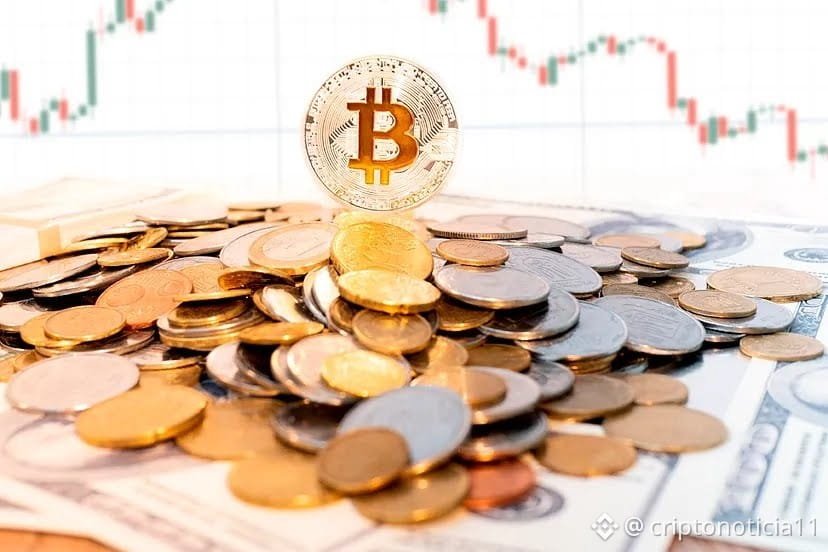
Bitcoin resurfaced: it closed the best week in three years with a 22 percent rise in its price
The cryptocurrency finished Friday at around USD 78,500, boosted by the return of global risk appetite.
Bitcoin extended its rally on Friday and closed its best week in more than three years. The cryptocurrency closed at USD 78,500 (at 8:00 p.m. in Buenos Aires) and gained just over 22% this week—one of the biggest one-week rises since March 2023.
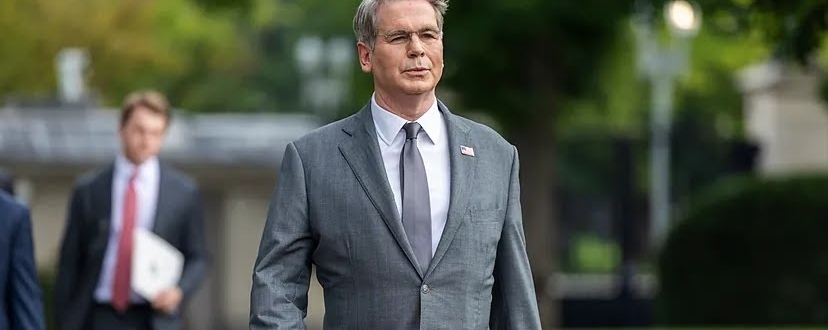
Enthusiasm returned to the cryptocurrency market after U.S. Treasury Secretary Scott Bessent announced on Wednesday that the portfolio would at least double its repurchases of long-term bonds. The move triggered a rebound that forced traders to close out billions of dollars in short positions. That same day, U.S. President Donald Trump met with leaders from the crypto industry, which reinforced optimism. Meanwhile, gold hit its highest level since May amid concerns that intervention in the bond market could keep putting pressure on the dollar.
“The real driver was the U.S. Treasury’s decision to double its repurchases of long-term bonds, which pushed down long-term yields and boosted risk appetite overall,” said Rachael Lucas, an analyst at BTC Markets. “Nothing changed the long-term arguments in favor of bitcoin, but neither has its volatility,” she said, according to Infobae News
$BTC
The cryptocurrency finished Friday at around USD 78,500, boosted by the return of global risk appetite.
Bitcoin extended its rally on Friday and closed its best week in more than three years. The cryptocurrency closed at USD 78,500 (at 8:00 p.m. in Buenos Aires) and gained just over 22% this week—one of the biggest one-week rises since March 2023.
Enthusiasm returned to the cryptocurrency market after U.S. Treasury Secretary Scott Bessent announced on Wednesday that the portfolio would at least double its repurchases of long-term bonds. The move triggered a rebound that forced traders to close out billions of dollars in short positions. That same day, U.S. President Donald Trump met with leaders from the crypto industry, which reinforced optimism. Meanwhile, gold hit its highest level since May amid concerns that intervention in the bond market could keep putting pressure on the dollar.
“The real driver was the U.S. Treasury’s decision to double its repurchases of long-term bonds, which pushed down long-term yields and boosted risk appetite overall,” said Rachael Lucas, an analyst at BTC Markets. “Nothing changed the long-term arguments in favor of bitcoin, but neither has its volatility,” she said, according to Infobae News
$BTC
I think the time has come to make decisions about XRP—make decisions on this rise: are you going in or getting out? Look at this news.
The 40% price increase of XRP is dividing the opinions of its community on Reddit.
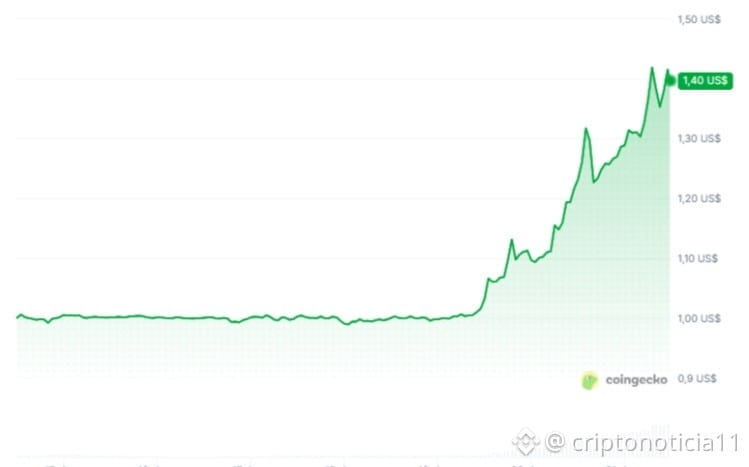
XRP went from USD 1 to USD 1.40 in seven days, while investors debate whether the rally will continue.
Trump’s meeting with industry executives coincided with the price advance.
On Reddit, optimism and warnings about a possible drop coexist.
The cryptocurrency XRP has accumulated a 42% rise over the past seven days, moving from USD 1 to USD 1.42 in the mentioned period.
At the time of this publication, August 21, 2026, XRP shows a very slight decline and is trading at USD 1.40.
The following chart shows how the price of this cryptocurrency has moved over the last week.
$XRP $TRUMP
The 40% price increase of XRP is dividing the opinions of its community on Reddit.
XRP went from USD 1 to USD 1.40 in seven days, while investors debate whether the rally will continue.
Trump’s meeting with industry executives coincided with the price advance.
On Reddit, optimism and warnings about a possible drop coexist.
The cryptocurrency XRP has accumulated a 42% rise over the past seven days, moving from USD 1 to USD 1.42 in the mentioned period.
At the time of this publication, August 21, 2026, XRP shows a very slight decline and is trading at USD 1.40.
The following chart shows how the price of this cryptocurrency has moved over the last week.
$XRP $TRUMP

SpaceX completes for the first time the historic Starship rescue after a month in the Indian Ocean The Elon Musk aerospace company has recovered the upper stage of the rocket that flew on the thirteenth launch.
SpaceX’s next big step: it will try to capture the Starship spacecraft with the Mechazilla mechanical arms.
After spending almost four weeks in the water, SpaceX’s recovery team has managed to move the vehicle to calmer waters near the island, taking into account that the operation has been affected by sea conditions, since it forced the towing to be carried out at a very low speed and several vessels set out to help transport the spacecraft to shore.
$$SPCXB
SpaceX’s next big step: it will try to capture the Starship spacecraft with the Mechazilla mechanical arms.
After spending almost four weeks in the water, SpaceX’s recovery team has managed to move the vehicle to calmer waters near the island, taking into account that the operation has been affected by sea conditions, since it forced the towing to be carried out at a very low speed and several vessels set out to help transport the spacecraft to shore.
$$SPCXB

Verified
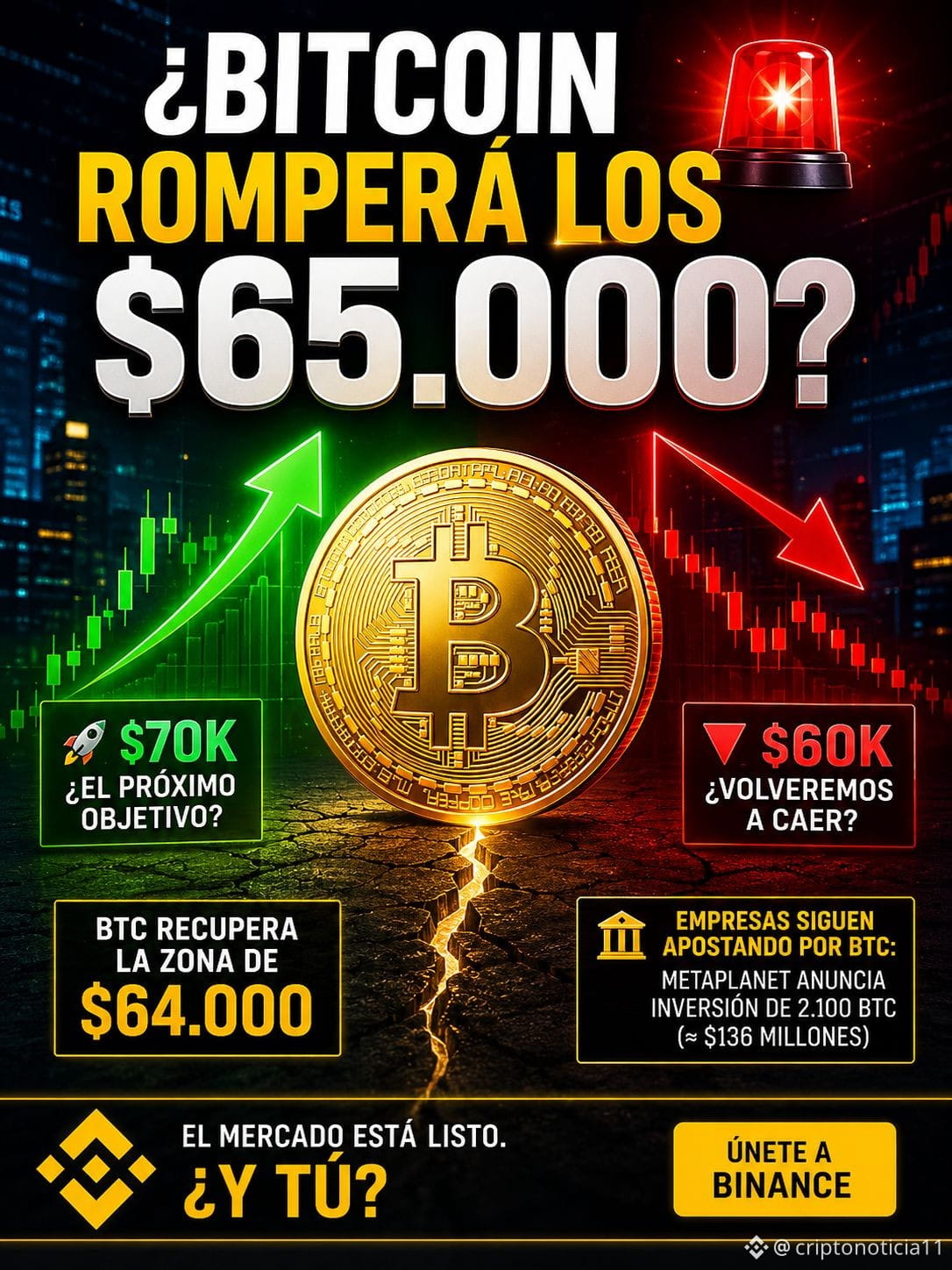
🚨 BITCOIN PUTS $65.000 BACK IN THE SPOTLIGHT 👀₿
Bitcoin is drawing renewed attention from the market after reclaiming the $64,000 zone. Now everyone is watching a key level: $65,000.
🔥 If BTC manages to break through that resistance with strength, it could boost traders’ interest and shift market sentiment.
But watch out ⚠️: there is still selling pressure, and the next moves in the financial markets could cause significant volatility.
The question many are asking now is:
Is Bitcoin getting ready for the next strong move, or will we see another drop before attempting to break $65K? 👇
📊 What do you think first: 🚀 $70K or 🔻 $60K?
another interesting news
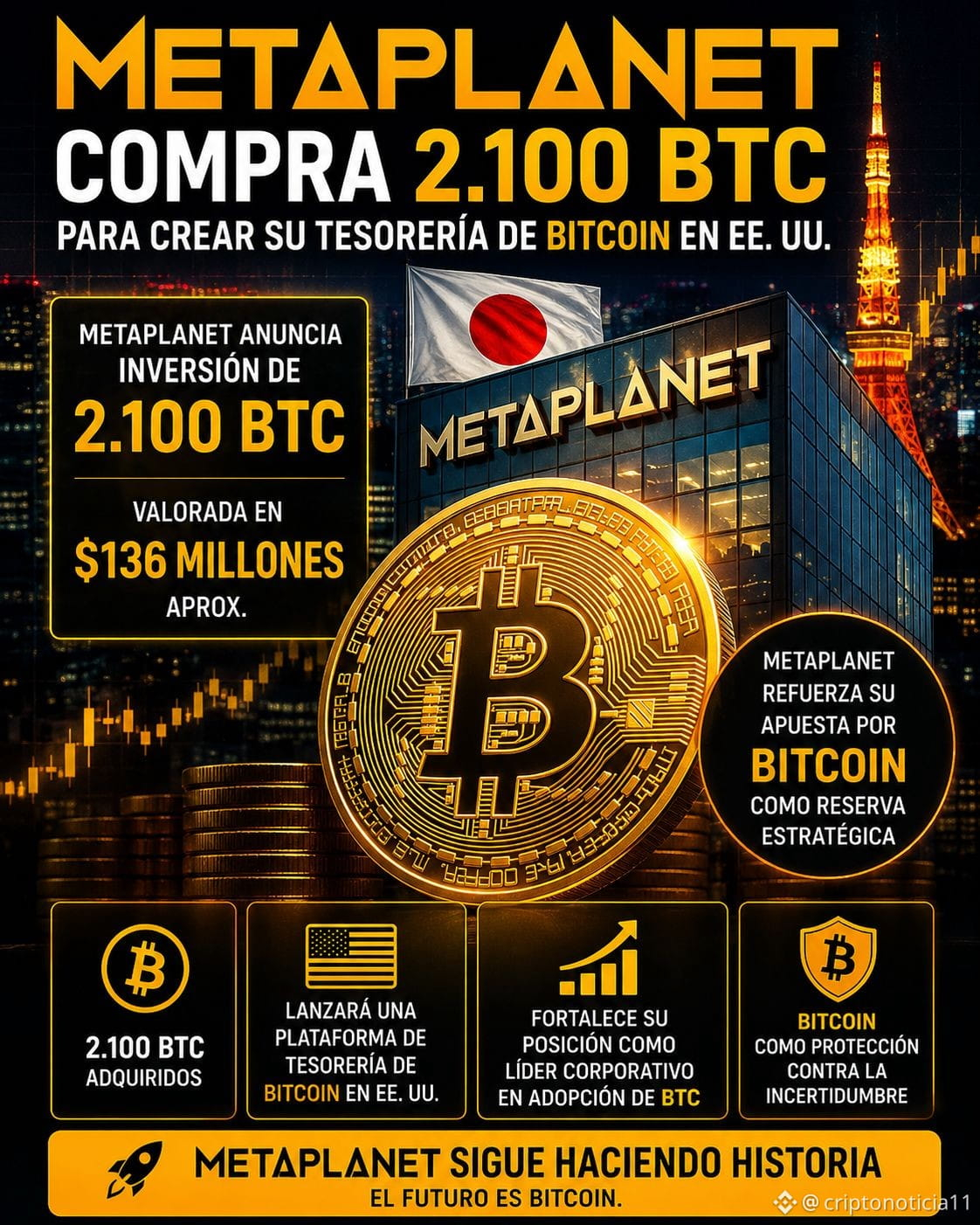
important: Metaplanet announced an investment of 2,100 BTC to create a U.S. treasury platform in Bitcoin—an operation valued at about $136 million at the current price.
#Bitcoin #BTC #Crypto #Binance #CryptoNews #BitcoinNews
Bitcoin is drawing renewed attention from the market after reclaiming the $64,000 zone. Now everyone is watching a key level: $65,000.
🔥 If BTC manages to break through that resistance with strength, it could boost traders’ interest and shift market sentiment.
But watch out ⚠️: there is still selling pressure, and the next moves in the financial markets could cause significant volatility.
The question many are asking now is:
Is Bitcoin getting ready for the next strong move, or will we see another drop before attempting to break $65K? 👇
📊 What do you think first: 🚀 $70K or 🔻 $60K?
another interesting news
important: Metaplanet announced an investment of 2,100 BTC to create a U.S. treasury platform in Bitcoin—an operation valued at about $136 million at the current price.
#Bitcoin #BTC #Crypto #Binance #CryptoNews #BitcoinNews
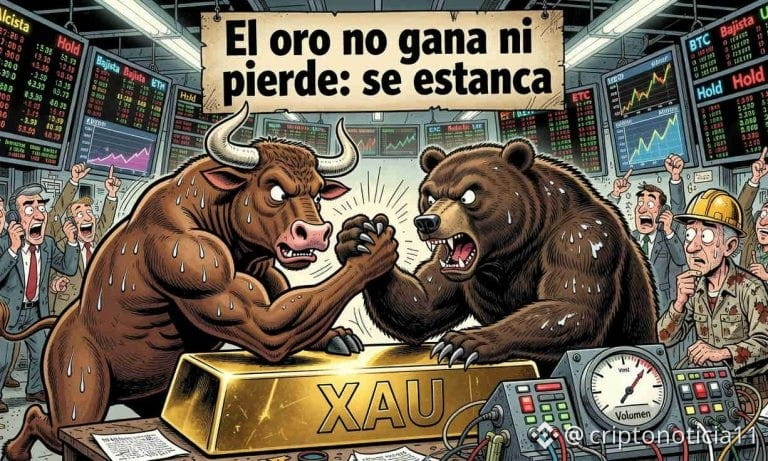
Xaut gives up ground and moves toward its key support: analysis The price of Tether Gold (XAUT) falls slightly to USD $1.946,89, a pullback framed by a sideways market dominated by low liquidity and moderate selling pressure. The cryptocurrency backed by physical gold tests its base again, while trading volume hits lows and short-term averages send mixed signals. Despite the support zone, the gold investor outlook could present a relevant opportunity in the medium term.
XAUT declines 0.28%, losing the SMA-50 and approaching the SMA-30
Daily volume of 0.0017 million USD, well below its monthly average
52-week return of +10.87% and +9.05% since the start of the year
The high volume-to-market-cap ratio suggests low speculative activity
The precious metal is in therapy, while gold-backed tokens hold steady
Key levels are maintained: support at $1930 and resistance at $1960 Physical gold and global gold news remain the gold optimism.
$XAUT
XAUT declines 0.28%, losing the SMA-50 and approaching the SMA-30
Daily volume of 0.0017 million USD, well below its monthly average
52-week return of +10.87% and +9.05% since the start of the year
The high volume-to-market-cap ratio suggests low speculative activity
The precious metal is in therapy, while gold-backed tokens hold steady
Key levels are maintained: support at $1930 and resistance at $1960 Physical gold and global gold news remain the gold optimism.
$XAUT
Bitcoin Is Here At 63.123 USD but it still shows bearish signs. If we analyze the green and red lines, the red lines are stronger than the green ones. What we see is a small rise; it is a resistance that prevents it from going down. This Bitcoin resistance is because big investors are accumulating because they know that at any moment it could spike.
$BTC
$BTC
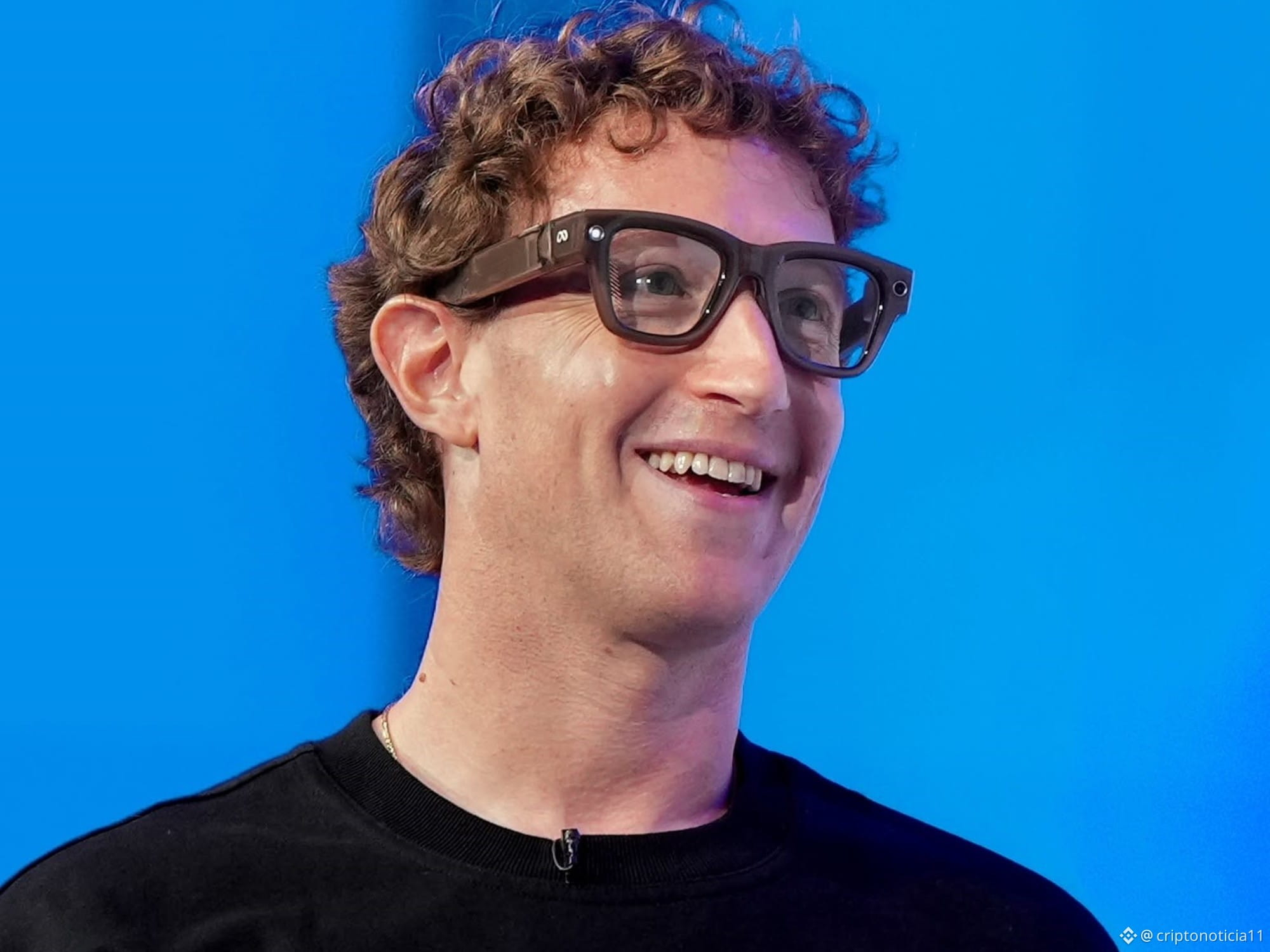
Mark Zuckerberg, CEO of Meta: “We will donate 99% of our shares to advance social equality”
Meta’s founder and his wife, Priscilla Chan, announced the creation of the Chan Zuckerberg Initiative to combat diseases and promote personalized learning.
Mark Zuckerberg Mark Zuckerberg, founder and CEO of Meta, promised after the birth of his first daughter, Max, in 2015 that he would maintain a steadfast commitment to transforming the future of the next generation. Along with his wife, Priscilla Chan, they decided that their firstborn will not inherit the bulk of their fortune, choosing instead to channel that wealth back into society to foster a fairer and healthier world.
The decision involves the progressive donation of 99% of his Facebook shares, a figure that was already valued at about $45 billion. Zuckerberg detailed in a letter that this effort is, more than an act of paternal love, an ethical obligation to human progress. The couple wants to ensure a future where science, education, and connectivity are the fundamental pillars for all children
Facebook’s creator is clear that, as a major technology entrepreneur and the world’s third-richest person, he has a moral duty to promote human potential and equity in access to opportunities. With the Chan Zuckerberg Initiative, the couple began their investments in research and technology.
$METAB
Meta’s founder and his wife, Priscilla Chan, announced the creation of the Chan Zuckerberg Initiative to combat diseases and promote personalized learning.
Mark Zuckerberg Mark Zuckerberg, founder and CEO of Meta, promised after the birth of his first daughter, Max, in 2015 that he would maintain a steadfast commitment to transforming the future of the next generation. Along with his wife, Priscilla Chan, they decided that their firstborn will not inherit the bulk of their fortune, choosing instead to channel that wealth back into society to foster a fairer and healthier world.
The decision involves the progressive donation of 99% of his Facebook shares, a figure that was already valued at about $45 billion. Zuckerberg detailed in a letter that this effort is, more than an act of paternal love, an ethical obligation to human progress. The couple wants to ensure a future where science, education, and connectivity are the fundamental pillars for all children
Facebook’s creator is clear that, as a major technology entrepreneur and the world’s third-richest person, he has a moral duty to promote human potential and equity in access to opportunities. With the Chan Zuckerberg Initiative, the couple began their investments in research and technology.
$METAB
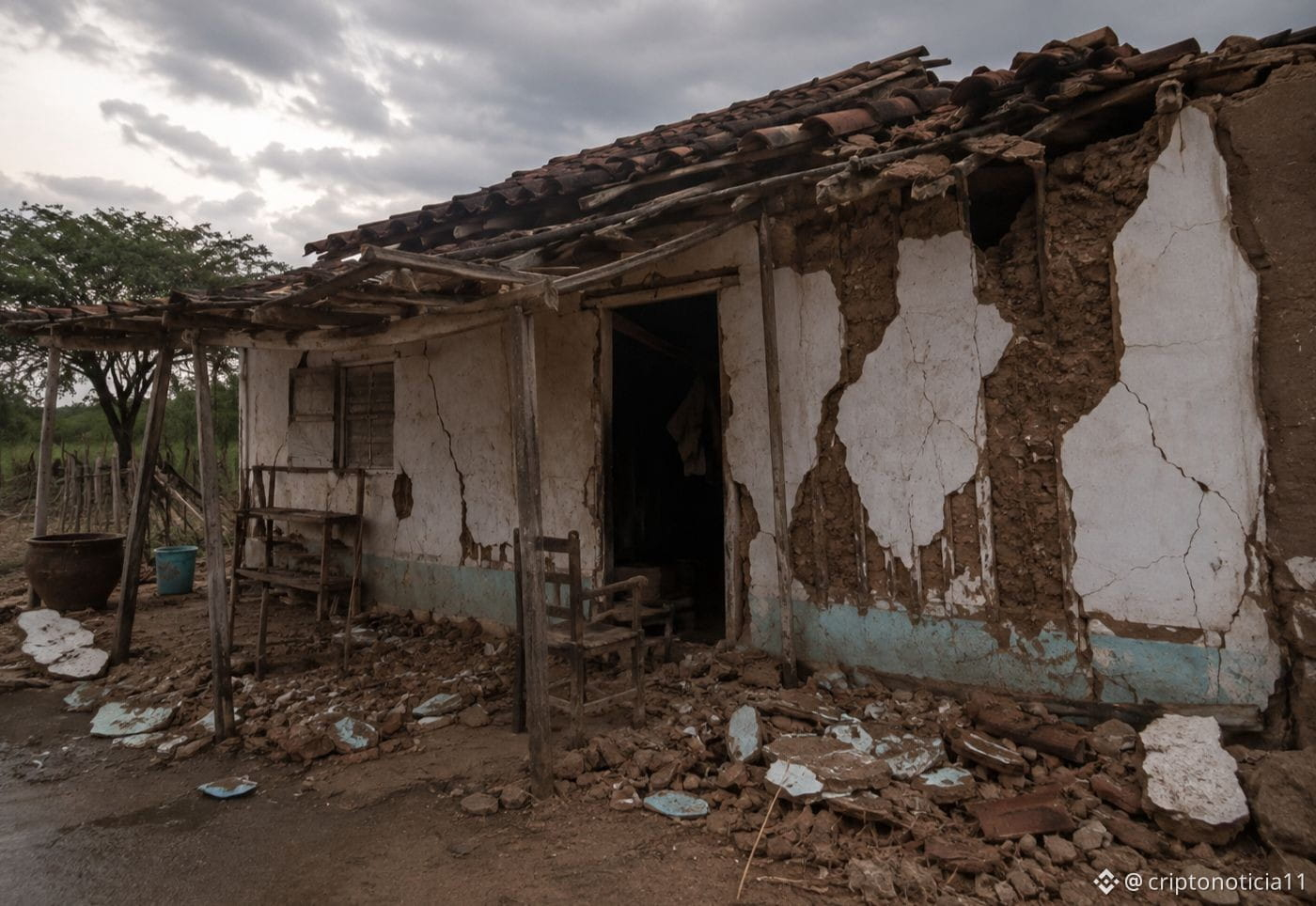
I hadn’t shown you how my house turned out. Today I’m going to show it to you after the earthquake in my country, Colombia. My house was left in ruins, and I lost almost everything, but thanks to God we are okay, because first comes life; material things can be obtained with effort. I live a bit away from the city. My house was devastated—it looks as if it were an old house, like the earthquake left it. Thank God my house was only one floor, and it gave us time to get out without taking anything from our belongings, but here we are. We’re announcing crypto market news—let’s move forward 🤧🤧😔😔😔, with pain for the families; it hurts that they lost loved ones.
we are together in the pain 🇨🇴🇨🇴🇨🇴
On the other hand, today Bitcoin woke up at around 62,789 USD. That means Bitcoin is still bearish, while many are taking advantage of this opportunity to buy at this price before it spikes, because they know that at any moment it could surge.
Hope you all have a good time, my followers and non-followers.
$BTC
we are together in the pain 🇨🇴🇨🇴🇨🇴
On the other hand, today Bitcoin woke up at around 62,789 USD. That means Bitcoin is still bearish, while many are taking advantage of this opportunity to buy at this price before it spikes, because they know that at any moment it could surge.
Hope you all have a good time, my followers and non-followers.
$BTC
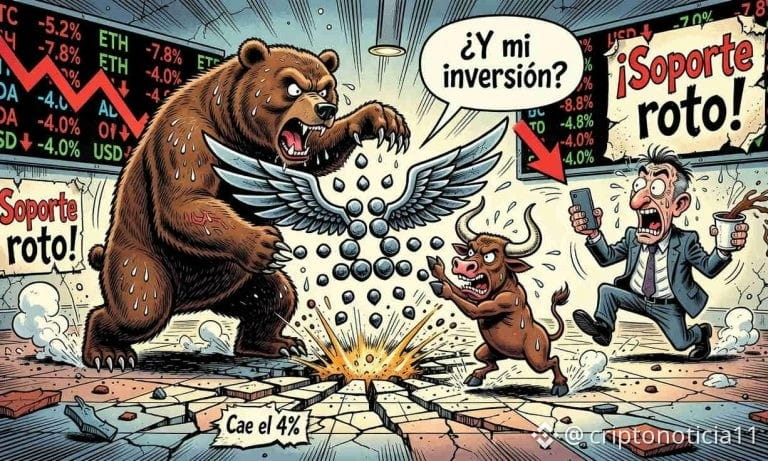
ADA drops 4% amid correction: analysis 12/08/2026 Cardano (ADA) falls 4% over the last 24 hours, extending the correction following a 30-day rally. Technical analysis shows a battle between key supports and resistances. Is this a pause or a trend change? We examine the data and signals for investors.
ADA is down 4.16% today, trading at $0.181994
Daily volume 29% below the 30-day average
Price below the SMA-200 at $0.2309, bearish trend
Support at $0.1753 (SMA-30) and $0.1697 (SMA-50)
Resistance at $0.1854 (SMA-90) and $0.1942 (SMA-7)
30-day return: +15.32%, but 90 days: -32.18% This analysis does not constitute investment advice. Always do your own research and consider your goals and financial situation before investing in cryptocurrencies.
Executive summary
ADA is trading at USD $0.181994, down 4.16% over the last 24 hours, after an intraday range between $0.1818132 and $0.1872652. Market capitalization stands at USD $6.65 billion, while daily volume is USD $0.2360643 billion, 29.21% below the 30-day average. These figures suggest a correction with declining volume, which could indicate a pause rather than a structural reversal.
The coin has accumulated a positive return of +15.32% over 30 days, but negative returns of -32.18% over 90 days and -81.66% over the past year. The price is below the SMA-200 (USD $0.2309159), confirming a long-term bearish trend, although it remains above the SMA-30 (USD $0.1753084) and SMA-50 (USD $0.1697373), suggesting a short-term bullish momentum that is being tested.
$ADA
ADA is down 4.16% today, trading at $0.181994
Daily volume 29% below the 30-day average
Price below the SMA-200 at $0.2309, bearish trend
Support at $0.1753 (SMA-30) and $0.1697 (SMA-50)
Resistance at $0.1854 (SMA-90) and $0.1942 (SMA-7)
30-day return: +15.32%, but 90 days: -32.18% This analysis does not constitute investment advice. Always do your own research and consider your goals and financial situation before investing in cryptocurrencies.
Executive summary
ADA is trading at USD $0.181994, down 4.16% over the last 24 hours, after an intraday range between $0.1818132 and $0.1872652. Market capitalization stands at USD $6.65 billion, while daily volume is USD $0.2360643 billion, 29.21% below the 30-day average. These figures suggest a correction with declining volume, which could indicate a pause rather than a structural reversal.
The coin has accumulated a positive return of +15.32% over 30 days, but negative returns of -32.18% over 90 days and -81.66% over the past year. The price is below the SMA-200 (USD $0.2309159), confirming a long-term bearish trend, although it remains above the SMA-30 (USD $0.1753084) and SMA-50 (USD $0.1697373), suggesting a short-term bullish momentum that is being tested.
$ADA
Well, starting again after the tragedy in my country—thank God my family and I are okay, which is what matters. Even though we lost material things, they can be replaced. My country is in mourning 🤧🤧🤧🇨🇴🇨🇴🇨🇴 Strength for my country. I’m informing my followers and non-followers: we’re okay, even though we lost a lot of material things. I’ll start again.
On the other hand, Bitcoin is below 64,456 USD; however, many big investors are accumulating because they know what comes after this bad bearish streak.
$BTC
On the other hand, Bitcoin is below 64,456 USD; however, many big investors are accumulating because they know what comes after this bad bearish streak.
$BTC
On the day before yesterday, August 10, 2026, during the morning hours, we experienced a major earthquake in my country, Colombia. I suffered material losses, but thank God my family and I are okay. The material things can be recovered, but not life, while other people have lost loved ones. I offer my deepest condolences to the affected families. 🥺🥺🥺🥺🇨🇴🇨🇴🇨🇴🇨🇴
Amid this tragedy, I continue to stay active and share news about the crypto market.
Bitcoin remains at around 64,324 USD while large investors continue buying Bitcoin because something big is expected.
$BTC
Amid this tragedy, I continue to stay active and share news about the crypto market.
Bitcoin remains at around 64,324 USD while large investors continue buying Bitcoin because something big is expected.
$BTC

As a Colombian, we suffered a strong earthquake while we were victims of losses, but thanks to God we are alive—what’s important is that the material things can be recovered. There are many people who lost their loved ones 🤧🤧🤧🤧🇨🇴🇨🇴🇨🇴🇨🇴 for my country.
On the other hand, in the middle of this pain, I want to inform you that Bitcoin is below 64,345 USD. Bitcoin has been on a bearish streak while major investors buy more because they know that at any moment it can skyrocket. Many major investors are positive about Bitcoin.
$BTC
On the other hand, in the middle of this pain, I want to inform you that Bitcoin is below 64,345 USD. Bitcoin has been on a bearish streak while major investors buy more because they know that at any moment it can skyrocket. Many major investors are positive about Bitcoin.
$BTC
Verified
Bitcoin Defenders Demand Advanced AI to Audit Open-Source Code
OpenAI, Google, and Anthropic are at the center of a 40-organization call to close the security gap in open-source code.
The request also includes independent developers and nonprofit organizations.
AI labs had not yet publicly responded to the request.
Open-source software is facing an escalating contradiction because to strengthen its security it needs the same artificial intelligence tools controlled by a few companies. This tension led more than 40 organizations in the Bitcoin ecosystem to ask for trusted access to the most advanced models to audit code and detect vulnerabilities.
The request was driven, on August 10, 2026, by the Bitcoin Policy Institute, based in the United States, dedicated to investigating the political, social, and economic implications of the currency created by Satoshi Nakamoto.
$BTC
OpenAI, Google, and Anthropic are at the center of a 40-organization call to close the security gap in open-source code.
The request also includes independent developers and nonprofit organizations.
AI labs had not yet publicly responded to the request.
Open-source software is facing an escalating contradiction because to strengthen its security it needs the same artificial intelligence tools controlled by a few companies. This tension led more than 40 organizations in the Bitcoin ecosystem to ask for trusted access to the most advanced models to audit code and detect vulnerabilities.
The request was driven, on August 10, 2026, by the Bitcoin Policy Institute, based in the United States, dedicated to investigating the political, social, and economic implications of the currency created by Satoshi Nakamoto.
$BTC

Verified
Jim Cramer Sees SpaceX as a Multigenerational Investment
Jim Cramer, host of Mad Money on CNBC, has described SpaceX as a multigenerational investment by comparing it to 100-year railroad bonds.
The Mad Money host on CNBC, Jim Cramer, sought to calm investors’ nerves over the company’s results and the recent drop in SpaceX Rg-A. He believes Elon Musk’s aerospace firm is a multigenerational investment when compared to 100-year railroad bonds, according to Ananya Gairola at Yahoo Finance.
Cramer said investors should think about SpaceX’s potential decades from now rather than focusing on short-term gains or the recent decline in the stock.
Cramer compared the company to century-old railroad bonds that ultimately rewarded patient investors. "Back then, people bought 100-year railroad bonds that paid off. SpaceX could be a 100-year bond, too," Cramer added.
He also highlighted the company’s long-term ambitions, inviting viewers to imagine a future in which lunar exploration and orbital infrastructure become commonplace.
“Do you think your kids or grandkids won’t be working on the Moon someday?” Cramer asked. He added that solar-powered orbital data centers could become a practical solution as demand for AI computing grows.
Why did SpaceX shares fall after the earnings presentation?
SpaceX shares fell 13.61% on Wednesday after the company reported its first quarterly results since going public in June.
While revenue beat Wall Street’s estimates, investors focused on the sharp increase in capital expenditures, raising concerns about near-term spending.
$SPCXB $SPCX
Jim Cramer, host of Mad Money on CNBC, has described SpaceX as a multigenerational investment by comparing it to 100-year railroad bonds.
The Mad Money host on CNBC, Jim Cramer, sought to calm investors’ nerves over the company’s results and the recent drop in SpaceX Rg-A. He believes Elon Musk’s aerospace firm is a multigenerational investment when compared to 100-year railroad bonds, according to Ananya Gairola at Yahoo Finance.
Cramer said investors should think about SpaceX’s potential decades from now rather than focusing on short-term gains or the recent decline in the stock.
Cramer compared the company to century-old railroad bonds that ultimately rewarded patient investors. "Back then, people bought 100-year railroad bonds that paid off. SpaceX could be a 100-year bond, too," Cramer added.
He also highlighted the company’s long-term ambitions, inviting viewers to imagine a future in which lunar exploration and orbital infrastructure become commonplace.
“Do you think your kids or grandkids won’t be working on the Moon someday?” Cramer asked. He added that solar-powered orbital data centers could become a practical solution as demand for AI computing grows.
Why did SpaceX shares fall after the earnings presentation?
SpaceX shares fell 13.61% on Wednesday after the company reported its first quarterly results since going public in June.
While revenue beat Wall Street’s estimates, investors focused on the sharp increase in capital expenditures, raising concerns about near-term spending.
$SPCXB $SPCX

Verified
Ark Invest by Cathie Wood buys Nvidia and TSMC after Meta earnings Cathie Wood strengthens her bet on AI with million-dollar purchases in Nvidia and TSMC, right after Meta increased its infrastructure spending. What does this move indicate for the future of semiconductors?
Ark Invest bought approximately USD $15 million in Nvidia shares and USD $14.7 million in TSMC.
Meta raised its 2026 capex guidance to a range of USD $130 billion to USD $145 billion.
Nvidia and TSMC trade at around 25 times their forward earnings, according to the analysis.
Cathie Wood of Ark Invest reinforces her AI bet.
She bought USD $15 million in Nvidia and USD $14.7 million in TSMC.
These transactions coincide with the increase in Meta’s spending on AI infrastructure.
Meta forecasts capex of up to USD $145 billion for 2026.
Nvidia and TSMC trade at 25 times their forward earnings The well-known asset manager Ark Invest, led by Cathie Wood, has once again drawn market attention with a series of strategic purchases in the semiconductor sector. On July 28, the firm acquired approximately USD $15 million in Nvidia shares (NASDAQ: NVDA), and the following day it added USD $14.7 million in Taiwan Semiconductor Manufacturing (NYSE: TSM), known as TSMC.
These operations took place in the same window as the release of Meta Platforms’ second-quarter results, which revealed a substantial increase in spending on artificial intelligence (AI) infrastructure. The coincidence has sparked a heated debate among analysts and investors about what this move implies for the future of AI stocks. <$NVDAB $METAB >
Ark Invest bought approximately USD $15 million in Nvidia shares and USD $14.7 million in TSMC.
Meta raised its 2026 capex guidance to a range of USD $130 billion to USD $145 billion.
Nvidia and TSMC trade at around 25 times their forward earnings, according to the analysis.
Cathie Wood of Ark Invest reinforces her AI bet.
She bought USD $15 million in Nvidia and USD $14.7 million in TSMC.
These transactions coincide with the increase in Meta’s spending on AI infrastructure.
Meta forecasts capex of up to USD $145 billion for 2026.
Nvidia and TSMC trade at 25 times their forward earnings The well-known asset manager Ark Invest, led by Cathie Wood, has once again drawn market attention with a series of strategic purchases in the semiconductor sector. On July 28, the firm acquired approximately USD $15 million in Nvidia shares (NASDAQ: NVDA), and the following day it added USD $14.7 million in Taiwan Semiconductor Manufacturing (NYSE: TSM), known as TSMC.
These operations took place in the same window as the release of Meta Platforms’ second-quarter results, which revealed a substantial increase in spending on artificial intelligence (AI) infrastructure. The coincidence has sparked a heated debate among analysts and investors about what this move implies for the future of AI stocks. <$NVDAB $METAB >


Log in to explore more content