
criptonoticia11
2.1k Posts
criptonoticia11
Report
Block User
las mejores noticia importante de criptomonedas

#BinanceTurns7 task 2

#BinanceTurns7
Open Trade
Frequent Trader
4.9 Years
89 Following
21.5K+ Followers
10.8K+ Liked
2 Badges
Posts
Portfolio
All
Quotes
Live
PINNED
·
--
Bullish
Sorry to my followers and non-followers that in these days I have not brought you good and fresh news as you already know, we suffered a strong earthquake in my country, Colombia, on August 10, 2026 at 7:34 AM. I lost many material things, but thank God, my family and I were okay—that’s what matters. Because with effort, material things can be obtained, but life can’t. My items and equipment got damaged. Now, I’m posting from my cell phone, and that’s why I haven’t uploaded News, because what happened in my country has been going on and many people lost their loved ones 🤧🇨🇴🇨🇴. It’s not easy to start over, my family and I, but the important thing is life. The material things we’ll see how we can get them with effort. Thank you to my followers who are active on my channel. God bless you, and let’s stay together through this pain in my country, Colombia.
On the other hand, Bitcoin is still stable at around 63,345 USD, still showing bearish signals, and many investors are taking advantage of this opportunity to buy before Bitcoin shoots up.
$BTC
Sorry to my followers and non-followers that in these days I have not brought you good and fresh news as you already know, we suffered a strong earthquake in my country, Colombia, on August 10, 2026 at 7:34 AM. I lost many material things, but thank God, my family and I were okay—that’s what matters. Because with effort, material things can be obtained, but life can’t. My items and equipment got damaged. Now, I’m posting from my cell phone, and that’s why I haven’t uploaded News, because what happened in my country has been going on and many people lost their loved ones 🤧🇨🇴🇨🇴. It’s not easy to start over, my family and I, but the important thing is life. The material things we’ll see how we can get them with effort. Thank you to my followers who are active on my channel. God bless you, and let’s stay together through this pain in my country, Colombia.
On the other hand, Bitcoin is still stable at around 63,345 USD, still showing bearish signals, and many investors are taking advantage of this opportunity to buy before Bitcoin shoots up.
$BTC
On the other hand, Bitcoin is still stable at around 63,345 USD, still showing bearish signals, and many investors are taking advantage of this opportunity to buy before Bitcoin shoots up.
$BTC
4
1.9k
·
--
Bullish
Bitcoin remains stable. At around $78,443, it is in good shape. A maximum rise is expected in the coming days—stay tuned to Bitcoin’s price action.
Bitcoin is on the right track. I don’t know if you’ve analyzed it, but it is showing a bullish signal in the coming days.
$BTC
Bitcoin remains stable. At around $78,443, it is in good shape. A maximum rise is expected in the coming days—stay tuned to Bitcoin’s price action.
Bitcoin is on the right track. I don’t know if you’ve analyzed it, but it is showing a bullish signal in the coming days.
$BTC
Bitcoin is on the right track. I don’t know if you’ve analyzed it, but it is showing a bullish signal in the coming days.
$BTC
2
3.6k
·
--
Bullish
I think many are rushing to buy Bitcoin because they know a massive increase is coming. On September 8, 2026, Bitcoin is below 79,567 USD, and it's down slightly by 0.1%; it's not much. Meanwhile, large investors are taking advantage and accumulating because they have the money to do it and they know that an explosive wave is coming—based on your own research.
$BTC
I think many are rushing to buy Bitcoin because they know a massive increase is coming. On September 8, 2026, Bitcoin is below 79,567 USD, and it's down slightly by 0.1%; it's not much. Meanwhile, large investors are taking advantage and accumulating because they have the money to do it and they know that an explosive wave is coming—based on your own research.
$BTC
$BTC
1
2k
$老子 this is trash it is going nowhere it had a rise but again it is going back because with this coin mediocre people buy and as soon as they see it is going up they immediately sell and take their small profits I don't see any future for this it does not hold up if it does not fall after it reached its all-time high last night at 0.009 USD just look where it is going now at 0.001 tell me does this have a future I hope that I am not mistaken.
$老子 this is trash it is going nowhere it had a rise but again it is going back because with this coin mediocre people buy and as soon as they see it is going up they immediately sell and take their small profits I don't see any future for this it does not hold up if it does not fall after it reached its all-time high last night at 0.009 USD just look where it is going now at 0.001 tell me does this have a future I hope that I am not mistaken.
1
2
3.1k
Attention, a pump is approaching in the coming months for the TUT cryptocurrency. It is expected that many investors who have invested for the long term could withdraw large profits. I leave it there; do your own research.
$TUT
{spot}(TUTUSDT)
Attention, a pump is approaching in the coming months for the TUT cryptocurrency. It is expected that many investors who have invested for the long term could withdraw large profits. I leave it there; do your own research.
$TUT
$TUT
3
2.3k
·
--
Bullish
Bitcoin fell after yesterday, September 3, 2026, when it reached as high as USD 81,012. Today, September 4, it is at USD 79,800. This is due to selling pressure, but not everything is negative; however, Bitcoin remains firm at that price because while there is selling pressure, there is also buying pressure at the same time. If you want, check it yourself and do your own research.
$BTC
Bitcoin fell after yesterday, September 3, 2026, when it reached as high as USD 81,012. Today, September 4, it is at USD 79,800. This is due to selling pressure, but not everything is negative; however, Bitcoin remains firm at that price because while there is selling pressure, there is also buying pressure at the same time. If you want, check it yourself and do your own research.
$BTC
$BTC
2
2k
·
--
Bullish
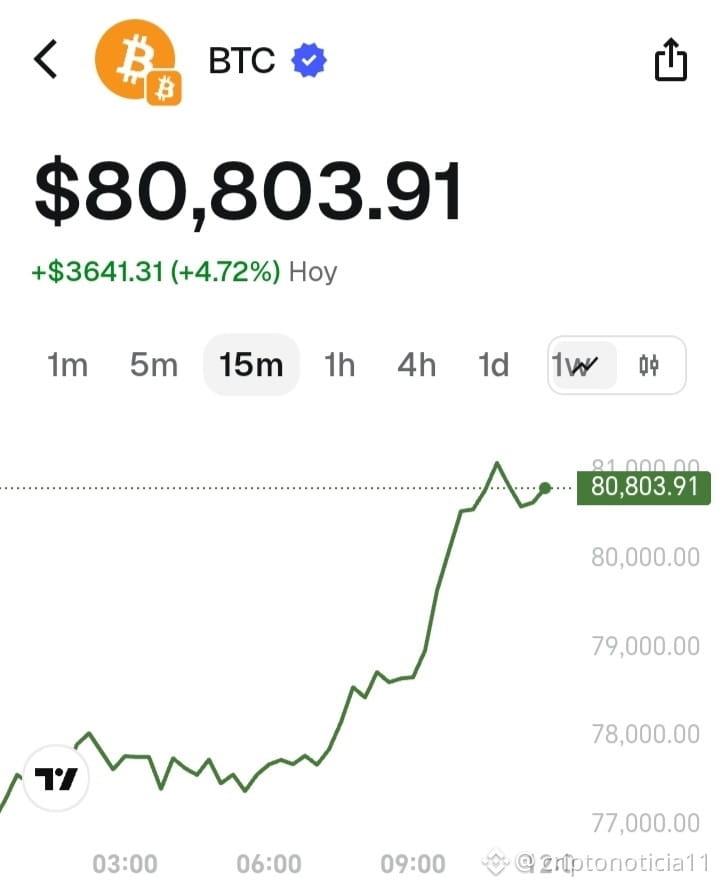
Bitcoin reached at this moment around 80,803 USD; these are Metamask data according to my information. Bitcoin could surge in the coming days
$BTC
Bitcoin reached at this moment around 80,803 USD; these are Metamask data according to my information. Bitcoin could surge in the coming days
$BTC
$BTC
1
2
1.1k
·
--
Bullish
I think my predictions are going to come true. Bitcoin every day is showing a bullish signal—it's stronger than ever. This is why large investors are accumulating Bitcoin. I think after seeing this News, you're going to want to get in here: $BTC . The only thing that's coming is something big.
$BTC
I think my predictions are going to come true. Bitcoin every day is showing a bullish signal—it's stronger than ever. This is why large investors are accumulating Bitcoin. I think after seeing this News, you're going to want to get in here: $BTC . The only thing that's coming is something big.
$BTC
$BTC
2
1.8k
·
--
Bullish
Bitcoin and ETH are preparing for a maximum run; this could rock the market. After seeing this news, you’re going to stay here and decide whether to enter or not—big investors are already in. Do your own research.
$BTC $ETH
Bitcoin and ETH are preparing for a maximum run; this could rock the market. After seeing this news, you’re going to stay here and decide whether to enter or not—big investors are already in. Do your own research.
$BTC $ETH
$BTC $ETH
1
1.7k
I only posted something from TUT. I think instead of being positive it was negative because I saw that the cryptocurrency did what it did was go further down—so it dropped more. But even so, this crypto is a long-term thing. If you’ve been thinking about making big profits in the short term, you’re in the wrong place, so think about it.
$TUT
{spot}(TUTUSDT)
I only posted something from TUT. I think instead of being positive it was negative because I saw that the cryptocurrency did what it did was go further down—so it dropped more. But even so, this crypto is a long-term thing. If you’ve been thinking about making big profits in the short term, you’re in the wrong place, so think about it.
$TUT
$TUT
3
1.5k
·
--
Bullish
For those who ask me how they can support without having to buy memecoins, an option that I think is very meaningful is buying CZ’s books, @CZ: “Freedom of Money” in English and “币安人生” in Chinese.
They are two different versions, but both can be very interesting, especially for those who are just starting out in the world of cryptocurrencies.
It’s not only about learning CZ’s story and journey. It’s also an opportunity to learn how he thinks, how Binance was built, and the importance of having resilience, patience, and a long-term vision.
In the end, investing in knowledge is also investing in yourself. 📚🧠
$BNB
For those who ask me how they can support without having to buy memecoins, an option that I think is very meaningful is buying CZ’s books, @CZ: “Freedom of Money” in English and “币安人生” in Chinese.
They are two different versions, but both can be very interesting, especially for those who are just starting out in the world of cryptocurrencies.
It’s not only about learning CZ’s story and journey. It’s also an opportunity to learn how he thinks, how Binance was built, and the importance of having resilience, patience, and a long-term vision.
In the end, investing in knowledge is also investing in yourself. 📚🧠
$BNB
They are two different versions, but both can be very interesting, especially for those who are just starting out in the world of cryptocurrencies.
It’s not only about learning CZ’s story and journey. It’s also an opportunity to learn how he thinks, how Binance was built, and the importance of having resilience, patience, and a long-term vision.
In the end, investing in knowledge is also investing in yourself. 📚🧠
$BNB

1
677
·
--
Bullish
$TUT is down because many move out of FOMO and buy, but when they see that Tutorial goes up 10%, they sell out of fear. This happens when small investors buy and then sell by withdrawing small gains. But after this post, you’re going to come in to buy $TUT and hold Tutorial. Tutorial is a different meme from the others, because Tutorial is learning with AI. TUT is a good project and it could really jump in the long term since every day it keeps innovating. I advise you to do your own research—you’ll realize what Tutorial is about. Here I send you a short summary.
A year ago, a developer recorded the first tutorial for the BNB chain on how to launch a token.
That OG token was on the testnet—now it’s on the mainnet!
Tutorial is a memecoin created by real builders.
It’s a different meme linked to AI.
$TUT do your own research.
$TUT is down because many move out of FOMO and buy, but when they see that Tutorial goes up 10%, they sell out of fear. This happens when small investors buy and then sell by withdrawing small gains. But after this post, you’re going to come in to buy $TUT and hold Tutorial. Tutorial is a different meme from the others, because Tutorial is learning with AI. TUT is a good project and it could really jump in the long term since every day it keeps innovating. I advise you to do your own research—you’ll realize what Tutorial is about. Here I send you a short summary.
A year ago, a developer recorded the first tutorial for the BNB chain on how to launch a token.
That OG token was on the testnet—now it’s on the mainnet!
Tutorial is a memecoin created by real builders.
It’s a different meme linked to AI.
$TUT do your own research.
A year ago, a developer recorded the first tutorial for the BNB chain on how to launch a token.
That OG token was on the testnet—now it’s on the mainnet!
Tutorial is a memecoin created by real builders.
It’s a different meme linked to AI.
$TUT do your own research.

1
3
4.1k
·
--
Bullish
I think many will trade here in my post tonight and tomorrow with Bitcoin and ETH BNB because they know that a massive rise is coming with these three cryptocurrencies. What do you think? Leave your comments if you are going to trade here
$BTC $ETH $BNB
I think many will trade here in my post tonight and tomorrow with Bitcoin and ETH BNB because they know that a massive rise is coming with these three cryptocurrencies. What do you think? Leave your comments if you are going to trade here
$BTC $ETH $BNB
$BTC $ETH $BNB
1
152
Verified
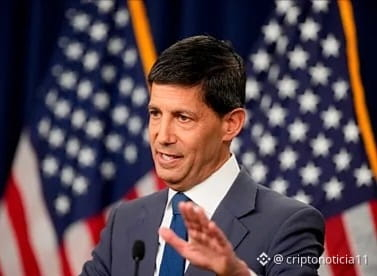
The Fed puts a brake on bitcoin’s rally Bitcoin’s price ends August with a very positive balance, but is now stuck in a slowdown triggered by the Fed, which has erased the $80,000 level.
After a month and a half of pause, just three days were enough to send bitcoin’s quotation up by 23%. The largest cryptocurrency led a dazzling bullish spiral between August 18 and 21. Its surge didn’t top out until August 27, when it broke above $80,000.
The highs were reached just before the expected intervention at Jackson Hole by Kevin Warsh. The new president of the Federal Reserve surprised analysts with a message "tougher than expected." He made it clear that inflation is the Fed’s top priority now, and, due to rising prices, warned that it is prepared to act if inflation doesn’t cool soon.
The Jackson Hole summit has tipped the balance in favor of another rate hike by the central bank most influential in financial markets, and in particular in the crypto-asset market, the U.S. Federal Reserve.
$BTC
The Fed puts a brake on bitcoin’s rally Bitcoin’s price ends August with a very positive balance, but is now stuck in a slowdown triggered by the Fed, which has erased the $80,000 level.
After a month and a half of pause, just three days were enough to send bitcoin’s quotation up by 23%. The largest cryptocurrency led a dazzling bullish spiral between August 18 and 21. Its surge didn’t top out until August 27, when it broke above $80,000.
The highs were reached just before the expected intervention at Jackson Hole by Kevin Warsh. The new president of the Federal Reserve surprised analysts with a message "tougher than expected." He made it clear that inflation is the Fed’s top priority now, and, due to rising prices, warned that it is prepared to act if inflation doesn’t cool soon.
The Jackson Hole summit has tipped the balance in favor of another rate hike by the central bank most influential in financial markets, and in particular in the crypto-asset market, the U.S. Federal Reserve.
$BTC
After a month and a half of pause, just three days were enough to send bitcoin’s quotation up by 23%. The largest cryptocurrency led a dazzling bullish spiral between August 18 and 21. Its surge didn’t top out until August 27, when it broke above $80,000.
The highs were reached just before the expected intervention at Jackson Hole by Kevin Warsh. The new president of the Federal Reserve surprised analysts with a message "tougher than expected." He made it clear that inflation is the Fed’s top priority now, and, due to rising prices, warned that it is prepared to act if inflation doesn’t cool soon.
The Jackson Hole summit has tipped the balance in favor of another rate hike by the central bank most influential in financial markets, and in particular in the crypto-asset market, the U.S. Federal Reserve.
$BTC
2
7
11.7k
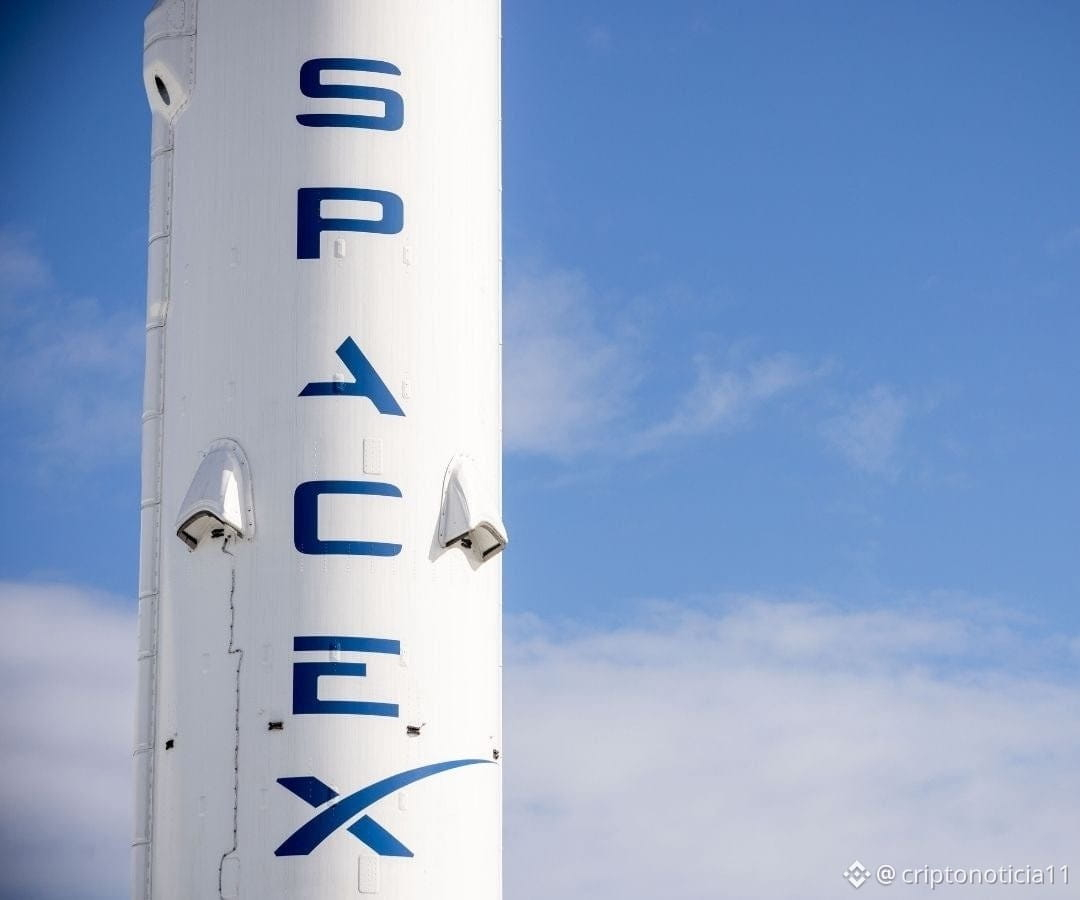
SpaceX Launches NASA’s Space Telescope to Search for Dark Energy The NASA Nancy Grace Roman Space Telescope, aboard SpaceX’s powerful Falcon Heavy rocket, lifted off at 7:26 a.m. local time from Cape Canaveral, Florida.
The NASA telescope, valued at US$4.3 billion, was launched into space on Sunday, marking the start of a mission lasting between five and ten years designed to observe the universe’s most exotic phenomena.
The NASA Nancy Grace Roman Space Telescope, aboard SpaceX’s powerful Falcon Heavy rocket, lifted off at 7:26 a.m. local time from Cape Canaveral, Florida. This launch places the spacecraft on a course to reach its final destination: an orbit approximately 1.6 million kilometers from Earth, where it will begin observing the sky starting in December.
Roman is specifically designed to investigate some of the universe’s most puzzling and mysterious forces. In particular, it will study dark matter and dark energy—an elusive type of matter and energy believed to permeate the cosmos, but that scientists have not been able to observe directly. Roman will attempt to catalog how dark matter and dark energy are shaping distant stars and galaxies, while also helping scientists answer fundamental questions about the expansion of our universe.
“Something fundamental may be missing in physics as we understand it, and the Roman Telescope has the potential to shed light on it,” said Kristen McQuinn, director of the Nancy Grace Roman Space Telescope mission office at the Space Telescope Science Institute, before the launch. “It has the capability to measure this dark energy, this mysterious force, from the very origins of the universe.”
#SPCBX
$SPCXB $SPCX
SpaceX Launches NASA’s Space Telescope to Search for Dark Energy The NASA Nancy Grace Roman Space Telescope, aboard SpaceX’s powerful Falcon Heavy rocket, lifted off at 7:26 a.m. local time from Cape Canaveral, Florida.
The NASA telescope, valued at US$4.3 billion, was launched into space on Sunday, marking the start of a mission lasting between five and ten years designed to observe the universe’s most exotic phenomena.
The NASA Nancy Grace Roman Space Telescope, aboard SpaceX’s powerful Falcon Heavy rocket, lifted off at 7:26 a.m. local time from Cape Canaveral, Florida. This launch places the spacecraft on a course to reach its final destination: an orbit approximately 1.6 million kilometers from Earth, where it will begin observing the sky starting in December.
Roman is specifically designed to investigate some of the universe’s most puzzling and mysterious forces. In particular, it will study dark matter and dark energy—an elusive type of matter and energy believed to permeate the cosmos, but that scientists have not been able to observe directly. Roman will attempt to catalog how dark matter and dark energy are shaping distant stars and galaxies, while also helping scientists answer fundamental questions about the expansion of our universe.
“Something fundamental may be missing in physics as we understand it, and the Roman Telescope has the potential to shed light on it,” said Kristen McQuinn, director of the Nancy Grace Roman Space Telescope mission office at the Space Telescope Science Institute, before the launch. “It has the capability to measure this dark energy, this mysterious force, from the very origins of the universe.”
#SPCBX
$SPCXB $SPCX
The NASA telescope, valued at US$4.3 billion, was launched into space on Sunday, marking the start of a mission lasting between five and ten years designed to observe the universe’s most exotic phenomena.
The NASA Nancy Grace Roman Space Telescope, aboard SpaceX’s powerful Falcon Heavy rocket, lifted off at 7:26 a.m. local time from Cape Canaveral, Florida. This launch places the spacecraft on a course to reach its final destination: an orbit approximately 1.6 million kilometers from Earth, where it will begin observing the sky starting in December.
Roman is specifically designed to investigate some of the universe’s most puzzling and mysterious forces. In particular, it will study dark matter and dark energy—an elusive type of matter and energy believed to permeate the cosmos, but that scientists have not been able to observe directly. Roman will attempt to catalog how dark matter and dark energy are shaping distant stars and galaxies, while also helping scientists answer fundamental questions about the expansion of our universe.
“Something fundamental may be missing in physics as we understand it, and the Roman Telescope has the potential to shed light on it,” said Kristen McQuinn, director of the Nancy Grace Roman Space Telescope mission office at the Space Telescope Science Institute, before the launch. “It has the capability to measure this dark energy, this mysterious force, from the very origins of the universe.”
#SPCBX
$SPCXB $SPCX
1
8
3.7k
·
--
Bullish
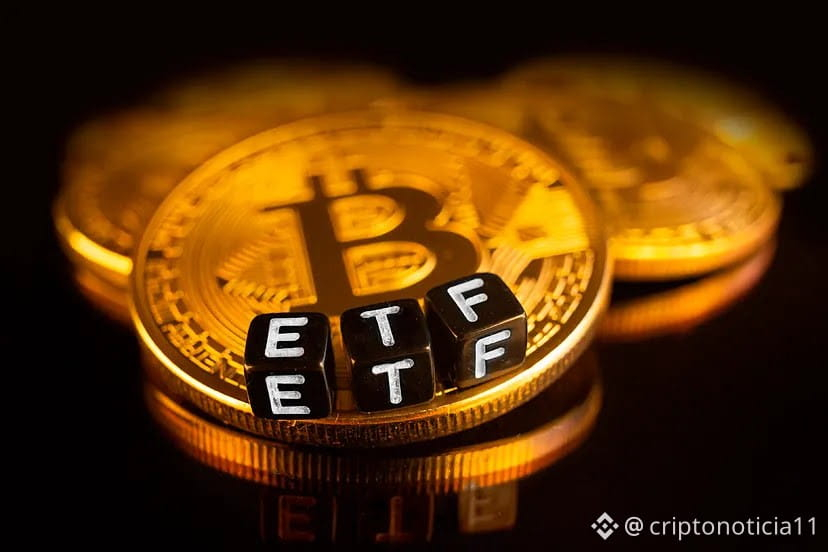
Bitcoin ETFs become the latest jolt for bitcoin
Bitcoin ETFs attract the biggest inflows in 10 months at a time when the cryptocurrency is testing resistance at $80,000, a price level not seen since before last summer.
Bitcoin exchange-traded funds (ETFs) received subscriptions last week of $1.92 billion (about €1.03 billion). This is the largest inflow in 10 months. On August 20 alone, net inflows of $606.3 million were recorded—the biggest single-day figure in more than three months, according to Bloomberg data.
The BlackRock iShares Bitcoin Trust was behind the figure, as it alone managed to raise $1.3 billion over the week.
"We’ve observed net inflows every day of last week, which suggests renewed investor interest in bitcoin," says Gracie Lin from the OKX cryptocurrency exchange platform.
Capital flows into bitcoin ETFs have become the latest catalyst for the cryptocurrency, allowing it to test resistance at $80,000. It broke that level intraday this week, and it’s a threshold that hasn’t held since before last summer. The first push toward higher targets came from the block return two weeks ago of the so-called whales—large crypto holders—with purchases of billions not seen in recent months.
"The question now is whether that momentum will hold. After such a strong move, it would not be surprising if profit-taking occurs," Lin acknowledges.
The subscriptions show that last week saw the largest inflows since early October, just before setting records above $125,000. After reaching a peak, it entered a tough correction phase known as crypto winter. Since then, it has fallen by more than 35%.
$BTC
Bitcoin ETFs become the latest jolt for bitcoin
Bitcoin ETFs attract the biggest inflows in 10 months at a time when the cryptocurrency is testing resistance at $80,000, a price level not seen since before last summer.
Bitcoin exchange-traded funds (ETFs) received subscriptions last week of $1.92 billion (about €1.03 billion). This is the largest inflow in 10 months. On August 20 alone, net inflows of $606.3 million were recorded—the biggest single-day figure in more than three months, according to Bloomberg data.
The BlackRock iShares Bitcoin Trust was behind the figure, as it alone managed to raise $1.3 billion over the week.
"We’ve observed net inflows every day of last week, which suggests renewed investor interest in bitcoin," says Gracie Lin from the OKX cryptocurrency exchange platform.
Capital flows into bitcoin ETFs have become the latest catalyst for the cryptocurrency, allowing it to test resistance at $80,000. It broke that level intraday this week, and it’s a threshold that hasn’t held since before last summer. The first push toward higher targets came from the block return two weeks ago of the so-called whales—large crypto holders—with purchases of billions not seen in recent months.
"The question now is whether that momentum will hold. After such a strong move, it would not be surprising if profit-taking occurs," Lin acknowledges.
The subscriptions show that last week saw the largest inflows since early October, just before setting records above $125,000. After reaching a peak, it entered a tough correction phase known as crypto winter. Since then, it has fallen by more than 35%.
$BTC
Bitcoin ETFs attract the biggest inflows in 10 months at a time when the cryptocurrency is testing resistance at $80,000, a price level not seen since before last summer.
Bitcoin exchange-traded funds (ETFs) received subscriptions last week of $1.92 billion (about €1.03 billion). This is the largest inflow in 10 months. On August 20 alone, net inflows of $606.3 million were recorded—the biggest single-day figure in more than three months, according to Bloomberg data.
The BlackRock iShares Bitcoin Trust was behind the figure, as it alone managed to raise $1.3 billion over the week.
"We’ve observed net inflows every day of last week, which suggests renewed investor interest in bitcoin," says Gracie Lin from the OKX cryptocurrency exchange platform.
Capital flows into bitcoin ETFs have become the latest catalyst for the cryptocurrency, allowing it to test resistance at $80,000. It broke that level intraday this week, and it’s a threshold that hasn’t held since before last summer. The first push toward higher targets came from the block return two weeks ago of the so-called whales—large crypto holders—with purchases of billions not seen in recent months.
"The question now is whether that momentum will hold. After such a strong move, it would not be surprising if profit-taking occurs," Lin acknowledges.
The subscriptions show that last week saw the largest inflows since early October, just before setting records above $125,000. After reaching a peak, it entered a tough correction phase known as crypto winter. Since then, it has fallen by more than 35%.
$BTC
4
8.1k
·
--
Bullish
where Bitcoin is headed
Bitcoin is aiming for 150.234 USD up to 160.567 USD for the rest of this year. According to my research, large investors are taking advantage of this because they know that what’s coming is big for BITCOIN.
Bitcoin strengthens every day as major investments come in. Trading volume increases by 34 billion, something impressive, and the market capitalization is at 1.5B up to 1.6B.
this is a good sign.
#BTC
#BitcoinSpotETFEnds9DayInflowStreak
$BTC
where Bitcoin is headed
Bitcoin is aiming for 150.234 USD up to 160.567 USD for the rest of this year. According to my research, large investors are taking advantage of this because they know that what’s coming is big for BITCOIN.
Bitcoin strengthens every day as major investments come in. Trading volume increases by 34 billion, something impressive, and the market capitalization is at 1.5B up to 1.6B.
this is a good sign.
#BTC
#BitcoinSpotETFEnds9DayInflowStreak
$BTC
Bitcoin is aiming for 150.234 USD up to 160.567 USD for the rest of this year. According to my research, large investors are taking advantage of this because they know that what’s coming is big for BITCOIN.
Bitcoin strengthens every day as major investments come in. Trading volume increases by 34 billion, something impressive, and the market capitalization is at 1.5B up to 1.6B.
this is a good sign.
#BTC
#BitcoinSpotETFEnds9DayInflowStreak
$BTC
1
2.4k
·
--
Bullish
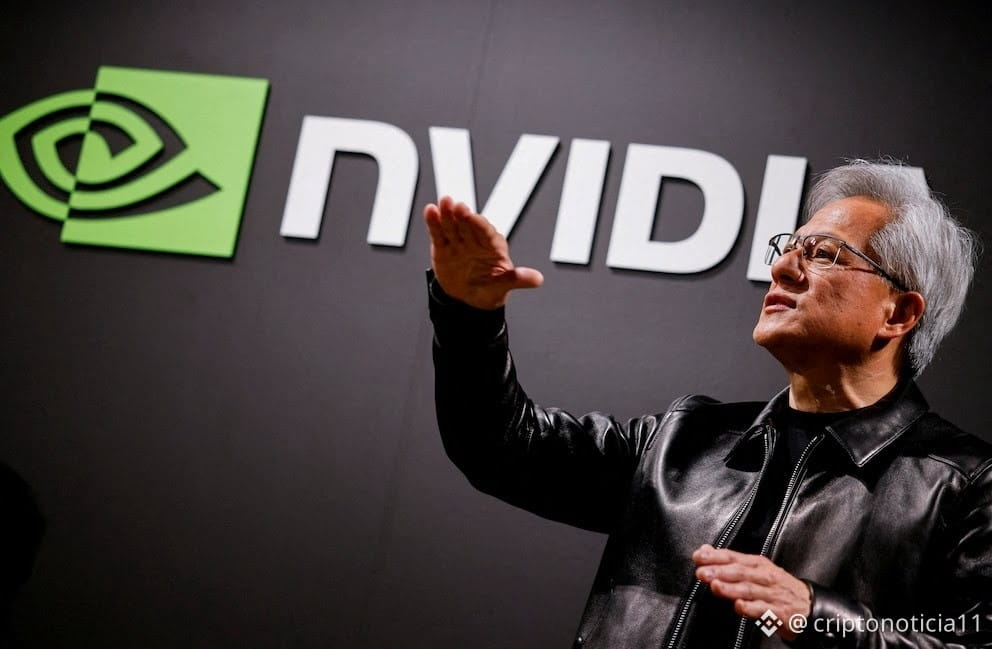
Jensen Huang, CEO of Nvidia, becomes the sixth richest person in the world and overtakes Mark Zuckerberg and Larry Ellison
Nvidia’s growth once again boosts Jensen Huang’s wealth, as the company maintains its leadership in the race for AI.
Jensen Huang, CEO of Nvidia, became the sixth richest person in the world after the company’s shares rose 8.7% following the release of financial results that beat analysts’ expectations.
The surge added about $15.6 billion to Huang’s fortune, bringing it to $196.8 billion and allowing him to surpass Mark Zuckerberg of Meta and Larry Ellison of Oracle, according to the Forbes valuation.
Nvidia’s rise came after the chipmaker reported revenue of $96.2 billion and earnings per share of $2.22. Both figures were above consensus estimates, which had projected revenue of $92.2 billion and earnings per share of $2.09. The results helped reinforce market confidence in the demand for AI infrastructure, a sector in which Nvidia has established itself as one of the leading hardware providers. Shares closed on Thursday at $227.98, close to their all-time high of $236.
Nvidia’s growth boosts Jensen Huang’s fortune
The increase in the value of the shares had a direct impact on Jensen Huang’s wealth, who owns a significant stake in Nvidia. With estimated net worth of $196.8 billion, the executive moved to sixth place among the world’s richest people.
The figure put him ahead of Mark Zuckerberg, whose fortune was estimated at $196.2 billion, and Larry Ellison, at $194.9 billion. The move shows how much Nvidia’s boom has transformed Huang’s standing in the business world.
#NVIDIAConference
$NVDAB $NVDA.US
Jensen Huang, CEO of Nvidia, becomes the sixth richest person in the world and overtakes Mark Zuckerberg and Larry Ellison
Nvidia’s growth once again boosts Jensen Huang’s wealth, as the company maintains its leadership in the race for AI.
Jensen Huang, CEO of Nvidia, became the sixth richest person in the world after the company’s shares rose 8.7% following the release of financial results that beat analysts’ expectations.
The surge added about $15.6 billion to Huang’s fortune, bringing it to $196.8 billion and allowing him to surpass Mark Zuckerberg of Meta and Larry Ellison of Oracle, according to the Forbes valuation.
Nvidia’s rise came after the chipmaker reported revenue of $96.2 billion and earnings per share of $2.22. Both figures were above consensus estimates, which had projected revenue of $92.2 billion and earnings per share of $2.09. The results helped reinforce market confidence in the demand for AI infrastructure, a sector in which Nvidia has established itself as one of the leading hardware providers. Shares closed on Thursday at $227.98, close to their all-time high of $236.
Nvidia’s growth boosts Jensen Huang’s fortune
The increase in the value of the shares had a direct impact on Jensen Huang’s wealth, who owns a significant stake in Nvidia. With estimated net worth of $196.8 billion, the executive moved to sixth place among the world’s richest people.
The figure put him ahead of Mark Zuckerberg, whose fortune was estimated at $196.2 billion, and Larry Ellison, at $194.9 billion. The move shows how much Nvidia’s boom has transformed Huang’s standing in the business world.
#NVIDIAConference
$NVDAB $NVDA.US
Nvidia’s growth once again boosts Jensen Huang’s wealth, as the company maintains its leadership in the race for AI.
Jensen Huang, CEO of Nvidia, became the sixth richest person in the world after the company’s shares rose 8.7% following the release of financial results that beat analysts’ expectations.
The surge added about $15.6 billion to Huang’s fortune, bringing it to $196.8 billion and allowing him to surpass Mark Zuckerberg of Meta and Larry Ellison of Oracle, according to the Forbes valuation.
Nvidia’s rise came after the chipmaker reported revenue of $96.2 billion and earnings per share of $2.22. Both figures were above consensus estimates, which had projected revenue of $92.2 billion and earnings per share of $2.09. The results helped reinforce market confidence in the demand for AI infrastructure, a sector in which Nvidia has established itself as one of the leading hardware providers. Shares closed on Thursday at $227.98, close to their all-time high of $236.
Nvidia’s growth boosts Jensen Huang’s fortune
The increase in the value of the shares had a direct impact on Jensen Huang’s wealth, who owns a significant stake in Nvidia. With estimated net worth of $196.8 billion, the executive moved to sixth place among the world’s richest people.
The figure put him ahead of Mark Zuckerberg, whose fortune was estimated at $196.2 billion, and Larry Ellison, at $194.9 billion. The move shows how much Nvidia’s boom has transformed Huang’s standing in the business world.
#NVIDIAConference
$NVDAB $NVDA.US
NVDAB-2.54%
NVDAUS-2.50%
3
4.2k
·
--
Bullish
if you realize that the cryptocurrency TUT that was obvious it was going to go down because this type of cryptocurrency turns into pure Fomo. It's not that the cryptocurrency is bad; it has a good project. It's a meme tutorial linked to AI. If people decide to buy the tutorial, not because of Fomo but because of conviction—not because of noise. So if you're going to buy TUT, hold it and you'll see the results in the long term or in the short term. It's up to you. What do you think?
$TUT
if you realize that the cryptocurrency TUT that was obvious it was going to go down because this type of cryptocurrency turns into pure Fomo. It's not that the cryptocurrency is bad; it has a good project. It's a meme tutorial linked to AI. If people decide to buy the tutorial, not because of Fomo but because of conviction—not because of noise. So if you're going to buy TUT, hold it and you'll see the results in the long term or in the short term. It's up to you. What do you think?
$TUT
$TUT
3
2
1.8k
·
--
Bullish
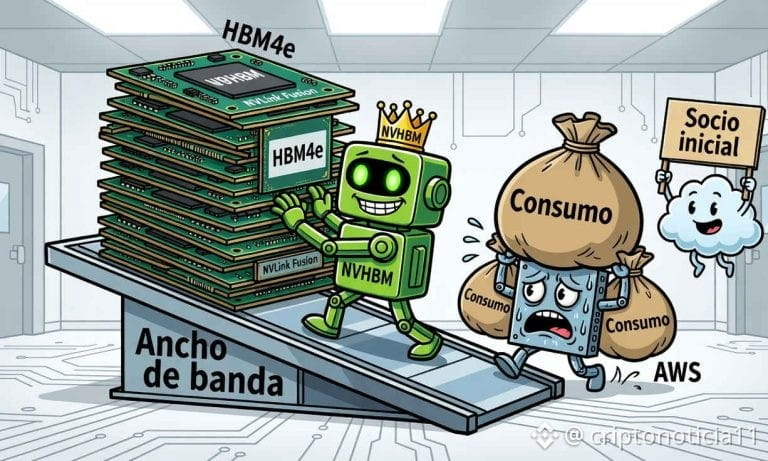
Nvidia introduces NVHBM with 30% more bandwidth for AI accelerators
Nvidia unveiled NVHBM, a custom high-bandwidth memory implementation that promises up to 30% faster performance and 15% less power consumption than standard HBM4e for NVLink Fusion partners.
NVHBM promises up to 30% more bandwidth per stack and 15% less energy consumption than standard HBM4e.
The design moves the memory controller to the base die of the stack and can free up space for up to 30% more compute on the main chip.
Annapurna Labs, from Amazon, will be the first announced partner, with potential future applications in AWS infrastructure designs.
$NVDAB $NVDA.US
Nvidia introduces NVHBM with 30% more bandwidth for AI accelerators
Nvidia unveiled NVHBM, a custom high-bandwidth memory implementation that promises up to 30% faster performance and 15% less power consumption than standard HBM4e for NVLink Fusion partners.
NVHBM promises up to 30% more bandwidth per stack and 15% less energy consumption than standard HBM4e.
The design moves the memory controller to the base die of the stack and can free up space for up to 30% more compute on the main chip.
Annapurna Labs, from Amazon, will be the first announced partner, with potential future applications in AWS infrastructure designs.
$NVDAB $NVDA.US
Nvidia unveiled NVHBM, a custom high-bandwidth memory implementation that promises up to 30% faster performance and 15% less power consumption than standard HBM4e for NVLink Fusion partners.
NVHBM promises up to 30% more bandwidth per stack and 15% less energy consumption than standard HBM4e.
The design moves the memory controller to the base die of the stack and can free up space for up to 30% more compute on the main chip.
Annapurna Labs, from Amazon, will be the first announced partner, with potential future applications in AWS infrastructure designs.
$NVDAB $NVDA.US
NVDAB-2.54%
NVDAUS-2.50%
1
861
Log in to explore more content
Join global crypto users on Binance Square
⚡️ Get latest and useful information about crypto.
💬 Trusted by the world’s largest crypto exchange.
👍 Discover real insights from verified creators.
Email / Phone number
Trending Topics
USAugustPPIRisesLessThanExpected
8,939 views
307 Discussing
🚨 US AUG PPI: Rises LESS Than Expected! Bullish for Crypto? 🚀
PPI +0.4% MoM as expected, but CORE PPI only +0.2% vs +0.3% expected - cooling!
What it means:
• Wholesale inflation softer than feared
• Fed rate hike chance now 62% - but dovish signals coming
• Core PCE revisions expected downward - bullish
• BTC usually pumps on softer PPI
Fed meeting Sep 15-16 - Market now expects pause, not hike?
Is this the green light for Q4 rally?
#Bitcoin #PPI #Fed #CryptoNews #BTC#usaugustppiriseslessthanexpected
True News
·1 Likes
·1.1k views
SECApprovesNasdaqTexasCommodityTrustRule
7,757 views
294 Discussing
ECBRaisesRatesSecondTimeTo2.5%
4,799 views
208 Discussing