
CforCrypto7
5.3k Posts

CforCrypto7
X /FB/ CMC: @RealCforCrypto
Frequent Trader
2 Years
577 Following
11.3K+ Followers
4.0K+ Liked
Posts
All
Quotes
Videos
Live
PINNED
++#dusk @Dusk
Guys this week I went deep on Dusk Network's infra and something clicked I have not seen many people talking about.
Quick backstory first.....
Just closed my $
ETH (+0.63%)
position. Small win, nothing crazy.
Then I watched SOL rip to 103 and I missed the whole move. Ngl that one stung a bit. 😅
Was just sitting there, a lil sad, staring at charts doing nothing..... Just OBV for a while .
So instead of chasing it I started studying Dusk Network.
Best decision that came outta a missed trade tbh.
Everyone treats "programmable privacy" and "native issuance" as two separate features.
They're not.
Programmable privacy = the compliance layer.
Privacy where it's needed.
Transparency where it's useful. Selective disclosure for authorized review.
All settled deterministically on-chain.
Native issuance = the asset layer.
Not wrapping a security and bridging it over.... actually building the issuance, compliance, and settlement lifecycle on-chain from day one.
The part most people miss......
These two things NEED each other.
A regulated exchange can't touch native issuance without real auditability.
N programmable privacy means nothing if the underlying asset is just a wrapped token sitting on off-chain custody.
That's not a compliant asset, that's a paper trail with extra steps. 💀
Dusk is tryna solve both at once.
Privacy with governance controls baked in.
Been watching network health, the bridge incident, the Dusk Trade waitlist.
That gap is where this whole story either gets written or gets stuck. 🔥
The RWA opportunity is real. Not sure the market has priced in how long it takes for institutions to actually trust ur chain.
If u work in regulated issuance or compliance, genuinely curious:
Is programmable disclosure a feature u'd trust, or a liability u'd flag?
lmk what u think, drop ur take below
brb going back to charts.....
PS. keeping $BTC and $ETH
at 1% each on weekly DCA, holding my $DUSK bag for the whole year ….
watching closely…
Guys this week I went deep on Dusk Network's infra and something clicked I have not seen many people talking about.
Quick backstory first.....
Just closed my $
ETH (+0.63%)
position. Small win, nothing crazy.
Then I watched SOL rip to 103 and I missed the whole move. Ngl that one stung a bit. 😅
Was just sitting there, a lil sad, staring at charts doing nothing..... Just OBV for a while .
So instead of chasing it I started studying Dusk Network.
Best decision that came outta a missed trade tbh.
Everyone treats "programmable privacy" and "native issuance" as two separate features.
They're not.
Programmable privacy = the compliance layer.
Privacy where it's needed.
Transparency where it's useful. Selective disclosure for authorized review.
All settled deterministically on-chain.
Native issuance = the asset layer.
Not wrapping a security and bridging it over.... actually building the issuance, compliance, and settlement lifecycle on-chain from day one.
The part most people miss......
These two things NEED each other.
A regulated exchange can't touch native issuance without real auditability.
N programmable privacy means nothing if the underlying asset is just a wrapped token sitting on off-chain custody.
That's not a compliant asset, that's a paper trail with extra steps. 💀
Dusk is tryna solve both at once.
Privacy with governance controls baked in.
Been watching network health, the bridge incident, the Dusk Trade waitlist.
That gap is where this whole story either gets written or gets stuck. 🔥
The RWA opportunity is real. Not sure the market has priced in how long it takes for institutions to actually trust ur chain.
If u work in regulated issuance or compliance, genuinely curious:
Is programmable disclosure a feature u'd trust, or a liability u'd flag?
lmk what u think, drop ur take below
brb going back to charts.....
PS. keeping $BTC and $ETH
at 1% each on weekly DCA, holding my $DUSK bag for the whole year ….
watching closely…
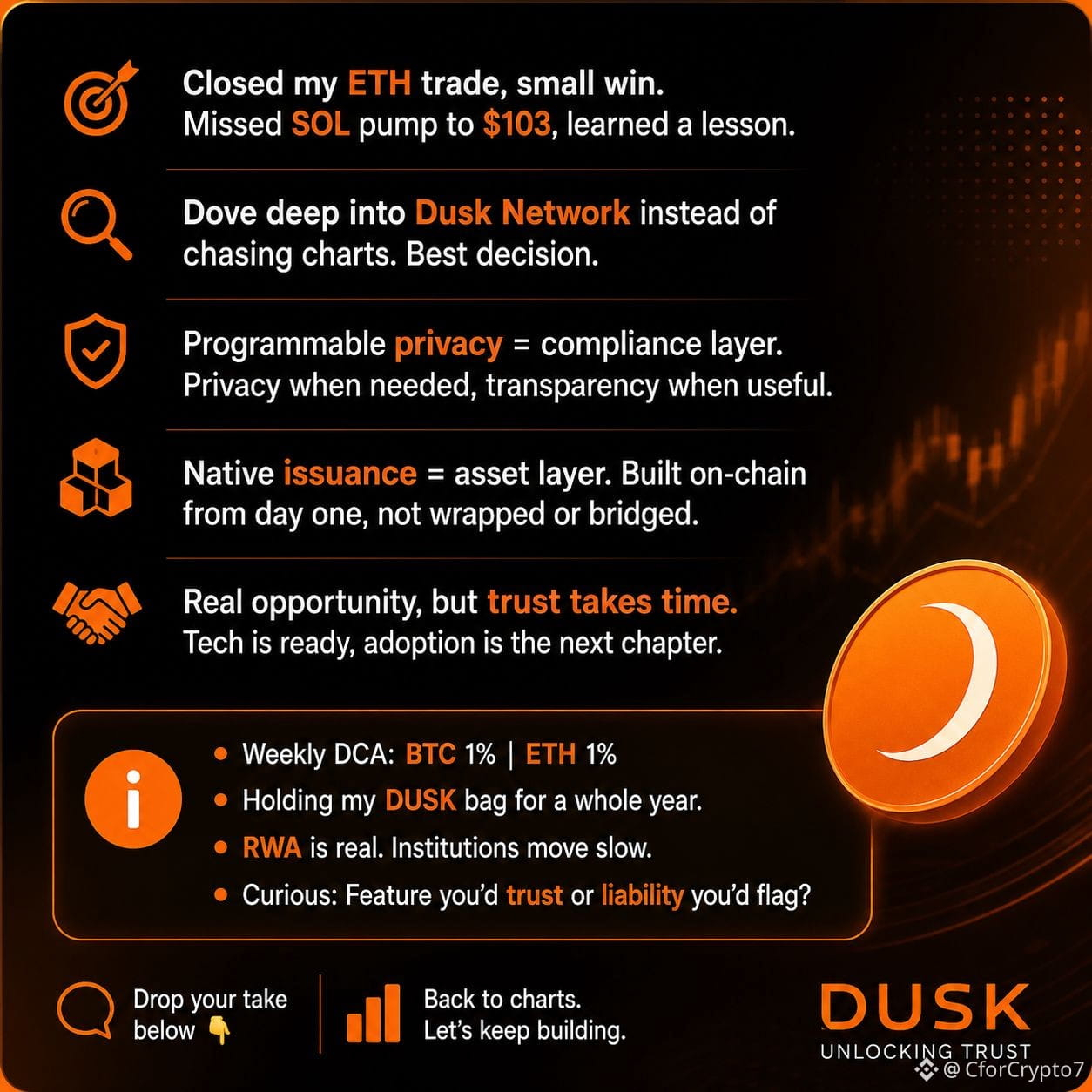
Guys $ETH momentum is building fast. 🚀
The next breakout could surprise everyone.
#ETH #Ethereum
#EtherETFsPost$697MWeeklyInflow
The next breakout could surprise everyone.
#ETH #Ethereum
#EtherETFsPost$697MWeeklyInflow

GUYS Smart money is accumulating while everyone else is sleeping.
Stay ready.
The next move could be MASSIVE. 🔥
$BTC
Stay ready.
The next move could be MASSIVE. 🔥
$BTC
Guys if u had 100K USDT sitting ready...
What would u accumulate right now?
$BTC for safety?
$ETH for upside?
$SOL for the crazy beta?
Or would u keep a big chunk in stables and wait for the next dip....
100K sounds big.
But picking the wrong coins can make it look very small 💀
what do u think?
#BTC #ETH #SOL
What would u accumulate right now?
$BTC for safety?
$ETH for upside?
$SOL for the crazy beta?
Or would u keep a big chunk in stables and wait for the next dip....
100K sounds big.
But picking the wrong coins can make it look very small 💀
what do u think?
#BTC #ETH #SOL

Guys the rotation is playing out exactly like the map says....
BTC leads first. Always does. Sitting at 78,837.9
+1.68% $BTC
right now, still holding the market's attention with a $1.54T cap.
Then liquidity moves down to $ETH
2,480.2 +0.68% and climbing, up almost 1% today. Capital doesn't skip steps, it flows.
Next stop, large caps. like Hype zec sol ... When large caps start outperforming BTC, that's not noise, that's rotation confirming itself.
After that? Altseason.
Stay patient.
what do u think?
#BTC #ETH #Altseason
BTC leads first. Always does. Sitting at 78,837.9
+1.68% $BTC
right now, still holding the market's attention with a $1.54T cap.
Then liquidity moves down to $ETH
2,480.2 +0.68% and climbing, up almost 1% today. Capital doesn't skip steps, it flows.
Next stop, large caps. like Hype zec sol ... When large caps start outperforming BTC, that's not noise, that's rotation confirming itself.
After that? Altseason.
Stay patient.
what do u think?
#BTC #ETH #Altseason

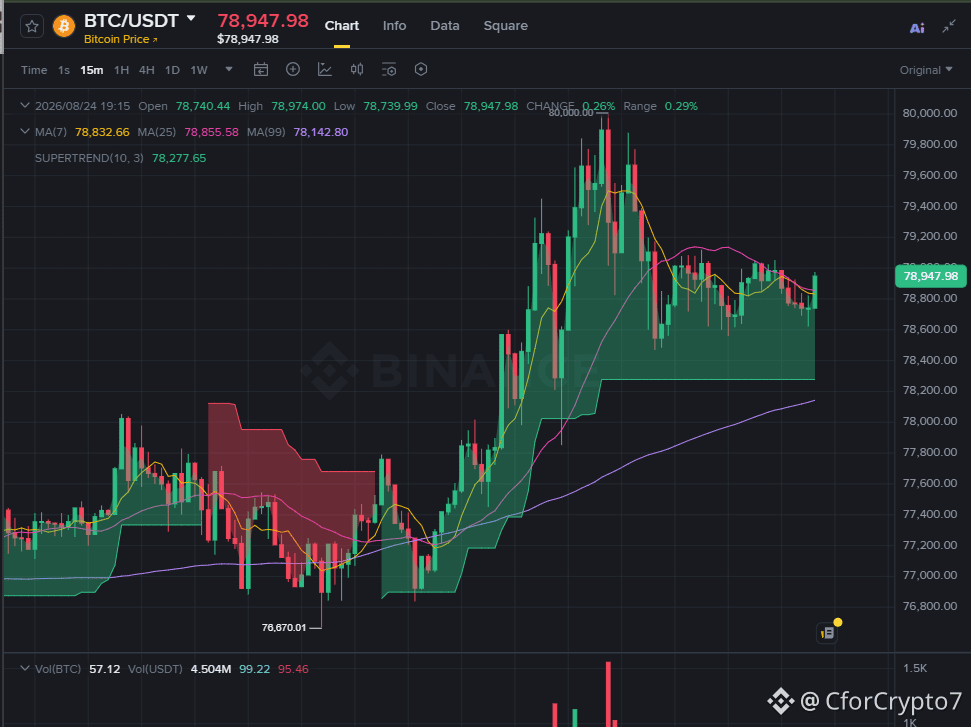
$BTC Entry: 79,100 – 79,200
Stop Loss: 78,750
TP1: 79,500 TP2: 79,800 TP3: 80,000
Holding above the key levels after that strong move toward 79,000....
just consolidating below the recent high, momentum mixed so confirmation matters here.
Clean break of 79,100-79,200 gives the better continuation signal.
Click here to Trade 👇️
$BTC
what do u think, breaks 80K this run or needs more time?
#BTC #bitcoin #crypto
Stop Loss: 78,750
TP1: 79,500 TP2: 79,800 TP3: 80,000
Holding above the key levels after that strong move toward 79,000....
just consolidating below the recent high, momentum mixed so confirmation matters here.
Clean break of 79,100-79,200 gives the better continuation signal.
Click here to Trade 👇️
$BTC
what do u think, breaks 80K this run or needs more time?
#BTC #bitcoin #crypto
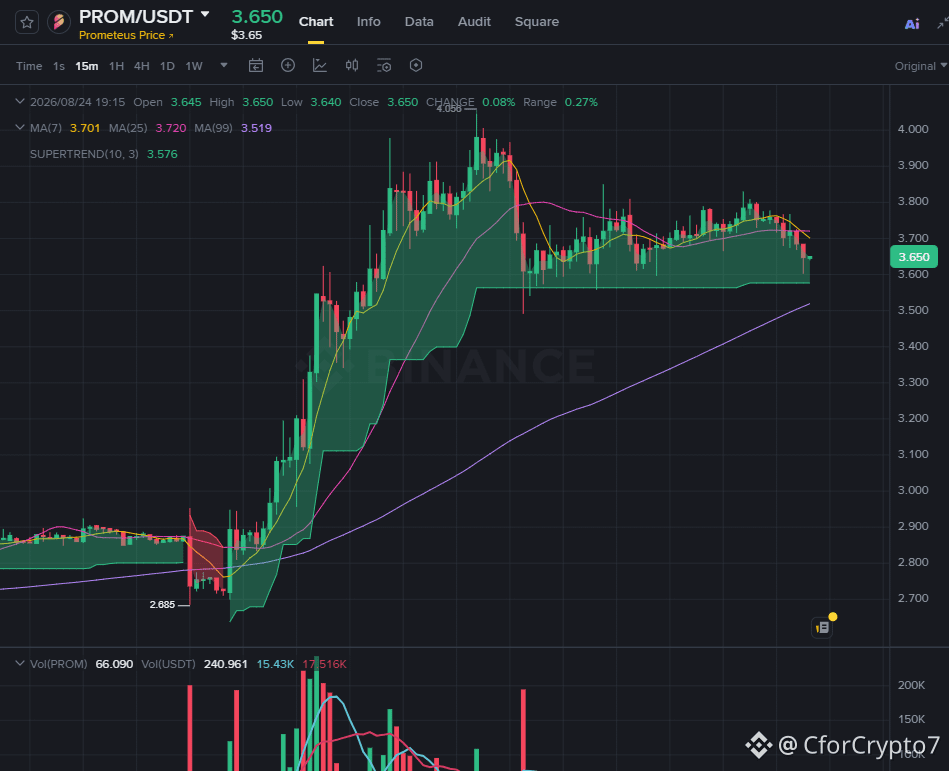
$PROM Entry: 3.72 – 3.75
Stop Loss: 3.64
TP1: 3.80 TP2: 3.90 TP3: 4.00
Consolidating after a strong breakout, short term momentum weakening....
slipped below the short term levels but MA99 well below still, keeps broader structure bullish.
Cleaner long is the reclaim, confirmation trade only.
Click here to Trade 👇️
$PROM
Stop Loss: 3.64
TP1: 3.80 TP2: 3.90 TP3: 4.00
Consolidating after a strong breakout, short term momentum weakening....
slipped below the short term levels but MA99 well below still, keeps broader structure bullish.
Cleaner long is the reclaim, confirmation trade only.
Click here to Trade 👇️
$PROM
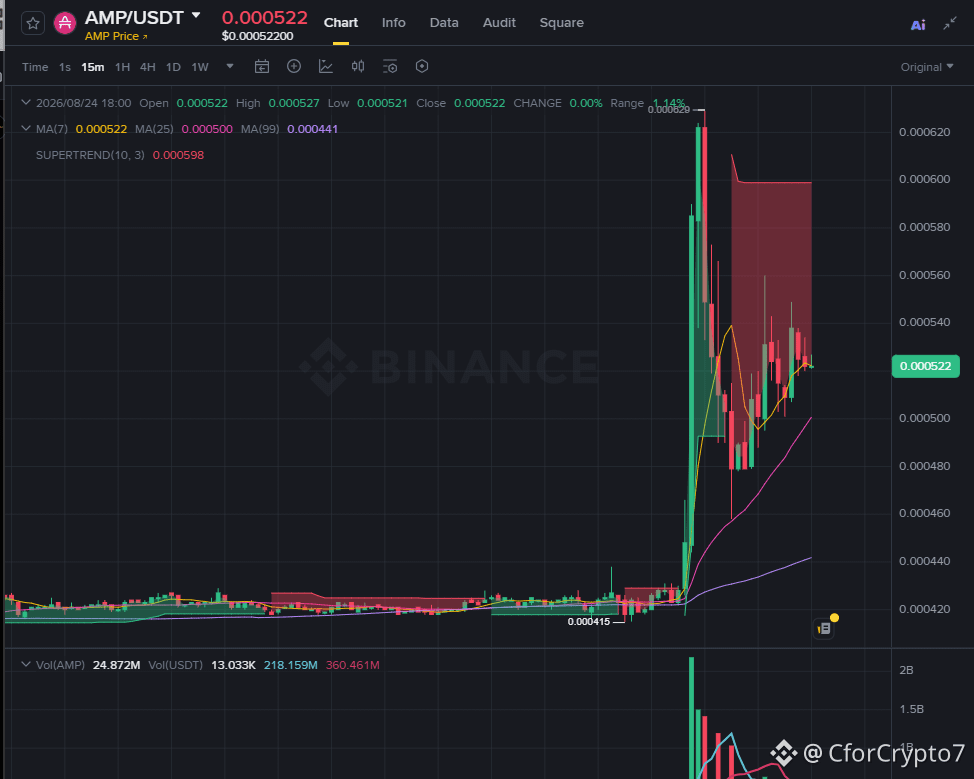
$AMP Entry: 0.000535 – 0.000545
Stop Loss: 0.000505
TP1: 0.000560 TP2: 0.000590 TP3: 0.000620
Massive volume breakout from ~$0.00042 to $0.00063, then a sharp pullback.... now trying to build a base around $0.00050-$0.00054. Supertrend still red, so waiting for the reclaim rather than chasing here.
Click here to Trade 👇️
$AMP
Stop Loss: 0.000505
TP1: 0.000560 TP2: 0.000590 TP3: 0.000620
Massive volume breakout from ~$0.00042 to $0.00063, then a sharp pullback.... now trying to build a base around $0.00050-$0.00054. Supertrend still red, so waiting for the reclaim rather than chasing here.
Click here to Trade 👇️
$AMP
Guys today's gainers.... 🔥
$STORJ +16.95%
$AERO +12.90%
$ONG +12.21%
green across the board today, buyers actually showing up.
Chasing green candles is risky tho, don't just ape in blind.
Check the structure before jumping on any of these.
what do u think, which one's got the most room left to run?
#crypto #TopGainers
$STORJ +16.95%
$AERO +12.90%
$ONG +12.21%
green across the board today, buyers actually showing up.
Chasing green candles is risky tho, don't just ape in blind.
Check the structure before jumping on any of these.
what do u think, which one's got the most room left to run?
#crypto #TopGainers
Guys look at today's biggest losers.... 💀
$HEMI -15.09% $SPK -14.77% $USUAL -12.49%
humpty dumpty across the board.....
what do u think, any of these worth watching for a bounce?
#crypto #TopLosers
$HEMI -15.09% $SPK -14.77% $USUAL -12.49%
humpty dumpty across the board.....
what do u think, any of these worth watching for a bounce?
#crypto #TopLosers
#SP500FuturesFall
S&P 500 futures slipped about 0.2% on Monday as tech stocks led the drop.
Nasdaq futures fell harder, around 0.6%.
The move follows last week’s losses for the major indexes.
Traders are cautious ahead of Nvidia’s earnings, the Fed’s Jackson Hole meeting, and new Iran sanctions talks.
Rising bond yields also weighed on sentiment.
Markets open the week on a soft note as investors await key catalysts.
$SNDK
$SPCX
$NVDA
S&P 500 futures slipped about 0.2% on Monday as tech stocks led the drop.
Nasdaq futures fell harder, around 0.6%.
The move follows last week’s losses for the major indexes.
Traders are cautious ahead of Nvidia’s earnings, the Fed’s Jackson Hole meeting, and new Iran sanctions talks.
Rising bond yields also weighed on sentiment.
Markets open the week on a soft note as investors await key catalysts.
$SNDK
$SPCX
$NVDA
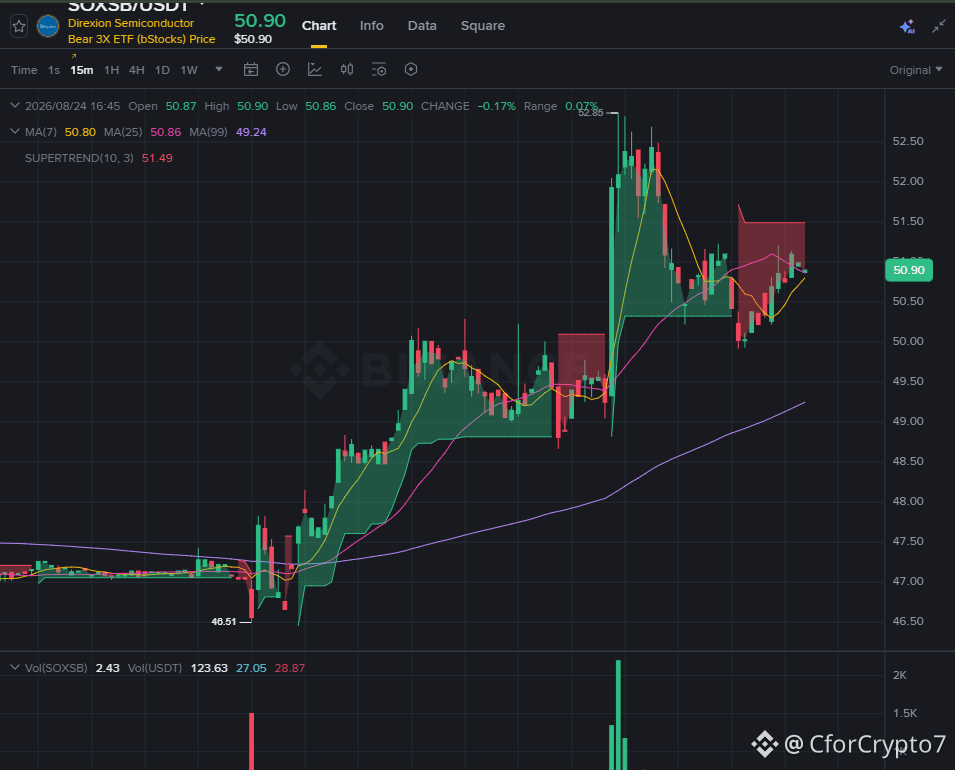
$SOXSB Entry: 51.50 – 51.65
Stop Loss: 50.95
TP1: 52.00 TP2: 52.50 TP3: 52.85
Recovering after the move to $52.85, currently neutral to bullish consolidation....
around the short term levels, MA99 well below still.
Supertrend reclaim is the key trigger here, confirmation only.
Click here to Trade 👇️
$SOXSB
Stop Loss: 50.95
TP1: 52.00 TP2: 52.50 TP3: 52.85
Recovering after the move to $52.85, currently neutral to bullish consolidation....
around the short term levels, MA99 well below still.
Supertrend reclaim is the key trigger here, confirmation only.
Click here to Trade 👇️
$SOXSB
SOXSETF-3.04%
SOXSB+1.62%
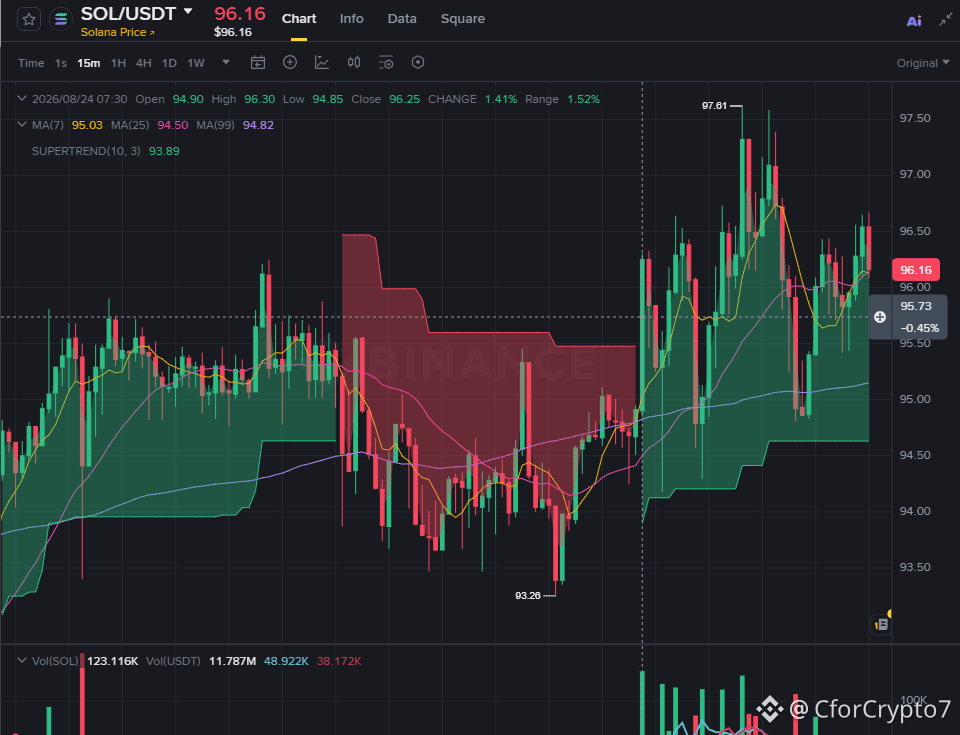
$SOL Entry: 95.95 – 96.20
Stop Loss: 95.35
TP1: 96.60 TP2: 97.00 TP3: 97.60
Holding bullish structure, just choppy after the push to $97.61....
above the key levels, Supertrend still bullish.
Waiting for confirmation in this zone before sizing in.
Click here to Trade 👇️
$SOL
Stop Loss: 95.35
TP1: 96.60 TP2: 97.00 TP3: 97.60
Holding bullish structure, just choppy after the push to $97.61....
above the key levels, Supertrend still bullish.
Waiting for confirmation in this zone before sizing in.
Click here to Trade 👇️
$SOL
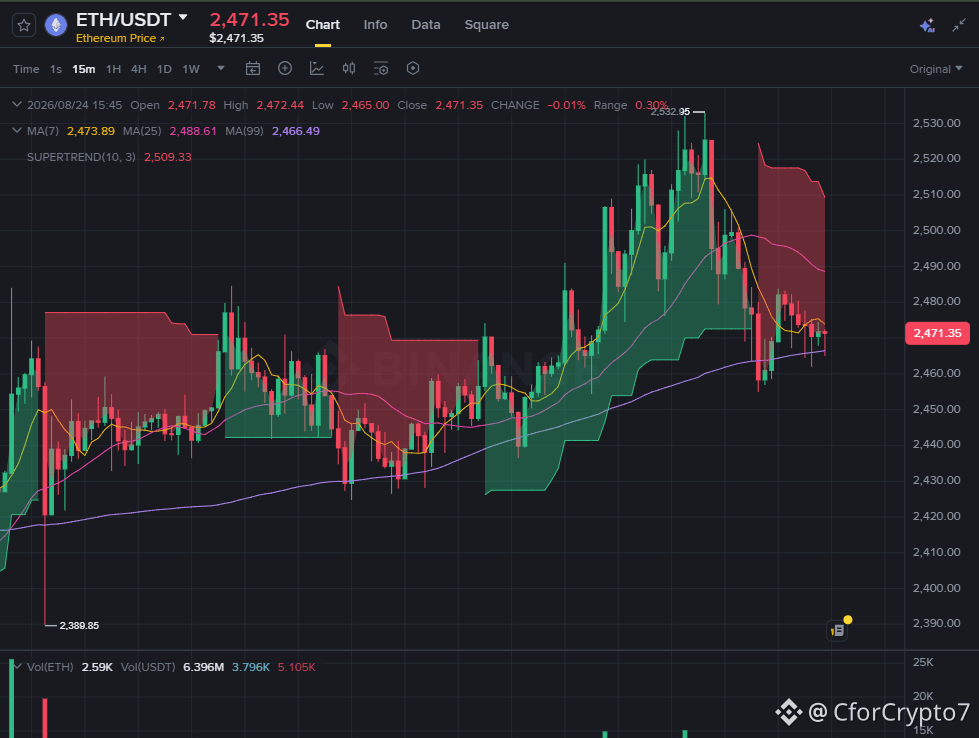
$ETH Entry: 2,480 – 2,489
Stop Loss: 2,462
TP1: 2,500 TP2: 2,510 TP3: 2,525
Sitting in a decision zone right now....
below the short term levels, MA99 around 2,466 giving immediate support, Supertrend still bearish overall.
Cleaner long is the reclaim, not the current level.
Click here to Trade 👇️
$ETH
Stop Loss: 2,462
TP1: 2,500 TP2: 2,510 TP3: 2,525
Sitting in a decision zone right now....
below the short term levels, MA99 around 2,466 giving immediate support, Supertrend still bearish overall.
Cleaner long is the reclaim, not the current level.
Click here to Trade 👇️
$ETH
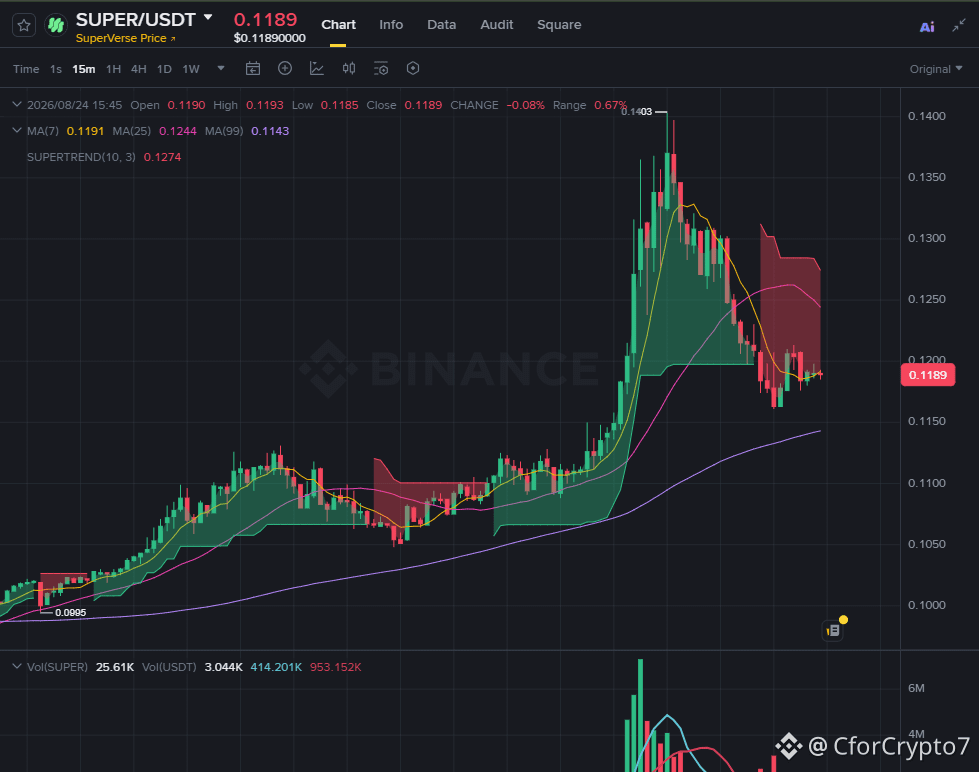
$SUPER Entry: 0.1205 – 0.1212
Stop Loss: 0.1170
TP1: 0.1245 TP2: 0.1275 TP3: 0.1320
Still above the MA99 but short term structure weaker after that sharp rejection from 0.1403....
trying to stabilize around 0.118-0.120 now, Supertrend still bearish.
Confirmation trade only, this needs proof first.
Click here to Trade 👇️
$SUPER
Stop Loss: 0.1170
TP1: 0.1245 TP2: 0.1275 TP3: 0.1320
Still above the MA99 but short term structure weaker after that sharp rejection from 0.1403....
trying to stabilize around 0.118-0.120 now, Supertrend still bearish.
Confirmation trade only, this needs proof first.
Click here to Trade 👇️
$SUPER
Log in to explore more content