

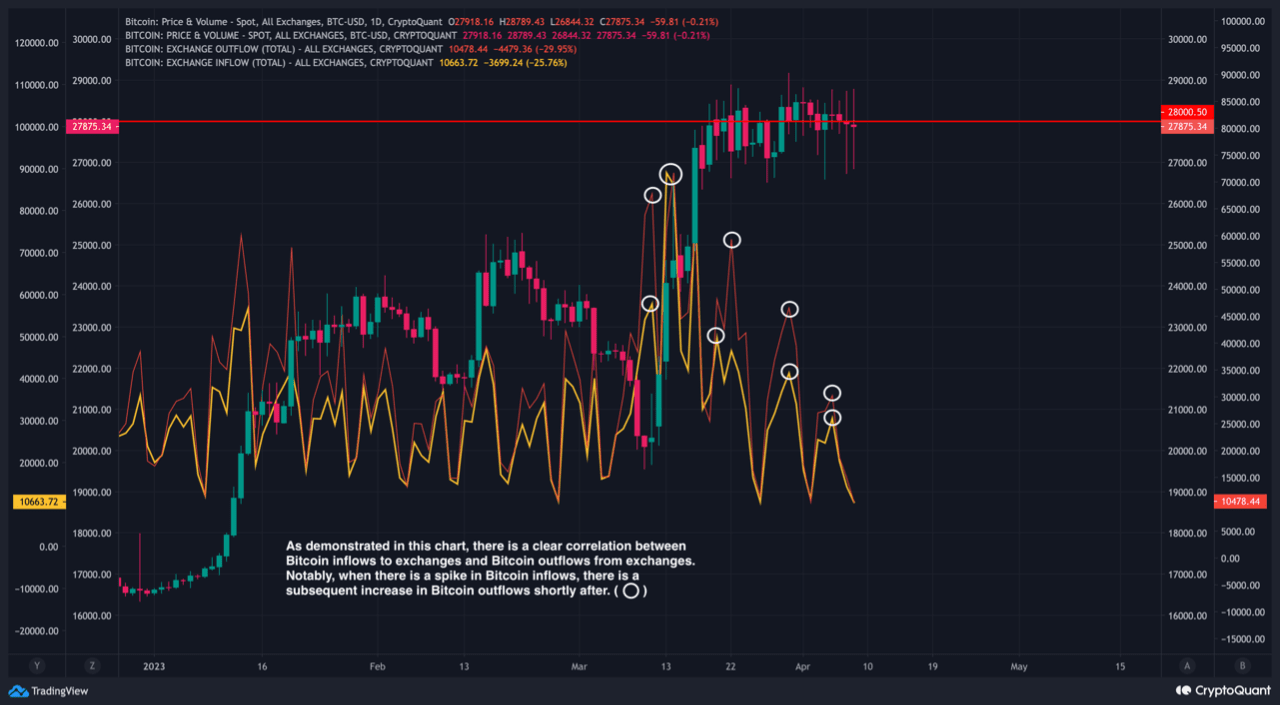
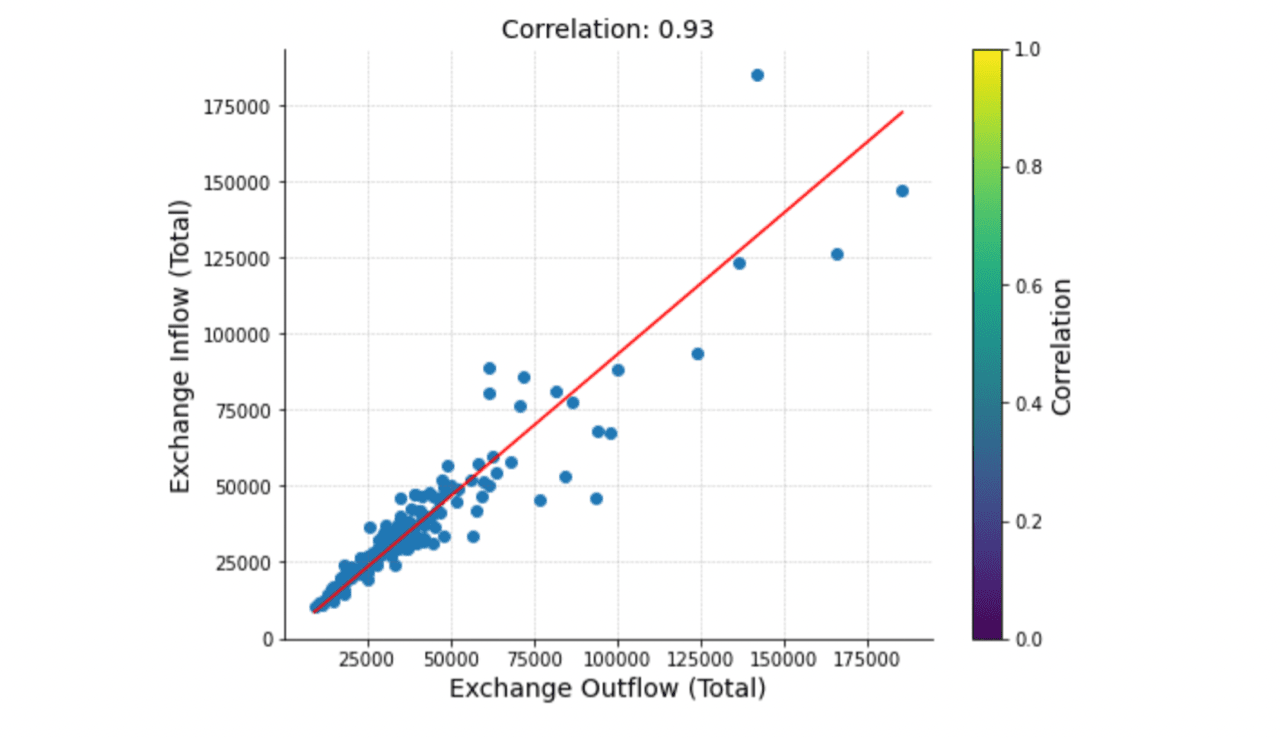
Correlation analysis is a statistical technique used to measure the strength and direction of the relationship between two variables. A positive correlation means that the variables move in the same direction, while a negative correlation means that they move in opposite directions. A correlation coefficient of 0.93 suggests a strong positive correlation between bitcoin inflows to exchanges and bitcoin outflows from exchanges. This means that as the inflows increase, the outflows tend to increase as well. It also suggests that these two metrics are highly related and that changes in one variable can be used to predict changes in the other variable. A notable surge in Bitcoin inflows to exchanges indicates that short-term holders are likely selling their bitcoins at high prices to lock in profits, thus adding downward pressure on prices and contributing to an increase in the short-term holders' Realized Price. On the other hand, if there is a significant increase in Bitcoin outflows from exchanges, typically occurring shortly after a spike in BTC inflows as indicated by the correlation graph, it could imply a rising interest in holding the asset outside of exchanges, likely by long-term holders. This trend could contribute to a decrease in the Long Term Holders Realized Price. To elaborate on the previous point, when Bitcoin rises from a lower price range ($27,500-27,800) to above $28,000, it could suggest that long-term holders have bought the dip and are removing Bitcoin from exchanges, leading to a reduction in available supply. This reduced supply can contribute to upward pressure on prices, as demand may increase while supply decreases. Conversely, when Bitcoin falls below $28 000 level, it may indicate that short-term holders have sold their coins at $28 500- 28 000 levels and increasing available supply on exchanges, which could contribute to downward pressure on prices.
Written by onchained